Civilization VI (2016)

It is no surprise that a Civilization game is underwhelming at launch. Civilization IV and Civilization V for example were extremely bare-bones at the time of their release, but they were significantly expanded on with patches, downloadable content (DLC), and expansion packs. In Civilization VI, all of those bonus features that were added onto its predecessors were present at launch. Unfortunately, most of these features are so fundamentally broken that I would much rather them be absent from the game. I figured I would give the developers some time to fix the major issues or at least acknowledge that these issues exist. It has been nearly a year now, and Firaxis has not done anything besides patching some glitches and adding new, paid DLC civilizations to play as. At this point, I am worried that the developers have no idea what is wrong with their game, let alone how to fix it. For me, there are 3 clear game-breaking issues that must be addressed. These 3 issues are the artificial intelligence (AI), user interface (UI), and the various tedium that plague Civilization VI.

Full disclosure, I feel like I have to mention that I am veteran of the Civilization series. I started with Civilization III when I was young, played a good amount of Civilization IV, and I have near 1000 hours of Civilization V and play on the highest difficulty setting. Many of my criticisms of Civilization VI may not be apparent to newer players, but I assure you if you play enough Civilization VI you will understand what I am talking about. That being said, I realize that I may be harsh on this game because of my experience, so a more casual player may not care about a lot of what I am going to mention.
1

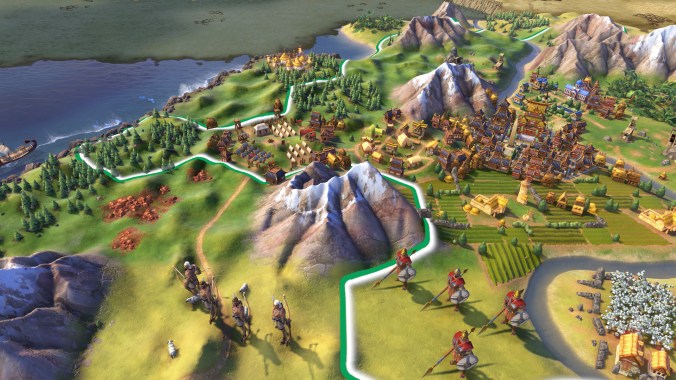
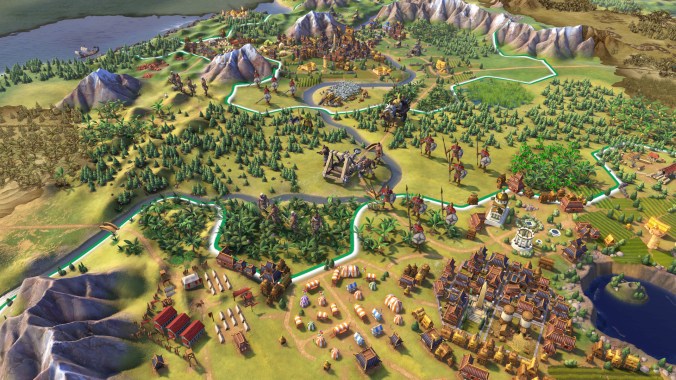
By far the most apparent issue with Civilization VI is its artificial intelligence (AI). The Civilization series is definitely not known for its brilliant AI, but there has always been a basic level of competency that could make the AI competitive. Not only is that competency is absent from Civilization VI, but the AI is completely unpredictable and illogical. It is clear that the developers knew that the AI was awful, as they gave the AI massive bonuses on the highest difficulties that are unprecedented in the series. For example, only on the highest difficulty of previous Civilization games the AI receives a bonus settler. But in Civilization VI, the AI starts receiving that bonus settler on the third highest difficulty, and now it receives 2 settlers on the highest difficulty. The AI is also extremely aggressive in Civilization VI, as the only way they can hope to defeat the player is by sabotaging the player so much that they cannot catch up to the AI’s massive early game advantages. I say sabotage because the AI is also completely incapable of actually wiping out the player or at effectively sieging your cities.
2

One of my favorite things about playing Civilization V was studying the AI’s behavior and learning how each leader acted. I could then use this knowledge in future matches to predict what a certain leader was going to do and guess how the game was going to play out. This was essentially eliminated from Civilization VI because the AI is so unpredictable and varies heavily from game to game. The only consistent thing about the AI’s behavior is that their default state seems to be hatred. They hate the player and they hate each other, often leading to lackluster diplomacy as no matter what you do everybody is just going to denounce each other.

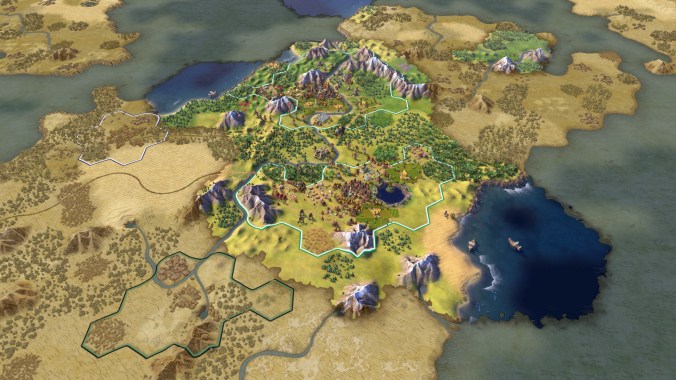
Another factor of the Civilization series that I also really enjoyed was the sort of role-playing aspect and watching as empires expanded and clashed over territory. Every time I generated a new game I felt as if I was witnessing an alternative history, and it is a factor that I considered insanely addictive.  Unfortunately, since the AI are so wholly incompetent this role-playing aspect is also destroyed. By the modern era half the world is unsettled because the AI unwilling to expand past a few cities. There are tiny, disjointed empires instead of sprawling empires where the civilizations border each other and make for a believable world. Also, since the AI is so horrible at waging offensive wars, they will almost never conquer their neighbors or take a capital city. In Civilization V, you could expect at least 1 or 2 of the AI to be wiped out by their neighbors, making for an evolving and interesting game world. But in Civilization VI, the AI are incapable of conquering each other, they may take a single city or destroy a city-state, but they almost never take capitals. This makes for a rather boring and uninteresting world to observe. The AI in Civilization VI is what I would consider a game-breaking issue, and I doubt that I will return to this game unless the AI is amended.
3

Other than the AI, there are a few other major flaws that Civilization VI has that also hamper the game’s entertainment value. The next thing I want to touch on is its confusing and overcomplicated user interface (UI). In a strategy game like Civilization VI all of the vital information should be readily available to the player and there should be no clutter of superfluous information. In Civilization VI it is the other way around. The game has no problem clogging up your screen with random stuff like “England has built a granary in London!” Who cares? But you have to dig deep in order to understand key game mechanics like amenities. On top of that, most of the menus and just general layout of information is rather clunky and cumbersome to navigate. Also, the mini-map is a complete disaster. It now shows water tiles as owned land by other civilizations, the colors of the fog of war and undiscovered territory are the same, and it just feels very boxy and unpolished. They have done a little bit to improve the UI since launch, but it is still abysmal. If you want an example of a good UI in a strategy game, Fire Emblem: Fates is phenomenal in that department. There is a ton of information on the screen, it is laid out in a sensible manner, and if you want any more information on anything, you just tap on it.

I’ve heard people say that Civilization VI is a good base for a game to build upon in future expansion packs, even if it needs significant work before it can compare to its predecessors. I don’t fully agree with that sentiment, as the AI and UI are possible to fix and would significantly improve the game, but many of the core game mechanics are fundamentally broken and need a massive overhaul. This is why I am not optimistic for Civilization VI, sure the developers could fix the AI and UI, but I doubt they will scrap so many of these new features that they added into the game. Many of these new features are meant to give the game strategic depth and add more choices into the game, but they end up just becoming tedious, frustrating, and tiresome. These mechanics are: Religion, agendas, housing, the civic tree, eurekas and inspirations, governments, the new movement system, city management, diplomacy, builders, espionage, barbarians, and spies. I am not going to delve deep into why I think these mechanics are busted, as I want to keep this review at least a somewhat reasonable length. I may later do a full analysis of Civilization VI where I go deeper into these mechanics, what is wrong with them, and how to fix them. All of these issues highlight the biggest flaw of the Civilization series as a whole, which is that the game becomes boring and tedious once you have essentially won.
4

There comes a point in every Civilization match when you realize that you are so far ahead that there is no feasible way for the opponents to make a comeback and defeat you. Some people quit when they reach this point, but many like to play the game out to its conclusion. You kind of turn on auto-pilot and hit the “next turn” button until you reach victory. Civilization VI exasperates this issue because you can no longer turn on auto-pilot, you still have to micromanage all of these features that I highlighted earlier. All of these features are unnecessarily tedious, and it feels like the developers just added more decisions and micromanagement just for the sake of having more decisions. All this does is reduce the weight from any decisions, and makes playing the game a chore because I now have to make a dozen meaningless decisions every turn. The importance of these decisions is drastically reduced because of the sheer number of them. Why should I care what government policy I choose when I can change it in 3 turns anyway? The lack of meaningful decisions and plethora of worthless decisions makes for a game that feels like a chore.
5

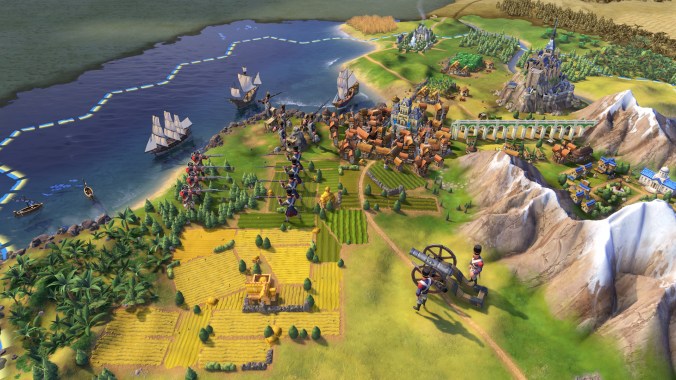
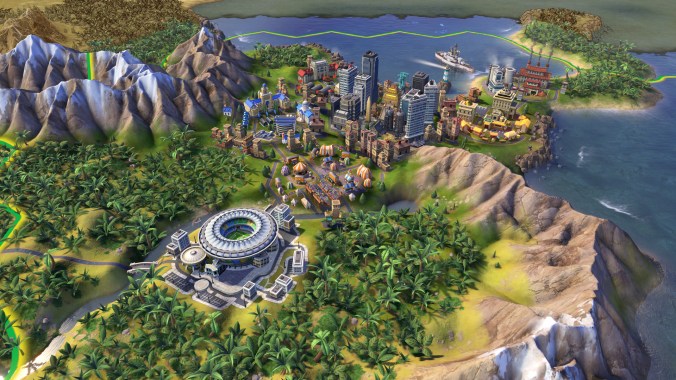
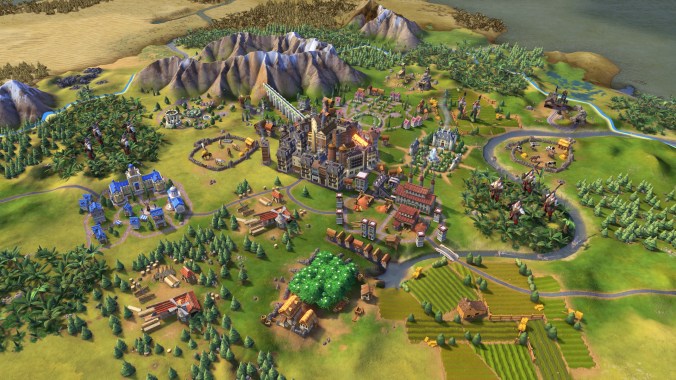
There are a few worthwhile things in Civilization VI. The most obvious is the district system. Instead of everything in a city being built in that 1-tile area, now you have to establish districts on other tiles. For example: you need a campus district to build libraries, universities, and other science related buildings. From a world-building perspective it makes for a much more believable empire than in past iterations. It also has some interesting strategic properties as districts receive bonuses depending on where you place them, so you can plan out cities and what their districts will be for maximum efficiency. Another positive factor of Civilization VI is just the visuals. I think the art-style borders on being a little too cartoony at times, but sometimes you have to just sit back and admire the landscapes populated by your cities, districts, and wonders.
6

It’s a shame really. It seems like Firaxis genuinely attempted to make this a complete game upon launch. But in their attempts to fill up the game with content, they neglected to check if all of that content was actually any good. As it stands you are much better off buying Civilization V and all its expansions and DLC, which as an entire package often goes on sale for less than $15. It is just a way more polished and complete game, and for a quarter of the price of Civilization VI. I am not sure if Civilization VI will ever be a good game, but the future looks grim for this title. For these reasons I give Civilization VI a 3/10. Maybe it will be good after some expansion packs, but right now the game is just a mess. If you ever feel an itch to play a grand strategy game, just play Civilization V instead.
Captain Toad’s Treasure Tracker (2014)

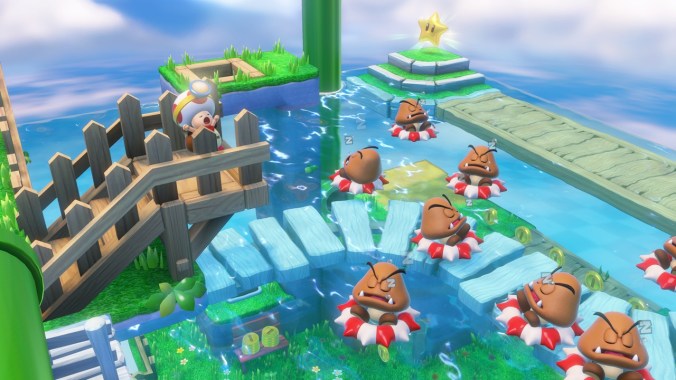
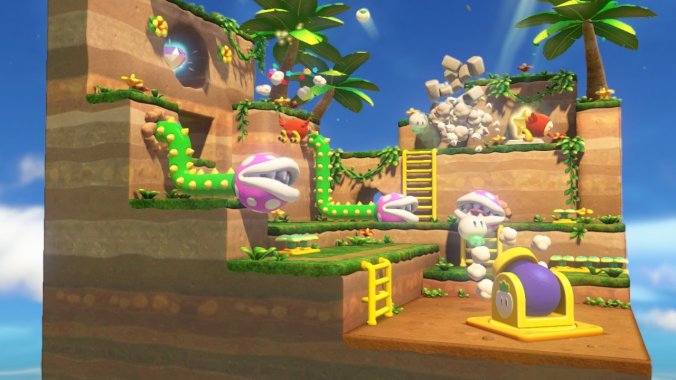
One of my favorite features from Super Mario 3D World was the inclusion of Captain Toad and his mini-games. Clearly, many others also adored those mini-games as Nintendo developed a full game using the base concept from Super Mario 3D World. Captain Toad’s Treasure Tracker is a puzzle-platformer adventure game. The main objective is to progress through small stages and collect stars and gems along the way.
1

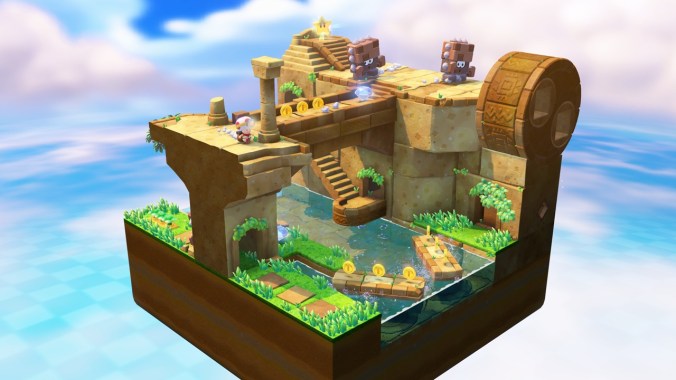
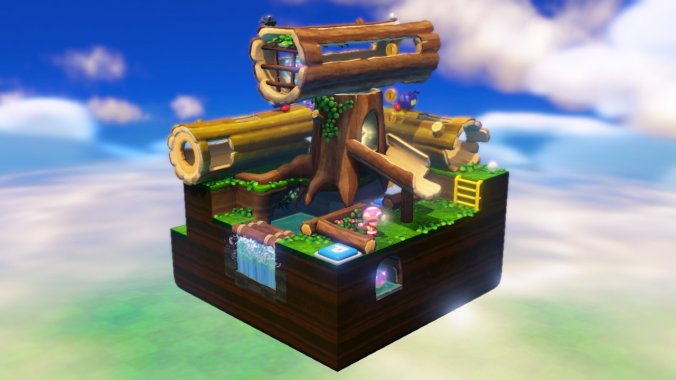
Captain Toad’s Treasure Tracker is a great game to just chill out for some relaxing fun. This is largely due to its simple level design. Levels are small arenas that the player can rotate to get a better view from all sorts of different angles. Captain Toad cannot jump or attack, so most levels consist of navigating these small maze-like courses, avoiding enemies and dangerous obstacles, and finding your way to the star, which acts as a goal in every level. Along the way, the player must also collect the 3 gems that are hidden in every level, as some stages later in the game require a certain number of these gems to unlock. These gems are often hidden in plain sight, or at least are fairly easy to guess where they might be hidden. Stages are very compact and quick to navigate through, so even if you are having trouble finding a hidden item it takes no more than a minute or two to play through the entire stage again to get another look. For the most part, the gems are out in the open and you just have to figure out how to get to them. Usually it involves a bit of puzzling or thinking of a not-so-obvious way of navigating these tiny courses. This is in stark contrast to a game like Yoshi’s Woolly World, where the collectibles were obtuse to find and required scouring every inch of a level to unearth them. In Captain Toad’s Treasure Tracker, there is no obnoxious combing of entire levels to find secrets, they are in plain sight and you just have to figure out how to get to them, which is how collectibles should be handled.

5

While I find the level design itself to be both simple and gratifying, I think the visuals of each level are also top-notch. The idea of making most levels a small cube that just floats in the sky is actually pretty cool. Every stage is kind of like a 3D diorama that you can rotate in your hands. This is a unique way of exploring all sorts of different environments, which is a key element of any adventure game, but it takes out all the long treks and expanses of nothingness between each important zone. It also allows the developers to space out any theme they want, rather than playing them in big chunks. In traditional adventure games, if you enter a snowy area for example, you know that you are going to be exploring that snow-covered area and that area alone for the next few hours, and after a while seeing the same environment over and over can just get dull. I enjoy the fact that the themes can be spread out across the game instead of having to play them all at once. You can always expect some fun places to explore in a Nintendo game, and Captain Toad’s Treasure Tracker is no exception. There are plenty of visually appealing environments and atmospheric areas to discover.

3

While I did enjoy Captain Toad’s Treasure Tracker, I feel like there was a lot of missed potential here. Nintendo does not have a puzzle game franchise, and I feel like there was perfect opportunity to make Captain Toad’s Treasure Tracker into a puzzle game series. Instead, we got a platforming-adventure-puzzle hybrid, which is fine, but the puzzle elements are fairly lacking. Most puzzles in this game are just involve hitting a switch which changes the stage and opens up a new path to the goal. There are no truly head scratching moments or things that make you really think about how to proceed. There are a couple of optional challenges that the game provides that are interesting, like limiting how many times you can hit a switch during a particular stage. These are fairly uncommon though and are entirely optional. Some levels show a good deal of potential and made me think that I was going to keep track of all the different forms the stage takes from hitting a button, and then hit the buttons in the correct order to progress forward. In reality, you just kind of progress forward and hit the buttons along the way, there is not much thinking involved. I was never really thoroughly impressed by any of the levels, and as a whole the game lacks a “wow” factor.

2

Not every game has to be an industry-changing, genre-defining game. Captain Toad’s Treasure Tracker is just fine for what it is: a short, clever, charming, and relaxing adventure. If you are looking for a cute adventure game with a few platforming and puzzle elements, then this game is perfect for you. This is not an ambitious title that will shape the industry for years to come, but it does not pretend to be. It’s just a simple little adventure game that you can meander your way through. For these reasons I give Captain Toad’s Treasure Tracker a 7/10. I enjoyed the calming pace and nature of this game, but there is definitely some untapped potential here.

Yoshi’s Woolly World (2015)

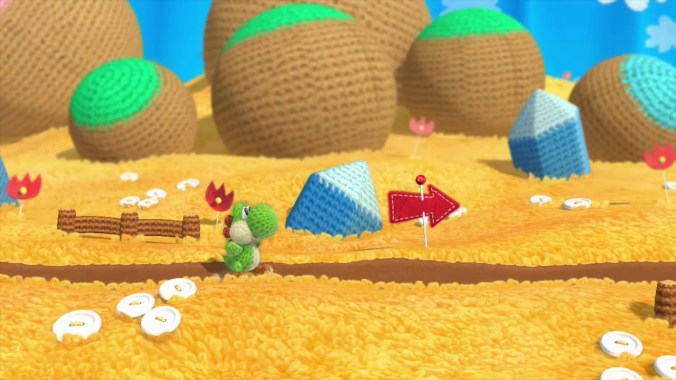
Mario’s beloved dinosaur companion returns in this fuzzy platforming adventure. Nintendo has a large number of platforming IPs, each main character having a unique array of abilities to set the games apart. To go along with that, they all have drastically different difficulty levels. Starting with the slow and forgiving Kirby, Yoshi is the next step in difficulty, followed by Mario, and finally Donkey Kong. Kirby games tend to be introductory platformers and tend to bore more experienced players, so I was hoping to find the sweet spot of relaxing and difficult with Yoshi’s Woolly World. While the base levels of Yoshi’s Woolly World are fairly simple, there is a high variance in the difficulty of the game depending on many of the collectibles you try to obtain.

1

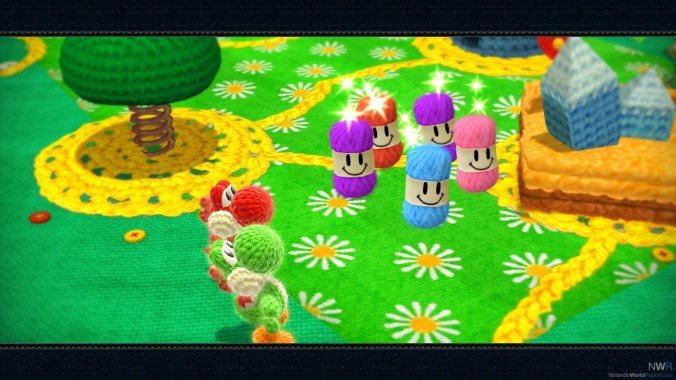
Like most other Nintendo platformers, trying to collect the collectibles scattered throughout each level is a way of stepping up the difficulty for players who are looking for an additional challenge. Yoshi’s Woolly World takes this concept to the next level. Each level has 4 main collectibles for the player to find, and each has an individual purpose. There are yarns, flowers, stamps, and hearts, the two most important are the yarns and flowers. The plot of Yoshi’s Woolly World is that evil wizard Kamek unravels all of the Yoshis, who are made of yarn and scatters them across the land. Collecting all the yarns in a specific level essentially rescues one of those Yoshis and lets you play using their unique color scheme. If you collect every flower in all 8 levels of a specific world, you unlock a hidden bonus level, which is a shame because these bonus levels were generally my favorite and it is unfortunate that they are hidden behind collectibles. Stamps and hearts do not provide much for the player, but if you go through the trouble of getting all the yarns and flowers, you might as well go for 100% and get a golden star for finding everything. Personally, I generally like collectibles in games, but I feel like Yoshi’s Woolly World went about them the wrong way.

5

Gathering collectibles in games is an optional task, and is best left that way because not all players love collecting. In Yoshi’s Woolly World, the player is heavily incentivized to collect things to save their Yoshi companions and to unlock hidden levels. Unfortunately, I do think that the collectibles were handled properly.  In a platformer, collectibles should be gated behind a platforming challenge, maybe a set of tough, consecutive jumps. Or in the case of Yoshi, whose special ability is that he can throw eggs, maybe have collectibles be an aiming challenge. Occasionally, there could be hidden areas that the player can spot if they are perceptive which hide collectibles. In Yoshi’s Woolly World, the vast majority of the collectibles are hidden in those secret types of areas. It even goes further than that, many collectibles are hidden inside invisible clouds or walls that the player cannot spot unless they physically touch it. So, if you are looking for collectibles you essentially have to constantly jump around and bump into every wall, ceiling, and touch every inch of the screen if you want to find these invisible objects. This is not ok, it slows down the pace of the game tremendously and makes progressing through levels tedious rather than entertaining. And if you miss something you have to go through the whole level again doing the same thing just to find one missing item. Most of the time I had to replay levels 2 or 3 times before I found the invisible final item nonsensically floating in the middle of the sky somewhere. It turns the game from a platformer into some sort of treasure hunt, where the treasures are hidden illogically and with the sole intention of wasting your time.

3

Perhaps I hurt the experience for myself by going for the 100% completion, but I am not sure if I would have been engaged without searching for the collectibles. My suggestion for newer players is to hunt for whatever collectibles are on screen, but do not obsess over them as they are a giant time sink. It is a shame because then you won’t get to save Yoshis friends and you won’t get to play the great bonus levels, but they are not worth the time required to unlock them. If you complete the game regularly and want more, then definitely go back and try to 100% every level, but don’t ruin the game for yourself by going for all the collectibles right off the bat.

6

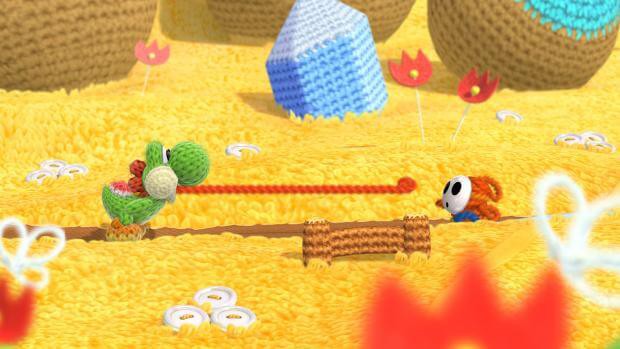
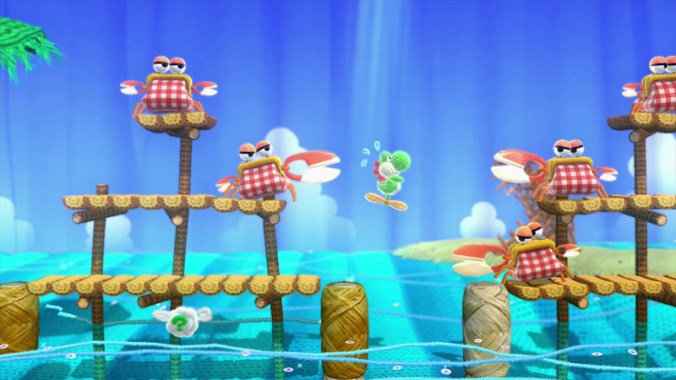
The levels of Yoshi’s Woolly World are fairly easy, as I would expect from a Yoshi game, which is why I was going for the collectibles in the first place. What I liked about the level design was that every single level was unique. Every level had a sort of gimmick in place that was the central theme of the level. Ropes that you grab and swing on, bubbles that you bounce on, creating your own platforms by tossing eggs,  these are just a few examples but every single level has some sort of twist to it. I liked this as the game constantly felt fresh and there were no “throw away” levels that are there just to pad the content. My big issue was that everything just felt kind of slow. Outside of the secret levels, all but a few of the levels you just kind of waddle along at your own pace without immediate threats or danger. I guess I should have expected this out of easier platforming game, but I feel like this is how collectibles could have been used to improve the experience. Maybe collectibles could disappear after some time has passed as a way of speeding up the player, or have a series of optional jumps that increase difficulty for experienced players. I felt stuck in a sort of limbo, the game was too easy and not engaging when just played normally, but was a tedious scavenger hunt when I went for the collectibles.

4

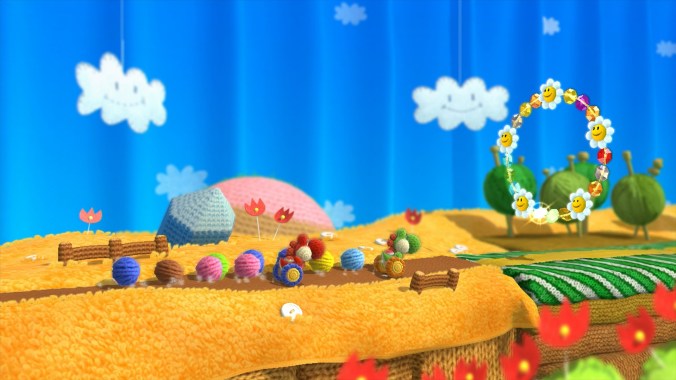
Outside of the uniquely and memorable gimmicks in every level, there are a few other features to this game that make it appealing. First, and most obviously, is the phenomenal art direction. Taken straight out of Kirby’s Epic Yarn, I absolutely love the visuals of this game. Everything is made of woven yarn and wool, and there is a ton of attention to detail to keep it all looking like it was handcrafted. These knitted characters and worlds are adorable, whimsical, and charming, it is probably my favorite feature of the game. It is especially cute whenever you get to play alongside Yoshi’s new canine pal Poochy, I mean who doesn’t love a good dog?  There is also a co-op mode so you can play with a friend, or maybe your kid as this a good platformer for beginners. Another cool feature is the ability to buy power-ups through gems that you collect in the levels. You will have an overabundance of these gems and it could be pretty fun to spend them to give Yoshi powerful abilities. Lastly, I think this game is probably an appropriate difficulty level for young kids. It is definitely a little tougher than Kirby games, but not as hard as Mario or Donkey Kong. I just think that there should have been a good way of stepping up the difficulty for more experienced players. I absolutely loved the hidden levels of this game, they were fast, fun, and had some challenging platforming. If the whole game had similar level design this would have been a must play game in my opinion, but there are so few of these levels and they are hidden behind an irritating collectible system.

2

Overall, I think Yoshi’s Woolly World is a decent game. While I spent a lot of time ranting over its obnoxious collectible system, I don’t think most players will even attempt to collect most of them. And while for someone who is more familiar with platformers the game is slow and easy, it is the perfect difficulty for its intended audience. As someone who grew up playing the original Yoshi’s Island, maybe I expected too much out of this game, but I felt seriously stuck between the game being too easy when played normally, and flat out annoying when playing for collectibles. Still, the whimsical charm and creativity of Yoshi’s Woolly World is sure to impress. For these reasons, I give Yoshi’s Woolly World a 6.5/10. It is great as an introductory platformer, but I feel that it offers little outside of that.

Stardew Valley (2016)

There is nothing more relaxing than chilling out and maintaining your farm in the calming Stardew Valley. This Harvest Moon inspired game is the brainchild of a single developer, ConcernedApe. Can this farming simulator overcome the pitfalls of the other games in its genre? In some ways yes, but I feel like the same problems that plague this genre also drag down Stardew Valley. Regardless of this, Stardew Valley is the perfect comfy game to just sit down and relax and play for a while.

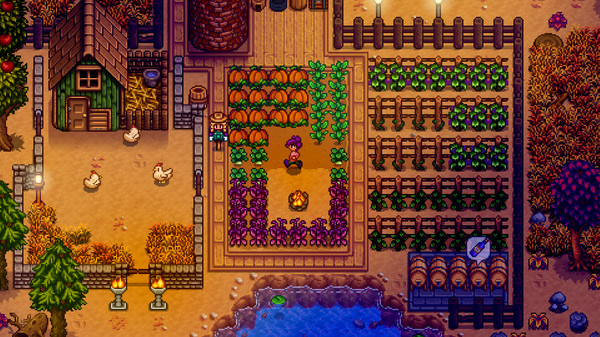
From start to finish, Stardew Valley is undeniably charming. The great pixel art and sprite work, bright visuals, and upbeat music keep this game cheerful. The main character inherits a farm from their grandfather, and uses it as an escape from a soulless corporate world. It is your job to restore this run-down farm and maintain it for years to come. There is so much that needs to be done, and that is what makes Stardew Valley so addictive at the start.

1

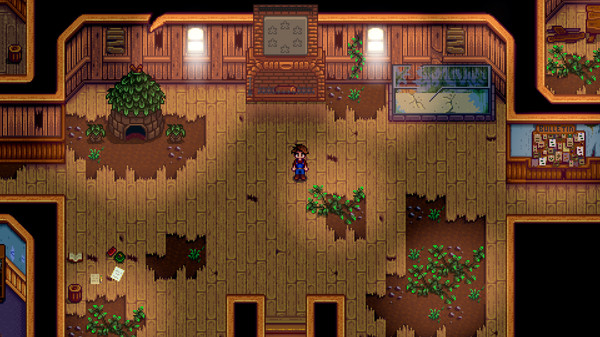
Through the clever use of quests, Stardew Valley subtly directs the player into the many different tasks that must be completed. Open-ended games like this can often lack a feeling of direction and the player can either become overwhelmed or they feel like there is no point to doing anything. This is not the case in Stardew Valley, helping out the villagers of Pelican Town is certainly rewarding and gratifying. But the real goal I found myself working towards was restoring the community center. Early in the game, you learn of the dilapidated community center, and you discover the secret that magical creatures known as Junimos are living there. They will help you restore the community center if you bring them all sorts of different materials.

All of the different crops, ores, fish, foraged goods, and other special materials that you collect will  be needed to fully restore the community center. There are dozens of bundles that require specific materials to complete, and you get a small reward for each bundle, as well as a big reward for completing all of the bundles in one of the rooms. These big rewards were very satisfying as they often opened up new areas and I could not wait to see what the next big reward would be. The use of the community center as a central goal was very clever, as it does not force the player into doing anything, but it serves as a sort of guideline as to what can be done. Whenever I felt like I had run out of things to do in this game, I took a look at what was needed in the community center and realized there was plenty that I had not explored or played around with. This sort of direction is desperately needed in an open-ended game like this. Unfortunately, once I had finished the community center, I felt like this game just lost its purpose.

2

Games like this can often get repetitive, and Stardew Valley certainly does not avoid this later on in the game. Once you get your farm up and running, you have to spend good portion of your limited daily time and energy to just water the crops, take care of the animals, make artisan goods, and whatever else needed to be done that day. Eventually you just get into a cycle that you cannot break, and it started to get repetitive and draining for me. I know many people may find it relaxing to do the same tasks over and over, but once I got into this late game cycle I found it to be very boring. I had bought everything and was gaining money hand over fist, so I did not even feel like there was a point to this tedium. This combined with the lack of direction that the game had once I completed the community center made for a very monotonous late game.

3

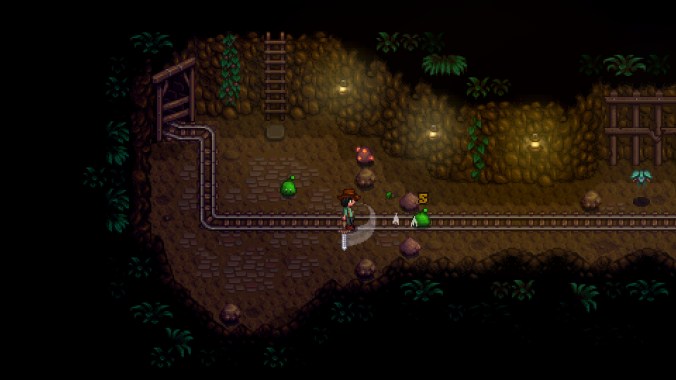
There were a few other issues I had with Stardew Valley. One of them being that while I mainly looked to this game as a source of relaxation, I felt like some of the main tasks in this game could get pretty frustrating. In particular, the fishing mini-game was aggravating and so much of time spent fishing just sitting around waiting for a fish to bite. Also, combat in this game is reminiscent of NES-era games like the original Legend of Zelda. This is not a good thing. While combat is a minor part of Stardew Valley, I feel like it often gets in the way while am trying to mine for resources. My last issue with Stardew Valley is that while it does a great job with its delayed gratification, I feel like it sometimes it goes overboard with using time from keeping the player from progressing. Certain tasks can only be completed in specific seasons, so if you want to do that thing, you are going to have to wait a while. As I was almost done with the community center, there were long stretches of days I just had to wait around before I could do anything of significance to further myself to completing my goal.

5

As I said, Stardew Valley is usually pretty great when it comes to delaying gratification, but keeping you hooked while you wait. Most things in Stardew Valley take a while before you can start reaping their benefits. Planting crops, upgrading tools, adding new buildings, renovating your house, raising animals, making artisan goods, all of these things require a few days before they become profitable. But as you are waiting for that big payoff, there is still plenty to be done. Fishing, mining, foraging, or just cleaning up your farm were enough to suffice and keep me entertained while I waited.

4

As a whole, I did thoroughly enjoy Stardew Valley. For the first 3 seasons, I was addicted and could not stop playing it. For the next couple of seasons, I still enjoyed it, but I could feel the tedium and repetitive nature of the game arise. In the final seasons that I played, I just kept going so I could have that one final payoff of finishing the community center. I just wish there was some more engaging tasks to be done while waiting for those final items to be attainable. Maybe Stardew Valley is not my type of game, as this is not a genre that I play very often, but the repetitiveness definitely wore me out after some time. That being said, even though this is not a genre that I typically play, I still really loved the first few seasons of this game. I would highly recommend it to anybody who likes these types of games. Overall, I have to give Stardew Valley an 8/10. It does run into the same issues as its predecessors, but is fantastic otherwise. If you are looking for a relaxing game to play, look no further than Stardew Valley.

Fire Emblem Echoes: Shadows of Valentia (2017)

Remakes of older games often struggle with finding a balance between fixing the games shortcomings, but at the same time remaining faithful to the core design. Done correctly, remakes can be the definitive version of a video game. If the developers change too much, then the game may hardly be recognizable. If they change too little, then the same problems from the originals are just as persistent and frustrating. Fire Emblem Echoes: Shadows of Valentia is a remake of the second game in the series, Fire Emblem Gaiden, which was released back in 1992. Gaiden is without a doubt the black sheep of the Fire Emblem franchise. Most people who have played it can attest to its frustrating designs and its sluggish gameplay. Shadows of Valentia has a tall order to fill: keeping true to the original but fixing the glaring problems that plagued it.

Shadows of Valentia did a lot of things right, but my absolute favorite feature was that the game was fully voice acted. This is new for the Fire Emblem series, but it is a massive step forward. Having all the characters voiced definitely brings them to life and puts a lot more impact to the dialogues that they have. Speaking of characters, Shadows of Valentia is a big step-up from previous entries Awakening and Fates in the characters department. The latter games characters were one-dimensional and a single personality trait defined their entire character. In Shadows of Valentia the cast is a lot more interesting and fleshed-out, they feel like they could be real people, not just a wacky cast from a video game.

The story of Shadows of Valentia is simple but satisfying. It is not a mind-bending experience, but the plot is extremely gratifying and gripping as you fight your way through the continent of Valentia. Alm and Celica are two childhood friends that split paths and each attempt to save the dying continent of Valentia. Alm’s path focuses on militaristic battles and war, while Celica’s path is a much more religious journey. Alm attempts to reclaim his homeland and fight off invaders, while Celica must visit the temple of a goddess to learn why the farms have gone barren. While the story can be cliché and predictable at times, it was still intriguing and engaging enough to keep me playing. What really stood out to me in this game was the world building. Being able to explore the world map for yourself is something that I love in Fire Emblem games. This was a huge step up from Fates, in which the continent that you play on is not even named. Being able to visit villages and talk to the locals gives the player a much better understanding of what is going on in Valentia rather than “This guy is evil, go fight him.” Even the allies that you recruit constantly comment on the happenings in the game and give their perspectives.

There are some new gameplay features in Shadows of Valentia. The biggest addition to gameplay was probably the dungeons. Fire Emblem is traditionally a top-down, turn-based strategy game, but in dungeons you explore in 3rd person view. When you run into enemies, the game starts a classic top-down battle. To be completely honest I am not a big fan of this feature. For the most part, these dungeons felt like filler and I do not think that they added a whole lot to the game. All of the battles that were had in these dungeons were incredibly repetitive and boring. Every single battle fought in the same dungeon uses the same map, only occasionally the enemies are rearranged in a slightly different fashion. All of these battles blend together and are all together bland, dungeons just felt like filler to pad out the game length. Dungeons were definitely a unique new addition to Fire Emblem, but they are going to need to see some tune-ups before I am sold on them.

Some other noteworthy gameplay changes include abandoning mechanics from newer Fire Emblem games and returning to the classic style of gameplay. The pair-up feature from Awakening and Fates has been left behind, and I think this is a good thing. The pair-up feature led to many balance issues and just encouraged the player use characters as stat boosters for other, more powerful characters. Another feature that was left behind was skills. Personally, I thought skills added extra dimensions to characters and their utility, but they definitely were difficult to balance and often relied on random chance to activate in battle. The skills have been replaced with combat arts, which are activatable abilities that units can learn by using certain weapons. Some combat arts are simply more powerful attacks, while others have special properties like dealing extra damage to armored units, or dashing through the enemy unit on the battlefield. All of these combat arts come at the cost of health and I felt like they certainly added some extra tactics to each encounter.

An entirely new feature was the useable item called Mila’s Turnwheel. This item allowed the player to go back in time and revise moves that they previously made. If you make a bonehead error, or you misclick, even if you get unlucky and a unit dies to a 1% critical hit chance, you can use the Turnwheel to give it another shot. This is a welcome feature as it mitigates frustration from bad luck or just a lapse in judgement. You no longer have to reset and redo the entire chapter if a unit dies to a roll of the dice thanks to Mila’s Turnwheel. Of course, you only have a limited number of uses so you cannot just use it all the time. I actually avoided using this feature outside of just testing it out because I felt like Shadows of Valentia was already relatively easy, even on the hardest difficulty. Mila’s Turnwheel definitely makes the game easier, so avoid it if you want a more difficult experience. That being said, it is a great tool if you are not looking for a tougher time. It also has some interesting narrative uses, as it allows the player to see “memory prisms.” These are flashbacks to years before the happenings of this game. These set up the story a lot better when you can see the events leading up to the present rather than just reading about it through some text. There are some other unique gameplay aspects of Shadows of Valentia. Archers, mages, and clerics are all drastically different from previous iterations. They are a lot more utility focused and I think these were solid changes.

The original Gaiden was known for being tedious and frustrating, and this is mostly due to the games maps. This is the most common complaint about the original, so I thought for sure that the maps would be fine-tuned and improved for this game. I was wrong. Many of the maps are 1-to-1 remakes of the original. This is mind boggling to me. The developers had to know that the maps of the original are criticized heavily, so why move forward with the exact same designs? I understand wanting to be faithful to the original, but if something is obviously bad I expect the developers to at least attempt to make it better. What makes these maps so bad you ask? Well, they range from tedious and boring, to obnoxious and infuriating. Many of the earlier maps are just boring, repetitive slogs. Giant, open, grassy fields dotted with some forest tiles here and there. No chokepoints or interesting features, just flat nothingness. There are not even side objectives to spice things up. These types of maps are bad and completely forgettable, but they are nowhere near as bad as what is to come later in the game. Many of the frustrating maps have deserts, which inhibit movement, or swamps than inhibit movement and deal damage to you. Giant clusters of enemies with no tactical way of approaching them. Some maps were even reused multiple times throughout the course of the game. But the biggest issues with the maps were witches and cantors.

Witches are one of the single most frustrating designs in any video game ever. I am confident of that. Essentially, they are mages with the ability to teleport wherever on the map that they want, move, and attack, all in the same turn. If their AI was any good at all, they could simply just teleport to your lowest resistance unit and gang up on that unit and kill it, and there is no possible way for you to stop this. The only thing making these witches even bearable is that their AI is complete garbage, and I think that it is this way on purpose. They just randomly teleport around instead of focusing on your weaker units. Sometimes they do not teleport at all. In the entire course of the game I think I only had to reset because of a witch maybe two times. Still, the fact that they are so incredibly inconsistent is nerve racking. At any given moment while you are playing, a witch could just make the right move and force you to reset with no plausible way of stopping it. You just have to hope that they keep making dumb moves. Cantors are another story. They are summoners that spawn weaker units every few turns. On paper this actually sounds like a good idea, it is a way of speeding up the player. Saying “if you do not kill this cantor quick than you are going to have to deal with hordes of enemy units.” Unfortunately, it does not work out that way. Instead cantors are often surrounded by powerful enemy units, forcing you to take your time dealing with the tough guys first. Many maps with cantors become slogs of killing massive amounts of weak summoned units as you slowly pick off the more powerful enemies. Towards the end of the game, there are cantors that spawn witches. I think that speaks for itself. The thing that really bugged me was that plenty of the maps would have actually been good maps had it not been for the witches or cantors. Just take them out and there are some actually decent maps in this game.

My last gripe with the game are the random encounters. As you travel the world map enemies will crop up from strongholds and chase you around the map. These small skirmishes are fairly boring and they are unavoidable. Sometimes I just want to get on with the main story, but no, first I have to slog through some small battle on a map that I have already seen and played. I feel like this really punishes the player for exploring the world map, visiting towns, doing quests, even going to shrines to promote your units. Doing any of this will lead to the random encounters cropping up and forcing you to play them despite their dullness.

Fire Emblem definitely has a divisive fanbase. The series varies wildly, and people enjoy the different games for different reasons. I consider myself to be fairly central and I appreciate a well-rounded game. Fire Emblem traditionally mixes strategy elements with story and RPG elements, and I do not think that Shadows of Valentia struck a good balance. Shadows of Valentia definitely has positive story and RPG elements, and it is a huge improvement over Fates which was a disaster in that department. Unfortunately, the gameplay is bogged down by dreadful map design. Most of the maps are just bland and repetitive, but towards the end they just get frustrating. For the most part I enjoyed Shadows of Valentia, the story and characters were certainly enough to keep me playing despite the maps. For these reasons, I give Fire Emblem Echoes: Shadows of Valentia a 7/10. Before you pick up this game, ask yourself why you like the Fire Emblem series. If you are into it for the tactics, strategy, and map design, I would probably avoid this title. If you enjoy the series for its characters, world building, grand fantasy, plot, music, or any other of its RPG elements, definitely check out Shadows of Valentia.

Hollow Knight (2017)

This year has been great for video game lovers. There have been many large releases that saw massive success and critical acclaim. Only 5 months in and we already have: Resident Evil 7, Yakuza 0, Horizon Zero Dawn, Nioh, Legend of Zelda: Breath of the Wild, NieR: Automata, Prey, and Persona 5. Alongside all these huge titles it may seem strange, but the biggest surprise of this year was the indie game Hollow Knight. This is the first game by the Australian independent studio Team Cherry, but it feels like these guys have been making games for years. Hollow Knight is a metroidvania style game that takes place in the ruined bug kingdom of Hallownest.

hollow 1

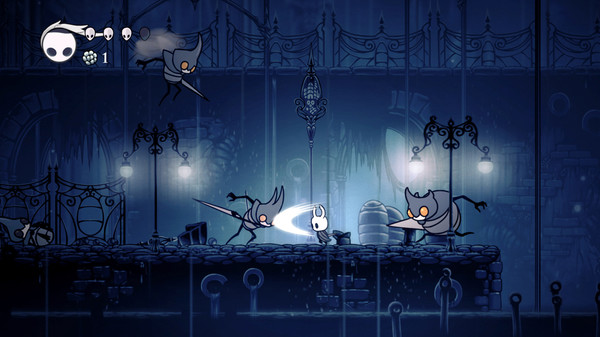
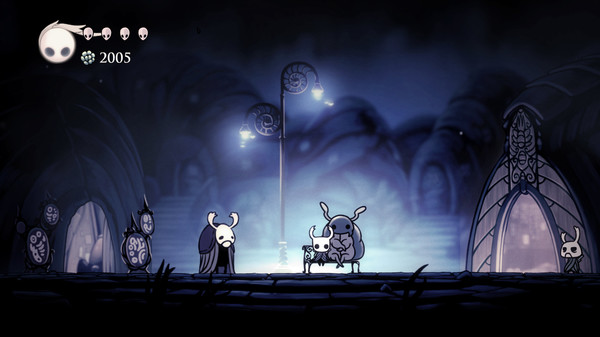
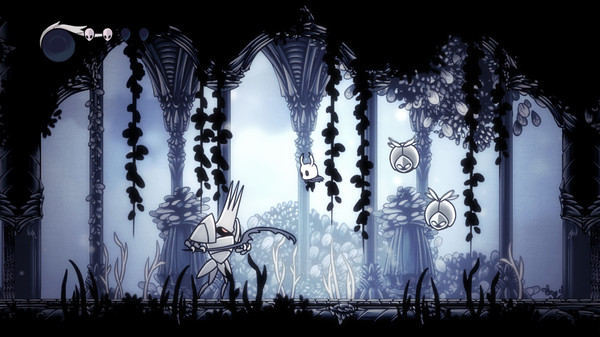
The setting and atmosphere of Hollow Knight is the dark and dingy underground kingdom of Hallownest. The game is very cryptic and it is pretty much left up to the player to interpret the plot through subtle clues scattered through the environment. There are plenty of different environments for the player to discover and explore, each with a completely unique setting. These gloomy areas are accompanied by a matching moody soundtrack. While the game definitely has a drab vibe to it, there are plenty of charming moments. For example, there are these cute little Grubs scattered throughout the world that have been trapped in jars. As you find them and set them free you can visit them back in their home and the Grubfather will give you a present for each one that you have rescued. Accompany moments like that with the beautifully hand-drawn art style of Hollow Knight and you have a game that is simultaneously dreary and endearing.

hollow 3

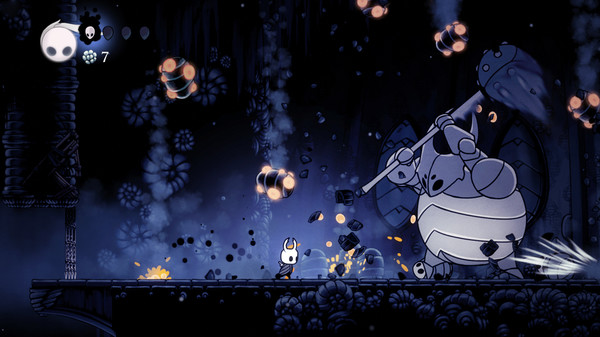
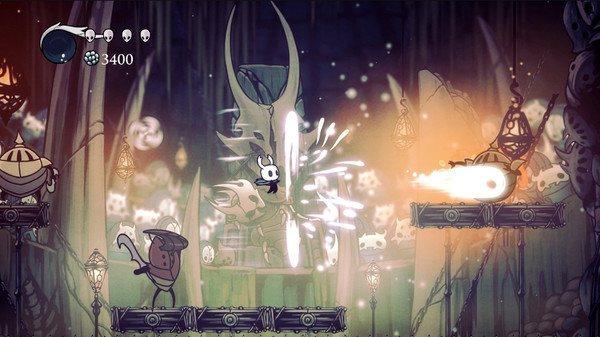
Do not let the cutesy bits of Hollow Knight fool you, this game can be brutally difficult at times. It starts off slow, as most metroidvanias do, but quickly ramps up as you acquire new abilities. There are many difficult boss fights and platforming sections that took me numerous tries to master. Despite this, I never felt like the game was unfair, it achieved a perfect balance of difficulty. It was challenging enough to be entertaining and engaging, but it was never frustrating. While another recent metroidvania in Ori and the Blind Forrest focused mostly on platforming, Hollow Knight is much more combat focused with platforming sections scattered throughout. There are dozens of unique boss fights to perfect and complete. When you are fighting bosses, you are exploring the masterfully crafted world of Hollow Knight.

hollow 2

As a metroidvania, Hollow Knight has a big, interconnected, sprawling world. As you acquire new abilities and items you can access new places that were previously unavailable to you. This world was particularly well thought out. It is incredibly easy to get from area to area, as they are connected in such a way that makes them simple to navigate. There is so much to be found in the world of Hollow Knight. Grubs, health upgrades, magic upgrades, new abilities, upgrades to abilities, and new items are all around the player. There is so much to discover and be found that I was constantly enthralled with the exploration aspect of this game. One pretty unique thing about Hollow Knight is that it really never tells you where to go. It is up to the player to explore and stumble upon the correct path. Many of the paths that you will take will lead to boss fights, new abilities, and secrets, but a lot of these things are completely optional to complete the game. I really loved the fact that the game does not tell you where to go. There is less pressure to move forward, and it opens up a much bigger window for exploration. This game lets you play and discover at your own pace. Instead of saying “Well let me go here and move forward in the game”, I was saying “Let me explore and I will see what I stumble unto”. The latter is much more compelling, especially in an exploration based genre like metroidvanias.

hollow 4

One of the most common complaints that I have heard about Hollow Knight was its map system. When you discover a new area, you have to first find the cartographer to sell you the base map. From there you have to explore on your own to record the full map. Some people do not like this because they claim it makes navigating new areas a chore and a hassle. I do not agree with the sentiment in the slightest. I quite enjoyed that feeling of mapping out areas for myself. When you can see the whole map from the start, a lot of the excitement of finding different paths is lost. The only criticisms for Hollow Knight that I have is that I would have liked to see the base town of Dirtmouth to be built up throughout the course of the game. Maybe some new vendors to sell the player some items that would help locate secrets at the end of the game. In games like this, I can reach about 90% full completion pretty easily, but finding those last few secrets and items can be like searching for a needle in a haystack. So, towards the end of the game I would have liked to see some way to find those secrets that I missed. Other than that, the only real issue with Hollow Knight is that is really nothing “new”. It does not introduce any spectacularly new mechanics or revolutionize the genre. That being said, it does a fantastic job of taking all the greatest aspects from other games and combining them into the best metroidvania that I have ever played. While I value innovation pretty highly, I also greatly value the ability for a developer to perfect a genre and Hollow Knight does exactly that.

hollow 6

I rarely talk about prices of video games, but I think something has to be said in the case of Hollow Knight. This game is only $15 for a ton of entertainment, just to complete the game it will take about 20 hours. To get the true ending or 100% the game it takes more in the realm of 30-40 hours. Compare this to other fantastic indie games like Owlboy, Ori and the Blind Forrest, and Shovel Knight. Those games are about $20-$25 and will last the player maybe 10-15 hours. Not only is Hollow Knight a phenomenal game, but it gives you a pretty big bang for your buck.

hollow 5

All in all, Hollow Knight is one of the best games that came out this year, and that says a lot. I cannot sing enough praises for this game. If you like metroidvanias, 2D platformers, or 2D action games, definitely check this one out. It is expertly crafted and is quite possibly the best metroidvania ever made. For these reasons, I give Hollow Knight a 10/10. It may not introduce anything entirely new, but it does a damn good job of perfecting the formula.

NieR: Automata (2017)

NieR: Automata is a lesson in not judging a book by its cover. You may think that it is just a niche Japanese game at first glance, but I encourage you to give it a chance. Yoko Taro, the mastermind behind the cult classic Drakengard series, teams up with Platinum Games, who developed critically acclaimed action games Bayonetta and Metal Gear Rising: Revengeance, to make a truly memorable experience. It is a truly unique, fun, and mind-bending experience provided by NieR: Automata which makes it an unforgettable game. This review will be spoiler free, but I will talk about the unique way that this game is structured.

2

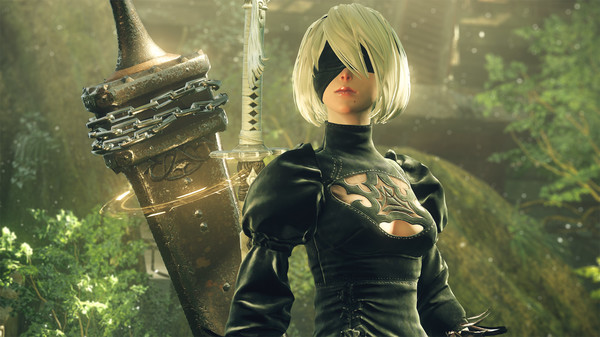
NieR: Automata is the story of a war, not between humans, but between androids and machines. Androids were created by humans, while the machines were created by alien invaders to wipe out mankind. Androids were made to imitate humans, in both physical appearance and in how they act. The machines look more like robots and seemingly are not capable of individual thoughts or emotions. You play as the android 2B who is assigned to fighting the machine forces alongside her partner 9S. 2B and 9S quickly realize that the machines have begun to imitate human behaviors and seemingly developed a consciousness. Throughout the game 2B, 9S, and the machines struggle with existentialist concepts.

7

The world of NieR: Automata is filled with philosophical questions and concepts. The androids and machines frequently question their own purpose and why they exist in the first place. Both in the main story and in side quests the machines and androids have troubles coming to terms with their existence. Interestingly enough, many of the side quests drop hints and introduce you to the concepts before the main storyline runs with these ideas. When the machines develop their own thoughts and freewill, many lose their purpose. The machines find human records and start imitating the info that they have found. Some develop a hobby and take it to an extreme, some form cults and kingdoms, others form villages and settlements. The biggest question asked is are these machines and androids really alive, and is their consciousness real, or just a program? Other questions are posed, for example if we lose our memories, are we still the same person? These are just a few of the questions posed, many more are touched on but you really should experience them for yourself.

6

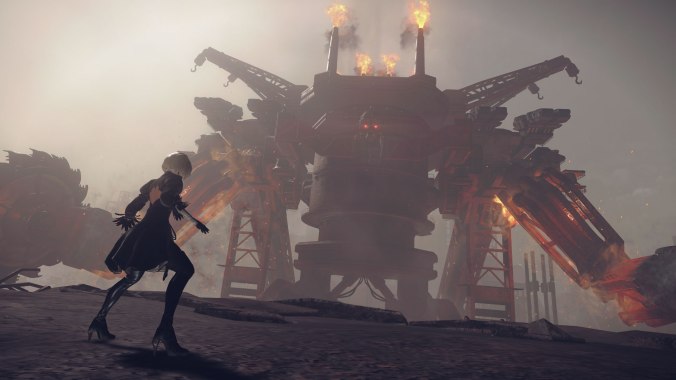
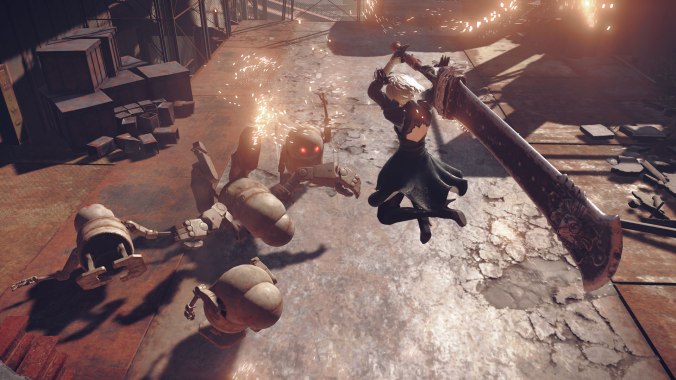
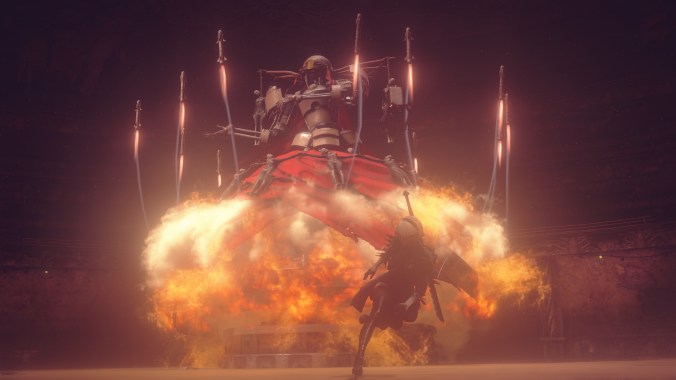
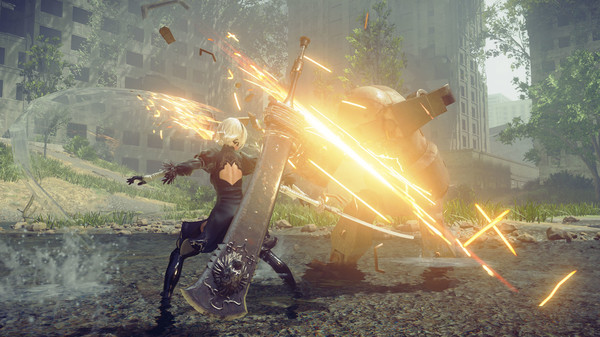
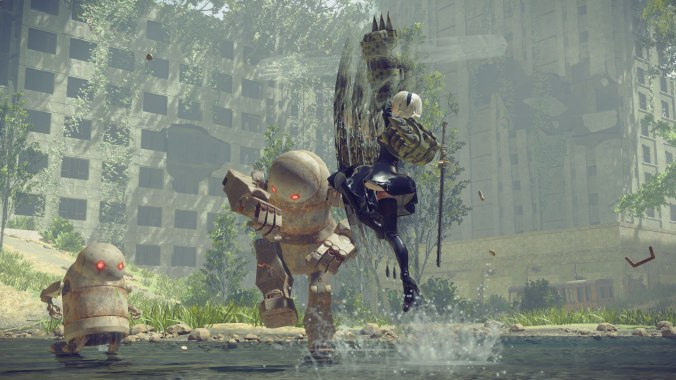
The gameplay of NieR: Automata is fast paced action. It takes a little while to get a hang of the controls, but it is extremely satisfying and fluid once you get used to it. 2B can select two weapons to fight with and string combos together with. You also have access to pods, which are floating robots that you can use to fire a steady stream of bullets at the enemy. Pods also have special abilities like lasers, bombs, the ability to slow time, etc. that the player can use to their advantage. On top of that, you can customize your plug-in chips to give you stats like more damage, healing, speed, among other things. You can even take out elements of your heads up display (HUD) to make room for more combat oriented plug-in chips. All of these elements made for a completely customizable experience with infinite options. You can play with all sorts of different combo options to really step up your game. Unfortunately, for the most part you did not need to learn many combos, I only needed a few basic combos to beat the game. That being said, there is a lot of room for just playing around and testing out all sorts of different moves. Most of the basic enemies in the game were just fodder and easy to defeat, but the boss fights were truly epic and intense, especially as you learn the backstory for the bosses that you are fighting.

4

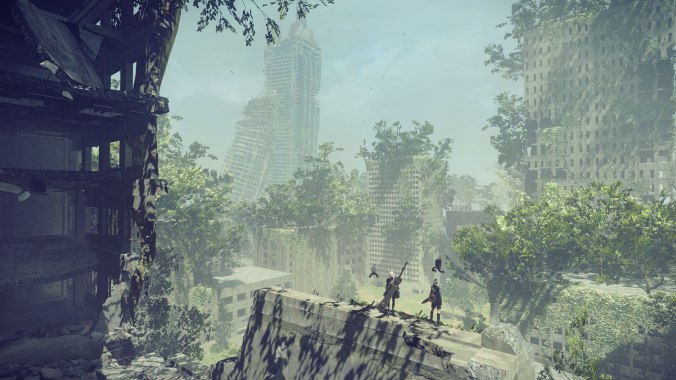
The environment of NieR: Automata is that of a post-apocalyptic planet earth. Most areas reflect this and are bleak, like the city ruins, the desert, and the factory. On the other hand, some sections of the world are beautiful and thriving. The forest and the amusement park are quite elegant. Another interesting aspect of NieR: Automata is the lore. It is technically the next installment of the Drakengard series and it is the sequel to the original NieR. Trust me, you do not need to play those games before playing NieR: Automata. This game is set so far in the future that all that remains of those games are occasional references. That being said, there is a ton of extra lore in the Drakengard and NieR universe. Both in the game and out, there is lots of extra tidbits that you can find. In game, you can find intel which references the past, and out of game there are concerts, books, and stage plays that expand upon this world. This game strikes a nice balance; it is both accessible for newer players, and it allows for more dedicated players to get more info. Something that needs to be mentioned when talking about NieR: Automata is the original soundtrack. It is without a doubt one of the best soundtracks ever created for a video game. It is mostly classical music, but it has a mechanical theme that is evident. The melancholy tone of most of the songs fits the game perfectly. The songs are incredibly memorable and instantly recognizable once you have played the game. What is really cool about the soundtrack is multiple versions of every song were recorded and used so that they blend together seamlessly according to the environment and situation. If you want a taste of the soundtrack, take a listen to this: “A Beautiful Song.” I rarely listen to video game songs outside of the games, but I now often find myself listening to many of the songs from NieR: Automata.

3

The structure of NieR: Automata is incredibly unique. Many modern games have an option to start a New Game+ mode after beating the game. This usually entails a few harder enemies and some new content, but it is mostly the same game. NieR: Automata takes the concept to the next level. There are five main routes in this game, labeled A-E. When you first finish route A, the game prompts you to continue playing as there is more content in the game. This is not a traditional New Game+, route A is only a small portion of what NieR: Automata has to offer, and it would be a shame if anybody stopped playing after beating it. Each route is more like an act of a play or book rather than a full game. You play as different characters to gain different perspectives and different combat options. Routes A and B feel like just a prologue to the story told in routes C, D, and E. Routes C, D, and E are all the same route, just different endings. Once you beat C, you get to play the final sequence again and that is route D, and once you beat D you get to play the final ending, which is route E.

1

Route A introduces you to the world of NieR: Automata and lets you get comfortable in it. It asks you basic philosophical questions and sets up what is to come next. The biggest development in route A is the characters.  Aside from the main characters of 2B and 9S, there is a large cast of side characters, android and machine alike. Many of the machines are quite charming and funny as you get to interact with them. Watching the machines imitate humans by forming families, raising children, and making their own society was very cute. The story of route A is decent, but is obvious that you are missing some pieces to the puzzle. Route B tells the same story as route A, but from the perspective of a different character. This different perspective shows you the story in a separate light, and more facts slowly trickle in as you piece the story together. Routes A and B were certainly great, but the real story is told in routes C, D, and E. These routes are a continuation of the story from A and B, and the game fills in all the holes and answers the questions from the previous routes. The game constantly challenged my pre-conceived notions and changed what I thought. There is so much going on at such a fast pace, just as you are trying to process one big reveal of information, the game hits you with another. Routes C, D, and E have some of the most emotional and impactful moments that I have ever received from a video game. I would wager that these three routes are some of best experiences in any video game, ever. It is truly a thought-provoking adventure, and it is something that you really should play for yourself.

5

While I love NieR: Automata, it does have some issues. The combat is fluid, but after a while it can get a little repetitive. While many of the side quests are interesting from a story perspective, they often boil down “go over there and fetch me this item.” They can be tedious chores, but they are mostly worth it to learn more about the characters. The hacking mini-game is pretty fun once in a while, but I feel like it is overused and can get boring and repetitive. The PC port of the game is poorly optimized and needs work, I recommend getting this game on PS4 instead of PC. My biggest issue with NieR: Automata is routes A and B. Route A would be alright as a standalone game, but it would not be anything special. Route B can get pretty repetitive as it is essentially the same as route A, the new information delivered in this route is too few and far between to make it distinct and different enough from route A in my opinion. While I know that they are just the prologue for routes C, D, and E, I feel like many players missed the memo. I think labeling them “acts” instead of “routes” may provide a big enough distinction to show players that the game has just begun. Along with that, I feel like if routes A and B were somehow combined they would be much more enjoyable and comprehensive experience. They are fine on their own, but are pretty slow paced when compared to route C, D, and E. If you combined them I feel like route A would be a more complete experience with the extra info from route B added, and you would not have to play same story twice just to get a little more info. Looking back on it, I am fine with the way that the game is structured and I understand the purpose of routes A and B, but as I was playing the game I had a different perspective. I enjoyed the game, but I did not understand what made it so special until I made it to routes C, D, and E.

8

I have to say, NieR: Automata has become one of my all-time favorite games. I think it will become a classic title, especially in nerd and gamer culture. The fluid combat, the memorable characters, the desolate environments, the music, the philosophical nature, the melancholy tone, and the unforgettable story truly make this a game worth playing. If any of this sounds appealing to you, definitely pick up this game. I think that is unfortunate that many players stopped part way through routes A and B, as they did not get to really see what made this game so stellar. If routes A and B were combined, I would have no problem calling this game a masterpiece. For these reasons, I give NieR: Automata a 9.5/10. Routes A and B are not quite strong enough, and many players did not see the game all the way through to the end because of it. NieR: Automata is a truly phenomenal game, and it will be remembered as a truly special game.

ABZÛ (2016)

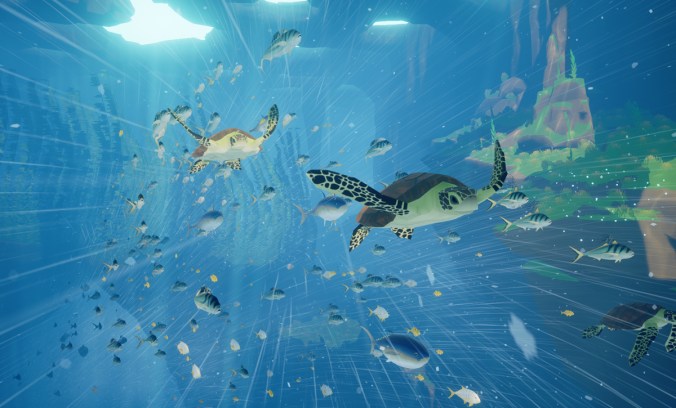
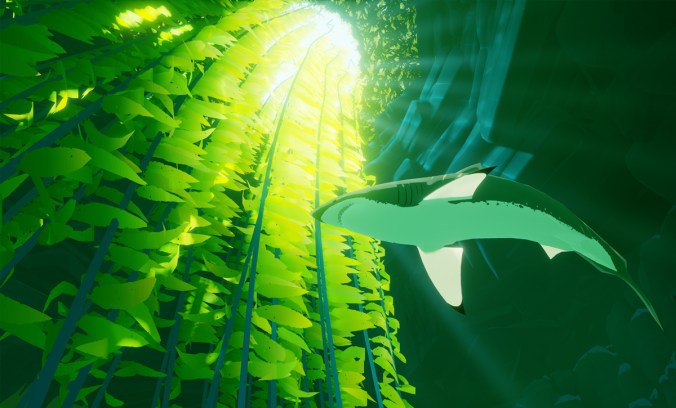
Abzu is the type of game that you will want to sit down with after a long day, turn the lights off, and just relax while playing it. Abzu is an underwater experience made by the developer Giant Squid, who’s founder was the art director for the critically acclaimed games Journey and Flower. While deep sea environments can be dark, disturbing, and unsettling, Abzu manages to achieve the exact opposite. It is a zen-like experience to explore the world Abzu.

Abzu1

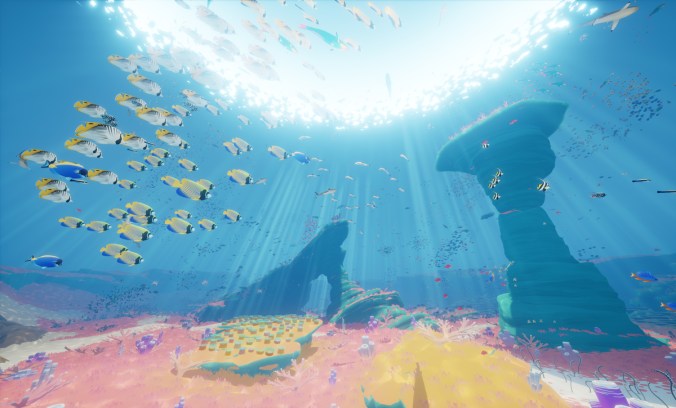
The majority of the gameplay in Abzu is just swimming and exploring the ocean. There are a few puzzles, but they are remarkably simple. Abzu is all about exploring the beautiful unknown, and restoring life and vigor to dying sections of the ocean. Many games with underwater sections often struggle with the controls, but the controls in Abzu are very smooth and easy to get a hang of. There is a vague story told through the environment, but that takes a back seat to the meditative nature of Abzu. Just sit back and chill while hanging out with sea turtles, whales, sharks, and various species of fish. This game is absolutely visually stunning and it creates remarkable atmospheres to be appreciated. The orchestral music in the game enhances the feeling of wonder and discovery as you swim through the underwater landscapes. Abzu is more of an artistic experience than a traditional video game.

abzu2

While Abzu is gorgeous and easy to relax while playing the gameplay is lacking at times. There are eight chapters in Abzu, I was okay with the fact that the first two chapters served as just pure relaxation and discovery, but chapters three and four were just more of the same. The game is only about an hour and a half to two hours, and the first 45 minutes were all very similar and repetitive. Luckily the game picks up a bit in the last half and ends strong. The middle section of the game was just slow, after 45 minutes of swimming around and appreciating the environment, I was ready to move on to something more interesting. That portion of the game just overstayed its welcome a tad too long in my opinion.

abzu3

Abzu is not meant to be a traditional video game, it is more a visual presentation of the beauty of the ocean. If you are looking for action, deep gameplay, or story, you will not find much of it in Abzu. If you just want to sit back and relax for an hour or two, Abzu is the game for you. For what it was, Abzu was a pleasant and memorable experience. I am going to give Abzu a 7/10. It is not groundbreaking or revolutionary, but it was definitely a worthwhile experience.

The Legend of Zelda: Breath of the Wild (2017)

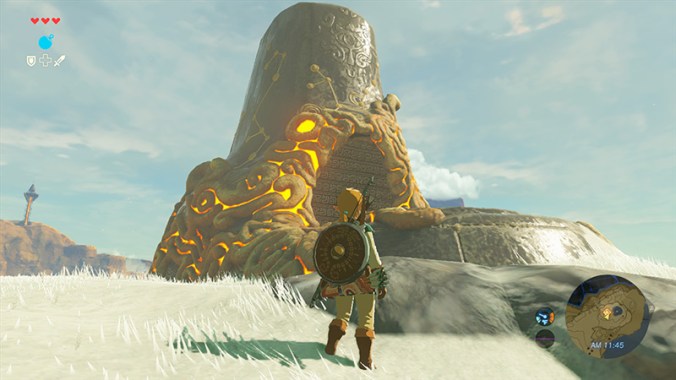
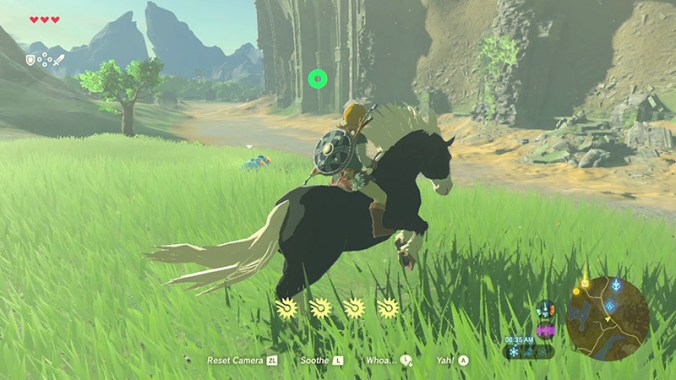
The long awaited and highly anticipated new Legend of Zelda game was released a month ago, and I have spent a lot of time playing it. Breath of the Wild is being heralded as a masterpiece, and I completely agree with that sentiment. This game is extremely unique, especially when compared to its predecessors. Breath of the Wild has a massive and completely open world to explore, and that is what makes it so special. There is a level of freedom that is unheard of in any other video games, you can do anything at anytime, that is in part why I love this game.

botw1

Most open world games allow for varying degrees of exploration and discovery, but ultimately restrict the player in one way or another. The main story, powerful monsters that block the way, or some areas require certain items to access, these are all methods that other open world games use to reign in the player to have them follow an expected path. Breath of the Wild throws all of that out of the window, you can go wherever you want and do whatever you want. Even the main story allows the player to tackle it in numerous different ways, you can even ignore it altogether and head straight for the final boss. There are so many creative solutions to any encounter in Breath of the Wild. Puzzles can be solved in dozens of ways, and there are numerous paths to get to any destination. Even fighting monsters allows for some innovative tactics through the use of the magical Runes that you acquire early on in the game. Breath of the Wild also allows for some creative use of the environment to gain an edge in fights. The fact that you constantly need to switch out weapons as they degrade and break forces the player to think on their feet and choose their weapons according to the appropriate situation. I am constantly surprised by new tricks, even dozens of hours into the game. Overall there is a lot of room for individuality and creativity in Breath of the Wild, it is a blast to just experiment with all the different ways to approach a single task.

botw6

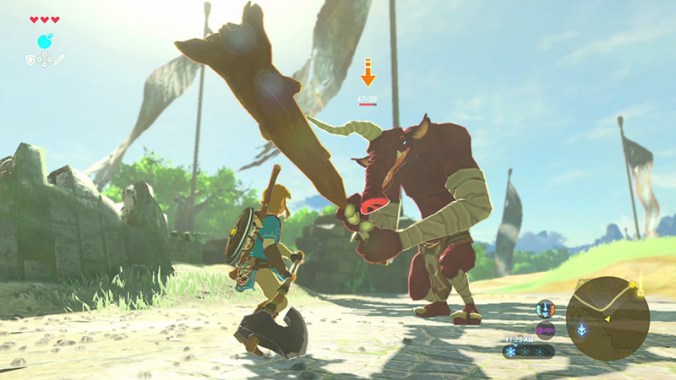
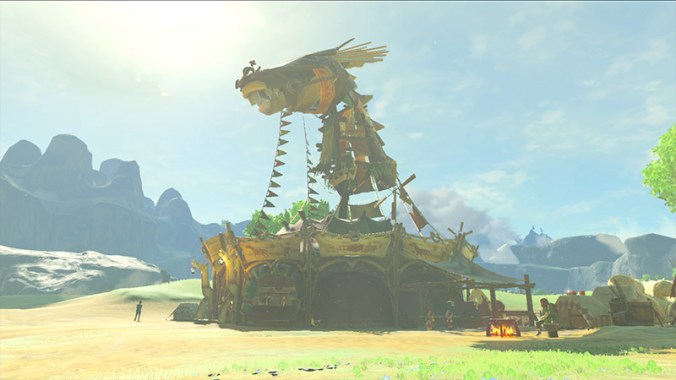
The world of Breath of the Wild is massive, and its filled with things to find. There are plenty of sidequests, monster encampments, towns and stables to be found. Most importantly are the shrines and Korok seeds, which both act as a form of progression. Every four completed shrines allow the player to choose between an extra heart or some more stamina, and every couple of Korok seeds the player can increase their inventory space. With 120 shrines and 900 Korok seeds, there are plenty of these short and sweet puzzles to be solved. These exploration related objectives are a method for the player to keep up with the scaling difficulty as the game progresses. This is the most difficult 3D Legend of Zelda game that I have played by a long shot. Many enemies have the capability to kill the player in a single hit early on in the game. These enemies require to you be prepared, have precise timing, as well as creative thinking if you want a chance at defeating them. Certain enemies are extremely punishing if you misstep, which I think is a welcome change to the previously easy Legend of Zelda series. There is so much to do in the land of Hyrule, if you are worried about the world being “big but empty”, fret no more because there is no lack of things to do in this game.

botw2

There were many risks taken in the development of Breath of the Wild. The game does away with many traditional Legend of Zelda elements. Instead of using the Master Sword the whole game, now you use a plethora of weapons. Link can now wear a variety of different sets of clothing, all with different effects, rather than the green get-up we all know him for. There is voice acting for dialogue, which there has never been in a Legend of Zelda game. Traditional dungeons are swapped out for shrines and divine beasts. Link can now jump if you hit a button. Instead of memorable themes and melodies, the game goes for a much more atmospheric and understated soundtrack. All of these changes were huge risks as The Legend of Zelda series has been following a specific formula for a long time, and Breath of the Wild breaks the conventions. It has been six years between the release of Skyward Sword and Breath of the Wild. This game was delayed multiple times to polish it, and I love Nintendo for making the decision to delay the release and perfect this game. Shigeru Miyamoto himself said a famous quote that I find applicable “A delayed game is eventually good, but a rushed game is forever bad.” Many risks were made during the development of this game and Breath of the Wild is all the better for it.

botw4

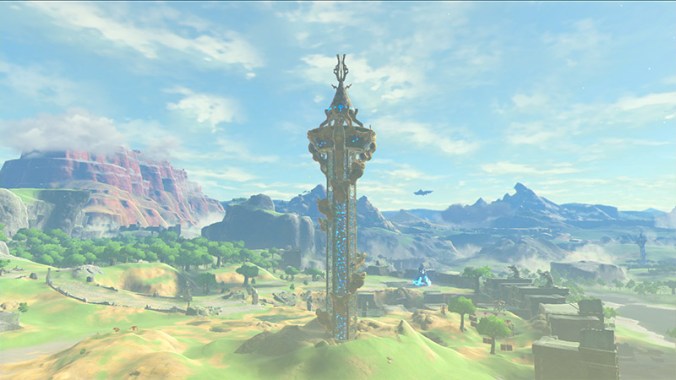
The beauty and awe-inspiring nature of Breath of the Wild is unparalleled. From rolling hills of lush grass, to dense and foggy forests, to the shifting sands of the desert, to snowy mountain tops, to rushing rivers,  there is just so much atmosphere that I just had to sit back and take in. The games magnificent environments are only complimented by its beautiful art style. I could spend hours just walking around Hyrule doing nothing but admiring all the scenery. Everything is well animated and pleasant to look at. The survival aspect of this game is also quite charming. You can no longer just chop grass to get hearts and arrows. Now you need to collect resources to cook meals that replenish your hearts as well as giving special benefits. For arrows you need to visit the small towns in stables to replenish your stock which encourages the player to interact with all the non-playable characters (NPCs) in the game. The NPCs are charming and have some depth to them, even if their quests are simple. Instead of a woman saying “get me 3 dragonflies”, they tell you that their little sister loves dragonflies but the woman is too scared to get them herself. Just a minor narrative change like that makes all the difference. Throughout the game there are many seemingly minor things that enhance the experience drastically.

botw3

I believe that no game is perfect, and Breath of the Wild is not an exception to that rule. It is extremely important to note the size of these issues, as most of them are nitpicks that I only discovered after dozens of hours of play. The first and most noticeable problem are the FPS drops. In graphically intense areas like villages or battles with many enemies, the FPS can and will drop. It happens often enough that it hurts the experience a little, but the vast majority of the time the game runs smoothly.  The first time in rained in Hyrule I thought it was atmospheric and beautiful. Then it kept raining, and raining, and raining. It feels like a third of the time in the game is spent in the rain. It is nice once in a while, but eventually it just gets dreary. The rain also stops you from climbing anything or using any fire related items, so that can slow the players progress by a significant amount. A little rain is fine, but I wish the developers had toned down the amount of rain in this game. There are a few small quality of life things that I would like to see, like faster cooking and faster animations of getting in and out of shrines. Issues like that are fairly minor but after many hours of playing the game I think I stopped caring about the shrine completion animation and I just wanted to skip it. Overall, I feel like while all of these are issues, they are fairly small and only noticeable after hours upon hours of play. In fact, all of these issues are fixable and I hope to see them resolved in future patches of the game.

botw7

Breath of the Wild manages to capture a feeling of childlike wonder and amazement. I feel like this game will be talked about ten years from now and it will be a benchmark for phenomenal open world games. I loved every minute that I played of this game. It breaks conventions and takes The Legend of Zelda in a whole different direction, and I appreciate the risks that the developers took in making this game. The amount of delays, setbacks, and risks all paid off in a spectacular fashion in the experience that is Breath of the Wild. The amount of creativity, thoughtfulness, depth, and soul in this game is astounding. It has a few flaws that I would like to see fixed, but they are specks of dust on the masterpiece that is Breath of the Wild. I firmly believe that this will be remembered as one of the greatest games of all time. For these reasons I give The Legend of Zelda: Breath of the Wild, a 10/10. I cannot recommend this game highly enough, and it is a must play for anybody and everybody.

Inside (2016)

Six years have passed since Playdead released their first game, Limbo, which I talked about here. Playdead’s new game, Inside, follows the same formula as Limbo. They are both very moody, dark, and disturbing puzzle-platformers. I was a little hesitant going into Inside even though it received fantastic reviews because in my opinion Limbo fell a little flat. After playing Inside, I can safely say it greatly improved upon the preexisting formula from Limbo. Overall, the strengths and weaknesses of Inside seem to mirror Limbo with some improvements. However, most importantly Inside has introduced a stunning narrative element. I am going to keep this review spoiler-free, as Inside has a lot of mystery and intrigue that I do not want to ruin for anybody.

inside

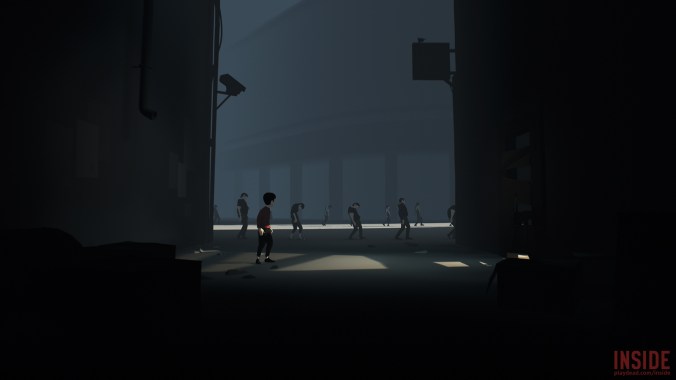
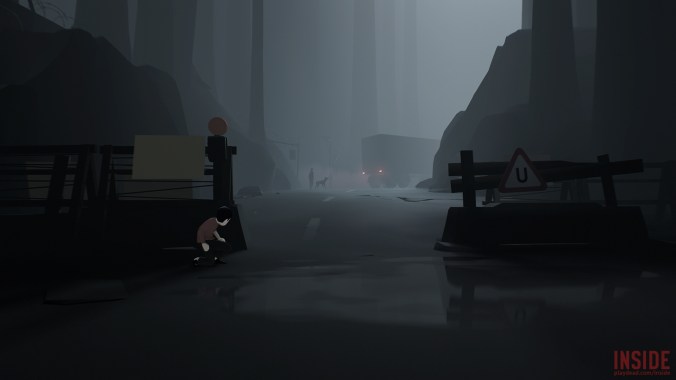
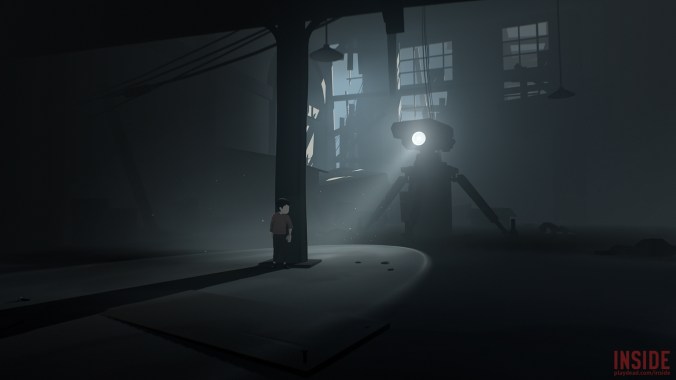
The most memorable and impressive element in Inside was its ability to tell a gripping story without any dialogue. You are dropped into a surreal and dystopian world with no idea what is happening or what your goal is. You quickly progress from area to area, watching what is happening in the background, until you start to piece together the plot. I loved the fact that you have to draw clues and hints from the environment instead of a story just being read to you through dialogue. Even if you pay close attention to everything that is occurring around you, a lot is open to interpretation. The game is purposefully ambiguous and leaves plenty to your imagination to piece together and figure out. The dimly-lit world and art style of Inside serves to compliment its central themes. The underlying motif of the game is all about control and conformity but how it is interpreted is all up to the player, and that is the beauty of Inside.

inside-2

While Inside did a great job with its environment and story, it suffered similar issues to its predecessor, Limbo. Both of these games suffer in the gameplay department. Inside still has a few of those trial-and-error puzzles that plagued Limbo, but thankfully they have been significantly reduced. The bigger issue for Inside was its lack of difficulty. There were many different puzzle elements and concepts which kept the game interesting through the means of variety, thankfully. The game would introduce these creative new elements and spend awhile doing simple puzzles to let the player get a hang of the new element. Then they would drop the element and move onto something else entirely. Nothing seemed to move past the basics, and the game infrequently combines elements to make for more complex puzzles. I never felt like the game was getting progressively more difficult and complex, as a puzzle game should. The gameplay was not bad, it just got a little dull and slow after awhile.

inside 3.jpg

Ultimately, Inside was a great little game. It only takes three to four hours to complete, but it is an extremely memorable experience. The depressing and cryptic world of Inside is unforgettable. It is beautifully crafted and animated, and its commentary on control and conformity is phenomenal. I would definitely check out this game if you are into moody, mysterious, and ambiguous stories. If you are into more fast-paced action or gameplay oriented games, Inside is probably not for you. For these reasons, I am going to give Inside an 8/10. It was a strange little game, and I really enjoyed it.