Hyper Light Drifter (2016)

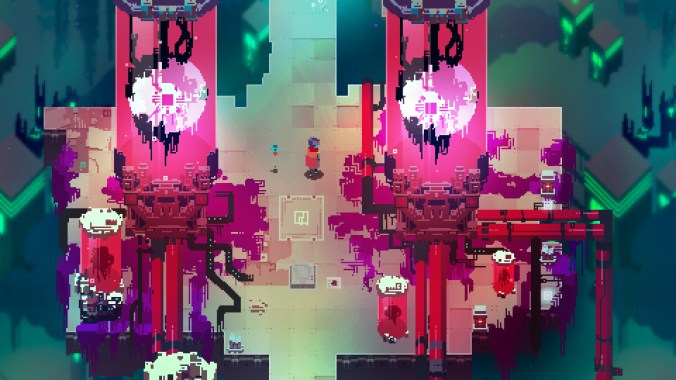
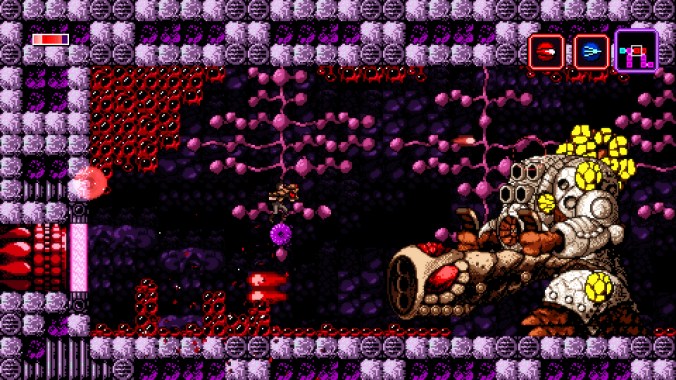
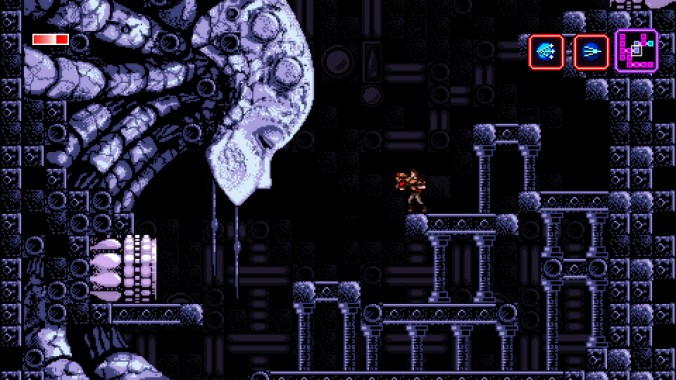
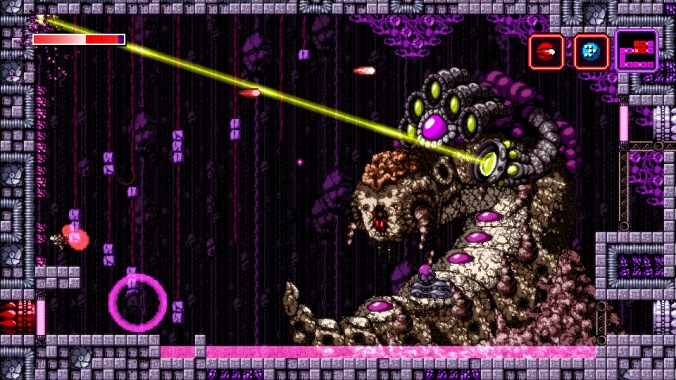
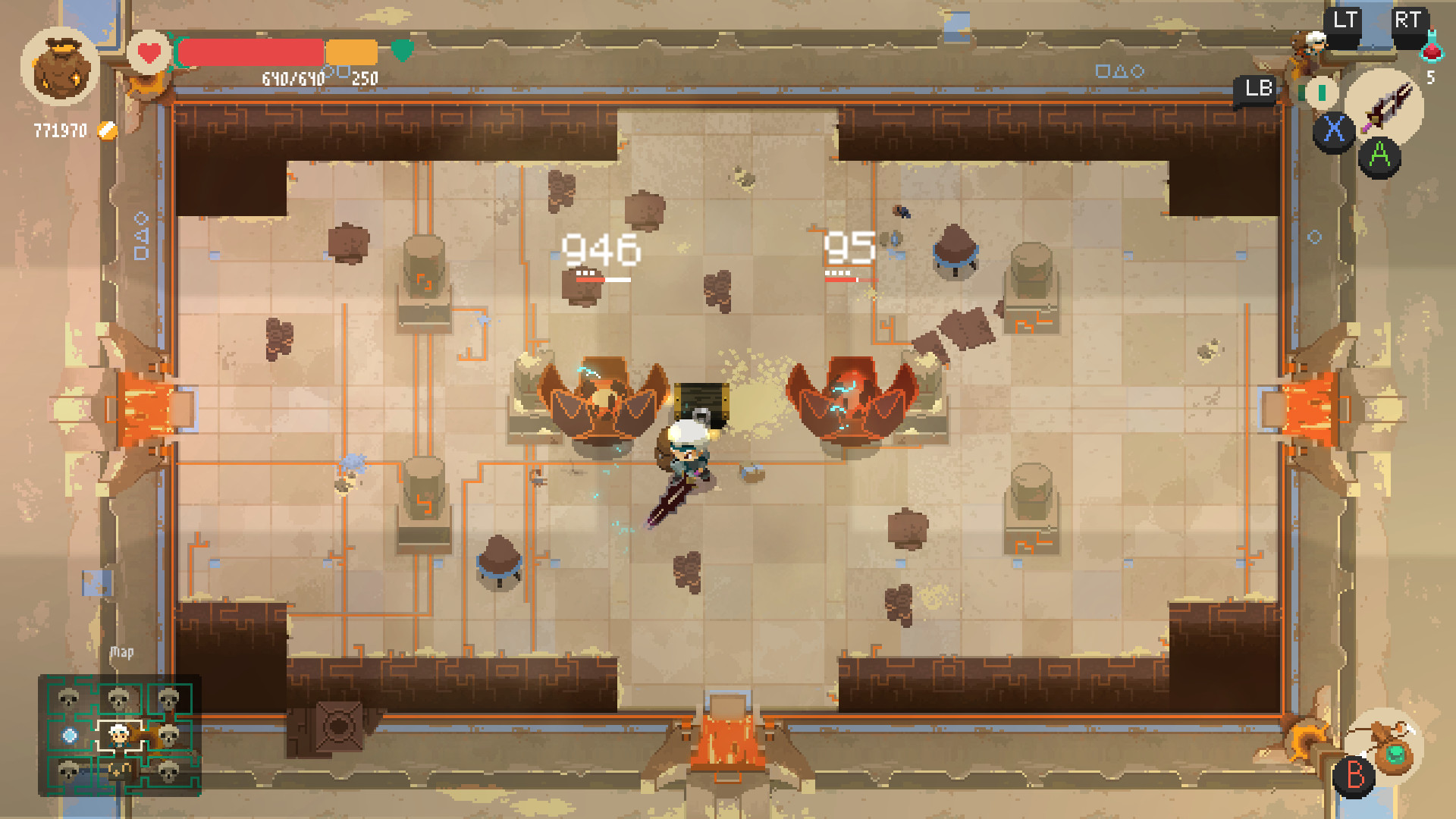
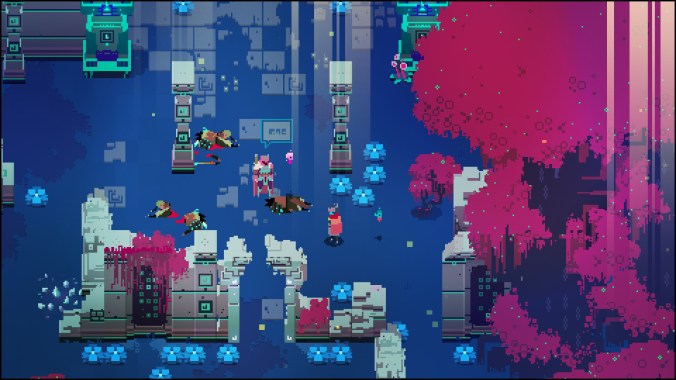
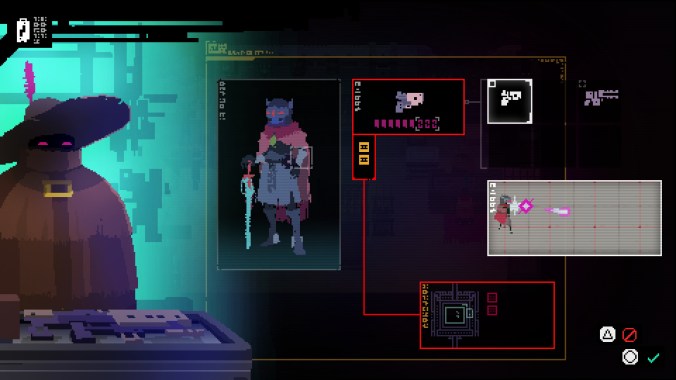
Without a doubt, one of the most influential series in history is The Legend of Zelda. The early top-down adventure games are immensely popular and hundreds of other games drawn inspiration from them. One of those inspired games is Hyper Light Drifter. Hyper Light Drifter is a top-down 2D action-adventure game. You shoot and slash your way through a futuristic post-apocalyptic environment. This game is brimming with fast-paced action and satisfying combat.

5

What originally drew me to Hyper Light Drifter was just how similar it looked to Furi, which has quickly become one of my favorite games. I absolutely adore the sci-fi samurai aesthetic. To be honest, Furi and Hyper Light Drifter are so similar in their styles that its somewhat unnerving. Both games are top-down action titles featuring a futuristic swordsman wielding a glowing blue sword, a pistol, and a red cape. Both the characters seem to have unclear goals and motivations. And both games were released within a few months of each other. Spooky. That observation aside, Furi and Hyper Light Drifter have quite a few differences in the gameplay department. Furi is a boss rush and solely focuses on perfecting each boss encounter, while Hyper Light Drifter includes more adventure, world building, exploration, and combat outside of bosses.

4

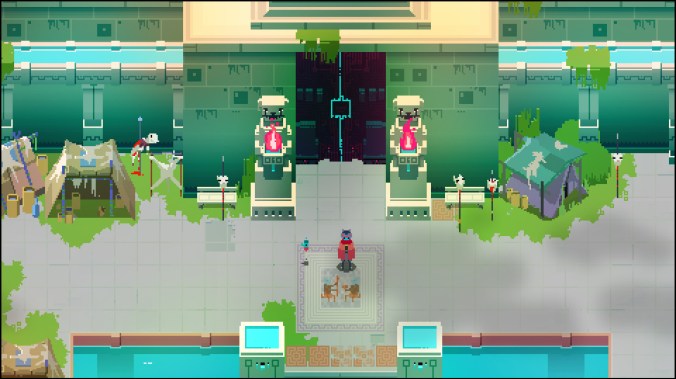
Hyper Light Drifter is a top-down adventure game in which you work to unlock a seal by defeating bosses and activating obelisks. There are four areas, and at the center is a town and the seal that you are attempting to open. Each area is a labyrinth with multiple layers that you must explore to unlock the boss in each area. These areas consist of ruins, landscapes, futuristic tunnels and laboratories, and a variety of secrets to unlock. You can find shortcuts that make the maze easier to navigate, new guns to use, and diligent exploration will yield tokens that can be used to purchase upgrades. These upgrades come in a myriad of options such as sword abilities, gun upgrades, additional dashing effects, and some other choices. I enjoy these upgrades as they are generally new abilities to add depth to combat rather than just strict damage or health upgrades.

3

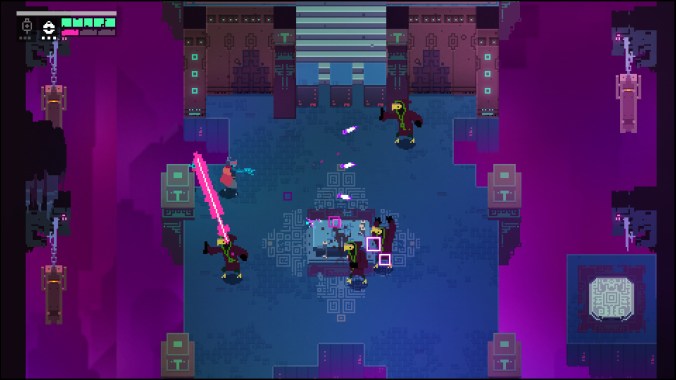
The combat of Hyper Light Drifter is extremely fast-paced, and the scarcity of healing resources make even the smallest encounters challenging. This is because you can only carry a few health-packs at a time, and you have to find them scattered as you explore. This leads to you trying to avoid any and all sources of damage so you do not have to waste a health-pack. I quite like this as it makes even simple encounters more interesting because I was trying to not get hit at all. The player has a number of tools in their kit to fight enemies. The sword being the primary method of attack, and the gun being a nice long-ranged weapon to sprinkle in some damage. The gun has limited shots that refill when you hit enemies as to stop players from just shooting at enemies and forces you to get up close and personal. The dash is obviously used for evasion and to close the gap between you and distant targets. On top of the base combat, the previously mentioned upgrades add a ton of new mechanics to be utilized. All this makes for engaging and fast-paced combat as the player swiftly dodges in and out of projectiles, avoids melee attacks, and returns fire with a barrage of bullets and sword strikes.

2

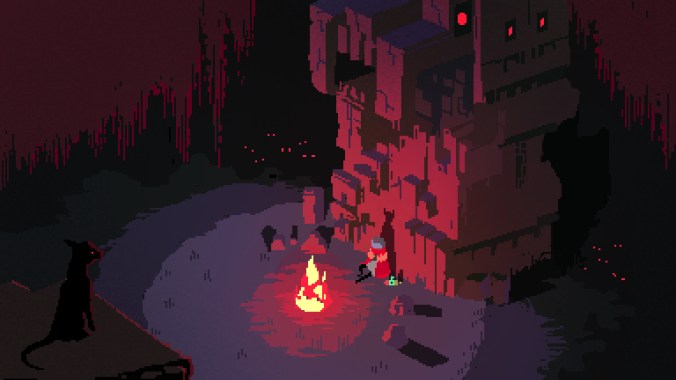
The storytelling of Hyper Light Drifter is completely wordless, and relies entirely on visuals for the player to deduce the story. I personally like vague and cryptic styles of storytelling that let the player piece together a narrative, games like Dark Souls do it well. Unfortunately, Hyper Light Drifter is a little too vague for its own good. There’s not a lot of story, and most of it is told through quickly flashed images. It feels like the developers had a clear idea of what the plot was, but failed to portray it in a cohesive manner. With some code deciphering, the story can be interpreted, but most people will not go through the trouble.

1

Other than the incomprehensible storytelling, my other big issue with Hyper Light Drifter was a performance problem. Apparently, a few versions of the game (namely the Twitch and GoG clients), have a bug which makes the game unplayable after a short period of playtime. I received the game through Twitch, and after about 45 minutes, the game entered a bizarre slow-motion state. I had to restart the game after every 45 minutes to prevent this issue from occurring. Its not a big deal, but it was a pain. Especially since at first, I thought the slow-motion was an intended mechanic and I played in slow-motion for about 10 minutes before I realized that it was very obviously a bug. I’ve read that this issue does not happen on the Steam version or console versions of the game. Hopefully, the developers fix whatever is plaguing the Twitch and GoG versions.

6.jpg

As a whole, I really enjoyed the setting and gameplay of Hyper Light Drifter. The fast-paced action and neon-samurai feel are the absolute core of the experience. Even with the lacking story elements and technical issues I still had a blast. It is for these reasons I give Hyper Light Drifter an 8/10. Hyper Light Drifter is a quintessential top-down action game that definitely should be tried by everybody.

Human Fall Flat (2016)

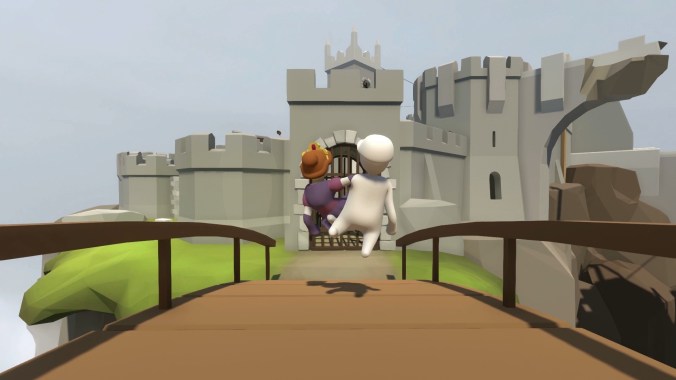
Great coop games are hard to come by, sure plenty of games have optional coop campaigns, but games that were designed around the cooperative experience are few and far between. One of those games is Human Fall Flat. This goofy puzzle-platformer utilizes simple puzzles combined with tricky controls to create a lighthearted and fun-to-play experience with friends. Simply watching your friends struggle to walk from point A to point B can incite some jokes and laughs.

5

At the core of Human Fall Flat is its physics and controls. Most games attempt to make the controls as straightforward and fluid as possible to reduce frustration. Human Fall Flat, on the other hand, makes the controls a bit tricky and unwieldy. This works perfectly in the context of the game. The puzzles are simple, and you can often see the answer right off the bat, but the difficult part is how to actually execute the solution using the limited controls. This often leads to ingenuity or alternatively some silly moments as you and your friends flounder about trying to carry a crate up a hill.

4

Aside from the necessities of walking and jumping, the player can also grab onto things with each individual hand. Usually this is used for climbing, carrying objects, pressing buttons, or manipulating things around you. It can be extremely unwieldy to move the arms and grab onto things, but that’s the point. Since climbing and using your arms are essential to progression, it can be incredibly funny to watch as you and your friends figure out how to overcome even the most trivial of obstacles. The final action you can perform is to fall down. I don’t know if this serves any purpose other than being goofy, but once in a while I like to fall down in a doorway to impede my friends.

3

The levels in Human Fall Flat usually consist of a series of small puzzles and checkpoints, with the ultimate goal of reaching the exit where you can fall down to the next area. Each level has a basic theme such as a power plant, haunted house, or medieval castle. Its pretty obvious how to progress in each area, usually you use some object strewn about to forge a path forward. What I particularly enjoy about the puzzles is that they are fairly dynamic. While there is a clear “intended” solution, there are a variety of other ways to reach the goal. Through clever platforming or other “cheesy” methods like bringing objects from previous areas, you can often clear a section without the intended strategy.

2

Human Fall Flat does not have any game-ruining flaws, but a there are a few minor things of note. The game can be a little repetitive towards the end, the formula of “pick up object, bring object to goal” can only be done in so many ways. It’s a not a big deal because the game is fairly short, but levels do start to blend together as they all essentially follow the same formula. This is likely because the developers could not include more difficult puzzles as they would be immensely more difficult when using the controls of Human Fall Flat. I appreciate the fact that the developers kept it simple to make sure nobody was frustrated while trying to get their character to do what they want. After all, the game is light-hearted fun.

1

While Human Fall Flat is not a genuinely mind-blowing game, I don’t think it is meant to be one. It’s a cute, simple, and goofy game to play with your friends. Something you can play in groups and truly just mess around. Human Fall Flat is good, clean, stupid fun. It is for these reasons that I give Human Fall Flat a 7.5/10. It probably won’t be your favorite game of the year, but you will have plenty of fun with it anyway. Get some friends and start screwing around.


Axiom Verge (2015)

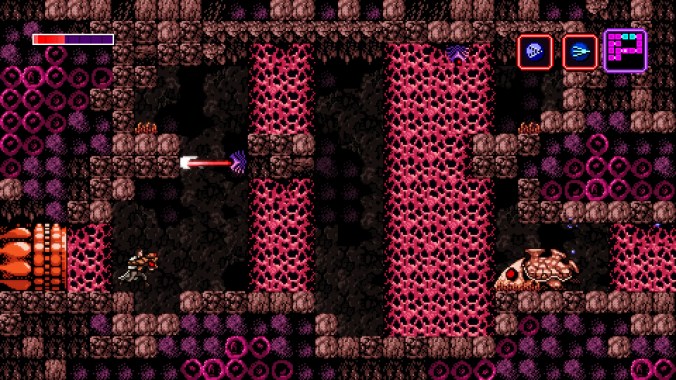
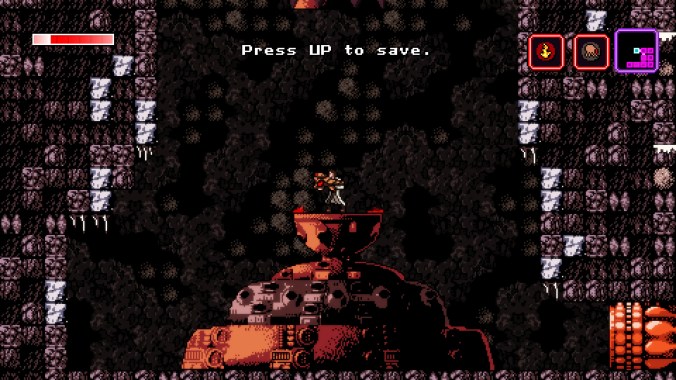
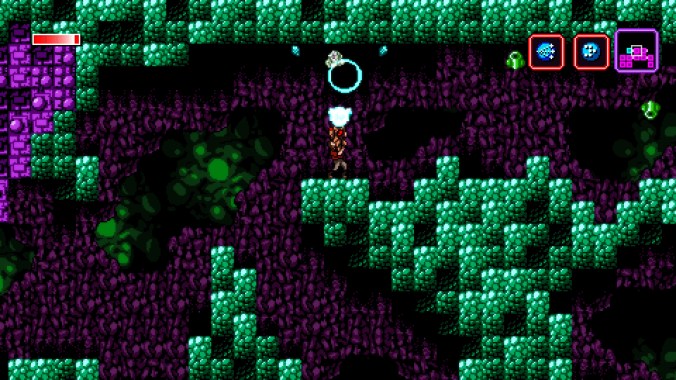
With the surging popularity of indie games, the genre of metroidvanias also is rapidly being filled with dozens of new games every year. As such, it can be difficult for a metroidvania to stand out amongst its peers. That being said, there are a few games that do manage to accomplish this. Games like Hollow Knight as well as Ori and the Blind Forest achieve this through strong level design, beautiful visuals, gratifying combat, and tight platforming. When I picked up Axiom Verge, I was hoping for a modernization of the game that birthed the genre: Metroid. While Axiom Verge did capture a lot of what Metroid was about, it does not manage to stand out amongst its peers.

6

To me, the key of a successful metroidvania is first and foremost level design. The genre is ripe with backtracking and revisiting previous areas. Developers should work to minimize just straight backtracking, and should try to implement it in a more intriguing way. Looping paths that lead back to the beginning of an area, creative shortcuts to cut down on wasted time, or even implementing fast travel can cut down on unnecessary tedium. Axiom Verge does essentially none of this. Areas rarely loop into each other and are mostly linear paths from start to end, and there is no form of fast travel. There is one shortcut to take the player from one end of the map to the other, but it is not available until fairly late into the game. Traveling from area to area in Axiom Verge can be a giant waste of time. And this is compounded by the fact that there is also a heap of aimless wandering.

5

As Axiom Verge is obviously inspired by the original Metroid from over 30 years ago, it carried over some archaic design concepts, but it also does not fall into the pitfalls of many modern-day games. Many modern games unfortunately do not trust their player’s abilities and often resort to handholding. This is patronizing and takes control away from the player. Axiom Verge has absolutely no handholding as essentially no direction is given. I usually like being given complete control of where I go, but this combined with the difficulty of traversing the map frequently frustrated me. Figuring out where to go next can be a daunting task, and when you have to tediously wander back and forth to find a passageway that you missed you can easily grow irritated. With better level design, or even fast travel, this issue could have been alleviated. Luckily, Axiom Verge does implement clever ways to prevent the player from going too far backward. Still, I was often wandering through large areas repeatedly to find what I had missed.

4

Combat is another core component of any metroidvania, and most games for that matter. Axiom Verge is a shooter similar to Metroid. You can aim in a few different directions and use a variety of different weapons to blast through aliens. You can amass a collection of weapons, each with vastly different damage, firing-rates, and the like. Some weapons shoot a close-range burst of electricity, others spray a lot of low-damage projectiles in a wide pattern. While some weapons are strictly better than others, the player is given a lot of freedom to test and find a weapon that suits them. Unfortunately, it is hard to justify using a bunch of different guns when one or two heavily outclass the others.

3

Battling the enemies in Axiom Verge is fairly static. Most of the time you can sit in one spot and shoot until the enemy is dead. It is not incredibly engaging or interesting, and the enemies respawn often enough that trudging back and forth through areas can be tedious. This issue is made worse because most of the environments look similar to one another. The one most interesting aspect of combat is the dashing ability, which is not unlocked until fairly late in the game. Worse still, the controls for executing the dash are ridiculously bad. Double tapping the control stick leads to plenty of accidental dashes, and it is difficult to execute in the moment when you actually want to dash. As far as I can tell, you cannot even rebind the dash to a button or key to make it more consistent.

2

The singular aspect that I enjoyed most of Axiom Verge was the setting and theme of the game. You play as a scientist who gets transported into some sort of “glitch world”. A catastrophe happened here, and you must restore the inhabitants and escape. The story is filled with mystery as you uncover who unleashed a plague upon this world. The idea is also implemented into gameplay pretty well. One of the tools that is unlocked is a decoder that can clear glitches that are blocking your path. This decoder can also be used on enemies to scramble them and turn them into weaker variants of themselves.

1

Overall, I feel like I enjoy the idea of Axiom Verge, but it just felt dated to me. It took almost too much inspiration from Metroid, and did not update or modernize many of the features. It is a decent metroidvania, but its hard to justify recommending it when there are dozens of more unique and tightly crafted games in the same genre. The dated combat, antiquated exploration, and low-bit graphics left me feeling like I was playing a game made in the early 1990s. If you want a retro metroidvania, Axiom Verge may be perfect for you. But if you want a fresh and unique take on the genre, then you would be better served to search elsewhere.

Bloodborne (2015)

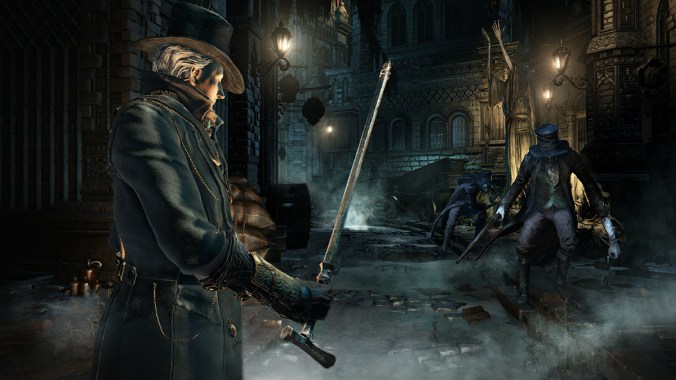
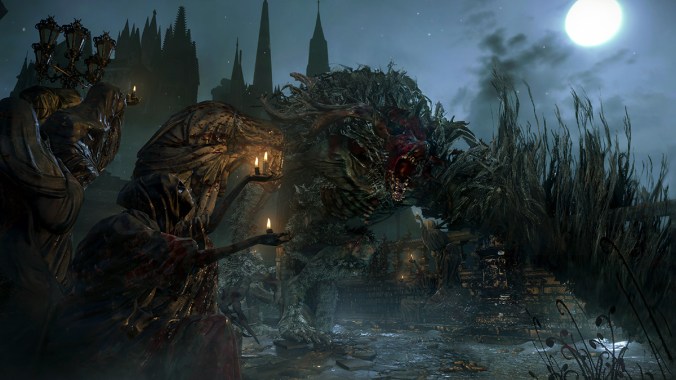
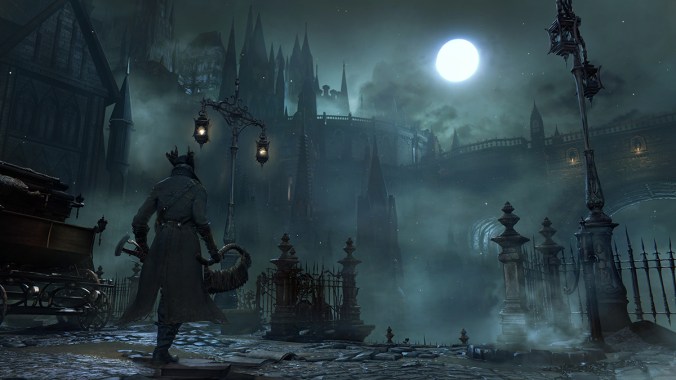
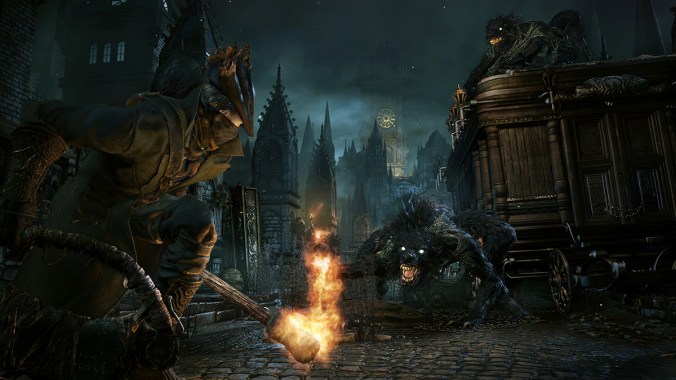
After the enormous success of Dark Souls, director Hidetaka Miyazaki decided work on a new project rather than working on the sequel Dark Souls II. This is what many people, including myself, partially attribute the failure of Dark Souls II to. The new project that Miyazaki created was the gothic and Lovecraftian nightmare of Bloodborne. It is apparent that Bloodborne operates extremely similarly to Demon Souls and Dark Souls, and that is why many people lump them all together as the Soulsborne series. Despite their similarities, Bloodborne is by far the most unique of the bunch. Its horrific atmosphere, unsettling creatures, and eerie locations immediately make it evident that Bloodborne is a different beast than Dark Souls. Moreover, while the controls and general feel of the games are similar, Bloodborne promotes far higher aggression and speed within its gameplay systems.
1

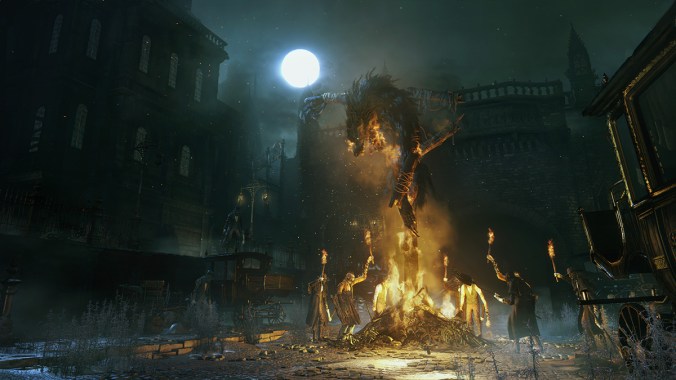
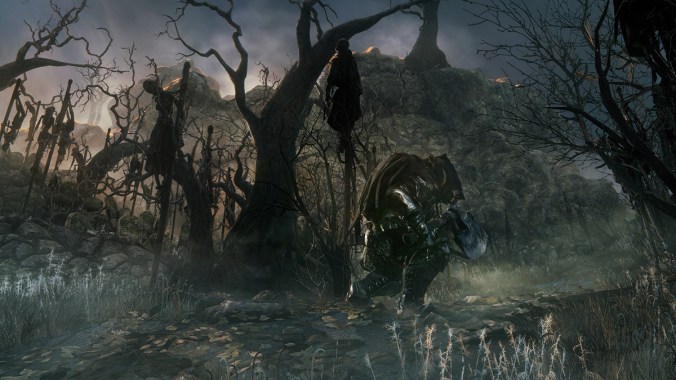
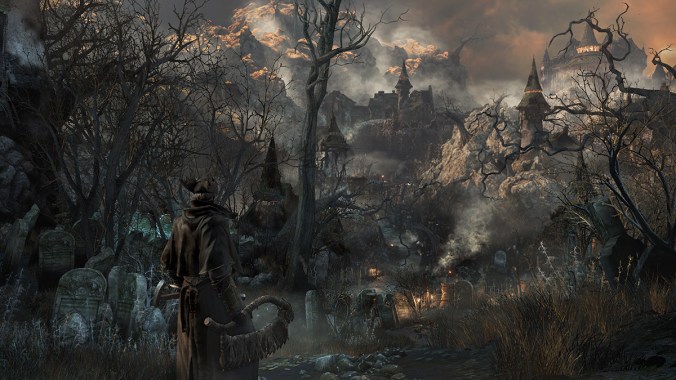
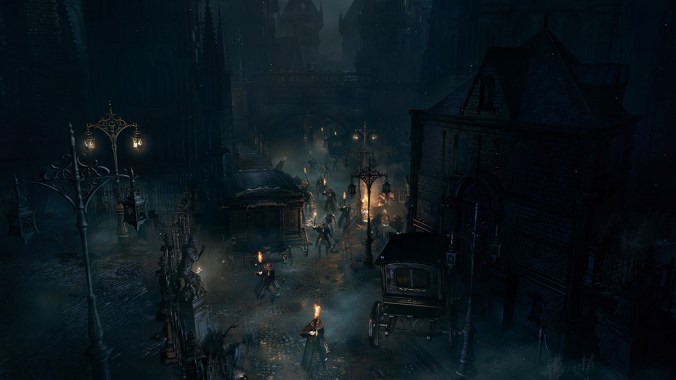
The story and lore of the Soulsborne series often ignored because of its cryptic nature. Bloodborne continues this trend, but I found it easier to interpret and understand than the rest of the series. Dark Souls cyclical nature and crumbling world make the story feel abstract. Bloodborne, while still enigmatic, is much easier to grasp on the first playthrough. The city of Yharnam has become infected by the beastly scourge, a disease which turns men into beasts. The player, a hunter, is tasked with clearing out the beasts and ending the mysterious “nightmare”. The first half of the game is gothic horror, in which science has gone wrong and men have transformed into beastly beings. But a shift occurs at the midway point which reveals the true nature of the game. Without going into much detail that would spoil the surprise, the game takes a turn into a Lovecraftian realm. While I love the variety of the godly kingdoms of Dark Souls, the consistency and tension of the atmosphere of Bloodborne is fantastic.
15

The gameplay and combat of Bloodborne is a 3rd-person action RPG (role-playing game). If you have played any other of the Soulsborne games, it operates essentially exactly the same. You hack and slash your way through hordes of monsters, and if you die you get sent right back to the last checkpoint. In this case, the checkpoints are lamps rather than bonfires. Through evasion and dodging, you must avoid enemy damage as your healing is limited. Bloodborne is just as tough and brutal as any of the other Soulsborne games, renown for their difficulty. Enemies are aggressive and merciless, and the bosses especially will give even veterans such as myself trouble. There are three major changes that set Bloodborne apart from the rest of the series: the healing system, the lack of shields, and the general speed of combat.

The first major departure from the rest of the series is the healing system. One of the most important aspects of Dark Souls was the implementation of the estus flask, the healing item. Bloodborne instead uses blood vials and rally. Blood vials are the equivalent of estus flasks, but instead of five you have twenty per life. Blood vials will always heal 40% of the players health, regardless of level, unlike the estus flask which needed to constantly be upgraded as the player leveled up. I like this change, as having a consistent amount of healing allows the player to make more calculated and informed decisions.
6

The change that I do not like is that blood vials are a limited resource unlike the estus flask. While you can carry twenty with you at any time, you have any leftovers in storage. If you run out of those in storage, you will need to farm or purchase more. I plan to write an entire essay on the different healing systems in the Soulsborne series, but I will try to keep it brief in this review. Farming for blood vials is never fun. Ever. It’s frustrating and tedious. It is especially offensive because you are probably only going to run out of blood vials when you are struggling on an area or boss. So, you are getting beat down by the game and then it tells you “too bad, go farm for 20 minutes to try again”. This is not challenging or interesting, it’s a waste of time. It’s a system that was needlessly changed and provides no benefit. This problem is only really apparent at the beginning of the game, and it does not take that long to farm sufficient blood vials, but I wish I did not have to farm at all. Again, I will go into far more analysis in a future essay, but essentially this system punishes players that were already struggling.

The change about the healing system that I do like is the inclusion of rally. After taking damage, there is a window of a few seconds where hitting enemies will restore some of the damage that you have taken. This system is absolutely genius. It creates a risk-reward paradigm that allows the player the recuperate after a mistake, but an additional mistake will often get you killed. If you get hit, you can try to hit the enemy back to regain your lost health, but if you panic and mess up an extra hit will often times kill you. You can either play it safe by backing off and popping a blood vial, or you can go for revenge to siphon off some health from the enemy. This rewards aggression and dangerous playstyles, and that is what makes Bloodborne so unique.
10

Aside from the healing system, another large change in Bloodborne was the removal of shields. The Soulsborne series has always promoted a knightly playstyle, using a sword in one hand and a shield in the other. The shield allows the player to “turtle up” and play the game safely and with low risks. Of course, it had drawbacks, some attacks were unblockable and holding up the shield would cut down on stamina regeneration. But for the most part, playing carefully with the shield was the most consistent and risk-free method of conquering Soulsborne games. There are no shields in Bloodborne. Well there is one, but it is a joke and it basically states “don’t use this you idiot”. This forces the player to rely on careful movement and well-timed dodges rather than brute force blocking to beat enemies. This change suits Bloodborne well, as it obviously is trying to promote aggression and more risks for higher rewards. The removal of the shield just reinforces that idea.

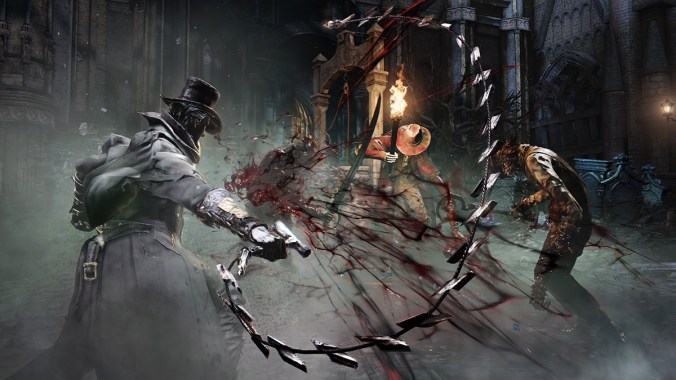
Instead of carrying around a shield in your off-hand, the player is given a few options to swap between. The first being a gun. Guns in Bloodborne generally do very low damage (unless you are building your character specifically to use them), but instead serve a different purpose. Guns can be used to interrupt enemy attacks and stagger them, and if you time your shot well enough you can trigger a parry. Parries operate essentially the same as they did in the rest of the series, if you shoot the enemy as they are about to hit you, they will fall to the ground and give you a chance to hit them for massive damage. But it is, again, high risk and high reward. If you mistime a shot you intend to use as a parry, you will definitely get hit. Other than guns you can use a torch or activate your weapon’s two-handed mode. The two-handed forms of weapons in this game are more interesting than in other Soulsborne games. They often have wildly different movesets from their one-handed counterparts. Additionally, changing forms can activate a transform attack, which encourages the player to switch between one-handed and two-handed fluidly during combat to get the most out of a weapon.
11

The final big gameplay distinction of Bloodborne from the rest of the series is just the raw speed and aggression that accompanies the game. Dodging is faster than previous games, and when locked on to an enemy you will do a quickstep rather than a roll. Dodging also has a fairly low stamina cost, so all-in-all dodging is highly encouraged and you are promoted to abuse those precious invincibility frames. Moreover, enemies, especially bosses, are far more aggressive and ruthless than previous entries. They simply do not let up, and give you very little breathing room. You are encouraged to match their aggression and attack at them as furiously as possible whenever you can. Many enemies and bosses are incredibly vulnerable to stagger and you can string together long chains of attacks safely. This is very different from Dark Souls which promoted safe play and cautious approaches to enemies. This speed, combined with the rallying system and lack of shields is what make it obvious that Bloodborne is just meant to played far more aggressively than other games in the Soulsborne series. That sort of playstyle matches the beastly and bloody atmosphere of the game, and the change is certainly welcome.

Something that I appreciate about Bloodborne is that it makes an effort to “trim the fat”. Soulsborne has always had a lot of redundant items, weapons, and equipment. Bloodborne cuts out a lot of this redundancy. Weapons are far different from one another, and you should play around with them until you find one you like. Furthermore, you get the best armor in the game fairly early on. There is far less time spent painstakingly sifting through equipment to find which has the highest stats. Additionally, Bloodborne has fewer stats to worry about when building your character. All these things I consider to be cutting out unnecessary content that did not add anything other than some confusion. The RPG aspects of the game are more straightforward now than the ever were.
12

All these differences between Bloodborne, so what’s the same? The legendary looping level design makes a triumphant return for one. Bloodborne is jampacked with shortcuts once you beat a level. While this concept was strangely absent in Dark Souls II, I am extremely happy with the quality of the levels in Bloodborne. Once you make your way through a section, there is usually a door, elevator, or gate to unlock that opens a path from the beginning of the level to your current point. This cuts down on repetition and it is immensely satisfying to find that you have looped right back to where you began. Unfortunately, this is not taken one step further like it was in Dark Souls. In Dark Souls, the world design also followed this concept. Entire areas would loop into each other in intriguing ways, and finding efficient ways through the world was a necessity as you would have to revisit earlier areas. This is absent in Bloodborne for the most part, I rarely found myself going back to previous areas and the areas very rarely connect with one another. The world is more linear rather than a labyrinth. Bloodborne relies more on fast-traveling rather than clever world design.

Something that I found odd about Bloodborne was the disregard for system limitations. It was developed as a Playstation 4 exclusive, so system specs are consistent across every player. Therefore, the game should be well optimized for the system that it was made for. I have to admit, Bloodborne is gorgeous. It is probably one of the most detailed and enthralling worlds ever crafted in video games. That being said, these details sometimes strain the system. On a few bosses in particular the framerate drops to unacceptable levels. I am not a stickler for high FPS (frames per second), and I am honestly content with a steady 30 FPS. However, they were a couple of occasions where the game chugs and dips below that threshold. Moreover, load times can get pretty long, but what bugs me about the load times is that you always have to go through two load screens when one would suffice. You can only fast travel to and from the main hub. So, if you want to go from point A to point B you must sit through a load screen to get to the hub, and then sit through another to go from the hub to point B. I wish you could just go from point A to point B with no hub in between. This is especially apparent when grinding for blood vials or bullets, as you must travel back and forth to the hub every time you want to reset the level to farm more monsters. All-in-all, these are not major problems, but it seems odd that the system specifications were not taken into consideration in these instances.
13

By far and away, the biggest issue of Bloodborne is the implementation of chalice dungeons. The rest of the game’s issues are at worst minor irritants, but chalice dungeons are a huge problem. Along with the game’s static progression path, there are also chalice dungeons that are not connected to the rest of the world. These are another kind of progression path, as you unlock deeper dungeons by using materials from earlier ones. The first issue is that they extremely poorly explained in game and the menu does not do it justice either. Essentially there are 10 “set” dungeons that are the same for every player, but you can also unlock randomized versions of these dungeons to explore and get loot from. On paper, it seems like an okay idea. Randomly generated content could give players some things to do once they’ve beaten the game. The issue is that getting to the endgame dungeons is a pain, and a lot of the games content is hidden away in these repetitive chalice dungeons.
14

First and foremost, if they were designed to endgame dungeons to let the player return and always get new dungeons to explore, why must you first go through six low-level dungeons to even unlock the high-level ones? They utterly waste your time and provide no challenge if you attempt the earlier dungeons at the end of the game, but they are necessary for progression. The next problem is the blatant repetition from dungeon to dungeon. All the dungeons are similar and use the same rooms, just in different layouts. Once you have seen a one or two dungeons, you have basically seen them all. It’s a shame because the game has a lot of new enemy types and bosses contained within these chalice dungeons. The game has about 30 bosses in total (not counting downloadable content) and 13 of those are exclusive to chalice dungeons. So, in order to experience all the bosses the game has to offer, you must slog through the ten preset dungeons. Luckily, chalice dungeons are entirely optional. Still, just because they are optional that does not excuse their poor design. I was planning to replay Bloodborne a few times because the main game was just so tightly crafted and fun, but after playing the chalice dungeons I got burnt out.
2

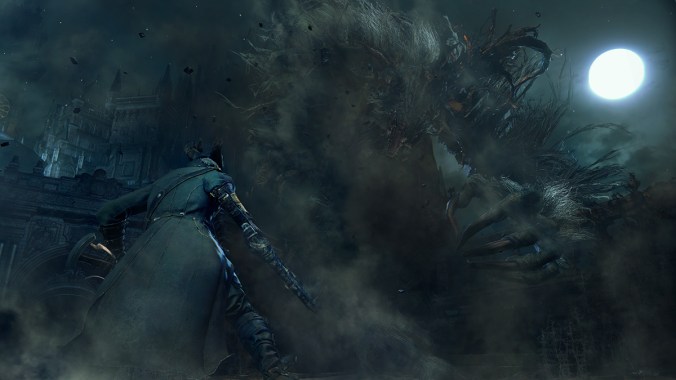
Even though chalice dungeons were a severe misstep, Bloodborne keeps the Soulsborne tradition of having phenomenal DLC (downloadable content). The Old Hunters DLC includes three new areas and five new bosses. Two of those bosses I consider to be some of the best in the whole series. I feel like the DLC of Soulsborne games is always created with the failures and successes of the game in mind. I just find it interesting how the DLC in these games always manages to include the best levels and bosses. Maybe it’s a marketing ploy, or maybe the designers learned from their mistakes and create more fitting content for the respective game. Either way, I highly recommend getting the DLC for any Soulsborne game.
16

Many consider Bloodborne to be the pinnacle of the Soulsborne series, and while I do love this game, I think Dark Souls narrowly beats it out for that honor. The interconnected of the world in Dark Souls is something that blew my mind when I played it. Still, Bloodborne is a close second. It is a more consistent experience, and with the exception of chalice dungeons it is nearly flawless. The aggressive, unrelenting combat gets the adrenaline pumping more than any other game I have played. The terrifying and mysterious world is easy to get immersed in. And every boss and area are high quality. The need to farm for blood vials and the repetitive nature of chalice dungeons knock Bloodborne down a notch for me, but it is still an excellent and essential game. It is for these reasons I give Bloodborne a 9.5/10. If you own a Playstation 4 this is an absolute must play game. Even if you don’t own a Playstation 4, consider buying one if just for this game.
12 is Better Than 6 (2015)

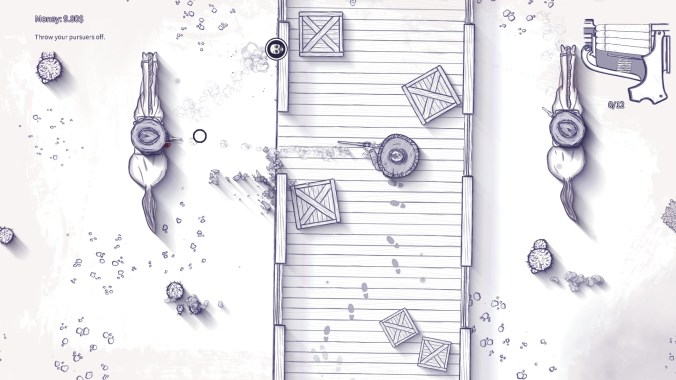
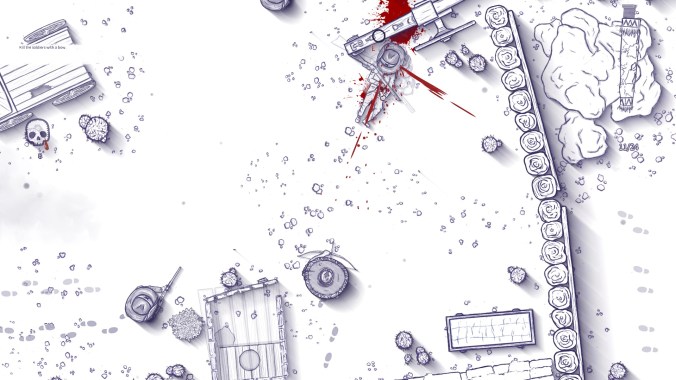
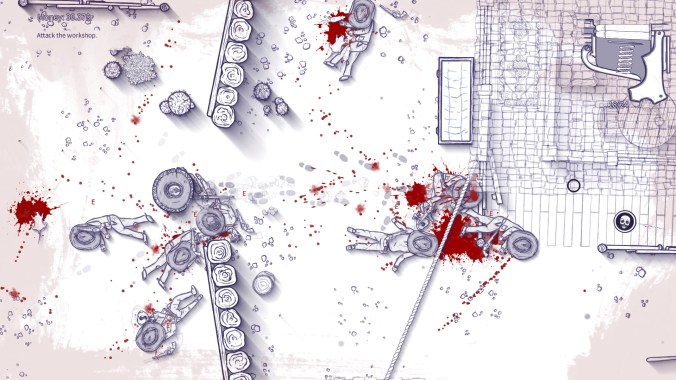
Hotline Miami was an incredibly influential game in the indie scene that revitalized the top-down shooter genre. One of the games that obviously took some inspiration from Hotline Miami is the hand-drawn western adventure 12 is Better Than 6. The concept of one-hit kills and fast paced firefights is shared among these games, but 12 is Better Than 6 does have a few things that set it apart from similar games. Unfortunately, many of those differences come in the form of negatives and frustrating issues that permeate the experience. At times the game shines and you can get those intense moments where you are dodging bullets and returning fire, but most of the time 12 is Better Than 6 is a slog.

7

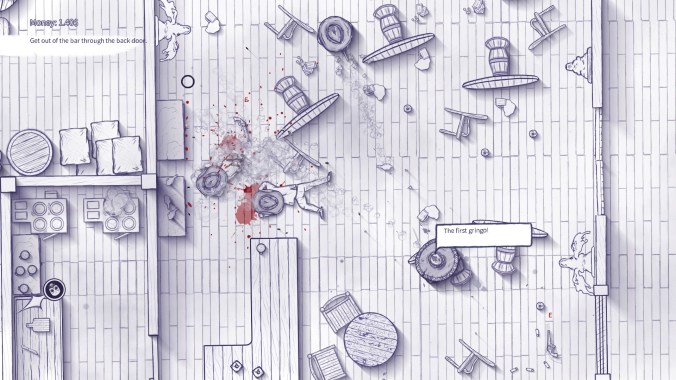
In this black, white, and red Western you play as Juan, a Mexican who lost his memory. You play through small areas, shooting and sneaking your way through to the exit. You’ll be fed tidbits of story at regular intervals and uncover the truth about Juan. While I did enjoy the Western setting and the accompanying music, the story was a mess. Riddled with typos and confusing plot lines, it quickly became difficult to follow what was going on. That’s not such a big deal because dialogue is skippable and in a game like this, gameplay takes precedent over story. Unfortunately, while there are a few high-octane moments in gameplay, 12 is Better Than 6 is chock full of game ruining issues.

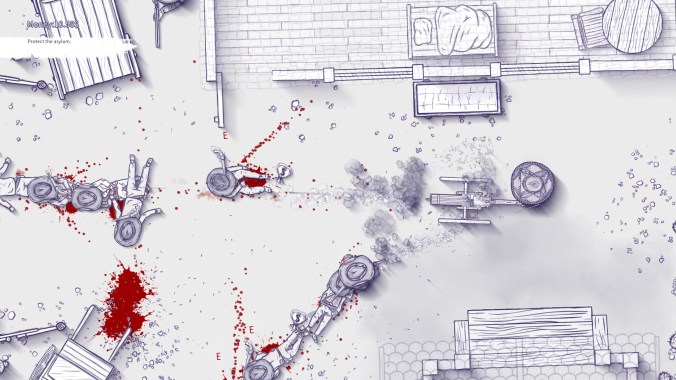
12 is Better Than 6 is a top-down shooter akin to Hotline Miami. One shot is one kill. This results in frantic firefights where you must constantly be moving or risk getting hit by a stray bullet. There are four main weapons: The revolver, shotgun, rifle, and bow. Additionally, you always have a knife for melee combat. Sometimes you will be given some dynamite to blast through large groups of enemies. The idea and concept of 12 is Better Than 6 is solid, all of this on paper sounds great. However, a slew of minor issues and few larger ones kill whatever potential 12 is Better Than 6 had.

6

The first thing that sets 12 is Better Than 6 apart from its contemporaries is that you cannot furiously fire bullets. After every shot you must cock the hammer of the weapon by right-clicking. I genuinely cannot fathom why this was included. It takes awhile to even get used to this mechanic, let alone get good at it. It is incredibly easy to mess up the rhythm of left-clicking to shoot and then immediately right-clicking to cock the hammer. One slight mistiming and the entire cadence is thrown off, leaving you wondering why your gun isn’t firing. Towards the end of the game I got used to the mechanic for the most part, but it just felt like an unnecessary addition. Its inclusion does not add much.

4

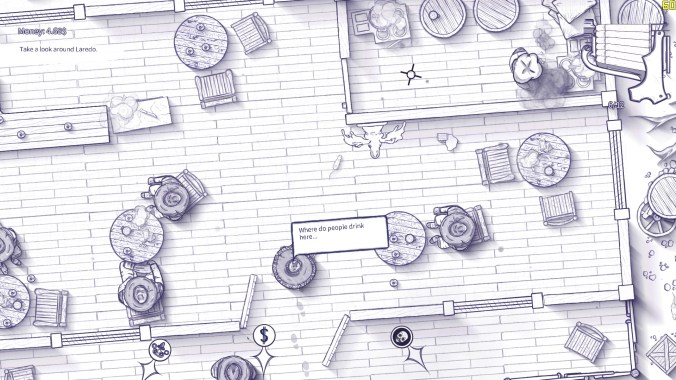
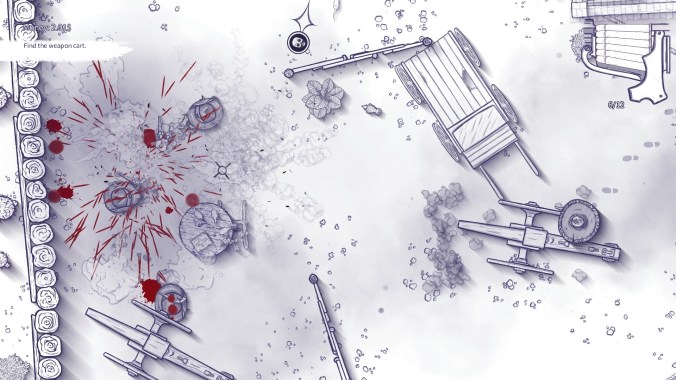
What enticed me to play 12 is Better Than 6 was its black, white, and red hand-drawn style. Truthfully, it looks great in screenshots and trailers, but it does not translate well into actual gameplay. It can be difficult to distinguish enemies from the background and obstacles as they do not “pop” or stand out. At least a few times I walked straight into an enemy that I just did not see. Additionally, when you start dashing through levels and the screen starts quickly moving, everything just starts to blend into each other. Its hard to distinguish anything when it all looks so similar.

5

Something else that bugs me about the game is that while is mostly operates similar to Hotline Miami with the idea of one-shot kills, sometimes this rule is randomly broken. Sometimes enemies will inexplicably survive a shot and will kill you before you can cock and fire your next shot. Even worse is the fact the melee combat suffers heavily from this problem. Much of the time a slash from the knife doesn’t kill the enemy, combine this with the knife’s short range makes melee combat high-risk and inconsistent. When an enemy survives a bullet or stab, you don’t even realize what happened before it is too late. I do not know whether this inconsistency was a glitch or an intentional inclusion, but either way it hurts the game.
Another fairly “minor” issue in the game is its AI (artificial intelligence). Sometimes enemies would completely whiff their shots, run in circles, or ignore the player entirely. Other times they would track me through walls and instantly kill me on sight like the damn terminator. Again, this lack of consistency breaks the flow of 12 is Better Than 6. Speaking of inconsistency, this game also regularly suffers from technical issues such as crashes. At least 4 or 5 times the game crashed on me.

3

While it is evident that 12 is Better Than 6 has a load of these small problems, what really kills the game are the three major design flaws: level design, repetitiveness, and ammo management. The level design of 12 is Better Than 6 would benefit greatly from focusing on smaller and more compact levels. One-shot kill can get aggravating when you are getting shot from offscreen and before you can possibly react. This happens fairly frequently when there are long corridors or wide-open spaces, both of which are abundant in 12 is Better Than 6. This forces players to tackle levels far slower are more cautiously to prevent getting killed by something you can’t see. What made Hotline Miami great was how quickly you could blast through rooms and levels. You ran through like a maniac, befitting of the tone and theme of the game. This same level of speed and risk aren’t possible in 12 is Better Than 6, because you will just get shot from offscreen.
2

Even as just a quick, four-hour game, 12 is Better Than 6 manages to overstay its welcome. It gets repetitive fast. Levels blend into each other and the small variety of weapons makes everything just feel the same. No levels really stood out. Some of the maps are even repeated and reused as filler. The first few levels of the game are basically the same as the last few levels. There’s no variety in any aspect. The art style, the lack of diverse weaponry, and the boring level design all contribute to this feeling of repetition. If you’ve played thirty minutes of the game, you’ve experienced everything the game has to offer.

The most frustrating issue with 12 is Better Than 6 is by far its archaic ammo management system. You carry around some ammo for each of your four main weapons, but the method of obtaining this ammo an incredibly tedious and mind-numbing experience. If you want to pick up ammo from fallen enemies, you must drop your weapon, pick up their weapon, unload it, and pick up your original weapon. You have to do that for every single enemy that you kill if you want their ammo. In levels where you fight dozens of enemies. Why? In most games, when you walk over a dead body you automatically pick up their bullets. This saves the hassle of painstakingly sifting through every body to scrounge for ammo. This issue puts the nail in coffin of 12 is Better Than 6 for me. I want to be able to quickly rampage through levels, and having to repeatedly stop to tediously unload, swap, and reload weapons slows the game to a crawl. Especially since you will probably die a lot as a result of the one-hit kill nature of the game. You will have to go through this entire process every time you fail a level. How anyone thought that this method of ammo management was superior to traditional methods is beyond me.
1

I tried really hard to enjoy my time with 12 is Better Than 6. It’s a genre that I enjoy, and I try to support indie developers. Most of the smaller issues are just minor annoyances, but combining them all makes the game feel inconsistent and incomplete. More importantly, the three major problems absolutely ruined the game for me. The level design, repetition, and outdated ammo management system were just too problematic to ignore. For these reasons I give 12 is Better Than 6 a 3/10. It’s a shame that a solid concept had such poor execution.

Dishonored: Death of the Outsider (2017)

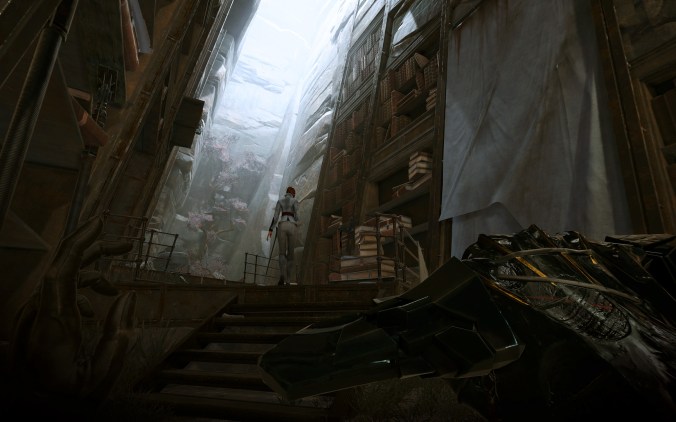
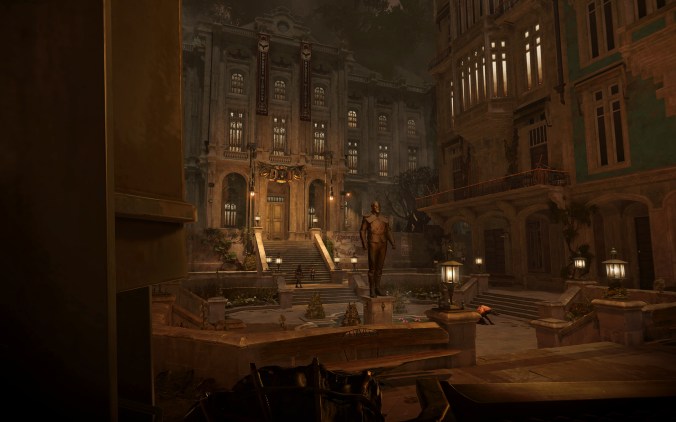
If you read my reviews of Dishonored 2 and Prey, it should be apparent that I am a fan of Arkane studios. I hold those 2 games, as well as the original Dishonored, in high regards. Arkane is renowned for their intricate level design which facilitates a variety of paths and playstyles in every level. Dishonored: Death of the Outsider is a standalone continuation of the series that mostly follows its predecessors’ roots. Despite this, I can’t help but feel the experience was notably hollow and sterile.

6

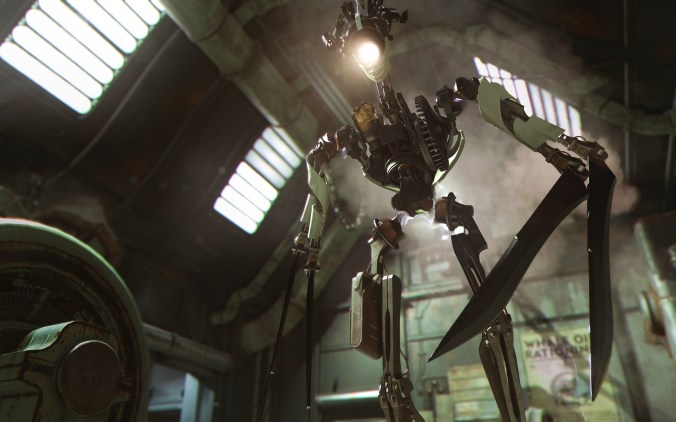
Dishonored: Death of the Outsider may be a standalone experience, but it is essentially an expansion of Dishonored 2. The same engine, characters, controls, and even the same areas suggest that Dishonored: Death of the Outsider is a large DLC (downloadable content) for its predecessor. There are only 5 campaign missions, and although they are supplemented by a few additional side contracts, the game is fairly short. Fret not, because it is priced appropriately even with its low play-time. Still, the game felt a little barren and uninspired at times. The straight copied areas from Dishonored 2 add to this sentiment and make Dishonored: Death of the Outsider feel even shorter and lacking in fresh content.

5

In Dishonored: Death of the Outsider you play as Billie Lurk, an assassin on a mission to take down the Outsider. The Outsider is the source of all the mystical powers that exist in the world of Dishonored. Billie and her mentor Daud believe that the Outsider is responsible for much of the evil in the world and resent him for their magical prowess. To achieve their goal, Billie must uncover the secrets of the void and the Outsider. The player spends most of the game stealing knowledge of how to reach and deal with the enigmatic Outsider. Rather than assassinating or “taking down” targets like in the previous games, you mostly operate as a thief. In addition, unlike previous games there is no chaos system that alters the story depending on how many people are killed. The lack of decision making and game-altering repercussions contributes to the lifeless and uninspired feeling of Dishonored: Death of the Outsider.

4

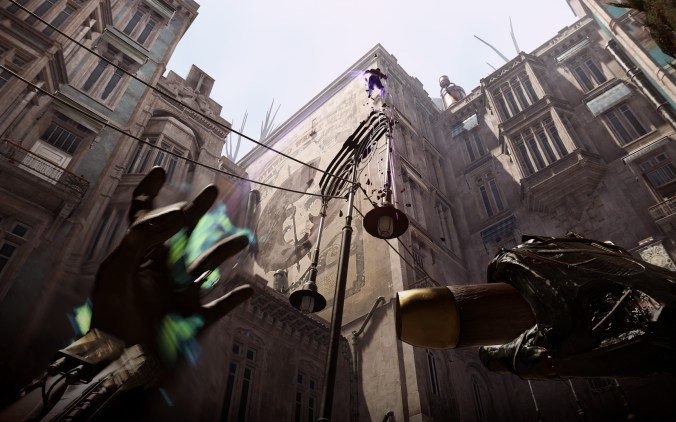
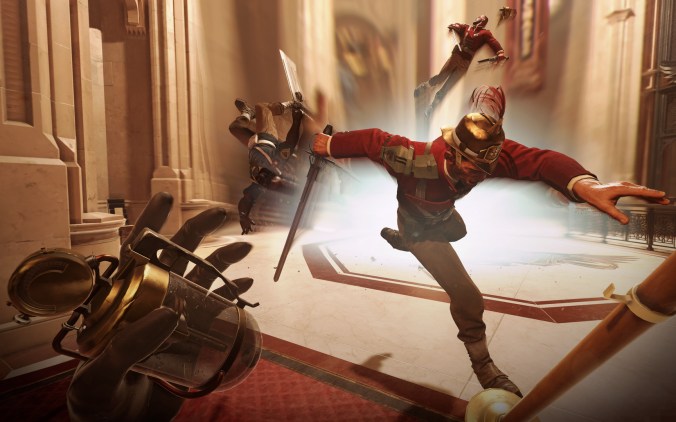
The gameplay of Dishonored: Death of the Outsider mostly mimics Dishonored 2. You traverse large areas, trying to stay hidden and use gadgets and magic to avoid detection. Apart from a few new abilities to play around with, it’s mostly the same old Dishonored. Which is a good thing. Sneaking around, picking off guards one-by-one, and using gadgets are all still integral parts of the game. One big change is that mana quickly automatically refills. You no longer have to go scrounging for things to refill your magical abilities, and this allows for a lot more freedom to test out the new abilities. Some new additions that I enjoyed were Billie’s two new magic abilities. One of them allows the player to briefly “steal” the face of other characters. This is occasionally useful to sneak past a guard or two, but it depletes the mana-bar very quickly and can’t be maintained for long. The other ability, Foresight, is a godsend and an amazing addition to the series. This ability allows the player to briefly freeze time and enter a “spirit” state which allows them to explore their surrounding area. This means you can scout rooms, mark guards, highlight valuable items, and plan methods of attack before ever entering a room. This ability encourages the player to use methodical and strategic approaches that the series is known for.

3

What really disappointed me about Dishonored: Death of the Outsider was its level design. Following up the creative genius and intricate levels of Dishonored 2 such as “Clockwork Mansion” and “Crack in the Slab” is not an easy task. Unfortunately, Dishonored: Death of the Outsider does not live up to this legacy. None of the levels are particularly creative and most seemed somewhat generic. There also seemed to be a distinct lack of multiple paths and routes through any given level. The 3rd mission was the standout for me, the game offers a few points of entry and a multitude of creative solutions to the task of bank robbery. Apart from that level, I felt the game was sorely lacking in options and interesting approaches.

2

Another odd departure from the rest of the series was the larger focus on combat. It may not be implicitly stated that combat is expected in Dishonored: Death of the Outsider, but the combination of a few factors leads me to believe that pure stealth was disincentivized. The first reason is obviously the lack of a chaos system. In previous games, killing enemies would change the state of the game and more rats or blood flies would appear in levels. More importantly, different chaos levels resulted in vastly different endings, and the “best” endings were achieved by having low chaos (not killing many people). Since this no longer exists in Dishonored: Death of the Outsider, the player can kill freely with no consequence. The next indication that stealth is less accessible is the lack of stealth upgrades. There are very few bone charms and upgrades that help the player remain undetected, but there are plenty of combat focused ones. Lastly, level design seems to tend towards combat encounters. There were plenty of instances where there is only 1 way into an area, and it is heavily guarded. After playing the first two games as well as this game trying to be as stealthy as possible, it was evident that it is far harder to go undetected in Dishonored: Death of the Outsider.

1

Despite its shortcomings, Dishonored: Death of the Outsider is still a Dishonored game. Lackluster level design and recycled content makes Dishonored: Death of the Outsider seems far less inspired than its predecessors. Still, it’s a ton of fun to be an elite assassin wielding the powers of the void. For these reasons I give Dishonored: Death of the Outsider a 6.5/10. It’s still a Dishonored game, but it lacks the creativity and heart of its ancestors.

Spider-Man (2018)

I have to acknowledge that I am not a big fan of superhero flicks and I barely follow the Marvel cinematic universe. With that being said, Spider-Man for the PlayStation 4 managed to reel me in regardless of my distaste for Marvel movies. In essence, Spider-Man is the direct translation of a superhero film into a game. All the elements are present: big-budget action, quips and banter, and a story that tugs on your heartstrings.

1

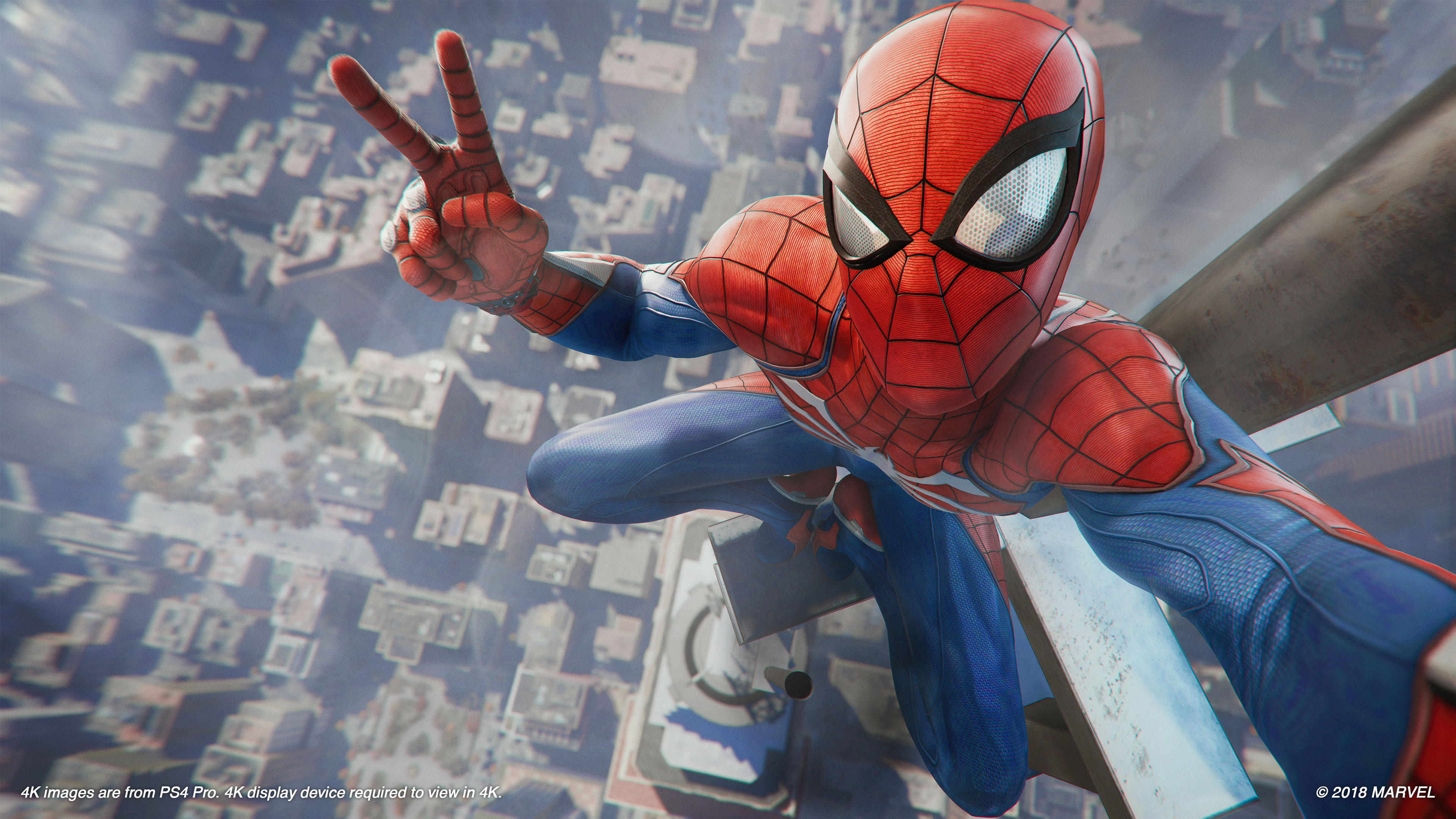
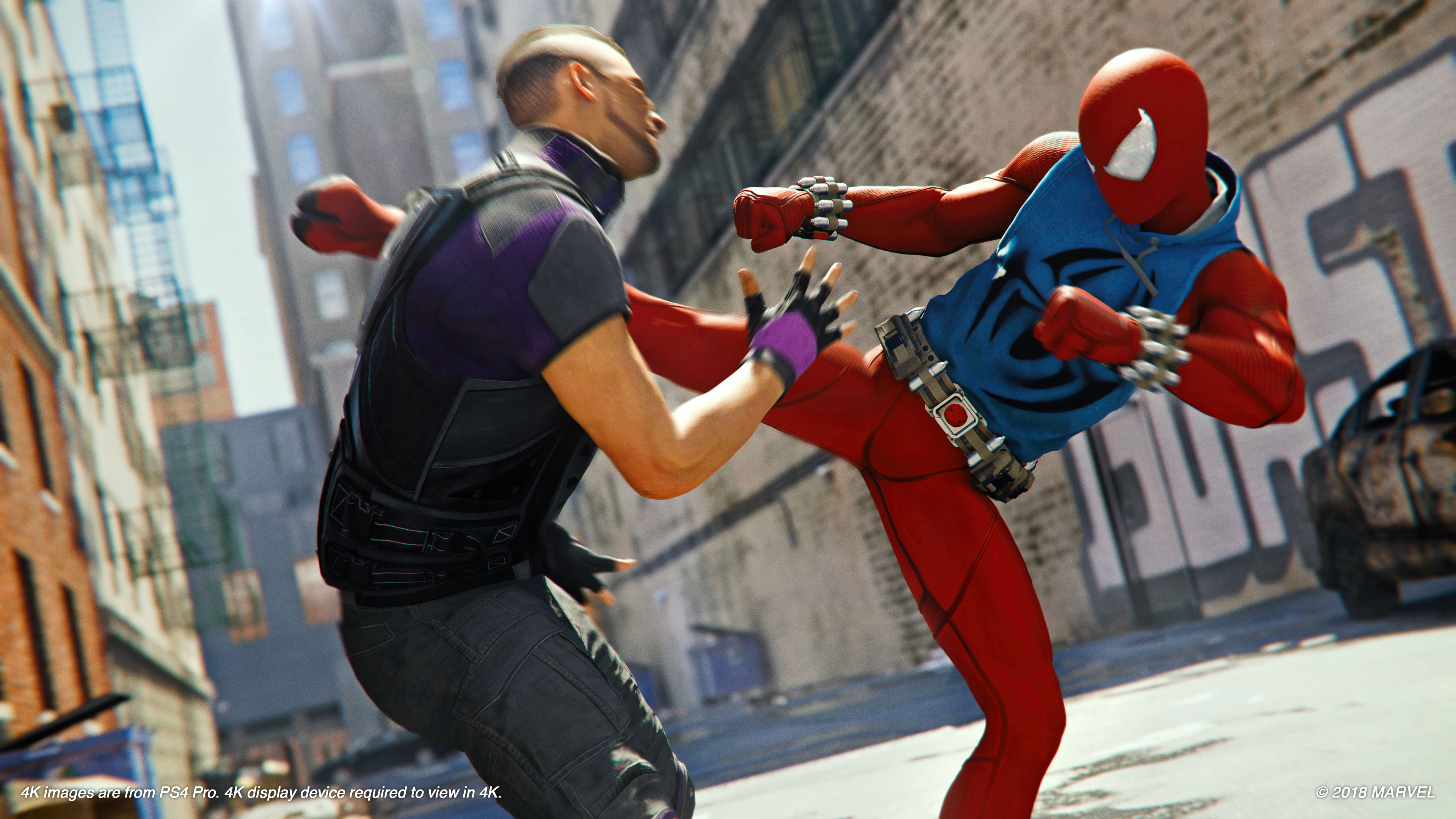
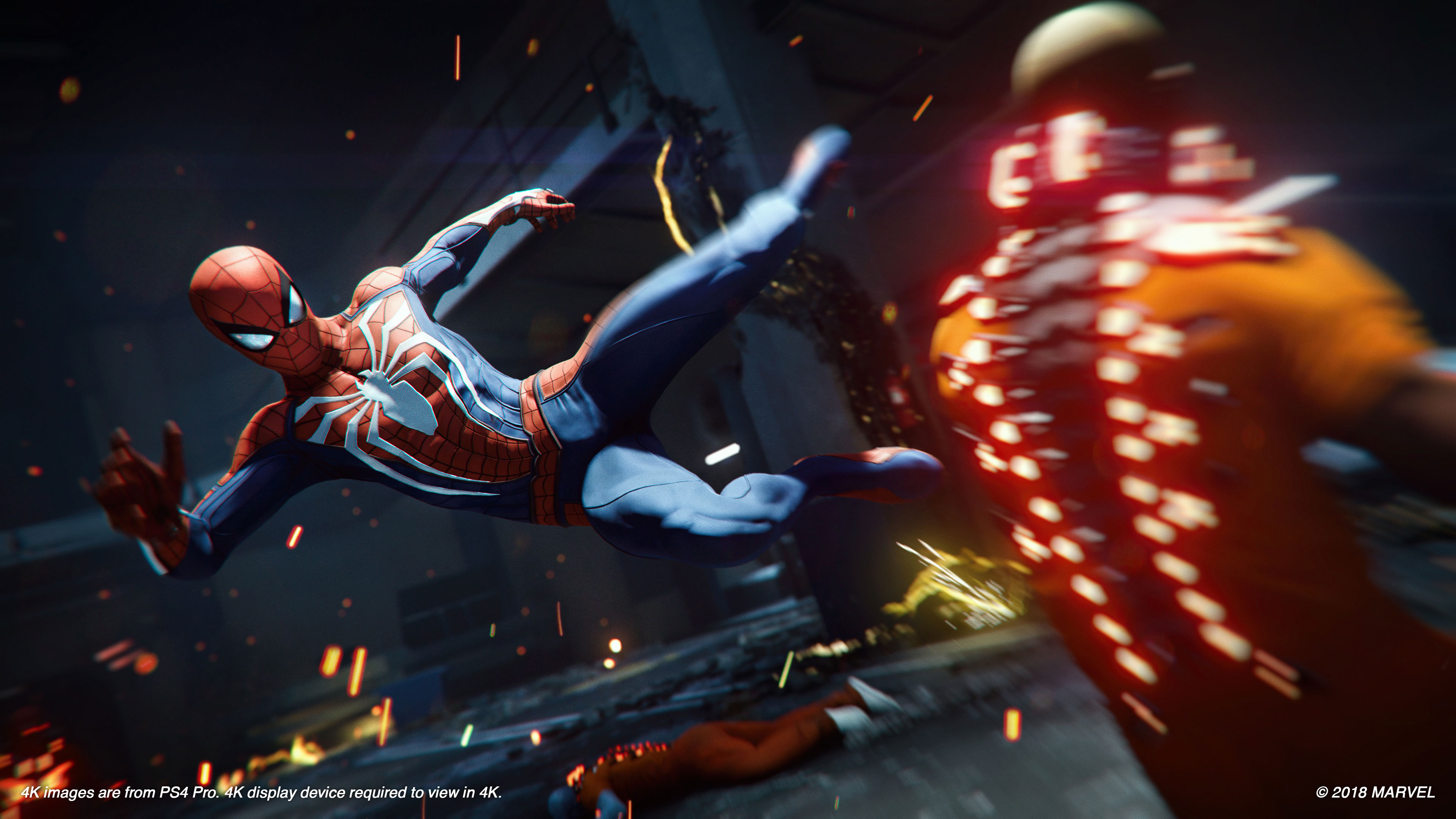
While I find superhero movies boring and repetitive, the interactivity of games makes playing as a hero far more engaging than simply watching one. Swinging about New York City, climbing walls, zipping from point to point, and fighting common thugs just feels natural. Its easy to get into the swing of things as the controls are extremely simple. The accompanying cinematics and animations of Spidey’s swinging, fist-fighting, and web-slinging imbues the sense of heroics. Most of the spectacle is fairly automatic, and you can look stylish just by holding down a button.

2

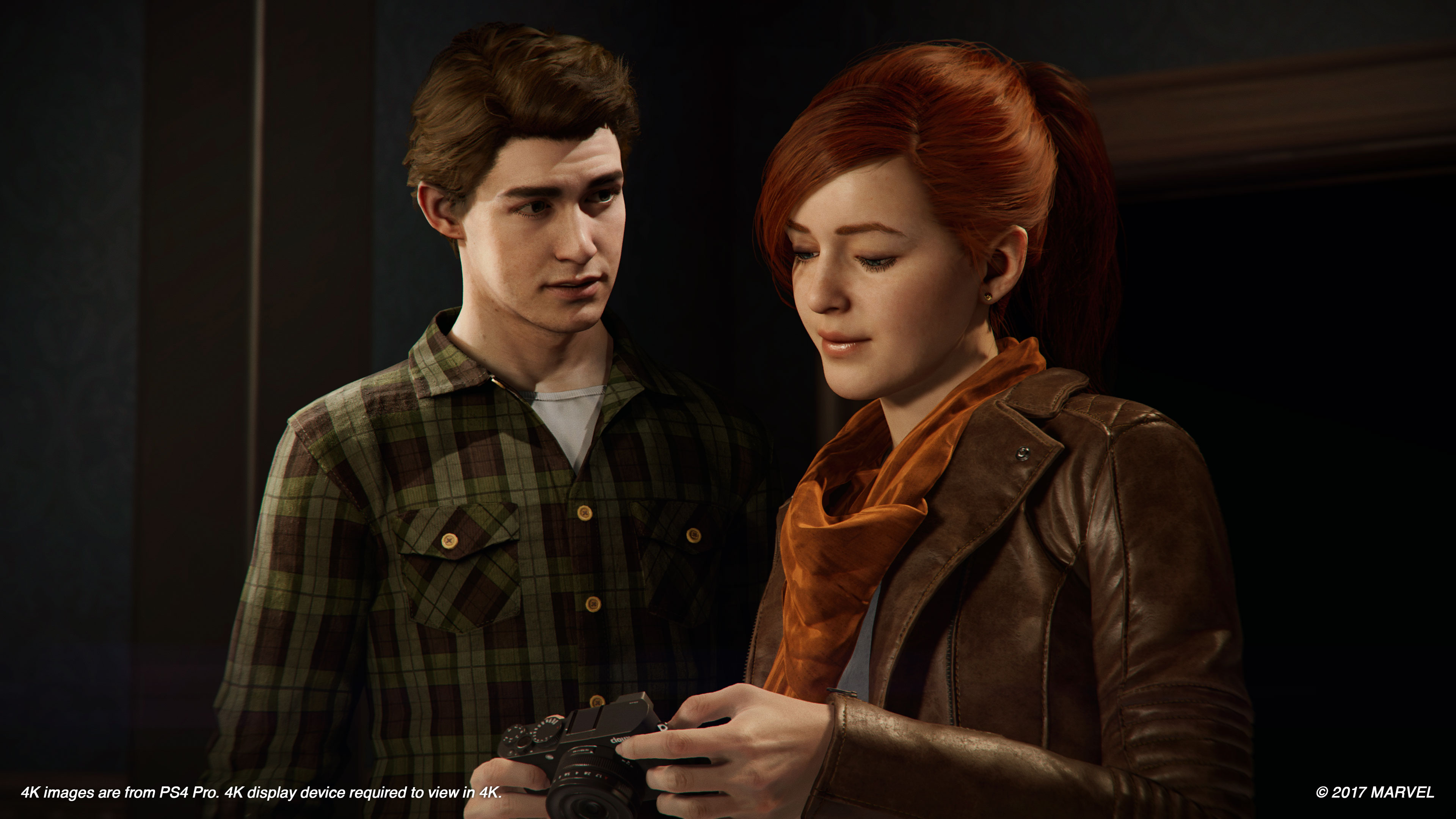
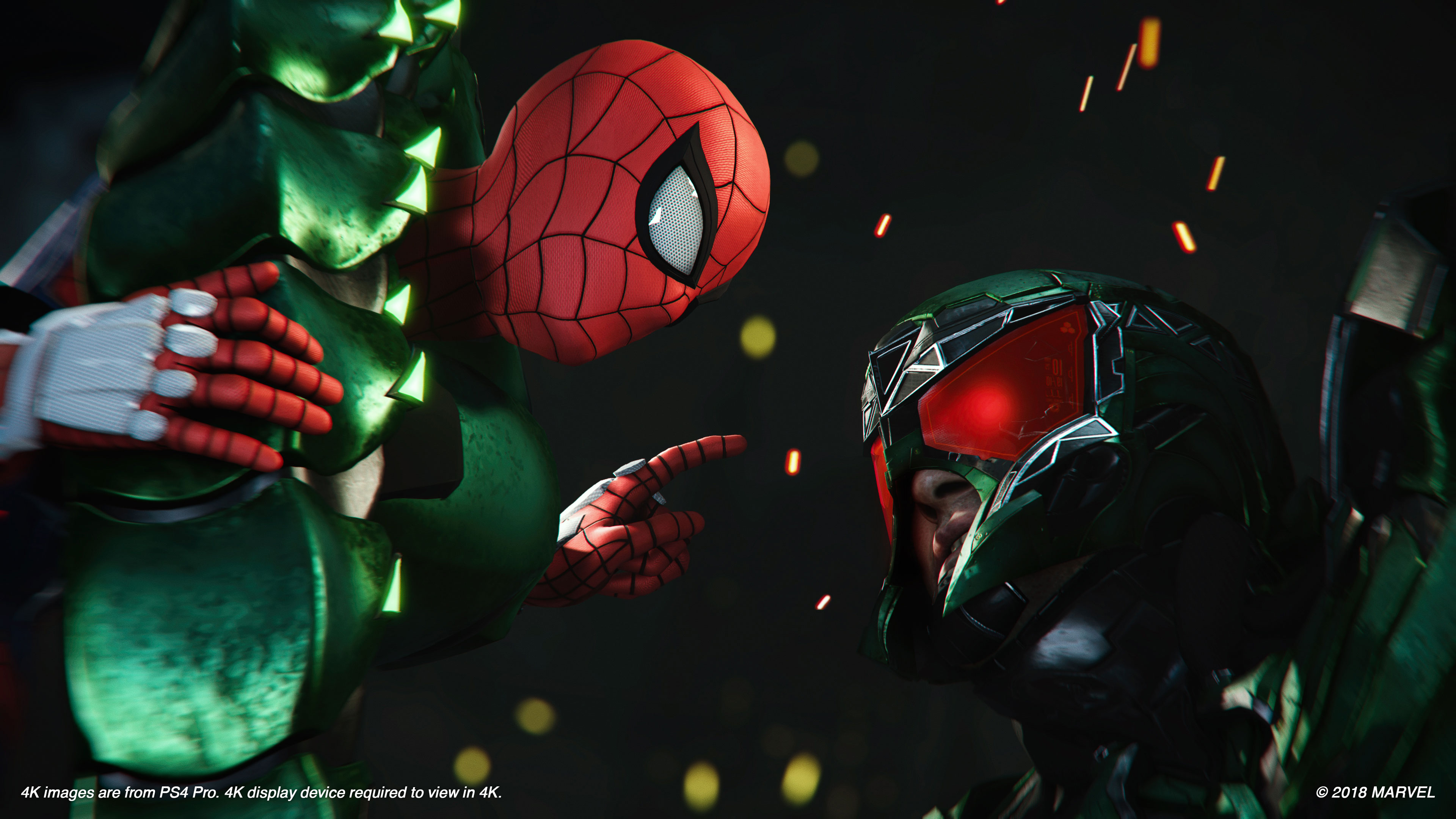
I was shocked by just how similar Spider-Man was to a genuine Marvel movie. Granted, I don’t watch a ton of Marvel films but the striking similarities are hard to ignore. Where this was most evident was in the story and writing. It’s about more than just beating up bad-guys, Peter Parker’s personal life takes precedence. His relationships with Aunt May, Miles Morales, Mary Jane, and a few mentor figures is what drives the story. The theme of mentorship is present through the entire game, as Peter is mentored by Dr. Octavius and in turn mentors Miles. The writing itself parallels modern Marvel movies in all facets. The cheesy one-liners and quippy banter permeate less serious scenarios, but there is no shortage of tear-jerking scenes. If you are a fan of Marvel and their cinematic universe, then Spider-Man will be right up your alley.

4

The gameplay of Spider-Man mostly consists of effortlessly swinging across Manhattan and busting up baddies along the way. Peter is a scientist and develops a horde of gadgets and suits with different powers to assist in combat. Gadgets consist of items such as web-shooters, web-grenades, trip-mines, and drones. You are heavily encouraged to switch gadgets mid-combat and play with different combinations for some effective takedowns. Like webbing enemies with a grenade and then sticking them to the wall using a sonic-blast. Peter also gets access to a variety of suits which are both fashionable and functional. Each suit has an ability such as creating a large explosion around you, summoning a helpful drone, or webbing up all nearby enemies. These abilities are incredibly powerful and as such have a few minute recharge period.


5

To unlock all of these gadgets and suit powers, the player has to traverse the city and gather a variety of collectibles and complete challenges. From collecting backpacks, to finding lost pigeons, to fighting crime, to completing time-trials, Spider-Man has a ridiculous amount of content to do out in the open world. Doing these tasks provides the player with tokens that will allow them to upgrade their gear. Normally, such a ludicrous number of collectables might be off-putting, but Spider-Man is unique in a way. Just swinging from building to building, fighting crimes and collecting goodies along the way is so enthralling. It is easy to just take a break from the main story and just be a crime fighting hero. The collectables are far from intrusive and they encourage the player to explore and experiment.


6

The combat of Spider-Man mostly succeeds because of the gadgets and the options they offer. Other than that, the combat just feels automatic. The most effective way of dealing with enemies is to just mash the punch button and press the dodge button whenever the game indicates that something is going to hit you. Sure, it looks cool, but without gadgets Spider-Man lacks depth. Sure, you could use other tactics like throwing objects, using the environment around you, or even use stealth, but in reality, it is just far faster and easier to just beat up the enemies by mashing the square button. The issue lies in the fact that for the vast majority of the game you are fighting the same enemies, just reskinned. The basic grunts of all the different factions the player encounters just get boring and monotonous after the hundredth encounter. I had a blast with the boss fights, but those are mostly concentrated at the beginning and end of the game.


6

The most pertinent issue with Spider-Man is its reluctance to let you be Spider-Man. A good chunk of the main campaign is filled by missions playing as Mary Jane or Miles Morales. These missions are generally stealth missions where the player is forced to slowly make their way through areas without being seen at all. I like stealth games, but these sections were the most basic and boring stealth that they could have shoehorned in. Playing as Peter was also fairly uneventful and mostly served as expository. As Peter, the player has to solve some incredibly banal puzzles that really had no business existing. Maybe these sections were meant to pad out play time, or perhaps flush out character development. Either way, much of what was accomplished in these missions would have been better served in a short cutscene or a phone call to listen to as you swing through the city.

7

At its core, Spider-Man has a multitude of different genres and styles that it attempts to appeal to. It is a story-driven, action, stealth, puzzle, collectathon game. Appealing to a broad audience is fine, and as a result I am positive that most people could find some aspect of this game that they like. But in the reverse, that means that most people can find some aspects that they don’t like. Perhaps the game would have been better as more refined experience. I really enjoyed Spider-Man regardless of this, and even though I am not a Marvel fan, I had a blast. It is for these reasons I give Spider-Man an 8/10. Playing as everyone’s favorite friendly neighborhood Spider-Man was immensely satisfying, I just wish the developers realized this and cut-down on the superfluous other aspects.

The Witness (2016)

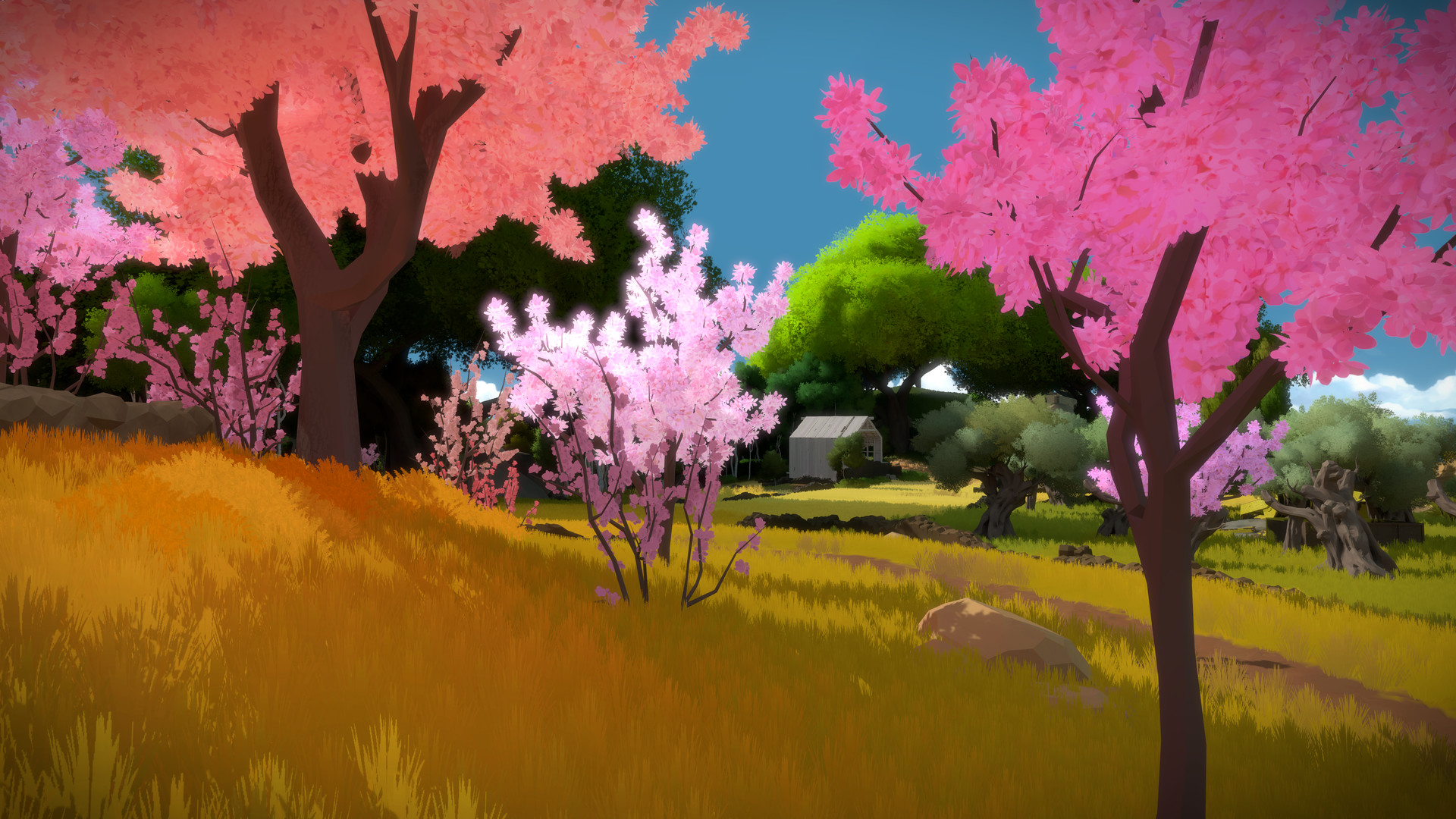
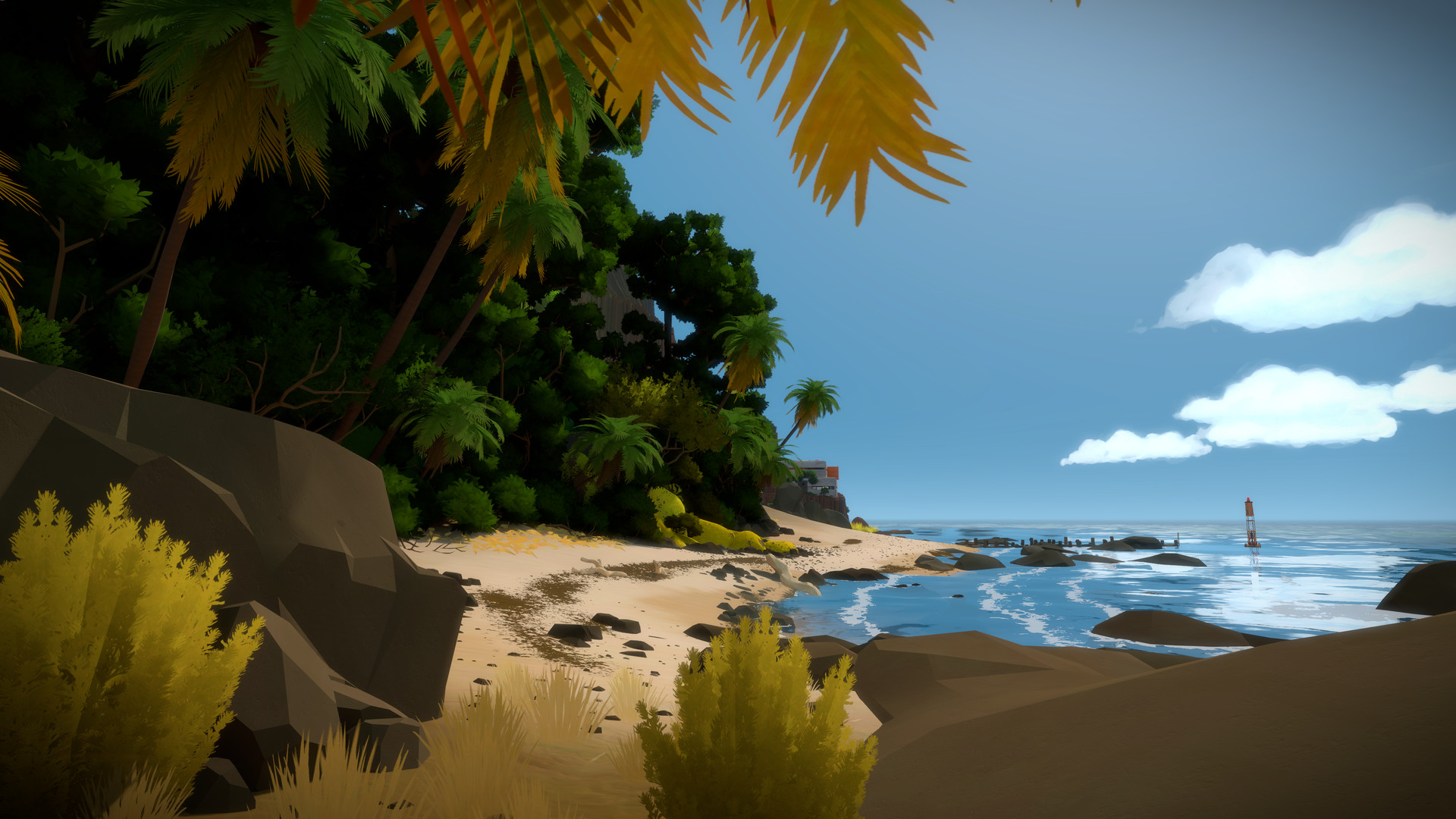
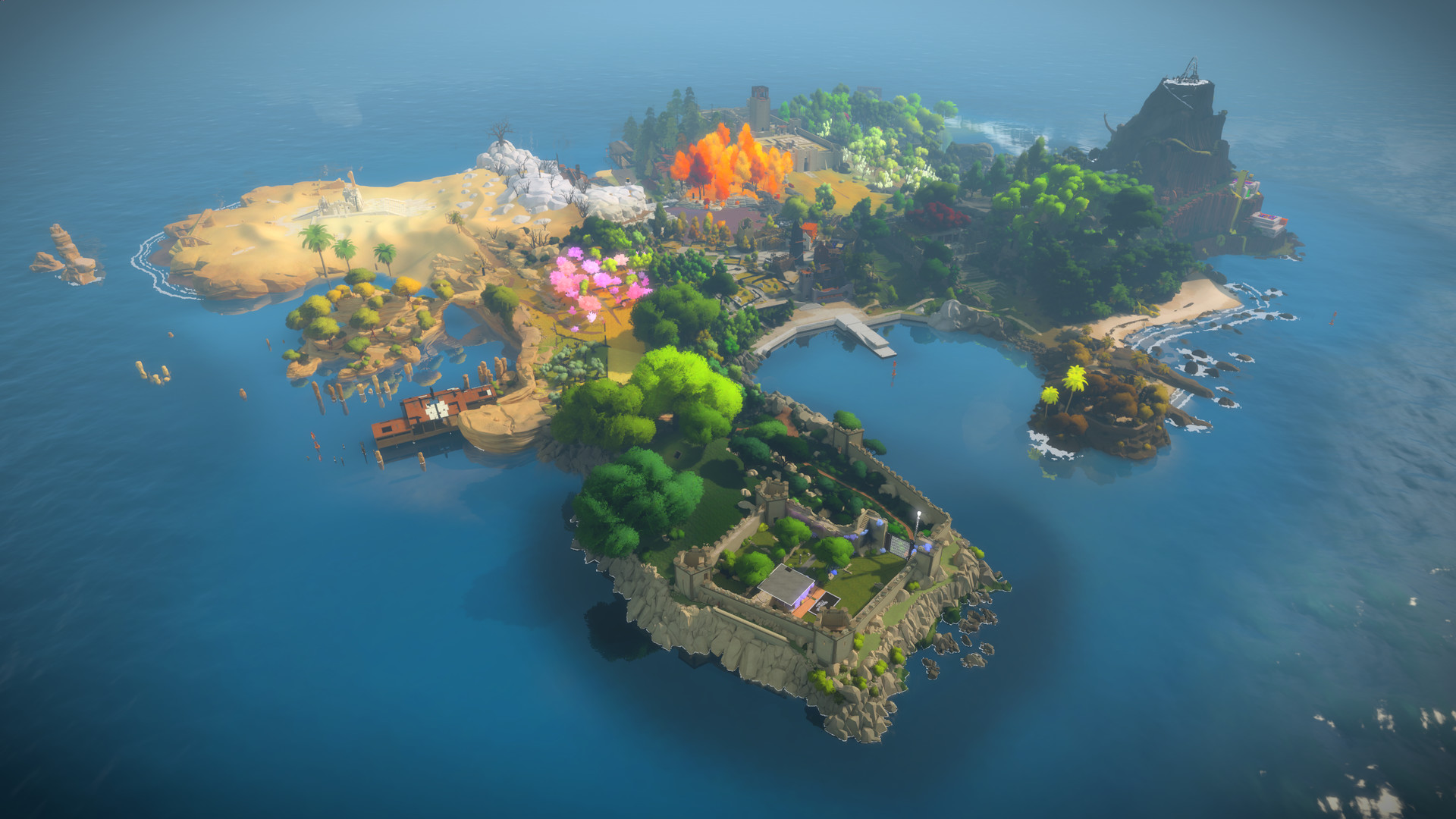
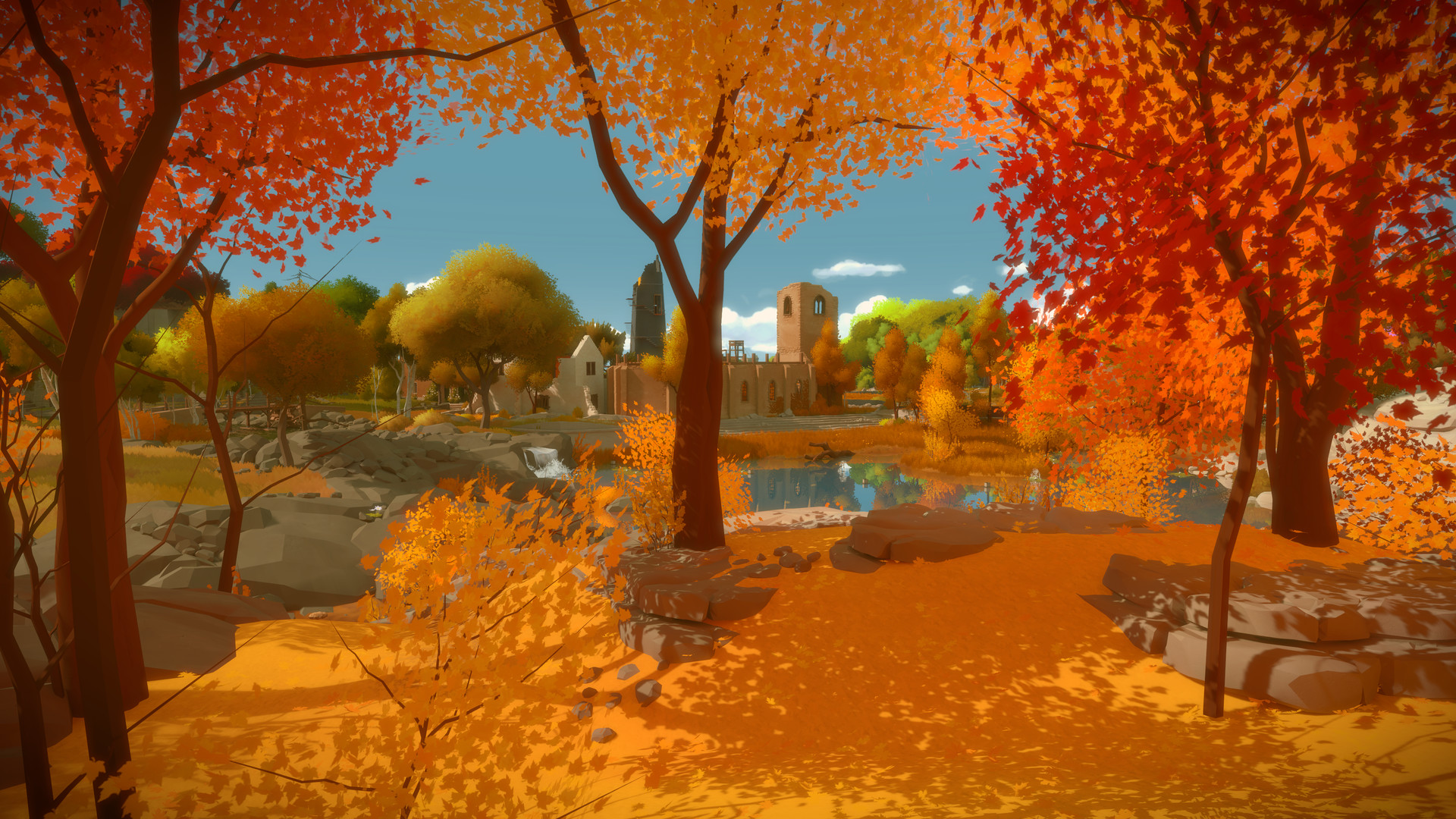
The gorgeous environment and serene island of The Witness is a mask for a complex and challenging labyrinth. This puzzle game plays with the player’s mind and perception of everything around them. In essence, The Witness is a game all about perspective and how you view the environment around you. It may be confusing and frustrating at times, but it is an essential experience, especially if you are a puzzle lover.

1

The majority of the puzzles in The Witness are these screen mazes. They start simple enough, the player navigates through labyrinths on these tablet-like screens. Quickly, new mechanics and rules are added to these mazes. Symbols represent different tasks and rules that must me adhered to, making it to the end is not enough to complete a puzzle. For example, separating different color blocks or having to collect little black dots along the way. Each area in the game seems to focus on a new mechanic and using it to its fullest potential. Many of these screen mazes will combine aspects and symbols from previous areas to add additional challenge. The complexity of these puzzles quickly ramps up and a simple 4×4 grid may take you 10 to 15 minutes to solve.

2

These mazes are the core of The Witness. The game boasts that there are over 500 of these puzzles scattered across the diverse island. You do not need to complete every one of these brain teasers to finish the game, I solved about 400 puzzles before I made it to the end. If you want more out of a game than small labyrinths, than you will probably not enjoy The Witness. There are more aspects than these puzzles, but progression is tied to the completion of these screens. This is not Portal or The Talos Principle, you rarely solve grandiose puzzles that make use of large spaces. To be fair, The Witness does make use of environmental aspects more than any games I have played. Shadows, light, sounds, perspective, and other exterior cues are key to solving many of the areas and mazes. The environment is also used in a mind-blowing manner, but I do not want to spoil this moment for future players, so I have discussed it below in a spoiler tag. View at your own discretion, because if you are planning to play The Witness, this is seriously one of the best aspects of the game that you should really experience yourself.

Highlight to see spoiler:

As you play more and more of The Witness, you may notice some strange aspects of the space around you. Hidden in the environment, there are shapes that mimic the mazes that the player has been solving on the screens. The “oh my god” moment comes when you realize that you can click on these hidden puzzles and solve them like all the mazes in the game. Immediately you begin to see shapes all around the island and try to click on everything to find these hidden shapes. Some you have to line up using different angles and perspective tricks. Others you need to figure out how to even get in a correct position. Ultimately, these are in no way tied to progression and serve no purpose within the game, but discovering this secret is one of the most important and memorable moments in the game. This is where you learn that the island has more to it than simple line puzzles, and that the game expects you to change your perspective on how you see the world around you. End of spoiler.

3

A component that needs to be mentioned is that The Witness undeniably respects the player’s intelligence. There are no tutorials, no guiding text, nothing that remotely resembles handholding. When you encounter a new symbol or type of puzzle, there are a few very easy puzzles that let the player deduce what the symbol means and how to deal with it. Furthermore, the island is an open world that lets you seemingly tackle any area in any order you want. The drawback of this is that many of these areas adopt symbols and rules from other zones. So, if you have not been to the required area, you get roadblocked. Sure, you can realize that you do not have the requisite knowledge to complete a puzzle, but I wish the game did a better job and placing areas in a more logical order. The most blatant example of this is that the town area takes concepts from every other area in the game, yet it is very likely to be one of the first areas you stumble upon to do its proximity to the starting location. This could easily lead to frustration as you try to figure out puzzles that you couldn’t possibly solve yet. This is not a case of me being flagrantly bad at the game, I finished it within a reasonable time (about 15 hours) and never really got roadblocked. All I’m saying is that it can be annoying when wandering around and you can’t seem to find a solvable puzzle.

4

The other major issue that I had with The Witness was that I could not help the feeling that the game was pretentious. Solving some secret puzzles unlocks real life speeches made by a variety of people in academia. These videos range from 5-60 minutes, and serve no purpose other than really wasting your time if you choose to view them. There are also audio logs of famous quotes scattered about the island to listen to, again I drew no meaning from these. Lastly, the ending sequence of the game seems like it was trying to portray some message, but the dialogue just seemed nonsensical. This was reminiscent of Jonathan Blow’s previous game, Braid. In both of these games the vague and pointless dialogue exudes a sense of pretentiousness. Like there is deeper meaning than what was actually conveyed, but in all actuality the story and meaning felt practically non-existent.

5

The island itself on first glance seems to contain some sort of mystery. Why am I here? What’s my goal? What are all these statues? What happened to all the people here? These questions are not really answered in any satisfying sort of way. There seems to be clues scattered about the island to make it seem like there was an overarching story, but just like the audio logs and videos there really was no satisfying conclusion. My final gripe is that everything in the game seems to move slower than it really should. The player, the doors, the platforms, they all take far longer to get to their destination than what is reasonable. When on transit in a boat I was able to get a glass of water and go to the bathroom, and when I came back I was only halfway through the ride. It feels like a joke that is meant to solely waste the player’s time.

6

For the most part, The Witness is all about its screen puzzles. Personally, I quite enjoyed all of the challenges, but I think a lot of people will be turned off by the lack of grandiose environmental puzzles. Like I mentioned previously, the environment is well integrated and a key component to these puzzles, but you rarely interact with your surroundings in a more meaningful way. The elegance of imbuing difficulty and challenge into what initially seems like a simple maze is what makes The Witness so gratifying. When you figure out a puzzle on the first try, you are emboldened and feel like a genius. When the pieces start to come together and you understand what was stumping you, a wave of satisfaction follows. It is for these reasons I give The Witness a 9/10. It’s a collection of fantastic puzzles, but it lacks of any other sort of substance.

Devil May Cry 4 (2008)

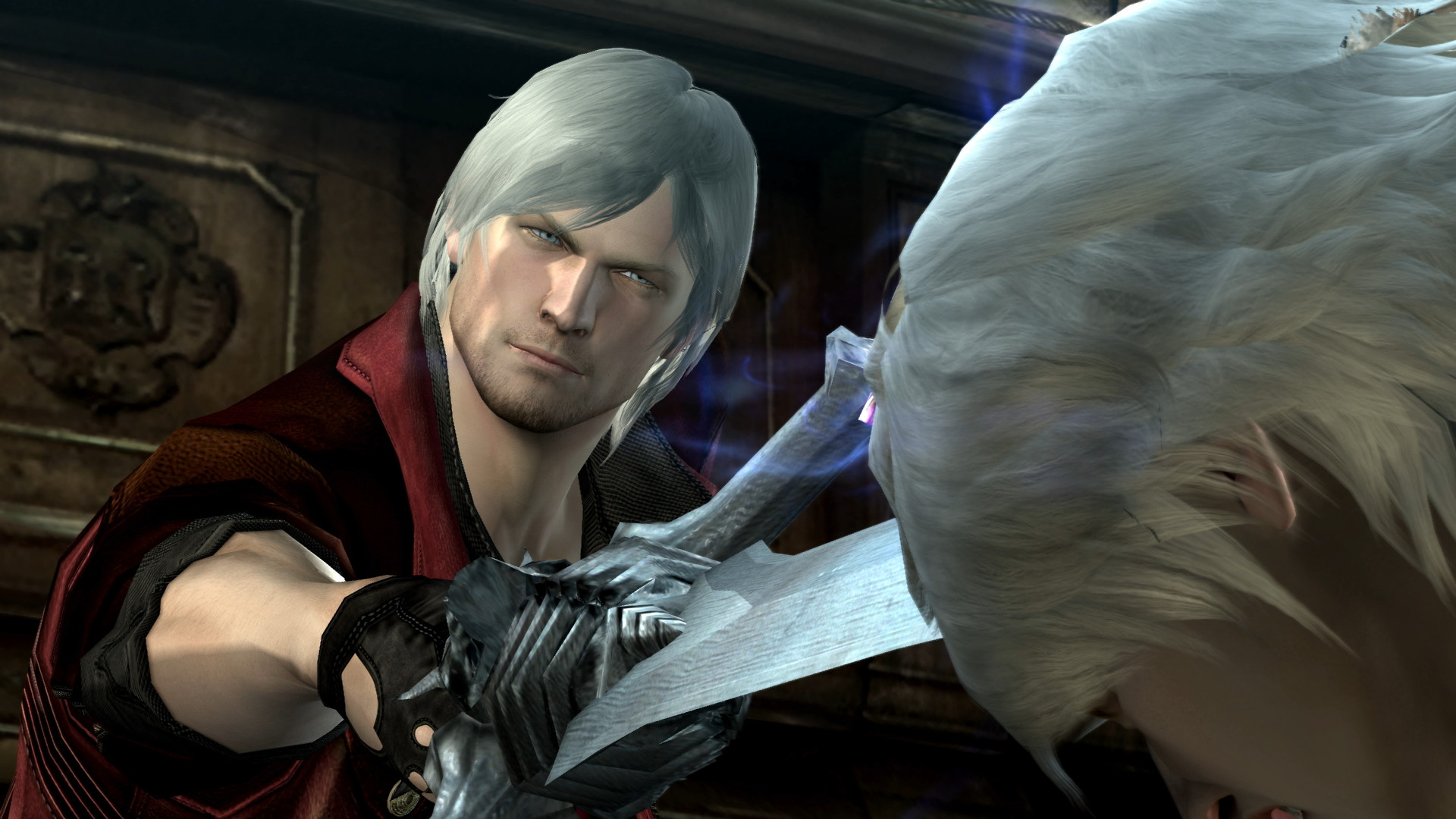
The core of the Devil May Cry series is its action and the main character, Dante. Devil May Cry 4 makes a dangerous design choice by introducing a different main character. It is unbelievably risky to switch protagonists in a series which the current one is undoubtedly loved by fans. Ultimately, I think that this decision paid off, but Devil May Cry 4 has other substantial issues. The combat is crisp and satisfying, but the game is unfinished and undeniably repetitive.

1

The departure from Dante as the singular main character is the aspect of Devil May Cry 4 that makes it stand out. Instead of playing as the cocky and laid-back Dante, the player controls the younger and more serious Nero. More importantly, Nero’s playstyle is vastly different than Dante’s. Nero has a focus on his unique “devil arm”, which boasts a few tricks and changes the playstyle of the game. Nero can grab and throw enemies, which is an ability that allows Nero to string combos together in creative fashions. While Nero does not have the variety of combat styles that Dante does, his ability to grab enemies makes him just as enjoyable to play as.

2

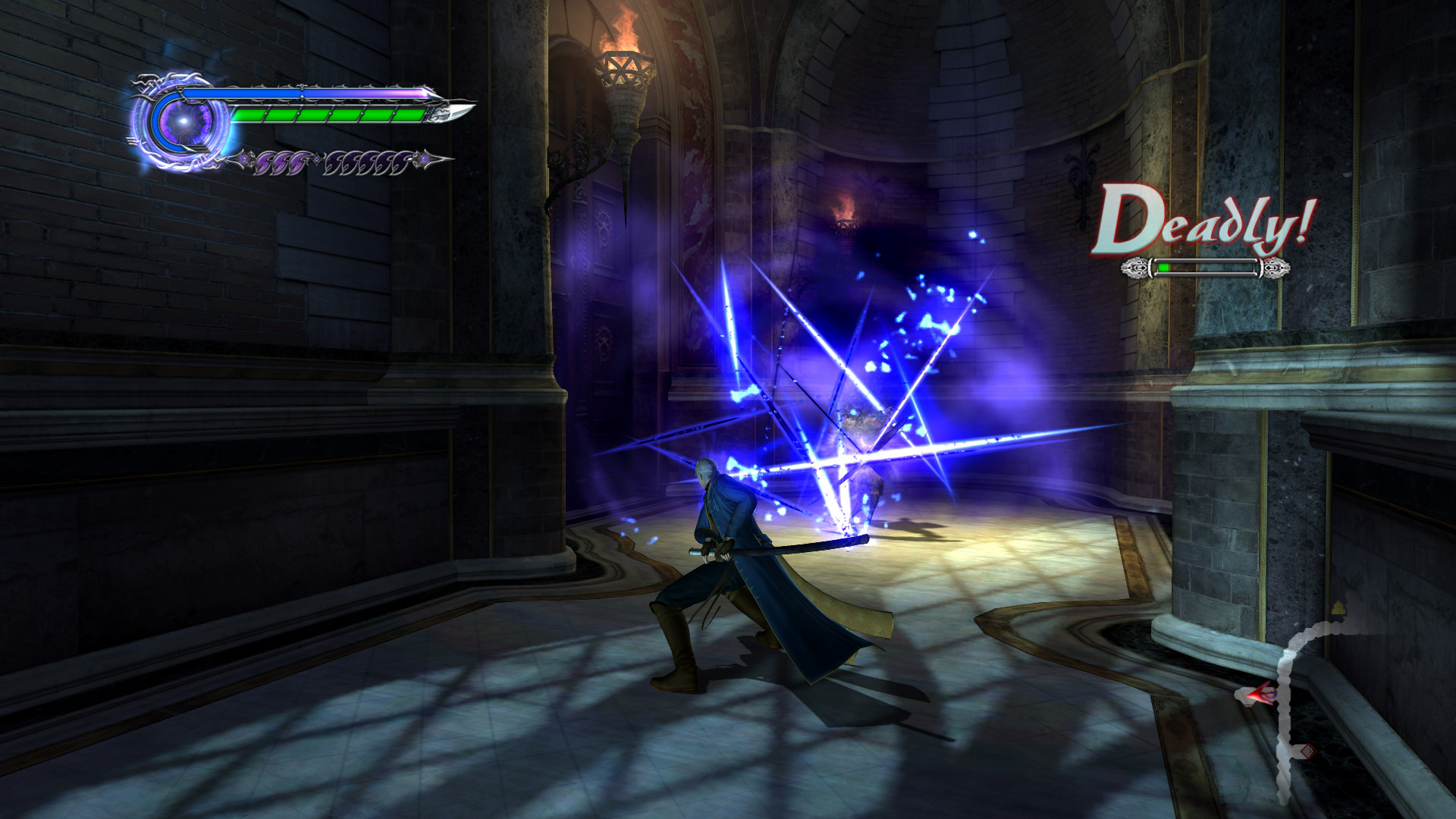
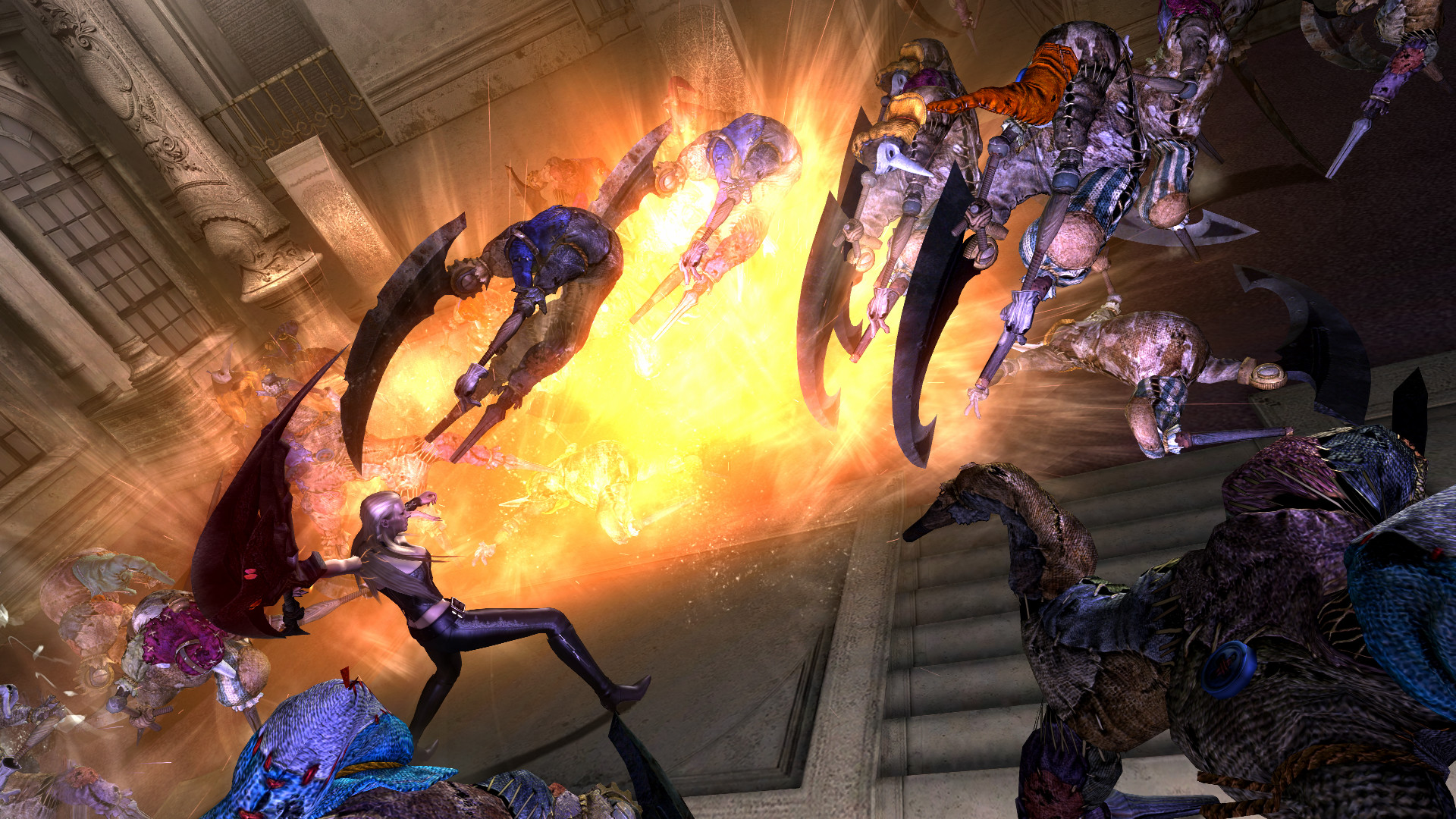
Other than the change of protagonist, Devil May Cry 4 plays very similarly to Devil May Cry 3: Dante’s Awakening. High-octane action with a stylish flair is the key to the series success. My favorite aspect of the series are the frequent challenging boss fights. I was somewhat underwhelmed by the bosses in Devil May Cry 4. Other than a single exception, none of the bosses were particularly memorable or exciting. They were not offensively bad, but they were solidly mediocre. These fights felt less like duels between capable fighters and more like the player and the boss taking turns wailing on each other.

3

The largest criticism of Devil May Cry 4 stems from the second half of the game. Halfway through the game, the protagonist switches from Nero to Dante. This in and of itself would have been fine, but all of Dante’s levels are simply backtracking through previous areas. A lack of time caused the developers to just reuse areas instead of creating new ones, and the entire game drags because of it. Furthermore, by the end of the campaign you will encounter many bosses up to 3 times each. While rematches with bosses are a staple of the series, they usually entail new attacks or a changed arena. That is not the case in Devil May Cry 4. While you do fight some of the bosses as Dante, that is not a significant enough change to warrant 3 battles with each boss.

4

Dante plays as expected and has all of his abilities from previous games. The big addition is that he can now change styles on the fly rather than in the pre-mission menu. I love this change as it encourages the player to really test out the different styles rather than feeling restricted to one. It also allows the player to make some adjustments during combat or even extend their combos with a quick change of style.

Story is not something that I find important to the Devil May Cry series, and this game follows suit. While I like Nero’s characterization, I wish his backstory was explained in more depth. Other than that, the story is not a far cry from the previous installments. Somebody is trying to open the gate to Hell and unleash demons upon the world. That about summarizes every Devil May Cry game.

6

Devil May Cry 4 is basically everything I have come to expect from the Devil May Cry series. Fast-paced demon slaying with some goofy humor and cheesy dialogue. Playing as Nero is a breath of fresh air, even if he lacks the plethora of weapons and combat styles that Dante has. Unfortunately, Devil May Cry 4 is an unfinished product and that is abundantly clear in its latter half. As a whole, I enjoyed Devil May Cry 4, but it did not impress me like the original Devil May Cry or like Devil May Cry 3: Dante’s Awakening did. Those games defined and revolutionized the action genre, while Devil May Cry 4 is just a solid entry. If you enjoyed the previous games in the series or adore action games in general, I am sure you will like Devil May Cry 4. Just don’t expect anything mind-blowing or revolutionary.

Moonlighter (2018)

Currently, there are a slew of indie games available and many independent developers struggle to stand out. In the case of Moonlighter, the uniqueness stems from the games concept. Developer Digital Sun has created a dungeon crawler with an emphasis on shopkeeping. You play as Will, a merchant who has a propensity to delve into local dungeons and fight monsters to gather resources to sell on the marketplace. Is the concept alone enough to make Moonlighter stand above the rest, or does it fail to shine in a saturated marketplace?

1

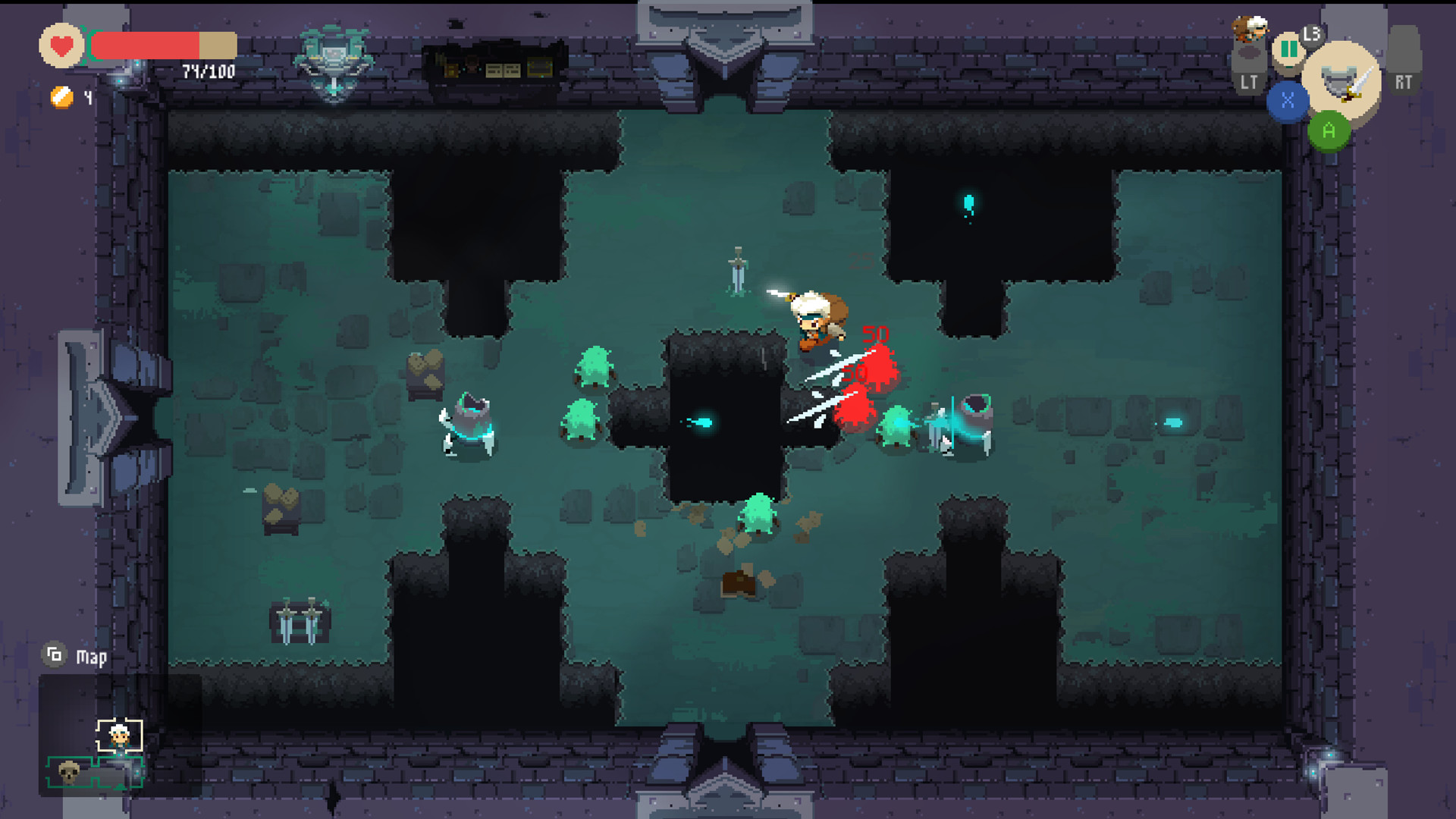
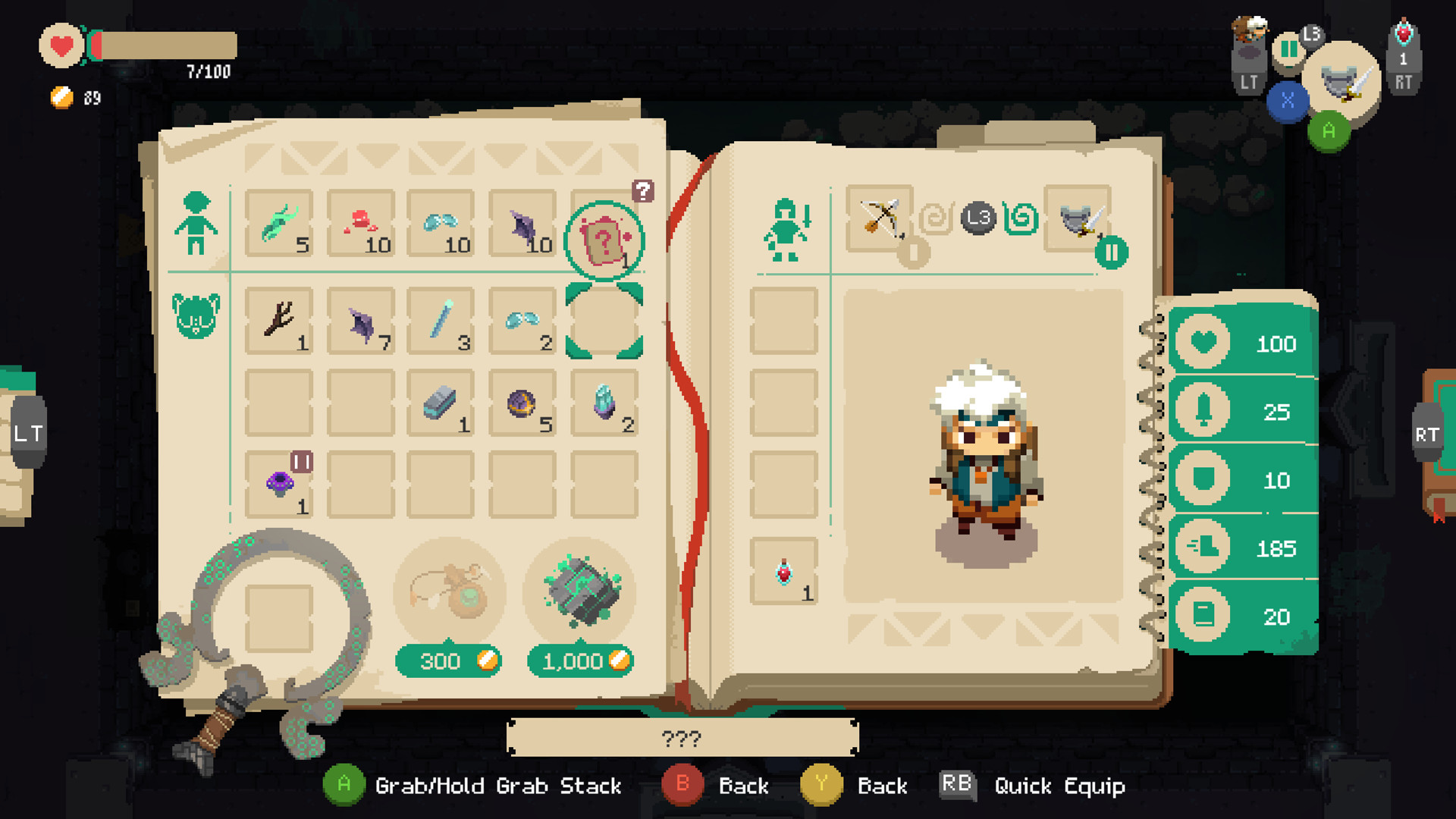
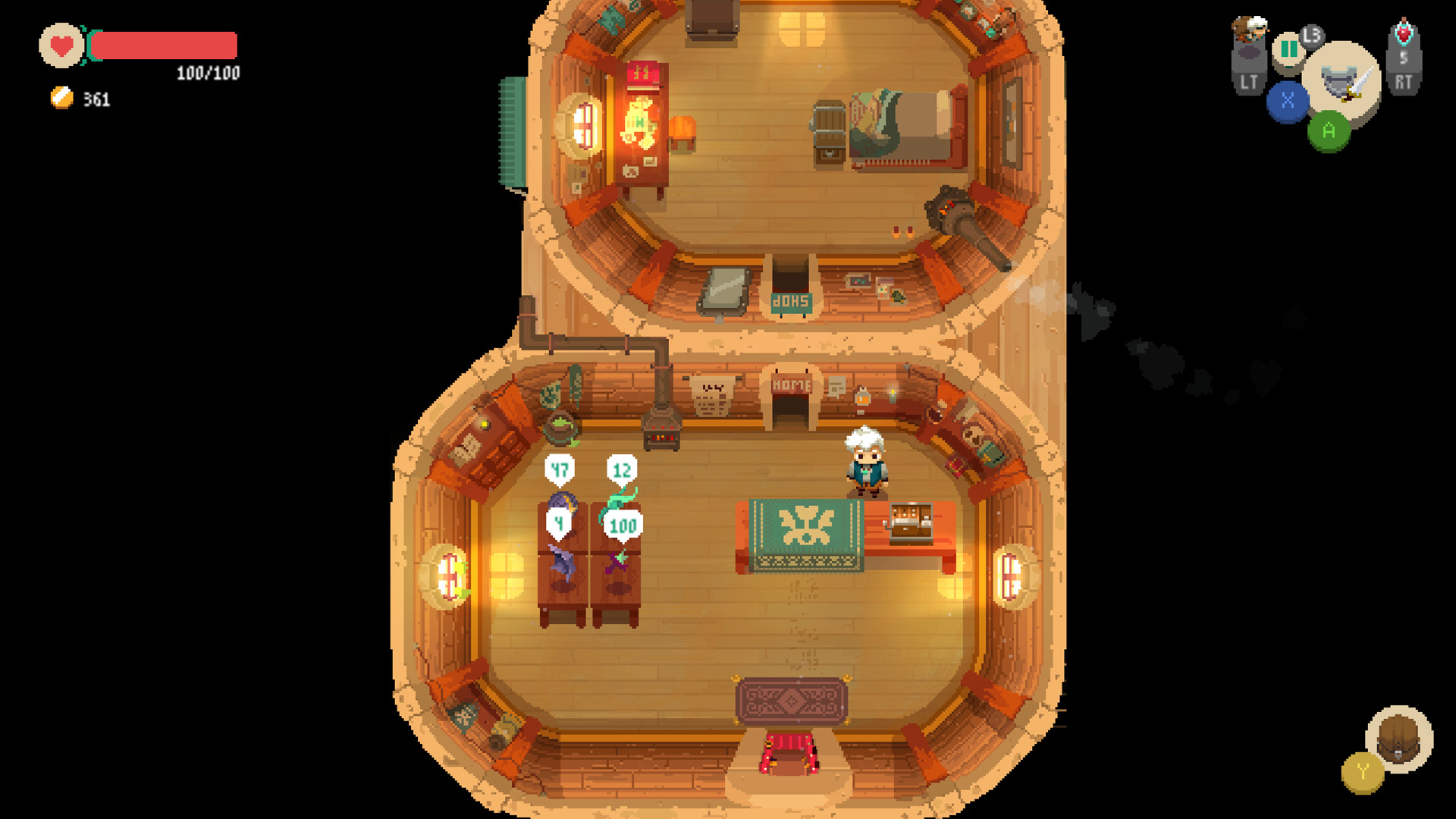
I quite like the concept of Moonlighter as it puts an interesting twist on the standard formula of dungeon crawling. In most top-down adventure games you explore dungeons to gain experience, new equipment, and the progress further into the game. In Moonlighter, you tackle dungeons to collect items dropped by slain monsters. After filling up your inventory, you return back to your shop and spend 5-10 minutes selling the goods to accumulate wealth. You can use the gold acquired to renovate your shop, upgrade the town, and buy new equipment. As you get better equipment, you can delve deeper into the dungeons to fight harder monsters and eventually take on the boss of each dungeon. This is an extremely addictive feedback loop of dungeon crawling, selling the loot, upgrading your gear, and then going back to dungeon crawling. Each one of these cycles only takes about 20-30 minutes, so it is easy to hooked and play hours at a time.

2

After playing through some difficult games recently like the Devil May Cry series and Shenzhen I/O, Moonlighter was a much-needed wholesome experience. The gameplay is not overly tough, and the shopkeeping aspect of the game is a nice cooldown period between dungeon runs. Just relaxing in your store and watching townsfolk come in and buy goods is just a chill experience. This combined with the extremely well-done pixel art and calming music makes for a charming game. Moonlighter is an easy game to get into, and I found it to be a nice and relaxing game.

3

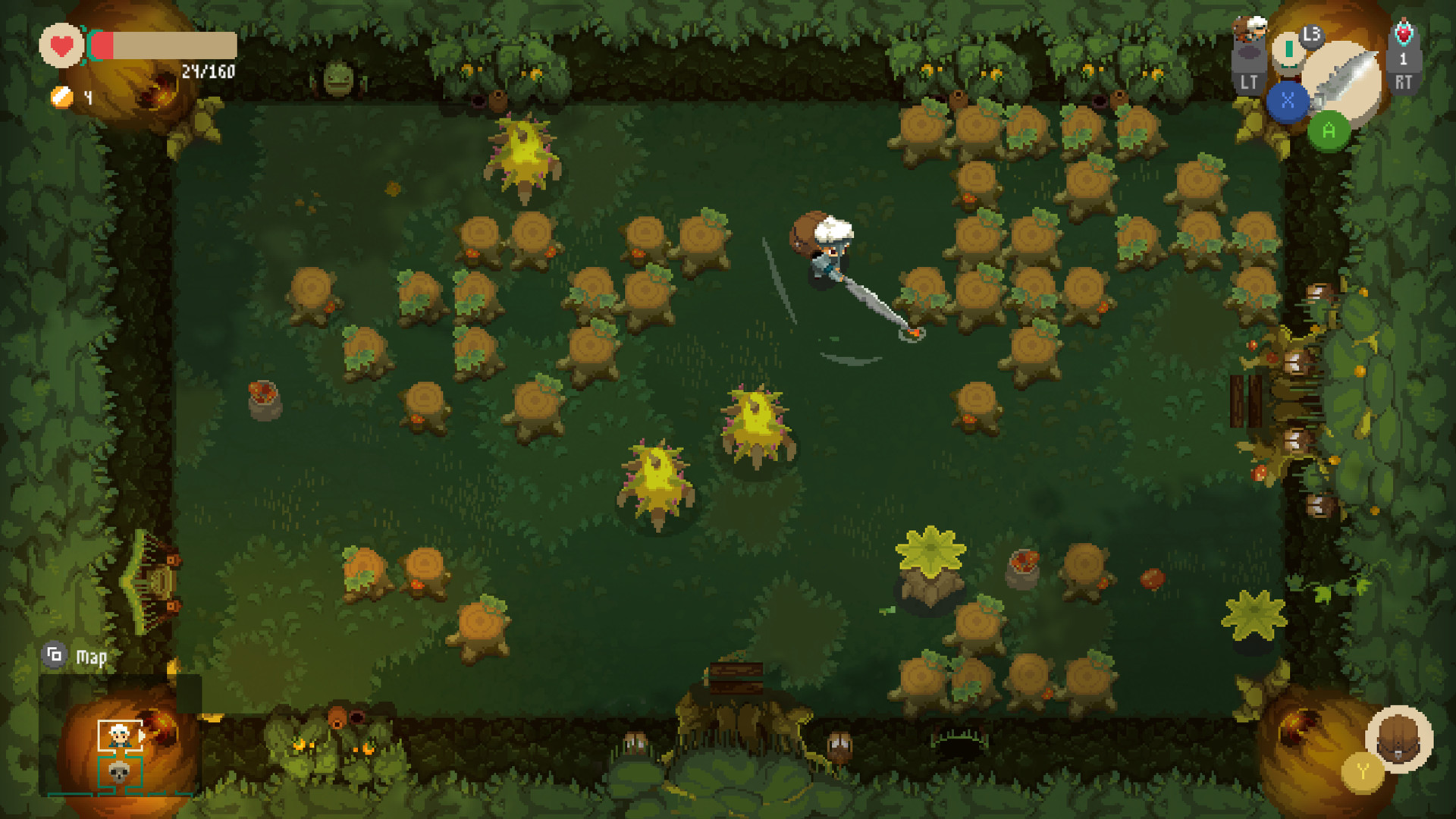
I wish that Moonlighter was a bit more innovative or at least went a little more in depth with the mechanics it had. As it stands, the game only really has 2 aspects: dungeon crawling and shopkeeping. I wish these were a little more fleshed out, as they are both fairly rudimentary. Dungeons are randomly generated, so each run will be different from the last. There are 4 different dungeon themes that get progressively more difficult: Golem, Forest, Desert, and Tech. Each dungeon has 3 floors and a boss at the end. The further you get in each run the better loot will become available. The problem is that all 4 of these dungeons are extremely similar. Just a reskinned background and tougher enemies. Once you complete the first dungeon, you have mostly seen everything Moonlighter has to offer. I wish each dungeon has its own unique twist to differentiate them from one another.

4

Other then the similarity between dungeons, Moonlighter also struggles in gameplay depth. Combat as a whole is extremely basic, sure there are 5 different types of weapons, but actually battling enemies is not complicated. Each weapon has a basic attack and a special function such as a shield, or spear charge, or charged punch. For the most part, I never used the special ability of any weapon and just spamming the basic attack was enough to defeat any enemy. I didn’t expect much innovation in combat, but I did expect more from the other half of the game. The shopkeeping is pretty barebones, and there is very little interaction with the town. Selling items mostly consists of just setting prices and chasing away the occasional thief. There is a little supply and demand that affect prices, but again the interaction is minimal. The biggest disappointment is that there is little to no gameplay revolving around the town. I really wish you could interact with the townspeople, explore the surrounding area, or do really anything. The town’s entire purpose is for the player to sell their loot and gear up for future expeditions. I did not expect anything incredibly innovative, but I wish Moonlighter just had more.

5

Other than its lack of innovation, Moonlighter has a few other minor issues. First and foremost, a few technical issues occurred during my playthrough. The game crashed twice and once I got stuck in a wall. These hiccups never destroyed significant progress, but its still a technical flaw. Hit registration feels a little off at times, sometimes my weapon would phase right through an enemy and other times a hit would register twice, dealing extra damage. Other than that, I feel there were some wonky balance issues as the game got closer to the end. I began making ludicrous amounts of money and I had no issues buying whatever I wanted from a single loot run. I only had to go into the games 4th dungeon three times total, when in the previous dungeons I had to do them seven to eight times to get fully upgraded. Maybe I just got better at optimization, but I think the gold amounts were just out of balance. Lastly, the sales box and banker upgrades are both entirely worthless and I have no idea why they were even included.

6

I think Moonlighter does do enough to make itself a worthwhile experience. Its not going to blow anyone’s mind, and it isn’t an innovative game. Still, the addicting progression loop and calming design made it an enjoyable game. I quite liked Moonlighter, I just wish there was a little more. Better combat, dungeon variety, or a more interactive town would have gone a long way to make Moonlighter more complete. It is for these reasons I give Moonlighter a 7/10. It’s not a revolutionary game, but its fun all the same.