Should games journalists be good at games?

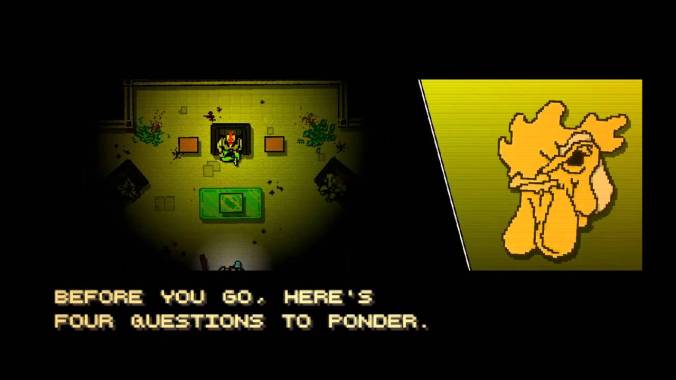
The controversial question that many gamers have been recently asking is this: do reviewers have to be good at the games that they review?  This all started from the DOOM Polygon disaster last year, in which a Polygon reviewer was sent to preview the new DOOM game and record some footage. Here is that footage. Whoever Polygon chose to send to this event and preview DOOM for the world to see clearly has never played an FPS before and it showed in their anemic gameplay. This sparked a bit of a controversy and led to this question at hand. This question has recently shown its face again, similarly it is from a 30-minute preview of an upcoming game, this time the game is Cuphead. WARNING, this video is painful to watch for anyone who as ever played a video game. In the 30-minute-long video, the games journalist fails to even complete the first level of Cuphead and does not seem to grasp the basics. Hell, he spends 2 minutes trying to complete a single jump in the tutorial. This shameful display has resurfaced and reignited the debate if game journalists should be good at the games that they play.

To me, the answer to the question is fairly obvious. People who review games for a living absolutely need to be good at them. In the two previously mentioned examples, it would be very unfair for those 2 journalists to give their opinion on games that they clearly have no business playing. The games would be horribly misrepresented, as the reviewers would give their perspective from somebody who does not even know how to play the game. Now to be fair, people may be more experienced with certain genres of games, but if that is the case, do not review a game from a genre that you are clearly bad at. I think most people would tend to agree that reviewers have to have a decent level of competency to review a game.

The real question for me is, can reviewers be just average at games, or do they actually have to be fairly good? My mentality at first was “just don’t suck”, but my opinion has changed let me explain why. Originally, I figured that as long as journalist had a basic level of skill and were average at the game, they could give an accurate review of a game. I mean, most people are average, so a reviewer who is also average would have opinions that tend to align with the majority, right? Probably, but that does not qualify them to explain what makes the games they are discussing good or bad. Sure, they could talk about some surface level stuff, but a lot of games are great because of the small details, because of the things an average player would not notice, but they are still there.

Just like in movies, an average viewer like myself could tell you if a movie was good or bad. But if you ask me about narratives, cinematography, lighting, audio design, CGI, editing, the director, etc., I would be completely lost. I can view it as the whole, but I cannot break it down and explain what makes it successful. The same applies to video games. A casual player cannot pick apart a game and explain the minutiae that all come together to make one cohesive experience. Dark Souls for instance may seem to be just an average fantasy RPG at first glance, but most people who play it agree that it is one of the best and most influential games ever made. The leveling system, lore, enemy design, visuals, world building, level design, unforgiving attitude, and the online aspects make for an extraordinary experience. I will not go into details as that is for my upcoming Dark Souls review, but many reviewers and average players just glance over these details and what makes them work so effectively.

As a sort of aside note, I wish everyone would stop referring to hard games as “Dark Souls of X-genre”. Yes, Dark Souls is notorious for its difficulty, but that isn’t the only factor about the game. When I see games like Cuphead, which has no similarities to Dark Souls other than its difficulty, being referred to as the “Dark Souls of run-and-guns” my soul hurts a little bit. Game comparisons can be valid, but they actually have to make sense and be more related than just the difficulty level of the game. For example, Hollow Knight is Dark Souls-esque because of its looping level design, checkpoint system, visuals, ambiguous lore, intense boss fights, death and soul system, unforgiving and hostile world, and its difficulty. So please stop calling everything “similar to Dark Souls” just because it is hard.

I think games journalists these days are mainly hired for their writing skills or their personalities, rather than their expertise of video games. This is becoming abundantly clear. Harder games often get flak for being too hard, and game reviews do not explain the in-depth mechanics of games and what makes them work. I do not consider myself to be one of the best video game players or an expert, but I do feel like I am good enough to give a valid opinion on the games that I play. People who are paid to professionally play and review games should be experienced enough to understand the inner workings of a game and dissect it, rather than viewing it as a whole. Just like what a professional film critic might do. At the very least, websites like Polygon need stop using people who are wholly incompetent and unable to play games, let alone review them.

Stardew Valley (2016)

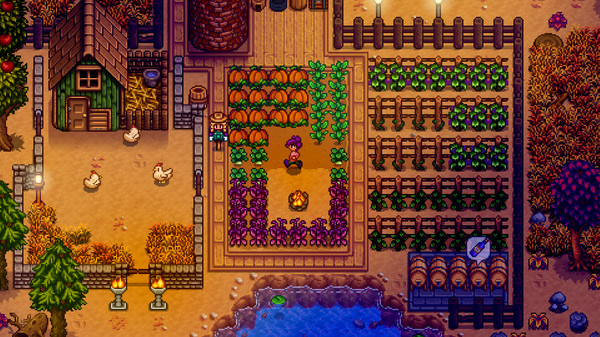
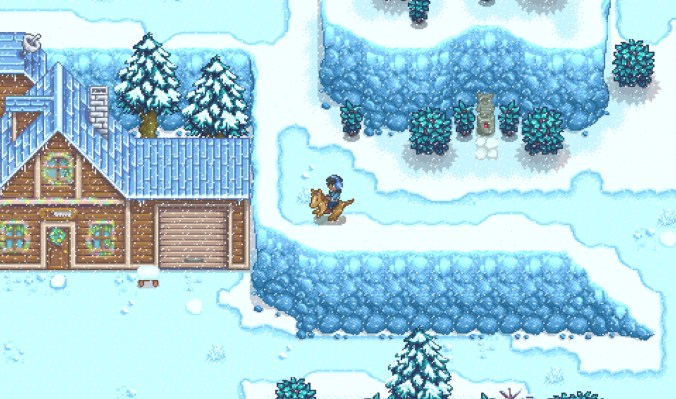
There is nothing more relaxing than chilling out and maintaining your farm in the calming Stardew Valley. This Harvest Moon inspired game is the brainchild of a single developer, ConcernedApe. Can this farming simulator overcome the pitfalls of the other games in its genre? In some ways yes, but I feel like the same problems that plague this genre also drag down Stardew Valley. Regardless of this, Stardew Valley is the perfect comfy game to just sit down and relax and play for a while.

From start to finish, Stardew Valley is undeniably charming. The great pixel art and sprite work, bright visuals, and upbeat music keep this game cheerful. The main character inherits a farm from their grandfather, and uses it as an escape from a soulless corporate world. It is your job to restore this run-down farm and maintain it for years to come. There is so much that needs to be done, and that is what makes Stardew Valley so addictive at the start.

1

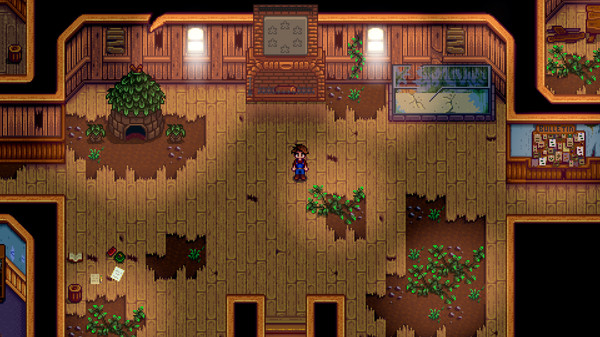
Through the clever use of quests, Stardew Valley subtly directs the player into the many different tasks that must be completed. Open-ended games like this can often lack a feeling of direction and the player can either become overwhelmed or they feel like there is no point to doing anything. This is not the case in Stardew Valley, helping out the villagers of Pelican Town is certainly rewarding and gratifying. But the real goal I found myself working towards was restoring the community center. Early in the game, you learn of the dilapidated community center, and you discover the secret that magical creatures known as Junimos are living there. They will help you restore the community center if you bring them all sorts of different materials.

All of the different crops, ores, fish, foraged goods, and other special materials that you collect will  be needed to fully restore the community center. There are dozens of bundles that require specific materials to complete, and you get a small reward for each bundle, as well as a big reward for completing all of the bundles in one of the rooms. These big rewards were very satisfying as they often opened up new areas and I could not wait to see what the next big reward would be. The use of the community center as a central goal was very clever, as it does not force the player into doing anything, but it serves as a sort of guideline as to what can be done. Whenever I felt like I had run out of things to do in this game, I took a look at what was needed in the community center and realized there was plenty that I had not explored or played around with. This sort of direction is desperately needed in an open-ended game like this. Unfortunately, once I had finished the community center, I felt like this game just lost its purpose.

2

Games like this can often get repetitive, and Stardew Valley certainly does not avoid this later on in the game. Once you get your farm up and running, you have to spend good portion of your limited daily time and energy to just water the crops, take care of the animals, make artisan goods, and whatever else needed to be done that day. Eventually you just get into a cycle that you cannot break, and it started to get repetitive and draining for me. I know many people may find it relaxing to do the same tasks over and over, but once I got into this late game cycle I found it to be very boring. I had bought everything and was gaining money hand over fist, so I did not even feel like there was a point to this tedium. This combined with the lack of direction that the game had once I completed the community center made for a very monotonous late game.

3

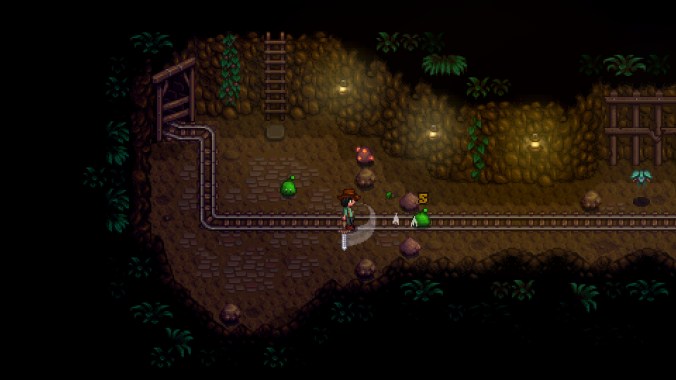
There were a few other issues I had with Stardew Valley. One of them being that while I mainly looked to this game as a source of relaxation, I felt like some of the main tasks in this game could get pretty frustrating. In particular, the fishing mini-game was aggravating and so much of time spent fishing just sitting around waiting for a fish to bite. Also, combat in this game is reminiscent of NES-era games like the original Legend of Zelda. This is not a good thing. While combat is a minor part of Stardew Valley, I feel like it often gets in the way while am trying to mine for resources. My last issue with Stardew Valley is that while it does a great job with its delayed gratification, I feel like it sometimes it goes overboard with using time from keeping the player from progressing. Certain tasks can only be completed in specific seasons, so if you want to do that thing, you are going to have to wait a while. As I was almost done with the community center, there were long stretches of days I just had to wait around before I could do anything of significance to further myself to completing my goal.

5

As I said, Stardew Valley is usually pretty great when it comes to delaying gratification, but keeping you hooked while you wait. Most things in Stardew Valley take a while before you can start reaping their benefits. Planting crops, upgrading tools, adding new buildings, renovating your house, raising animals, making artisan goods, all of these things require a few days before they become profitable. But as you are waiting for that big payoff, there is still plenty to be done. Fishing, mining, foraging, or just cleaning up your farm were enough to suffice and keep me entertained while I waited.

4

As a whole, I did thoroughly enjoy Stardew Valley. For the first 3 seasons, I was addicted and could not stop playing it. For the next couple of seasons, I still enjoyed it, but I could feel the tedium and repetitive nature of the game arise. In the final seasons that I played, I just kept going so I could have that one final payoff of finishing the community center. I just wish there was some more engaging tasks to be done while waiting for those final items to be attainable. Maybe Stardew Valley is not my type of game, as this is not a genre that I play very often, but the repetitiveness definitely wore me out after some time. That being said, even though this is not a genre that I typically play, I still really loved the first few seasons of this game. I would highly recommend it to anybody who likes these types of games. Overall, I have to give Stardew Valley an 8/10. It does run into the same issues as its predecessors, but is fantastic otherwise. If you are looking for a relaxing game to play, look no further than Stardew Valley.

Hotline Miami (2012)

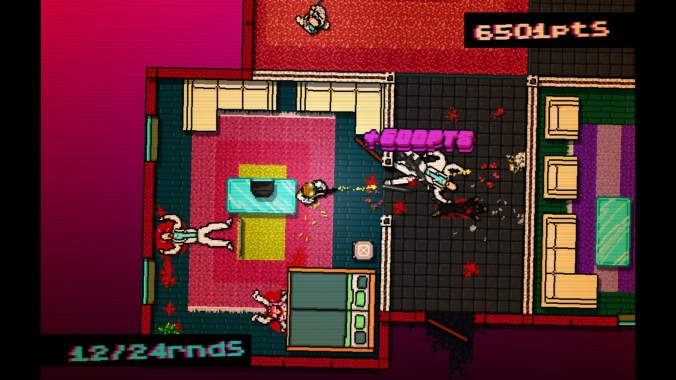
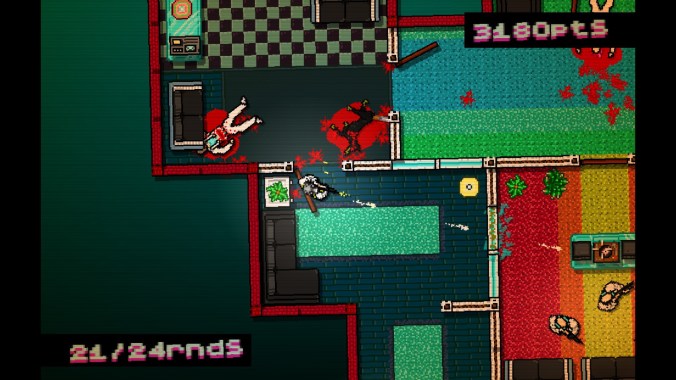
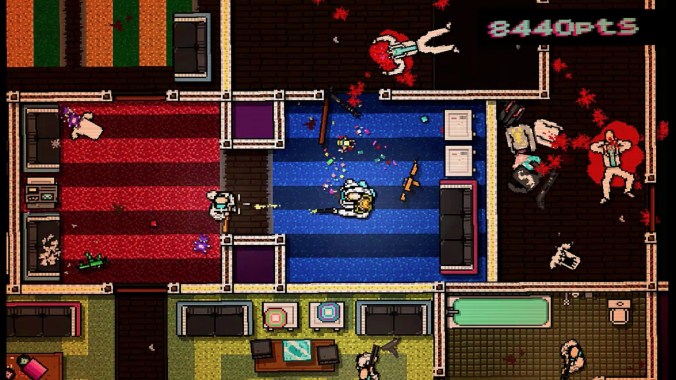
While playing through the calm and slow-going Stardew Valley, I felt like I needed to quench my thirst for action. And there is no better way to fulfill that desire than Hotline Miami. What makes Hotline Miami stand out from many other indie action titles is how intensely satisfying it is in every regard. Every factor of this top-down shooter feels tailored to making beating the hell out of enemies feel just right.

1

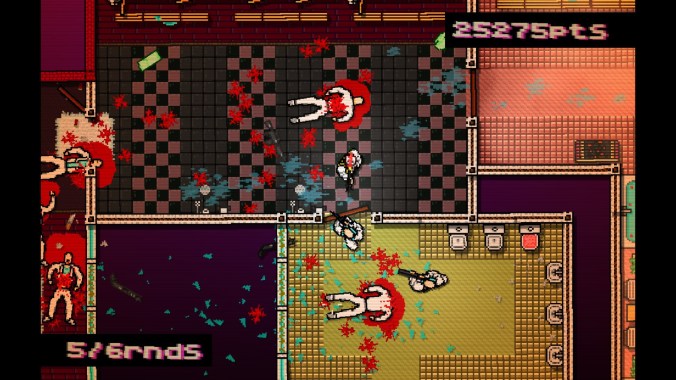
In an age where violence in video games in being condemned by the media, Hotline Miami revels in its violent nature. It is not afraid to go all out, and that is partly makes the game so gratifying, as sometimes you just need to play something intense. Another one of the factors that makes Hotline Miami so satisfying is how brutally brisk and quick it is. One shot is one kill. Many other action games suffer from bullet sponges and enemies that take entirely too long to take down. In this game, however, if you hit an enemy with a weapon, they are immediately dead. Of course, this works in the reverse as well. All it takes is one hit to take down the player. The unforgiving nature of this system is what keeps the game so fast-paced. Just a careless step by the player leads to death. Being able to blast through enemies with just a single hit from a bat or one bullet makes every action much more meaningful and satisfying. There is a real sense of “oomph” when you bash someone with the bat or blow them across the screen with the shotgun.

2

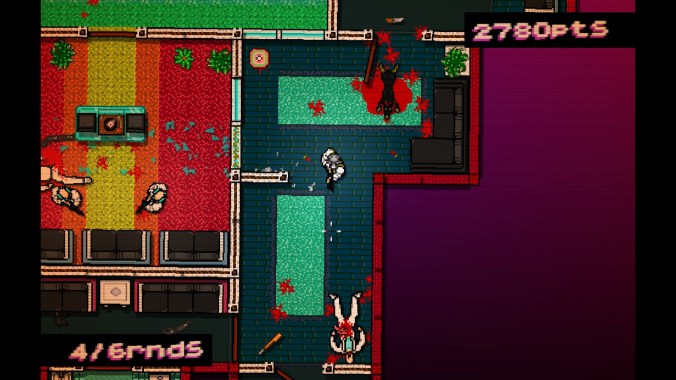
A game with such a small margin of error requires great level design in order to keep it from being aggravating. When a single stray bullet can lead to your demise, the levels need to be specifically designed to avoid cheap and unsatisfying deaths. That being said, you are going to die in Hotline Miami, a lot. Luckily, just a quick button press and you are back at the start of the floor, there is not even a break in the music. Since a game like this is reliant on its level design, it is a good thing that Hotline Miami is phenomenal in that regard. Small sectioned-off rooms make sure you do not have to tackle too many enemies at once. Every floor is designed in such a way that it is advantageous to go fast, and slowing down could be a death sentence. It is critical for you to get the first shot off in every encounter, which is a result of the “one shot, one kill” style gameplay. Every obstacle and enemy is clearly displayed to the player. Enemies are not hidden off-screen or sniping you from across the map. There is maybe two points in the game that I was shot by an off-screen enemy, which was definitely frustrating, but those moments are few and far between.

3

Every level in Hotline Miami feels like an intense and violent puzzle. Which mask and ability would work best, which rooms should I hit first, should I attempt to be stealthy or go in guns blazing; these are all questions I asked myself at the start of every level. Of course, any strategy that you might have quickly gets overridden by your desire to just run in and kill some Russian mobsters, and the game rewards you with bonus points for doing so. Enemies mostly have set patterns, but often deviate just a little bit so repeating the same exact actions over and over may yield different results. Most of the time in Hotline Miami, you just have to rely and your killer instincts in the heat of the moment.

4

Now that it is established that Hotline Miami is fantastically brutal, fast, and bloody from a gameplay perspective, we need to talk about its other aspects. The psychedelic and neon-soaked visuals of Hotline Miami perfectly depict the drug fueled city of Miami in 1989. You are dropped into the bizarre life of Jacket, who constantly has surreal visions and begins to receive phone calls that instruct him to perform massacres on the local Russian mafia. As the game progresses, reality and Jacket’s identity become warped and distorted. In some in-game sequences it becomes difficult to tell what is real and what is Jacket’s mind imagining violent scenes and imagery. Jacket’s identity is also perverted as time passes, he always wears a mask during the killings, but certain dreamlike sequences reveal that he is conflicted and confused. The player shares these emotions with Jacket, as unraveling the mystery of Hotline Miami is quite the task. Many questions are asked, and it starts to make sense as you reach the end of the game. Unfortunately, I felt like the ending was a little bit lackluster, but ultimately for a game that I was just playing for some violent fun I was pretty impressed by the narrative elements.

7


You cannot talk about Hotline Miami without mentioning its soundtrack. Thumping synth filled songs, like M.O.O.N. – Paris, are blasting when you slaughter floors upon floors of Russians. Deep and distorted guitars, from Coconuts – Silver Lights, play in the surreal sections of the game. And no song is better matches Jacket waking up from a drug induced slumber like Sun Araw – Deep Cover. Hotline Miami is full of great tracks for all different situations, and some of the songs are downright addictive.

5

One last thing I want to touch on is the ability of the developers to show restraint. Many of great games are brought down by the fact that they just drag on too long and become repetitive, to the point of being exhausted with the game. This is certainly not the case in Hotline Miami. The game is relatively quick, it only took me about 5 hours to complete it. I rarely revisit a game immediately after I beat it, but with this one I went right back in and replayed some of my favorite levels. The gameplay of Hotline Miami is definitely addicting and fun, but I feel like if it went on too long and overstayed its welcome, it could have quickly gotten grating. Luckily, Hotline Miami knows its limits and does not overdo it.

6

As a whole, Hotline Miami knows what it is and plays to its strengths. Quick, violent action with distorted storytelling and arcade-esque visuals. Hotline Miami has mastered the art of making everything intensely satisfying. This game is certainly not for everyone, and if you are not interested in violent games or games that require quick reaction time I would stay away from this title. But if you are looking for a blood-soaked, fast-paced action game, look no further than Hotline Miami.

Metal Slug 3 (2000)

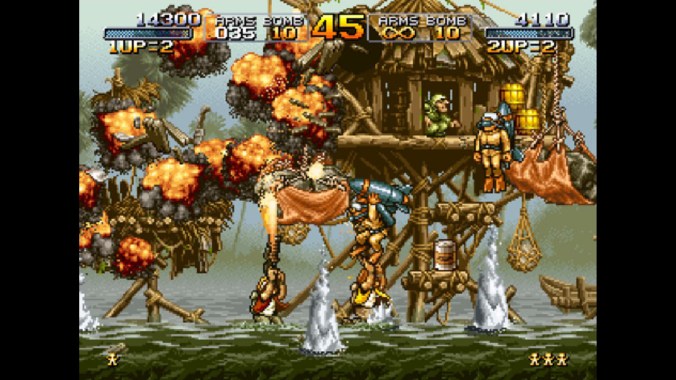
Metal Slug 3 is often considered the pinnacle of the series, and it is clear that the developers really poured their hearts into this game. This was the last Metal Slug game that was developed by the original Nazca and SNK team before they went bankrupt, were bought by another company, and disbanded. This installment is longer and has substantially more content than its predecessors, and it is evident that this was the developer’s last hurrah before having to split up.

5

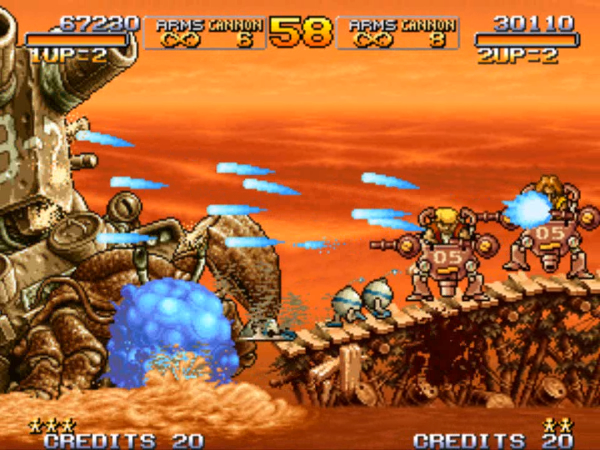
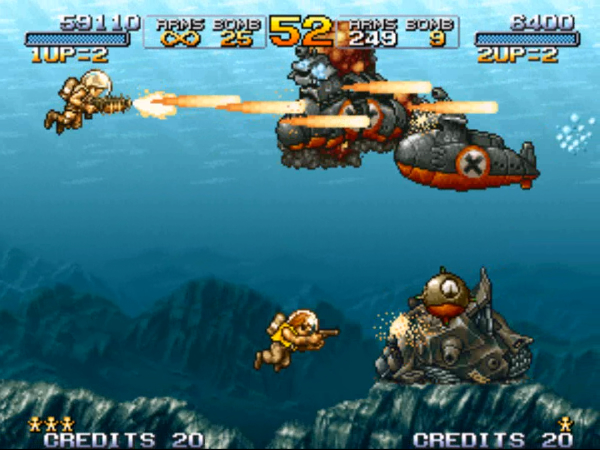
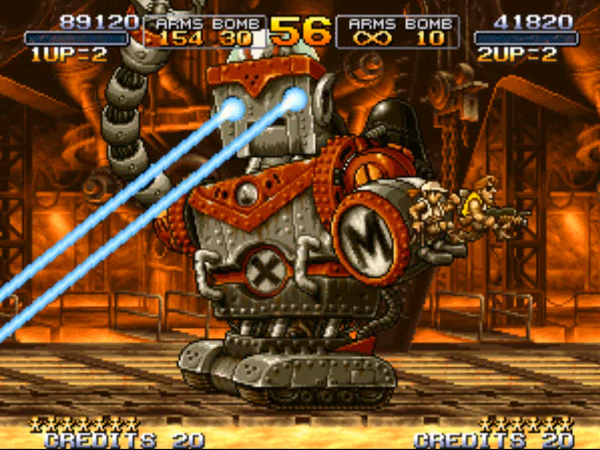
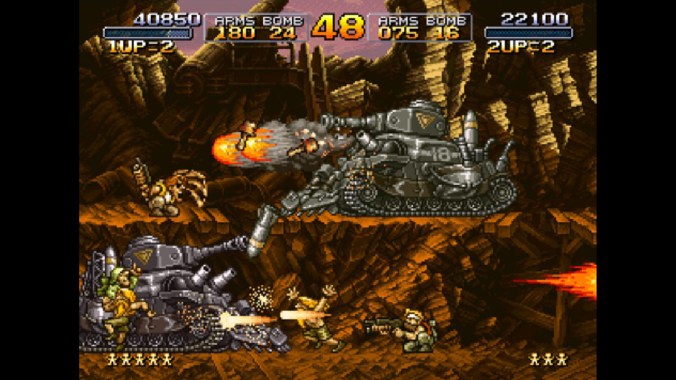
Metal Slug had realistic environments and enemies, and Metal Slug 2 ventures into the land of the outlandish, Metal Slug 3 cranks up the level of absurdity. For the vast majority of the game you are fighting fictional creatures instead of standard enemy soldiers. Each level’s theme, environment, and monstrous boss battle make them extremely memorable. The other big addition to Metal Slug 3 is the variance in the vehicles. Seven new playable vehicles were added for the player to use and enjoy. Another new feature is that most levels have multiple paths to complete the level. This adds a factor of replayability as well as exploration. Metal Slug 3 is often touted as the best in the series and even the paramount run-and-gun game. While I can see how this is definitely a logical and sensible opinion, I have one issue with this game that holds it back.

6

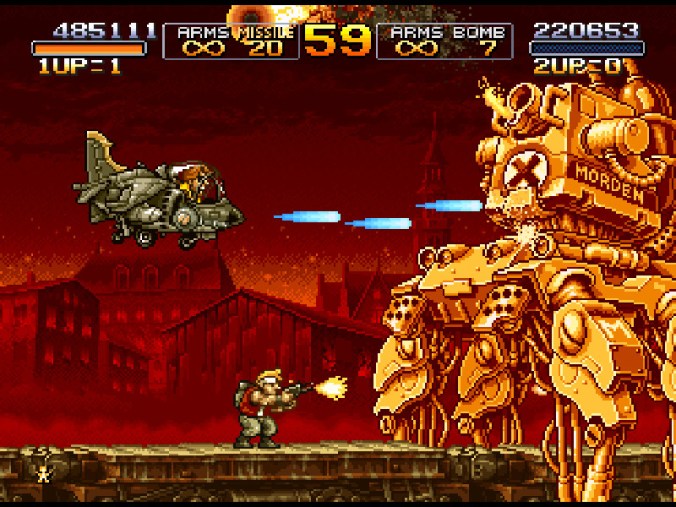
My personal issue with Metal Slug 3 is its final mission. While the first two Metal Slug games are about an hour each, the final mission of Metal Slug is 35 minutes long just by itself. That is an absurdly long time for a single arcade game level. To be fair, there are distinct portions of this level that completely change the environments and enemy types, but I feel like those distinct parts should have been split up into a few different missions. When I saw that I had gotten to the final mission, I thought that I was almost done. It was really jarring to think that I had almost beaten the game, but then the final level just kept going, and going and going. This was compounded by the fact that Metal Slug games are very tiring for your fingers as you have to mash the shoot button for nearly the entire game. The other irritating factor of this final mission was the difficulty spike that occurred. The beginning levels of Metal Slug 3 had difficulty levels comparable to the first two games in the series, but the final mission can get ridiculous at times. I accrued far more deaths in this final mission than in every other level of this game combined.

7

If it were not for the final mission, I could easily say Metal Slug 3 was my favorite in the series. Do not get me wrong, it is still a fantastic game with great action and artwork, but I cannot help but feel like it the last level dragged on for ludicrous amount of time. Combine the length with tired fingers and a sharp difficulty spike and it is a recipe for an exhausting mission. That being said, Metal Slug 3 is definitely a fantastic run-and-gun game that I thoroughly enjoyed. The pure variety of weapons, vehicles, enemies, environments, and maps make Metal Slug 3 a game that is worth of being remembered as one of the premier run-and-gun games.

Mass Effect (2007)

While some believe Mass Effect to be outdated and clunky, it is the necessary starting point for a legendary series. While the original Mass Effect definitely has not aged well, I believe it would be an injustice to the series and yourself to skip over it to play the more refined sequels. Mass Effect is a space action-RPG (role-playing game), and while the “action” and gameplay is dated, the RPG aspects are still top-notch and make Mass Effect a game worth playing. Deep lore, emotional decisions, strong story-telling, and an intriguing plot are the factors that make Mass Effect successful.

One of the major elements of Mass Effect is the depth of its lore and its expansive universe. Codex and journal entries are available to the player if they ever want to learn more about the missions they are doing or the lore behind the universe. Various entries on the different alien species, including their physiology, galactic presence, and their history. Everything in this game has an explanation and background info if you are interested to learn more about something in particular. Knowing the backgrounds and the relationships between all the alien species definitely adds depth and a factor of validity to this game.

The characters and the story are the defining factors of Mass Effect for me. You play as Commander Shepard and are in charge of the space vessel Normandy and her crew. Most of the time you will be interacting with your “squad” as they are the ones that you can bring along with you to combat. It is definitely a rewarding and almost cozy feeling as you build up your squad and add new members to it at the beginning of the game. Throughout the course of the game you talk with them, get their input on certain situations, build friendship, help them complete certain personal quests, or even romance them. What sets Mass Effect apart from other shooters is the reliance on this squad both on and off of the battlefield. Other games suffer from the protagonist doing everything while other characters just sit around, but in Mass Effect your squad is a massive part of the game. It adds a sense of legitimacy and realness to the game. This is why certain decisions and choices that must be made are so emotional. You build up this squad, fight with them, train them, and interact with them, so when a squad mate gets killed off in the story, it is a devastating blow.

The story of Mass Effect is full of mystery, intrigue, and emotion. The basic premise is that you must figure out what happened to an advanced alien species that died off 50,000 years ago, and you must prevent the same fate from happening to humans and their allies. The game feeds you piecemeal clues as you progress through the story. Seemingly unconnected events and plot-lines all come together by the end to form a cohesive and alluring plot. The story was paced well, there is never any downtime and I was always wanting to see what happened next. There are plenty of individual decisions and choices that you must make in this game. Some choices are minor, while others play a huge role in whats to come. You get to decide the fate of many lives and species. My only issue with this was that it was a little too rewarding to be the “nice guy”. There is rarely any downside going with the games heroic “paragon” options. I wish there was more incentive to be neutral or even go with the “renegade” option. There were a few points in the game that did this right, but for the most part the paragon route is the most rewarding option by a long shot.

While the RPG aspects of Mass Effect are clearly masterclass, the gameplay is definitely clunky and unsatisfying. Enemies often times have tons of health and shields, and some take minutes to take down a single basic enemy. This is compounded by the fact that the guns that you are using do a pittance of damage and overheat frequently, so you are forced to stop shooting for long stretches of time. There is no jumping or hurdling objects, so you have to slowly navigate even the smallest of obstacles. Constantly re-equipping your squad of 7 members with 4 types of weapons, upgrades for those weapons, and armor just gets tedious. Your squad mate’s special abilities often feel underwhelming as there is no big audio or visual cue when they are being used. For some reason, you can only sprint in combat, but not out of combat, which is when you really want to be sprinting so you can get around faster. There is an excessive amount of loading screens and elevators, which just waste a ton of time. Travelling from planet to planet is also tedious. Realistically, getting around anywhere in this game is just slow and draining. Driving the Mako vehicle is easily one of the worst driving experiences in any game that I have played. It goes extremely slow, defies physics, is tough to handle, and it does not even shoot where you aim it. This is made even more frustrating by the fact that you often have to scale cliffs with this abomination of a vehicles. Some of the biggest gameplay problems stem from the sidequests. They often drop you off in barren worlds, leaving you to drive the Mako across a vast nothingness for a few minutes. Then when you finally reach the building where the quest is located, you realize that it is the same exact layout as every other sidequest in the game, so you essentially repeat the same firefight that you have done many times before.

While the gameplay of Mass Effect could be categorized as clunky, repetitive, and tedious, it is still a worthwhile game. Not only to set up the legendary sequels, but also because the characters and story can keep you playing despite the tedium. The biggest improvement that should be made from Mass Effect for its follow-up titles is that it definitely needs to be streamlined in places. Trim off the banal tasks and clean up the controls and overall movement to make the game less monotonous and burdensome at times. All in all, it is worth sticking through the mediocre gameplay just for the RPG elements. And if you avoid doing sidequests you will skip over a lot of problematic sections altogether. Mass Effect might not be perfect, but it is still worth a play through. I am very excited to see what Mass Effect 2 and Mass Effect 3 have in store for me, and if they could solve the issues of Mass Effect.

Metal Slug 2 (1998)

A proper sequel or follow-up game should improve upon the original, but at the same time maintain the aspects which made the original successful. Metal Slug 2 does a great job at keeping all of the great aspects of Metal Slug, but adding a few things here and there to improve the experience. Metal Slug 2 plays exactly the same as the original, fast-paced run-and-gun action. There is a new weapon, some new enemy types, new vehicles, and more varied and environments, all of which make this sequel distinct from the original.

4

The other distinction from the original is the humor and absurdity that was added. Outlandish enemies like aliens and mummies certainly add a unique feeling to Metal Slug 2. The original was a much more traditional war title, but I appreciate the goofiness of Metal Slug 2. Humorous moments like a killer whale leaping out of the water and swallowing enemies whole make Metal Slug 2 more memorable than the first.

3

Overall, Metal Slug 2 is more varied and unique than the original, but at the same time the game plays the same. It is still tough to minimize your deaths, but deaths are not punished so you can limp your way through the game even if you are struggling. I am not a huge fan of the forgiving nature of the game, but if you really want a challenge you can still just play the game and try to die as few times as possible. I quite like the absurdity of Metal Slug 2, and I think that it was an improvement on the original game’s ordinary war scenario.  All in all, Metal Slug 2 is a quick and fun game to play that keeps in the chaotic spirit of the original. If you have an hour to kill and you want some old-school run-and-gun action, definitely check out Metal Slug 2.

Metal Slug (1996)

If you are a fan of run-and-guns, arcade games, or just looking for some quick fun, Metal Slug should be a top priority on your play list. This Rambo-esque arcade game is constant, fast-paced, hectic, action and intensity. Beautifully hand-drawn sprites and backgrounds only add to the charm of this game. Rapidly sprinting through the 2D environments, dodging enemy fire, and blasting through enemies with the various weapons at your disposal is just a ton of fun. Metal Slug is very challenging, but also extremely forgiving. It is challenging in the sense that getting through every level while dying as little as possible is can be a daunting task as bullets, missiles, and grenades fly at you from every direction. But at the same time anytime you die or run out of lives, you just get put back exactly where you were, so there is no punishment for screwing up.

1

My only real issue with the game was the fact that you respawn exactly where you die. I would have liked to see frequent checkpoints, and if you die a few times and run out of credits, you get sent back to that checkpoint. That way, the player would be challenged to make it through small sections without dying an excessive amount of times.

2

Since Metal Slug is only 45-60 minutes long, there can be a real addictive quality to going back and beating the levels again, but trying to die less and get a higher score. Metal Slug also supports multiplayer, so you can have fun with a friend as you shoot your way through this game. As one of the legendary run-and-gun titles, Metal Slug is definitely worth a play through.

Alan Wake (2010)

Alan Wake is a story-driven action game developed by Remedy Games. It is a psychological thriller and many have likened it to “Twin Peaks meets Stephen King”. It is clearly inspired by Stephen King and plays out similarly to his works, it even mentions him a few times. I generally like psychological thrillers, and Alan Wake has received generally favorable reviews, so I was excited to play this title. Unfortunately, I was sorely disappointed as I felt Alan Wake achieved nothing higher than mediocrity. The only thing that I really liked about this game was its atmosphere, everything else was just average at best. Both the story and the gameplay felt like they had potential to be interesting and unique, but both went nowhere interesting.

In a story-driven game the story better be memorable. Sadly, for Alan Wake that is not the case. At times, I was certainly drawn in and intrigued by the story, but those moments are fleeting in Alan Wake. The story revolves around a writer who is struggling to write his next story. The novel that the main character does write ends up coming true, and now you are living in it. You constantly are dropped into dreamlike sequences where you fight a dark presence that infects and controls people. At the start of the game, you are meant to be confused and disoriented by the surreal experiences that make up the majority of the game. This is similar to some other psychological thrillers like Memento, The Game, and Shutter Island in the sense that you are meant to be confused. Unlike those movies however, Alan Wake never has a big payoff or moment that makes you say “I get it now.” As I was playing I understood where the story was going pretty quickly as the clues and hints that the game gives you lack any subtlety. While a perceptive viewer could piece together the plots of the movies I mentioned through subtle clues, in Alan Wake the solution is completely obvious and in your face. The dialogue and characters are solid for the most part, but the facial animations and lip-syncing are a little off putting. While the characters are certainly interesting they cannot carry the story. The story interesting enough to grab my attention for a little while, but it just lacked a big payoff to really bring it all together. Any surprise that the game did have in store for the player was completely ruined by the goofy collectible system.

In Alan Wake the main collectibles are manuscript pages. These give further detail to the story and help the player understand what is happening in the story. They are generally pretty easy to find as they are lit up and lay out in the open. Many of the manuscript pages that you find end up detailing events that are yet to come. There is no feeling of suspense when you are told exactly what is going to happen before it happens. Any element of shock that this game could have had is completely stripped away by the manuscript pages.

Despite the issues with the story, it was engrossing enough to keep me interested for a little while. The biggest issue with Alan Wake was the gameplay. The gameplay is a mix of third-person shooter, action-adventure, and thriller. In Alan Wake before you shoot enemies, you must first shine a light on them until they become weakened. This was great idea thematically, but it needed some changes for me to like it from a gameplay perspective. The flashlight that you use to weaken enemies runs out of juice so fast, you can weaken maybe one enemy with a fully charged battery. So, you either have to put in a new battery, which you have to collect like ammo, or you can just wait for the flashlight to slowly regain its energy. You mostly want to save the batteries for intense fights where you need quick bursts of energy, so most of the time you are left waiting for the flashlight to recharge, which is unbearably slow. In most of the fights I found myself kiting big groups of enemies around and waiting for my flashlight to recharge. A lot of the time I just ran past enemies and to the next safe zone to conserve ammo and time. The other big issue was just how repetitive the gameplay became. After the first hour or two of playing the game I was just tired of how similarly every single encounter played out. There was one sequence of gameplay that I actually really enjoyed that I felt really upped the intensity, speed, and pressure. In this particular sequence, you are fighting on a stage that produces its own light, so you do not have to worry about slowly weakening the enemies with the flashlight, it is just pure, intense, gameplay for a few minutes.

My biggest personal gripe with the gameplay was just how clunky it was. Alan is a little tough to control, but more frustrating than that was that he was incredibly slow. You can sprint for maybe three seconds at a decent pace before you run out of stamina, and once that happens Alan is the slowest character in the history of video games. This is extremely distracting and off-putting, as I am trying to run from evil beings that are trying to kill me, or a possessed train that is going to crush me, Alan cannot muster enough energy to move faster than an anemic tortoise. Another irritating feature was the cinematic zooms during combat. As an enemy sneaks up on you, sometimes the game will zoom in on them and go into slow motion. This not only ruined any surprise or thrills that the game could have had, but it was also extremely disorientating. As the game snaps back to your perspective after one of these sequences it takes a second to readjust to your surroundings. On top of that, the game is still going on in the background as these cinematics play. You can still control your character, even though you cannot see him, and enemies can still approach and attack you. There was one particular instance that the game zoomed in on an enemy 10 meters from me as I was running from two other enemies. As the game went back to my perspective the enemies that I was closer to had closed the gap and begun attacking me before I could even do anything about it. These slow-mo sequences were frustrating, disorientating, action-breaking, and unnecessary.

With everything that let me down in Alan Wake, the one redeeming feature was its impeccable atmosphere. Set in rural Washington state, Alan Wake is a mix of serene forests, lakes, and mountains. At night, these typically calming and relaxing features turn into nightmarish environments for the player to traverse. Nowhere is safe in the dark, enemies can creep up on the player at any time and this instills a sense of fear and dread at all times. Alan Wake is not a horror game, it is not particularly scary or disturbing, but it is great at unnerving the player with the motif of light and dark. The darkness surrounds the player and gives you the feeling that nowhere is safe and that something is watching you. Seeing a beacon of light in the distance is a very reassuring feeling. Areas like the gas station or radio station in and of themselves are not particularly comforting, but the feeling of safety imbued by their light makes them such a huge relief once you reach them.

All in all, Alan Wake was disappointing for me. A story that starts off as compelling and intriguing, but goes nowhere. A collectible system that ruins any suspense. Unique gameplay that grows repetitive after an hour. Everything feels like it is almost good, but just falls a little short. The only stand out feature from this game was its atmosphere. The theme of dark and light conveys feelings of danger and safety so incredibly well. Overall the entire experience was just mediocre in almost all aspects. I would not say Alan Wake was bad, but it was not particularly good either. Alan Wake is just decent.

Fire Emblem Echoes: Shadows of Valentia (2017)

Remakes of older games often struggle with finding a balance between fixing the games shortcomings, but at the same time remaining faithful to the core design. Done correctly, remakes can be the definitive version of a video game. If the developers change too much, then the game may hardly be recognizable. If they change too little, then the same problems from the originals are just as persistent and frustrating. Fire Emblem Echoes: Shadows of Valentia is a remake of the second game in the series, Fire Emblem Gaiden, which was released back in 1992. Gaiden is without a doubt the black sheep of the Fire Emblem franchise. Most people who have played it can attest to its frustrating designs and its sluggish gameplay. Shadows of Valentia has a tall order to fill: keeping true to the original but fixing the glaring problems that plagued it.

Shadows of Valentia did a lot of things right, but my absolute favorite feature was that the game was fully voice acted. This is new for the Fire Emblem series, but it is a massive step forward. Having all the characters voiced definitely brings them to life and puts a lot more impact to the dialogues that they have. Speaking of characters, Shadows of Valentia is a big step-up from previous entries Awakening and Fates in the characters department. The latter games characters were one-dimensional and a single personality trait defined their entire character. In Shadows of Valentia the cast is a lot more interesting and fleshed-out, they feel like they could be real people, not just a wacky cast from a video game.

The story of Shadows of Valentia is simple but satisfying. It is not a mind-bending experience, but the plot is extremely gratifying and gripping as you fight your way through the continent of Valentia. Alm and Celica are two childhood friends that split paths and each attempt to save the dying continent of Valentia. Alm’s path focuses on militaristic battles and war, while Celica’s path is a much more religious journey. Alm attempts to reclaim his homeland and fight off invaders, while Celica must visit the temple of a goddess to learn why the farms have gone barren. While the story can be cliché and predictable at times, it was still intriguing and engaging enough to keep me playing. What really stood out to me in this game was the world building. Being able to explore the world map for yourself is something that I love in Fire Emblem games. This was a huge step up from Fates, in which the continent that you play on is not even named. Being able to visit villages and talk to the locals gives the player a much better understanding of what is going on in Valentia rather than “This guy is evil, go fight him.” Even the allies that you recruit constantly comment on the happenings in the game and give their perspectives.

There are some new gameplay features in Shadows of Valentia. The biggest addition to gameplay was probably the dungeons. Fire Emblem is traditionally a top-down, turn-based strategy game, but in dungeons you explore in 3rd person view. When you run into enemies, the game starts a classic top-down battle. To be completely honest I am not a big fan of this feature. For the most part, these dungeons felt like filler and I do not think that they added a whole lot to the game. All of the battles that were had in these dungeons were incredibly repetitive and boring. Every single battle fought in the same dungeon uses the same map, only occasionally the enemies are rearranged in a slightly different fashion. All of these battles blend together and are all together bland, dungeons just felt like filler to pad out the game length. Dungeons were definitely a unique new addition to Fire Emblem, but they are going to need to see some tune-ups before I am sold on them.

Some other noteworthy gameplay changes include abandoning mechanics from newer Fire Emblem games and returning to the classic style of gameplay. The pair-up feature from Awakening and Fates has been left behind, and I think this is a good thing. The pair-up feature led to many balance issues and just encouraged the player use characters as stat boosters for other, more powerful characters. Another feature that was left behind was skills. Personally, I thought skills added extra dimensions to characters and their utility, but they definitely were difficult to balance and often relied on random chance to activate in battle. The skills have been replaced with combat arts, which are activatable abilities that units can learn by using certain weapons. Some combat arts are simply more powerful attacks, while others have special properties like dealing extra damage to armored units, or dashing through the enemy unit on the battlefield. All of these combat arts come at the cost of health and I felt like they certainly added some extra tactics to each encounter.

An entirely new feature was the useable item called Mila’s Turnwheel. This item allowed the player to go back in time and revise moves that they previously made. If you make a bonehead error, or you misclick, even if you get unlucky and a unit dies to a 1% critical hit chance, you can use the Turnwheel to give it another shot. This is a welcome feature as it mitigates frustration from bad luck or just a lapse in judgement. You no longer have to reset and redo the entire chapter if a unit dies to a roll of the dice thanks to Mila’s Turnwheel. Of course, you only have a limited number of uses so you cannot just use it all the time. I actually avoided using this feature outside of just testing it out because I felt like Shadows of Valentia was already relatively easy, even on the hardest difficulty. Mila’s Turnwheel definitely makes the game easier, so avoid it if you want a more difficult experience. That being said, it is a great tool if you are not looking for a tougher time. It also has some interesting narrative uses, as it allows the player to see “memory prisms.” These are flashbacks to years before the happenings of this game. These set up the story a lot better when you can see the events leading up to the present rather than just reading about it through some text. There are some other unique gameplay aspects of Shadows of Valentia. Archers, mages, and clerics are all drastically different from previous iterations. They are a lot more utility focused and I think these were solid changes.

The original Gaiden was known for being tedious and frustrating, and this is mostly due to the games maps. This is the most common complaint about the original, so I thought for sure that the maps would be fine-tuned and improved for this game. I was wrong. Many of the maps are 1-to-1 remakes of the original. This is mind boggling to me. The developers had to know that the maps of the original are criticized heavily, so why move forward with the exact same designs? I understand wanting to be faithful to the original, but if something is obviously bad I expect the developers to at least attempt to make it better. What makes these maps so bad you ask? Well, they range from tedious and boring, to obnoxious and infuriating. Many of the earlier maps are just boring, repetitive slogs. Giant, open, grassy fields dotted with some forest tiles here and there. No chokepoints or interesting features, just flat nothingness. There are not even side objectives to spice things up. These types of maps are bad and completely forgettable, but they are nowhere near as bad as what is to come later in the game. Many of the frustrating maps have deserts, which inhibit movement, or swamps than inhibit movement and deal damage to you. Giant clusters of enemies with no tactical way of approaching them. Some maps were even reused multiple times throughout the course of the game. But the biggest issues with the maps were witches and cantors.

Witches are one of the single most frustrating designs in any video game ever. I am confident of that. Essentially, they are mages with the ability to teleport wherever on the map that they want, move, and attack, all in the same turn. If their AI was any good at all, they could simply just teleport to your lowest resistance unit and gang up on that unit and kill it, and there is no possible way for you to stop this. The only thing making these witches even bearable is that their AI is complete garbage, and I think that it is this way on purpose. They just randomly teleport around instead of focusing on your weaker units. Sometimes they do not teleport at all. In the entire course of the game I think I only had to reset because of a witch maybe two times. Still, the fact that they are so incredibly inconsistent is nerve racking. At any given moment while you are playing, a witch could just make the right move and force you to reset with no plausible way of stopping it. You just have to hope that they keep making dumb moves. Cantors are another story. They are summoners that spawn weaker units every few turns. On paper this actually sounds like a good idea, it is a way of speeding up the player. Saying “if you do not kill this cantor quick than you are going to have to deal with hordes of enemy units.” Unfortunately, it does not work out that way. Instead cantors are often surrounded by powerful enemy units, forcing you to take your time dealing with the tough guys first. Many maps with cantors become slogs of killing massive amounts of weak summoned units as you slowly pick off the more powerful enemies. Towards the end of the game, there are cantors that spawn witches. I think that speaks for itself. The thing that really bugged me was that plenty of the maps would have actually been good maps had it not been for the witches or cantors. Just take them out and there are some actually decent maps in this game.

My last gripe with the game are the random encounters. As you travel the world map enemies will crop up from strongholds and chase you around the map. These small skirmishes are fairly boring and they are unavoidable. Sometimes I just want to get on with the main story, but no, first I have to slog through some small battle on a map that I have already seen and played. I feel like this really punishes the player for exploring the world map, visiting towns, doing quests, even going to shrines to promote your units. Doing any of this will lead to the random encounters cropping up and forcing you to play them despite their dullness.

Fire Emblem definitely has a divisive fanbase. The series varies wildly, and people enjoy the different games for different reasons. I consider myself to be fairly central and I appreciate a well-rounded game. Fire Emblem traditionally mixes strategy elements with story and RPG elements, and I do not think that Shadows of Valentia struck a good balance. Shadows of Valentia definitely has positive story and RPG elements, and it is a huge improvement over Fates which was a disaster in that department. Unfortunately, the gameplay is bogged down by dreadful map design. Most of the maps are just bland and repetitive, but towards the end they just get frustrating. For the most part I enjoyed Shadows of Valentia, the story and characters were certainly enough to keep me playing despite the maps. For these reasons, I give Fire Emblem Echoes: Shadows of Valentia a 7/10. Before you pick up this game, ask yourself why you like the Fire Emblem series. If you are into it for the tactics, strategy, and map design, I would probably avoid this title. If you enjoy the series for its characters, world building, grand fantasy, plot, music, or any other of its RPG elements, definitely check out Shadows of Valentia.

Hollow Knight (2017)

This year has been great for video game lovers. There have been many large releases that saw massive success and critical acclaim. Only 5 months in and we already have: Resident Evil 7, Yakuza 0, Horizon Zero Dawn, Nioh, Legend of Zelda: Breath of the Wild, NieR: Automata, Prey, and Persona 5. Alongside all these huge titles it may seem strange, but the biggest surprise of this year was the indie game Hollow Knight. This is the first game by the Australian independent studio Team Cherry, but it feels like these guys have been making games for years. Hollow Knight is a metroidvania style game that takes place in the ruined bug kingdom of Hallownest.

hollow 1

The setting and atmosphere of Hollow Knight is the dark and dingy underground kingdom of Hallownest. The game is very cryptic and it is pretty much left up to the player to interpret the plot through subtle clues scattered through the environment. There are plenty of different environments for the player to discover and explore, each with a completely unique setting. These gloomy areas are accompanied by a matching moody soundtrack. While the game definitely has a drab vibe to it, there are plenty of charming moments. For example, there are these cute little Grubs scattered throughout the world that have been trapped in jars. As you find them and set them free you can visit them back in their home and the Grubfather will give you a present for each one that you have rescued. Accompany moments like that with the beautifully hand-drawn art style of Hollow Knight and you have a game that is simultaneously dreary and endearing.

hollow 3

Do not let the cutesy bits of Hollow Knight fool you, this game can be brutally difficult at times. It starts off slow, as most metroidvanias do, but quickly ramps up as you acquire new abilities. There are many difficult boss fights and platforming sections that took me numerous tries to master. Despite this, I never felt like the game was unfair, it achieved a perfect balance of difficulty. It was challenging enough to be entertaining and engaging, but it was never frustrating. While another recent metroidvania in Ori and the Blind Forrest focused mostly on platforming, Hollow Knight is much more combat focused with platforming sections scattered throughout. There are dozens of unique boss fights to perfect and complete. When you are fighting bosses, you are exploring the masterfully crafted world of Hollow Knight.

hollow 2

As a metroidvania, Hollow Knight has a big, interconnected, sprawling world. As you acquire new abilities and items you can access new places that were previously unavailable to you. This world was particularly well thought out. It is incredibly easy to get from area to area, as they are connected in such a way that makes them simple to navigate. There is so much to be found in the world of Hollow Knight. Grubs, health upgrades, magic upgrades, new abilities, upgrades to abilities, and new items are all around the player. There is so much to discover and be found that I was constantly enthralled with the exploration aspect of this game. One pretty unique thing about Hollow Knight is that it really never tells you where to go. It is up to the player to explore and stumble upon the correct path. Many of the paths that you will take will lead to boss fights, new abilities, and secrets, but a lot of these things are completely optional to complete the game. I really loved the fact that the game does not tell you where to go. There is less pressure to move forward, and it opens up a much bigger window for exploration. This game lets you play and discover at your own pace. Instead of saying “Well let me go here and move forward in the game”, I was saying “Let me explore and I will see what I stumble unto”. The latter is much more compelling, especially in an exploration based genre like metroidvanias.

hollow 4

One of the most common complaints that I have heard about Hollow Knight was its map system. When you discover a new area, you have to first find the cartographer to sell you the base map. From there you have to explore on your own to record the full map. Some people do not like this because they claim it makes navigating new areas a chore and a hassle. I do not agree with the sentiment in the slightest. I quite enjoyed that feeling of mapping out areas for myself. When you can see the whole map from the start, a lot of the excitement of finding different paths is lost. The only criticisms for Hollow Knight that I have is that I would have liked to see the base town of Dirtmouth to be built up throughout the course of the game. Maybe some new vendors to sell the player some items that would help locate secrets at the end of the game. In games like this, I can reach about 90% full completion pretty easily, but finding those last few secrets and items can be like searching for a needle in a haystack. So, towards the end of the game I would have liked to see some way to find those secrets that I missed. Other than that, the only real issue with Hollow Knight is that is really nothing “new”. It does not introduce any spectacularly new mechanics or revolutionize the genre. That being said, it does a fantastic job of taking all the greatest aspects from other games and combining them into the best metroidvania that I have ever played. While I value innovation pretty highly, I also greatly value the ability for a developer to perfect a genre and Hollow Knight does exactly that.

hollow 6

I rarely talk about prices of video games, but I think something has to be said in the case of Hollow Knight. This game is only $15 for a ton of entertainment, just to complete the game it will take about 20 hours. To get the true ending or 100% the game it takes more in the realm of 30-40 hours. Compare this to other fantastic indie games like Owlboy, Ori and the Blind Forrest, and Shovel Knight. Those games are about $20-$25 and will last the player maybe 10-15 hours. Not only is Hollow Knight a phenomenal game, but it gives you a pretty big bang for your buck.

hollow 5

All in all, Hollow Knight is one of the best games that came out this year, and that says a lot. I cannot sing enough praises for this game. If you like metroidvanias, 2D platformers, or 2D action games, definitely check this one out. It is expertly crafted and is quite possibly the best metroidvania ever made. For these reasons, I give Hollow Knight a 10/10. It may not introduce anything entirely new, but it does a damn good job of perfecting the formula.