Hellblade: Senua’s Sacrifice (2017)

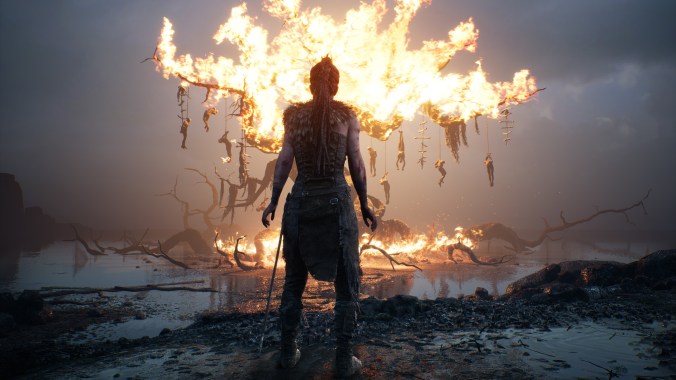
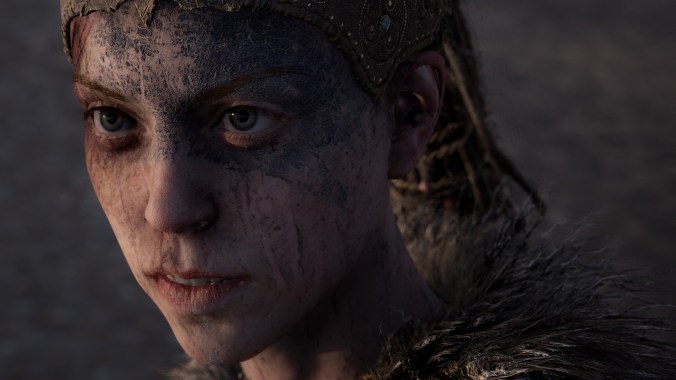
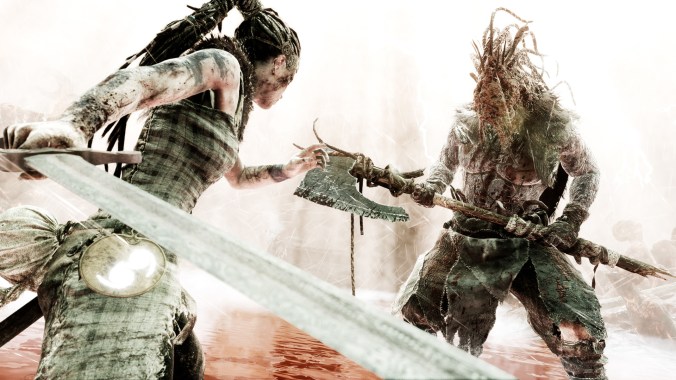
The idea of an “independent triple-A” game is quite obviously an oxymoron, but still Ninja Theory make a convincing attempt at it with Hellblade: Senua’s Sacrifice. A triple-A game by definition is created by a massive developer and can cost hundreds of millions of dollars to produce. Ninja Theory is attempting to break the mold by creating an experience that feels like a triple-A title, but was cheaper to create, cheaper to purchase, and is a shorter and more focused experience. Hellblade: Senua’s Sacrifice could easily be passed off as a niche triple-A title with its stunning visuals and production value. I really support Ninja Theory’s efforts as the industry seems to only focus on triple-A and indie games, so few games are released between these polar opposite designations. I would love to see more games like Hellblade: Senua’s Sacrifice that are not cheap little indie games but are not massive and sprawling triple-A titles, a happy medium would be appreciated. Hellblade: Senua’s Sacrifice is a narrative-driven hack-and-slash which details the experience of Senua, a Celtic warrior who suffers from psychosis.

1

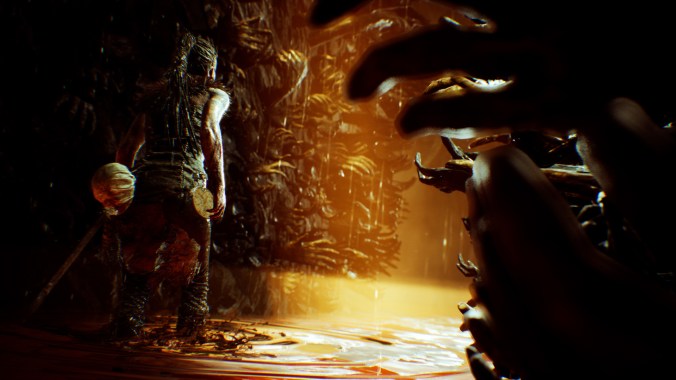
It is evident right from the beginning of the game that mental health plays a key role in this game. Senua hears whispering voices in her head at all times, these voices gossip about Senua and occasionally aid or discourage her journey. The player is actually described as one of the voices that guides her. It is imperative that if you play this game you must play with a binaural headset, as these voices are critical to building tension and immersion to the experience. Not only does Senua hear voices, but it is apparent that much of the game is played in Senua’s mind. What she is fighting is often not real, and she visuals terrible imagery as a result of her psychosis. I would describe the game as a psychological-thriller, tons of unsettling atmosphere and a constant sense of dread are instilled by Senua’s psychosis.

4

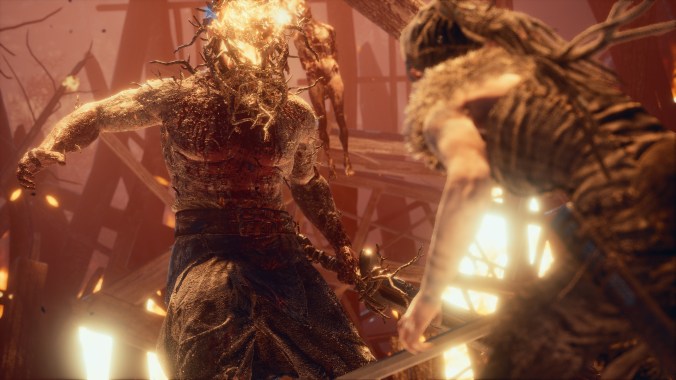
Moreover, Hellblade: Senua’s Sacrifice is undoubtably a dark game due to the nature of its content. Horrifying depictions created by the mind of Senua make it clear that this game is not for the faint-hearted or squeamish. Senua journeys through Helheim, the Norse version of Hell to save the soul of her beloved. She fights gods and foul creatures alike as she journeys through Helheim. The game has a heavy emphasis on Norse mythology, and I quite liked how some classic Norse tales are dictated to the player as you travel through the world. It may be just a small thing, but I really did enjoy hearing accounts about Sigurd, Odin, Thor, and the rest as I walked from place to place. Furthermore, Hellblade: Senua’s Sacrifice is a masterclass in immersion. There is no heads-up-display (HUD) like in most games, there are no obvious tutorials, there are no button prompts, the only thing on the screen is Senua. Even the default difficulty in the game is “auto”, meaning that if you play well it automatically gets harder and if you play poorly it gets easier. Nobody has to mess around with the difficulty settings, you just play the game out and it will find the appropriate level of challenge for you. All of this combined with the psychological themes in the game made me really feel like I was actually one of the voices accompanying Senua. It is very easy to get immersed in the world, the atmosphere, voices, imagery, and lack of HUD really make the experience engrossing.

3

It is obvious that the gameplay was not the main focus of Hellblade: Senua’s Sacrifice. It is primarily meant to be an immersive, artsy, and narrative experience. The motif of Senua conquering her “darkness” may be a little heavy-handed at times, but for the most part the game hits the mark. Where it falls flat a little is in the gameplay department. Combat is initially a little slow as you get used to the controls, but as the game progresses it quickly ramps up. Your swings and strikes feel properly weighted and the controls are very responsive and easy to learn. The voices even play a big part in combat as they warn the player when an enemy is attacking you from behind, allowing you to dodge or parry and enemy that you did not initially see. Everything feels fluid and intense, and this is complimented by the pure spectacle of the combat. Loads of visual effects and beautiful animations accompany your attacks, making the whole experience engrossing. The issue is that the combat is not very deep, there are only a few enemy types and you mostly fight every enemy the same way. Once you master parrying no enemy could possibly pose a threat to you, and eventually the combat becomes tiresome and repetitive. Towards the end of the game, there are long and drawn-out sections of combat that feel like you are fighting an endless wave of enemies. By this point, the excitement of combat had worn off and it felt like a slog to battle my way through hundreds of copy-pasted enemies over and over again. This could have been solved if more complex enemies were introduced towards the end of the game, because by the half-way point I felt like I had seen everything the game had to offer in combat.

5

The other aspect of gameplay are the puzzles. Most of the time progression is blocked by some form of puzzle. Sometimes you had to find a specific rune shape by lining up environmental objects. For example, aligning some trees and houses to create a “M” shape. Other puzzles include walking through magical gateways in the right order. Or finding a way to create a bridge by looking at it from a certain perspective. Generally, these puzzles were not great, but they were inoffensive. They are not particularly hard and they require very little thinking. For the most part I did not hate these puzzles, but I was not really in love with them either. Towards the end of the game the puzzles actually got somewhat interesting, but mostly the puzzles felt like filler. Apart from puzzling and fighting, the main thing you will be doing in Hellblade: Senua’s Sacrifice is walking. This is a narrative heavy game and plays as such. If you want constant action and are not okay with just soaking in the environment, atmosphere, and emotions that the game provides than this game is not for you.

2

All in all, Hellblade: Senua’s Sacrifice does precisely what it set out to do. It is a visually stunning game that could be passed off as a triple-A title, and it tells a surreal and twisted story about a woman suffering from psychosis. It is easily one of the most immersive games I played, and its atmosphere was captivating. While it does struggle a bit from the gameplay perspective, it does not significantly drag down the experience. Both the combat and the puzzles are passable, and at the very least are not frustrating. While I wish they both offered more depth as the game went on, they were not offensively bad either. For these reasons I give Hellblade: Senua’s Sacrifice an 8/10. It is an enthralling experience that portrays the effects of psychosis and grief on the mind of a Celtic warrior.

XCOM: Enemy Unknown (2012)

Turn-based games are fairly decisive, you either love them or you hate them. I tend to be in the “love them” camp, and many of many favorite series are turn-based and strategic games. XCOM: Enemy Unknown is a reimagining of the 1993 turn-based game X-COM: UFO Defense. The purpose of XCOM: Enemy Unknown is that the world has been invaded by aliens, and the player is put in charge of a worldwide organization to combat the alien threat. You oversee everything, from building your base and recruiting new soldiers, to making sure every country is safe and supports you, to commanding the squads during missions, every minute detail is a decision made by the player. XCOM: Enemy Unknown seamlessly combines two aspects: turn-based combat and base management. Both aspects revolve around each other and create an addictive feedback loop.

2

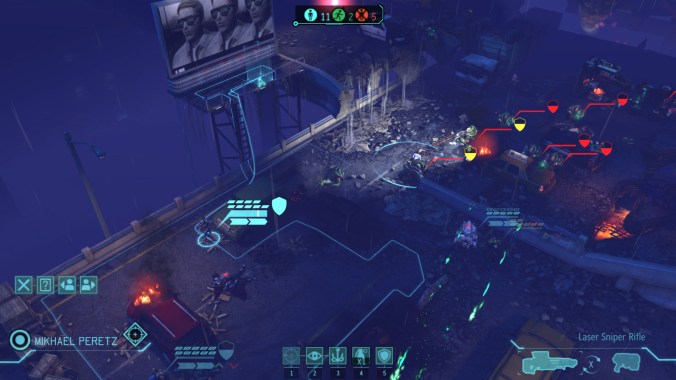
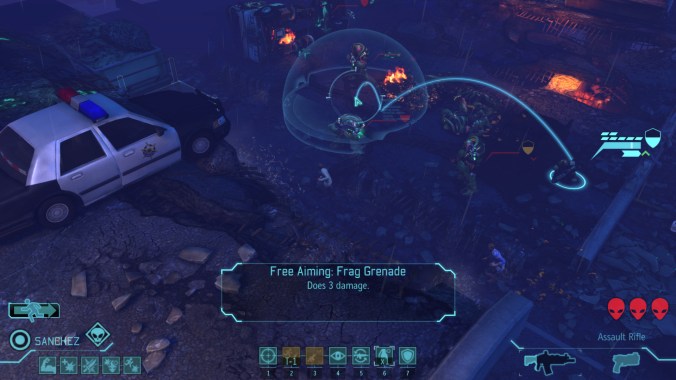
Much of the gameplay of XCOM: Enemy Unknown is turn-based combat, in which you field a small squad of your planetary defenders against an unknown alien threat. Much of the time you are raiding UFOs that crashed, but you may also assault alien bases or simply defend cities and their denizens from being abducting. You have four different classes at your disposal: Heavy, support, assault, and sniper. As you train up your soldiers, they will progress along their paths and gain new abilities and talents to use in combat. Of course, aliens also get more threatening as time moves forward. After every mission, you will bring in a haul of resources from the defeated aliens, allowing you to research and reverse engineer the foreign technology. Allowing your own soldiers to field plasma rifles and other alien gadgets. This progression loop is immensely satisfying, you complete a mission, use the loot to upgrade your weaponry and base, and bring that new technology out on the next mission. Strategically maneuvering against opponents is not the only aspect of XCOM: Enemy Unknown, as there is also a solid base building facet.

3

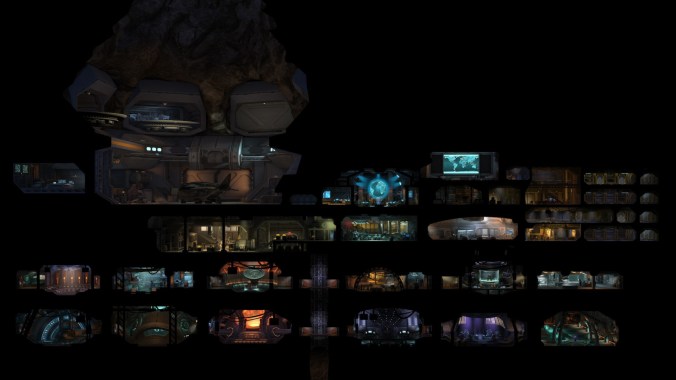
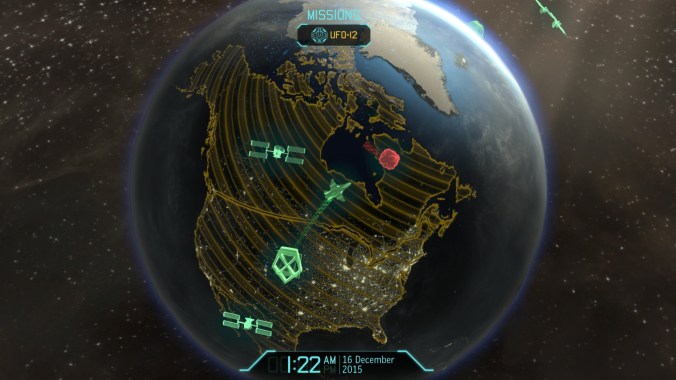
Similarly to how you upgrade your weapons, your main base will also become more advanced as time progresses. You must build laboratories, workshops, satellites, and power generators to keep up with the alien threat. Furthermore, you must strategically decide which missions to tackle, as often times you will be forced to choose which country to assist. You must attempt to keep every area at a low level of panic, or else they will drop their support for your project. Managing these different panic levels is crucial, and the player has to weigh the benefits and drawbacks of every choice. You also choose what to research and build, and doing these things takes a lot of time, so you must choose wisely to maximize your effectiveness. Outside of the base building and combat, XCOM: Enemy Unknown does not offer a whole lot, but that’s okay. The story is serviceable, it’s a pretty standard alien invasion story. XCOM: Enemy Unknown is what it is, which is a tactical turn-based game with base management aspects.

1

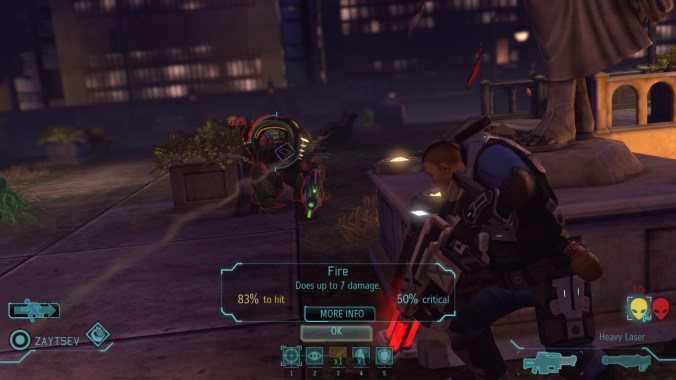
There are a few key issues that I have with this game, the first being the randomness. Almost every turn-based game uses some form of a random number generator (RNG) to keep the player on their toes and create a different experience for every player. XCOM: Enemy Unknown is widely known for being very frustrating in this aspect, as a couple of bad dice rolls can lead to the death of a soldier. I’ll admit, I probably just have a personal vendetta against the RNG in this game as I have literally missed what was displayed as a 100% hit (turns out hit percentage is rounded up, so I only had a 99.6% chance but it was displayed as 100%). The frustration for me stems from the fact that it is very easy to get attached to your soldiers, and most players will probably have around 10-15 super soldiers that they rotate in and out of missions. Losing one of those guys on a .4% chance is infuriating. I would have preferred it if the game encouraged you to keep a much bigger group of usable specialists, because losing one guy out of fifty is not a big deal but losing one out of ten is.

4

The other issue is that RNG is always going to feel bad, but there are plenty of ways to make the player not resent it so much. Modern Fire Emblem games for example use a system called “true hit” which, without going into mathematical details, make the chance to hit a target higher than what is actually displayed. For example, what is shown to be a 70% chance in Fire Emblem is more like an 82% chance. Another solution is to use “pseudo-RNG”, which would increase the odds of hitting subsequent attacks if you missed a high hit chance. The purpose of implementing either of these systems is simply for user experience. The developer should want the player to not absolutely abhor the RNG, as it can lead to rage-quits and a lot of anger. Furthermore, too many random odds in a tactical game like this will inevitably lead to a few select players getting absolutely screwed by the RNG.

5

Other than the randomness, there were a few other problems I had with XCOM: Enemy Unknown. The first being the lack of objectives in any given mission. The goal in most missions is simply to kill all the enemies, which is a fairly boring task and does not give the player a whole lot of incentive to innovate tactically. Also, aliens just wander aimlessly because they have no objective to defend. My favorite missions in the game were the ones in which you fought other human forces who are attempting to hinder you. In those missions, the player must either defend an encoder with secret information from the enemies, or you must hack the enemies’ encoder to obtain their information. In both types of these missions there is some sort of objective where all the action will be centered around which make the maps far more engaging. Implementing some sort of goal in every mission would go a long way to make missions more interesting and diverse.

6

Furthermore, adding mission objectives would also alleviate the next issue, which is that the game is often just way too slow-paced. Because of the aforementioned randomness, the player must play extremely carefully as to not make costly mistake. The optimal strategy is to slowly creep forward a few tiles per turn until you reveal group of aliens through the fog of war. Once revealed, these aliens will automatically move to cover and be free to blast you on their next turn. The player is encouraged to move in a way that will reveal these enemies at the start of the turn, and then have all the rest of your soldiers follow up immediately to kill the aliens as to not give them a single action. Maps can be fairly large and your squad never gets bigger than six, and you are not going to split them up to cover more ground as that is an unnecessary risk. The player is left to slowly sweep a large area searching for the last aliens to exterminate. It can get fairly boring and respective after a while.

7

As a whole, XCOM: Enemy Unknown is a solid tactical turn-based strategy game. It definitely has major flaws that I hope are addressed in future titles. While the missions and base building can be addictive, there are a few things that need to be fixed. Slow and repetitive missions, no objectives, and the random factor of the game are the major issues that I would like to see fixed in the future. Hopefully, the next XCOM game can build upon the franchise and improve upon the foundation that XCOM: Enemy Unknown established.

The Witcher 2 : Assassins of Kings (2011)

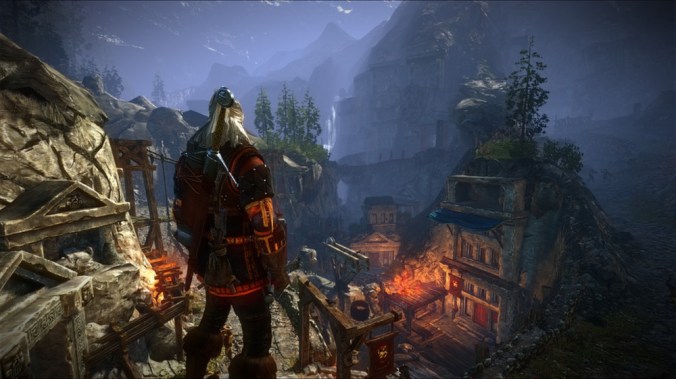
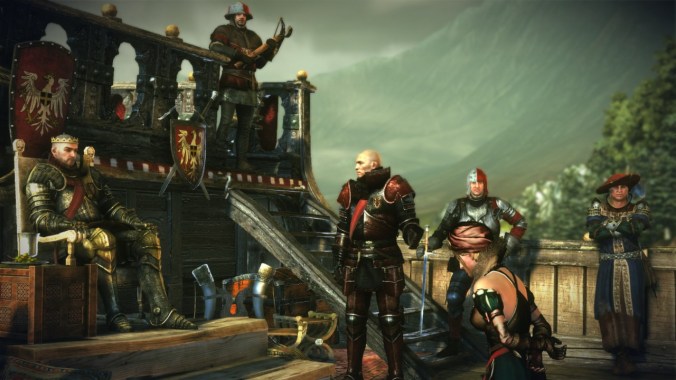
It is always interesting to see how a developer progresses across games. Without a doubt the largest improvement I’ve seen is CD Projekt Red and The Witcher series. The first entry in the series certainly had a lot of heart and inspiration behind it, but it was an ultimately clunky and it underwhelmed me. That being said, The Witcher 2: Assassins of Kings has made great strides to improve nearly every aspect of the game. The visuals, story and most importantly, gameplay, were significantly upgraded. There were still a few bizarre design decisions that baffle me, but regardless I consider The Witcher 2: Assassins of Kings to be a stellar RPG and a must play game if you are remotely interested in fantasy.

1

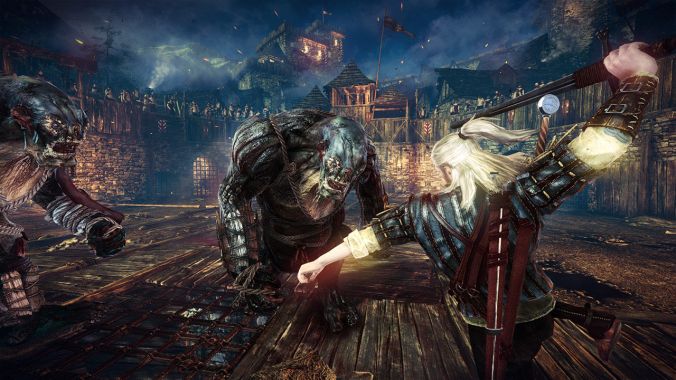
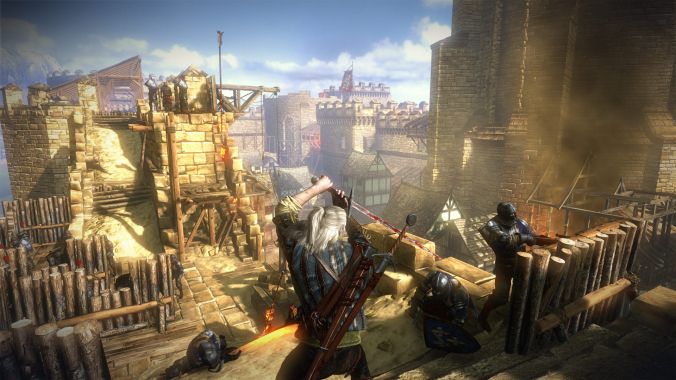
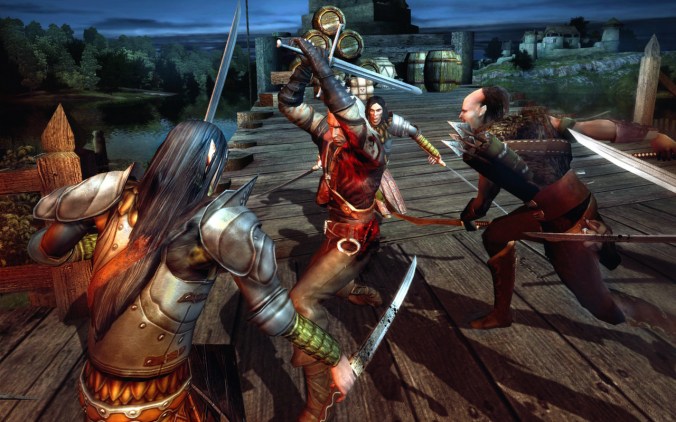
The most obvious improvement is in the gameplay department. The original game’s combat was point and click, most of the gameplay was pure preparation and understanding your enemy’s weaknesses. Thankfully, The Witcher 2: Assassins of Kings built on the preparation-based concepts from its predecessor. Gathering ingredients and performing alchemy to create potions is invaluable. Instead of just choosing a predetermined “fighting style” like in the original, in this game you proactively choose between heavy and light attacks depending on the enemy and circumstance. Furthermore, in The Witcher 2: Assassins of Kings, you dodge, block, and parry by actually pressing buttons and responding to enemies’ actions, rather than being a static chance like in the original game. Item usage also got a massive overhaul, allowing the player to seamlessly integrate traps, bombs, and other related items into their combat repertoire. Still, I would not consider the combat in this game to be stellar, but it is beyond serviceable and was not a source of frustration like the original game. There is absolutely no doubt that the gameplay took gigantic leaps forward from its predecessor, and that is what is so remarkable about The Witcher 2: Assassins of Kings.

2

While the gameplay was undoubtably a massive improvement, The Witcher series is first and foremost an RPG, so story and roleplaying aspects should be the focus of the series. It is fortunate then that The Witcher 2: Assassins of Kings has such an engaging and gripping narrative. The Witcher is often described as a gritty, realistic, and mature fantasy series, it is not a fairytale story, and this title certainly follows that standard. The player regularly has to choose between the lesser of two evils, and you will often regret and rethink your decisions after the fact. It is obvious that these games are grounded in reality, even with their fictional magic, creatures, and world. The Witcher 2: Assassins of Kings tells the story of the monster hunter Geralt, who was framed for the murder of a king. As you hunt down the king’s assassin, you experience a wartorn land, humans fight nonhumans, and foreign invaders seek to seize the opportunity to claim power now that the king is dead. Geralt’s amnesia also begins to clear up throughout the story, which challenges previous knowledge and expectations that you have. The Witcher 2: Assassins of Kings tells a riveting story and I cannot wait to play the next game to see what happens next.

3

Obviously, The Witcher 2: Assassins of Kings made notable improvements over the first game, but there are still a few strange design choices that cause nothing but frustration. The first is that potions are unusable during combat. At first glance this makes sense as it prevents player from stocking up on potions and just chugging one whenever you take some damage. However, this is already prevented because potions heal you gradually rather than all at once, so you cannot just chug for instant regeneration in combat. This is annoying because it is not always obvious when the game is going to throw you into a big battle or boss fight, as there is usually a long cutscene or dialogue segment beforehand. What usually ends up happening is that the player talks to another character, gets tossed into a boss battle immediately afterwards, and then has to reload a save from 10 minutes prior just to drink a potion and sit through all the dialogue again. Another odd choice was to separate the world into 3 different acts. This was possibly because of engine limitations rather than an intentional choice, but it is a flaw nonetheless. Once you complete an act, you cannot visit that area again or do its quests, which makes the whole world feel smaller and more confined. There are also a few usability issues I had with the game. The user interface was messy and difficult to navigate and I frequently encountered glitches and bugs which forced me to restart my client numerous times. These issues were common enough that they significantly hampered the experience, they are not just small nitpicks.

4

As a whole, The Witcher 2: Assassins of Kings managed to make great strides to improve upon its predecessor. More developed combat and a gripping story make the game worth experiencing. The Witcher 2: Assassins of Kings is a quintessential action RPG, and it is no where near as clunky as the original. It is evident that CD Projekt Red put forth a lot of effort to improve on their flagship series, and it shows. If the next game improves as much as this one did, it may very well be a masterpiece.

Hotline Miami 2: Wrong Number (2015)

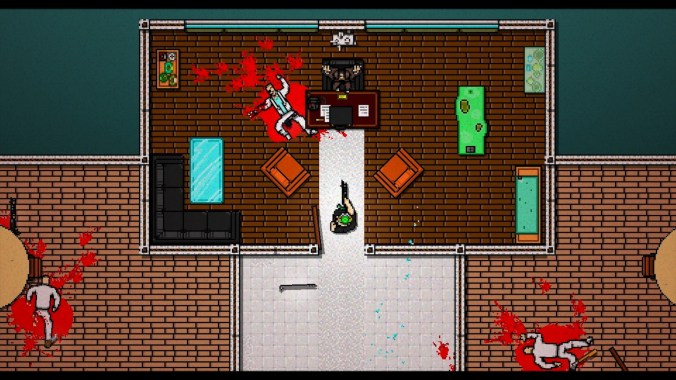
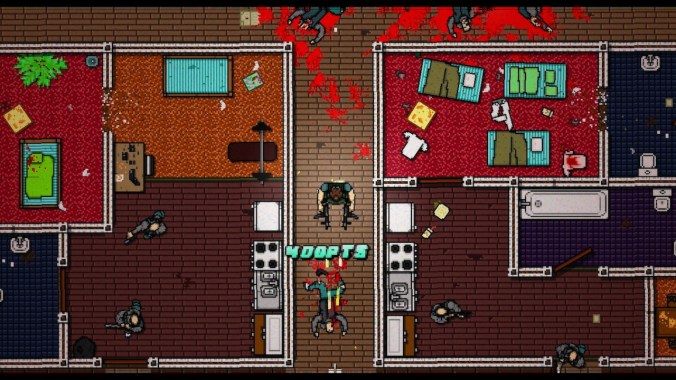
There have been few games that can match the feeling that Hotline Miami provides. The unreliable narrator and his hallucinations provide a sense of confusion and unease. The gratuitous violence was shocking but was a subtle commentary on violence in the medium. Additionally, the fast-paced gameplay was brutally precise, leaving a sense of adrenaline and accomplishment. The same cannot be said for Hotline Miami 2: Wrong Number, it felt like an imitation of the original. Still, Hotline Miami 2: Wrong Number is an entertaining experience, but it lacks the careful execution and craftsmanship of the original game.

1

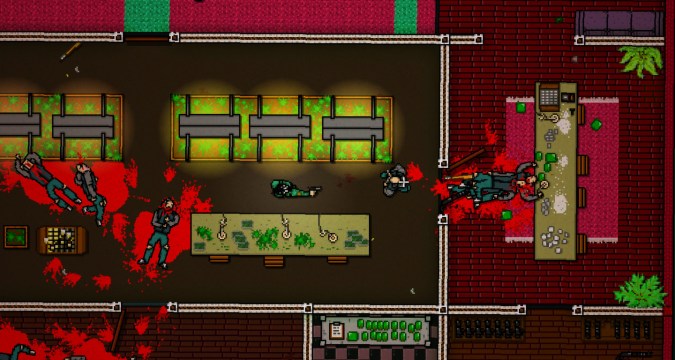
First and foremost, the gameplay and level design feels like a haphazardly created version of the first game. The level design in particular is a shocking downgrade. The series is based in a remarkably fast-paced environment in which the player partakes in shooting sprees and beatdowns on the mafia. What makes the game so interesting is that both the player and the enemies die in a single hit from a melee weapon or bullet. You have to quickly rush your way through levels to outpace the enemies and make sure they don’t catch you off guard. The player is encouraged to move rapidly to keep ahead of the enemies, you always want to be shooting first. The issue in Hotline Miami 2: Wrong Number is that this style of gameplay often feels discouraged. There are so many long hallways that the game funnels the player into. You cannot see the enemies before they see you, leading to unwarranted deaths. Moreover, levels are littered with windows that make it impossible to rush through the level as enemies will spot and kill you instantly. Furthermore, each level is longer and houses more enemies, meaning it will take longer to complete each section. Melee weapons lack viability, as the open spaces encourage the use of guns. The giant floors and wide-open areas encourage caution and careful planning opposed to fury and bloodlust. This shift in dynamic is not suited to the series, Hotline Miami 2: Wrong Number feels more like a puzzle game than an adrenaline pumping and violent frenzy. Hotline Miami makes the player feel like John Wick, Hotline Miami 2: Wrong Number makes the player feel like a redshirt off of Star Trek.

2

The other bizarre change is with the general format and presentation of the game. Hotline Miami 2: Wrong Number is a tale of numerous protagonists. This does create the feeling of confusion and disarray like its predecessor, but for a completely different reason. The original game was focused on a singular character who suffered from PTSD, psychotic breaks, and other mental issues, generating a sense that much of the game was a fever dream. Hotline Miami 2: Wrong Number was confusing just because there were just so many constantly shifting perspectives. Nine different perspectives spread out across 27 levels is a recipe for forgettable protagonists. There were only a few characters that I even remotely felt interested in, the missions that helped make sense of the first game in particular were intriguing, but the rest I just did not care about. Additionally, the original game let the player swap “masks” that changed the character’s moveset and abilities for any particular level. In this game, each character has their own individual gimmick. So instead of choosing how you want to play, you are forced into certain playstyles and are obligated to put up with frustrating gimmicks. I will admit it was somewhat interesting when the storylines of the characters linked up as they crossed paths, but still I just was not particularly invested in any of them.

3

As a whole, Hotline Miami 2: Wrong Number missed the mark for what made the original so impactful. Levels feel fan-made rather than professionally designed, and the gameplay as slowed downed tremendously. The more meticulous style may appeal to some people, but I feel like it just does not match the tone of the Hotline Miami series. Shifting perspectives create a sense of confusion like the original game but make for far less memorable characters. Jacket was an iconic character from Hotline Miami that will go down in video game history, but nothing similar can be said for the characters of Hotline Miami 2: Wrong Number. On the plus side, the soundtrack is just as enticing as the first game’s. While I did rag on the game a lot, the core remains the same: rush through levels and kill the mafia. At the end of the day, the game plays similarly to the original, but lacks the nuance and flow. For these reasons, I give Hotline Miami 2: Wrong Number a 6/10. The level design was just not up to par, which severely hampered the adrenaline pumping action which I’ve come to expect from the series.


Prey (2017)

It is well known that 2017 was an absolutely stellar year for games. One game that may have gone under the radar is Prey. There are a few theories for why Prey went so unnoticed, but the prevailing reason for it being overlooked is its name. Despite the confusion with its name, I think Prey is a solid title that definitely is deserving of more recognition.

2

Prey shares its name with a 2006 game. Unintuitively, the games are in no way related, they are not even in the same genre. The Prey that was released this year feels more like three other series: System Shock, Bioshock, and Dishonored. Prey was obviously inspired by System Shock and Bioshock. The lonely, dark, and disturbing atmosphere portrayed in Prey is straight out of these series. You feel like you are trying to survive a utopia gone wrong, there is a heavy emphasis on survival compared to a standard first-person-shooter (FPS). You cannot tackle encounters with guns blazing like DOOM or Call of Duty, you must carefully and tactically use your resources and knowledge to proceed. Moreover, I say Prey is similar to Dishonored mostly because the level design philosophy is remarkably similar. That’s probably because they are made by the same studio, and if you’ve played Dishonored you will immediately recognize the hidden ducts and paths to sneak through the levels.

3

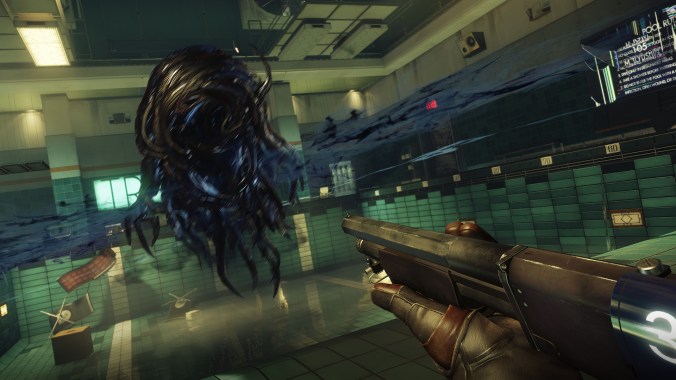
The setting Prey is a space-horror and psychological thriller. You play as Morgan, a scientist with no memories as to what happened and what led to the dire situation at hand. There are mysterious aliens roaming the halls and the quarters are littered with corpses, and it is your job to decipher what happened. There are conflicting characters and perspectives that you weigh in your mind, somebody is lying to you about the situation. I’d argue that the story is simultaneously engrossing and lacking. The vast majority of the narrative and exposition is told at the beginning and the end of the story, and the entire in between section just feels empty. The opening to Prey is probably one of the greatest openings to any video game, or any media for that matter, ever.

4

I usually loathe the slow and monotonous starts of games as a narrator or character spews expository dialogue at the player, but Prey starts differently. It feels simple and innocent enough, but the atmosphere just feels a little off and tension rises as you discover the reality that Morgan must now endure. As usual I really do not want to spoil anything, but Prey does an excellent job at building pressure and mystery for the first few hours. Sadly, after the initial introduction to the world there is not many narrative aspects to expand on the opening until the very end. The entire middle section of the game consists of “Do this, do that, find your way through the space station, and then I will tell you the truth”. This was incredibly disheartening and by the time I did reach the ending I feel like my interest in the outcome had waned after hours of being kept in the dark. That being said, the final sequences of Prey were phenomenal and were a great pay-off, but the middle section just left a bad taste in my mouth.

5

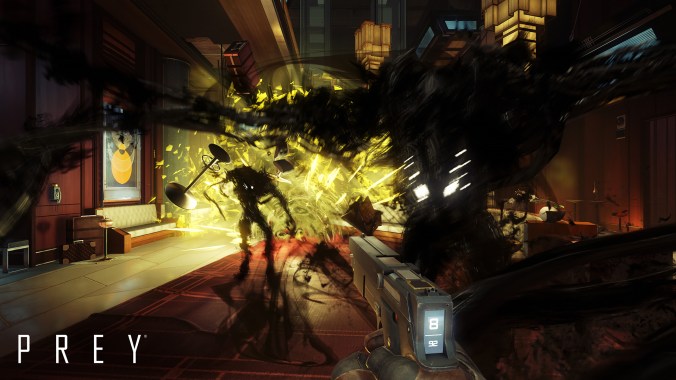
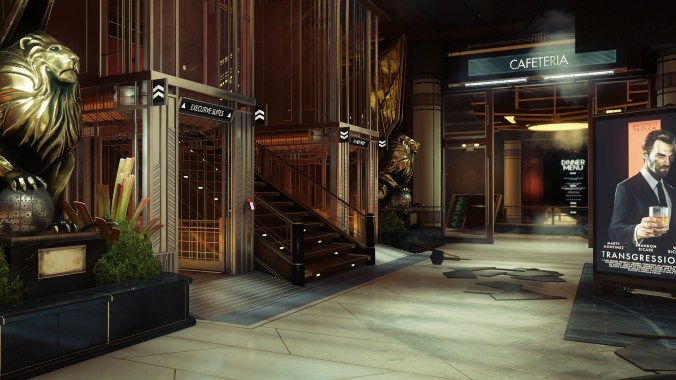
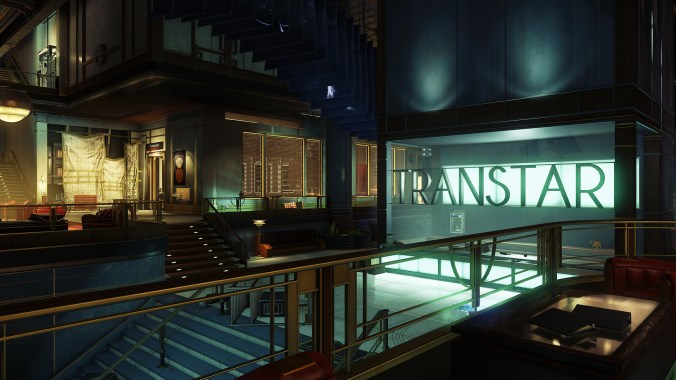
The people over at Arkane Studios have built one of the most cohesive and intriguing worlds that I’ve seen in a game. The space station Talos I is a sprawling, living, breathing world that can be explored inside and out. The living quarters, lobby, arboretum, and other areas feel like a luxurious hotel that people actually lived in. Computer terminals with emails, innocuous notes, and the placement of objects goes a long way to make the world feel natural and realistic. Every corpse has a tag that can reveal their identity and you can uncover where that character worked, their background information, and possibly find terminals containing emails they sent or received. Again, this really ups the immersion that Prey provides. Also included are places like life support systems, the power reactors, and the­­­ maintenance tunnel that runs the length of the station. These areas are far sparser, as it should be. You can also visit the exterior of the station, and see all the sectors from the outside, and they make sense logically. The developers obviously put a ton of work into creating and maintaining this immersive universe.

6

The meat of gameplay in Prey consists of three core elements: exploration, combat, and gathering/crafting. These elements work simultaneously with each other to create a gameplay loop in which the player explores a new area, dispatches of the enemies in the area, and then gathers all the resources to restock on ammunition and supplies. Early on, it feels like you are deprived of resources and you must conserve ammunition, grenades, and health packs because they are scarce. That aspect is certainly enjoyable as it makes the game tenser as each encounter no longer focuses on only survival, but also the cost of taking down enemies. You are encouraged to creatively kill enemies to save bullets, or even avoid the foes altogether. Despite this, as the game progressed I realized that I had a huge stockpile of health packs and ammunition building up since I was being so conservative, I almost wish the game did not give you so many resources. This way, creative planning would be vital and scavenge for resources would be a necessity.

7

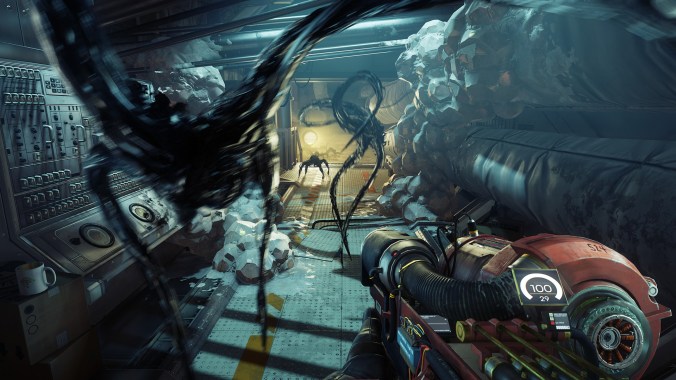
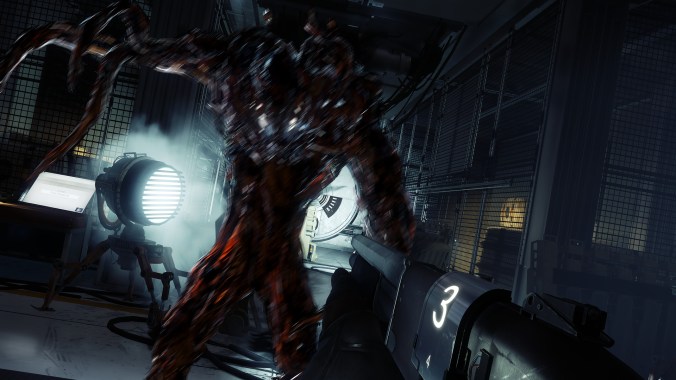
While Prey labels itself as a FPS, the shooting and gunplay is hardly a main focus. Prey feels more like a horror or thriller game than a classic FPS, and that’s a good thing. In DOOM for example, you blast through hordes of demons, you never really feel scared or threatened by these hellish creations. In Prey, the scarcity of the enemies is what makes them so dreaded. Most of your time will be spent exploring the station, cautiously looking out for any aliens, but for the most part the aliens are few and far between. This creates a psychological effect as you never really get comfortable at fighting these creatures. Furthermore, subconsciously you make the connection that if there is a lot of enemies, they must be weak so that you can deal with them in large numbers, and if there is only a single enemy, that enemy must be immensely strong. Prey falls into the latter category; any encounters are incredibly tense due to just how frightening these aliens are perceived to be. Moreover, a specific enemy can mimic regular objects in the environment, leading to fear even when you think you are safe. As you scavenge for resources, the coffee cup next to you could reveal itself to be an alien and strike at you. All these reasons just lead to an atmosphere of horror and dread. All that being said, the actual FPS features in Prey are rather weak. The gunplay feels unsatisfying as enemies do not even react to getting shot, it feels like there is no weight behind your bullets. If you are looking for a classic FPS filled with action and firefights, Prey is probably not for you. However, if you want a thrilling and fear-filled adventure, it may be right up your alley.

8

The best way to describe the level design of Prey is that it mimics Dishonored. There are loads of alternate paths and routes through the levels. You can use your gloo-cannon to reach an inaccessible ledge, or you can use a special perk to jump higher, or you can find a keycard to unlock a door, or you can find a duct, or you can turn on the power an unlock another routes, or you can use your strength ability to move objects out of the way, or you can hack a terminal and unlock a path, and the list goes on. It feels like there is an immeasurable amount of ways to tackle any individual obstacle in Prey, and that philosophy also pertains to enemies. Using different guns, grenades, special perks, and melee attacks also remind me of the “playground” feel in Dishonored. The only difference is that in Dishonored you play as an elite assassin, the enemies are feeble compared to the player, but in Prey, you are the prey. The numerous options feel a little stunted in this game because you are not the hunter, so the player’s creativity is limited by the feasibility of their tactic. All in all, the level design is fantastic, but I wish instead of offering creative combat options which barely see any use, we instead had more polished and refined gunplay befitting of a FPS.

9

Overall, Prey is a solid title that unfortunately did not get the attention that it deserved. Its name confused consumers and fans of the original Prey felt alienated by this brand-new game, while people who did not like the original did not give this game a chance. Either by branding itself as completely new entity, or perhaps by paying homage to System Shock or Bioshock, Prey easily could have gained a lot more traction and generated far more interest than it did. Prey tells a cohesive and mind-bending story, but unfortunately the pacing was slightly off. Moreover, Prey has some excellent gameplay elements to keep your blood pumping and heart racing, but the FPS aspects are just underwhelming. For these reasons I give Prey an 8/10. It is an outstanding and immersive psychological thriller with an unfortunate name. ­­

The Aquatic Adventure of the Last Human (2016)

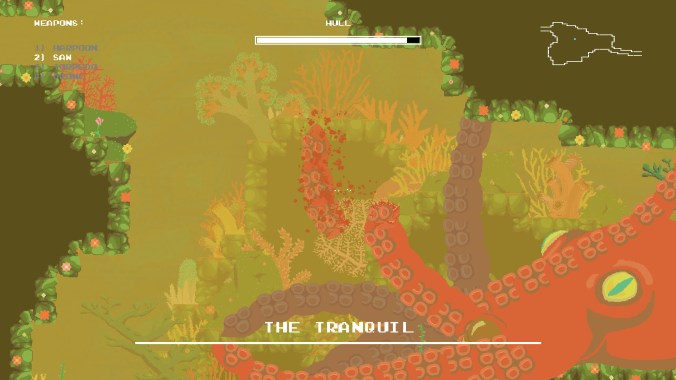
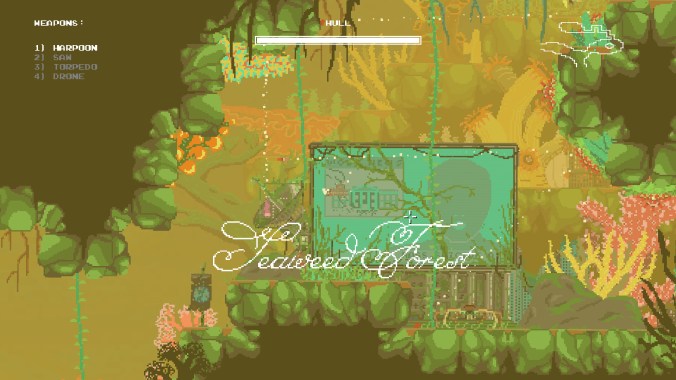
While the metroidvania genre is one of my favorites, it is also one of the more saturated game genres, and there are just so many competing titles to choose from. The Aquatic Adventure of the Last Human is one of those metroidvanias but with an interesting twist. Inferred by the title, you are the last human alive and you set off to explore the now submerged metropolitan areas of earth in a submarine. The Aquatic Adventure of the Last Human has nearly no standard enemies, but instead the bulk of the game is pure exploration as well as clashes with legendary bosses. I quite like this take; the lonely and somber feel of the ocean starkly contrasts the intense boss battles. In a way, this format is very similar to the classic Shadow of the Colossus style.

1

The single best feature of The Aquatic Adventure of the Last Human is hands down it’s totally free exploration. Even compared to other metroidvanias it is far more free and open then many of its contemporaries. The player is free to explore wherever and however they want. For the most part, you tackle the bosses in any order you desire. Most of your time will spent just be gliding through the ocean finding different paths to explore. In classic metroidvania fashion, as you defeat bosses you unlock more upgrades, weapons, and tools to explore deeper into the submerged city. Using saws to cut through overgrowth, torpedoes to blast through rocks, and harpoons to trigger switches are regular methods of exploration in The Aquatic Adventure of the Last Human. The one issue I have with the exploration in this game is its world map. Instead of a comprehensive layout of all the different paths, the map is just a bunch of connected squares. So, opening the map to find the best route to where you want to go is ineffective and confusing.

4

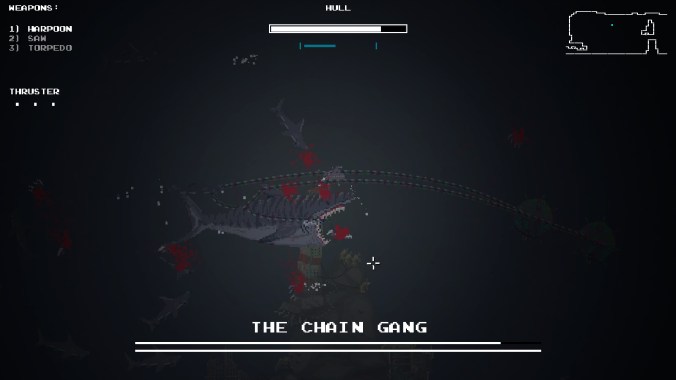
It is unfortunate that The Aquatic Adventure of the Last Human is certainly lacking in the gameplay department. There are a few obstacles in your way as you progress through the abyss, but no enemies other than bosses. It is unfortunate then that while those bosses are incredibly creative and visually interesting that the fights can be long, drawn out and frustrating experiences. This is simply due to the unpolished and frankly amateur game design decisions. The first being that there are nearly no invincibility frames when you get hit. Most games give the player a small frame of time after getting hit to get out of danger, but that is not the case here. This coupled with the insane knockback when the player gets hit leads to being frustratingly ping-ponged between enemies until you die. Moreover, there is an intense screen-shake when the player takes a hit, which combined with the knockback is incredibly disorientating. A single hit often leads to death, and it feels like you can do nothing about it. The next issue is that nearly boss has a 1-hit-kill move, some are intentional and some I believe were mistakes. The intentional ones are fine, for instance a giant laser that is obviously telegraphed and gives plenty of time to react. On the other hand, there are some instances which lead to instant death that feel unintentional. For example: a swarm of small sharks surrounds you and you get bumped around without any recourse. These instances often feel like cheap shots that instantly kill the player. Since there is such a minute amount of combat it should be far more polished. Often times The Aquatic Adventure of the Last Human just feels unfair.

2

While the two crutches of this game are its open exploration and boss battles, there are a few more factors to talk about. The art style in this game is heavy pixelated and is reminiscent of pixel-art, but it is odd that the pixels are not uniform in size. If you are just exploring and not focusing too hard, this art choice was fine. In boss battles, however, the screen can feel cluttered and there is a lack of visual clarity. I had to physical strain to see many of the projectiles and threats. Finally, the narrative is fairly bareboned. The vast majority of any story comes from hidden holotapes across the sea floor. There is no guarantee that you find them, and the ones you do find are out of order. I suppose it could be interesting to piece together a cryptic narrative, but the game beats you over the head with its environmentalist motif.

3

In its entirety, The Aquatic Adventure of the Last Human has a difficult time measuring up to other modern metroidvanias. In such a heavily saturated genre, this game fails to stand out in a meaningful way. I think that it certainly has the potential to be a great game if the gameplay had been polished further, but otherwise I cannot recommend it when there are so many other wonderful games in the genre. That being said, if you are a fan of the genre it is a relatively quick game that can sate the metroidvania hunger. For these reasons I give the Aquatic Adventure of the Last Human a 6/10. The juxtaposition of the calm and flourishing ocean compared to the intense boss battles is a compelling concept, but the amount of “cheap shots” that the game throws at the player grows tiresome fairly quickly.


The Witcher (2007)

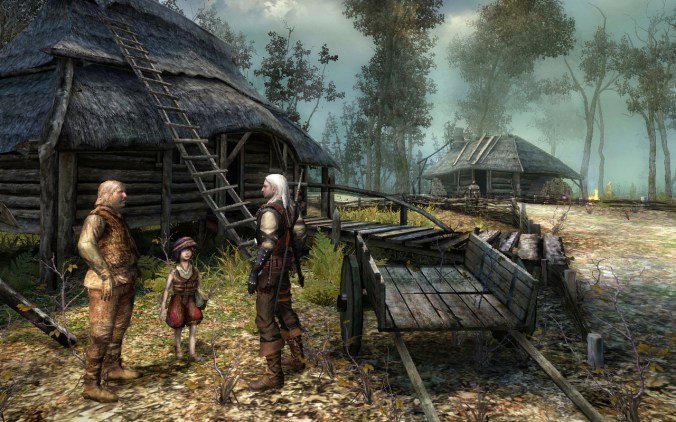
One of the most popular series of the past few years is The Witcher. With the release of The Witcher 3: Wild Hunt, this adaptation of a Polish novel series has skyrocketed in popularity. While it is possible to play the games non-sequentially, I decided to start from the beginning with The Witcher. It is evident that this was CD Projekt Red’s first title, as The Witcher is incredibly rough around the edges. Mechanically, The Witcher is clunky and lacks a level of polish. Narratively, The Witcher is fairly interesting, but it starts slow and seems to be setting up a story for the future.

1

The Witcher is a medieval fantasy game in which you play a Geralt of Rivia, a professional monster hunter who suffers from amnesia and cannot recall any of his past experiences. The story told is based off of “The Witcher” novel series by Andrzej Sapkowski, a Polish author. It is one of mythical monsters, political intrigue, and general mystery. The game simply begins with a criminal organization stealing powerful potions from the witchers, and you must track them down. During this hunt, you unravel a web of secrets and learn the true motivations of the criminals that you have been pursuing. The adventure is filled with morally ambiguous choices, it often feels like you must choose between the lesser of two evils. I quite like the more gritty and difficult story choices that the game forces you into. In other RPGs like the Mass Effect series your options are plainly labeled as good and evil, but I prefer pondering about my actions and their consequences. The tale it tells is grim and gritty, it is filled with death, war, sex, politics, and monsters. As a whole, I felt as if The Witcher was more setting up a world and narrative layout for future titles. It starts off slow and lets the player absorb information about the world and it progressively gets more intriguing. Even the ending obviously is setting up the next title in the series. As a standalone story The Witcher is solid, but it evidently is more concerned for preparing to tell a much larger story.

4

The major issue with The Witcher lie within its gameplay, and most notably, its combat. The Witcher feels antiquated even for a game that was released in 2007. The controls are slow and unwieldy and the interfaces are unintuitive. As an open world RPG, it felt like the developers wanted the player to take no shortcuts. There is very limited fast travel, walking from area to area is a slog, and you must grind through hordes of monsters that respawn every time you load into the area. The Witcher puts a lot of emphasis on preparation and the role-playing aspect of the game rather than the combat. You must collect herbs and create potions to give you an edge in combat, because your skill alone will not get you through any encounters. One of the biggest oversights is how you go about creating potions, leveling up, or just waiting. In order to perform these tasks, you must find a campfire to meditate at, which sounds fine on the surface but in reality, there are so few of these campfires scattered throughout the game. This is especially aggravating as many quests require the player to talk to another character at a specific time of day. Often, I found myself talking to a character, realize that I can’t talk to them at night, run to a campfire, rest until day, run back, talk to the character again who gives me a quest that can only be completed at nighttime, run to a campfire, rest until night, and then finally start the quest. All of those steps could have been avoided if you could just rest or wait in place rather than at a campfire. The Witcher is filled with irritants that just blatantly waste the players time, but nothing can compare to its abhorrent combat.

2

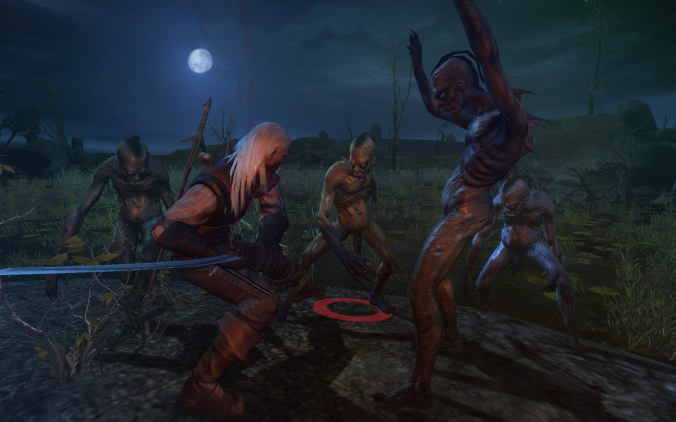
Every game has its flaws, and I certainly commend CD Projekt Red for being so ambitious with its first title (which I’m sure they learned many lessons from to become the revered studio they are today), but the combat in The Witcher may be one of the single worst experiences I’ve had in a video game. Essentially, you must pick a combat “style” (fast, strong, or group), click on an enemy, and hope for the best. As Geralt goes through the animations, you can click again at a specific timing to increase your damage. It is remarkably simple, and honestly it could have worked in a game like this that focuses on preparation like your skills, potions, and selecting the right combat style. The issue is that there are a ridiculous number of instances where the combat just falls apart. The first issue is with large groups of enemies, you just pop some potions, select group style, and pray that you kill the enemies before they completely surround and annihilate you. The next issue is with enemies with any sort of immobilizing effects like blinds, stuns, or knockdowns. You are immobilized for a ridiculous amount of time, and enemies can even chain these effects together to keep the player permanently immobilized until they die. Moreover, some singular enemies that are just too strong, you can’t use skill to beat them, and I often used cheesy tactics like kiting them around the arena while my health regenerated before going in for a singular hit. On top of all that, the controls are just unwieldy, the game doesn’t always register your commands correctly as you are in the middle of a “combo”. Often, I would try to back off from enemies to regain some health, but Geralt just wouldn’t budge. Furthermore, there is just so much randomness in the combat with dodges, parries, stuns, and inconsistencies with the enemy AI. Some encounters took me 4-5 tries, but there is really no alternative tactics you can use other than to prepare better, so I felt like I was bashing my head against a wall at times. Like I said earlier, this simple, preparation based, point-and-click combat could work, but there were just so many frustrating instances. The developers should have known that their combat mechanics were weak and should have toned down the amount of action that was in the game and how grandiose the battles were. At times it felt like The Witcher was trying to be a hack-and-slash, but as a point-and-click RPG it was just painful.

3

After slogging my way through The Witcher, I am excited to play the next game in the series. Partially because it is a universally lauded title, partially to see what this story has been building up to, and partially to see how much CD Projekt Red improved. The story was definitely interesting so I would like to see more, but the gameplay needs drastic improvements. Combat needs an overhaul and the rest of the game just needs a lot of polish. The foundations for a great series are certainly there, the developers just have to refine it. Unless you are a fan of The Witcher series or if you want to start from the beginning, I do not recommend The Witcher, it is just too janky and clunky, I recommend starting with a future title in the series and just reading a summary of the first game.

Guacamelee! (2013)

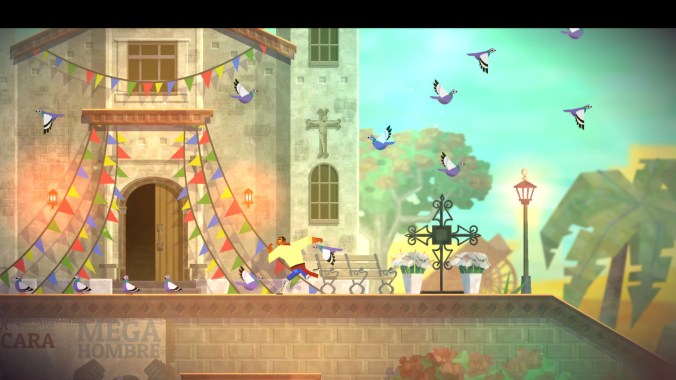
Metroidvanias are perhaps my favorite genre as a whole. Furthermore, indie developers have made some of the greatest games in this genre as Ori and the Blind Forest as well as Hollow Knight. In fact, it was after completing Hollow Knight that I was inspired to delve deeper into the genre, and that is how I happened upon Guacamelee (Super Turbo Championship Edition). Guacamelee is an indie metroidvania heavily inspired by Mexican culture. It draws its inspirations from luchadores and the day of the day.

1

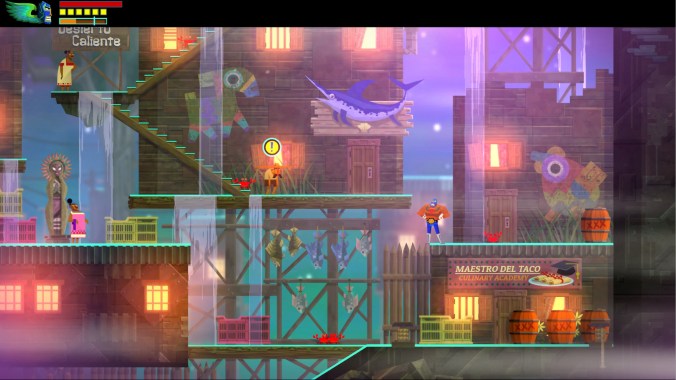
I quite enjoyed this Mexican themed adventure and all its uniqueness. You play as Juan, an agave farmer turned luchador who aims to rescue his love from evil. The antagonist aims to usher in a permanent day of the dead in which everybody is turned into spirits. You frequently swap between the real world and the spirit world to find new paths and progress along in this journey. Visually, Guacamelee is incredibly colorful and vibrant, filled with bright lights and flashing decorations. Additionally, Guacamelee not only draws inspiration from Mexican culture, but also from video-game culture. Constant references to Metroid, Super Mario Brothers, and other classic titles are scattered throughout Guacamelee. Furthermore, Guacamelee is a light-hearted and humorous adventure. The player is bombarded with jokes and merry dialogue. This is a well appreciated change of pace as opposed to the doom and gloom of games in the same genre.

2

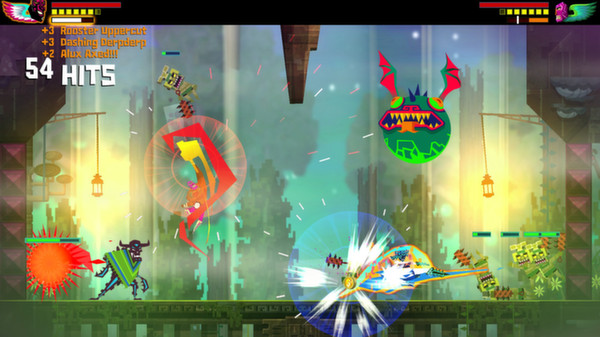
At the heart of Guacamelee is its combat. The player is handed an arsenal of tools to string together combos. The addition of a combo counter does wonders at keeping the player engaged in combat. Dodging enemies and keeping that combo going keeps combat invigorating. The issue I have is that most of the player’s combat tools are locked away from the player at the start of the game. Many metroidvanias follow this philosophy, you start bare-boned and unlock combat and exploration abilities throughout the course of the game. The issue in Guacamelee is that the combat and exploration abilities are one in the same, you use your new combat moves to unlock new areas. Most game quickly give the player new tools in combat early on to keep it exciting and fresh but Guacamelee can’t do that. If they give you all the combat powers that means they’ve given you everything you need to explore the whole map, so they have to do it piecemeal. The developers cannot give the player all the combat tools until the very end of the game. The player does not get to experience the full grace of the Guacamelee’s combat until the final area in the game. It is a shame because there is a huge focus on combos and beating down enemies, but that system is neutered at the beginning and only slowly progresses and becomes interesting.

3

Since Guacamelee is a metroidvania it is expected to have a heavy emphasis on exploration. I like to think of metroidvanias as labyrinths that you must navigate and subconsciously memorize its layout as you become acquainted with the maze. When you acquire a new ability, you remember where it would come in handy in the web of hallways. Guacamelee does not really fit that description very well. It is extraordinarily more linear than games in the same genre. Most areas are very straightforward, it does not invoke the feeling of being in a labyrinth. This is exacerbated further because there is fast-travel in Guacamelee. You can teleport between areas, meaning you rarely backtrack or revisit areas, which is a pillar of the metroidvania design philosophy. Fast-travel can work in the genre and is certainly welcome if used scarcely and if the world map is incredibly large. A perfect example of this is Hollow Knight. The map in Hollow Knight is humongous and only has a few fast-travel locations, so the player still has to intelligently navigate the map and its diverse areas. Guacamelee on the other hand is short and as such has a small map. Combine this with the numerous fast-travel points and it felt like I was never revisiting or exploring previous areas.

4

As a whole Guacamelee feels like a metroidvania who are not familiar with the genre. It has a gratifying combat system that does not get to shine until the end of the game. The vibrant atmosphere and Mexican themes certainly make Guacamelee a unique experience. If you are looking for a short and light-hearted game, Guacamelee might just be what you are looking for. It is not a traditional metroidvania and it certainly has some flaws, but it is still a fun and quirky little game.

Furi (2016)

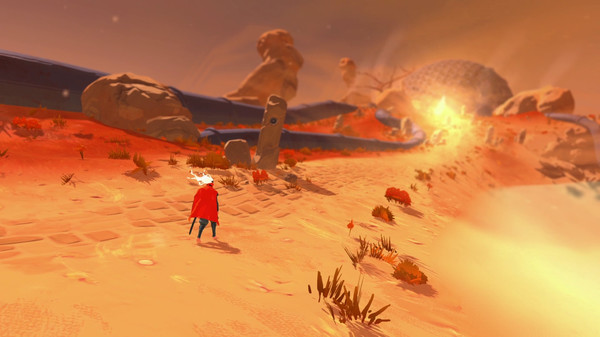
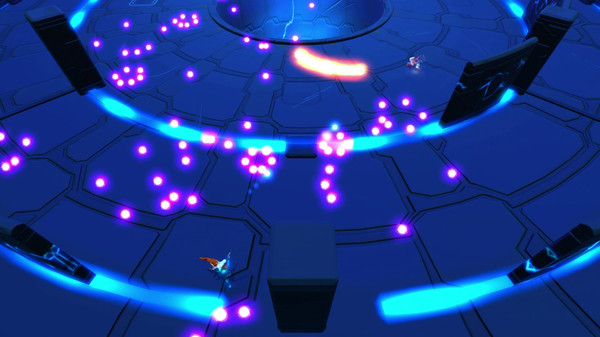
Many games try to do too many different things and end up being a hodgepodge of unsatisfying and unfinished elements. Furi is the opposite of that. Furi is an action game with only difficult boss fights, no exploration, no puzzles, no platforming, only straight up duels between you and a boss. As such, these fights must be spectacular because it is the only element of the game, and it stands out for all to see. Luckily, Furi lives up to that expectation and its combat system is possibly my favorite in any game ever.

1

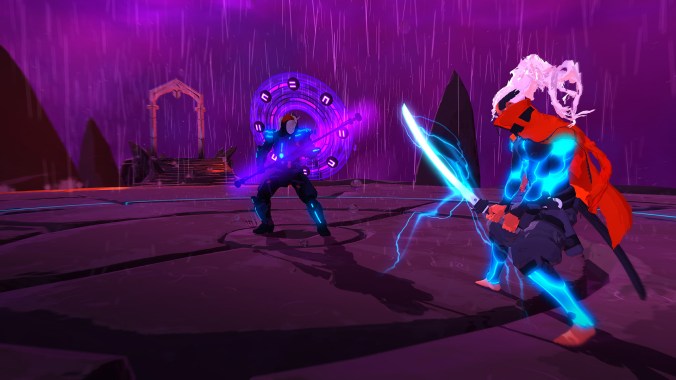
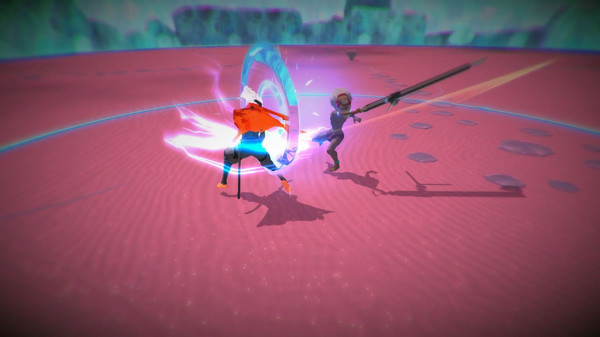
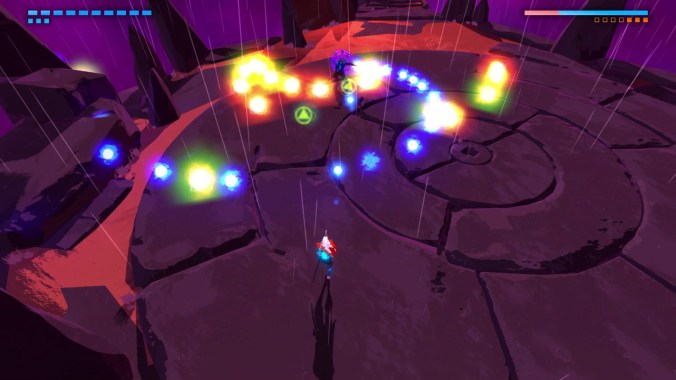
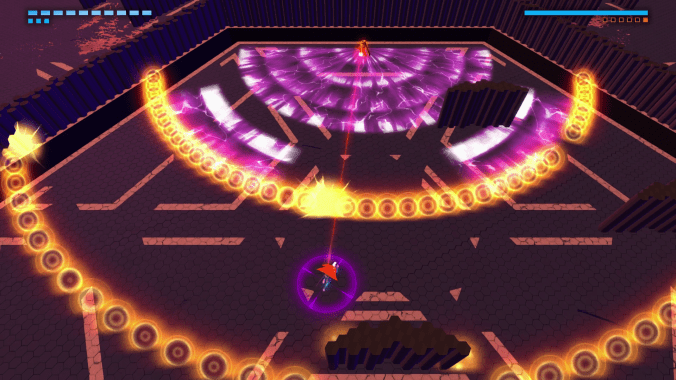
While Furi does not have many individual components, its combat itself has a ton of different elements tied to it. First is the bullet-hell aspect, in which bosses shoot waves of projectiles at the player and you must dodge and shoot back. Of course, these projectiles come in many different varieties, standard bullets, tracking bullets, lasers, bullets that cannot be destroyed, shockwaves, etc. The next element in melee combat, in which the boss strikes in a variety of patterns in which the player must either dodge or parry the attacks. Each boss has a set number of “phases”, and in each phase the bosses have two forms. The first form is “zoomed-out” mostly comprised of bullet hell patterns with the occasional melee strikes, and once you complete that you move onto the next form. The second form zooms in and becomes a melee duel between you and the boss. The real brilliance of the combat lies in the lives system.

2

You get 3 lives when starting a boss. If you lose a life at any point in a phase, the phase entirely resets. If you lose all 3 lives, you start the boss all over again. It would be pretty daunting to go through five or six phases per boss with only three lives, but the developers had a great solution to this. Every time you defeat a phase, you get a life back. This gives the player an ample amount of opportunities to attempt each phase. This is great because Furi can be a little trial-and-error as you attempt a new phase. You have to learn each attack pattern and how to respond to it. The combat is a mix between pattern recognition and performing the actions necessary to dodge and deal damage. As you learn these patterns and the correct response, it is inevitable that you are going to take some damage. The fact that the player has a decently sized health-bar to take a lot of hits combined with the lives system makes sure that you get plenty of time to learn all the patterns. The feeling of absolute pride and accomplishment when I finally conquered a tough boss was immeasurable, and I love games that can evoke that feeling.

3

Although I said Furi is solely based around its combat, there are a few other underlying elements to elevate the experience. The visuals and music are absolutely stunning. The electronic tracks produced by a few different artists is reminiscent of the Hotline Miami soundtrack, pure intensity and gravitas. Each track was composed specifically for this game, so they match stunningly well with each boss encounter. I still listen to a few of the tracks from this game (I really enjoy the songs made by Toxic Avenger and Carpenter Brut). The bright visuals and neon-soaked and cell-shaded atmosphere of Furi are immensely visually appealing, and they make it easy to tell exactly what is going on in combat. The characters themselves are anime-esque, which makes sense considering they were designed by Takashi Okazaki, the creator of the acclaimed manga and anime Afro Samurai. Every boss is extremely memorable not only through gameplay, by visually as well. Finally, the story of Furi is actually pretty solid. You are imprisoned and your only goal is to escape by defeating the nine guardians. The reason why you were imprisoned is not clear until the end, and then everything starts to click. The game is pretty light on plot until the very end.
4

No game is perfect, and Furi is no exception. The first of its issues is that it is short. Your first playthrough will probably take around four hours, and subsequent playthroughs will be shorter because you know how to handle the different bosses. That being said I consider Furi a game that is meant to played at least a few times. I say this because Furi is unique when it comes to its hard difficulty, “Furier”. This difficulty does not just increase the health and damage of the bosses, but it gives them entirely new attack patterns. Each boss in hard mode is essentially a new boss from a gameplay perspective. Their attacks are similar, but they are changes enough that you have to learn them all over again, and they are tougher this time around. I don’t usually play through games multiple times, but Furi was an exception to that because hard mode was so enjoyable. Furthermore, because Furi is just action and nothing else, I can easily see myself revisiting it just for a quick boss rush in the near future. If I ever want some tense and fast-paced battles, Furi is my new go-to game.

5

All that being said, there is an issue with Furi being meant to be replayable. It’s the short sections in between the bosses. These sections are basically cutscenes, your character walks along while another character spews narrative at you. This serves three purposes: First as a cool-down period between the high-octane fights, second as a means to get some narrative and storytelling, and third it is meant to build up the next boss. This was fine my first time around, but on subsequent playthroughs this becomes unnecessary. You should be able to skip these sections because players who already beat the game don’t need to hear the story or about the bosses again, they just want some action. Of course, you could watch them if you want to again, but they should be skippable. Especially because there is about an hour of these sections in the game, and the game is only a few hours long. A large chunk of play time is devoted to these walking sections.

6

Furi is a very niche game. It is intense, it is challenging, and it is not meant for everybody. This is not strictly a bad thing as I would prefer a tightly-knit game like Furi to a messy and unfocused game. But Furi is strictly action, and that action is very fast-paced. So, if that doesn’t sound appealing to you then stay away from Furi. If what I’ve said sounds fun to you, then you absolutely have to play Furi. For these reasons I give Furi an 9/10. It is an absolutely phenomenal action game with an innovative combat system. However, if you don’t like rapid combat and challenging bosses, then don’t bother.


Dark Souls III (2016)

It is no surprise that while Dark Souls is heralded as one of the greatest games of all time, its successor, Dark Souls II, was a let down in numerous regards. Less focused combat, incoherent world building, and less interesting bosses were my biggest gripes with Dark Souls II. So, the big question when starting up Dark Souls III was if it would return to the series former glory, or follow in the footsteps of the disappointing sequel. Personally, I think that Dark Souls III does mostly return to the successful style of the original game, but there a few key differences between the games.

2

Dark Souls III is more a direct sequel to the original than Dark Souls II was for a multitude of reasons. The first reason is that Dark Souls III is set in the same world as the original, granted that it is very far into the future. This highlights the cyclical nature of the Dark Souls lore, and watching how the world evolved and noticing the references to the past was something that I really enjoyed. That being said, I feel like there was almost too much reference to the past titles. A well placed and constructed reference is incredibly appreciated, but the game constantly saying “Hey remember this?” in essence can grow grating. In any case, Dark Souls III is the end of the series, and I felt like it did a phenomenal job ending this historic series. The final boss in the base game ties the games together brilliantly, and truly helped me understand the cycles of the Dark Souls universe. The DLC of Dark Souls III really finishes off the series by revealing what the “Dark Soul” even is and why it is important. Both of the final bosses (the base game and the DLC), are incredibly somber and profoundly sad, and are extraordinary ways to end this storied series.

6

One of the most important aspects of Dark Souls was its atmosphere and world building. Dark Souls III also continues in this trend, by creating a quintessential dark fantasy world. Despite the fact that many of the areas of Dark Souls III are just future versions of areas from the original game, they are changed enough that you cannot entirely recognize them. Furthermore, there a plethora of completely new and visually interesting areas. However, there are a few complaints that I did have with the world of Dark Souls III. One minor complaint I have is that some of the areas were just kind of forgettable and uninteresting. The swamps and forests in particular are just kind of dull and we’ve seen enough of them in the series. This isn’t a huge deal because the majority of the game is made up of far more interesting areas. The major complaint I have is that the world just is not interconnected enough. The individual level design is great, as it bases itself off of the design of the original game. But there is not a sense of connection between these areas. There is no sense of verticality or a tight-woven world like the original game. Every area is just fine in and of itself, but there needs to be more connection between these areas. This may be due to the fact that teleportation between bonfires is available from the very start of the game. Similar to Dark Souls and Dark Souls II, once teleportation is available, the interconnectedness of the world is sacrificed. There is no need to carefully craft a world when a player can just teleport where ever they want.

3

The final aspect of Dark Souls III is of course its gameplay. Combat Dark Souls III is decidedly faster than the original Dark Souls. It does not fall into the same traps of Dark Souls II (too many enemies and boring bosses), but it is very different than the original game. There are 3 reasons for this additional speed in combat: low poise, high stamina, and faster animations. Poise is the stat that controls when the player/enemy is hit, if they get briefly stunned. High poise means that you can eat an attack from an enemy and not have it stop you dead in your tracks. Both the enemies and the player in Dark Souls III have very low poise. When you hit an enemy, you can easily chain together hits until they are dead with no chance from recourse from the enemy because they are stunned. Of course, this means that the enemies can do the same to you, if you get hit once there is a good chance you are going to take a lot of damage. High stamina means that the player can spam rolls and attacks with little thought. In previous titles, if you rolled too much you wouldn’t have enough stamina to attack and vice versa. This is not something that the player has to worry too much about in Dark Souls III, which is a bit of shame considering that careful stamina usage was such a vital part of the combat in Dark Souls. This in essence reduces the risk and reward system that Dark Souls combat is centered around. Finally, the animations of all actions are reduced in Dark Souls III. The windups for attacks and rolls are shorter, and the delay at the end of these actions is also shorter. You are no longer locked into long animations, but on the flip side the enemies also move a lot faster.

5

As a whole, these three factors combine to make combat a lot faster than its predecessors. This is not inherently a bad thing, it is just a different playstyle. However, in the context of the series I would argue that this is a downgrade in combat. Combat in the original game was more deliberate and stylistically made more sense. Dark Souls III feels more reaction time based, while the original Dark Souls required more careful decision making in combat. I will say that this faster combat does allow for some very memorable and creative boss fights. The vast majority of the bosses of Dark Souls III are incredibly engaging. The combination of the wild combat and creative visuals make for some remarkable bosses.

1.jpg

Another factor of note is the change in how the healing item, the Estus Flask, works. As I mentioned in my piece on Dark Souls, the Estus Flask may be the single most important factor in why Dark Souls works so well. It keeps combat and exploration forgiving enough to give you room for some errors, but at the same time rewards the player for mastering a boss fight or entire area. The Estus Flask in Dark Souls III functions very similarly, but with two key differences. The first being that you can discover Estus Shards and Undead Bone Shards across the world through exploration. These items will increase the total amount of Estus Flask charges and how much those charges heal respectively. I like this as it rewards exploration and adds an extra layer of character power and progression. The only issue is that I feel like you almost get too many Estus Shards, so by the end of the game you can have around 10-15 charges of Estus, compared to the base 5 from the original game. This is almost too forgiving, I wish these Estus Shards were harder to come by. The second change is adding a second Estus Flask for focus points, which is essentially your “magic” bar. You must delegate your total Estus Flask charges between the original health based Estus Flask and the new magic Ashen Estus Flask. This may be why there are so many Estus Shards, so that players who want to use magic can have enough for both healing and magic usage. But players who don’t use magic will have an overabundance of healing Estus. Again, I liked exploring and upgrading my character, but I wish they toned it down a bit.

4

Is Dark Souls III as magical as Dark Souls? I don’t think so. However, Dark Souls III is far more consistent in its execution than the original. Less careful world design and less deliberate combat are the biggest issues I have with Dark Souls III, but it is still an excellent game. It was a perfect way to finish off the series with its gloomy themes and atmosphere. Intense and memorable boss fights combined with visually stunning areas make Dark Souls III a game worth playing. For these reasons I give Dark Souls III 9/10. Dark Souls III is an essential title for any fan of the Soulsborne series, or just fans of role-playing-games and fantasy worlds alike.