12 is Better Than 6 (2015)

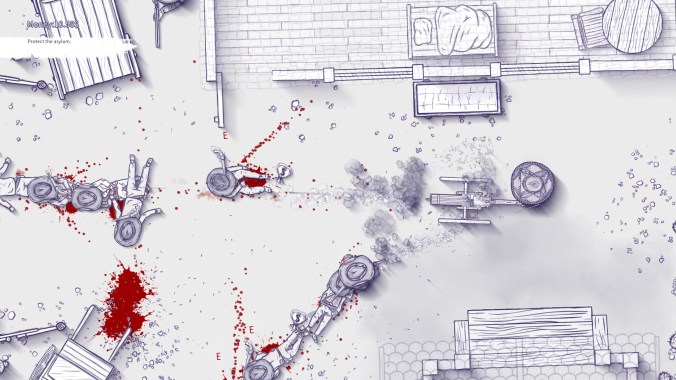
Hotline Miami was an incredibly influential game in the indie scene that revitalized the top-down shooter genre. One of the games that obviously took some inspiration from Hotline Miami is the hand-drawn western adventure 12 is Better Than 6. The concept of one-hit kills and fast paced firefights is shared among these games, but 12 is Better Than 6 does have a few things that set it apart from similar games. Unfortunately, many of those differences come in the form of negatives and frustrating issues that permeate the experience. At times the game shines and you can get those intense moments where you are dodging bullets and returning fire, but most of the time 12 is Better Than 6 is a slog.
7

In this black, white, and red Western you play as Juan, a Mexican who lost his memory. You play through small areas, shooting and sneaking your way through to the exit. You’ll be fed tidbits of story at regular intervals and uncover the truth about Juan. While I did enjoy the Western setting and the accompanying music, the story was a mess. Riddled with typos and confusing plot lines, it quickly became difficult to follow what was going on. That’s not such a big deal because dialogue is skippable and in a game like this, gameplay takes precedent over story. Unfortunately, while there are a few high-octane moments in gameplay, 12 is Better Than 6 is chock full of game ruining issues.

12 is Better Than 6 is a top-down shooter akin to Hotline Miami. One shot is one kill. This results in frantic firefights where you must constantly be moving or risk getting hit by a stray bullet. There are four main weapons: The revolver, shotgun, rifle, and bow. Additionally, you always have a knife for melee combat. Sometimes you will be given some dynamite to blast through large groups of enemies. The idea and concept of 12 is Better Than 6 is solid, all of this on paper sounds great. However, a slew of minor issues and few larger ones kill whatever potential 12 is Better Than 6 had.
6

The first thing that sets 12 is Better Than 6 apart from its contemporaries is that you cannot furiously fire bullets. After every shot you must cock the hammer of the weapon by right-clicking. I genuinely cannot fathom why this was included. It takes awhile to even get used to this mechanic, let alone get good at it. It is incredibly easy to mess up the rhythm of left-clicking to shoot and then immediately right-clicking to cock the hammer. One slight mistiming and the entire cadence is thrown off, leaving you wondering why your gun isn’t firing. Towards the end of the game I got used to the mechanic for the most part, but it just felt like an unnecessary addition. Its inclusion does not add much.
4

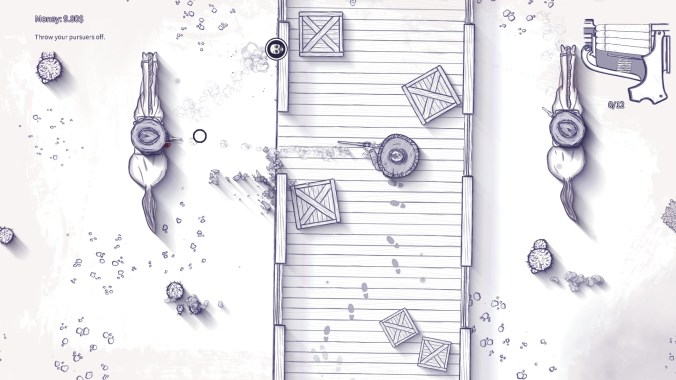
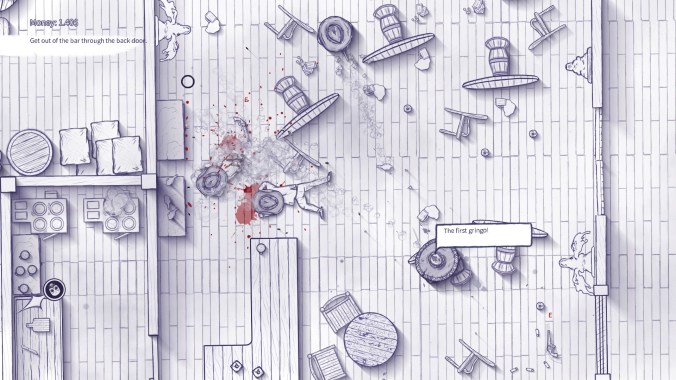
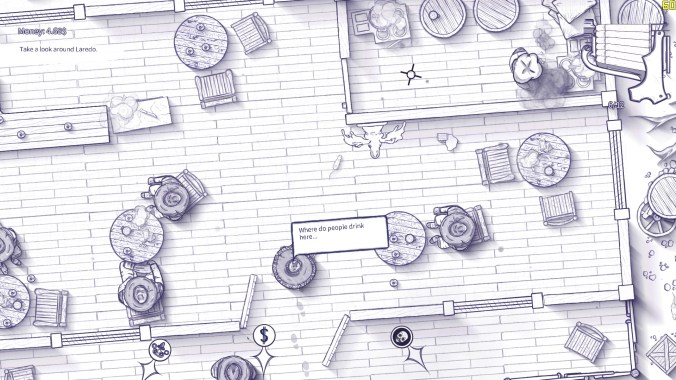
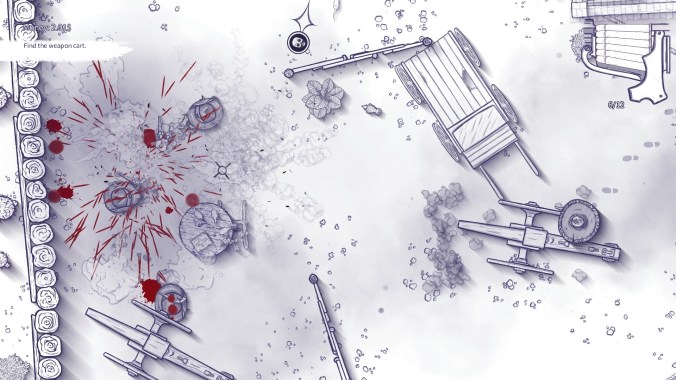
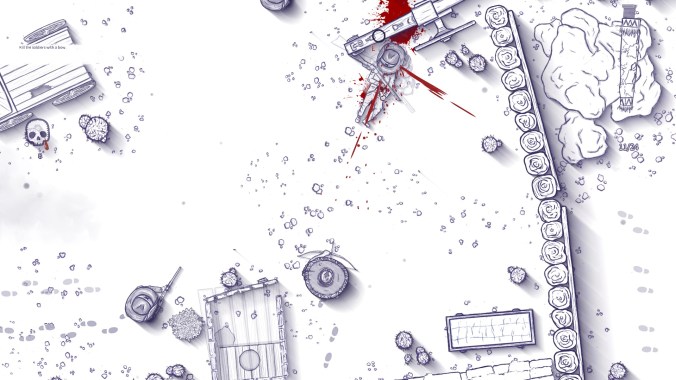
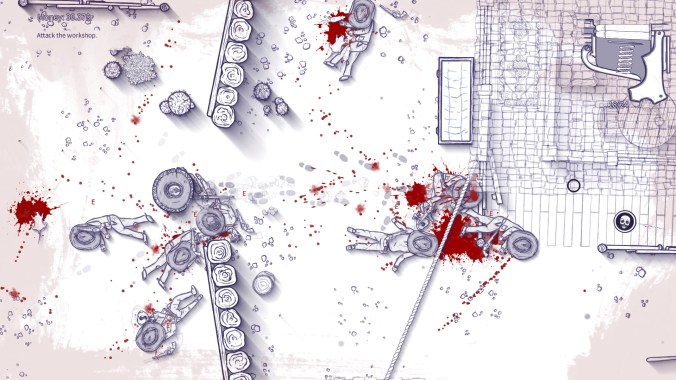
What enticed me to play 12 is Better Than 6 was its black, white, and red hand-drawn style. Truthfully, it looks great in screenshots and trailers, but it does not translate well into actual gameplay. It can be difficult to distinguish enemies from the background and obstacles as they do not “pop” or stand out. At least a few times I walked straight into an enemy that I just did not see. Additionally, when you start dashing through levels and the screen starts quickly moving, everything just starts to blend into each other. Its hard to distinguish anything when it all looks so similar.
5

Something else that bugs me about the game is that while is mostly operates similar to Hotline Miami with the idea of one-shot kills, sometimes this rule is randomly broken. Sometimes enemies will inexplicably survive a shot and will kill you before you can cock and fire your next shot. Even worse is the fact the melee combat suffers heavily from this problem. Much of the time a slash from the knife doesn’t kill the enemy, combine this with the knife’s short range makes melee combat high-risk and inconsistent. When an enemy survives a bullet or stab, you don’t even realize what happened before it is too late. I do not know whether this inconsistency was a glitch or an intentional inclusion, but either way it hurts the game.

Another fairly “minor” issue in the game is its AI (artificial intelligence). Sometimes enemies would completely whiff their shots, run in circles, or ignore the player entirely. Other times they would track me through walls and instantly kill me on sight like the damn terminator. Again, this lack of consistency breaks the flow of 12 is Better Than 6. Speaking of inconsistency, this game also regularly suffers from technical issues such as crashes. At least 4 or 5 times the game crashed on me.
3

While it is evident that 12 is Better Than 6 has a load of these small problems, what really kills the game are the three major design flaws: level design, repetitiveness, and ammo management. The level design of 12 is Better Than 6 would benefit greatly from focusing on smaller and more compact levels. One-shot kill can get aggravating when you are getting shot from offscreen and before you can possibly react. This happens fairly frequently when there are long corridors or wide-open spaces, both of which are abundant in 12 is Better Than 6. This forces players to tackle levels far slower are more cautiously to prevent getting killed by something you can’t see. What made Hotline Miami great was how quickly you could blast through rooms and levels. You ran through like a maniac, befitting of the tone and theme of the game. This same level of speed and risk aren’t possible in 12 is Better Than 6, because you will just get shot from offscreen.
2

Even as just a quick, four-hour game, 12 is Better Than 6 manages to overstay its welcome. It gets repetitive fast. Levels blend into each other and the small variety of weapons makes everything just feel the same. No levels really stood out. Some of the maps are even repeated and reused as filler. The first few levels of the game are basically the same as the last few levels. There’s no variety in any aspect. The art style, the lack of diverse weaponry, and the boring level design all contribute to this feeling of repetition. If you’ve played thirty minutes of the game, you’ve experienced everything the game has to offer.

The most frustrating issue with 12 is Better Than 6 is by far its archaic ammo management system. You carry around some ammo for each of your four main weapons, but the method of obtaining this ammo an incredibly tedious and mind-numbing experience. If you want to pick up ammo from fallen enemies, you must drop your weapon, pick up their weapon, unload it, and pick up your original weapon. You have to do that for every single enemy that you kill if you want their ammo. In levels where you fight dozens of enemies. Why? In most games, when you walk over a dead body you automatically pick up their bullets. This saves the hassle of painstakingly sifting through every body to scrounge for ammo. This issue puts the nail in coffin of 12 is Better Than 6 for me. I want to be able to quickly rampage through levels, and having to repeatedly stop to tediously unload, swap, and reload weapons slows the game to a crawl. Especially since you will probably die a lot as a result of the one-hit kill nature of the game. You will have to go through this entire process every time you fail a level. How anyone thought that this method of ammo management was superior to traditional methods is beyond me.
1

I tried really hard to enjoy my time with 12 is Better Than 6. It’s a genre that I enjoy, and I try to support indie developers. Most of the smaller issues are just minor annoyances, but combining them all makes the game feel inconsistent and incomplete. More importantly, the three major problems absolutely ruined the game for me. The level design, repetition, and outdated ammo management system were just too problematic to ignore. For these reasons I give 12 is Better Than 6 a 3/10. It’s a shame that a solid concept had such poor execution.
Dishonored: Death of the Outsider (2017)

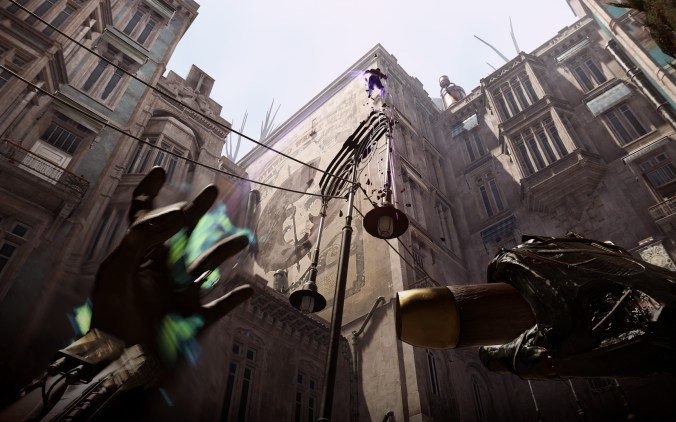
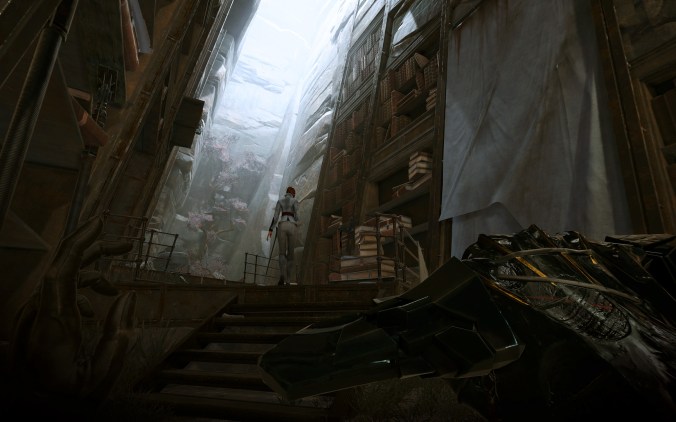
If you read my reviews of Dishonored 2 and Prey, it should be apparent that I am a fan of Arkane studios. I hold those 2 games, as well as the original Dishonored, in high regards. Arkane is renowned for their intricate level design which facilitates a variety of paths and playstyles in every level. Dishonored: Death of the Outsider is a standalone continuation of the series that mostly follows its predecessors’ roots. Despite this, I can’t help but feel the experience was notably hollow and sterile.

6

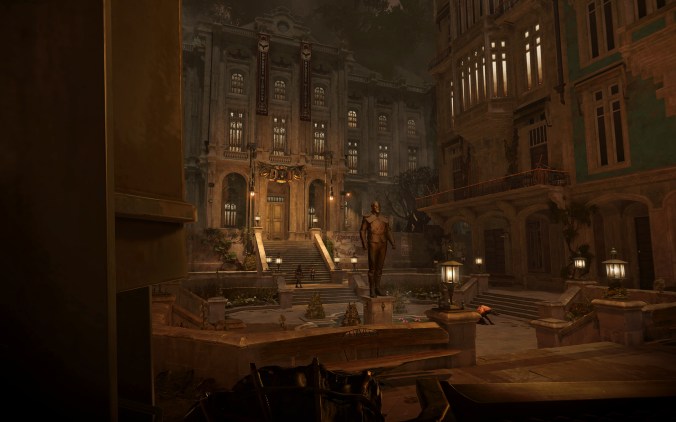
Dishonored: Death of the Outsider may be a standalone experience, but it is essentially an expansion of Dishonored 2. The same engine, characters, controls, and even the same areas suggest that Dishonored: Death of the Outsider is a large DLC (downloadable content) for its predecessor. There are only 5 campaign missions, and although they are supplemented by a few additional side contracts, the game is fairly short. Fret not, because it is priced appropriately even with its low play-time. Still, the game felt a little barren and uninspired at times. The straight copied areas from Dishonored 2 add to this sentiment and make Dishonored: Death of the Outsider feel even shorter and lacking in fresh content.

5

In Dishonored: Death of the Outsider you play as Billie Lurk, an assassin on a mission to take down the Outsider. The Outsider is the source of all the mystical powers that exist in the world of Dishonored. Billie and her mentor Daud believe that the Outsider is responsible for much of the evil in the world and resent him for their magical prowess. To achieve their goal, Billie must uncover the secrets of the void and the Outsider. The player spends most of the game stealing knowledge of how to reach and deal with the enigmatic Outsider. Rather than assassinating or “taking down” targets like in the previous games, you mostly operate as a thief. In addition, unlike previous games there is no chaos system that alters the story depending on how many people are killed. The lack of decision making and game-altering repercussions contributes to the lifeless and uninspired feeling of Dishonored: Death of the Outsider.

4

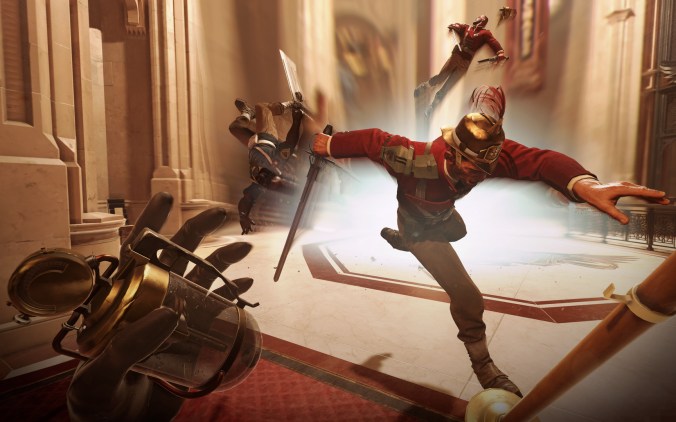
The gameplay of Dishonored: Death of the Outsider mostly mimics Dishonored 2. You traverse large areas, trying to stay hidden and use gadgets and magic to avoid detection. Apart from a few new abilities to play around with, it’s mostly the same old Dishonored. Which is a good thing. Sneaking around, picking off guards one-by-one, and using gadgets are all still integral parts of the game. One big change is that mana quickly automatically refills. You no longer have to go scrounging for things to refill your magical abilities, and this allows for a lot more freedom to test out the new abilities. Some new additions that I enjoyed were Billie’s two new magic abilities. One of them allows the player to briefly “steal” the face of other characters. This is occasionally useful to sneak past a guard or two, but it depletes the mana-bar very quickly and can’t be maintained for long. The other ability, Foresight, is a godsend and an amazing addition to the series. This ability allows the player to briefly freeze time and enter a “spirit” state which allows them to explore their surrounding area. This means you can scout rooms, mark guards, highlight valuable items, and plan methods of attack before ever entering a room. This ability encourages the player to use methodical and strategic approaches that the series is known for.

3

What really disappointed me about Dishonored: Death of the Outsider was its level design. Following up the creative genius and intricate levels of Dishonored 2 such as “Clockwork Mansion” and “Crack in the Slab” is not an easy task. Unfortunately, Dishonored: Death of the Outsider does not live up to this legacy. None of the levels are particularly creative and most seemed somewhat generic. There also seemed to be a distinct lack of multiple paths and routes through any given level. The 3rd mission was the standout for me, the game offers a few points of entry and a multitude of creative solutions to the task of bank robbery. Apart from that level, I felt the game was sorely lacking in options and interesting approaches.

2

Another odd departure from the rest of the series was the larger focus on combat. It may not be implicitly stated that combat is expected in Dishonored: Death of the Outsider, but the combination of a few factors leads me to believe that pure stealth was disincentivized. The first reason is obviously the lack of a chaos system. In previous games, killing enemies would change the state of the game and more rats or blood flies would appear in levels. More importantly, different chaos levels resulted in vastly different endings, and the “best” endings were achieved by having low chaos (not killing many people). Since this no longer exists in Dishonored: Death of the Outsider, the player can kill freely with no consequence. The next indication that stealth is less accessible is the lack of stealth upgrades. There are very few bone charms and upgrades that help the player remain undetected, but there are plenty of combat focused ones. Lastly, level design seems to tend towards combat encounters. There were plenty of instances where there is only 1 way into an area, and it is heavily guarded. After playing the first two games as well as this game trying to be as stealthy as possible, it was evident that it is far harder to go undetected in Dishonored: Death of the Outsider.

1

Despite its shortcomings, Dishonored: Death of the Outsider is still a Dishonored game. Lackluster level design and recycled content makes Dishonored: Death of the Outsider seems far less inspired than its predecessors. Still, it’s a ton of fun to be an elite assassin wielding the powers of the void. For these reasons I give Dishonored: Death of the Outsider a 6.5/10. It’s still a Dishonored game, but it lacks the creativity and heart of its ancestors.

Spider-Man (2018)

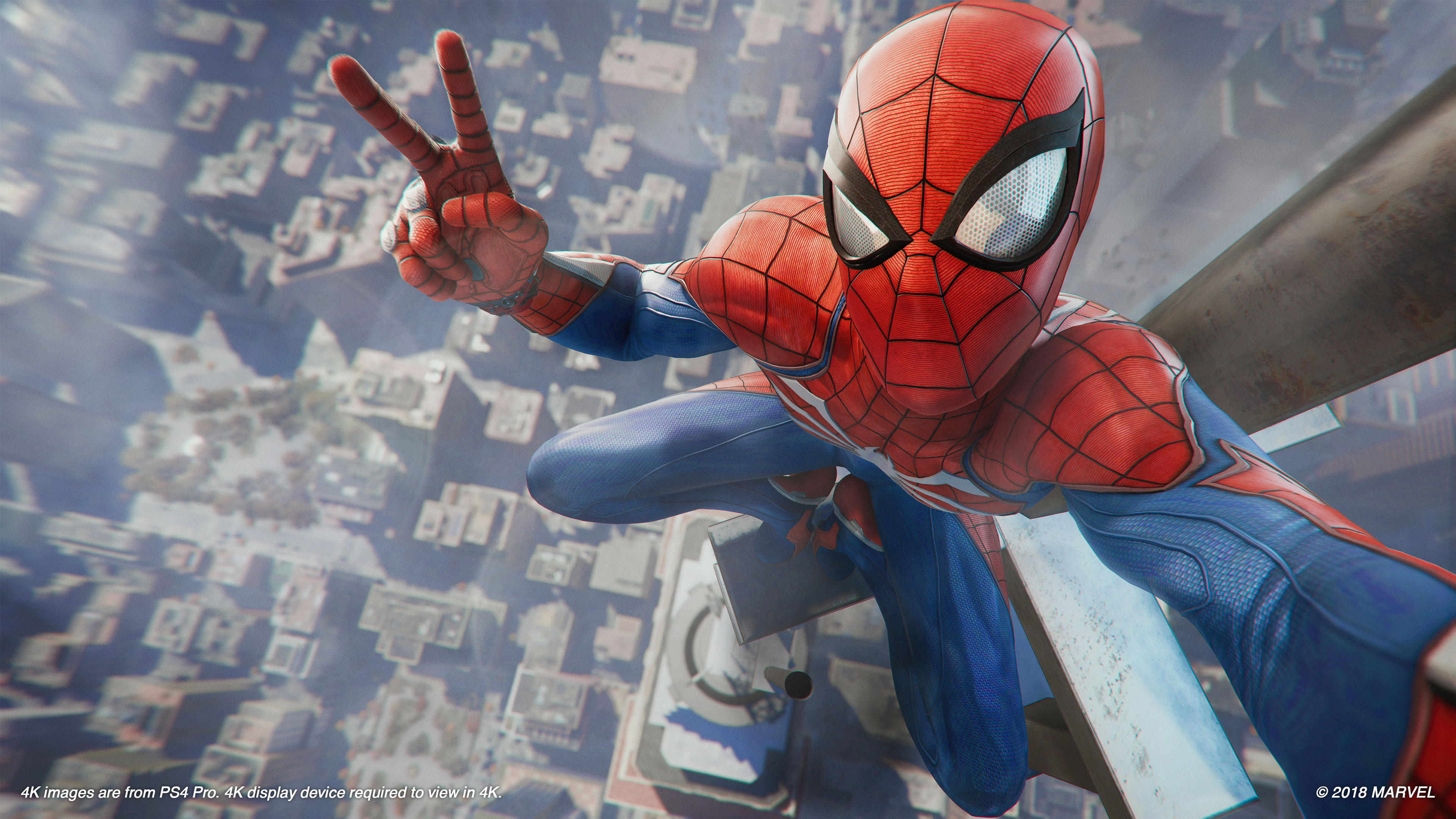
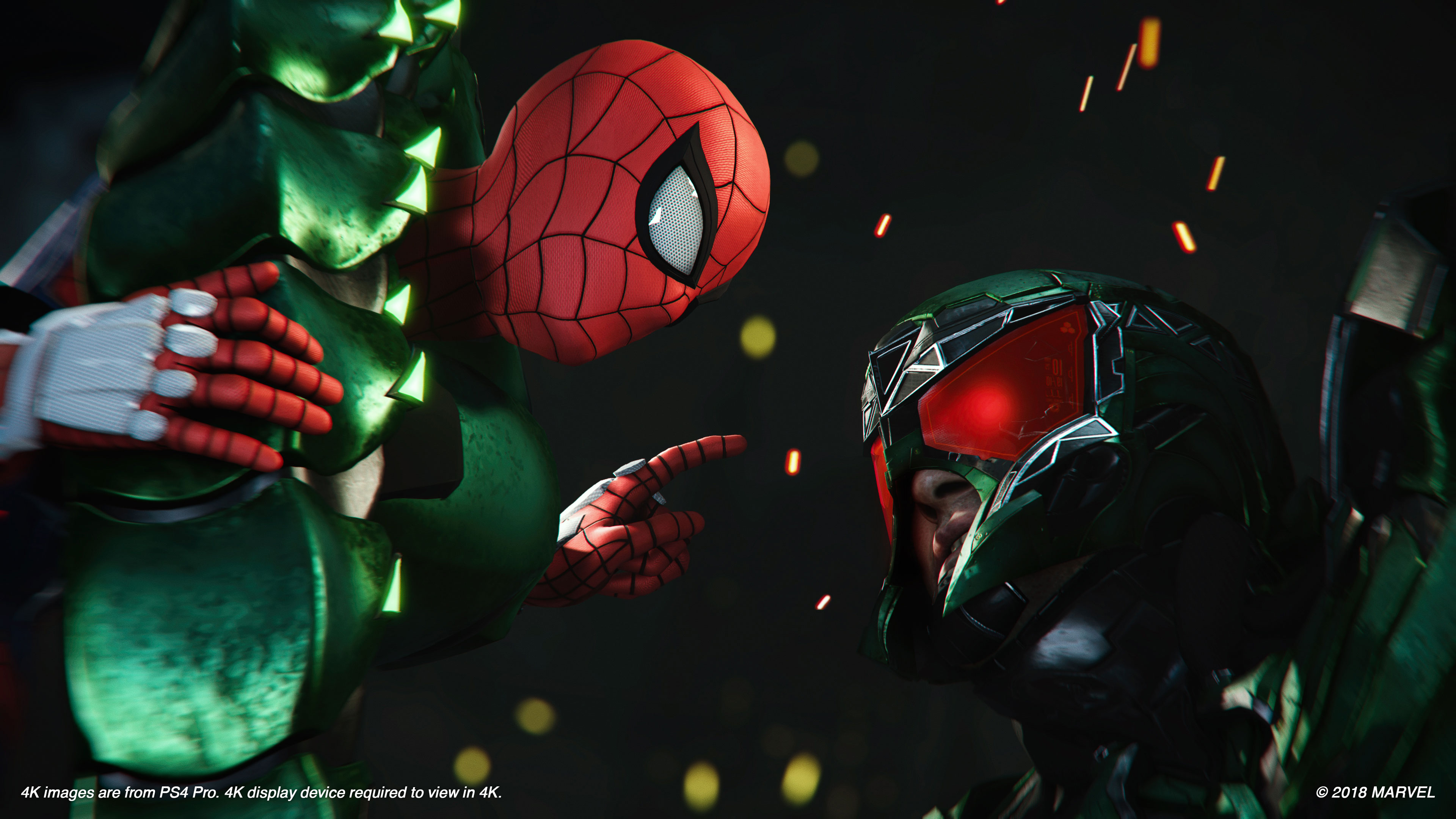
I have to acknowledge that I am not a big fan of superhero flicks and I barely follow the Marvel cinematic universe. With that being said, Spider-Man for the PlayStation 4 managed to reel me in regardless of my distaste for Marvel movies. In essence, Spider-Man is the direct translation of a superhero film into a game. All the elements are present: big-budget action, quips and banter, and a story that tugs on your heartstrings.

1

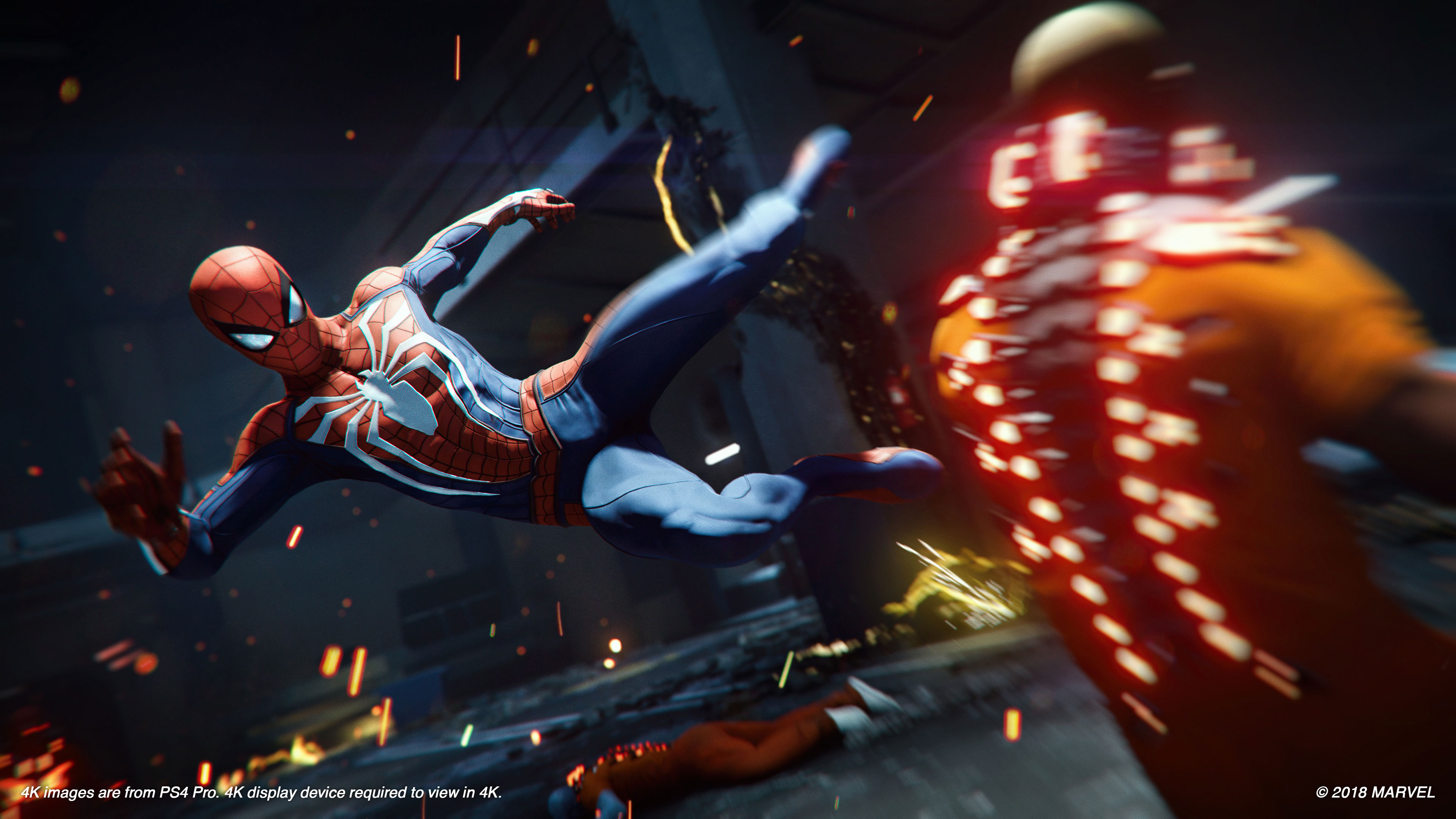
While I find superhero movies boring and repetitive, the interactivity of games makes playing as a hero far more engaging than simply watching one. Swinging about New York City, climbing walls, zipping from point to point, and fighting common thugs just feels natural. Its easy to get into the swing of things as the controls are extremely simple. The accompanying cinematics and animations of Spidey’s swinging, fist-fighting, and web-slinging imbues the sense of heroics. Most of the spectacle is fairly automatic, and you can look stylish just by holding down a button.

2

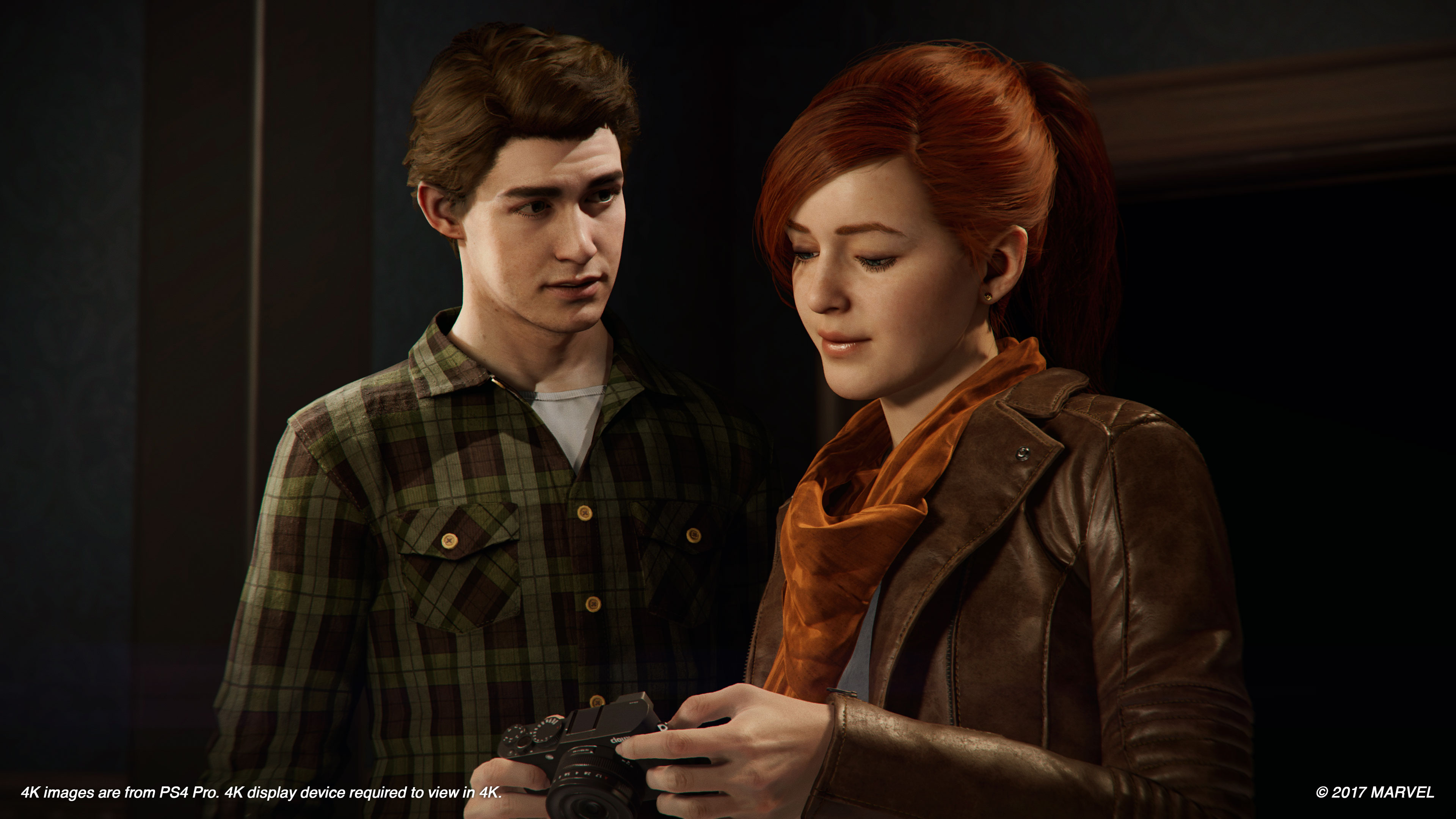
I was shocked by just how similar Spider-Man was to a genuine Marvel movie. Granted, I don’t watch a ton of Marvel films but the striking similarities are hard to ignore. Where this was most evident was in the story and writing. It’s about more than just beating up bad-guys, Peter Parker’s personal life takes precedence. His relationships with Aunt May, Miles Morales, Mary Jane, and a few mentor figures is what drives the story. The theme of mentorship is present through the entire game, as Peter is mentored by Dr. Octavius and in turn mentors Miles. The writing itself parallels modern Marvel movies in all facets. The cheesy one-liners and quippy banter permeate less serious scenarios, but there is no shortage of tear-jerking scenes. If you are a fan of Marvel and their cinematic universe, then Spider-Man will be right up your alley.

4

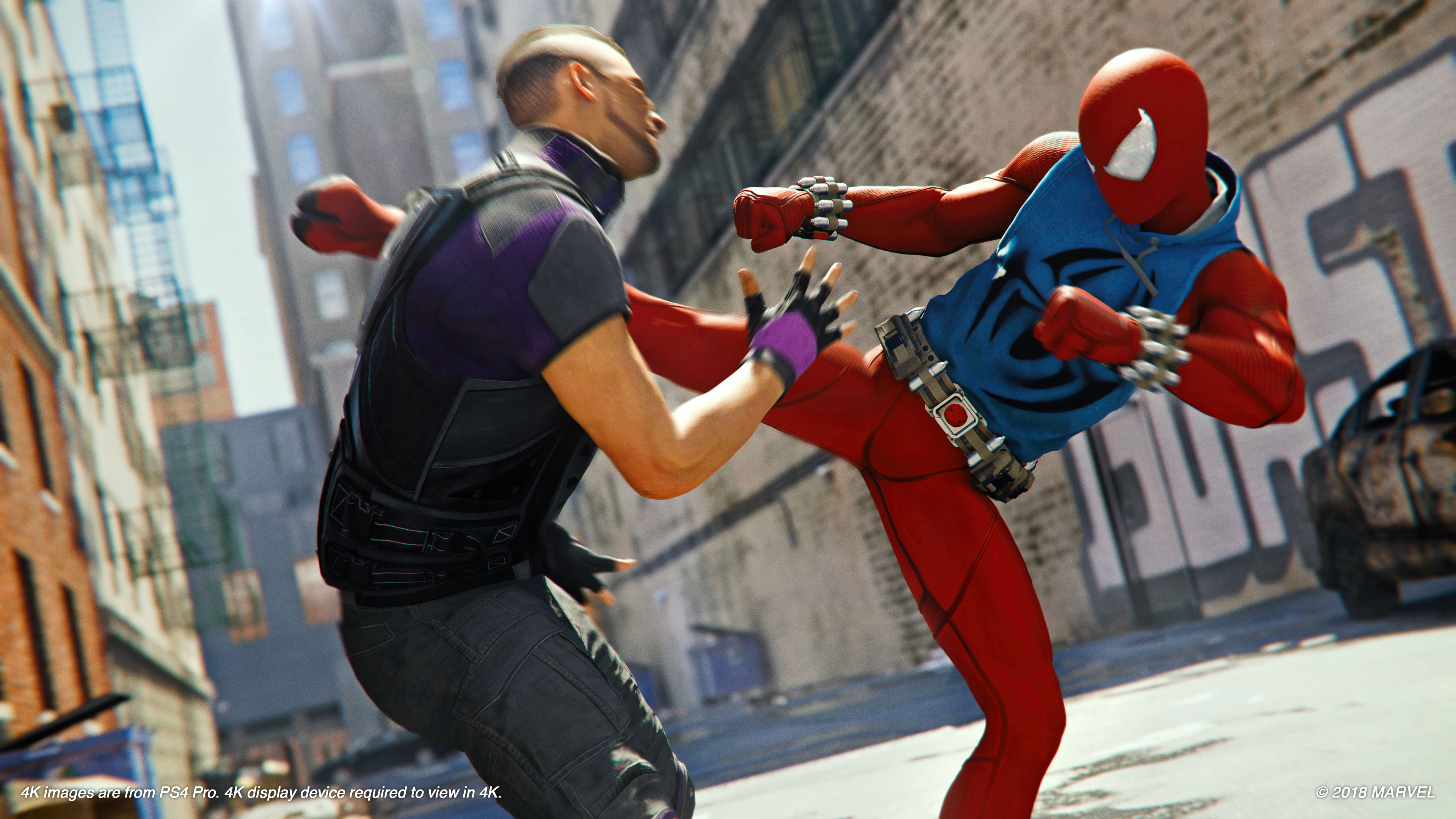
The gameplay of Spider-Man mostly consists of effortlessly swinging across Manhattan and busting up baddies along the way. Peter is a scientist and develops a horde of gadgets and suits with different powers to assist in combat. Gadgets consist of items such as web-shooters, web-grenades, trip-mines, and drones. You are heavily encouraged to switch gadgets mid-combat and play with different combinations for some effective takedowns. Like webbing enemies with a grenade and then sticking them to the wall using a sonic-blast. Peter also gets access to a variety of suits which are both fashionable and functional. Each suit has an ability such as creating a large explosion around you, summoning a helpful drone, or webbing up all nearby enemies. These abilities are incredibly powerful and as such have a few minute recharge period.


5

To unlock all of these gadgets and suit powers, the player has to traverse the city and gather a variety of collectibles and complete challenges. From collecting backpacks, to finding lost pigeons, to fighting crime, to completing time-trials, Spider-Man has a ridiculous amount of content to do out in the open world. Doing these tasks provides the player with tokens that will allow them to upgrade their gear. Normally, such a ludicrous number of collectables might be off-putting, but Spider-Man is unique in a way. Just swinging from building to building, fighting crimes and collecting goodies along the way is so enthralling. It is easy to just take a break from the main story and just be a crime fighting hero. The collectables are far from intrusive and they encourage the player to explore and experiment.


6

The combat of Spider-Man mostly succeeds because of the gadgets and the options they offer. Other than that, the combat just feels automatic. The most effective way of dealing with enemies is to just mash the punch button and press the dodge button whenever the game indicates that something is going to hit you. Sure, it looks cool, but without gadgets Spider-Man lacks depth. Sure, you could use other tactics like throwing objects, using the environment around you, or even use stealth, but in reality, it is just far faster and easier to just beat up the enemies by mashing the square button. The issue lies in the fact that for the vast majority of the game you are fighting the same enemies, just reskinned. The basic grunts of all the different factions the player encounters just get boring and monotonous after the hundredth encounter. I had a blast with the boss fights, but those are mostly concentrated at the beginning and end of the game.


6

The most pertinent issue with Spider-Man is its reluctance to let you be Spider-Man. A good chunk of the main campaign is filled by missions playing as Mary Jane or Miles Morales. These missions are generally stealth missions where the player is forced to slowly make their way through areas without being seen at all. I like stealth games, but these sections were the most basic and boring stealth that they could have shoehorned in. Playing as Peter was also fairly uneventful and mostly served as expository. As Peter, the player has to solve some incredibly banal puzzles that really had no business existing. Maybe these sections were meant to pad out play time, or perhaps flush out character development. Either way, much of what was accomplished in these missions would have been better served in a short cutscene or a phone call to listen to as you swing through the city.

7

At its core, Spider-Man has a multitude of different genres and styles that it attempts to appeal to. It is a story-driven, action, stealth, puzzle, collectathon game. Appealing to a broad audience is fine, and as a result I am positive that most people could find some aspect of this game that they like. But in the reverse, that means that most people can find some aspects that they don’t like. Perhaps the game would have been better as more refined experience. I really enjoyed Spider-Man regardless of this, and even though I am not a Marvel fan, I had a blast. It is for these reasons I give Spider-Man an 8/10. Playing as everyone’s favorite friendly neighborhood Spider-Man was immensely satisfying, I just wish the developers realized this and cut-down on the superfluous other aspects.

The Witness (2016)

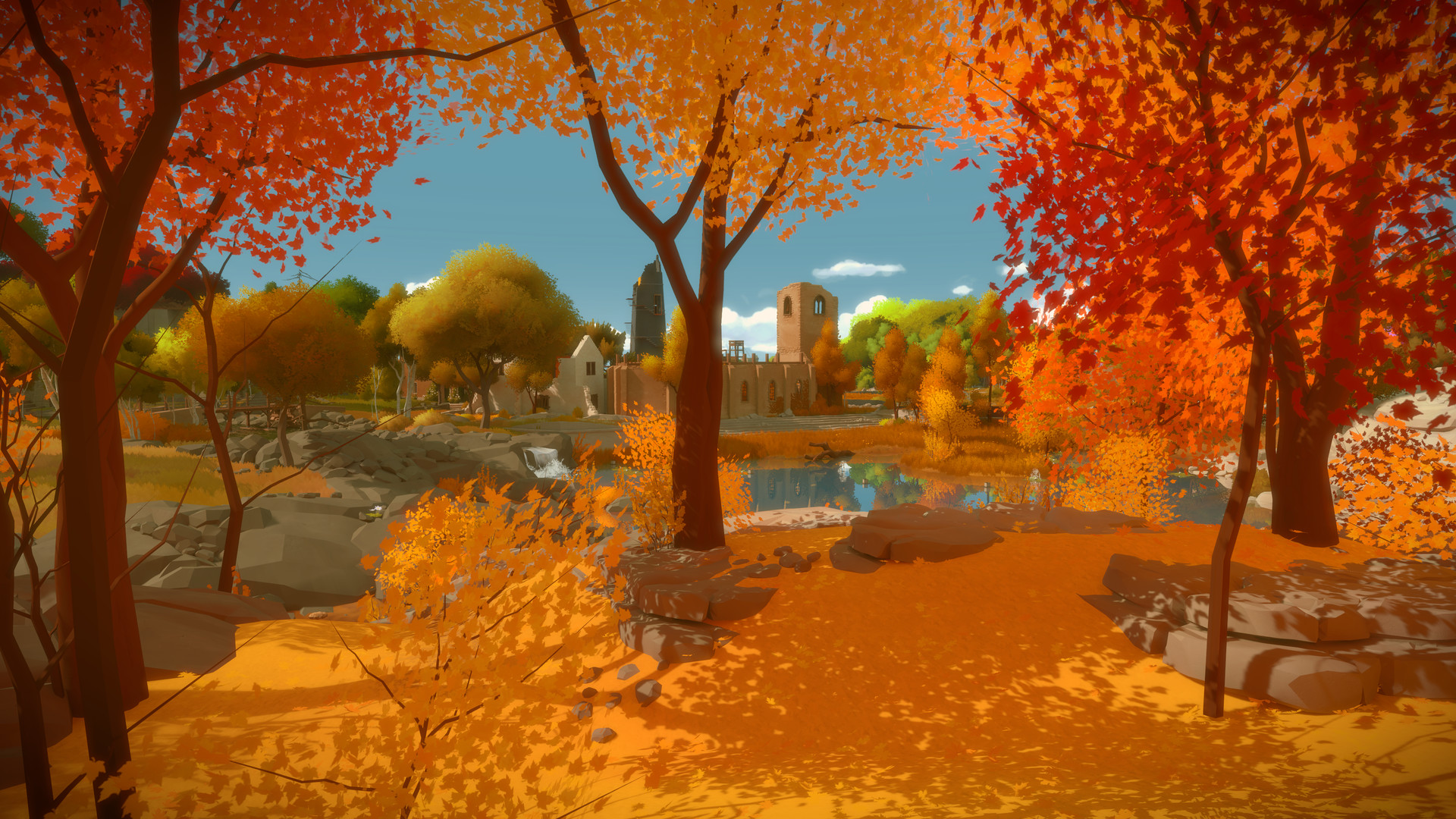
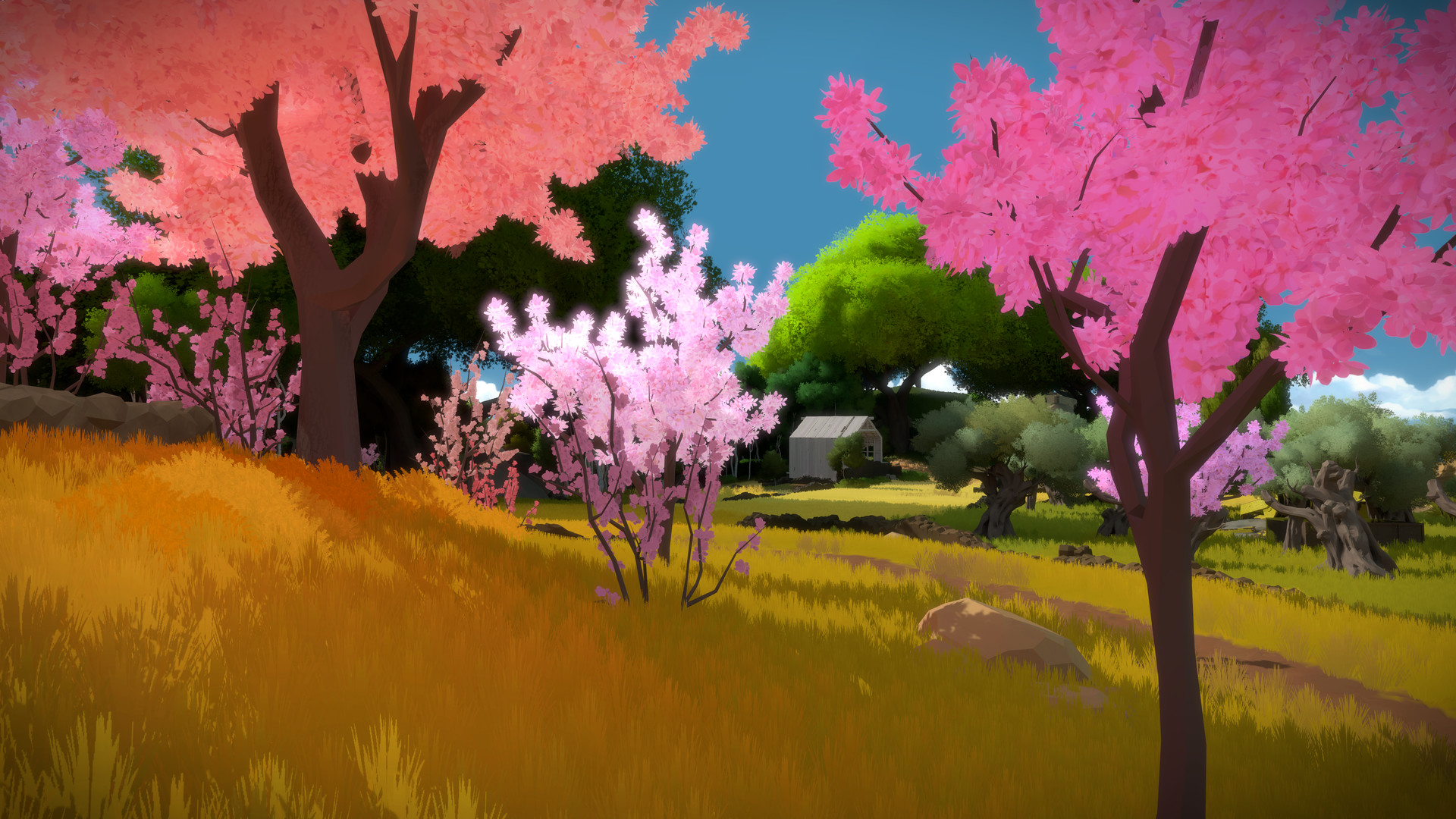
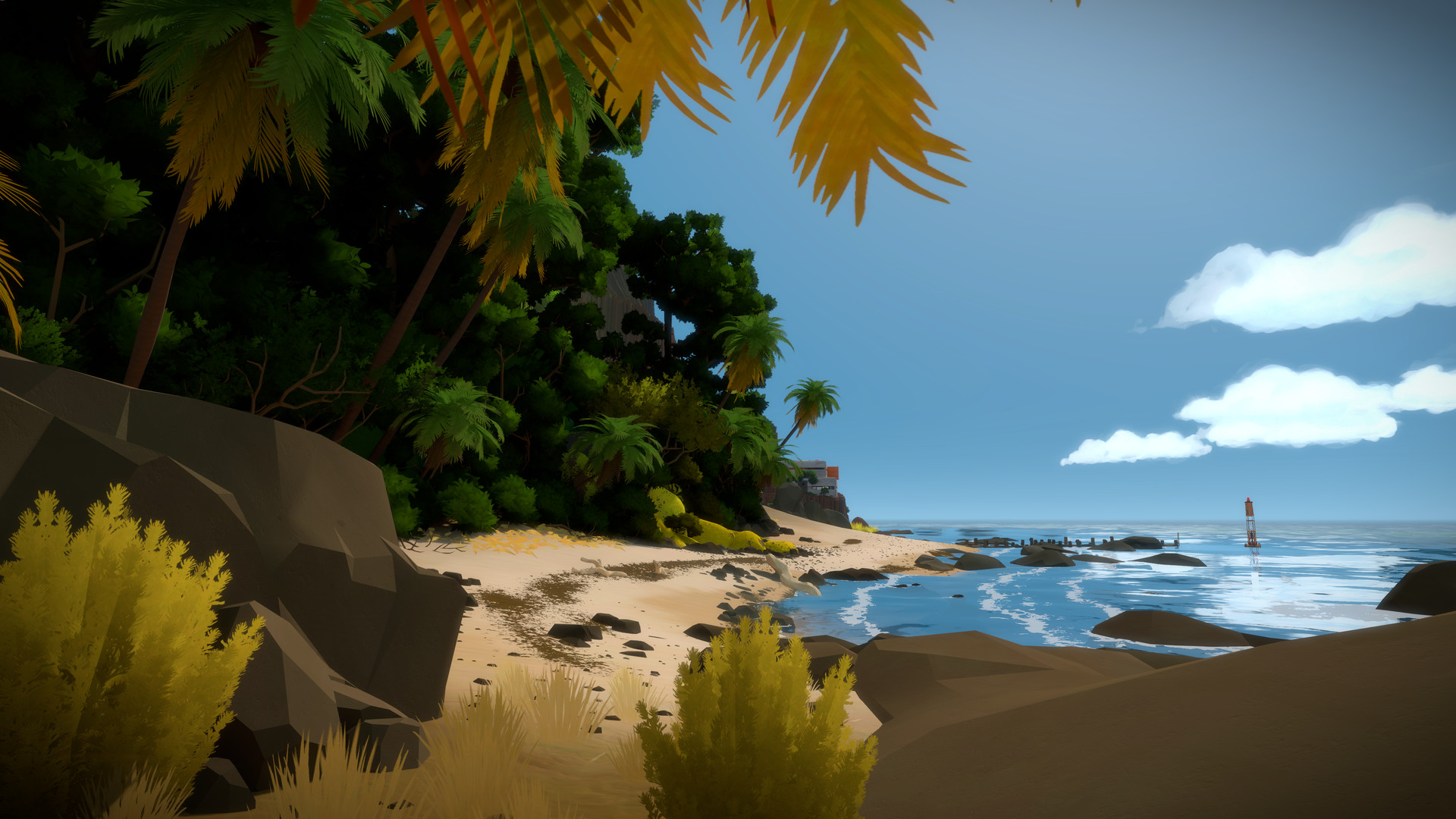
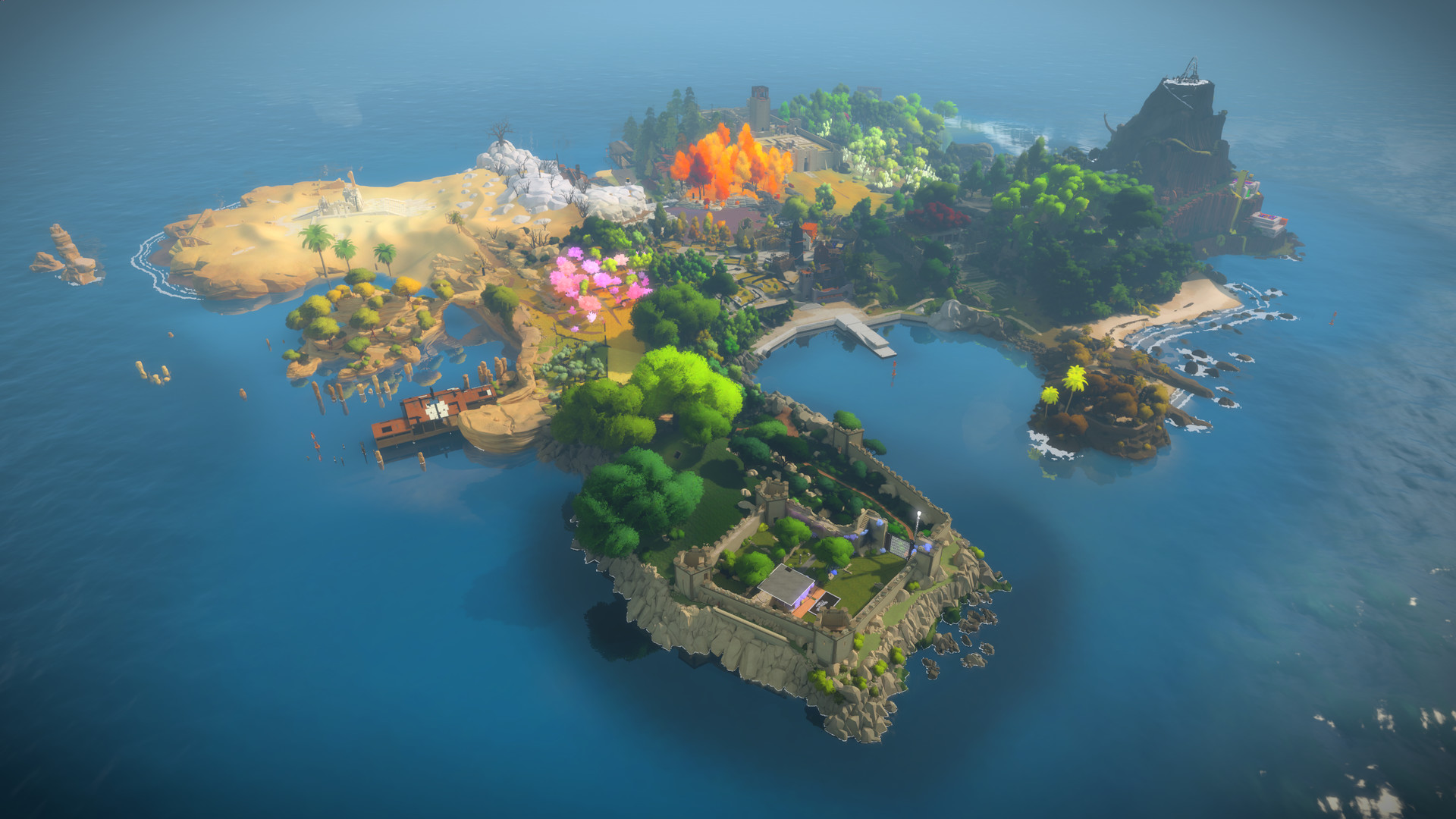
The gorgeous environment and serene island of The Witness is a mask for a complex and challenging labyrinth. This puzzle game plays with the player’s mind and perception of everything around them. In essence, The Witness is a game all about perspective and how you view the environment around you. It may be confusing and frustrating at times, but it is an essential experience, especially if you are a puzzle lover.

1

The majority of the puzzles in The Witness are these screen mazes. They start simple enough, the player navigates through labyrinths on these tablet-like screens. Quickly, new mechanics and rules are added to these mazes. Symbols represent different tasks and rules that must me adhered to, making it to the end is not enough to complete a puzzle. For example, separating different color blocks or having to collect little black dots along the way. Each area in the game seems to focus on a new mechanic and using it to its fullest potential. Many of these screen mazes will combine aspects and symbols from previous areas to add additional challenge. The complexity of these puzzles quickly ramps up and a simple 4×4 grid may take you 10 to 15 minutes to solve.

2

These mazes are the core of The Witness. The game boasts that there are over 500 of these puzzles scattered across the diverse island. You do not need to complete every one of these brain teasers to finish the game, I solved about 400 puzzles before I made it to the end. If you want more out of a game than small labyrinths, than you will probably not enjoy The Witness. There are more aspects than these puzzles, but progression is tied to the completion of these screens. This is not Portal or The Talos Principle, you rarely solve grandiose puzzles that make use of large spaces. To be fair, The Witness does make use of environmental aspects more than any games I have played. Shadows, light, sounds, perspective, and other exterior cues are key to solving many of the areas and mazes. The environment is also used in a mind-blowing manner, but I do not want to spoil this moment for future players, so I have discussed it below in a spoiler tag. View at your own discretion, because if you are planning to play The Witness, this is seriously one of the best aspects of the game that you should really experience yourself.

Highlight to see spoiler:

As you play more and more of The Witness, you may notice some strange aspects of the space around you. Hidden in the environment, there are shapes that mimic the mazes that the player has been solving on the screens. The “oh my god” moment comes when you realize that you can click on these hidden puzzles and solve them like all the mazes in the game. Immediately you begin to see shapes all around the island and try to click on everything to find these hidden shapes. Some you have to line up using different angles and perspective tricks. Others you need to figure out how to even get in a correct position. Ultimately, these are in no way tied to progression and serve no purpose within the game, but discovering this secret is one of the most important and memorable moments in the game. This is where you learn that the island has more to it than simple line puzzles, and that the game expects you to change your perspective on how you see the world around you. End of spoiler.

3

A component that needs to be mentioned is that The Witness undeniably respects the player’s intelligence. There are no tutorials, no guiding text, nothing that remotely resembles handholding. When you encounter a new symbol or type of puzzle, there are a few very easy puzzles that let the player deduce what the symbol means and how to deal with it. Furthermore, the island is an open world that lets you seemingly tackle any area in any order you want. The drawback of this is that many of these areas adopt symbols and rules from other zones. So, if you have not been to the required area, you get roadblocked. Sure, you can realize that you do not have the requisite knowledge to complete a puzzle, but I wish the game did a better job and placing areas in a more logical order. The most blatant example of this is that the town area takes concepts from every other area in the game, yet it is very likely to be one of the first areas you stumble upon to do its proximity to the starting location. This could easily lead to frustration as you try to figure out puzzles that you couldn’t possibly solve yet. This is not a case of me being flagrantly bad at the game, I finished it within a reasonable time (about 15 hours) and never really got roadblocked. All I’m saying is that it can be annoying when wandering around and you can’t seem to find a solvable puzzle.

4

The other major issue that I had with The Witness was that I could not help the feeling that the game was pretentious. Solving some secret puzzles unlocks real life speeches made by a variety of people in academia. These videos range from 5-60 minutes, and serve no purpose other than really wasting your time if you choose to view them. There are also audio logs of famous quotes scattered about the island to listen to, again I drew no meaning from these. Lastly, the ending sequence of the game seems like it was trying to portray some message, but the dialogue just seemed nonsensical. This was reminiscent of Jonathan Blow’s previous game, Braid. In both of these games the vague and pointless dialogue exudes a sense of pretentiousness. Like there is deeper meaning than what was actually conveyed, but in all actuality the story and meaning felt practically non-existent.

5

The island itself on first glance seems to contain some sort of mystery. Why am I here? What’s my goal? What are all these statues? What happened to all the people here? These questions are not really answered in any satisfying sort of way. There seems to be clues scattered about the island to make it seem like there was an overarching story, but just like the audio logs and videos there really was no satisfying conclusion. My final gripe is that everything in the game seems to move slower than it really should. The player, the doors, the platforms, they all take far longer to get to their destination than what is reasonable. When on transit in a boat I was able to get a glass of water and go to the bathroom, and when I came back I was only halfway through the ride. It feels like a joke that is meant to solely waste the player’s time.

6

For the most part, The Witness is all about its screen puzzles. Personally, I quite enjoyed all of the challenges, but I think a lot of people will be turned off by the lack of grandiose environmental puzzles. Like I mentioned previously, the environment is well integrated and a key component to these puzzles, but you rarely interact with your surroundings in a more meaningful way. The elegance of imbuing difficulty and challenge into what initially seems like a simple maze is what makes The Witness so gratifying. When you figure out a puzzle on the first try, you are emboldened and feel like a genius. When the pieces start to come together and you understand what was stumping you, a wave of satisfaction follows. It is for these reasons I give The Witness a 9/10. It’s a collection of fantastic puzzles, but it lacks of any other sort of substance.

Assassin’s Creed (2007)

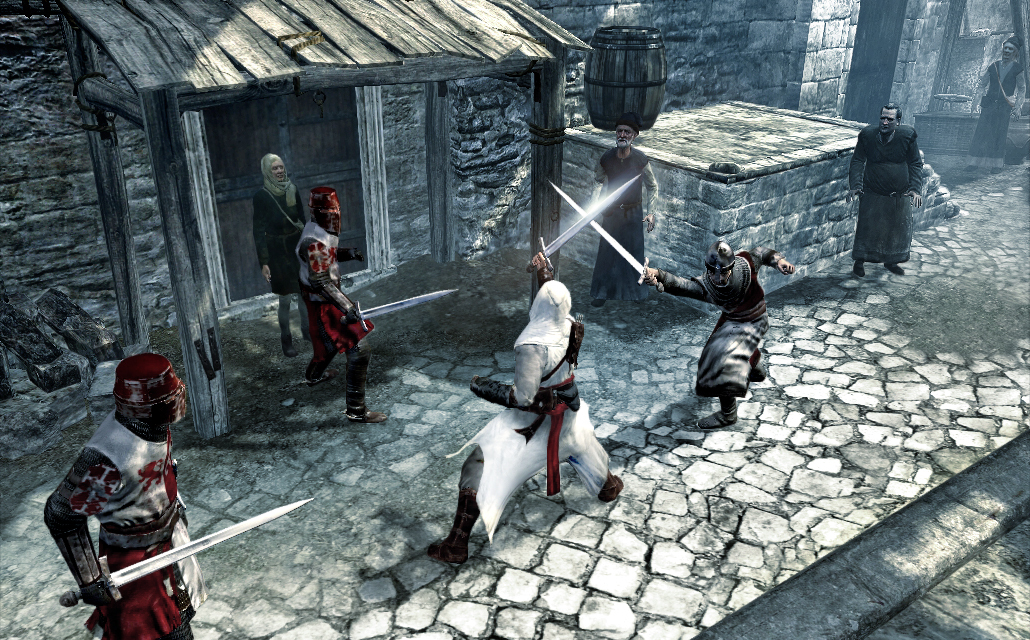
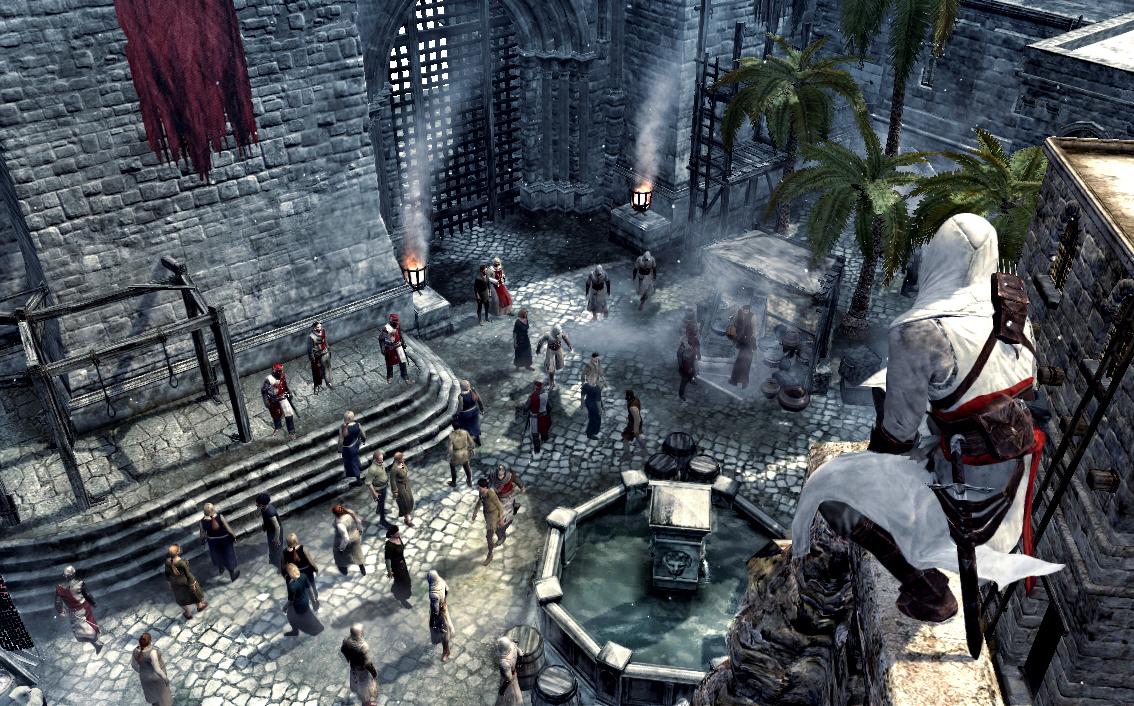
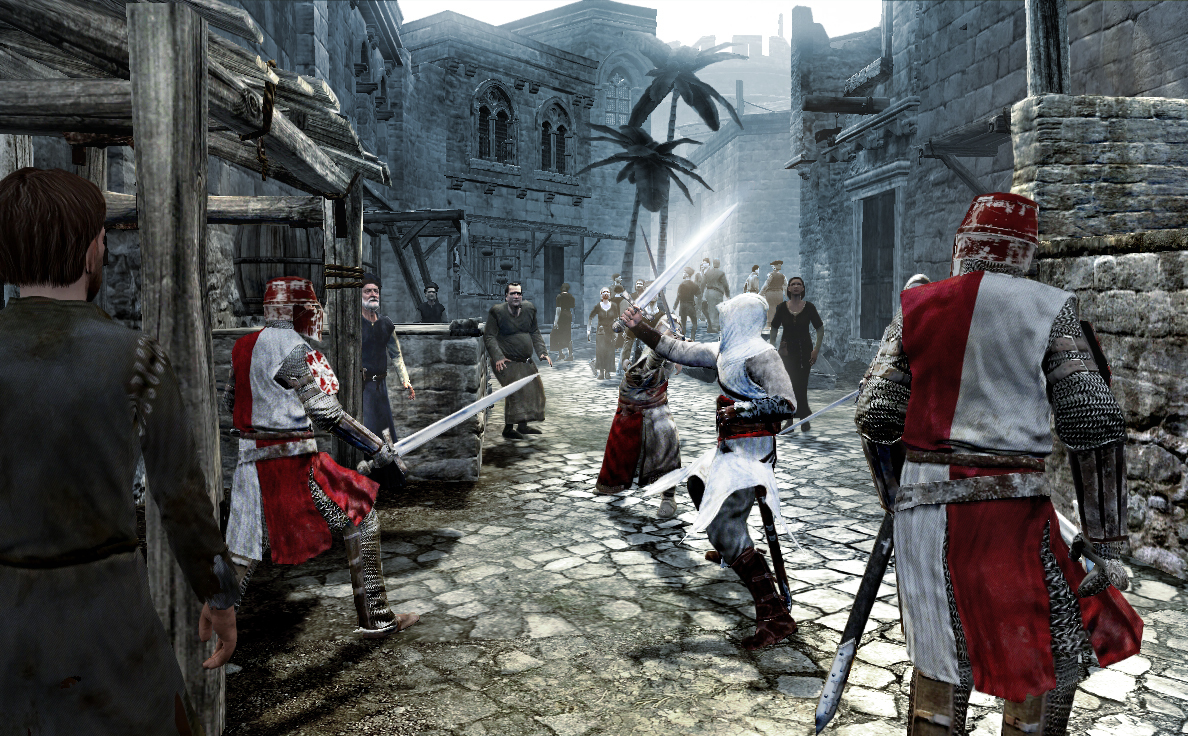
As a lover of stealth games, I decided to finally play the immensely popular Assassin’s Creed series. What I learned was that stealth seemed secondary to action and that the first game in the series was ridiculously clunky. Despite this, I believe the game’s concept has tremendous potential and I understand why the series became a juggernaut in the industry. Still, the first game has a boatload of shortcomings that make it a frustrating experience.

10

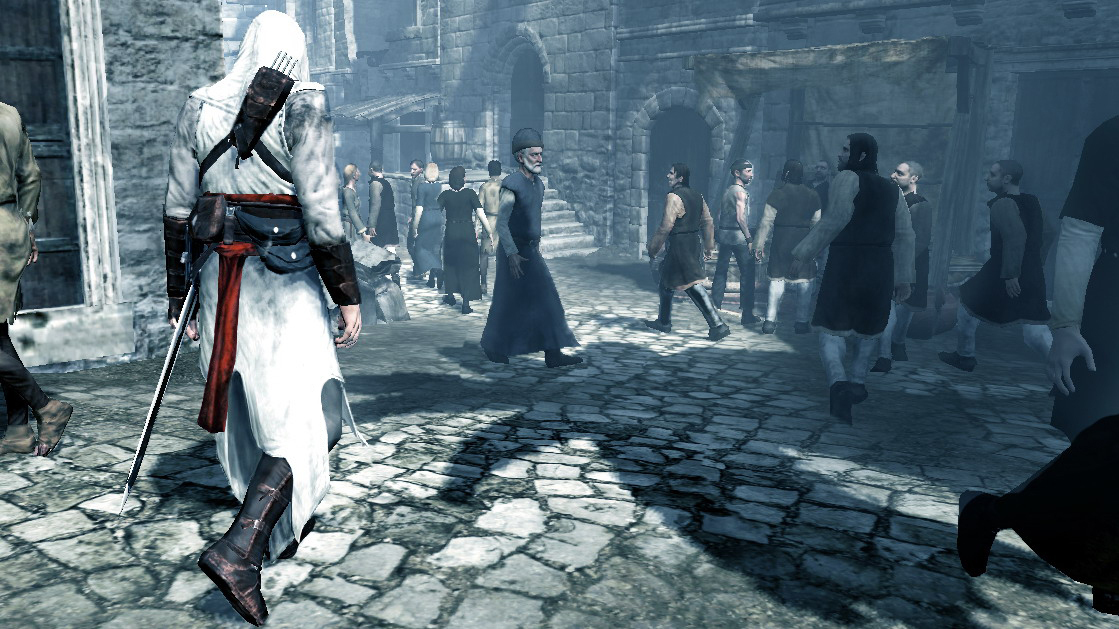
What makes Assassin’s Creed have so much potential is its concept. The main character accesses his ancestor’s memories and uses these memories to locate ancient artifacts. The memories that are accesses are that of an elite assassin. What makes the idea so enthralling is that the series draws its settings and stories from major historical events. In the case of the first Assassin’s Creed, the game takes place in the Holy Land during the 3rd Crusade. History is something that I personally find very interesting, so going to these critical points in civilization is a concept that really makes me want to play more of the series.

9

The plot of Assassin’s Creed is centered on the conflict between the Assassin’s Order and the Knights Templar. Both operate as underground societies with ambitions to shape the world. The protagonist, Altaïr, is tasked with eliminating 9 key members of the Knights Templar. These are all influential people in society who are scheming to overthrow their leaders and install a new order. They commit dastardly deeds to enforce their will on the people around them and the player must find and assassinate them. The plot is shrouded in mystery, as you piece by piece uncover the plans of the Knights Templar and what their scheme entails. While that’s happening, you have brief interludes outside of the memories in the modern-day world, which has plenty of intrigue of its own. The story is what made me want to keep playing the game, as I wanted to learn what was really happening in the memories and in the modern world. The story is mostly condensed towards the end, and I wish it had been paced more evenly throughout the game. The first half of the game is fairly slow moving but it does pick up at the end.

8

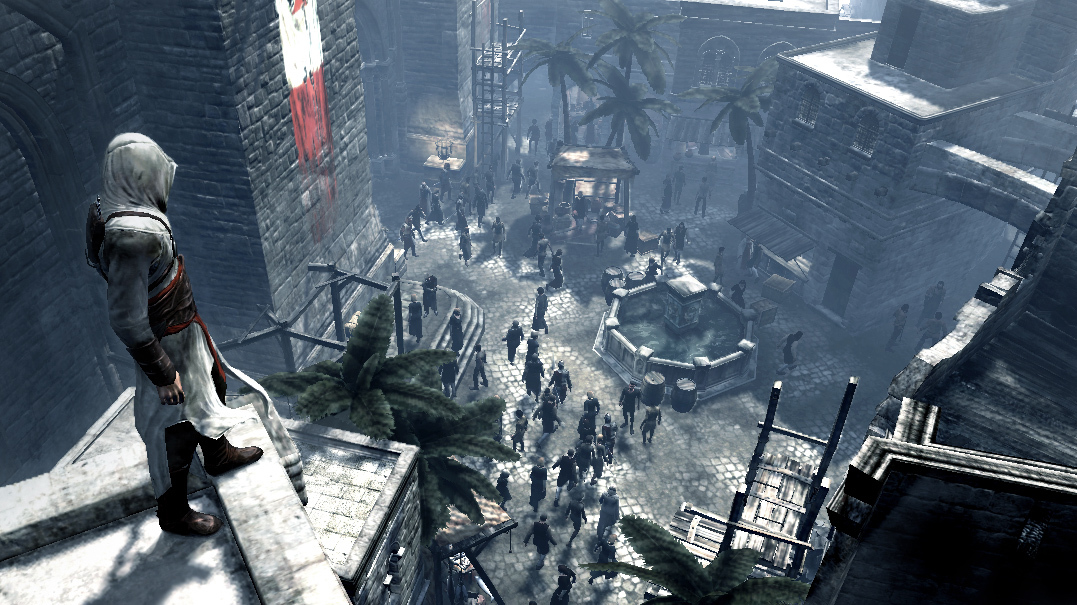
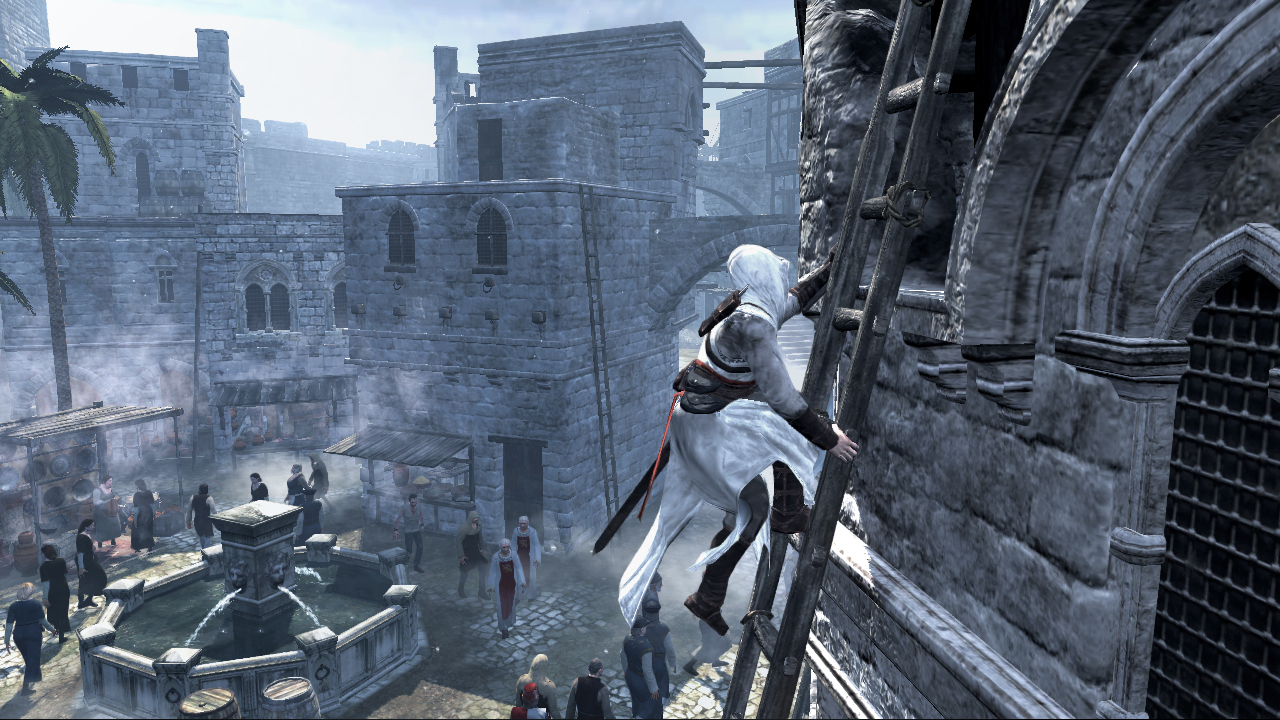
Assassin’s Creed for better or worse is known as an innovative and influential game. Much of today’s game market draws at least a little inspiration from Assassin’s Creed. One example of this is climbable towers that reveal portions of the map. Farcry, Horizon Zero Dawn, and even The Legend of Zelda are all example of major titles that adopted the dreaded “Ubisoft tower”. The concept is that towers are scattered across the map, and climbing these towers unveils portions of the map. Generally, this includes revealing collectables, sidequests, and other content. This all started in the original Assassin’s Creed. To be honest this is kind of an odd concept to adopt, it is not particularly fun, at best it’s a minor annoyance. Climbing viewpoints to get a scope of the area around you and to spot points of interest is something that could be engaging. But climbing towers to reveal the map just feels contrived.

7

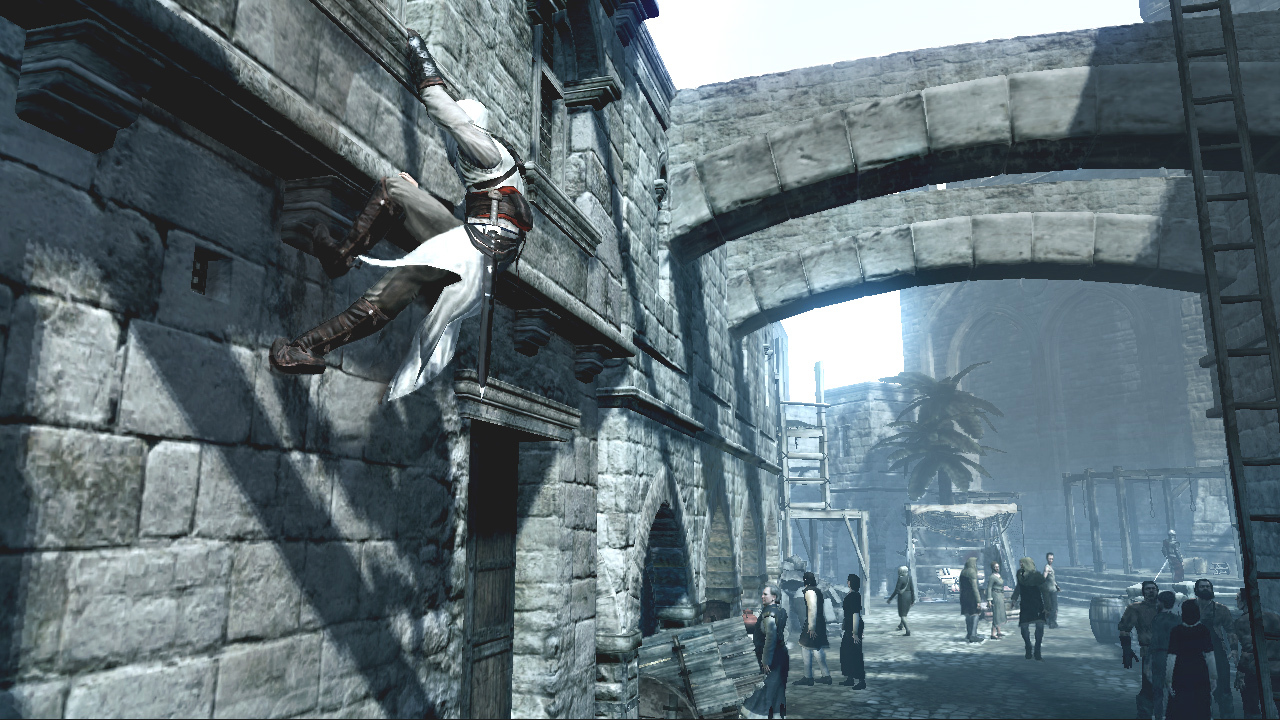
To be fair to Assassin’s Creed, at the time the technology to climb towers was actually kind of impressive. Seamlessly running up walls, grabbing ledges, and scaling a building was a novelty. Maybe I am just grumpy and unimpressed because by the time I played the first Assassin’s Creed, this was something I had already seen dozens of times, but I at least understand the appeal. I wish that there had just been far less of these towers. In the game there are 3 major cities and the surrounding kingdom area. There are 3 districts in each of Jerusalem, Acre, and Damascus. One district per assassination target. There should have been 1 tower per district to reveal the entire thing. Instead, there’s about 10 each. This is completely obnoxious and unnecessary as the mechanic grew tiresome after the 5th tower scaled. Hours of game time are toiled away holding up on the joystick to watch Altaïr slowly make his way upwards.

6

At its heart, this is the key issue that I had with Assassin’s Creed, the game is needlessly repetitive. The towers are just a single example of that fact. Each of the assassination quests can be broken into 4 parts: Go to the new district, climb towers to reveal the map, do intel missions, and finally assassinate the target. The first 3 of those aspects are inane and mind-numbing. Intel missions consist of revealing knowledge about the target you want to assassinate. Things such as his location, where the guards are, how to break into his hideout, and other general tips. The player can do a few of these to unlock the assassination mission and extra intel quests will just give you bonus information. Intel quests on paper sound like an enjoyable experience, but in practice they are just as repetitive as climbing towers. Things like eavesdropping, pickpocketing, and interrogating are just slow and mindless filler. The only enjoyable intel missions were things such as clearing out guards or stealthily assassinating archers. Those types of missions were engaging and required some thought and execution, the rest of the quests not so much.

5

As far as the main assassination goes, these missions were fun for the most part. You have to infiltrate areas and avoid guards as to not alert everybody. This requires some planning and clever pathing to get to the target undetected. Once the target is eliminated, you have to make your way back to your hideout. By far and away these were the most enjoyable portions of the game. Actually assassinating, like the title of the game implies. Also, a lot of story and exposition were provided in these sections to make them even more desirable to play. My one issue is that some of the targets were actually impossible to take out stealthily. You had to take them on in a duel rather than sneaking up behind them.

4

The crux of this problem is that Assassin’s Creed seems to not actually contain a lot of stealth elements. Sure, running and hiding from guards could be considered stealth. But I wouldn’t consider Need for Speed: Most Wanted to be a stealth game even though you do just that. When the game actually lets you sneak about and take out guards and targets, I had a lot of fun. Unfortunately, there seems to be a larger emphasis on action and adventure rather than espionage and tactical assassination. Sword fighting enemies was just easier and more common than actually assassinating. To be fair, my own expectations lend to my bias as I thought more stealth would be present, but still I feel let down. This is more of an action-adventure with some stealth elements rather than a stealth game with some action elements. Also, the Assassin’s Order is based on the real life Hashishin. They were a group of assassins who would take out their political opposition in public to make statements. So, I suppose the emphasis on eliminating the targets in public is fine, but I would have still liked to see more stealth options implemented.

3

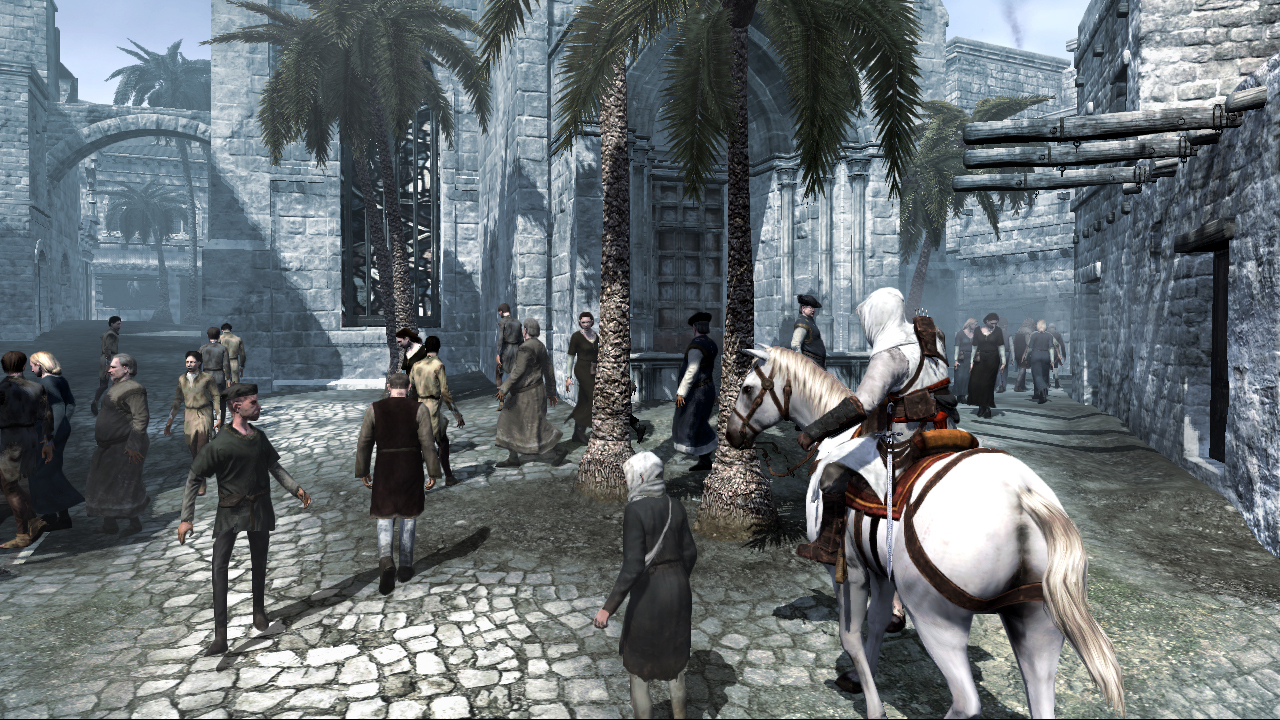
Outside of assassinations and intel missions, most of the game time will be spent running from place to place. This aspect I actually enjoyed, it felt good to run across rooftops and parkour my way across the city. If you do anything out of the ordinary, guards would be alerted and you would have to go into hiding. Exploring these historic cities was fairly fun, albeit the choice of location was a little bleak. All 3 cities were brown and sandy and a little more color may have been appreciated, but that’s a minor flaw. When I do try more games in the series, I look forward to exploring other cities. Other than that, the game does have a few control problems. I found the controls to be a little unwieldy and sometimes it was difficult to have the character do what I wanted him to do. I give a little leeway here because as a 2007 game parkouring across rooftops and scaling city walls was a new concept and it works fairly well. Also, the user interface is pretty confusing and requires to many button presses to do what you want. This is a concession made to fit the games theme of being in a simulation, but when I have to go through 5 different menus to quit the game I think they went a little too far.

2

Overall, I understand why Assassin’s Creed is such an influential game. An open world with completely traversable cities is a tempting prospect. I can’t help but feel a little let down however, as I feel the series has tremendous potential due to its concept. Traveling to different periods in history and impacting the course of civilization as an assassin just sounds so cool. I hope future titles live up to this idea, as I felt the first Assassin’s Creed felt more like a proof of concept than independent and functional game.

Devil May Cry 4 (2008)

The core of the Devil May Cry series is its action and the main character, Dante. Devil May Cry 4 makes a dangerous design choice by introducing a different main character. It is unbelievably risky to switch protagonists in a series which the current one is undoubtedly loved by fans. Ultimately, I think that this decision paid off, but Devil May Cry 4 has other substantial issues. The combat is crisp and satisfying, but the game is unfinished and undeniably repetitive.

1

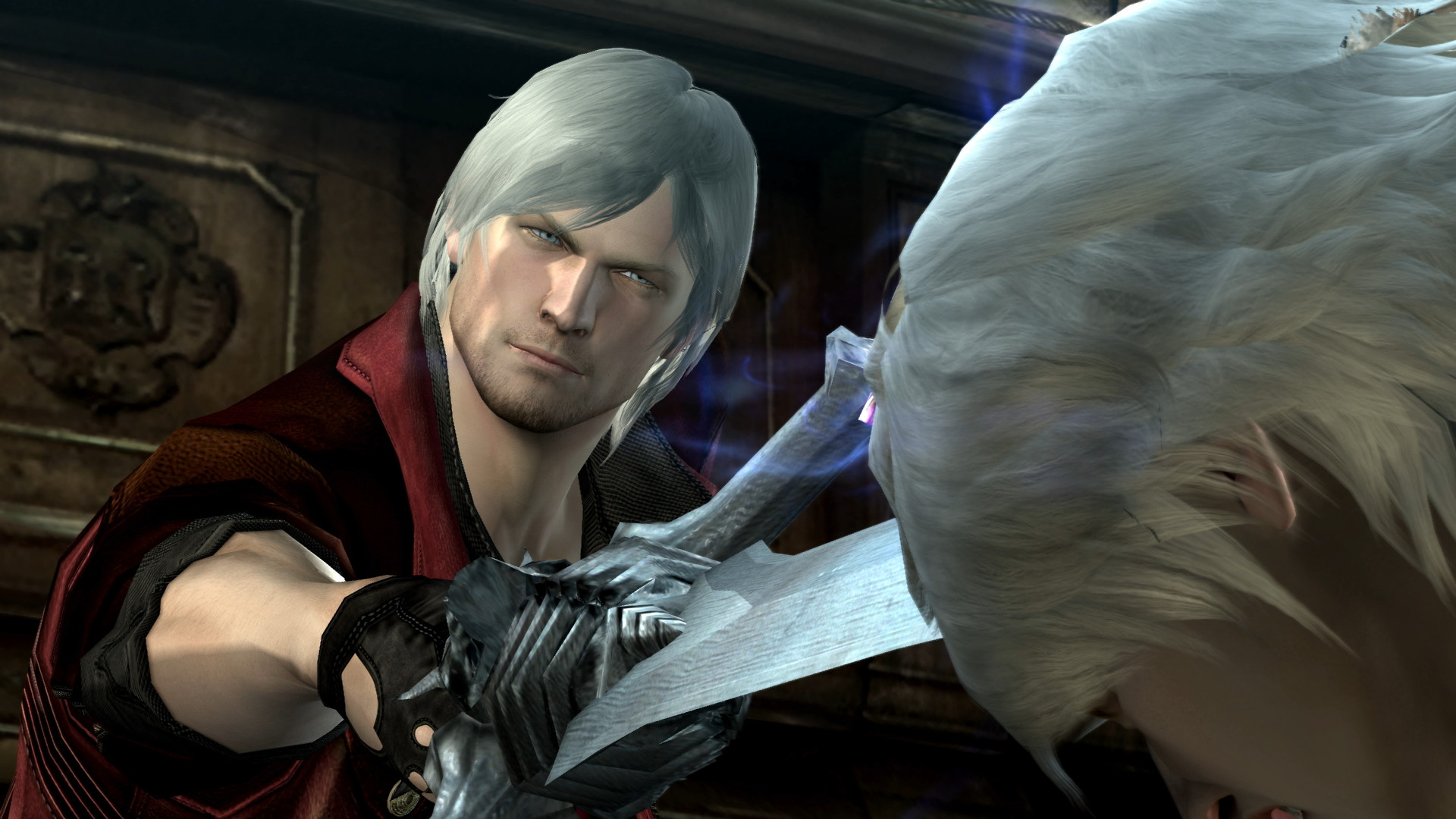
The departure from Dante as the singular main character is the aspect of Devil May Cry 4 that makes it stand out. Instead of playing as the cocky and laid-back Dante, the player controls the younger and more serious Nero. More importantly, Nero’s playstyle is vastly different than Dante’s. Nero has a focus on his unique “devil arm”, which boasts a few tricks and changes the playstyle of the game. Nero can grab and throw enemies, which is an ability that allows Nero to string combos together in creative fashions. While Nero does not have the variety of combat styles that Dante does, his ability to grab enemies makes him just as enjoyable to play as.

2

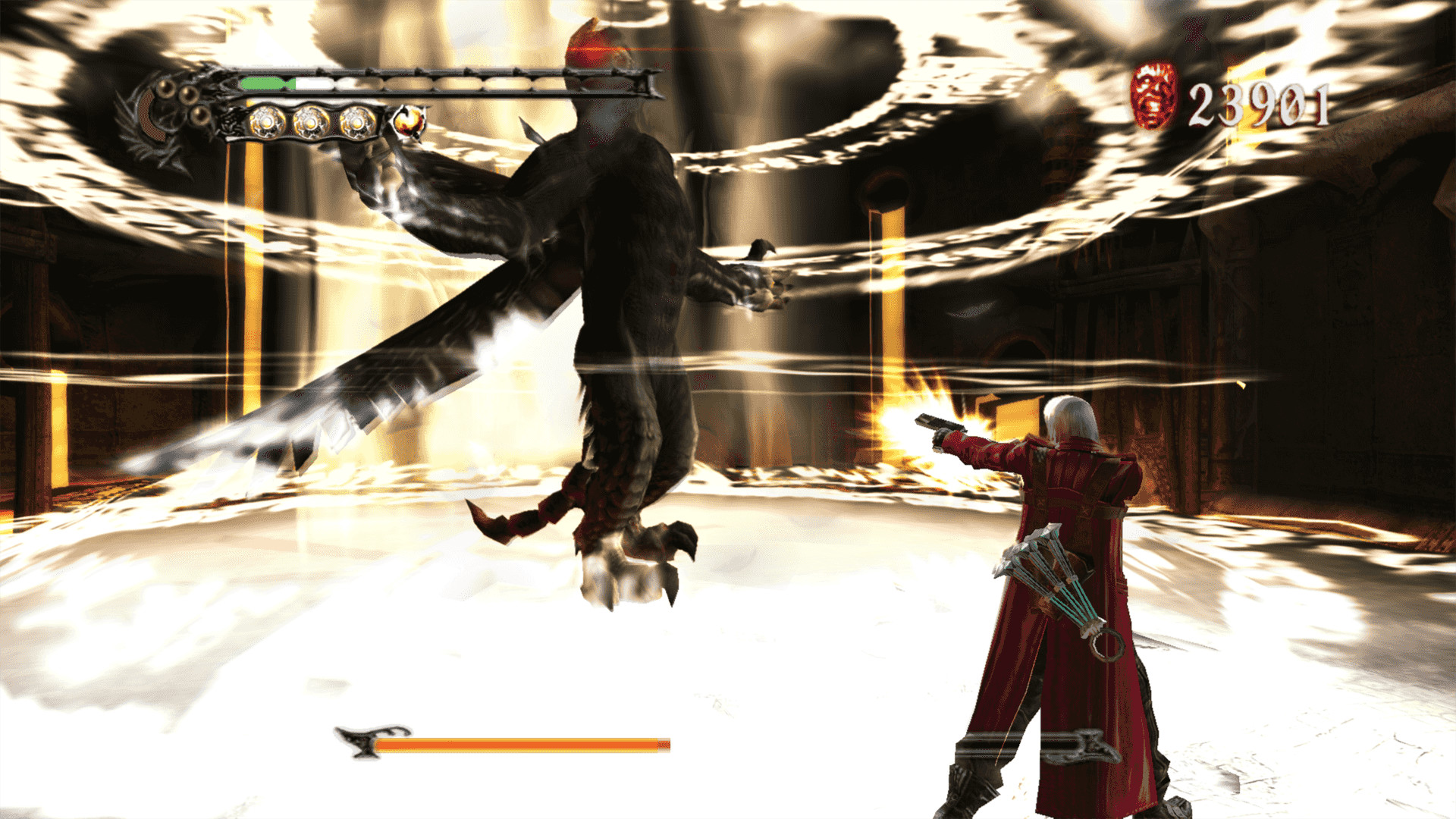
Other than the change of protagonist, Devil May Cry 4 plays very similarly to Devil May Cry 3: Dante’s Awakening. High-octane action with a stylish flair is the key to the series success. My favorite aspect of the series are the frequent challenging boss fights. I was somewhat underwhelmed by the bosses in Devil May Cry 4. Other than a single exception, none of the bosses were particularly memorable or exciting. They were not offensively bad, but they were solidly mediocre. These fights felt less like duels between capable fighters and more like the player and the boss taking turns wailing on each other.

3

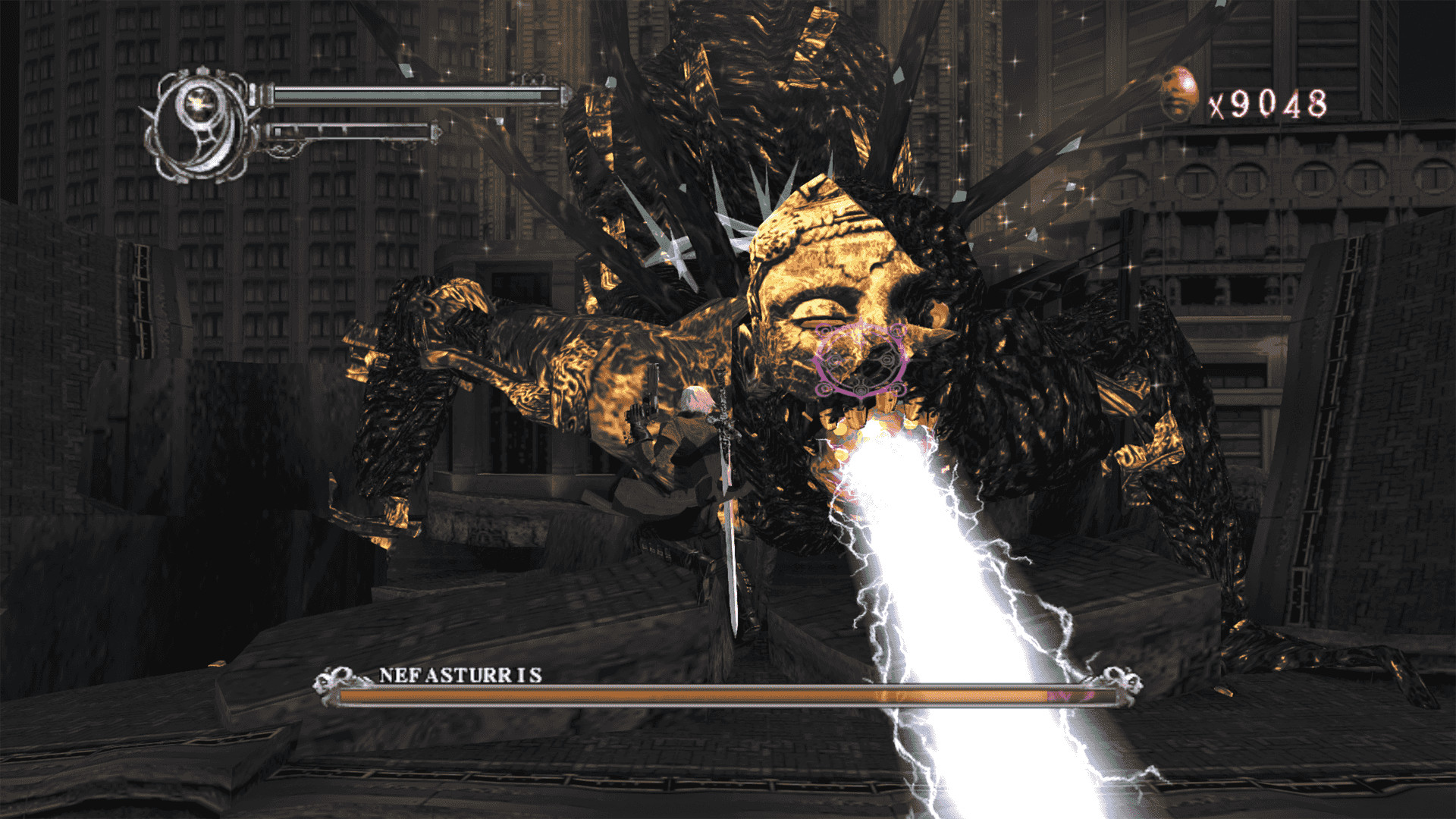
The largest criticism of Devil May Cry 4 stems from the second half of the game. Halfway through the game, the protagonist switches from Nero to Dante. This in and of itself would have been fine, but all of Dante’s levels are simply backtracking through previous areas. A lack of time caused the developers to just reuse areas instead of creating new ones, and the entire game drags because of it. Furthermore, by the end of the campaign you will encounter many bosses up to 3 times each. While rematches with bosses are a staple of the series, they usually entail new attacks or a changed arena. That is not the case in Devil May Cry 4. While you do fight some of the bosses as Dante, that is not a significant enough change to warrant 3 battles with each boss.

4

Dante plays as expected and has all of his abilities from previous games. The big addition is that he can now change styles on the fly rather than in the pre-mission menu. I love this change as it encourages the player to really test out the different styles rather than feeling restricted to one. It also allows the player to make some adjustments during combat or even extend their combos with a quick change of style.

Story is not something that I find important to the Devil May Cry series, and this game follows suit. While I like Nero’s characterization, I wish his backstory was explained in more depth. Other than that, the story is not a far cry from the previous installments. Somebody is trying to open the gate to Hell and unleash demons upon the world. That about summarizes every Devil May Cry game.

6

Devil May Cry 4 is basically everything I have come to expect from the Devil May Cry series. Fast-paced demon slaying with some goofy humor and cheesy dialogue. Playing as Nero is a breath of fresh air, even if he lacks the plethora of weapons and combat styles that Dante has. Unfortunately, Devil May Cry 4 is an unfinished product and that is abundantly clear in its latter half. As a whole, I enjoyed Devil May Cry 4, but it did not impress me like the original Devil May Cry or like Devil May Cry 3: Dante’s Awakening did. Those games defined and revolutionized the action genre, while Devil May Cry 4 is just a solid entry. If you enjoyed the previous games in the series or adore action games in general, I am sure you will like Devil May Cry 4. Just don’t expect anything mind-blowing or revolutionary.

Moonlighter (2018)

Currently, there are a slew of indie games available and many independent developers struggle to stand out. In the case of Moonlighter, the uniqueness stems from the games concept. Developer Digital Sun has created a dungeon crawler with an emphasis on shopkeeping. You play as Will, a merchant who has a propensity to delve into local dungeons and fight monsters to gather resources to sell on the marketplace. Is the concept alone enough to make Moonlighter stand above the rest, or does it fail to shine in a saturated marketplace?

1

I quite like the concept of Moonlighter as it puts an interesting twist on the standard formula of dungeon crawling. In most top-down adventure games you explore dungeons to gain experience, new equipment, and the progress further into the game. In Moonlighter, you tackle dungeons to collect items dropped by slain monsters. After filling up your inventory, you return back to your shop and spend 5-10 minutes selling the goods to accumulate wealth. You can use the gold acquired to renovate your shop, upgrade the town, and buy new equipment. As you get better equipment, you can delve deeper into the dungeons to fight harder monsters and eventually take on the boss of each dungeon. This is an extremely addictive feedback loop of dungeon crawling, selling the loot, upgrading your gear, and then going back to dungeon crawling. Each one of these cycles only takes about 20-30 minutes, so it is easy to hooked and play hours at a time.

2

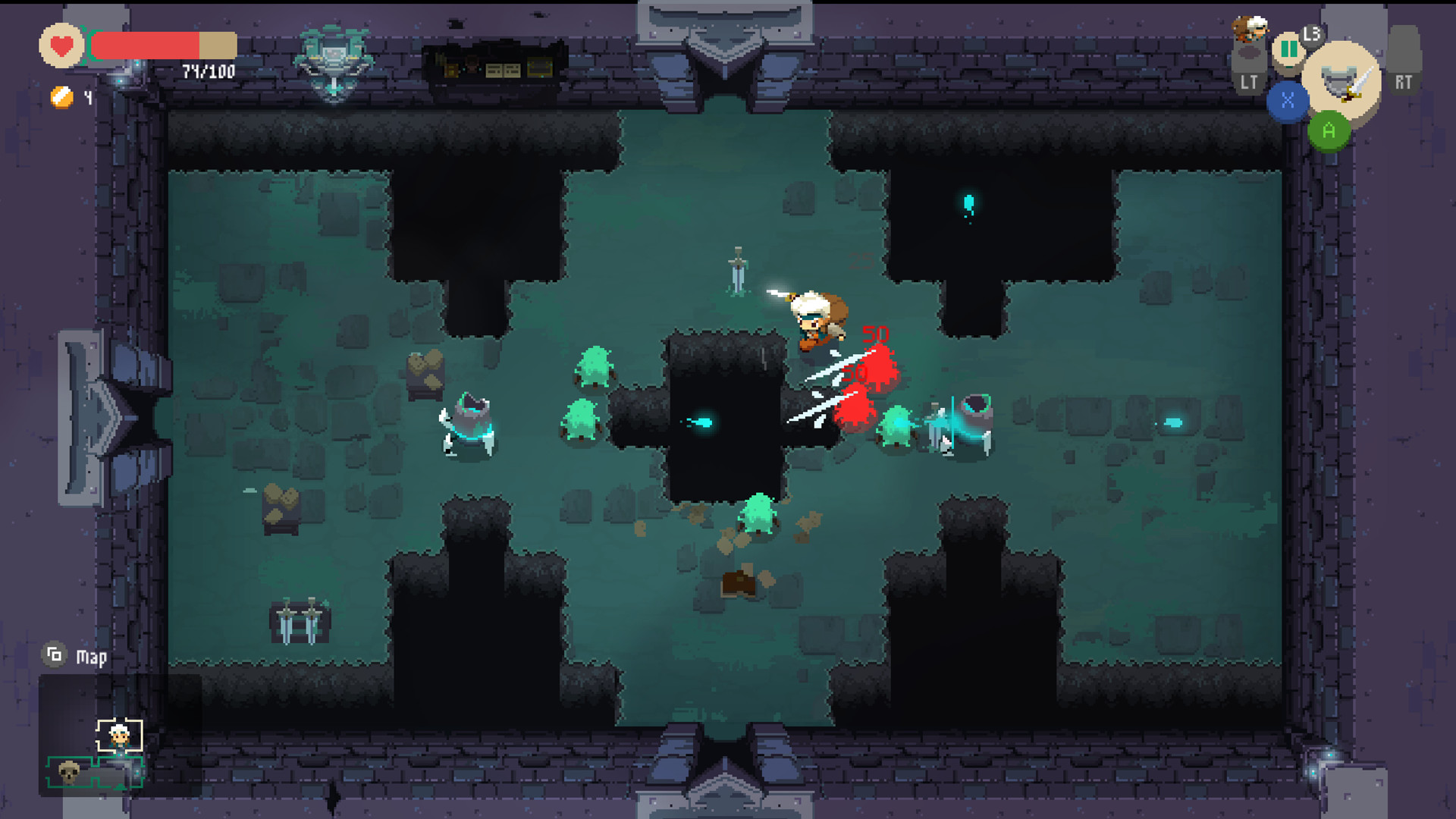
After playing through some difficult games recently like the Devil May Cry series and Shenzhen I/O, Moonlighter was a much-needed wholesome experience. The gameplay is not overly tough, and the shopkeeping aspect of the game is a nice cooldown period between dungeon runs. Just relaxing in your store and watching townsfolk come in and buy goods is just a chill experience. This combined with the extremely well-done pixel art and calming music makes for a charming game. Moonlighter is an easy game to get into, and I found it to be a nice and relaxing game.

3

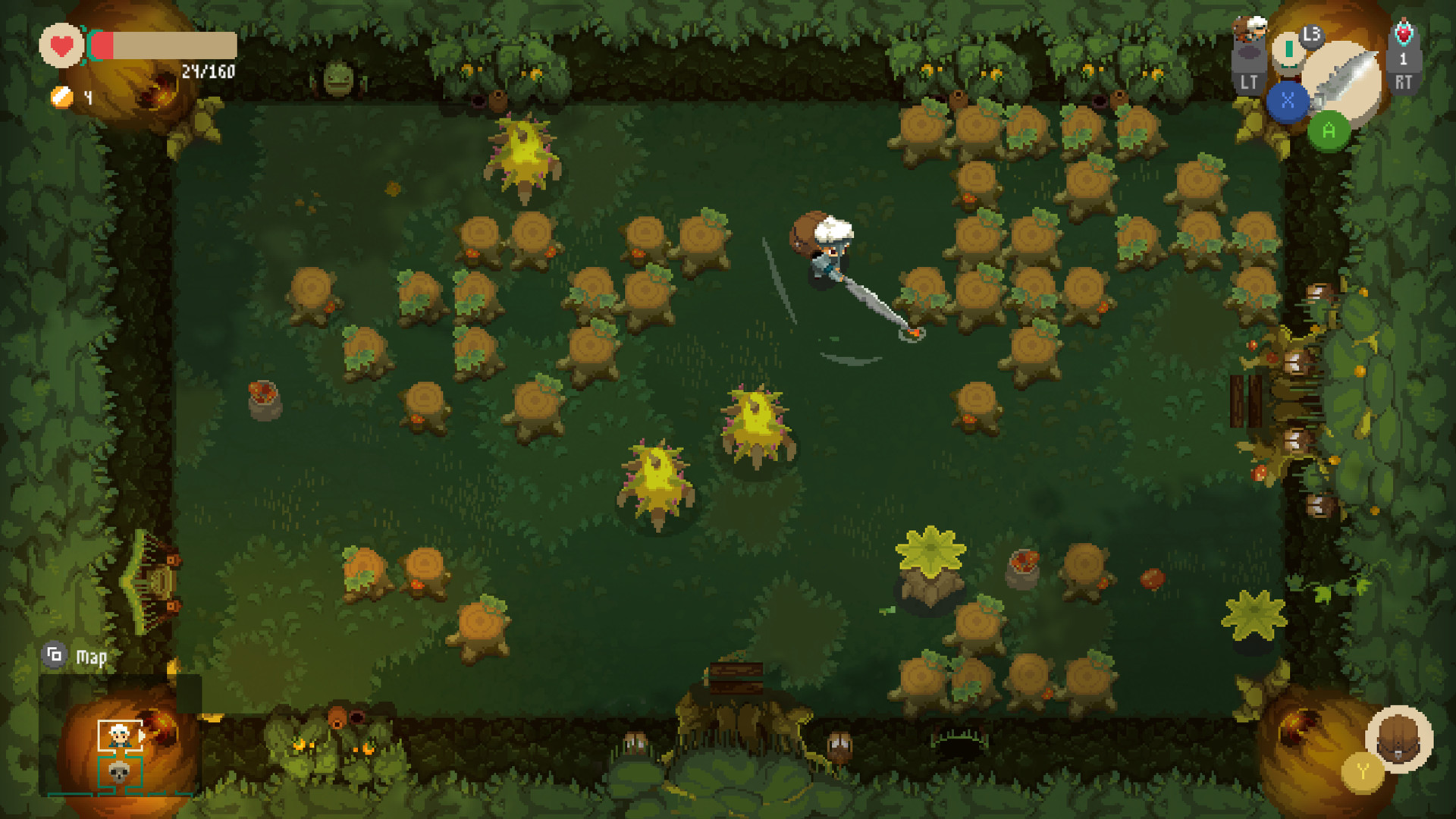
I wish that Moonlighter was a bit more innovative or at least went a little more in depth with the mechanics it had. As it stands, the game only really has 2 aspects: dungeon crawling and shopkeeping. I wish these were a little more fleshed out, as they are both fairly rudimentary. Dungeons are randomly generated, so each run will be different from the last. There are 4 different dungeon themes that get progressively more difficult: Golem, Forest, Desert, and Tech. Each dungeon has 3 floors and a boss at the end. The further you get in each run the better loot will become available. The problem is that all 4 of these dungeons are extremely similar. Just a reskinned background and tougher enemies. Once you complete the first dungeon, you have mostly seen everything Moonlighter has to offer. I wish each dungeon has its own unique twist to differentiate them from one another.

4

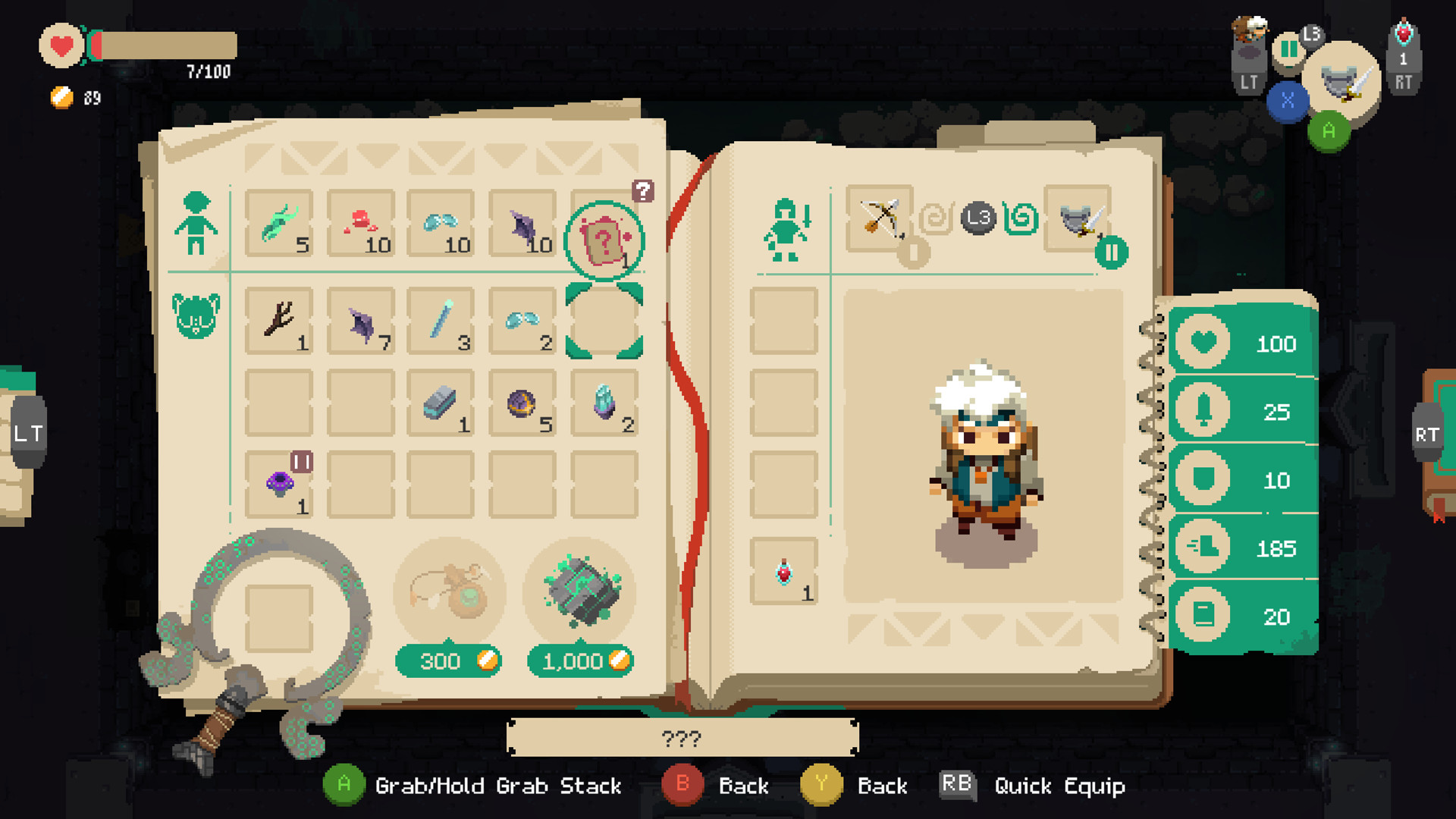
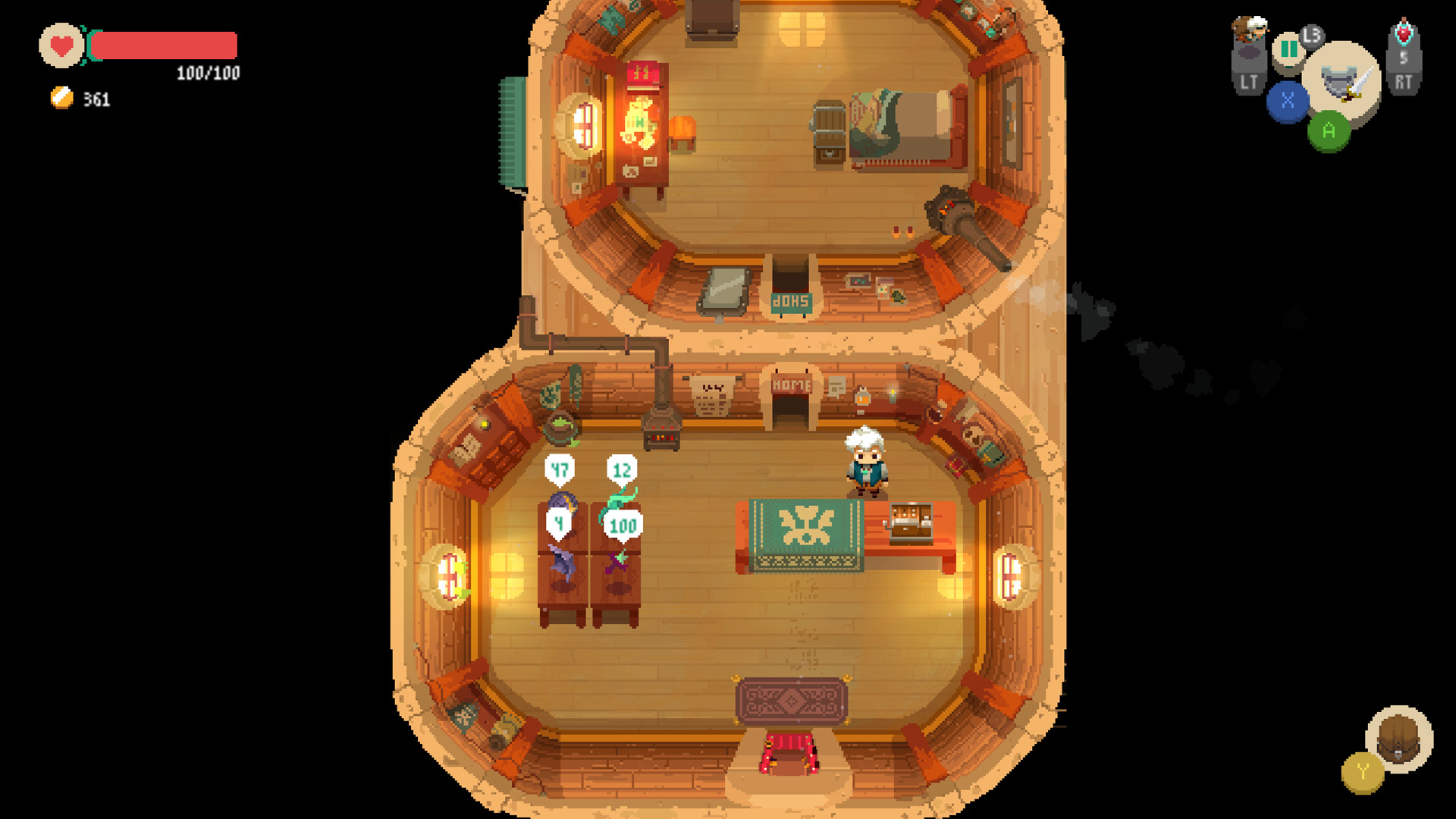
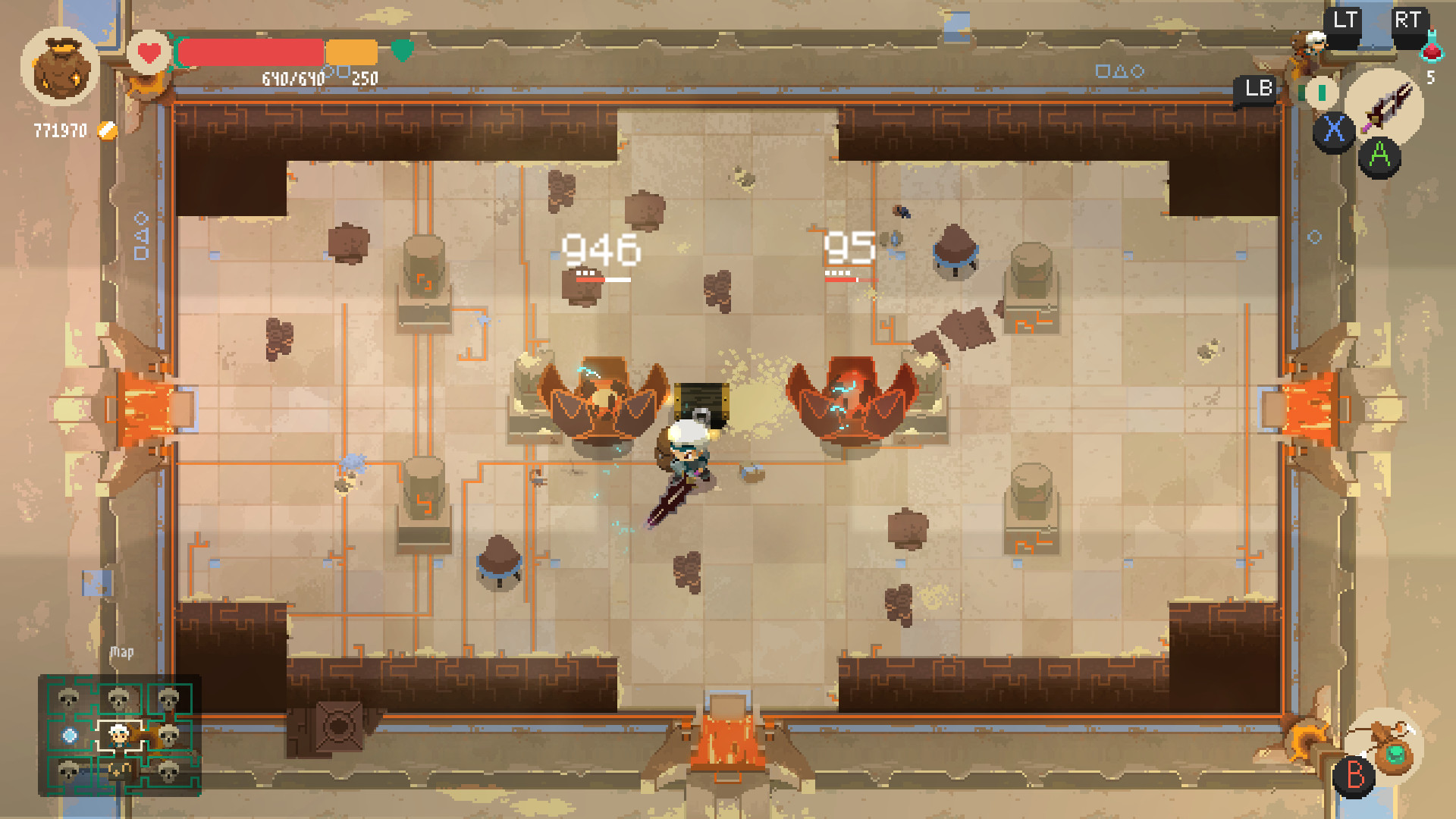
Other then the similarity between dungeons, Moonlighter also struggles in gameplay depth. Combat as a whole is extremely basic, sure there are 5 different types of weapons, but actually battling enemies is not complicated. Each weapon has a basic attack and a special function such as a shield, or spear charge, or charged punch. For the most part, I never used the special ability of any weapon and just spamming the basic attack was enough to defeat any enemy. I didn’t expect much innovation in combat, but I did expect more from the other half of the game. The shopkeeping is pretty barebones, and there is very little interaction with the town. Selling items mostly consists of just setting prices and chasing away the occasional thief. There is a little supply and demand that affect prices, but again the interaction is minimal. The biggest disappointment is that there is little to no gameplay revolving around the town. I really wish you could interact with the townspeople, explore the surrounding area, or do really anything. The town’s entire purpose is for the player to sell their loot and gear up for future expeditions. I did not expect anything incredibly innovative, but I wish Moonlighter just had more.

5

Other than its lack of innovation, Moonlighter has a few other minor issues. First and foremost, a few technical issues occurred during my playthrough. The game crashed twice and once I got stuck in a wall. These hiccups never destroyed significant progress, but its still a technical flaw. Hit registration feels a little off at times, sometimes my weapon would phase right through an enemy and other times a hit would register twice, dealing extra damage. Other than that, I feel there were some wonky balance issues as the game got closer to the end. I began making ludicrous amounts of money and I had no issues buying whatever I wanted from a single loot run. I only had to go into the games 4th dungeon three times total, when in the previous dungeons I had to do them seven to eight times to get fully upgraded. Maybe I just got better at optimization, but I think the gold amounts were just out of balance. Lastly, the sales box and banker upgrades are both entirely worthless and I have no idea why they were even included.

6

I think Moonlighter does do enough to make itself a worthwhile experience. Its not going to blow anyone’s mind, and it isn’t an innovative game. Still, the addicting progression loop and calming design made it an enjoyable game. I quite liked Moonlighter, I just wish there was a little more. Better combat, dungeon variety, or a more interactive town would have gone a long way to make Moonlighter more complete. It is for these reasons I give Moonlighter a 7/10. It’s not a revolutionary game, but its fun all the same.

Devil May Cry 3: Dante’s Awakening (2005)

While Devil May Cry was a major success and defined the action genre, Devil May Cry 2 was a disappointing flop. Hideaki Itsuno was brought on as director for the last few months of the development of Devil May Cry 2 to try to salvage the disaster. Fortunately, Itsuno felt so bad about Devil May Cry 2 that he took on the role of director for Devil May Cry 3: Dante’s Awakening to make up for it. Itsuno and his team went on to make one of the greatest action games of all time as Devil May Cry 3: Dante’s Awakening lives up to the legacy of the original game. Fast-paced action, stylish combos, an engaging story, and a variety of playstyles culminate into the experience that is Devil May Cry 3: Dante’s Awakening.

1

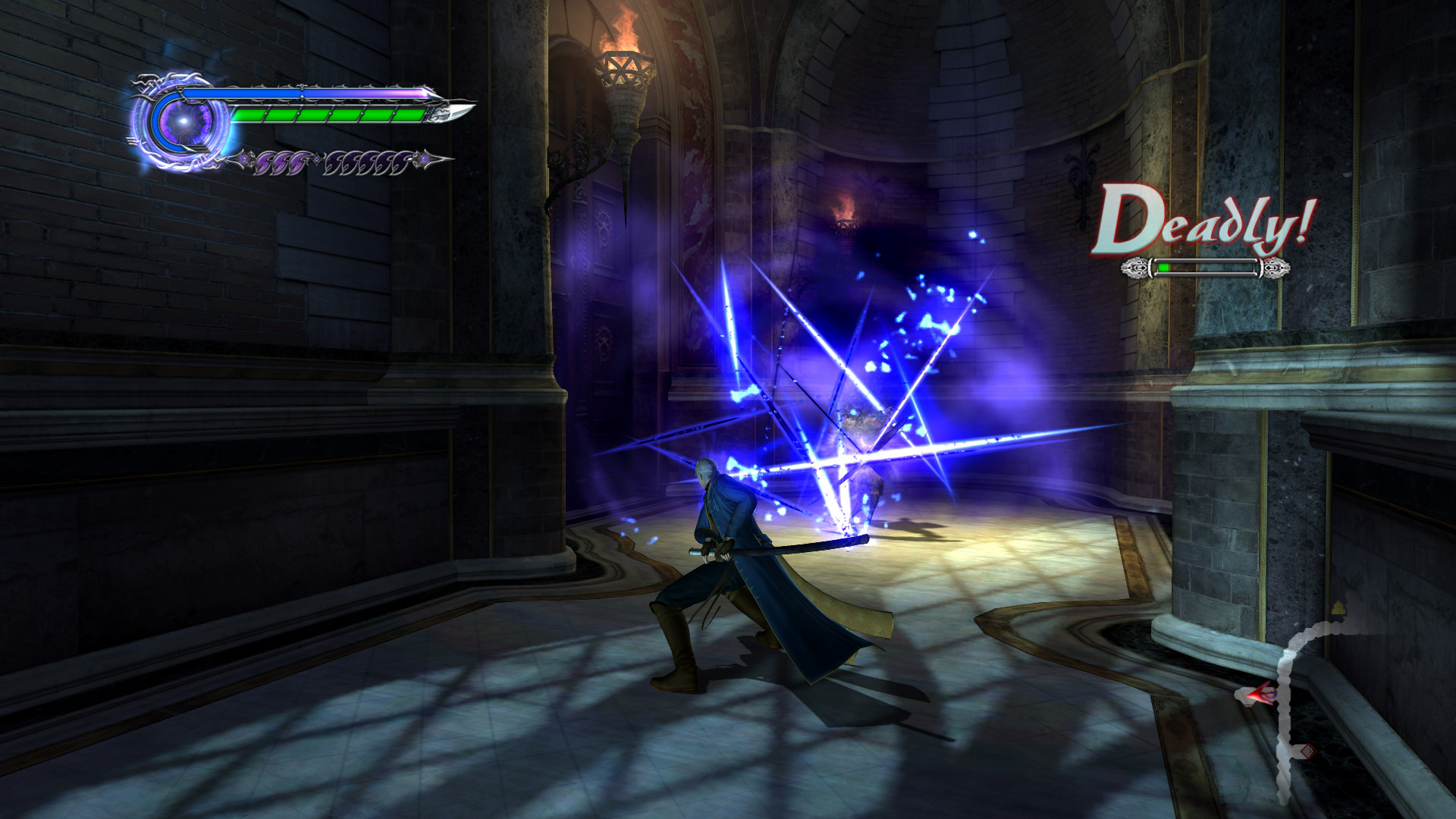
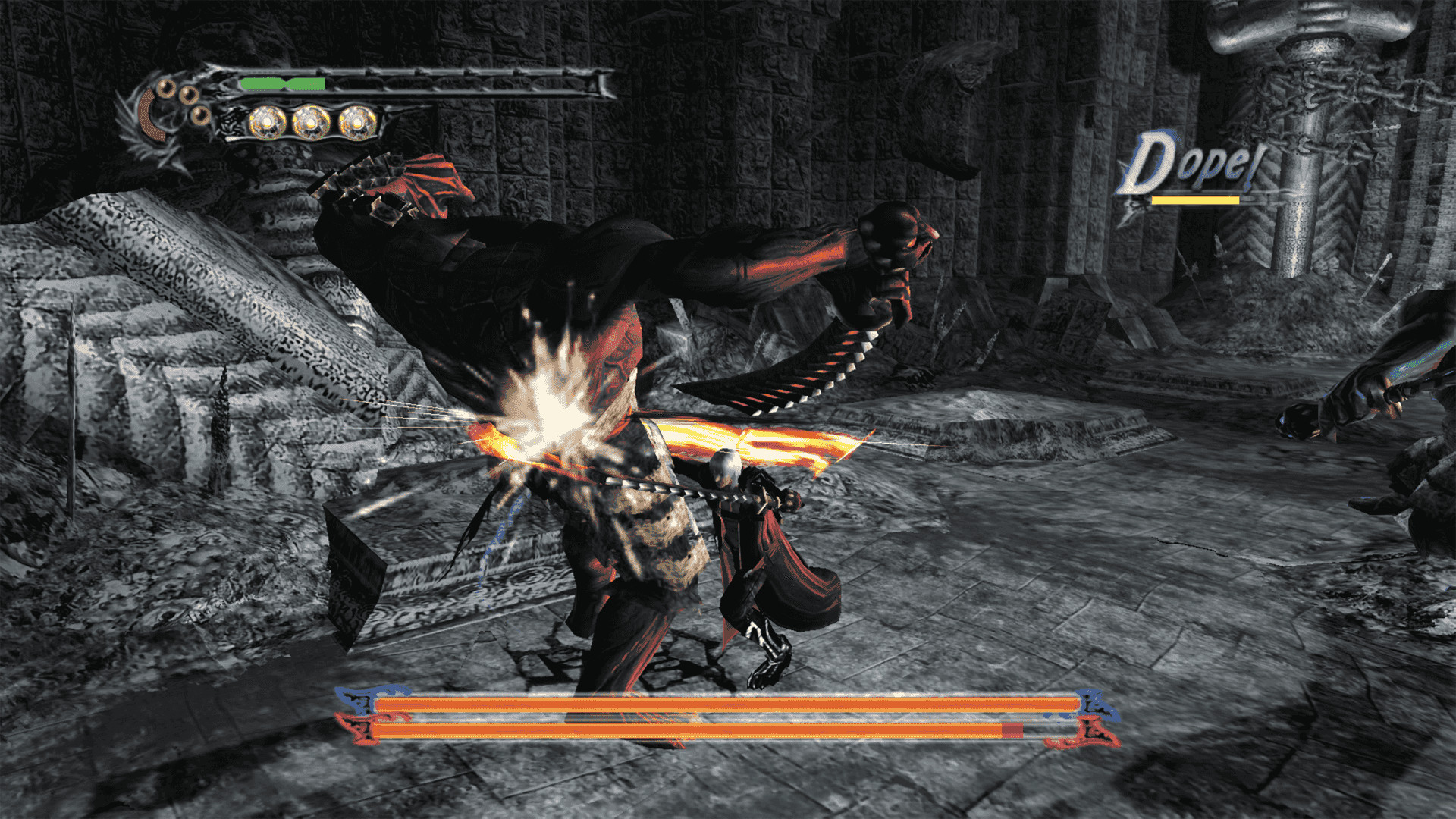
Ultimately, the most crucial element to the Devil May Cry series, and all action games, is its combat. The genre lives off of the high-octane, adrenaline pumping, gripping battles. Luckily, Devil May Cry 3: Dante’s Awakening surpasses all expectations in this regard, and blows both of its predecessors out of the water. Dante’s moveset is similar to the original Devil May Cry, but with a few extra elements. Most notably, there are 4 different “styles” the player can choose from that greatly alter how the game is played. Trickster, Swordmaster, Gunslinger, and Royalguard are the 4 main styles that the player can delve into, as well as the Quicksilver and Doppelganger specialty styles that become available later in the game. Trickster focuses on evasiveness and dip, duck, and dodging out of danger. Swordmaster goes all in on offense, allowing the player to extend their combos. Gunslinger is all about amplifying your firearms. And Royalguard is primarily about parrying enemy attacks and striking back. As you play as a certain style, you will level it up and unlock more abilities in that category. The interesting thing to me is that styles are tied to a single button, meaning that switching styles only minimally changes the controls, but that one button drastically changes the pace and style of gameplay.

6

Other than the addition of styles, Devil May Cry 3: Dante’s Awakening has a few other improvements to combat. A wide array of weapons is added to Dante’s arsenal as the game progresses. New melee weapons and firearms add even more variety to how the game can be played. Furthermore, you can equip 2 melee weapons and 2 firearms at the start of each mission and switch between them at will. This allows for some incredibly intricate combos as you switch between your weapons of choice. There are also a few mechanically complex techniques that can be executed such as jump cancelling to further increase a player’s mastery over the game. Another seemingly minor improvement is the clarification of the style gauge. Devil May Cry is all about racking up big combos and watching your style meter increase, and with this game there is a style bar that you can watch increase and decrease depending on your actions. In previous games, you would only see the overall grade and not the meter filling up. This addition provides much needed clarity and lets the player understand how the combo system works.

2

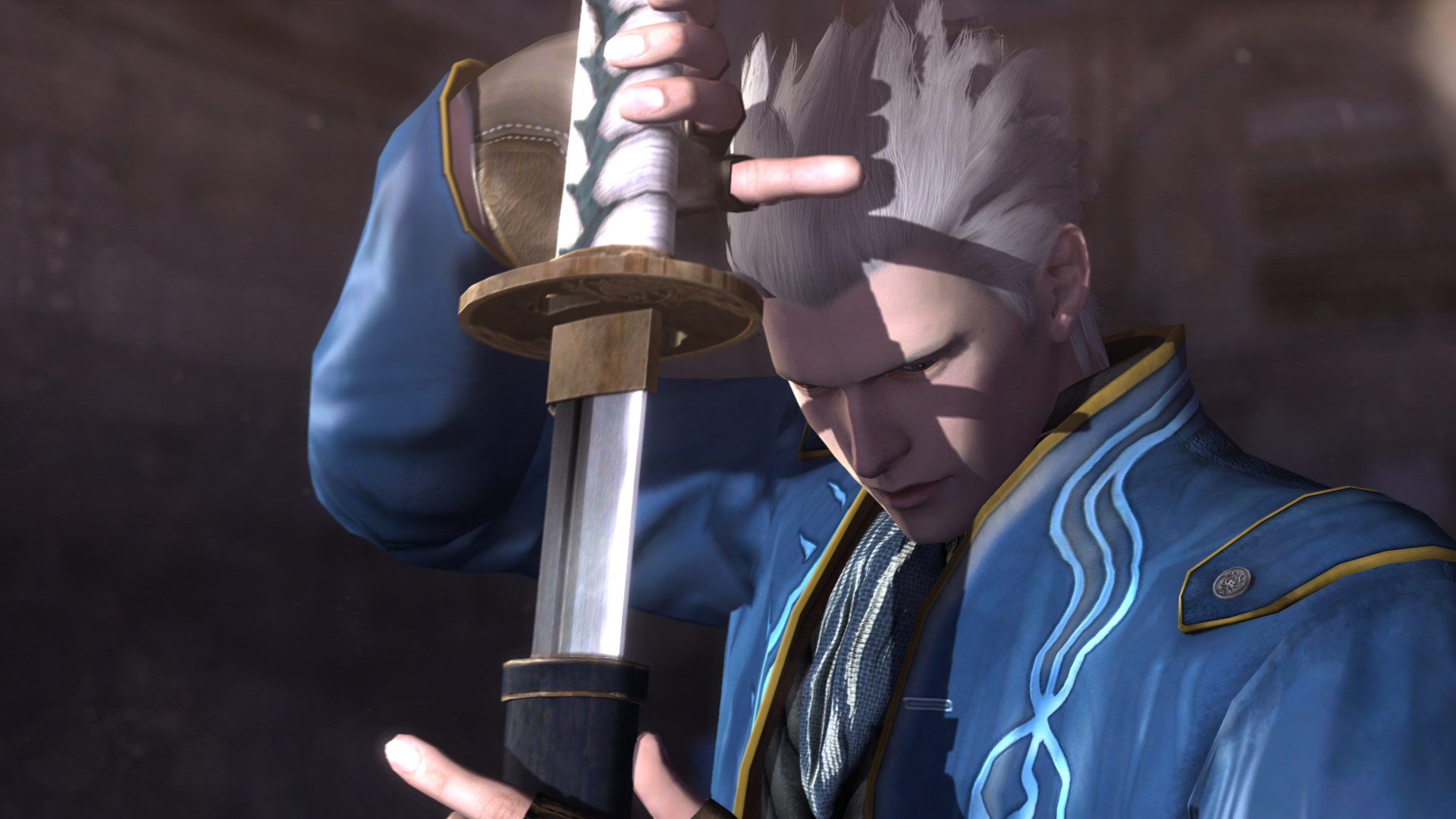
It is obvious that Devil May Cry 3: Dante’s Awakening is a marked improvement over its predecessors in the realm of combat, but what about the other aspects? Devil May Cry 3: Dante’s Awakening makes a huge leap forward in the storytelling and narrative in the series. While it remains to be lovably cheesy, its use of only 4 key characters and their encounters is worth looking forward to. Dante, Vergil, Lady, and Arkham all have vastly different motivations and ideas of what should be done with a sealed demonic power. As these characters progress through the demonic tower, their clashing motivations make their meetings all the more memorable. The level design is infinitely better than Devil May Cry 2, but I consider it weaker than the original Devil May Cry. Most of the game is spent climbing and exploring a tower. You repeatedly revisit areas and loop through the entirety of the tower two or three times. The major issue that I had was that it was occasionally confusing to find my way around this gargantuan structure. The tower constantly shifts and changes from level to level, so you never really get familiar with its layout. Also, there were a few platforming sections that did not really fit with the rest of the game.

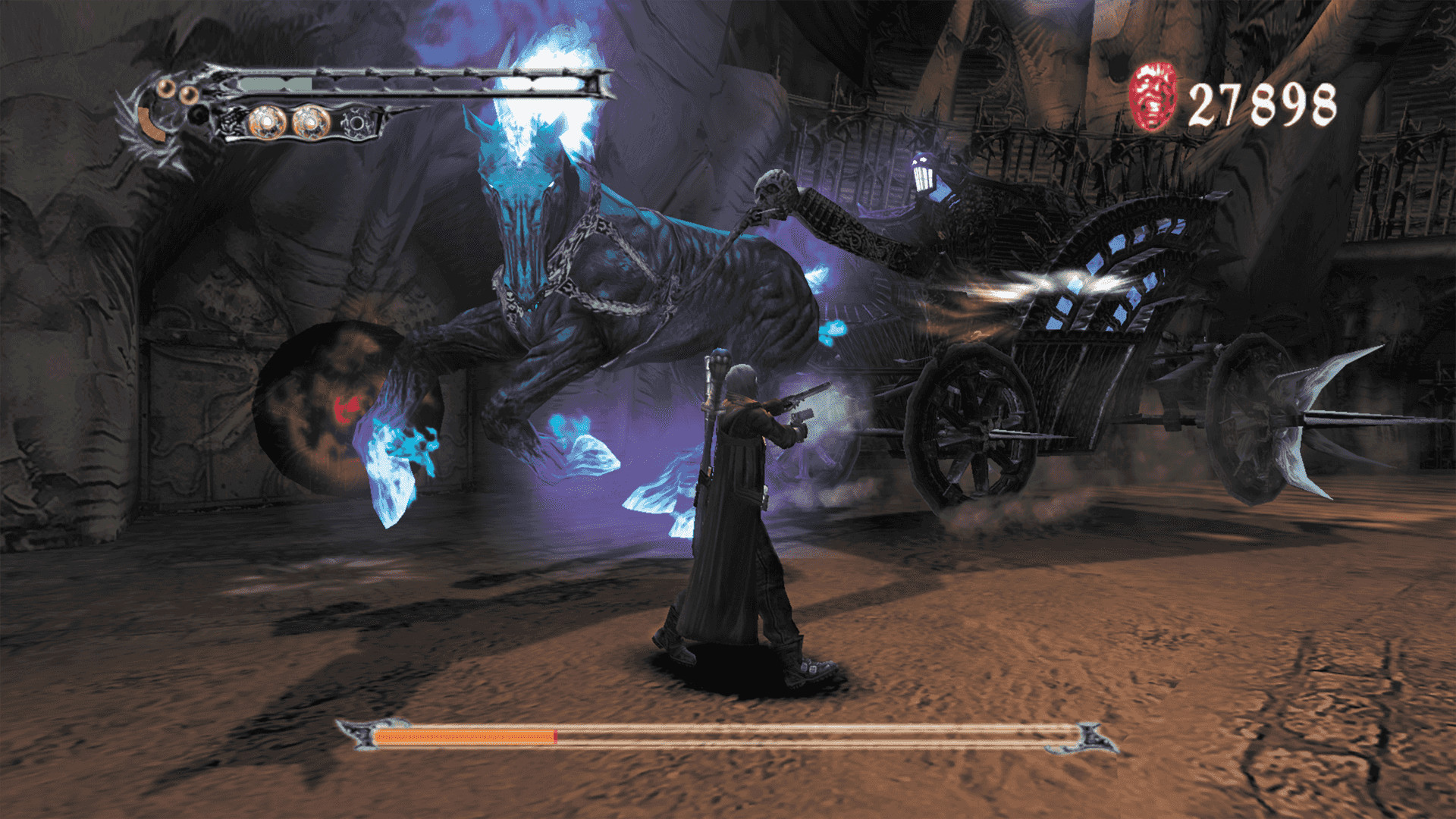
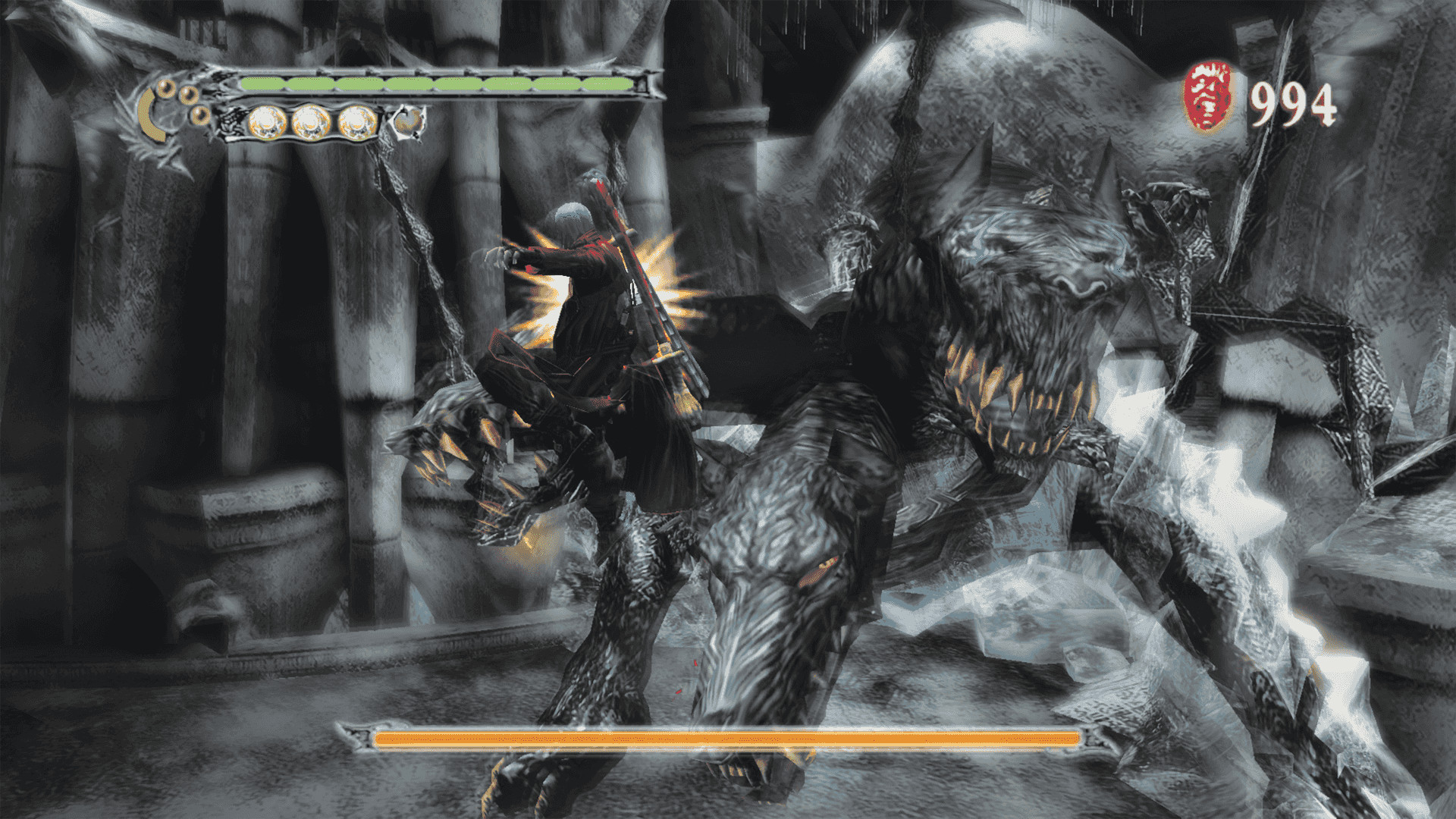
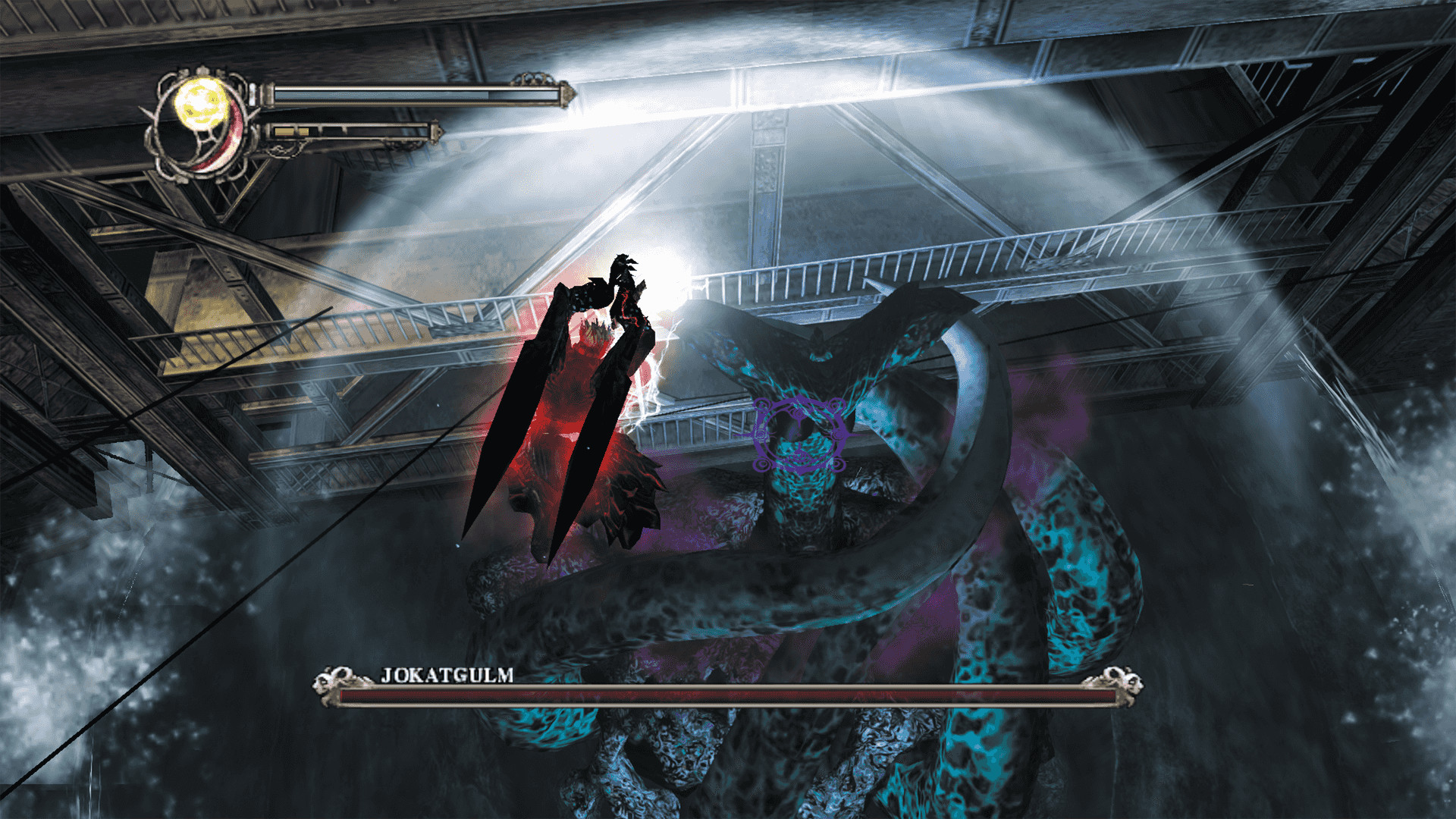
A staple to the Devil May Cry series is the challenging boss fights. Devil May Cry 3: Dante’s Awakening maintains this tradition, and many of the game’s best moments are contained in boss battles. First and foremost, there are 20 missions total in the game and 14 boss fights. The developers went out of their way to include as many fights as possible. Even better, the vast majority of these clashes are well-designed, challenging, and memorable. Only two or three of these fights can be considered weak by comparison. Unfortunately, the penultimate boss is an unmitigated mess with a host of issues. Its an ugly, amorphous blob with hard to read attacks. Worse still, the control scheme changes in the second half of the fight, so you have to relearn how to play the game on the fly. Luckily, other than this disastrous globule, most of the other boss fights are enormously enjoyable and the pinnacle of the series.

3

While Devil May Cry 3: Dante’s Awakening redefined the action genre, it is not without its own faults. One of the biggest downfalls of this game was its enemy design. Enemies fall into 2 categories in this game: combo fodder, or annoying. Combo fodder are enemies that pose very little threat to the player and exist primarily for the player to unleash their fury with little retaliation. Annoying enemies are enemies that give the player small windows for attack or just kind of get in the way. Ideally, enemies in action games should be a healthy mix between these subsets. They should be strong enough to fight against the player a pose a very real threat, but they player also gets opportunities to unleash devastating combos against the enemy. The original Devil May Cry struck this balance superbly, every enemy had a few tricks up their sleeve that the player needed to be aware of. You could absolutely demolish hordes of enemies if you knew how to, but a misstep would lead to taking some punishing damage. It’s a good thing that combat in Devil May Cry 3: Dante’s Awakening is so inherently fun, or fighting the massive amount of combo fodder enemies would grow tiresome quite quickly.

4

The other issue I have with Devil May Cry 3: Dante’s Awakening is something that has been embodied throughout the whole series, and I would consider it a double-edged sword. I am talking about the replayabilty of Devil May Cry games. These games are made to be replayed a multitude of times, and are generally considered better on subsequent playthroughs. This is because you keep all moves, styles, items, and upgrades as you progress to higher difficulty levels. On the first playthrough of the game, you will most likely only master 1 of the 4 styles and not be fully upgraded. But as you keep playing, you master the games systems and test out all of the tools in Dante’s arsenal. Furthermore, you get the option to play as Vergil after beating the game once. On one hand, this replayability is fantastic as it allows players to keep playing after they beat the game. However, I think many people generally do not replay games so soon after completing them. Maybe a few years later, but by that time you will have mostly forgotten how to play the game and would have to start fresh anyway. Moreover, the first time you play the game you are missing a lot of features since you are not fully equipped. It is an obviously intentional design choice that has some merit, but also some hefty drawbacks.

5

Its difficult for me to decide which I like better: the original Devil May Cry or Devil May Cry 3: Dante’s Awakening. The original had better level and enemy design, and it was an innovative game at the time. Devil May Cry 3: Dante’s Awakening builds off of the success of the original, but its addictive and gratifying combat make it a contender for best in the series. Either way, it is evident that Devil May Cry 3: Dante’s Awakening redefined what action games could be. Even with some notable flaws, Devil May Cry 3: Dante’s Awakening remains one of the greatest action games ever developed.

SHENZHEN I/O (2016)

As a genre, puzzle games have a few major problems. Namely replayability, singular solutions, and the ever-frustrating feeling of “I must be missing something”. Zachtronics is a developer that creates extremely unique puzzle games that eliminate all of these pitfalls. Zachtronics does this by basing their games in reality, such as chemistry, production lines, or in the case of Shenzhen I/O, programming and electronics. I will admit, Zachtronics games are extremely niche, but if you enjoy problem solving, they will scratch that itch. As a computer science student, Shenzhen I/O drew me in as I was curious how a game could make the obtuse language of Assembly enjoyable.

1

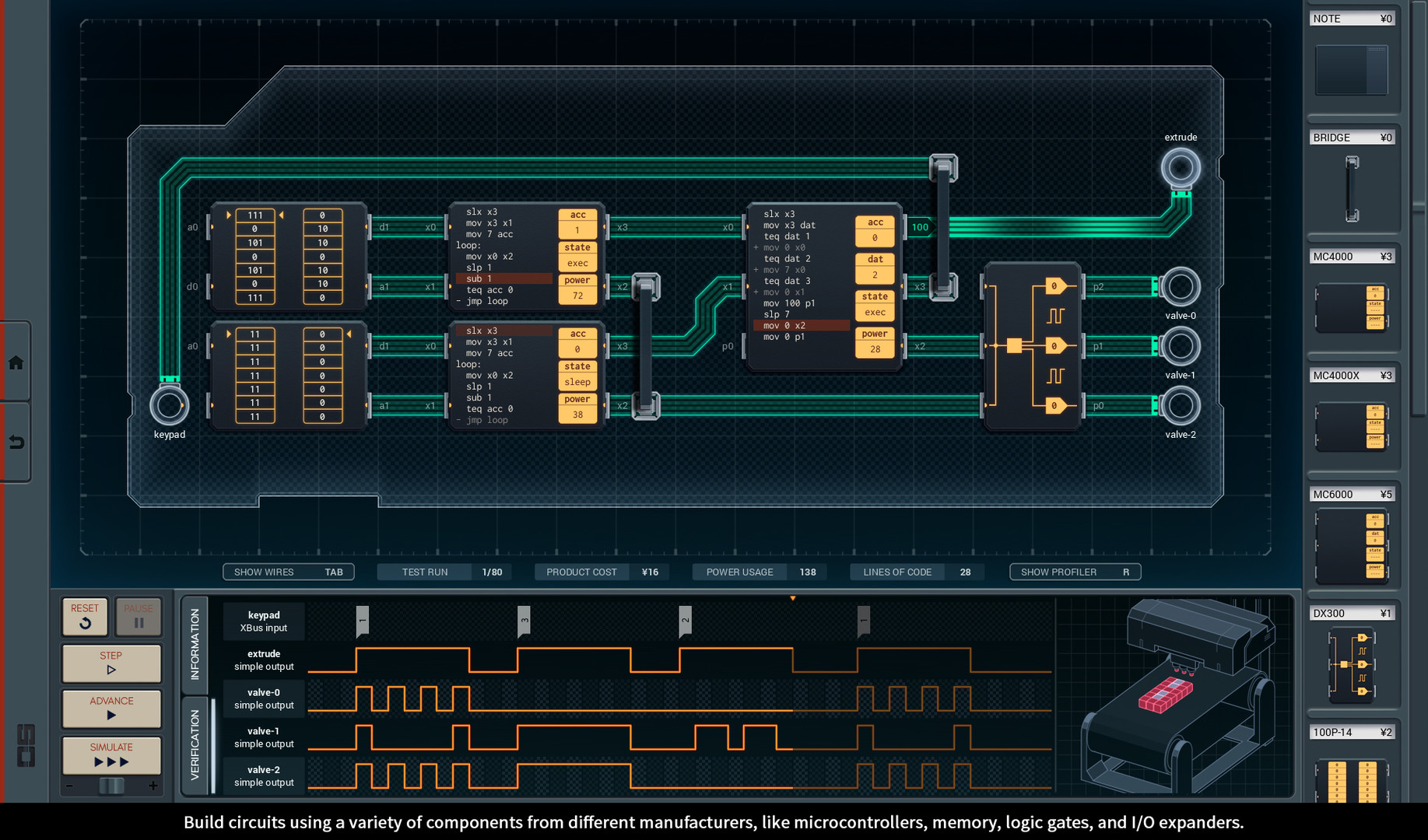
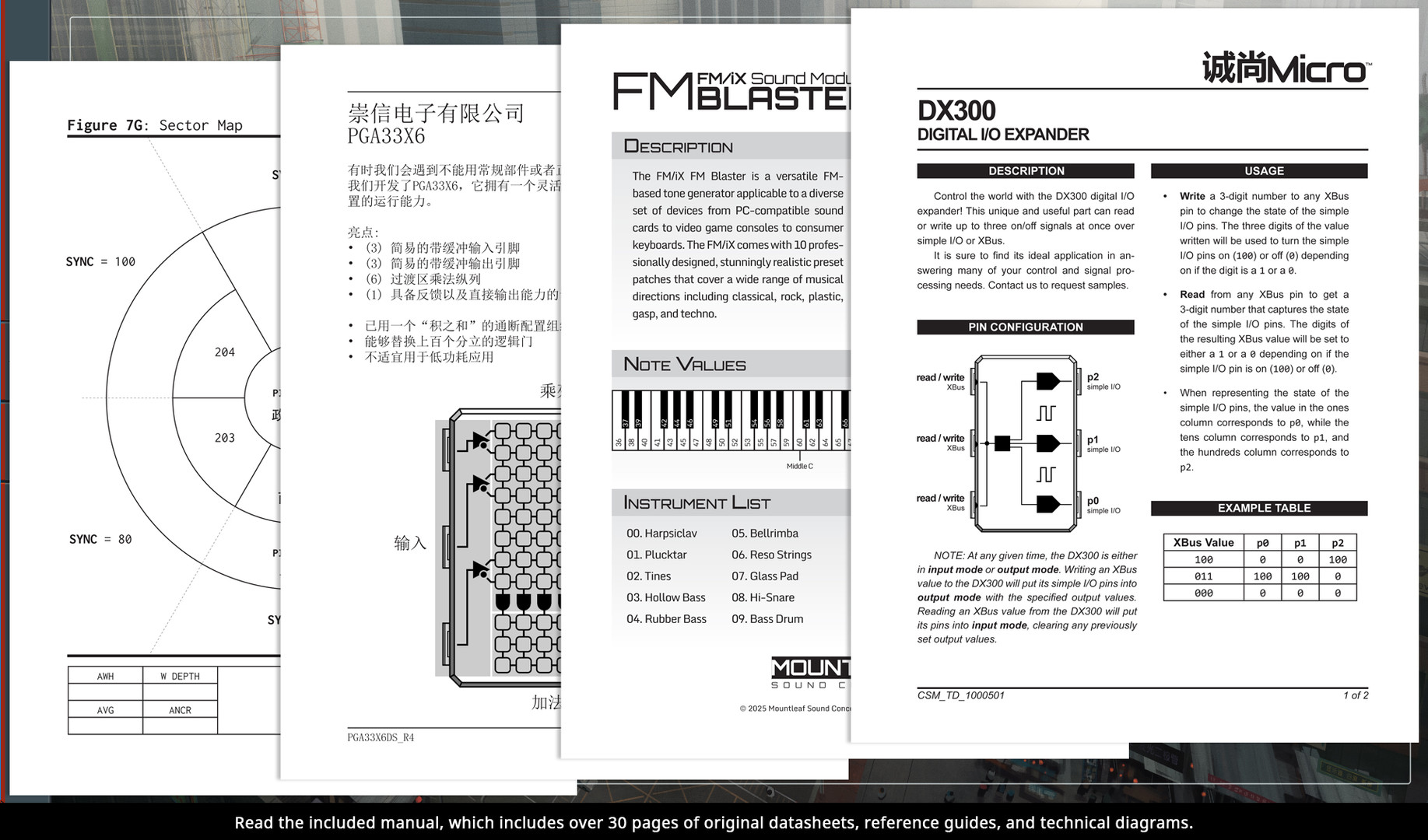
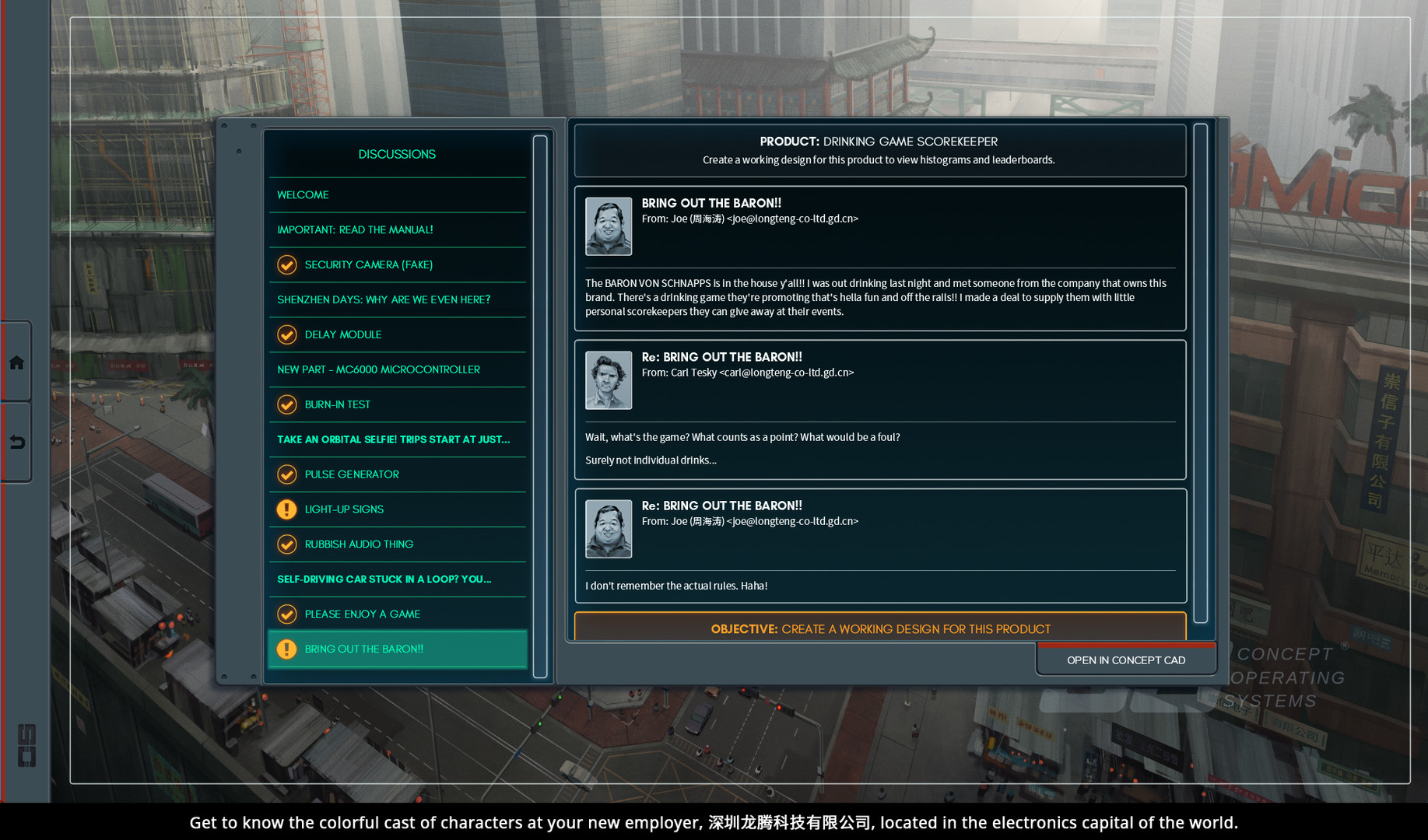
Shenzhen I/O is set in the technological hub of Shenzhen, China. The player is tasked with designing and programming electronics to control a variety of products. You can use microcontrollers, logic gates, RAM, and a few other components to achieve the task you are given. When I said that Shenzhen I/O was niche, I meant it. Instead of a standard tutorial, you are given a 45-page manual as a PDF to read through. Only a few pages are useful, the rest are jargon or in Chinese, so you have to sift through to find pertinent info. Luckily, the programming language is fairly simple and there are not too many parts to figure out how to use. The game starts fairly slow and lets the player learn the basics before moving on to complicated challenges.

3

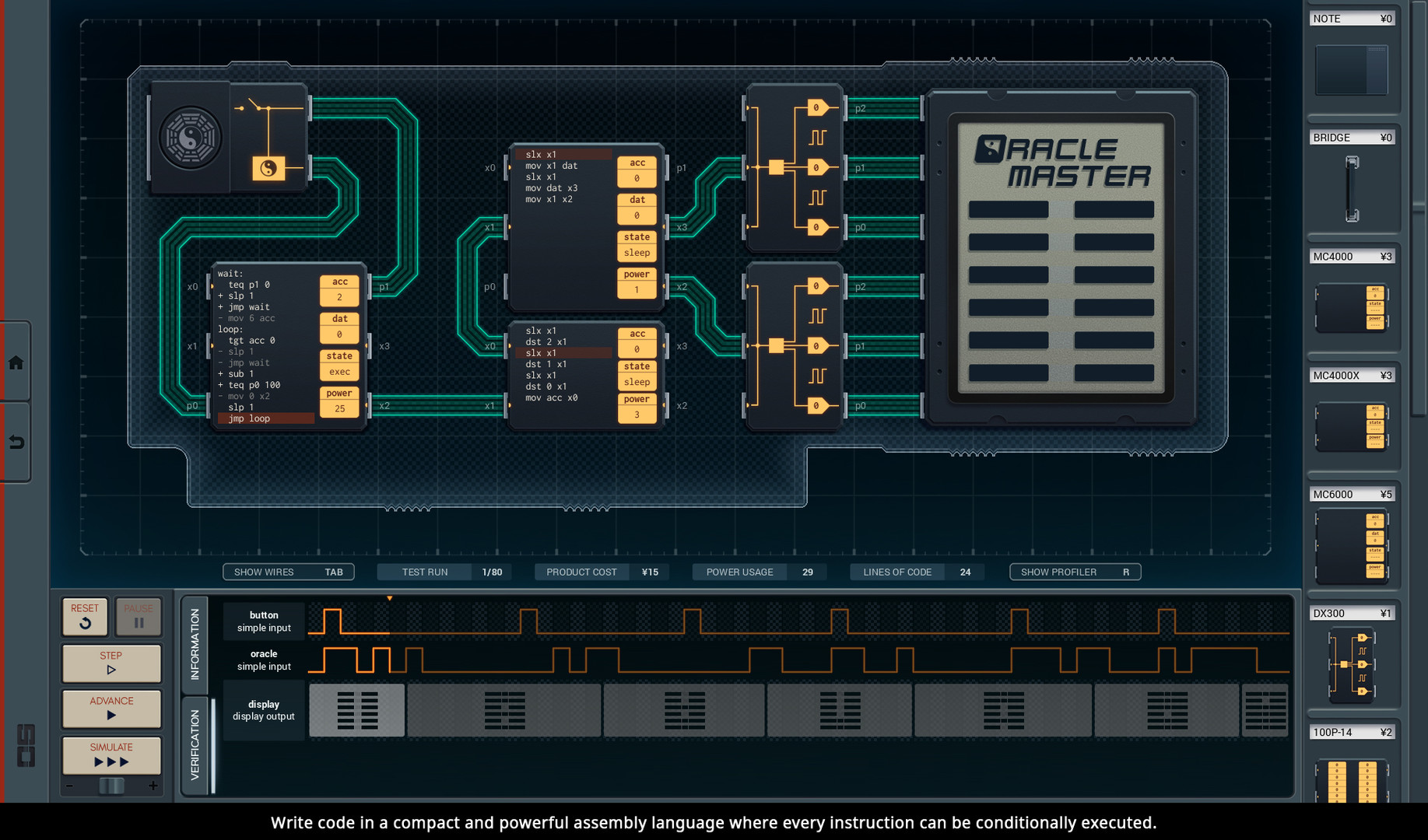
While I believe that Shenzhen I/O was made for people with some prior knowledge of programming, it could be picked up by beginners. The language implemented has only a few basic commands that are not too hard to learn. The game also highlights any syntax errors for you. For the most part, Shenzhen I/O only focuses on the fun parts of programming such as logic and problem solving and skips the rote memorization that usually accompanies learning a new language.

Shenzhen I/O also is fairly forgiving as it is easy to diagnose issues. To test a solution to make sure it works, there is a verification tab that compares your output to the intended output. The program runs, you can follow it line-by-line to understand where and how something goes awry. I wish test runs worked this way in real life. On the flip side, much of the problem solving in Shenzhen I/O stems from the limited resources given. You can only have a maximum of 14 lines on any microcontroller, there are limited ports, limited space on the board, and some aspects operate in ways that require a workaround. You have to figure out methods to shave off a line or two to fit another action, or how to string controllers together in a way to complete a complex action. In this regard, Shenzhen I/O makes me appreciate the real-life tools that are available.

4

What I love most about Shenzhen I/O is that it avoids the most common issues with puzzle games. Every puzzle in Shenzhen I/O has a wide array of solutions because the player writes the code and places the components. If you get stuck on a problem, you can tackle it with a few different methods. This solves the issue of “getting stuck” and that nagging feeling of “I must be missing something”. Furthermore, after completing a challenge, there are leaderboards for cost, power, and lines of code used. This encourages players to replay puzzles and optimize their solutions to minimize these factors. Going back to redo a puzzle and making my solution more efficient was some of the most fun I had in the game. The fact that Shenzhen I/O utilizes programming to design puzzles is what makes the problems so interesting. It allows for dynamic problem-solving rather than searching for a singular solution.
5

Other than the extreme niche nature of Shenzhen I/O, it has one other major flaw. Zachtronics squeezes out every last drop of potential from Shenzhen I/O, and puzzles get increasingly difficult as you approach the end. As the problems get more complex, so do player solutions. You spend disproportionately more time on the endgame puzzles than the rest of the challenges. If one of your ideas ends up not working, you have to scrap hours of work. Problems become more restrictive rather than offering freedom like the earlier challenges. This issue of extreme difficulty appears towards the end of the game and in the bonus campaign primarily. The bonus campaign is the where the game got frustratingly difficult for me. Luckily, those additional levels are entirely optional, but I still found them far too challenging, complex, and restrictive to be enjoyable.

2

Furthermore, the game for the most part stops introducing new components and concepts about halfway through. With some more tools to learn and work with, these post-game puzzles could be more bearable. There are only so many things you could do with the barebones tools you are given. By the end of the game these ideas have been exhausted. These bonus puzzles are more like combinations of previous problems that you need to squeeze into extremely limited space.

While Shenzhen I/O is very obviously a niche title, I found myself to be in that niche. While the concept of a programming puzzle game may turn some people away, it is the greatest asset of the game. Programmable puzzles are what offer such creative solutions. You are not confined to a single solution. It is for these reasons I give Shenzhen I/O a 9/10. If you are at all interested by the concept of Shenzhen I/O, it is an absolute must play. Not everyone will enjoy it, but those who are in its intended audience will absolutely love it.
Devil May Cry 2 (2003)

Anybody who is familiar with the Devil May Cry series knows that Devil May Cry 2 is the black sheep of the series. After the astronomical success of its predecessor, Devil May Cry 2 was developed under strange circumstances and it shows in the final product. For an unknown reason, a completely different team developed Devil May Cry 2 and it obviously suffers with gaggle of issues. Devil May Cry 2 is inferior in every way to its predecessor, and in many ways feels like an incomplete game.

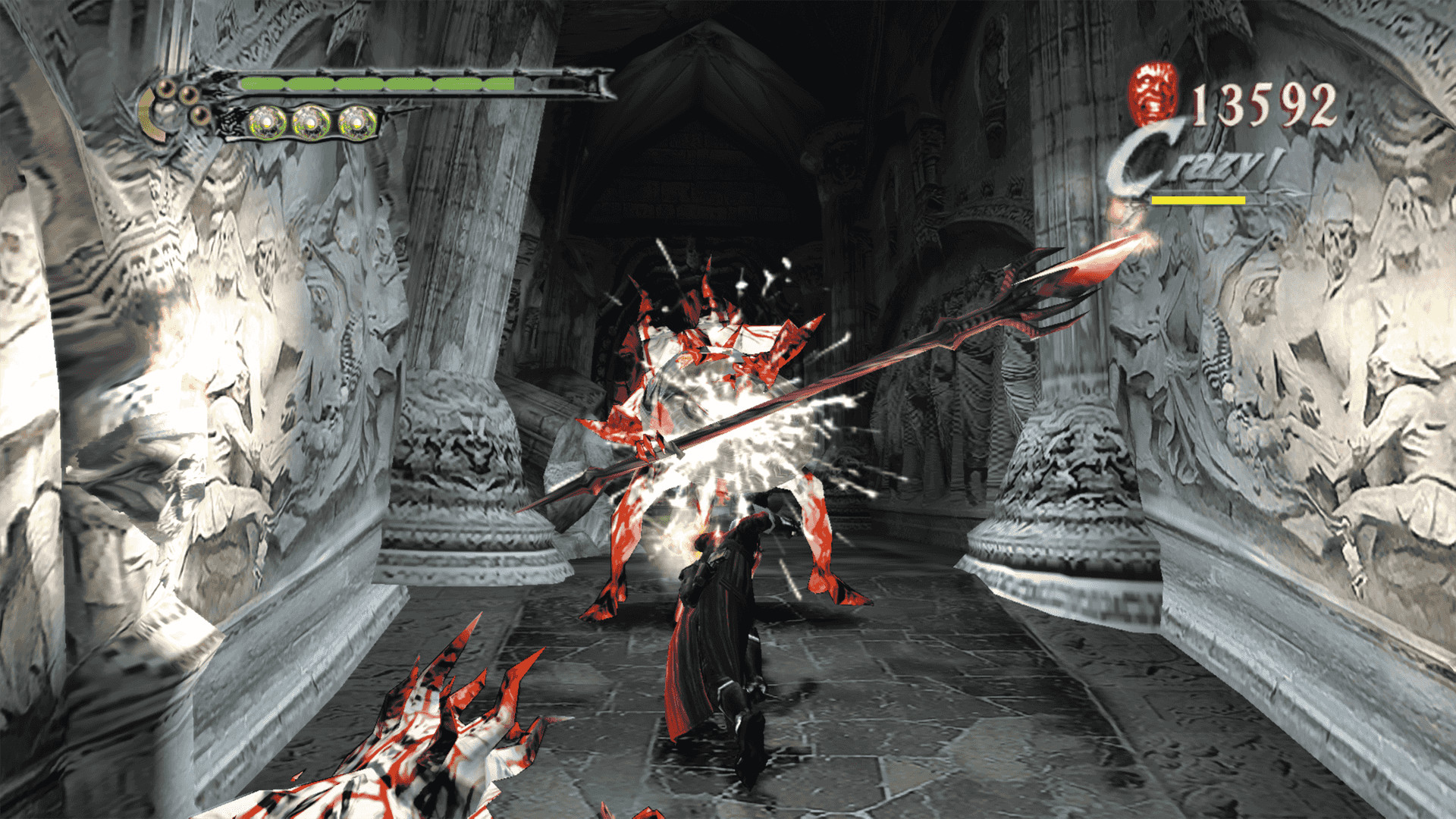
The gameplay is enormously important in an action game, and for many reasons Devil May Cry 2 is an unmitigated mess. Dante is inexcusably slower than his previous iteration. Furthermore, gravity behaves strangely as you stick in the air longer than you should. The camera, which was the main issue in the original game, is somehow worse. It is no longer static and follows Dante around, but it often time is shifts enemies out of view. Another key issue is that the game automatically locks you on to the nearest enemy, which occasionally leads to frustration as you try to attack a boss but the game forces you to hit non-threatening enemies. Also, weapon variety was stripped down for the most part, now there are three very similar iteration of a basic sword, there may as well have only been one. To be honest, there may as well be no melee combat at all because of how ridiculously powerful the guns are.

Devil May Cry is all about being stylish and flashy, but there is no incentive to do that in Devil May Cry 2. Enemies take similar damage from guns as they do melee attacks, so there is no reason to put yourself in melee range and risk being hit. Furthermore, the enemy AI is so horrendously bad that if simply stand still and hold the shoot button most of the time no monster can even get close to you. To make matters worse, when comboing an enemy with the sword, at the end of the combo they will be knocked far across the screen. This means you have to chase down the opponent, which resets your style meter and is simply annoying. Worst of all, a large portion of enemies (and even bosses) can basically only be damaged by guns. You can try to hit them with melee strikes, but they are often times out of reach. All of these factors play into the biggest weakness Devil May Cry 2; it is just flat out boring. Holding down the shoot button does not make for compelling gameplay, but that is what Devil May Cry 2 mostly consists of. This style of gameplay is brain-dead and easy, which Devil May Cry should not be.

1

The original Devil May Cry was not renowned for its level design, which is why it is bizarre that Devil May Cry 2 is astonishingly worse. The original game had the player navigating a mansion and collecting keys to unlock new passageways and areas. If the player ever got lost, the mission screen would contain a tip and the map would usually point out where to go. While Devil May Cry 2 does not have the player progressing through one giant interconnected area, it still manages to be more confusing. Even though each level is linear and seemingly simple, sometimes the objective is never explained. There are no map objectives or mission tips, you just have to figure out what you are even supposed to be doing. Furthermore, the levels are far more open than the original game, meaning that a large portion of time is spent just walking from place to place.

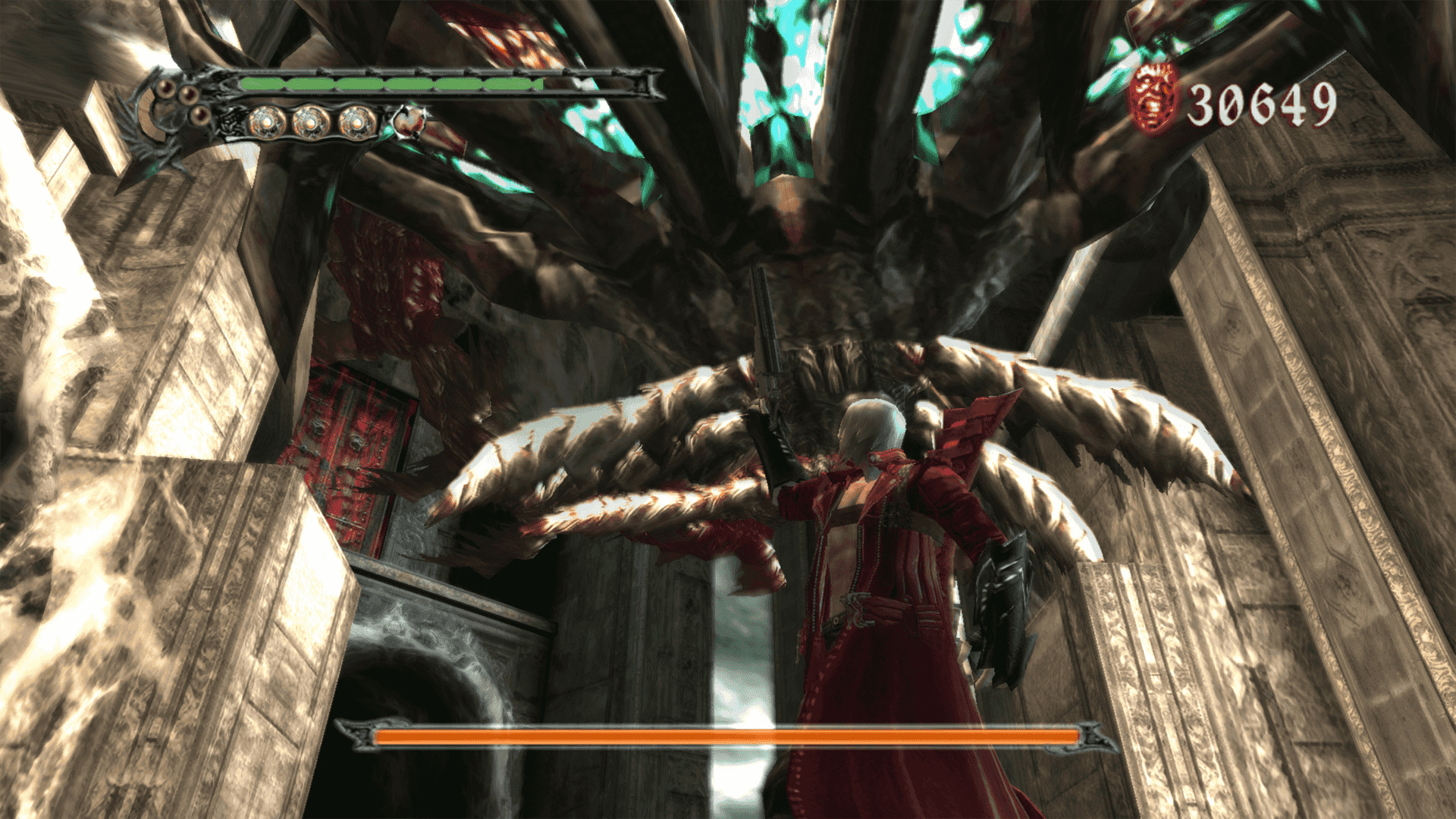
Enemy variety is woefully sparse compared to the game’s predecessor. There are some enemy types that are just scaled up in health and changed in color. Enemies rarely get more challenging to fight, they just take longer to kill. The bosses are the worst of it. They have gargantuan health bars that are only tickled by your attacks. The only method of dealing substantial damage is by building and activating devil trigger. Most of the bosses are forgettable, but some are so bad that they are legendary. The hilariously uninspired “infested helicopter” is the obvious example of ineptitude. Essentially, this boss can rarely hit the player, but the player can only really damage it through gunfire. It is a 5-10 minute affair of simply holding the shoot button. The only good boss in the entire game is the final boss, the rest are either boring and forgettable or offensively bad.
2

The thing that makes it evident that Devil May Cry 2 was a rushed mess was its disastrous story. The story is not something that I really care too much about in Devil May Cry, but the lack of any cohesive plot is what indicates that something went terribly wrong in development. There’s very few cutscenes or dialogue or any semblance of logic as to what is happening. You just kind of travel to a bunch of random locations for really no reason. Dante, who is supposed to be a cocky protagonist was completely silent and uninspired. Again, I am not expecting a whole lot of narrative genius in a Devil May Cry game, but the utter absence of any sort of storytelling was just odd. Devil May Cry 2 just feels like it was released a year before it was ready.
While it should be apparent that Devil May Cry 2 is an unmitigated disaster, it does introduce a few interesting things. First, there are two playable characters, each with their own campaign. The campaigns are very similar, but the I like the idea of having a new character with a new moveset. Another interesting addition was that the player has a few new parkour movements such as wall running. Lastly, if they player is low on health and activates devil trigger, they enter “majin form”. This new form is extremely powerful and gives you an option to blast through enemies if you are desperate and low on health. That’s about it for the positives.

Nobody really knows what happened during the development of the disappointing Devil May Cry 2. The original game has become a classic and inspiration for an entire genre. But for some reason, a different team made the follow up game. Devil May Cry 2 is enormously disappointing and offers very few positive aspects. If you do pick up the Devil May Cry Collection, which includes Devil May Cry, Devil May Cry 2, and Devil May Cry 3: Dante’s Awakening, you can safely skip right over Devil May Cry 2. Trust me, you won’t miss much.