DmC: Devil May Cry (2013)

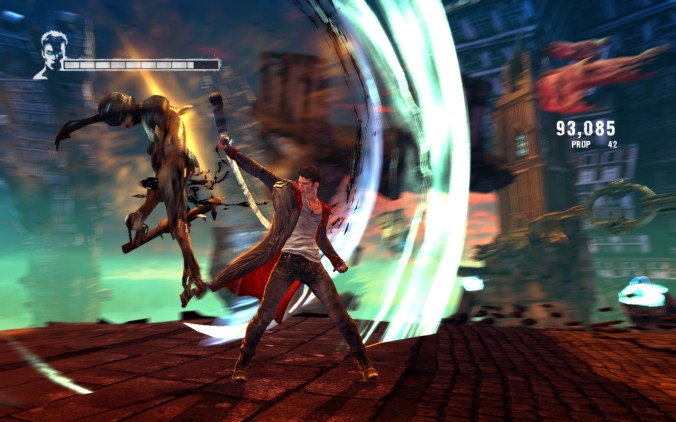
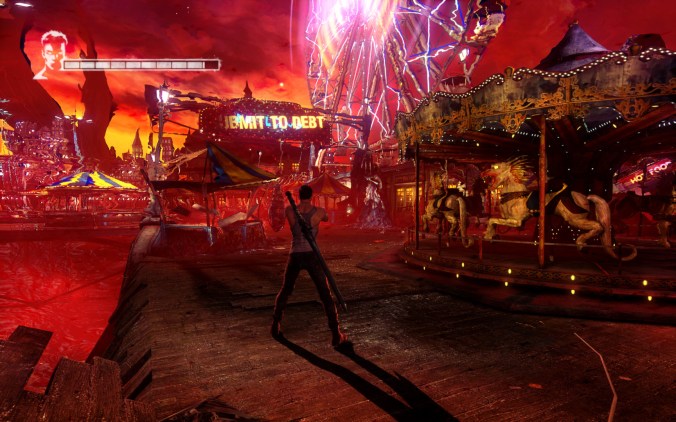
A prime example of poor understanding of your consumers is the case of DmC: Devil May Cry. This game started development in 2010 as a reboot to the character action series Devil May Cry. What is odd is that the previous entry, Devil May Cry 4, was released only 2 years prior and was commercially successful. Despite this, Capcom outsourced their production of the series to a western studio in an attempt to sell better to a western audience. I will not get into too many of the details, but essentially DmC: Devil May Cry was a reboot that nobody wanted, and was made with the express purpose of changing what people loved about the series. It’s a well-made game, but it simply clashes with fans’ expectations.

1

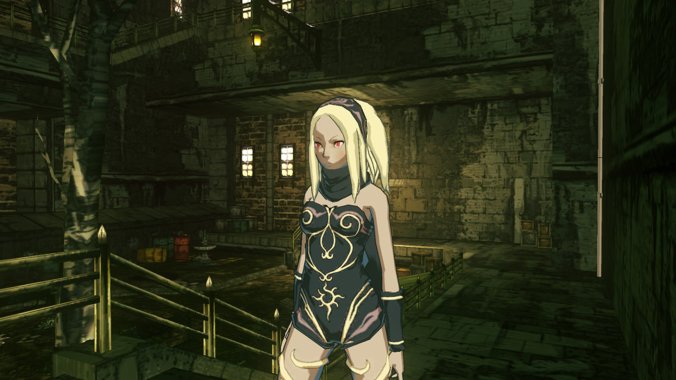
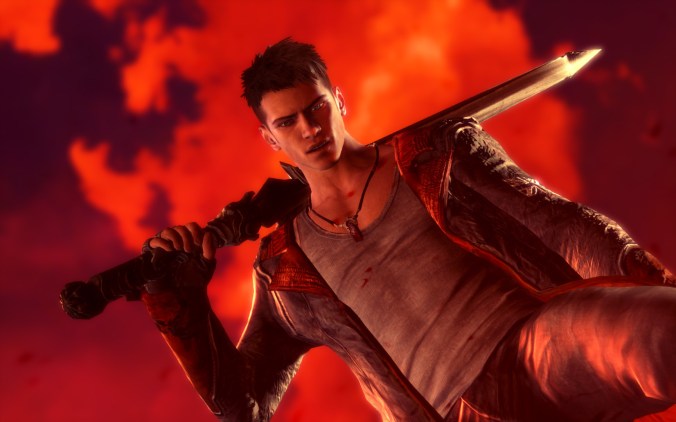
The most obvious and vitriol-inducing change was to the main character, Dante. His appearance shifted dramatically. His signature long white hair and red duster were done away with, and new Dante sported a black leather jacket and short black hair. This gave Dante a grungier, more punk look, which is in direct conflict of what fans expected of Dante. The far more frustrating change to Dante however was to his personality. Our goofy, cocky, pizza-loving action hero had been changed to edgy hedonist. His classic one-liners became crass and hard to take seriously. New Dante’s “I don’t care” attitude reeks of an immature teenager, as opposed to the fun-loving, half-demon mercenary he had been previously known as.

11

Not only was Dante changed, but all of the backstory and characters were also modernized. Dante and his brother Vergil are now Nephilim, half angel and half demon hybrids. The main antagonist, Mundus, is no longer an omniscient and mysterious demon-king. Mundus and his followers are demons who use debt, media, and mind-controlling substances to subdue the human populace. Through these means, Mundus keeps people passive and under his control. Honestly, this modernization is actually pretty interesting. Devil May Cry games have never been known for their stories, they are often overly cliché and cheesy. DmC: Devil May Cry actually has an interesting plot, but it is dragged down by its poorly written dialogue and unlikable characters.

2

Lovable characters can carry a poor plot, but bad characters can ruin a good plot. I discussed why I dislike new Dante, and similar issues plague the rest of the cast. Flat jokes and flippant attitudes run rampant. The writing is at best forgettable, at worst it can be difficult sitting through the cringe-inducing dialogue. It’s a shame because the actual plot isn’t terrible. Dante and Vergil team up to recount their past and take down the demon-king who seeks to control the world. There are pretty obvious allusions to modern corporatism. Soft-drinks poison the mind and make people weak, the media spouts lies to propagate Mundus’ will, and Mundus controls the population through money. It’s fairly heavy-handed, but it’s a good story by Devil May Cry standards.

3

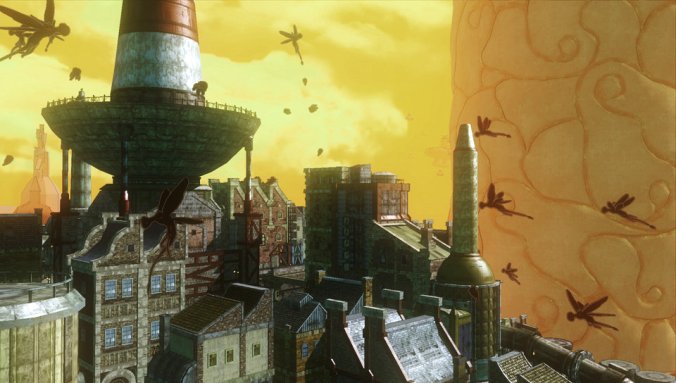
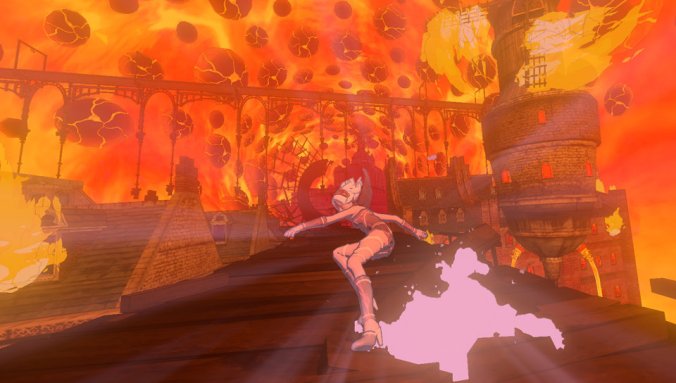
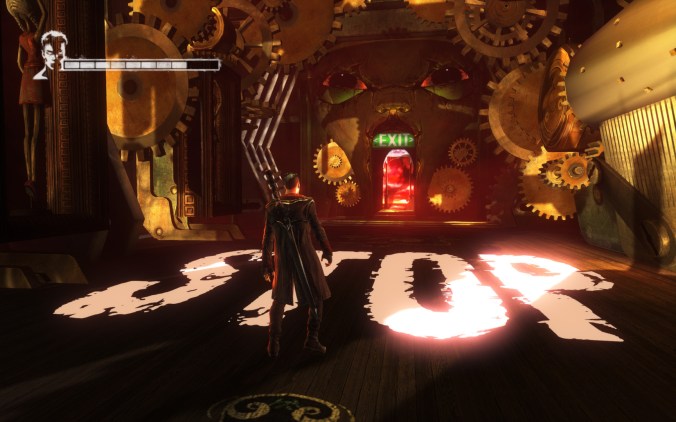
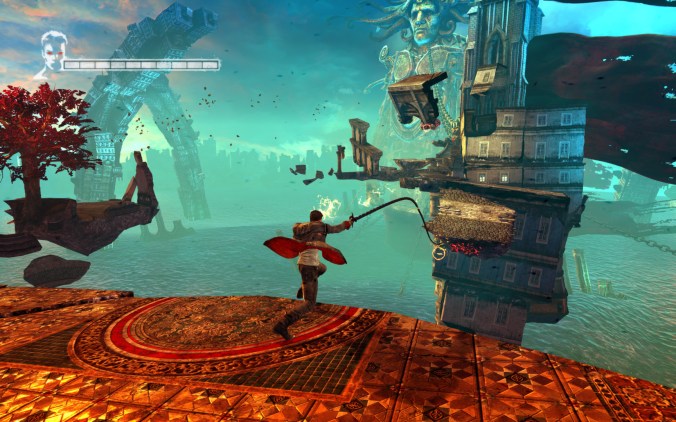
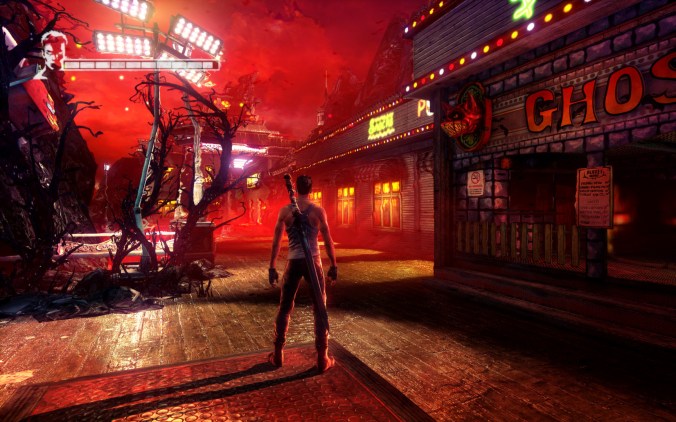
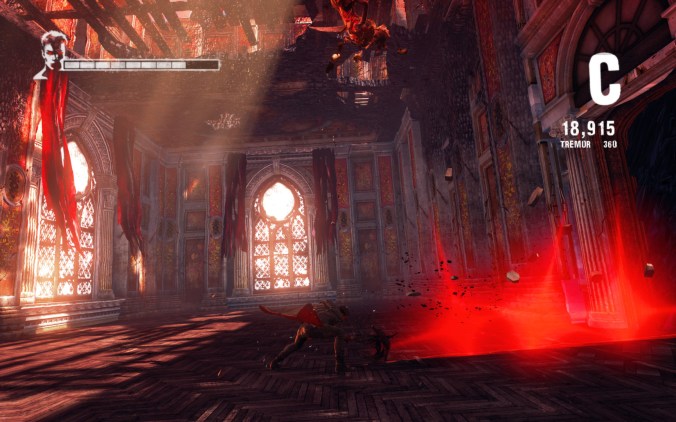
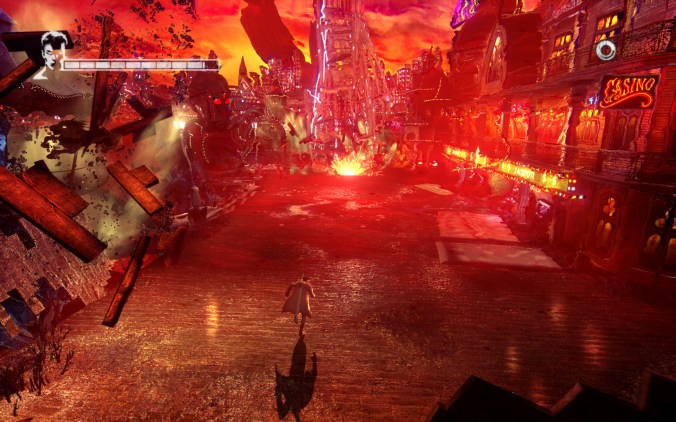
The strongest aspects of DmC: Devil May Cry are its world and level design. Instead of demons running rampant through the world, they are instead confined to the realm of Limbo. Limbo is a plane of existence that is parallel to the real world, and Dante is constantly pulled in and out of Limbo. The realm itself is living, and desires to exterminate the intrude. It will spawn demons and manipulate the world to impede you. Roads, buildings, and the environment around you gets torn apart to obfuscate the path forward. The living Limbo is an incredibly engaging game mechanic that allows for some unique level design. Furthermore, the enormous set pieces and action sequences are breathtaking.

4

The one big flaw with the level design is its overreliance on platforming. Devil May Cry games have always contained a few platforming sections, and they have always been the weakest parts of the games. DmC: Devil May Cry revolutionizes the platforming mechanics and actually makes these sections far more tolerable. Dante now has grappling-hook functions to bring platforms closer to him, or to launch himself towards platforms. Unfortunately, platforming sections are far too common and quickly become a nuisance. Down time is always needed between high-octane action sections, but a large portion of this game is just jumping between platforms. I’d estimate half of the game is spent platforming. This is unacceptable for a game that is primarily an action title.

5

The undeniable heart of any Devil May Cry title is the action. Not unlike the rest of the game, DmC: Devil May Cry changes many aspects to the classic formula. Admittedly, I am not very good at Devil May Cry games or combo-based fighting games in general. In previous titles I never tackled the highest difficulties and I barely scraped by. My end of mission scores were often As, Bs, or Cs; I rarely got an S-rank. Interestingly, I played DmC: Devil May Cry on the highest available default difficulty and received an S-rank or higher in every single mission.

6

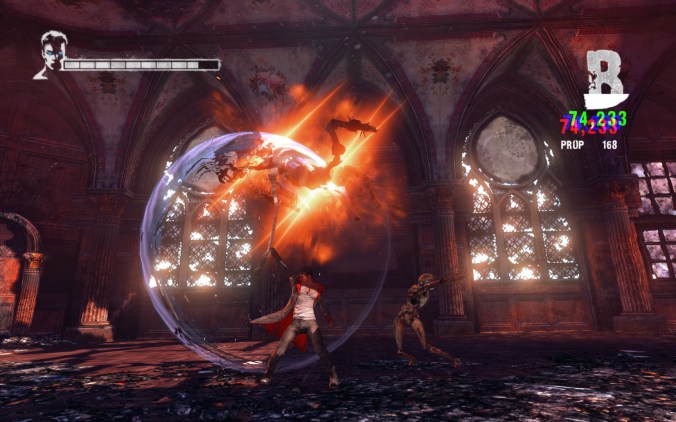
In an attempt to reach a larger audience, the combat was undeniably simplified. There are no more alternative styles to play with and master. Weapons themselves have far less combos to learn and string together. The style meter no longer decreases unless you get hit. Essentially, every aspect of combat was dumbed down. It is incredibly easy to receive and maintain a high style ranking regardless of how skilled the player is. The move list has culled many combat techniques which drastically reduces the creative and stylish combos that could be performed. The combat is not necessarily bad, but it will be strangely simplified to returning fans of the series.
7

While the combat was made significantly easier, there were a few features that improved upon the established formula. The most obvious inclusion was the ability to hold down a button to change weapons. In the midst of combat holding down the left or right triggers will transform Dante’s weapon to an angel or demon weapon. This makes switching weapons during a fight remarkably smooth. Quickly swapping between Dante’s standard sword, angel weapons, and demon weapons is fluid and opens up possibilities for longer and more stylish combos. Additionally, Dante can pull enemies to himself or pull himself towards enemies. This added mobility allows the player to maintain the pace of the fight without ever having to slow down.
8

Other than the simplification, there are some other issues with the combat. With the accessibility of the angelic and demonic weapon variants, there were also corresponding enemies. These color-coded adversaries could only be damaged by their respective weapon types. Red enemies can only be hurt by demon weapons, blue enemies can only be hurt by angel weapons. This defeats the purpose of the ease of swapping weapons. It is meant to facilitate switching weapons mid-combo to create new combos, but instead you become limited to a single weapon. Worse still, these enemies would interrupt your combos and the flow of combat if struck with the wrong type of weapon. The color-coded enemies do nothing but halt the action.

9

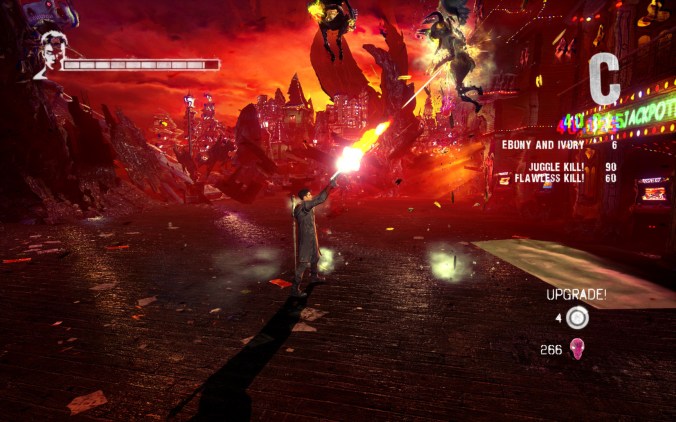
Furthermore, DmC: Devil May Cry has no dedicated lock-on feature. This is an absolutely baffling decision for a 3D action game. It is a pain to try to focus on a single enemy as the game schizophrenically decides what target it wants to aim at. This is especially frustrating when dealing with the color-coded enemies, as it there is no reliable way to single them out and use the correct weapon. Dealing with flying enemies is similarly rage-inducing as getting the game to target them is a war of attrition. Lastly, Dante’s signature guns, Ebony & Ivory, have been substantially weakened. In prior games these guns would often be used for chip damage or to maintain a combo. Since you don’t need them to maintain combos anymore, they only serve as damage. Unfortunately, the damage they deal is pitiful.

10

Overall, DmC: Devil May Cry is not a strictly terrible game. It undoubtably has its shortcomings in gameplay and characterization. Realistically, the games biggest issues stem from the fact that it is a Devil May Cry game. There was a deep misunderstanding of the fanbase of these games as Capcom vied to gain traction in the west. This backfired spectacularly as DmC: Devil May Cry upset loyal fans and will permanently remain a stain on the legacy of the series. If it weren’t a Devil May Cry game, it would be a decent game. Unfortunately, it just left a sour taste in my mouth.

The Last Guardian (2016)

There are many descriptive words I could use to describe The Last Guardian: emotional, dated, beautiful, frustrating, immersive, and clunky. One word that could not be used to describe The Last Guardian is fun. Admittedly, this game is more of an artistic adventure than a traditional video game, and I’m ok with games forgoing fun for a more poignant experience. Unfortunately, The Last Guardian is just an unmitigated disaster in so many aspects that it nearly undermines the impact the game was meant to have.

8

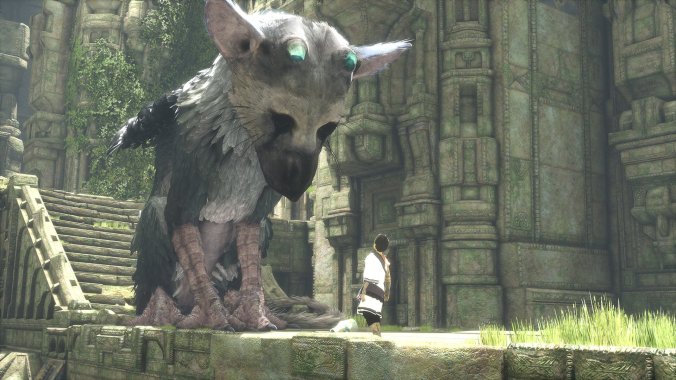
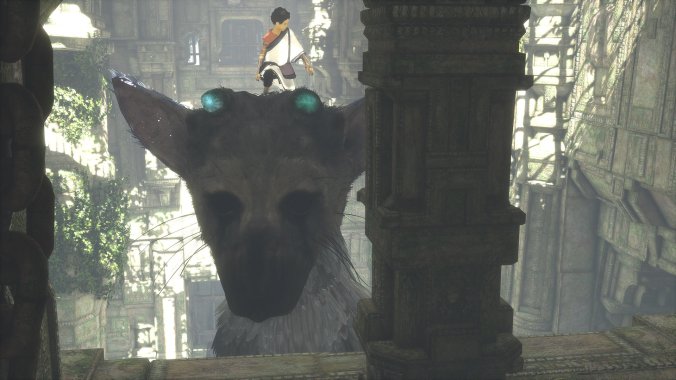
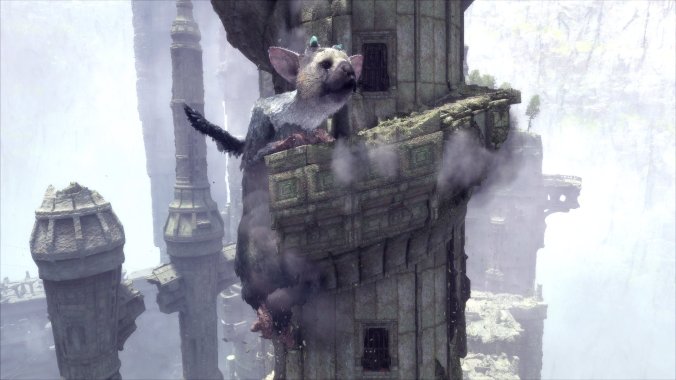
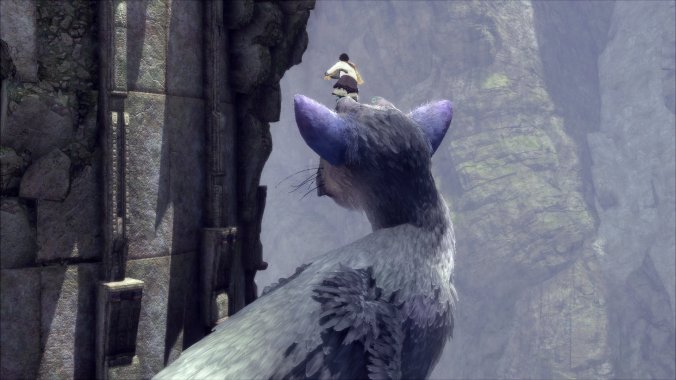
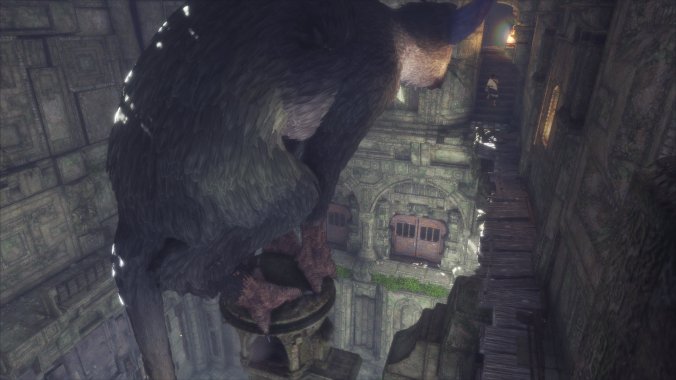
This is a game about a boy and his dog. Well, not exactly a dog. The main character wakes up in a cave alongside a giant, hulking beast. This creature is some sort of dog-bird-cat chimera that the boy subsequently frees from its chains. The heart of the game is the boy and the beast, known as Trico, traveling through a dilapidated city. The boy has no knowledge of how he arrived in the sprawling and ancient metropolis, but it is apparent that he wants to escape. The boy and Trico must rely on each other to progress, and as a result the game is about their growing bond and friendship.

12

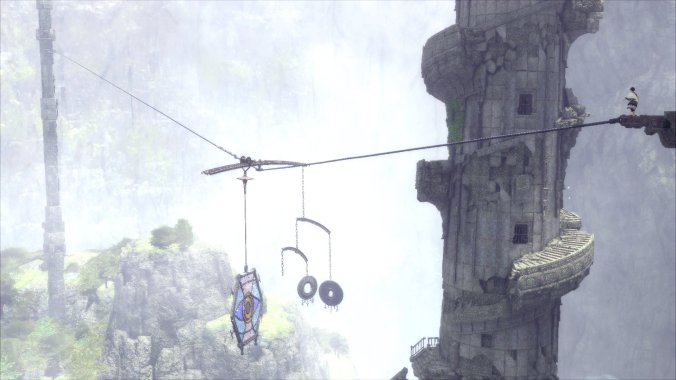
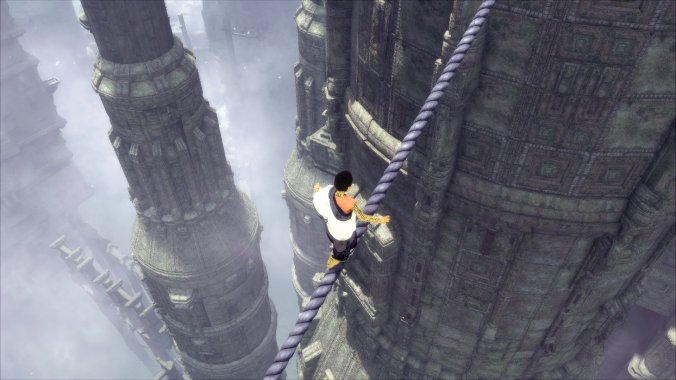
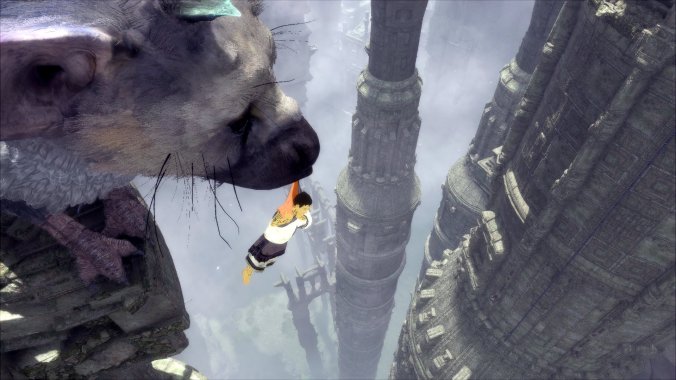
The story of the game is mostly about the journey of the boy and Trico. There is a narrator who acts as a hint system as well as a few sparse cutscenes, but the vast majority of the game is a silent adventure. The interactions of Trico and the player is plenty to convey their developing companionship. Trico’s animations in particular are gorgeously animated, it is seriously impressive how lifelike and playful this feathery creature is. The atmosphere is equally as remarkable. The ancient city is rife with details as well as awe-inspiring vistas. Every environment stirs the imagination. The art direction and meticulously designed architecture are breathtaking. The crumbling interiors, the overflowing lush foliage, the interconnected towers that reach to the sky, everything contributes to the memorable world of The Last Guardian.

5

In the beginning, the boy and Trico are apprehensive of each other. Despite feeding, freeing, and assisting Trico, the beast does not fully trust the player. The pair eventually learn how reliant they are on each other. The standard gameplay is as simple as progressing from room to room, area to area. Sometimes you are impeded by simple environmental puzzles, you often have to open gates for Trico to progress. Mostly, you will be using Trico and his size to help you reach high up places, or he can make leaps across large gaps. As you progress, the boy continues to feed, pet, ride, and command Trico. The development of the pair’s relationship is magical, Trico eventually becomes staunchly loyal and fiercely protective of the boy. The evolution of their relationship is the absolute highlight of the game, and it is what makes the experience so emotional.

2

As a result of the story being the core focus, the gameplay of The Last Guardian is simple. As I previously mentioned the game mostly consists of simple puzzles to progress forward. These puzzles aren’t complex, but instead are just speed-bumps on your grand adventure. The majority of the time a puzzle consists of two parts: deduce how to use Trico to advance, and then figure out a way for Trico to come along with you. Along the journey, the boy and Trico will encounter a few more interesting obstacles. Possessed suits of armor chase the boy and attempt to drag him away. The young boy has no means of combat, so you must evade enemies while Trico smashes them. This mix of evasion and spectacle was quite satisfying. Watching your companion absolutely destroy the foes like they were toys is viscerally entertaining. There is an air of mystery in The Last Guardian, the background of Trico, the city, and the soldiers is unknown.
3

Despite everything that The Last Guardian does correctly, the game is plagued by frustrating problems. The most forgivable of those nuisances is Trico himself. In an effort to make Trico seem like a real, living, thinking, and independent being, he was essentially given a mind of his own. Often times Trico will not listen to your commands. He is curious and playful, and will often wander off to do his own thing. This can be enormously annoying to many players, as sometimes you just want to play the game and move forward but Trico won’t cooperate. Trico’s stubbornness wasn’t a big deal to me, some patience is required to deal with him. His independence is absolutely necessary to masterfully portray him as a living being rather than just a tool for gameplay.
4

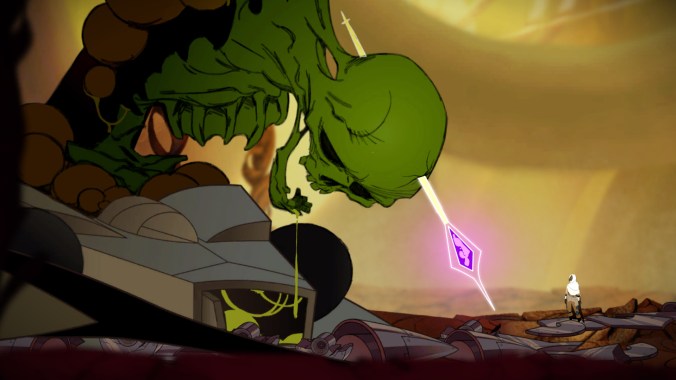
What is less forgivable than Trico’s stubbornness is the boy’s horrible controls. Nothing about controls is intuitive or particularly responsive. The boy has two speeds: full sprint and tiptoeing. Additionally, there is a strange weight to the character, he constantly feels bogged down by some invisible force. It’s hard to explain, but it is immediately apparent when you being playing the game. The boy constantly stumbles, bumps into things and falls over, and is generally unwieldy. There is a fair amount of platforming, jumping from place to place, but the imprecise controls make this an exercise in aggravation. Every single action you do is so deliberate and slow that I was getting impatient. Everything takes way too long. The worst offender of this is getting on and off of Trico. This is the absolute core mechanic of the game, and it simply does not work.
6

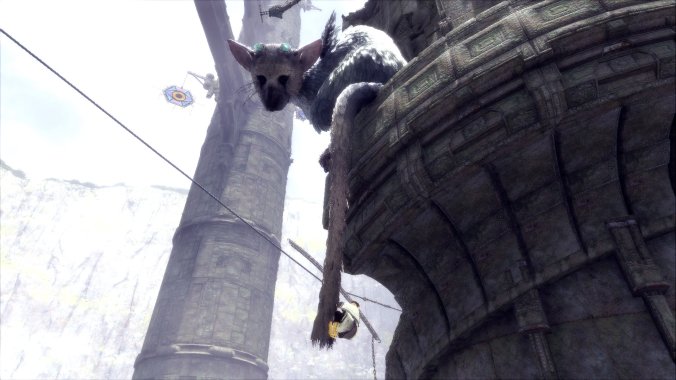
Trico is gargantuan, and climbing on him is a monotonous task. The boy climbs needlessly slow, and often gets stuck on Trico’s wings, legs, chest, or tail. The only thing worse than getting on Trico is getting off of Trico. For some reason the developers decided that it was a genius idea to make the boy automatically grab onto things when he is falling. This is nice when platforming as it allows you to grab onto ledges easily. In the case of getting off of Trico, everything is grabbable. His entire body is one big sticky pad. So, when jumping off of Trico you immediately latch back on. I just want to get off of Trico, why is it so hard?

1

I know faithful defenders of this game claim its controls are intentional, but that’s not a good excuse. You can make a realistic feeling character that doesn’t make you want to rip your hair out. The Witcher 3: Wild Hunt and Metal Gear Solid V: The Phantom Pain are examples of games with weighty and realistic characters that aren’t imprecise or unresponsive. In the case of The Last Guardian, the clumsiness of the controls adds nothing. Games like Human Fall Flat utilize unwieldy controls for comedic effect. Stephen’s Sausage Roll uses its strange control scheme to allow for complex puzzles. These are valid reasons for unintuitive controls. The Last Guardian has no excuse. I get that the main character is a young boy and shouldn’t be an acrobat like Mario, but that doesn’t explain why he moves likes he’s inebriated.

9

While I praised the game for its gorgeous world building, impeccable details, and lifelike animations, these all result in a less than stellar framerate. I’m not one of those elitists that demands that all games must run at 60 FPS. If I’m getting a steady 30 FPS, I’m happy. However, The Last Guardian has performance issues that often dips the FPS into very noticeable territory. This happened often enough that it became an irritant. Worse than the performance issue is the dated camera.

10

Making seamless cameras for third-person video games is hard, but this is an issue that has been solved many times over by plenty of games. The camera has a strange acceleration delay, when you start trying to maneuver the camera it moves extremely slowly. Moreover, the camera is like Trico, it does what it wants. The game often tries to pan to show you the environment or Trico, but this often gets in the way of what the player actually wants to look at. If I’m trying to make a jump or scale a tower, I don’t want to have to battle with the camera the whole time. It gets especially bad in narrow corridors because then the camera gets wedged between Trico and the wall, meaning you get to appreciate a black screen for upwards of thirty seconds.

11

The overall level design of the game can often be confusing. It is not always apparent what you can jump on, hang on, or what Trico can leap to. The gorgeous world came with the expense of readability. There are so many details that it can be hard to tell what you can actually interact with. The worst offender of this unclearness is when you need Trico to do something. As I stated prior, getting Trico to do anything can be tough because of his stubbornness. So, when it is unclear how to progress it can be a real struggle to test out potential solutions. Is Trico not jumping to that platform because he’s just being stubborn, or is it because that’s not a platform he can even jump to? Situations like these are abundant in The Last Guardian.

13

The most insidious issue of The Last Guardian is its tendency to just not work sometimes. The game can be particularly picky when it comes to solutions to its puzzles. You may have found the right solution right away, try it, but then it doesn’t work for whatever reason. Some examples of this: Trico won’t make a jump, the boy doesn’t grab a ledge, Trico refuses execute whatever scripted action you need to progress. This is a colossal waste of time because once you try a solution to a puzzle and it doesn’t work, you immediately start trying other possibilities. But if the first solution was actually correct, you may just be going in circles and wasting your time. The worst offender of this for me was during a puzzle in which I was supposed to feed Trico. The goal was to feed Trico numerous barrels to give him energy to continue. After collecting every barrel, I fed them to him, but nothing happened so I figured I must have missed one somewhere. I spent 30 minutes searching for this non-existent barrel. It turns out a cutscene was supposed to play and Trico would get up, but this never happened for me. I had to restart from a checkpoint and do the whole puzzle over again.

7

It may sound like I hate The Last Guardian, but I don’t. I think it’s a shame that a game with such high potential stemming from its unique concept, stunning architecture, immersive atmosphere, and powerful emotional bonds is bogged down by generally technical issues. The camera, framerate, and controls feel like remnants from a prior era. I really wish I could get past the frustrations that I had with the game. When the game clicks and everything works, it is a truly magical experience. Unfortunately, those moments are few and far between. Regardless, it is a truly memorable experience despite its flaws. Even though the game angered me on numerous occasions, I nearly cried at the end, which should say a lot about the raw emotions this game conveys. It is for these reasons I give The Last Guardian a 5/10. Your enjoyment of this game is directly proportional to your patience and your tolerance to its clunky gameplay.

Stephen’s Sausage Roll (2016)

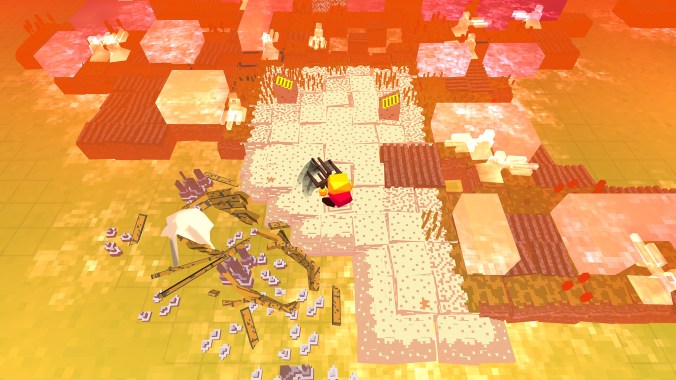
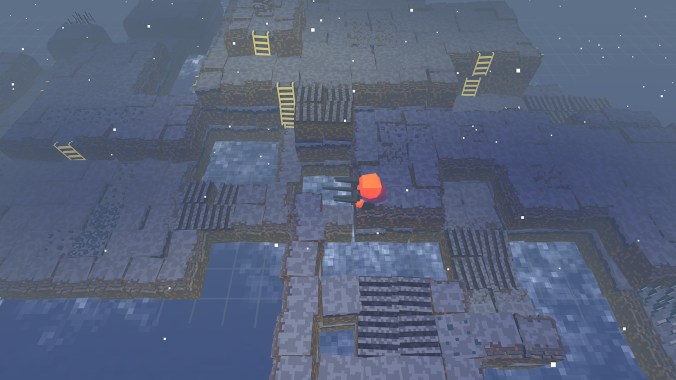
I know what you’re thinking: “Stephen’s Sausage Roll sounds like a joke.” This is not a joke, far from it. The name is goofy, the visuals are ugly, the premise is bizarre, and the price is high. How could a game about rolling sausages be worth $30? The thing is, Stephen’s Sausage Roll is one of the greatest puzzle games ever created, and its unparalleled level design is what sets it apart.

1

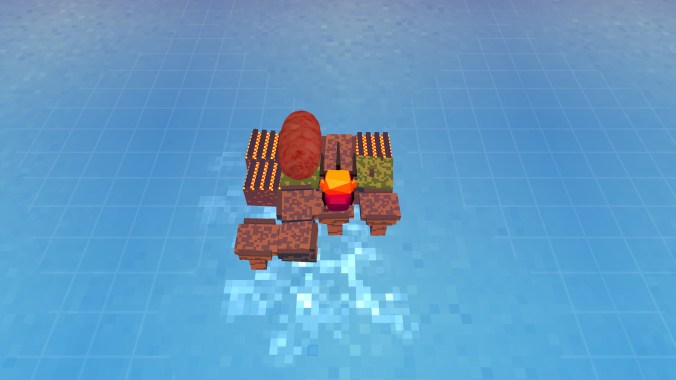
Stephen’s Sausage Roll is a Sokoban-style puzzle game. If you’re unfamiliar with Sokoban, it is a subset of puzzle games that revolves around pushing objects to specific locations. You have to plan ahead since you move in tight spaces and everything has to fit snugly. It sounds remarkably simple, but Stephen’s Sausage Roll takes sausage rolling to the extreme. This game is insanely difficult, and from the outset the game is going to challenge you. The player’s goal is to fully cook sausages on grills without burning them. The game is played on a grid, and each sausage occupies 2 spaces. You must cook both sides of the sausage, but if you cook the same spot twice, it will burn. The player also occupies 2 spaces on the grid, which makes the game remarkably difficult to control. You can move forwards or backwards, and you can rotate left and right. These constraints will take a while for any player to get used to, and are a necessary to facilitate the complexity of the puzzles.

5

The beauty of Stephen’s Sausage Roll is that it capitalizes on every facet of the game’s mechanics. The act of simply manipulating the sausages and controlling the character is explored in the first area. Subsequent areas focus on other mechanics: the second area is all about skewering sausages, the third is about rolling on top of them, so on and so forth. None of the mechanics are explained to the player, you are meant to play around in the puzzles to discover the nuances organically. There are six total areas in the game, each consisting of about a dozen puzzles. The sixth area is much longer than its predecessors and it utilizes a ridiculously interesting trick, but I will not discuss it because that should be a moment for every player to experience on their own. I do not want to spoil it.

2

Every single mechanic that the game introduces is absolutely pushed to the brink. No idea is thrown away without squeezing all of the potential out of it. Every puzzle in an area will utilize a different aspect of that area’s core mechanic. Every puzzle is a learning moment. It never feels repetitive or tedious since all the puzzles require the player to encounter an “A-ha!” moment. There were some puzzles where I looked at it and thought “This is impossible.” After playing around a bit, it would click and I would understand exactly what I needed to do. Interestingly, there were also plenty of moments when starting a puzzle that I thought “This is easy.” But once I began, I realized it was much more difficult than I had anticipated. There aren’t really any hidden tricks or techniques to stump the player, instead the stumping comes from the clever implementation of the mechanics.

The brilliance of Stephen’s Sausage Roll is in its level design.  Every level is a unique teaching moment, and every puzzle is also immaculately designed. For the most part, every tile on the grid is needed to complete the level. There is no fluff to distract the player. If something is in the level, you will be nearly guaranteed to use it. This fact is immensely helpful when solving the challenging puzzles that are plentiful in Stephen’s Sausage Roll. I would often analyze all of the elements of any given puzzle before starting. This technique often led me to reverse engineer the solution by just understanding the components available to me.

3

The exceedingly clever minimalism of the puzzles is what makes Stephen’s Sausage Roll so challenging. There is absolutely no way for a player to stumble their way to a solution. There is an intended solution for every puzzle, and aside from minor variations there is no way around that fact. The player must utilize the techniques that each puzzle demands. Every puzzle is carefully designed to maintain this paradigm. This game is remarkable for its ability to stump the player in a fair manner. You never get stuck because you are missing critical information, instead you get stuck because it’s you haven’t implemented a mechanic in the correct manner. I would often get stuck for long periods of time but I rarely felt frustrated.

My lack of frustration is due to the fact that the areas in Stephen’s Sausage Roll have all of the puzzles available at the same. If the player gets road-blocked and cannot figure out the solution to any given puzzle, it is exceedingly helpful to try the other puzzles first. Sometimes you can make new realizations, but most of the time it is a good idea just to refresh your brain. Additionally, the game has two functions that the player will use copiously. The undo button will undo the last move made, and you can use it as much as you want. Often times I would realize that my solution wouldn’t work, so I undid the last few moves to see where I went wrong. Also, it is exceedingly common to do something unintentionally because of the unintuitive controls. The undo button is a godsend. Additionally, the reset button will reset the puzzle all the way to the beginning. If you really screw up, this function will come in handy.

4

My main issue with Stephen’s Sausage Roll is “brick walls” frequently occur. Brick walls are what I describe as moments where you absolutely cannot progress until you make some realization about how the game works. These moments will vary from player to player and can be demoralizing. Many of the mechanics in Stephen’s Sausage Roll have various nuances, and organically discovering these nuances at times can be exasperating. Most players will probably hit a brick wall at the very beginning of the game. The unintuitive control scheme, lack of explanation, and immediate jump into difficult puzzles almost guarantees that fact. Unfortunately, these facets are core components of the game, so there is no way to easily fix this issue.

The high difficulty and unforgiving level design are prone to these “brick wall” moments, and it probably happened to me two or three times. Sitting on a single puzzle for 2 to 3 hours, making no headway, then figuring out the solution hinged on some obscure nuance was not an “A-ha!” revelation, but rather an “Are you serious?” moment. There really is no way to alleviate this problem, as extreme difficulty is a double-edged sword. The vast majority of the time Stephen’s Sausage Roll provides mind-bending puzzles to tinker with, but sometimes you are going to get stuck for a while.

6

Since Stephen’s Sausage Roll hits the player with a brick wall at the very beginning of the game, I think many players will have a hard time enjoying this game. It’s already in a small subset of puzzle games, and its astounding difficulty is sure to make it even more niche. Moreover, the game has no worthwhile qualities outside of its intelligent level design. The visuals, audio, and narrative are all extremely minimalistic. This is a game for somebody who wants to play an exceedingly challenging puzzle game. And that’s fine. Not every game has to be for everybody, and I like to see niche games. That being said, Stephen’s Sausage Roll is so ridiculously niche that nobody outside of a small subset of people will be able to enjoy it.

7

I absolutely adore Stephen’s Sausage Roll, but I realize that is an exceptionally niche game. I categorize this game the same as SHENZHEN I/O. Both of these games are absolute perfection in their respective genres, but I cannot unconditionally recommend them to anybody. It’s a shame that the brilliance of Stephen’s Sausage Roll will be lost on so many people due to its sheer unapproachability. Regardless, this game is ridiculously well designed and executed, and I am genuinely baffled at how much content was able to be produced on the mere premise of pushing sausages around. It is for these reasons that I give Stephen’s Sausage Roll a 9.5/10. If you are a fan of outstandingly tough puzzle games, then you absolutely must play Stephen’s Sausage Roll. If you don’t enjoy puzzles, or prefer less challenging games, than this is not the game for you.

Sundered (2017)

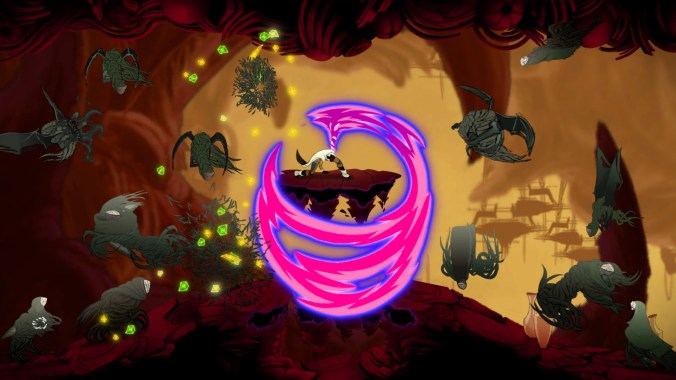
As someone who loves metroidvanias, action games, and Lovecraftian atmospheres, Sundered seemed like a perfect fit. This is the second game developed by Thunder Lotus Games, who have become renowned for their beautifully hand-drawn characters. At times, Sundered felt exceptionally exhilarating to play, but in other instances the game was pure frustration. This dichotomy stems from the game’s core ideas and the inherent randomness of the experience.

5

In Sundered you play as Eshe, an adventurer who fell into an eldritch portal which transported her to an ancient underground city. Eshe encounters a shapeshifting sinister being, which guides the player on their journey and serves as their weapon. You travel throughout the devastated city, encountering monsters and bosses along the way. Eshe collects new weaponry and upgrades to aid her on her journey back to the surface. Simply put, the game is a metroidvania, but with a unique twist. The levels are partially randomly generated, which is a bold decision in a genre that heavily relies on its level design. Additionally, apart from new weaponry and items, you also collect currency and runes to upgrade Eshe’s abilities.

8

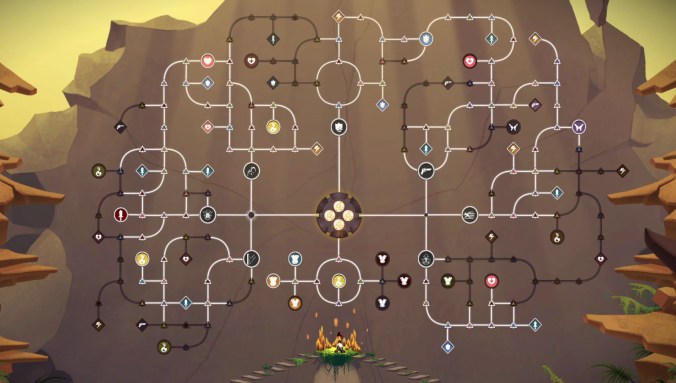
As you explore the world, you will uncover runes that can be equipped. These runes are intriguing because they have positive and negative attributes. For example: you deal 30% more damage, but you have 20% less health. You must pick and choose which runes you would like to use, being aware of what synergies make sense. Players must decide what negative effects they are willing to cope with. I quite like the choices and I enjoyed testing out different combinations of runes. In addition to runes, you will collect currency to spend on your skill tree. This giant tree also implements some interesting decision making. Small nodes contain flat bonuses to your damage, health, armor, and shield. Scattered along the tree are larger nodes with more powerful bonuses such as an additional 15% damage or more critical strike chance. You must prioritize which bonuses you want to go for, as it quickly becomes expensive to work your way through the tree. I actually really liked this implementation of progression as building a character to my liking is engrossing.

9

Each area in Sundered has a basic outline, represented by big blocks on the map. Within these large chunks, there are smaller blocks which are randomized. Every time you generate an area, these smaller blocks get jumbled around and create a different path through the big blocks. In essence, the basic structure of the area will always remain the same, but the exact path is going to constantly change. I actually feel like this works decently. Metroidvanias are all about exploration, and with the levels constantly changing, the player will always need to explore. With the unchanging large block locations there are cleverly placed shortcuts to open to ease navigation. As you progress through a level, you can open doors that link back to locations earlier in the level. This way, next time you go through the level you can skip many of the procedurally generated bits. This randomization also makes sense in the context of Sundered. It’s appropriate that the twisting, living tunnels of a demonic city are constantly shifting.

7

The downside to the random level generation is much of the game ends up being entirely forgettable. The tunnels and rooms utilize the same assets, so there lacks a unique element to make areas stand out. Every trip through an area feels like déjà vu, you encounter the same rooms, just in a different order. Overall, a procedurally generated metroidvania works in the context of Sundered, but it ends up being repetitive after a while. Interestingly, randomization doesn’t end with the level design; enemies also spawn in randomly. Occasionally enemies will spawn in small groups, but the bulk of the combat occurs when hordes spawn. Hordes occur randomly and are signaled by the signature bang of a gong.

3

The pure chaos which a horde brings is almost indescribable, hundreds of enemies run at the player from all directions. Many of these enemies can also shoot projectiles, fly, or teleport. Absolute mayhem. At times, hordes can be actually incredibly fun. If you are well equipped and in a prime fighting location, shredding through dozens of enemies with a few satisfying swings of the blade is viscerally gratifying. It’s challenging, intense, fast-paced, and pure fun. Unfortunately, this is not always the case. If you aren’t strong enough, hordes will absolutely wreck you. No amount of skill can overcome the muddle of hordes, you are guaranteed to be hit, you just need sufficient stats to win. Moreover, if the horde spawns in an inopportune location, such as one with many hazards or pits, the fight can become immensely overwhelming.

2

Furthermore, with so many enemies, visual effects, animations, and projectiles, it is incredibly easy to lose track of where Eshe is. Especially since you get bumped around when taking damage. The absolute worst part about hordes is how randomly they occur. Sometimes I could play for 10-15 minutes with no combat at all, and other times there were so many hordes I literally could not progress forward. I would defeat a horde, move forward for 15 seconds, then the gong would sound and have to do it all over again. Fighting multiple hordes in a row can easily drain your health potions and get you killed. It can be frustrating that your progress is essentially tied to how many hordes spawn in any given timeframe. I wish hordes occurred in specific rooms instead of entirely randomly. That way the developer can control the environment, the type of enemies, and how many hordes a player has to deal with before unlocking a shortcut or new item.

4

The enemies and bosses of Sundered are incredibly creative and interesting to look at. The bosses in particular are humongous, awe-inspiring beasts. The boss fights are mostly very fun, you have to hit weak points to do damage. Dodging the telegraphed attacks of the bosses works better than fighting hundreds of enemies at a time during hordes. Towards the end of a fight, the boss will begin spamming all of their attacks. It becomes a frantic rush to finish off whatever little bit of health they have left before you get overwhelmed. My only big issue with the boss fights is that they are so big that the screen has to zoom out, making it hard to make out where your character is located. Eshe and the weak spots are tiny in comparison to the gargantuan beings, making it unbelievably difficult to execute precise movements.

1

Combat itself is fairly simple. Aside from basic directional attacks, there are also finishers. Hitting attacks builds the finisher meter, and getting hit drains the meter. Once full, the player can unleash a finisher attack which has high range and damage. These are quite useful for dealing with groups of enemies, the additional range is incredibly helpful. There is also a dodge roll that lets the player dodge through enemies. Additionally, hitting enemies in the air resets your jump. As long as you keep whacking at enemies, you can stay in the air. Overall, the combat is simple and intuitive. Unfortunately, when fighting hordes, you often just have to mash buttons and pray that your character is strong enough.

6

Sundered is hit or miss. Every game design decision seems like a neat idea, but they have significant downsides. Randomly generated levels prompt exploration, but end up being repetitive. Hordes can be chaotic fun, but can get overwhelming. Bosses are awe-inspiring, but they are so big that I find it hard to tell what is going on. Combat is simple and character building is interesting, but it often becomes stat-check button-mash fests. It is for these reasons I give Sundered a 6/10. Sundered has many unique aspects, but some of these facets can grow irritating and spoil the experience.


Into the Breach (2018)

There is an eternal struggle which the developers of turn-based tactics games must attempt to solve. Randomness. Without some form of unpredictability, turn-based games quickly grow stale. Nothing is fun when you know exactly what moves to make to ensure victory 100% of the time. In contrast, too much randomness leads to frustration when the player makes all the right moves but loses anyway. The inclusion of randomness is a game design pillar that could be discussed endlessly, but I want to talk about one game that got it right. Into the Breach.

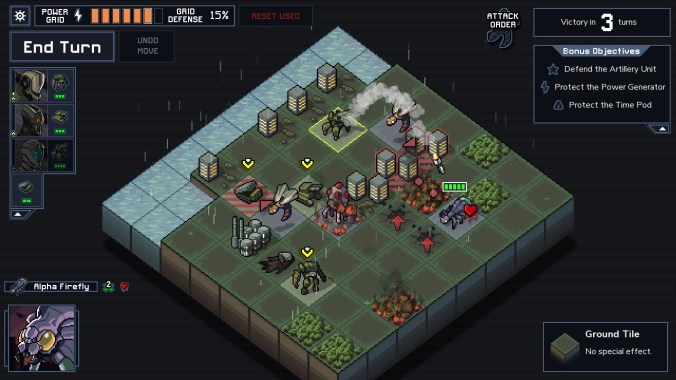
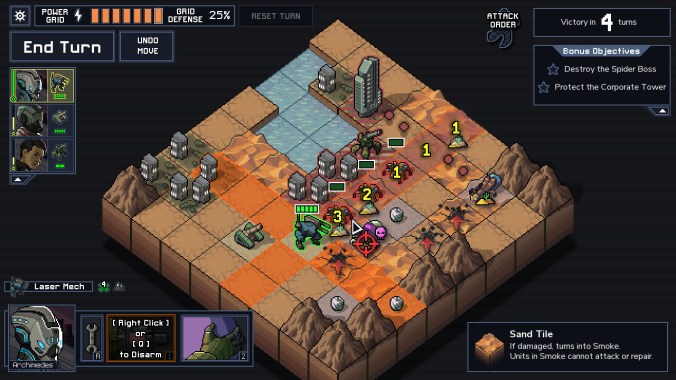
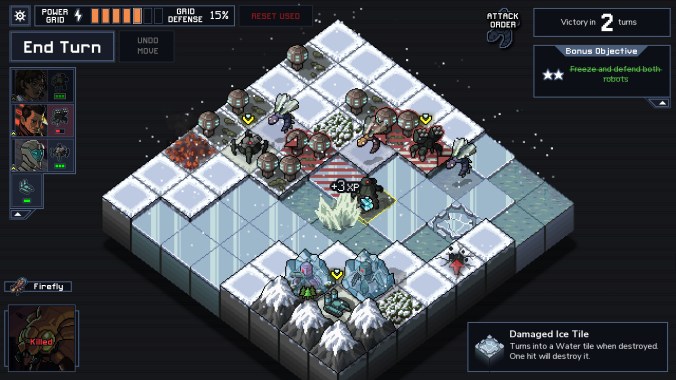
Subset Games are known for creating the immensely popular roguelite space game, FTL: Faster than Light. While I love FTL: Faster than Light, it is an incredibly difficult game and some bad luck could easily end a run. While Into the Breach is a different genre altogether, it limits the effects of unpredictability and nearly everything in the game is telegraphed. Into the Breach is a turn-based tactics game in which the player commands three giant mechs to defend cities against humongous alien bugs called Vek. The game is played on an 8×8 grid, with each turn being split into three distinct phases.

1

At the beginning of each turn, the enemies telegraph exactly what they are going to do. They move into position and highlight what squares they will attack, how much damage it will do, and what order they will attack in. The next phase of a turn is the players response, in which the player can move and attack with all three of their robots. The final part of the turn is when the enemies execute their telegraphed actions. There is no miss chance, no critical hits, or any sort of randomness on the battlefield. Aside from enemy spawns and the map layout (which the player can see before choosing a map), everything is predictable. The player is given all the information they need to succeed, and I love it. The only randomness is in favor of the player, when the enemies manage to hit a city; there is a 15% chance that the city may “resist” and ignore the damage.

2

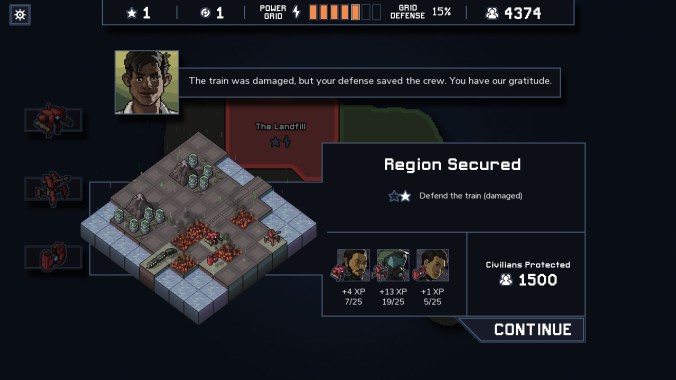
The idea behind Into the Breach is that you are commanding a squad of three mechs that travel from alternate timelines to defend the one that you are playing in. It sounds complicated but in terms of gameplay it has a couple of neat benefits. The first being that in each battle the player is allotted a single reset. This can be used during the player phase to reset to the beginning of the player phase. This is incredibly helpful in the case of a misclick or if you spot a better move after you already preformed an action. Battles are relatively short, only 4-5 turns long, so a single reset is completely fair to allow players to fix any exceedingly dumb errors. The other major gameplay benefit of the time-travelling squad of mechs is that after a campaign is completed, you can bring one pilot with you to the next campaign.

Pilots are an integral feature to Into the Breach, and they serve as a method to improve your mechs. Each pilot can level up a couple of times, providing bonuses such as health, movement, or a reactor to power up new weaponry. There are unique pilots as well as generic ones. The unique pilots have special abilities to make them more powerful than the generic ones. Moreover, unique pilots are selectable at the beginning of the game, allowing the player to bring one along with them. They serve as a form of progression, as you unlock pilots during campaigns, you can then select them for any future campaign. The other major form of progression are unlockable squads. There are 8 squads in the game, as well as a customizable squad, a random squad, and a secret squad.  All of the squads have three mechs, each with their own abilities.

3

The versatility of the squads is essential to Into the Breach. In this game, there are very often 4 or 5 enemies on the screen at any given time. This means that it is impossible for three mechs to kill all the enemies during every turn. Luckily, these mechs have far better utility than damage dealing potential. The mechs’ attacks often have side effects that are far more powerful than incurring straight damage. Things like pushing or pulling the enemies to displace them, creating smoke that disrupts attacks, freezing enemies, or lighting them on fire to deal damage every turn. Moreover, you can block enemy spawns by placing something on top of their spawn points. Each mission is usually littered with environmental effects which further increase flexibility. More often than not you will be killing Vek by pushing them into the ocean, or getting them struck by lightning rather than just straight up damaging them.

4

Since there are more Vek than the player has mechs, every turn is essentially a puzzle. The player must determine how to get through the turn while taking no grid damage or mech damage, as well as complete objectives and dispose of as many Vek as possible. Of course, this may not always be possible and then the player has to determine what is most important to them. Grid damage persists throughout battles, and serves as the player’s health, so prioritizing stopping the enemies from damaging the grid is essential. Completing objectives provides currency to purchase upgrades, so they are also imperative to complete. Sacrificing a few health off of a mech to block a shot is often an incredibly powerful tool. With more Vek than mechs on the field, the player must look for high-value moves that will deal with multiple enemies at a time. Things like blocking a shot while simultaneously pushing a Vek off a cliff. Or pulling a Vek in a position so that it will kill its ally. Into the Breach facilitates creative tactics and solutions, and that is why I love it.

5

My singular issue with Into the Breach is that the game can become repetitive across numerous campaigns. A campaign can last anywhere from 30 minutes to 2 hours. You can use a different squad every time, but once you play with each squad once, you will have experienced most of what the game has to offer. Compared to FTL: Faster than Light, Into the Breach lacks unique encounters in each campaign. In FTL: Faster than Light, the battles were just a portion of the decision making. You would have to build your crew and analyze the risk and reward of certain decisions. You can let an alien on your ship, but it may backfire if the alien betrays and robs you. You can go to assist distress signal, but it may be a trap. Decisions like these permeate FTL: Faster than Light, but are mostly absent in Into the Breach. You can choose which missions to do and what upgrades to buy, but the game lacks any sort of storytelling or more interesting decision making. The meat of the battles is phenomenal, but I wish there was more than just the battles.

6

A major aspect that increases replayablity of this game is the achievement system. In Into the Breach, achievements accrue points that player can then use to purchase new squads. Some achievements happen naturally, but some require the player to tackle the game in a different way. Challenges may be completing an island without taking any damage, or win a campaign without upgrading any weapons. Many of these achievements are squad specific: the ice squad has achievements dependent on freezing enemies, while the fire squad is all about setting the whole map alight.

7

I absolutely adored the puzzle tactics of Into the Breach. Each squad was designed in a cohesive manner that prompts the player to search for creative solutions. This is not a “kill all enemies” turn-based strategy game, but one that expects the player to use utility to protect their resources. Despite the fact that the game got a little repetitive after a while, I still managed to get about 40 hours out of this game before I ultimately decided that I had seen everything. While customizable squads allow for nearly endless possibilities, I wish there was more variances between each campaign.  It is for these reasons I give Into the Breach an 8.5/10. It is a remarkable tactics game that ensures the player will think imaginatively about the problems before them.

Borderlands (2009)

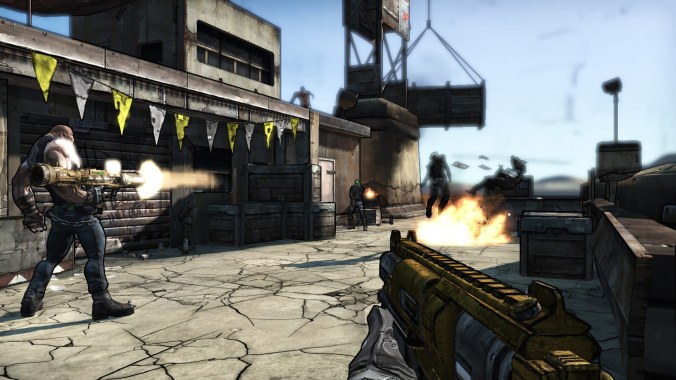
In preparation for the anticipated release of Borderlands 3, me and my friend have decided to replay the series. Obviously, we decided to start with the original Borderlands. While I have played Borderlands 2 and Borderlands: The Pre-Sequel, I have never actually played the original game. Apart from being the first game in a wildly popular franchise, Borderlands sparked an entirely new genre. I can respect Borderlands for its innovation and impact on the industry, but the game has not aged incredibly well. Borderlands was hard for me to enjoy after playing the sequels, simply because they are superior in nearly every facet.

7

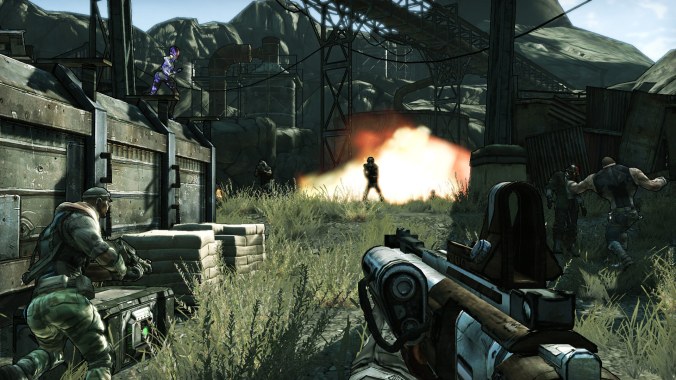
The genre which has become known as “looter shooters” is massively popular. Destiny, The Division, and Anthem are recent triple-A games that were spawned by the ideas presented in Borderlands. In the dystopian world of Borderlands, the core gameplay cycle is killing enemies to acquire loot and then using that loot to take on more powerful enemies. It’s a concept that obviously harkens to loot-based RPGs such as Diablo. Borderlands is a first-person-shooter in which the player progresses their character by leveling up and collecting randomized weapons which have a variety of stats and effects. Stats such as damage, fire rate, magazine size, reload rate, and accuracy are randomized based on the level and type of weapon it is. Submachine guns obviously have higher fire-rates than sniper rifles, and a level 15 gun is likely to have higher damage than a level 10. These games also have a large emphasis on multiplayer components. Working together to tackle a boss or battle through a stronghold of adversaries is a core component of looter shooters.

6

The core attraction of playing a looter shooter as opposed to a traditional FPS is the fun of collecting and trying out new guns. Through enemy drops and opening chests, there is no shortage of weapons for the player to find and experiment with. Aside from just the standard stats and types of guns, Borderlands also includes things like elemental damage. Shields are weak to electricity, health is weak to fire, and corrosive damage weakens armor. Moreover, one of my favorite aspects of Borderlands is how the manufacturers that make the guns contribute to the stats of the weapons. Some manufacturers have guns with low fire rates but high damage, others sacrifice accuracy to increase the fire rate, some make guns with large magazine sizes. I found myself preferring Jakobs and Maliwan weapons, and would specifically hunt down guns of those types. The inclusion of the manufacturers certainly makes the world of Borderlands more believable and the act of looting more engaging.

4

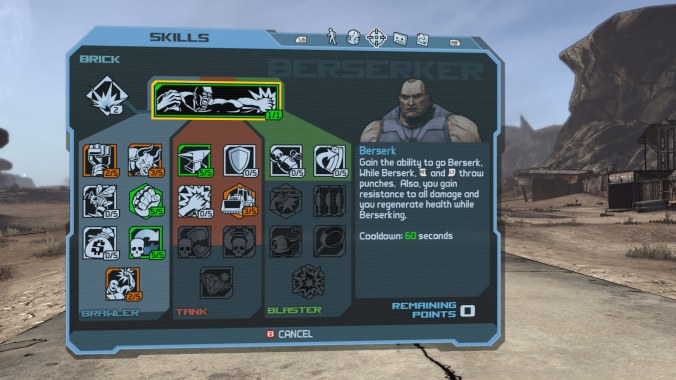
Borderlands is set on the alien planet of Pandora. This planet is a desolate wasteland inhabited by lowlife raiders as well as few varieties of alien fauna. Pandora contains these ancient alien vaults which are rumored to contain unparallel treasure and powers. As such, fortune seekers from around the galaxy travel to Pandora in droves to attempt to find and access the vault. These opportunists are known as vault-hunters, and that is who you play as. There are four classes you can choose from, each with a unique ability and skill tree to enhance as you progress through the game. As you kill enemies and loot, you gain experience points which are used to enhance your ability or acquire a special bonus. Things like increasing sniper damage, increasing your team’s accuracy, or adding elemental damage to your weapons. The class abilities are key to playing the game and they have fairly short cooldowns that let you turn the tides of battle. You can summon a bird to hunt down prey, or place a turret to hold a chokepoint, or enter a berserker state, or phase-shift in and out of dimensions to avoid damage. The abilities, skill points, and wide variability of guns truly makes Borderlands a unique experience for each player.

5

While Borderlands as a series has become known for its wacky and zany style of presentation and humor, the original Borderlands is far darker and grittier than its successors. Instead of in-your-face bombastic type humor, Borderlands is much more about darker humor. I actually appreciate this because I feel like the rest of the series goes a little too overboard with its outrageous tone. Unfortunately, I found the world of Borderlands to be incredibly boring and repetitive. Essentially every single area is just a bland wasteland filled with raiders and a couple types of aliens. There are a couple more interesting areas and types of enemies, but they aren’t introduced until the very literal end of the game. The last 10% of the game includes some much-needed variety in environment and enemy types, but the first 90% is just a blur of brown and grey.

3

The biggest issue that I have with Borderlands is simply that it does not hold up very well. While the graphic novel style of visuals is essentially immune to aging, the gameplay just feels sluggish and unresponsive. I played online coop with a friend, and I had significant hit registration issues. Clean hits that went right through enemies. Sometimes I would shoot an enemy, no damage would occur, then a second later the damage would show up. Moreover, the guns just lacked an “oomph”, everything felt like a pea-shooter. Maybe I’m just spoiled by future games in the series, but Borderlands was far less satisfying to play than its successors. We even had numerous technical issues while playing, the game often crashed, my menus sometimes would not open, the sound and resolution settings would reset themselves. The game even managed to crash my Steam client.

2

The progression loop of Borderlands is starting a quest, going to the quest location, killing a few bandits or aliens, and then going back to the initial location to receive a reward. This is mostly fine, and is the core of the series. The big issue is that fast-travel is not unlocked until about halfway through the game. There is an absolute ton of just mindless walking or driving back and forth from quest locations. I’m a huge proponent to leaving fast-travel out of games and letting players discover and explore the world organically in many cases, but Borderlands is not one of those cases. The world and level design were so repetitive and bland that I was immensely bored walking from area to area. The story itself was okay, not nearly as entertaining or gripping as later entries to the series. For the most part, the world of Borderlands was carried by its over-the-top characters such as Tannis, Marcus, Dr. Zed, and Claptrap.

1

While I can appreciate Borderlands for innovating and creating a new genre, I can’t say that I enjoyed my time with the game. Me and my friend rushed through it so we could move onto Borderlands 2 as soon as possible. Borderlands may have been the first looter shooter, but there is no reason to play it over any of its successors. The future Borderlands games are better in nearly every regard, and it is for those reasons that I just could not find the fun in Borderlands. Knowing that there are incredibly similar but far better games in the series hampered my experience with the original Borderlands.

Celeste (2018)

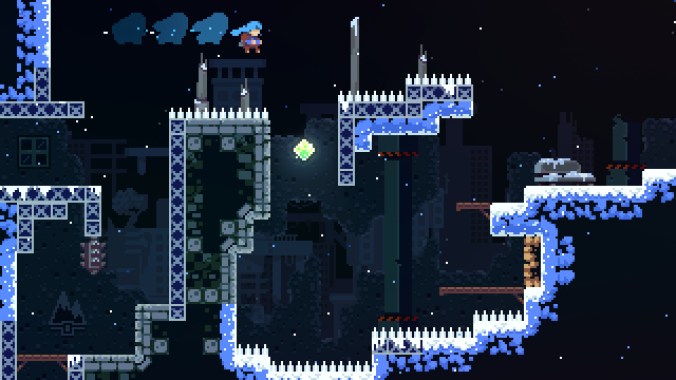
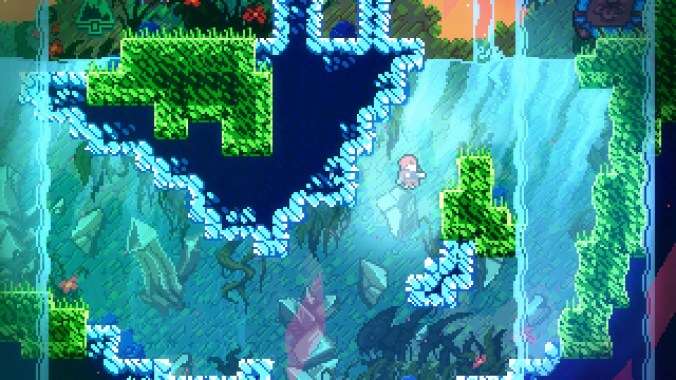
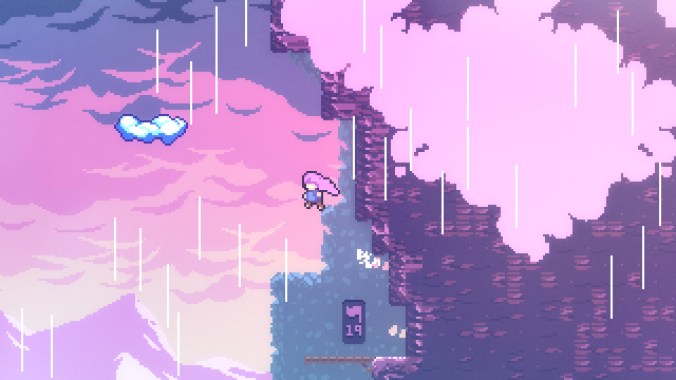
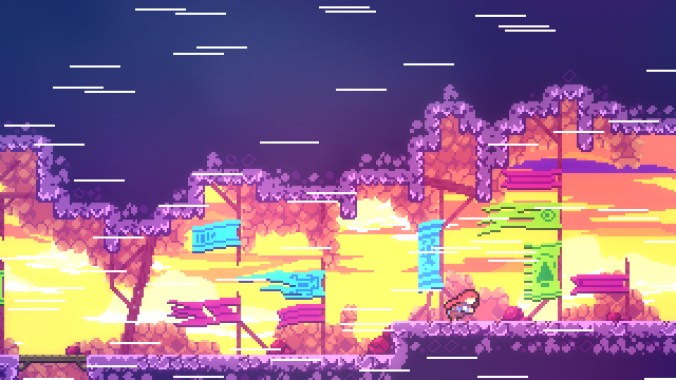
As one of the most common genres of indie games, platformers need something special if they want to stand out. That is what initially drew me to Celeste, as I am admittedly not the biggest 2D platformer fan. This game had to be masterful with all the hype that it garnered as an indie platformer. Even though the first game I ever played and loved was Super Mario World, 2D platformers just don’t do it for me anymore. They often feel repetitive and simplistic compared to a metroidvania or adventure game with platforming elements. It’s safe to say I’ve changed my mind after playing Celeste. It does so many things right that it has reignited my interest in an entire genre of games.

1

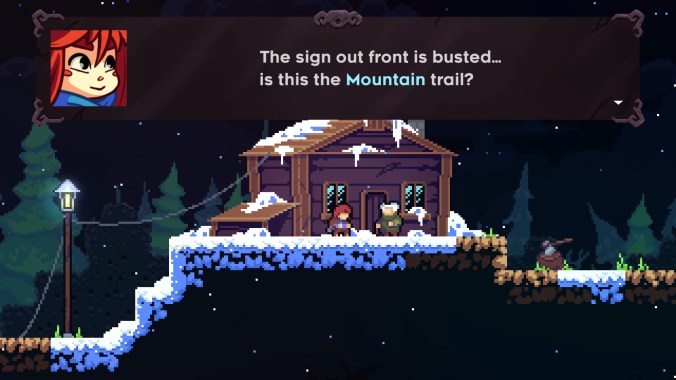
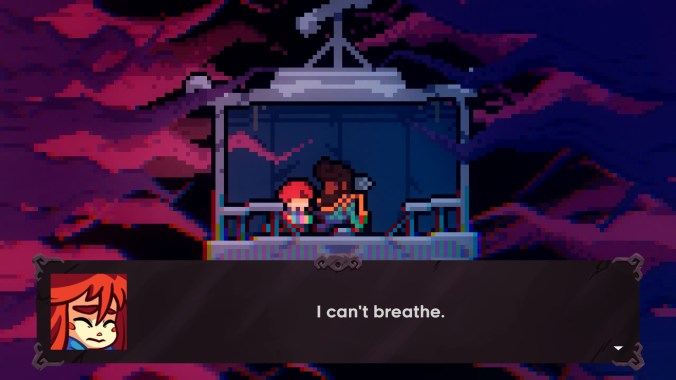
Celeste is a game about climbing mountains, both physical and metaphorical. The journey is comprised of multiple chapters that have the main character, Madeline, ascending the mountain. Madeline has no reason for doing this, other than feeling like she has to. Along the way, it becomes apparent that Madeline struggles with mental health, and the story is really about her battle with herself. The mountain is magical in a way that it brings out her negative traits like self-doubt, paranoia, control, anger, anxiety, and depression and manifests them into a physical form. This manifestation is called “Part of Me” or “Badeline”. The whole game Madeline is struggling with the Badeline, as it takes every opportunity to impede her progress and sow the seeds of self-doubt in her head. Along the way Madeline meets a few new friends that help her deal with the negative “Part of Me”.

4

Even with its cutesy presentation, Celeste tells a powerful story. I genuinely did not expect to become so invested and impacted by Celeste, but its plot resonated heavily with me. I obviously will not spoil the final resolution of Madeline’s story, but I was very satisfied by it and I think it does an excellent job portraying the importance of mental health. Sometimes you battle with yourself, and Madeline’s ascent up the mountain was both a physical and spiritual battle. Moreover, I think Madeline feeling like she has to climb the mountain is a meta statement about the game. Sometimes people are driven just to do things for the sense of accomplishment, it makes us feel better about ourselves when we accomplish a challenging goal. For Madeline that is climbing the mountain, for the player that is completing the game.

8

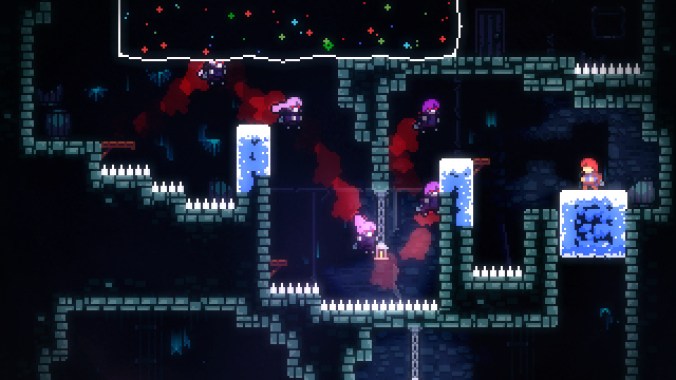
As a kind of retro platformer, Celeste is deceptively simple. Aside from the standard movement and jumping that are essential, you only have 2 other tools in your arsenal: the dash and wall-climb. When you jump you are allotted one dash that can be used in eight directions. You cannot dash again until your feet hit the ground. The wall-climb is just what it sounds like, you can grab onto walls and either hold on or climb up them. There is a stamina meter that depletes if you hold on too long or if you climb too much. Overall, everything is simple in concept, and that is what makes Celeste so great. You can pick up the controls and get good at the basics fairly quickly, but things quickly get more interesting.

3

Instead of giving the player new powers or abilities, Celeste instead focuses on environmental obstacles that introduce new mechanics. There are eight main “chapters” in Celeste, each of which contains its own unique gimmicks. For example, the first chapter introduces platforms that quickly shift when you stand on them as well as gems that give you an additional dash in the air. The second chapter revolves around these “dream blocks” that you traverse by dashing through them. Celeste does not dwell too long on these gimmicks, as each stage is fairly short, playing casually you could probably complete each one in under an hour. Despite this, Celeste squeezes out every drop of potential from these mechanics.

6

Each chapter of the game is split up into a few dozen screens. Going from one screen to another acts as a checkpoint and will save your progress. Since the levels are divided into these short screens, it allows the designers to make for some challenging sections. Chapters are designed in such a way that they begin with a simple introduction to a mechanic and then will build on it until you can pull off some crazy platforming shenanigans. The player is given the opportunity to master each gimmick, and the levels play with remarkable fluidity. You can feel yourself getting better and more comfortable with the gameplay, and soon you will be dashing around the screen with style. The game was also built with speed-running in mind. Chapters and screens are constructed in such a way that they can be optimized and sped through. While I am not a speed-runner, I definitely did find myself getting a lot better and faster with each subsequent chapter.

7

When I said Celeste has eight chapters, that was kind of a lie. The main story is contained with the “A-sides”, and the player can unlock far more difficult B-sides and C-sides for each chapter. This totals 24 chapters, not to mention the collectibles to be found along the way. The way I see it, Celeste has four stages of difficulties. In order from easiest to hardest: A-sides, strawberry collectables, B-sides, and finally C-sides. The strawberries are scattered in the A-sides of each chapter. Some are hidden in nooks that require the player to be perceptive, and others are in plain sight but require more difficult platforming tricks. I really like the strawberries because I they add a lot of content to the game. They often are situated in a way that makes you think creatively of how to reach them. The strawberries genuinely feel like challenges that were designed for the main game but were made optional as to not make the game drag. They don’t feel tacked on, which is a pitfall of many other games collectable systems.

2

Despite Celeste being fairly challenging, it is an extremely accessible game. Since challenges are short and self-contained, I feel like everybody could at least complete the main story of the game. Nevertheless, there is a “assist mode” available to players having trouble or who just want to tone down the difficulty. You can mess with certain settings such as the game’s speed, or how much stamina you have, or how many dashes you can use while airborne. Personally, I never used this feature but I suppose it is a neat addition for people who want to experience the story without the challenge. While I think the main story is certainly beatable by everyone, the B-sides and C-sides are ruthless challenges that require much more precision, perfection, and speed.

9

I took a dive into the B-sides thinking I was just going to try them out, but man I got addicted. They are full length chapters akin to the A-sides, but with much more difficult screens and without strawberries. They use the same gimmicks as the A-sides did, but they are pushed to the limit and require a level of proficiency that was rarely touched in the A-sides. They are long and grueling chapters but the sense of accomplishment is immense upon completion. As for the C-sides, they are without a doubt my favorite part of the game. They are much shorter than the A-sides and B-sides, as they only contain about three screens each. But to compensate, these screens are insanely hard. The reason I love them is while they are difficult and require absolute mastery of the chapters, they are short enough that they don’t overstay their welcome. Where the B-sides dragged on a little long in some instances, the C-sides just have you conquer a few screens and to get that feeling of satisfaction.

10

While C-sides are short and sweet, other chapters definitely go on for too long. This is primarily and issue with the B-sides because they are so difficult so completing them can feel like an exhausting task. One hard screen after another with no obvious end in sight can be mentally draining. The A-sides do not have this issue because the steadily ramp up in difficulty throughout a chapter, this way you are not slammed with hard screens through the whole chapter. The B-sides on the other hand are essentially entirely comprised of challenges similar to the hardest screens from the A-sides. It’s not too big of a deal because you can take a break whenever you want, but still some levels just gave me that feeling of “does this ever end”. I’m looking at you, chapter 6B.

12

My other issue with Celeste is a certain gimmick. In chapter 3 and chapter 8 there are moving hazards that kill you when you touch them. In chapter 3 they are dust bunnies, in chapter 8 they are fire balls. These hazards move in cyclical patterns, often back and forth or in a circle, I will call these patterns “cycles”. My issue with these cycles is that they are often impossible to time without extensive trial and error. The hazards move extremely rapidly and the player’s timing needs to be fairly precise. This isn’t so different than most of the platforming in the rest of the game, so what’s the issue? Well, often times a screen is decently long and some of these hazards are off-screen at the start of a screen. When you make the first few jumps, you can reasonably time the cycles to make it through. But then you reach the 4th, 5th, 6th, etc. jumps which you could not see them at the start. You cannot take a break to line up the cycles here, as you are often mid-jump or need to quickly avoid another hazard. This leads to a situation where sometimes the cycles just don’t seem to line up. You make the first few jumps no problem, but then the hazard is completely in the way for subsequent jumps.

11

The reason for this is that minute differences in timing will lead to the hazard being in a different part of the cycle when you arrive. I think when the designers made these levels, they had a specific way of doing them that would result in the cycles just lining up and working out flawlessly. But for players, small differences in technique will result in different timings that just don’t work. For example, a designer may have done a Northeast dash, but the player does an East dash. As a result, the player is a little faster than the designer, and when they get to a later part of the screen it turns out they were too fast and the fireball is now directly in their path. It’s frustrating because it often feels like I didn’t even know what I was doing wrong. The fireballs and dust bunnies were always in the wrong place at the wrong time, but there was no way for me to just stop and wait for them to move. Because of this, going slightly too fast or too slow on early jumps changes the way the level works. Cycling hazards in Celeste feel like an exercise in trial and error.

5

The last thing I want to mention about Celeste is how it is presented. The retro-style pixelated graphics and done extremely well. Since levels become hectic and fast moving once you reach the later stages of the game, everything needs to be clearly telegraphed and visible to the player. The game has bright colors and visuals that pop and are easily distinguishable; I never died to an obstacle I did not see. The other aspect of Celeste I want to talk about is its music. You can’t talk about Celeste without talking about the music. The music perfectly matches the mood and atmosphere of each chapter. It evolves through the level to match the different tones and emotions that you should be feeling. I’ve linked one of my favorites tracks from the game below. This track is from chapter 2 which exhibits a dreamy atmosphere. It is split up into five different sections to accompany the swings in mood throughout the level. The song perfectly encapsulates numerous feelings such as tranquility, fear, and anxiety. The music of Celeste is composed beautifully and appropriately to deliver the emotions the game wants to convey.

Listen here:

In retrospect, the issues of Celeste are minor when compared to the rest of the game. There were only a couple that were too long, and cycling hazards only appeared in some spots of a couple of chapters. These problems do not significantly detract from the rest of the game, but they may be frustrating in the moment. Despite these problems, Celeste has ridiculously fluid platforming that pushes its mechanics to their limits. Additionally, the storytelling of Celeste will stick with me for a long time. Madeline’s struggle with Badeline is the perfect metaphor for mental health. It is for these reasons that I give Celeste a 9.5/10. Celeste captivated me in every way, and it is absolutely in contention for best 2D platformer of all time.

Fez (2012)

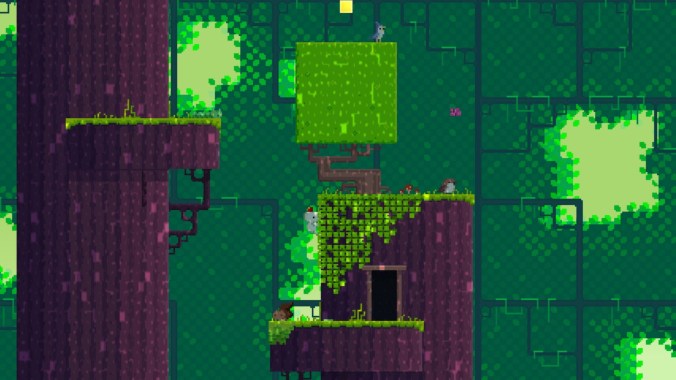
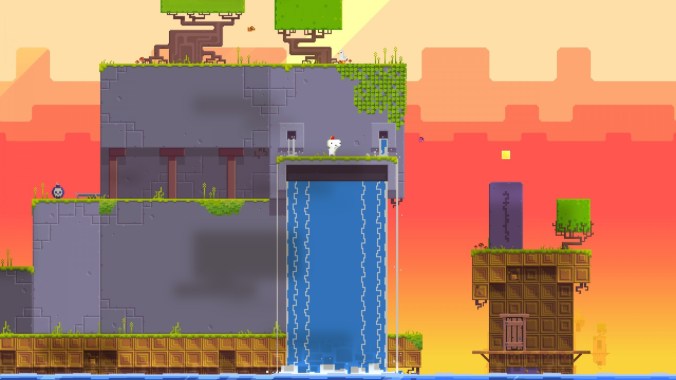
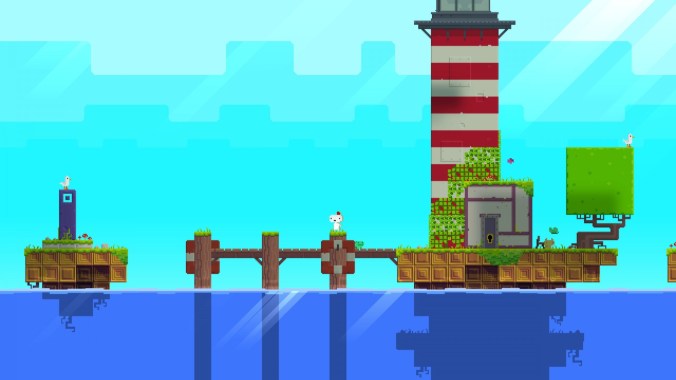
When looking for a nice and relaxing puzzle game to play over my spring break, Fez seemed to be the perfect fit. This indie puzzle-platformer has cutesy visuals, fairly simple platforming, and a unique perspective rotation aspect. What I did not know was that Fez is essentially two entirely different games. On the surface it is that adorable little platformer, but deeper inspection shows that Fez also contains insane cryptography and meta puzzles. The first playthrough of Fez is mostly simple platforming and exploration, but subsequent playthroughs reveal deeper secrets and hidden puzzles. Personally, I enjoyed the puzzle-platforming of Fez, but just could not get into the codebreaking and more “complex” facets of the game.

5

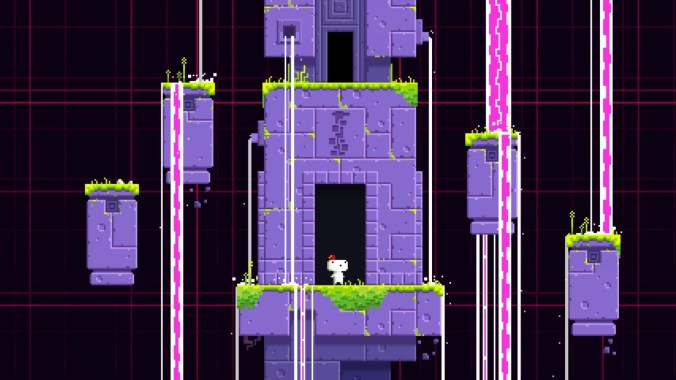
The concept of Fez is that is a 2D platformer set in a 3D universe. You can rotate the screen to reveal different sides of each area, and this is necessary to make progress. This system is a little jarring at first, as it is difficult to wrap your brain around the 3D levels on a 2D scale. Additionally, things do not always work as they would seem to. Fez includes a lot of impossible geometry. Nothing here gets too complex, as most of the time you just rotate the screen to find the next platform to jump to. You never have to rotate the screen mid-jump or really have to think about the 3-Dimensional aspects. For the most part, progressing through Fez is a relaxing endeavor.

4

The goal of Fez is to collect cubes, similarly to how a player would collect stars, shines, or moons in a Super Mario game. There is a total of 64 cubes in the game, 32 regular ones and 32 anti-cubes. Some of these cubes are split into little bits that you have to collect and put together. You only need 32 total cubes to reach the end of the game, and collecting the rest usually involves codebreaking and much more effort than simple platforming. Fez has a large world consisting of dozens of small areas that are accessed through doors between each other. The map is basically a giant spiderweb of interconnected areas. Finding your way between these areas and trying to locate any cubes that you missed is without a doubt the most difficult aspect of beating Fez. It’s easy to miss a door or forget how to get to a specific area. Some areas have ten or so doors, which all may lead to many more areas. Luckily the map details which areas you have fully explored, so you will know when you have missed something.

3

While on the surface Fez is a cute little puzzle-platformer with some exploration and collectathon aspects, there are much deeper secrets to be found that unlock the anti-cubes. You can decipher secret alphabets and codes to open new doors and paths through the world. I messed around with these codes for a bit and honestly did not enjoy it that much. For the most part this aspect was just kind of tedious to me. You essentially have to go through the entire world again looking for any writing on the wall or any hidden secrets. Since you can only really do this with an item you get at the beginning of the second playthrough, you are forced to go through the game again just with a different perspective.

2

If you enjoy really digging deep and searching for hidden clues, this may appeal to you. It’s just a fairly niche kind of puzzle that involves combing the map over and over. Keeping track of hints and codes on paper is something I usually enjoy, like when I played The Witness, but backtracking through hundreds of areas to track down hidden messages just is not my cup of tea. I’m sure many people will enjoy this method of replayability and secrets, but I definitely think that the codebreaking part of Fez is a more niche aspect. Nevertheless, I must commend Fez for facilitating such a unique style of puzzle solving and gameplay.

1

Despite me not fully enjoying the deeper parts of Fez, the first playthrough was exactly what I was looking for. Fez delivers on 2 completely different experiences, both of which are well executed and will draw different audiences. The simple and relaxing platforming adventure was right up my alley, and the codebreaking parts of the game are sure to appeal to a niche audience. If either of these aspects entice you, then I definitely recommend giving Fez a try.

Horizon Zero Dawn (2017)

Without a doubt, the most oversaturated genre of game right now are open-world adventure games. Many that fall into this category fall into the same rote routine established by the original Assassin’s Creed over a decade ago. Climb towers to reveal the map, collect a horde of useless trinkets, complete mundane side quests, explore a barren open-world environment, and progress through a fairly uninteresting plot. These games are often uninspired and suffer because they put all their resources into creating a vast world rather than focusing on a few aspects and perfecting them. “Quality over quantity” is the mantra that I wish many of these developers would adopt. At a cursory glance, Horizon Zero Dawn seems to fit into the category of generic open-world game but reskinned with robots. Luckily, upon playing the game I was pleasantly surprised by many aspects of Horizon Zero Dawn.

1

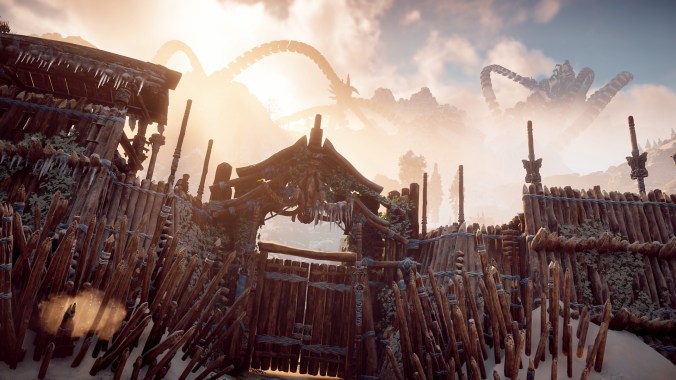
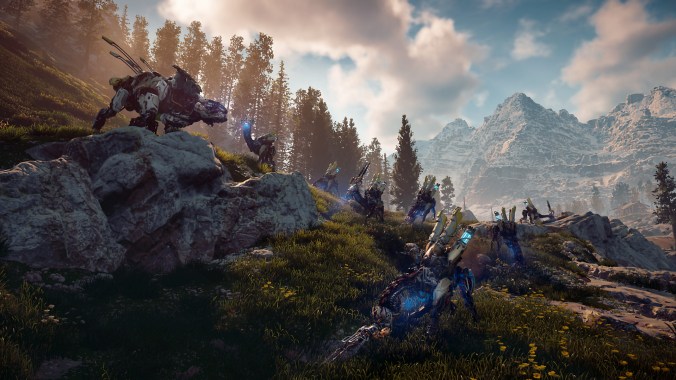
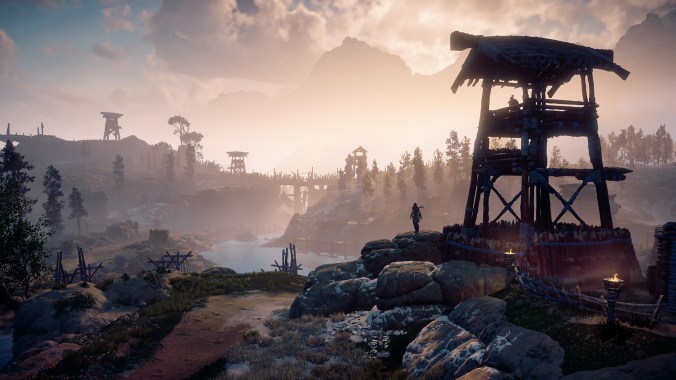
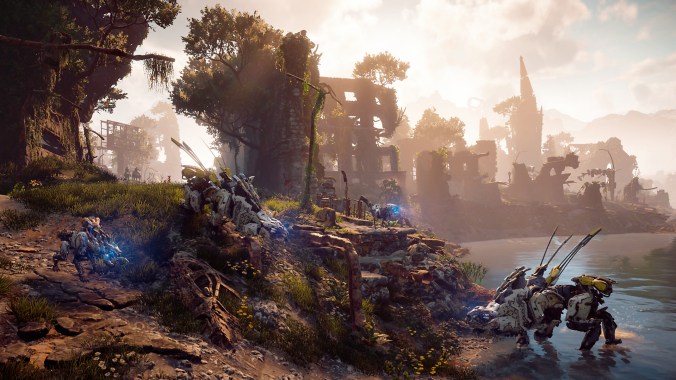
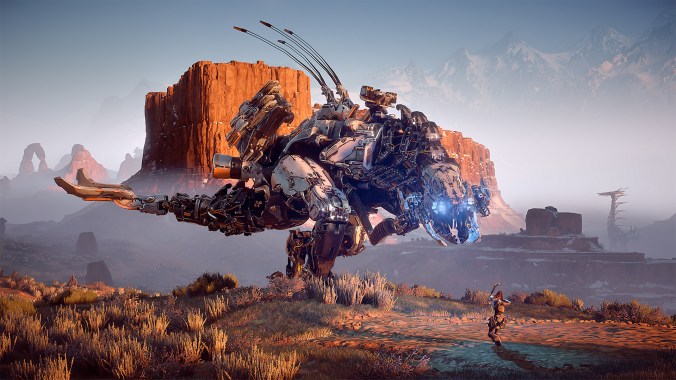
One of the most enticing features of Horizon Zero Dawn is its setting and environment. Sure, a post-apocalyptic scenario is extremely common in games, but Horizon Zero Dawn stands out in a few ways. Most obviously, the player will mostly be fighting rogue robots and machines. This provides an entirely new perspective to combat that is absent when fighting stereotypical humans, monsters, or the like. ­In this world, humans are organized into tribes with minimal technology to fend off the aggressive machines. Moreover, Horizon Zero Dawn is environmentally rich and has a variety of biomes to appreciate, I never get the feeling of “everything looks the same”. It is common for these doom-and-gloom post-apocalyptic games to be set in a dark and unsettling environment, but Horizon Zero Dawn is undeniably beautiful. With its rich environments, realistic art direction, and well-made graphics and visuals, this game is breathtaking.

2

While I did eventually learn to enjoy Horizon Zero Dawn, it does have a remarkably slow start that initially made me dislike the game. The strengths of the game, such as the story and unique combat system, do not become apparent until a few hours into the playthrough. The game spews exposition, dialogue, and cutscenes at the player for the first few hours, leaving me bored and wondering when the real game was about to start. Even with the overabundance of storytelling, I did not become invested in the plot early on. It is difficult to really get into the story when the game is non-stop spitting narrative at you. I feel like you have to give the player time to process events instead of rapid-fire spitting conversations at them. There is meant to be a narrative hook of mystery regarding the backstory of the main character, Aloy. Unfortunately, the game gives the reasonably astute player way too many hints of Aloy’s origin so any level of intrigue is compromised. Additionally, the gameplay of Horizon Zero Dawn shines when battling larger and tougher enemies, which there is a distinct lack of early on in the game.

3

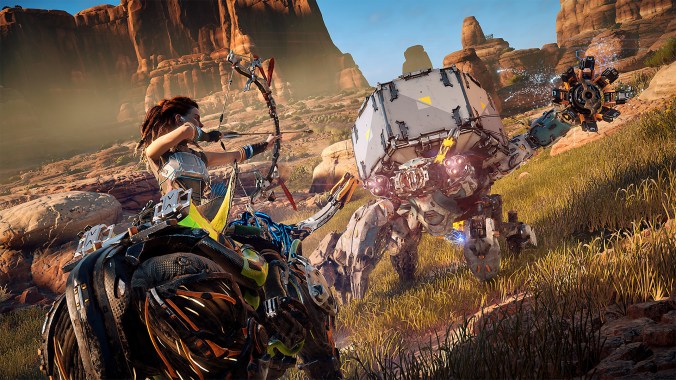
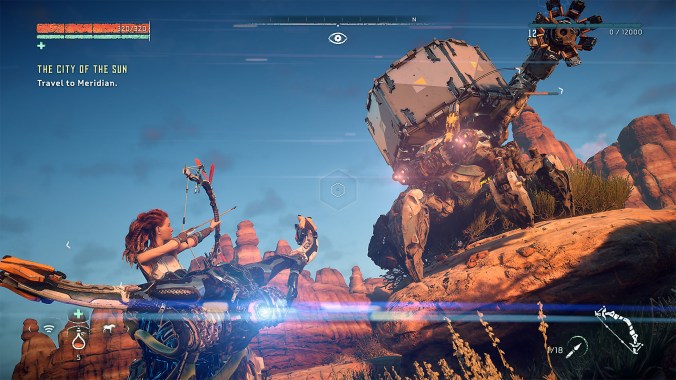
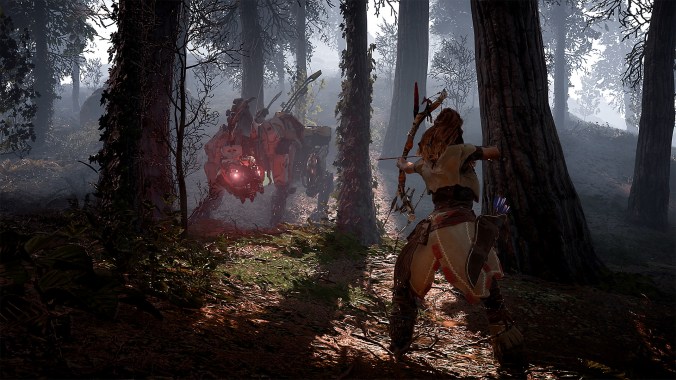
The combat in Horizon Zero Dawn is what I consider to be its shining feature. You fight large machines, which often resemble animals or dinosaurs, using a few ancient tools. Aloy’s main weapon is a bow, but there are a number of additional weapons such as slingshots, spears, or traps to give the player some agency on how they want to approach any given encounter. Initially I thought this system was the same as any other game, just with robots as your primary enemy. However, as I progressed further into the game, I became enthralled with the system. Horizon Zero Dawn phenomenally utilizes weak spots and elemental attacks to make the player really feel like a hunter learning its prey. Every type of machine has components that act as subsystems, and as you destroy those components, you disable certain functions of that robot. As you scan machines, you can gloss over what their components are and prioritize which are the most important to destroy first. You can even pick up things like machine guns or rocket launchers that get knocked off of the robots to use against the machines.

4

Additionally, many of the components react to different elements. Some contain flammable fluid that will create an explosion when hit with fire. Others contain coolant that will freeze the enemy. Some components are just flat out weak spots that you will do bonus damage to if you hit. The machines are obviously heavily armored, so if you just shoot arrows haphazardly you will do pitiful damage. You have to either hit a weak spot, destroy a component, or blow off the armored plating entirely if you want to do substantial damage. This is why I absolutely love battling the biggest and meanest enemies Horizon Zero Dawn has to offer. These enemies feel like raid bosses, and not just giant health sponges that require more time than skill to defeat. The player cannot just blindly fire away, chip away at the health pool, and hope for success. The gargantuan robots force the player to strategize and prioritize which components are the most important to disable. Truthfully, I wish there were far more of these types of opponents in Horizon Zero Dawn. There are about 3-5 types of these raid boss robots, and most of the other enemies in the game pale in comparison. Most of the smaller robots and humans do not require much strategy or planning.

5

Moreover, due to the use of ancient weaponry, movement is a bit slow and deliberate. This is fine, except when facing larger hordes of weaker enemies. It can be difficult to pull the drawstring back and aim properly when being swarmed by five or six quick moving enemies. In these scenarios the player mostly has to resort to stealth to pick off a few enemies before engaging. It’s not bad in essence, but I would much rather be hunting one of the colossal machines. This is why I found it hard to get engaged early on in the game, fighting the tutorial-esque enemies provided no challenge, thought, and did not force the player to utilize the ability to knock off key components of the machines.

6

It should come as no surprise to anyone who’s heard anything about this game that it is highly lauded for its story. Essentially, the player follows a few storylines at the same time, mainly the present and the past. You must uncover why human civilization fell thousands of years ago, and connect it to why machines suddenly start attacking in the present. This combined with tribal relations, Aloy’s backstory, and the intrigue of cultist groups provide numerous plot threads that all weave and braid together. The story of the past is mostly told through holograms, recordings, and text logs, but it still manages to be just as important and interesting as the rest of the plotlines. I won’t go into anymore detail because I try to keep my reviews spoiler free, but you can be assured that Horizon Zero Dawn will captivate you once you get deep into its narrative.

7

Aside from its slow start, Horizon Zero Dawn does suffer a little bit because of its insistence to follow the generic open-world formula. You have to climb tall robots to reveal the map, there are a ton of collectibles that amount to nothing, there are plenty of filler quests meant to just pad out game time, and a ton of fairly useless objectives scattered across the map. None of this was a big deal, at worst you can just ignore many of these features if you are not interested in doing them. And to be fair they do provide a decent amount of content for people who do like to explore and complete a checklist of objectives. I think I would have preferred if resources were allocated to bettering the core game rather than making a generic open-world, such as including more boss-like machines. The open-world is not bad, it is just an incredibly saturated market and perhaps Horizon Zero Dawn would have benefited from being a little more niche.

8

I was generally pretty impressed by Horizon Zero Dawn. The unique combat system in particular is what kept me playing. The first four to five hours of playing, the game just did not click for me; I thought it was generic and repetitive. Eventually it clicked, and I started to greatly enjoy my time with Horizon Zero Dawn. Hunting the large machines was an absolute joy, I just wish there was more of it. It is for these reasons I give Horizon Zero Dawn a 7.5/10. The slow beginning and at times repetitive open-world gameplay do set Horizon Zero Dawn back, but the rest of the game makes up for its shortcomings.

Hyper Light Drifter (2016)

Without a doubt, one of the most influential series in history is The Legend of Zelda. The early top-down adventure games are immensely popular and hundreds of other games drawn inspiration from them. One of those inspired games is Hyper Light Drifter. Hyper Light Drifter is a top-down 2D action-adventure game. You shoot and slash your way through a futuristic post-apocalyptic environment. This game is brimming with fast-paced action and satisfying combat.

5

What originally drew me to Hyper Light Drifter was just how similar it looked to Furi, which has quickly become one of my favorite games. I absolutely adore the sci-fi samurai aesthetic. To be honest, Furi and Hyper Light Drifter are so similar in their styles that its somewhat unnerving. Both games are top-down action titles featuring a futuristic swordsman wielding a glowing blue sword, a pistol, and a red cape. Both the characters seem to have unclear goals and motivations. And both games were released within a few months of each other. Spooky. That observation aside, Furi and Hyper Light Drifter have quite a few differences in the gameplay department. Furi is a boss rush and solely focuses on perfecting each boss encounter, while Hyper Light Drifter includes more adventure, world building, exploration, and combat outside of bosses.

4

Hyper Light Drifter is a top-down adventure game in which you work to unlock a seal by defeating bosses and activating obelisks. There are four areas, and at the center is a town and the seal that you are attempting to open. Each area is a labyrinth with multiple layers that you must explore to unlock the boss in each area. These areas consist of ruins, landscapes, futuristic tunnels and laboratories, and a variety of secrets to unlock. You can find shortcuts that make the maze easier to navigate, new guns to use, and diligent exploration will yield tokens that can be used to purchase upgrades. These upgrades come in a myriad of options such as sword abilities, gun upgrades, additional dashing effects, and some other choices. I enjoy these upgrades as they are generally new abilities to add depth to combat rather than just strict damage or health upgrades.

3

The combat of Hyper Light Drifter is extremely fast-paced, and the scarcity of healing resources make even the smallest encounters challenging. This is because you can only carry a few health-packs at a time, and you have to find them scattered as you explore. This leads to you trying to avoid any and all sources of damage so you do not have to waste a health-pack. I quite like this as it makes even simple encounters more interesting because I was trying to not get hit at all. The player has a number of tools in their kit to fight enemies. The sword being the primary method of attack, and the gun being a nice long-ranged weapon to sprinkle in some damage. The gun has limited shots that refill when you hit enemies as to stop players from just shooting at enemies and forces you to get up close and personal. The dash is obviously used for evasion and to close the gap between you and distant targets. On top of the base combat, the previously mentioned upgrades add a ton of new mechanics to be utilized. All this makes for engaging and fast-paced combat as the player swiftly dodges in and out of projectiles, avoids melee attacks, and returns fire with a barrage of bullets and sword strikes.

2

The storytelling of Hyper Light Drifter is completely wordless, and relies entirely on visuals for the player to deduce the story. I personally like vague and cryptic styles of storytelling that let the player piece together a narrative, games like Dark Souls do it well. Unfortunately, Hyper Light Drifter is a little too vague for its own good. There’s not a lot of story, and most of it is told through quickly flashed images. It feels like the developers had a clear idea of what the plot was, but failed to portray it in a cohesive manner. With some code deciphering, the story can be interpreted, but most people will not go through the trouble.

1

Other than the incomprehensible storytelling, my other big issue with Hyper Light Drifter was a performance problem. Apparently, a few versions of the game (namely the Twitch and GoG clients), have a bug which makes the game unplayable after a short period of playtime. I received the game through Twitch, and after about 45 minutes, the game entered a bizarre slow-motion state. I had to restart the game after every 45 minutes to prevent this issue from occurring. Its not a big deal, but it was a pain. Especially since at first, I thought the slow-motion was an intended mechanic and I played in slow-motion for about 10 minutes before I realized that it was very obviously a bug. I’ve read that this issue does not happen on the Steam version or console versions of the game. Hopefully, the developers fix whatever is plaguing the Twitch and GoG versions.

6.jpg

As a whole, I really enjoyed the setting and gameplay of Hyper Light Drifter. The fast-paced action and neon-samurai feel are the absolute core of the experience. Even with the lacking story elements and technical issues I still had a blast. It is for these reasons I give Hyper Light Drifter an 8/10. Hyper Light Drifter is a quintessential top-down action game that definitely should be tried by everybody.