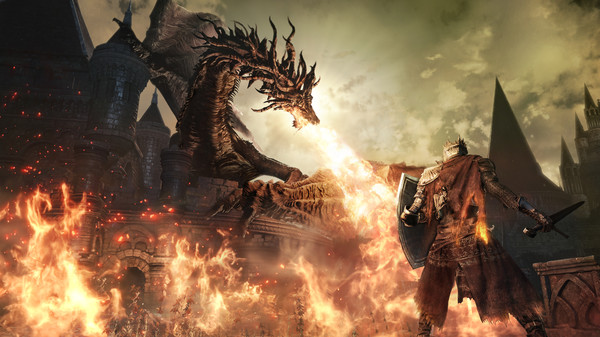
Elden Ring (2022)

Elden Ring is one of the most awe-inspiring adventures ever made. Its grandiose scope paired with wonderfully varied environments, naturally occurring vistas, and absurd array of characters and enemies is something that may never be surpassed. In many ways, Elden Ring is the natural evolution of FromSoftware’s Dark Souls franchise. It streamlines many of the more controversial aspects while doubling down on action and spectacle. And while I do love Elden Ring, I think something was lost in that evolution. Moreover, Elden Ring is often a victim of its scope. The game is gargantuan and undeniably runs out of steam towards the end.
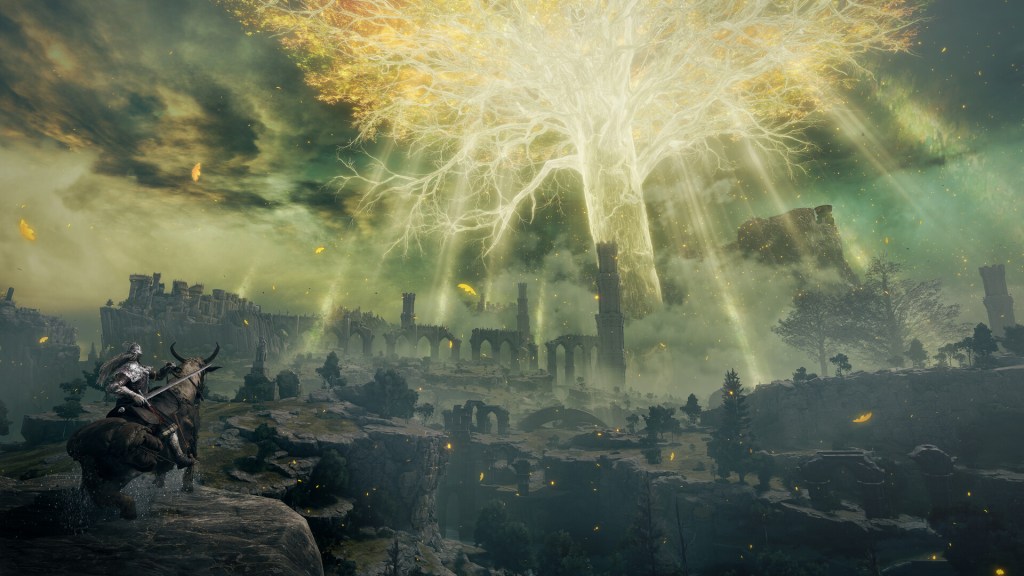
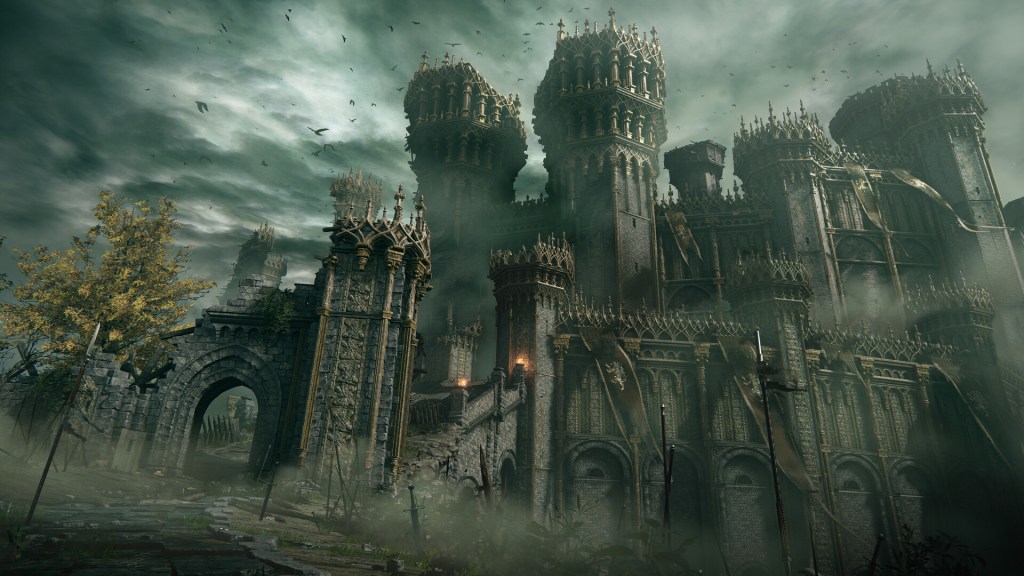
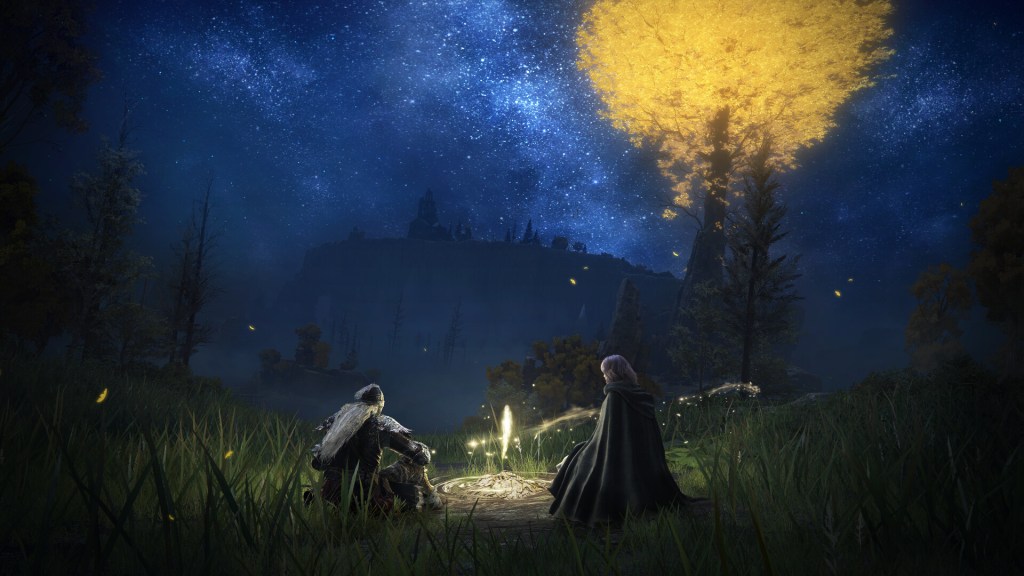
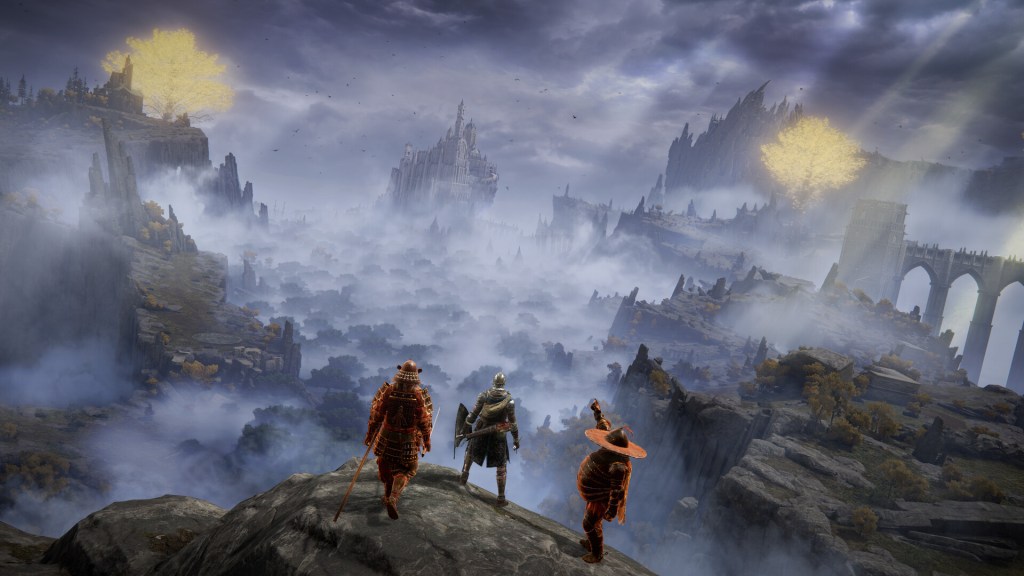
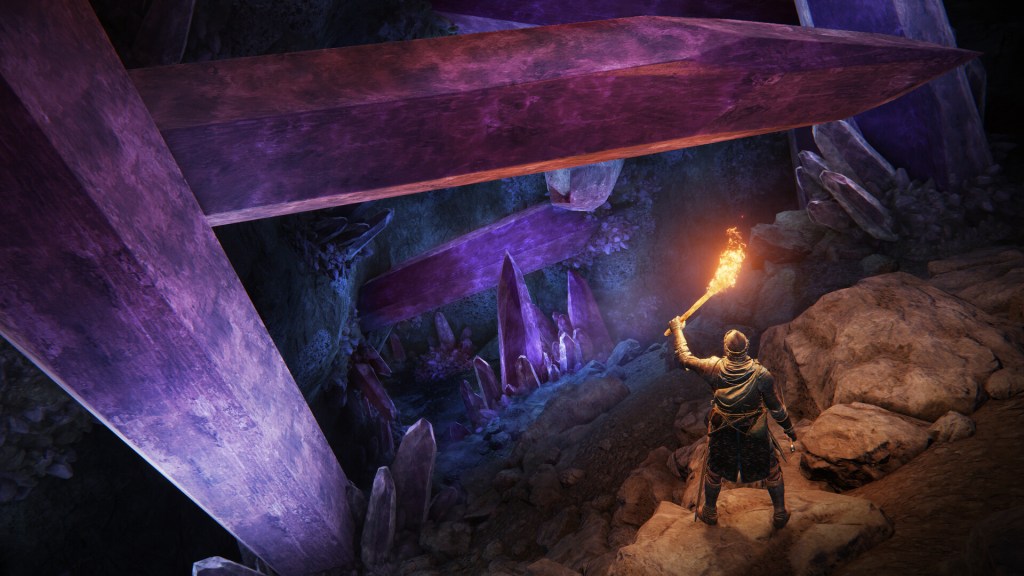
What Elden Ring does best is the jaw-dropping moments of environmental reveals. The game has so many different classic fantasy areas such as magnificent castles, rolling plains, snow-capped mountains, desolate and rocky badlands, and dense forests. But it also has plenty of its own imaginative areas such as the rotting and malaised hellscape of Caelid. The sheer wonder I felt when I discovered the luminous skies in Siofra River is a high point that mirrored the first time I stepped foot in Anor Londo a decade ago when I first played Dark Souls.

It’s all the more impressive that Elden Ring manages to be full of these grandiose landscapes and creative environments when considering the scope of the game. The game is truly massive. In the first area of the game there’s a good chance you’ll be teleported to the other side of the map which serves as a shocking revelation that the big area that you’ve spent hours exploring is nothing but a miniscule slice of the world. Aside from the main dungeons and attractions in each area, there are plenty of enemy encampments, roaming bosses, side dungeons, and other secrets to uncover. While some may argue that the big world can feel a bit empty at times, I’d propose that blank space is vital. It makes the world feel genuine and real. The settlements and points of interest are spread out so you can spend a few minutes riding your horse and appreciating the landscapes.

To go along with its massive world, Elden Ring also boasts the most build variety of any of its predecessors. There’s a plethora of weapons, shields, spells, talismans, ashes of war, spirit ashes, and other items to find that can dramatically change the way you play. Aside from dealing high damage, heavy weapons deal a good amount of hitstun and also build up stagger which can allow you to land a critical strike every so often. Light weapons hit fast and let you hit the boss in the middle of their combos. Magic is better than ever for anyone who wants to play as a sorcerer. Status effects such as bleed and frost are also viable as they deal big chunks of a boss’s health bar. There’re tons of ways to modify your build to match your playstyle, which I think is fantastic.

Unfortunately, with so many options come quite a few issues as well. The sheer quantity of builds has three main flaws: exploration rewards, the upgrade system, and balance. In such a big world, you want to be rewarded for exploring every nook and cranny. Battling through a dungeon is a reward in and of itself, but most players want some sort of relevant trinket or item to help them along their journey. The problem in the case of Elden Ring is that the vast, vast majority of things that you find will be completely irrelevant to your build. If you want to play as a knight with a sword, pretty much every spell, weapon, and most talismans you find do absolutely nothing for you. To make matters worse, the game often rewards you with random material and cookbooks used in its crafting system, which most players don’t truly engage with. Sure, you get rewarded in the form of experience points just for defeating enemies. But the “fun” stuff such as new weapons and gear will be unusable for most players.

This problem is made much worse by the restrictive upgrading system. If players actually had the freedom to experiment with all of the new weapons and tools that they find then these would be sufficient rewards. But the reality is that because of how stingy the game is with upgrade materials (smithing stones), you won’t have enough material to test all the weapons you want to use. Moreover, it’s impossible to compare the effectiveness of a new weapon to your current one, as there is no way you will have enough material to fully upgrade the new weapon to the same tier as your current one. Most players are just going to stick with one or two weapons that they like and not experiment too much as it is cost prohibitive to do so. 

There are plenty of open world games out there to play. The gorgeous and somber world is without a doubt one of its main appeals. But what truly makes the game stand out among its peers is its combat. Most big open world games have fairly rudimentary combat systems. While Elden Ring doesn’t quite have the complexity of Devil May Cry or Bayonetta, it still boasts challenging encounters that are begging to be mastered. FromSoftware has progressively made its Souls-style games more and more action-y, and Elden Ring is the natural progression of that trend. For better, and for worse.
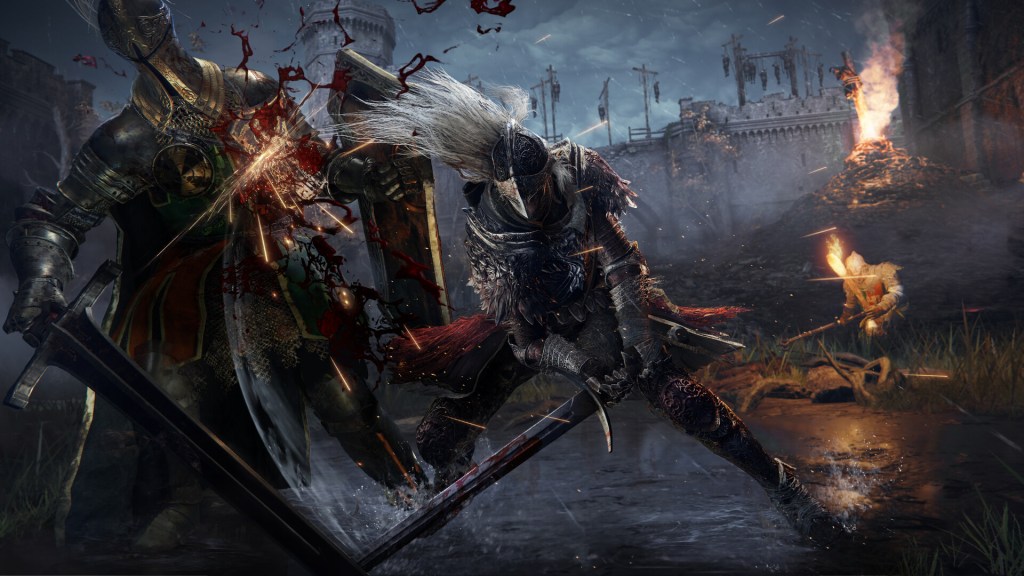
Aside from the sheer variety that new weapons and magic affords, Elden Ring also boasts other tools to be used in combat. One major one is Ashes of War. All weapons have a default skill that can be used at the cost of some mana. These skills range from simple buffs, to whirling combos, to front-flipping slams with your sword. As you adventure and find Ashes of War which can be used to override your weapon’s skill with a new one. And if you are using a shield, you can perform a guard counter after blocking an attack for big damage. Having these skills at your disposal does open up combat a bit more from the standard light and heavy attacks that we’ve become familiar with.

Weapon skills and guard counters also highlight an important new mechanic: stance breaking. Like in Sekiro: Shadows Die Twice, you deal stance damage to enemies and bosses as you hit them. Light attacks do little stance damage, heavy attacks do big stance damage, and guard counters/skills can deal massive stance damage. If you deal enough stance damage in a short window of time the enemy will become stance broken allowing you to land a critical strike on their weak point. Not only does this do big damage, but it also gives you a moment of breathing room where you can heal, regenerate stamina, cast buffs, or attack a couple extra times for free. 

I quite like the addition of this mechanic as it encourages players to remain aggressive and keep up dealing stance damage whenever possible. My one issue with this is that unlike in Sekiro: Shadows Die Twice, the stance bar is invisible. I have no idea whether or not I’m close to a stance break which influences my decision making. If a boss was close to being stance broken, I may up my aggression, or the opposite case may be true if they regenerated all of their stance. I really don’t understand why this was kept hidden from the player when they had no problem displaying the stance bar in Sekiro: Shadows Die Twice.
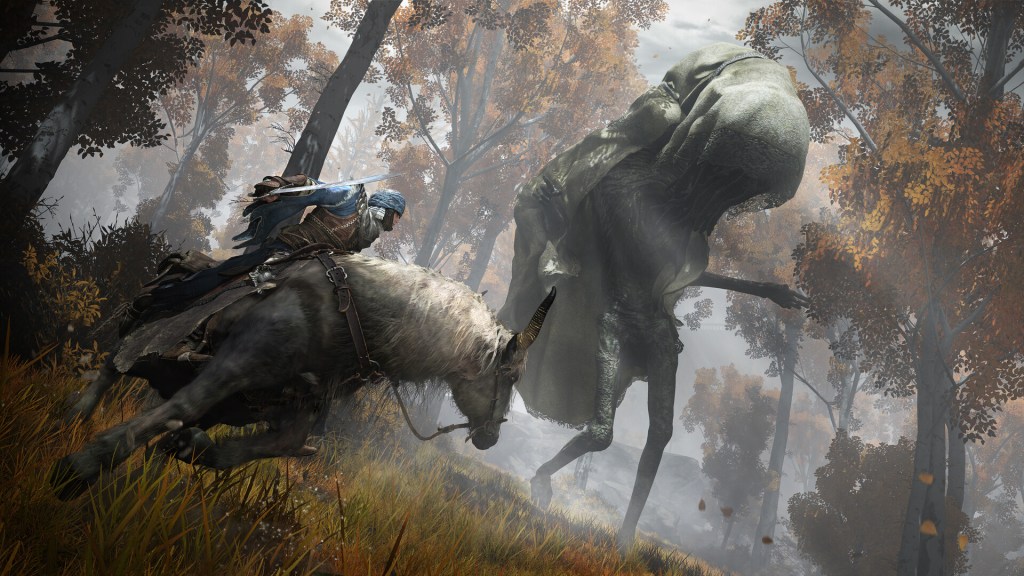
A major addition to the game is the jump button. While it may seem like it is mostly useful in short platforming sections, it turns out that jumping is absurdly powerful in combat. It may cost a chunk of stamina, but the jumping attack does a ton of damage both to health and stance. It also feels more reliable to execute than a normal heavy attack in many cases. Another huge benefit is that many attacks in the game are jumpable. I often found that I avoided attacks when going for a jumping attack of my own. While I do appreciate the inclusion of the jumping, I do think it has a few flaws.

First and foremost, the jump attack feels too powerful. This is especially true for builds with slow and heavy weapons as they rely on dealing stance damage. Moreover, the jump attack’s reliability makes it easier to execute than a charged heavy attack. It looks and feels a little silly to be jumping around constantly. My other issue with jumping is that it feels unreliable as a defensive option. While plenty of attacks are jumpable, the visual cues for these attacks feel inconsistent. Low sweeping attacks and ground slams may be obviously jumpable, but there are also many attacks that do not look like you can jump over them even though you can. Conversely, there are a handful of attacks that you cannot jump over even though you can’t such as ground eruptions. This led to frustration, trial and error, and ultimately, I stopped relying on jumps to dodge unless I knew for sure that something was jumpable.

Combat in Elden Ring is faster than most of its predecessors. While the series has been known for high-commitment actions with careful stamina management, Elden Ring gives the player much more stamina and quicker animations. You still have to be careful to not spam actions too much and run out of stamina, but generally it’s a far less present threat than in a game like Dark Souls. Of course, the reduction of these limitations on the player also means that the developers can afford to crank up the speed and relentlessness of the enemies as well.
All of these changes have undoubtedly increased the combat depth of Elden Ring. While it’s no Bayonetta, Elden Ring blows its open-world peers out of the water. In most open-world RPGs you just kind of have to accept that the combat is going to be underwhelming, but fighting enemies in Elden Ring is genuinely engaging. Even basic enemies can be threatening if you get swarmed. And stronger foes pose a real challenge. There’s a ton of creative visual design and a variety of enemies that will keep the player on their toes. But I have two major issues with the combat in Elden Ring: Spirit Ashes and boss fights.

The most impactful and controversial addition to Elden Ring is Spirit Ashes. These let you summon helpful allies to fight alongside you at the cost of some mana or health. I don’t hate the idea here. These summons help you deal with groups of enemies and provide some breathing room against bigger foes such as bosses. Summoning can make the game feel more dynamic as fights feel like real skirmishes. They also can be fun if you are roleplaying, summoning a horde of skeletons, knights, or wolves can make sense depending on your character. 

My primary issue with Spirit Ashes is the enemy AI seems incapable of dealing with multiple foes. Most bosses can be trivialized by simply having a summoned buddy that draws the boss’s attention away from you. Encounters can be made stupidly easy because you get plenty of extra time to heal, regenerate stamina, cast spells, and get free hits in while the boss is attacking your summon. This is made worse by the fact that many Spirit Ashes are egregiously overpowered and are often capable of defeating bosses on their own without any intervention from the player.
You can make the argument that the player isn’t required to use Spirit Ashes if they don’t want to. But there’s a few problems with this. First and foremost, Spirit Ashes and their upgrade materials are a common reward for completing dungeons. They are undoubtedly a core component of the game, and it feels bad to just ignore them altogether. Moreover, FromSoftware is famous for never including an easy mode in their games. They have always been adamant that having a singularly designed and fine-tuned experience is how they want to make their games. 

Part of the reasoning for lacking difficulty options is so that players can all discuss their experiences with the game on an equal level. Everyone can enter the discussion from the same place and understanding. That’s not the case with Elden Ring. Build diversity and Spirit Ashes dramatically change how you engage with the game. I found it immensely disheartening when I looked online after playing the game to see how other players fared against certain bosses and an exceedingly common response was “it’s easy if you use Spirit Ashes”. The game’s discourse has been entirely warped around them and if you used them or not which is frustrating when there is so much to talk about.

I think my biggest problem with Spirit Ashes is that there isn’t a middle ground. You either use them or you don’t. When using them many of the game’s encounters become trivially easy. When not using them, Elden Ring is the hardest FromSoftware title with relentlessly aggressive enemies. I don’t know what the intended experience is here. Neither option feels good. Bosses movesets feel like they are tuned for fighting multiple foes but their AI just can’t handle it. Bosses often cross the boundary into being more frustrating than fun.
FromSoftware has long been in an accelerating arms race with its player base. Their reputation for making difficult games combined with players’ skill naturally increasing means that every game has to be harder than the last. But there’s a problem there: difficulty can’t perpetually escalate. At some point, encounters become too challenging and take too long to learn, and I think that Elden Ring has surpassed that threshold in many places. Obviously, you can use Spirit Ashes to turn that tables and demolish these encounters but I find that unsatisfying as explained previously. 

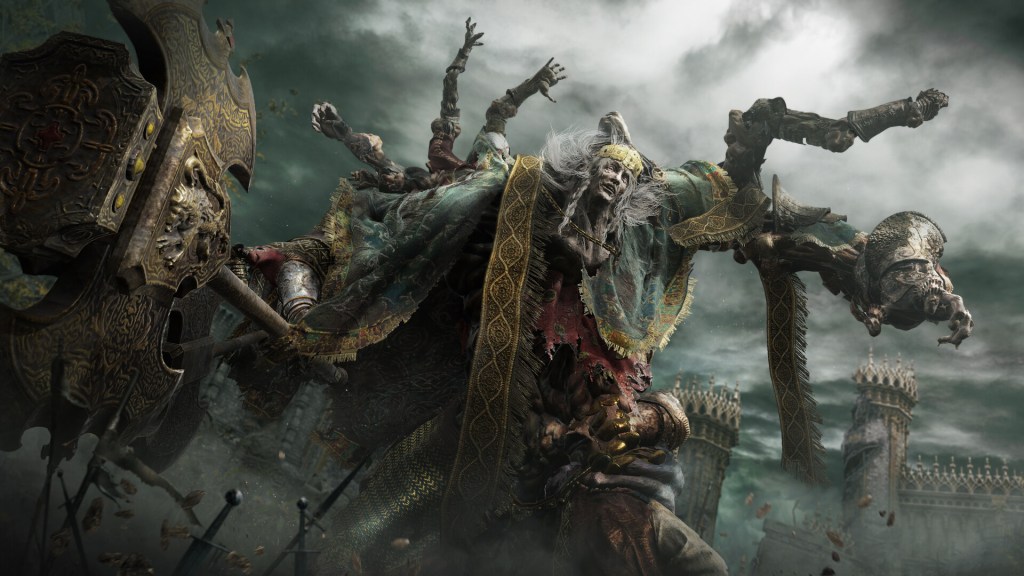
The bosses in Elden Ring feel like the designers are throwing the kitchen sink at the player. It feels like every boss is insanely aggressive, has multiple area of effect (AoE) attacks, high mobility, delayed attacks, long combos, branching combos, gap closers, ranged options to interrupt healing, multiple phases, and high damage. The extent of the new boss’s movesets makes them far more complex than the simpler bosses from days past. You have to memorize a bunch of different combos, attack timings, dodge directions, and punish windows. When it works, it’s great. Fights can be an adrenaline-filled dance where you play on a knife’s edge. When it doesn’t work, it feels genuinely awful. Bosses can feel like they don’t give you any opportunity for retaliation as they relentlessly spam dozens of attacks.

It’s common to treat FromSoftware’s bosses as puzzles. Players learn the ins and outs of every attack and how to respond to them. Experimenting with a variety of timings and positionings is necessary to maximize success. The end result is a mechanical mastery in which they have a reaction for every action that the boss takes. My issue with this approach in Elden Ring is that the bosses are so complex that it takes an absurd amount of time to master them. What would require a handful of attempts in previous games now can stretch into the dozens or hundreds. Personally, I don’t want to spend hours upon hours on a single boss, especially when there are so many of them in the game.
The way I fought most of the bosses in Elden Ring was not by mastering them, but by taking risks and accepting that I would be getting hit. On one hand, taking on the fights by using instinct can make for an adrenaline pumping experience. Scraping by with a sliver of health as you land the killing blow is exhilarating. But on the other hand, beating a fight without truly understanding it can be ungratifying. You never feel like you mastered the encounter. To make matters worse, bosses can feel unfair if you never fully master how to interact with them. The bosses in Elden Ring have a tendency to feel relentlessly aggressive with little breathing room to land attacks of your own. While many of these bosses have opportunities in the middle of their combos to retaliate, only players that truly master the fights can take advantage of those openings.

Many players will take advantage of the plethora of tools that Elden Ring introduces. The wide variety of weapons, ashes of war, spells, and summons that the game provides are all there to be used. There’s nothing wrong with this and I want to make it clear that gatekeeping players because they used an “easy” or “overpowered” build is obnoxious. Having said that, it is important to acknowledge that using certain tools does dramatically decrease the games difficulty, sometimes to the point of absurdity. Spirit Ashes are one example of this, but there are a handful of weapons and spells that can similarly trivialize even the game’s hardest bosses. I think there is plenty of validity to theorizing your own builds and coming up with a powerful strategy, but I don’t think that’s what a vast majority of players do. And for good reason.

For a game that focuses so heavily on exploration and progression, Elden Ring can be actively hostile towards players wanting to experiment with new equipment. A huge chunk (maybe even the majority) of the game’s weapons, spells, and ashes of war are garbage and not worth using. This wouldn’t be so bad except for the fact that the upgrade system is keeping players from testing out weapons on equal footing. You’ll never have enough materials to test and upgrade everything, so you just have to guess which weapons are good or look up a guide. It’s no surprise to me that if you watch a random stream or clip of a player playing the game that they are almost always using similar loadouts. It’s difficult to blindly commit to a weapon in a game with hundreds of choices, so players just look up the best options. I applaud players that use creativity and knowledge to craft specialized builds and strategies to take down difficult bosses, but I don’t want to just Google the best builds just so I can stand a chance against an endgame boss.

In some ways, these more complex bosses are good. There’s a reason people mention bosses like Nameless King, Orphan of Kos, and Sword Saint Isshin as their favorite bosses from previous titles. They are extreme tests of your skill and push the player to mastery. But when every boss is on that level of complexity the game gets exhausting. I crave more variety and originality. I’m certain that FromSoftware is aware of its player base’s reactions to certain fights. They know that players universally love the three bosses that I just mentioned, so they have been steadily making every boss fight into something resembling them. An intense one-on-one battle with high difficulty, multiple phases, punishing attacks, crazy spectacle, a wide-open arena, and a crescendoing orchestra. It may sound like it’s obvious to give the player more of what they want, but I think there’s more value in having contrast between the boss battles.
Players often bemoan “gimmick” bosses or any encounter that cause them to step out of their comfort zone, but I think it’s important to think of the game as a whole rather than a collection of individual bosses. When every encounter is similar, they blend together and become forgettable. But when every encounter is unique, they stand out in their own ways and enhance each other. Ice cream is great, but if you eat ice cream for every meal a hundred days in a row, you’ll get sick of it. 

There’s no doubt that FromSoftware has mastered the spectacle of boss fights. But the emotional impact of the bosses is dampened by their repetitive nature. A boss with multiple phases used to be a genuine surprise. Now it’s an expectation. Musical scores used to be somber as you defeated the husks of dying gods as they’ve clung to fragments of life for thousands of years. Now every song is a bombastic orchestra. Plenty of bosses used to have unique arenas that you had to think about how to use to your advantage. Now every boss is in a wide-open room so that nothing gets in between you and the “duel”. There used to be plenty of anti-climactic boss fights that highlighted the nature of the dying world. Now every boss is an all-out action-packed climax. 

I’m sad that the days of not knowing what was coming are gone. The unique experiences provided by Demon’s Souls and Dark Souls boss fights have been disregarded for a purer sense of action. Now when I step up to a boss fog door, I know almost exactly the type of fight I am in for. Sure, I don’t know the exact moveset or attack patterns that the boss employs, but I know that the developers are about to throw the kitchen sink at me while I roll a bunch until I memorize the attack patterns. There are whispers of FromSoftware’s old design here with bosses like Rennala, Starscourge Radahn, and Mimic Tear providing unique and memorable experiences. I just wish there was more of it rather than dozens upon dozens of spectacle fights that ultimately blend into one another. 

This problem is made worse by the scope of Elden Ring. While boasting a massive map and setting moments of jaw-dropping reveal are a strength of Elden Ring, it also hampers so many aspects of the game. Many of the game’s bosses are frequently repeated. Side dungeons and caves become boring detours as you progress through the game. Enemy variety and balance plummets as you approach the final third of the game.

Elden Ring is a game that peaks early on, the first area of the game is the best holistic experience. You are thrust into a beautiful yet dangerous world without many resources. Exploration is genuinely difficult as you haven’t acquired any great equipment or gained a significant number of levels yet. Furthermore, you only have a handful of healing flasks to utilize per checkpoint. As a result, every enemy poses a threat to your success and you have to play carefully. Even a basic foot soldier can disrupt your travels. But you are encouraged to explore and engage with all the content because that is how you find new equipment and gain experience. Moreover, at this point in the game everything is fresh and new and surprising. Not to mention the fact that the beginning area’s capstone dungeon is one of the best that FromSoftware has ever made with intricate yet realistic level design.

As the game progresses every new area is less surprising. It’s easy to fall into a routine of riding from point of interest to point of interest to collect whatever rewards they have in store. Basic enemies lose their potency as healing flasks become plentiful. The game is still a fun time, it can even be downright cozy as you explore the somber world that FromSoftware has created. But there’s no questioning that the experience can be quite repetitive after dozens of hours. Legacy dungeons and other bits of unique content are great, but the act of exploring simple enemy encampments, ruins, and caves loses its luster quickly. Not to mention how the endgame is poorly balanced with bosses that can devastate the player with a single hit or two.
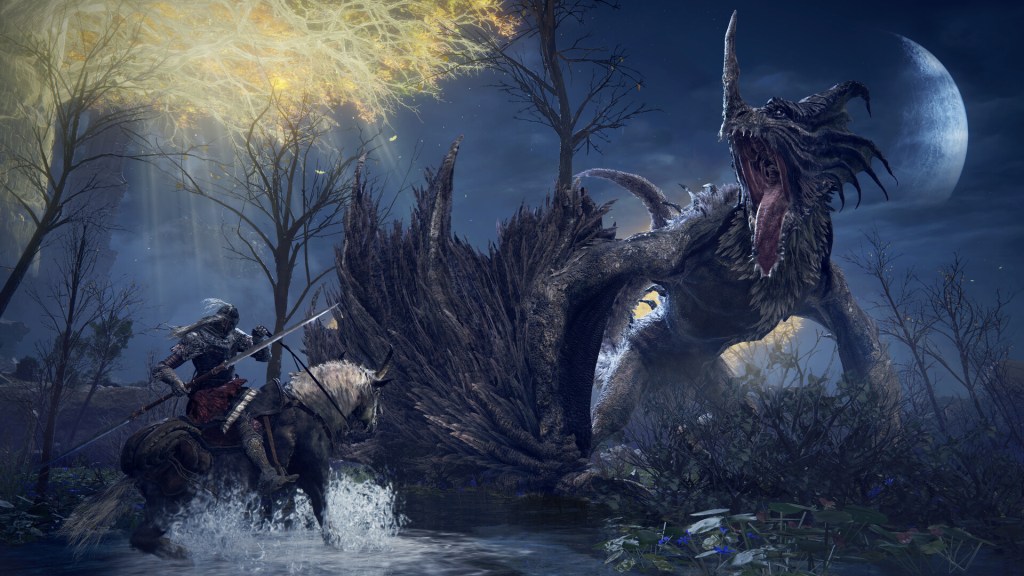
I do love Elden Ring. I wouldn’t have played this massive game twice if I didn’t. Exploring its world for the first time is a magical experience. The evolution of combat mechanics is a welcome change. Build variety and new tools allow even more players to experience the game and play however they want. The sheer scope never ceased to surprise me as I wandered into a new area. The grandiose spectacle of the game is something that may never be matched. But it did make concessions to achieve all of this. Balance went out the window to accommodate new builds and combat. Exploration can become rote after many, many hours. Scope and spectacle are great, but mechanically the game doesn’t surprise the player with interesting bosses or arenas. It is for these reasons that I give Elden Ring a 9/10. While I enjoyed my time with Elden Ring, I am feeling worn out on the standard Souls formula and am hoping that FromSoftware has something completely new in the works.
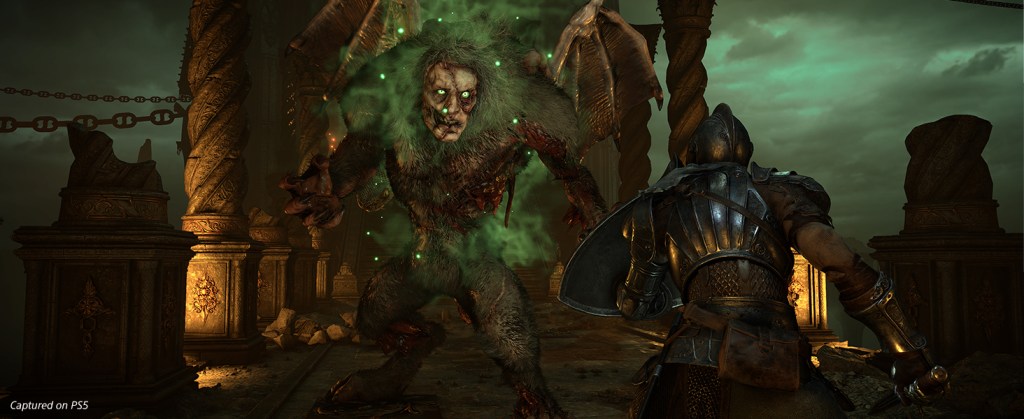
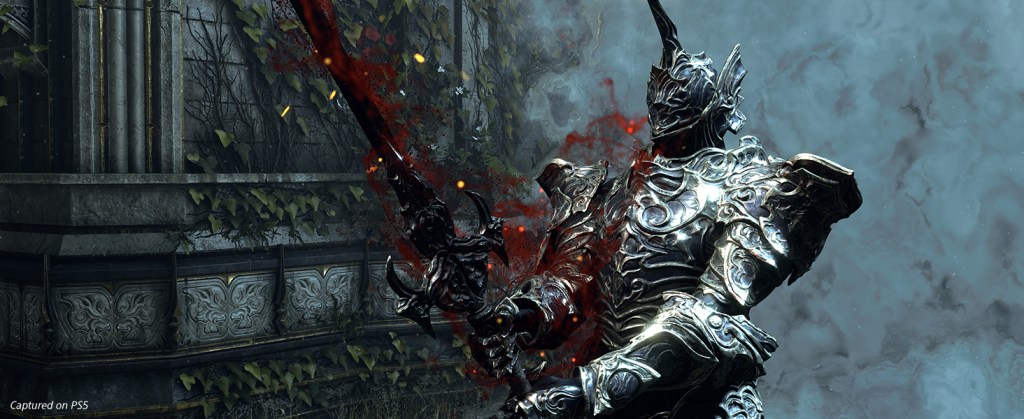
Demon’s Souls (2020)

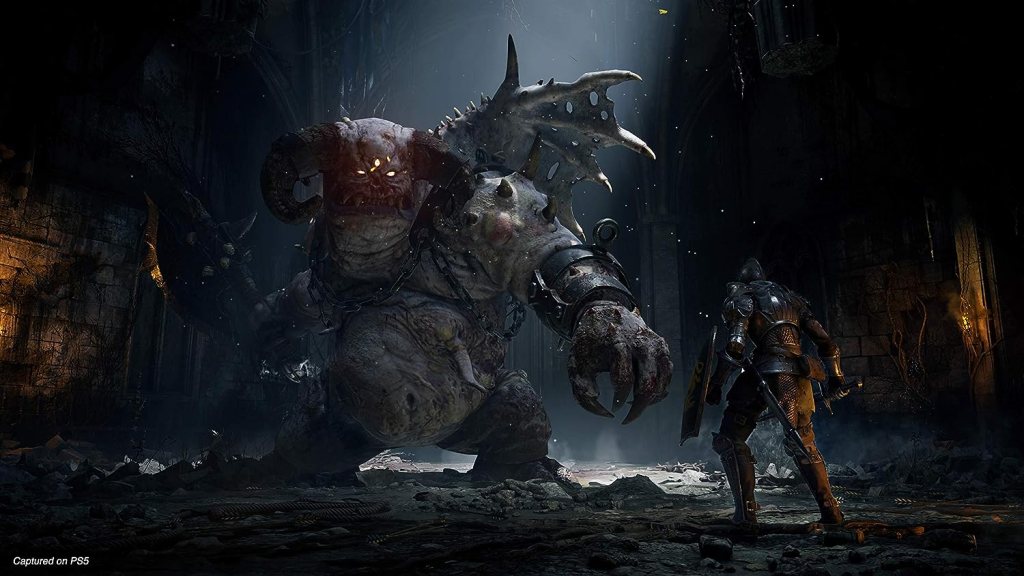
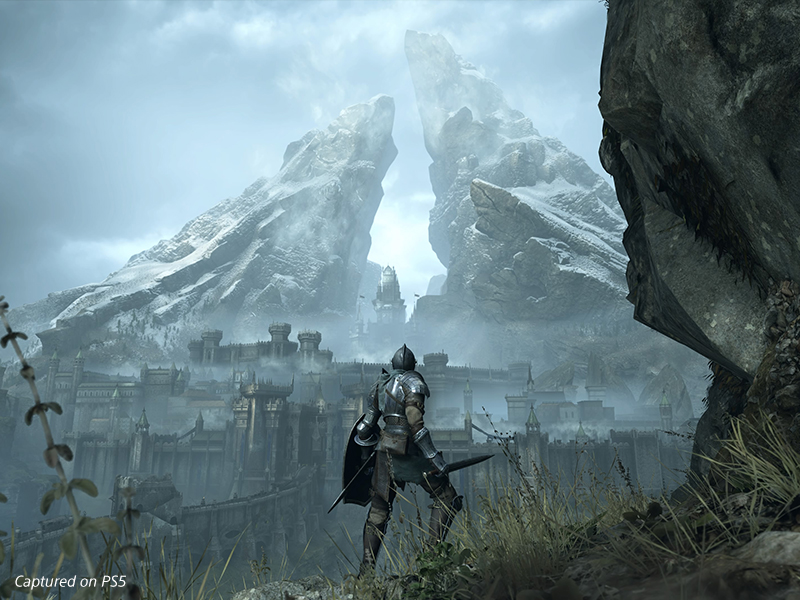
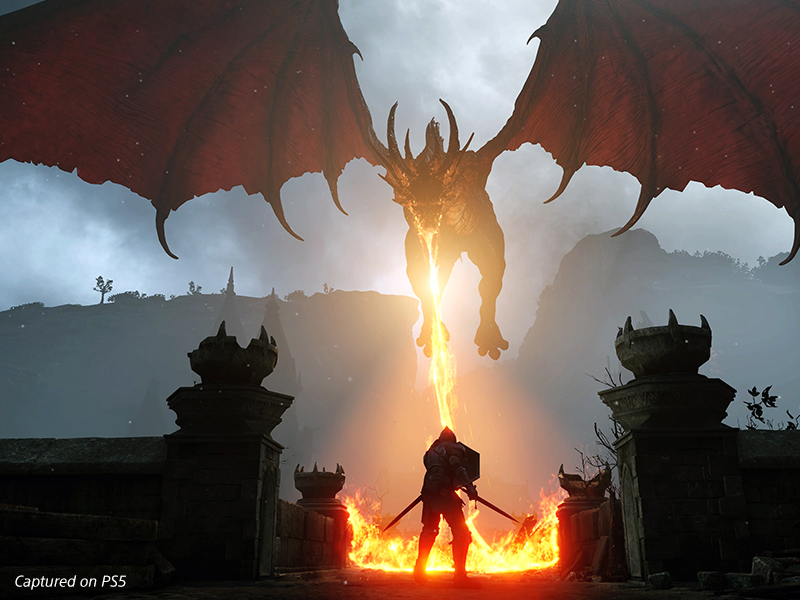
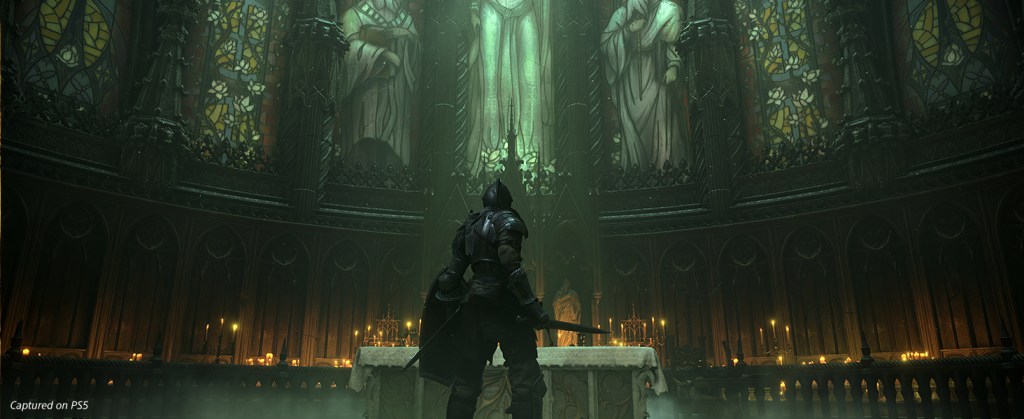
As a fan of FromSoftware’s catalog, Demon’s Souls has long been my white whale. Dark Souls is in contention for my favorite game of all time, yet I never got the opportunity to play its predecessor. Being the progenitor of one of the most successful and influential franchises of games makes Demon’s Souls an incredibly important title. Yet, the original game has only ever been released on the Playstation 3. Which is why I was so excited about the remake of Demon’s Souls, bringing it to the Playstation 5. I really did want to play the original game first before reviewing the remake to compare the differences, but unfortunately, I didn’t get the chance. From what I can tell, this is a faithful recreation of the game, including all the weird, archaic, and unforgiving ideas that were removed from subsequent Soulsborne games. And I love Demon’s Souls for that.

I think Demon’s Souls unfortunately has a bad reputation for being a bit unforgiving with its design. There’s a lot of mechanics and ideas present in Demon’s Souls that never carried over to its successors, and many claim that is for the better. But I feel like playing Demon’s Souls was refreshing. There are many aspects of Demon’s Souls that I wish would make a return in modern releases, especially after playing Dark Souls III and Elden Ring. In short, I felt as if Demon’s Souls was a far more cerebral game, opposed to later titles which rely more on fast-paced action. Demon’s Souls is unforgiving and punishing, leading the player to be cautious and think carefully about their next course of action. To compliment this, combat and bosses are generally far easier to mechanically execute, as long as you come up with a reasonable strategy. What really makes Demon’s Souls shine is how its unforgiving nature contributes to its impeccable atmosphere and worldbuilding.

The world of Demon’s Souls is surprisingly grounded. With many of FromSoftware’s games, I take in the world and its locations, but I’m not quite sure how it all fits together due to the obscured nature of the storytelling. Demon’s Souls only ever lets the player have a fragmented understanding of the world, but I found it enthralling. There are five main locations that the player can visit, and each one is supplemented by some short text passages on their entrance. These brief backgrounds, along with environmental storytelling, were enough to make sense of their respective locales. 

Take the Valley of Defilement for example. It’s a narrow valley with poisonous sludge at its base. Its inhabitants have resorted to rickety shacks on the ledges and in the crevices of the walls. Narrow planks that overhang the darkness are the streets of the shoddily built shanty towns. The creatures who live here are all but forgotten, left to suffer in this vile mire. Yet, they make due. They defend their home, using its dark crevices as an advantage to sneak up on invaders. And they do so because the saintly Maiden Astraea lies at the heart of the swamp, and she has resolved to free the valley’s souls of suffering. They worship her, and she protects them. Through almost purely environmental storytelling, Demon’s Souls paints a vivid image of its world and how Valley of Defilement came to be what it is. It’s not just a dirty swamp of vile monsters for the player to slay, it’s a fully realized location that makes sense.

Demon’s Souls is often maligned for being unforgiving, but I don’t think this is an entirely fair perspective. I think the unrelenting challenge and inconveniences are crucial to building tension. The lack of checkpoints is often seen as inconvenient and tedious, but I think that having long gaps between safety is critical in a grim game such as Demon’s Souls. Each level only has a single checkpoint at the start, and many levels open up a shortcut or two as the player progresses. But even the shortcuts never lead directly to the boss. There’s always obstacles and danger blocking your path. I think this is fantastic because it ups the anxiety and tension of exploration and combat. A single misstep means you have to repeat large chunks of the level. This also encourages the player to not only to defeat enemies, but to master besting them in combat so that you can repeatedly bypass them. The added pressure of death works wonderfully with the boss battles in Demon’s Souls.

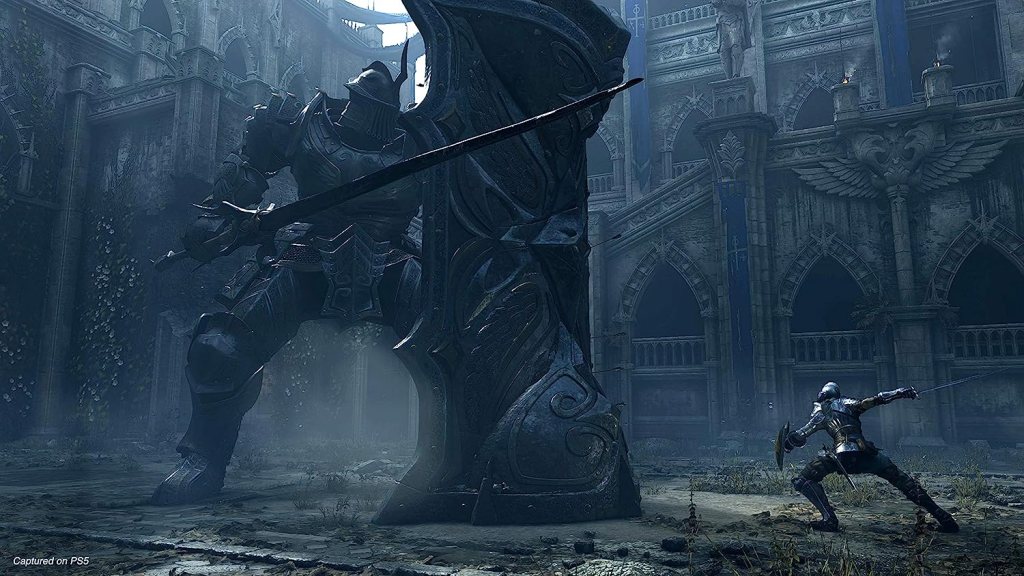
I frequently read that Demon’s Souls has the worst bosses in the series because they are easy and often gimmicky. But I disagree. The bosses are easier to execute then later games because they have fewer attack patterns and generally attack in a slower, more telegraphed manner. But many of the bosses have a trick to them that the player has to figure out. They have unique arenas, weak spots that must be focused, or potent attacks that you have to figure out how to counter. While it’s true that the bosses may be on the easier side, I think each one provides a unique experience that is distinct and memorable. Moreover, easier bosses make sense when the player has to overcome a gauntlet of challenging enemies just to give the boss another shot. It would be enormously frustrating to have to replay the whole level dozens of times because the boss is monstrously difficult.

I think over the years Soulsborne has focused on making bosses more and more difficult. While games like Elden Ring nail the spectacle of boss fights, I do think they often go too far with the bosses moveset. Demon’s Souls bosses are relatively simple in comparison, but I find them to be more memorable because they are all so different. Not just visually different, but mechanically different. While there are some straight up one-on-one duels, there is often more to contend with than just the basic combos that the boss can throw out. The bosses having a “gimmick” is what makes them interesting and memorable. 

Not every fight should follow the routine of learning how to dodge every attack the boss has, finding safe times to attack, then getting a hit or two in. Variety is what keeps the game fresh and interesting. While fast-paced duels are often the pinnacle of boss fights, they are even more impactful and memorable if they are kept as an occasional treat. Having some more “gimmicky” fights interspersed throughout the game is a breath of fresh air. And Demon’s Souls bosses are memorable because they behave so differently than many other bosses in the series.

While I do love Demon’s Souls eccentricities, there are some aspects of the game that do feel archaic. The most obvious example is the healing system. In Demon’s Souls, the player collects a variety of consumable moon grasses which restore health. These are collected through exploration, combat, or you can straight up purchase them from certain merchants. While I do think it’s a good idea to limit how much the player can heal, it’s too easy to abuse this system. I often carried dozens of moon grass items, so as long as I didn’t make an egregious mistake I could always heal up to max health with little threat. Conversely, worse players may often run out of moon grass and have to farm enemies to replenish their stock, which is obnoxious. Dark Souls immensely improved on this by only providing a few chugs of their healing flask per checkpoint. That way, players would never have too much or too little.

Demon’s Souls has a unique mechanic which changes the world depending on your actions, called tendency. I think this is actually kind of a nice idea, but its implementation is esoteric. Good actions will make your tendency “white”, while performing bad actions skews it towards “black”. Certain secrets open up depending on your tendency, enemies may get stronger but provide better rewards, and there may even be additional enemies. My issue is how poorly explained this all is. It’s very easy to unknowingly perform an action which makes you move towards black tendency, which ultimately makes the game more difficult. I suppose the learning process can be seen as fun and interesting, but mending your tendency after it plummets is unreliable.

There are a few other archaic systems in Demon’s Souls such as the upgrade system and inventory encumbrance that I don’t want to delve too deep into. But an area that I do think is important to discuss is what FromSoftware is famous for: world and level design. The levels of Demon’s Souls are actually quite condensed, which I think is a positive. It’s tempting to fully explore each area because of this. Mechanically, I also think that the levels are quite good. There’s a variety of scenarios and encounters that the player has to not only use their skills to overcome, but to use their brain as well. There’s a lot of traps and obstacles that encourage caution and thoughtful exploration. 

I do think that Demon’s Souls shows its age a bit in some of its levels. There is an abundance of narrow corridors, ledges, and groups of enemies that show the weaknesses of the game. Combat is stunted in cramped spaces like corridors and ledges because your weapon often hits the wall instead of enemies. I get the realism factor here, but enemies don’t seem to follow this rule and inherently have an advantage in these spaces. Furthermore, groups of enemies are famously difficult to deal with in Soulsborne games, and Demon’s Souls has a ton of these groups. The slower pace of combat doesn’t work well when you have to contend with many foes and it’s easy to get stunlocked into death. 

As for the world design of Demon’s Souls, I quite enjoy the areas individually but I wish they were not completely disconnected from each other. There are five major areas in the game, each with a handful of levels. But these major areas are not connected with each other, the only way you can access them is through the hub area. I think this is unfortunate in a game that otherwise is impressively immersive. Constantly sitting in load screens and fast traveling around is just not nearly as captivating as having a singular, connected world.

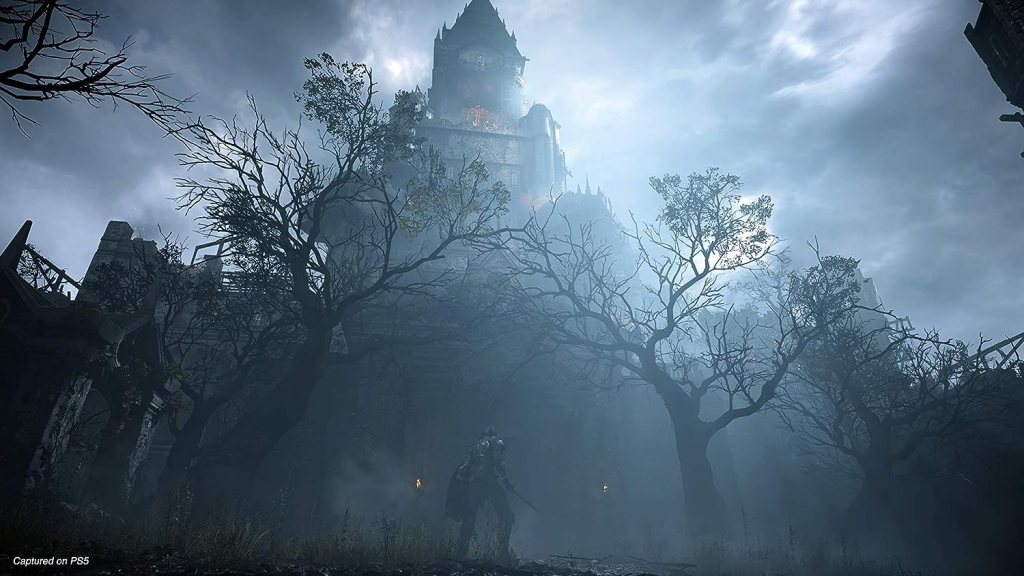
As previously mentioned, I haven’t had the opportunity to play the original game so my perspective on Demon’s Souls as a remake is limited. From my research, it seems as though the gameplay is extremely faithful. Visually, the remake is stunning. However, when compared to the original game’s environments, the remake is showier. The simple Eastern European style simple castles are more ornate. Moreover, the sun beams and impressive lighting do impose a sense of grandeur that wasn’t present in the original game. Gone is the dirty and eerie faint glow of lighting. I don’t think the visual differences are a huge deal as the atmosphere retains its somber mood. I think the bigger change is the music.

After listening to both soundtracks, I think it’s a shame that the spirit of the original was lost in the transition. Particularly in the boss fights. As previously mentioned, the boss fights in Demon’s Souls aren’t always epic one on one duels, many are somber, depressing, or disturbing. The original soundtrack captures these differences quite well. The Fool’s Idol piece is a stark example of how drastically the music was changed. Don’t get me wrong, the music is beautiful. But not like every boss fight needs to be a grand duel, not every song needs to have a dramatic choir with full orchestral backing. 

Playing Demon’s Souls put the whole series in perspective for me. It makes me long for a time where Soulsborne games emphasized memorable experiences rather than just difficult ones. Conversely, Demon’s Souls also made me realize how far the series has come. There are many archaic and esoteric aspects to Demon’s Souls, and I am glad that the remake let me experience it all faithfully. It is for these reasons I give Demon’s Souls an 8/10. I encourage everyone to give Demon’s Souls a fair shot. It was a risky title when it was originally released, and not every idea was a hit, but there’s a sense of magic and authenticity that arise from the game’s bold choices.

Bloodborne (2015)

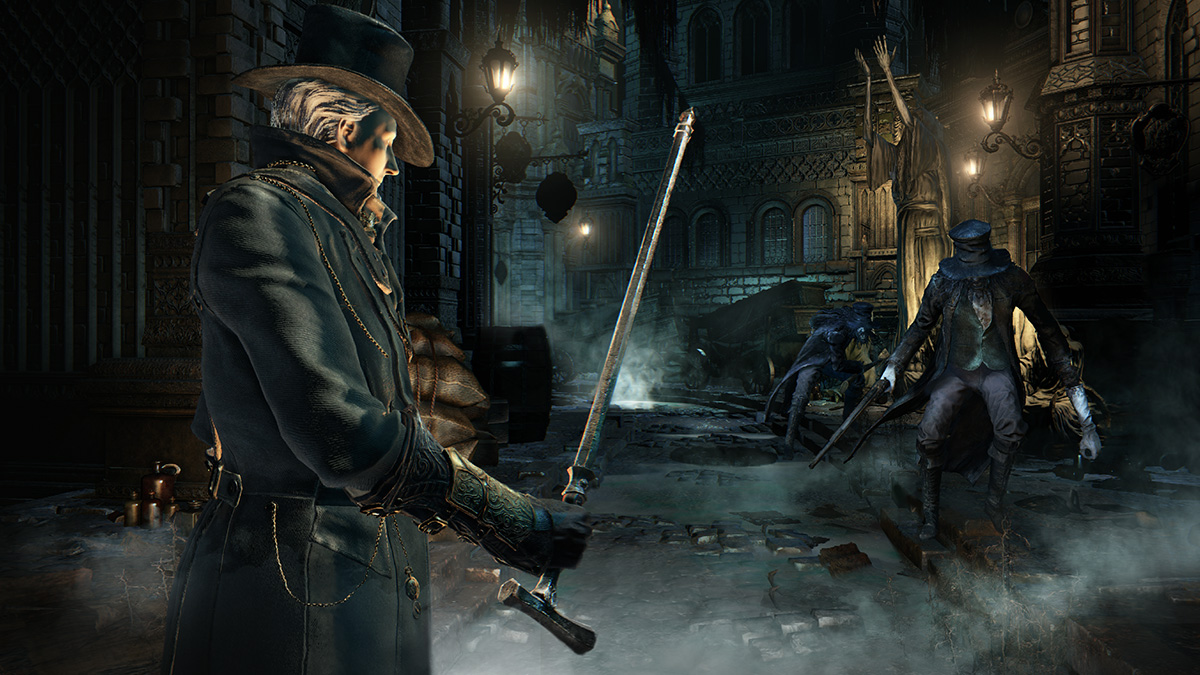
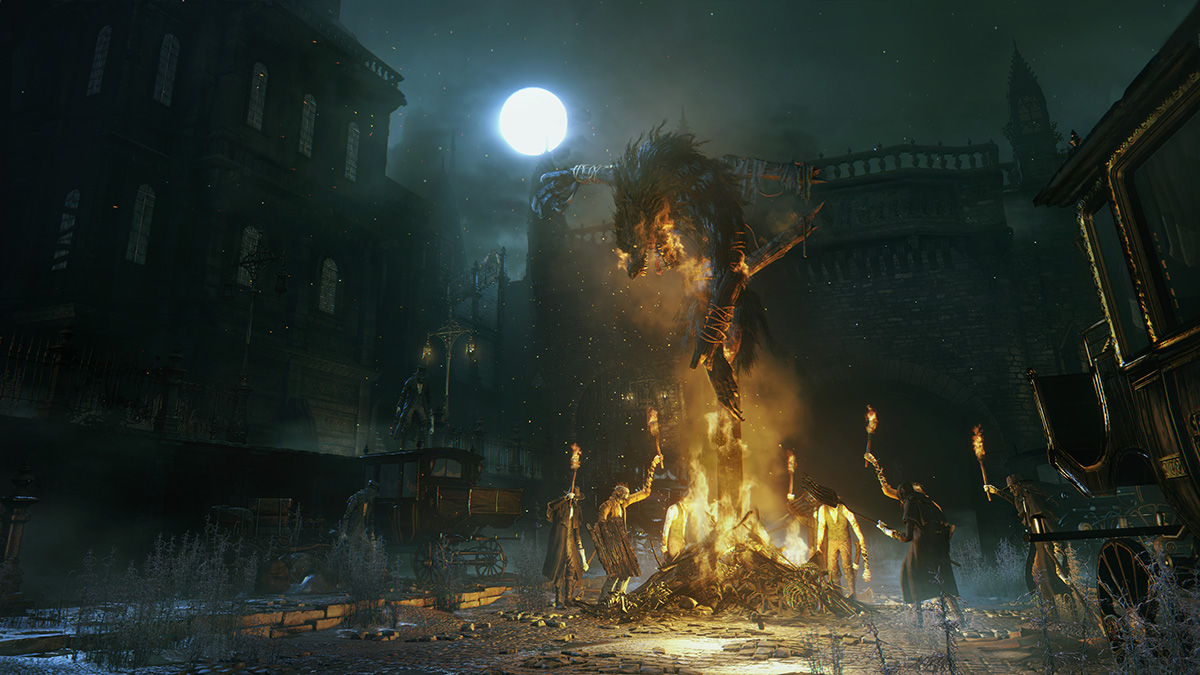
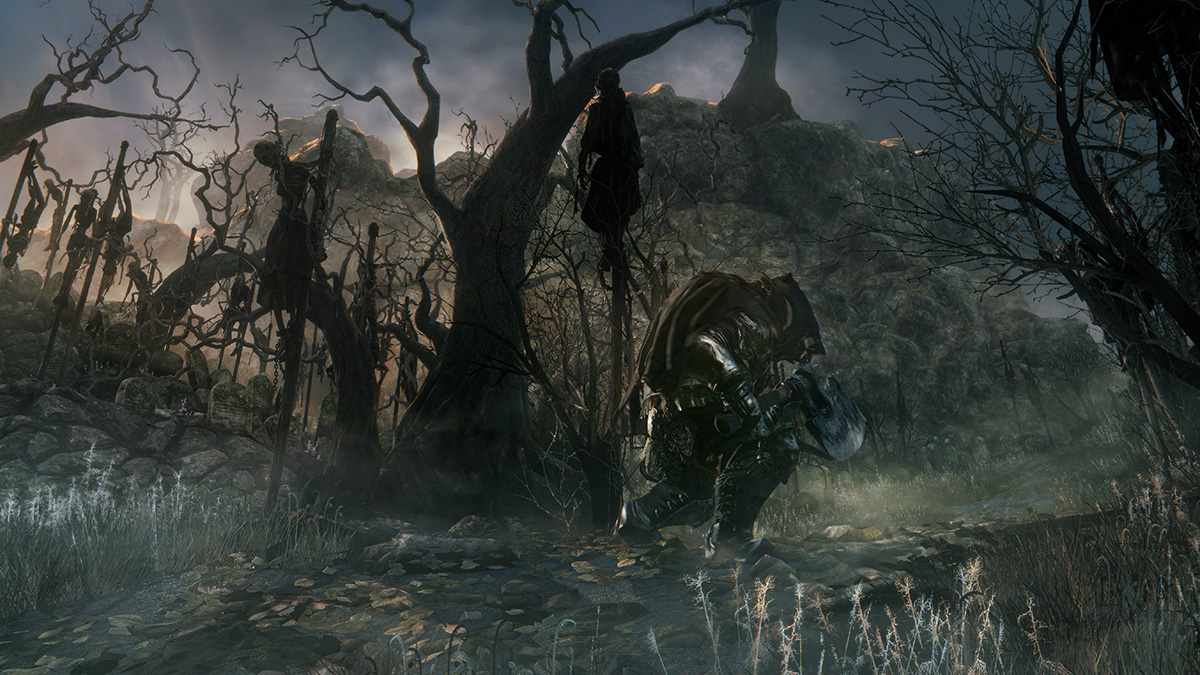
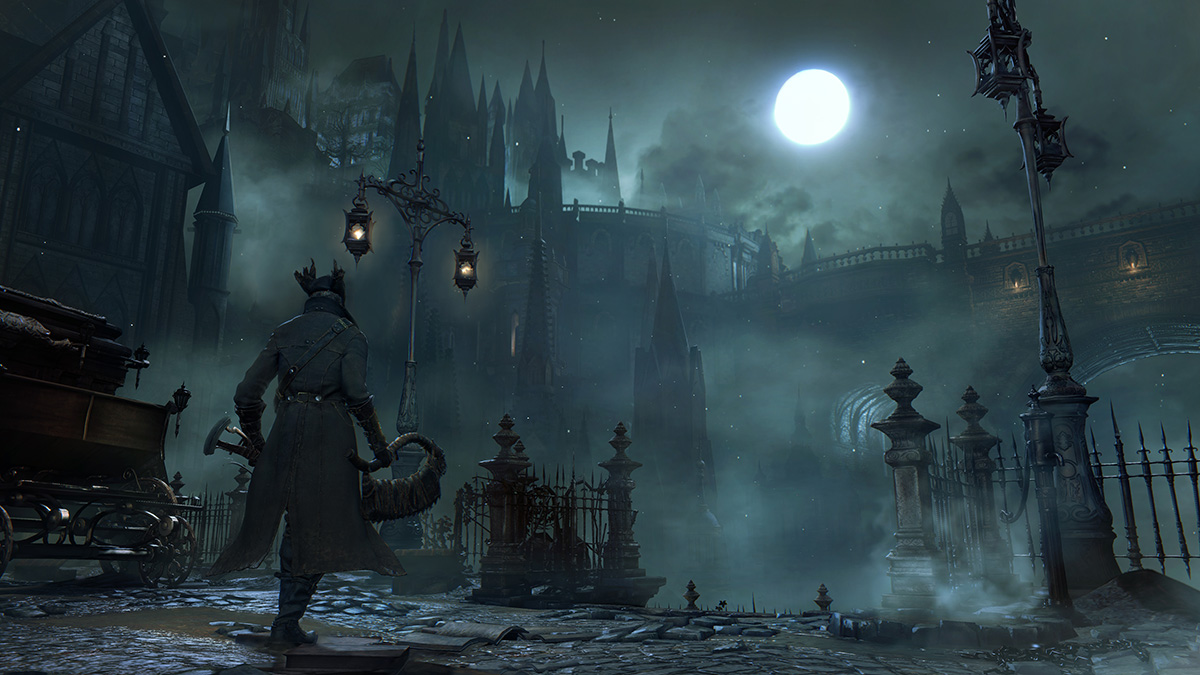
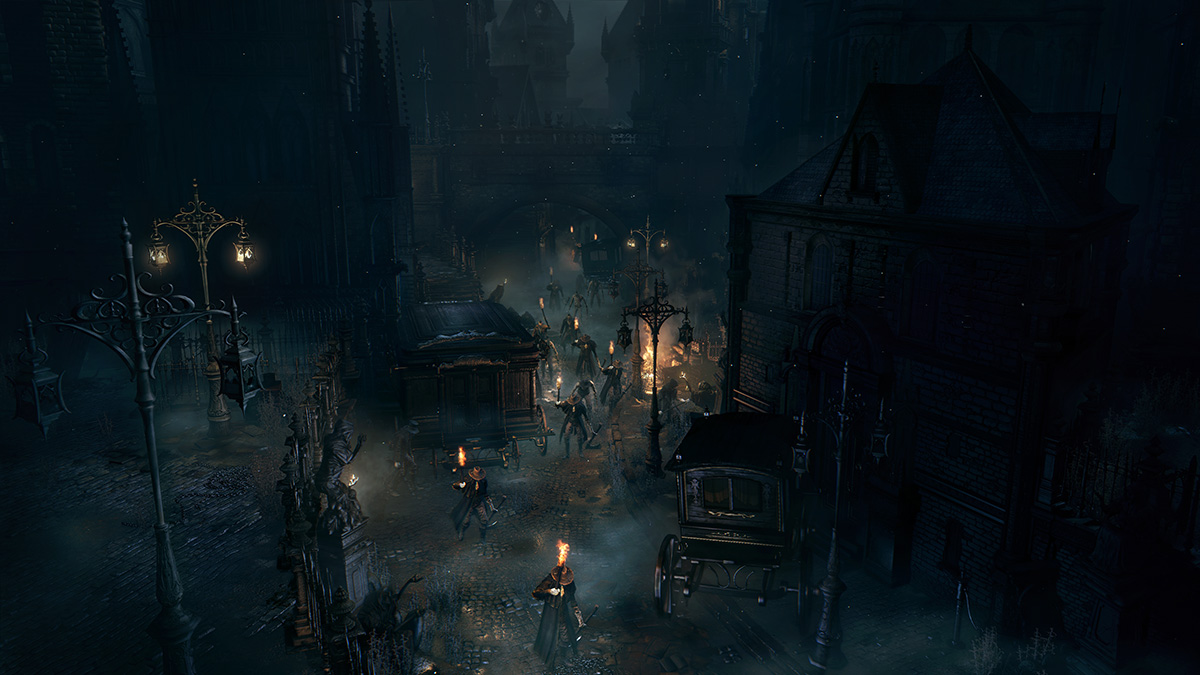
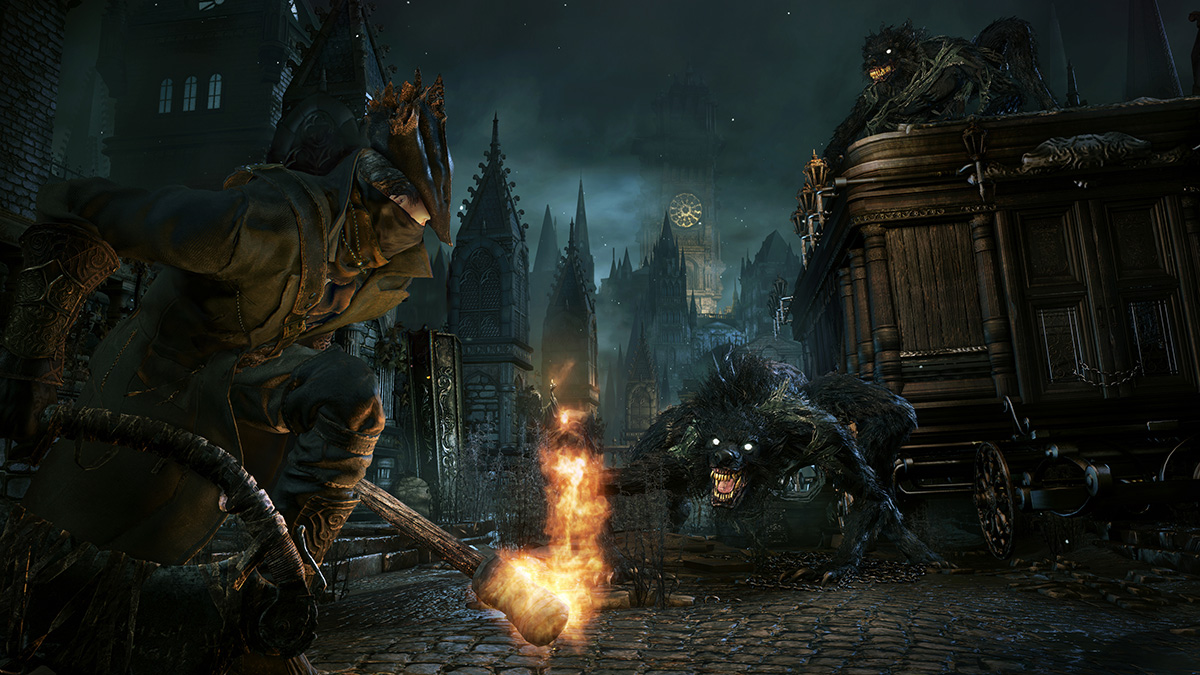
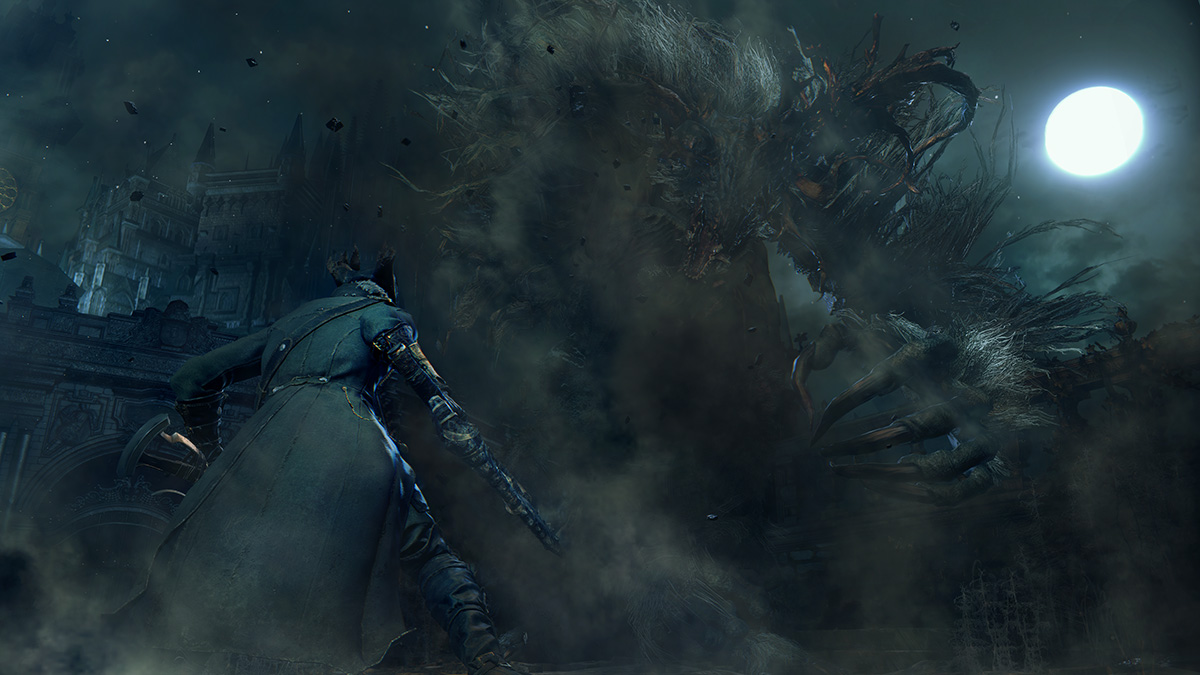
After the enormous success of Dark Souls, director Hidetaka Miyazaki decided work on a new project rather than working on the sequel Dark Souls II. This is what many people, including myself, partially attribute the failure of Dark Souls II to. The new project that Miyazaki created was the gothic and Lovecraftian nightmare of Bloodborne. It is apparent that Bloodborne operates extremely similarly to Demon Souls and Dark Souls, and that is why many people lump them all together as the Soulsborne series. Despite their similarities, Bloodborne is by far the most unique of the bunch. Its horrific atmosphere, unsettling creatures, and eerie locations immediately make it evident that Bloodborne is a different beast than Dark Souls. Moreover, while the controls and general feel of the games are similar, Bloodborne promotes far higher aggression and speed within its gameplay systems.

1

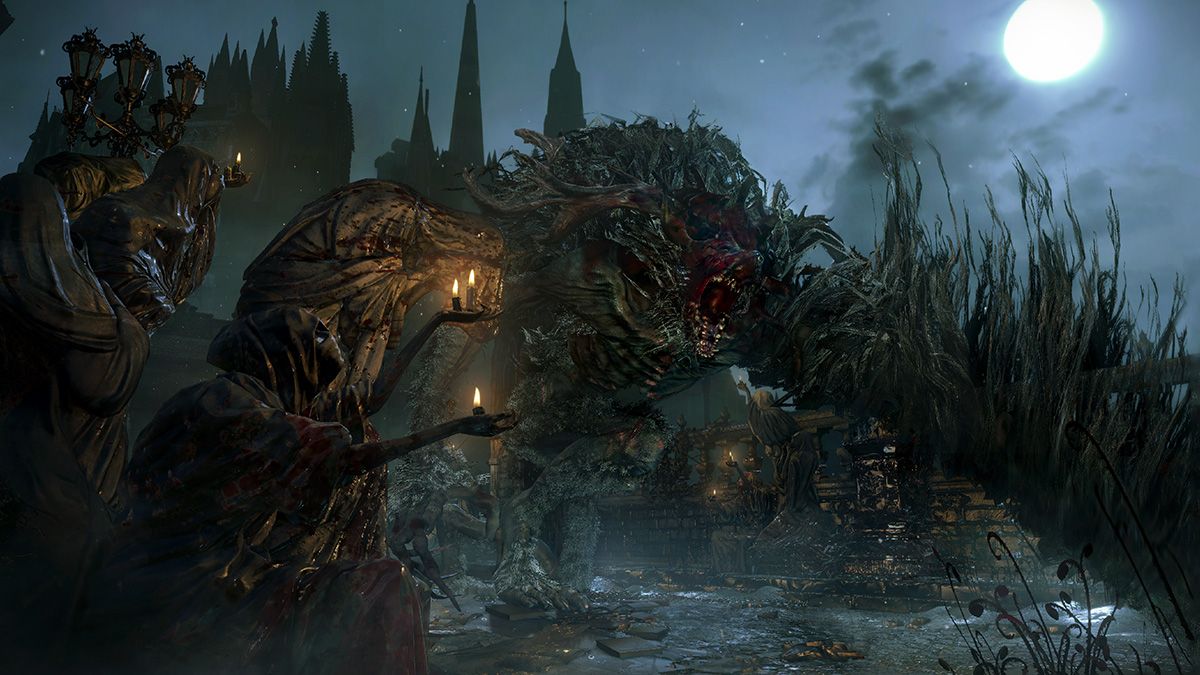
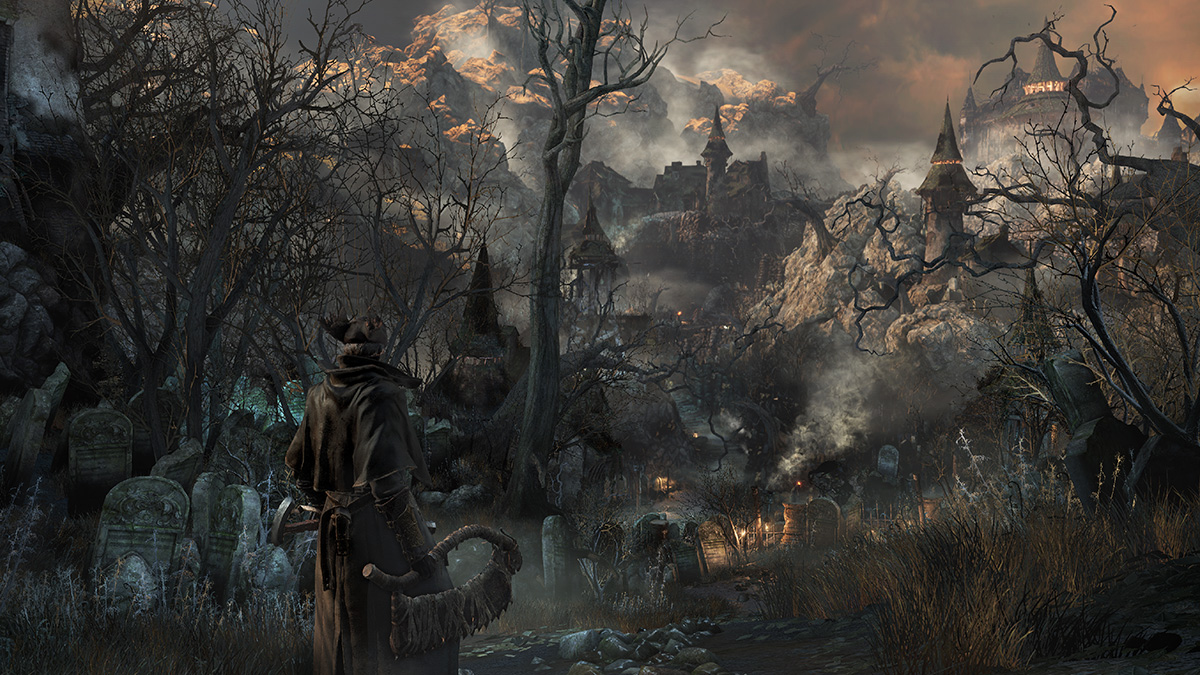
The story and lore of the Soulsborne series often ignored because of its cryptic nature. Bloodborne continues this trend, but I found it easier to interpret and understand than the rest of the series. Dark Souls cyclical nature and crumbling world make the story feel abstract. Bloodborne, while still enigmatic, is much easier to grasp on the first playthrough. The city of Yharnam has become infected by the beastly scourge, a disease which turns men into beasts. The player, a hunter, is tasked with clearing out the beasts and ending the mysterious “nightmare”. The first half of the game is gothic horror, in which science has gone wrong and men have transformed into beastly beings. But a shift occurs at the midway point which reveals the true nature of the game. Without going into much detail that would spoil the surprise, the game takes a turn into a Lovecraftian realm. While I love the variety of the godly kingdoms of Dark Souls, the consistency and tension of the atmosphere of Bloodborne is fantastic.

15

The gameplay and combat of Bloodborne is a 3rd-person action RPG (role-playing game). If you have played any other of the Soulsborne games, it operates essentially exactly the same. You hack and slash your way through hordes of monsters, and if you die you get sent right back to the last checkpoint. In this case, the checkpoints are lamps rather than bonfires. Through evasion and dodging, you must avoid enemy damage as your healing is limited. Bloodborne is just as tough and brutal as any of the other Soulsborne games, renown for their difficulty. Enemies are aggressive and merciless, and the bosses especially will give even veterans such as myself trouble. There are three major changes that set Bloodborne apart from the rest of the series: the healing system, the lack of shields, and the general speed of combat.

The first major departure from the rest of the series is the healing system. One of the most important aspects of Dark Souls was the implementation of the estus flask, the healing item. Bloodborne instead uses blood vials and rally. Blood vials are the equivalent of estus flasks, but instead of five you have twenty per life. Blood vials will always heal 40% of the players health, regardless of level, unlike the estus flask which needed to constantly be upgraded as the player leveled up. I like this change, as having a consistent amount of healing allows the player to make more calculated and informed decisions.

6

The change that I do not like is that blood vials are a limited resource unlike the estus flask. While you can carry twenty with you at any time, you have any leftovers in storage. If you run out of those in storage, you will need to farm or purchase more. I plan to write an entire essay on the different healing systems in the Soulsborne series, but I will try to keep it brief in this review. Farming for blood vials is never fun. Ever. It’s frustrating and tedious. It is especially offensive because you are probably only going to run out of blood vials when you are struggling on an area or boss. So, you are getting beat down by the game and then it tells you “too bad, go farm for 20 minutes to try again”. This is not challenging or interesting, it’s a waste of time. It’s a system that was needlessly changed and provides no benefit. This problem is only really apparent at the beginning of the game, and it does not take that long to farm sufficient blood vials, but I wish I did not have to farm at all. Again, I will go into far more analysis in a future essay, but essentially this system punishes players that were already struggling.

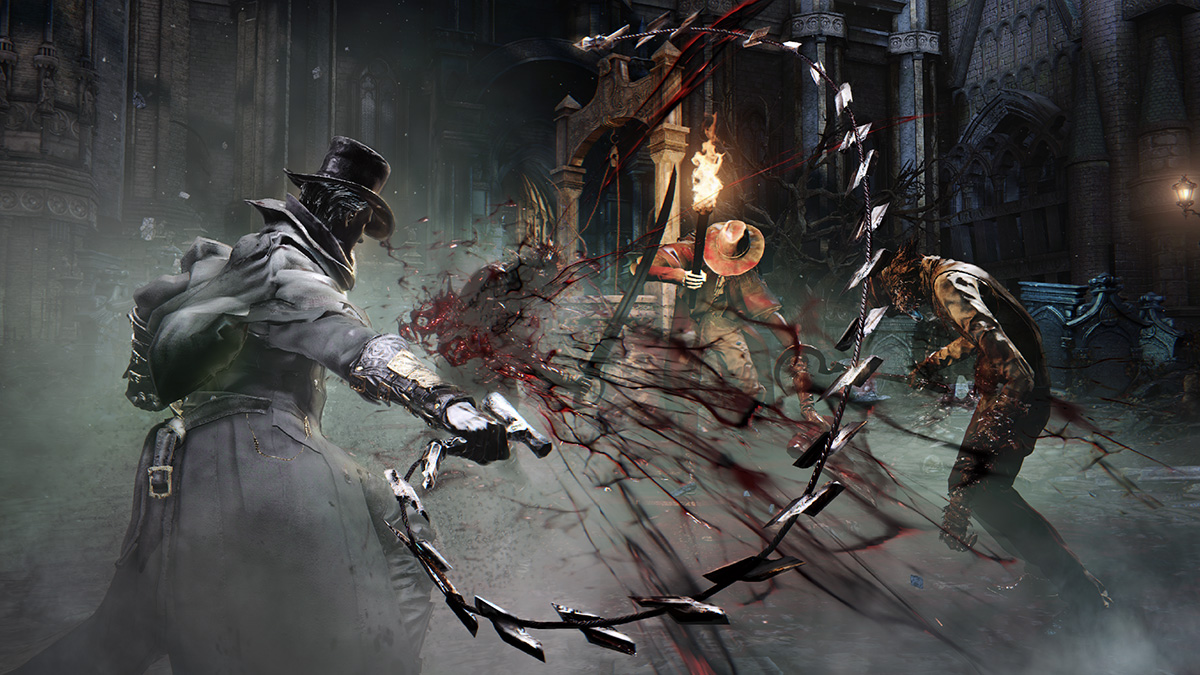
The change about the healing system that I do like is the inclusion of rally. After taking damage, there is a window of a few seconds where hitting enemies will restore some of the damage that you have taken. This system is absolutely genius. It creates a risk-reward paradigm that allows the player the recuperate after a mistake, but an additional mistake will often get you killed. If you get hit, you can try to hit the enemy back to regain your lost health, but if you panic and mess up an extra hit will often times kill you. You can either play it safe by backing off and popping a blood vial, or you can go for revenge to siphon off some health from the enemy. This rewards aggression and dangerous playstyles, and that is what makes Bloodborne so unique.

10

Aside from the healing system, another large change in Bloodborne was the removal of shields. The Soulsborne series has always promoted a knightly playstyle, using a sword in one hand and a shield in the other. The shield allows the player to “turtle up” and play the game safely and with low risks. Of course, it had drawbacks, some attacks were unblockable and holding up the shield would cut down on stamina regeneration. But for the most part, playing carefully with the shield was the most consistent and risk-free method of conquering Soulsborne games. There are no shields in Bloodborne. Well there is one, but it is a joke and it basically states “don’t use this you idiot”. This forces the player to rely on careful movement and well-timed dodges rather than brute force blocking to beat enemies. This change suits Bloodborne well, as it obviously is trying to promote aggression and more risks for higher rewards. The removal of the shield just reinforces that idea.

Instead of carrying around a shield in your off-hand, the player is given a few options to swap between. The first being a gun. Guns in Bloodborne generally do very low damage (unless you are building your character specifically to use them), but instead serve a different purpose. Guns can be used to interrupt enemy attacks and stagger them, and if you time your shot well enough you can trigger a parry. Parries operate essentially the same as they did in the rest of the series, if you shoot the enemy as they are about to hit you, they will fall to the ground and give you a chance to hit them for massive damage. But it is, again, high risk and high reward. If you mistime a shot you intend to use as a parry, you will definitely get hit. Other than guns you can use a torch or activate your weapon’s two-handed mode. The two-handed forms of weapons in this game are more interesting than in other Soulsborne games. They often have wildly different movesets from their one-handed counterparts. Additionally, changing forms can activate a transform attack, which encourages the player to switch between one-handed and two-handed fluidly during combat to get the most out of a weapon.

11

The final big gameplay distinction of Bloodborne from the rest of the series is just the raw speed and aggression that accompanies the game. Dodging is faster than previous games, and when locked on to an enemy you will do a quickstep rather than a roll. Dodging also has a fairly low stamina cost, so all-in-all dodging is highly encouraged and you are promoted to abuse those precious invincibility frames. Moreover, enemies, especially bosses, are far more aggressive and ruthless than previous entries. They simply do not let up, and give you very little breathing room. You are encouraged to match their aggression and attack at them as furiously as possible whenever you can. Many enemies and bosses are incredibly vulnerable to stagger and you can string together long chains of attacks safely. This is very different from Dark Souls which promoted safe play and cautious approaches to enemies. This speed, combined with the rallying system and lack of shields is what make it obvious that Bloodborne is just meant to played far more aggressively than other games in the Soulsborne series. That sort of playstyle matches the beastly and bloody atmosphere of the game, and the change is certainly welcome.

Something that I appreciate about Bloodborne is that it makes an effort to “trim the fat”. Soulsborne has always had a lot of redundant items, weapons, and equipment. Bloodborne cuts out a lot of this redundancy. Weapons are far different from one another, and you should play around with them until you find one you like. Furthermore, you get the best armor in the game fairly early on. There is far less time spent painstakingly sifting through equipment to find which has the highest stats. Additionally, Bloodborne has fewer stats to worry about when building your character. All these things I consider to be cutting out unnecessary content that did not add anything other than some confusion. The RPG aspects of the game are more straightforward now than the ever were.

12

All these differences between Bloodborne, so what’s the same? The legendary looping level design makes a triumphant return for one. Bloodborne is jampacked with shortcuts once you beat a level. While this concept was strangely absent in Dark Souls II, I am extremely happy with the quality of the levels in Bloodborne. Once you make your way through a section, there is usually a door, elevator, or gate to unlock that opens a path from the beginning of the level to your current point. This cuts down on repetition and it is immensely satisfying to find that you have looped right back to where you began. Unfortunately, this is not taken one step further like it was in Dark Souls. In Dark Souls, the world design also followed this concept. Entire areas would loop into each other in intriguing ways, and finding efficient ways through the world was a necessity as you would have to revisit earlier areas. This is absent in Bloodborne for the most part, I rarely found myself going back to previous areas and the areas very rarely connect with one another. The world is more linear rather than a labyrinth. Bloodborne relies more on fast-traveling rather than clever world design.

Something that I found odd about Bloodborne was the disregard for system limitations. It was developed as a Playstation 4 exclusive, so system specs are consistent across every player. Therefore, the game should be well optimized for the system that it was made for. I have to admit, Bloodborne is gorgeous. It is probably one of the most detailed and enthralling worlds ever crafted in video games. That being said, these details sometimes strain the system. On a few bosses in particular the framerate drops to unacceptable levels. I am not a stickler for high FPS (frames per second), and I am honestly content with a steady 30 FPS. However, they were a couple of occasions where the game chugs and dips below that threshold. Moreover, load times can get pretty long, but what bugs me about the load times is that you always have to go through two load screens when one would suffice. You can only fast travel to and from the main hub. So, if you want to go from point A to point B you must sit through a load screen to get to the hub, and then sit through another to go from the hub to point B. I wish you could just go from point A to point B with no hub in between. This is especially apparent when grinding for blood vials or bullets, as you must travel back and forth to the hub every time you want to reset the level to farm more monsters. All-in-all, these are not major problems, but it seems odd that the system specifications were not taken into consideration in these instances.

13

By far and away, the biggest issue of Bloodborne is the implementation of chalice dungeons. The rest of the game’s issues are at worst minor irritants, but chalice dungeons are a huge problem. Along with the game’s static progression path, there are also chalice dungeons that are not connected to the rest of the world. These are another kind of progression path, as you unlock deeper dungeons by using materials from earlier ones. The first issue is that they extremely poorly explained in game and the menu does not do it justice either. Essentially there are 10 “set” dungeons that are the same for every player, but you can also unlock randomized versions of these dungeons to explore and get loot from. On paper, it seems like an okay idea. Randomly generated content could give players some things to do once they’ve beaten the game. The issue is that getting to the endgame dungeons is a pain, and a lot of the games content is hidden away in these repetitive chalice dungeons.

14

First and foremost, if they were designed to endgame dungeons to let the player return and always get new dungeons to explore, why must you first go through six low-level dungeons to even unlock the high-level ones? They utterly waste your time and provide no challenge if you attempt the earlier dungeons at the end of the game, but they are necessary for progression. The next problem is the blatant repetition from dungeon to dungeon. All the dungeons are similar and use the same rooms, just in different layouts. Once you have seen a one or two dungeons, you have basically seen them all. It’s a shame because the game has a lot of new enemy types and bosses contained within these chalice dungeons. The game has about 30 bosses in total (not counting downloadable content) and 13 of those are exclusive to chalice dungeons. So, in order to experience all the bosses the game has to offer, you must slog through the ten preset dungeons. Luckily, chalice dungeons are entirely optional. Still, just because they are optional that does not excuse their poor design. I was planning to replay Bloodborne a few times because the main game was just so tightly crafted and fun, but after playing the chalice dungeons I got burnt out.

2

Even though chalice dungeons were a severe misstep, Bloodborne keeps the Soulsborne tradition of having phenomenal DLC (downloadable content). The Old Hunters DLC includes three new areas and five new bosses. Two of those bosses I consider to be some of the best in the whole series. I feel like the DLC of Soulsborne games is always created with the failures and successes of the game in mind. I just find it interesting how the DLC in these games always manages to include the best levels and bosses. Maybe it’s a marketing ploy, or maybe the designers learned from their mistakes and create more fitting content for the respective game. Either way, I highly recommend getting the DLC for any Soulsborne game.

16

Many consider Bloodborne to be the pinnacle of the Soulsborne series, and while I do love this game, I think Dark Souls narrowly beats it out for that honor. The interconnected of the world in Dark Souls is something that blew my mind when I played it. Still, Bloodborne is a close second. It is a more consistent experience, and with the exception of chalice dungeons it is nearly flawless. The aggressive, unrelenting combat gets the adrenaline pumping more than any other game I have played. The terrifying and mysterious world is easy to get immersed in. And every boss and area are high quality. The need to farm for blood vials and the repetitive nature of chalice dungeons knock Bloodborne down a notch for me, but it is still an excellent and essential game. It is for these reasons I give Bloodborne a 9.5/10. If you own a Playstation 4 this is an absolute must play game. Even if you don’t own a Playstation 4, consider buying one if just for this game.

Dark Souls III (2016)

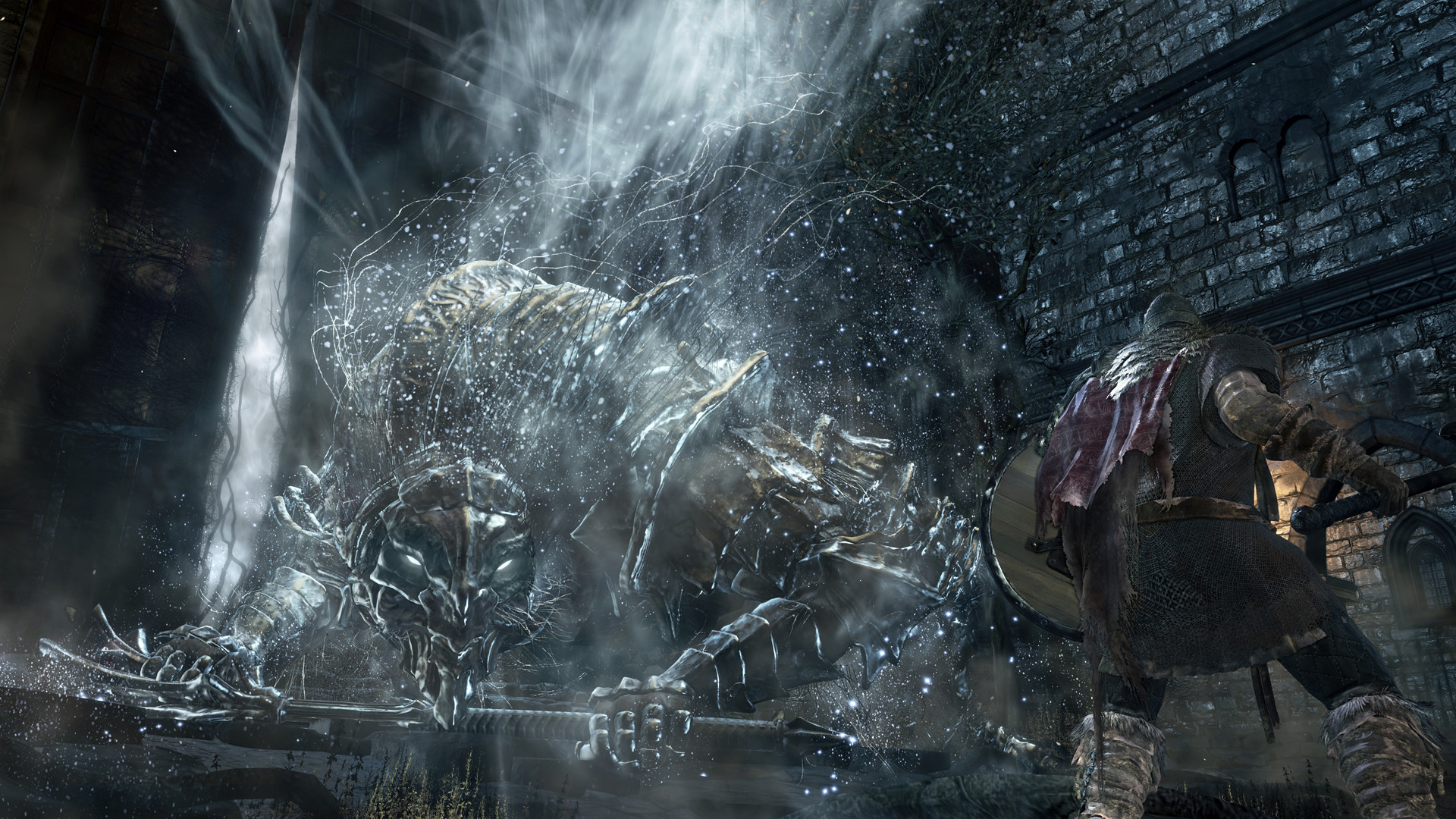
It is no surprise that while Dark Souls is heralded as one of the greatest games of all time, its successor, Dark Souls II, was a let down in numerous regards. Less focused combat, incoherent world building, and less interesting bosses were my biggest gripes with Dark Souls II. So, the big question when starting up Dark Souls III was if it would return to the series former glory, or follow in the footsteps of the disappointing sequel. Personally, I think that Dark Souls III does mostly return to the successful style of the original game, but there a few key differences between the games.

2

Dark Souls III is more a direct sequel to the original than Dark Souls II was for a multitude of reasons. The first reason is that Dark Souls III is set in the same world as the original, granted that it is very far into the future. This highlights the cyclical nature of the Dark Souls lore, and watching how the world evolved and noticing the references to the past was something that I really enjoyed. That being said, I feel like there was almost too much reference to the past titles. A well placed and constructed reference is incredibly appreciated, but the game constantly saying “Hey remember this?” in essence can grow grating. In any case, Dark Souls III is the end of the series, and I felt like it did a phenomenal job ending this historic series. The final boss in the base game ties the games together brilliantly, and truly helped me understand the cycles of the Dark Souls universe. The DLC of Dark Souls III really finishes off the series by revealing what the “Dark Soul” even is and why it is important. Both of the final bosses (the base game and the DLC), are incredibly somber and profoundly sad, and are extraordinary ways to end this storied series.

6

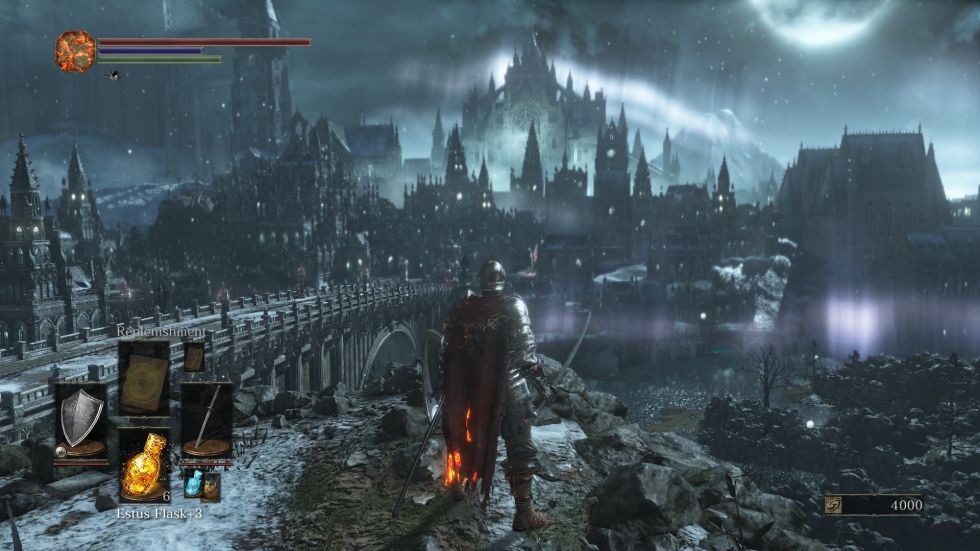
One of the most important aspects of Dark Souls was its atmosphere and world building. Dark Souls III also continues in this trend, by creating a quintessential dark fantasy world. Despite the fact that many of the areas of Dark Souls III are just future versions of areas from the original game, they are changed enough that you cannot entirely recognize them. Furthermore, there a plethora of completely new and visually interesting areas. However, there are a few complaints that I did have with the world of Dark Souls III. One minor complaint I have is that some of the areas were just kind of forgettable and uninteresting. The swamps and forests in particular are just kind of dull and we’ve seen enough of them in the series. This isn’t a huge deal because the majority of the game is made up of far more interesting areas. The major complaint I have is that the world just is not interconnected enough. The individual level design is great, as it bases itself off of the design of the original game. But there is not a sense of connection between these areas. There is no sense of verticality or a tight-woven world like the original game. Every area is just fine in and of itself, but there needs to be more connection between these areas. This may be due to the fact that teleportation between bonfires is available from the very start of the game. Similar to Dark Souls and Dark Souls II, once teleportation is available, the interconnectedness of the world is sacrificed. There is no need to carefully craft a world when a player can just teleport where ever they want.

3

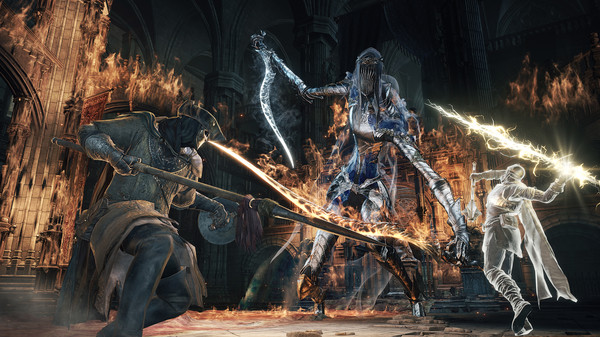
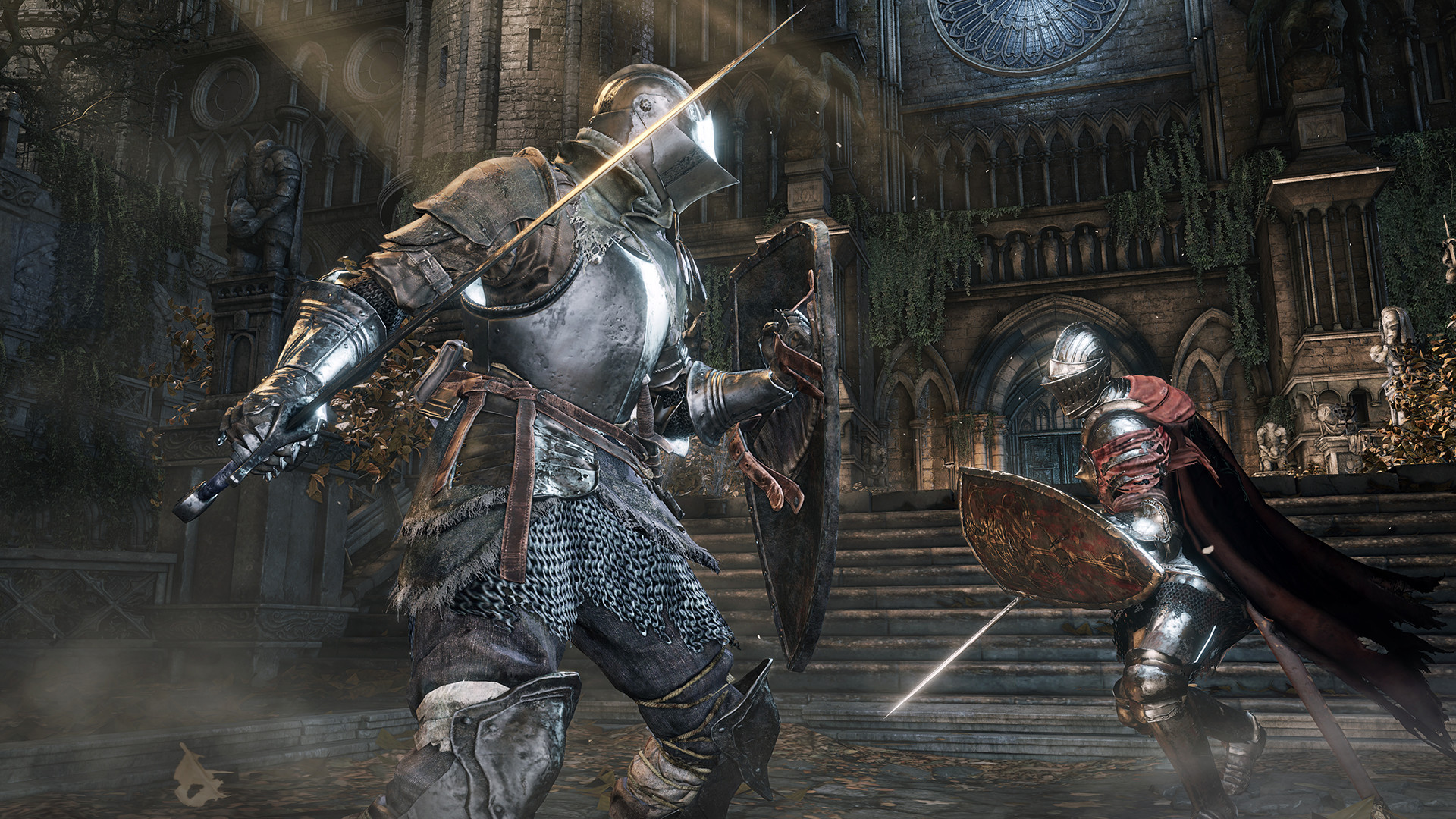
The final aspect of Dark Souls III is of course its gameplay. Combat Dark Souls III is decidedly faster than the original Dark Souls. It does not fall into the same traps of Dark Souls II (too many enemies and boring bosses), but it is very different than the original game. There are 3 reasons for this additional speed in combat: low poise, high stamina, and faster animations. Poise is the stat that controls when the player/enemy is hit, if they get briefly stunned. High poise means that you can eat an attack from an enemy and not have it stop you dead in your tracks. Both the enemies and the player in Dark Souls III have very low poise. When you hit an enemy, you can easily chain together hits until they are dead with no chance from recourse from the enemy because they are stunned. Of course, this means that the enemies can do the same to you, if you get hit once there is a good chance you are going to take a lot of damage. High stamina means that the player can spam rolls and attacks with little thought. In previous titles, if you rolled too much you wouldn’t have enough stamina to attack and vice versa. This is not something that the player has to worry too much about in Dark Souls III, which is a bit of shame considering that careful stamina usage was such a vital part of the combat in Dark Souls. This in essence reduces the risk and reward system that Dark Souls combat is centered around. Finally, the animations of all actions are reduced in Dark Souls III. The windups for attacks and rolls are shorter, and the delay at the end of these actions is also shorter. You are no longer locked into long animations, but on the flip side the enemies also move a lot faster.

5

As a whole, these three factors combine to make combat a lot faster than its predecessors. This is not inherently a bad thing, it is just a different playstyle. However, in the context of the series I would argue that this is a downgrade in combat. Combat in the original game was more deliberate and stylistically made more sense. Dark Souls III feels more reaction time based, while the original Dark Souls required more careful decision making in combat. I will say that this faster combat does allow for some very memorable and creative boss fights. The vast majority of the bosses of Dark Souls III are incredibly engaging. The combination of the wild combat and creative visuals make for some remarkable bosses.

1.jpg

Another factor of note is the change in how the healing item, the Estus Flask, works. As I mentioned in my piece on Dark Souls, the Estus Flask may be the single most important factor in why Dark Souls works so well. It keeps combat and exploration forgiving enough to give you room for some errors, but at the same time rewards the player for mastering a boss fight or entire area. The Estus Flask in Dark Souls III functions very similarly, but with two key differences. The first being that you can discover Estus Shards and Undead Bone Shards across the world through exploration. These items will increase the total amount of Estus Flask charges and how much those charges heal respectively. I like this as it rewards exploration and adds an extra layer of character power and progression. The only issue is that I feel like you almost get too many Estus Shards, so by the end of the game you can have around 10-15 charges of Estus, compared to the base 5 from the original game. This is almost too forgiving, I wish these Estus Shards were harder to come by. The second change is adding a second Estus Flask for focus points, which is essentially your “magic” bar. You must delegate your total Estus Flask charges between the original health based Estus Flask and the new magic Ashen Estus Flask. This may be why there are so many Estus Shards, so that players who want to use magic can have enough for both healing and magic usage. But players who don’t use magic will have an overabundance of healing Estus. Again, I liked exploring and upgrading my character, but I wish they toned it down a bit.

4

Is Dark Souls III as magical as Dark Souls? I don’t think so. However, Dark Souls III is far more consistent in its execution than the original. Less careful world design and less deliberate combat are the biggest issues I have with Dark Souls III, but it is still an excellent game. It was a perfect way to finish off the series with its gloomy themes and atmosphere. Intense and memorable boss fights combined with visually stunning areas make Dark Souls III a game worth playing. For these reasons I give Dark Souls III 9/10. Dark Souls III is an essential title for any fan of the Soulsborne series, or just fans of role-playing-games and fantasy worlds alike.