The Witcher 3: Wild Hunt (2015)

After playing through the entire The Witcher trilogy, I have been thoroughly impressed by the improvement of CD Projekt Red over the years. The step up from the first Witcher game to its sequel and then from the sequel to The Witcher 3: Wild Hunt is simply astounding. Not only was the game vastly improved on a technical level, but many of its predecessors’ issues were fixed. It is no surprise that The Witcher 3: Wild Hunt is being regarded as a modern masterpiece, and it certainly deserves that distinction.
1

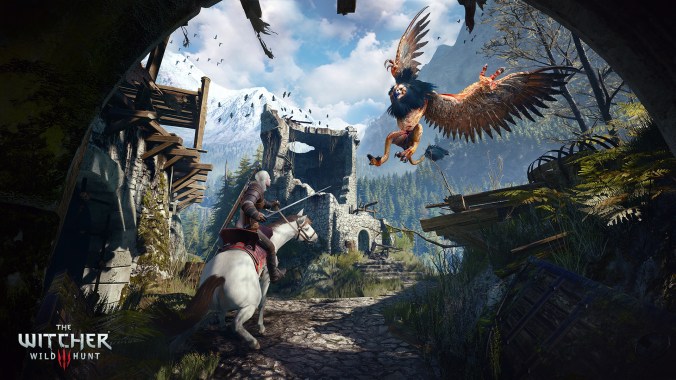
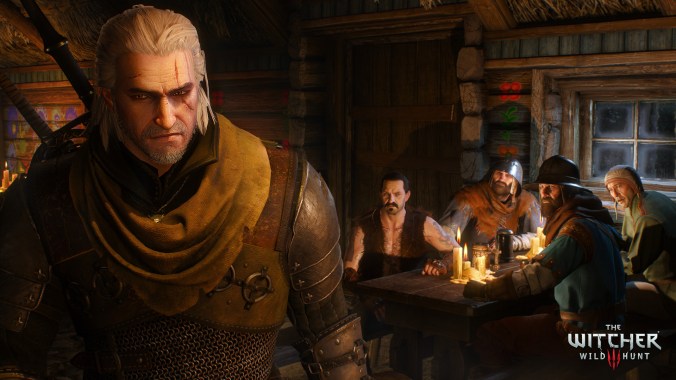
What the series is known for is its fantasy story-telling and grim setting. Like the games that came before it, The Witcher 3: Wild Hunt is filled with difficult decisions. Most story related choices have consequences, and you have to think about what is the correct moral decision. Being the “nice guy” will backfire if you are too trusting. There is a plethora of “secondary” quests apart from the main storyline that are extremely high quality. Most importantly, the main questline of the game succinctly finishes the trilogy. Geralt, the monster hunting witcher searches the world for his apprentice, Ciri. War is being waged between the two main kingdoms of Redania and Nilfgaard, and the world is under threat by the spectral “wild hunt”. Ciri plays a key role in the war as she is the Nilfgaardian princess, and she also has special powers that the wild hunt is looking to harness.
2

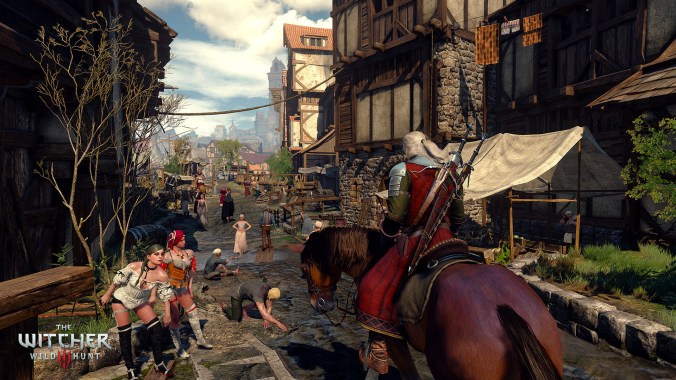
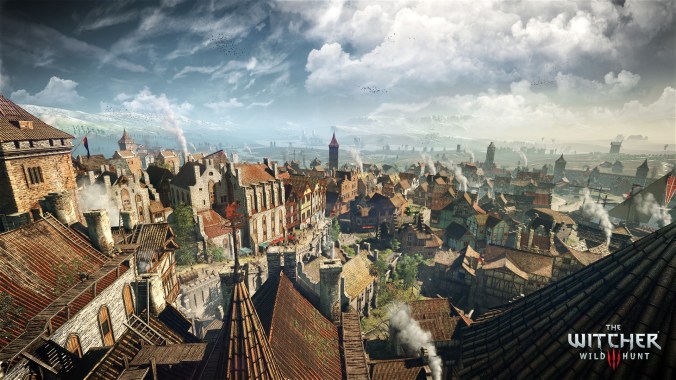
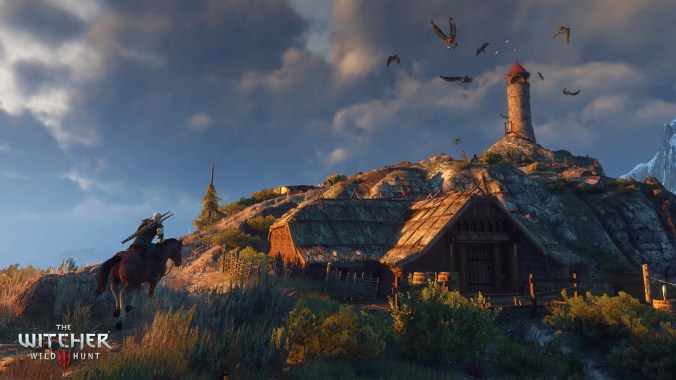
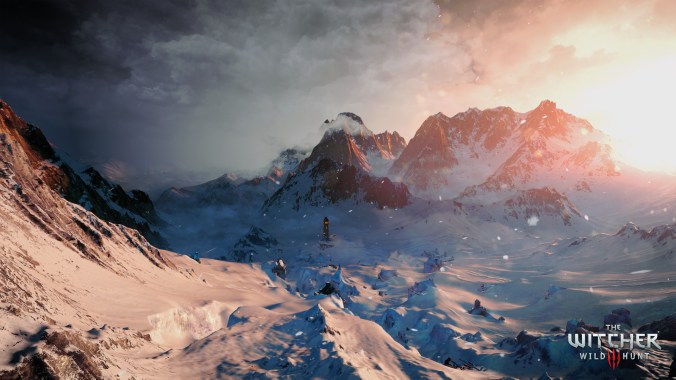
What impressed me most about The Witcher 3: Wild Hunt is its massive and immersive open world. The world is split up in 4 distinct areas: White Orchard, Velen, Novigrad, and Skellige. Each of these areas is vast and awe-inspiring. Dozens of towns pepper the map to find quests and jobs to complete. Or you can just relax and play a few rounds of Gwent, a phenomenal card game designed just for The Witcher 3: Wild Hunt. The landscapes and wilderness are genuinely entertaining to roam as the world is crammed full of secrets and rewards for those willing to explore. I really was stricken by just how many tiny villages and towns were included. These hamlets served really no purpose other than to immerse the player and make the world feel real, and I was thoroughly impressed by just how believable the world really was. Job boards, wandering characters, bandit camps, monster nests, hidden treasures, caves, and abandoned towns are scattered across the land. The Witcher 3: Wild Hunt is a masterclass in open-world games and gives the player immense freedom to just have a genuine adventure.
3

Not only is The Witcher 3: Wild Hunt a strong standalone experience, but it also offers 2 high-value downloadable content (DLC) packages. The first is called “Hearts of Stone” which includes a gripping storyline and about a dozen hours of quality content. The second pack, “Blood and Wine”, is possibly one of the best DLC experiences offered in all of gaming. It introduces an entirely new and vibrant area that was based on Southern France and Tuscany. Not only is it gorgeous, but there are a ton of new side quests and a phenomenal main questline. As if The Witcher 3: Wild Hunt didn’t have enough content, these 2 DLCs are definitely worth it and extend the length of the game even further.
4

While The Witcher 3: Wild Hunt is obviously known for its open-world, engaging quests, and riveting storytelling, it is also technologically impressive. The character models and animations add authenticity to the storytelling. The already lovable characters become more genuine as crisp animations bring them to life. Not to mention that the stunning backdrops enhance the world building. The level of technological prowess makes the world of The Witcher 3: Wild Hunt even more immersive.
5

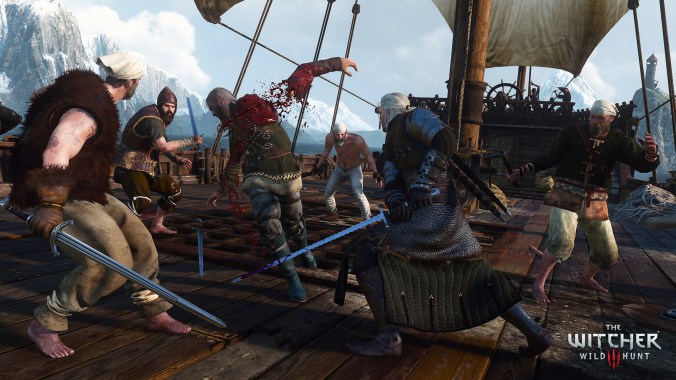
Even though I regard The Witcher 3: Wild Hunt incredibly highly, it does have some flaws. The most apparent issue is the games combat. Do not get me wrong, it is not nearly as bad as the first Witcher game, and it is a marked improvement over the previous games. The combat is fairly mediocre as a whole, but it is not so bad that it hampers the experience. Even on the higher difficulties you can make it through the game by rapidly swinging your sword at enemies. Sure, occasionally casting some magic and parrying or dodging enemy attacks is all well and good, but combat feels more like a spectacle rather than a genuine thrill. It did not really dampen the rest of the game, but I would not play The Witcher 3: Wild Hunt solely for its combat. And that’s fine, because the rest of the game is just so damn well made.
6

Other than the combat, there are few nitpicky issues that I feel obligated to point out. These really are not a big deal in the grand scheme of things, but they were minor annoyances. For starters, not being able to pause during cutscenes or dialogue is fairly frustrating, especially in such a story heavy game. Another small thing is when calling your horse, sometimes he will spawn in a bizarre location making it a hassle to get in the saddle. Also, even though the world has a ton of quests and things to do, many of those things are repetitive filler. Most primary and secondary quests are enjoyable, but witcher contracts, treasure hunts, and places of interest quickly get monotonous. Even a few secondary quests are blatant filer. None of these things are required however, so if you do not want to do them there is no obligation to do so.

7

The last issue is the overuse of a core mechanic of the game: witcher senses. This ability allows the player to tune into Geralt’s acute senses to track things. Pretty much every quest in the game has you activate the witcher senses to track a monster or person from traces they left behind. What this equates to in gameplay terms is hitting a button and some clues will glow red and you interact with them. It is a fine idea that allows the player to harness their witcher abilities, but it does not need to be used in every single quest. It starts to grow a little tiresome when you get super involved in the story or a side-quest and all of a sudden you have to tediously track something for 10 minutes. The reliance on this mechanic is a little odd, its really not anything special so I am not sure why it is infused into every aspect of the game. Its not particularly bad, its just used way too much.
8

I think that the fact the all of the issues that I mentioned are prefaced with “it’s really not that bad, just a little annoying” is indicative that The Witcher 3: Wild Hunt is a special kind of game. When I have to mention the little things and nitpicks, it is evident that there a very few, if any, major flaws to be found. As a whole, The Witcher 3: Wild Hunt is a masterpiece that should be immortalized. It is a quintessential fantasy game and its magnificent world could easily stand alongside the greats such as: The Lord of the Rings, A Song of Ice and Fire, and The Elder Scrolls. I’d recommend playing The Witcher 2: Assassins of Kings first to get some background information to fully enjoy the experience. The first The Witcher game is fairly dated and is not necessary to understanding the rest of the trilogy, so I would recommend skipping it unless you really want to. Either way, The Witcher 3: Wild Hunt is an absolute achievement in many different ways such as storytelling, world building, and animation. It is for these reasons I give The Witcher 3: Wild Hunt a 10/10. This is an absolute must play game, especially if you enjoy fantasy RPGs or story heavy games.
Wolfenstein: The New Colossus (2017)

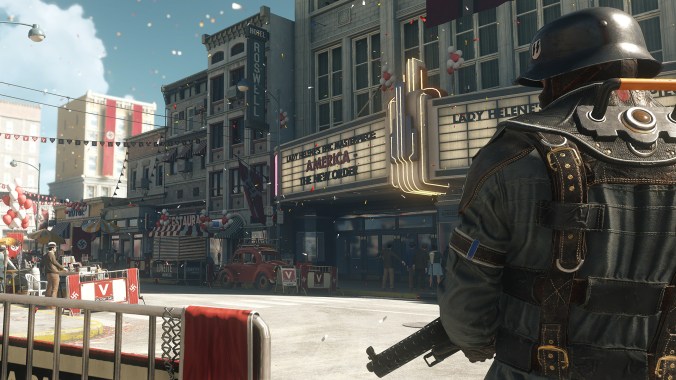
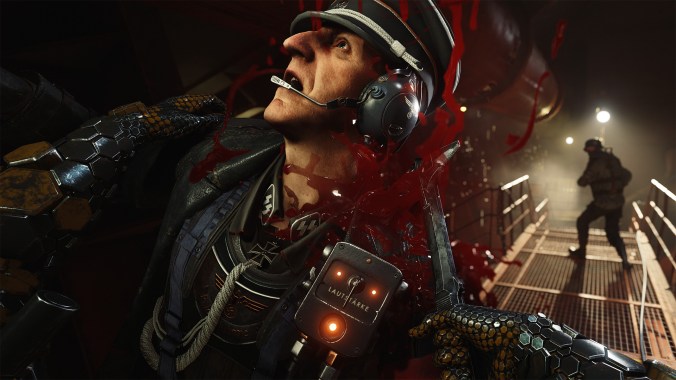
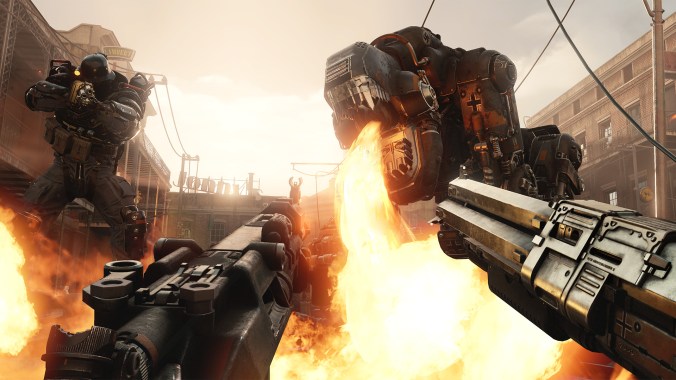
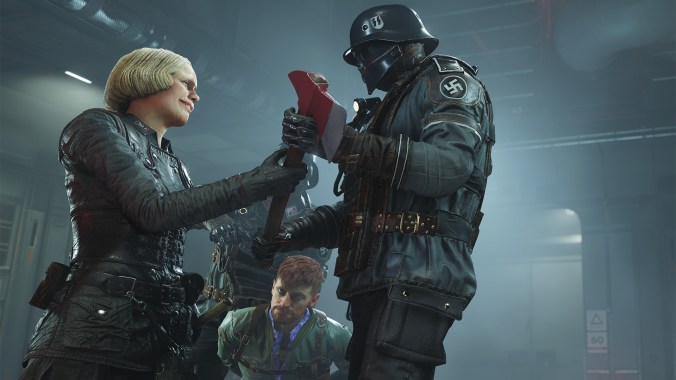
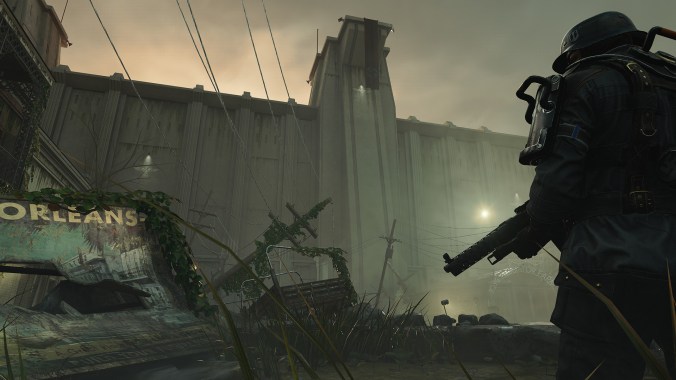
Like its predecessor, Wolfenstein II: The New Colossus is a first-person shooter that enables a variety of different play styles. In this alternate history game, the Nazis have won World War II and have conquered the world. The player is William Blazkowicz, the Nazi killing super soldier who is part of a resistance to topple the new regime. This is a sequel to Wolfenstein: The New Order and the story is a direct continuation so I would highly recommend playing that game first. Wolfenstein II: The New Colossus is a game that I mostly enjoyed, but it has a lot of major issues that hamper the experience.

6

The best thing about Wolfenstein II: The New Colossus is also its biggest flaw: its variety. This game has a major identity crisis and seems to blend a lot of genres into one game. Stealth, cover-based shooting, and run and gun styles are all encouraged and the level design is centered around that fact. The player is guided to sneak through levels until they get spotted, and then you have to shoot your way out. My key issue is that none of these 3 styles are perfected and each have their own issues.

5

The player is heavily encouraged to begin each level by sneaking through enemy lines and silently taking down their commanders. If you get seen before you take down a commander, they will call for reinforcements. The issue is that once you are spotted, there is essentially no way to disappear and re-enter stealth. Once seen, every enemy in the area immediately knows where you are until you eliminate them all. Furthermore, getting detected by enemies feels relatively inconsistent and it felt like sometimes the enemies had the eyes of hawks and other times they were completely blind.

4

The standard cover shooting that is to be expected in FPS games is mostly discouraged. Enemies are adept at flanking and surrounding the player, so staying in one spot is a death sentence. This means that most action is run-and-gun akin to DOOM. The issue is that Wolfenstein II: The New Colossus is fundamentally different than DOOM. In DOOM, if you stay on the move most incoming damage will miss you. This is not the case in Wolfenstein II: The New Colossus because you are not going to outrun bullets. You will always be taking damage if you are not behind cover. Furthermore, recovering health in this game is far different than DOOM. In this game, you have to pick up armor and health packs that are tucked away in corners around the map. So, if you are desperate for health, you have to scramble to find a health kit. In DOOM, you can use a special “glory kill” to guarantee a health pack to drop. This allows the action to keep flowing rather than stopping to scrounge for resources.

3

Moreover, there are a few more gameplay related issues. The first is that there is poor indication of when and where the player is getting damaged from. There were numerous occasions when I was getting shot from behind and I didn’t even know it. There had to be better audio and visual cues for damage. The most apparent issue is that the level design is just bland and boring. As opposed to a game like Dishonored or Prey, or even Wolfenstein: The New Order, this game’s levels are just too linear. You move from corridor to corridor eliminating Nazis. There are rarely any alternate paths or interesting tactics to employ. The way to play the game just seems set in stone. The player progresses from hallway to hallway stealthily killing the opposition until they get caught and subsequently go on a run-and-gun rampage.

2

Other than gameplay, Wolfenstein II: The New Colossus had a slew of technical issues at launch. Luckily most of those issues seem to be fixed by now. The story of the game was also pretty off-putting. The new characters that were introduced were over the top and flat out unlikeable. Their monologues and preachy speeches were unnecessary. Moreover, there were many instances where cutscenes just did not fit the tone of what was going on and felt completely out of place. It felt like the developers tried very hard to get the player to connect with the characters but they were more annoying and preachy than anything else.

1

Despite all its issues, I still enjoyed Wolfenstein II: The New Colossus. The game does not have any area where it shines, but the variety carries the experience. There is just something so satisfying about sneaking around and assassinating Nazis and quickly shifting into high-octane action. It is for these reasons I give Wolfenstein II: The New Colossus a 5/10. None of the individual parts are outstanding, but the sum of those parts makes for a decently entertaining game.

Darkest Dungeon (2016)

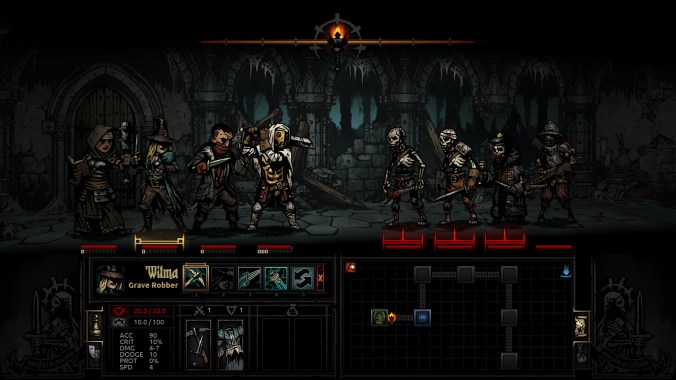
I have never been more split on my stance with a game than I have been with Darkest Dungeon. I love and hate this game, it is addicting but many of its design decisions are baffling. So many factors of this game are absolutely phenomenal, but just a few bad decisions significantly hamper the overall experience. This game gets heaps of praise from reviewers and players, but most of them have not completed the game, and the last half of the game is where most of the issues are obvious. I have been playing this game on and off for a about a year, I would play it heavily for a week or two but then would stop because I had my fill. That’s the big issue with Darkest Dungeon, it’s just far too long.

1

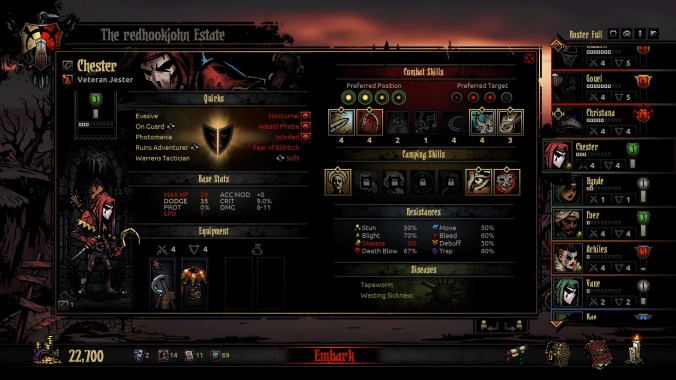
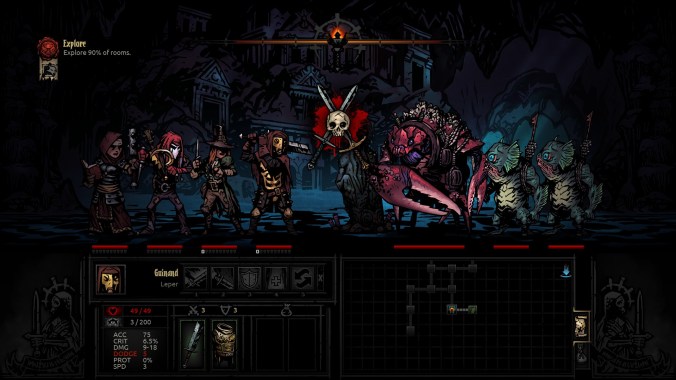
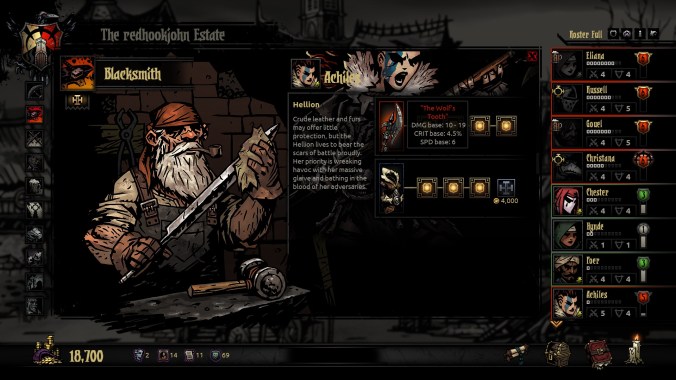
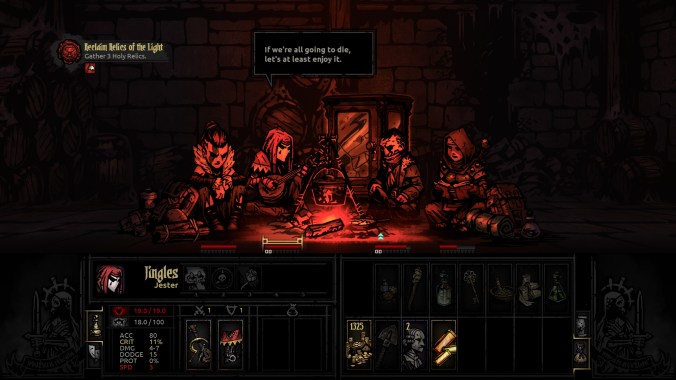
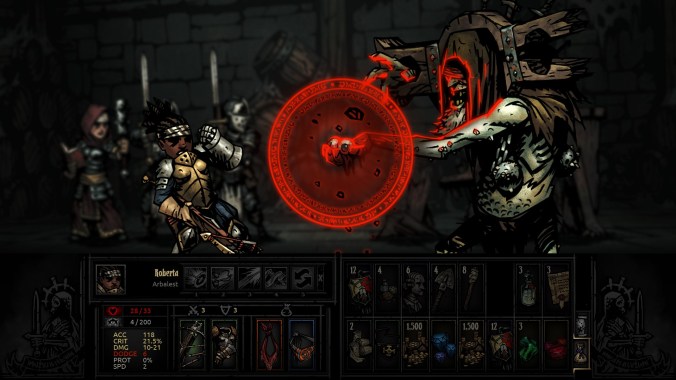
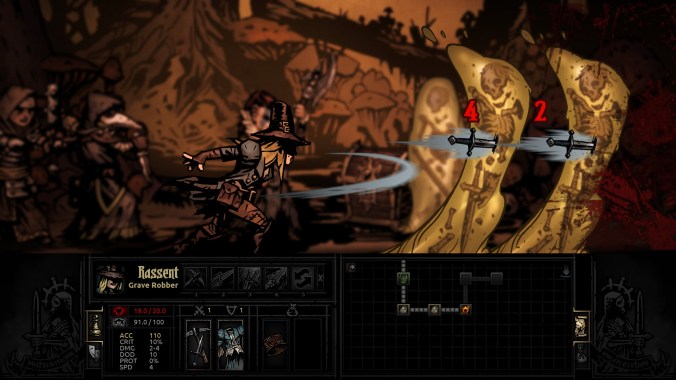
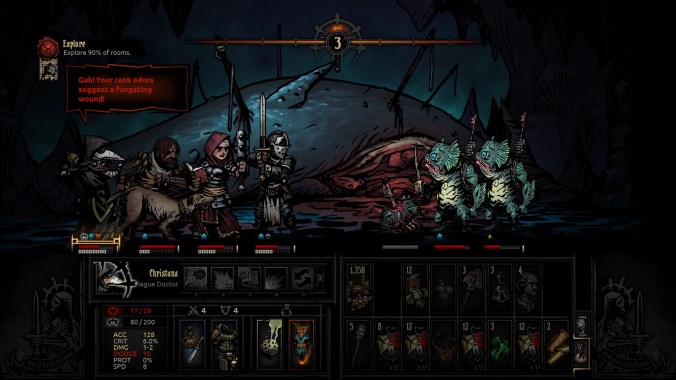
Darkest Dungeon is a roguelike turn-based dungeon crawler in which the player inherits their ancestral home. Unfortunately, this home and the surrounding town have been infested by eldritch horrors and the player must recruit a team of heroes to cleanse the land. There are four main areas which you can take on, and at the peak of the town is the titular darkest dungeon which must be conquered to restore the village to its former glory. In each area you can assemble a party of 4 heroes from 15 different classes to complete quests to gain gold, trinkets, relics, and experience. The system of progression is one of the factors makes Darkest Dungeon so addicting, you collect relics which are used to upgrade the buildings in the town, like the blacksmith for example, to further power up your characters. The core loop of Darkest Dungeon is taking on these dungeons as your heroes gain experience, you upgrade the town, and you spend gold to upgrade your heroes’ weapons and skills. This is a satisfying cycle that kept me interested as I trained my heroes to be prepared to take on the final darkest dungeon.

2

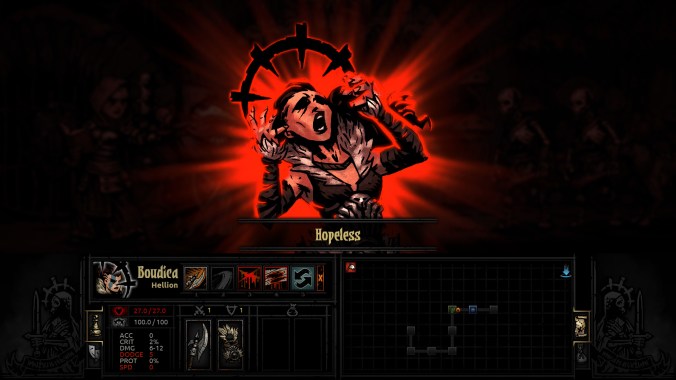
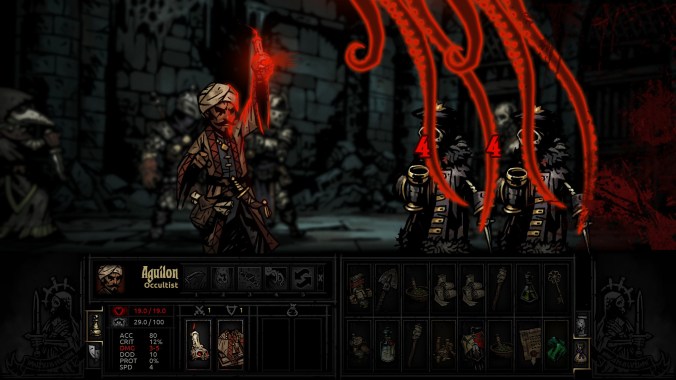
Darkest Dungeon is a turn-based dungeon crawler with a unique twist. Instead of just taking just normal health damage, your heroes also take stress damage and will eventually go mad if you are not careful. This Lovecraftian-inspired game delves into the psychological effects of dungeon crawling and fighting hordes of monster without respite. Furthermore, stress-damage persists between dungeons while health-damage is restored after a quest is completed. This means that you have to give your heroes a break and let them recover at the town abbey or bar. This encourages the player to use many different characters and forces the player to experiment with party compositions and test out new class combinations. If a character’s stress level goes above 100, then they will likely become temporarily afflicted with a trait like masochism, selfishness, or paranoia. This causes the hero to not listen to player commands and perform detrimental actions. If the stress level reaches 200, then the hero will die. It is absolutely paramount to manage the stress of your characters, and it adds an extra layer of depth to the turn-based combat.

3

What I love most about Darkest Dungeon is not its gameplay, but the Lovecraftian style that it utilizes as well as the art and sounds of the game. The artwork in Darkest Dungeon is similar to a comic book and this style is perfect for a turn-based action game. The animations are crisp and satisfying, and the backgrounds and monsters are properly horrifying. The character designs of the heroes are also fantastic and Red Hook Studios did a phenomenal job at remaking the classic class tropes such as healer, warrior, marksman, and thief into much more intricate designs. This game has more Lovecraftian elements than just the cosmic horror it imbues. The narrator of the game, Wayne June, was the narrator for many of Lovecraft’s audio books and he masterfully encapsulates the novels. The voice lines are memorable, quotable, and are famous for their verbosity. A few of my favorites:

“Monstrous size has no intrinsic merit, unless inordinate exsanguination be considered a virtue.”

“Overconfidence is a slow and insidious killer.”

“As life ebbs, terrible vistas of emptiness reveal themselves.”

This voice lines were written and delivered extraordinarily well and they ooze that Lovecraftian vibe that Red Hook Studios was trying to achieve.

4

By no stretch of the imagination can Darkest Dungeon be considered an easy game. One misstep can cause disaster, and even if you do not make any mistakes, some bad luck will brutalize your misfortunate heroes. One of the most contentious issues with Darkest Dungeon is its randomness. Sure, some random factors in turn-based games is welcome and necessary, but Darkest Dungeon takes these chances to new and frustrating heights. Things like hit-chance, critical hits, and status effects all are typically random in turn-based games, but this game goes far farther. The dungeon layouts are randomized, meaning you could fight 1 group of enemies and complete a dungeon, or you could fight 10. Even in town if you let your hero rest at the abbey to relieve stress there is a chance that they gain a negative perk or abandon your party for an unknown period of time. When beating a dungeon your heroes may gain a positive or negative quirk, again completely random. Worst of all, speed is fairly random as well, meaning that you cannot properly plan out turns because you have no idea which order the characters are going to perform an action in.

5

Furthermore, dungeon layouts, the number of enemies, and the types of enemies you face also varies heavily from mission to mission. I completely understand why randomness exists in the game, especially in combat, but some form of consistency would be appreciated. With pretty any action you take in Darkest Dungeon there is a good chance that something goes terribly wrong. To be fair, the motto that is constantly repeated for the game is that it is about “making the best out of a bad situation”, and that’s fine. But it is difficult to maneuver your way out of a sticky situation when a bad dice roll equates to disaster. The thing that exacerbates the randomness of the game is the overall length of the game, otherwise I would be completely fine with some bad luck.

6

Without a doubt, the biggest flaw of Darkest Dungeon is its obnoxious length. Even though I mostly loved the gameplay, it grew repetitive way before the end of the game was even in sight. For reference, it took me about 60 hours to complete the game, that is similar to the amount of time I put into massive open world games like Legend of Zelda: Breath of the Wild and twice the length of any of the Dark Souls games and their respective DLCs. It is absurd that a turn-based dungeon crawler drags on for so long, especially since so much of its content is repeated. There are only 4 main dungeons that you constantly revisit. There are 3 “difficulties” to each of these dungeons. Apprentice for low level heroes, veteran for medium levels, and champion for the highest levels. These difficulties are functionally the same except for maybe 1 or 2 new enemies, just stronger enemies to match your stronger heroes. The worst part is that each dungeon has 2 bosses, and they are repeated on every difficulty level. Meaning that there are 8 bosses in the 4 main dungeons, but you fight each of them 3 times.

7

Apart from the overt repetitiveness, the length of the game also intensifies the randomness that the Darkest Dungeon exudes. It’s not such a big deal to lose a low-level hero, it stings but you can easily replace them. Losing a champion-level hero is a much different story however, they take a long time to train and cost a lot of money to upgrade fully. Losing one of your favorite heroes to a string of bad luck is near inevitable because the game is so long, you are bound to get unlucky. Moreover, the titular darkest dungeon, which is your goal to finish, is a slap in the face to the players.

8

There are 4 champion-level missions to be cleared in the final dungeon, each are significantly different than any dungeon in the game. Darkest Dungeon is a game that emphasizes proper preparation, bringing the right heroes, trinkets, items, and skills for any given dungeon. But the player has no idea what they are going to fight in these final missions, so you cannot properly prepare yourself. Furthermore, in every other dungeon, if things are looking too sketchy, you can abandon the quest with only minor penalties, in the darkest dungeon a character will die. So, you cannot properly prepare, you are hoping through blind luck that you will bring a good set of heroes because otherwise you will fail the mission or have to abandon and sacrifice a hero. To top it off, any hero that completes mission in darkest dungeon becomes psychologically scarred and cannot do any new missions there. The player is forced to have a diverse roster of at least 16 characters to beat the game. Luckily, I had about 20 high-level characters, but I can imagine that this would be a punch in the gut to anybody who was not prepared, as it would mean that you have to train up a bunch of new heroes. This just artificially lengthens a game that was already unbearably long.

9

Ultimately, it was the developer’s intention to go completely overboard with the length and randomness of Darkest Dungeon. The reasoning is that Darkest Dungeon is in some ways a meta statement. The player is meant to feel the stress that the heroes are feeling. It is meant to wear the player down just like how the heroes are driven insane. The same feeling could have been achieved if the game was 20 hours long rather than 60. I entirely understand the random nature of the game and how the player is meant to always be on the precipice of oblivion. I wish that it was toned back a tad and that some things had some consistency to them, but the randomness would not be an issue at all if the game was not so unfathomably long. I played for the first 20 hours and absolutely loved the game. Then I had my fill and took a break for a few months. Came back and played another 20 hours and had fun. Then I took another extended break and kind of slogged through the last bits of the game over the course of a few months.

10

Darkest Dungeon has absolutely no right being 60 hours. Any semblance of new content is sparingly sprinkled through the last 40 hours of gameplay. It is baffling because Darkest Dungeon was a game that was funded through Kickstarter and was available for early access. It was met with overwhelming success and praise and at the time was about 15-20 hours long. For some reason the developers just went completely overboard when the game was released. I was curious and looked up the achievement stats on Steam to see how many people actually completed Darkest Dungeon. About 2% of players who own the game have beaten it. That is abysmally low. For comparison, the famously “tough” Dark Souls games have about 15-25% completion rates. And The Witcher 3: The Wild Hunt, which is longer than Darkest Dungeon, has a 27% completion rate by its players. Darkest Dungeon just drags on for way too long for the amount of content it offers, and most of its players get bored or fed up far before the game reaches its conclusion.

11

Like I mentioned earlier, Darkest Dungeon is perhaps the most split I have ever been with my opinion of a game. By most rights, the game is utterly fantastic. It has brilliant combat, atmosphere, progression, mood, writing, character design, and visuals. But all this is thrown away because it just drags seemingly endlessly. If it was a third of the length, I’d sing praises for Darkest Dungeon, but instead I am just left confused. It is for these reasons I give Darkest Dungeon a 7/10. If you do pick the game up, I’d recommend not worrying about actually completing it. Instead just enjoy it like and endless dungeon crawler, because that is essentially what it is. I did have a lot of fun with the game, and I genuinely do love it, but it is plagued by grinding and repetition.

Papers, Please (2013)

When discussing the idea that video games are an artistic medium it is important to acknowledge that every game must be designed purely for fun. Games can delve into emotions, teach lessons, or make the player think. Papers, Please at first glance seems more like work than a game, but as I played I realized the point behind the game. Papers, Please is about living in a totalitarian regime and doing what it takes to survive, and it subtly forces the player to make difficult decisions.

5

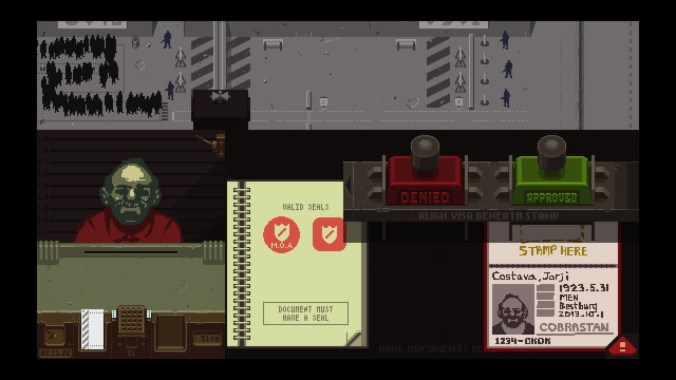
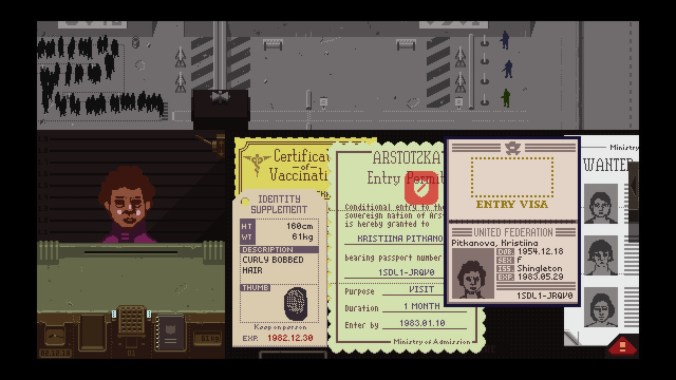
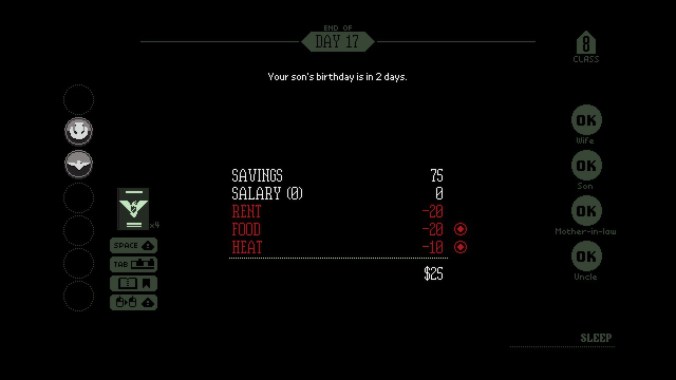
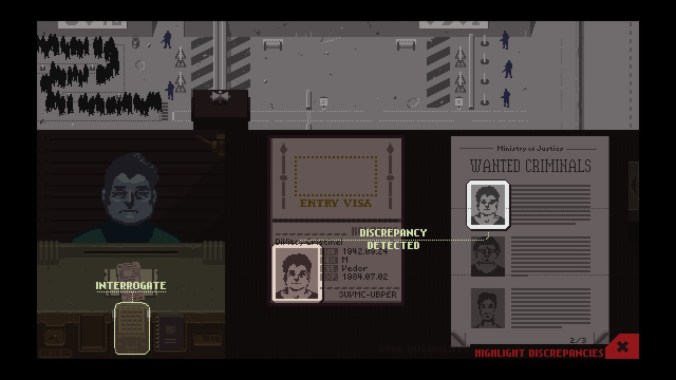
In the fictional authoritarian nation of Arstotzka the player is assigned to a border job in which they must check the passports of incoming people. For every person you correctly admit/deny, you make a pittance of money to pay for rent, heating, and food for your family. Therefore, the player must quickly scan over documents to make as much money possible every day. If you go too fast however, you begin getting fines for mistakes, so the player is constantly teetering on the edge of speed and accuracy. Moreover, you must constantly be on the lookout for terrorist attacks in this dystopian world.

4

As the player desperately attempts to make enough money to survive, moral dilemmas are presented by some characters who need to enter the country for one reason or the other, but do not have the correct papers. The player must decide between letting them in and taking a fine and possibly jeopardizing their own family, or denying the person and letting them suffer. This is the first major point that Papers, Please makes. We demonize those forced into bad situations by their higher ups. The player is put into the shoes of the border guard who is forced to deny entry, and it become apparent that we should not demonize those who are forced into jobs like this because they really have no other option.

3

Moreover, the overarching story of Papers, Please also includes some tough decisions. The player is regularly given the chance to defy the totalitarian government by assisting revolutionaries. Of course, this comes with its own risks as betraying either side and getting caught can lead to the end of the campaign. There are 20 different endings to Papers, Please, some are similar to each other, but there are still a plethora of different outcomes depending on your in-game choices. Luckily, you can start at the beginning of any day that you have already played, so in case you make a bad choice that gets you thrown in jail, you can reset to 10 minutes ago very easily. As you play, a newspaper is published everyday that outlines the current events in Arstotzka, and these events are reflected by the daily shift in rules.

2

It is obvious that Papers, Please is meant to in some ways frustrate the player. The concept of scanning documents for inconsistencies and forgeries is already not exactly considered a “fun” task, but this is exacerbated because of the way the game annoys the player. You are purposely given a cramped space to make document management difficult, and many things in the game are meant to waste your time and make you annoyed. Furthermore, the rules constantly are changed and updated almost daily to keep the player from getting comfortable. Just as I started to get into a rhythm, a new document to check would be required, or I had to start fingerprinting entrants, etc. All these frustrations factor into the idea that this is an awful job, and you want to escape it as soon as possible. Also, since you are annoyed, it is harder to feel sympathy for the people that you are supposed to be admitting or denying to the country. Again, Papers, Please is meant to teach a lesson, working in this authoritarian nation is a matter of life and death, and you must quickly adapt if you want to stand a chance.

1

Overall, Papers, Please is what I would consider a niche game. I mostly enjoyed it, but I was often frustrated by the constant rule changes, but I understand that was the point of them. Once I got into a rhythm, the game flew by as I grew better at my “job”. I grew attached to some of the repeated characters that constantly show up to your booth and are friendly and I grew to despise the fictional Arstotzka. Papers, Please is the perfect example of a game that exists for more reasons than “dumb fun”, but I realize that not everyone like this type of game as it can easily be perceived as boring. Still, I would recommend this game highly as it does a phenomenal job at making you feel like you are a cog in the government machine. Papers, Please is a short and gratifying game that oozes with creativity and charm.

LISA (2014)

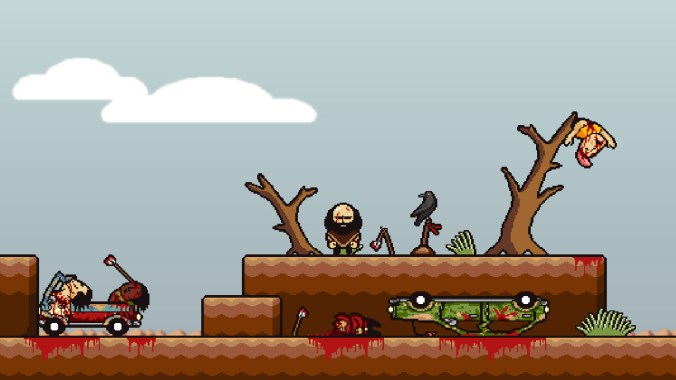
It is for good reason that Lisa is known as “the painful RPG”. Few games can even imagine matching the dark and mature themes presented by Lisa. This indie side-scrolling RPG provides an absolutely brutal experience that will be remembered by anybody who plays it. Furthermore, it makes a fantastic use of gaming as an interactive storytelling medium.

2

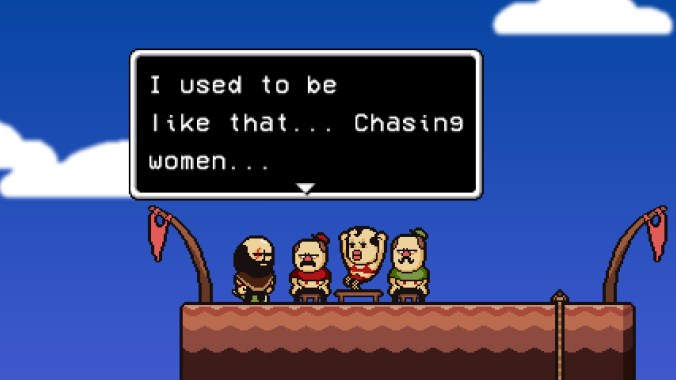
Lisa tells the tale of post-apocalyptic world in which the much of the world’s population, including all the women, are wiped in a mysterious “white flash”. The main character, Brad Armstrong, finds a baby girl that he decides to protect and raise in this hostile world. Through flashbacks the player learns that Brad was a victim of gruesome child abuse and currently abuses a drug called Joy to dull his senses. Eventually Brad and his daughter get split up, and Brad sets out after her, slaughtering anyone who stands in his way. This is not a happily ever after story, and it is filled with violence, abuse, trauma, and atrocities. It highlights the cyclical nature of abuse and trauma as those affected in turn affect those around them. Furthermore, there are a plethora of difficult decisions to be made with immediate consequences. Moreover, Brad constantly feels the effects of Joy and the players perception is skewed by Brad’s Joy addiction. This is not a game for the faint-hearted, it is brutal, unforgiving, and pulls no punches.

1

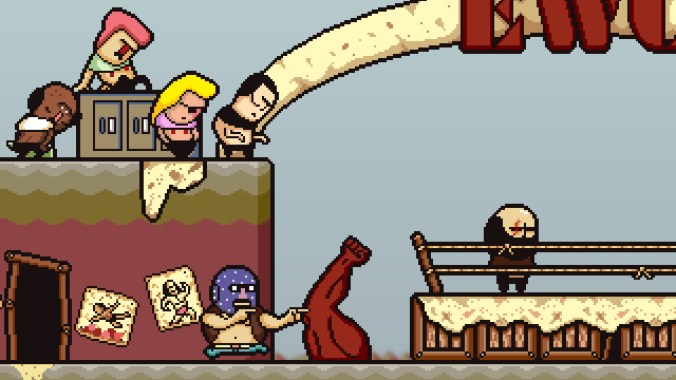
Even with such heavy story, Lisa manages to lighten the experience with its other elements. First and foremost, Lisa makes phenomenal use of humor. It is a filled to the brim with jokes, references, and funny situations. At the same time, the game does not punch the player in the face with its jokes, most of the games humor is derived from the ridiculous cast of characters. For instance, Beastborn is a potential party member who was raised among animals throws deer at his opponents as his attack. Other than the characters, there is a lot of cleverly written jokes that will no doubt make you smile. There are plenty of instances of dark humor as well, befitting to the bleak world of Lisa. The grim imagery and dark themes of Lisa is coupled with levity and wit. Furthermore, Lisa has an absolutely stellar soundtrack that is equal parts disturbing and unsettling which fits perfect for its battle themes. All around, Lisa is more than just a depressing story, it shows maturity in more ways in one and fills a void for RPGs targeted at older audiences.

3

The weakest element of Lisa is without a doubt its gameplay. The combat and exploration are supplemented by the games humor, but it is still evident that the gameplay can be fairly boring and repetitive. The key to making turn-based interesting is to make it feel strategic in some form. Unfortunately, in Lisa I found myself just mostly spamming my best abilities as often as possible. You have 4 party members in battle at all times, but I never really found any interesting tactics other than repeatedly using my highest damage attacks or stun-locking enemies continuously. Moreover, some enemies have a ton of health and left me wondering “when is this guy going to finally die”. The final frustration was that a handful of enemies have 1-shot-kill moves that instead of just knocking out party members like normal, these special attacks will permanently kill your team.

4

Even though the gameplay was mediocre, Lisa was carried by its witty writing and gripping, depressing story. There are few games that invoke the emotions that Lisa portrays. This really is a must play for RPG lovers who are looking for a more dark and mature game. Lisa tells the story of a broken man and highlights the cycles of abuse that are perpetuated by trauma. Lisa hits hard and it is an unforgettable game.

Mass Effect 3 (2012)

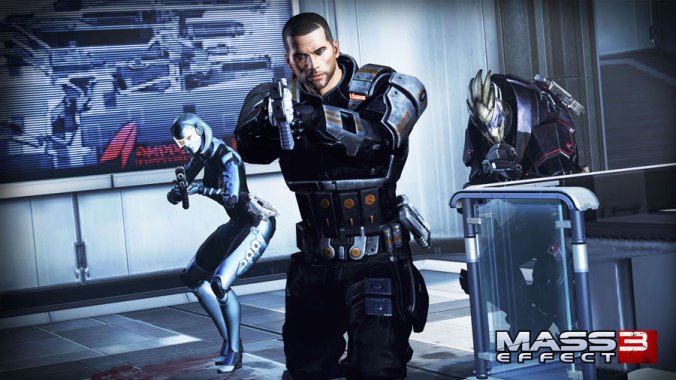
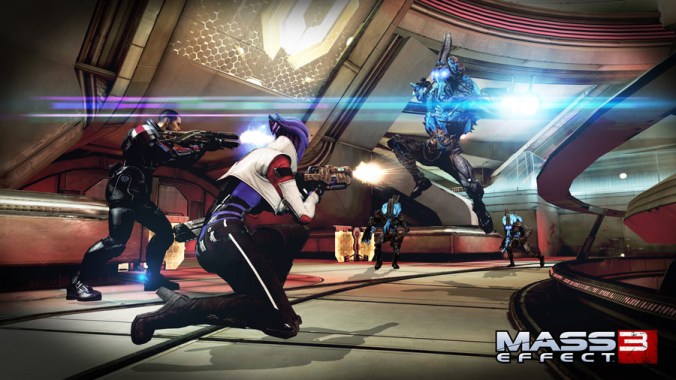
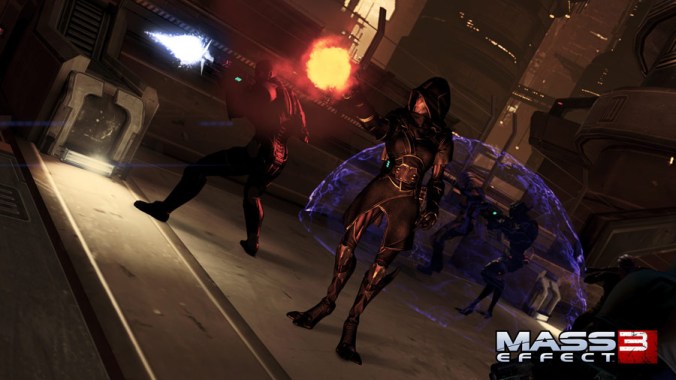
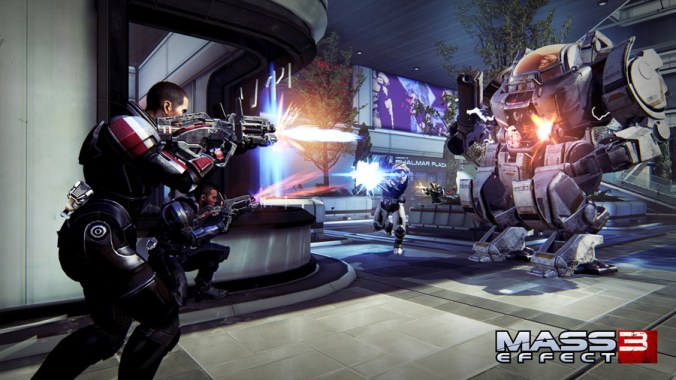
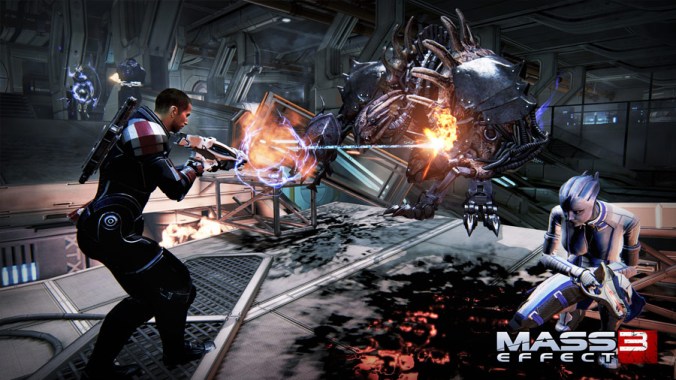
It’s been a couple months since I played Mass Effect 3, but I have not written anything about it because I could not express my utter disappointment through words alone. Still, I have to make an effort to try to articulate what went wrong with the final game in the legendary Mass Effect trilogy. Maybe that’s being a little harsh as the game up until the final mission is good, great even, but the ending leaves a permanent stain on the entire franchise.

5

The positives of Mass Effect 3 mimic the previous games in the series. Strong storytelling, interesting characters, and a heavy emphasis on player choice. Additionally, Mass Effect 3 plays very similarly to Mass Effect 2 as a cover-based tactical shooter. There are a few new abilities to play around with but for the most part the gameplay is about the same as its predecessor. The big difference between the two games is how quickly the story ramps up. While Mass Effect 2 told short, episodic narratives and focused on your squad members, Mass Effect 3 places less emphasis on your team and more on the galactic war threatening the destruction of all life. The previous two games in the series have been building up to events of Mass Effect 3, and it delivers convincingly with a massive scale war. The game really does a phenomenal job at setting up a David vs. Goliath narrative and making the player really feel like they are the galaxy’s last hope.

4

Many of the missions that you will play in Mass Effect 3 are life or death for certain species, planets are on the line. As you travel across the galaxy with your small squad of elite soldiers you will encounter past squad mates and witness how they rose to glory in their respective races. These moments are immensely gratifying as you watch Shepard’s old pals lead their races away from certain destruction and work together to destroy a common enemy. And with the emotional highs, come the tear-jerking moments. You will have to make difficult decisions, and some friends and acquaintances might not survive. These types of moments are what Mass Effect and Mass Effect 2 were lacking, nothing bad ever happened to your squad who you had become so attached to. I guess BioWare was just saving all these moments for the last game, as they are plenty of them.

3

The first major issue that I have is not just with Mass Effect 3, but with its publisher, EA. EA likes to make money, and is willing to sacrifice product quality and player experience for it. In the case of Mass Effect 3, that means loads of important content being locked behind downloadable content (DLC) that you must pay extra for. There are numerous DLC missions that are integral to the story and background of the game, and that’s unacceptable. Furthermore, you can buy Mass Effect 3 for $10-$15, but if you want all the essential DLC, you are going to need to pay an extra $60. The price for these missions has not gone down and they don’t go on sale either, so even 6 years after the release of the game you must pay top dollar to get the full experience. This is not just an issue with Mass Effect 3, every game published by EA suffers from their greedy mentality. It’s just unfortunate for Mass Effect 3 that a lot of its best content is locked behind a paywall.

2

The biggest issue with Mass Effect 3 is just how much of a letdown it was as a conclusion to the franchise. First and foremost, the mission lacks the oomph-factor. I would have absolutely loved to see previous squad mates show up to the final battle backed by their armies to assist Commander Shepard and have some impact on the gameplay and mission itself. But the biggest flaw is not the entire missions, but the last 10 minutes. I don’t want to spoil too much, but very little is explained to the player. After three story-driven games I wanted to see a fitting conclusion to the trilogy, but I was met with a punch in the gut. The player is told through some expository the reason for the Reaper invasion, but it does not make a whole lot of sense. Furthermore, the final villain is just portrayed terribly. I really don’t know what the developers were thinking. To drive the issue home, there are three choices for the end of the franchise. And realistically, all of them lead to the same conclusion. Every single choice that the player made in all this time playing the series was absolutely pointless. For a story-driven trilogy with emphasis on player choice, this was so far out of the ordinary that I am still in shock. To further rub it in the player face, very little is explained after the final choice. You really do not learn how the galaxy turns out as a result of your choice. Overall, I felt hollow and immensely disappointed that the series ended on such a low note.

1

As a whole, Mass Effect 3 is a fine game, it adopts much of what made previous entries to the series so great. If the ending of the game was not such an absolute dumpster fire, Mass Effect 3 would be on par with Mass Effect 2 and the series would be immortalized. Still, the Mass Effect trilogy is legendary. I wish there was a more fitting conclusion, but even without a hard-hitting ending Mass Effect 3 is still unforgettable.

Waluigi Doesn’t Deserve to be in Smash

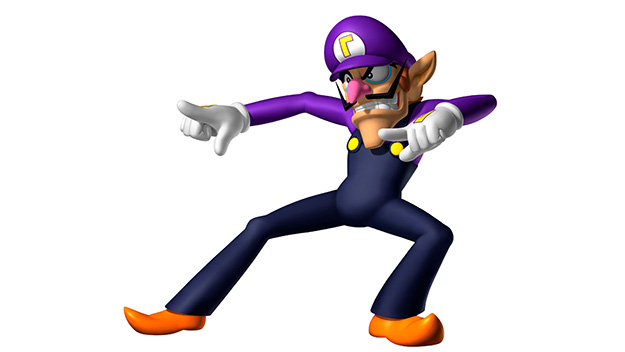
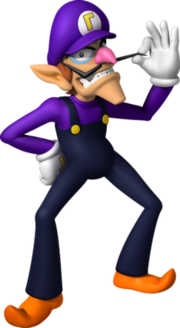
After Nintendo’s E3 conference centered around the reveal of Super Smash Bros Ultimate fans have been in an uproar over the exclusion of Waluigi. I don’t think highly of Waluigi, and I think even less of the fans behavior. The outcry surrounding this one particular character is insane, and people need to take their outrage down a notch. Would I like to see more characters in Super Smash Bros Ultimate? Yes. But the reality is that roster space is limited and character slots are valuable. As such, Waluigi should bring something to the table that every other possible candidate doesn’t. Personally, I don’t think he is worthy.

Who would he replace?

The entire point of Super Smash Bros Ultimate is that every character from four previous games would be playable in the game. So right off the bat, you cannot replace any of those characters with Waluigi. Next, there are 3 newcomers to the game: Inkling, Ridley, and Daisy. I think it is indisputable that Inkling and Ridley are far more deserving to be in the game than Waluigi. They both are main characters from major Nintendo franchises while Waluigi is a side character who only appears in spin-off titles.

Moreover, those characters are from underrepresented series. Inkling is the only character from Splatoon to be added to Super Smash Bros Ultimate, and Ridley is the third character from Metroid. The Mario series already has like 10 characters in the game, Waluigi would be overkill. The only debatable newcomer is Daisy, but Daisy is an “echo” fighter, meaning that she simply copies her moveset from Peach. Daisy was easy to create, and an entirely new Waluigi character would not be. I imagine that Daisy was a quick addition to the game while Waluigi would require much more work.

 3

He is not a major character.

There are a lot of characters that get requested to be put in Super Smash Bros. Obviously, Ridley and Inkling were probably the two most desired characters and they both made it in the game. Other than that, Bomberman, King K. Rool, Shovel Knight, Banjo & Kazooie, Bandana Dee, Decidueye, and Shantae were all also some high-profile choices that were commonly requested. Like Waluigi, none of those characters made it into the roster either and I think they are all probably more deserving.

Truthfully, I don’t know when this Waluigi hypetrain got in motion. Only in the past few years have I seen Waluigi gain a whole lot of attention and before that he was a throw away character. I think that he is some internet culture phenomenon that is popular solely as a joke. Sure, the existence of a bizarro Luigi who can only say “WAHHH” is kind of funny, but I genuinely feel the majority of his popularity exists due to meme culture. Waluigi’s entire existence came about because Wario needed a partner for the original Mario Tennis. Since then, he has not starred in any of his own games, nor is he a main character in any game. He is a spin-off filler character, and that is not debatable.

Realistically, Waluigi’s meteoric rise in popularity is only because he has become a meme. Super Smash Bros games are timeless, and I would be pretty disappointed if the developers added a meme character in the game over a major character from another franchise. Sure, it would be hilarious now, but the nature of memes is that in a few years it won’t be funny anymore. If Waluigi is added now, years down the line people will be asking “Why was Waluigi included over X,Y, or Z again?”.

1

The fans behavior is disgraceful.

Ok, now for the serious part of the article. The real issue at hand is that fans have been acting terribly since the reveal of the Super Smash Bros Ultimate roster. It was pretty evident at the Nintendo E3 presentation that the game’s director, Masahiro Sakurai, was determined to fulfill many fan requests. They brought back every single character from every previous game, that in itself is pretty crazy. Furthermore, they added two highly requested new characters, Inkling and Ridley. And they added the somewhat popular Daisy as an echo fighter to boot. So, what is the fanbase’s response to the fulfillment of many long-time requests? To go completely ballistic apparently.

Seriously, is it worth making such a fuss over Waluigi after Sakurai and his team worked hard to include numerous fan desires? I would be surprised if the developers ever listened to fans again. It was stated directly that they went through great lengths to include every previous character and Ridley in particular was difficult to design. Yet the developers are treated like garbage because of the exclusion Waluigi. Furthermore, harassing a game developer over Twitter is immature and unacceptable. The fact that there is such an uproar about this is absurd. What about EA’s predatory practices? What about the pre-ordering problem? What about microtransactions? What about cash-grab DLC? Seriously, of all the things people choose to get upset about, it’s Waluigi. Unbelievable.

2

I’m all for tons of different characters being included in Super Smash Bros Ultimate, even Waluigi. But including characters takes time, resources, and money, so roster space is ultimately limited. Inlcuding Waluigi as a joke character over numerous other worthy choices is kind of bizarre if you ask me. Waluigi is a meme, and memes die off. Still, regardless if whether or not you want Waluigi in the game over anybody else, don’t act like a jerk. Harassing the developers over social media and writing angry posts about Waluigi is just disrespectful. Even if you’re joking, remember that people’s literal livelihood was making Super Smash Bros Ultimate, and berating them and their efforts because they didn’t include a meme is unacceptable. Maybe I’m taking this too seriously, and honestly, I didn’t care much about the issue at first. But when a developer goes out of their way to appease fans and they get flak for it I can’t help but get offended. Games are meant to be fun, the community should strive to be friendly, not full of vitriol and hatred.

A Hat in Time (2017)

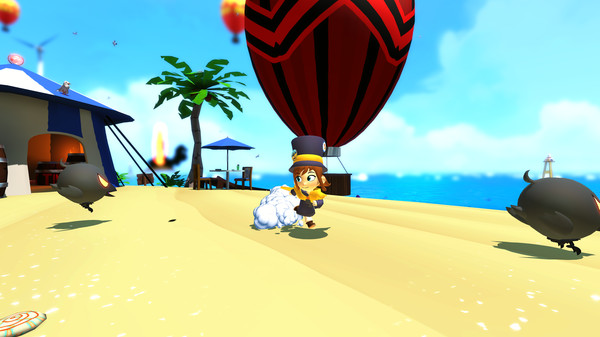
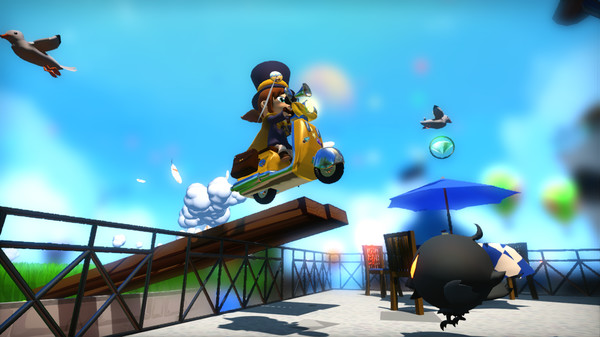
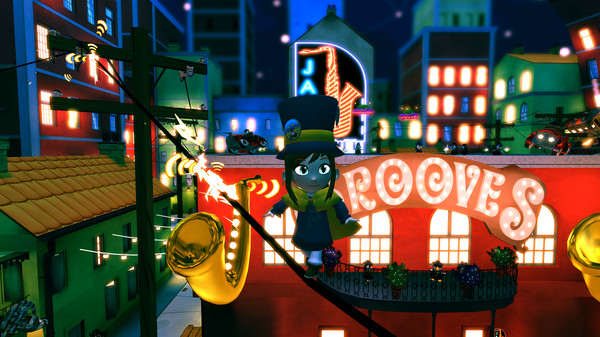
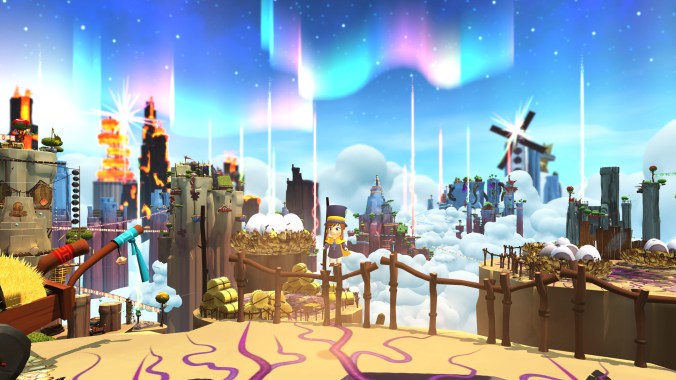
Few games can hit the nostalgia nerve without being a direct remake of a game that you played as a kid. Somehow, A Hat in Time manages to take me back to the early 2000s despite being a brand new 2017 game. Inspired by the likes of Banjo Kazooie, Super Mario 64, Super Mario Sunshine, and Psychonauts, this game combines elements from these classic and memorable games to take the player back in time to experience pure platforming bliss. A Hat in Time is witty, charming, and a wholesome game that anybody can jump into and have a blast.

2

Perhaps the most nostalgic game for me is Super Mario Sunshine, despite all its issues I just feel happy playing that game. The sunny environment, the upbeat music, and the extremely varied levels makes it a game that I look at back with great fondness. A Hat in Time heavily emulates Super Mario Sunshine in its structure and presentation but it modernizes it for a new generation to enjoy. You play as Hat Kid, an adorable little girl who is piloting a spaceship on a journey home when her travels are interrupted. The player must hunt down timepieces to fuel the rest of her trip and make it back home. From the hub of the spaceship, you can choose from four separate areas each with numerous levels. Levels can be any number of challenges, some are mini-games, some a boss fights, some are collectathons, some are free-roaming, but most are tasks based in platforming. Quality level design and variety make this game a blast to play.

1

The other shining feature of A Hat in Time is in its characters and charisma. Hat Kid will encounter a number of different characters, each one is goofy in their own right. Each area has an episodic story told through the levels that has you interact with the characters. Moreover, even though Hat Kid is a silent protagonist, she still displays plenty of emotions and has a few funny moments. A Hat in Time just oozes charm with its lovable characters and story. Furthermore, the vibrant colors and cheerful music are sure to keep you joyful.

2

A Hat in Time method of progression is similar to most 3D Super Mario games, but with a twist. You unlock new areas by collecting timepieces (similar to Stars, Shines, or Moons from the Super Mario series), but Hat Kid herself can unlock new platforming tricks through the use of hats. As you progress through areas you can collect optional balls of yarn that are used to craft a number of different hats. Some of these hats provide simply quality of life bonuses like the ability to sprint or a hat that shows where the next objective is. Other hats have necessary abilities to progress through levels. You can swap these hats around whenever you want, and you can even equip special badges to get even more small bonuses. These hats provide some a nice feeling of progression that gives the player a bonus incentive other than just timepieces.

3

There are a few minor problems that I have with A Hat in Time. First in foremost, while the game takes the best features from early 3D platformers, it also comes with one of the worst, the camera. The camera controls in this game are unwieldy and occasionally frustrating. In tight spaces especially. Frequently the camera will become locked and you cannot rotate it around to see your surroundings. This can be enormously annoying because sometimes you cannot even position it to see where to jump. The next issue that I have is that while three of the four areas are phenomenal, one is just a letdown. The area Alpine Skyline lacks the charm of the other areas because there are no characters or major objectives, it is a simple free-roam to collect a few timepieces. Moreover, these are the longest timepieces to obtain in the game by a longshot. You have to undergo 15 minutes of lame free-roam platforming to reach the real areas where the timepieces are even located. Its unfortunate because A Hat in Time is short as it is, only having three worthwhile areas makes that issue even worse. Still, I guess it bodes well for A Hat in Time that I wanted more of it, it shows that I really did enjoy the game.

5

As a whole, A Hat in Time takes the player back to a simpler time in video games. Just some nice, wholesome fun. I can say with utmost certainty that anyone can enjoy this game. Whether you are a complete newbie or an older gamer looking for a hit of nostalgia, A Hat in Time is sure to impress. I wish the camera was not so janky and that there were more quality areas, but overall it was a heartwarming experience. For these reasons I give A Hat in Time a 9/10. I hope we will see more games like A Hat in Time being produced, as it was simply a pure and joyful ride down memory lane.

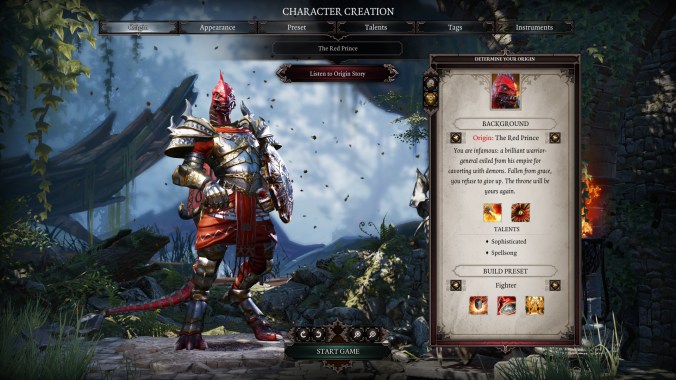
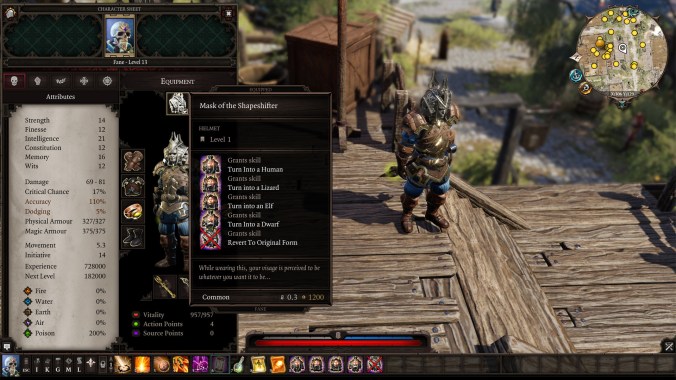
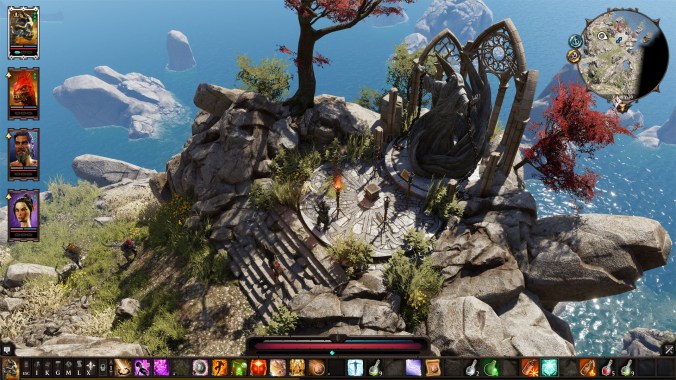
Divinity: Original Sin 2 (2017)

The genre of computer roleplaying games (CRPGs) is fairly unpopular and has not seen a lot of attention in recent years. While many classics such as Diablo, Baldur’s Gate, Fallout, and Planescape: Torment are seen as incredibly important titles there not much demand for these types of games anymore. As the medium of gaming as progressed, the slow, methodical, and classic style of RPGs has become niche as it was replaced by action-adventures. These types of games are inspired heavily by tabletop roleplaying games like Dungeons and Dragons, with heavy emphasis on character building, numerous progression options, dialogue, and stats. This tradition has been upheld by Divinity: Original Sin 2, which is a deep, creative, and addicting CRPG. As a disclaimer, Larian Studios recently announced that they are going to release an enhanced version of the game the fixes some of the things that I am going to write about, so some of this review may be obsolete in a few months from now.

8

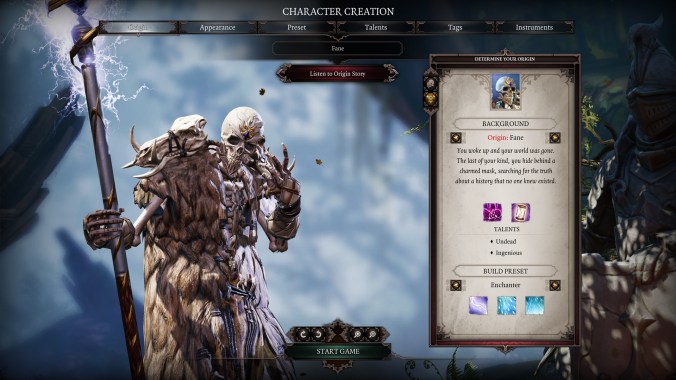
Divinity: Original Sin 2 is the newest entry in the longstanding Divinity series, but don’t fret, even as a story heavy RPG this game is not is not dependent on its predecessors. Even though I have not played any of the previous games, I completely understood and was drawn in by the story of Divinity: Original Sin 2. The central theme of the game is focused on an otherworldly magic called source. Few individuals can tap into this source and it allows them to cast powerful spells and abilities. By accessing source however, it allows monsters from the void to travel to the world and attack bystanders. The player is one of the few who can tap into source and is persecuted for it. You join up with companions who are in a similar situation and attempt to uncover the mystery of source and the void.

1

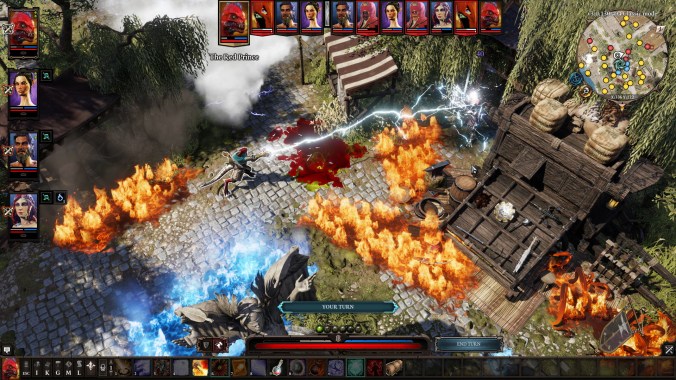
The gameplay of Divinity: Original Sin 2 is an isometric turn-based RPG. The player can control their own avatar and up to 3 companions throughout the world. As a CRPG, the game has a very heavy emphasis on dialogue options and different paths. In the starting area alone, there are 7 or 8 different methods of progression to move forward. It is immensely satisfying to hunt down all the numerous paths and branches and make choices that reflect on your character’s personality. Of course, many paths and options are locked behind stat-checks, clever responses, and special abilities, so you have to find the path that suits you. Like its pen-and-paper predecessors, Divinity: Original Sin 2 lets you create and build your own character from the ground up. Even if you mess up and make a bad choice, the game lets you redo your stats so there is no need to worry about min/maxing. Aside from character building and decision making, Divinity: Original Sin 2 supplements its gameplay with turn-based and strategic combat.

2

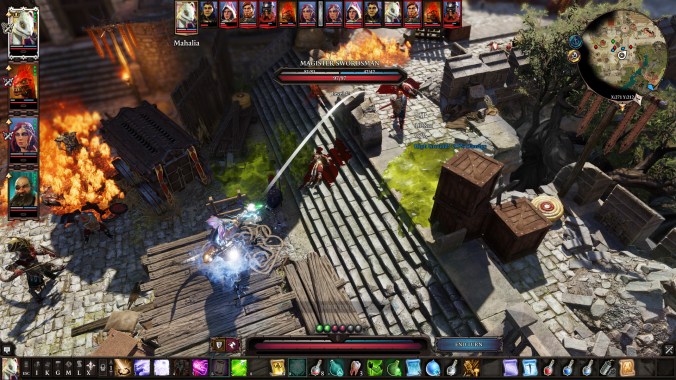
While the combat is usually not the focus of a CRPG, Divinity: Original Sin 2 does a fantastic job at making it addicting and gratifying in its own right. There are plenty of different classes, skills, builds, items, and strategies to play around with. The interesting thing about Divinity: Original Sin 2 is how many of the abilities interact with each other. You can use rain to put out fire which creates steam which you can strike with electricity to create a static storm. And that’s just the tip of the iceberg. Tons of different elemental abilities and status effects interact in unique manners to allow for some dynamic and creative strategies. Even more intriguing was the decision to allow players to partake in “cheese” strategies to effectively break the game. “Cheese” strategies include things like teleporting enemies into pits before the fight even starts, or littering the battlefield with explosive barrels preemptively, or having one of your characters leave combat to buy potions while the rest are locked in a turn-based affair, and much more. These creative solutions break the game and almost feel like cheating, but the developers intentionally left these things in the game to allow for player freedom and ingenuity, and I quite like that.

7

With the combat that Divinity: Original Sin 2 offers, there are a slew of issues that can plague any instance of combat. The first being that the game is fairly confusing and daunting at first glance. With dozens of different stats, abilities, skills, items, environmental effects, status effects, and combat nuances there is a lot to soak in. Realistically, it does not take too long to understand the basics, but I can see how many people may be dissuaded by the depth of the game. The next issue is balance, as with any game, some abilities and classes are better than others. However, some abilities are so wildly powerful that I wonder how they are even on the same plane of existence as many of the weaker skills. What really busts the combat are the crowd control effects, things like stuns, knockdowns, taunts, slows, etc. These abilities generally deal solid levels of damage while also incapacitating the enemy. Sure, they have cooldowns, but with 4 characters and each with a dozen different ability slots you can easily chain crowd control together in a way that never lets the enemy perform an action. The only downside of these skills is that they require you to break the armor of the opponent before you can crowd control them. Battles become a race to destroy the opponents armor and indefinitely stun-lock them before they can do the same to you. As such the difficulty can be a little binary, you either break their armor before they break yours and the battle is a breeze or vice versa and the battle is nigh impossible.

3

The one massive issue that I had with balance was the leveling system. Levels are massively impactful in this game and they take a long time to earn. A singular level increases your power exponentially, and this creates a plethora of problems. Battling enemies who are higher level than you is ridiculously difficult, and battling lower level enemies is incredibly easy. The slow gain of levels means that you can be level 9 with 99% experience, but you are still going to struggle against a level 10 enemy. And finding more experience is not easy, especially since it takes 2-4 hours to gain a single level. You can get roadblocked by higher level enemies and have to turn back and hunt down easier foes. This especially is frustrating when you are in the middle of a quest because you have to abandon your progress and come back later, and by that time you will have forgotten the details of what you were even doing. More frustrating still is how armor and gear scales just as quickly as the player. A level 10 common piece of armor is often better than a level 9 legendary piece of armor. Having your best equipment being made obsolete by common clothing in a single level is infuriating. Moreover, it means that you have to constantly keep track of all 10 pieces of armor on 4 separate characters to make sure that is always up to date. When you get a new breastplate for example, you have to check if its better than any one of the 4 that you currently are using. Constantly reequipping your characters is mind-numbingly boring and tedious, but it is absolutely necessary.

6

Despite its issues, Divinity: Original Sin 2 has flashes of brilliance and is easily one of the best modern CRPGs on the market. I could get over the balance issues and leveling system, hell they could be easily patched and rectified, but there is something much more detrimental to the game. The biggest issue that I encountered was just how the game got worse in nearly every aspect as I got further in. Divinity: Original Sin 2 is a long game, but it wasn’t just fatigue or the desire to “be done” with the game that hampered my experience. The game is split into 4 distinct acts, each taking place in a new map. Act 1 was absolutely phenomenal, tons of side quests, a gripping main story, polished level design, and while it was fairly linear it still offered a ton of different branching paths. Act 2 was much larger, but to its own detriment. Too many directions to go with very little guidance, and the issue with the leveling system rears its ugly head. Much of the map is nearly impossible to tackle early on because you are not a high enough level. This means that you have to explore the entire area just scrounging for enemies that you can actually fight. Act 3 is a short and uninspired area that lacks any side content.

5

Finally, Act 4 is an utter disaster. Most of the fights feel like nonsense that require you to use “cheese” tactics or overpowered abilities to even stand a chance. There are very few options or paths of progression for many of the quests, some literally only have 1 possible option which is a far cry from Act 1’s branching decisions. It’s a shame because after such a long playthrough you want to enjoy the end and the resolution to all the major quests and plotlines, but many of the late game fights just feel like the developer is throwing the kitchen sink at the player. Worse still, the game’s performance drops drastically as the game slogs on. Glitches become commonplace, framerates begin to suffer, and load/save times skyrocket. I feel like Act 1 was meticulously designed, tightly crafted and tested extensively, Act 2 was still solid but not nearly as carefully planned, and Act 3 and 4 were just rushed.

4

Overall, Divinity: Original Sin 2 still may be one of the best CRPGs ever made, even if it is a dwindling genre this game manages to demonstrate why these types of games can be so fun. Divinity: Original Sin 2 showcases the best of the genre: branching paths, witty dialogue, fun character building, and creative solutions. And it also has the worst of the genre: rampant balance issues, frustrating inventory management, and broken enemy encounters. As a whole, I think the goods significantly outweigh the bad. Acts 1 and 2 make up the majority of the game, and the one good thing about Acts 3 and 4 being oversights is that they are fairly short. Moreover, the developers are working on an enhanced edition of the game said to fix much of the balance woes and completely rework Acts 3 and 4. If the game was Acts 1 and 2 alone, it would easily be a 9/10, but sadly it just falls apart too much in its final act. For these reasons, I give Divinity: Original Sin 2 an 8/10. I really hope the enhanced edition fixes the issues that I have with this game, as this game has tremendous potential. The first act alone is a masterpiece of RPGs and is worth experiencing but prepare to be let down later in the game.

Ōkami (2006)

By looking at my avatar on WordPress it should be obvious that I am a huge fan of Ōkami. That being said, I have not played it since it was released 12 years ago. When it was remastered for the PC, I was overjoyed to return to one of my favorite games. It is apparent to me now that while Ōkami is an inherently flawed game, it still remains overwhelmingly charming, unique, and cozy. The remaster itself came with a new host of issues, but the base game is not perfect either.
1

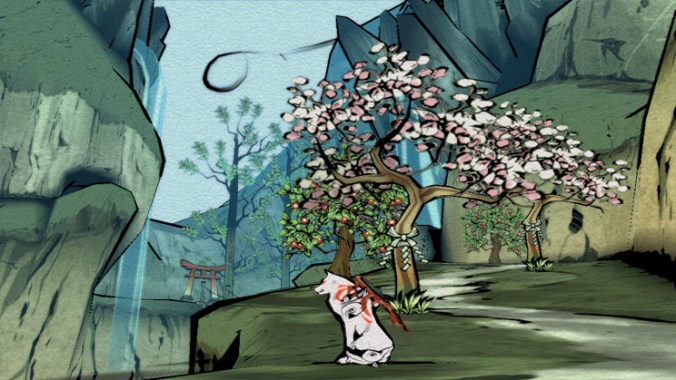
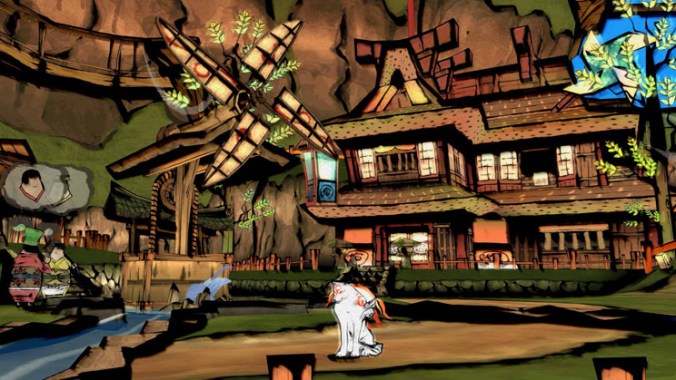
Ōkami is an action-adventure title that is based in Japanese folklore. You play as Amaterasu, the goddess of the sun who is represented by a white wolf. You travel the lands with your wood sprite companion, Issun, to dispatch of an ominous dark presence that covers Nippon. It is evident that Ōkami was largely inspired by The Legend of Zelda series, the format of Ōkami is nearly identical to that of its muse. A silent protagonist assisted by a small, incessant helper, travel the open world clearing dungeons as well as assisting townsfolk along the way. You gain new abilities to open new paths as you progress. Even though Ōkami took heavy inspiration from another series, it remains obviously distinct.

2

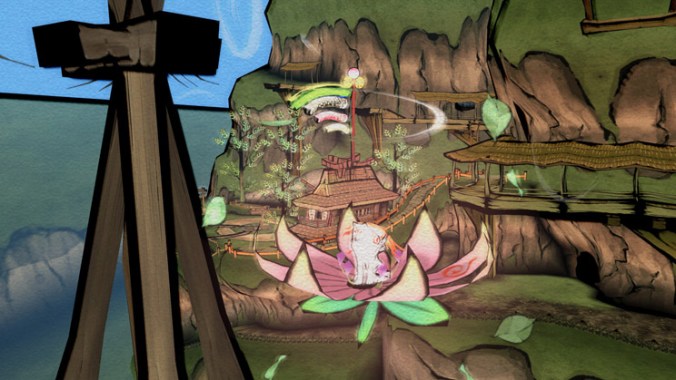
The core focus of Ōkami is that the player’s main tool is the celestial brush, a heavenly painting instrument. The player can paint across the environment in a variety of different ways to achieve different effects. Drawing a sun to change the time of day, or a bomb to blow a hole in a wall, or a tree, flowers, or other foliage to make local critters happy. Even in combat, the celestial brush plays a large role. You can draw lines to slash, blind, stun, or slow enemies, making the brush a versatile weapon and progression tool. It is seamless to use and master, and it is the main form of progression in Ōkami. As you travel the land you learn new brush techniques to assist in your journey. This unique gameplay aspect is what sets Ōkami apart from similar games and it makes for an incredibly memorable experience.

3

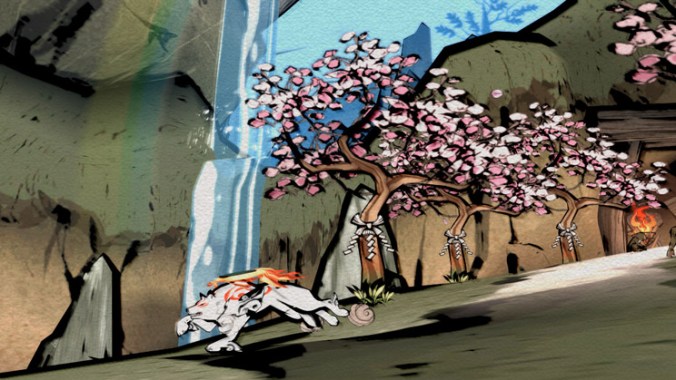
What I love about Ōkami is just how charming the whole experience is. It is obviously a feel-good game. Cleansing the environment of a malignant darkness and replacing it with foliage, cherry blossoms, and blooming natural features is immensely satisfying. Furthermore, Ōkami is centered around helping the citizens of Nippon, and it is rewarding to help around the countryside and solve problems. Amaterasu is both an adorable and fearsome protagonist, and she is incredibly expressive to make up for her lack of dialogue. The art of Ōkami was inspired of the traditional Japanese Ukiyo-e style of making woodprints. It certainly helps Ōkami stand out as this art style is rarely seen the medium of video games (and digital media in general). Its art style matches its story, as both are derived from Japanese culture. The story told in the game is a mixture of numerous Japanese folklore tales spun into one. All in all, everything about Ōkami is just relaxing. If anything, Ōkami just feels good to play.

4

While it remains a classic game for me, it is obvious that Ōkami has issues. An incredibly long introduction sequence that takes forever before you can really start playing. There is a ton of dialogue which pads out the game length and can frankly get annoying when you just want to play the game. Your companion, Issun, is the biggest example of this. If you thought Navi, Tatl, or Fi from The Legend of Zelda were annoying, let me tell you they have got nothing on Issun. He constantly interrupts and is a major source for the overinflated level of dialogue in this game. The other big issue was that at times Ōkami can be a little repetitive. For example, there is one particular boss that you have to fight three times with no significant changes. Other than the repetition issues and excessive dialogue there was a single issue that I think is exclusive to the PC port of the game. Hell, it might be exclusive to just me because I searched for other people who had this issue but I was the only one that I found. The issue that I am talking about is how text boxes would often get stuck and I would have to wait 15-30 seconds to see a new line of dialogue. This was supremely annoying but I think I was the only person in the world to have this issue.
5

Overall, Ōkami mostly holds up to my memories and standards. A few nagging issues brought the game down, but it is still a phenomenal game. It is incredibly unique, charming, and enjoyable to play. Whether you like similar games like The Legend of Zelda or action-adventure titles in general, definitely check out Ōkami. Ōkami is still one of my favorite games, despite its flaws. There is just something about it that draws me in, maybe I just like the fact that a cute wolf is the protagonist, but there really is something magical about Ōkami.