Death Stranding (2019)

As someone who values creativity, innovation, and uniqueness in games, Death Stranding was one of my most anticipated titles of 2019. It boasted Hideo Kojima’s signature style, yet it promised to be even stranger than the Metal Gear Solid series. It would be an understatement to say that Death Stranding is divisive. It firmly falls into the category of “love it or hate it” type of games. Kojima’s over the top and campy dialogue, the bizarre and confusing story, and the seemingly uninteresting gameplay were all either panned or praised depending on who you asked. I consider Death Stranding to be an important milestone for the gaming industry. It’s triple-A, yet it’s incredibly niche; it’s a game with a high production value yet the creators knew that the game would not appeal to everyone. Fortunately for me, this a niche that I really enjoyed, and I am solidly in the “love it” camp.
1

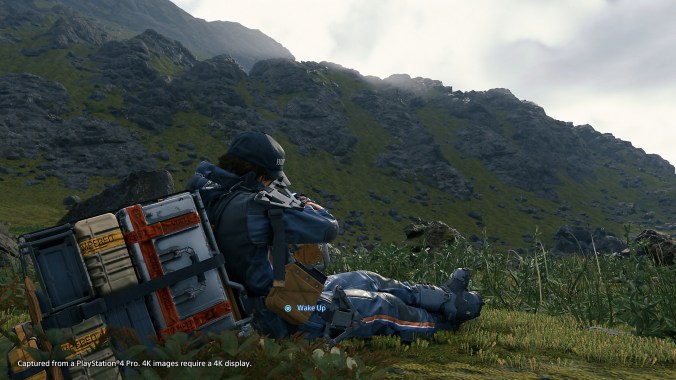
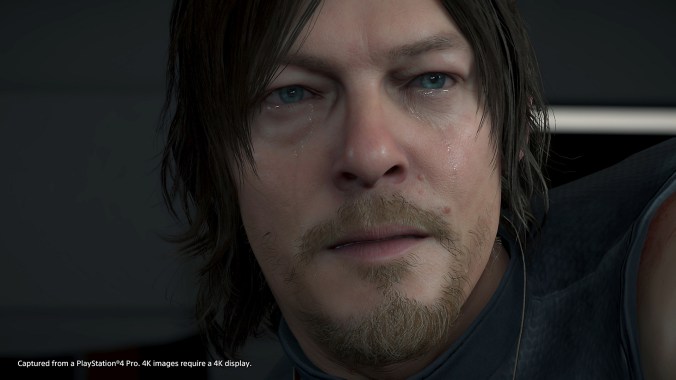
You play as Sam, a delivery man in a post-apocalyptic world. Earth has been decimated by a phenomenon known as the “Death Stranding”, a sort of disease that causes dead bodies to transform into anti-matter and destroy entire cities in violent explosions. The anti-matter ghosts that are created when a person dies are known as BTs, and if these BTs come in contact with a living person, the explosive “voidout” occurs. BTs tend to show up during bouts of “timefall”, which is a toxic equivalent to rain. Timefall causes anything it touches to rapidly age, decaying any living thing it its wake. The world has been devastated by the appearance of the Death Stranding and timefall. Voidouts annihilated major cities before they even knew what was happening.  Now, there are few remaining communities, and many people choose to live alone in doomsday shelters.

Sam plays the critical role of being a porter. He delivers packages from shelter to shelter, city to city, bringing necessary supplies between the scattered remnants of humanity. Since the dangers of timefall and BTs are unavoidable, most people refuse to leave the safety of their underground bunkers. Porters like Sam are the lifeline of civilization, undertaking the dangerous task of journeying in treacherous conditions to facilitate trade between the few survivors. Sam’s job is even more important, as he was given the task to link these scattered shelters via the chiral network. This advanced network allows people to communicate, share data, and ultimately become a global community again. Sam’s job is to rebuild America by bringing vital resources to people across the country and to connect them to the chiral network.
5

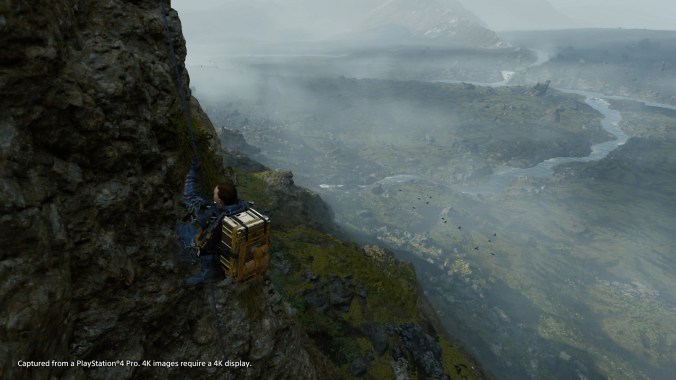
Death Stranding transforms what is considered downtime in most games into its core concept: walking. As a porter, the player must travel between shelters, delivering packages and avoiding danger along the way. Death Stranding does something very unexpected, it flips the universal notion of how inventory works on its head. In typical games, you have an inventory in which you can store items, sometimes up to a certain weight threshold. The inventory is a magical beast in most games, there is no physical representation of it, just a menu for easy access to things that you have collected. In Death Stranding, every single thing you decide to place in your inventory is physically on Sam. For every piece of cargo you bring with you, there are draw backs. You will move slower, you will be easier to spot, you will lose balance more easily, you will gain uncontrollable momentum, and it will be harder to fit into small gaps. This turns what is usually an implicit feature of most games, the inventory, into an important management aspect.
6

The core gameplay in Death Stranding revolves around being a porter in a disjointed America. You travel from coast to coast, delivering packages and connecting survivors to the chiral network. There are numerous dangers when traveling in the desolate environment of Death Stranding. Some areas are ripe with BTs, which require the player to stealthily avoid these mysterious ghosts. Moreover, terrorists are looking to intercept Sam and steal his cargo at every turn. There is also the obvious environmental factor when trekking across long distances. There is always a risk of running out of stamina, resources, or taking too dangerous of a path that inevitably damages your cargo beyond repair.

Each delivery in Death Stranding is a balancing act. You must examine the map to work out the best route to reach your destination. Avoiding BTs, terrorists, and choosing a path with manageable terrain is crucial to having a good experience. If you try to head straight up or down a cliff, or trudge through a river, Sam is going to be very hard to control. Picking an efficient route is then followed by deciding what cargo you want to bring along. There are tools to deal with the environment and enemies; ladders, climbing anchors, and a variety of other devices are critical to a delivery’s success. However, every tool you bring has a weight, which as mentioned earlier will make it harder to balance, move, and be stealthy. Choosing an effective route and bringing the correct tools is vital to Sam’s success, and to the player’s enjoyment.
7

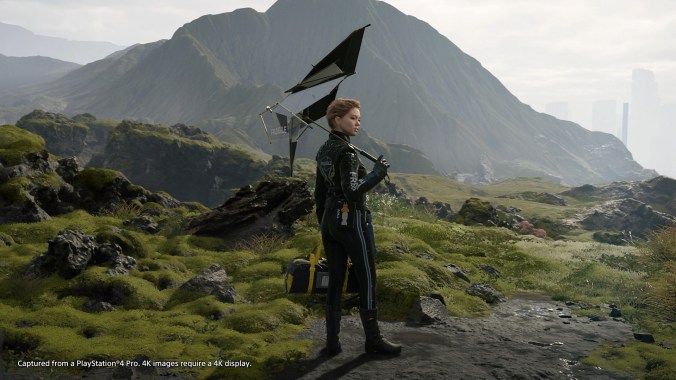
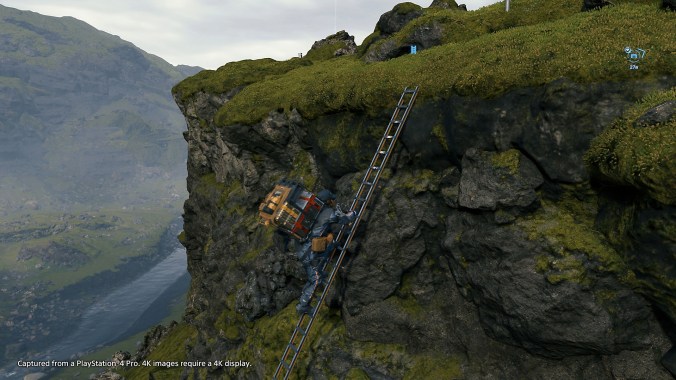
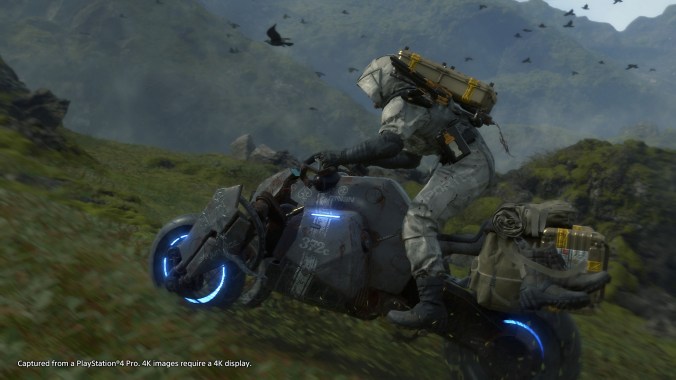
Trekking through the wilderness is a supremely lonely experience. The seeds of civilization are few and far between, and the solitary journey between these bunkers of hope is one of silent contemplation. As Sam slowly makes his way across the gorgeous yet eerie vistas of desolation, the player is left alone with their thoughts. Death Stranding is a slow burn, action is tense but sparse. The majority of the game is spent wandering through scenic landscapes, but the few moments when you do encounter enemies are all the more tense due do their rarity. Music is also used to its greatest possible effect, when a song begins playing it is as if the player is transported into a movie. The visual of Sam hiking in the lonely wilderness with a calming and ambient soundtrack playing in the background creates some unforgettable and picturesque moments.
2

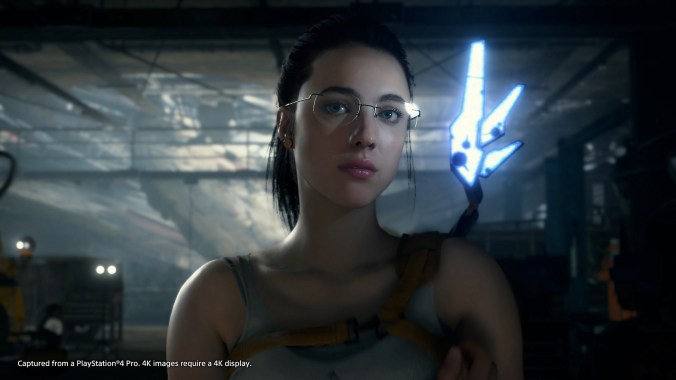
Despite the isolation of the lone porter, Death Stranding is a game all about connections. Reconnecting the people of America, the connections of personal relationships, the connections between life and death, and the connections between players. This game implements a unique form of cooperation with players around the world. Even though you will never truly meet the other players, you will help each other through treacherous world. When you connect a region to the chiral network, you will also be able to see what other players have built in that region. Bridges, roads, storage boxes, safehouses, vehicles, ladders, and various resources are shared among players. You can contribute resources to other player’s structures to complete them or upgrade them. The player base is collectively working together to make the game easier for each other. You can leave signs of encouragement, or warnings of danger to come. And you can always drop some “likes” to show your appreciation for what other players have built.

The transformation of the world in Death Stranding is an incredibly satisfying experience. Watching an empty wilderness gradually fill with player structures as you connect the chiral network accomplishes the effect that you actually are rebuilding America. I was absolutely obsessed with efficiently connecting each location on the map via a network of roads, bridges, and ziplines. I wanted to make it simple for myself and other players to quickly travel across the landscape. Donating resources that I had collected to reestablish the world made it feel like I was contributing to the greater whole.
9

Death Stranding made me feel like I was working with other players, rather than just playing in isolation. I was worried that player structures would make the game too easy, as you could just use previously placed roads and bridges to complete any mission, but this is not the case. The player structures only appear once you connect a location to the chiral network, so each trek to a new place is still difficult and lonely. Each of the main deliveries is “pure” in the sense that you will play it exactly how the developers designed it: with no external assistance.

Hideo Kojima is known for his absolutely convoluted stories, and Death Stranding is no different. Just describing the basic idea of the world earlier in this article was difficult. As previously mentioned, Sam is traveling across America, delivering supplies and reconnecting people as he goes. Ultimately, he is trying to reach his sister on the West Coast, who is being held hostage by an anarchist terrorist group. Moreover, Sam carries around a “Bridge-Baby”, affectionately referred to as BB. Little BB acts a connection between the worlds of life and death, allowing Sam to sense and see BTs. There is a ridiculous amount of moving parts in Death Stranding, many of which may seem random and disconnected. It all comes together by the end of the game. In true Hideo Kojima fashion, there are plenty of plot-twists and unexpected explanations for what may seem nonsensical at first.
10

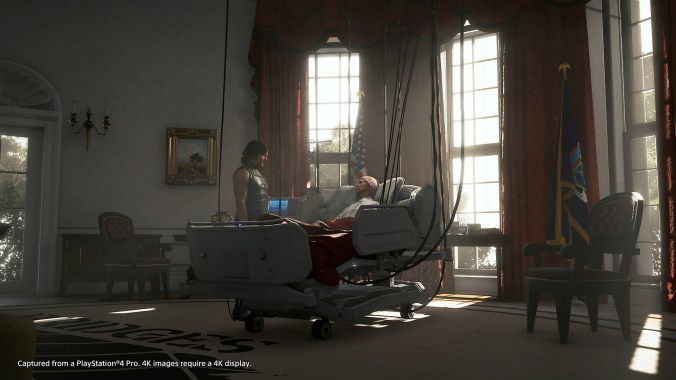
Despite the convoluted nature of the story, and what may seem like an incoherent world, Death Stranding manages to contain one of the most emotional stories in the medium of video games. Sam begins the game as a cynical, standoffish, and antisocial man who is just doing what he needs to do to survive. Witnessing Sam’s transformation as he travels with BB is one that I highly empathize with. Occasionally, I was taken out of the moment by some of the campy dialogue that Hideo Kojima has become known for. At this point it’s expected, but that doesn’t excuse some of the really goofy writing. It’s odd because there are absolutely masterful scenes with amazing dialogue, but then once in a while Kojima will throw in some ridiculous one-liner that just makes me scratch my head.
11

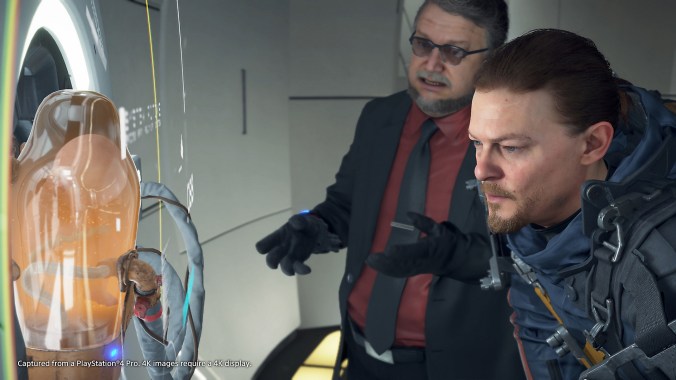
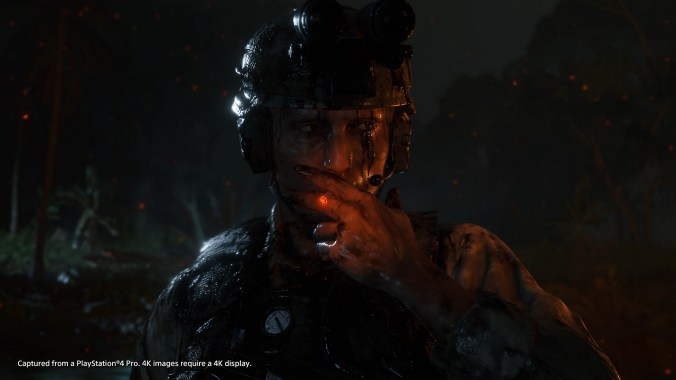
Much of the game’s emotional impact has to do with how well the game was acted. Kojima brought in an all-star cast of actors to portray his vision. Norman Reedus, Mads Mikkelsen, Léa Seydoux, Guillermo del Toro, Lindsay Wagner, and many more all were critical in the story of Death Stranding. Norman Reedus as Sam and Mads Mikkelsen as Cliff Unger were both absolutely phenomenal portrayals of their respective characters, filling them with life and emotion. Cliff in particular has become one of my favorite characters ever, from any medium.
12

The core mantra behind Death Stranding is connections. The entwined thread of humanity is one of love, compassion, turmoil, and misunderstanding. Kojima famously stated that this is the first “strand-type game”. In a traditional game, you use a stick to beat the obstacle in front of you. Instead of using a stick, in Death Stranding you use a strand, connecting people to overcome the obstacle. There is traditional combat occasionally, but the game is primarily focused on connecting the remnants of humanity. The strands connecting people can get tangled, causing anguish and agony. The unrelenting love of a parent, the fervent hunger for revenge, and the desire to watch the whole world fall apart all are key components to Death Stranding. The main point that the game gets across is that everything is connected in some way, and we should be attempt to form positive strands rather than face life as a lone warrior.

My solitary gripe with Death Stranding is that the game is too easy. Despite there being multiple difficulty options, even the hard difficulty did not present any form of challenge. The early portions of the game are by far the most difficult, but the game only gets easier as you progress. Early on you have low carrying capacity, limited equipment to build, and are unfamiliar with the controls. The game is divided into 15 chapters, and by chapter 3 you are essentially given all the tools you will need to defeat the majority of the threats in the game. Sure, you get more powerful equipment as you get farther along, but once you are given a weapon to deal with basic enemies you are set. This is a problem because Death Stranding benefits from those occasional tense moments when you encounter a terrorist camp or a horde of BTs. Once you have a weapon to deal with these threats, the genuine fear and anxiety disappears.

8

Moreover, the vast majority of bosses in Death Stranding pose no realistic threat to the player. Some of the bosses are horrifying spectacles, but they are all show and no go. Ultimately, there should have been an extra difficulty level added for players like myself who wanted a bit of a challenge. A “survival” difficulty could make bosses more threatening, and make resource collection more integral to player success. As it stands, the player is given more than enough resources to build any sort of tool that they need. Weapons, exoskeletons, vehicles, and structures (with the exception of roads) are all fairly cheap to build, meaning that you never truly have to scrounge for resources or properly ration materials.

One of my favorite moments in the game was early on before I had weapons or vehicles available; I snuck into a terrorist camp, stealthily dispatching the guards one by one, then I stole all of their precious materials and loaded it onto one of their own trucks to haul away. This was exciting and rewarding, I walked away with a stash of resources and a vehicle. Yet this was a hollow victory as a couple of hours later I realized that the extra resources that I acquired weren’t really necessary, and I could build a truck whenever I wanted. If building tools were more expensive and resources were scarcer it would force the player to scrounge for materials. Additionally, players would think twice about wasting valuable tools when not necessary. Terrorist and BT encounters would remain tense as you would try to get through them without blowing through a bunch of resources. I understand that many players would not want to have to constantly restock materials, so an additional difficulty level would be the best way to solve this issue.

3

It is important to understand that Death Stranding is not a game for everyone. Some players are going to click with the game, others are going to dislike it or outright hate it. And that’s ok. The modern triple-A industry is filled with cookie-cutter games in which producers and developers are afraid to take risks so they follow a proven formula. Kojima Productions made something entirely unique, which I heavily appreciate. Being unique doesn’t necessarily mean that a game is worthwhile, but in the case of Death Stranding, I think the game has plenty of appeal and attempts to convey a meaningful message.

This is definitely not a game for everyone, it understandably won’t appeal to a large chunk of players. It’s slow paced, filled with exposition and cutscenes, has a confusing story, and its core gameplay will bore many players. While I personally found a sort of Zen state by making deliveries, I understand that many people will desire high-octane action. I loved deciding what tools to bring, what cargo is important, what route to take, and subsequently traveling along that route. This is not a standard open world game in which the world is your sandbox. You have to follow the guidelines laid before you or you will have a bad time. Carrying too much cargo will mean you will move slow and have a hard time balancing. Traveling across rough terrain will cause you to fall over and lose cargo. Not bringing the right equipment may leave you with no way forward. Players who do not follow these rules are going to get frustrated, you must be patient and play the game the way it was designed.
4

Overall, Death Stranding is a one-of-a-kind game. It’s certainly a niche experience, and many people are going to absolutely abhor it. Still, I hope that everyone at least gives this game a shot. It can be an absolutely enthralling journey if it clicks for you. The artistry, narrative, online cooperation, and uniqueness of Death Stranding are second to none. It is for these reasons that I give Death Stranding a 9.5/10. It’s not for everyone, but everyone should give it a shot. Get out there and rebuild America, and don’t forget to keep on keeping on.
 

Yoku’s Island Express (2018)

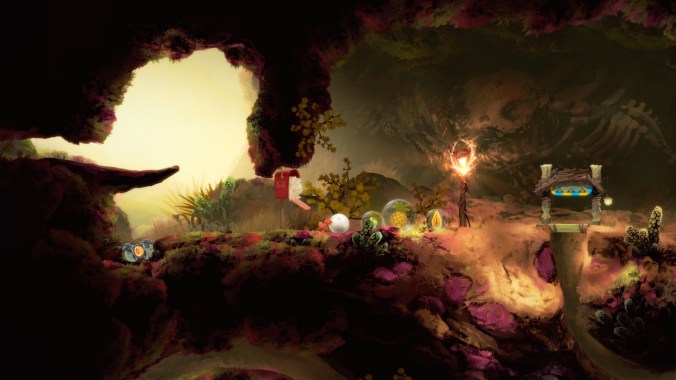
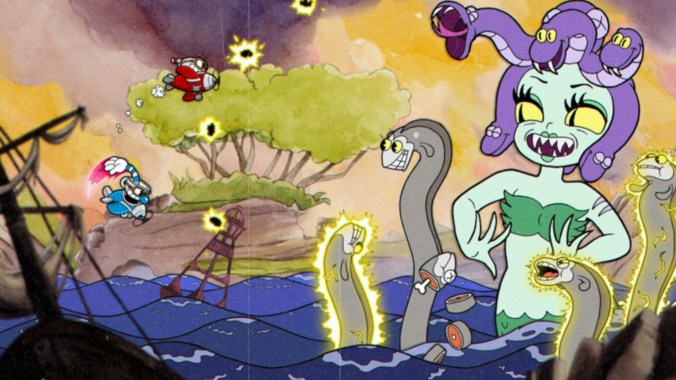
Indie metroidvanias are extremely common, so I am always on the lookout for one that sets itself apart. Yoku’s Island Express is a phenomenal example of a game that exudes creativity. It is a relaxing and charming adventure which is chock full of personality. While being a short adventure, Yoku’s Island Express is a sincerely enjoyable one.

1

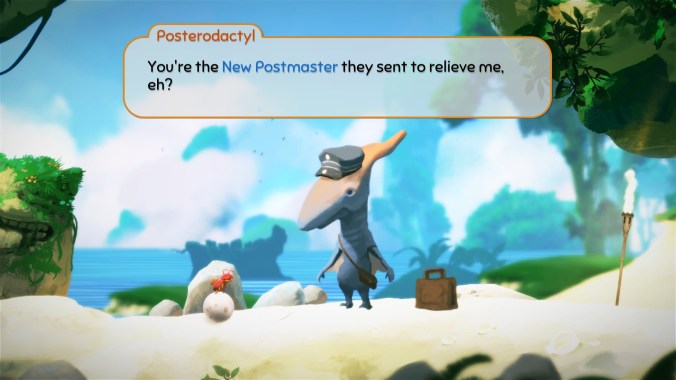
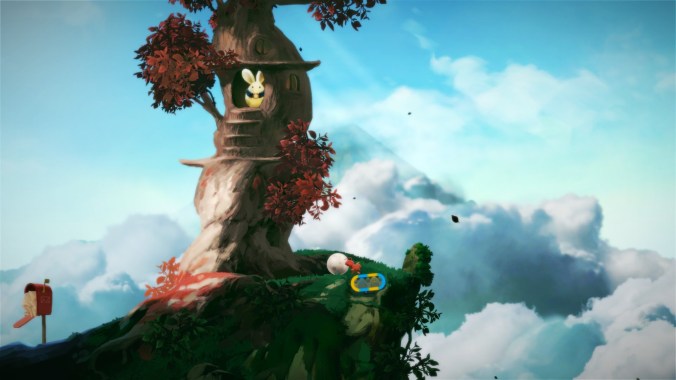
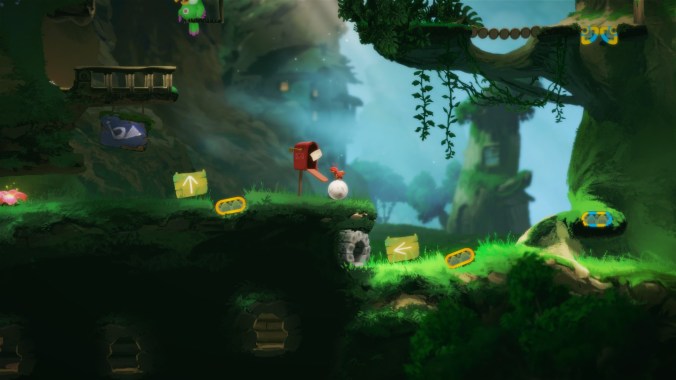
While 2D, indie, platforming metroidvanias are abundant today, Yoku’s Island Express stands out from the crowd by merging platforming and pinball. You play as Yoku, a dung beetle who is tasked with being the mailman on the diverse island of Mokumana. Luckily, instead of rolling around dung, Yoku rolls a ball which come in handy on the island full of conveniently placed pinball paddles. You can only control Yoku by moving left and right, but you can trigger different color pinball paddles to launch Yoku through platforming gauntlets. This is quite a unique take on platforming, and I loved just how different it is to conventional platforming.

2

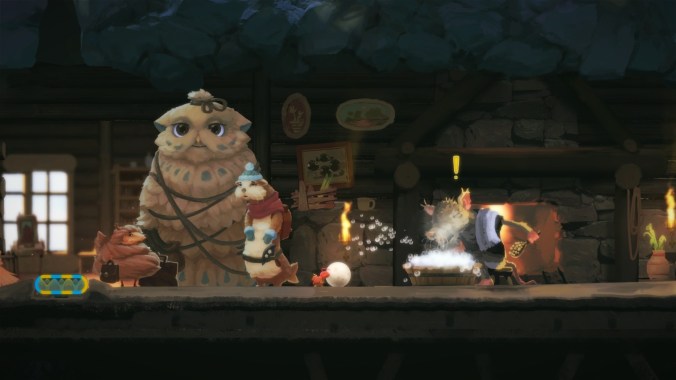
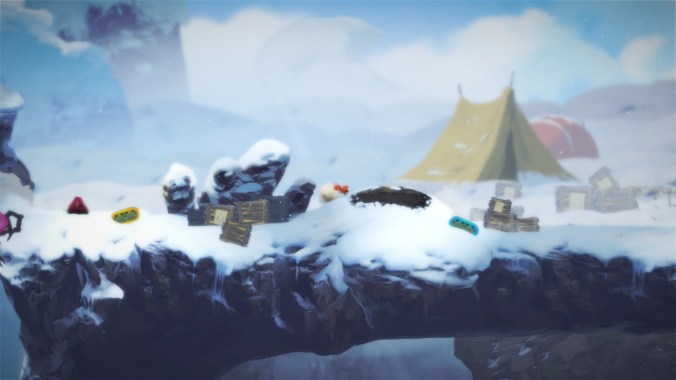
Upon arriving to the island of Mokumana, you make your way up to the central hub village where you learn that the protective deity of the island has been injured. It is your job as the postmaster to gather the three chiefs of the island to heal the guardian god and to track down whoever attacked him. First and foremost, Yoku’s Island Express is a wholesome journey. As you traverse the various terrains of the island you encounter numerous species of animals which you cooperate with to achieve your goal. It’s a cute, uplifting story accented by vibrant art and upbeat music.

3

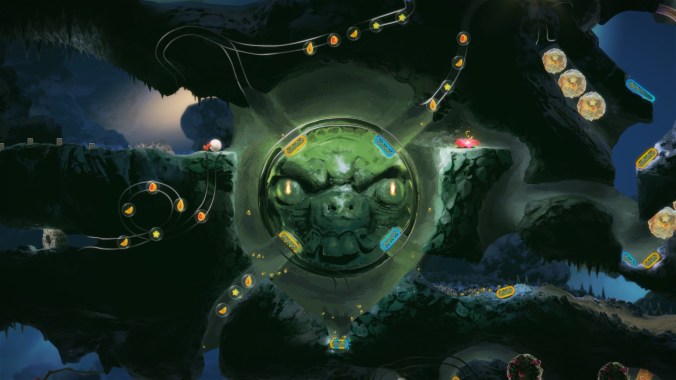
I was surprised with just how good the metroidvania aspects of the game were. The game points you in a vague direction to where the three chiefs are located. It is for the player to explore and discover how to reach the goal. Despite this, I never felt lost or confused when searching for the path forward. There is not an overwhelming amount of directions to choose from, so as long as you head in the correct general direction you will eventually find the right path. Moreover, backtracking is made quick and easy. Even though there is no fast-travel which teleports the player between major areas, there is a clever alternative. The “Beeline” serves as an unlockable express route which lets the player quickly travel between important locations once unlocked. Furthermore, Yoku’s Island Express has plenty of shortcuts so you rarely have to repeat platforming sections, making backtracking a breeze.

4

Despite being a fairly short game, Yoku’s Island Express makes up for that by encouraging exploring for collectibles. The main collectible in the game are wickerlings. These little guys have no immediate tangible reward, but the game does a great job at instilling a desire to hunt them down. As you collect them, the game will show that the wickerlings are a progression towards hatching a mysterious egg. The overwhelming desire to know what would happen when all the wickerlings were found, and what was inside the egg drove me to 100% this game.

5

I rarely 100% games these days as scrounging for collectibles can get excessively tedious, but I never ran into that problem in Yoku’s Island Express. The vast majority of hidden treasures are easily discovered, and the few that I missed were a breeze to find once I beat the game. This is because you can unlock “trackers” that will pinpoint the location of any missing collectibles on the world map, making it a cakewalk to find whatever I missed. I loved this, and I firmly believe that any game which has collectibles should have a similar idea implemented.

6

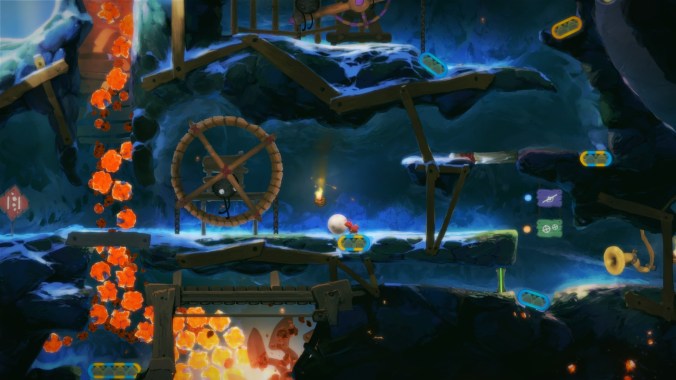
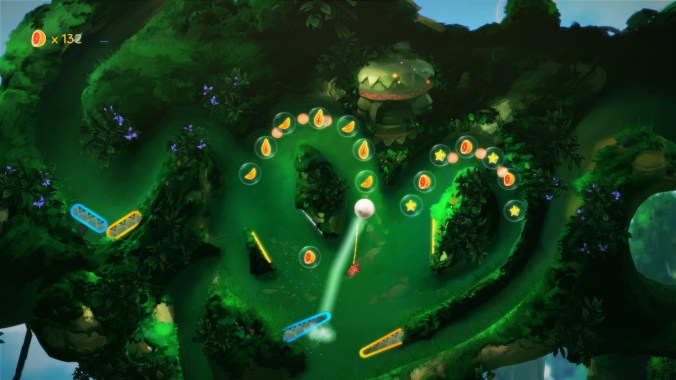
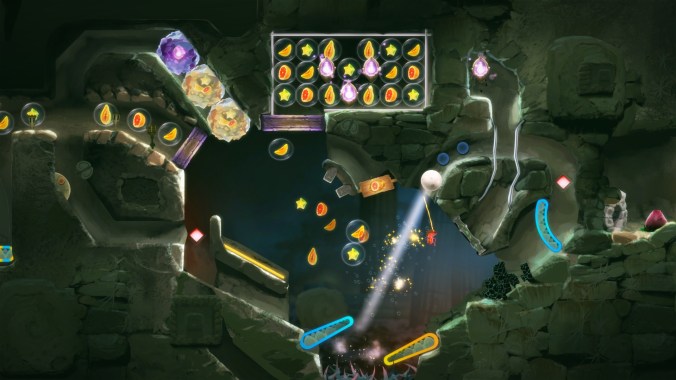
The gameplay of Yoku’s Island Express revolves around pinball-platforming. As you roll around the island, you will frequently enter these pinball chambers which you must progress through to move forward. These pinball challenges usually have the player hit specific spots to unlock the way forward. You could be hitting switches, barreling through tunnels, or trying to make precise shots. Of course, as a metroidvania you unlock new upgrades which will make these challenges more and more complex. The developers absolutely nailed the sense of satisfaction of just playing around in these pinball chambers. Flying around at high speed, hitting targets, and being constantly rewarded with this game’s form of currency: fruit. In Yoku’s Island Express there is no combat, there are no enemies, and you cannot die. It’s a comfy game, it’s not meant to be stressful or frustrating.

7

There is something to be said for the fact that the game managed to be occasionally challenging despite there being no enemies or way to die. Just like real pinball, if you miss the bumpers, you can fall through a crack and have to launch yourself back into the level. Like real pinball, which eats your quarters, you will lose a couple of fruit for failing. Luckily, as you bounce around a pinball chamber like a madman, fruit is constantly flowing. So even if you aren’t hitting your intended target, you end up collecting a swathe of fruit completely unintentionally. This is a great way to keep the game feeling rewarding, and to keep the players from feeling discouraged when they can’t quite make precise shots.

8

One of my few critiques of the game is how annoying it can be when you are struggling to make a very particular shot. You need to launch off of the correct bumper, at the correct angle, with the correct momentum. A couple of millimeters to the left or right will result in a missed shot. To be clear: this wasn’t a problem in itself, I welcomed the idea of making difficult shots. What grew tiresome was trying to get in position to make these shots in the first place. In some scenarios, transferring from the left bumper to right bumper (or vice versa) is not trivial. Simply getting into a position to make a shot could take a minute or two. Then missing that shot repeats the whole process. This did not happen too often, and it isn’t a big deal, but it highlights why the pinball concept can’t be taken much farther while maintaining the relaxing nature of Yoku’s Island Express.

9

Pinball can be a little frustrating, like in the scenarios I just described. For the most part, Yoku’s Island Express does a phenomenal job keeping its platforming simple enough that it doesn’t get to be tedious or exasperating. But what that means is that the game has severely limited itself with how far it can take its main concept. The developers couldn’t make anything difficult or anything that required a gauntlet of challenging shots. They couldn’t push the game’s core concept to its limit because the core concept is pinball, and pinball can quickly grow maddening. This is the antithesis of the cute, quirky, and calming game of Yoku’s Island Express. Ultimately, the pinball-platforming was kept simple, and I felt like it was missing some more complex challenges.

10

Despite my gripes, Yoku’s Island Express is still a triumphant success of upbeat positivity. Even in an oversaturated market, it manages to be a fresh and enjoyable experience. The creativity and unique concept really are what made this game stand out to me. It is for these reasons that I give Yoku’s Island Express an 8.5/10. This is a perfect game to just kickback, relax, and explore the wonderful world lovingly crafted by the game’s creators.

Borderlands 3 (2019)

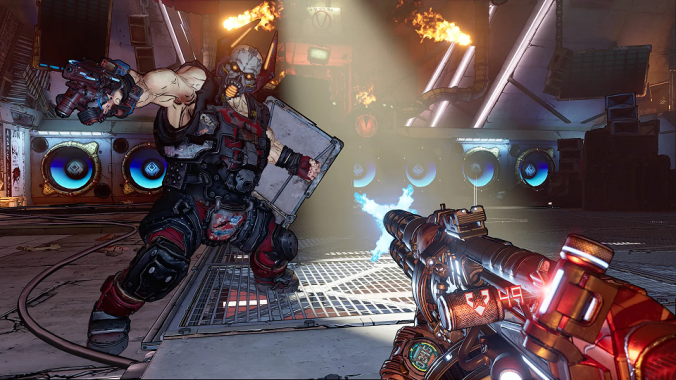
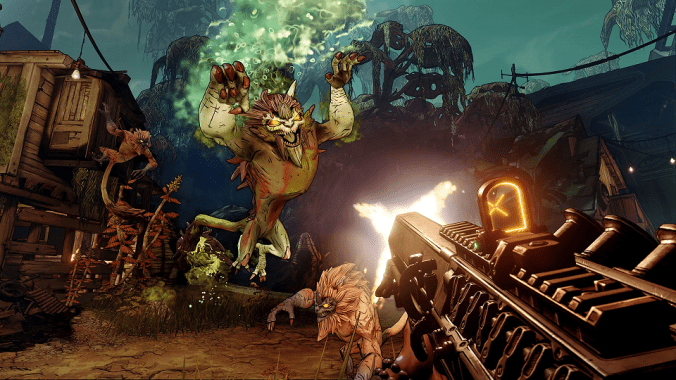
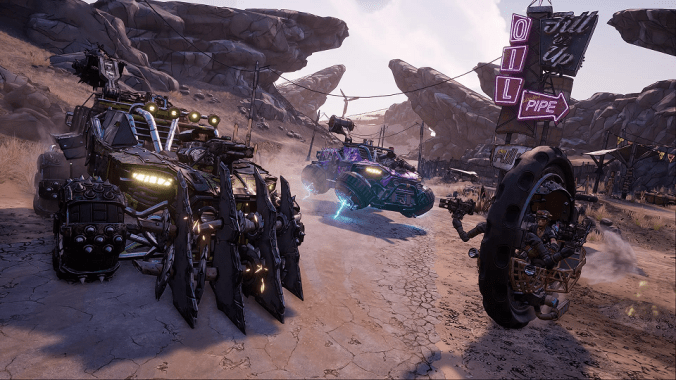
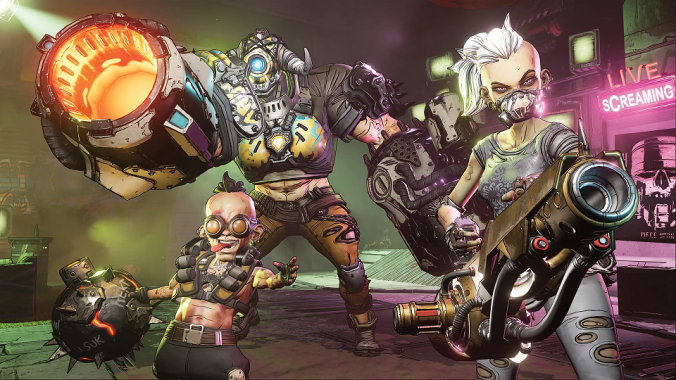
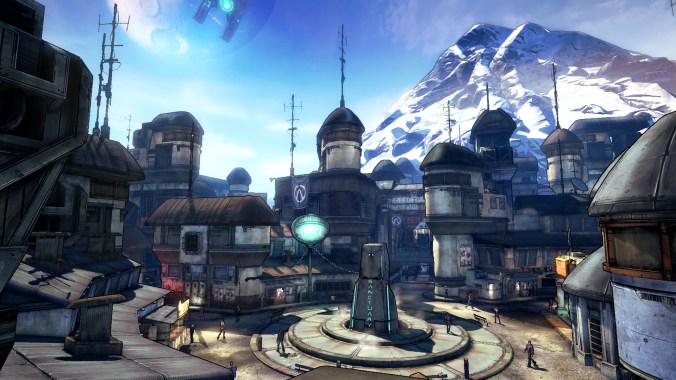
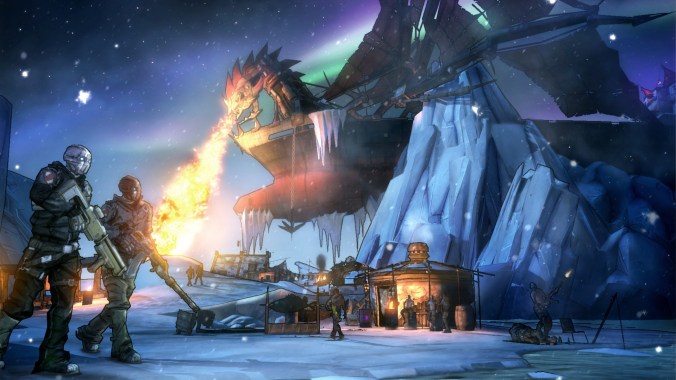
One of my most anticipated games of 2019 was Borderlands 3. As someone who played the hell out of Borderlands 2, I was amped up for the long-awaited new entry to the series. Unfortunately, I was ultimately underwhelmed by Borderlands 3. The game is definitely not bad, but there a few questionable design choices that grow annoying over time. Moreover, as someone who values innovation, Borderlands 3 definitely disappointed be with its lack of improvement over its predecessors.

2 png

It has been a while since the last major Borderlands release. Eight years since Borderlands 2 and five years since Borderlands: The Pre-Sequel. Despite all of that time between releases, only minor changes were implemented. Don’t get me wrong, I love the core Borderlands looter-shooter formula, yet Borderlands 3 does absolutely nothing that makes me want to play it over its ancestors. Ultimately, it’s more of the same. If you enjoyed any previous Borderlands games, then it’s very likely that you will like Borderlands 3, but don’t expect anything mind-blowing or revolutionary.

1

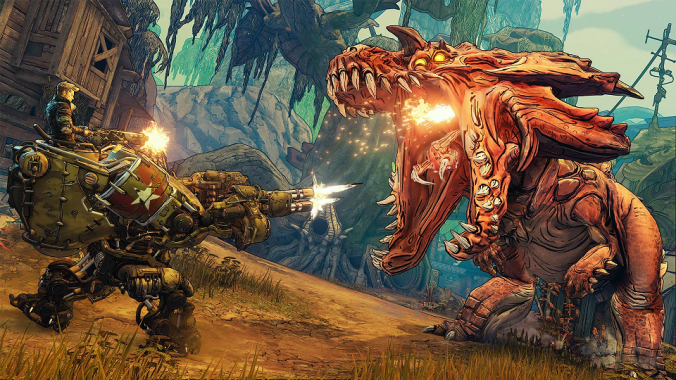
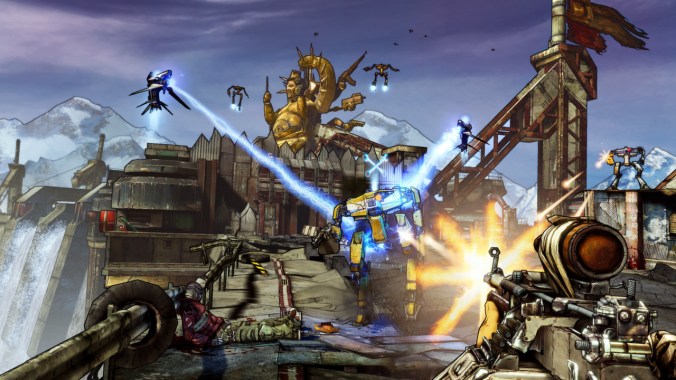
A few minor improvements were made throughout the gameplay that were noticeable, but they are not gamechangers. Movement in general has a few additions such as sliding, mantling, and ground-slamming. These are nice inclusions that make the game feel a bit smoother to play. High-rarity loot seems to be far more common this time around, I was getting legendary drops fairly frequently. Moreover, each legendary piece of equipment has some special effect that makes it fun to use rather than just being a huge stat increase. Boss fights are a far more integral part of the experience in Borderlands 3 than any of its predecessors. There are dozens of full-fledged bosses that are not simply bullet sponges. These bosses have telegraphed attacks and recognizable patterns, making their fights rely a little more on skill than just raw damage. Killing these bosses is also a great way to acquire those rare pieces of loot. Overall, all of these changes are fairly minor, but are nice inclusions that I hope get carried into the series going forward.

8 png

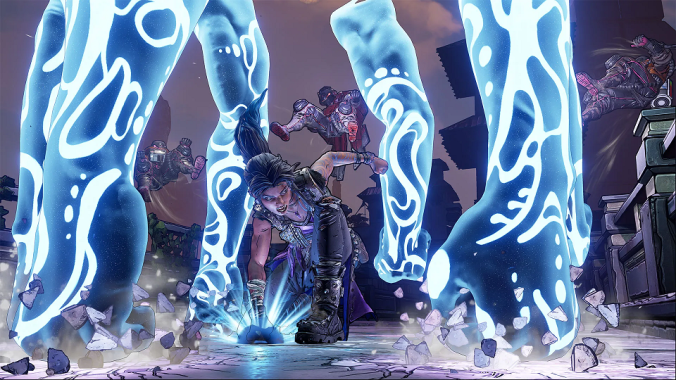
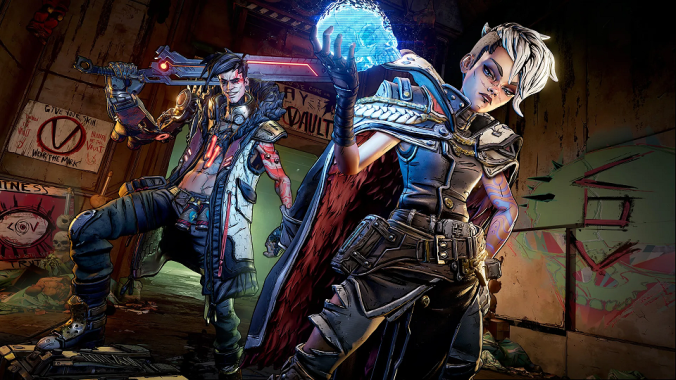
By far my favorite aspect of Borderlands 3 was the revamp on classes. In each of the previous Borderlands games there were 4 characters to choose from, each with a special ability and 3 skill trees to modify that ability. In Borderlands 3, each of the skill trees holds its own ability. Meaning instead of having a single ability with some slight modifications, now each character has 3 completely different abilities depending on which playstyle you want to pursue. Furthermore, as you progress down the skill tree you can unlock equippable augments for abilities, modifying them even further. All of this provides far more customization for how you want to play the game. You can easily reset skill points at any time so you quickly test different builds.

3 png

Despite there being a few positive changes in Borderlands 3, there were far more irritating quirks that were introduced. One of the biggest irritants was how often the game stops the player to spew dialogue at them. In past games, dialogue was often played while roaming around or shooting enemies. It was background noise that would be mildly entertaining, or at the very least you could ignore it entirely. Now, the game forcefully stops you in your tracks to listen. By locking doors, blocking paths, or outright making it so the player can’t move, Borderlands 3 insistently makes sure the player is listening to its writing. The worst part of it all is that the writing in the game is atrocious.

4 png

The undoubtably largest issue in Borderlands 3 is its writing quality, in both dialogue and overarching story. Borderlands as a series has always been known for its bombastic humor and ridiculous jokes. Borderlands 3 tries to follow the same legendary style, but it falls completely flat the majority of the time. With incessant pop culture references and crude humor, Borderlands 3 jokes felt outdated coming out of the gate. To make matters worse, gags go on for what feels like an eternity. Even if a joke is funny, repeating it a dozen times is a surefire way to make it annoying. It’s not just the poor dialogue which hurts the game, but the story itself is completely nonsensical.

5 png

The main villain of Borderlands 2, Handsome Jack, was iconic. Borderlands 3 on the other hand revolves around the twins Tyreen and Troy Calypso. These two are obvious parodies of internet influencers, as they gain followers by streaming their antics. Ultimately, they are trying to open vaults across the galaxy and gain the power within. It’s hard to properly explain why I dislike the story without spoiling what happens, so here are some ambiguous explanations: the villains “cheat”, there are some extremely annoying characters who are pushed to the forefront of the game, some foreshadowed events never occur, vaults feel devalued, and the player feels like a side character. To touch on the last point a little more, the game has the bizarre feeling that the player is entirely disconnected from the events of the game.

6 png

The player is essentially a hero, traveling from planet to planet and stopping an evil cult from amassing power. Yet every time you accomplish something, one of two things occurs: the villains teleport out of nowhere to somehow snatch victory while you aren’t looking, or the characters attribute the player’s accomplishments to other characters who did nothing. After completing a long and grueling quest, I want to feel like there was a point to it. To be rewarded. Something. Instead, there is always something waiting to rip away the feeling of accomplishment. The player’s character is never included in cutscenes or major interactions between the villains and the heroes. It feels like you are a spectator instead of a player.

7 png

There are a few nagging issues which I had with the game as well. For some reason, cutscenes are unskippable. I never skip cutscenes anyway, but the option should still be there. Especially since Borderlands encourages multiple playthroughs with different characters, I wouldn’t want to rewatch the same cutscene. The game has a fair number of irksome bugs, like the inventory displaying the wrong stats for items, or playing through the wrong dialogue when talking to a character. Lastly, when I played the game there was a Halloween event which proved to be frustrating. In game events which provide bonus content are great, as long as they don’t intrude on the rest of the game. This event would spawn ghosts when enemies were killed, and these ghosts would rush at the player, inflict damage and increase recoil. There was no way to turn off this event, so through my entire playthrough I had to deal with these annoying ghosts. Let me opt out of the event so I can play the game the way it was designed.

9 png

Overall, Borderlands 3 had high expectations but it missed its mark. The core gameplay of Borderlands is at its best in this entry, but the game is fairly disappointing in all other aspects. There is nothing that makes Borderlands 3 stand out for its predecessors. Both the dialogue and story are poorly written. And the game has a wealth of minor irritants. It is for these reasons I give Borderlands 3 a 6.5/10. If you like the Borderlands series, or just want to shoot n’ loot, Borderlands 3 is perfectly fine game. If you are expecting anything more, look elsewhere.

Uncharted 4: A Thief’s End (2016)

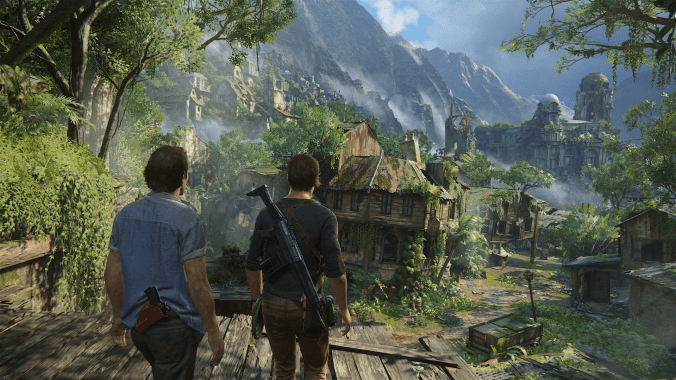
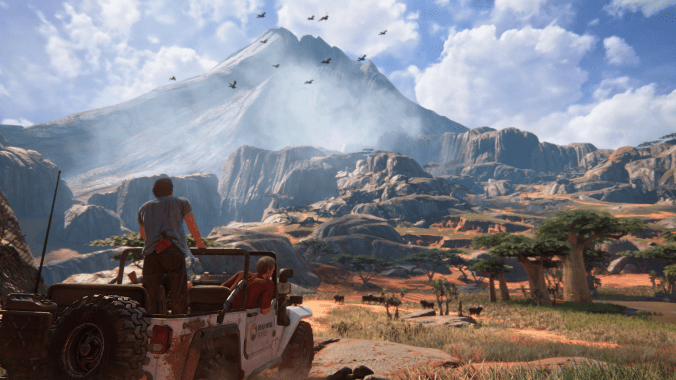
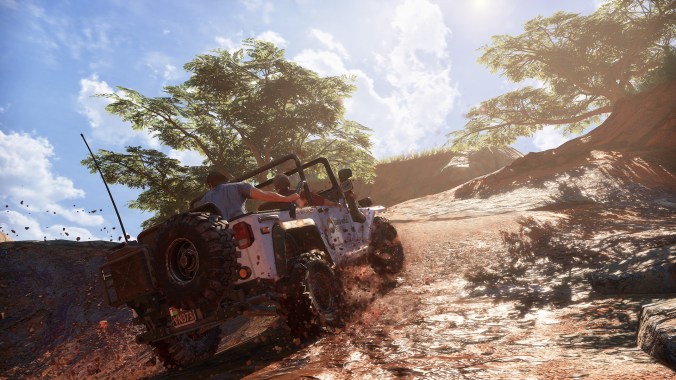
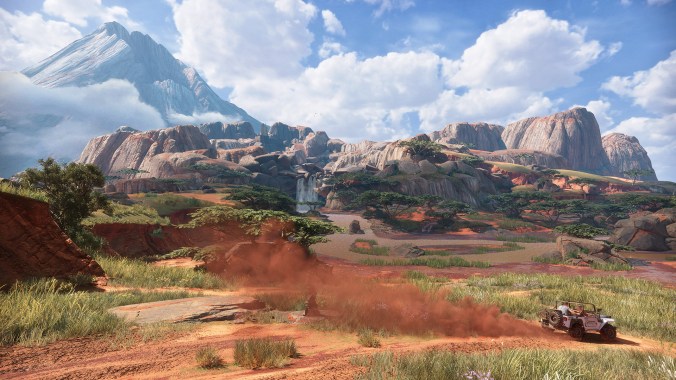
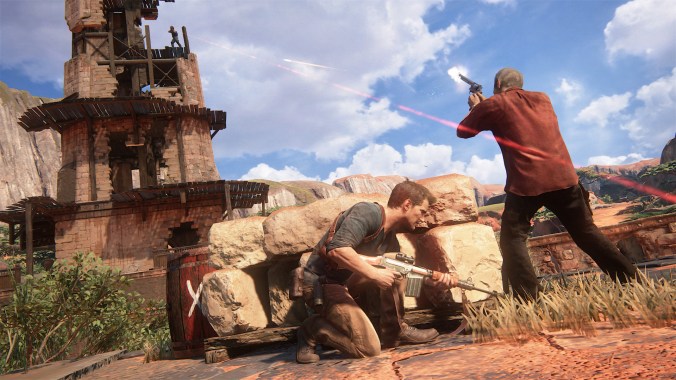
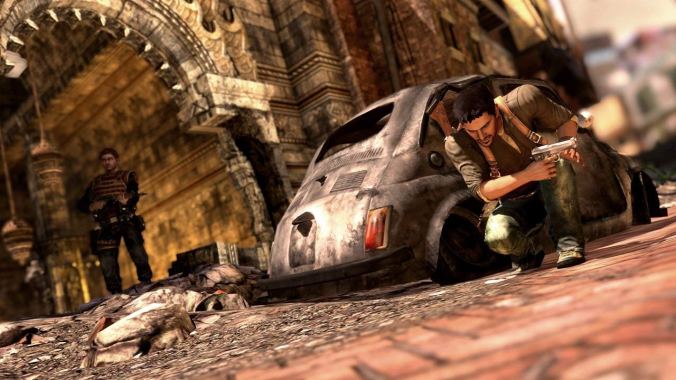
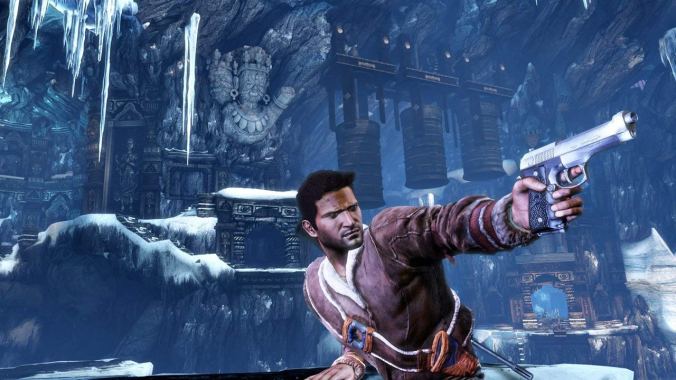
After the less-than-innovative Uncharted 3: Drake’s Deception, I feel like the Uncharted series needed something more inventive. Luckily, Uncharted 4: A Thief’s End enhances the adventure with some new tools to be used in a variety of scenarios. Moreover, despite being 3 years old, Uncharted 4: A Thief’s End is one of the most graphically impressive games that I have ever played. This is all of course complimented by the tenets of the Uncharted series: insane action, lovable yet realistic characters, phenomenal writing, and a sense of adventure.

1

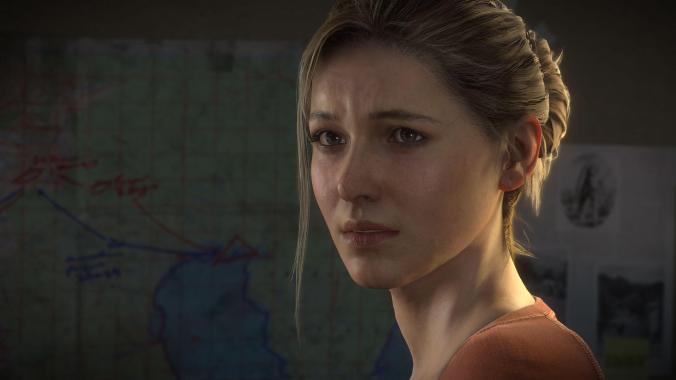
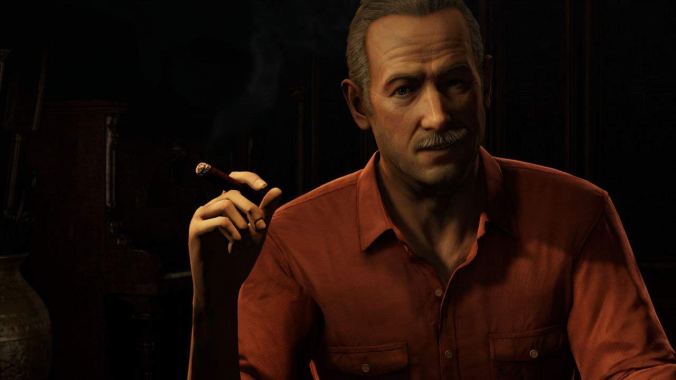
This entry is without a doubt the best story in the series. The game still follows Nathan Drake and his companions, yet it has a more somber tone as Drake realizes how his lust for adventure is damaging his relationships. After being contacted by his sketchy brother, Drake decides to go on one last treasure hunt to find the lost stash left by the infamous pirate Henry Avery. There are plenty of character-building sequences in this game, including flashbacks from when Nathan and his brother were kids and how they became addicted to treasure hunting. Throughout the entire series, Nathan rarely thinks of how his actions effect his wife Elena and his mentor Sully. In Uncharted 4: A Thief’s End, we get a more personal look at the characters and Nathan finally realizes how poorly he is treating those around him.

2

Naughty Dog has made some major additions to gameplay of Uncharted. Three new mechanics are introduced: a grappling hook, sliding, and a climbing spike. The climbing spike is given to the player late in the game and does not see much use, but it is a welcome addition nonetheless. It requires the player to dig the spike into certain walls to create something for Nate to hold onto while climbing. It isn’t a revolutionary new tool, but it does make climbing at least a little more interesting than just jumping from ledge to ledge. The two far more important additions are the grappling hook and sliding.

3

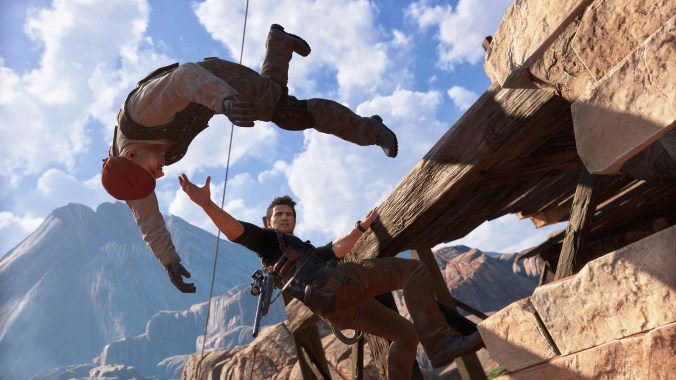
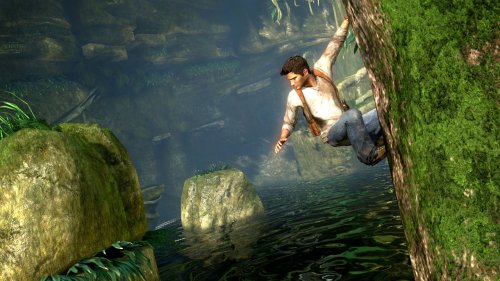
There are branches throughout the game which Nathan can grapple onto, allowing him to swing across crevices. These branches can be found in climbing sections and combat arenas alike. The same can be said for sliding ramps. These steep ramps have the player slide down them, often times jumping off at the very end to carry momentum into a long jump across a gap. Both the grappling hook and the sliding mechanic were a fantastic way to make climbing sections more interesting. You can actually mistime or misalign jumps from the grappling hook or from sliding. This alone makes climbing sections more engaging, as there is way that you can die if you screw up. The issue is that the grappling hook and sliding ramps are not nearly used frequently enough throughout the course of the game. For the most part, climbing is the same old noninteractive and boring button mashing as you watch Nathan leap from handhold to handhold. And there is more of it than ever.

4

I am a proponent for games to include what I categorize as “downtime”. Things like cutscenes, exposition, walking, or the puzzles and climbing in the case of Uncharted. Having some downtime between difficult sections can give the player a break from action. If a game is constant action, then players quickly accrue mental fatigue and will need to take breaks from the game more frequently. While I appreciate that Uncharted 4: A Thief’s End does have plenty of downtime between its intense shootouts, it does feel a little bloated at times. Climbing in particular should be a means to an end, not a core gameplay mechanic. It should serve as a method to traverse terrain, to view the gorgeous locales and set pieces, and to provide small breaks between action. Instead, climbing is frequent and often goes on for too long. The developers try to make it exciting by having the things you are climbing on crumble or fall, but it is pretty much impossible to fail a climbing section without blatantly hitting the wrong buttons.

5

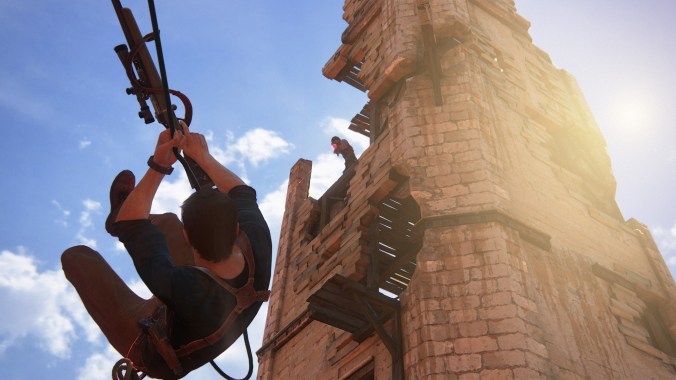
Climbing is just one way that the grappling hook and sliding are utilized. They can also be utilized during combat to quickly traverse an arena. Without a doubt, Uncharted 4: A Thief’s End has the best level design of the series in this regard. The combat sections usually have multiple buildings and a plethora of ways to traverse the arena. This was mostly done to accommodate the new emphasis on stealth. While stealth did exist in previous entries, it was never a viable option other than taking out a single enemy at the beginning of a fight. Now, you can hide in tall grass to take out adversaries, climb up a building to sneak up behind a sniper at the top, and there are far more walls so that you can navigate a battlefield without being spotted. Even if you are spotted, you can often run away and hide so that enemies lose track of you.

6

The levels were obviously designed with that stress on stealth in mind. The developers wanted the player to have many options to sneak about an arena.  Each encounter feels more contained, as you can glance over it before engaging the enemy. You can see where the enemies are located, how many there are, which ones you want to prioritize, and you can begin to plan a route to stealthily take out as many as possible. Of course, the option to go in with guns blazing is always available if the player so desires. The new stealth mechanic adds a new dynamic to combat encounters, and that paired with the level design makes for the most enjoyable combat in the series to date. It feels like guerilla warfare as I constantly dipped in and out of stealth to take out a couple of unsuspected enemies. It is a shame however that once an all-out shootout begins, the gameplay reverts back to the dated systems of its ancestors.

7

Being able to stealthily takedown enemies is a great way to make combat more strategic. However, it can be a bit slow as you have to constantly wait for opportunities where enemies are not looking. My bigger issue however is with the standard gunfights. While levels were designed to be easier to navigate without getting pelted by bullets, there still is little reason to ever risk leaving cover. Trailers of the game have Nathan swinging from a rope while shooting, or sliding down a slope to wallop enemies waiting at the bottom. The problem is these tactics are wildly ineffective in the actual game.

8

Unless you are playing on the easier difficulty levels, then you are going to get absolutely torn apart by swinging, sliding, or running around during a gunfight. I don’t think the game needs to approach DOOM levels of run-and-gun action, but I wish you were a bit safer when performing action hero maneuvers. Perhaps have the player take reduced damage while moving quickly. That way, if you are swinging or sliding you won’t get killed before you can finish. It makes sense too; a moving target is harder to hit than a stationary one.

9

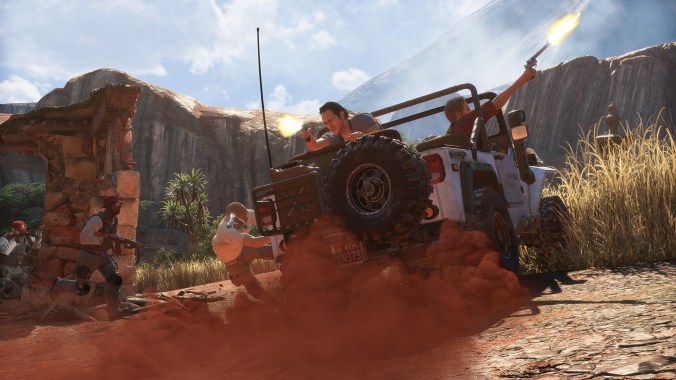
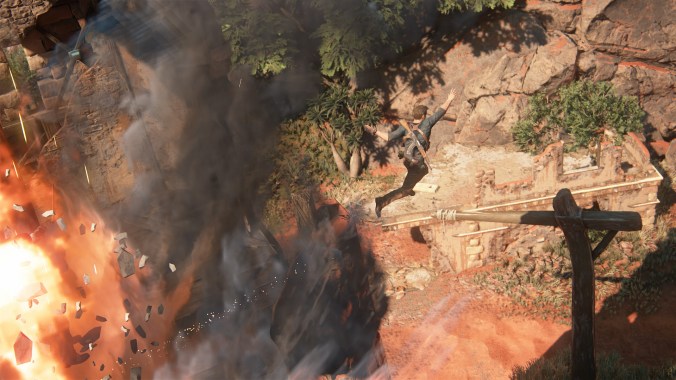
The Uncharted series is known for its elaborate set pieces and action sequences, and Uncharted 4: A Thief’s End is no different. There are some extremely fun chase sequences and scenes where Drake is hopping from car to car to take out a convoy. This is all displayed beautifully as this game is an absolute visual masterpiece. The moments of over-the-top action is what I have come to expect out of the series, and Uncharted 4: A Thief’s End delivers in spades.

10

Now that I have played through the entire series, I feel like I should include my general thoughts on these games. The Uncharted games are technically revolutionary due to their high-fidelity graphics. They drive the industry forward in that regard. Moreover, the well-written characters, witty dialogue, and spectacular acting performances are some of the best in any game. Personally, I felt like the gameplay across all four games was underwhelming. Third-person cover based shooters are pretty ubiquitous, and the Uncharted series does nothing to stand out among an abundance of similar games. The puzzles are similarly simplistic, and the climbing is downright noninteractive.

11

I equate the Uncharted series to high-budget action flicks, they focus on spectacle and want to appeal to as many people as possible. They probably wanted gameplay to be simplistic, so that players of all types could enjoy the series. Any sort of innovative gameplay always runs the risk of driving players away. I’m not the biggest fan of the series as I place a lot of value into games being creative and pioneering. I think that the games are fine for what they are, and a lot of people definitely enjoy them. Uncharted is the video game equivalent of movies like Indiana Jones or The Avengers. They are enjoyable movies where you can turn your brain off, listen to the witty dialogue, and watch some entertaining action.

12

Overall, I think Uncharted 4: A Thief’s End is debatably the best in the series. While it has the best combat, visuals, and story in the series it is too bloated with an overabundance of climbing sequences. You could go for hours at a time without any significant gameplay happening. It’s a shame because the gameplay is by far the most refined it has ever been. Uncharted 2: Among Thieves and Uncharted 4: A Thief’s End are without a doubt the pinnacle of the series. It is for these reasons that I give Uncharted 4: A Thief’s End a 7/10. While it doesn’t do anything innovative in the gameplay department, Uncharted 4: A Thief’s End still has fun combat and insane action.

Uncharted 3: Drake’s Deception (2011)

While Uncharted 2: Among Thieves was a huge leap forward in all aspects, Uncharted 3: Drake’s Deception did not make any noticeable improvements to the formula. Uncharted 3: Drake’s Deception plays remarkably similar to its predecessor, so much so that it barely feels like its own game. Since they are so similar, you should read my review on Uncharted 2: Among Thieves to understand my thoughts on that game. My thoughts on Uncharted 3: Drake’s Deception are nearly identical barring a few minor changes.

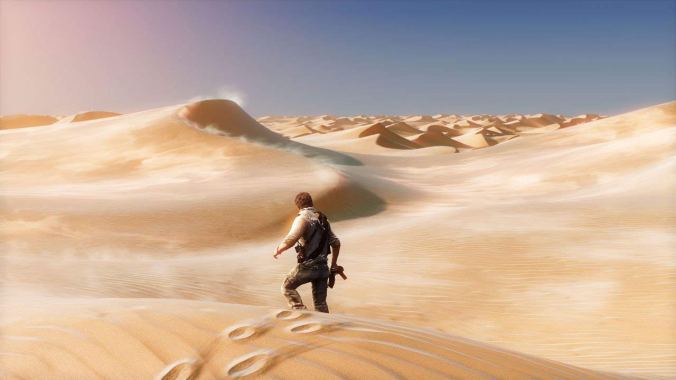
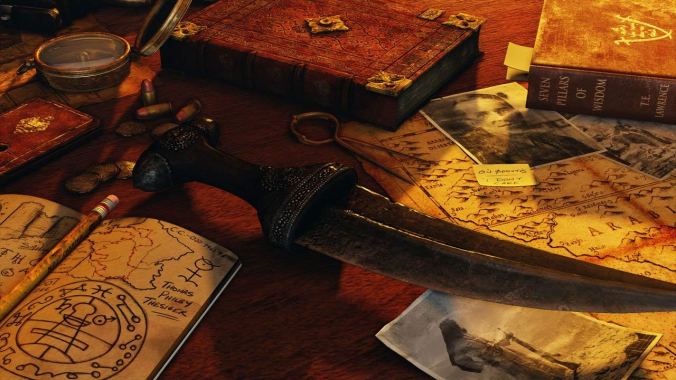
One place of improvement that could be attributed to Uncharted 3: Drake’s Deception is its overall story. While the story follows the same basic format of seeking treasure in a lost city, Uncharted 3: Drake’s Deception does focus a bit more on the relationship between characters. This entry into the series finally recounts how Nathan and Sully met, and how Sully became a father figure to the young vagabond. During these flashbacks, a young Nathan is attempting to steal a ring from a museum when he encounters Sully. Many years later, the game takes place when Nathan and Sully utilize the ring to unearth a path to Iram of the Pillars. From there, the story follows the same general plot points as its predecessors as Nathan and company follow a clue laden trail.

3

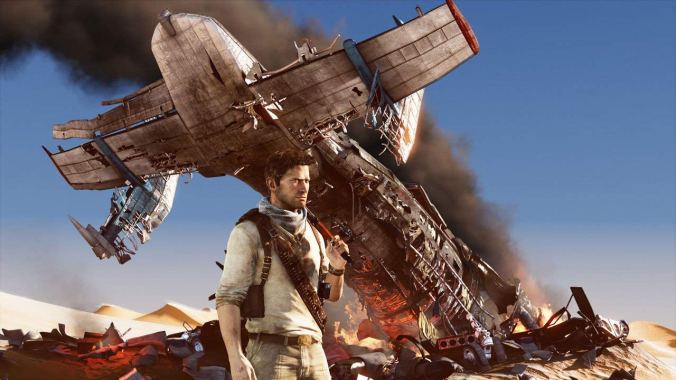
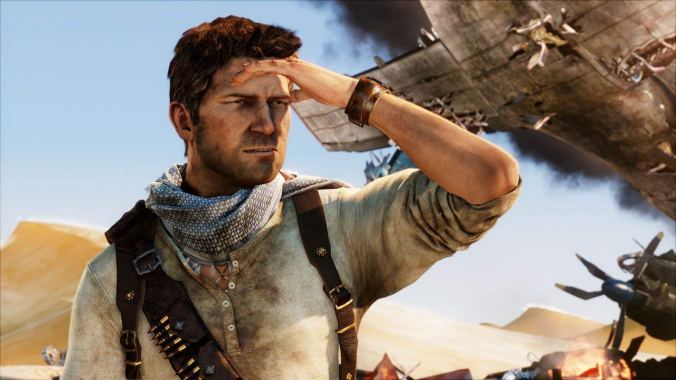
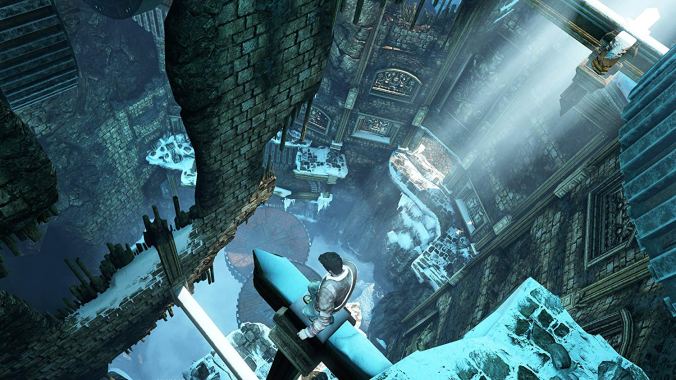
Despite Uncharted 3: Drake’s Deception being a nearly identical experience to Uncharted 2: Among Thieves, it still deserves credit for being an impressive adventure in its own right. The game mostly takes place in France, Syria, and Yemen, as well as a few chapters on the ocean. There are plenty of bombastic set pieces and action sequences which Uncharted is known for. From crashing a plane to escaping the clutches of modern-day pirates by sinking their ships, Uncharted 3: Drake’s Deception is certainly not lacking on action.

1

There seems to be a new emphasis on melee combat in Uncharted 3: Drake’s Deception. There are frequent scenarios in which Drake must punch his way through dozens of enemies. Unfortunately, this importance on melee combat is misguided due its mechanics. Melee combat is nothing but a quick-time event (QTE). Simply press the button that pops up on the screen. Not only does this take the player out of the moment, but it also removes any sort of decision making. I still feel like the gunfights in Uncharted are overly simple, but the fistfights are far worse in that regard. When the player is in a shootout, at least they are given the agency to choose what cover to get behind, what enemies they want to shoot at, what weapons to use, so on and so forth. Strategy and skill come into play during firefights. In hand-to-hand combat, you simply press a button when the game tells you to.

2

One other difference that I noticed was a change in how the combat arenas were designed. In most of the shootouts in the previous games, enemies would only appear in front of the player. The arenas in Uncharted 3: Drake’s Deception are noticeably more open and enemies are prone to flanking the player. On one hand, I like that Naughty Dog is trying to encourage the player to move around a bit more. You cannot really sit behind one piece of cover when enemies are coming at you from multiple angles. On the other hand, there is no reasonable way to deal with these new flanking threats except targeting them before they reach you. Moving around from cover to cover is dangerous considering that getting hit a few times equates to death. And once an enemy is on top of you, they engage in melee combat, meaning that you are stuck in a QTE while getting shot at.

4

It is incredibly frustrating to die while being caught in an animation which you didn’t want to do anyway. I don’t want Drake to stand up and start punching at a guy when he’s getting shot at by a dozen others. Once an enemy has successfully flanked you, you are doomed. I appreciate that the developers realize that posting up behind a wall and taking shots at enemies when it is safe grows boring after a while. However, these new rushing and flanking enemies don’t have meaningful ways to counter them other than just prioritizing killing them before other enemies.

5

My biggest gripe about Uncharted 3: Drake’s Deception was just how derivative it was. The climbing, puzzles, and shooting mechanics are all exactly the same as its predecessor. Even the story itself follows the same outline. I would’ve liked to see something to make the either the climbing or the shootouts more engaging. As it stands, the climbing sections are still incredibly mundane and not even remotely interactive. The combat is serviceable, but it does not match the explosive action to match the game’s bombastic set pieces. Uncharted is all about capturing the feeling of being an action movie, cowering behind cover for minutes at a time just doesn’t cut it.

Overall, Uncharted 3: Drake’s Deception is in no way a bad game. It is just unfortunate that no strides have been made to improve any of the game’s core gameplay pillars. Instead, we got a game that seems afraid to deviate from the successful formula of its ancestors. Regardless, I think that Uncharted 3: Drake’s Deception is a fine game, just not one that is ever going to be regarded as influential or important.

Uncharted 2: Among Thieves (2009)

My biggest complaint about Uncharted: Drake’s Fortune was that the game aged relatively poorly. It was certainly playable, but it was obviously outdated. What’s astonishing to me is just how large of a leap was made between Uncharted: Drake’s Fortune and Uncharted 2: Among Thieves on nearly every conceivable level. For the games only being released 2 years apart, the second game in this legendary adventure series blows its predecessor out of the water. The visuals, gameplay, level design, and overall scope of the game were so dramatically improved that I do not hesitate to recommend Uncharted 2: Among Thieves despite me not falling in love with the original Uncharted.

1

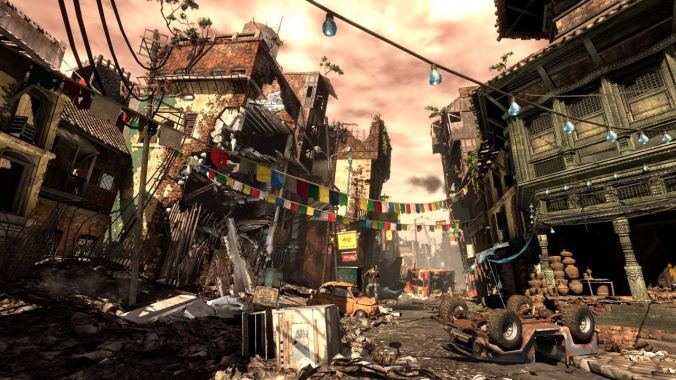
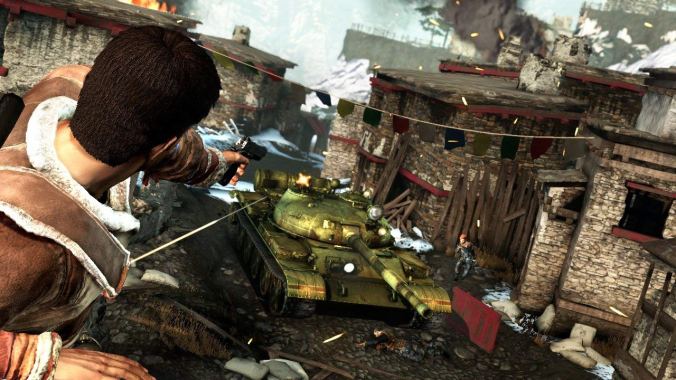
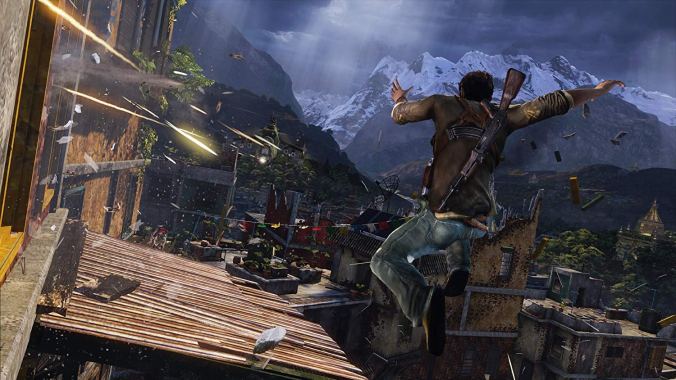
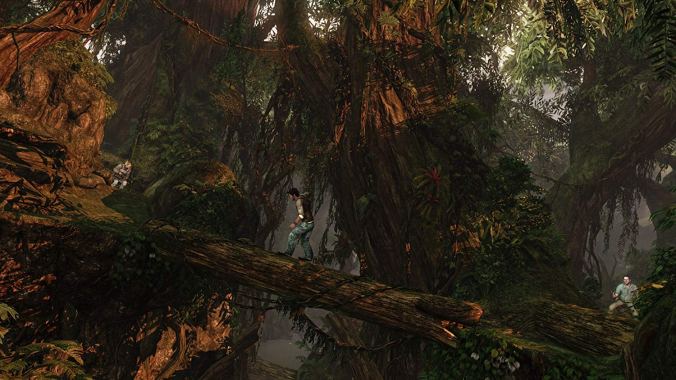
The basis of Uncharted 2: Among Thieves is that Nathan Drake and his companions are retracing path of Marco Polo, attempting to find the lost city of Shangri-La. This leads the player through a plethora of gorgeous locations. From dense jungles in Borneo, to a crowded city in Nepal, to a remote village overlooking the Himalayas. These striking locales are memorable not only for their views, but also for the action sequences that occur in them. Uncharted 2: Among Thieves makes phenomenal use of set pieces to make for unforgettable experiences. The game opens with Drake precariously hanging onto a train which is dangling from a cliff. Whether you are jumping from rooftop to rooftop avoiding a gunship, or employing guerilla warfare to take down a tank on a mountainside, Uncharted 2: Among Thieves has some unforgettable action.

3

The components of Uncharted 2: Among Thieves are identical to its predecessor, except they were vastly improved upon. The 3 pillars of gameplay remain: combat, climbing, and puzzles. Combat in Uncharted 2: Among Thieves feels far smoother to play than its predecessor. Hit registration is better and guns feel more impactful. Enemies actually react when hit, so you know when you’ve hit them. Headshots feel far more consistent. Movement in general is smoother in every regard. While the game is still a third-person shooter with no obvious additions, the gameplay was polished so that it is actually fun.

2

One of the issues that I attribute to the gameplay is that even through the newfound shine of modernization, it is still a relatively rudimentary third-person shooter. The vast majority of gunfights revolve around the player posting up behind a piece of cover, popping their head out for a second or two to kill an enemy, and then hiding back behind the cover to recover health. Occasionally enemies will flank or throw grenades, but this just equates to swapping to a different piece of cover. While it can be engaging for short bursts, it is not innovative or creative in any way. Moreover, Uncharted 2: Among Thieves occasionally has pacing issues.

4

The pacing of Uncharted 2: Among Thieves is one of the games greatest triumphs as well as one of the games biggest flaws. For the majority of the game, Naughty Dog masterfully divides all of the different components that define Uncharted. Cutscenes, action sequences, combat, climbing, and puzzles are all represented frequently. They are split into small, digestible chunks so that the player does not get bored. When each component is only 10-15 minutes at a time before switching gears and doing something else, then their individual basicness can often be overlooked. For the vast majority of the game, that is the case. Even though the climbing, puzzles, and combat are all individually simple, they worked well together in small chunks. Unfortunately, for some sections, the beginning and end of the game in particular, the same cannot be said. When I have to spend hours in gunfights with no reprieve, I start to get exhausted.

5

The combat of the Uncharted series can be thoroughly enjoyed in brief sections. When punctuated by cutscenes, set pieces, and action sequences the shootouts can be rather fun. And after a few minutes of relaxing climbing or puzzles, there is an allure of getting into a firefight. Still, the combat is absolutely rudimentary. Sitting behind a wall and popping out to take a couple shots at a time is not exhilarating. Especially when a gunfight goes on for too long and you are stuck behind the same piece of cover for what feels like an eternity. It can get stressful and frustrating as you just want this particular fight to be over, but sticking your head out for a second too long results in death. Again, this basic third-person shooter gameplay is not offensive, but there are a couple of combat sections in the game that drag on for way too long.

6

I would be remiss to not comment on the increased frequency of climbing in Uncharted 2: Among Thieves. The first game in the series certainly had climbing, but was not nearly utilized as much as it is in this entry. I think this is a bit worrying, as the climbing in these games is completely brainless. You simply hit a button and hold the stick in the general direction of a ledge and Nathan will magically snap to it. There is no fail state. There is no way to lose. It is completely devoid of player input. The developers try to make it seem exciting by creating spectacle around the player, but it doesn’t sufficiently mask how boring climbing is. The climbing is necessary downtime between intense gunfights. It serves as a breather and an opportunity to take in the environment around you. I just hope that future games in the series do not continue this trend of adding more and more climbing sections. It was mostly tolerable in this game, but there was definitely more of it than there was in Uncharted: Drake’s Fortune.

7

Uncharted 2: Among Thieves, like its predecessor, does not have a particularly memorable or hard-hitting story. Instead, the story is the vehicle to deliver the player to all sorts of interesting locations, as well as giving the characters plenty of interaction. I do think this game had a better overall narrative than the original game, but it remains of the realm of an action B movie. Still, the series shines because of its characters. Nathan, Sully, Elena, and the newly introduced Chloe all feel like living, breathing, characters. Their interactions, dialogue, and motivations are incredibly well written. This is complimented by the performances of the actors that voice these characters.

8

Overall, Uncharted 2: Among Thieves significantly polished the base left by its predecessor. There was a large graphical leap, controls were tighter, gameplay more crisp, better use of set pieces, and a more intriguing story. I wrote most of the flaws of the original game off due to its age, but I feel like Uncharted 2: Among Thieves is modern enough that I cannot dismiss the shortcomings of the series thus far. The combat can get dull after a while, and climbing is entirely unengaging. Despite this, Uncharted 2: Among Thieves is a solid action-adventure game. Especially if you like tons of spectacle and well-written characters.

Uncharted: Drake’s Fortune (2007)

The trend of cinematic games can be traced back to Naughty Dog’s adventurous series: Uncharted. These third-person shooters have a heavy emphasis on writing, storytelling, and cinematic aspects. If you were to transform Indiana Jones into a video game, Uncharted would be the result. The series follows Nathan Drake, a charismatic treasure hunter who is addicted to the thrill of unraveling century-old mysteries and claiming their bounties. The first game in the series, Uncharted: Drake’s Fortune, sets the tone and formula for its successors.

Uncharted bases its adventures in myths from reality, which provides an interesting alternate history spin on most of Drake’s travels. For example, in Uncharted: Drake’s Fortune, Drake and company are hunting for El Dorado. Drake deciphers a series of clues to lead him to the lost city of gold. There is an air of mystery of why the city has never been found and why its treasures have been undiscovered for so long. The trail of clues leads the player across the globe, from remote jungles to abandoned citadels to dilapidated cities. While the overarching story is nothing spectacular or groundbreaking, it serves as a backdrop to the characters themselves.

5

The quality of writing in Uncharted: Drake’s Fortune is shockingly good, especially for a game that came out in 2007. Video games have always had an issue with campy writing, but are usually excused as writing is not nearly as important in games as it is in film. Luckily, games in the past few years have done a much better job at hiring professional writers to create natural and flowing dialogue. The Uncharted series may have been the start of this trend, as the emphasis on quality dialogue is apparent. The characters banter and rib each other like friends would in real life. They have obvious motivations and flaws which shape their personalities. Drake’s drive to discover lost treasure is one of his greatest strengths as it makes him remarkably persistent. Yet his single-mindedness in this regard often thrusts himself and his companions into danger. All of the characters of Uncharted: Drake’s Fortune feel like real humans, with tangible desires and personalities, and this is all due to the natural dialogue and writing.

1

The gameplay of Uncharted: Drake’s Fortune revolves around three pillars: gunfights, puzzles, and climbing. The game attempts to strike a balance between these vastly different styles of interaction. These components have strikingly variation in player interactivity. Gunfights require the player’s full attention, you need to constantly search for cover, aim and shoot, keep track of where enemies are, rotate through different weapons, and so on and so forth. Puzzles in Uncharted: Drake’s Fortune do not necessitate much thought or input from the player. The vast majority of them have the player open up Drake’s notebook and decipher a clue on how to progress. Most of the time, this means hitting switches or levers in a certain order. Not exactly cerebral or engaging. Climbing is the least interesting element of all. Simply hitting a button to jump from ledge to ledge is a far cry from strategically making your way through a gunfight.

3

What I consider to be the core gameplay of the Uncharted: Drake’s Fortune series are its gunfights. These games are third-person shooters which utilize a cover system. Hitting a button will duck the player behind nearby cover, and clicking your aim button will pop your head out to take a few shots at open enemies. Generally, this iteration of Uncharted: Drake’s Fortune feels a bit like a shooting gallery. You pop up for a couple of seconds to blast at an enemy or two, and then duck back down to avoid taking too much damage. Rinse and repeat until all enemies are eliminated. Occasionally, enemies will try to run up to you or use grenades to flush you out of cover, but for the most part you can just sit behind a single wall to dispatch of most foes. Its not nearly as exciting as it could be.

2

Moreover, the gunplay just feels off to me. Bullets don’t feel like they have significant impact. Enemies don’t really recoil when they are hit, so its hard to gauge if you are even landing your shots. This is not helped by the fact that some enemies have massive health pools and take loads of shots to take down. Furthermore, hit registration feels very off. Headshots in particular seem to miss way more often than they should. All in all, Uncharted: Drake’s Fortune definitely feels a bit dated in its gunplay mechanics, which is not surprising for a game that I am playing 12 years after its initial release.

4

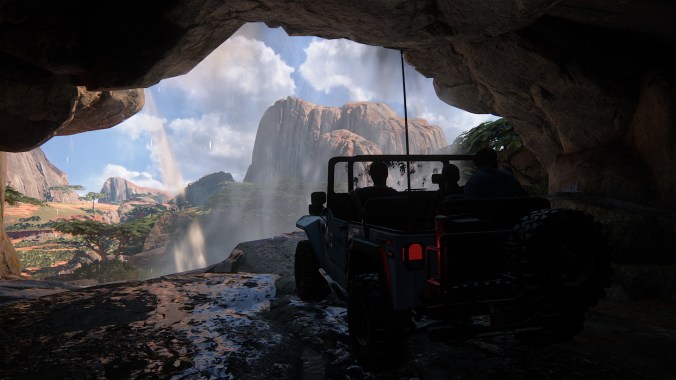
What Uncharted: Drake’s Fortune does best is cultivate the feeling of adventure and discovery. The prospect of playing as a globetrotting treasure hunter is one of the most appealing aspects of the series. Drake travels the world, picking up breadcrumbs left by historic adventurers. This idea lands the player in a variety of locales, exploring tight caverns and catacombs as well as climbing to peaks of mountains to view scenic vistas. Every game needs an intriguing concept, and Uncharted: Drake’s Fortune nails that.

Overall, Uncharted: Drake’s Fortune felt dated in a lot of its design. The stiff gunplay and occasionally cumbersome controls cannot be ignored. Additionally, a huge draw of the series is just soaking in the scenic horizons of the game’s various locales. This is far less attractive when the game is 12 years old and is far removed from being graphically impressive. Its hard to fault the game for me playing it so late, but its undeniable that Uncharted: Drake’s Fortune suffers from its age. Regardless, Uncharted: Drake’s Fortune did a great job in many aspects such as capturing the sense of adventure and having well written characters. That is why I am excited to play the later entries in the series, as I hope that some modernization is all that Uncharted needs.

Borderlands 2 (2012)

Admittedly, I don’t have a fresh mindset going into Borderlands 2. I wish I did, but I’ve played this game numerous times since its release. It is hard for me to give my straightforward impressions since I am already so familiar with everything in Borderlands 2. This should be a testament to how much I enjoyed the game. I rarely replay games, but I’ve played Borderlands 2 about five times. Even after a couple of single-player campaigns as well as a few co-op playthroughs I still never grew tired of Borderlands 2. With Borderlands 3 finally being released, I think it is time for me to finally let one of my most played games rest.

1

Playing the first Borderlands has made me appreciate the sequel with at least a little of a fresh perspective. The original game invented the looter-shooter genre, but Borderlands 2 perfected it. The general formula is the same as the original game: you play as an intergalactic treasure hunter, blasting your way through desolate wastelands to reach a mystical vault. There are 4 different vault hunters to choose from, each with their own abilities and skills to upgrade as they level up. Of course, to reach the vault the player must shoot their way through hordes of bandits, alien creatures, and deadly machines.

2

Unsurprisingly, Borderlands 2 is tangibly more modern than its predecessor. Visually, Borderlands 2 holds up superbly. The classic comic book style is striking and remarkably distinguishable. When you see a screenshot of Borderlands, you know its Borderlands. While I felt like the environments of the original game were an amalgamation of shades of brown, the world of Borderlands 2 pops with vibrant colors and varied areas. Most importantly, Borderlands 2 just feels better to play than its predecessor. Movement is less sluggish, the weapons are more responsive, and there are far less technical issues. It cannot be understated how important it is for an FPS to have guns that simply feel powerful. The sounds, animations, enemy reactions, and immediate feedback all contribute to having weaponry feel impactful. Additionally, my Borderlands playthrough was plagued by technical issues like bugs and crashes. Thankfully, Borderlands 2 performs consistently and cleanly compared to its ancestor.

3

Looter shooters live or die on their loot system. When loot is weak or infrequent, the player can feel like no progression is being made. Conversely, overly powerful or abundant loot can lessen the impact of those moments where you get something really special. Borderlands 2 strikes a nice balance which the original game did not. The original game’s loot was heavily randomized: fodder enemies could drop top-tier loot, but most of the time you just got garbage. While Borderlands 2 cut down on the player’s odds of getting great loot from random enemies, instead the game doles out more consistent loot at obvious intervals. Doing side quests and defeating bosses is the single most reliable method of getting new and exciting guns. I much prefer this system over farming numerous weak enemies for a tiny chance at a new piece of equipment.

4

Borderlands 2 is legendary partly due its characters and story. As you traverse the planet of Pandora you encounter various factions vying for control. At the head of the conflict is Handsome Jack, a cruel and vindictive business man. His ultimate goal is to open the vault and harness the power that is held within. As the vault hunter, the player is obviously at odds with Handsome Jack. As you ally with the locals at the town of Sanctuary, Handsome Jack is prepared to do anything to take you and your associates down. It cannot be understated how iconic of a villain Handsome Jack is. His genuine belief that he is the “good guy” makes him a compelling nemesis, willing to do anything to succeed.  There are many returning characters from the first game, including the playable vault hunters from that expedition. I absolutely loved seeing how the protagonists from the first game played a key role in the narrative of Borderlands 2.

5

While known for its bombastic sense of humor, Borderlands 2 is hit or miss in the writing department. Every character is an over the top caricature, equipped with heaps of jokes. Unfortunately, many of the jokes fall completely flat. Now, this is partially due to when the game was released. In 2011, the internet was full of outrageous “random” humor which Borderlands 2 heavily leans into. It may be unfair to judge the ridiculousness of Borderlands 2, as it was a product of its time. Still, it feels like the writer’s were trying to hard to pack in a million gags, and I wish it had been dialed back a bit. Despite it being a defining feature of the game, much of its humor has not aged particularly well.

6

Ultimately, I think Borderlands 2 was a revolutionary game which blew open an entire genre. Looter shooters have become increasingly popular over the years, but Borderlands 2 holds supreme. The bombastic action, variety of characters, plethora of guns, graphic art style, and wacky dialogue certainly makes this game unique. I’ve played this game numerous times since its release, and it will always remain as a classic in my heart.


Persona 5 (2016)

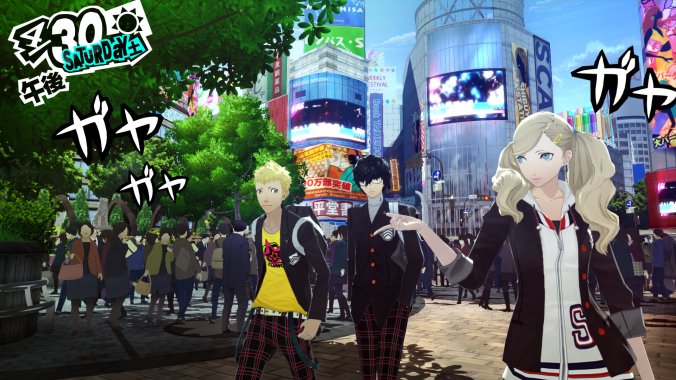
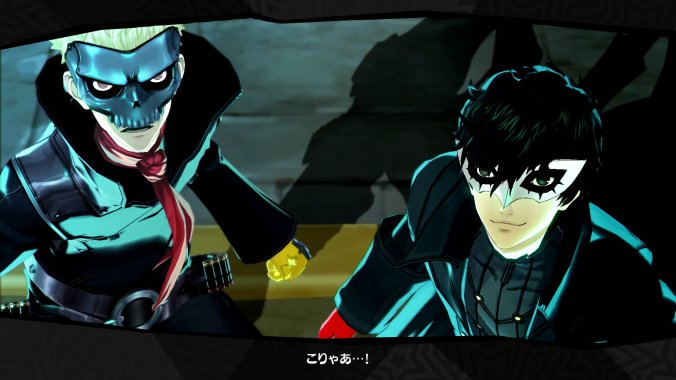
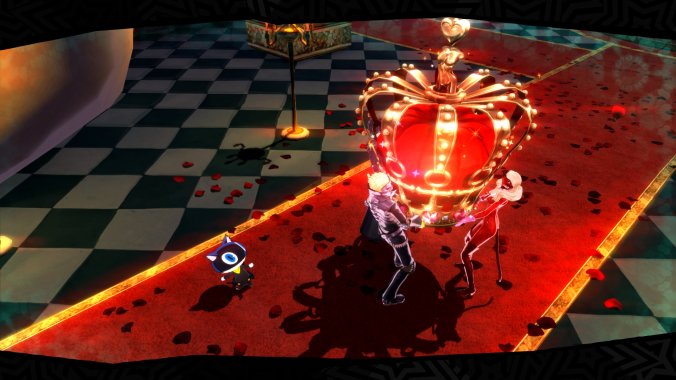
I struggle to explain Persona 5 in a way that gives the game justice. While being incredibly stylish, engaging, and addictive, Persona 5 can easily be perceived as boring through simple explanations. The core of the game is that you are a high-schooler in Tokyo, doing normal teenager things, while also secretly reforming society. By magically entering people’s consciences, you and your band of misfits change the hearts of criminals. But ultimately, that is just one aspect of the game, the real genius of Persona 5 is how every component is woven together.

Persona 5 is part life-simulator and part turn-based RPG. The structure of the game is simple, you attend school, hangout with friends, explore the city, interspersed with moments of taking down a ring of dangerous criminals. The game is split into individual days, each with an afternoon and evening period to devote to different activities. You are given deadlines to take down any target, but any extra time is free time to explore Tokyo. The incredible breadth of the player’s options is staggering. You can study, visit cafes, go fishing, do batting practice, go to a sauna, work a job, go shopping, watch a movie, work out, hangout with friends, and much more. All of these options provide some sort of benefit to the player. Some of these activities involve a mini-game, but many of them are just a resource to spend your free time on.
8

The life-sim aspect Persona 5 is incredibly addicting. Since every activity provides some sort of benefit, I was inclined to constantly check new locations to see what they would do for me. Things like working a job gives you money, which you can use to buy items for combat purposes. Spending time to work out increases your health for battles. Most activities increased one of your social stats: knowledge, guts, charm, proficiency, and kindness. These stats are crucial to meeting new people and deepening your relationship with them.

Most of my free time in Persona 5 was spent with the different characters, which the game calls confidants. As you spend time with confidants, you will learn more about their personality and backstory, while simultaneous improving your relationship with them. As you spend more time with them, they reward you with unique bonuses. Some of these boons are combat related, for example: giving you a chance to brush off any status ailment, survive a lethal blow, or instantly kill an enemy. Many of the confidant bonuses are helpful in the life-sim aspect of the game. Each one is tailored toward its character, the teacher lets you skip class, the doctor provides a discount on healing items, and the politician gives a bonus during negotiations.

2

The confidant conversations can be quite entertaining and are a reward in and of themselves. As you get closer to each character, you learn more about their life and personality. You are given a few dialogue options during the conversations, and deducing the correct responses is critical to maximizing the confidant relationships. You also can go to special locations or give gifts to boost your relationships, so paying attention to what the characters enjoy is of great importance. Many of the characters require high social stats to even interact with, for example: the black-market gun dealer requires a high guts stat.

The life-sim aspect of Persona 5 may sound fairly dull and mundane, but trust me, it is addicting. It scratches that itch of strategically maximizing your resources. Free time is limited, so you must pick and choose what you want to do on any given day. Balancing your social stats and various confidant relationships is a fun time management problem. Additionally, the sheer variety of things kept me from getting bored. I always wanted to learn more about the characters and find out what bonuses they would provide. Free time is sprinkled throughout the different sections of the game. Between story-heavy sections and the dungeon-crawling RPG aspect, I always was excited to get some time to explore Tokyo.

1

The core structure of Persona 5 is that you infiltrate the hearts of wrongdoers and reform their behavior. You lead a band of miscreants known as the Phantom Thieves into the cognitive worlds of criminals. The mind of each target forms a “palace” which is essentially a themed dungeon. Each felon has been corrupted by some cardinal sin, and the Phantom Thieves must search each palace for the source of the deadly desire to steal away their distorted hearts. As thieves, you stealthily navigate through corridors and hallways, taking cover to avoid any unnecessary confrontations. Sneaking up behind enemies and ambushing them gives the player the opportunity to unleash a flurry of attacks before the enemy can even respond, so stealth is always in your best interest. Every palace is a fairly long endeavor and will require multiple treks to make it to the treasure. Making it as far as possible in each attempt will prove crucial to opening up more free time to be used elsewhere.

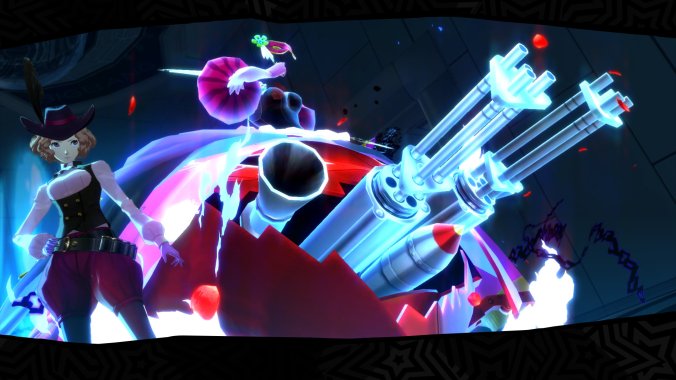
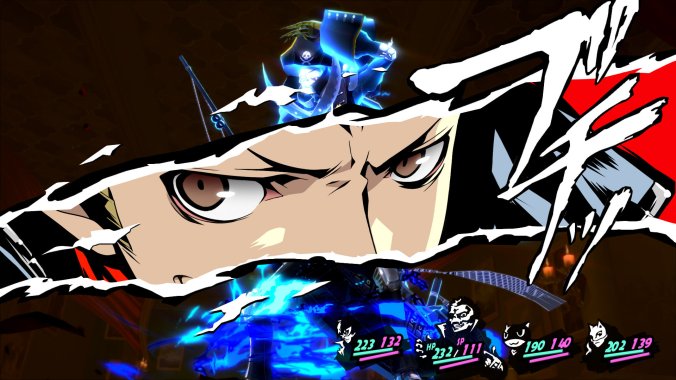
The actual combat of the game is a straightforward turn-based RPG, but with some interesting twists. Unsurprisingly, the main character recruits a few allies battle alongside him in a 4v4 format, which is similar to every other RPG in existence. What is interesting is the use of “personas”. Each character has a persona within them that can unleash magical abilities. The main character can capture and store personas, switching between them at will. This gave me the vibe of a grown-up version of Pokémon. As you journey through palaces, you will encounter demonic enemies which you can either stealthily avoid or engage head-on. When confronting the demons, some circumstances will lead you to be able to negotiate with them, and if you choose the correct dialogue options, recruit them to your pool of personas.
3

Every persona has strengths and weaknesses, and with a plethora of elemental abilities, choosing the right persona for the right circumstances is critical. This is mostly because utilizing super-effective elements are extremely powerful. Hitting an enemy with an attack that they are weak to will do bonus damage, give you an additional move, and knockdown the foe. If all enemies are knocked down, you can either preform an all-out-attack, which does massive damage, or you can enter negotiation. Collecting new and powerful personas is a core aspect of the game, which I quite like. In Pokémon, once you decide on your core party, you stick with them until the end of the game. In persona, you are forced to constantly test new and powerful personas. There is an additional layer of experimentation since you can fuse personas together to create new ones. I absolutely loved the variety and experimentation aspect of Persona 5, and it is the highlight of the combat.

On the more negative side, I felt like the combat lacked tactical depth in the vast majority of encounters. Most battles played something like this: ambush enemy, hit them with a super-effective ability to knock them down, perform an all-out-attack to finish the fight. The only deviation to this formula was in boss fights or when fighting opponents that I did not know the weakness of. In the latter case, I was essentially required to just guess what would be effective until I guessed correctly. Bosses were by far the most interesting implementation of combat in the game. With giant health pools, no weaknesses, and special status effects, each boss required a different approach that wasn’t all out aggression. Utilizing party buffs and healing skills is more interesting than just picking the correct elemental attack.

4

While I felt like most battles were straightforward, there is something to be said for the resource management aspect. Since I wanted to make it through the palaces in as few attempts as possible to conserve free time, I wanted to minimize the resources used in each battle. Magic abilities use SP, a resource which is not easily regenerated. As such, getting through each battle without wasting unnecessary SP became an interesting challenge.

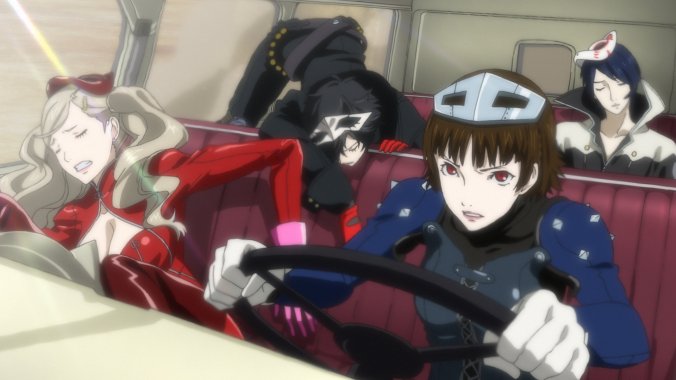
Stylistically, Persona 5 is unbelievably crisp. Sleek menu design, fluid animations, vibrant character design, phenomenal music, and distinguishable aesthetics make Persona 5 and absolute masterclass in presentation. The graphic-novel style makes visuals pop, especially since each placard is detailed and distinct. Many of the personas and monsters are amalgamations of mythological beasts, but plenty seem to be new creations entirely. The jazzy soundtrack is simultaneously great background music as well as tunes that you could listen to outside of the game. As you continue through the game, some of the prevailing tracks will “evolve”, adding more lyrics as you progress. Seriously, every developer should take notes on the style and presentation of Persona 5.

7

Outside of game mechanics and style, Persona 5 does falter a bit. The overall narrative of Persona 5 is decent, but is paced poorly. There were parts of the story where I was completely engrossed, but there were instances where I just wanted to move onto the next bit. In essence, the beginning and end of the game I found to be excellent as the villains had a direct impact on the main character. The middle chunk of the game however was filled with villains who just didn’t have the requisite gravitas to make me care about them. The story is essentially carried by its memorable cast of characters. Outside of a few interesting twists in the main story, I was far more engaged with the episodic stories of each confidant.

One of the biggest issues I had with the story was its over dependence on its central theme. Look, central ideas and motifs are great, but they don’t need to be bashed over the player’s head. God of War for instance leaned on the core theme of familial strife, nearly every character, quest, and storyline tied back to that issue. But the game was bit more subtle with its presentation of these ideas. Persona 5 on the other hand will relentlessly remind the player of its motif. The central theme of Persona 5 is that people in positions of power will take advantage of those below them. Every single side-quest, main story beat, confidant, and conversation will allude to this theme. It gets obnoxious after the 100th time that the protagonists tell the villains “Stop abusing people who can’t fight back”.

5

By far the biggest problem with Persona 5 is its length. While I enjoyed the game, it is a nearly 100-hour experience. This is a massive undertaking, especially since so much of the game feels superfluous. Conversations in particular are constantly repeated, and it feels like the game does not trust the player to remember any information. If an event happens in game you can count on the fact that you are going to have that event recapped to you in 10 different conversations: through cutscenes, dialogue with confidants, and through text messages. Additionally, palaces could probably be shortened a bit without losing anything. Side-quests are particularly egregious, as they force you to delve into Mementos, a randomly generated dungeon which holds monsters that you have previously fought. This is a ridiculous waste of time and provides nothing new. Mementos needs to exist for story reasons and to let players capture personas that they have otherwise missed, but it could have been significantly shortened.

Most of the game’s issues stem from its length. The overused theme wouldn’t be so obnoxious if the game was shorter. The story would be more interesting if it was sped up. The repetitive battles wouldn’t grow annoying if there weren’t so many of them. Even some of the games strong points started to wane after 80 hours. I love the animations, but after watching them thousands of times I just wanted to move on. The music is great, but there are so few tracks in general. Truthfully, a game has to do something very special to reach 100 hours without growing stale. While Persona 5 is great, I think it could’ve easily been cut down to 60-70 hours without losing anything of value.

6

Overall, Persona 5 is a masterful display of aesthetics, style, and presentation. There is an addictive life-sim component that I could just chill and let time fly by as I explored Tokyo. It’s the perfect game for just relaxing for a few hours and to take your time to take in everything the game has to offer. The dungeon crawling and battle system was serviceable, and its encouragement to experiment made it incredibly enjoyable. It’s unfortunate that the game drags on for too long, as even the best components lost their luster after dozens of hours. It is for these reasons I give Persona 5 a 9/10. Even if you aren’t a fan of traditional JRPGs, give Persona 5 a shot. As someone who doesn’t typically enjoy these kinds of games, it made me into convert.

Enter the Gungeon (2016)

I very rarely contemplate quitting a game before beating it. But occasionally some games just do not click for me, and Enter the Gungeon was one of those games. After a few hours I grew frustrated with my lack of progress and how relentlessly punishing this game was. Luckily, I gave it a couple more hours before retiring completely. Over time I grew to enjoy the charming challenge of Enter the Gungeon. I am glad that I kept playing despite my early struggles.

1

Admittedly, Enter the Gungeon falls firmly out of my typical preferences as a bullet hell roguelike. I’m not particularly fond of bullet hell games or roguelikes, but I was drawn in by the insane variety that Enter the Gungeon boasts. Typically, a “run” will consist of the player descending through five floors. Each floor is randomly generated and contains enemies, shops, treasures, and a boss to cap it off. What is unique about Enter the Gungeon is how everything is cleverly tied to the central theme of guns. The floors are called chambers, the enemies are bullets, the bosses have witty names such as “Ammoconda” or “Dragun”, and the weapons themselves are often references to famous guns in pop culture. Enter the Gungeon isn’t too obnoxious with its references, but it very clearly is in love with referential humor.

2

Despite its cutesy appearance, Enter the Gungeon is brutally difficult for newcomers. The sprites and goofy humor can be a much-needed reprieve from the unrelenting challenge that is conquering the Gungeon. Dodging and weaving through waves of bullets requires proper knowledge, foresight, and reflexes. Furthermore, consumable items such as health, armor, keys, and ammo are fairly uncommon. As such, wasting resources such as health is heavily punished. Beating the main five floors is a fairly daunting challenge at first, but it does get substantially easier once the player learns the enemies and bosses. There are many optional challenges past the main floors such as secret floors, story-driven boss fights, additional characters, special game modes, and unlockable items. These extra challenges provide for tons of replayability for veterans.

3

As the player progresses through the run, they will collect a variety of guns, active items, and passive items to be used during that run. The unparalleled insanity of some of the guns and combinations is what makes Enter the Gungeon so much fun. Every run is a question of what sort of crazy combo you will get to play with. Every item has built in synergies with other items, these synergies modify how the items behave. By the end of a run, the player will usually have amassed 10-15 different guns and items. The sheer number of combinations and synergies kept me coming back to see what I would get next. Starting a run with a mere pistol and then 30 minutes later wielding a rapid-fire rocket launcher that homes onto enemies and also shoots lasers is quite the satisfying progression.

4

Since there is overwhelming variance in items and guns, you will never know what to expect when starting up a new run. This comes with a price, however. With such a staggering number of weapons and items, a new player can and will be completely overwhelmed. It can be incredibly hard to get into a rhythm of playing the game, since you will constantly have to readjust to fit what loadout you have. New players are going to be dying constantly, trying to learn how the game works, how to play, the enemies, the bosses, the floors, and constantly readjusting to new weapons which can off-putting. Ultimately, you will get better at it. Once Enter the Gungeon clicked for me, I couldn’t put it down.

5

Despite me eventually learning to love the game, I do think that more could’ve been done to prevent the brick wall for newcomers. I’m not suggesting to strip away the challenge or make the game substantially easier, but I think some brief item descriptions would go a long way for Enter the Gungeon. Simple descriptors like damage, fire rate, and accuracy would have severely limited my early game woes. Early on, it’s an absolute nightmare to pick up a new weapon and try to test it out against enemies and feel out if its any good or not. When I’m struggling to clear a room, the least of my worries is if the gun I just picked up is worthwhile. I almost never use outside resources to help me with games, but eventually I started looking up unfamiliar items on the wiki.

6

It says a lot that after 40 hours and a dozen completed runs, I still frequently had to check the wiki. Sure, it can be fun to experiment with a completely unknown item, but doing that ten times per run is just unnecessarily exhausting. I just want to know how much damage my gun does. The worst offender of this is synergies, which are a core component of the game. When certain guns and items are in your inventory, they will have special bonuses. The player is given no idea what the bonus is, and testing to figure out what it can be is a struggle.  I don’t think adding just a brief idea of the guns stats and synergies would take away any of the fun of experimenting. Players still would test out if they like weapons and items, but it would at least give you a general idea of the strength of a weapon.

7

It should be noted that Enter the Gungeon is a very random game. Sometimes, you will collect an arsenal of insane weaponry. Other times, the pathetic pistol that you start with is your most viable option. This is just an inherent aspect of the games design; it is essentially unavoidable. In order for those moments of feeling like the terminator to exist, there must be times where you are weak and vulnerable. Ultimately, you are going to have lucky and unlucky runs in Enter the Gungeon, and it’s just something that you have to deal with.

8

Overall, I’m glad I stuck with this game. The first few hours were rough, but once I was rolling, I had a blast. That satisfying feeling of making it a little bit farther in each run is indescribable. There is so much that kept me coming back to play more. Different modes that drastically change how the game plays, secret floors and bosses, or just the pure excitement of getting a new combo of weapons that puts Rambo to shame. It is for these reasons that I give Enter the Gungeon an 8/10. If you want an adrenaline pumping bullet hell with incredible variety, then you should definitely try Enter the Gungeon.