When Blasphemous was released, it was extremely unique in comparison to its other metroidvania contemporaries. The brutal and gory imagery, the twisted religious iconography, and even the game’s structure caught people’s attention. The sequel on the other hand feels like a much more standard metroidvania in every way. In some aspects, this is an improvement. The platforming is greatly improved, the combat is more diverse, and exploration will feel more familiar to genre veterans. But it comes at the cost of the striking visuals and oppressive atmosphere.
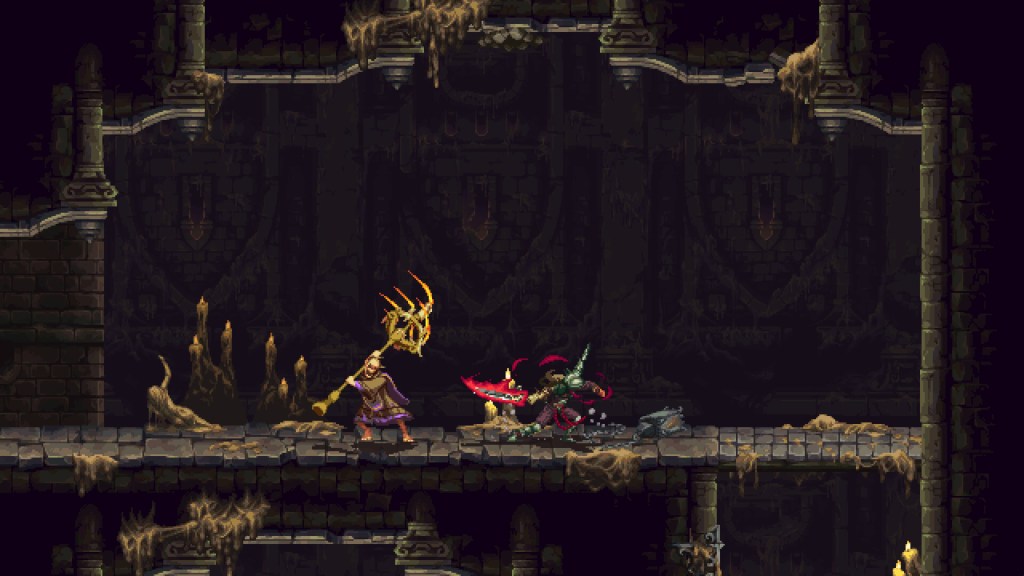
Blasphemous 2 takes place a millennium after the events of the original game. The world is clearly still religious, but not nearly as dogmatic or fervent in its worship of its god, the Miracle. The Miracle and its more devout followers are attempting to transform the world back into a hyper-penitent society concerned only with the worship of the Miracle. Unfortunately, I found Blasphemous 2 to be less striking than its predecessor. Partly because as a sequel it lacks the novelty that an original idea can have, but also because the setting has been toned-down dramatically.
The dampening of the brutality and religious zealotry makes sense in the scope of the story, but to me the game just felt more bland as a result. The original game felt dirtier, grimier, and more disturbing. The opening scene of defeating the jailor and baptising yourself in its blood is seared into my brain, and nothing in the sequel compares. Even the pixel art and cutscenes in Blasphemous 2 feel more clean-cut rather than unnerving. The setting, world, and art don’t have that deeply unsettling quality that prevailed in the first game.
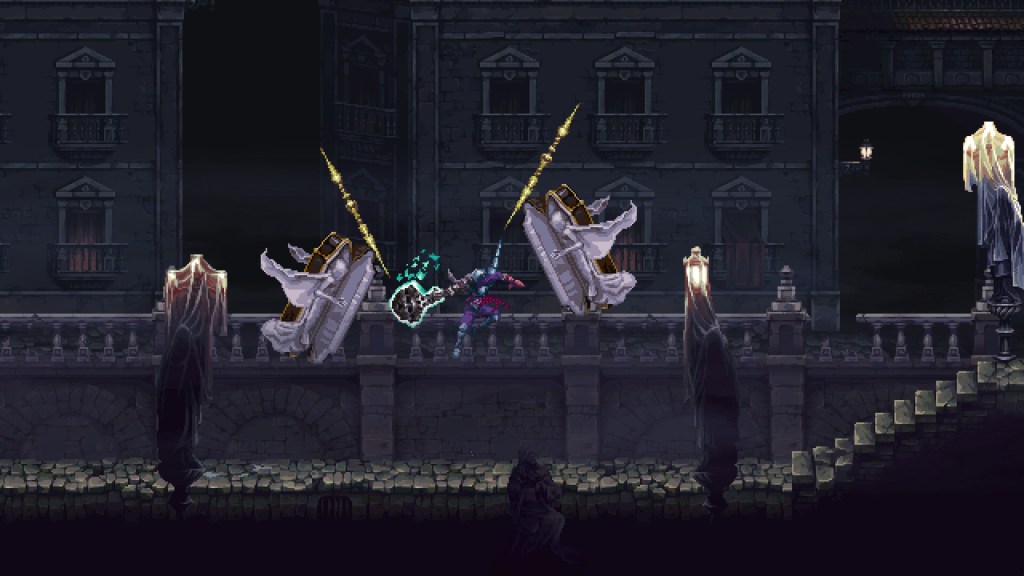
The original game was also unique in how it approached being a metroidvania. While it was fairly non-linear, it didn’t have any necessary upgrades to unlock new areas, which is a hallmark of the genre. No double-jumping, air-dashing, or any other common upgrade to traverse the world. Instead, there were optional secret items that were unique in that they changed how you perceived the world by making bottomless pits safe to fall into or allowing you to previously invisible ghostly platforms. Blasphemous 2 on the other hand leans far more into the tropes of metroidvanias, traversal abilities are scattered throughout the world and are completely necessary to progress.
I wouldn’t say that it was inherently negative to be more of a standard metroidvania in this regard. The upgrades undoubtedly make both combat and platforming far more enjoyable. The aforementioned double-jump and air-dash are present, and they do allow for more dynamic combat and platforming challenges as these acrobatic abilities can give the player more to work with. But I think the best addition are the weapons and their abilities.
There are three main weapons in Blasphemous 2: a standard greatsword, a fast-attacking sword-and-dagger combo, and slow but powerful censer that can be swung from range. Having these options at your disposal makes combat more interesting because you can experiment with the different weapons. I found that they all had their use against different enemy types, and if I ever got bored with one weapon I would switch to another to mix it up. Additionally, each weapon has a traversal ability that is integral for exploring the world. The greatsword destroys certain walls when slamming down from a height, the sword-and-dagger allows you to dash through mirrors, and the censer can be used to ring bells that create temporary platforms. As the game progresses, the platforming challenges combine these abilities and rely on you being able to cycle weapons to utilize each one. Some challenges are almost puzzle-like as you need to figure out how to use each weapon and the other abilities that you’ve unlocked.
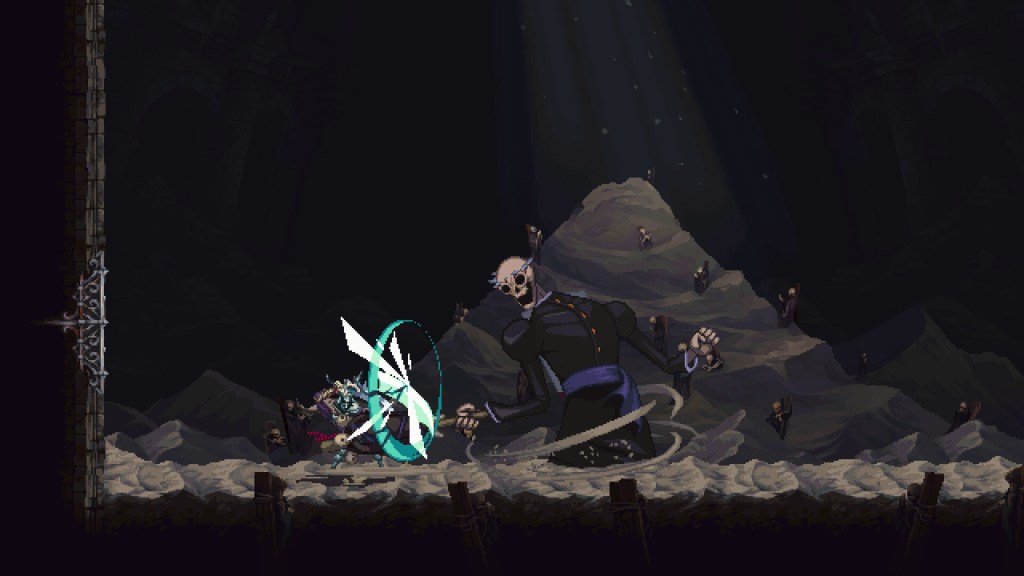
I found the gameplay as a whole to be much improved from the original game, but I wasn’t blown away either. The platforming in particular is far superior in the sequel because of the new abilities and smoother movement. But it doesn’t quite live up to the fast-paced acrobatics of its contemporaries such as Hollow Knight, Silksong, and Ori and the Blind Forest. And while I do think the new weapons add much needed variety to the combat, there were issues there as well. Enemies have a ton of health and often feel like sponges absorbing a bunch of hits, which feels out-of-place in a game as brutal and visceral as Blasphemous. The same problem existed in the first game. Combat often involves hitting them a couple of times, backing up so the enemy misses their attack, then repeating the process, maybe you can cast a spell to spice things up. Bosses are a bit better in this regard as they have more complex attack patterns to learn, but standard combat is slow and tedious.
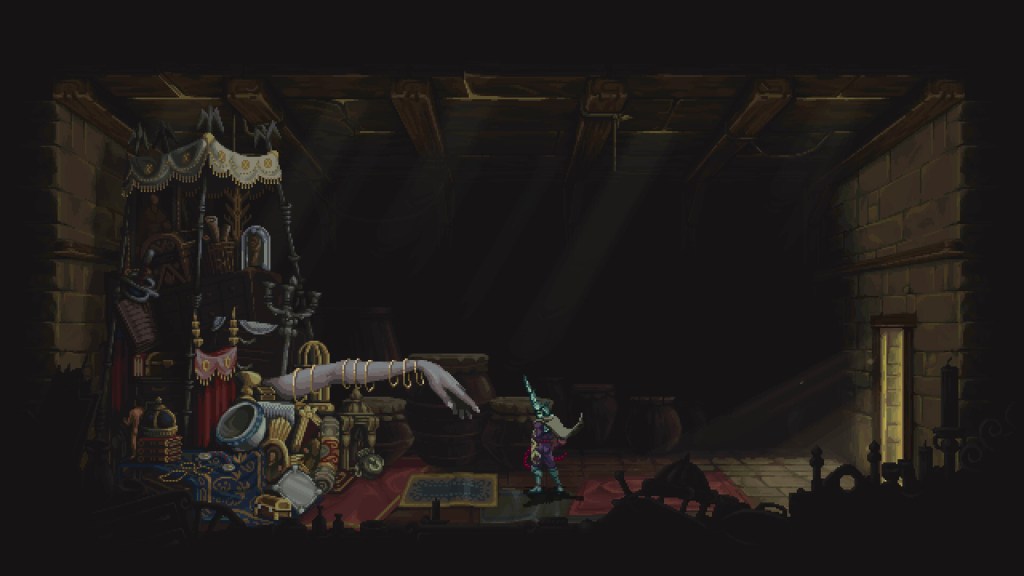
Exploration is another core component of metroidvanias, and Blasphemous 2 again makes itself more like its peers. The game is somewhat open, allowing you to go to a few different areas to start, but later areas are gated off by requiring specific abilities to progress. The game also places markers on the map to the current objective to point players on the correct path and prevent excessive wandering. All of this is fine, its standard as far as metrodvanias go, but I was almost yearning to get lost. It almost feels like a paint-by-the-numbers metroidvania experience, which doesn’t match the brutal tone or world of Blasphemous.
While exploration as a whole was a bit average, there were a handful of areas that I thought were excellent. One that you progress through by draining the sands that fill the decrepit halls, another that is two reflected worlds that you travel back and forth between, and my favorite is a haunted tower that you ascend with magical portals spanning the edges of the rooms. The world itself is also well-constructed with interconnected areas and tons of secrets. I appreciated that most of the secrets were reasonably accessible, I found around 90% of them without needing a guide or further assistance. There are hidden walls and tricky-to-spot paths, but many of the collectibles emit an audible sound if you are nearby, which I appreciated.
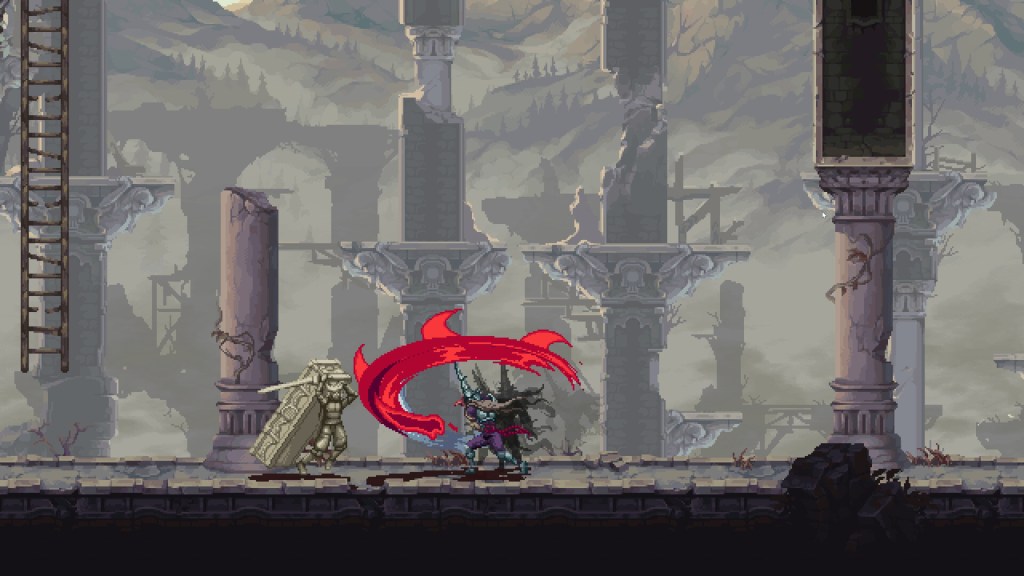
Overall, I was a bit let down by Blasphemous 2. It’s a competently made metroidvania, but it lacks any defining trait that would make it stand out. Sure, it improved the gameplay of the original game, but it lost what made the first game special in the first place. The warped brutality of the religious imagery and iconography was deeply disturbing and gave the game a one-of-a-kind atmosphere which is lacking in Blasphemous 2. It is for these reasons that I give Blasphemous 2 a 6.5/10. It’s a well made game, but Blasphemous 2 didn’t do anything to wow me. Fans of metroidvanias will probably enjoy it for the solid combat and platforming, but I felt that it lost the magic of the first game.

