Yakuza Kiwami 2 (2017)

I’ve quickly found the Yakuza series to become like a comfort food to me. Exploring the dense downtown of Tokyo, completing silly side quests, visiting various establishments, and watching the plot of the gritty criminal underworld unfold. Yakuza Kiwami 2 is a remake of the original Yakuza 2, and it is a great modernization. I’m playing the games in chronological order, making this my 3rd foray into the series, and I’ve found every entry to be distinct despite their shared characters and world. While I don’t think Yakuza Kiwami 2 quite reaches the heights of Yakuza 0, I found it far less frustrating than the first Yakuza Kiwami. I recommend reading my reviews of Yakuza 0 and Yakuza Kiwami to get the full context for this review.
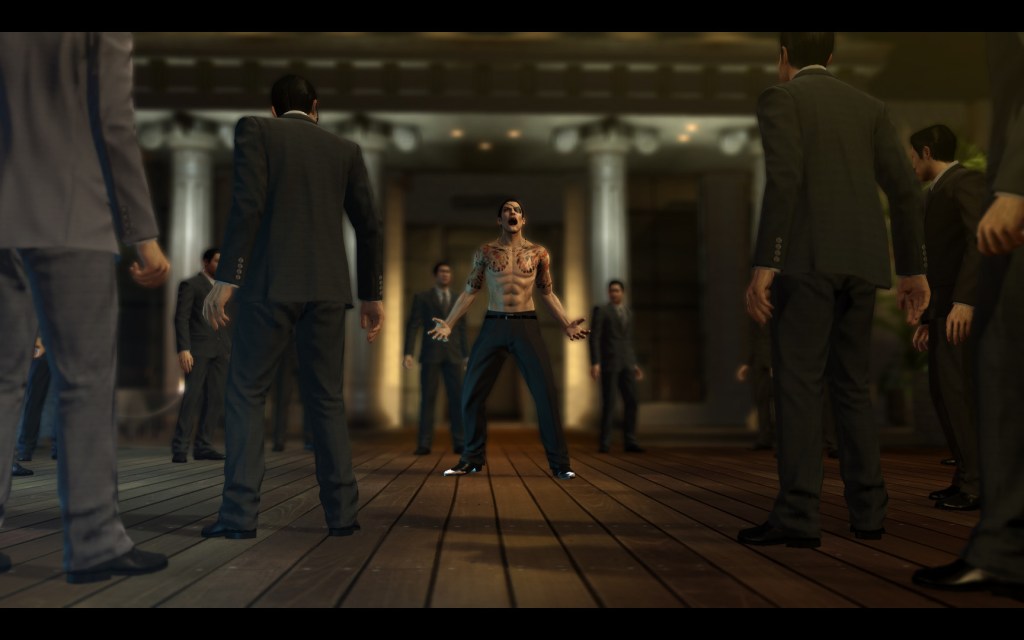
Similarly to its predecessors, Yakuza Kiwami 2 is a tale about the criminal underground of Japan. The protagonist, Kiryu, has left that world behind and appointed his friend Terada to lead the Tojo clan. Unfortunately, Terada is assassinated by a rogue faction of a rival organization, the Omi alliance. Kiryu steps in to keep the Tojo clan from falling apart, becoming their interim leader as he pursues his friend’s killers. The game explores the themes of blood feuds, family ties, and the cycle of revenge.

Truthfully, I found the plot to be a little disappointing. The game reuses many plot points and ideas repeatedly, even the game’s big twist gets repeated five times. The game has a lot of dull chapters where not much of consequence happens, and I can barely remember most of the game’s characters outside of a few key players. Luckily, that handful of key characters is the story’s strength.
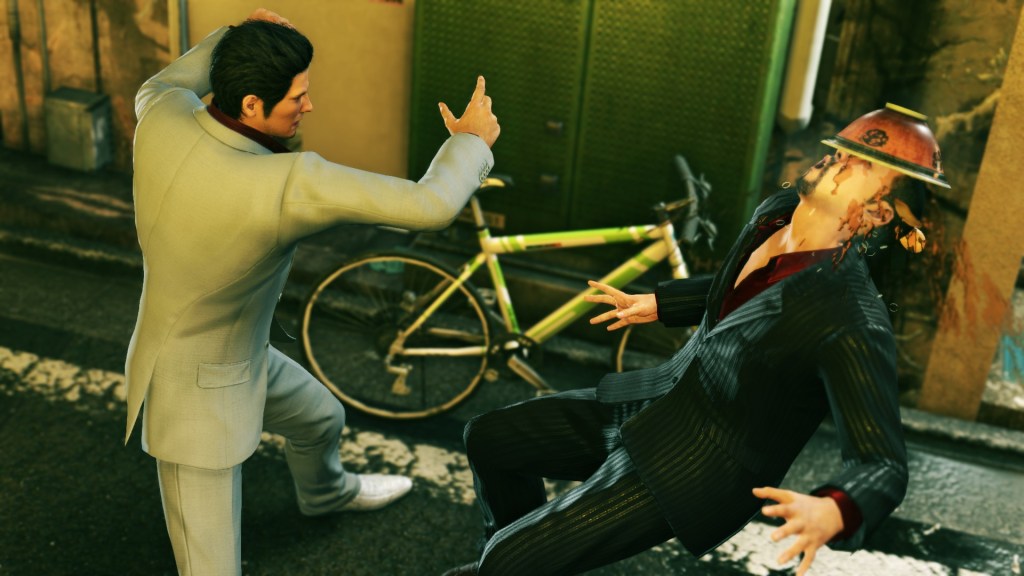
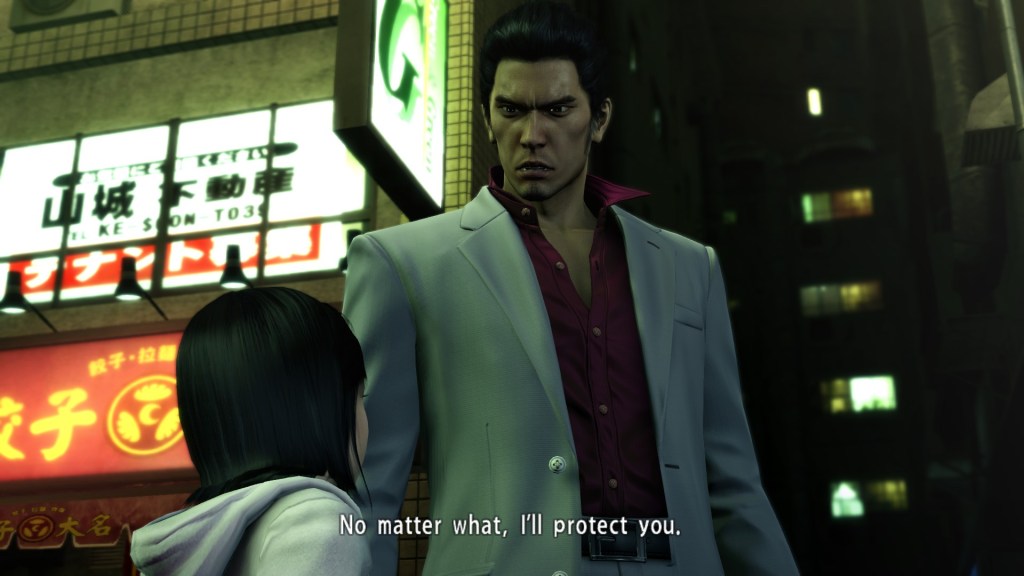
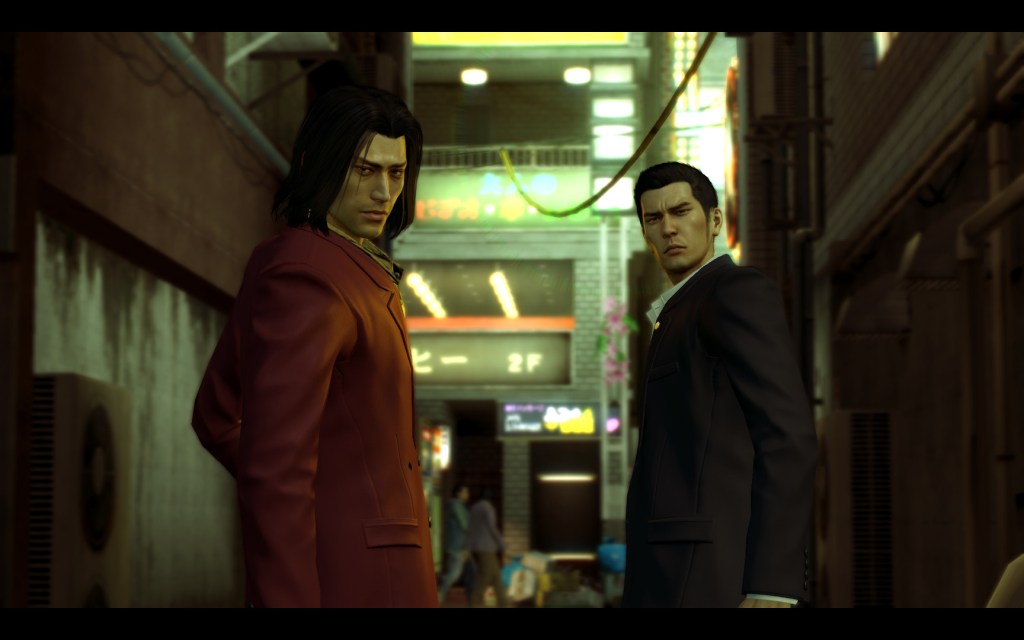
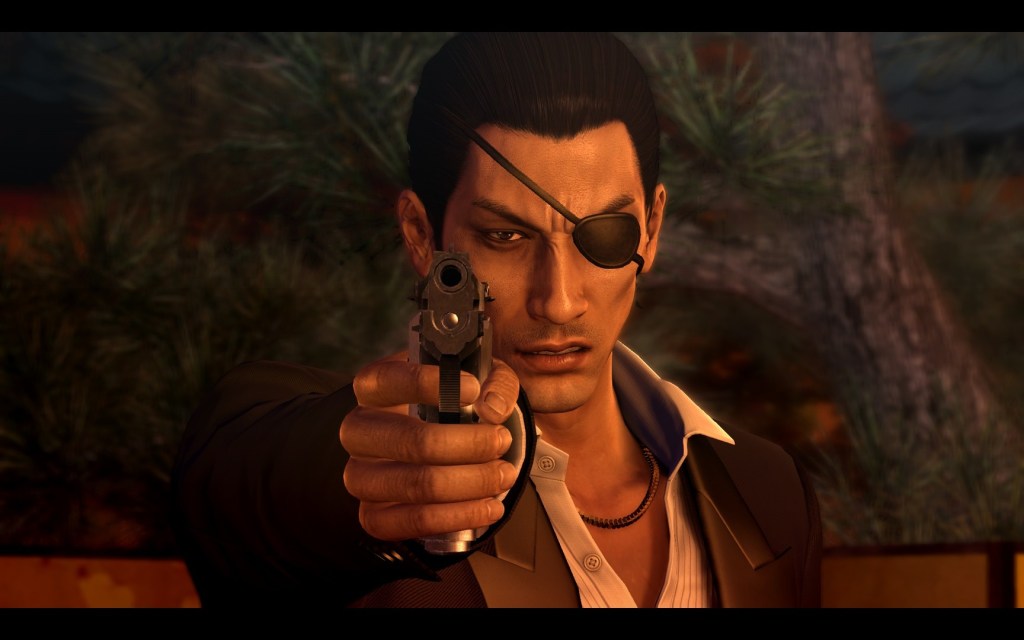
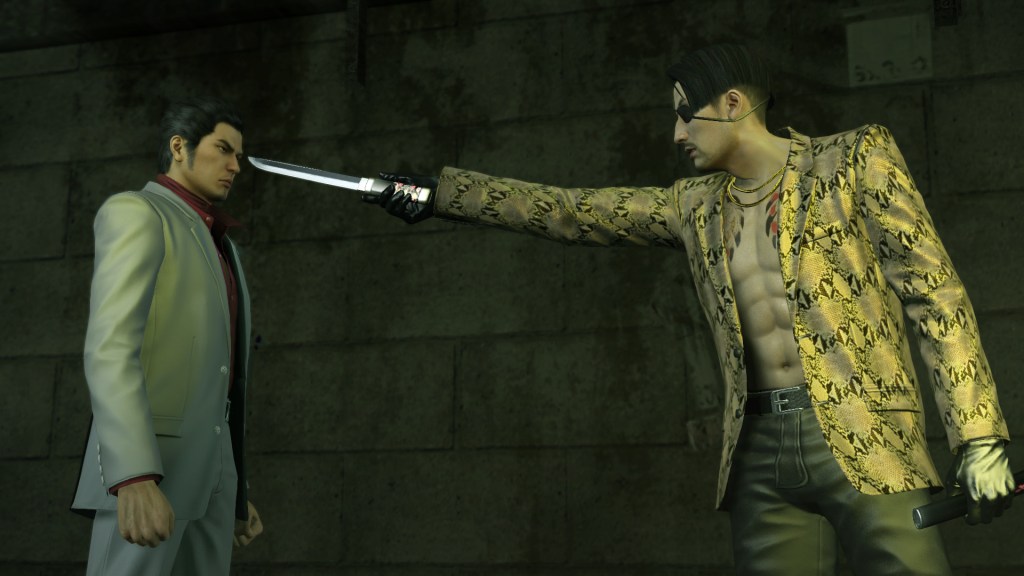
Kiryu is an iconic character for a reason, a boss of the criminal underworld who is steadfast in his values and justice. Ryuji, the main antagonist, is an arrogant and brawny up-and-comer who values strength over all else, and has no tolerance for underhanded tactics. But perhaps my favorite aspect of the story was watching the growth of the relationship of Kiryu and Sayama, a detective in Osaka’s crime division. She begrudgingly teams up with Kiryu as she is assigned to protect him, but their shared ideals and backgrounds leads them both opening up and sharing their vulnerabilities. Watching Kiryu, a perpetual bachelor, develop a romantic interest is not what I expected going into Yakuza Kiwami 2, but I do appreciate the additional depth to his character.

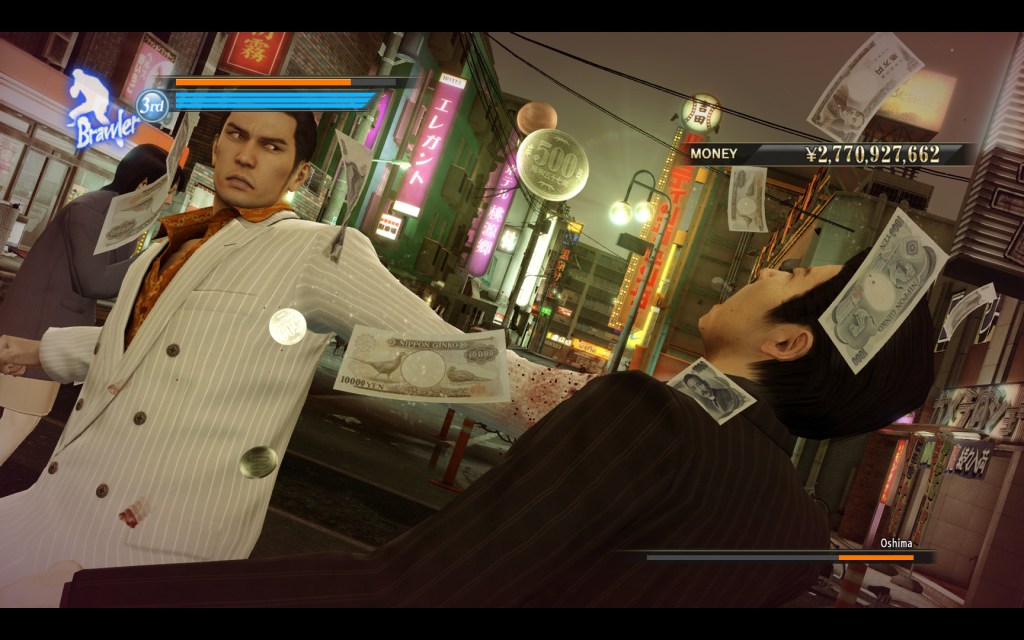
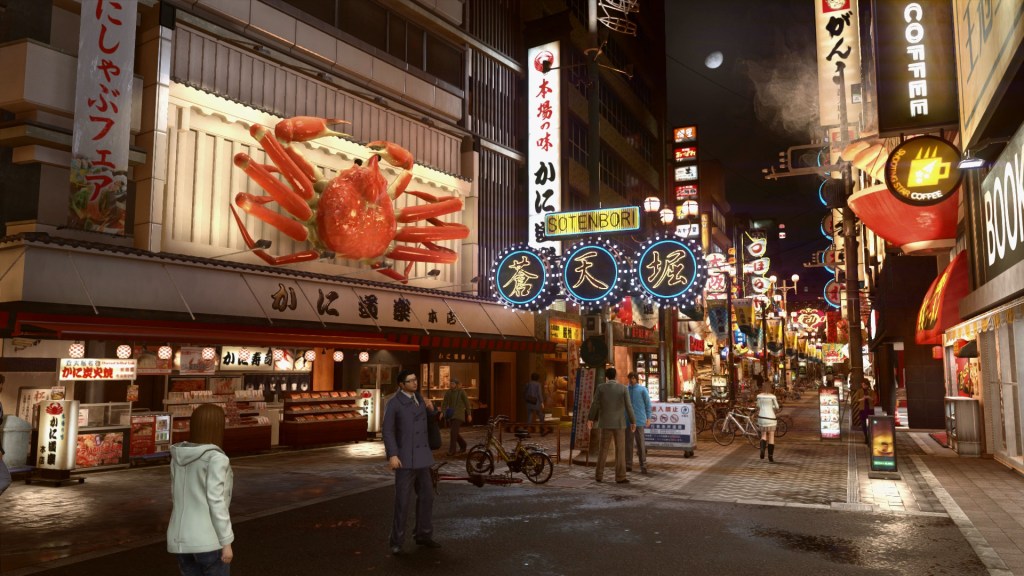
If you are playing the game in chronological order like I am, one of the more noticeable aspects of Yakuza Kiwami 2 is the new Dragon Engine. I don’t want to attribute this improvement to this game as Yakuza 6 was the first title to actually implement the brand-new technology, but it’s a huge improvement to the visuals and immersive elements. The graphical jump from Yakuza Kiwami to Yakuza Kiwami 2 is astronomical, but my favorite element of the engine is the effect it has had on exploration. Previously, entering a building required a brief loading screen. Now, you can go into stores, arcades, restaurants, and other places seamlessly. It seems like a small change, but having exploration be uninterrupted by loading screens is a massive boon to immersion.
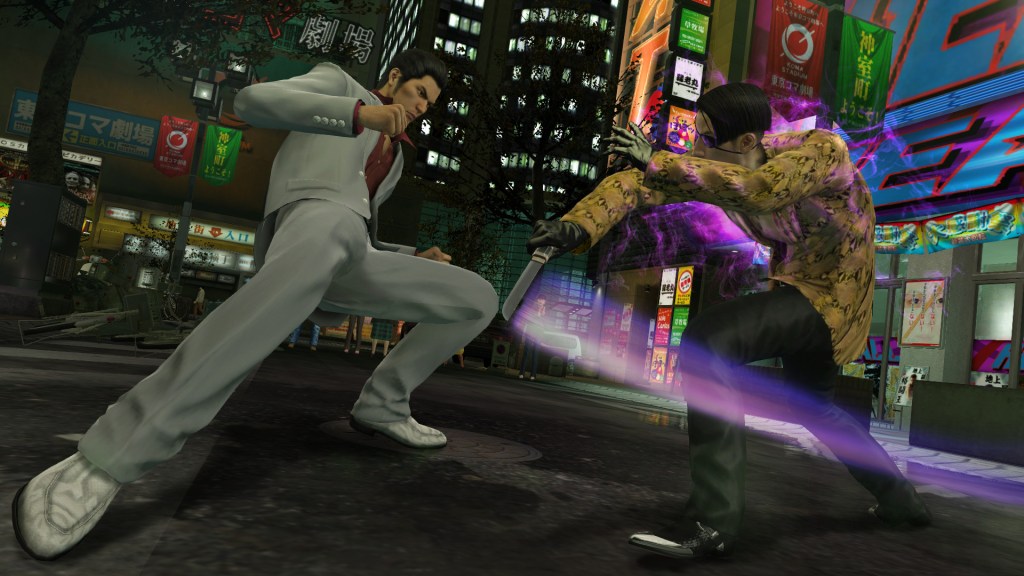
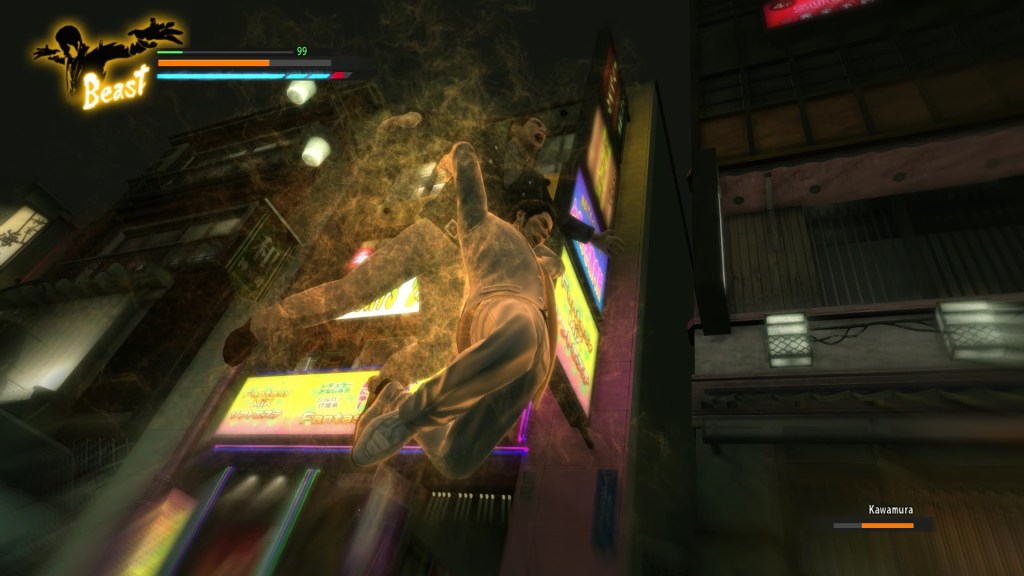
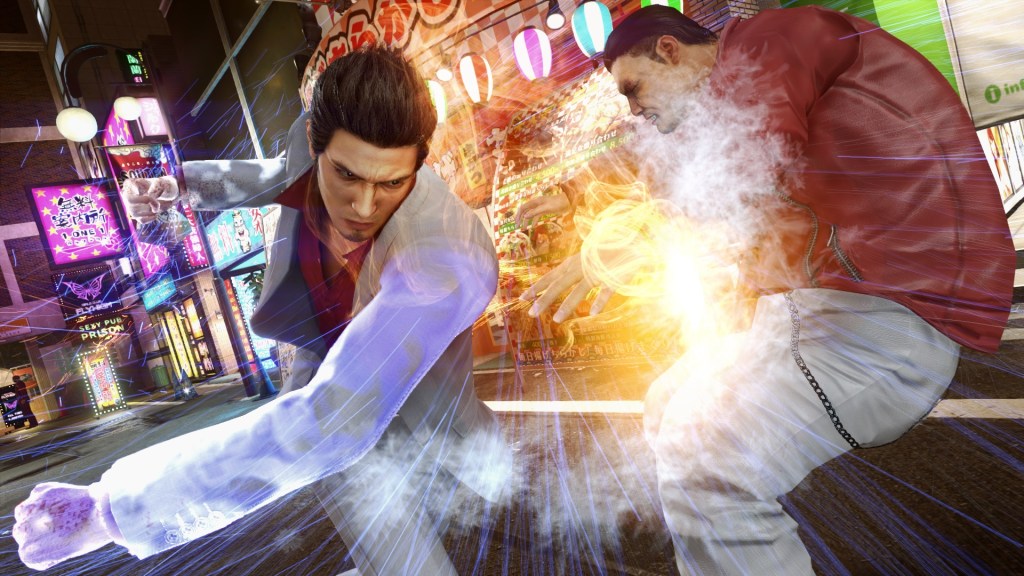
Unfortunately, the Dragon Engine also comes with a few downsides. Combat has been majorly overhauled and simplified. Previously you could swap between 4 fighting styles, each with their own distinct abilities and movesets. For Yakuza Kiwami 2, the fighting styles have all been mashed together to a singular style. I miss being able to choose between the different options, for example Rush was great against singular enemies, while Beast was great for crowd-control and shrugging off enemy hits. There was a lot of skill expression to choose the right style, swapping styles mid-fight, and each style had a wide variety of abilities to unlock. At the very least it was fun to be able to change up the way you fought if you’ve been sticking to one style for too long. Now, there’s no decisions to be made, there’s far fewer attack possibilities to utilize, and it can get enormously boring doing hundreds of basic fights using the same basic combos.

Part of the problem with combat is how cumbersome it is to unlock new abilities. Every skill is unlocked using experience, and experience is fairly hard to come by. Regular battles and side quests give a pittance of experience. The best way to earn experience is to eat meals at restaurants, but that is gated by your hunger gauge. If you’re full, you will gain no experience. And I often found myself focused on doing side quests or the main story, forgetting to stop at restaurants for the chunk of experience. If you want to unlock all the attacks, your best bet is to stock up on special medicine that reduces your fullness. But it’s pretty boring to spend 20 minutes cycling between picking sushi dishes from a menu and popping pills. I’d rather experience being better distributed through major activities like side quests and combat.

Part of what makes the Yakuza franchise so enjoyable is its wealth of goofy side quests and minigames. Yakuza Kiwami 2 is no exception to this rule. After battling dozens of yakuza goons and watching an ally be dramatically killed, there’s nothing better than stumbling across a man stuck in a public restroom asking you to bring him a fresh pair of underwear. Or taking up a voice acting gig for some extra cash only to have to repeat lewd phrases because Kiryu didn’t ask what role he’d actually be acting for. There are even more serious and heartfelt quests of regular people looking for meaning and validation in the world, such as the director who was forced to take over a beloved franchise. There’s a ton of instant classic side quests in Yakuza Kiwami 2

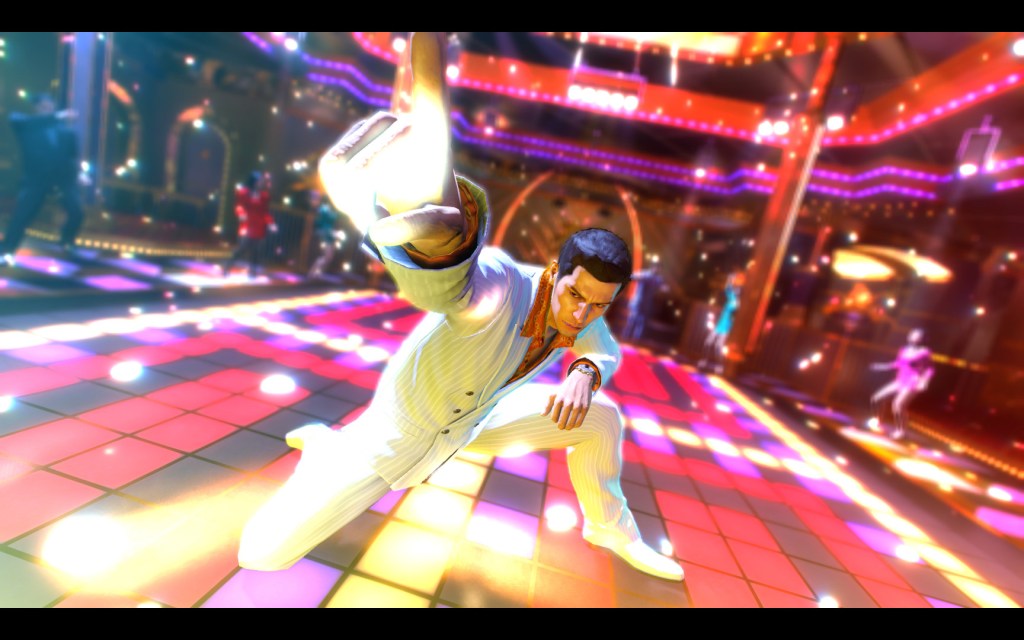
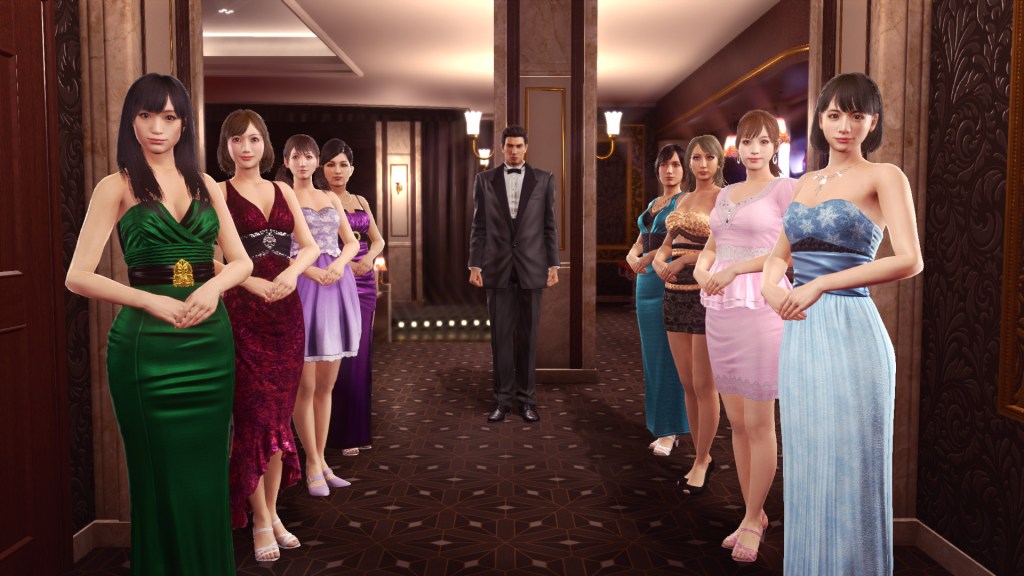
Of course, there’s also a plethora of minigames to discover across the city. There’s a standard golf, darts, baseball, mahjong, and arcade cabinets. Every game in the series has more involved minigames as well, and Cabaret Club management makes a return here. There are practically no changes to the original format, which makes it a bit disappointing. I do enjoy getting to know the hostesses and following their character development arcs, but the minigame itself is just a repeat from Yakuza 0. The other major minigame is Majima Construction, which is brand new. It’s similar to a tower defense game or real-time strategy game as you place henchmen of different types to protect your construction equipment. It’s not my favorite of the Yakuza minigames because I found the UI a bit cumbersome and it was difficult to select specific units in the heat of battle. But it was funny having your workers sing a song dedicated to Majima.
As a whole, I think Yakuza Kiwami 2 is a solid game. There’s nothing that I can point out as being downright bad, even if there are a handful of areas where the game is noticeably weaker than its predecessors. It’s got a competent story with some memorable characters, an immersive world full of funny side quests and minigames, and passable combat that can be satisfying even if it was overly simplified. Even if it doesn’t reach incredible heights, I still appreciate it for its consistency. Exploring the dense streets of Tokyo in Yakuza has become my comfort in gaming, something I can always fall back on if I don’t know what to play next. And I am looking forward to revisiting the world and its characters in Yakuza 3.
Yakuza Kiwami (2016)

Yakuza Kiwami is a remake of the original Yakuza game from 2005. Being a remake of a PS2-era beat ‘em up definitely limits how much the developers can do to improve an antiquated experience while simultaneously remaining faithful to the original design. After playing Yakuza 0, I was excited to see how the developers could leverage the new engine and combat to modernize the original Yakuza experience (read my Yakuza 0 review for further context). Unfortunately, I feel like there were a few key missteps in combat and side-quest design that were completely unrelated to being a remake. Still, Yakuza Kiwami is a fun romp through the nightlife district of Tokyo for fans of the series.

The game’s prologue starts with everyone’s favorite protagonist Kiryu taking the blame for the murder of the Dojima family patriarch. Not only does Kiryu land himself in jail for 10 years, but he is on the hit list of all Yakuza in the area for killing a high-ranking member of their crime organization. The game starts in earnest when Kiryu is released from jail and a civil war breaks out among the Yakuza families.

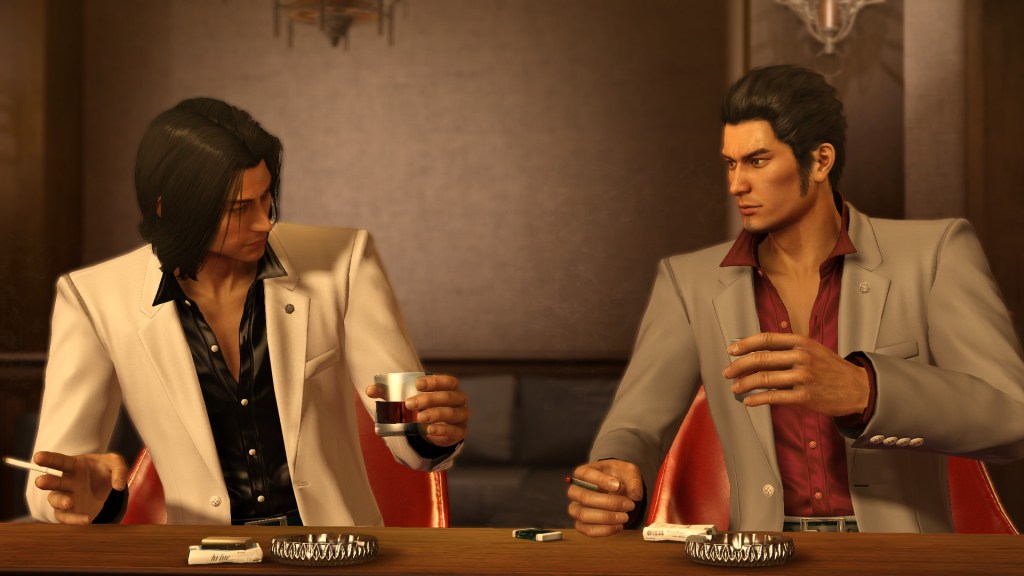
The story of Yakuza Kiwami isn’t quite as gripping as Yakuza 0, but much of that is just due to the era of the original’s release. There’s a lot of random sequences and wild goose chases that break up the pace of the story. That being said, Yakuza Kiwami is helped by virtue of now having a prequel to develop many of its characters. Knowing more about Kiryu, Nishiki, Majima, Shimano, and the rest of the cast goes a long way to make me more emotionally invested in the story. Still, I definitely wasn’t sitting on my edge of seat for the climax like I was during the finale of Yakuza 0.

The main appeal of the Yakuza games is the incredibly dense open world. I loved revisiting Kamurocho and seeing how the world I’d become so familiar with had changed with this installment. For the most part, the city is largely the same as it was 20 years prior aside from a few new Cabaret clubs and of course the Millenium Tower where the empty lot used to be. The game has plenty of callbacks and humorous moments referencing the side-stories of Yakuza 0.

Unfortunately, I felt that the tie-ins to Yakuza 0 were my favorite side-stories in Yakuza Kiwami. What I love about side-stories in Yakuza is how silly they are in comparison to the serious nature of the main story. Yakuza Kiwami lacks any truly memorable goofy moments. Most of the side-stories are some variations of somebody trying to scam Kiryu. Some of the schemes are a little crude and it’s fun to watch Kiryu’s reactions, but it never reaches the heights of zaniness that Yakuza 0 had.

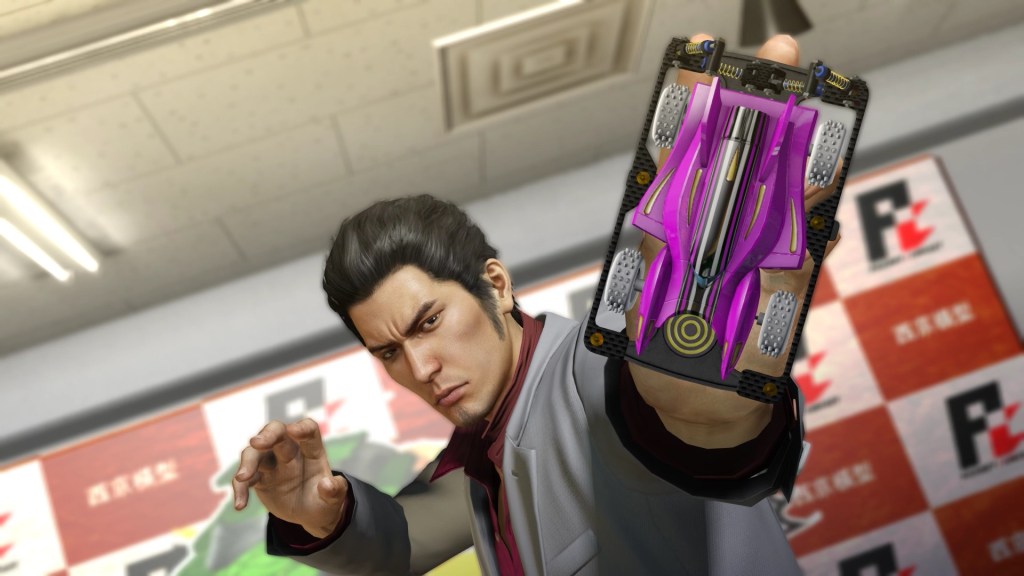
Even though the side-stories were a bit of a letdown, I still think that the open world is a strength of Yakuza Kiwami. There is so much to do and get distracted by in such a tightly crafted city. Of course, there are a variety of mini-games to go along with the side stories. I spent more time than I should have racing toy cars, fighting in the coliseum, and playing inappropriate Pokemon against elementary schoolers. I’m not partial to the plethora of gambling mini-games but there are a ton of them for fans of them. I really did have fun running around the city and seeing what I could do, but I think my favorite twist is the Majima Everywhere system.

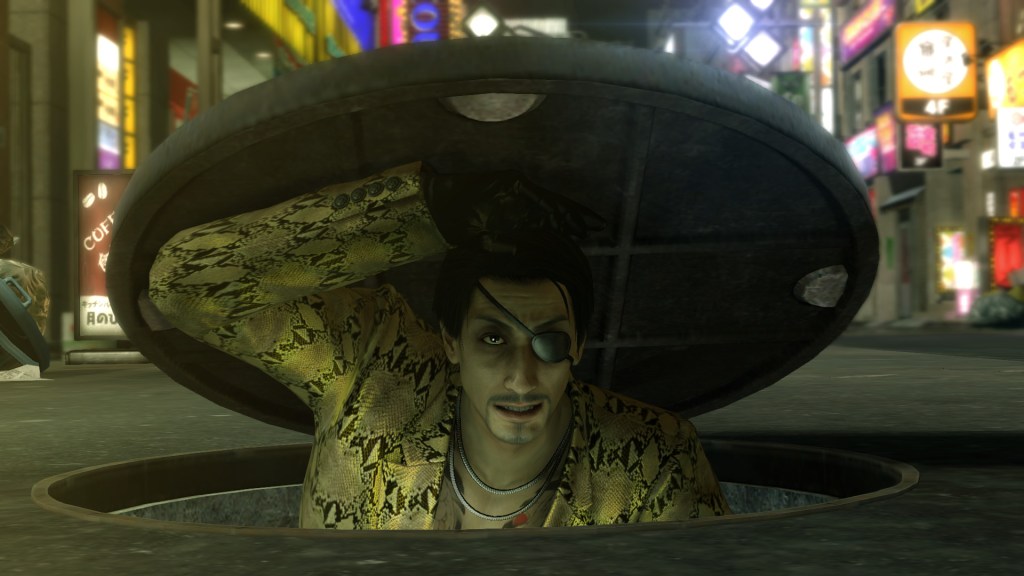
After the events of Yakuza 0, Majima has pretty much lost his mind. He roams around the city, searching for Kiryu. Majima craves a good fight and relishes in helping Kiryu gain his skills back after spending a decade in jail. Every time you encounter Majima, you are locked into a boss fight with him. As you repeatedly defeat him, you will unlock new abilities in the Dragon of Dojima fighting style. My favorite aspect of this system is not the boss fights, but how Majima will show up as you play mini-games or as a taxi driver or as a bartender. Seeing Majima put on costumes and surprise Kiryu across the city is the lighthearted goofiness that I felt Yakuza Kiwami was sorely lacking.

Even though I enjoyed the encounters with Majima, I got a little tired of fighting him by the end of the game. And this is in large part due to the combat of Yakuza Kiwami. When you compare the combat in Yakuza 0 to the combat in Yakuza Kiwami, they may seem indistinguishable from each other, but there are some crucial differences that I think absolutely ruin many of the encounters in the game. Like Yakuza 0, the game is an action brawler where you beat the hell out of goons with 4 different styles that you can switch between. What made the combat of Yakuza 0 fun to me was contextual. Playing as Kiryu, the disgraced badass with unimpeachable morals and fighting against the scummy Yakuza who wronged you was greatly satisfying. While it often was easy and simplistic, I had fun. Yakuza Kiwami makes encounters more challenging, but in a frustrating fashion.

The first major difference in Yakuza Kiwami is its enemy design. Baddies in this game are far more likely to block and dodge out of your attacks. Even during the middle of your combos they can turn around and start blocking. I never really found a good way of dealing with this other than just to continue wailing on them to get the occasional hit in. Using grabs and throws seems like it should be the natural counter to blocking, but most enemies just dodge out of grabs and many of them will actually deal damage to you if you grab them. 

Bosses in particular are very slippery and hard to hit. They also have uninterruptible combos that will ignore hitstun if you attempt to attack them during that time. Trading blows with enemies seems to make sense in the world of Yakuza, but for some inexplicable reason Kiryu was made to be much more fragile. Taking any hit will cause a brief hitstun and interrupt whatever you are doing. Getting knocked to the ground is a common occurrence. Fighting groups of enemies is a nightmare because it’s so likely that you will get interrupted every time you try to attack. I was sorely disappointed that even in Beast style, the fighting stance specifically designed to deal with groups, Kiryu has no additional resistance to hitstun and a light breeze will prevent him from attacking.

Another annoyance is the addition of the Kiwami mechanic. When bosses get low on health, they begin glowing a colored aura and rapidly heal. To interrupt this, you have to swap to the style that matches the color and use a special heat move on them. Swapping to the correct style takes time. And if you don’t have enough heat you have to use an item or hit them a bunch which takes time. And during this time, they continue healing. I feel like this mechanic was supposed to be a cinematic way of dealing big damage to the bosses, but most of the time I was lucky to break even after they had healed for a few seconds. They can do this multiple times per fight, and using the same heat move in the same battle deals reduced damage. Which is a massive oversight considering that you only have the one heat move to interrupt Kiwami healing. This mechanic is utterly pace breaking and annoying to deal with.

All of these issues make the combat in Yakuza Kiwami painfully slow and tedious. The combination of enemies constantly blocking and dodging, Kiryu having trouble getting off significant hits, and bosses healing massive amounts multiple times throughout a single fight just makes combat take forever. On normal difficulty the game still isn’t “difficult”, you can carry a dozen healing items with you and can take a hefty beating before going down. It’s just tedious to slowly whittle away at enemy health and popping a healing item whenever you get low. I don’t need the combat to be deep or challenging, I just want it to feel good to smack around bad guys as the indomitable Kiryu.

 I was shocked how many steps backwards Yakuza Kiwami took from Yakuza 0. I can look past the dated story since the game is a remake, but the bland side stories and tedious combat surprised me. It’s still a fun enough game, exploring the city and getting distracted by the plethora of mini-games is essential to the series. If you played Yakuza 0 and want more, then Yakuza Kiwami is the next logical step. But definitely don’t start with Yakuza Kiwami even though it is a remake of the first game in the series. And if Yakuza 0 didn’t click with you, then Yakuza Kiwami definitely won’t. Unfortunately, it is a worse game in every way. I’m still looking forward to the rest of the series, and I hope that this was just a low point. 

Yakuza 0 (2015)

I’ve put off playing the Yakuza series for years because of its reputation of having a ton of side content. Most people see this as an inherent positive, but as I’ve gotten older, I have less time to game. I appreciate shorter, tighter experiences that trim the fat and only leave the good parts. When I see a game averages 50+ hours to complete, it feels daunting. Most of these behemoth open world games are padded out with repetitive quests and meaningless filler. But this is not the case in Yakuza 0. Indeed, Yakuza 0 is a lengthy game with a ton of side quests and minigames, but these distractions perfectly supplement the serious crime drama that is the main story.

Yakuza 0 is a game about the seedy underworld of Japan’s entertainment districts. You follow two protagonists who have both been expelled from their crime families for different reasons. Kazuma Kiryu is seeking to clear his name after being framed for murder and uncovers a proxy war between factions vying over a small piece of real estate worth billions of Yen. Goro Majima will do whatever it takes to be accepted back into his organization after disobeying a superior, even if it means humiliating himself as a pawn for his keepers. 

What I appreciated most about the story was how it took time to establish its characters and make me care about them. Usually, I’m not a fan of long cutscenes or expositions, but nobody will be able to forget Majima’s 20-minute-long introduction. The characters have their own ideals, goals, friendships, and limits to what they are willing to do. The protagonists are lowly grunts who are relentlessly bullied by their higher ups, but withstand the brutality to do what they believe is right. The slow burn of character building and drama is what makes the story so compelling. And while it may be a little over the top at times, the organizations and drama feels entirely believable. Long cutscenes where family Lieutenants chat in an office and subtly make ploys to outplay each other for a 10ft-by-10ft piece of unoccupied real estate feels like something that is scarily plausible. 

A good slow burn needs a satisfying payoff to make the players feel like the time they invested was worth it, and Yakuza 0 makes sure to have a ton of payoffs. The story is split into chapters, and every couple of chapters there is a massive story moment paired with amazing action sequences and set pieces. Sure, some of these action sequences can be a little silly and over-the-top, but they are fun and the game earned the right to get a tad carried away. However, I was a little disappointed with how frequently the game pulled its punches. There are definitely severe, often fatal consequences for characters, but there are also a ton of fake-out deaths and miraculously healing bullet wounds. A character unexpectedly surviving is fine, but not when it happens 5 times through the course of the game.

What really makes the Yakuza series unique is its ability to supplement its dark and violent crime drama story with ridiculously goofy side content. One moment you’ll be fighting through a building full of grunts for your life, have a man chop off his finger in front of you, and walk dejected through the bustling streets of Tokyo and the next moment you’ll be singing karaoke and having a dance battle with Michael Jackson. There are a ton of minigames and side quests to get distracted by, and there’s a few reasons why I love the side content in this game. The main reason is that it’s almost always hilarious. Like teaching a professional dominatrix how to humiliate her customer, or bowling a turkey and finding out your prize is a live chicken that you keep and turn into a manager at your real estate firm. All of the side quests are so silly and ultimately wholesome that it balances out the brutality of the main story. 

The other reasons why I like the side content in Yakuza 0 all have to do with how unintrusive the side content is. First and foremost, while Yakuza 0 is an open world game, the map is incredibly dense. You can run a loop around the entire thing in maybe 5 minutes. This makes it so you don’t have to go out of your way to hunt down quests, you just naturally stumble upon them. Side quests are also typically very short. You can complete most of them in 10-15 minutes. They are good for a quick distraction and laugh, and you don’t have to commit hours to see one through to the end. Lastly, they typically don’t have many material rewards. You may get a small trinket or piece of gear, but most of the time the reward is inconsequential. I like this approach for Yakuza 0 as you never feel obligated to engage with side content, you only should do it if you feel like it.

All that being said, the biggest side quests in the game are the antithesis to all these observations. Each character runs a business, and engaging in those quest lines is the best way to make money in the game. Furthermore, doing these quests unlocks additional abilities in combat and a secret fighting style if you complete them entirely. This makes it feel necessary to spend time on these quests. The worst offender is the real estate business that Kiryu runs. It’s a huge time sink that consists of investing money in properties, waiting 15 minutes to collect payouts, and then immediately reinvesting that money to buy more properties. It’s a massive investment of time to complete this. Majima fares a little better here because he runs a cabaret club which at least consists of a short mini-game of running the club. It’s more engaging and less time-consuming, but both of these quest lines were fairly boring, extremely long, and felt necessary if you wanted cash or to unlock new combat abilities.

Combat in Yakuza 0 is solid, but it’s not the main appeal of the game. It’s a fairly simplistic beat em’ up action game with a handful of style variations. You have light attacks, heavy attacks, and guard breakers. Combos consist of 1-4 light attacks followed by a heavy attack. Each style has its own niche that can be fun to figure out and mess around with. The most enjoyable aspect of the combat is the context. Your opponents are often the scummiest men in the Yakuza who taunt, torture, and disrespect you. It was immensely satisfying to unleash some powerful combos on them. Moreover, attacks feel weighty as they stun enemies and knock them to the floor. You also build up a heat gauge which can be utilized on heat-attacks that do a ton of damage. I wouldn’t say the combat is amazing or revolutionary, but it is definitely fun.

Aside from combat, the other main bit of gameplay in Yakuza 0 is mini-games. Most mini-games aren’t even related to the main quest or numerous side quests, they just exist for the player to discover. While I didn’t spend a ton of time playing Mahjong or Shogi, I did become an expert at the various karaoke and dance songs. There’s also bowling, batting cages, various gambling games, toy car racing, a few arcade games, and of course fishing. They’re all simple enough to get the hang of quickly and serve as a nice distraction from the intensity of the main story.

Open world games often grow repetitive and outlast their welcome, but I didn’t feel that way about Yakuza 0. The map was so dense with mini-games, side quests, and main content that it never felt bloated with unused space. The rollercoaster of the deadly serious story about organized crime and the outrageously goofy side content is something that is entirely unique to Yakuza, and I loved it. I’m upset that I’ve waited so long to jump into this series, and Yakuza 0 has me wanting to play the rest of the games as soon as possible.