Super Mario RPG (2023)

Turn-based RPGs are often some of the longest video games that exist. They can easily exceed dozens of hours, if not hundreds. I’m often put off from many of these games as I feel they are bloated with repetitive content and grinding. But Super Mario RPG is the rare case of an RPG that went in the opposite direction. It’s an intentionally short and sweet experience. You move so quickly through the zones and dungeons that there’s no chance to be overcome by tedium. It’s a game that relies on novelty rather than a grandiose story and scope.

Super Mario RPG is a wacky game. There’s plenty of goofy characters, ridiculous situations, and slapstick comedy. While many RPGs focus on slowly building up an ever-escalating story, Super Mario RPG moves at a breakneck pace through silly scenarios and never gets tiresome. A giant sword has fallen from the sky and destroyed Bowser’s castle and the army of sentient weapons is threatening to steal all the Star Pieces to prevent any wishes from coming true. It’s not a super engaging story, but it is helped by the characters.

There’s a ton of unique characters introduced in Super Mario RPG, the main ones being Geno and Mallow. Geno is a stalwart spirt from space that inhabits a wooden doll, while Geno is a young emotional cloud who was adopted by the Frog Sage. Bowser also gains his signature braggadocious personality as he assists Mario and company on their journey. While the story itself won’t keep you on the edge of your seat, the characters and their goofy interactions makes the adventure far more charming. After playing this game, I hope that Nintendo allows future RPGs set in the Mario world to create new characters, as that bizarre decision something that has been holding back the Paper Mario series for years.
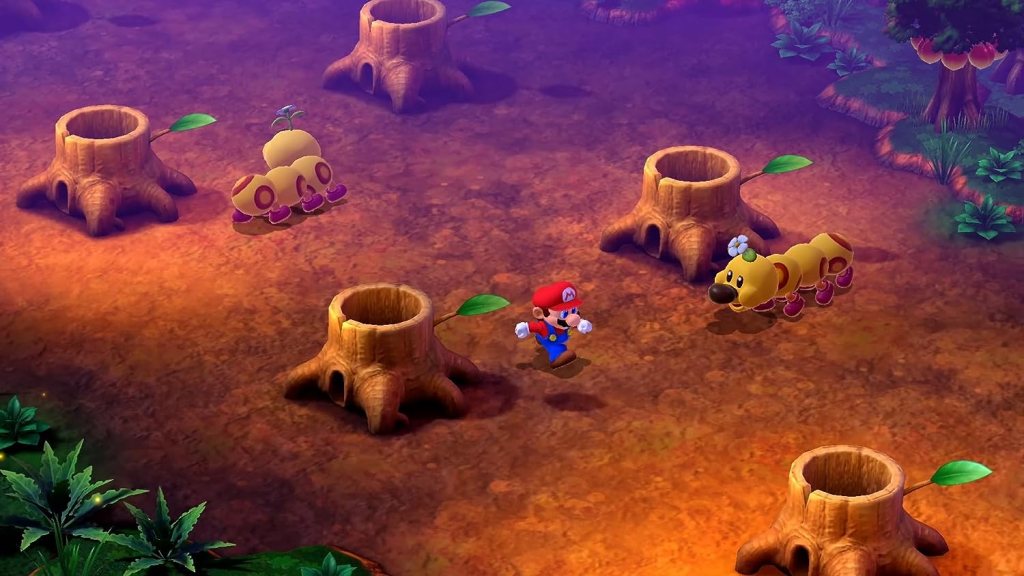
The biggest strength of Super Mario RPG is just how snappy everything is. From the story, to the progression, to the battles. The battles in particular are a blessing. First and foremost, there are no random encounters. You can just walk past enemies that you don’t want to deal with. Despite being turn-based, the battles themselves are remarkably fast-paced. Animations and text boxes are snappy, health pools aren’t overinflated, and there isn’t too much fanfare that slows things down. I often get in and out of the easier encounters in 30 seconds to a minute.

Thankfully, this is not a game that you have to grind for experience to complete. I found that I naturally gained plenty of levels and equipment from just playing normally to beat the game. The game is definitely on the easier side, the only major hurdles are the bosses. I enjoyed the simplicity of basic bosses but I also appreciated when I had to use a little more strategy during the elongated boss fights. The combat is fairly basic, but I appreciated the simplicity of straightforward attacks and abilities.
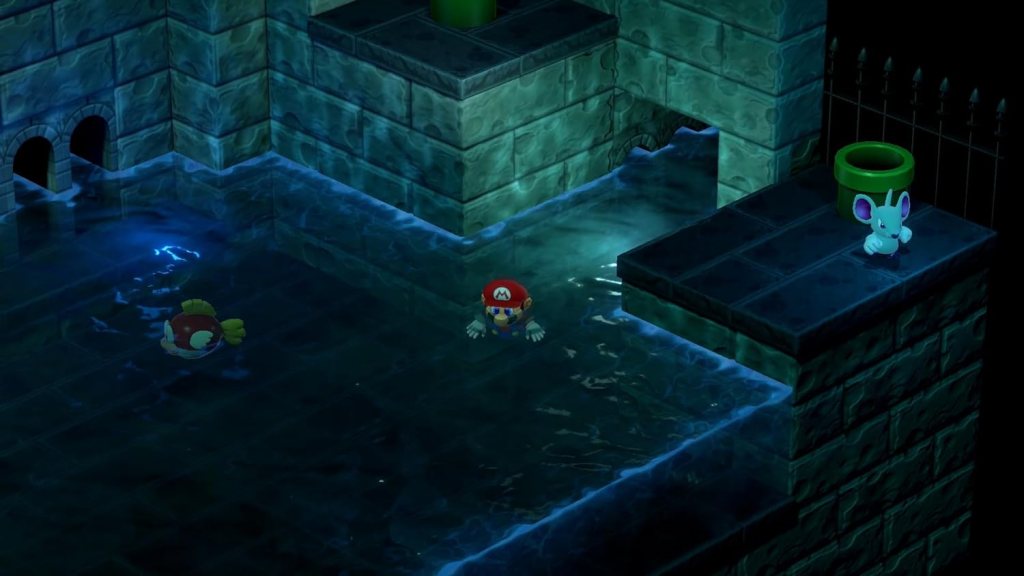
One aspect that I enjoyed about combat in Super Mario RPG is that it is interactive despite being turn-based. By timing button-presses during tight windows of opportunity during animations you can increase your own damage or block damage from enemy attacks. I liked learning all the timings for the different weapons, abilities, and enemies. The game has a system that hints towards the correct timings if you miss it too many times, but the hint goes away once you start succeeding again.

Progressing through the game is absurdly fast. The game is maybe 12-15 hours long, but it’s crazy how many areas they crammed into the game. I never got exhausted in any zone as they just went by so fast. Every area has its own little story and characters like a typical RPG, but it doesn’t drag anything out. I think this is mostly to the games benefit, but some of the areas and towns I would have liked to spend a bit more time in. It’s hard to really get invested in any of the side characters, stories, or areas when you only spend 30 minutes to an hour there. Still, I’d rather be left wanting more than feel exhausted at the end of a game.
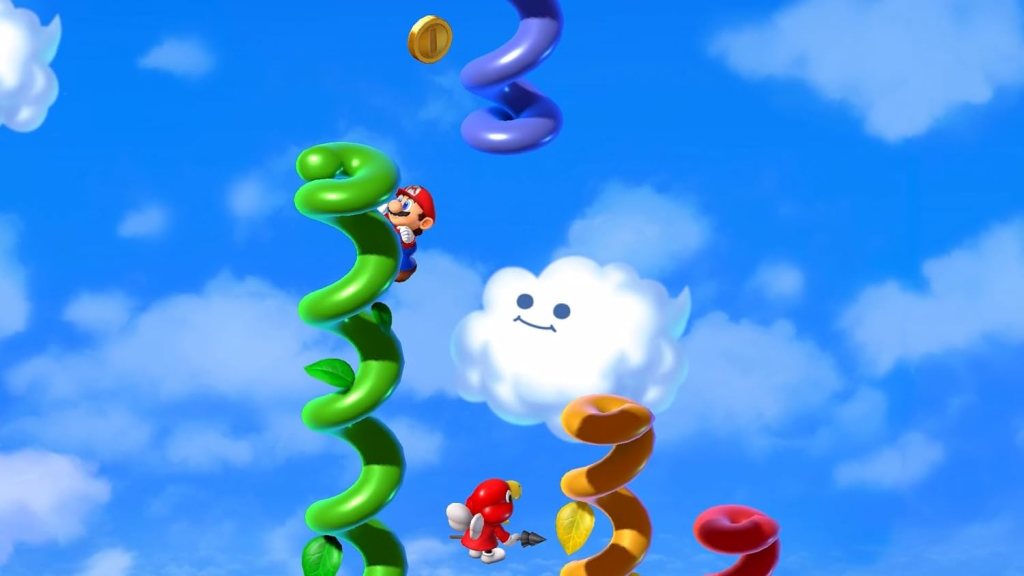
My only major complaint about Super Mario RPG is the janky mini-games and platforming. Many of the game’s side activities are mini-games such as Yoshi racing, minecart riding, or drifting down a river in a barrel. I think all these are all wonderfully fun ideas, but I never quite got a hang of them. They often feel like they go on for far too long and have underwhelming rewards. Anything platforming related in particular just felt awkward do the camera angles. 

I never played the original Super Mario RPG: Legend of the Seven Stars that this game was based on. However, from what I can tell Super Mario RPG is a fairly faithful remake. It added a lot of quality-of-life features like more frequent saves and being able to quick-swap party members. Additionally, the player has access to powerful special attacks after filling up a gauge as a reward for successfully timing attacks and blocks. I will say that while all these features are nice, they do make an already pretty easy game even easier. Personally, I didn’t mind the easier experience but perhaps more hardcore RPG fans might be let down by the lack of challenge.
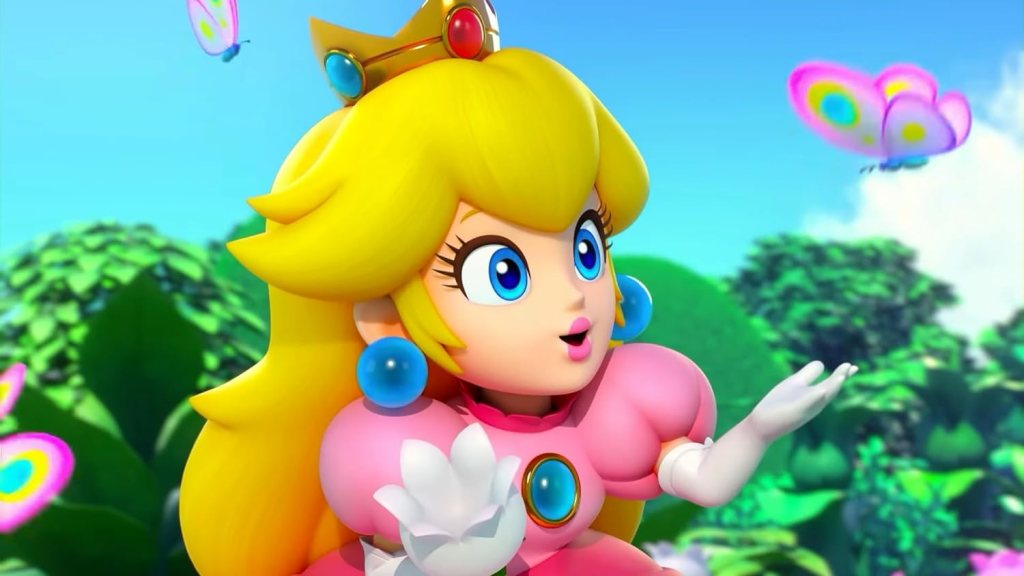
Aside from the quality-of-life updates, the most important change that the remake made was to the visuals. Super Mario RPG does a phenomenal job of modernizing the original art style while keeping its toy-like feel. The games vibrant visuals and bright color palette make it feel like a wonderland. There’s also a handful of cutscenes in the same style that look great.
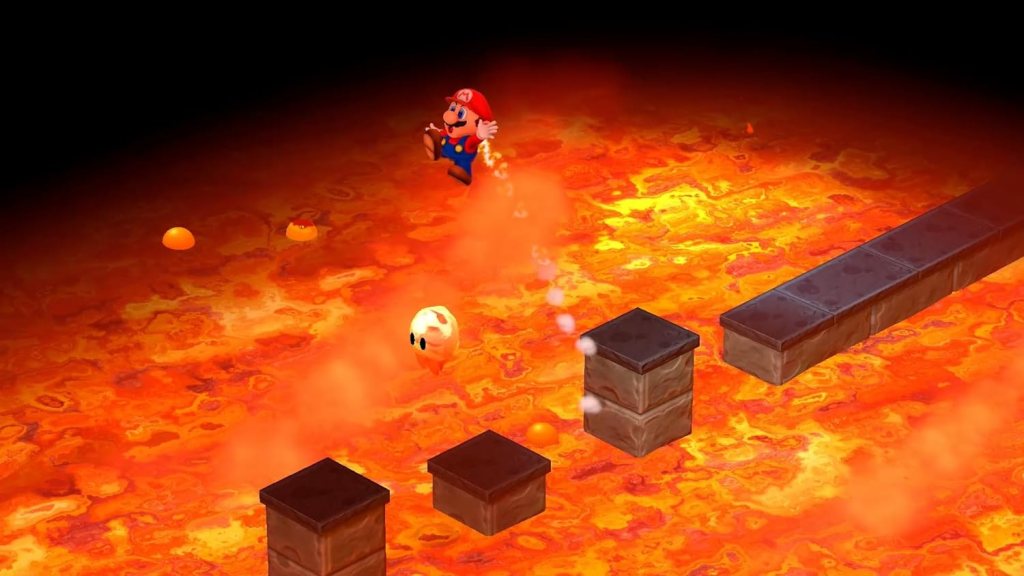
Overall, I was pleasantly surprised by Super Mario RPG. It was a rollercoaster of goofy characters and classic environments. It’s not an RPG that you should reach for if you want a crazy story with twists and turns, but its smaller scope lets it speed through content at a breakneck pace. It goes to show that not every RPG needs to be a hundred hours long and that people can appreciate a more concise adventure. It is for these reasons that I give Super Mario RPG an 8/10. It’s not a grand adventure, but it is a fun one.
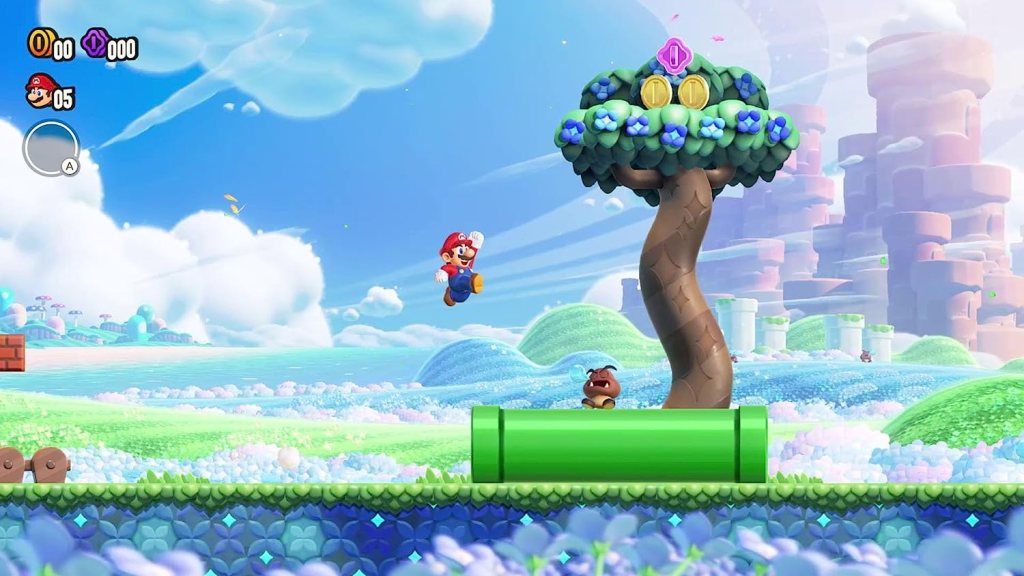
Super Mario Bros. Wonder (2023)

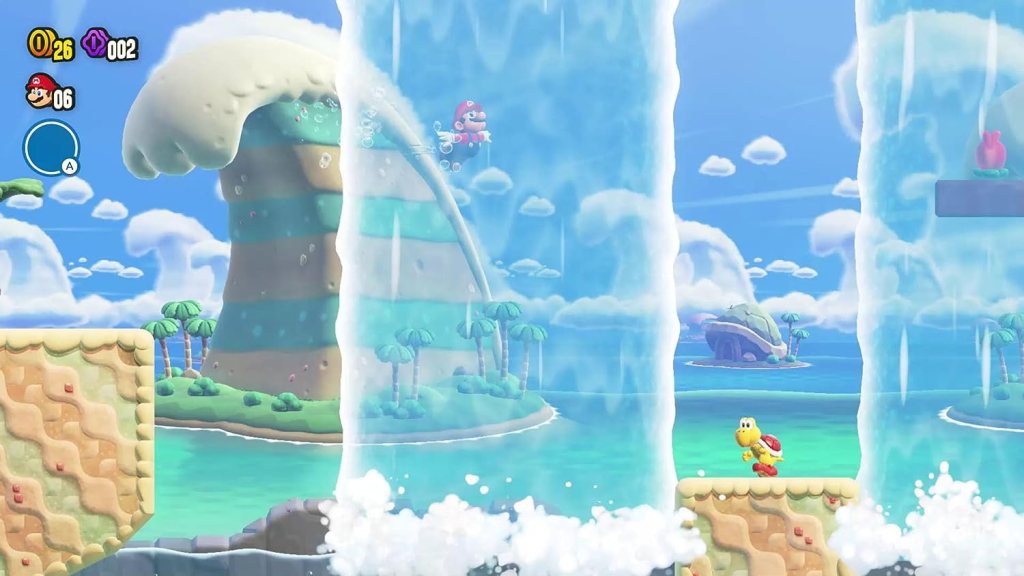
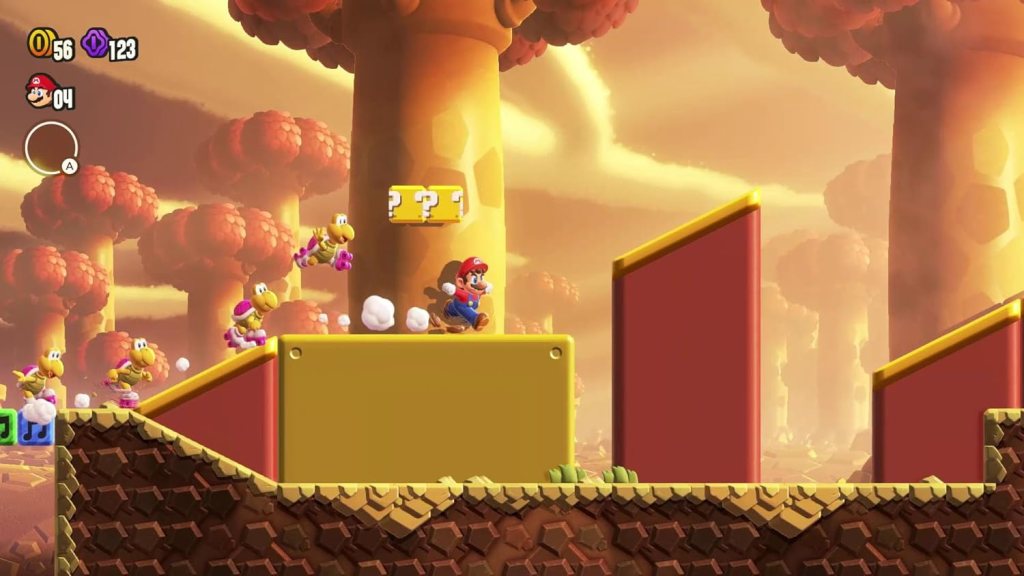
We’ve waited nearly 30 years for the redemption of the 2D Super Mario series. I always found it odd that the last truly notable entries in the series were the Super Mario World games while the 3D Super Mario series has thrived with masterpiece after masterpiece of creative genius. But finally, there’s a return to form with Super Mario Bros. Wonder. Forgive my choice of words, but Super Mario Bros. Wonder is a wonderland of joyous ideas and imagination. 

I don’t want to harp too much on the past, but I think context is important. The last four entries in the 2D Super Mario series have been labeled as New Super Mario. These titles have been criticized for being remarkably similar to one another and lacking any sort of major innovation. While being serviceable platformers, they lacked the magic that Super Mario is known for.

With Super Mario Bros. Wonder, the magic is back. There’s an unparalleled level of creativity on display here. Nearly every single level introduces a new idea. It doesn’t dwell on any single mechanic, but each one goes through a natural progression over the duration of a level. Whether it be a new enemy, new obstacle, or a new gimmick, Super Mario Bros. Wonder takes care to let the player safely interact with its ideas before amping them up. But as the level progresses that idea gets elevated and asks more of the player, and it culminates in a final crescendo: the Wonder Flower.  

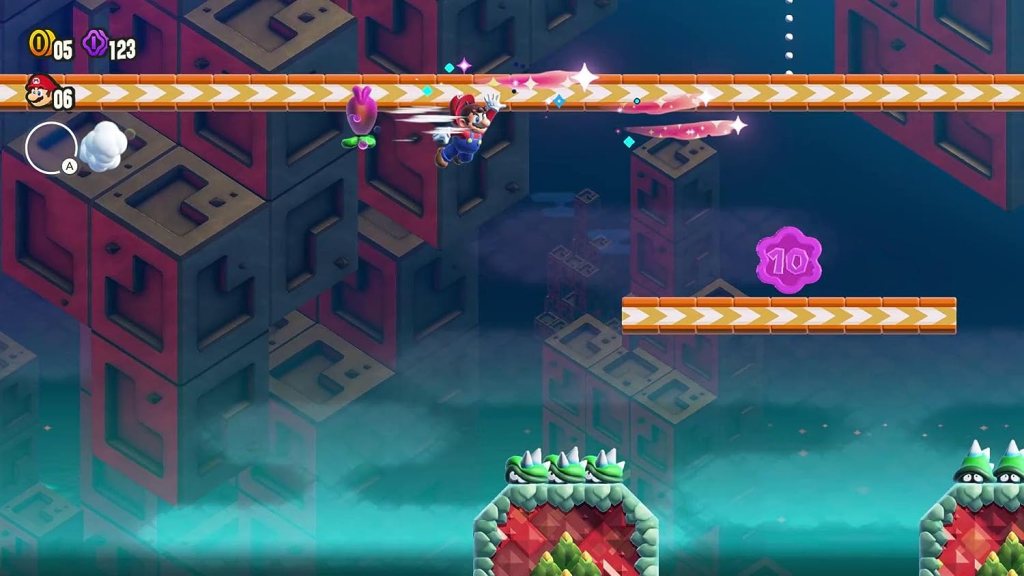
The Wonder Flower serves as the key mechanic in Super Mario Bros. Wonder. Every single standard level in the game has one, and they are wildly imaginative. Towards the end of every level, you can grab the Wonder Flower which transforms the level into something else entirely. Pipes come to life and wriggle around, Piranha Plants leave their pipes and sing, Mario turns into a fast-rolling ball of destruction, and that’s just the beginning. They are all wacky ideas that don’t fit in the classic Super Mario world that we know, but the nonsensical fun and unexpected surprise in every level is glorious. 

Super Mario Bros. Wonder is so jam-packed with creativity that it’s absurd. Just the base levels are plenty of fun on their own. Most levels introduce something entirely new to center its design around. And the Alice in Wonderland-esque nonsense that’s triggered when you grab a Wonder Flower serves as a bombastic evolution of the level with wondrous visual effects and marvelous mechanical switch-ups. I couldn’t wait to see what each level had in store for me, and I was always eagerly anticipating what the Wonder Flower would do next.

Apart from the level design, Super Mario Bros. Wonder lets the player express their own creativity with badges. You can equip a single badge to augment your abilities. Some of them provide simple passive bonuses like extra coins or a free power up, others give some additional abilities like being able to glide in the air briefly or get a small height boost when twirling. But there are also a few badges that majorly augment the way the game is played by having you bounce around like a spring, constantly run at high speed, or be invisible. I think the badges are fun options to mix up your abilities. They are never necessary outside of the occasional badge challenge level, which I appreciated. I stuck with a passive badge for most of the game as I felt the action badges would make the game too easy, but I appreciate that they exist for players who do want to have an additional ability. But I did love how badges were utilized for one-off challenges.

In between the non-stop barrage of creative levels there’s the occasional shorter bout. These can be combat focused K.O. arenas, short challenges utilizing badges, search party levels, a Wiggler race, or a celebratory break time. These are all fun little side missions to break up the longer courses. The badge challenges were my favorite as they serve as miniature training grounds to master using a specific badge. The only variant of these bite-sized levels that I didn’t enjoy were the search party levels in which the player has to probe the level for invisible secrets. I think these are meant to be played with friends, but as a solo player it leads to just a lot of jumping around for minutes at a time trying to find hidden blocks.

There’re only a few search party levels so it is not a particularly big issue. In fact, most of my complaints about Super Mario Bros. Wonder are very minor. I thought that the boss fights were a little underwhelming and could’ve made better use of Wonder Flowers. Additionally, while I enjoyed the themed overworld and searching for secret levels, I wish that more courses had secret exits like in Super Mario World. And the little flower guys that are in every level can be annoyingly positive and their plainly spoken English feels out of place in Super Mario

All of these gripes are minor. The only major thing that I would’ve loved to see in Super Mario Bros. Wonder was some more post-game content. There is a special world with some fantastic levels, but I wanted more of them. These levels were more challenging than the main campaign and often combined Wonder Flowers, badge challenges, and tricky design to make for some highly engaging levels. All things considered, if my biggest complaint about the game is that I wanted more of it, then that’s a pretty good indication of its quality.

I was blown away with how consistently imaginative Super Mario Bros. Wonder was. It’s crammed with tons of brand-new ideas and tricks, and that’s before even touching the Wonder Flower. This is the first time in decades that a 2D Super Mario game has captured the magic, sense of joy, and creativity that oozes from its 3D counterparts. I just couldn’t put down this game, it was a platforming joyride the whole way through. It is for these reasons I give Super Mario Bros. Wonder a 9.5/10. If this is the direction for future Super Mario titles, I am ecstatic and am eagerly awaiting the next release.

Super Mario World (1990)

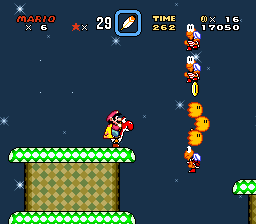
My earliest memories of playing video games were sitting in the back of the car on a road trip playing Super Mario World on my Game Boy Advance. While I hold more nostalgia towards GameCube games like The Legend of Zelda: The Wind Waker, Metroid Prime, and of course Super Mario Sunshine, there’s something about Super Mario World that is special to me. Surprisingly, I have never revisited the game over the years, but after replaying it recently I was blown away with how excellent it was. Many games from its era are dated, overly difficult, and hard-to-control relics that are better left in the past. But Super Mario World is a joyful masterpiece.

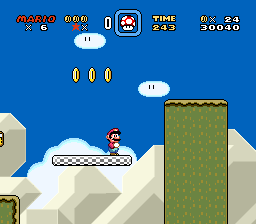
Everything about Super Mario World exudes charm and personality. Being the launch title of the SNES, it made use of the expanded color palette and sound system. There’s a plethora of enemies and characters, each wonderfully designed to fit their environment and taking on personalities of their own. Super Mario World was Yoshi’s first appearance, and there’s a reason why everybody loves Mario’s dinosaur companion.

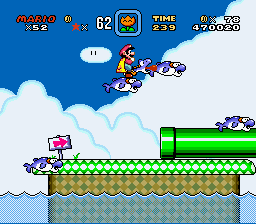
Yoshi is now an iconic character, and much of that can be attributed to how integral he was in Super Mario World. The game takes place in Dinosaur Land, the home of all different kinds of Yoshi. Mario travels from section to section, comedically toppling castles and rescuing Yoshi eggs. The world itself is vibrant, colorful, diverse, and full of secrets. While each world has an overall theme, the levels themselves also distinct archetypes. There are traditional levels, underwater adventures, fast-moving contraptions with ropes and saws, castles with lava and deadly smashers, and mysterious ghost houses. This variety keeps things fresh and avoids the repetition that may come from themed worlds.

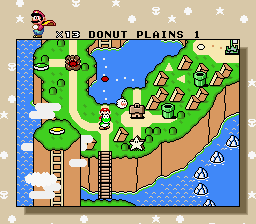
Another aspect that really sets Super Mario World apart from its predecessors is how it handles secrets. While early Super Mario games did have secrets within levels, you could only hope to get some coins, a 1-Up, or to find a Warp Pipe to let you skip to future worlds. Super Mario World instead focuses on secret exits that reveal hidden levels. Finding all the secret levels is a great motivator for exploring and engaging with stages instead of blazing towards the finish line.

 These secret levels make the overworld of Super Mario World feel more interconnected. Secret levels can open up alternative paths through the world, which is a great reward for discovering hidden exits. Moreover, there are five routes to Star World, which acts as a central hub that makes it faster to travel around the map.

For being an early SNES title, I was surprised with how smooth the gameplay was. The controls are fantastic as they balance precision and the momentum-based movement that Mario is known for. In the early Super Mario games, Mario would have a hefty amount of momentum, making precise jumps more difficult. While momentum is still present, it does not feel like you are slipping around on ice at all times anymore. Super Mario World is easier than its predecessors because of this, but I wouldn’t say the game is a pushover either. There are plenty of more challenging levels that will test your mastery of platforming.

The biggest strength of Super Mario World is its simplicity and charm. It makes full use of the expanded color palette and music capabilities that the SNES offered. It’s easy to take these things for granted today, but at the time Super Mario World was so much more vibrant, colorful, and visually pleasing than other games. The levels are absurdly creative, making use of a huge variety of enemies, obstacles, and settings. Every single level is memorable for its own reason, and there was not a single level that I disliked. Not to mention the music from Koji Kondo is masterful as always. The catchy and famous main melody of the game is frequently reused in recognizable but unique ways depending on the level’s setting. An echoey version is used in caves, a slower-tempo and grandiose version is used in castles, the athletic piano version that we all know as quintessential Mario is used in the obstacle courses.

While Super Mario World may seem simple by today’s standards, it set the gold standard for platformers going forward. It’s just pure fun to explore the levels, uncover secret bonus levels, and master the movement and courses so you can speed through. The vibrant visuals, memorable music, imaginative environments, and clean controls make Super Mario World the purest kind of game. It’s a classic game that has aged gracefully, and its one that everyone should experience.

Bowser’s Fury (2021)

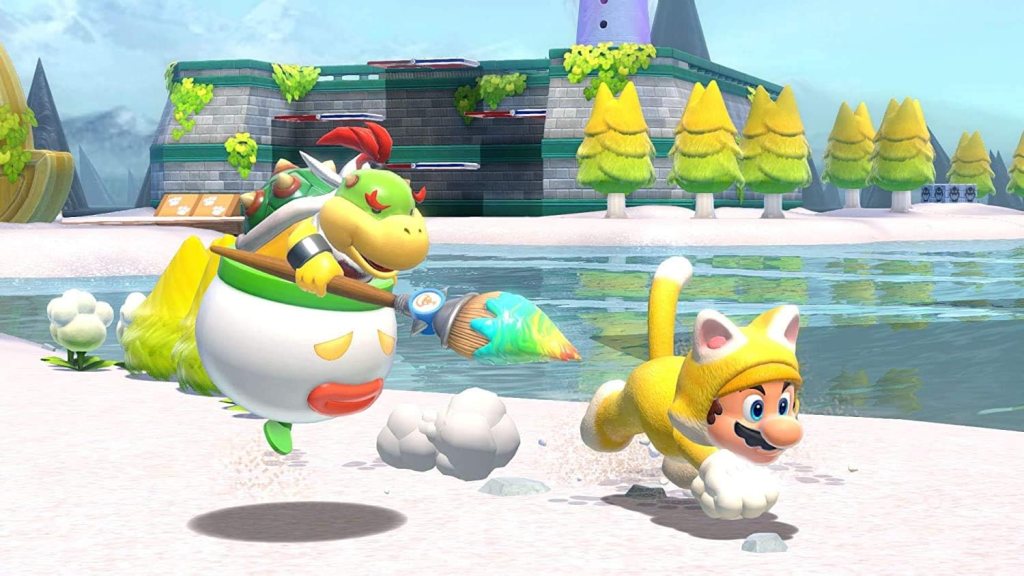
After playing Super Mario 3D World, my primary complaint was how disjointed the experience felt. Other 3D Super Mario games felt like a coherent adventure, while Super Mario 3D World feels a series of fun but unrelated obstacle courses. Bowser’s Fury is a game that was packaged alongside the Switch port of Super Mario 3D World, but that’s not the only game that it takes inspiration from. Bowser’s Fury is a glorious marriage between the platforming excellence of Super Mario 3D World and the open-ended collectathon adventure of Super Mario Odyssey. It’s a relatively short game, but Bowser’s Fury is a massive success.

Bowser’s Fury is set in one giant area, an ocean dotted with islands and partially covered in black ink. Bowser has gone berserk and you have to collect Cat Shines to revert him to his usual self. Each island is like one of the levels from Super Mario 3D World, a short challenge that usually is focused on a unique gimmick. Additionally, the islands have five Cat Shines each, meaning the player gets to revisit each island multiple times. The islands morph with each subsequent level, retaining their core theme and gimmick but changing up the layout to accommodate for different objectives.

The ability and necessity to revisit areas is a massive improvement over Super Mario 3D World. Instead of every level being a one-and-done affair that is easily forgotten, the designers are able to evolve on the ideas and gimmicks that make each level unique. You get to fully explore these dense areas and really familiarize yourself with them. They feel like real locations rather than artificial obstacle courses.

Another aspect that contributes to the adventure of Bowser’s Fury is the world. As previously mentioned, the whole game takes place in a single area. While not all the islands are immediately accessible, you will quickly uncover them. Getting between the main islands is a breeze, as Plessie makes a return from Super Mario 3D World. Plessie acts as a mode of transportation across the giant body of water, and she is a ton of fun to ride. She’s fast, handles well, and is always available no matter where you are. She will pop up out of the water seamlessly, without any need for the player to summon her or go to limited predetermined locations where she resides.

Like many other 3D Super Mario games, many of the Cat Shines reside not only in the main levels, but in side challenges and secrets hidden around the map. These are usually quick trials like racing Plessie through an obstacle course or catching a rabbit running around on the lake. These little side missions also contribute to the feeling of cohesion, as you can find these little distractions while exploring the greater world.

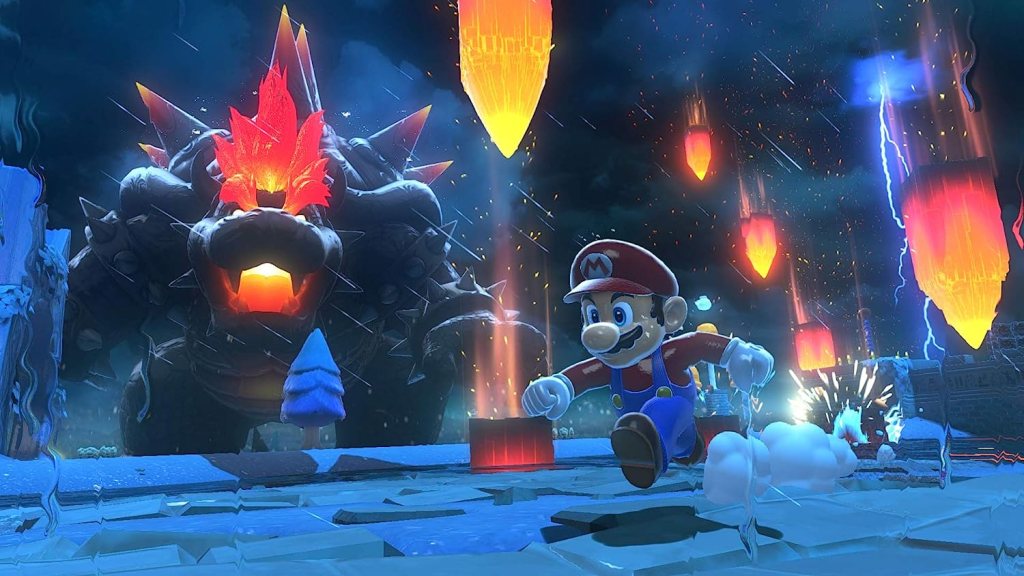
A central aspect of Bowser’s Fury is when Bowser gets furious. He is a behemoth in this game, always residing in the center of the map, occasionally awakening to cause terror. When Bowser emerges from his slumber, the sky goes dark in a torrential downpour and fire balls rain down as the colossal Bowser towers above you and spits his fiery breath at Mario. It really is a phenomenal sight to see, and it makes the game much more frantic while Bowser is awake.

While you could just hide from Bowser until he goes away, but I found it much more fun to engage with the more difficult platforming challenges that Bowser creates. Dodging the raining fireballs and fire breath make things more challenging, but Bowser also causes giant obelisks to be lodged in the ground. These can act as additional platforms and shields from his attacks. It can be fun to dodge all the chaotic madness using these temporary platforms, and after collecting a single Cat Shine Bowser will temporarily halt his rampage and go back to sleep.

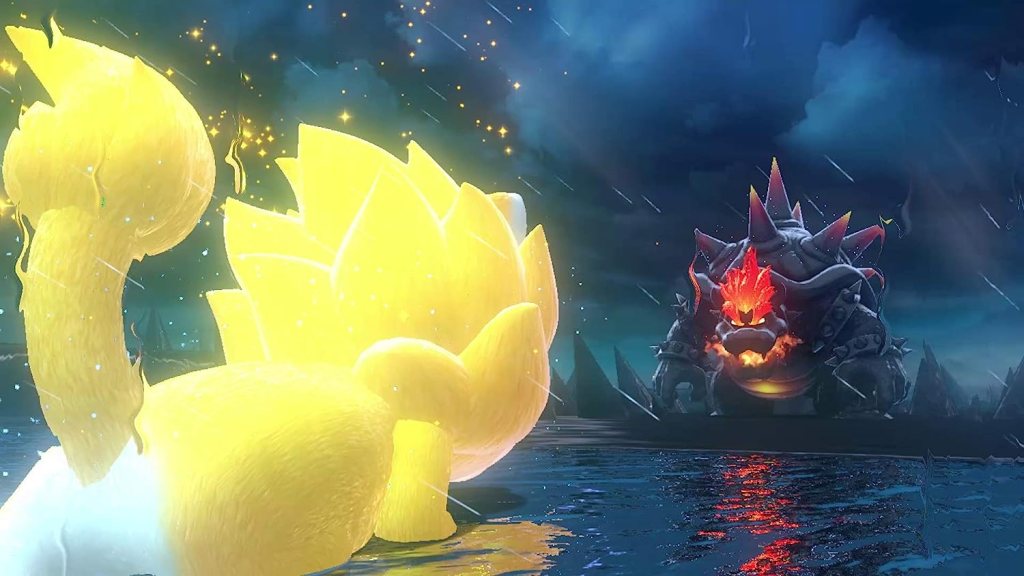
The other method of dealing with Bowser is to fight him directly. Across the world there are a few Giga Bells, power-ups that transform Mario into a giant to contend with his equally goliath foe. Battling with Bowser is enjoyable, and it slowly ramps up in complexity as the game progresses. These Kaiju battles visually fantastic, even if they are similar to Bowser battles from past games.

While I generally enjoyed Bowsers constant looming presence throughout the game, it also has a fair share of issues. The first being that Bowser can get irritating when he starts to appear more frequently at the end of the game. While I enjoy the additional challenge of dodging his attacks, sometimes it can get annoying when he seems to appear during every single level. On the flip side, many Cat Shines require Bowser’s presence to acquire. This is also frustrating as it led me to abandoning levels halfway through to scramble to get to where I needed to be for these time-limited Cat Shines. And at the end of the game, I had to literally just sit still and wait for Bowser to show up for the last five or so Cat Shines. Lastly, whenever Bowser appears there is noticeable performance drop.

I enjoy the inclusion of Bowser and his rampages; they definitely make for some fun platforming and cohesive theming across the game. I’m not sure how I would feel about it if Bowser’s Fury was a much longer game. It only took me a few hours to beat with couple more hours to 100% complete it, and a popular opinion that I have been seeing is that many people want the next Super Mario game to be an extended version of Bowser’s Fury. While I can agree that this is a great foundation to build off, I think the format would outlast it’s welcome if it was any longer than the short romp that was presented in Bowser’s Fury.

A totally open world Super Mario game with no world or level selection would be fantastic, but even in Bowser’s Fury I felt there was a lot of filler or repeated Cat Shines. For being such a short game, I was disappointed with how many of the objectives were identical to one another. There were so many Rabbit chases, Bowser blocks, Lucky Island Cat Shines, Plessie speed challenges, and so forth. There wasn’t a great balance between the number of core platforming levels and these side missions. I love exploring and completing optional tasks, but I think Bowser’s Fury just has too many of them in relation to how short the game is.

Bowser’s Fury is an immensely successful experiment. It meshes classic Super Mario platforming and the giant, open-ended exploration from Super Mario Odyssey. The singular area scattered with short levels is a fantastic formula. Bowser himself was a fun gimmick for a majority of the game, and I would love to see an expanded upon game with big areas and gimmicks similar to Bowser’s reign of terror. It is for these reasons that I give Bowser’s Fury a 9.5/10. While it had a few flaws, I think Bowser’s Fury is the sensational appetizer for what’s to come next.

Super Mario 3D World (2013)

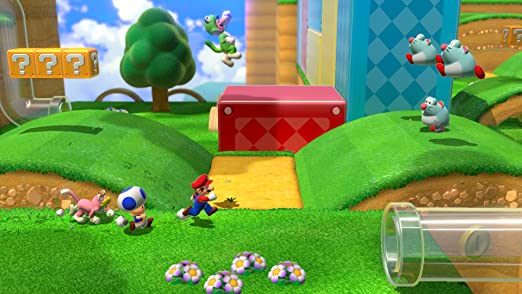
In a series that is home to some of the greatest and more influential games of all time, Super Mario 3D World seems a little underwhelming at first glance. It’s less adventurous than Super Mario 64, less experimental than Super Mario Sunshine, and less grandiose than Super Mario Galaxy. What Super Mario 3D World does have going for it is its simplicity. In fact, it is the most direct translation of the 2D Super Mario titles into the 3D space. From start to finish, Super Mario 3D World is a smorgasbord of fun ideas and classic platforming.

There’s no denying that Super Mario 3D World is closer to the original 2D Super Mario games than its 3D counterparts. Every level is a one-and-done obstacle course that ends with a goalpost. This is in stark contrast to other 3D Super Mario games which almost always reuse the same areas for multiple levels. And many times, those levels aren’t straightforward obstacle courses, but require exploration and puzzle solving. But in Super Mario 3D World, pure platforming is the main focus of the game.

While there are a few collectibles in every level, three Green Stars and a stamp, the levels are short and linear. This is not a bad thing by any means, and it allows the team of developers to design a much more curated experience. There are nearly 120 levels in Super Mario 3D World, and almost every single one introduces a new idea or concept. While many of these ideas are borrowed from previous titles, there are a few stand out new inclusions. The Cat Suit is an important new power-up that is showcased. Captain Toad makes his first appearance in the short puzzle-platformer diorama levels. And the Double Cherry makes for some engaging challenges as you control multiple clones at once.

The most surprising aspect of Super Mario 3D World is just how good all the levels are. In a game brimming with ideas and content it’s crazy that not a single one is a clunker. The level of polish here is unfathomable. The gimmicks don’t necessarily feel gimmicky because they don’t change the way Mario is controlled. The game never strays away from the pure platforming bread-and-butter than it is so committed to. It’s an insanely well-curated collection of all the best concepts from the Super Mario series.

Part of the reason why levels could be so refined is partly due to Mario’s reduced movement options. The side-flip and long-jump were drastically reduced in effectiveness, while the triple-jump was removed altogether. These constraints allowed the designers to make levels with a much clearer intended path. You cannot use advanced movement techniques to skip obstacles, and levels are much more linear. While I do think that I enjoy how polished the levels feel as a result of these movement limitations, it ultimately comes down to preference if you enjoy this style compared to all the other 3D Super Mario games.

Levels in Super Mario 64, Super Mario Sunshine, and Super Mario Odyssey are free-roaming affairs. Many times, you don’t even know what your goal is. Exploring the environments was open-ended, and led to freestyling as to how you would approach the level. This is also reflected in how the camera works in these games, as you can rotate the camera to get a better look around. This is opposed to Super Mario 3D World which has locked camera angles so that there is never a doubt that the player has a good view of the action, but also is restrictive and prevents exploration.

While I did love playing Super Mario 3D World, it lacked the sense of adventure that makes the Super Mario series my favorite. I prefer the wide-open stages that you revisit many times and become intimately familiar with as opposed to the linear and restrictive levels that are present here. Moreover, Super Mario 3D World lacks cohesion and visual theming. While Super Mario Galaxy had mostly linear levels, it had the consistent context of exploring tiny planets. Levels made sense in that context, and they had visuals to support that theme. Super Mario 3D World just feels like a collection of artificial levels.

Most of the stages are floating islands of toy-like cubes. They don’t feel like real locales, and they lack the planetoid context of Super Mario Galaxy. I think having backgrounds and visual flair that made the levels feel more authentic would have gone a long way to making Super Mario 3D World a more immersive adventure. Moreover, while there is a world map to traverse, there is no cohesion within the worlds. The desert world doesn’t have mostly desert levels, the ice world doesn’t have more snowy levels than average, the worlds don’t group levels in a meaningful manner.

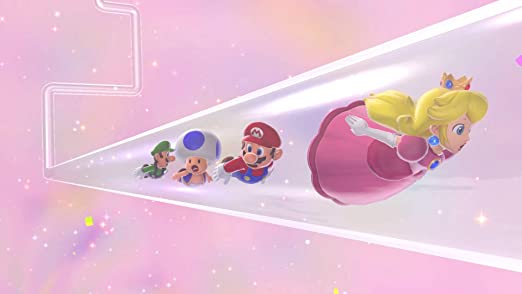
The most unique aspect of Super Mario 3D World is the inclusion of multiplayer. The fixed camera, simplified levels, and more basic controls all make a multiplayer experience possible. While it’s been a while since I played it with others, it can be a blast to partake in the sheer chaos of Super Mario 3D World multiplayer. I found that the game is much harder when trying to coordinate with your friends. And it can get competitive as you try to earn more points than your fellow players.

One thing that I felt I should mention is that in the recent Switch port of the game the movement speed has been noticeably increased for some reason. I don’t know why this decision was made, or if it was even intentional at all. But either way, you move much quicker than the original version of the game and this sometimes trivializes some speed-based obstacles. Additionally, you no longer have to collect Green Stars all in a single attempt but they are saved once you clear a level. While both of these changes make the game easier, I don’t think they are game-breaking.

Super Mario 3D World is the most consistent of the 3D Super Mario games. It’s a collection of some of the best ideas that the series has, and it’s executed superbly. The pure platforming may appeal to fans of the series who miss the old, 2D Super Mario days. Personally, I missed the sense of adventure and exploration that the other games in the series offered. While I had a lot of fun with Super Mario 3D World, it’s definitely my least favorite of the series. Of course, few games could ever compare to the excellence that is the Super Mario catalogue.