Pikmin 3 (2013)

It should be no surprise that the 9-year gap between Pikmin 2 and Pikmin 3 led to massive visual and technical improvement. Not only does the game look better and feel smoother to play than its predecessors, but it further enables one of the best aspects of the Pikmin series: multitasking. What makes me excited about the Pikmin series is that the games aren’t necessarily iterative sequels. Each one of the games has its own unique structure that places emphasis on different aspects of the series. The first Pikmin was all about time management, Pikmin 2 focused more on combat and reacting to sticky situations, and Pikmin 3 hones in on multitasking. For full context, you can read my reviews of Pikmin and Pikmin 2.
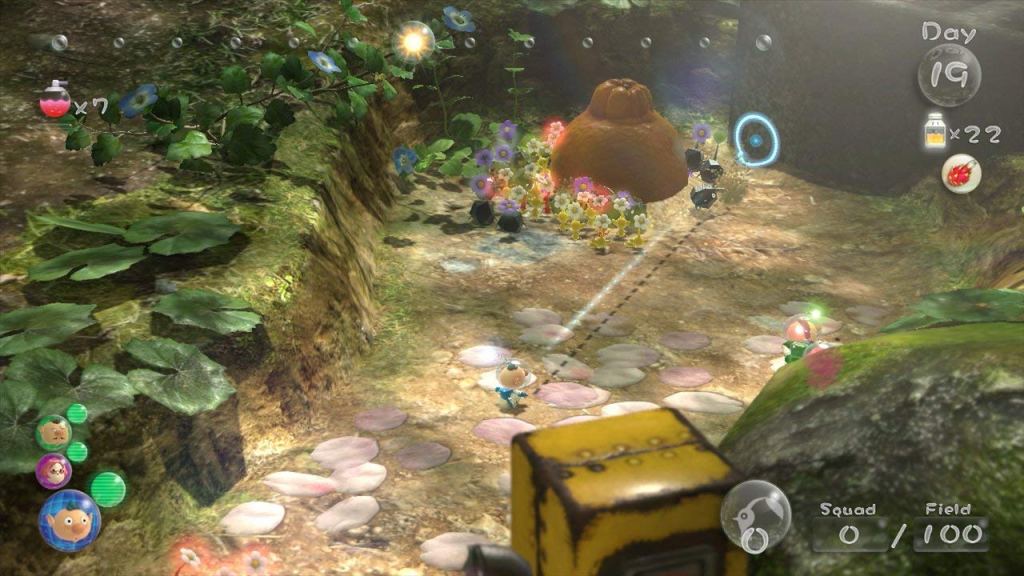
The game begins not with our beloved Captain Olimar, but instead we follow the story of a crew of 3 new characters. Alph, Brittany, and Charlie have been tasked with searching the galaxy for a new source of food as their planet faces starvation. They crash land on Earth and lose critical ship parts that they need to get back home. As they track down the ship parts, they also discover the bounty of fruit that grows on Earth and set out to collect all the seeds that they can to revitalize their own planet.

The structure of Pikmin 3 is more objective based than its predecessors. You are often given an obvious goal to pursue whether it be tracking down a signal to a ship part or trying to rescue a crew member. There’s no looming 30-day limit like in the original Pikmin, but you do need a steady supply of fruit juice to stay alive. As you explore the world you collect fruit, partly to bring the seeds back home, but also to turn into juice for immediate nourishment. It’s more lenient than a set day limit, but I do appreciate that there was some form of time limit. Even if you’ll probably have way more fruit than you need, having that motivation to maximize every day is a good thing.
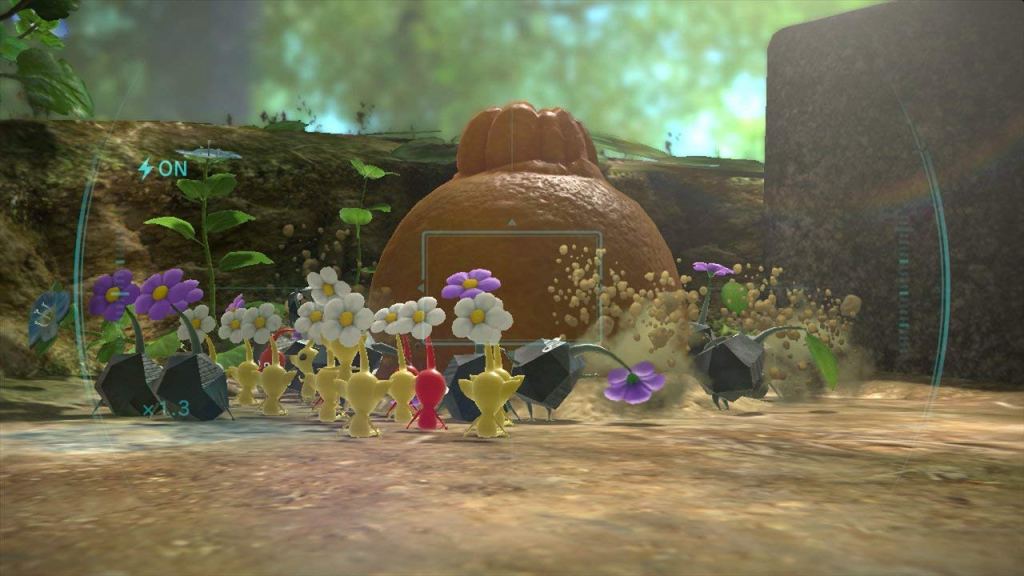
Having 3 crew members to control is just the beginning of how Pikmin 3 emphasizes multitasking. You can switch between them freely and have each character control their own horde of Pikmin. You often need to solve puzzles that require you to toss the crew across gaps or on higher up platforms. But the big addition is the “go here” functionality. When you open the map, you can click on a spot and command the character that you are controlling to walk there automatically with their horde of Pikmin. This enables the player to have all 3 characters be actively doing something and allows them to optimize for speed. You could be fighting enemies with Alph, have Charlie walk back to the base to pluck Pikmin, and have Brittany lead her horde to a new location all at the same time.

I also enjoyed the addition of both new Pikmin types. Pikmin 3 excludes the Purple and White Pikmin from Pikmin 2 and replaces them with Rock and Flying Pikmin. Not only are they adorable, but they have distinct strengths and weaknesses. Rock Pikmin can shatter crystals and do a ton of damage if thrown on an enemy, but they cannot latch onto enemies for repeated hits like other Pikmin types. Flying Pikmin can soar over terrain to carry objects and are great at dealing with airborne enemies, but they deal low damage overall. Both these new types are useful without being overwhelmingly powerful like the Purple Pikmin were.
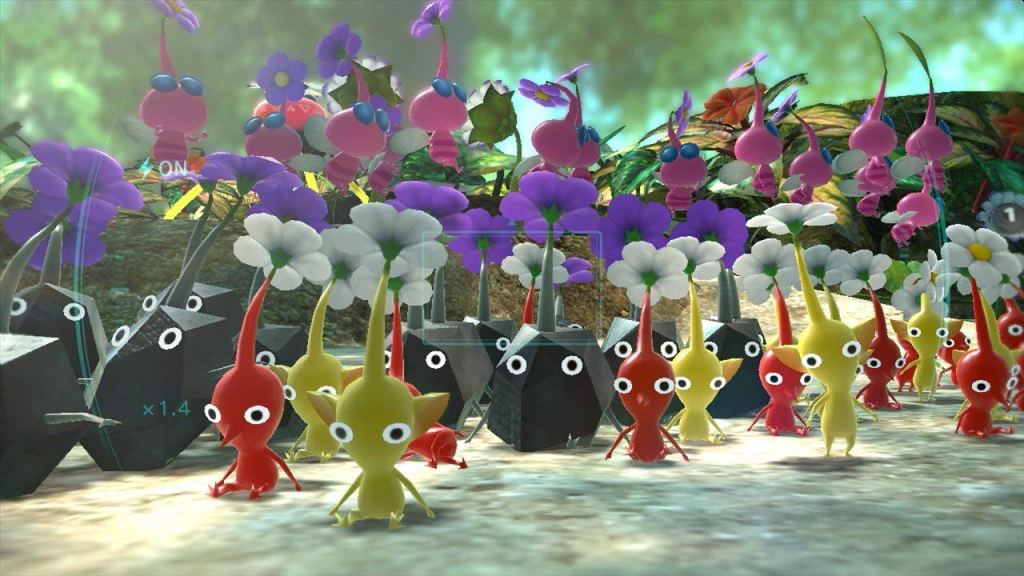
There is also a plethora of quality-of-life improvements that make Pikmin 3 a much smoother experience than its predecessors. The Pikmin AI is much better in general and they rarely, if ever, get caught on terrain or fall off ledges. Instead of haphazardly swarming you can now use the specialized charge attack to order your Pikmin to rush at an enemy or item. But one of the bigger changes is the lock-on functionality. In previous games you constantly had to be aiming your cursor at whatever you were tossing your Pikmin at. In Pikmin 3, you can just lock onto your target and throw with confidence knowing your Pikmin would land on target.

The downside of having so many quality-of-life improvements is that it also results in the game being significantly easier than its predecessors. Without worrying about Pikmin killing themselves in frustrating fashion you can command your Pikmin with much more confidence. The charge attack makes it simple to burst down enemies quickly. The lock-on functionality makes it exceptionally easy to run circles around enemies. While I don’t think aiming should be the primary focus of a real-time strategy game, I do think it was a meaningful skill expression to keep the cursor on enemies as you kited. I’m torn on the inclusion of lock on because of this. Moreover, I feel like Pikmin 3 enemies have reduced health for whatever reason, making the game even easier. Basic enemies are just too easy to takedown and don’t pose much of a threat.
Even though regular enemies were a bit too easy, I did enjoy the dynamic boss battles that Pikmin 3 offers. They aren’t super challenging by any means, but they are fantastic spectacles with interesting arenas and mechanics. Figuring out how to exploit the boss’ weakness is an enjoyable experience, and it can be a little tense if you are running out of time during the day. Even if they are easy, I had fun with them. But if you are looking for a real challenge, you’ll have to look towards the mission mode.

The mission mode in Pikmin 3 is additional content outside of the campaign. These are timed challenges with a few variations: treasure hunt, battling enemies, and boss battles. These are specifically tailored maps that you really have to plan out routes and optimize if you want to get a platinum medal. I spent a good amount of time getting a handful of platinum medals on the treasure hunt missions. I think this was an excellent inclusion because it lets players play around with optimization, time management, and multitasking without having to replay the entire game.
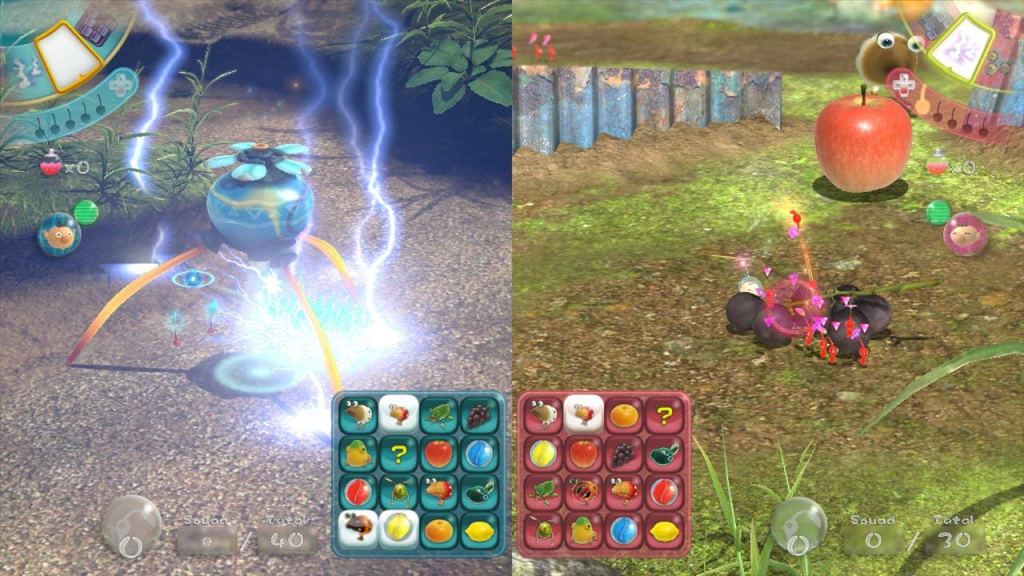
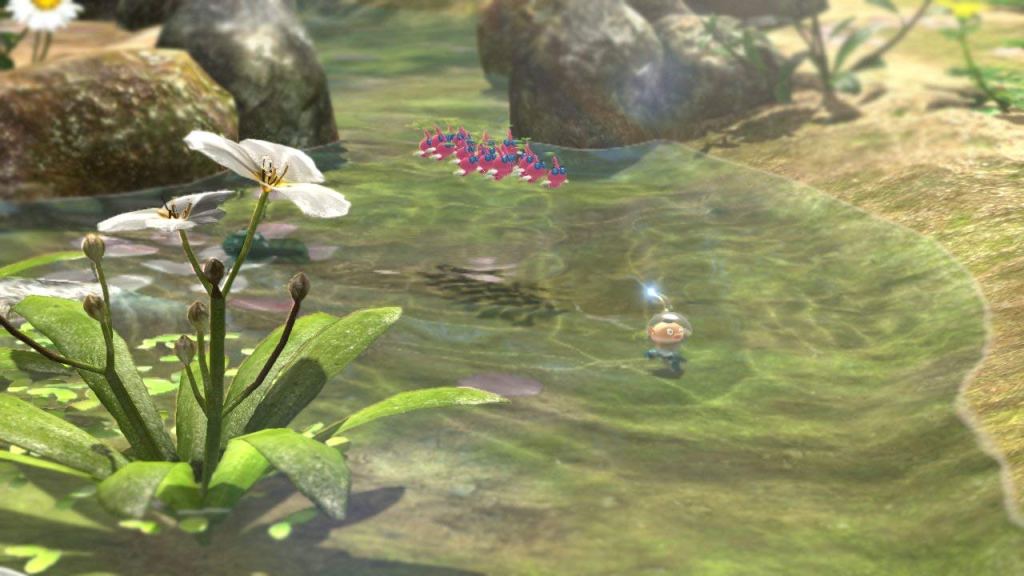
Pikmin 3 is one of the best-looking games of its generation with wonderfully detailed microbiomes. It hones in on one of my favorite aspects of the Pikmin aesthetic: miniature naturescapes. Every level is like a little terrarium to explore with towering foliage, streams with lily pads to hop across, and dark caverns filled with bioluminescent plants. The visual fidelity and environmental design are absolutely superb. And I love that there is an occasional rainy day to add some ambiance even if it doesn’t have any gameplay implications.

I personally played Pikmin 3 on Nintendo Switch with the remastered Pikmin 3 Deluxe edition.  Aside from being graphically enhanced, it has some gameplay changes like having a bigger whistle radius, being able to call loose Pikmin back to the ship, and the charge attack only using the Pikmin type that you have currently selected. The game originally was designed for the Wii U and made use of the gamepad for the map, but I didn’t have any frustrations with having to open the map separately. There are also some new additions such as the Piklopedia and new side stories for Olimar and Louie. Overall, this is the best way to play the game.
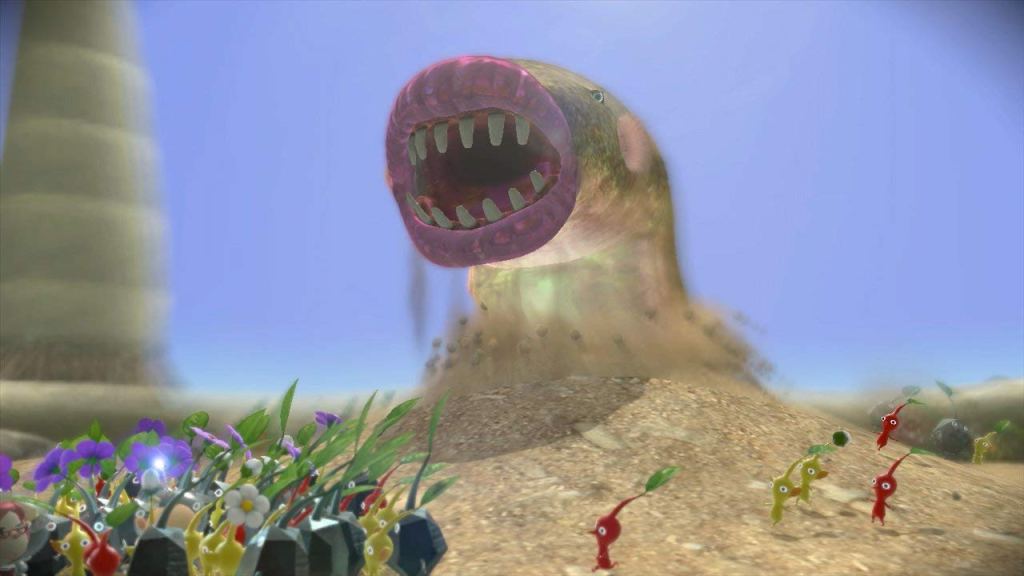
I don’t think Pikmin 3 is my favorite in the series. It may be because of nostalgia, but the structure of the original Pikmin was just so compelling. The tense 30-day limit to find all your critical ship parts provided a real sense of urgency. I do appreciate that Pikmin 3 did reintroduce some time limit with the juice system. The focus on multitasking and the ability to order all 3 characters at the same time is superb. And of course, Pikmin 3 is technically and visually impressive. It certainly has my favorite environments, levels, and bosses of the series thus far. I will always vividly remember riding a lily pad downstream on a rainy day as dandelions tower overhead. I can’t wait to finally give Pikmin 4 a try.
Terra Nil (2023)

City builders are a genre all about optimization. Laying out districts and infrastructure in a logical manner is necessary to grow into a bustling metropolis. Terra Nil is labeled as a reverse city builder, you aren’t tasked with building sprawling cities. Instead, you have to cleanse a planet that has been ecologically destroyed. It’s not a game about careful planning or building, but of restoring the planet to its natural state which can be messy and unorganized. I liked what Terra Nil was trying to do, but I felt like it was missing something. 

The concept of Terra Nil is superb. It not only is a game about cleaning up the devastation caused by humanity, but emphasizes this idea as a genre reversal of city builders. In city builders you often are searching for ways to optimize your city, exploiting every resource and inch of space that you have to support endless growth. But in Terra Nil you don’t have to be optimal. Everything that you build is a temporary fixture meant to restore the ecosystem and will be eventually recycled.

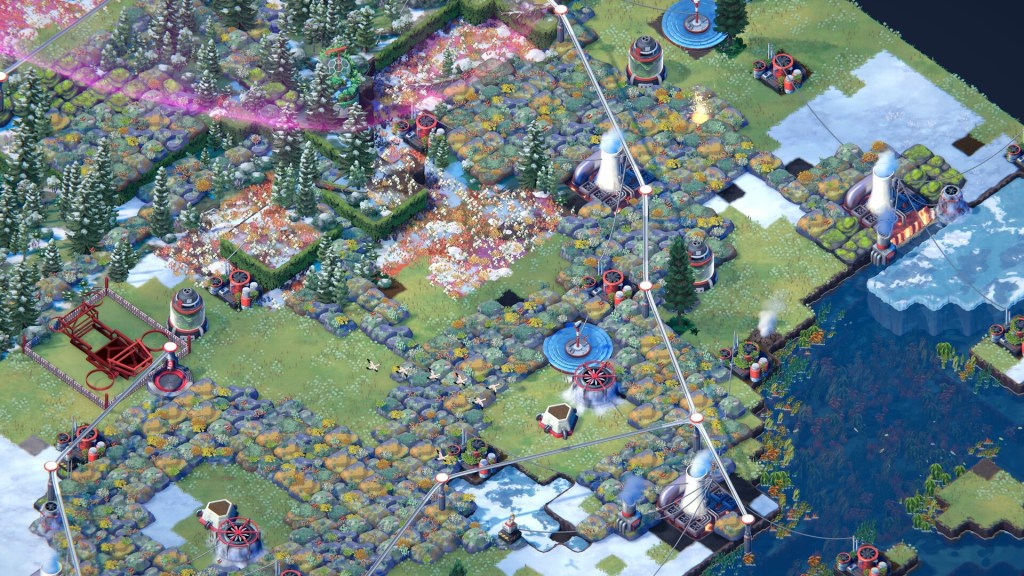
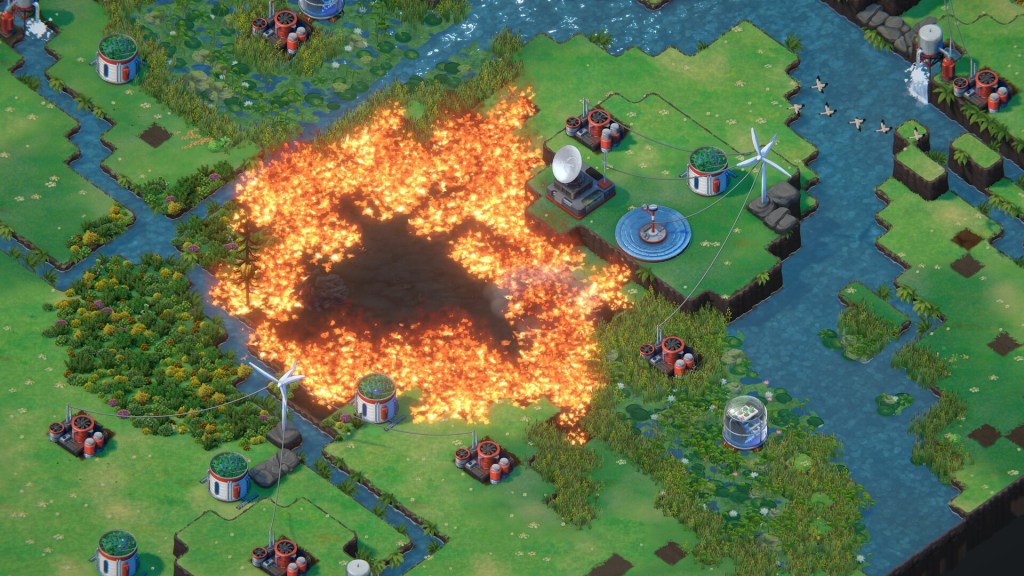
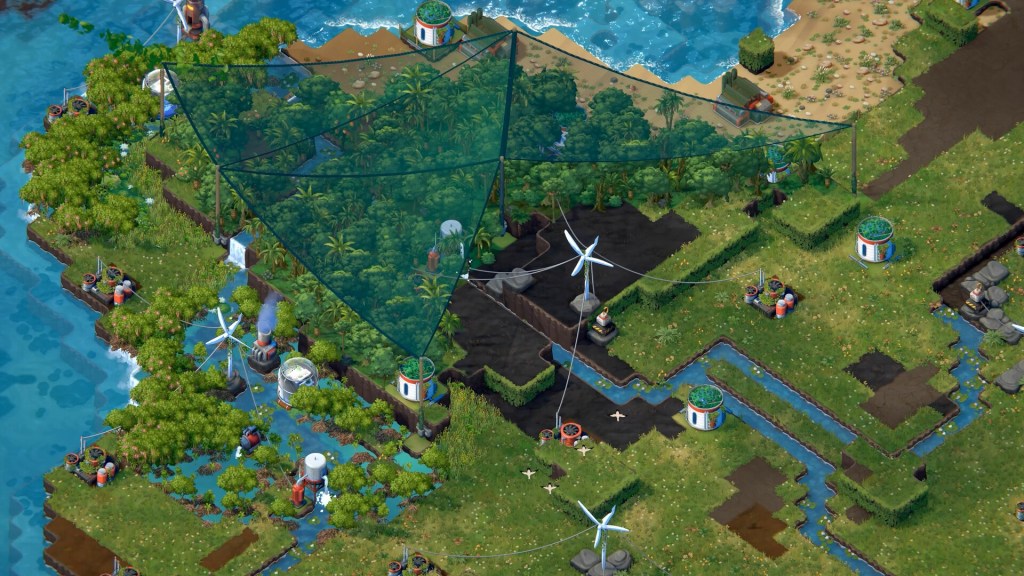
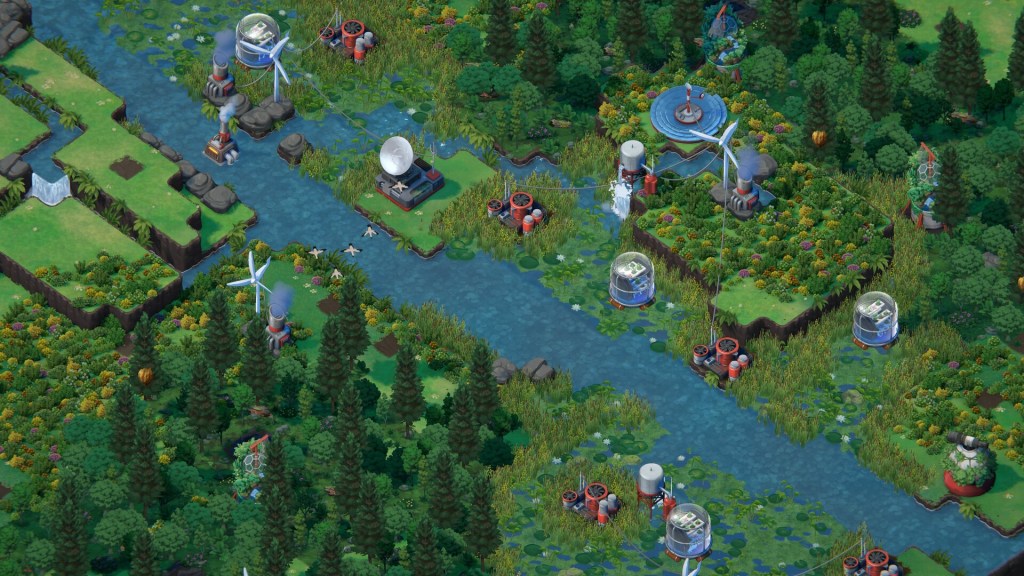
Restoring nature in Terra Nil comes in stages. When you visit an area, your initial goal is to generate some electricity through windmills and other renewable energy sources to power toxin scrubbers to rid the land of chemicals. The next stage is where things get more interesting. You begin to seed forests, rivers, wetlands, tundra, jungles, and whatever other biomes are appropriate for the part of the world that you are working in. There’s a bit of a puzzle element to this, as each biome has requirements to thrive such as needing certain levels of humidity, elevation, or access to water. Some even require you to do a controlled burn to enrich the soil before planting.

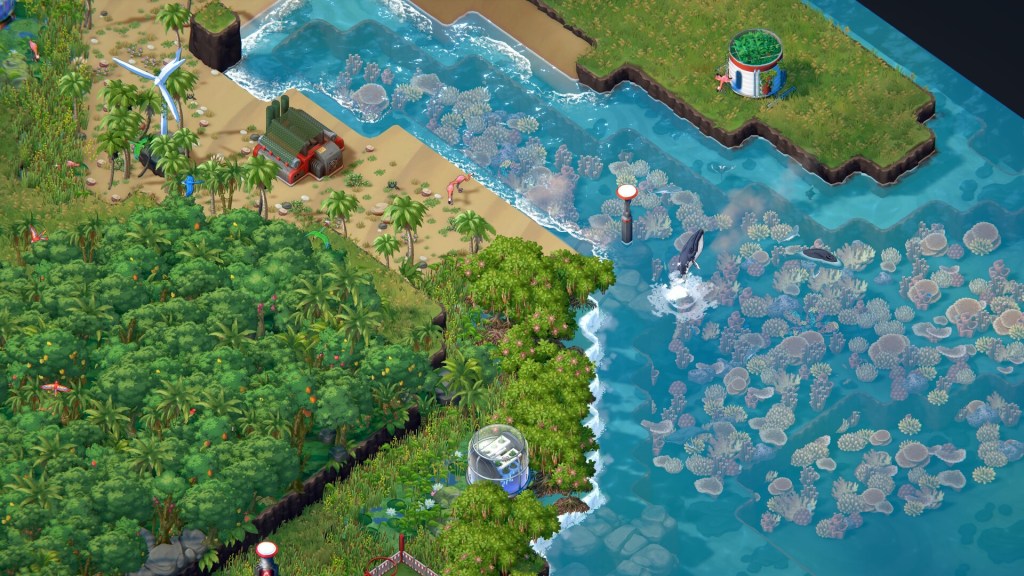
The biome planting phase is definitely where the game shines. You have a single resource: a pool of points to spend on buildings. You get additional points fairly rapidly as your biomes grow. Moreover, you get extra points for completing certain tasks like reaching certain temperatures or humidity levels through weather manipulation. I quite enjoyed these little side tasks not just because they gave points, but also because they had a visual effect on the world such as dragonflies and algae showing up in the wetlands. Rain is the first major milestone in any area as it cleanses any remaining polluted land. Watching as the desolated land slowly transforms into an ecological paradise of different biomes is immensely gratifying. It’s pretty simple but there are light puzzle and strategy elements to plan where you are putting the buildings and biomes.

Once your biomes have been created, identifying where wildlife can thrive is the next step. There’s a handful of species in each area that you are supposed to find, you have to scan small areas that match that species’ habitable requirements. I think this part of the game can be a little tedious as there is a lot of guesswork to figure out what each requirement is. It also can be a bit finicky even when you know the requirements as the radius of the scan is fairly small and it has a lot of trouble when certain species require multiple biomes or a food source. I loved watching animals be reintroduced to the ecosystem, but mechanically it was a bit unsatisfying. 

Finally, after you are done planting biomes and identifying fauna it is time to pack up and leave for the next area. You absorb every building into recycling pods and setup collection systems to pick up those pods. In some areas you set up pylons and ziplines that connect to one another and collect the pods from there. In areas with more water, you send out little drone boats that will pick up the recycling pods. It’s a pretty straightforward phase of the game. While I did like cleaning up after myself and fully getting rid of all the buildings to let nature take over, the recycling phase is mechanically just a little barebones.

Being mechanically simplistic is one of the biggest hesitations that I have with Terra Nil. Most phases of the game don’t require much decision making or problem solving, just following a series of predefined steps. The biome creation phase is definitely the most engaging part of the game as you have some decisions about how and where you will attempt to create the biomes. But every other phase is just… too rigid. I don’t think that it is an inherently bad thing to have simpler games. I understand that one of the design philosophies of Terra Nil is to be Zen. But I would’ve liked to see at least some more expression and decision making afforded to the player during the cleansing, fauna, and recycling phases.  

That’s not to say the game lacks difficulty. I wouldn’t say it’s a challenging game, but it is possible to run out of points and fail in the 3rd and 4th zones. But once you get over the initial hurdle then you are simply playing out the scenario without much thinking needed. I don’t think the game needs to be more challenging, as it does offer different difficulty options and running out of points is a real issue in harder areas. But depth doesn’t necessarily have to be difficult, Terra Nil does lack depth.

While most phases of the game lack depth and freedom, I will say I was impressed with the variety provided by the different zones. There’re 4 main areas, each with 2 scenarios to play. Aside from having their own unique biomes and fauna, you have to contend with different methods of power generation and terraforming. You will be creating new land in the tropical archipelago, restoring glaciers in the tundra, and repurposing building foundations in decaying urban centers. Terra Nil is on the shorter side, but I am glad that they didn’t repeat the same ideas over and over.

I played the game on the Nintendo Switch and while I was happy that it was available on the platform, I had some noticeable performance issues. Obviously, the Switch is not a computing powerhouse but I did not expect Terra Nil to require a powerful console. Loading screens took a long time, the game crashed once or twice, but the real complaint that I have is that graphical quality is just not great on Switch. This is not meant to be a complaint against Terra Nil, I just wish I knew beforehand that it had a major visual downgrade on the platform. Part of the appeal of the game is watching the beauty of nature as it blossoms, which didn’t look as crisp as it should have on Switch. I recommend getting this game on PC or a more powerful console for a better experience. 

Terra Nil succeeds in being the Zen reverse city builder that it set out to be. City builders that demand optimization and ruthless resource utilization are fun, but I enjoyed seeing the reversal of that genre. The quick turnaround of desolate wastelands to thriving ecosystems was fantastic. I wish that most of the phases of that transformation were more mechanically engaging. It is for these reasons that I give Terra Nil a 7/10. If you approach Terra Nil as an ecological Zen Garden, you will have a great time. If you are looking for depth or intertwined gameplay systems you may be let down by its simplicity.

Mario + Rabbids Kingdom Battle (2017)

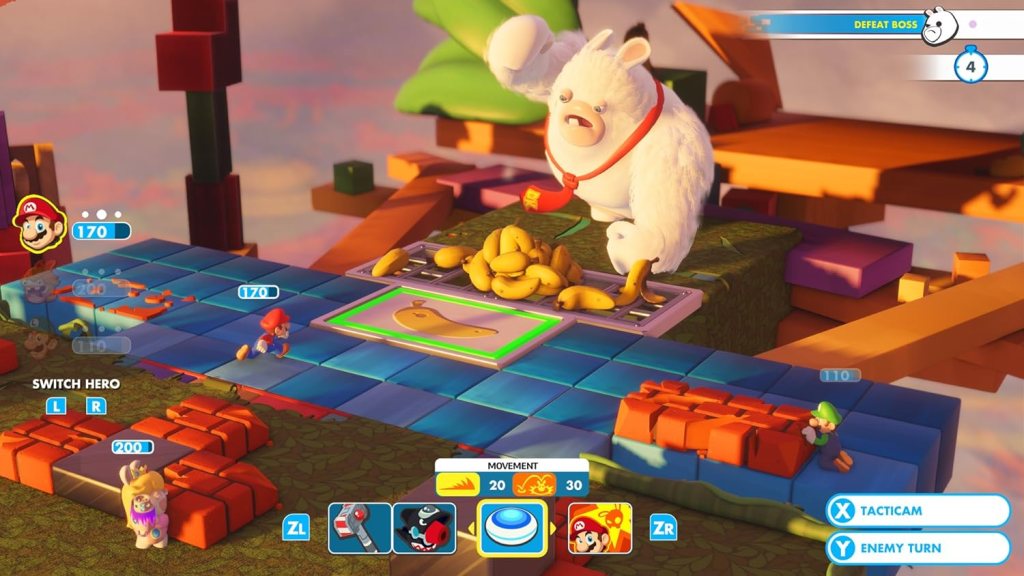
As a lover of tactical RPGs, I am upset that I let Mario + Rabbids Kingdom Battle sit on my shelf for nearly 7 years. While the game seems like a bizarre concept, it is an incredibly well-made game. It innovates on common systems such as hit rates, movement, and special abilities to make for a surprisingly deep tactical experience. While playing it safe is often the key to success in other tactics games, Mario + Rabbids Kingdom Battle encourages aggression and fast-paced play. And while I still think the concept is odd, it somehow works.

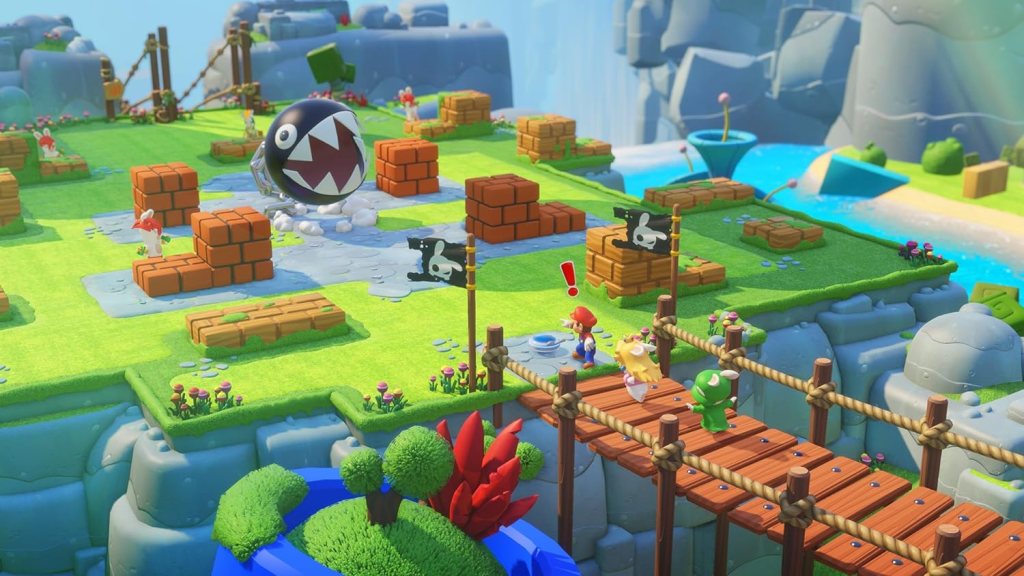
When this game was announced as a mash-up of Mario and Rabbids in which they would use guns in turn-based tactics battles, I thought there was no way it would be good. It felt like 3 diametrically opposed things being merged into some bizarro concoction. But it actually works. Mario and his pals team up with a handful of Rabbids cosplaying as Mario characters to take down the out-of-control virus that is corrupting everything.

The Mushroom Kingdom, as always, is a fun backdrop for the adventure. It’s bright, colorful, and has a set of classic areas to explore. Walking around the world only serves as a breather between battles, but I enjoyed soaking in all the wacky details. The invasion of Rabbids has left the Mushroom Kingdom and its denizens in chaos. And the Rabbids are strewn about, causing mayhem with their signature brand of physical comedy. Luckily, I think the Rabbids were toned down a bit in terms of their obnoxiousness. They are infamous for how annoying their schtick can be, so I’m glad that it was reduced to more reasonable levels.

Aside from the concept, Mario + Rabbids Kingdom Battle surprised me in how many smart ideas it had. One of the biggest examples of this is the 0/50/100% hit rate system. In most other tactical RPGs, whenever an attack is initiated, there is a complex formula to calculate the odds of the attack landing. This is a core mechanic to games like XCOM in which the player tries to optimize their odds of success while staying in a safe position to minimize enemy hit rates. But the issue I’ve always had with XCOM is how outrageously bad it feels to carefully enact a strategy that relies on a 97% shot, but it fails and you are severely punished. It’s just how odds work, but that doesn’t stop it from feeling terrible.

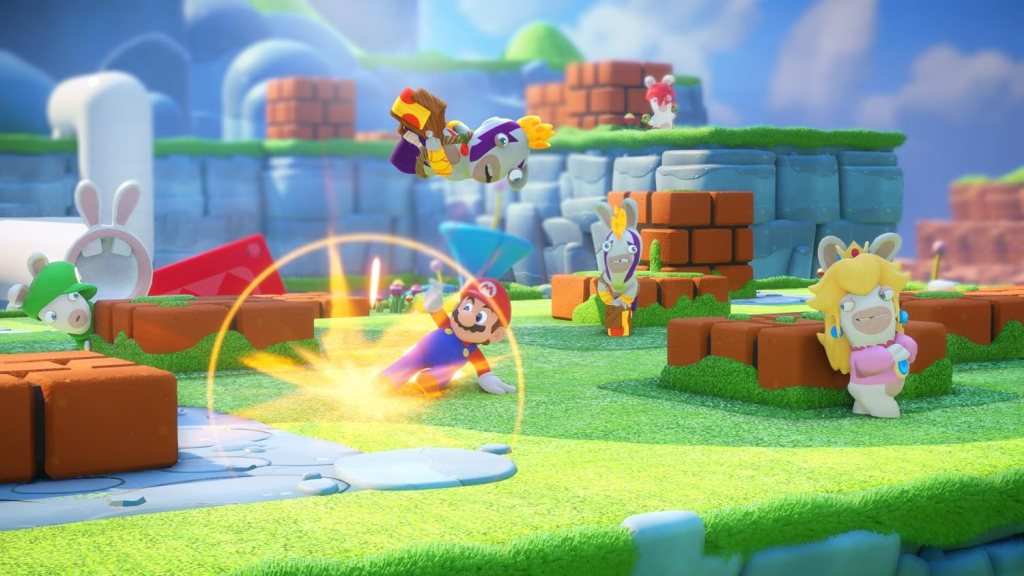
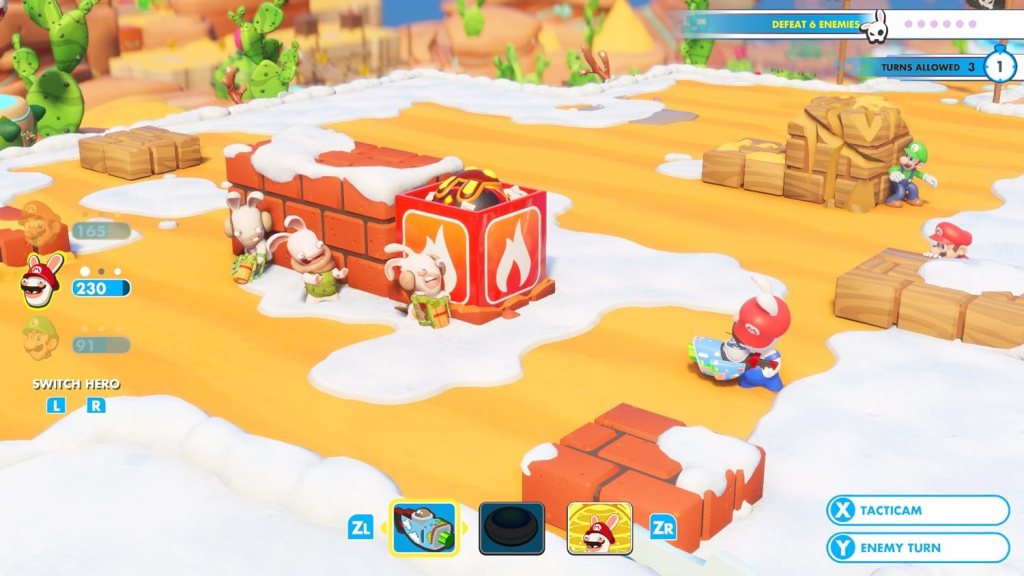
In order to combat this feeling of getting unlucky, Fire Emblem implements its own system. It amplifies the percentages under the hood, so a high percentage like 90% is really closer to 98%, while a low percentage like 20% is more like 8%. While it is directly lying to the player about odds, I think it works wonderfully because the player shouldn’t be basing their strategies on low percentage attacks. It just makes the game feel better and doesn’t make you feel like you got unlucky as people are notoriously bad at estimating odds. Mario + Rabbids Kingdom Battle gets around this conundrum entirely by boiling down hit rates to 3 categories: 0%, 50%, and 100%. If attacking an enemy fully behind covered, you will not hit them. If they are partially behind cover, you have a 50/50 shot. And if they are in the open or you flank them, you a guaranteed to land a hit.

I think this system is genius because of how simple it is. You are encouraged to flank enemies, as you can’t reliably hit them otherwise. There’s no frustration in missing a high-percentage attack because they simply don’t exist. You almost always know beforehand whether the attack will hit, and hitting 50/50s should be seen as a bonus, not a core part of your strategy. You can’t blame luck when you miss a coin flip. There are other forms of statistics in the game, like weapons that have a range of damage they can inflict and can occasionally trigger special effects. But like with the 50/50 shots, you shouldn’t rely on special effects or max damage attacks as they are uncommon. If playing well, you always know when an attack will hit and the base amount of damage it will do, anything on top of that is a bonus. This simplified hit system is such an intelligent mitigation technique of the player feeling unlucky when playing tactical games.

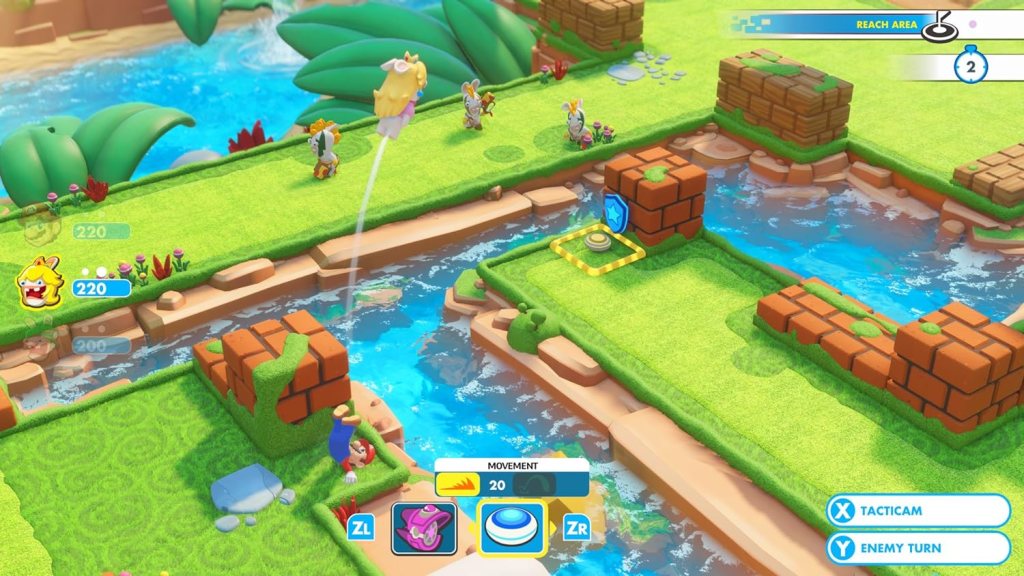
Even though the hit system is simplified, Mario + Rabbids Kingdom Battle has a surprising amount of depth. The battles are small, you only can control 3 characters in relatively compact maps against a handful of foes. But each turn brings so many possibilities that it’s staggering. Each character has two weapons, two special abilities, and some extreme mobility. On a single turn for a single character, you will be able to move, dash through an enemy or two to deal damage, jump off a teammate for extended movement, attack an enemy with your weapon of choice (which also have a reasonable chance to trigger special effects), and decide if you want to use a special ability. And you can take these actions in any order you want. The breadth of options here is immense. 

All of the possibilities available to both the player and the opposition make for some extremely dynamic battles. The extreme mobility and combat capabilities paired with destructible environments make it difficult to predict exactly how any given turn will play out. This encourages aggressive play. You should maximize your own capabilities to take out as many enemies as possible before they get the chance to retaliate. Every turn feels like a mini-puzzle as to how to get the most out of your character’s actions. Moreover, if you want to get a “perfect” score on every stage then you have to complete the battle in a set number of turns, further encouraging you to play aggressively. I love that flanking and going on the offensive is the best strategy, as many other tactical games encourage turtling and playing overly safe.

Mario + Rabbids Kingdom Battle can actually be pretty tricky at times. Enemies can easily flank and position themselves to deal massive damage. Boss fights are multi-staged affairs with unique mechanics. And there’s tons of enemy variety sporting different weapons and effects to watch out for. This makes for some fun challenges as you learn how to utilize your characters effectively. The upgrade system encourages you to specialize your characters to bring out their strengths.

My only complaint about the gameplay is that I wish it encouraged more experimentation with party members. You can only have 3 in any given battle, and 1 of those is required to be Mario, leaving only 2 options for other members. All the characters were unique and had some interesting abilities to be utilized, but I never really strayed from my core party because I didn’t need to. My setup of Mario, Luigi, and Rabbid Luigi was more than capable of taking on any of the main campaign and all of the bonus levels. Maybe if the game didn’t have such restrictive limitations on my party, I would’ve tried different characters. Another option is if there were challenges that encouraged the use of members that you haven’t utilized that showcased each character’s niche.

Aside from gameplay, I did have a handful of minor gripes about the user interface and user experience. The camera during battle left a lot to be desired. I wish you could freely rotate it and zoom out to see the entire battlefield. It wasn’t a huge deal as most maps are tiny, but some of the missions are massive and it can be difficult to grasp which route to take to the goal. Another improvement that I would’ve liked to see is the ability to toggle enemy movement and attack ranges. You can do this for a single enemy in a special menu, but there’s no way to leave it on for when you are actually making a move. You just have to memorize their range if you are trying to keep a character out of harm’s way.

The biggest issue I had with the user experience is just how long everything takes. There’s a panning camera shot at the beginning of the battle, a celebratory animation when you win, and a ton of seemingly random cinematic animations that occur during battle. These cinematic animations can happen anytime, whether you are just sliding for a little bit of damage, attacking normally, or triggering an ability. They do look nice, but this is a fairly lengthy game with a ton of battles. You are going to be seeing the same animations over and over and over. The battles themselves are only a few turns long, but they can take a while simply because there are so many actions and superfluous animations. You can speed up enemy turns which is a great feature, but I would’ve liked options to be able to speed up all animations and disable the cinematic animations altogether.

Overall, I was shocked how much I enjoyed Mario + Rabbids Kingdom Battle. I thought the game would be too simplistic to be engaging, but I was proved completely wrong. Every turn has so many dynamic possibilities that lends to aggressive play. The 0/50/100 hit percentage system was a genius method of alleviating frustration and encouraging flanking maneuvers. Despite a few little UI hiccups, Mario + Rabbids Kingdom Battle is a phenomenal strategy game. If you are like me and have Mario + Rabbids Kingdom Battle sitting on your shelf, do yourself a favor and give it a try.