Demon’s Souls (2020)

As a fan of FromSoftware’s catalog, Demon’s Souls has long been my white whale. Dark Souls is in contention for my favorite game of all time, yet I never got the opportunity to play its predecessor. Being the progenitor of one of the most successful and influential franchises of games makes Demon’s Souls an incredibly important title. Yet, the original game has only ever been released on the Playstation 3. Which is why I was so excited about the remake of Demon’s Souls, bringing it to the Playstation 5. I really did want to play the original game first before reviewing the remake to compare the differences, but unfortunately, I didn’t get the chance. From what I can tell, this is a faithful recreation of the game, including all the weird, archaic, and unforgiving ideas that were removed from subsequent Soulsborne games. And I love Demon’s Souls for that.
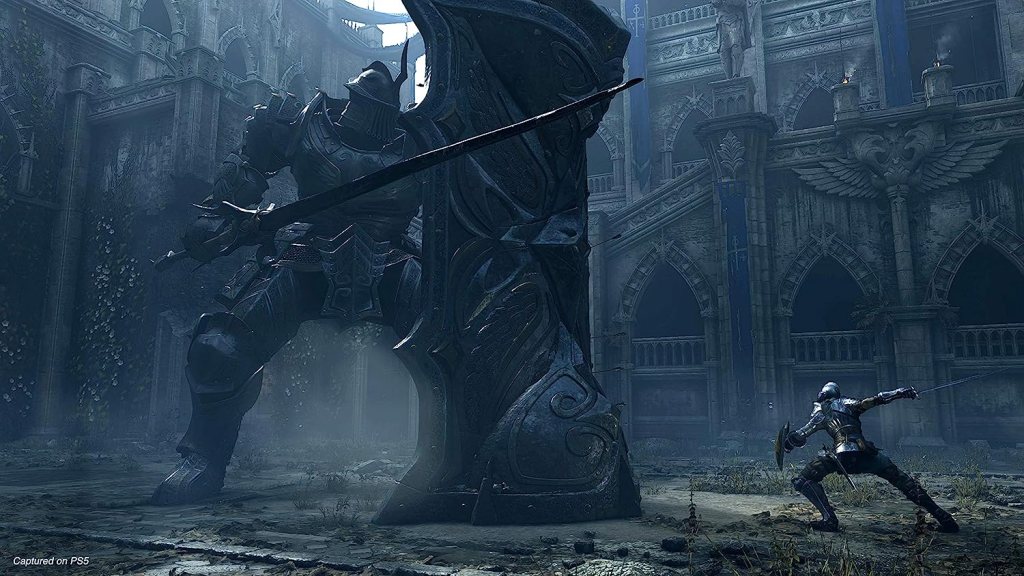
I think Demon’s Souls unfortunately has a bad reputation for being a bit unforgiving with its design. There’s a lot of mechanics and ideas present in Demon’s Souls that never carried over to its successors, and many claim that is for the better. But I feel like playing Demon’s Souls was refreshing. There are many aspects of Demon’s Souls that I wish would make a return in modern releases, especially after playing Dark Souls III and Elden Ring. In short, I felt as if Demon’s Souls was a far more cerebral game, opposed to later titles which rely more on fast-paced action. Demon’s Souls is unforgiving and punishing, leading the player to be cautious and think carefully about their next course of action. To compliment this, combat and bosses are generally far easier to mechanically execute, as long as you come up with a reasonable strategy. What really makes Demon’s Souls shine is how its unforgiving nature contributes to its impeccable atmosphere and worldbuilding.

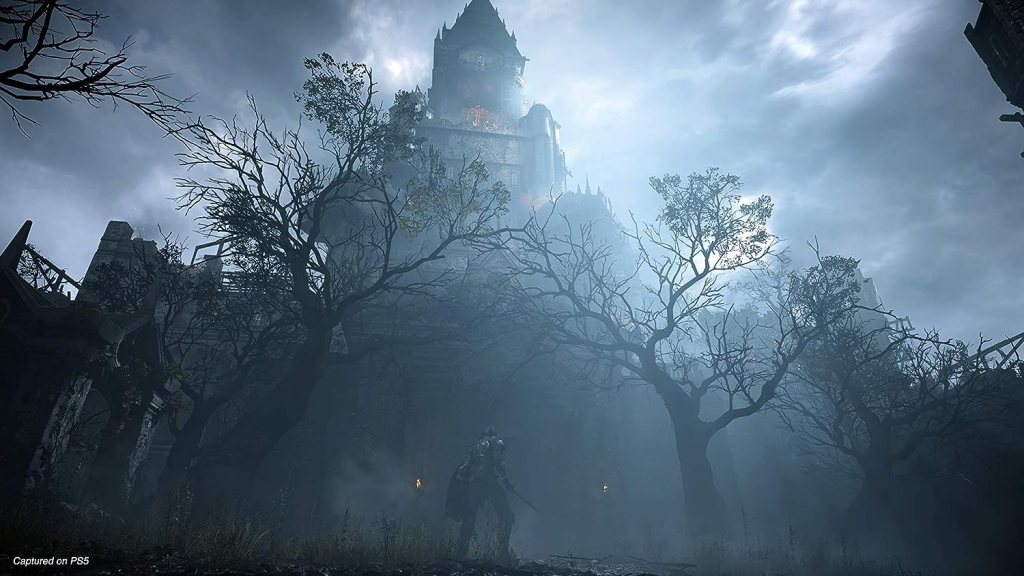
The world of Demon’s Souls is surprisingly grounded. With many of FromSoftware’s games, I take in the world and its locations, but I’m not quite sure how it all fits together due to the obscured nature of the storytelling. Demon’s Souls only ever lets the player have a fragmented understanding of the world, but I found it enthralling. There are five main locations that the player can visit, and each one is supplemented by some short text passages on their entrance. These brief backgrounds, along with environmental storytelling, were enough to make sense of their respective locales. 
Take the Valley of Defilement for example. It’s a narrow valley with poisonous sludge at its base. Its inhabitants have resorted to rickety shacks on the ledges and in the crevices of the walls. Narrow planks that overhang the darkness are the streets of the shoddily built shanty towns. The creatures who live here are all but forgotten, left to suffer in this vile mire. Yet, they make due. They defend their home, using its dark crevices as an advantage to sneak up on invaders. And they do so because the saintly Maiden Astraea lies at the heart of the swamp, and she has resolved to free the valley’s souls of suffering. They worship her, and she protects them. Through almost purely environmental storytelling, Demon’s Souls paints a vivid image of its world and how Valley of Defilement came to be what it is. It’s not just a dirty swamp of vile monsters for the player to slay, it’s a fully realized location that makes sense.

Demon’s Souls is often maligned for being unforgiving, but I don’t think this is an entirely fair perspective. I think the unrelenting challenge and inconveniences are crucial to building tension. The lack of checkpoints is often seen as inconvenient and tedious, but I think that having long gaps between safety is critical in a grim game such as Demon’s Souls. Each level only has a single checkpoint at the start, and many levels open up a shortcut or two as the player progresses. But even the shortcuts never lead directly to the boss. There’s always obstacles and danger blocking your path. I think this is fantastic because it ups the anxiety and tension of exploration and combat. A single misstep means you have to repeat large chunks of the level. This also encourages the player to not only to defeat enemies, but to master besting them in combat so that you can repeatedly bypass them. The added pressure of death works wonderfully with the boss battles in Demon’s Souls.
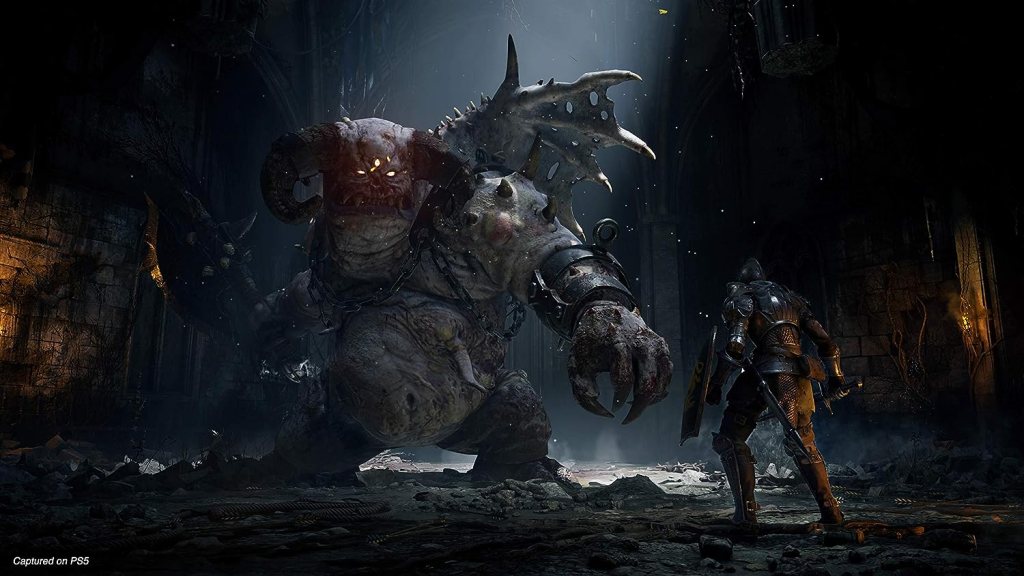
I frequently read that Demon’s Souls has the worst bosses in the series because they are easy and often gimmicky. But I disagree. The bosses are easier to execute then later games because they have fewer attack patterns and generally attack in a slower, more telegraphed manner. But many of the bosses have a trick to them that the player has to figure out. They have unique arenas, weak spots that must be focused, or potent attacks that you have to figure out how to counter. While it’s true that the bosses may be on the easier side, I think each one provides a unique experience that is distinct and memorable. Moreover, easier bosses make sense when the player has to overcome a gauntlet of challenging enemies just to give the boss another shot. It would be enormously frustrating to have to replay the whole level dozens of times because the boss is monstrously difficult.

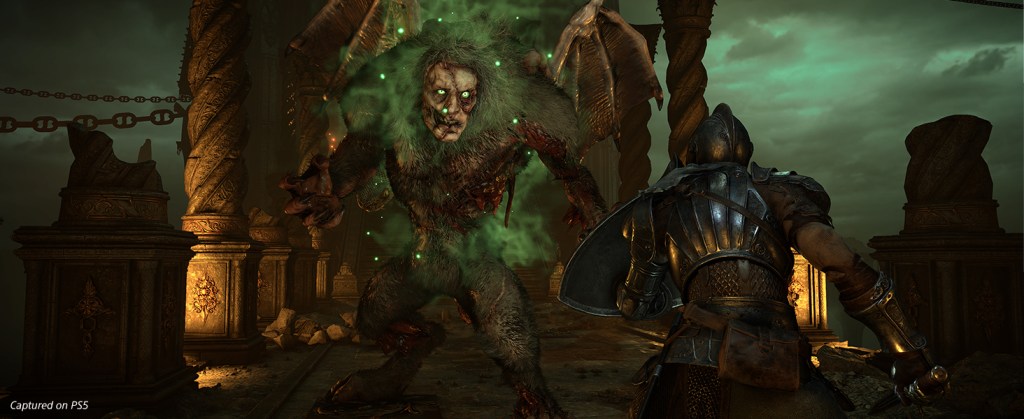
I think over the years Soulsborne has focused on making bosses more and more difficult. While games like Elden Ring nail the spectacle of boss fights, I do think they often go too far with the bosses moveset. Demon’s Souls bosses are relatively simple in comparison, but I find them to be more memorable because they are all so different. Not just visually different, but mechanically different. While there are some straight up one-on-one duels, there is often more to contend with than just the basic combos that the boss can throw out. The bosses having a “gimmick” is what makes them interesting and memorable. 
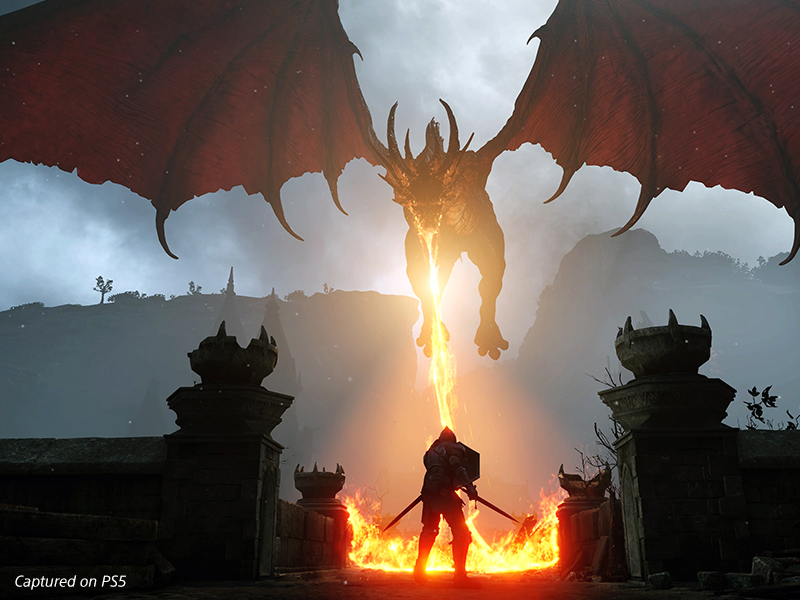
Not every fight should follow the routine of learning how to dodge every attack the boss has, finding safe times to attack, then getting a hit or two in. Variety is what keeps the game fresh and interesting. While fast-paced duels are often the pinnacle of boss fights, they are even more impactful and memorable if they are kept as an occasional treat. Having some more “gimmicky” fights interspersed throughout the game is a breath of fresh air. And Demon’s Souls bosses are memorable because they behave so differently than many other bosses in the series.

While I do love Demon’s Souls eccentricities, there are some aspects of the game that do feel archaic. The most obvious example is the healing system. In Demon’s Souls, the player collects a variety of consumable moon grasses which restore health. These are collected through exploration, combat, or you can straight up purchase them from certain merchants. While I do think it’s a good idea to limit how much the player can heal, it’s too easy to abuse this system. I often carried dozens of moon grass items, so as long as I didn’t make an egregious mistake I could always heal up to max health with little threat. Conversely, worse players may often run out of moon grass and have to farm enemies to replenish their stock, which is obnoxious. Dark Souls immensely improved on this by only providing a few chugs of their healing flask per checkpoint. That way, players would never have too much or too little.
Demon’s Souls has a unique mechanic which changes the world depending on your actions, called tendency. I think this is actually kind of a nice idea, but its implementation is esoteric. Good actions will make your tendency “white”, while performing bad actions skews it towards “black”. Certain secrets open up depending on your tendency, enemies may get stronger but provide better rewards, and there may even be additional enemies. My issue is how poorly explained this all is. It’s very easy to unknowingly perform an action which makes you move towards black tendency, which ultimately makes the game more difficult. I suppose the learning process can be seen as fun and interesting, but mending your tendency after it plummets is unreliable.

There are a few other archaic systems in Demon’s Souls such as the upgrade system and inventory encumbrance that I don’t want to delve too deep into. But an area that I do think is important to discuss is what FromSoftware is famous for: world and level design. The levels of Demon’s Souls are actually quite condensed, which I think is a positive. It’s tempting to fully explore each area because of this. Mechanically, I also think that the levels are quite good. There’s a variety of scenarios and encounters that the player has to not only use their skills to overcome, but to use their brain as well. There’s a lot of traps and obstacles that encourage caution and thoughtful exploration. 
I do think that Demon’s Souls shows its age a bit in some of its levels. There is an abundance of narrow corridors, ledges, and groups of enemies that show the weaknesses of the game. Combat is stunted in cramped spaces like corridors and ledges because your weapon often hits the wall instead of enemies. I get the realism factor here, but enemies don’t seem to follow this rule and inherently have an advantage in these spaces. Furthermore, groups of enemies are famously difficult to deal with in Soulsborne games, and Demon’s Souls has a ton of these groups. The slower pace of combat doesn’t work well when you have to contend with many foes and it’s easy to get stunlocked into death. 

As for the world design of Demon’s Souls, I quite enjoy the areas individually but I wish they were not completely disconnected from each other. There are five major areas in the game, each with a handful of levels. But these major areas are not connected with each other, the only way you can access them is through the hub area. I think this is unfortunate in a game that otherwise is impressively immersive. Constantly sitting in load screens and fast traveling around is just not nearly as captivating as having a singular, connected world.
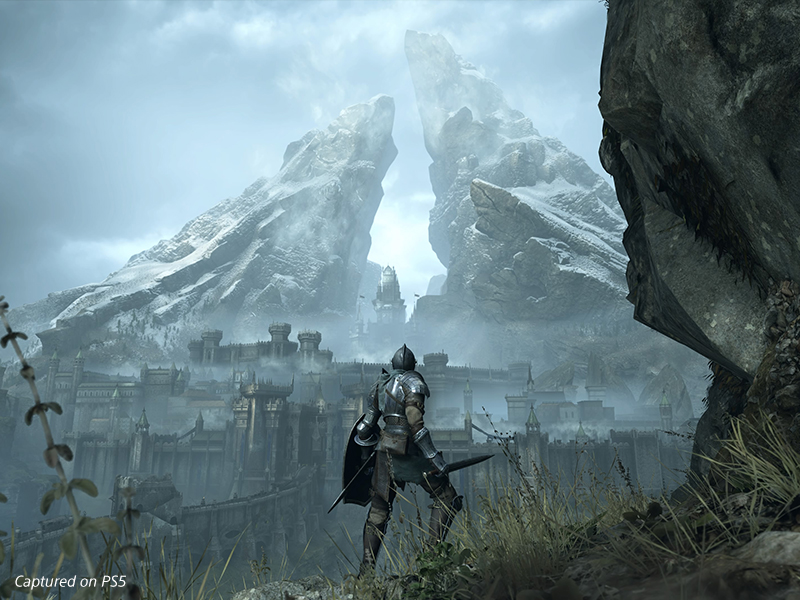
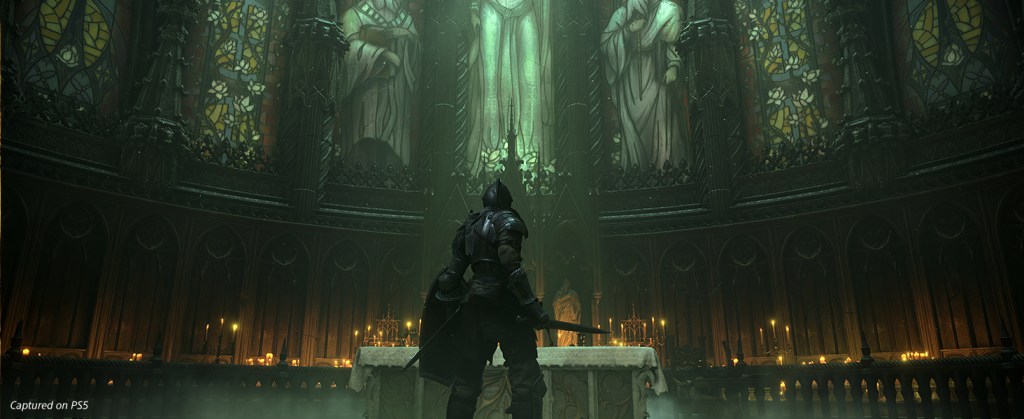
As previously mentioned, I haven’t had the opportunity to play the original game so my perspective on Demon’s Souls as a remake is limited. From my research, it seems as though the gameplay is extremely faithful. Visually, the remake is stunning. However, when compared to the original game’s environments, the remake is showier. The simple Eastern European style simple castles are more ornate. Moreover, the sun beams and impressive lighting do impose a sense of grandeur that wasn’t present in the original game. Gone is the dirty and eerie faint glow of lighting. I don’t think the visual differences are a huge deal as the atmosphere retains its somber mood. I think the bigger change is the music.

After listening to both soundtracks, I think it’s a shame that the spirit of the original was lost in the transition. Particularly in the boss fights. As previously mentioned, the boss fights in Demon’s Souls aren’t always epic one on one duels, many are somber, depressing, or disturbing. The original soundtrack captures these differences quite well. The Fool’s Idol piece is a stark example of how drastically the music was changed. Don’t get me wrong, the music is beautiful. But not like every boss fight needs to be a grand duel, not every song needs to have a dramatic choir with full orchestral backing. 
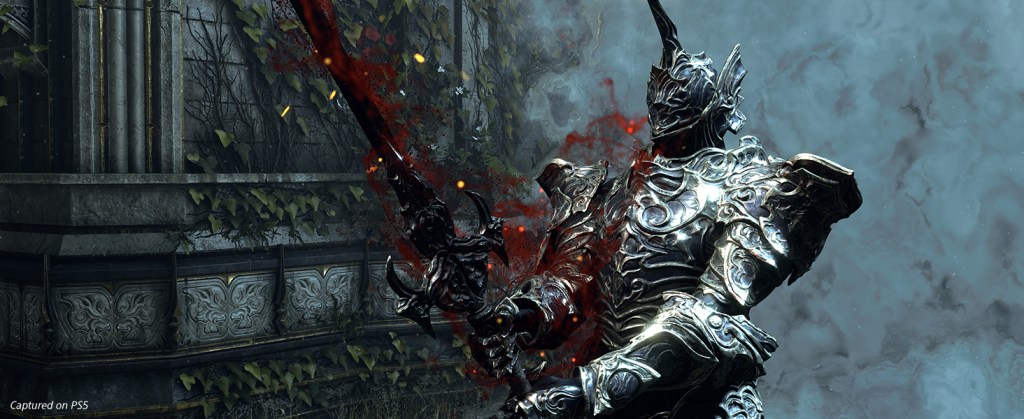
Playing Demon’s Souls put the whole series in perspective for me. It makes me long for a time where Soulsborne games emphasized memorable experiences rather than just difficult ones. Conversely, Demon’s Souls also made me realize how far the series has come. There are many archaic and esoteric aspects to Demon’s Souls, and I am glad that the remake let me experience it all faithfully. It is for these reasons I give Demon’s Souls an 8/10. I encourage everyone to give Demon’s Souls a fair shot. It was a risky title when it was originally released, and not every idea was a hit, but there’s a sense of magic and authenticity that arise from the game’s bold choices.
Sekiro: Shadows Die Twice (2019)

It’s impossible to discuss FromSoftware’s new game, Sekiro: Shadows Die Twice, without talking about Dark Souls and the rest of the Soulsborne series. While not being directly related to its Soulsborne cousins, Sekiro: Shadows Die Twice obviously shares the same DNA as FromSoftware’s prior works. Since diving into the Soulsborne series a couple of years ago, I cannot get enough of their brilliant level designs, oppressive atmospheres, inspired environments, and challenging bosses. I was immensely excited for Sekiro and waited to see what Hidetaka Miyazaki and his team could accomplish with a brand-new IP.

3

Sekiro is a third-person action-RPG set in feudal Japan. This particular point in Japanese history, the Sengoku period, was a time of constant war and shifting political powers. You play as Wolf, a shinobi who was left without a family due to the relentless bloodshed. Wolf’s job is to protect a young boy, Kuro, who possesses a mystical bloodline that all of the lords are vying for. Kuro can make anybody immortal using the powers of divinity. The lords realize how valuable this power would be in their struggles for control, and begin to compete for control of Kuro and his special abilities. Without spoiling much, Kuro realizes that the power of resurrection is burden for himself, those he grants immortality, as well as everybody else. Kuro requests Wolf’s aid to help him end what he believes to be a curse.

The power of resurrection manifests itself in gameplay through a revive mechanic. When defeated in combat, the player is given the option to resurrect once at the spot they died rather than being sent back to the checkpoint. Soulsborne games are notorious for their difficulty, and Sekiro is no different. Arguably, Sekiro is the hardest of the six games in series. One mistake can often lead to taking massive damage or outright dying, so I appreciate that resurrection exists to give the player another chance. Nothing is more disheartening than almost killing a boss and then panicking and dying, so resurrection acts as a safeguard against that. Additionally, since bosses have multiple phases in this game, resurrection gives the player extra time and chances to learn the attack patterns of the new phases. I kind of wish there was some reason to not revive, as right now there is literally no downside to resurrecting. If there was some cost to resurrecting, then the player would have to make a choice whether or not it was worth doing so in any given instance. Regardless, I think resurrection is a great addition to the game as it reduces frustration without significantly reducing difficulty.

1

It is apparent that Sekiro makes great strides to be unique amongst the Soulsborne series. These games are famous for their vague story telling and obscured plotlines, but Sekiro is much more straightforward. There is more dialogue, cutscenes, and readily available information. Whereas in Dark Souls for instance, the player had to interpret unclear lines of dialogue and needed to read item descriptions to get in-depth lore. The main story of Sekiro is easily comprehendible and accessible for players without deeper digging. Of course, in classic FromSoftware fashion, there is plenty of environmental storytelling, hidden details, and lore that can be uncovered by more perceptive players.

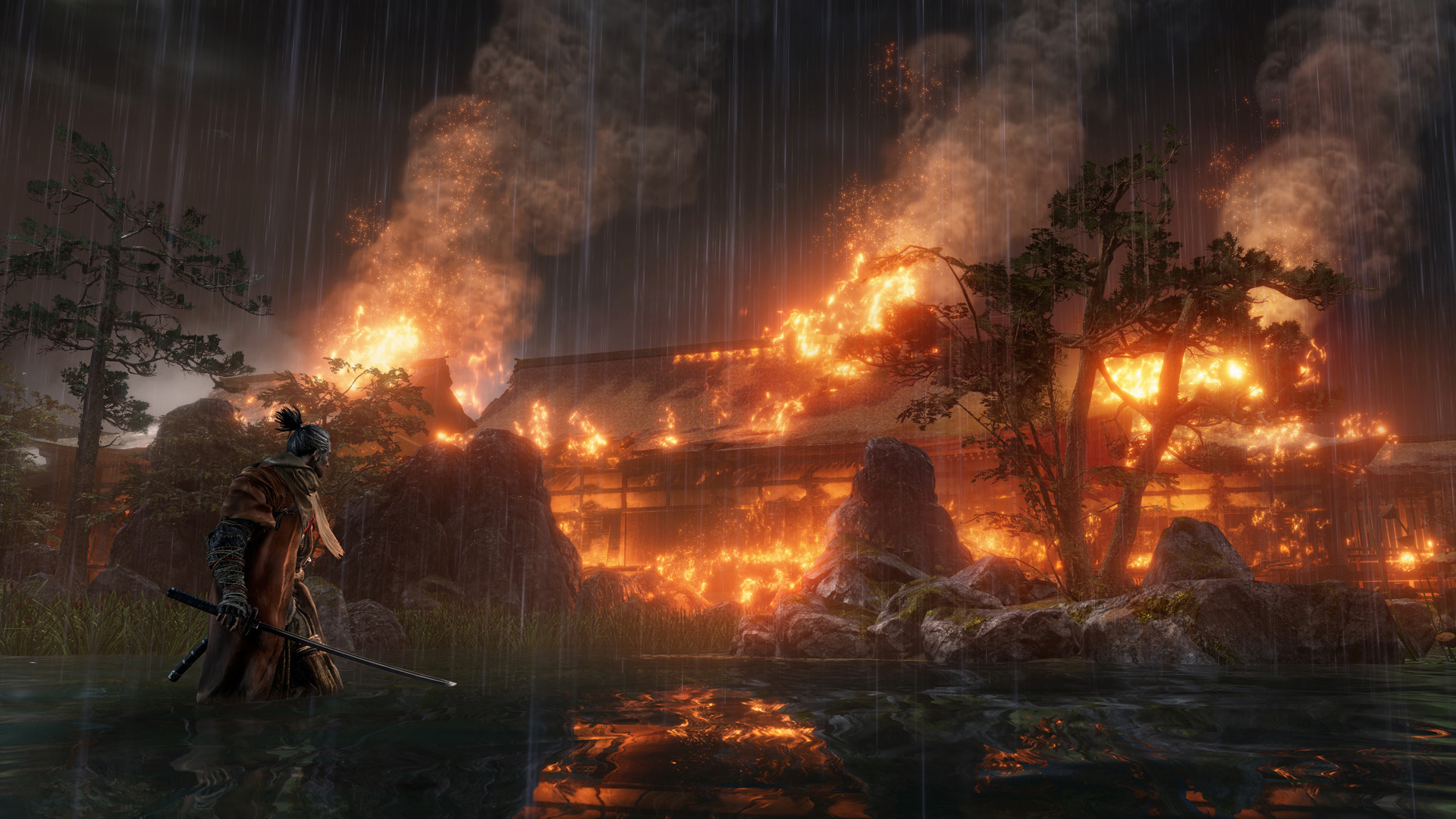
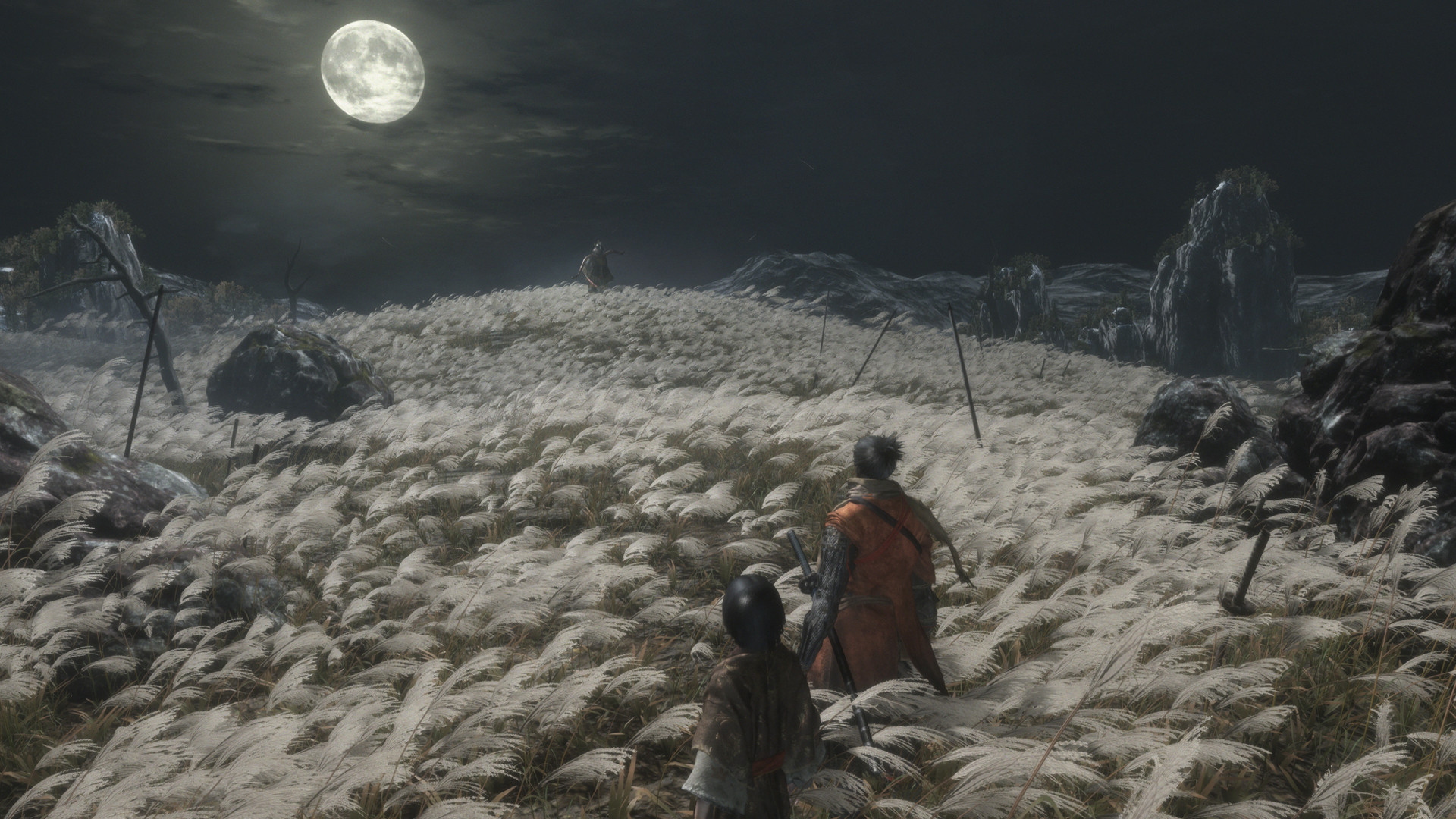
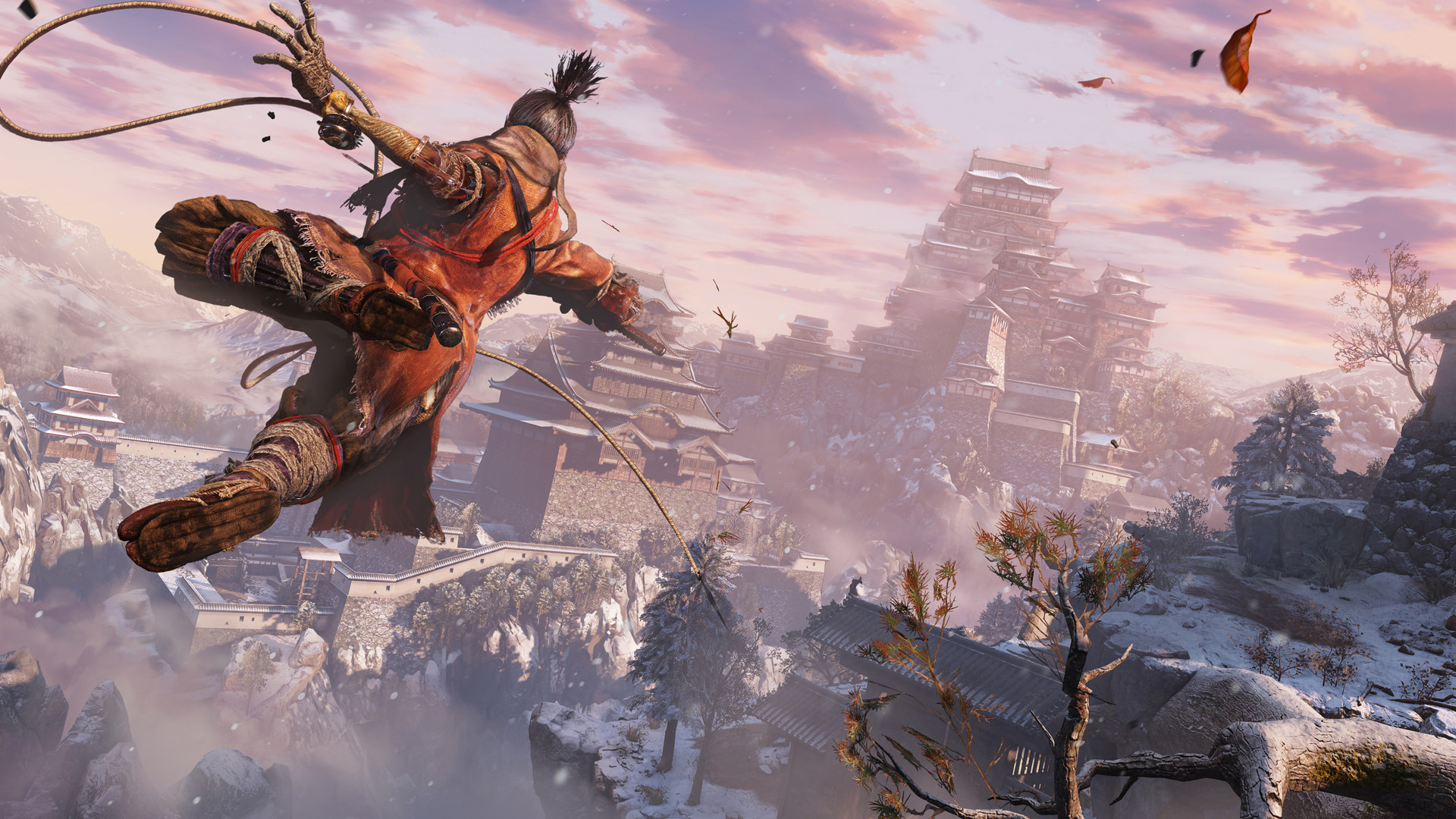
Additionally, Sekiro takes place in a far different setting than any of the other five Soulsborne games. Those games took heavy inspiration in European history, themes, architecture, and environments. Sekiro on the other hand takes places on FromSoftware’s local soil of Japan. Instead of Christian themes and imagery, Sekiro leans on Buddhism and Shinto. I personally appreciate this departure, after five games with similar scenery, a stylistic change is welcome. Japanese folklore and mythology influence the areas and visuals of Sekiro. Blossoming sakura trees, sprawling temples, wooden structures, lofty pagodas, and a central area that bears a striking resemblance to Himeji Castle are a few of the beautiful scenes that you will encounter. Sekiro is a visual marvel, everything in the game is absolutely gorgeous to look at. Not only the backgrounds and vistas, but the animations are sharp and satisfying as well. Obviously with a change in background comes a change in characters, enemies, and fighting styles and the gameplay reflects this.

9

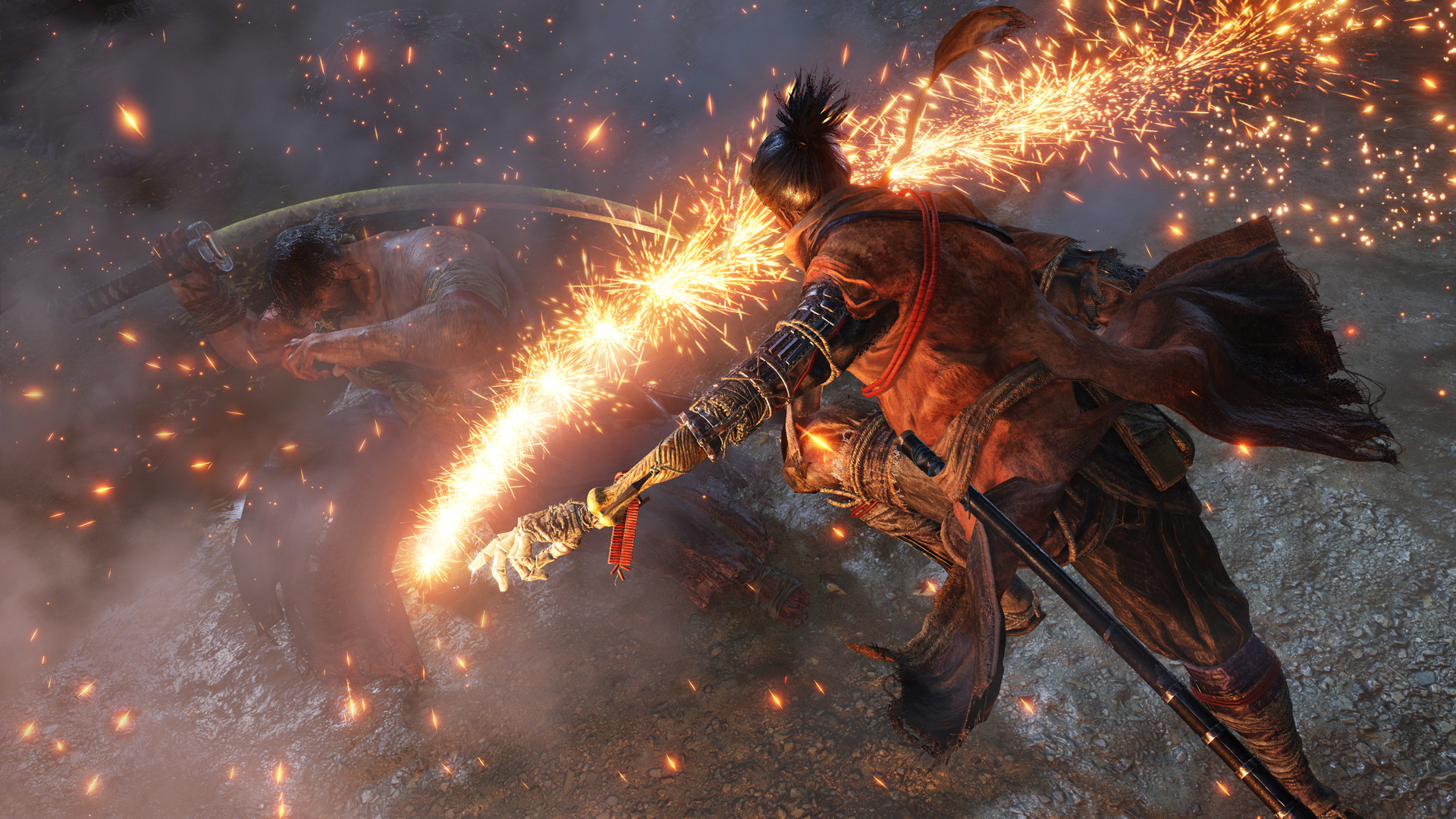
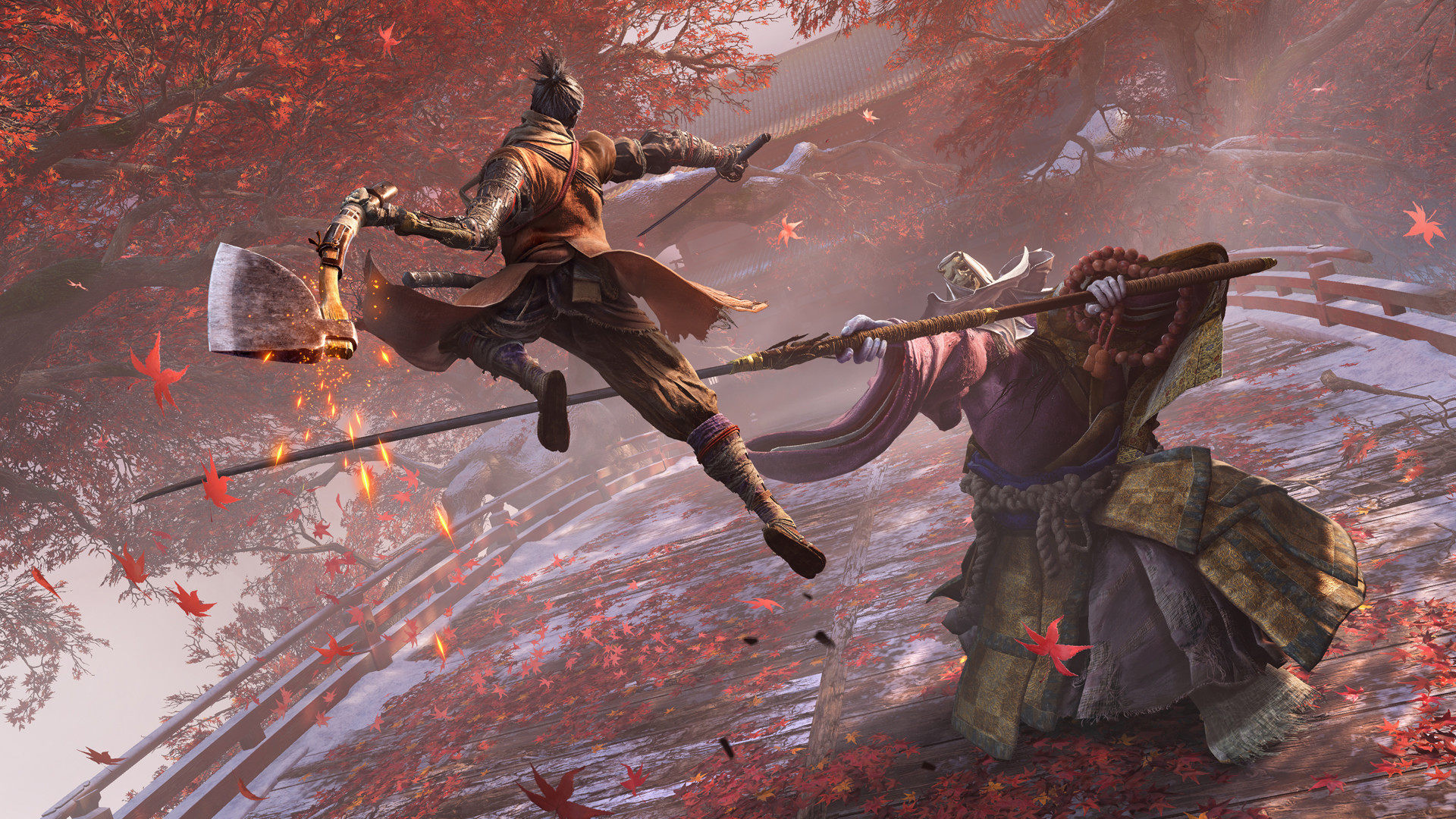
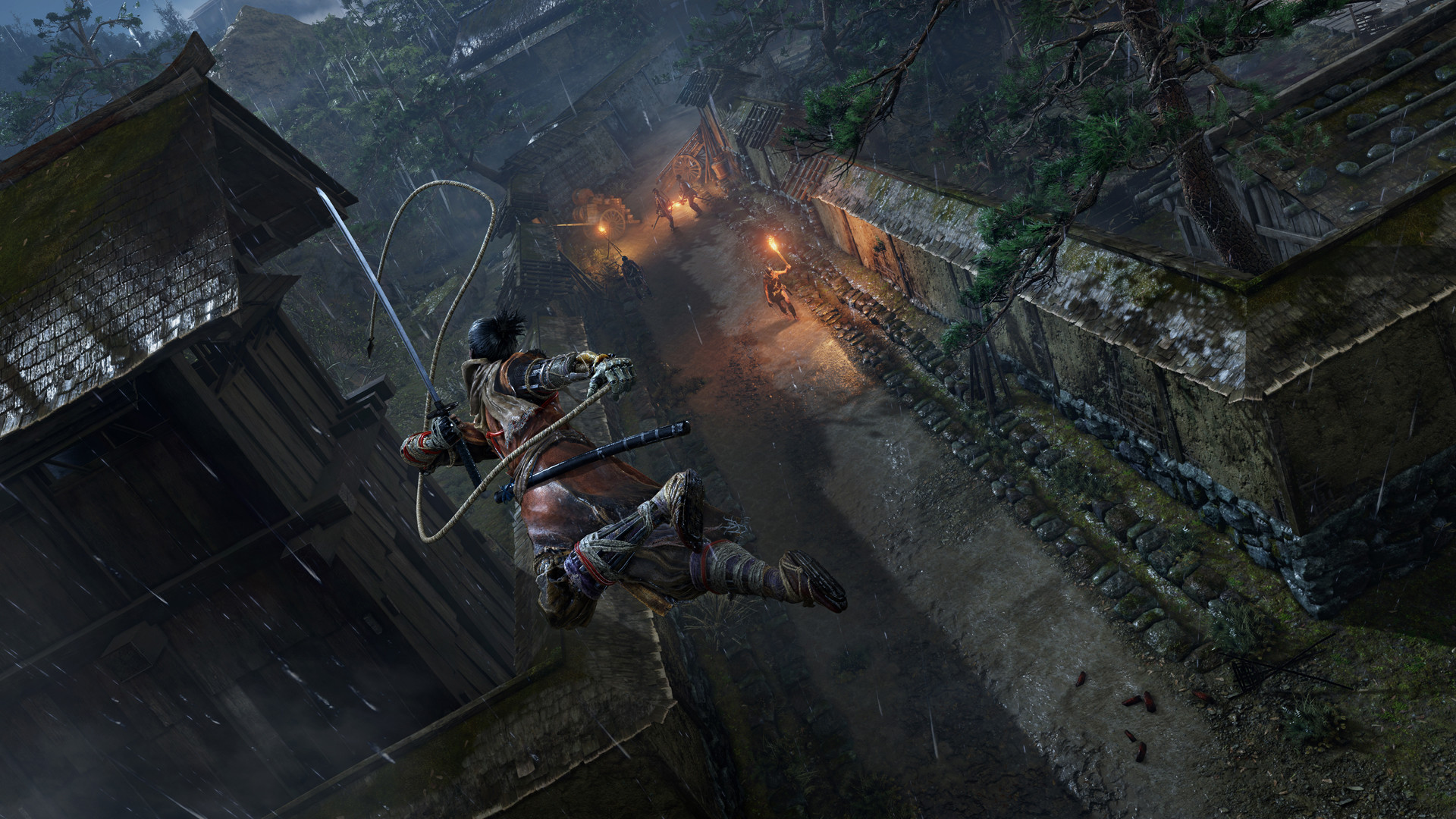
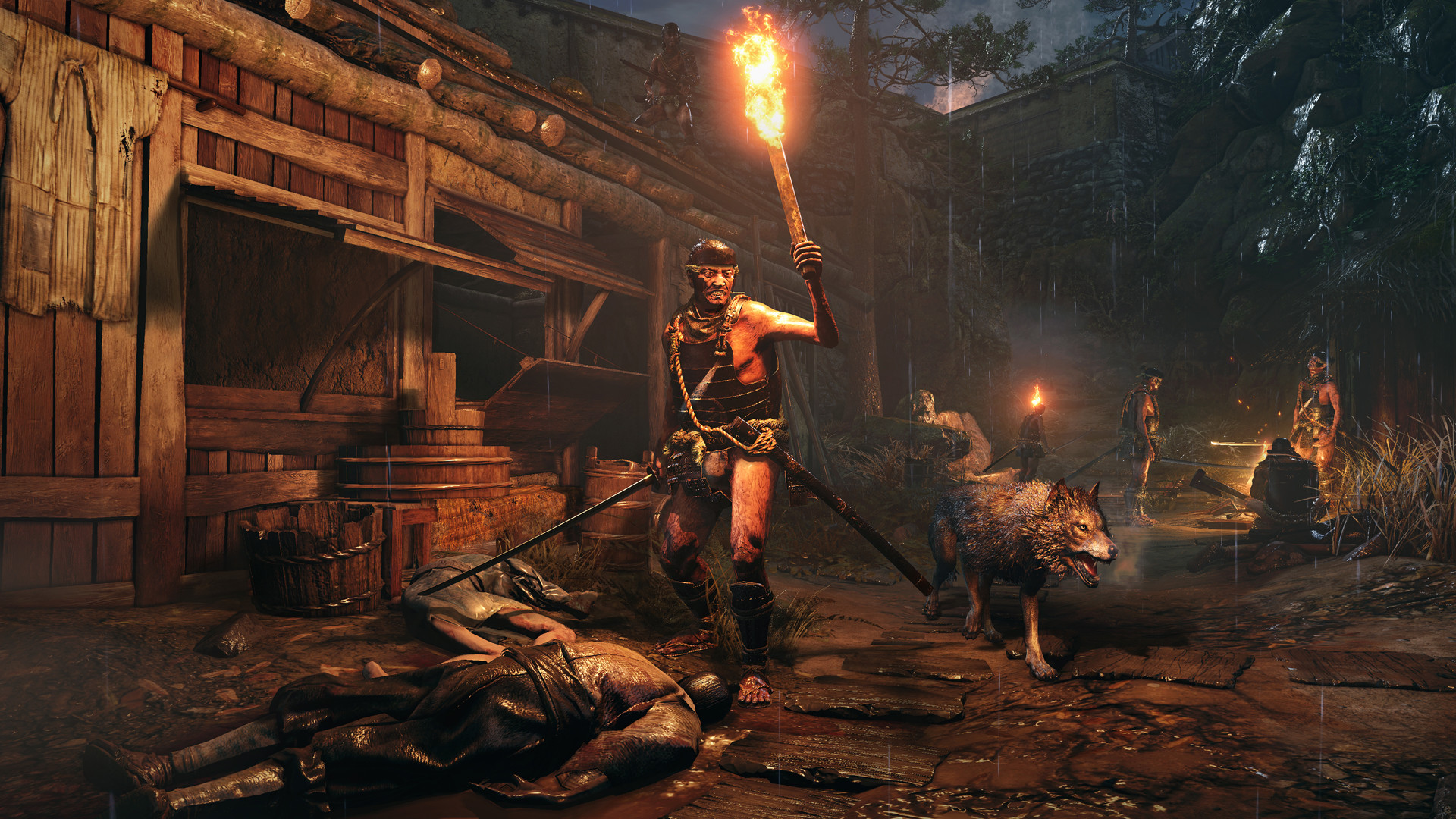
As a shinobi, swordplay is not the only available option to the player. Stealth is an incredibly important mechanic of the game. The stealth mechanics of Sekiro are simple, but are essential to conquering the game. You can sneak past enemies, stab them in the back, or lunge at them from above for a quick kill. This can even be done on some bosses and mini-bosses to delete large portions of their health bars. There’s nothing too spectacular about the stealth, its fairly barebones but it works for the most part. Occasionally when enemies spot the player, they never lose track, even through walls. This can be irritating, but it’s hardly a game-breaking issue. Other than stealth, the other essential instrument available to the player are shinobi prosthetic tools. Things like shuriken, firecrackers, and an axe can be equipped and used. Each tool has intended uses to exploit on certain enemies. For example, firecrackers disrupt any kind of beast or animal because it frightens them. The axe nullifies shielded enemies by splintering their defenses. These tools get refillable uses every time you rest, so they should be used sparingly. Additionally, you can find upgrade materials around the world to improve the tools to add special effects.

2

The core of Soulsborne gameplay revolves around using resources to dodge and counter enemy attacks. In the five previous games of the series, you had a stamina bar that you could use to dodge, block, sprint, and attack. The less stamina you used to avoid damage, the more stamina you had to deal damage. There was also an intrinsic risk and reward system built into the combat. Blocking was easy, but you lost a lot of stamina for doing it. Rolling would require timing, but would give the player big windows to punish the boss. Simply walking to avoid hits requires a lot of confidence, but since it consumes no stamina, the reward for doing it was high. Finally, parrying boss attacks was incredibly risky because it required specific timing that if executed incorrectly would lead to the player taking big damage. The payoff was that it would open the boss up to immense damage. Sekiro changes all of this. As a katana-wielding shinobi, there is no more stamina, but instead the game is built around a resource called posture.

4

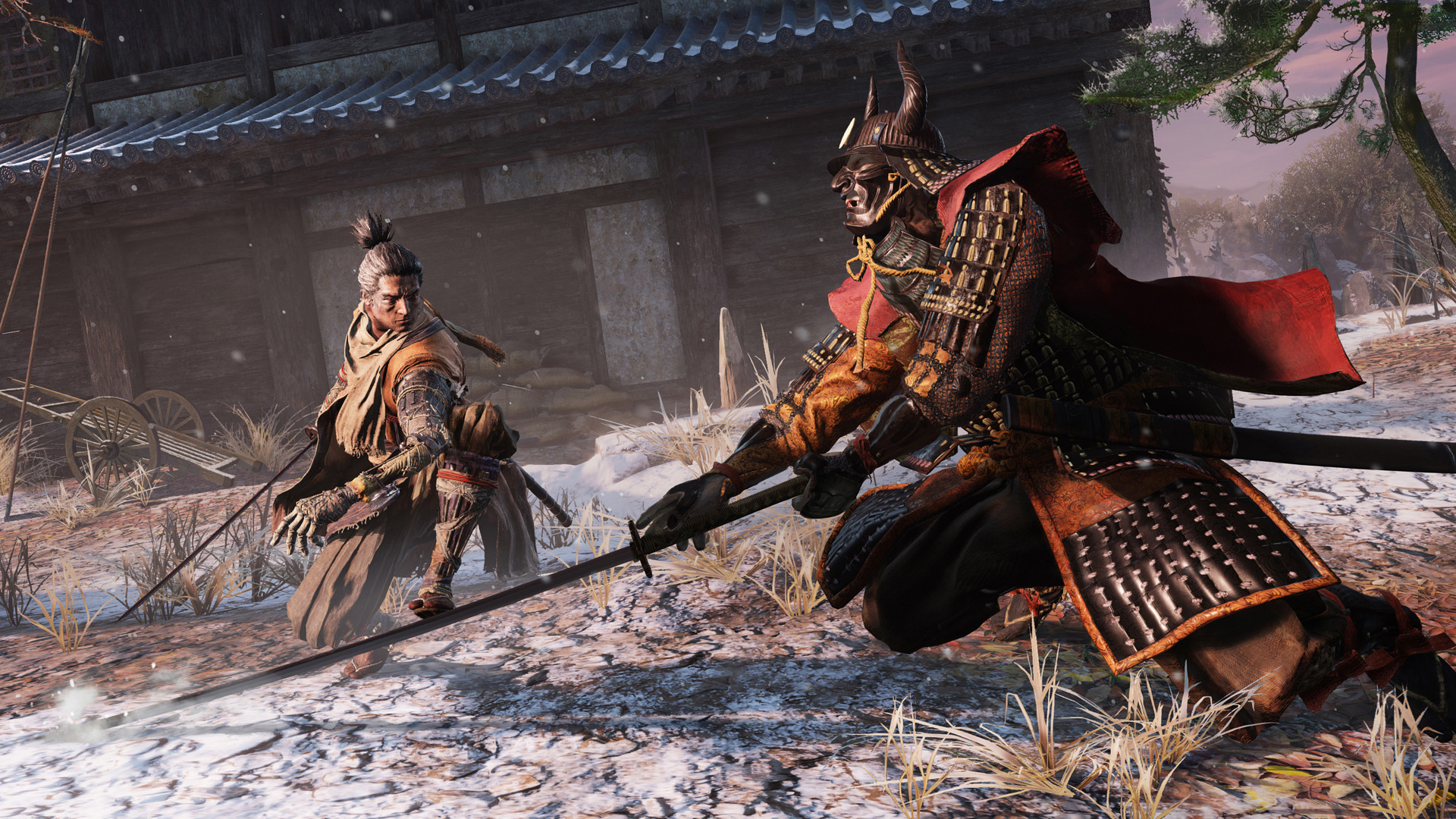
The player and every enemy in the game have a posture bar. When the posture bar is filled, they are susceptible to what is called a deathblow. Deathblows kill enemies regardless of their remaining health. The majority of the time, the player ends up killing enemies via posture damage instead of the traditional health damage. This is done by hitting the enemies and deflecting their attacks. In Sekiro, dodging has far less invincibility frames than it did in previous Soulsborne games, so the primary method of avoiding damage is blocking and deflecting. Blocking is safe and requires no timing, but will quickly fill your posture bar. Deflecting, on the other hand, requires the player to time their block at the moment of an enemy strike. If too early, you end up blocking, if too late, you take the hit. If done correctly, it will quickly fill the enemies’ posture bar. This is equivalent to parrying from the rest of the series, but the timing is more lenient.

The intention of nerfing dodging and replacing parrying with deflection was to make combat feel like a flurry of swords. Every engagement is a rhythm of deflecting and returning swings. This is definitely my favorite iteration of combat in the Soulsborne series. It took a little while for me to unlearn the muscle memory I had from previous games and get used to the importance of deflection, but once it clicked, I was enthralled. The satisfying sounds of clashing swords provides great auditory feedback that makes Sekiro really achieve its goal. The game is centered around duels with enemies, taking turns swinging at each other and capitalizing on mistakes. Filling up the posture bar is the most reliable way to defeat most bosses, and this positively inspires player aggression. Instead of standing far away from enemies and waiting for the opportune moment to strike, the player is encouraged to get in the face of a boss and confidently deflect all of their attacks. Sekiro really manages to capture the feeling of two samurai clashing, and I cannot overstate how much I love the combat in this game.

6

Admittedly, I do have a few issues with the combat of Sekiro. The first being perilous attacks. If every attack in the game was deflectable, then once you master the art of timing deflections, the rest of the game would be trivial. So, FromSoftware added 3 kinds of perilous attacks: grabs, thrusts, and sweeps. These attacks cannot be blocked, and each has a specific action to counter it. Grabs you can dodge, thrusts you can deflect, and sweeps you must jump over. These attacks are accompanied by a red visual effect and a distinct sound. My issue is that it can be very difficult to quickly discern between these attacks. Especially since the visual effect often is overlaid directly on top of the enemy. Mostly, I had trouble telling the difference between thrusts and sweeps quickly enough to react. I had to just learn bosses attack patterns and figure out which attacks they used. It’s not a big deal, but I wish the sweep and thrust distinction was a little more clearly telegraphed.

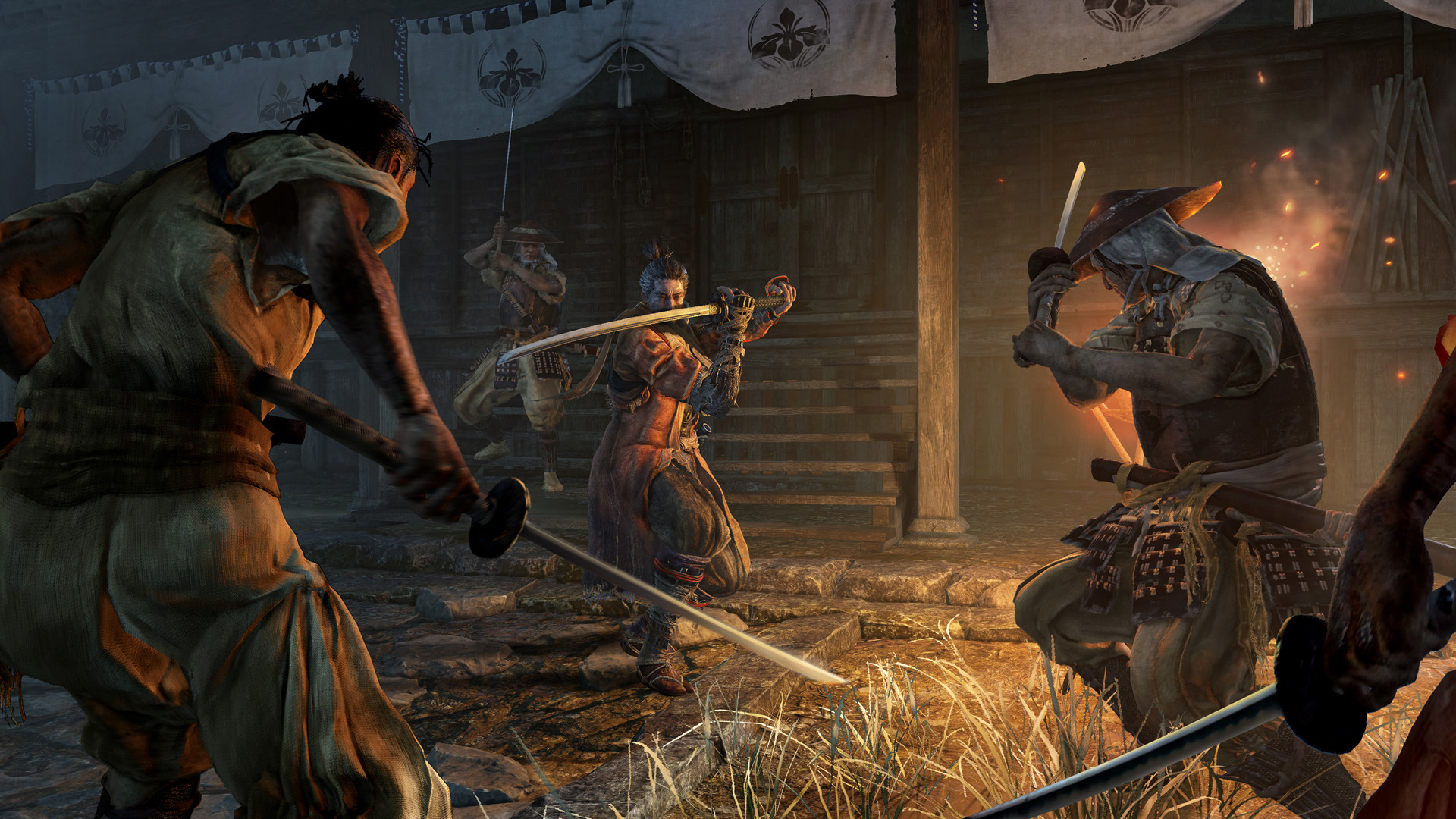
Additionally, at its very core, Sekiro is about dueling opponents. The game is at its very best when you are locked in a swordfight with a challenging foe. Soulsborne has always had issues with situations involving multiple enemies. They are rarely balanced well and often end up being a fiasco. Windows of opportunity to hit back at enemies quickly diminish when there are more than a couple enemies coming at you. Sekiro is no different in this regard, in fact, it’s worse. Since the main tactic in Sekiro is depleting enemy posture by staying in combat with them, you cannot abuse the common tactic that is used in most Soulsborne games. That strategy is to unlock the camera and use hit-and-run attacks to whittle down the enemies’ health. This obviously not effective in Sekiro as enemies block most of your attacks. The only legitimate way to defeat most enemies is to fight them one-on-one. I understand that in most scenarios the best way to deal with multiple enemies in Sekiro is to make extensive use of shinobi tools and stealth, but sometimes this just is not possible. Unfortunately, the game’s combat just crumbles in scenarios where the player has to fight multiple enemies at a time.

8

Most importantly, the lack of variety in Sekiro is shocking. FromSoftware took one aspect of the Soulsborne series and polished it to an absurd level, but many other features were ignored because of this decision. Don’t get me wrong, I love the rhythmic deflection duels of Sekiro, but the game lacks any other options. Subsequently, there is very little replayability. This is not inherently a bad thing, and I often like to see games focus in on a singular aspect and refine it to perfection. The issue is, I think many returning Soulsborne players will be disappointed because Sekiro lacks variety. You must learn how to deflect to play Sekiro, there is no other option. In the previous games of the series, people could come up with entirely different strategies for the same boss. Sekiro is very straightforward, you just have to master the art of deflection. The shinobi prosthetic adds a little variety, but it does not drastically change the playstyle of the game.

It is not just in the combat where Sekiro lacks diversity, but many integral Soulsborne features are missing. The RPG and character-building elements of the game are nearly completely gone. Outside of a few skills that you can level up, the main character of Sekiro is static. You cannot choose stats, classes, weapons, or armor. This obviously was intentional as FromSoftware wanted the game to be more story driven and to do that the main character could not be a blank state. Moreover, there is no online element. At all. Player vs player combat is impossible due to the mechanics of the combat. Cooperation would probably trivialize most bosses because of the way posture works. I get why those things were not included, but again it is a feature that many players will miss. Honestly, neither the character building or online were features that I made extensive use of in the rest of the series, but I know for many people these were integral parts of the game. At the very least, I would’ve like to see one or two more weapons to add some replayability. While Sekiro absolutely nails the combat as its core feature, it loses the essence of experimentation and freedom.

7

The first thing that blew me away about Dark Souls was the interconnected design of the world and its levels. Checkpoints were scarce, but there were many shortcuts to unlock that would link back to the checkpoint. Things like locked doors, falling ladders, elevators, or gates open once you had cleared an area. This made levels feel larger and simultaneously increased the relief of spotting a new checkpoint. Unfortunately, Sekiro completely lacks this intricate level design. Areas are far more linear and checkpoints are far more abundant. I think there was a singular shortcut to be found in the entire game. Nearly every boss has a checkpoint right before it, leaving out the necessity of mastering a level to repeatedly fight a boss. Now the player runs through an area one time and is basically done with it forever.

The actual world of Sekiro is incredibly interesting. The central castle of the game constantly must be revisited and it evolves depending at what point in the game you are at. The other areas of the game are more stagnant and linear compared to Ashina Castle, but they are interesting thematically. Sekiro is undeniably beautiful, and the landscapes of Japan make every new area a treat to explore. While Sekiro does not have a labyrinth like world akin to Dark Souls, the areas do have a lot of added verticality. This is due to the grappling hook which allows the player to quickly sling from tree branches and scale up buildings. This additional layer to level design gives each level more paths through any given area. I quite like how levels felt more open and explorable than other games in the series. My only gripe is that there really is no point to fully exploring a level. In previous games, the player could find new weapons or armor to experiment with. The only items you can really find in Sekiro are upgrade materials for the shinobi tools, which are uninteresting in comparison.

10

Perhaps I am overly critical of Soulsborne games because it is a series that I seriously enjoy, but don’t get me wrong, I love Sekiro. This game was an absolute joy to play and master. It reignited that familiar feeling of overcoming seemingly unconquerable challenges through persistence and perseverance. And that is really what the Soulsborne series is all about. Since Sekiro is so different from its predecessors with its sharp change in combat, it forced me to master an entirely new skillset. This change in pace is what I love about Sekiro, but it is also the games biggest flaw. Due to the focus on the combat, many traditional features such as character builds and online play got left out. Despite this, Sekiro manages to be an unbelievably poignant and memorable experience. It is for these reasons, I give Sekiro: Shadows Die Twice, a 9/10. I appreciate Sekiro for refining combat to a ridiculous degree and for being such a different experience, but a little more freedom could have gone a long way.

Bloodborne (2015)

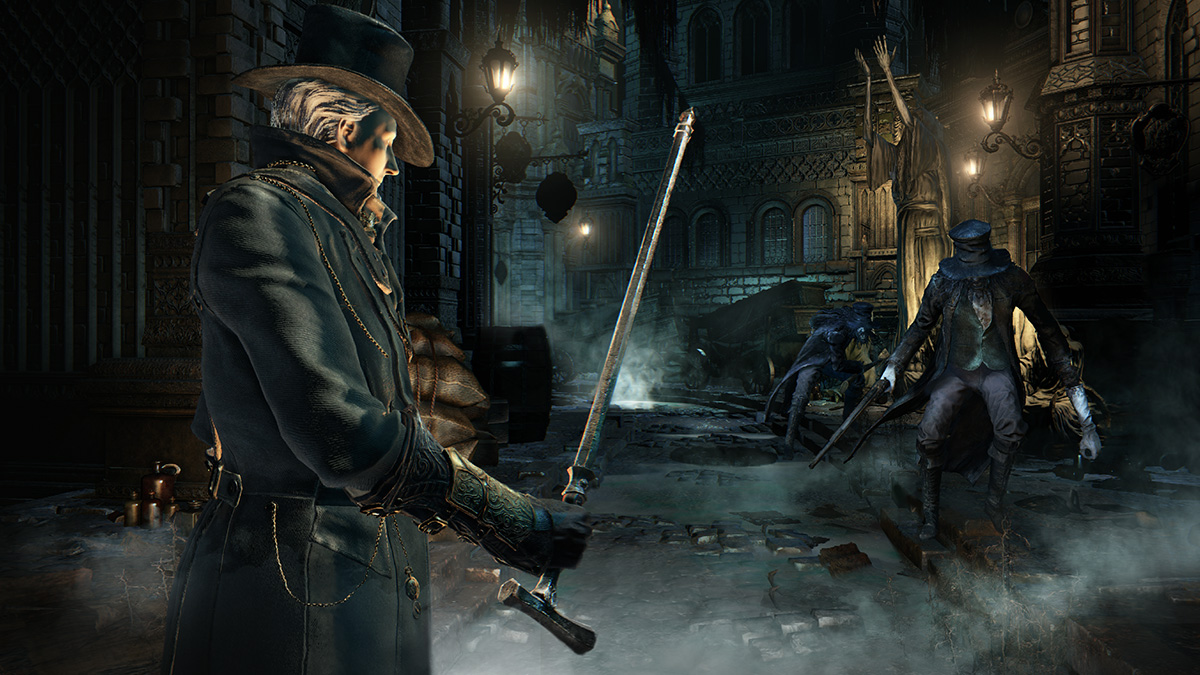
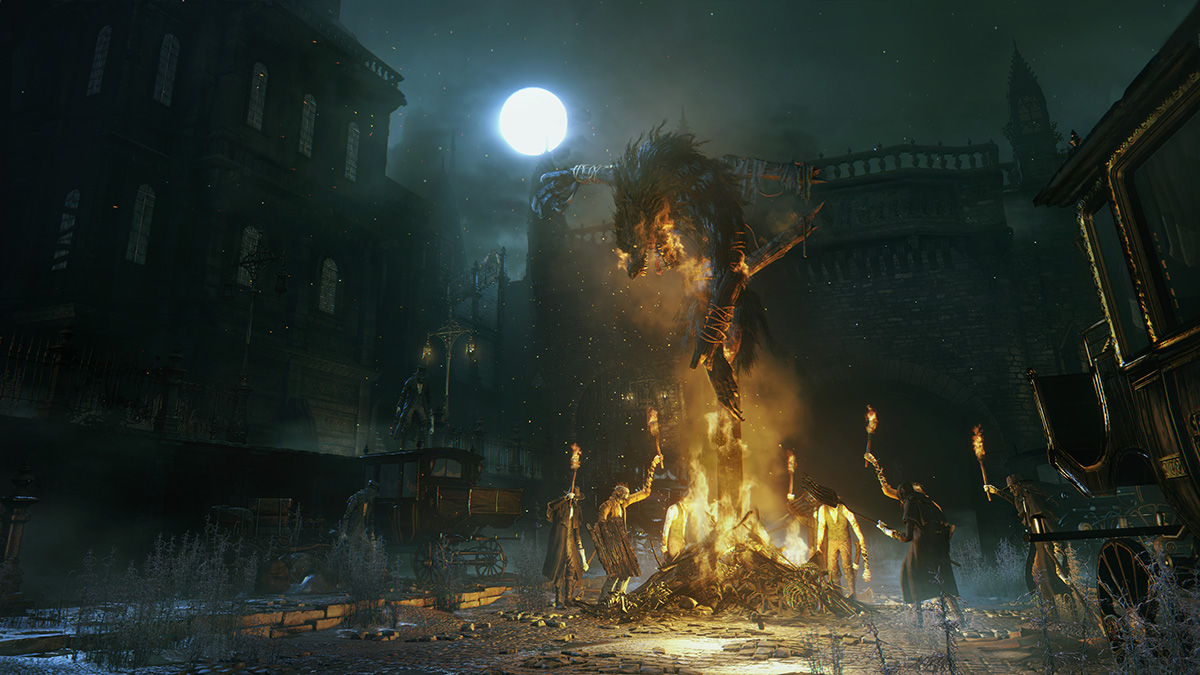
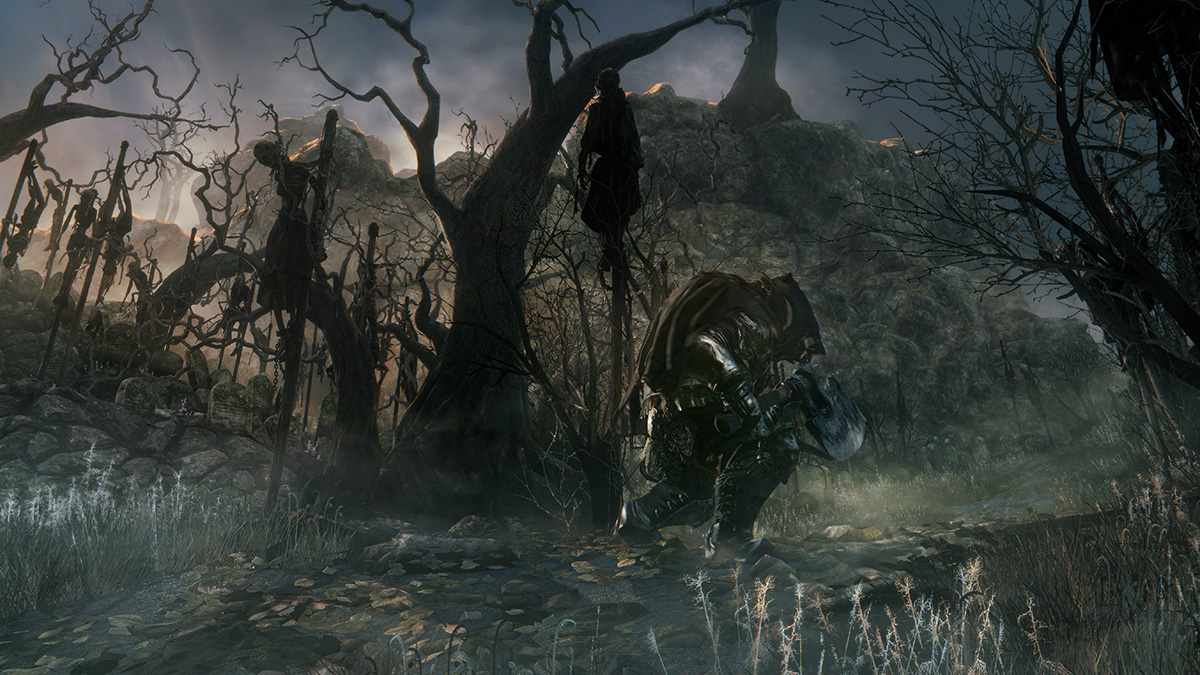
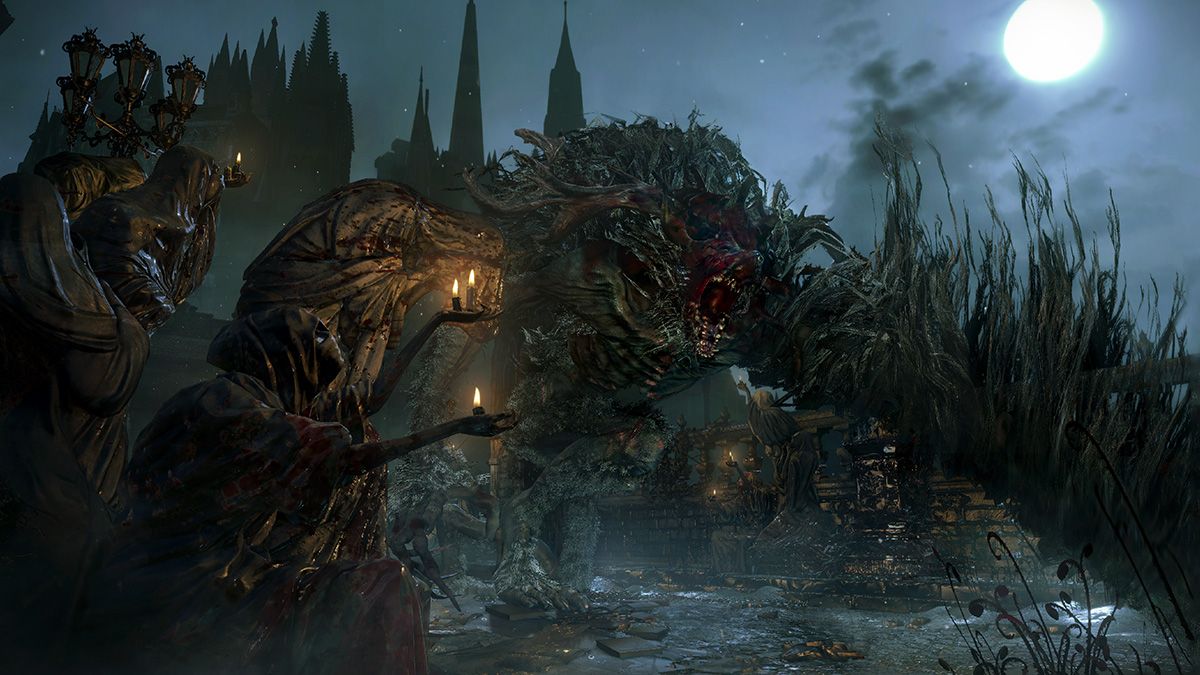
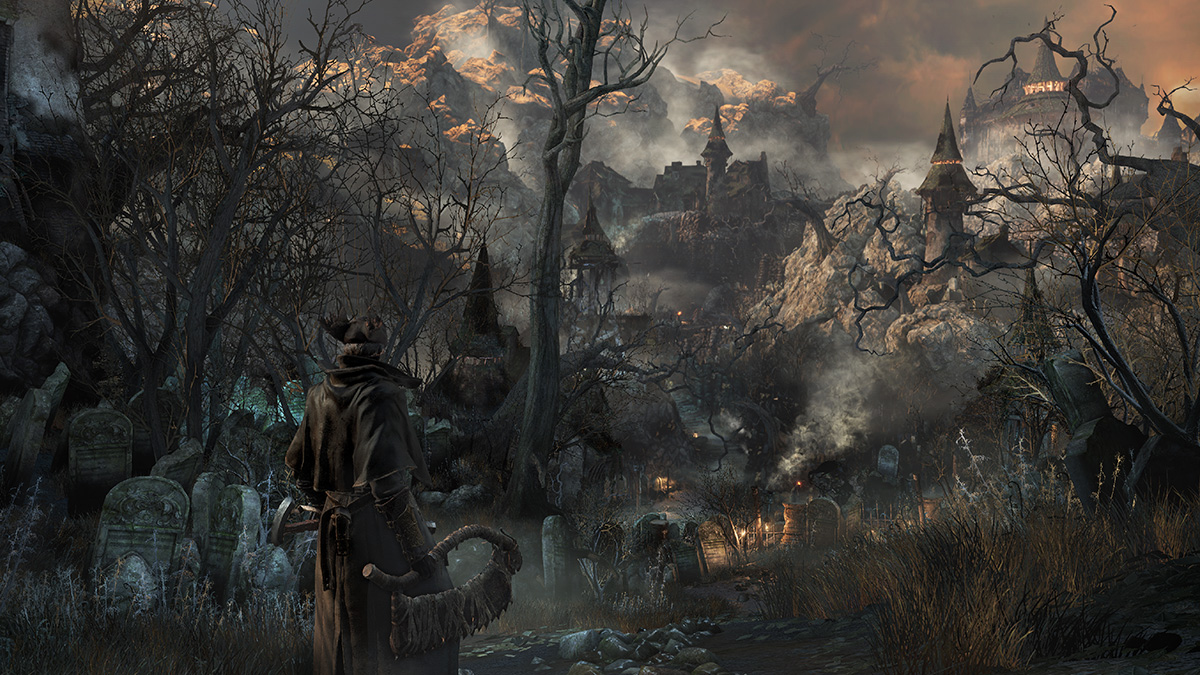
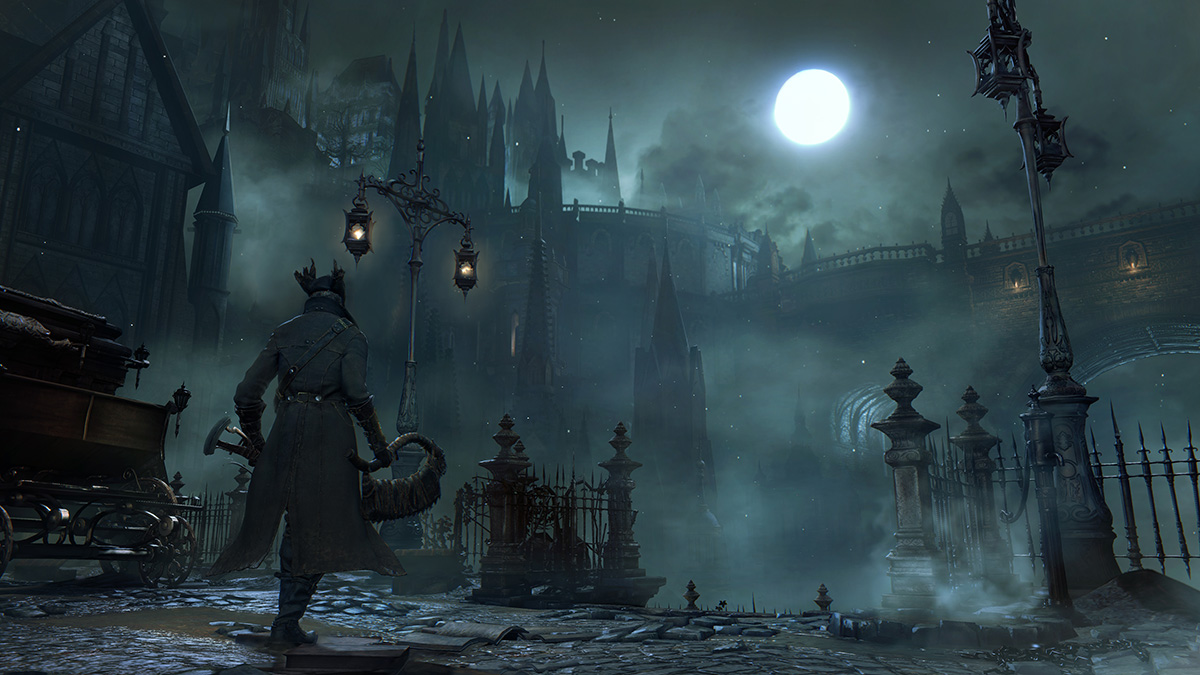
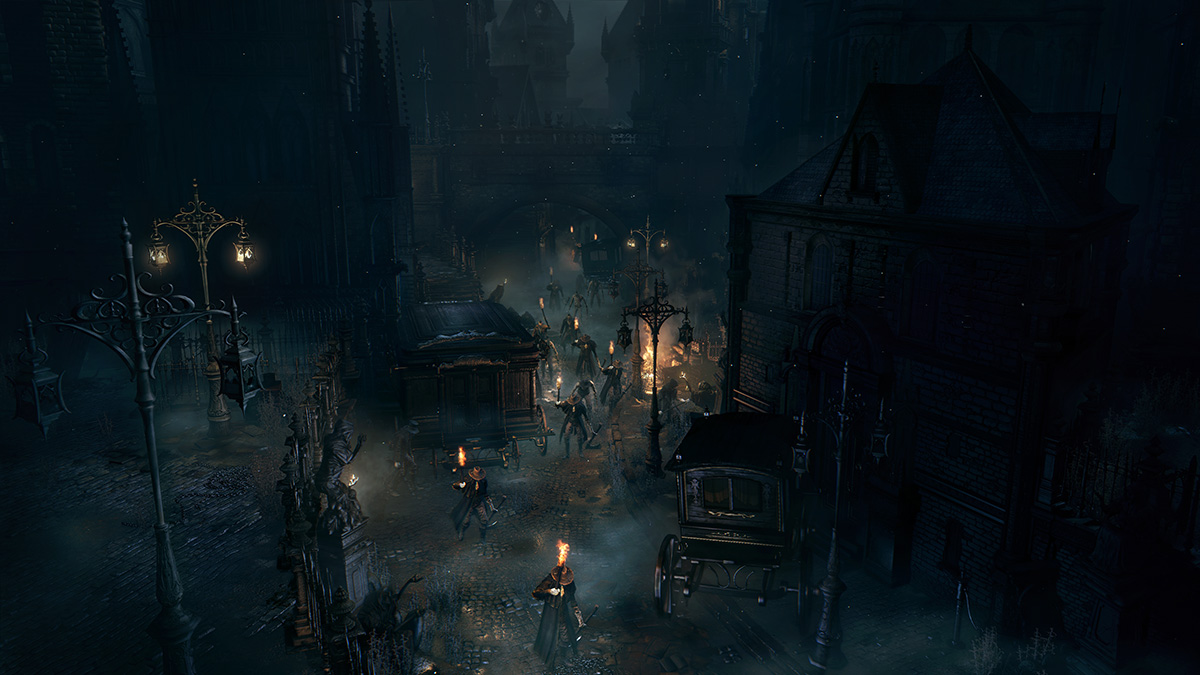
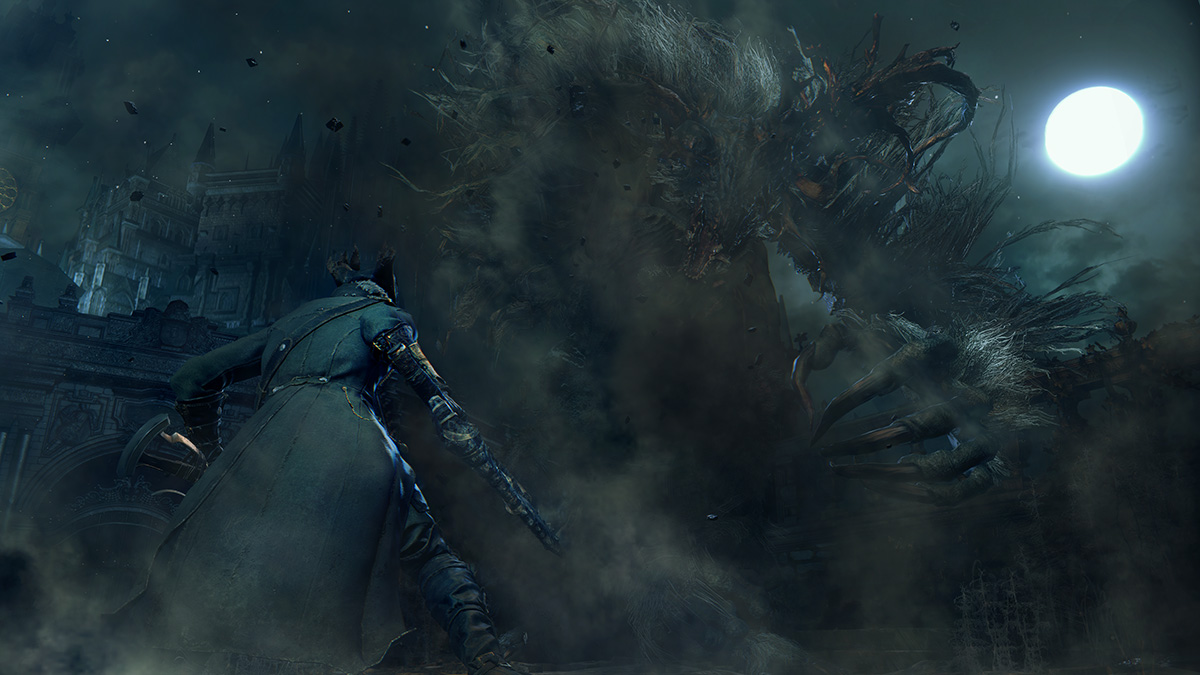
After the enormous success of Dark Souls, director Hidetaka Miyazaki decided work on a new project rather than working on the sequel Dark Souls II. This is what many people, including myself, partially attribute the failure of Dark Souls II to. The new project that Miyazaki created was the gothic and Lovecraftian nightmare of Bloodborne. It is apparent that Bloodborne operates extremely similarly to Demon Souls and Dark Souls, and that is why many people lump them all together as the Soulsborne series. Despite their similarities, Bloodborne is by far the most unique of the bunch. Its horrific atmosphere, unsettling creatures, and eerie locations immediately make it evident that Bloodborne is a different beast than Dark Souls. Moreover, while the controls and general feel of the games are similar, Bloodborne promotes far higher aggression and speed within its gameplay systems.

1

The story and lore of the Soulsborne series often ignored because of its cryptic nature. Bloodborne continues this trend, but I found it easier to interpret and understand than the rest of the series. Dark Souls cyclical nature and crumbling world make the story feel abstract. Bloodborne, while still enigmatic, is much easier to grasp on the first playthrough. The city of Yharnam has become infected by the beastly scourge, a disease which turns men into beasts. The player, a hunter, is tasked with clearing out the beasts and ending the mysterious “nightmare”. The first half of the game is gothic horror, in which science has gone wrong and men have transformed into beastly beings. But a shift occurs at the midway point which reveals the true nature of the game. Without going into much detail that would spoil the surprise, the game takes a turn into a Lovecraftian realm. While I love the variety of the godly kingdoms of Dark Souls, the consistency and tension of the atmosphere of Bloodborne is fantastic.

15

The gameplay and combat of Bloodborne is a 3rd-person action RPG (role-playing game). If you have played any other of the Soulsborne games, it operates essentially exactly the same. You hack and slash your way through hordes of monsters, and if you die you get sent right back to the last checkpoint. In this case, the checkpoints are lamps rather than bonfires. Through evasion and dodging, you must avoid enemy damage as your healing is limited. Bloodborne is just as tough and brutal as any of the other Soulsborne games, renown for their difficulty. Enemies are aggressive and merciless, and the bosses especially will give even veterans such as myself trouble. There are three major changes that set Bloodborne apart from the rest of the series: the healing system, the lack of shields, and the general speed of combat.

The first major departure from the rest of the series is the healing system. One of the most important aspects of Dark Souls was the implementation of the estus flask, the healing item. Bloodborne instead uses blood vials and rally. Blood vials are the equivalent of estus flasks, but instead of five you have twenty per life. Blood vials will always heal 40% of the players health, regardless of level, unlike the estus flask which needed to constantly be upgraded as the player leveled up. I like this change, as having a consistent amount of healing allows the player to make more calculated and informed decisions.

6

The change that I do not like is that blood vials are a limited resource unlike the estus flask. While you can carry twenty with you at any time, you have any leftovers in storage. If you run out of those in storage, you will need to farm or purchase more. I plan to write an entire essay on the different healing systems in the Soulsborne series, but I will try to keep it brief in this review. Farming for blood vials is never fun. Ever. It’s frustrating and tedious. It is especially offensive because you are probably only going to run out of blood vials when you are struggling on an area or boss. So, you are getting beat down by the game and then it tells you “too bad, go farm for 20 minutes to try again”. This is not challenging or interesting, it’s a waste of time. It’s a system that was needlessly changed and provides no benefit. This problem is only really apparent at the beginning of the game, and it does not take that long to farm sufficient blood vials, but I wish I did not have to farm at all. Again, I will go into far more analysis in a future essay, but essentially this system punishes players that were already struggling.

The change about the healing system that I do like is the inclusion of rally. After taking damage, there is a window of a few seconds where hitting enemies will restore some of the damage that you have taken. This system is absolutely genius. It creates a risk-reward paradigm that allows the player the recuperate after a mistake, but an additional mistake will often get you killed. If you get hit, you can try to hit the enemy back to regain your lost health, but if you panic and mess up an extra hit will often times kill you. You can either play it safe by backing off and popping a blood vial, or you can go for revenge to siphon off some health from the enemy. This rewards aggression and dangerous playstyles, and that is what makes Bloodborne so unique.

10

Aside from the healing system, another large change in Bloodborne was the removal of shields. The Soulsborne series has always promoted a knightly playstyle, using a sword in one hand and a shield in the other. The shield allows the player to “turtle up” and play the game safely and with low risks. Of course, it had drawbacks, some attacks were unblockable and holding up the shield would cut down on stamina regeneration. But for the most part, playing carefully with the shield was the most consistent and risk-free method of conquering Soulsborne games. There are no shields in Bloodborne. Well there is one, but it is a joke and it basically states “don’t use this you idiot”. This forces the player to rely on careful movement and well-timed dodges rather than brute force blocking to beat enemies. This change suits Bloodborne well, as it obviously is trying to promote aggression and more risks for higher rewards. The removal of the shield just reinforces that idea.

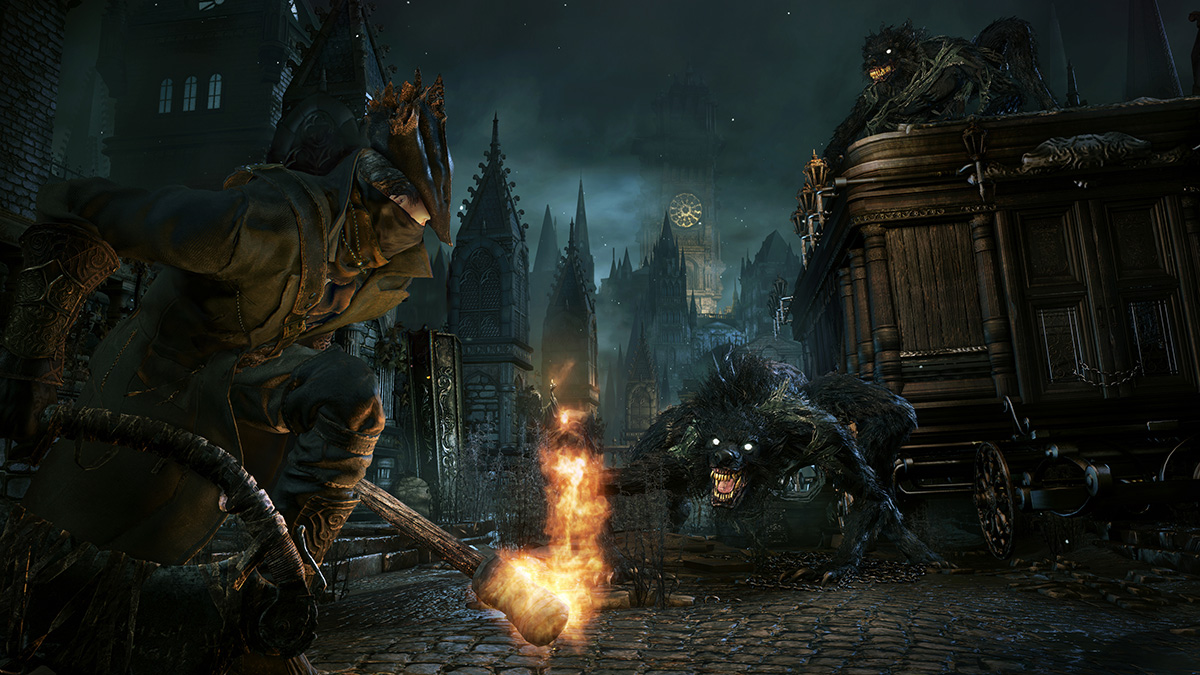
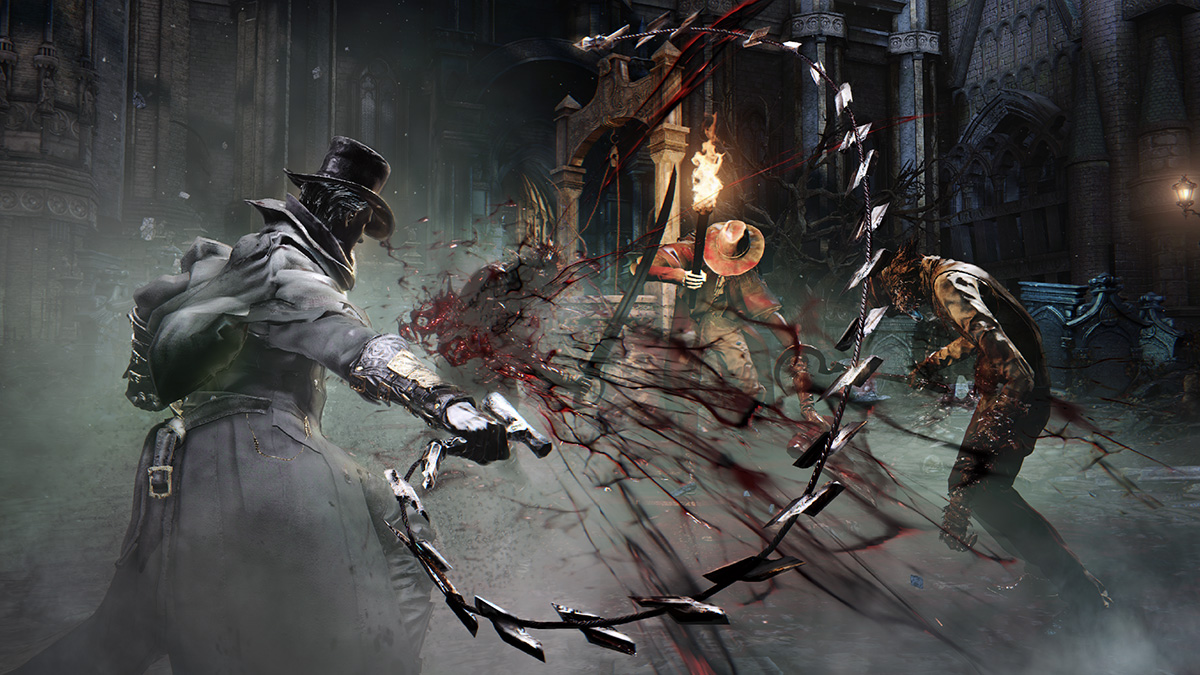
Instead of carrying around a shield in your off-hand, the player is given a few options to swap between. The first being a gun. Guns in Bloodborne generally do very low damage (unless you are building your character specifically to use them), but instead serve a different purpose. Guns can be used to interrupt enemy attacks and stagger them, and if you time your shot well enough you can trigger a parry. Parries operate essentially the same as they did in the rest of the series, if you shoot the enemy as they are about to hit you, they will fall to the ground and give you a chance to hit them for massive damage. But it is, again, high risk and high reward. If you mistime a shot you intend to use as a parry, you will definitely get hit. Other than guns you can use a torch or activate your weapon’s two-handed mode. The two-handed forms of weapons in this game are more interesting than in other Soulsborne games. They often have wildly different movesets from their one-handed counterparts. Additionally, changing forms can activate a transform attack, which encourages the player to switch between one-handed and two-handed fluidly during combat to get the most out of a weapon.

11

The final big gameplay distinction of Bloodborne from the rest of the series is just the raw speed and aggression that accompanies the game. Dodging is faster than previous games, and when locked on to an enemy you will do a quickstep rather than a roll. Dodging also has a fairly low stamina cost, so all-in-all dodging is highly encouraged and you are promoted to abuse those precious invincibility frames. Moreover, enemies, especially bosses, are far more aggressive and ruthless than previous entries. They simply do not let up, and give you very little breathing room. You are encouraged to match their aggression and attack at them as furiously as possible whenever you can. Many enemies and bosses are incredibly vulnerable to stagger and you can string together long chains of attacks safely. This is very different from Dark Souls which promoted safe play and cautious approaches to enemies. This speed, combined with the rallying system and lack of shields is what make it obvious that Bloodborne is just meant to played far more aggressively than other games in the Soulsborne series. That sort of playstyle matches the beastly and bloody atmosphere of the game, and the change is certainly welcome.

Something that I appreciate about Bloodborne is that it makes an effort to “trim the fat”. Soulsborne has always had a lot of redundant items, weapons, and equipment. Bloodborne cuts out a lot of this redundancy. Weapons are far different from one another, and you should play around with them until you find one you like. Furthermore, you get the best armor in the game fairly early on. There is far less time spent painstakingly sifting through equipment to find which has the highest stats. Additionally, Bloodborne has fewer stats to worry about when building your character. All these things I consider to be cutting out unnecessary content that did not add anything other than some confusion. The RPG aspects of the game are more straightforward now than the ever were.

12

All these differences between Bloodborne, so what’s the same? The legendary looping level design makes a triumphant return for one. Bloodborne is jampacked with shortcuts once you beat a level. While this concept was strangely absent in Dark Souls II, I am extremely happy with the quality of the levels in Bloodborne. Once you make your way through a section, there is usually a door, elevator, or gate to unlock that opens a path from the beginning of the level to your current point. This cuts down on repetition and it is immensely satisfying to find that you have looped right back to where you began. Unfortunately, this is not taken one step further like it was in Dark Souls. In Dark Souls, the world design also followed this concept. Entire areas would loop into each other in intriguing ways, and finding efficient ways through the world was a necessity as you would have to revisit earlier areas. This is absent in Bloodborne for the most part, I rarely found myself going back to previous areas and the areas very rarely connect with one another. The world is more linear rather than a labyrinth. Bloodborne relies more on fast-traveling rather than clever world design.

Something that I found odd about Bloodborne was the disregard for system limitations. It was developed as a Playstation 4 exclusive, so system specs are consistent across every player. Therefore, the game should be well optimized for the system that it was made for. I have to admit, Bloodborne is gorgeous. It is probably one of the most detailed and enthralling worlds ever crafted in video games. That being said, these details sometimes strain the system. On a few bosses in particular the framerate drops to unacceptable levels. I am not a stickler for high FPS (frames per second), and I am honestly content with a steady 30 FPS. However, they were a couple of occasions where the game chugs and dips below that threshold. Moreover, load times can get pretty long, but what bugs me about the load times is that you always have to go through two load screens when one would suffice. You can only fast travel to and from the main hub. So, if you want to go from point A to point B you must sit through a load screen to get to the hub, and then sit through another to go from the hub to point B. I wish you could just go from point A to point B with no hub in between. This is especially apparent when grinding for blood vials or bullets, as you must travel back and forth to the hub every time you want to reset the level to farm more monsters. All-in-all, these are not major problems, but it seems odd that the system specifications were not taken into consideration in these instances.

13

By far and away, the biggest issue of Bloodborne is the implementation of chalice dungeons. The rest of the game’s issues are at worst minor irritants, but chalice dungeons are a huge problem. Along with the game’s static progression path, there are also chalice dungeons that are not connected to the rest of the world. These are another kind of progression path, as you unlock deeper dungeons by using materials from earlier ones. The first issue is that they extremely poorly explained in game and the menu does not do it justice either. Essentially there are 10 “set” dungeons that are the same for every player, but you can also unlock randomized versions of these dungeons to explore and get loot from. On paper, it seems like an okay idea. Randomly generated content could give players some things to do once they’ve beaten the game. The issue is that getting to the endgame dungeons is a pain, and a lot of the games content is hidden away in these repetitive chalice dungeons.

14

First and foremost, if they were designed to endgame dungeons to let the player return and always get new dungeons to explore, why must you first go through six low-level dungeons to even unlock the high-level ones? They utterly waste your time and provide no challenge if you attempt the earlier dungeons at the end of the game, but they are necessary for progression. The next problem is the blatant repetition from dungeon to dungeon. All the dungeons are similar and use the same rooms, just in different layouts. Once you have seen a one or two dungeons, you have basically seen them all. It’s a shame because the game has a lot of new enemy types and bosses contained within these chalice dungeons. The game has about 30 bosses in total (not counting downloadable content) and 13 of those are exclusive to chalice dungeons. So, in order to experience all the bosses the game has to offer, you must slog through the ten preset dungeons. Luckily, chalice dungeons are entirely optional. Still, just because they are optional that does not excuse their poor design. I was planning to replay Bloodborne a few times because the main game was just so tightly crafted and fun, but after playing the chalice dungeons I got burnt out.

2

Even though chalice dungeons were a severe misstep, Bloodborne keeps the Soulsborne tradition of having phenomenal DLC (downloadable content). The Old Hunters DLC includes three new areas and five new bosses. Two of those bosses I consider to be some of the best in the whole series. I feel like the DLC of Soulsborne games is always created with the failures and successes of the game in mind. I just find it interesting how the DLC in these games always manages to include the best levels and bosses. Maybe it’s a marketing ploy, or maybe the designers learned from their mistakes and create more fitting content for the respective game. Either way, I highly recommend getting the DLC for any Soulsborne game.

16

Many consider Bloodborne to be the pinnacle of the Soulsborne series, and while I do love this game, I think Dark Souls narrowly beats it out for that honor. The interconnected of the world in Dark Souls is something that blew my mind when I played it. Still, Bloodborne is a close second. It is a more consistent experience, and with the exception of chalice dungeons it is nearly flawless. The aggressive, unrelenting combat gets the adrenaline pumping more than any other game I have played. The terrifying and mysterious world is easy to get immersed in. And every boss and area are high quality. The need to farm for blood vials and the repetitive nature of chalice dungeons knock Bloodborne down a notch for me, but it is still an excellent and essential game. It is for these reasons I give Bloodborne a 9.5/10. If you own a Playstation 4 this is an absolute must play game. Even if you don’t own a Playstation 4, consider buying one if just for this game.