Balatro (2024)

Balatro is the video game equivalent of crack. Every aspect of this game makes it hard to put down. It’s easy to spin it up for “one quick round” and look at the clock to realize that hours have passed. Balatro is a roguelite deck-builder that is about playing poker hands to score points, as well as using a variety of modifiers to multiply those points. There’s a wonderful level of random chance that influences every run that influences the player to experiment with all sorts of different builds. Even after spending dozens of hours playing poker hands, I still feel the draw of Balatro to see what kind of strategy I can cook up.

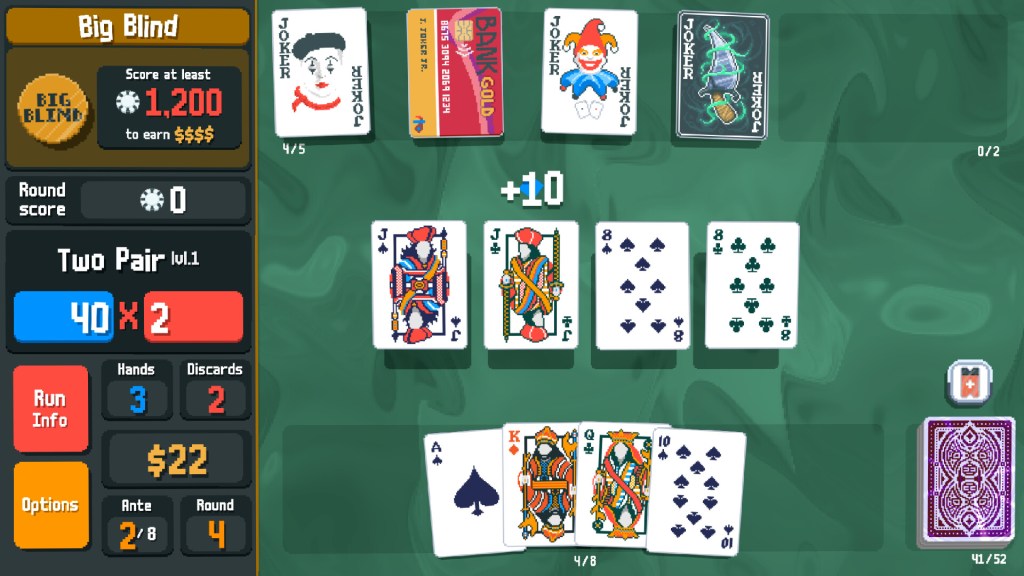
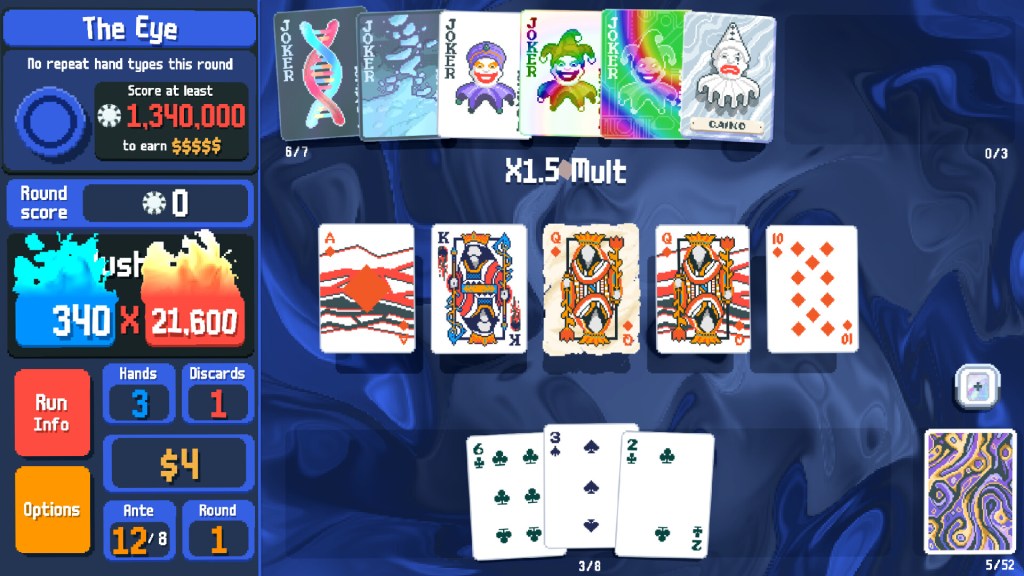
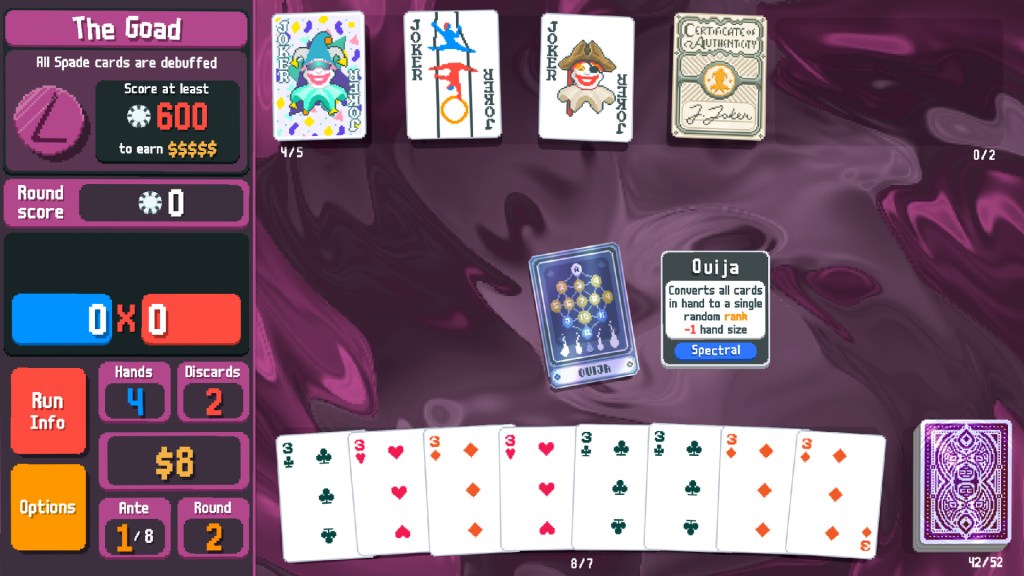
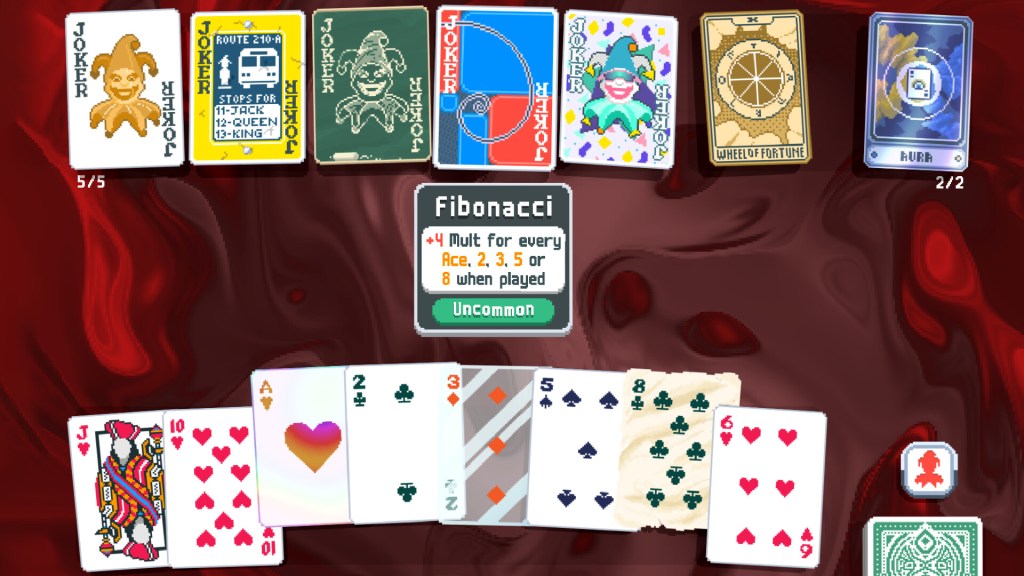
The structure of the game is that you play poker hands to try to accumulate points and surpass a threshold to complete a round. Typically, you get 4 hands to play per round and 3 discards to try to put together higher scoring hands. After each round, you visit the shop to spend money earned on modifying cards to increase your points. The cornerstone of these modifications are the joker cards. You can hold 5 joker cards that vary wildly in the bonuses that they provide. From simple bonuses like multiplying your hand’s score or giving you extra discards, to more specific bonuses like increasing the base chips and multiplication of Aces or Fibonacci numbers. 

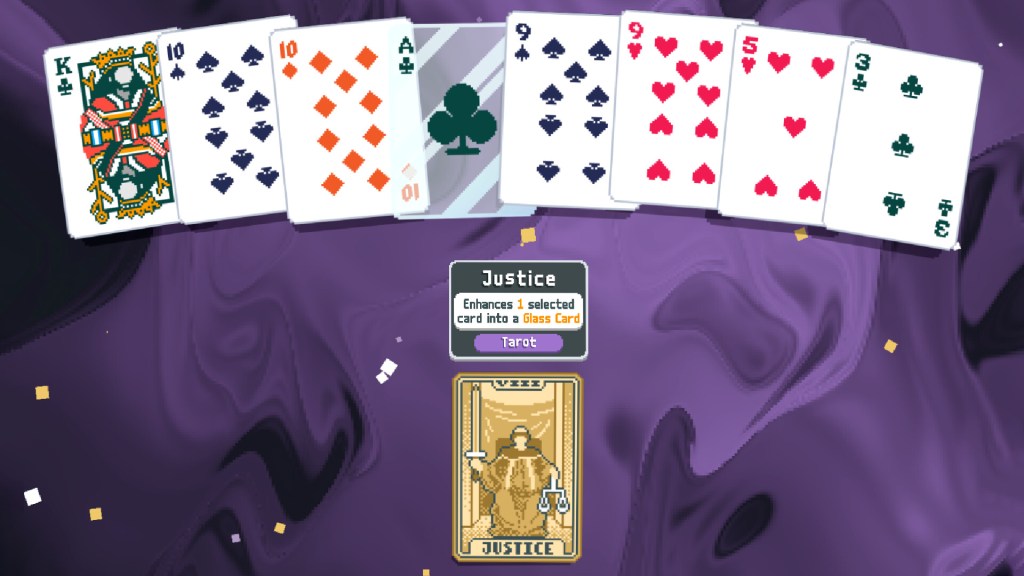
There are so many jokers to stumble on and it is incredibly engaging to try to find the synergies between them. My highest scoring run consisted of a multiplicative joker that increased its multiplier every time a card was added to the deck along with another joker that added a card at the start of every round. This was further enhanced by two of my other jokers that copied the effects of other jokers, leading to a rapidly climbing multiplier. Aside from jokers, there are also planet cards that permanently increase the base point value of certain poker hands. There’re tarot cards that provide a variety of effects from buffing individual cards to giving you more money.

All these options provide a fantastic system for decision making. Every time you visit the shop after a round you have to weigh what bonuses you want and whether or not you want to gamble on booster packs and hope there is something good inside. You want to have a healthy amount of money to earn interest and allow for big purchases later. There’re so many factors at play that you have to consider. Sometimes you have to make short-term purchases just to get you through the next few rounds while hoping you stumble upon better options. The randomness isn’t frustrating, it’s what makes the game so compelling. Every time you get a run going, it feels powerful. Being forced to experiment with whatever the game throws at you leads to incredible moments.

Each run is structured into 8 “antes”, each ante having 3 rounds of increasing point requirements, the last of which being a “boss” with special effects. After completing the 8th ante, there’s an option to continue with your deck in endless mode. Initially, I found myself always going into endless mode to see how far I could take my deck. I discovered that the score requirements quickly begin to scale exponentially, leading to most of my runs sputtering out around ante 11 or 12, no matter how good they were. At first, I was frustrated by this, but I soon realized it is a blessing that the endless mode scales exponentially. At some point, your build is essentially complete so you are just going through the motions every round. Most of the fun decision making happens much earlier in the run, so dragging out the endless mode wouldn’t be enjoyable. And having a concrete goal of completing the 8th ante means you can take short-term risks and attempt non-optimal builds as you don’t need to scale exponentially to win.

The one problem that I have with the gameplay of Balatro is that the early rounds are fairly boring and repetitive. You need to save up money before you can buy anything, so you are often stuck playing high-value hands like flushes and straights to clear the first few rounds. You are at the mercy of the shop to have some decent jokers to get you through ante 2. You don’t have the money to reroll or gamble on booster packs unless you are truly desperate. It’s hard to alleviate this issue without the developer placing a finger on the scale and tipping the odds in the player’s favor early on. My suggestion would be to have the cost of rerolls scale by ante. That way players can actually afford to reroll the shop a few times early on to fish for usable jokers while simultaneously increasing the difficulty in later antes.

The issue with the early game is only made worse as you turn up the difficulty. There are eight difficulties and over a dozen decks to choose from. I mostly enjoy how the difficulties were designed as they rarely equate to “score more points”. Many of the difficulties add modifications to jokers that make them unsellable, or cost money every turn, or expire after 5 rounds. This adds an additional layer of decision making on which jokers you want to purchase. The problem is that on the highest difficulties you really need everything to go right early on to have a successful run. I don’t think it’s the end of the world because it is still a ton of fun to try to scrape by with suboptimal choices, but I do wish there was something to make the first couple antes more engaging.

Part of what makes Balatro so addicting is its presentation. The game looks great, even on mobile platforms. I love looking at the distinctive design of all the jokers. But the animations and sound effects are really what makes Balatro tick. Watching the game emphasize every card and joker as the score climbs up is addicting. Your deck becomes a Rube Goldberg machine of multiplying bonuses that is fun just to watch unfold. The game cleverly doesn’t tell the player the final point value of the hand they are about to play, leaving the player to watch and wait with bated breath as the score rapidly grows. I particularly love that when a single hand surpasses the total point value necessary for a given round, the score display lights on fire. It’s a really satisfying touch.

It’s hard to explain why Balatro is so addicting, but beware how difficult it is to break free from the grasp of Balatro. The pure variety and allure of creating an overpowered deck fires all the right synapses in my brain. The dopamine of watching the score skyrocket is addicting. There’s so many different decks, difficulties, and challenges that force you to play with all the different options available. It is for these reasons that I give Balatro a 9/10. I would say it’s the perfect game to play a quick run when you have time to spare, but it’s so fun that I’d have a hard time putting it down after a single run. 

Hades (2020)

I always try to be wary about external hype when going into a new game. It can alter your expectations, making you overly critical. Alternatively, hype potentially blinds you from issues if you buy into the narrative too hard. That being said, it was extremely difficult to avoid the talk around Hades. Being the indie darling of 2020, winning a plethora of awards, including multiple Game of the Year awards and even a Hugo Award, made it hard to ignore Hades. I had high expectations going into Hades, and while I believe it is an excellent game, I don’t quite get a lot of the unanimous and unquestioned praise that it has received.

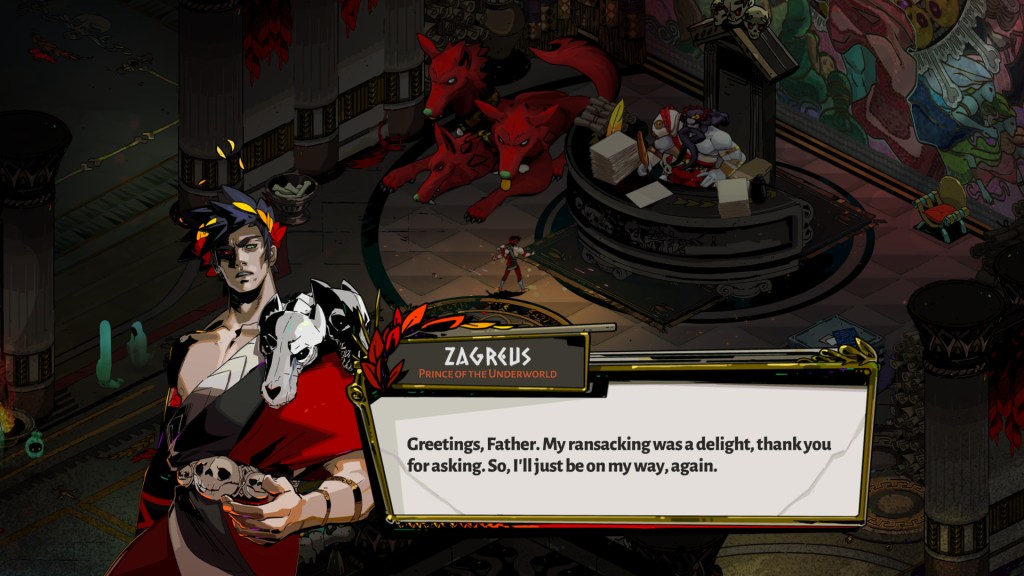
As a roguelite, Hades is all about battling your way through the layers of the underworld to escape to the surface. You play as Zagreus, the son of Hades, who has recently discovered the true identity of his birth mother and that she lives outside of underworld. Every time you die, you are sent right back to the beginning. Don’t fret though, Hades is all about progression, whether or not you succeed in any individual escape attempt.

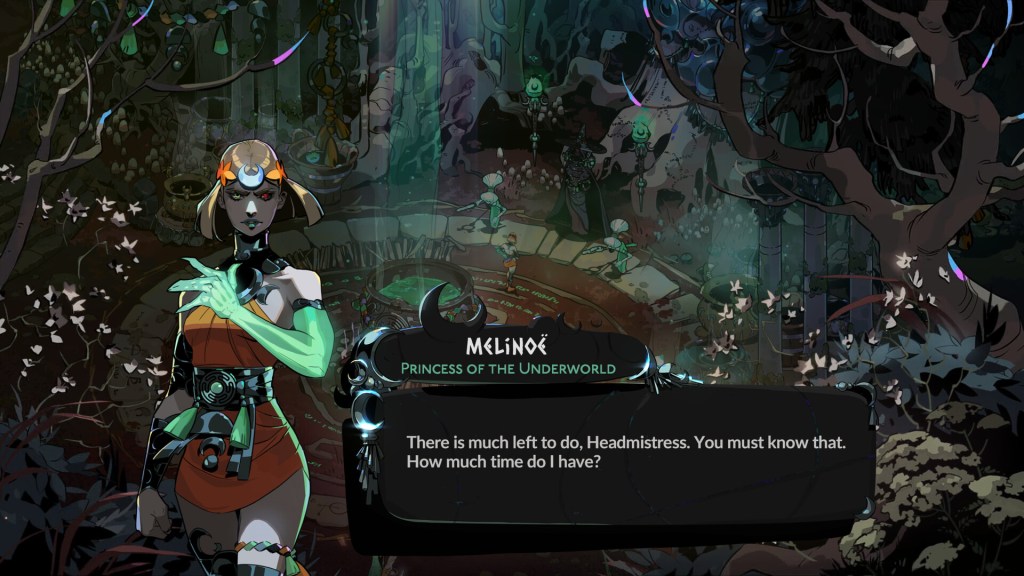
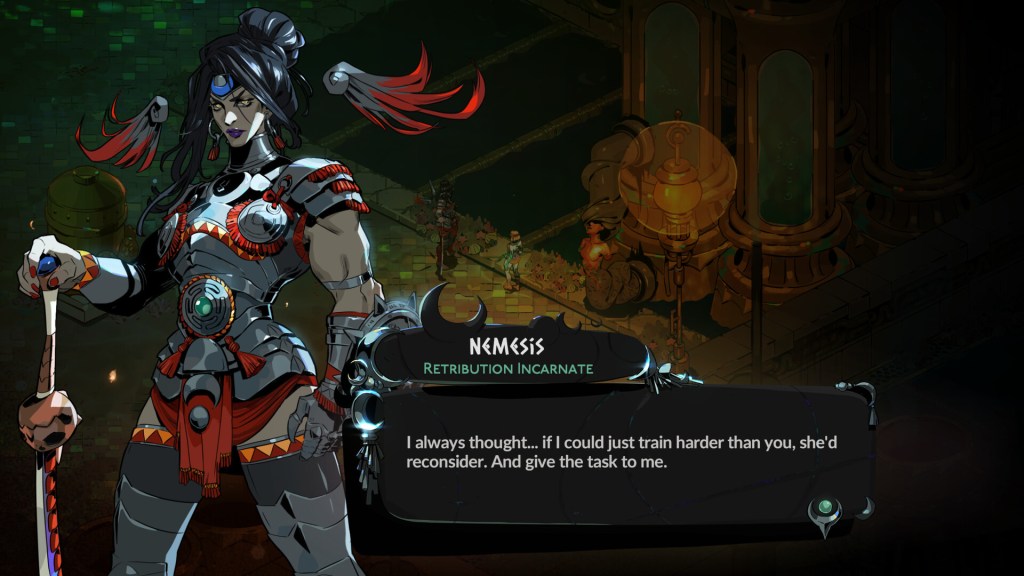
A large factor in the appeal of Hades is that it is always moving forward. Even when you fail, it’s not painful. Not only do you bring back valuable materials to power up for future runs, but you also get the pleasure of conversing with the gods who reside in the hub. They always have new dialogue, often revealing new story tidbits. They have complex relationships with Zagreus and the other gods, which you get to hear in bite-sized chunks after every run.

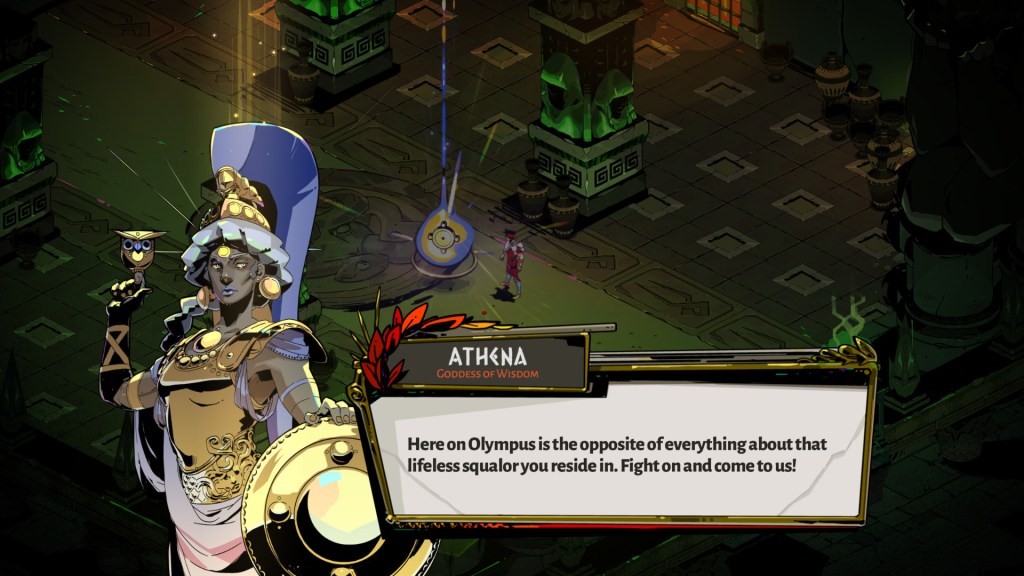
During your escape, you are also offered assistance by the gods of Mt Olympus. As you play the game you will talk to them, furthering your relationships and learning more about them. The quality and sheer quantity of writing here is absurd. In dozens of hours playing the game, I don’t think there was a single repeated line. And the writers did a phenomenal job giving each of the gods a distinct personality. All of the dialogue felt believable, not like the cheesy or over-dramatic dialogue that is more common in video games.

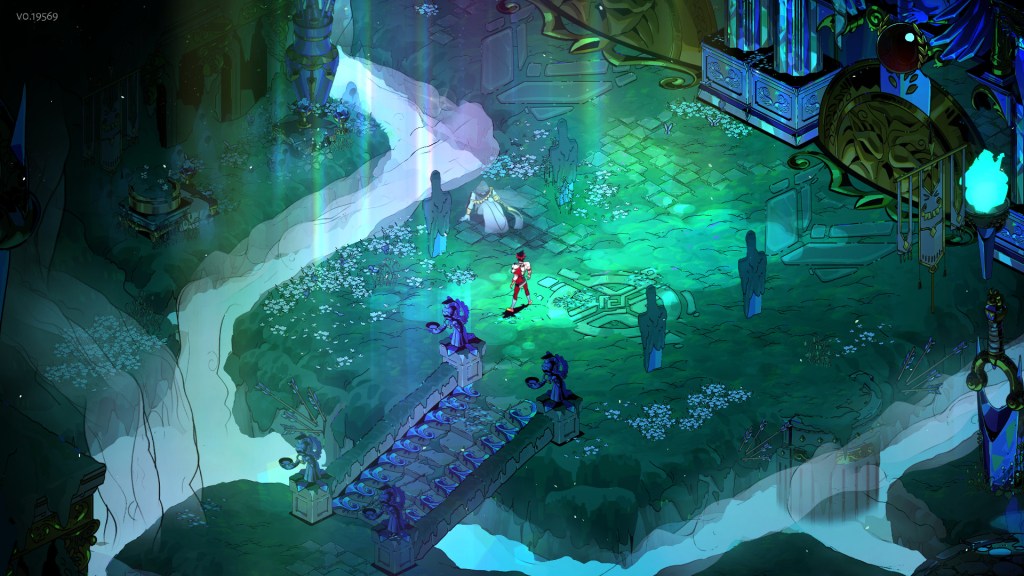
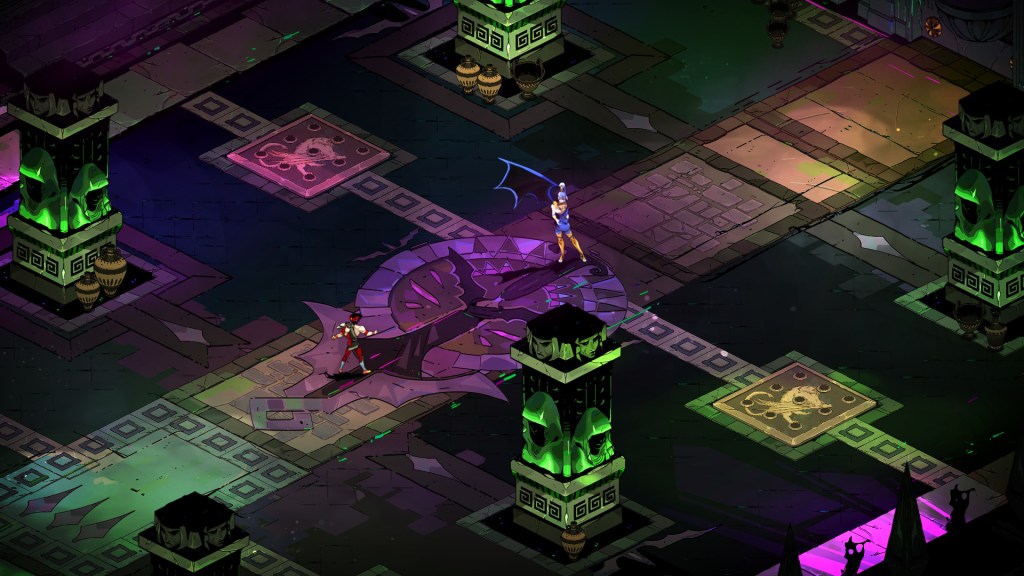
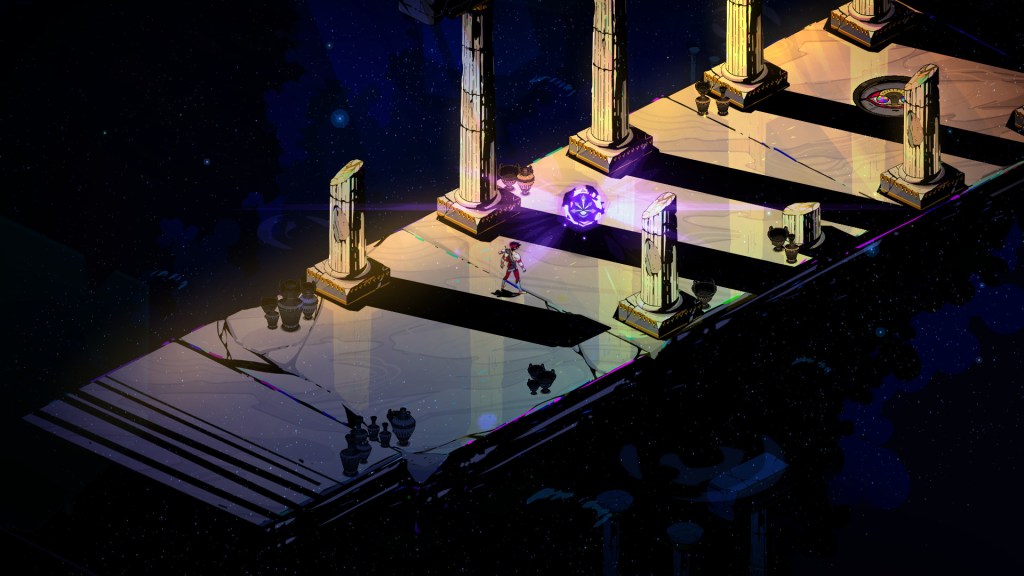
The writing was only further brought to life by the artistry of the game. The voice actors gave tremendous presence and fitting personality to the characters. Hermes is a fast talker, Athena is stoic, Zeus is confident but quick to anger, Demeter is cold, and so on. Every line is excellently delivered. Furthermore, the art style that Supergiant Games is known for is absolutely phenomenal. It brings the mythical gods to life. The aesthetic is downright gorgeous, both in combat and when conversing with the gods.

Your first attempt to escape the underworld will be nigh impossible. With little knowledge of the enemies and obstacles in your way, and a complete lack of any permanent power-ups, you stand nearly no chance. But it won’t be too long before you are on the doorstep of Greece, Hades does a phenomenal job marrying your skill progression with your character progression to create an engaging gameplay loop. As you clear rooms and make it deeper in each run, you earn different currencies to purchase permanent upgrades.

While each upgrade may seem individually weak, they quickly add up to drastically increase your power. The further you make it in each run, the more currency you earn. This creates an engaging loop in which every run you get better at playing the game while also increasing Zagreus’ strength, guaranteeing that you will steadily make more and more progress. If you are skilled at the game you will power up faster, while if you are doing poorly, you may not earn a ton of currency at first. This is genius as it allows the player’s skill to progress in parallel with their upgrades.

I had a blast with Hades while building up to successfully complete my first run. I felt myself getting closer and closer with each attempt. Gaining power and hearing more of the story as I talked to the gods. But after reaching the end for the first time, I felt that the successive runs quickly grew repetitive. There is plenty of variety to be found in Hades, choosing a weapon, the aspect of the weapon, and the randomized boons between runs does greatly increase variety. But still that variety felt stunted in comparison to other games in its genre. Furthermore, the goals after escaping the underworld felt more centered on grinding instead of an ultimate achievement.

I understand that the roguelite genre is all about replayablity. Repetition is baked into the genre, and it is totally understandable that Hades follows suit. But Hades lacks variety between runs to keep things interesting. You always fight through the same four areas with the same four bosses. Thematically it makes sense, but it can get stale without interesting boon combinations. On each run you acquire boons from the gods that act as power-ups for that run. Zeus boons electric enemies, Poseidon knocks enemies around with waves, Artemis gives critical strike, Dionysus poisons enemies with wine, so on and so forth. But ultimately many of the boons just feel like different flavors of the same thing: more damage.

You can get some really interesting combinations of boons that synergize well together, but it felt like most of the time boons are just colorful ways to up your damage. The real variety between runs feels like it comes in the weapon selection. There are six weapons to start the run with, each with multiple unlockable aspects that modify how the weapon behaves. Additionally, on each run you can find two hammers which further transform the weapon. For example, you can find a rapid-fire modifier for the bow, or make the spear bounce between enemies when you throw it. Its these huge modifications in playstyle that opens up interesting variety between runs. But the boons and level designs often do very little to make each run feel distinct.

My other major issue with the grind of Hades is that the ultimate goal is focused on grinding rather than accomplishing something. To truly “beat” the game and see the end credits you need to achieve ten successful escape attempts. To further relationships in the epilogue, you need many more. I prefer a format like Enter the Gungeon in which there are concrete goals like beating a final boss or unlocking a new character. Hades just feels like you are supposed to play it a lot. It gets frustrating when I’ve beaten the game 7 times in a row on progressively higher difficulties but need to do it 3 more times just to see the end credits.

While I do think Hades can be repetitive, I do appreciate its in-depth difficulty system. After your first successful clear, you can choose to increase the “heat” of any subsequent runs. There are dozens of different options to toggle, many of which can drastically change a run. You can add timers to force yourself to move quickly, add more powerful enemies, make traps more dangerous, give bosses more potent move sets, so on and so forth. Every time you play on a new heat level with a given weapon, you will be able to attain rare resources, which encourages the player to keep upping the challenge.

The aspect that I think defines Hades as a roguelite is how it handles the randomization aspect. Games like The Binding of Isaac and Enter the Gungeon can be extremely volatile. In one run you may get extremely powerful combinations of weapons and buffs, and in the next you get absolute garbage that makes it nigh impossible to succeed. Randomization is the lifeblood of roguelites and roguelikes, as few people would want to play the same game over and over with little variety. But conversely, if the game is too random, it can be immensely frustrating to be stuck in a run where you have gotten nothing of value. Hades handles this in an interesting way by allowing to player to choose what bonuses they will be acquiring.

You are almost always given an option between multiple rooms, with the reward of the room being visible before you even enter. That way you can decide which god’s boons will fit your build and choose accordingly. You won’t get stuck getting a mishmash of useless bonuses. Moreover, when choosing a boon from a god you will get a choice between three different boons. There is still some randomization on which gods will be available and which boons they will offer, but the combination of choosing which reward you want and getting a choice of three boon different options minimizes the odds that you get undesirable bonuses.

I am torn on how randomization is handled in Hades. Minimizing the frustration of getting unlucky runs is fantastic, but perhaps Hades leans too far in letting the player choose their benefits. The game can never really have any incredibly powerful unrestricted boons, as the player would choose it every single time. As a result, it’s exceedingly rare to get truly crazy combinations of bonuses that feel game-breakingly powerful. Much of the appeal from playing roguelites comes from wanting to see what overpowered build you can cook up next. In Hades I always felt like I had a powerful build, but nothing overpowered.

An underrated aspect of Hades is how much information it provides on what different things actually do. It clearly and concisely describes which attacks are being enhanced, and exactly what the bonus is. This sounds obvious, but I constantly had to play Enter the Gungeon with a wiki tab open because the game simply does not tell you what the different weapons or their synergies are. I greatly appreciate how Hades gives the player all the information they need to make informed decisions.

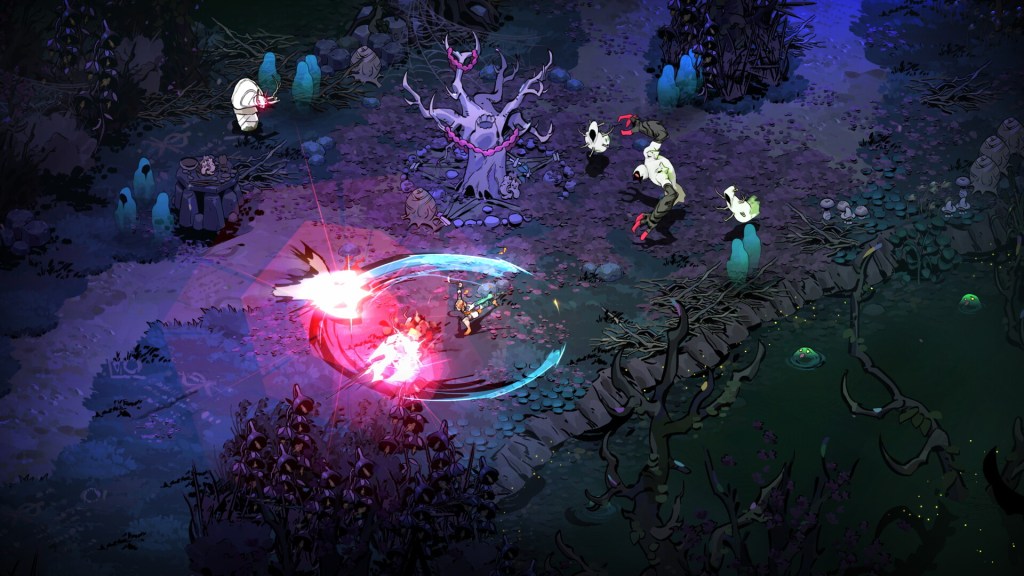
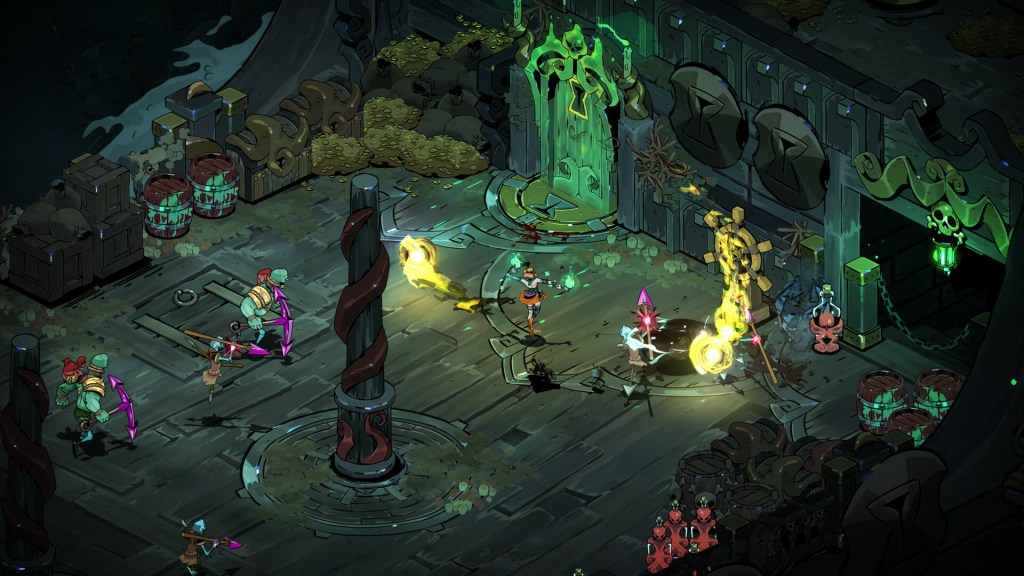
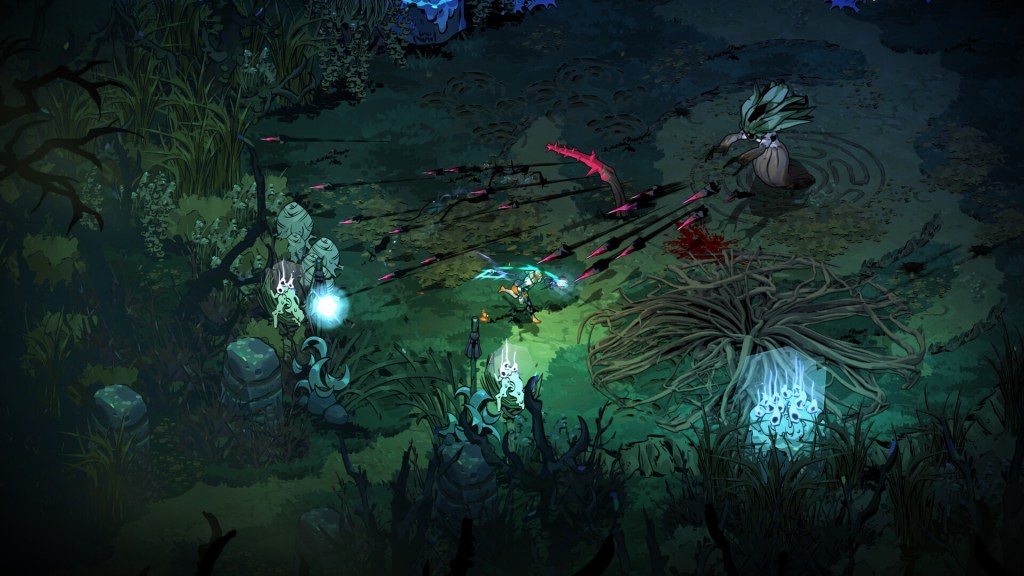
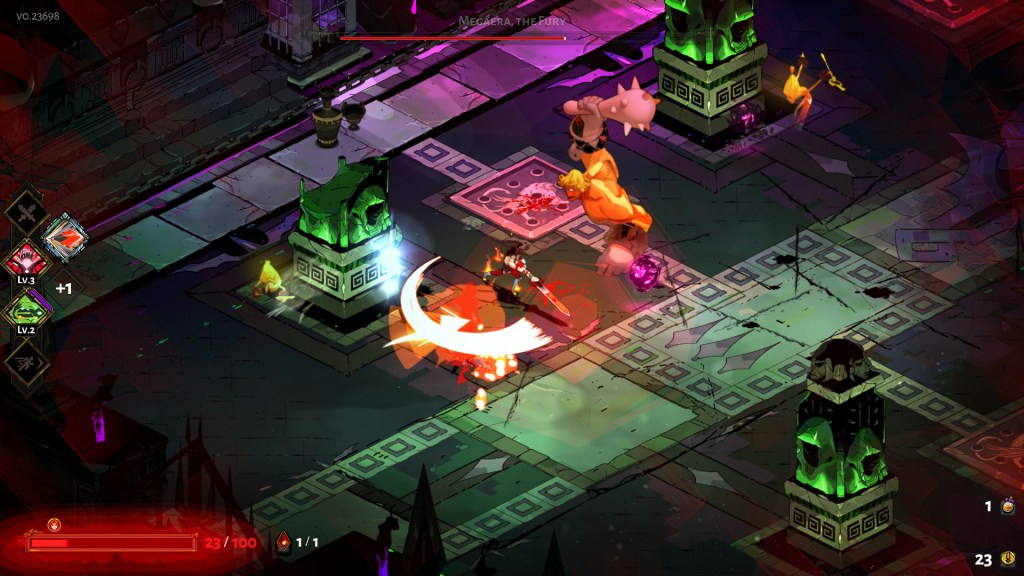
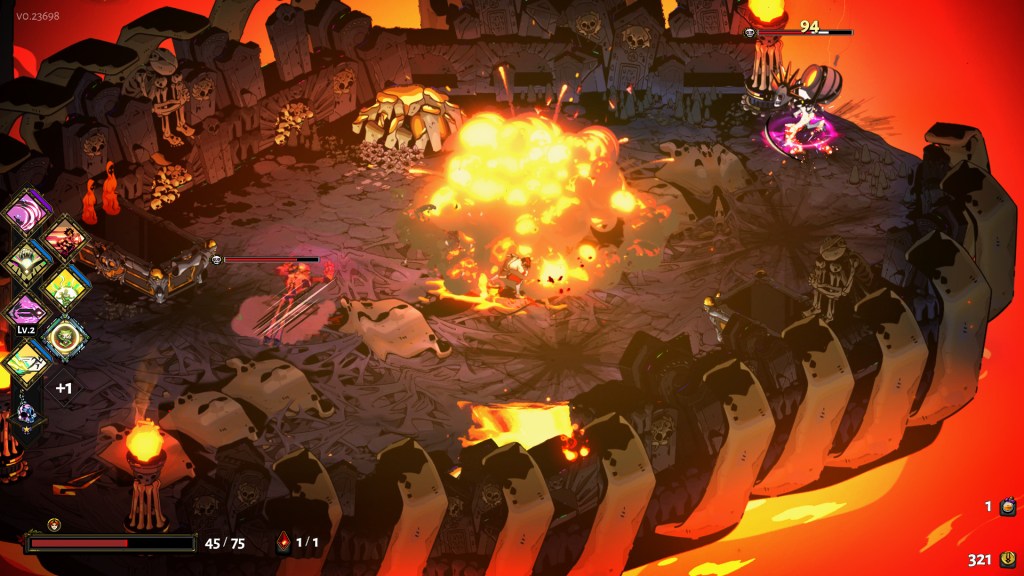
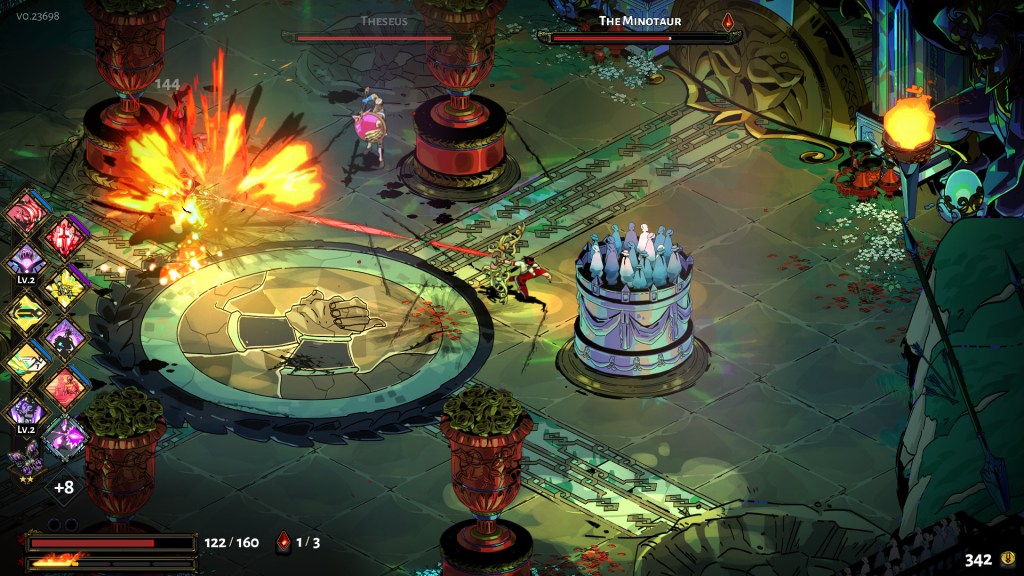
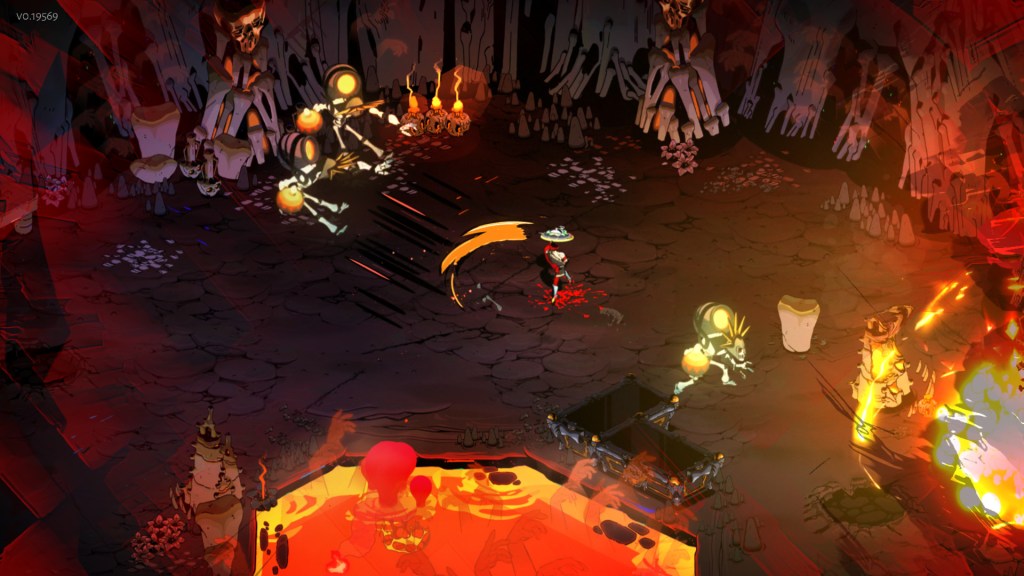
The gameplay as a whole is extremely fun as a simple beat-‘em-up. Hades feels like a modern arcade game, smashing through waves of weak enemies with a limited moveset. There aren’t any crazy combos, and the many of the enemy types are glorified punching bags. It’s fun to unleash hell on mobs, and Hades has great visual and audio feedback. The bosses are where I felt the meat of the challenge was, as you had to be fairly familiar with their movesets in order to avoid damage.

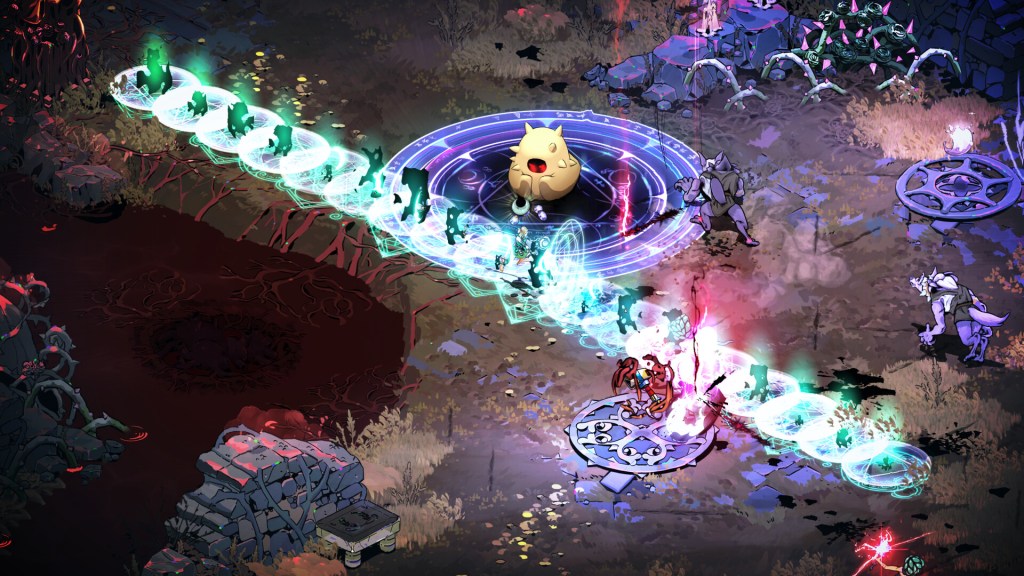
The combat is nothing revolutionary, but it is addictive. I did feel like at times it could be a bit button-mashy. Because of how snappy your controls are, it can be a pretty effective strategy to dash around a bunch and mash the attack button. Enemies that don’t have armor and are not bosses can easily be stun-locked if you just keep hitting them, making spamming attacks very potent. My only other issue is with the visual clarity, as the battlefield can quickly become cluttered with hyper-stylized visual effects. It can often be tricky to read what enemies are doing when there are a dozen different flashy visual effects firing off as you attack. But I ultimately don’t think it’s a huge issue considering that Hades is not a game that demands perfection or precise timing.

Overall, I believe Hades is a different breed of roguelite. With a heavy focus on meta-progression and character development, there is always something to work towards. It abandons some of the genre’s traditional frustrations like the influence of luck and lack of information. Hades was a ton of fun to play until I had a few clears under my belt, which is when I began to miss the truly random builds and combinations that I could acquire in other roguelites. It is for these reasons I give Hades an 8.5/10. It is a spectacularly well-crafted game, but it doesn’t boast the infinite replayabilty of the other games in its genre.