Resident Evil 3: Nemesis (1999)

The first two Resident Evil games are known for their dense environments that function as puzzle boxes. In comparison, Resident Evil 3: Nemesis is a sprawling action game. The increase in scope leads to a bombastic finale for the original trilogy. It doesn’t just retread the same ideas from its predecessors; it escapes from the narrow hallways of the mansion and police station and sets the player loose in the chaotic ruins of Raccoon City. While I did prefer the tighter experiences of the first two games, I did appreciate how Resident Evil 3: Nemesis expanded the scope and scale of the series.
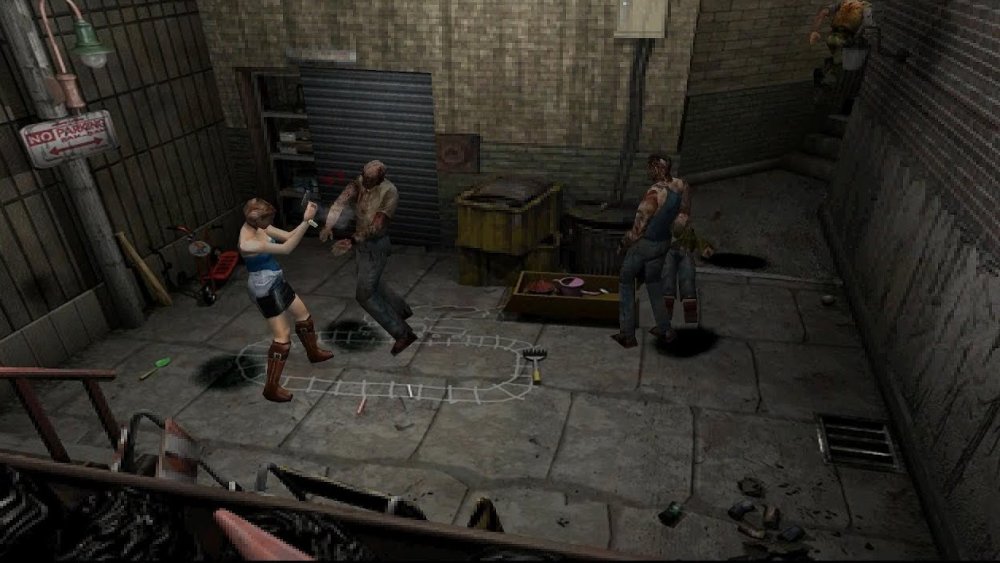
After returning to the city after escaping the mansion, Jill Valentine finds herself back in Raccoon City. But all of her rescue team colleagues have disappeared, and the city is aflame with zombies roaming the streets. A horrible mutant, Nemesis, is programmed to hunt down Jill as she is one of the remaining members of the team responsible for foiling Umbrella’s schemes.

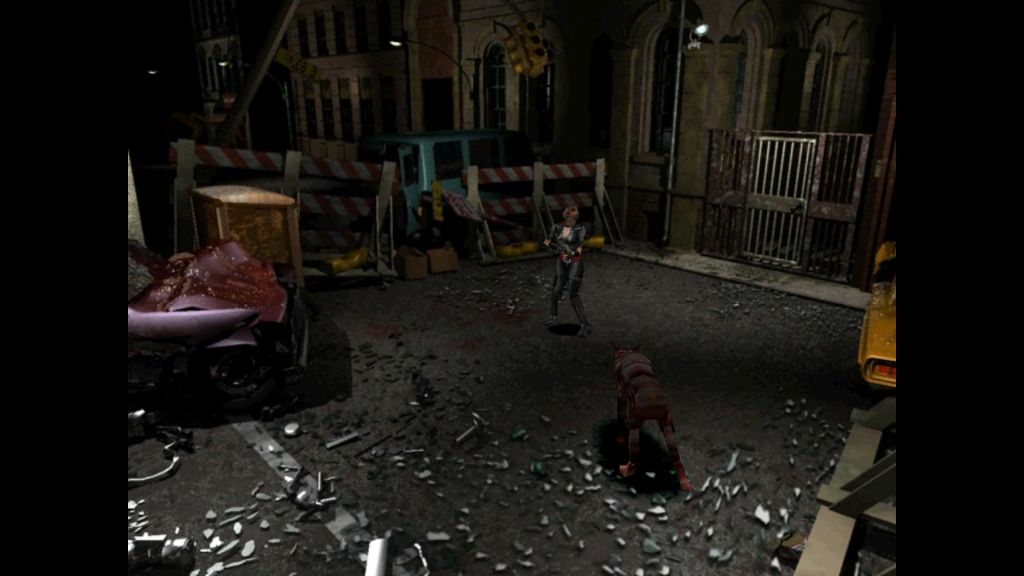
From the outset, Resident Evil 3: Nemesis is far more open than its predecessors. You will be roaming the streets, ducking in and out of numerous buildings to acquire the resources needed to proceed. I appreciated the change in environment, and the expanded scope allowed for a variety of different scenarios. Instead of spending the whole game in a single building, you’ll be heading to workshops, a cozy restaurant, an ominous clocktower, a zombie-filled hospital, and a sinister park. The larger streets allow for hordes of zombies and more action-fueled gameplay. 
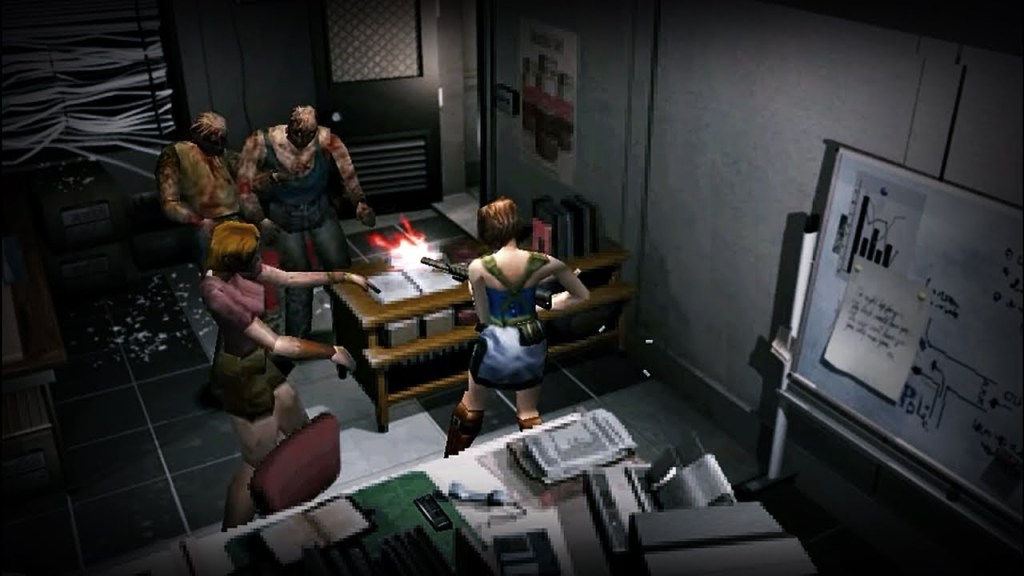
The main threat of Resident Evil 3: Nemesis is its namesake, the bioengineered mutant Nemesis. He roams the streets, hunting down Jill. There’re quite a few scripted chase sequences throughout the game in which the player can elect to run from Nemesis or fight him. Fighting him is risky and consumes a ton of ammunition, but rewards the player with weapon parts to upgrade your arsenal. And it is in this that the game’s key philosophy becomes clear: an emphasis on player choice.

The first two games in the series of course had some decision making around if and when to consume resources such as ammo, health packs, and save ribbons. But the primary driver of those games were its lock-and-key puzzles. Discovering objects and information to be used elsewhere in the world to unlock a previously blocked path. Of course, that still exists in Resident Evil 3: Nemesis, but to a lesser extent. Instead, this iteration of the series constantly wants the player to make choices to alter their experience.
There are the obvious choices like fighting or running from Nemesis, it presents an upfront risk and hefty cost to potentially become stronger later. There are also frequent binary choices presented in quicktime events that lead you down slightly different paths. But there are some more subtle decisions being made as well, none being as crucial as the ammo crafting system. Throughout the game gunpowder is scattered in two main types. Combining gunpowder in different quantities creates different types of ammo. Do you want to spend a ton of gunpowder to create immensely powerful freeze rounds? Or stockpile a few boxes of gunpowder type B to create extra shotgun ammo? Or do you desperately need ammo now so you spend a box of gunpowder type A for a handful of handgun bullets? The player has so many ways to tackle the game, showcasing the game’s strength of player choice.

Having so many possibilities makes Resident Evil 3: Nemesis a prime candidate for replaying, and this is further supported by the randomization aspect of the game. Items and enemies are partly randomized, making every play through a little different. While I think I prefer the multiple characters of Resident Evil 2 that change the route significantly, having randomized aspects and tons of decision making is hugely impressive for a horror game from 1999. 
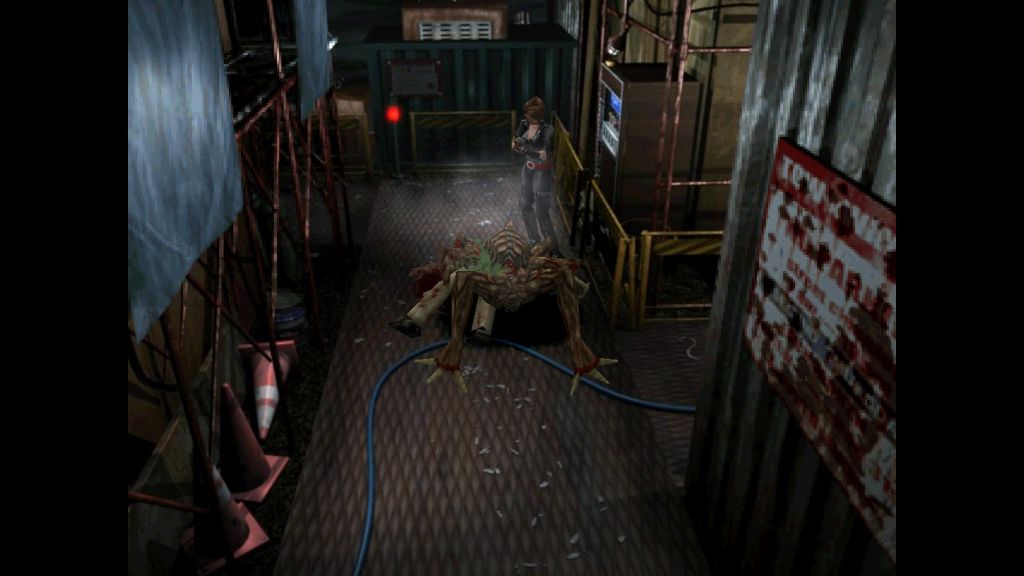
The increased scope of Resident Evil 3: Nemesis, came at a cost. The dense environments of the first couple of games were deemphasized in favor of increased action. Truthfully, I kind of missed the tighter environments. Trying to figure out how to escape the cramped hallways of the mansion or the police station was somehow cozy. It sounds insane for a horror game, but becoming intimately familiar with the puzzle-box worlds was a comforting experience despite the threat of zombies lurking around every corner. While exploring the chaotic ruins of Raccoon City was a welcome change-of-pace, I miss the more atmospheric and oppressive corridors of the first two games.

Paradoxically, despite mixing up the formula, this entry also feels derivative of its predecessors when it comes to horror. While the series stories can often feel like schlock-horror, the real risk of unknown enemies makes traversing the world terrifying. You never know what dangers you will come across, threatening you to lose huge chunks of progress. Careful navigation is imperative, leading to a subconscious fear of any new enemies. The problem with Resident Evil 3: Nemesis is that there aren’t any new enemies. The first game obviously was novel and every enemy stoked fear, and the sequel introduced the hulking super-enemies like Mr. X who followed you around. This time around, you’ve seen all the basic enemies before, and Nemesis himself is a retread of the concept of Mr. X. There aren’t any new threats, and if you’ve played the first two games it’s unlikely that you will be scared by the retreaded ground of the third game. 
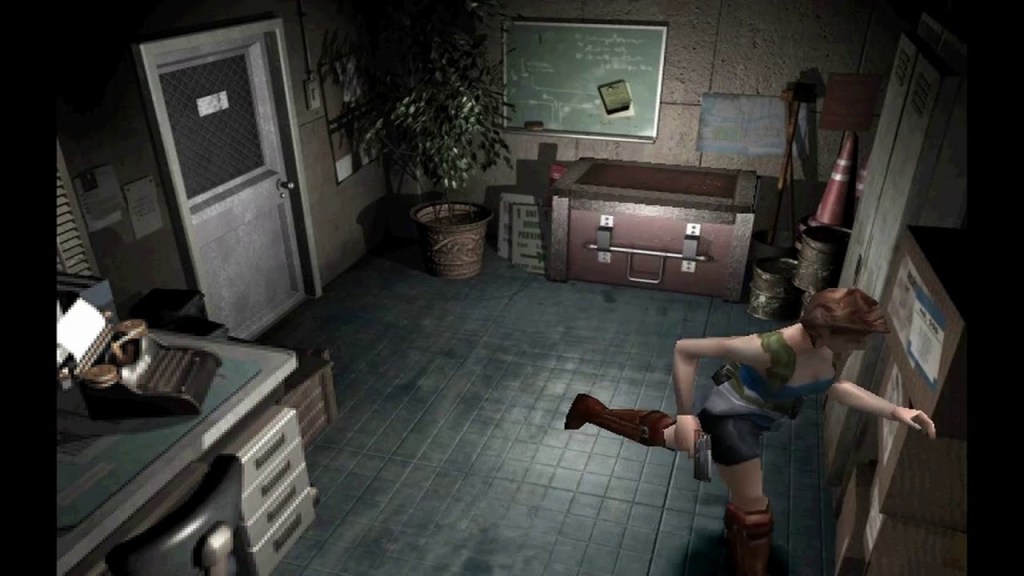
As a finale to the original trilogy, I think Resident Evil 3: Nemesis did an excellent job at escalation. The burning city and hordes of zombies make Spencer Mansion look downright calm in comparison. The introduction of ammo crafting as well as randomized enemy and item placement emphasizes the importance of decision making in this entry in the series. But despite these strengths, I missed the denser worlds and more novel experiences that the first two games provided. Resident Evil 3: Nemesis marks a clear shift towards more action and away from the escape rooms of the first games in the series. And even though I enjoy the former, I prefer the latter.

UFO 50 (2024)

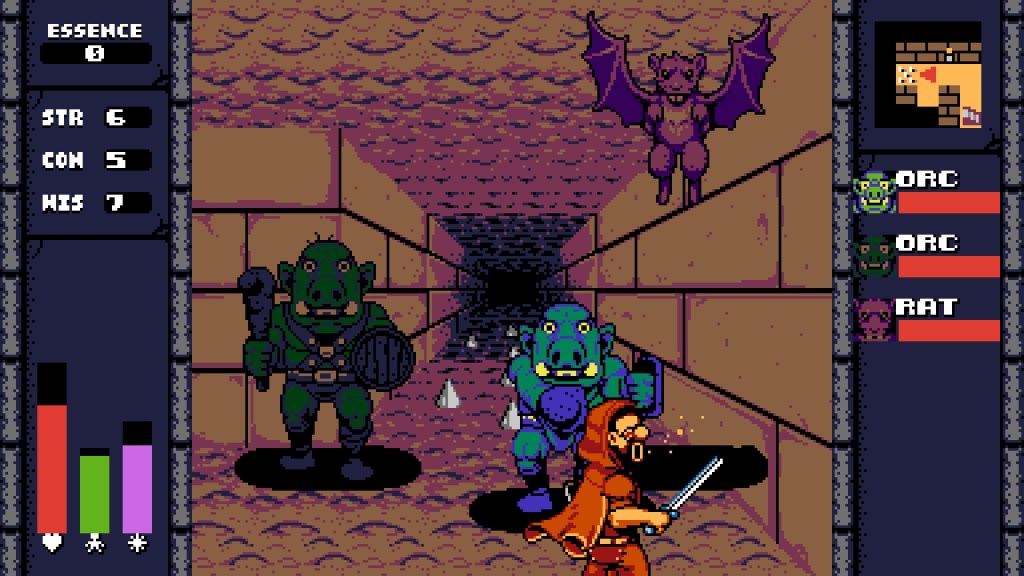
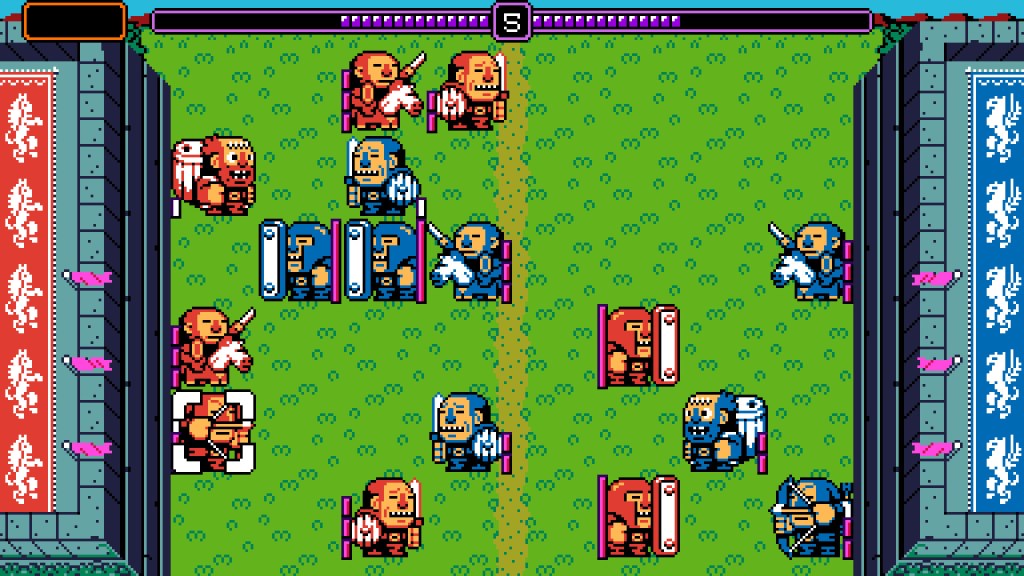
You stumble across a dusty cardboard box in an abandoned storage unit, inside is a retro video game console along with 50 games from a company you’ve never heard of. That’s UFO 50. A collection of 50 retro games from an alternate universe, each showing the progression of the fictional developers UFO Soft. The games range from platformers, to sports games, to fighting games, to shmups (shoot-‘em-ups), to puzzle games, to strategy games, each with a unique twist or gimmick. The real developers of the UFO 50, Mossmouth, claim that these are retro games with modern design sensibilities, which I think is a perfectly apt description.

Retro games are notoriously difficult and are oftentimes clunky to play. UFO 50 does a fantastic job at maintaining a reasonable level of difficulty without making these games frustrating to play. Many of the games in the collection have slow movement, punishing mechanics, or initially uncomfortable control schemes. But it doesn’t take long for each title to click, and once you figure out how to play the smart design begins to unveil itself. 

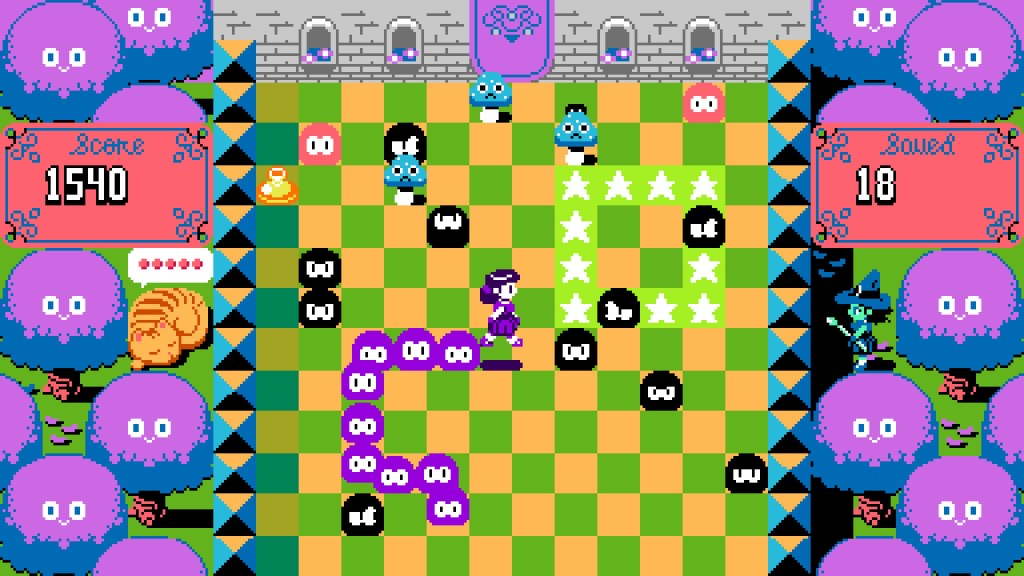
Each game in the collection has something that makes it stand out. There’re no straight up clones of actual retro games, although some of the games do feel at least inspired by classic titles. Take one of the earlier games in the collection for example, Magic Garden. It takes elements from Snake and Pacman as you lead friendly slimes to safety and use power-ups to clear out evil slimes. But Magic Garden is its own game, shepherding slimes to the scoring zone and collecting power-ups has intricacies as you are encouraged to take risks and let a ton of slimes occupy the board before chaining together multiple power-ups for an exponential score increase. There’s an edge of risk and reward if you want to maximize your points.

There’s an absurd level of variety available in UFO 50. I’m extremely confident that there is a game in the collection for everybody. And for $25, you really can’t go wrong. And don’t think that these are just short little arcade games either. There are fully fledged RPGs and metroidvanias that take hours to complete. Many of these titles could easily be standalones. Mini & Max for example is a genius little metroidvania in which you try to escape a supply closet by shrinking down and exploring the shelves and talking to the micro-civilizations that are invisible to the naked eye. Grimstone is a turn-based RPG that is over a dozen hours from start to finish. You could play UFO 50 for 100 hours and barely scratch the surface. If you truly want to 100% complete the collection, you are looking at 300ish hours. Personally, I have not clocked even remotely close to that number but this is a game that I am planning to play and revisit for a long, long time.

A smart decision was made to give every game some reasonable milestones to achieve. Every game has a simple challenge to earn a “gift” which goes into the little house on the console which is cute. You earn a gold trophy for beating each game. And you can earn the “cherry” by completing whatever additional challenge there is after completing the game, usually this is getting a high score or something along those lines. I think these tiers of achievements makes every game more approachable and presents attainable goals as you slowly get better at each game.

I loved the dedication to the fictional company of UFO Soft. Each game has a short blurb about its development and it’s fun to recognize the fictional names of the developers in the credits of each game. There’s a handful of sequels across the collection, and I enjoyed the references to the company’s other games as I played. It was interesting to watch UFO Soft evolve in design and technology. It was a brave decision by Mossmouth to have the first game in the collection be Barbuta, an esoteric metroidvania with no music, no color, painfully slow movement, unfair traps, and no quality-of-life features. But it was the perfect origin to the UFO Soft mythos. A game developed by a sole employee with extreme technical limitations and no game design experience. Following the evolution of UFO Soft is a journey of its own, and there’s a layer of secrets to be discovered for dedicated players.

The presentation of the collection is fantastic the whole way through. Mossmouth had to make sure every game fit its respective era and chronological place in the collection. All the games look good for being retro games and have distinctive designs and characters. But what I really want to highlight is the music. Oh my god. There are so, so many excellent tracks in this game. In the alternate universe where UFO Soft is real, I could easily see these tunes being as memorable as classics like the Super Mario Bros theme is to us.

I think that the size and breadth of the collection is the greatest strength and weakness of UFO 50. While it is exciting to boot up the game and choose from 50 games, not having to commit to any given game, I also found myself treating each one as disposable. Since the games are difficult and often have unconventional control schemes, I found it very easy to not give each game a fair chance. Dusting off a cartridge and playing for 5 minutes before exiting and trying something else was a common occurrence initially. After noticing this pattern, I forced myself to try to give every game more attention. I’m still working through the majority of the collection, but I am glad that I slowed down to really appreciate each game. The downside is that some of the games never do click, even after putting time into them. Planet Zoldath and Combatants are examples of games that I think are just not very good. 

Since I think that it can be a bit intimidating to know where to start with such a massive collection, I wanted to share some of my favorite games that I’ve played so far. While part of the beauty of UFO 50 is that everyone has different favorites, I did want to highlight these five games. Hopefully these suggestions can give you some options to try if you have trouble choosing where to begin.

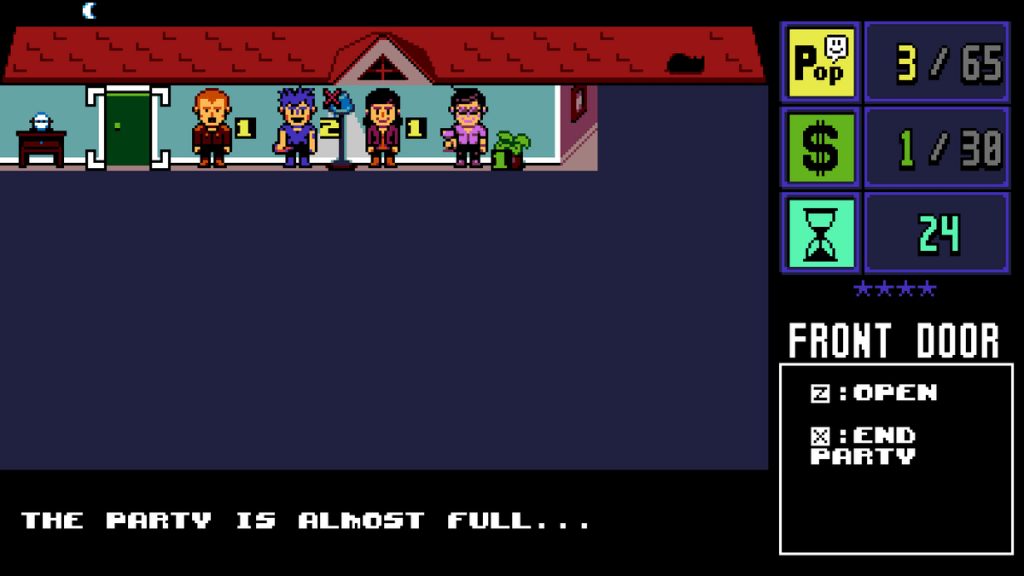
Party House is the first game in the collection that really clicked with me. It’s a deck builder where you are trying to throw the ultimate party. By spending popularity to add new guests to your rolodex you try to accumulate more popularity and cash every night. After 25 nights you have to have 4 “starred” guests attend your party to win. There’s a good amount of decision making involved, but what makes Party House interesting is its “push your luck” mechanics. Troublemaker guests typically earn more popularity and money, but more than two of them at once will cause the cops to show up. And there’s also the decision of when to stop spending popularity on normal guests and when to start acquiring the “starred” ones. There’s a lot of delicate choices to balance, and Party House is a ton of fun.

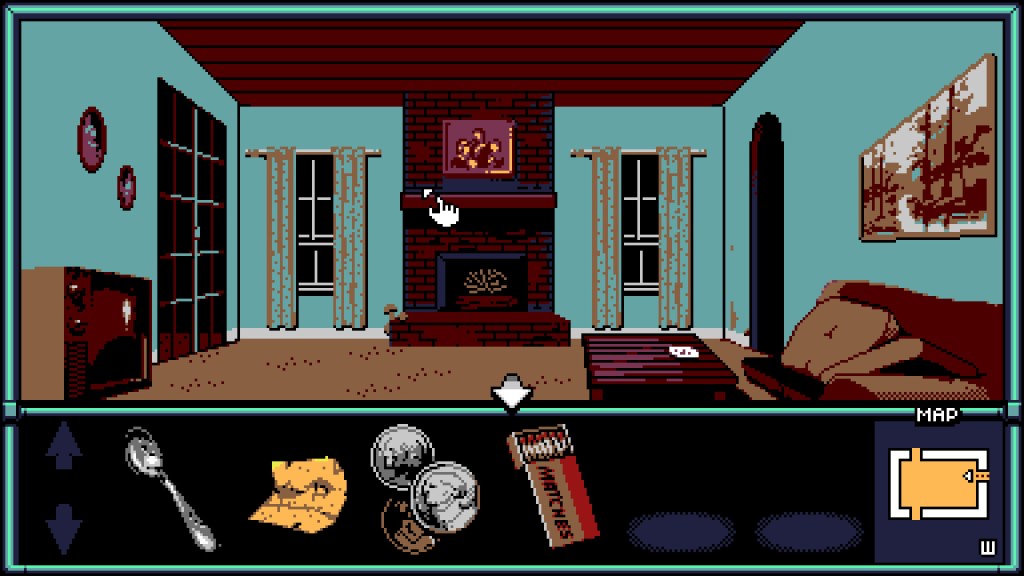
Night Manor is a point-and-click horror game that takes place in a disarrayed mansion filled with trash and fungus. You have to figure out a way to escape while avoiding the zombie-like man infected with fungus who is hunting you. If you run into him, your cursor jitters to simulate the terror your character feels, making it harder to click on doors to escape as he chases you through the manor. Old point-and-click games often have moments of ridiculous leaps in logic, but Night Manor avoids this with its puzzles. I found that everything made sense and I couldn’t put the game down until I played through the whole thing over the course of a few hours. There’s also a story to uncover through notes of what happened at the manor which was fun to discover.

Seaside Drive is a stylish shmup, but you can only move left and right as you drive your car down the road. As you dodge projectiles and enemies you have to move back and forth quite a bit to keep up your meter. You build up charge by skidding to the left, and expend charge by shooting and driving right. The higher the meter, the more damage your shoots do. I love this game because it seems crazy difficult at first, but I quickly learned how to maneuver and overcome the challenge. It’s so satisfying to clear the stages that were giving you a hard time without getting hit at all. Seaside Drive also has incredible aesthetics and one of my favorite songs in the whole collection. It’s a slick, stylish, and fun to play shmup with perfectly tuned difficulty.

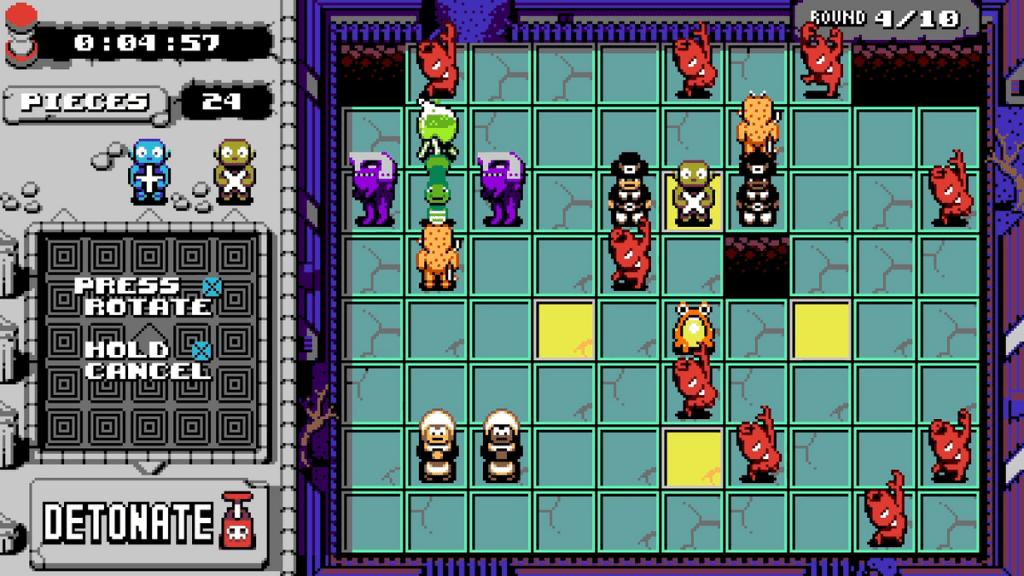
Devilition is my favorite puzzle game of the collection that I’ve played so far. A grid is filled with villagers and demons and you have to place pieces that kill the demons. The twist is that your pieces have to act like a chain reaction, each one can only be set off if hit by another. You have to keep track of what pieces you’ve placed and how to connect the chain. There’s 10 rounds and any pieces that you don’t use carry over to the next round, encouraging you to be efficient in your placement. I enjoyed watching the Rube Goldberg machine go off and clear the demons off the board as I prayed that I didn’t mess up and miss a crucial link in the chain. 

Waldorf’s Journey is a platformer that takes place entirely within the dream of a walrus. It’s reminiscent of a golf game as you charge up and launch Waldorf the walrus across gaps and try to precisely maneuver him to land on tiny patches of ice. You really have to master the momentum as you use your flight meter to propel Waldorf forward. It’s tempting to fly as far as you can on every jump, but it becomes incredibly difficult to slow down enough to safely land. There’s a few different power-ups and items to help you along as you inch towards revelation at the end of the dream. I also love the visuals, music, and minimalist story in this game as well. 

I think UFO 50 is a game that I am going to be playing for the rest of my life. Or at least for a very long time. The breadth and depth of this collection is unmatched. After dozens of hours played, I’ve barely scratched the surface of what UFO 50 has to offer. The fictional history of UFO Soft ties the whole thing together beautifully. It is for these reasons that I give UFO 50 a 9.5/10. UFO 50 is a paradise for fans of retro games with its dedication to melding retro gaming experimentation with modern design considerations.