Resident Evil 3: Nemesis (1999)

The first two Resident Evil games are known for their dense environments that function as puzzle boxes. In comparison, Resident Evil 3: Nemesis is a sprawling action game. The increase in scope leads to a bombastic finale for the original trilogy. It doesn’t just retread the same ideas from its predecessors; it escapes from the narrow hallways of the mansion and police station and sets the player loose in the chaotic ruins of Raccoon City. While I did prefer the tighter experiences of the first two games, I did appreciate how Resident Evil 3: Nemesis expanded the scope and scale of the series.
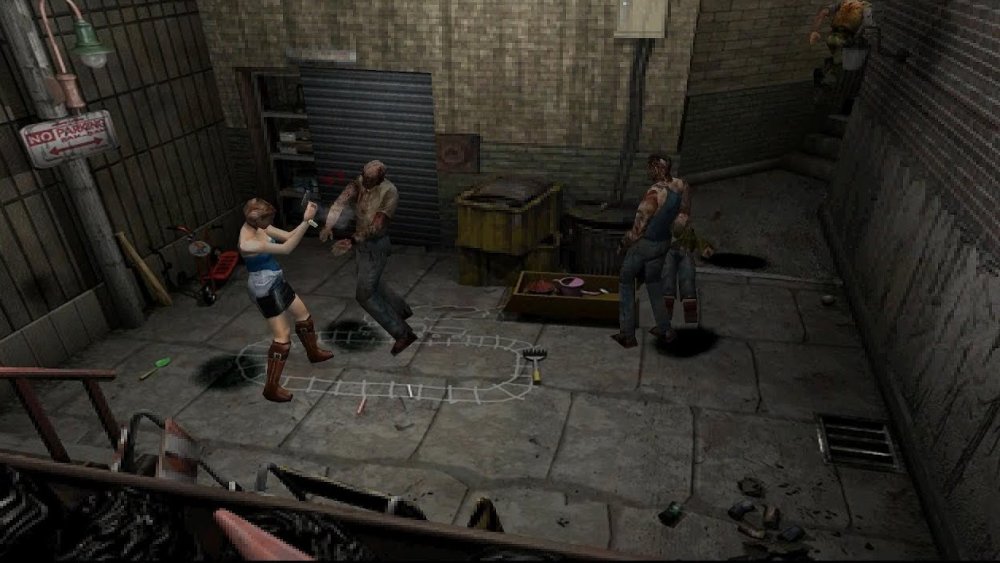
After returning to the city after escaping the mansion, Jill Valentine finds herself back in Raccoon City. But all of her rescue team colleagues have disappeared, and the city is aflame with zombies roaming the streets. A horrible mutant, Nemesis, is programmed to hunt down Jill as she is one of the remaining members of the team responsible for foiling Umbrella’s schemes.

From the outset, Resident Evil 3: Nemesis is far more open than its predecessors. You will be roaming the streets, ducking in and out of numerous buildings to acquire the resources needed to proceed. I appreciated the change in environment, and the expanded scope allowed for a variety of different scenarios. Instead of spending the whole game in a single building, you’ll be heading to workshops, a cozy restaurant, an ominous clocktower, a zombie-filled hospital, and a sinister park. The larger streets allow for hordes of zombies and more action-fueled gameplay. 
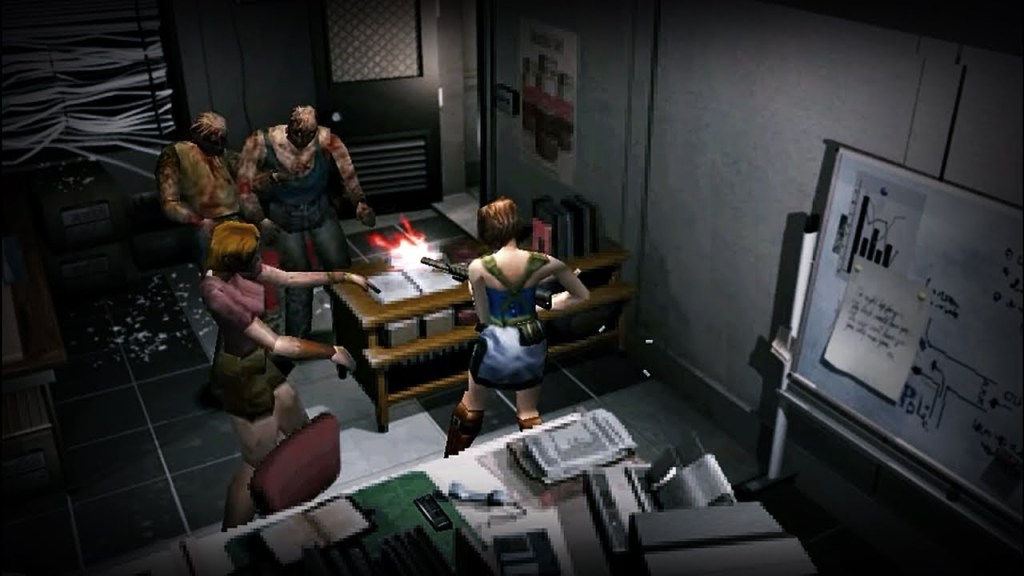
The main threat of Resident Evil 3: Nemesis is its namesake, the bioengineered mutant Nemesis. He roams the streets, hunting down Jill. There’re quite a few scripted chase sequences throughout the game in which the player can elect to run from Nemesis or fight him. Fighting him is risky and consumes a ton of ammunition, but rewards the player with weapon parts to upgrade your arsenal. And it is in this that the game’s key philosophy becomes clear: an emphasis on player choice.

The first two games in the series of course had some decision making around if and when to consume resources such as ammo, health packs, and save ribbons. But the primary driver of those games were its lock-and-key puzzles. Discovering objects and information to be used elsewhere in the world to unlock a previously blocked path. Of course, that still exists in Resident Evil 3: Nemesis, but to a lesser extent. Instead, this iteration of the series constantly wants the player to make choices to alter their experience.
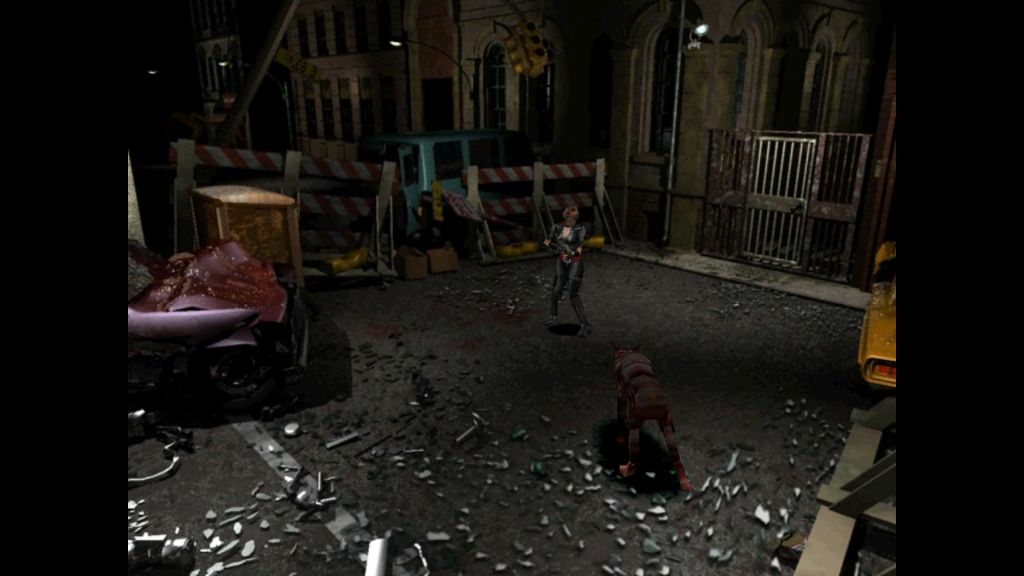
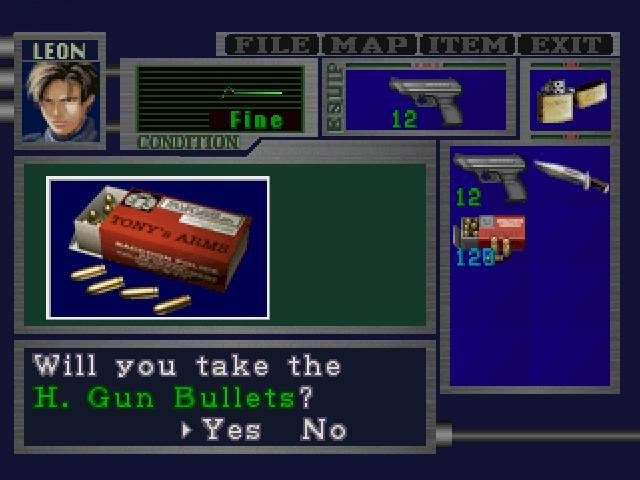
There are the obvious choices like fighting or running from Nemesis, it presents an upfront risk and hefty cost to potentially become stronger later. There are also frequent binary choices presented in quicktime events that lead you down slightly different paths. But there are some more subtle decisions being made as well, none being as crucial as the ammo crafting system. Throughout the game gunpowder is scattered in two main types. Combining gunpowder in different quantities creates different types of ammo. Do you want to spend a ton of gunpowder to create immensely powerful freeze rounds? Or stockpile a few boxes of gunpowder type B to create extra shotgun ammo? Or do you desperately need ammo now so you spend a box of gunpowder type A for a handful of handgun bullets? The player has so many ways to tackle the game, showcasing the game’s strength of player choice.

Having so many possibilities makes Resident Evil 3: Nemesis a prime candidate for replaying, and this is further supported by the randomization aspect of the game. Items and enemies are partly randomized, making every play through a little different. While I think I prefer the multiple characters of Resident Evil 2 that change the route significantly, having randomized aspects and tons of decision making is hugely impressive for a horror game from 1999. 
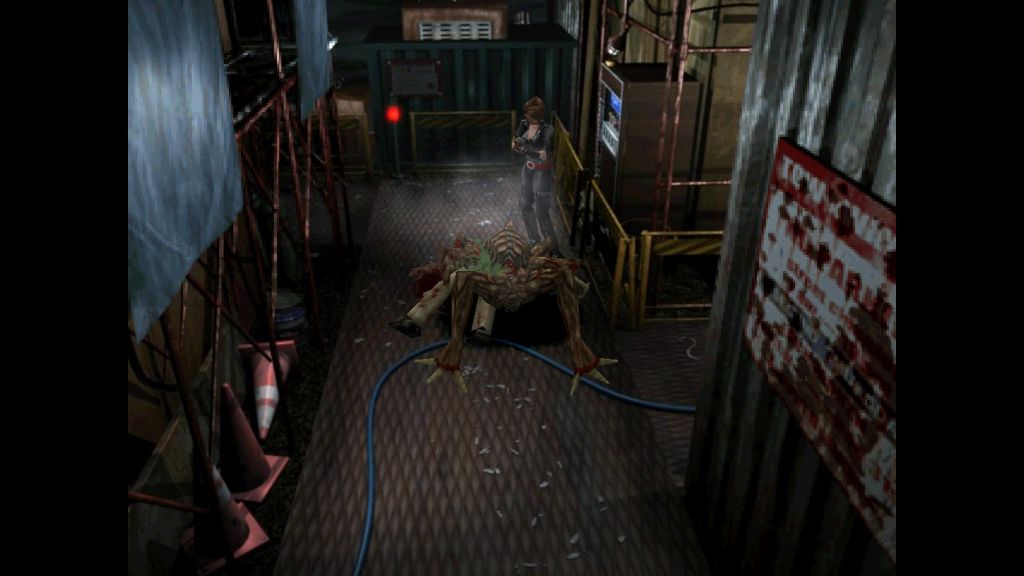
The increased scope of Resident Evil 3: Nemesis, came at a cost. The dense environments of the first couple of games were deemphasized in favor of increased action. Truthfully, I kind of missed the tighter environments. Trying to figure out how to escape the cramped hallways of the mansion or the police station was somehow cozy. It sounds insane for a horror game, but becoming intimately familiar with the puzzle-box worlds was a comforting experience despite the threat of zombies lurking around every corner. While exploring the chaotic ruins of Raccoon City was a welcome change-of-pace, I miss the more atmospheric and oppressive corridors of the first two games.

Paradoxically, despite mixing up the formula, this entry also feels derivative of its predecessors when it comes to horror. While the series stories can often feel like schlock-horror, the real risk of unknown enemies makes traversing the world terrifying. You never know what dangers you will come across, threatening you to lose huge chunks of progress. Careful navigation is imperative, leading to a subconscious fear of any new enemies. The problem with Resident Evil 3: Nemesis is that there aren’t any new enemies. The first game obviously was novel and every enemy stoked fear, and the sequel introduced the hulking super-enemies like Mr. X who followed you around. This time around, you’ve seen all the basic enemies before, and Nemesis himself is a retread of the concept of Mr. X. There aren’t any new threats, and if you’ve played the first two games it’s unlikely that you will be scared by the retreaded ground of the third game. 
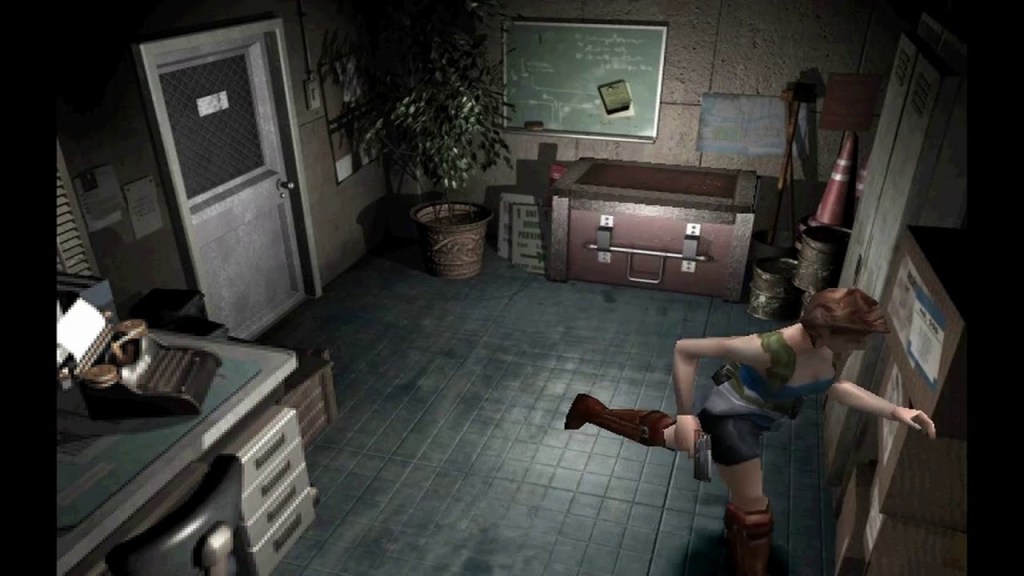
As a finale to the original trilogy, I think Resident Evil 3: Nemesis did an excellent job at escalation. The burning city and hordes of zombies make Spencer Mansion look downright calm in comparison. The introduction of ammo crafting as well as randomized enemy and item placement emphasizes the importance of decision making in this entry in the series. But despite these strengths, I missed the denser worlds and more novel experiences that the first two games provided. Resident Evil 3: Nemesis marks a clear shift towards more action and away from the escape rooms of the first games in the series. And even though I enjoy the former, I prefer the latter.
Resident Evil 2 (1998)

It’s rare to find a sequel that is a complete and total improvement from the original. More often than not, I find that sequels often are weaker than their predecessors. It makes sense because for an original work to be successful enough to create demand for a sequel it has to have something special about it. But sequels often just ride on the success of their predecessors. That’s not the case with Resident Evil 2. Resident Evil 2 iterated on every aspect of the original, polishing and refining the bones of the iconic survival horror title as well as adding its own unique ideas. I encourage you to read my review of the original Resident Evil to better understand my perspective on its sequel.

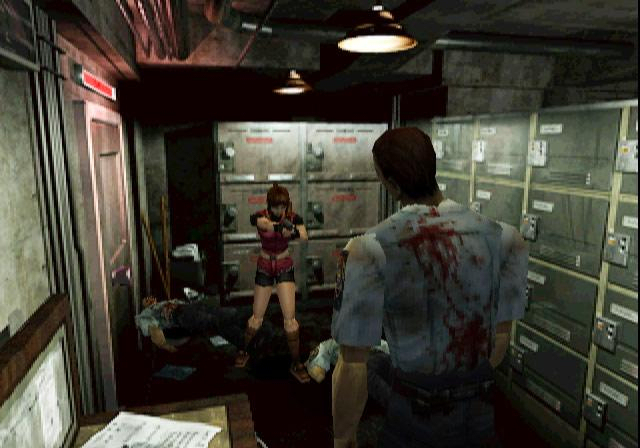
Resident Evil 2 is the first game ever directed by Hideki Kamiya, who is now renowned in the industry for his work on Devil May Cry, Bayonetta, and Ōkami. Kamiya focused on the story, scraping and reworking the first drafts of the game. The main characters, Claire and Leon, end up in the zombie-infested Raccoon City. They get trapped in the sprawling police station, which owes its grandiose architecture and eclectic decoration to the fact that it was originally an art museum. The diverging paths of Claire and Leon are excellently interwoven to encourage the player to play both paths to see how they work together and how the events of the story unfold.

The writing and presentation of the story are definitely the biggest improvements from the first game. The voice acting, while still a little stilted, is so much better than the often comedic delivery in Resident Evil. Character models also got a glow-up, giving Claire and Leon more detail and fidelity. The writing in particular went from cheesy to actually thoughtful and character-driven.

While searching for her brother Claire quickly becomes an elder sister figure to Sherry, a young girl who is one of the lone survivors of the outbreak. Leon has a brief romantic relationship with the spy Ada Wong, who’s murky motivations leave you wondering if she is even on your side until the end. Even minor characters like the police chief are memorable. When you first meet him, you wonder how he survived, and something is very obviously off about him, but he gets more disturbing as you learn more about him. I wouldn’t say Resident Evil 2 is a masterpiece of storytelling, but the thriller plotlines and thoughtful characters are well-done, especially for a game of its age.

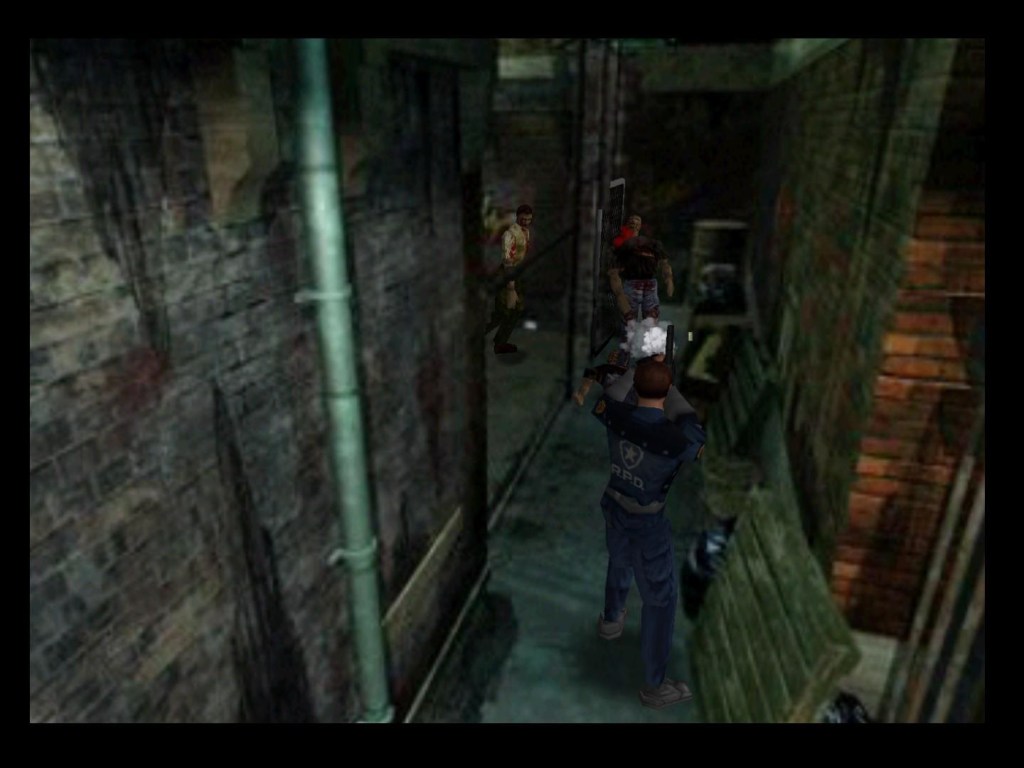
Resident Evil 2 is a survival-horror puzzle box. Like its predecessor, action takes a backseat to managing your resources and devising a strategy to escape the police station. With limited ammo, limited health-items, and limited saves, you have to think carefully about where to go next. While most enemies can be easily dispatched with the handgun, conserving ammo for the more challenging encounters is prudent. Both Claire and Leon have terrifying and monstrous entities that stalk them throughout the game, adding an additional element of tension as you never know when you’ll have to run for your life. You may think you can hold off on saving as you are only planning on going down the hall, but one of these bulky beasts could be waiting for you in a place you previously thought was safe.

The core gameplay remains largely the same from the game’s predecessor. Manage resources, solve some puzzles, navigate the zombie-filled halls of a creepy building, and occasionally shoot your way through tight spaces. While there are some new weapons, I think the most notable improvement is the diverging paths of Claire and Leon. Replaying the game is a whole new experience with new equipment, enemy placement, puzzles, and bosses. In some instances, you can even affect the world in the other character’s story. Playing both paths even unlocks the true ending and final boss fight. 

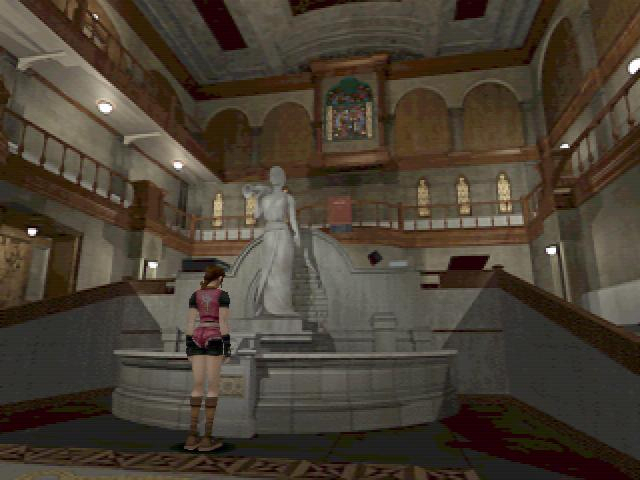
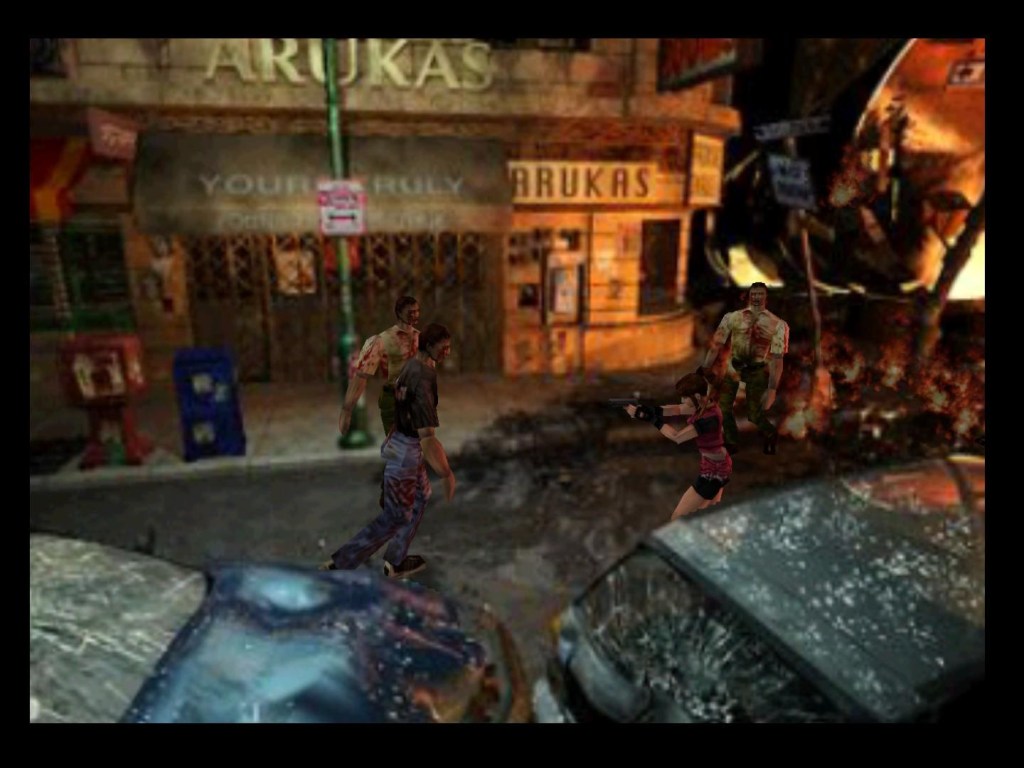
I loved the setting of Resident Evil 2. There are some brief urban sequences as you arrive in Raccoon City, running through the fires, wreckage, and hordes of zombies. There’s a sense of mayhem that is only calmed when you arrive in the police station. The police station being a repurposed art museum gives it a ton of character. From the floor layout, to the architecture, to the décor of paintings and busts, there’s a lot of charm. From there, the game descends further and further down into the grimy tunnels and secrets below the station.

My biggest problems with the game are a result of its age. Movement is still using tank-based controls, which can be supremely awkward to get used to. Especially because of the frequently-shifting camera angles. While I did get used to it after a while, more precise movement was challenging. It’s particularly frustrating when trying to run past zombies or turn during a boss fight. The dated graphics also lessens the horror and tension. The horrifying creatures just look like splotchy and blocky figures, and the fixed camera perspectives mean you rarely get surprised or snuck-up on. 

Overall, Resident Evil 2 is a shining achievement in sequel development. It improved on every aspect of the original: story, characters, setting, presentation, and gameplay. The inclusion of two separate characters with their own stories and remixed gameplay was brilliant and excellently executed. While there is no doubt that the game shows its age in a couple places, once you get adjusted to the control scheme it is still a joy to play. I can’t wait to continue through the series and see how it develops from here, and I am particularly excited to revisit the recent remake of this all-time classic game.

Resident Evil (1996)

The genre of survival horror has become synonymous with Resident Evil. It is one of the most storied and recognizable franchises in video games. But I had never played or engaged with any of its numerous titles in any way. With the recent resurgence and renaissance of Resident Evil, I figured I had a unique opportunity to experience not only the series, but survival horror as a whole. I could take a journey through the life and evolution of the genre. Starting with its genesis in 1996.

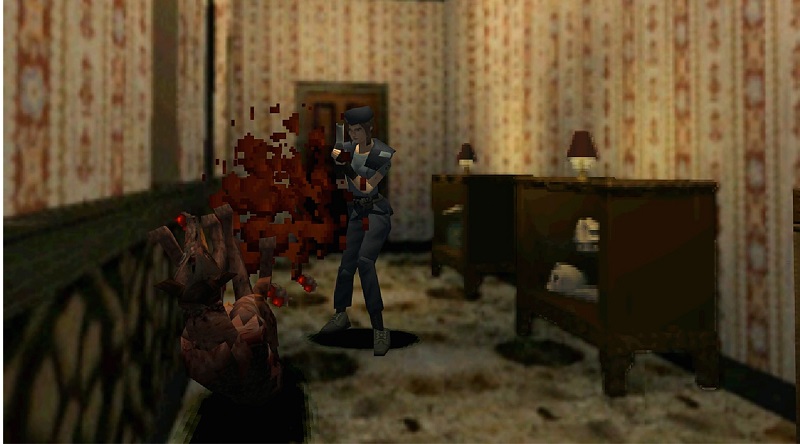
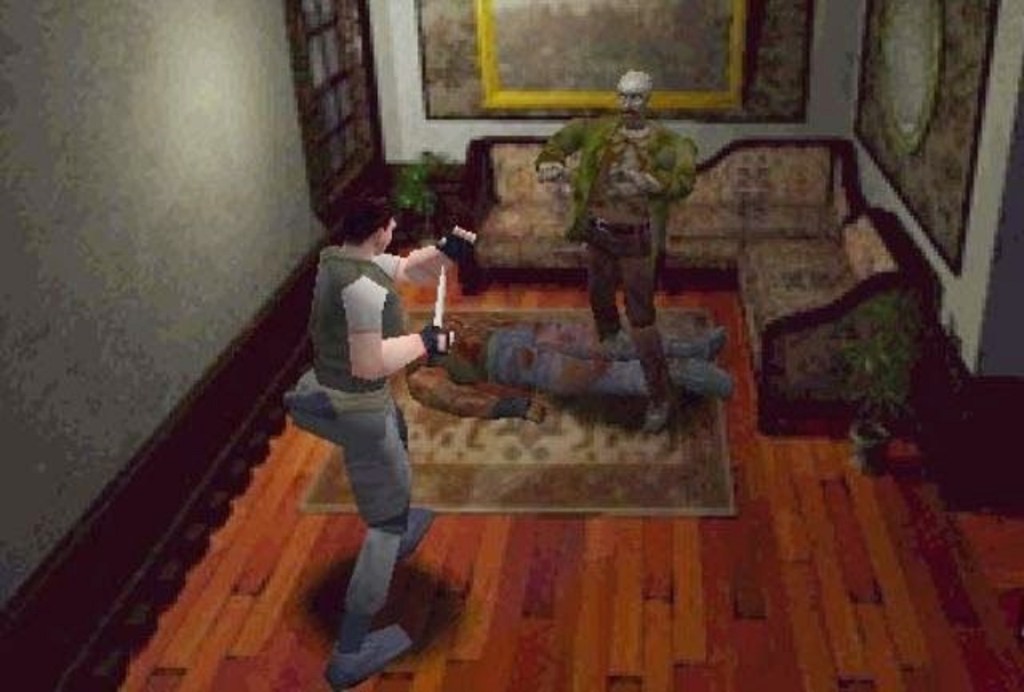
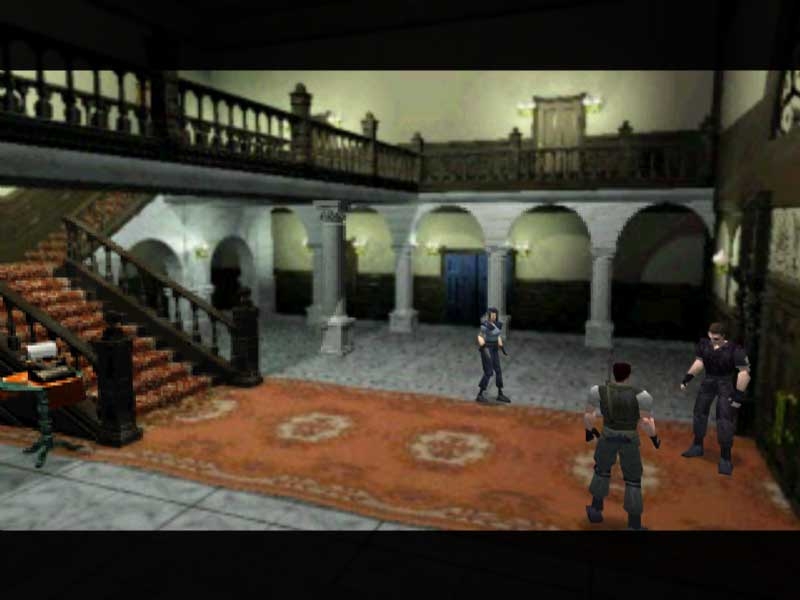
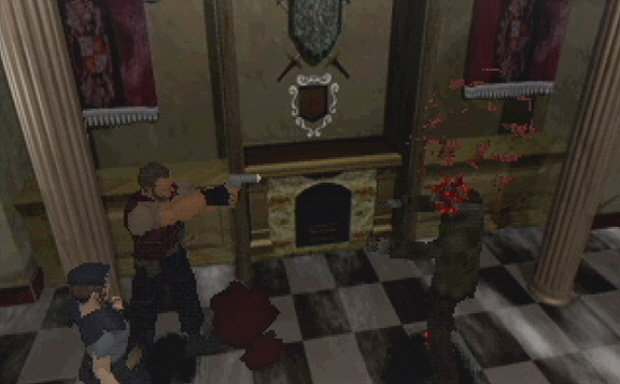
I was surprised how engaging I found Resident Evil to be, despite its age. The mansion is a terrific environment to explore. Every room is full of secrets that you have to probe for. It’s a labyrinth that you must delve deeper and deeper into if you want to escape. It’s a giant escape room filled with zombies and other horrific creatures. Resident Evil mastered the feeling of tension. Simply walking down hallways or dealing with a single enemy is a stressful affair.

The inventory system plays a large role in the tension. Even playing on Easy Mode, the player only has 8 inventory slots. You have to juggle numerous items such as your weapons, ammo, medicine, herbs, and key items used in puzzles. You can’t drop items, so you should almost always have a free slot or two open in case you find valuable items. The reason this system provides so much tension is that you have such limited resources at your disposal.

Ammo and healing items are relatively sparse. Zombies are threatening as they can deal massive damage if they latch onto you. Every time you encounter an enemy you are given a choice: fight or attempt to dodge. Fighting is a surefire way of making it through without taking damage, but ammo is precious and you could find yourself in situations where you run out of ammo permanently. Dodging enemies is risky, as you could get caught and sustain immense damage. The limited inventory also means you can’t carry everything with you at once, so you have to make strategic choices have how many healing items and weapons you want to bring.

You can only save in designated safe rooms, and depending on which version you are playing, it also requires a limited item to save. Having limited saves means you are less likely to save at every opportunity. Which then means that dying will set you farther back as you are saving less often. This contributes to the feeling of tension and danger as you explore the mansion. It’s a constant balancing act of risk and reward. Will you play on a knife’s edge to preserve resources, but risk dying and facing a massive setback? Or will you engage in combat to guarantee your safety but risk running out of ammunition for later scenarios?

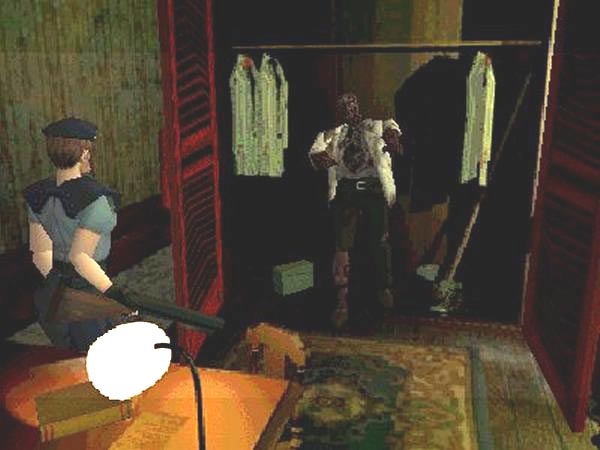
Part of the reason why avoiding zombies is so inherently risky is the control scheme. Resident Evil utilizes tank controls, a system that is antiquated by modern standards. In this scheme, the player controls the character relative to the character’s position rather than the camera. This definitely takes some getting used to, and I still didn’t feel 100% comfortable using this system even after completing the game. But tank controls are necessary when you consider that Resident Evil uses a fixed camera system.

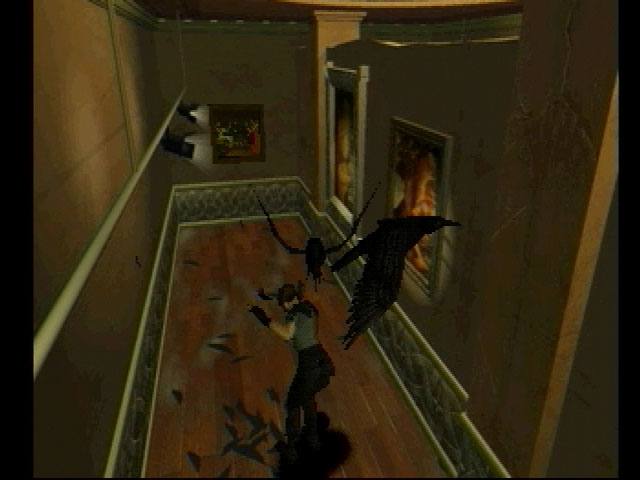
The player does not control the camera. Instead, every room has a few preset camera angles that get swapped between depending where you are standing. Tank controls are almost a necessity when using fixed camera angles, because holding forward will still move your character forward regardless of the camera angle. It would be awkward and jarring to have a movement system based on the relative position of the camera when the camera is swapping angles constantly. The benefit of using fixed camera angles is that it allowed for more detailed backgrounds as they can just be static images rather than rendered environments. Additionally, Resident Evil utilizes its camera angles to hide enemies around corners, leading to additional tension and caution.

Despite it being the first survival horror game, I did not find Resident Evil to be that frightening. And honestly, I’m pretty easily scared when it comes to video games. There were times playing Subnautica or even Outer Wilds that I was petrified of progressing forward. The primary reason that I did not find Resident Evil to be scary lies in the difference between horror and terror. Resident Evil relies primarily on horror. Horror being the shock and revulsion of seeing zombies, giant spiders, snakes, and other creatures.

Terror is a stronger emotion that horror. The initial shock of seeing something horrifying wears off. But the deep-rooted anxiety and unknowing of terror never lessens. It’s hardwired into humans as a survival trait. Resident Evil does have its terrifying moments, like when you enter new areas or have to turn a blind-corner knowing that a zombie is waiting for you. But more than terrifying, I would describe Resident Evil as tense. Navigating the cramped labyrinth of the mansion is stressful. Trying to figure out how to escape while backtracking through narrow hallways is tense because a single enemy can be devastating.

While horror isn’t something that always resonates with me, it’s only fair to mention that Resident Evil is ancient. I wasn’t particularly revulsed by most of the enemies, and I believe a lot of that has to do with the dated presentation. Zombies or giant spiders aren’t particularly scary when you can count how many polygons they are comprised of. The game looks great for its era, but I found it difficult to be truly immersed and horrified by its dated visuals.

Another aspect of Resident Evil that feels like it’s a product of its time is the writing and voice acting. It can be hard to take the cutscenes and story seriously when it feels like a low-budget horror movie where the actors were hired off the street. More often than not, the story sequences are comedic. The voice acting is so bad that it feels like an intentional parody. The overarching plot is decent mechanism to provide context of the mansion and its secrets, but I never felt drawn to keep playing for the story.

Despite its age, I greatly enjoyed playing Resident Evil. While many of its systems today feel dated, they all work in harmony to provide a cohesive experience. In a world of action games, it’s refreshing to play a game where even the most basic of enemy is a real threat. While I did not find Resident Evil to be very frightening, it certainly was tense. I’m excited to play the rest of the series and see how it progresses over time.