Shortly after the success of the original Max Payne, the development of a sequel began. Upon first glance, it seems like Max Payne 2: The Fall of Max Payne is just more of the same, leveraging the mechanics, setting, and characters that made the first game so iconic. But there’s a lot of subtle changes to gameplay and the writing that elevates the sequel above its predecessor in many ways. I recommend reading my review on the original Max Payne to get full context for the remainder of this review.
Where the first game was a fairly straightforward revenge tale with some conspiracy and psychological aspects thrown in, the sequel’s approach to storytelling is more nuanced and focuses on its characters and their relationships. It takes place a couple years after the events in the original game with Max as a police detective. He gets pulled into the underground yet again because he stumbles onto a murder crime scene and runs into Mona Sax. As Max digs deeper into the web of conspiratorial organizations, the player also gets a glance into the broken psyche of Max Payne.
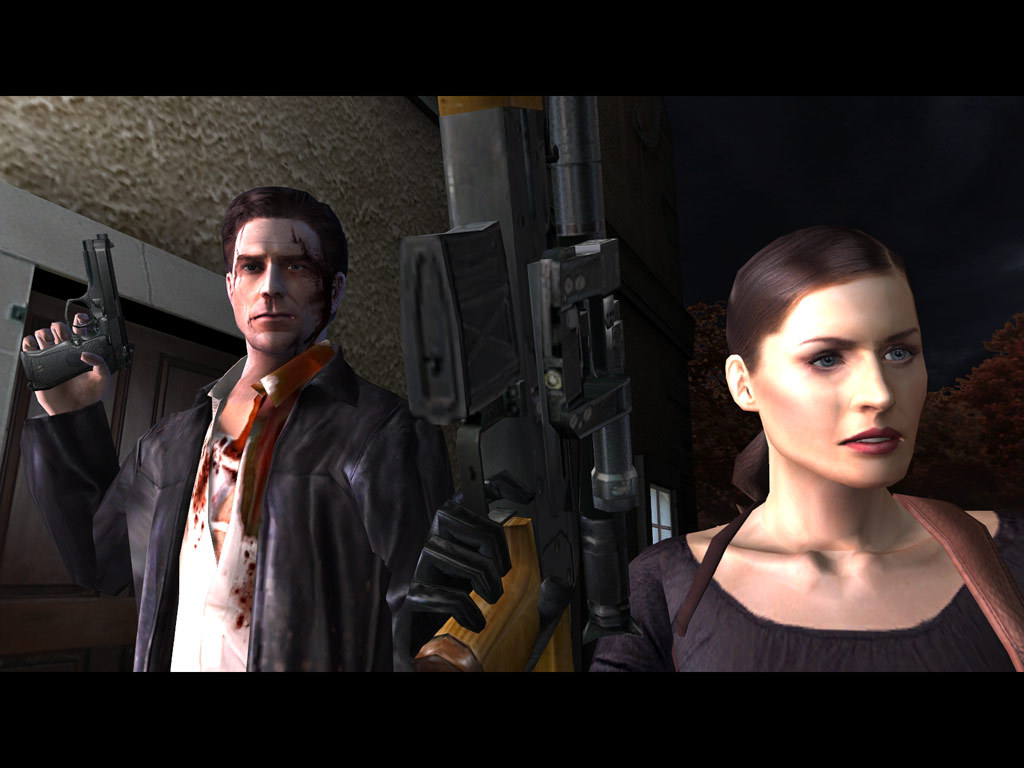
Despite getting his revenge on every person responsible for his wife and child’s death two years prior, Max is obviously still deeply unwell. Vengeance was a brief respite from the darkness, but the hole in Max’s spirit still remains. Seeing Mona again sends Max spiraling, and he desperately tries to chase her despite her ties to criminal organizations. At first, I was shocked by how quickly Mona and Max fell in love considering their only connection was from a brief encounter two years ago. But they met because they had both lost a loved one and were seeking revenge, and it becomes apparent that Mona and Max have a toxic dependency on one another. They clung to the first person that showed compassion and assisted them in their quests, and their relationship is their attempt at filling in the hole that their loved one left.
The character-driven story is a more mature and thought-provoking approach to storytelling compared to the straightforward thriller that the original Max Payne was. The writing noticeably improved in the sequel, there’s a lot less camp and cheesy lines. But there’s still hints of levity such as infamous gangster Vinnie Gognitti’s obsession with comic strip hero Baseball Bat Boy. Or the snippets of in-game TV show Dick Justice being an obvious parody of the original game. Revisiting Max and examining his mental state years after the death of his family and accomplishing his revenge was brilliant. And it culminates in the closing line with one of the most haunting yet hopeful quotes in any game that I’ve played.
The story isn’t the only obvious advancement made in Max Payne 2: The Fall of Max Payne. Gameplay wise, the sequel cleans up many of the rough edges of the original. Enemy placement is decidedly less cheap, enemies are no longer hiding in corners or nooks ready to one-shot you with a shotgun. The adaptive difficulty aspect also feels smoother, even as the game got tougher, I never ran into those moments from the original game where I would shoot a basic foe point blank numerous times only for them to instantly kill me with a single pistol shot. These improvements went a long way to make the game less frustrating.
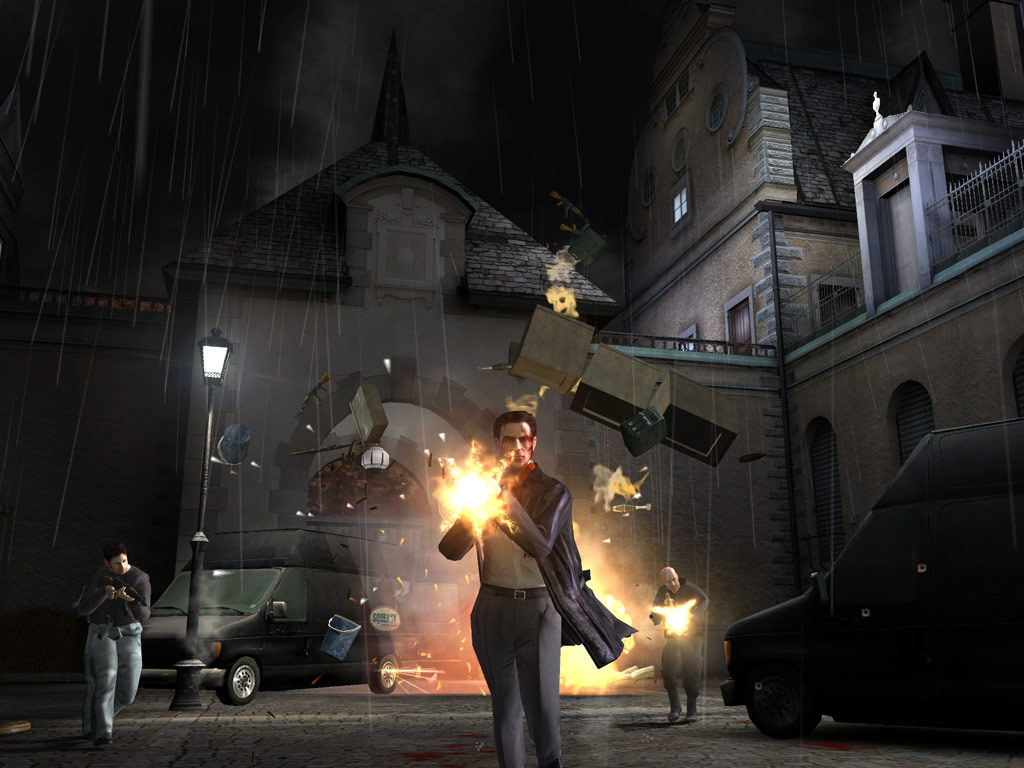
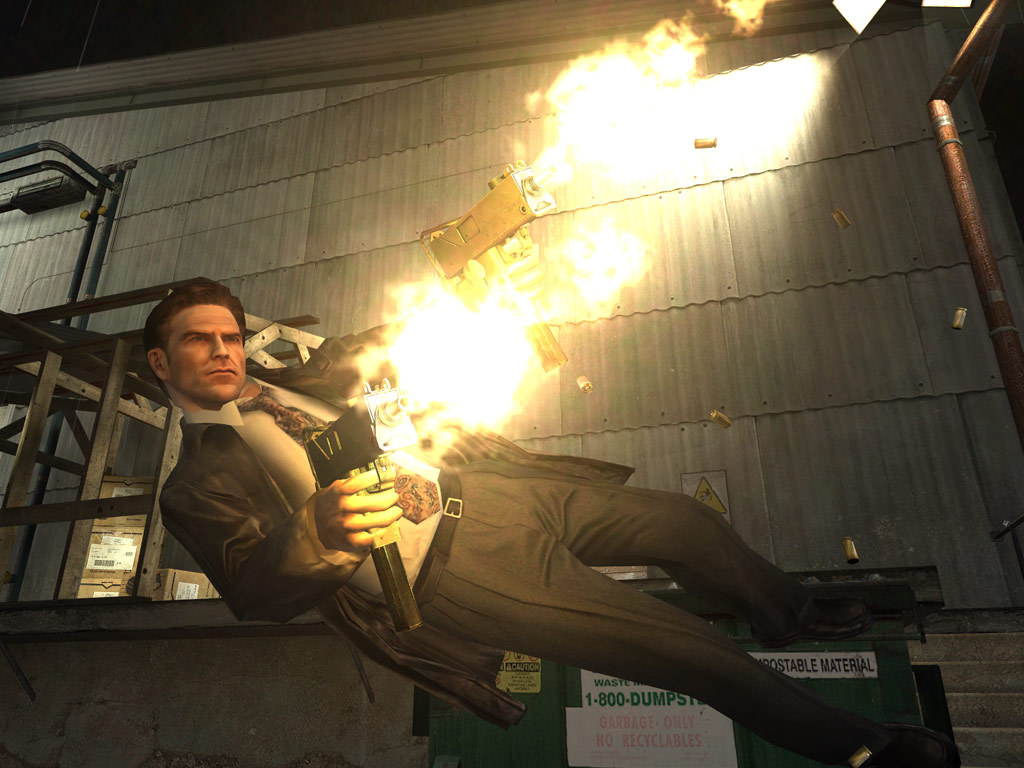
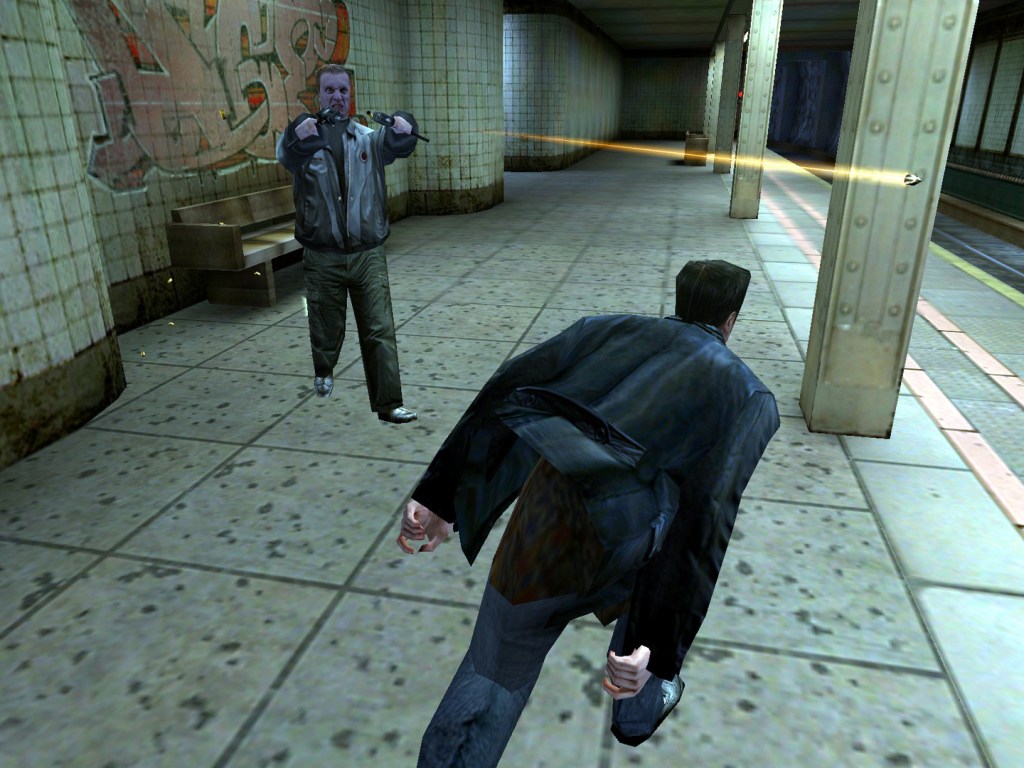
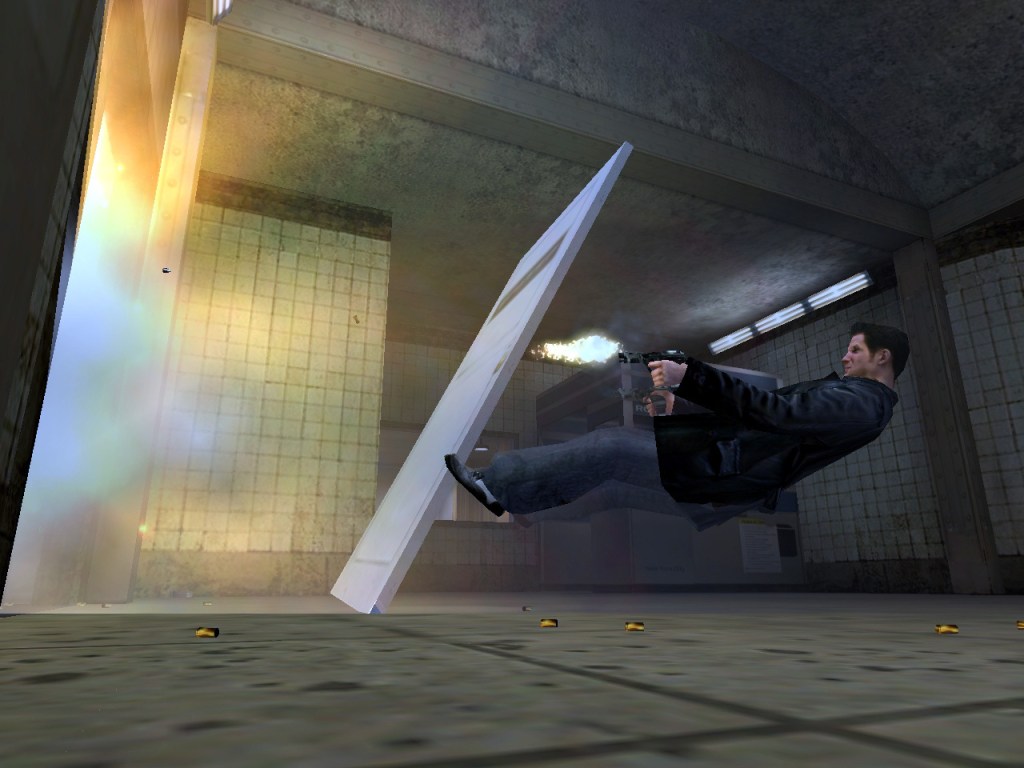
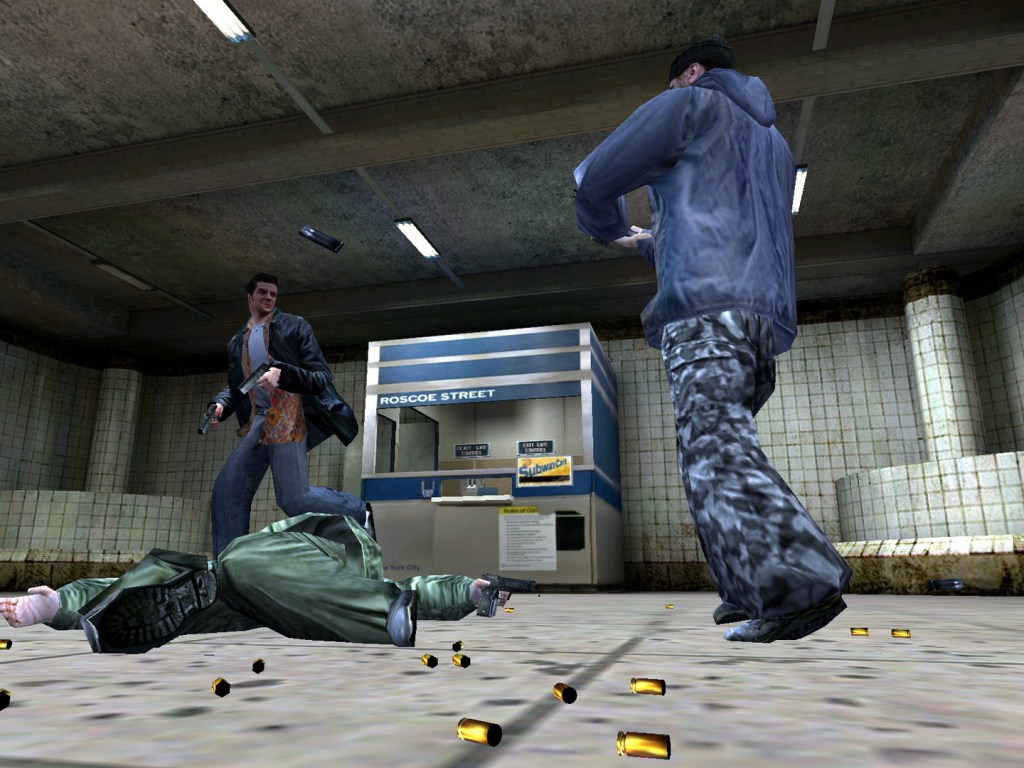
Another aspect of note is the improved physics engine. Disposing of enemies causes them to ragdoll across the screen and collide spectacularly with all sorts of objects in slow motion. There’s also a higher reliance on the use of bullet time. Killing enemies while in bullet time increases its potency, letting you move quickly while the world slows down. This lets you activate bullet time and clear out whole rooms while spinning around in slow-motion, dodging bullets and raining lead. While I do think putting more emphasis on bullet time, the unique feature of Max Payne, is great, I do think it was a tad overdone here. I liked that bullet time was an occasional treat in the original game. You had to earn your right to use it and you had to decide when the best time to make use of it was. In Max Payne 2: The Fall of Max Payne, you can be in bullet time so often the novelty can wear thin.
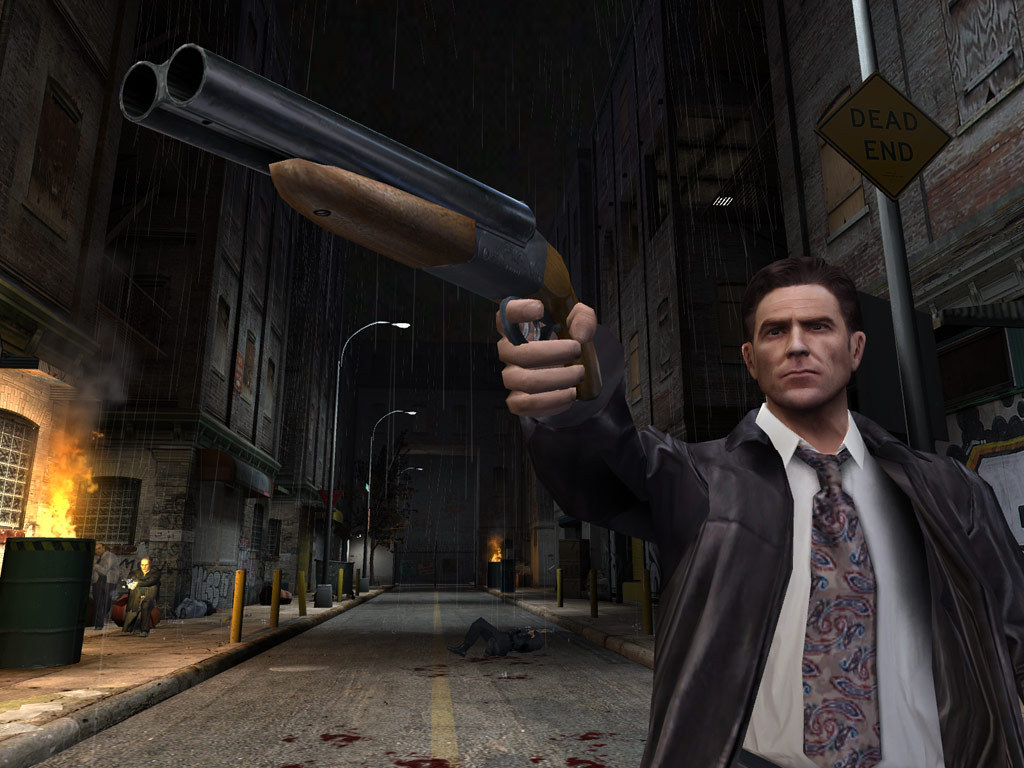
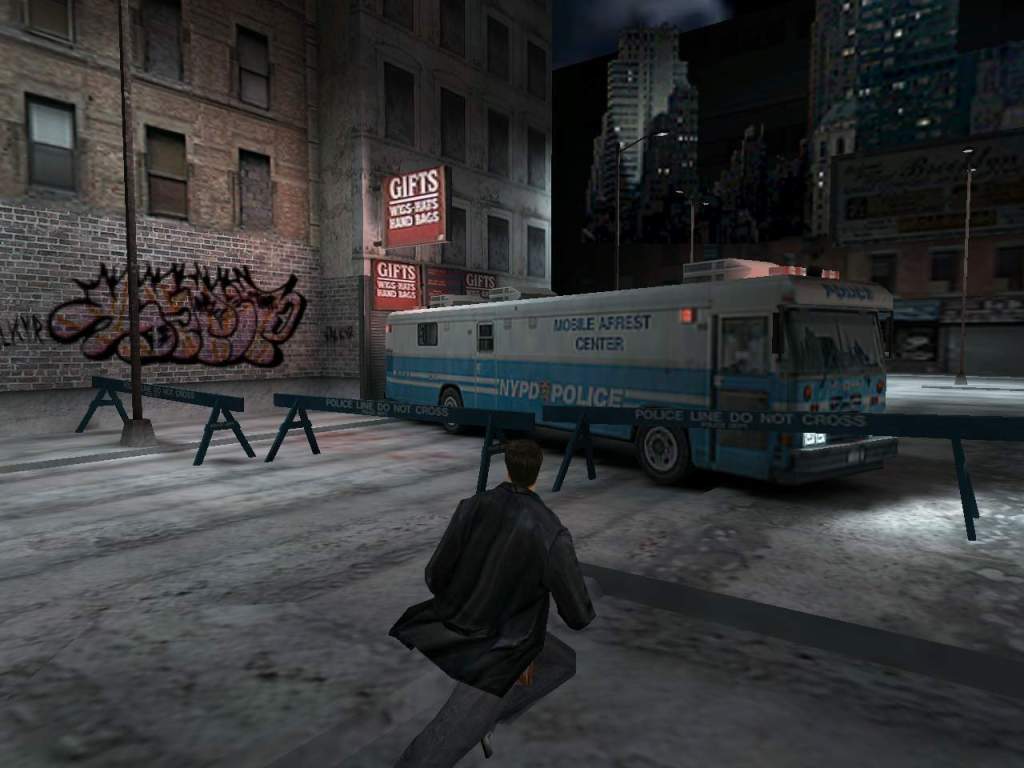
Atmospherically, I think the original game is far more iconic than the sequel. Walking the silent streets of New York City in a blizzard was chilling and moody. The apartments were grimy and disturbing to spend time in. Max Payne 2: The Fall of Max Payne in comparison spends a lot of time in dull warehouses. The most interesting location is the fun house, and I do enjoy how it is revisited multiple times, letting you trigger traps on unsuspecting enemies as you learn the layout. But I missed the snow-covered streets and freezing cold that the original game conveyed so perfectly.
Overall, I think Max Payne 2: The Fall of Max Payne improved over its predecessor in numerous ways. The more mature themes, the refined writing, the smoother gameplay experience, there’s no doubt that Max Payne 2: The Fall of Max Payne is a technically better game than the original. But when I think of Max Payne, I think of wandering the frozen hellscape of Manhattan with the only respite being the graffitied and abandoned apartments filled with mumbling drug-addicts and grime. Even if I do think Max Payne 2: The Fall of Max Payne is a better experience as a whole, I can’t help but remember the original more fondly.
Older games are often rough around the edges, and I was concerned when I needed to download a 3rd-party mod to even run Max Payne. But the little bit of research that I had to do to get the game running was well worth it, because Max Payne is an absolute classic. It’s an old-school FPS that makes you feel like an action movie hero, while simultaneously gripping you in its noir narrative and setting. For its time, it was a technically impressive game that made clever decisions to hide its shortcomings. Despite a few hiccups with the difficulty design, Max Payne is an excellent game, even to this day.
After his wife and infant child were killed by drug addicts in a burglary a couple years ago, Max becomes an undercover DEA agent. He gets a lead on the source of the drug known as Valkyr, a mysterious substance that makes people enter a zombie-like state. Max hunts for the truth during a historic blizzard in New York City. It escalates from mob drug war to full-blown conspiracy as Max spirals in his quest for vengeance.
As the plot unfolded, layer by layer, I was also impressed by the thematic consistency. The weight of the guilt that Max carries because of the murder of his family turns him into a relentless hunter. He is haunted by hallucinatory dreams where he is the one pulling the trigger during the tragedy. As the blizzard progressively worsens, so does Max’s mental condition and grip with reality. The narrative benefits from its noir styling. Max narrates the events with melodramatic descriptions and the presentation embodies the dreamlike yet brutal characteristics of classic noir films.
Despite its age, Max Payne visuals hold up remarkably well. 3D graphics were still in their infancy, so the developers decided to forgo cutscenes for comic panels. This was a clever choice because these stylized comics have aged so much better than cutscenes from that era. It also plays wonderfully into the noir theming and surreal elements of the plot. The setting is also quite memorable. New York City in a blizzard is one of my favorite environments to explore. The snow-covered rooftops, empty streets, icy docks, and rundown apartments are wonderfully atmospheric and filled with little details. I quite liked how many of the locations had radios or televisions that gave news updates on the “historic storm”. These little flourishes gave the world more credibility.
The presentation and story aren’t the only elements that are impressive despite their age, the gameplay also holds up well. It’s a classic FPS, shooting waves of goons as you move from room to room. But what makes it special is the inclusion of bullet time. At the press of a button, you can slow down time to dodge bullets and return fire. You also can quickly roll or dive in all different directions. Combining the dodge with bullet time can make for some cinematic moments as you burst through doors, diving in slow-motion and raining bullets on mobsters. It also adds a layer of fun complexity to otherwise simple gunplay. Bullets have actual velocity rather than instantly doing damage when the trigger is pulled. Staying in motion, utilizing bullet time, and leading your shoots is crucial to success. I found this fast-paced action to be very fun.
My only complaint about the gameplay is the adaptive difficulty implementation. I don’t hate the idea of tuning the difficulty based on how the player is doing, but in Max Payne it can drastically affect the experience. The game adjusts enemy damage, enemy health, player health, and other factors to extreme degrees based on how frequently the player dies. I found if I was doing too well basic enemies would suddenly become superhuman threats. The game flow is dramatically altered when multiple shotgun blasts from point blank can’t fell a single foe, but a single shot from their rifle kills you instantly. Luckily, you can save and reload as frequently as you want, so after a few deaths and reloads the enemies become manageable again. But still, it’s jarring to experience such sharp spikes in difficulty.
I was pleasantly surprised by my time with Max Payne. Every element was well done. The exciting story, the meaningful and thoughtful themes, the memorably moody setting, and the thrilling gameplay were all impressive. Despite the questionable inclusion of adaptive difficulty, I genuinely had a ton of fun with Max Payne. Which is not something I can say for many other games from its era.
Alan Wake II is insane. There’re layers upon layers of meta references buried within the spiraling madness that makes up the game. Remedy’s previous games never really clicked with me, but Alan Wake II did have my brain working overtime to decode the entangled threads of narrative that are sewn in a chaotic tapestry of nightmares. I highly value uniqueness, and the ability to push the gaming medium forward into a weird and strange direction is something that I applaud Alan Wake II for. It’s not without its flaws as there are quite a few things that I took issue with, but this is a truly bizarre game in the best way possible.
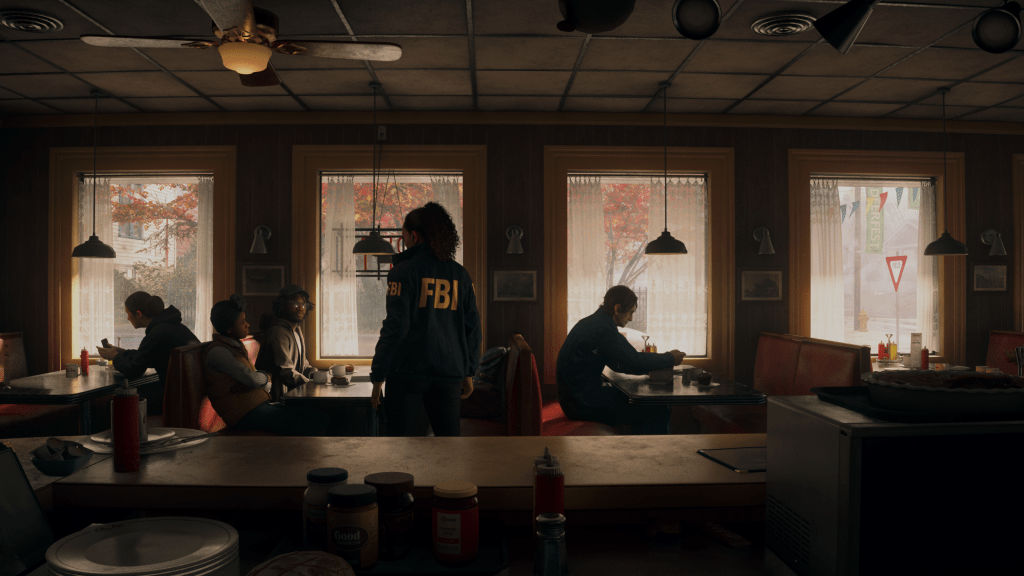
The story of Alan Wake has long been dormant. The basic premise is that the titular character, Alan Wake, is a best-selling author that gains the power to influence the world with his writing. On a trip to the remote Pacific Northwest town of Bright Falls, Alan got sucked into a horror story in which he sacrifices himself to rescue his wife from a dark presence. Alan is now trapped in a nightmarish dream reality while a doppelganger of his, called Mr. Scratch, is terrorizing the real world. In parallel with Alan’s story, a new protagonist named Saga Anderson and her partner Alex Casey arrive in Bright Falls to investigate a string of mysterious disappearances.
Saga investigates the quaint towns and the dense wilderness of the Pacific Northwest. A murder cult seems to be the cause of numerous disappearances, and she tries to deduce their goals and motives. While on the case, she learns of the dark presence and how an ever-changing horror story is coming to life. I enjoyed how the player could enter Saga’s “Mind Place” to put together the facts of the case. Her Mind Place is a cozy cabin with clues and papers strewn about. You use a big board to pin clues into place and make revelations about the plot. I do think this aspect might’ve been slightly overused, as there isn’t a ton of actual deduction or gameplay involved here. Mostly you’re just putting known pieces in place to move forward. Nevertheless, I enjoyed the noir vibes.
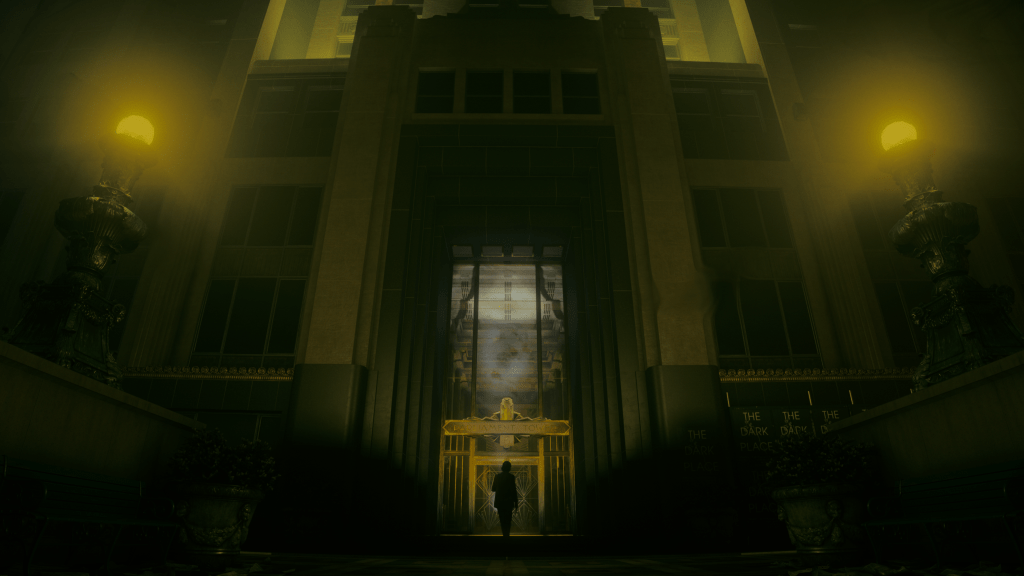
While Saga explores the real world, Alan is trapped in a labyrinthian nightmare. This is where things truly get weird. He wanders around an ever-shifting urban environment, rife with confusing dream logic. He’s caught in a surreal loop, desperate to escape. He has to use his abilities to write his way out of the loop. Alan visits numerous atmospherically dense locations such as a hotel, subway, and movie theater that were homes to ritualistic murders. As you explore these locations, you move pieces around on a storyboard to alter the plot and move forward. I absolutely adored how tense these sequences were. There’s a sense of dread of what you are going to see when you move a new horrifying plot element into place. One particularly haunting transformation was seeing how an ordinary hotel turned into a ghoulish scene where blood was scrawled across every wall and the hallways were strewn with gored bodies.
The seamless use of mixed media is part of what defines Alan Wake II. The transitions between game and live-action are incredibly well done and fuel the metanarrative aspects of the story. Remedy has a wonderful cast of actors that portray their characters expertly. It blurs the lines between what is real and what is dream logic. There’s a full 15-minute artistic short film that can be found which serves as a pivotal plot point of the imaginary murder cult in Alan’s dream reality. And that film uses the actor who also plays Alex Casey who is the main character in Alan’s detective novels, and that same actor also plays a different Alex Casey who is Saga Anderson’s partner in the real world. And that actor is the creative director of the game: Sam Lake. Who also plays other characters in Remedy’s expanded universe. There’re layers upon layers of references to unwind. Alan Wake II references itself, its predecessor, other games within its universe, and heavily leans on tropes from detective and horror media.
I find that media with heavy meta elements can often feel pretentious, but that’s not the case with Alan Wake II. The game knows that it can be ridiculous at times, and isn’t afraid to point this out. The writers clearly had fun with this game and they embraced the weirdness. Take for example the commercials that play on the TVs throughout Bright Falls. Two of the side characters write, direct, and star in their own goofy productions about their side businesses. Such as their coffee-themed amusement park with a moose as a mascot. I love that despite its metanarrative elements and complicated story, Alan Wake II doesn’t take itself too seriously.
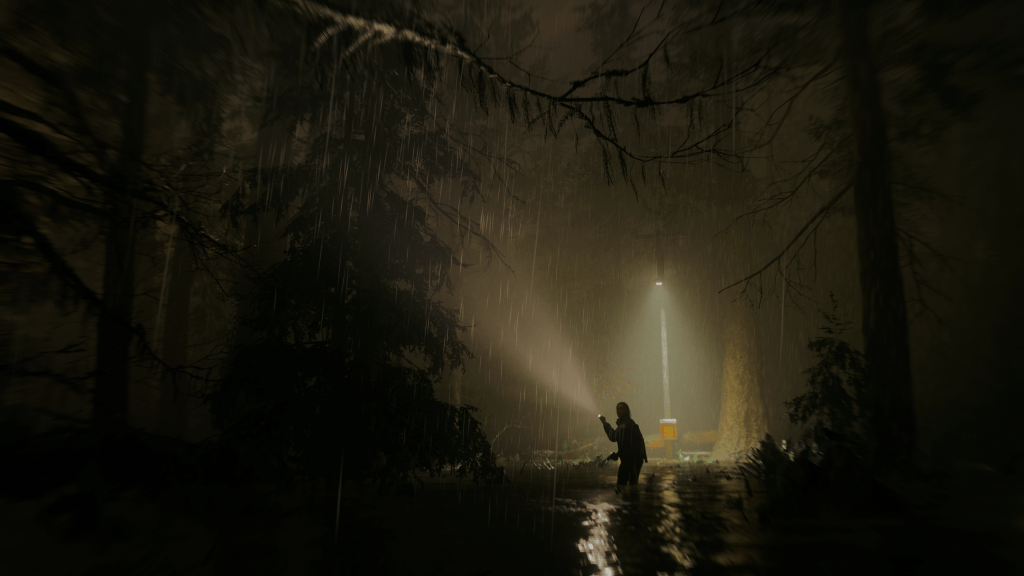
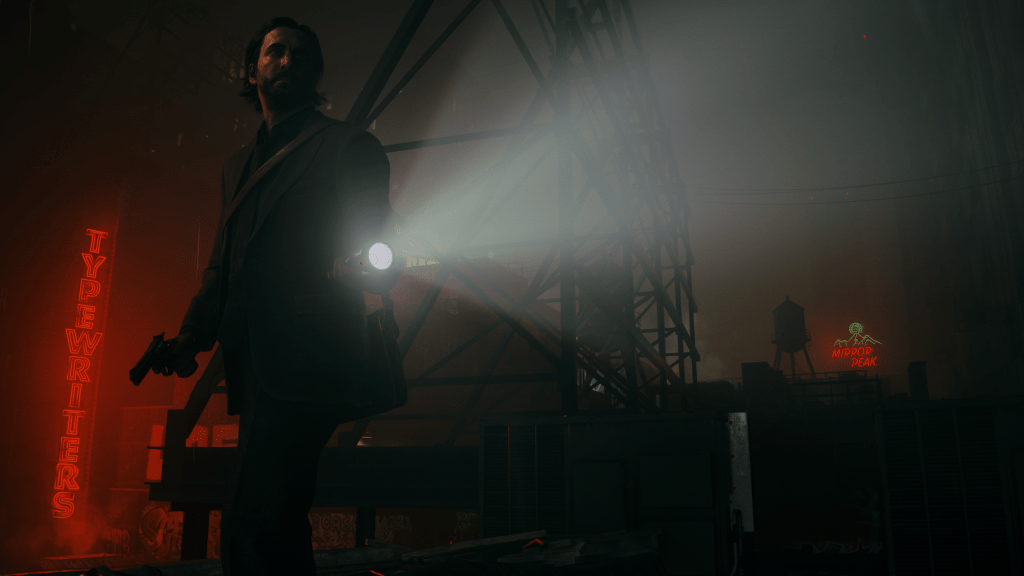
Where Alan Wake II really shines is its thick atmosphere. The sharp contrast between the two protagonist’s settings created some phenomenal variety. As Saga you have to explore dense woods, small towns, and other rural locales. Conversely, Alan is trapped in an urban nightmare. Dirty streets, highrises, and buildings such as hotels dominate his perspective. Both settings are eerie. Saga wanders through thickets as cultists and possessed wolves stalk her. Shadows whisper and lunge at Alan as he navigates through nonsensical streets and corridors. Darkness envelopes both characters, and the safety provided by a break room or an abandoned hut is spirit-lifting as these are your only beacons of safety. The game’s spectacular visuals add to the sense of immersion, as Alan Wake II is a fantastic game to look at.
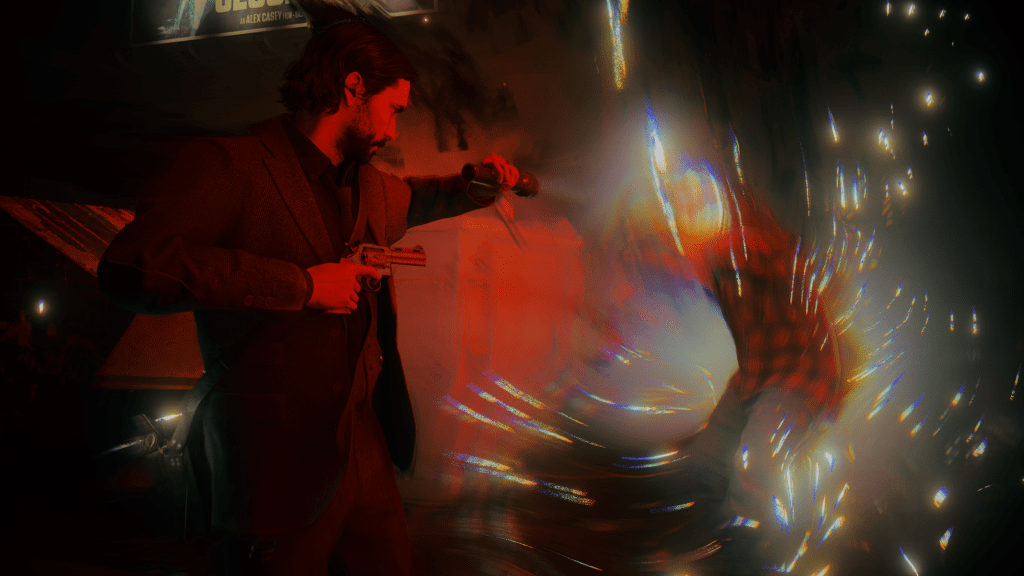
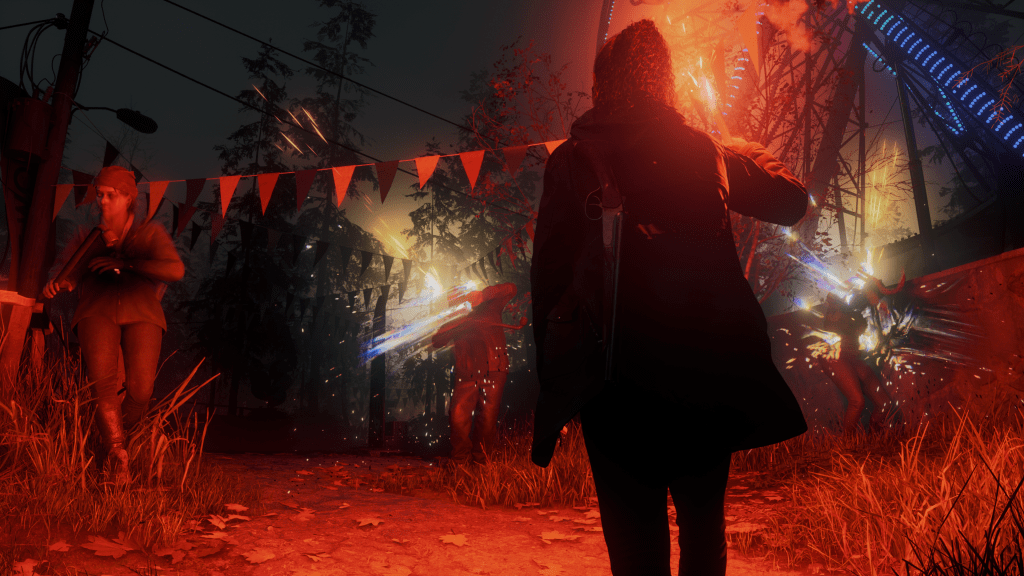
The gameplay of Alan Wake II was something that I was worried about. When I played the original Alan Wake I thought the setting and atmosphere were amazing, but the game was marred by an absolutely abysmal combat experience. Luckily, Alan Wake II keeps the premise of its predecessor but vastly improves upon it. To fight enemies, you need to focus your flashlight on them to break through their darkness shield. From there, it functions like a standard third-person-shooter. I quite liked how impactful all the weapons felt. The visual and auditory feedback was appropriately visceral, and enemies reacted strongly to being shot, especially if hit in a weak spot. I thought combat was fun overall, and the fast-moving enemies always kept me on my toes. That being said, there are a few issues that bothered me.
The first issue was the absolutely abysmal enemy variety. There’s only a handful of enemy types in the game, I found myself battling the same couple basic variations throughout the entire twenty-hour experience. Moreover, there is a ton of fluctuation in the number of enemies that the game throws at the player. There are times when you can go for what feels like hours without any combat, especially at the beginning of the game. And conversely, there were sections of the game that I couldn’t catch a breath because the game kept bombarding me with respawning cultists. Both of these extremes are negative. Too few encounters is an issue because it can get boring to just walk around with no threat of combat, and too many encounters kills the tension as it turns what should be frightening foes into a shooting gallery.
While Alan Wake II undoubtedly improved upon the gameplay of its predecessor, I still found it to be fairly clunky. Reloads are extremely time-consuming and easily interrupted, which is aggravating. However, I think the biggest cause of this is the camera. The over-the-shoulder camera is great for immersion, but I wish it zoomed out a tad during combat. When enemies get up close, the game feels unpleasantly claustrophobic and I had a difficult time adjusting the camera. I found myself saying “I can’t even see what’s going on” fairly often. There are also a ton of enemies that zip and teleport around, leaving me desperately rotating the camera to keep up. But as soon as the enemies were in my sights again, they just teleported away again.
Aside from the camera, I found that the environmental design also was a significant source of frustration for me. While the game looks astonishing, I found myself confused and turned around quite often. I think having a mind-bending dreamscape that intentionally causes the player to get lost is great. But there were plenty of ordinary places that just felt poorly signposted. Organic and detailed environments are great, but I felt that they got in the way of navigation. I love that there was no mini-map or objective markers, but the environment did not lend itself to intuitive pathfinding. But my biggest frustration with Alan Wake II was its dynamic resource economy.
An important aspect of any survival horror game is resource management. Having a limited number of bullets, healing items, and inventory space makes fights far more intense. Tension builds faster when you only have a handful of ammunition to dispatch enemies. Every encounter is terrifying knowing that it could deplete your resources. Alan Wake II does have limited resources, but its implementation is inelegant. It utilizes a dynamic system, doling out items based on how much the player already has in their inventory. If you’re running low on supplies, the game will give you more stuff, but if you are already rich in ammunition, you’ll get very few or no resources at all. At first glance, this seems like it makes sense as it ensures that the player never has too much or too little, but I find that this system undermines the entire point of resource management.
The point of having limited resources is the threat of running out. The helplessness of having no ammo to protect yourself. Having to explore and scavenge for resources can be anxiety-inducing. But there’s rarely any real threat of running out of resources in Alan Wake II. The game throws resources at you when you’re running low. And there’s little reason to thoroughly explore areas for more stuff because you get diminished amounts once you have a surplus. I found it frustrating that I was punished for scavenging, often opening a container to find it completely empty. Not only have I wasted my time, but I can never open that container again so I have permanently lost potential resources. Maybe it wouldn’t have been so aggravating if it wasn’t so obvious that the game is doing this.
For a game with such impeccable atmosphere, it’s a shame that immersion is so easily broken by something as simple as resource management. It’s obviously apparent that Alan Wake II is limiting your ammo once you open a container and there’s nothing in it. You can also game the system by stuffing excess ammo into your safe room box before going out to scavenge for resources. The game only cares about what’s currently in your inventory, so you can fake being low on ammo to get more. Breaking immersion is a sin in a game like this, and I often found myself pulled out of the world and into crunching numbers to determine whether or not opening a container was worth it.
Alan Wake II is a difficult game for me to judge. I can respect its artistic vision, the blending of genres, the use of mixed media, and of course how the story is open to many interpretations. But the game flounders a bit when it comes to basic elements such as combat, navigation, and resource economy. It’s tough to claim that this is a must play game when it falters at the basics. But Alan Wake II is a must play game. It’s unique. It’s innovative. And it pushes gaming forward as an artistic medium. It is for these reasons that I give Alan Wake II a 9/10. Even if its video-gamey elements are clunky, the unfaltering artistic vision of Alan Wake II makes it a can’t miss experience.
 stephensopinions