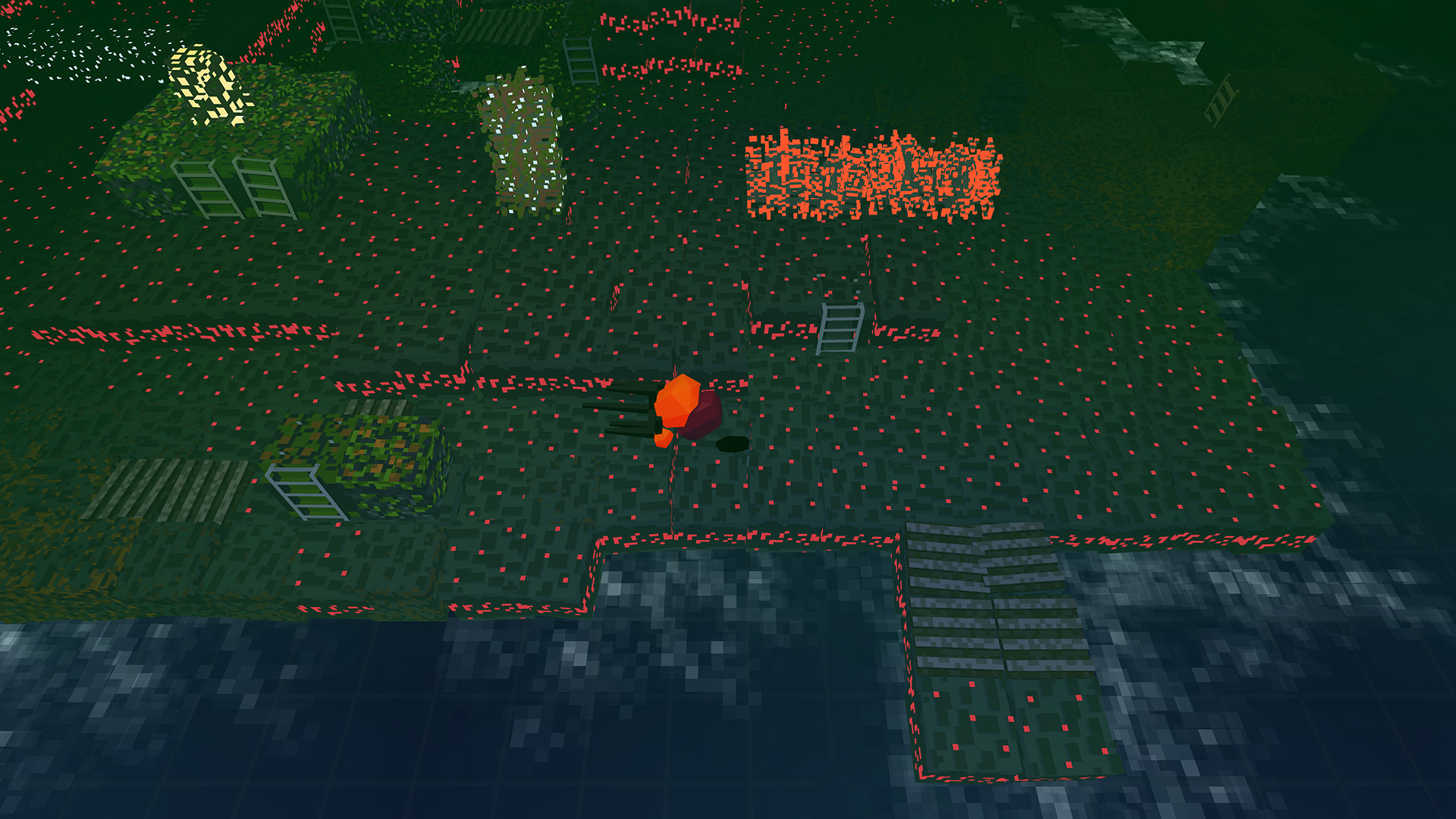
The Talos Principle (2014)

Many games try and fail to meaningfully incorporate philosophical concepts. The Talos Principle is a puzzle game that is genuinely impressive in how it asks classical philosophy questions in a context in which they make sense. Philosophy always runs the risk of sounding pretentious, but The Talos Principle balances it masterfully. Puzzle games in general rarely have a story worth talking about, so I was pleasantly surprised with the unique approach that The Talos Principle took. It’s not the hardest puzzle game around, but I enjoyed how puzzles slowly ramped up in complexity while remaining approachable.
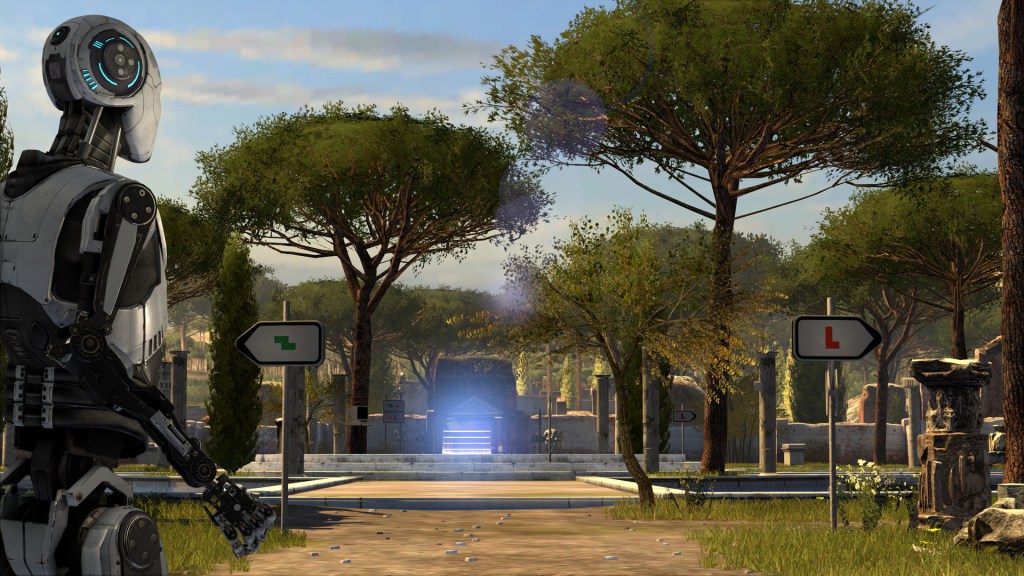
The Talos Principle begins when you come to life in what seems like Greek ruins. An omnipresent voice warmly regards you as his child, as he is Elohim. He is God. You have to solve his puzzles and stay on the path to achieve eternal life. But he warns you against ascending the tower that looms over the temples of this land. Aside from the occasional praises from Elohim, the only other signs of life are in the computer terminals as well as messages scrawled on the wall from those who came before you.

The computer terminals have a variety of texts. Some are excerpts from classic philosophy documents, some are random blog posts, and some are emails sent to and from a scientific institute. It quickly becomes clear that something catastrophic has happened to humanity, and you are in some sort of simulation that had been created by the aforementioned science team. An AI converses with you from the terminal, asking you questions about sentience, consciousness, humanity, free will, and other introspective musings.
I don’t think The Talos Principle tackles any new philosophical concepts, but it’s how the game presents these ideas which makes it intriguing. When you are confronted with the implication that you are a program in a simulation, it makes you think hard about what constitutes a human. You argue with the AI assistant at the computer terminals, debating the purpose of all of this and if you are truly human or not. Can a program ever achieve free will, or does it merely do as it’s told? Philosophy often borders on being pretentious, but The Talos Principle never felt like it was trying to show off how smart it was. It merely places you in the appropriate context to be confronted with these classic questions.

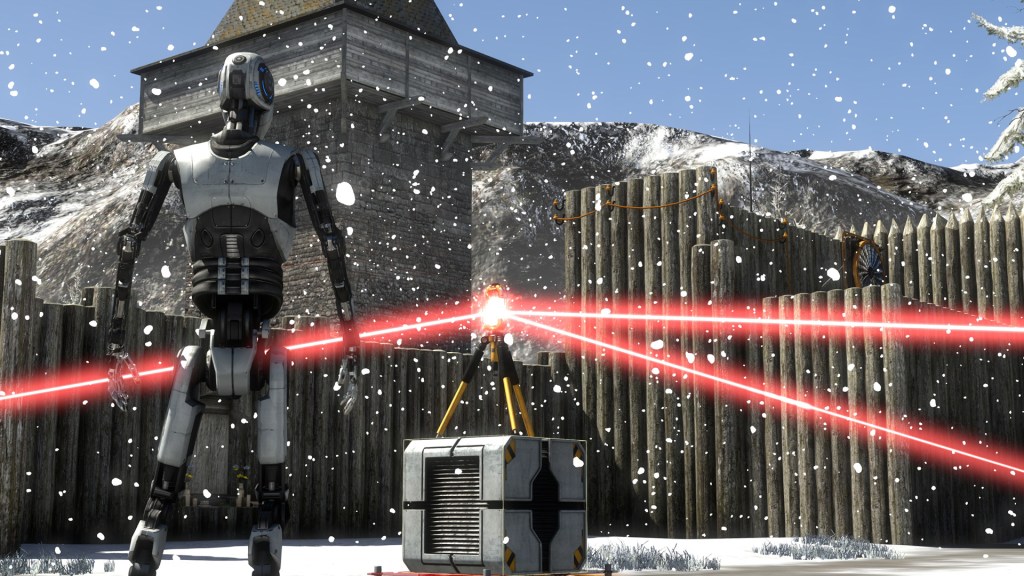
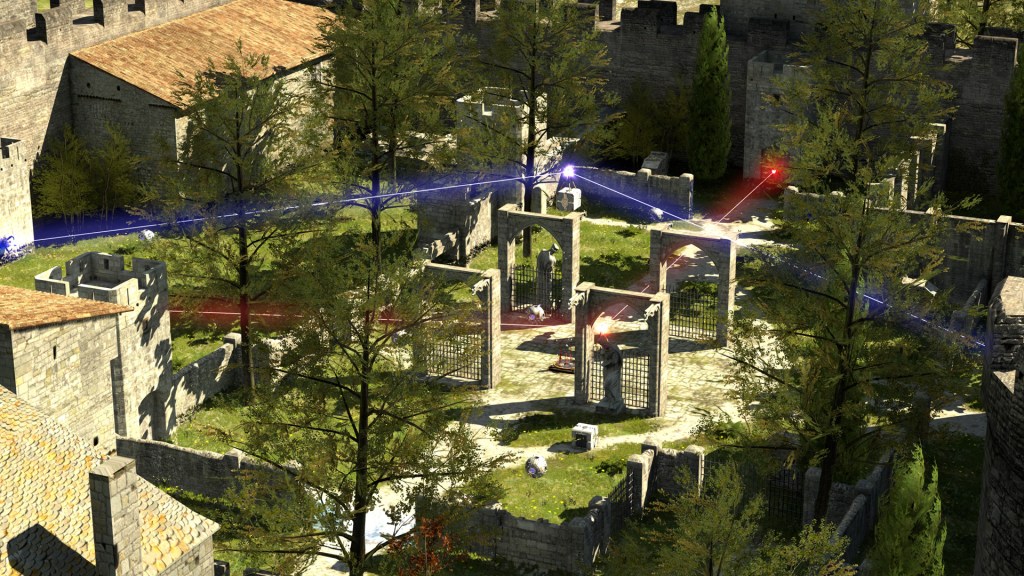
Aside from its philosophical elements, The Talos Principle is first and foremost a puzzle game. Each puzzle is almost like a maze filled with tools and obstacles. There are force fields, turrets, and moving minefields that prevent you from reaching your goal. You are given an arsenal of tools such as jammers, cubes, and laser reflectors to assist you open up pathways. The puzzle design frequently relies heavily on spatial reasoning and order of operations. As you get further and further into the game, the number of tools and obstacles grows such that you have to perform dozens of steps to complete a single puzzle.
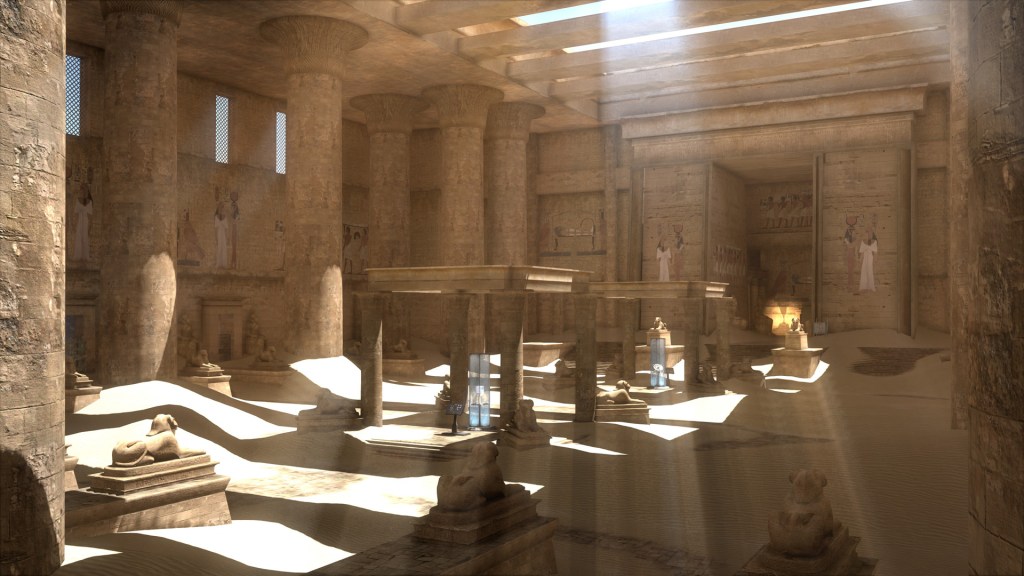
A technique that I noticed while playing was that no matter how elaborate a puzzle got, the first step was always obvious. The game rarely gives you more than one object to interact with right away, so you know what to do first. This is clever because it makes the puzzles far less intimidating when you are making progress. Even if all you did was connect two dots, that’s still a step towards the solution. I never truly felt like I was stuck and I never got frustrated because The Talos Principle makes sure its puzzles are segmented into smaller, easier puzzles. And putting the pieces all together at the end is immensely satisfying.

Another interesting aspect of the game’s puzzle design is how deceptive it often is. You learn tricks and gain habits as you play, only for the game to turn those against you. You may see a force field that seems like you need to use a laser to open it, but there’s no feasible way to get a laser in that spot. Or you may think that you need two laser reflectors to get around a couple corners, but really there’s a specific angle that you need to place the reflector at. As I previously mentioned, none of the puzzles felt overwhelmingly difficult, but they do make you feel smart when you catch on to their tricks.
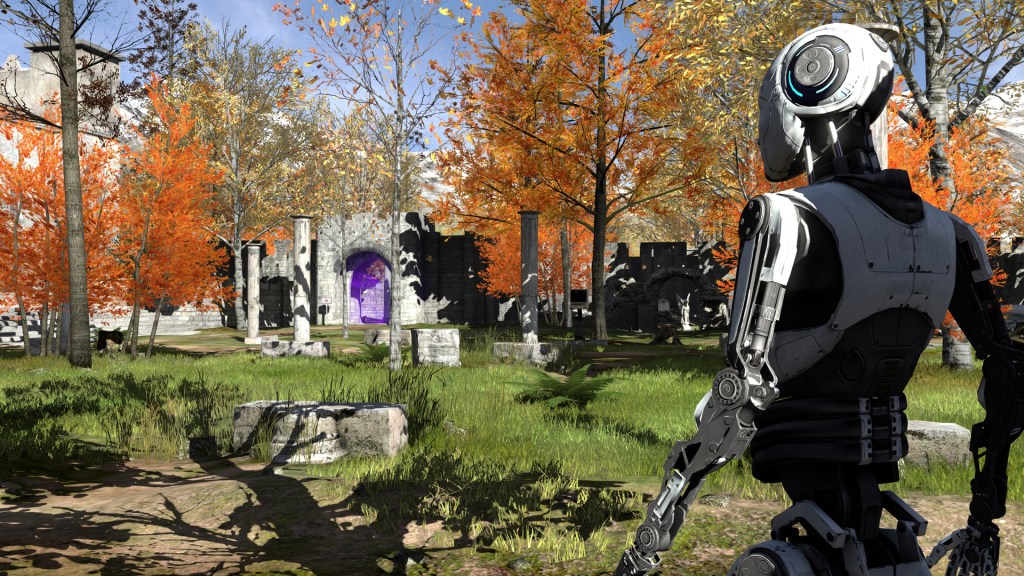
While I did enjoy the standard puzzles in The Talos Principle, there were two other types of puzzles that I loathed. The first type being sigil puzzles. As you solve a regular puzzle, you are rewarded with a sigil, which is a block shaped sort of like a Tetris piece. When you collect enough sigils, you can use them to open doors. You have to fit the pieces together into a perfect rectangle. It’s simple enough, and most of the time isn’t too difficult. But towards the end of the game there are some sigil puzzles leading to secret areas that require you to fit a dozen or so pieces together. I never found a reliable way to solve these puzzles, and mostly relied on just guessing or using intuition. Sure, you learn which pieces fit nicely together as you play, but it’s annoyingly time consuming to just slap pieces together and pray that it works out.

The second variety of groan-inducing puzzles are the secret stars. There are 30 secret stars hidden throughout the game, and collecting enough of them grants you access to bonus areas. Truthfully, I quite enjoy the puzzle portion of collecting most of these. They usually require some outside-the-box thinking, like stacking boxes to go outside the boundaries of a puzzle or using a laser from one puzzle to open a gate in another one. The issue with the secret stars is finding them. They are often hidden in completely obscure locations with little to no hints of their whereabouts. I want to solve puzzles, not run around in circles looking for a corner that might have a secret in it.
Fortunately, both the secret stars and sigil puzzles are only minor aspects of the game. Sigil puzzles are usually fairly simple and the stars can be ignored altogether. The bulk of The Talos Principle is in its standard puzzles and in its philosophical ponderings, both of which are excellent. It’s rare to come across a game that doesn’t make philosophy feel forced and pretentious, but The Talos Principle excels at asking questions in an organic manner. The puzzles never wowed me with grand revelations, but I found them to be addictive in their simplicity. As a lover of puzzle games, I can’t believe that I put off playing The Talos Principle for so long. If you enjoy puzzle games, you owe it to yourself to play The Talos Principle.

Jusant (2023)

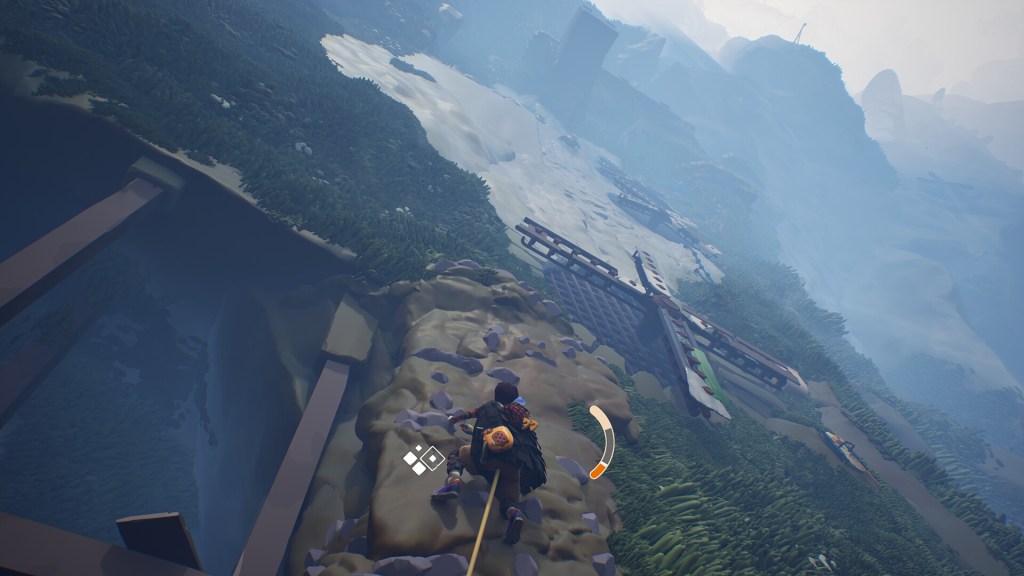
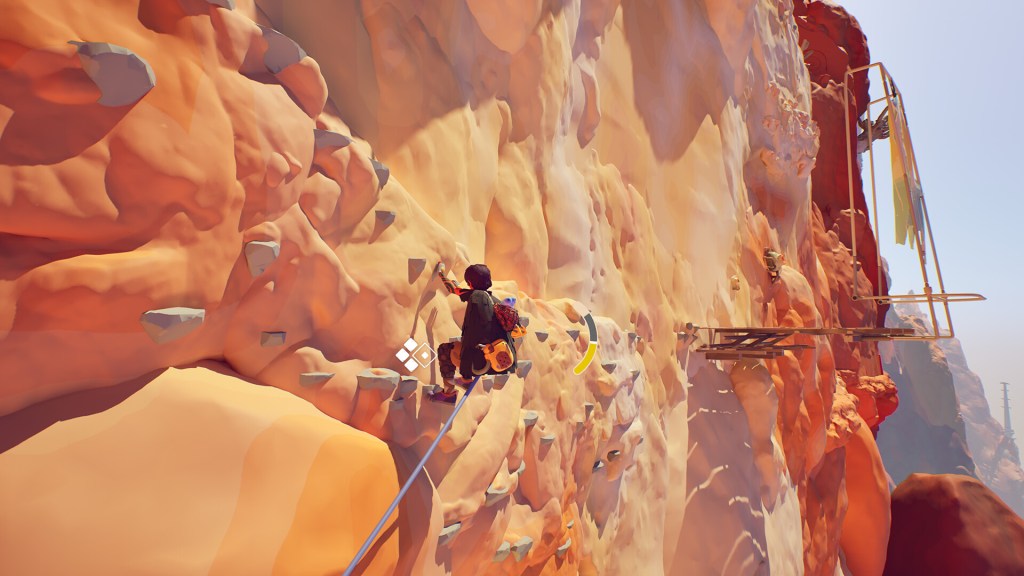
I love when a game expands on a commonly seen mechanic that we take for granted. The prime example of this is how Death Standing turned both traversal and inventory management into its core gameplay hook. Running up cliffs and carrying hundreds of pounds of equipment is something that gamers have grown accustomed to, and Death Stranding made it so walking down a slight hill was a treacherous activity. Jusant does something similar, but for climbing. The entirety of the game is about the ascent up an impossibly high tower of rock. There’s no combat, no puzzles, fairly little exploration, and a story that is only told through the environment and the occasional note. Despite this, the meditative beauty of Jusant was enough to keep me going until the end.

Climbing has become a multi-purpose mechanic in a multitude of modern games. From basic traversal, to providing down time, to showing off the environment, to hiding loading screens, climbing has many uses and as such is absurdly common. Unfortunately, climbing is usually boring due to the simplicity of its implementation. Jusant makes strides to make climbing more interactive and thoughtful. You control both of the protagonist’s arms, grabbing onto handholds with each hand individually. This leads to a satisfying rhythm of alternating between the left and right triggers to ascend the terrain. 

This simple change makes climbing far more engaging and immersive, but it’s not the only trick that Jusant has up its sleeve. You have access to a series of pitons and rope that always act as a safety system. You can never fall to your death; you only tumble a few dozen feet to where you last hooked into the wall. Pitons double as a self-managed checkpoint system and a way to place an anchor for some rope swinging. While Jusant isn’t terribly difficult, it is still nerve-wracking to swing and jump over a seemingly endless chasm. 

Despite its efforts to make climbing fun, the biggest fault of Jusant is that it doesn’t do enough. There’s just not much thinking involved. You follow a straightforward path of handholds and ledges, just alternating between hands. The stamina system is barely worth mentioning as I never was in danger of running out of stamina. If you are running low, you just press a button and rest for a second to regain a large portion of the meter. I would have loved for the climbs to have a variety of routes to survey and choose from. Having to assess your options and think about how to reach your goal could’ve gone a long way to make the climbs more interesting. You could make more use of your tools, and there would be an actual threat of running out of stamina if you planned a poor route.

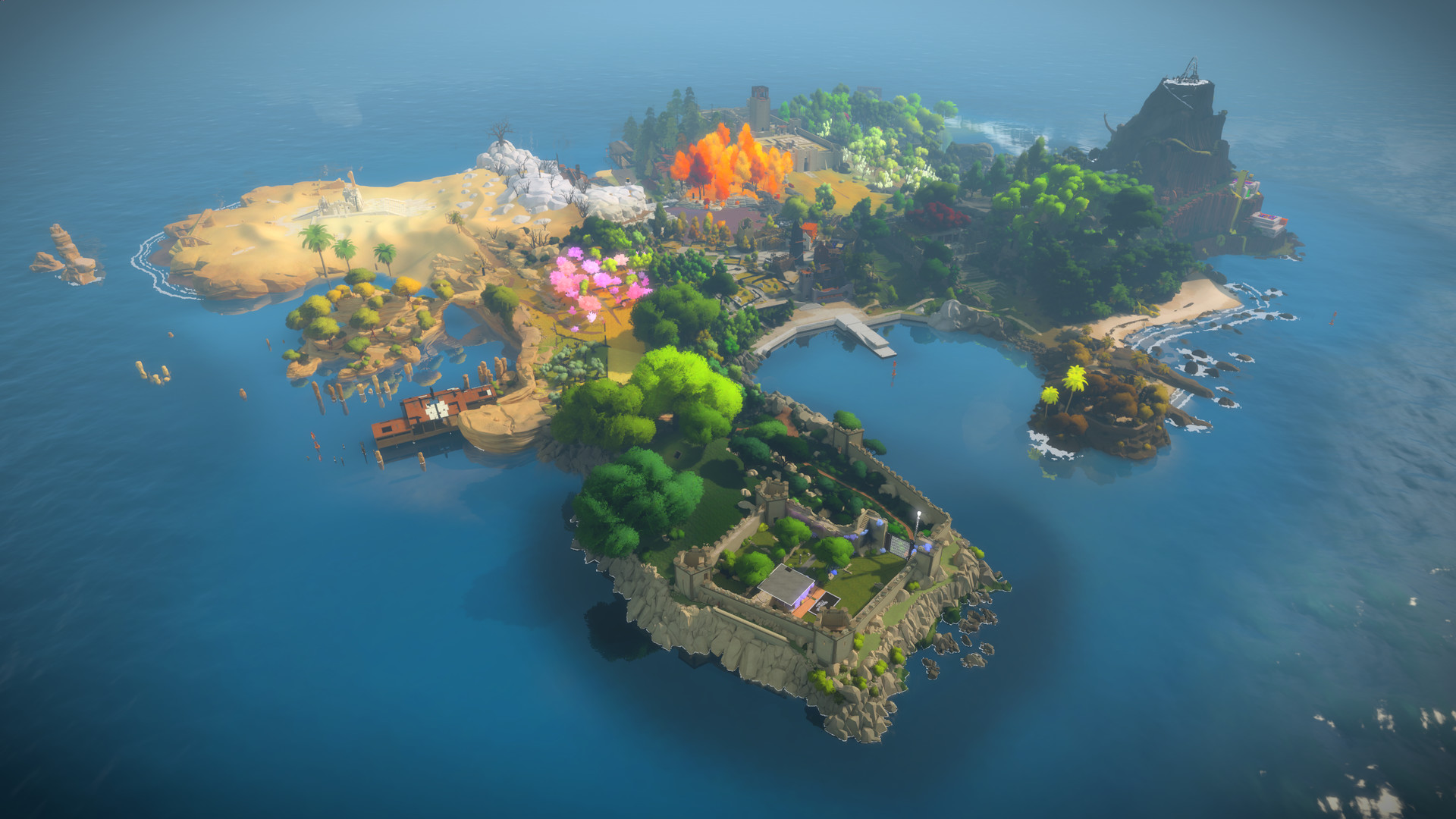
Even though I wish Jusant did more to make climbing more engaging, I still adored the surroundings of my ascent. The rocky tower is barren at its base, surrounded by miles and miles of desert. As you scale the tower you will find yourself in abandoned communities that have been carved into the sides of the mountain. Tiny collections of stone huts tell the story of tight knit communities that were deserted due to some ecological disaster. As you climb higher, you gain more hints about what happened to these people.
While Jusant has no dialogue, I found it told a poignant tale regardless. There’s a sense of mystery as to why the unnamed protagonist is determined to reach the summit with his frog-like companion. You find notes scattered throughout the journey which give a glimpse into the life of the people who inhabited the tower. Many players probably will skip these notes altogether, but I enjoyed piecing together how civilization crumbled. Seeing how the environment evolves as you scale gives you clues as to how this society functioned and then collapsed as the water dried up. Even without dialogue, the final scenes of Jusant manage to be emotionally impactful. 

After the grueling nightmare of Alan Wake II, I needed a nice relaxing breather. And Jusant is perfect for that. The simple additions to traditional climbing mechanics make a normally boring concept more engaging. But I would have loved to see some more puzzle elements incorporated to encourage the player to carefully plan their routes. Nevertheless, I enjoyed the relaxing ascent and discovering more about this barren world. It is for these reasons that I give Jusant a 7/10. Transforming climbing into the main hook of a game and having it be fun is a tall order, and one that Jusant delivers on that.

Cocoon (2023)

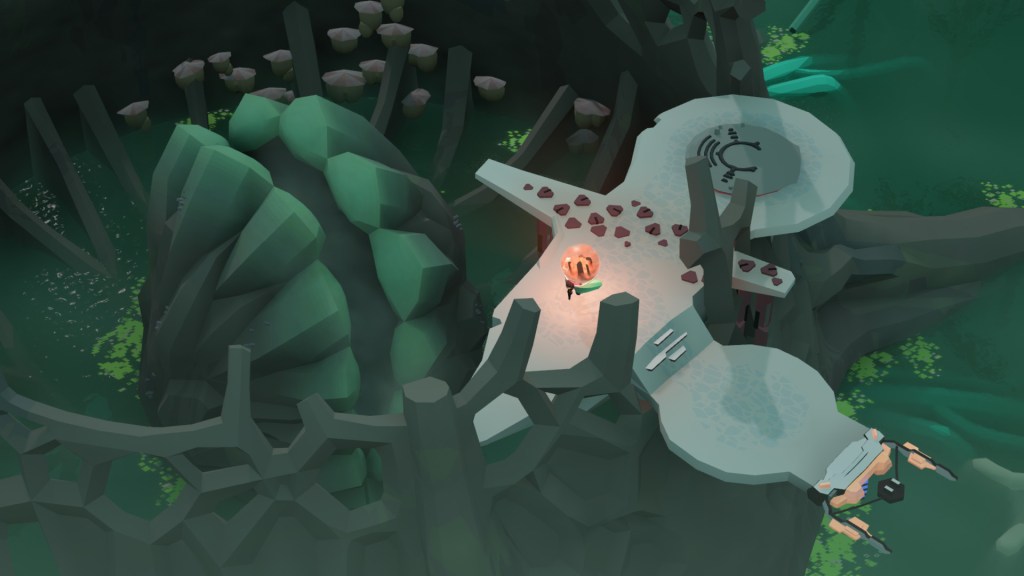
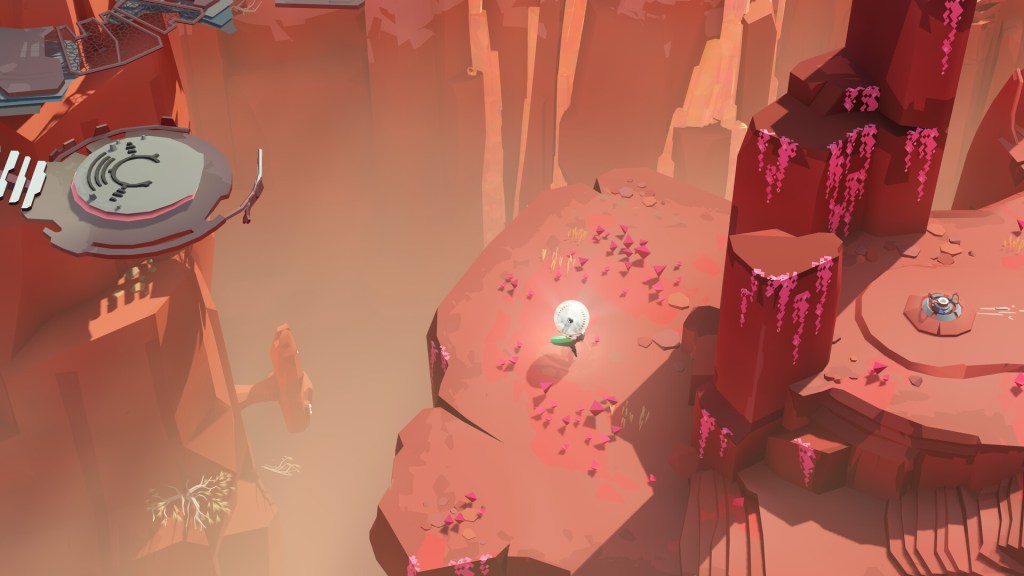
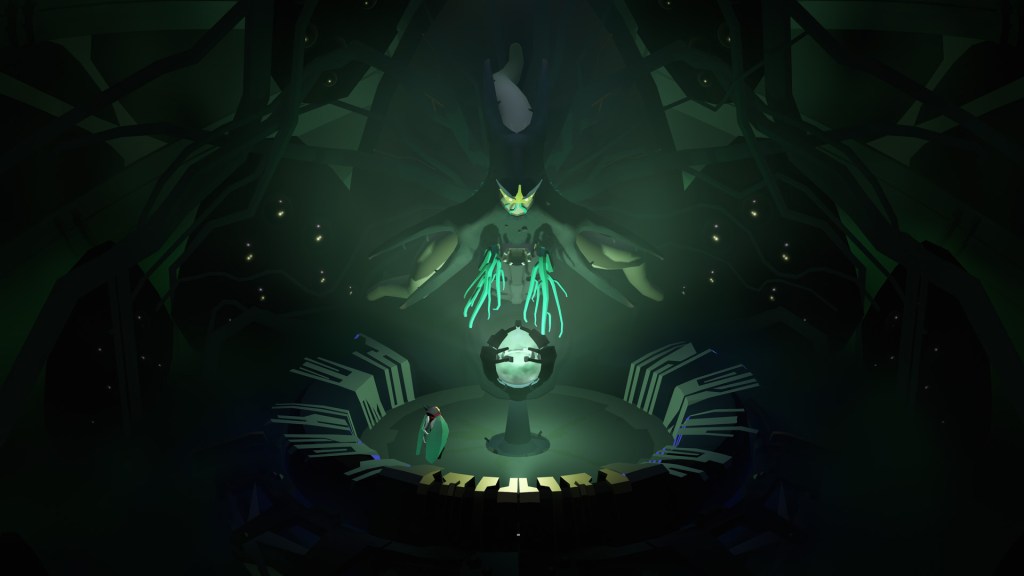
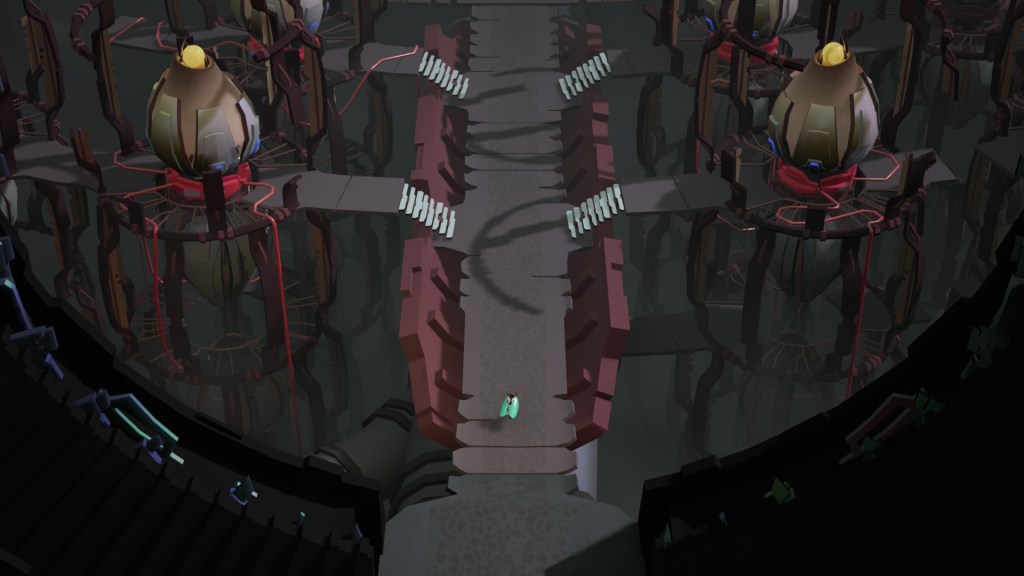
Cocoon is unlike any other puzzle game that I’ve played. It revolves around the brilliant idea of portable worlds that you can jump in and out of. Worlds reside within other worlds, and you can carry them around as if they were just trinkets. It’s a Russian doll of realities that you traverse through. But it manages to reign in the difficulty and makes its puzzles approachable. There’s a sense of Zen as you solve mind-bending puzzles and take in the magnificently alien world of Cocoon.
The main idea of Cocoon is that the player can dive in and out of these world-like orbs. You carry them around, using them to power machinery and progress forward. You solve a puzzle in one orb which lets you do something in a different orb which lets you exit the orb that contains them both. Each orb additionally has some power to use in puzzles as you carry it. Puzzles often have you jump in and out of worlds, carrying the orbs around and utilizing their properties to bypass obstacles. The world within a world within a world within a world nature of the orbs can be rearranged and reformed to fit your needs. It may sound confusing but Cocoon is intelligently designed to minimize frustration and confusion. 

An interesting technique of puzzle design that Cocoon utilized was explicitly cutting off the player from backtracking once they encountered a new puzzle, so long as they had the required materials to progress. This minimizes the common confusion of spending a while staring at a puzzle and thinking you are missing something to proceed. Stopping you from going backwards is the game’s method of telling the player that the puzzle is solvable. It greatly reduces the frustration of backtracking or spending time messing with previous elements that have no bearing on the current puzzle.
I found that the puzzles of Cocoon were never too challenging. This is in part because the game stops you from getting too far off track, but it’s mostly because the puzzle design is fairly simple. Despite the mind-bending world-hopping mechanic of Cocoon, the game rarely requires an intricate series of steps to progress. Often, a puzzle will introduce a new idea that highlights the game’s underlying mechanics. It begs the player to tinker around and experiment with how nesting worlds like a Russian doll could be used to solve its puzzles. There’s a lot of potential for some truly difficult puzzles, but Cocoon holds back on purpose.

If you love games that fully explore their main mechanics, Cocoon may not be what you are looking for. Instead, Cocoon focuses on letting the player progress and discover its world and mysteries without being hindered too much. There is still a sense of accomplishment and Cocoon does make you feel intelligent due to the innate complexity of its core mechanic. I love immensely difficult puzzle games like Baba is You and Stephen’s Sausage Roll. They squeeze every drop of creativity out of their central mechanics, asking the player to use everything they’ve learned in an intricate series of steps. Cocoon isn’t that. And that’s ok. Personally, I would’ve loved to see a few trickier puzzles along the way, but Cocoon has other things going for it.

I loved the art and environmental design of Cocoon. You traverse a handful of different alien worlds, each being beautiful in its own right. There are alien contraptions and creatures that litter these worlds. I loved progressing through these worlds and marveling at their environments. Everything feels appropriately alien. The sound design uses echoing chirps and metallic groans that sound otherworldly. There is no written story in Cocoon, but there is some environmental storytelling to discover as you adventure through the orbs. I found the ending to be quite satisfying and it puts the entire journey into a new context.

Cocoon may not be the longest or the hardest puzzle game, but it is one of the more memorable puzzle games that I have played. The truly alien setting paired with its world-hopping mechanics is immensely enjoyable. Its lower difficulty and stakes make for a fairly relaxing experience. That being said, I would have loved to see its mechanics potentially explored further in some challenging post-game content. It is for these reasons that I give Cocoon a 9/10. Cocoon is a phenomenal experience, even if it lacks some truly difficult puzzles.

Bugsnax (2020)

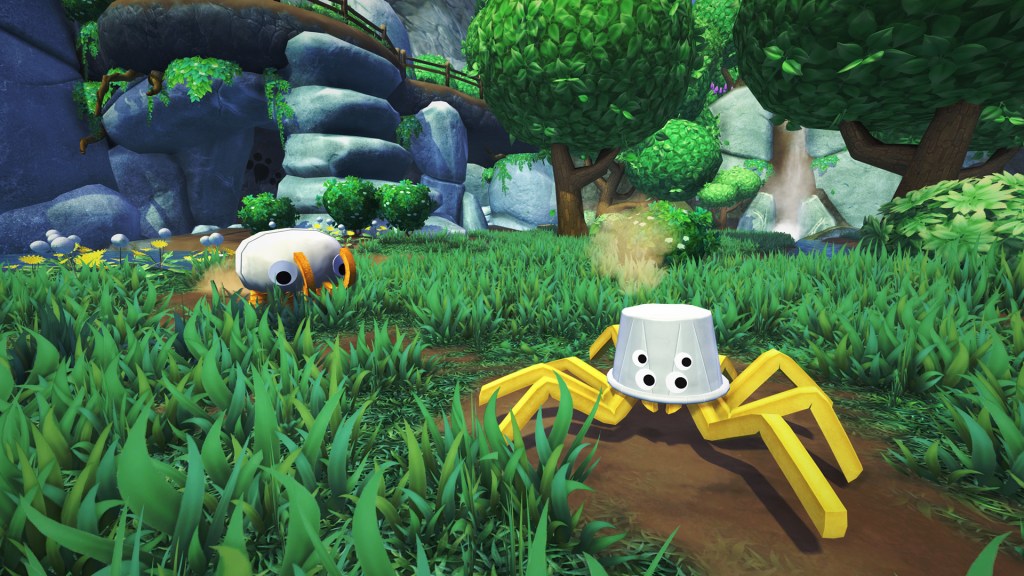
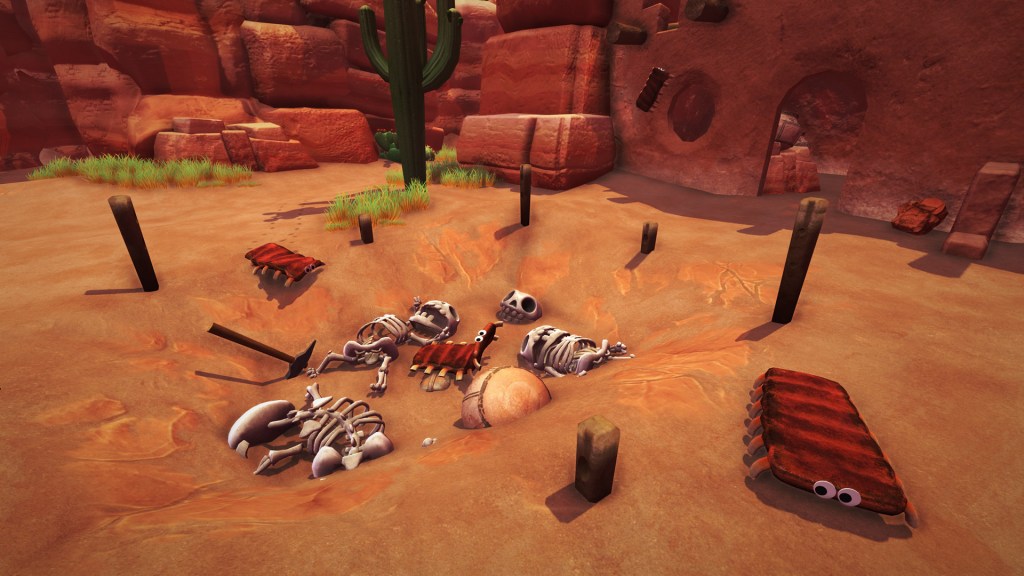
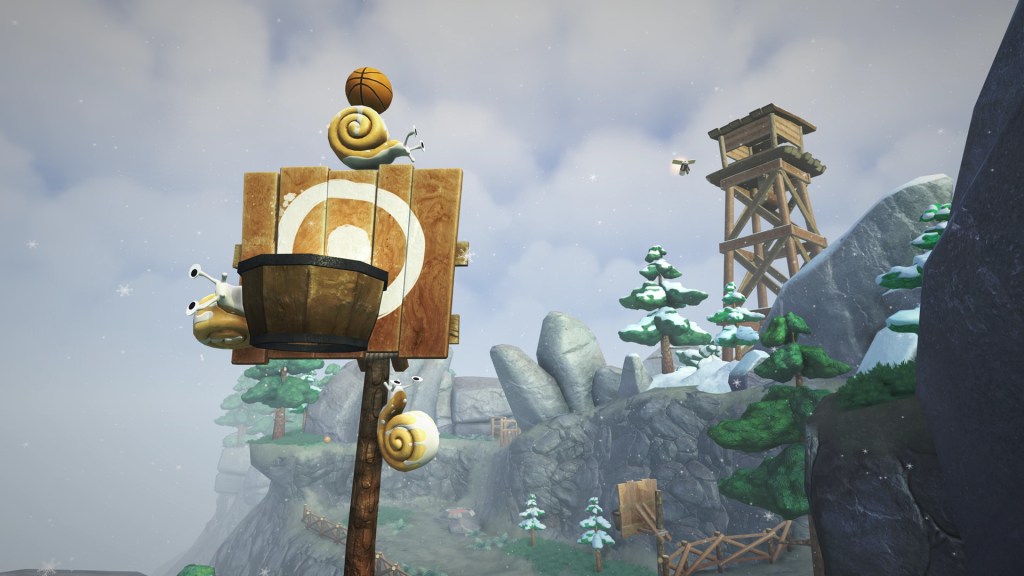
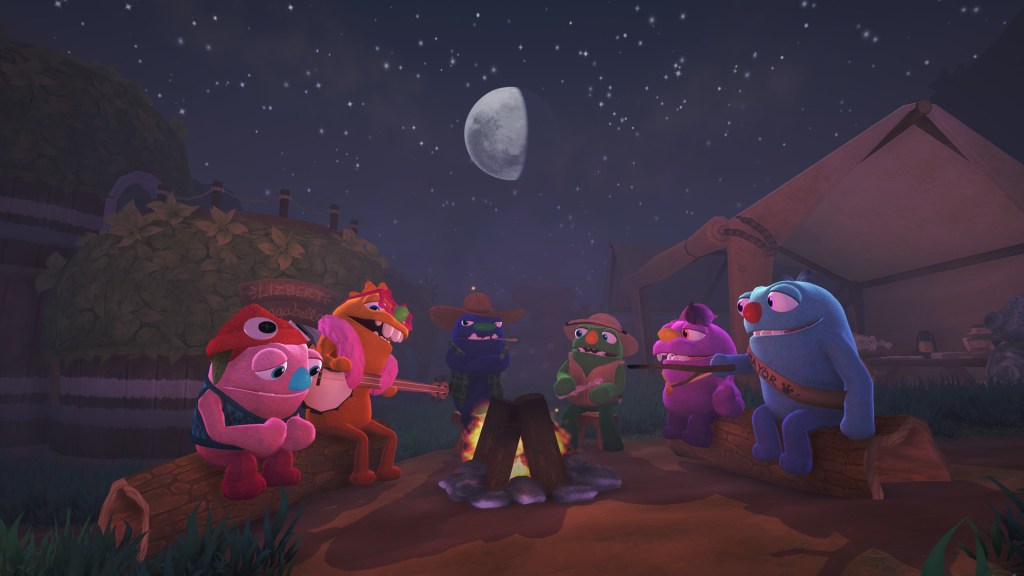
There’s something about Bugsnax that makes it feel nostalgic despite it being released in 2020. It feels like it belongs in the Gamecube/Playstation 2 era of wacky and cartoonish games. Visually, mechanically, and conceptually, Bugsnax feels like one of those weird games that I would play when I was a kid. There’s a certain sense of charm and creativity that is present throughout Bugsnax. Although I don’t consider it a flawless experience in any sense, it’s definitely a game that I enjoyed playing.

The idea behind Bugsnax is that you are a journalist investigating the disappearance of an adventurer on an unexplored island. A small group has taken up residence on this island because it is home to the titular species of creatures. These Bugsnax are animals that look like food: strawberries, hamburgers, tacos, etc. When you consume them, part of your body takes on traits of the Bugsnax. It is a frightening concept if taken out of the lens of the silly and carefree presentation of the game. When you arrive on the island, you realize that the group who had settled here has split up for some reason, and it is your job to get to the bottom of what happened.

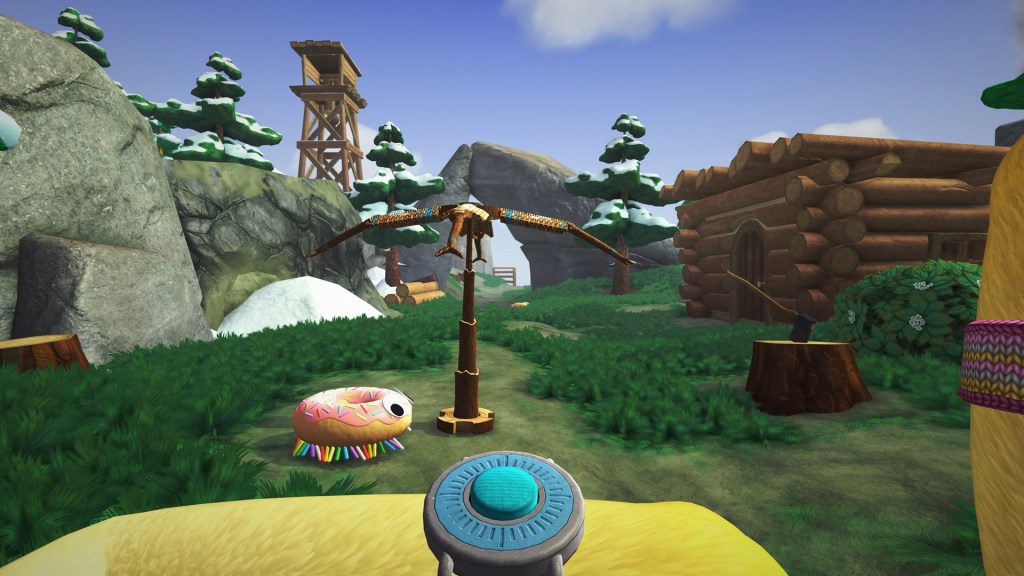
The core gameplay of Bugsnax is catching Bugsnax. As you progress through the game, you unlock tools, traps, and gadgets to wrangle the little critters. It starts out simple enough, such as setting net traps next to bushes while waiting for timid Bugsnax to poke their heads out. As the game progresses, you need to use tools in conjunction with one another as well as the environment and even other Bugsnax. At its core, Bugsnax is an adventure-puzzle game. Trying to figure out how to catch the different creatures was extremely enjoyable. It’s different, it’s unique, and it’s fun to figure out how to capture the trickier Bugsnax and add them to your collection.

While I do appreciate the unique concept and gameplay, I do wish it increased in complexity and depth as the game progressed. While some Bugsnax are trickier than others to capture, it feels like there is a lot of repetition to pad out the game’s cast of creatures. There are a lot of similar Bugsnax that are functionally identical to one another, they are just found in different parts of the map. This can get particularly tedious when trying to tackle many of the game’s sidequests, as they often are as simple as going to catch common Bugsnax around the island. Catching a dozen different variations of the Strabby is not really an engaging puzzle.

As the game progresses, there are some slightly more complex Bugsnax to catch. Some fly, some are frozen and can’t be touched, and others are on fire and will burn your traps. These are interesting the first couple times you encounter them, but once you realize how to handle these hurdles you can use the same strategy for all other similar Bugsnax. There are a few bosses which are unique and I enjoyed figuring out how to handle them, but they are few and far between. Bugsnax would have benefited from having fewer filler and repeat creatures, and more unique Bugsnax that require the user to engage in some problem solving.

Aside from the creature capturing, the appeal of Bugsnax is in the charming cast of characters. There is a central town where residents that you assist will return to. It’s quite cozy to hang out in town and visit with the seemingly silly characters. I was surprised as I kept playing by the depth of the cast.

For what seems like a childish game and concept, Bugsnax has some mature themes and character growth. The townspeople have complex motivations and interpersonal relations. The isolation and pressure of living in a false paradise led to arguments, tension, and distrust. As you progress each character’s story, they are led to resolve their conflicts in mature manners. I was impressed by how real and multi-faceted every character’s personality was.

The weakest aspect of Bugsnax is easily its presentation. Specifically, the visuals. The voice acting was solid, and I loved how the creatures would shout their own names like Pokémon. But visually, the game looks like it belongs in a different era. I like the choice of being cartoonish, but the execution is dated. Honestly, this isn’t a big deal, but it is funny considering that Bugsnax was a launch title for the graphically powerful PS5.

I wasn’t expecting to enjoy Bugsnax as much as I did. I had fun working out how to capture all the creatures. The variety of gadgets and tools makes for some fun puzzles, but I do wish that there were more unique Bugsnax rather than the multitude of different colored species. For a game that seems childish, there are some mature themes and lessons to be learned from the characters. It is for these reasons that I give Bugsnax a 6.5/10. I don’t think it will blow anyone’s mind, but Bugsnax is a fun little adventure nonetheless.

Snakebird (2015)

Snakebird is the perfect example of the old saying “never judge a book by its cover”. It’s bright, colorful, has cute creatures, it just looks so warm and inviting. Don’t be fooled, underneath that cute exterior is a brutally difficult puzzle game. Despite the game being extraordinarily simple, Snakebird poses challenges that will stump anybody. The level design makes clever use of the movement mechanics to create over fifty unique and tough levels.

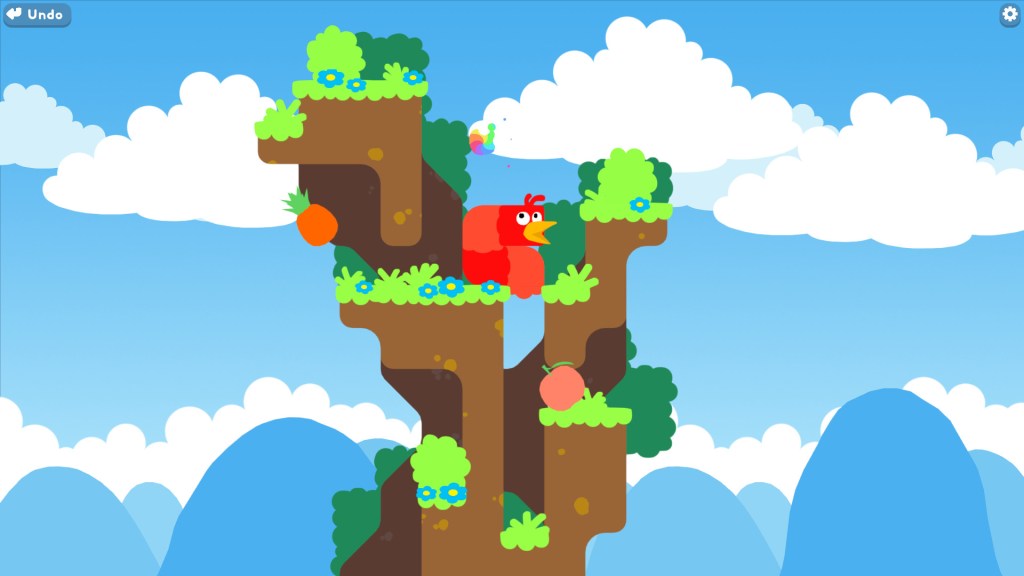
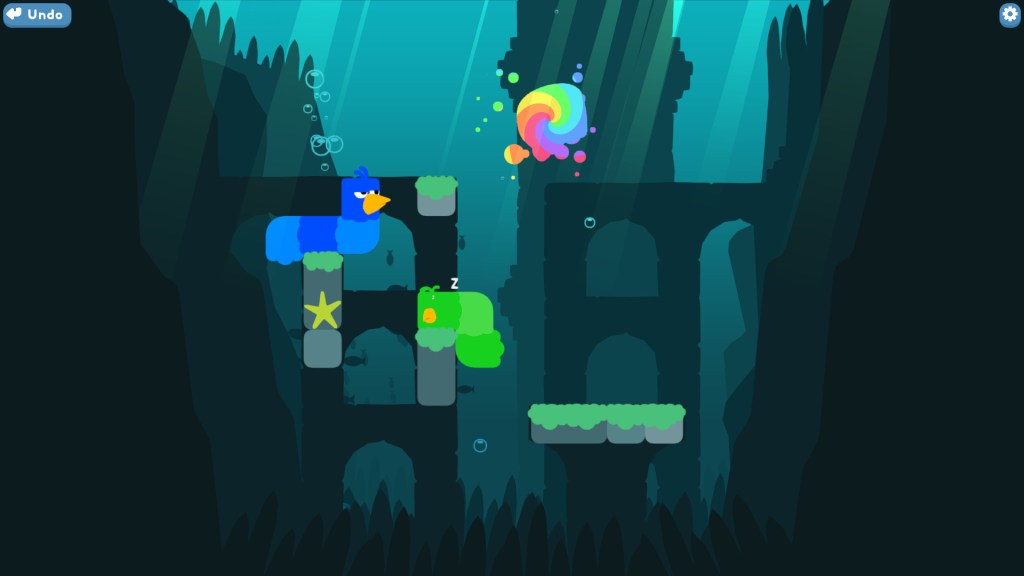
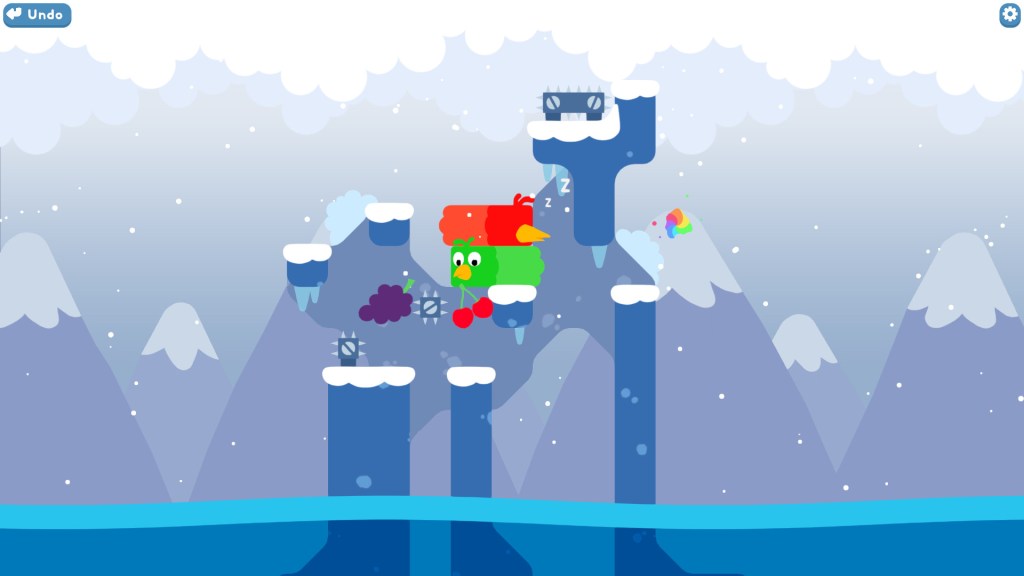
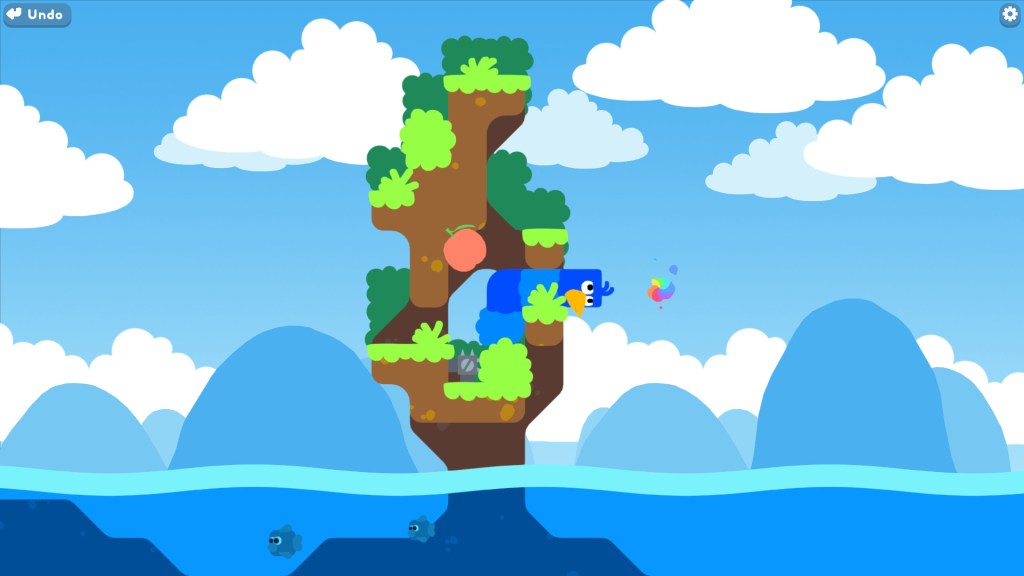
The premise of Snakebird is that you control snakes on a grid, and the goal is to reach the ending portal on each level. As you move the head of the snake, the body follows. As long as one segment of the snake is supported by a platform, you can maintain all sorts of strange shapes. The goal is to manipulate the snake in each level such that you can overcome obstacles and the reach the portal. Conceptually, the game is simple. Outside of manipulating the snake, there are only a few other ideas to add to the puzzles. Things like pushing boxes, controlling multiple snakes, and collecting fruit to grow are all additional mechanics, but they are easy to grasp.

The beauty of Snakebird is its simplicity. A common point of frustration in puzzle games is when you don’t fully understand a mechanic, so you waste time trying to solve the puzzle without having the knowledge to actually solve it. Nothing is more aggravating then bashing your head against a puzzle then realizing you were missing something all along. Snakebird circumvents this conundrum by basing all of its puzzles around the core movement mechanics. Despite this, there are a plethora of challenging levels that really test the player’s mastery of how to control the snake.

While the simplicity of Snakebird is in fact it’s greatest asset, it is also the game’s greatest weakness. While I was occasionally frustrated by more complex puzzle games like Stephen’s Sausage Roll, Baba is You, and The Witness, those games felt much more memorable because of their willingness to push the boundaries. There were frequent “aha!” moments in those titles, which I didn’t encounter nearly as much in Snakebird. There were a few levels that had a unique use of the movement mechanics, but even after only a couple weeks after beating the game there are only a handful of levels that I remember.

Overall, I don’t have much to say about Snakebird. It is a cute puzzle game that will be plenty difficult for anybody looking for a challenge. It won’t blow anybody away with a unique premise or innovative puzzles, but it does make great use of the few mechanics that it does showcase. While I don’t think it falls into the “must play” category I do believe it is a worthwhile game for experienced puzzle game players. Snakebird is not a game that is going to revolutionize the genre, and that’s ok. It is a phenomenal demonstration of a title that accomplishes a lot with just a simple core idea.

Baba is You (2019)

It is a rare occasion in which I get to play a truly innovative game. Games that push the boundaries of a unique concept can be difficult to come by. That is why I was excited to try the acclaimed puzzle game Baba is You. This indie game presents an elegant idea: rules are meant to be broken. This is a game about rules, and how you can manipulate them to reach your goal.

1

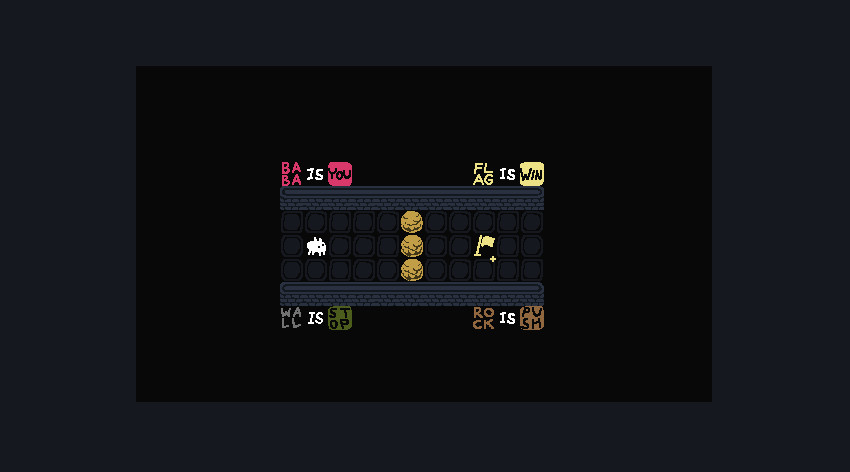
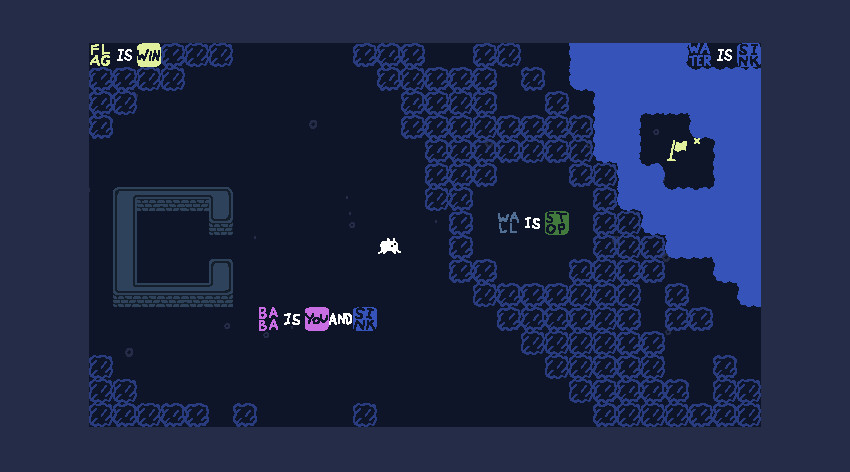
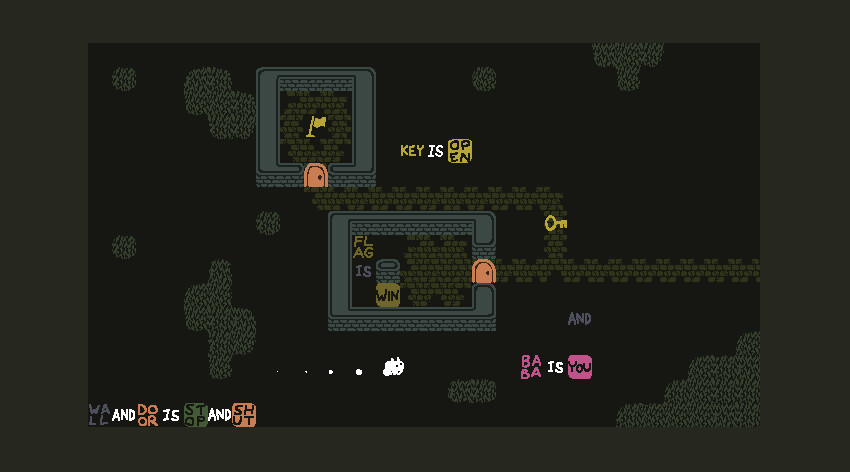
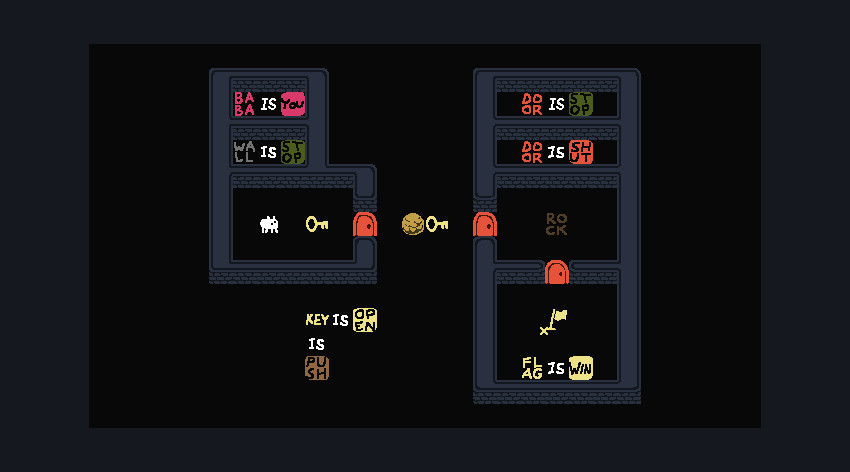
Like many puzzle games, the premise of Baba is You is to get to the goal. The genius of the game is that the rules are ever changing. Each level is a square grid, and each rule is simply laid out for the player. It starts innocuous enough; the first level begins with rules such as “flag is win”, “Baba is you”, and “wall is stop”. You are a little white creature called Baba, you must make your win to the flag to win, and any wall in your way will stop you. What makes this game special is that the player can manipulate the rules as each word is movable. For example, you can push the word “wall” to break up the sentence “wall is stop”. Now that rule no longer exists, and you can freely walk through walls. Moreover, you can use whatever words are given to you to form new rules. In the previous example, you could use the given words to make “wall is win” to change the win condition of the level.

The idea behind Baba is You is absolutely phenomenal. In every game that I have played, rules are concrete. Through tutorials, text, or simple trial and error the player must deduce the mechanics of the game and how everything interacts. In Baba is You, every level has its own ruleset laid out in plain sight. It’s up to the player to manipulate those rules to their advantage. Breaking up sentences to invalidate troublesome barriers, or forming new rules that could prove useful. As the game progresses, new words begin appearing that could drastically change how levels need to be approached. Part of the beauty of the game is that despite the ever-changing rules, the win condition always remains the same: whatever object is “you” needs to be touching whatever is “win”. This inevitable end-state of any puzzle is a helpful starting point to begin thinking about how you can achieve victory.

6

The most critical aspect to any puzzle game is its level design. Challenges must be creative and fully utilize the games mechanics, while at the same time having relatively simple solutions that are not obtuse. If you’ve played many puzzle games, I’m sure that you’ve run into a roadblock and after finally stumbling into the solution you say “how the hell was I supposed to figure that out”. Designers must avoid this feeling while simultaneously crafting puzzles that force you to think. Baba is You has fantastic level design. Most solutions are simple to execute and don’t require some obscure mechanic. The designs are ingenious in that most levels require some trick or tactic that any other level hadn’t utilized yet, but remain simple and seem obvious once you discover the solution.

Moreover, Baba is You utilizes its unique premise to challenge preconceived notions. Most gamers are going to have internal habits that are going to be broken. You are going to make false assumptions about how to beat a level, and the developer was fully aware of that. Many of the levels have this uncanny quality to exploit the player’s desire to immediately attempt an obvious solution. It baits you into using an object the same way that you’ve used it so many times before, but that assumption will only lead you away from the goal. Many times, you feel so close to solving a puzzle, but in reality, you are so far off from the correct solution.

2

Additionally, for a game that is all about breaking rules Baba is You is remarkably good at stopping unintentional or “cheese” solutions from working. Again, it felt like the developer thought of every way a person could attempt to solve a level and prevented everything but the intended solution from working. The final note on level design that I want to touch on is the ability for each level to foster an “aha!” moment. It’s a great feeling when you figure out some trick that you hadn’t thought of before that makes the puzzle a breeze. Baba is You excels at creating those sensations when a level finally clicks.

One of the most important aspects to Baba is You is how relatively easy it is to get into. Some of my favorite puzzle games are notoriously unapproachable. Stephen’s Sausage Roll and SHENZHEN I/O are both confusing and cumbersome for new players, and as a result many people don’t give the games a fair chance. Baba is You is comparably simple to pick up and play. The game starts with extremely easy levels for the player to grasp the basics. Moreover, while there are over 200 individual levels, you only need to complete a few dozen to beat the game. You can pick and choose which levels you want to do, so if you get stuck on one particularly troublesome puzzle, you can skip it entirely and try something else.

3

Despite Baba is You being easy to pick up, it can be an extremely challenging game. While the beginning sections of the game are there to ease new players in, there is plenty of optional content that will test even the most veteran puzzler. The final few sections of the game in particular are insane. These parts are entirely optional, but they utilize a rapidly expanding ruleset and rely on meta solutions. How you complete one puzzle may affect another puzzle, and how to get to the next puzzle is dependent on how you completed a previous puzzle. I don’t want explain too much, as it may ruin the surprise for people who do want to experience these sections. It suffices to say that Baba is You truly maximizes the potential of its concept and it boasts plenty of difficult content.

My single point of contention with Baba is You comes from the moments where a level truly stumps the player. Baba is You relies on players to experiment with the rules on their own, nothing is explained outright. It is up to the player to figure out how each rule and object interacts. For the most part, this is a good thing. It respects the player’s intelligence and rewards creative use of rule manipulation. It also fosters those “aha” moments I spoke of before. The problem arises in that it can be a common occurrence where a puzzle completely stumps the player.

4

The issue is that nearly every single level in the game relies on some trick to complete it. Once you figure out the trick, the level seems elegant and simple. But if you haven’t figured it out then the puzzle is quite literally impossible. In other puzzle games, there is usually a series of moves or steps to get to the goal; you can make intermittent progress towards the finish as you figure out each individual step. Baba is You on the other hand relies on grand revelations and “aha” moments, so it may so happen that you stare at a puzzle for an hour and have made no progress. While these moments are frustrating, I do have to commend the game for providing a way to avoid this. As previously mentioned, you don’t have to complete every puzzle to beat the game. If one is stumping you, you can avoid it entirely. While I did end up 100% completing every puzzle in the game, any moment of frustration was self-inflicted because the game provides the option to circumvent any particularly tricky levels.

5

Something about Baba is You clicked for me in a way no other puzzle game has. It has a truly remarkable premise and incredibly designed logic-based puzzles. In a way, it reminds me of the enjoyable side of programming. Logically stringing together rules and statements to solve some problem is inherently satisfying to me. It is for these reasons that I give Baba is You a 10/10. I highly recommend this game for anybody who enjoys puzzles as it may be the best puzzle game ever made.

Stephen’s Sausage Roll (2016)

I know what you’re thinking: “Stephen’s Sausage Roll sounds like a joke.” This is not a joke, far from it. The name is goofy, the visuals are ugly, the premise is bizarre, and the price is high. How could a game about rolling sausages be worth $30? The thing is, Stephen’s Sausage Roll is one of the greatest puzzle games ever created, and its unparalleled level design is what sets it apart.

1

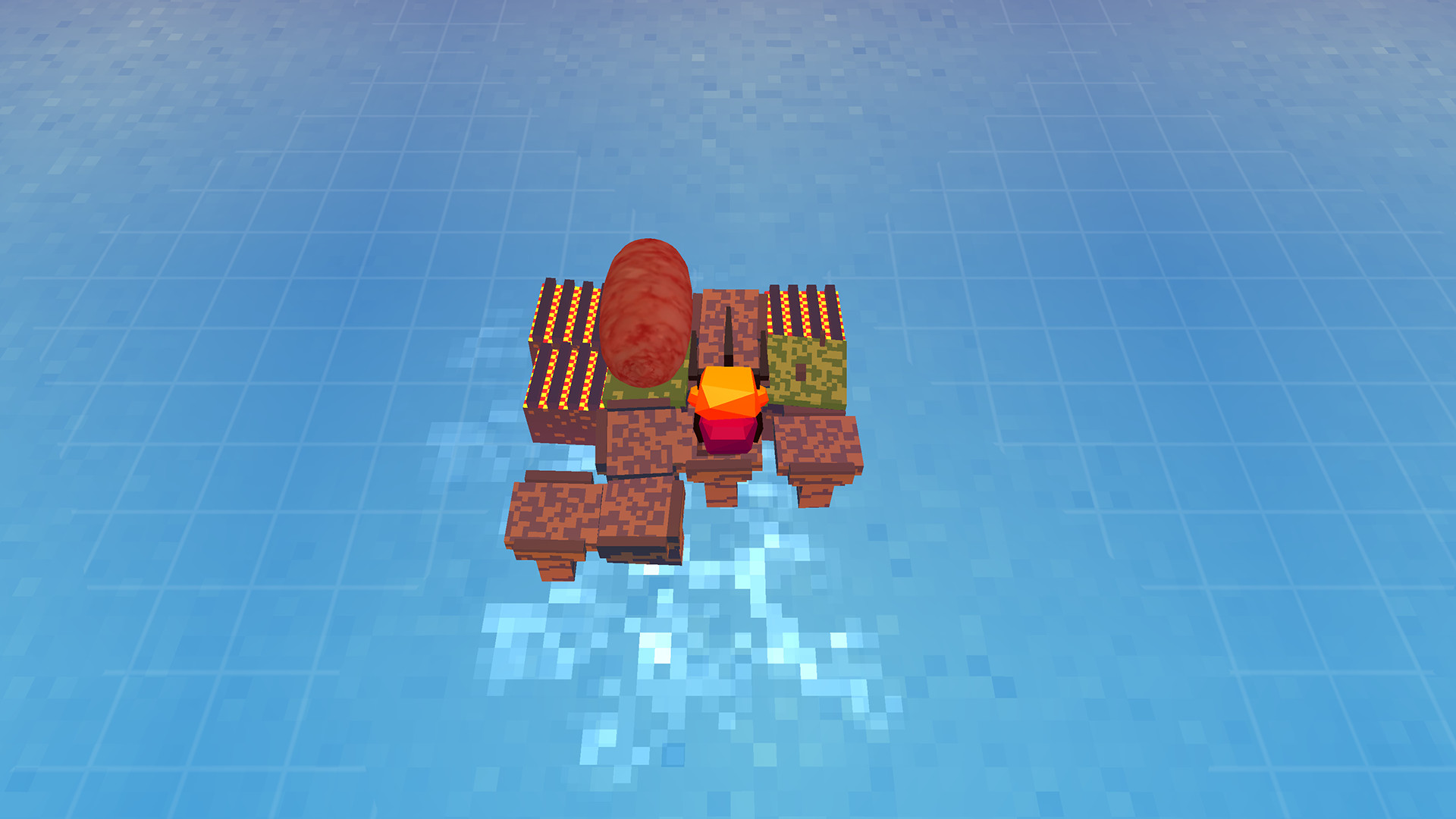
Stephen’s Sausage Roll is a Sokoban-style puzzle game. If you’re unfamiliar with Sokoban, it is a subset of puzzle games that revolves around pushing objects to specific locations. You have to plan ahead since you move in tight spaces and everything has to fit snugly. It sounds remarkably simple, but Stephen’s Sausage Roll takes sausage rolling to the extreme. This game is insanely difficult, and from the outset the game is going to challenge you. The player’s goal is to fully cook sausages on grills without burning them. The game is played on a grid, and each sausage occupies 2 spaces. You must cook both sides of the sausage, but if you cook the same spot twice, it will burn. The player also occupies 2 spaces on the grid, which makes the game remarkably difficult to control. You can move forwards or backwards, and you can rotate left and right. These constraints will take a while for any player to get used to, and are a necessary to facilitate the complexity of the puzzles.

5

The beauty of Stephen’s Sausage Roll is that it capitalizes on every facet of the game’s mechanics. The act of simply manipulating the sausages and controlling the character is explored in the first area. Subsequent areas focus on other mechanics: the second area is all about skewering sausages, the third is about rolling on top of them, so on and so forth. None of the mechanics are explained to the player, you are meant to play around in the puzzles to discover the nuances organically. There are six total areas in the game, each consisting of about a dozen puzzles. The sixth area is much longer than its predecessors and it utilizes a ridiculously interesting trick, but I will not discuss it because that should be a moment for every player to experience on their own. I do not want to spoil it.

2

Every single mechanic that the game introduces is absolutely pushed to the brink. No idea is thrown away without squeezing all of the potential out of it. Every puzzle in an area will utilize a different aspect of that area’s core mechanic. Every puzzle is a learning moment. It never feels repetitive or tedious since all the puzzles require the player to encounter an “A-ha!” moment. There were some puzzles where I looked at it and thought “This is impossible.” After playing around a bit, it would click and I would understand exactly what I needed to do. Interestingly, there were also plenty of moments when starting a puzzle that I thought “This is easy.” But once I began, I realized it was much more difficult than I had anticipated. There aren’t really any hidden tricks or techniques to stump the player, instead the stumping comes from the clever implementation of the mechanics.

The brilliance of Stephen’s Sausage Roll is in its level design.  Every level is a unique teaching moment, and every puzzle is also immaculately designed. For the most part, every tile on the grid is needed to complete the level. There is no fluff to distract the player. If something is in the level, you will be nearly guaranteed to use it. This fact is immensely helpful when solving the challenging puzzles that are plentiful in Stephen’s Sausage Roll. I would often analyze all of the elements of any given puzzle before starting. This technique often led me to reverse engineer the solution by just understanding the components available to me.

3

The exceedingly clever minimalism of the puzzles is what makes Stephen’s Sausage Roll so challenging. There is absolutely no way for a player to stumble their way to a solution. There is an intended solution for every puzzle, and aside from minor variations there is no way around that fact. The player must utilize the techniques that each puzzle demands. Every puzzle is carefully designed to maintain this paradigm. This game is remarkable for its ability to stump the player in a fair manner. You never get stuck because you are missing critical information, instead you get stuck because it’s you haven’t implemented a mechanic in the correct manner. I would often get stuck for long periods of time but I rarely felt frustrated.

My lack of frustration is due to the fact that the areas in Stephen’s Sausage Roll have all of the puzzles available at the same. If the player gets road-blocked and cannot figure out the solution to any given puzzle, it is exceedingly helpful to try the other puzzles first. Sometimes you can make new realizations, but most of the time it is a good idea just to refresh your brain. Additionally, the game has two functions that the player will use copiously. The undo button will undo the last move made, and you can use it as much as you want. Often times I would realize that my solution wouldn’t work, so I undid the last few moves to see where I went wrong. Also, it is exceedingly common to do something unintentionally because of the unintuitive controls. The undo button is a godsend. Additionally, the reset button will reset the puzzle all the way to the beginning. If you really screw up, this function will come in handy.

4

My main issue with Stephen’s Sausage Roll is “brick walls” frequently occur. Brick walls are what I describe as moments where you absolutely cannot progress until you make some realization about how the game works. These moments will vary from player to player and can be demoralizing. Many of the mechanics in Stephen’s Sausage Roll have various nuances, and organically discovering these nuances at times can be exasperating. Most players will probably hit a brick wall at the very beginning of the game. The unintuitive control scheme, lack of explanation, and immediate jump into difficult puzzles almost guarantees that fact. Unfortunately, these facets are core components of the game, so there is no way to easily fix this issue.

The high difficulty and unforgiving level design are prone to these “brick wall” moments, and it probably happened to me two or three times. Sitting on a single puzzle for 2 to 3 hours, making no headway, then figuring out the solution hinged on some obscure nuance was not an “A-ha!” revelation, but rather an “Are you serious?” moment. There really is no way to alleviate this problem, as extreme difficulty is a double-edged sword. The vast majority of the time Stephen’s Sausage Roll provides mind-bending puzzles to tinker with, but sometimes you are going to get stuck for a while.

6

Since Stephen’s Sausage Roll hits the player with a brick wall at the very beginning of the game, I think many players will have a hard time enjoying this game. It’s already in a small subset of puzzle games, and its astounding difficulty is sure to make it even more niche. Moreover, the game has no worthwhile qualities outside of its intelligent level design. The visuals, audio, and narrative are all extremely minimalistic. This is a game for somebody who wants to play an exceedingly challenging puzzle game. And that’s fine. Not every game has to be for everybody, and I like to see niche games. That being said, Stephen’s Sausage Roll is so ridiculously niche that nobody outside of a small subset of people will be able to enjoy it.

7

I absolutely adore Stephen’s Sausage Roll, but I realize that is an exceptionally niche game. I categorize this game the same as SHENZHEN I/O. Both of these games are absolute perfection in their respective genres, but I cannot unconditionally recommend them to anybody. It’s a shame that the brilliance of Stephen’s Sausage Roll will be lost on so many people due to its sheer unapproachability. Regardless, this game is ridiculously well designed and executed, and I am genuinely baffled at how much content was able to be produced on the mere premise of pushing sausages around. It is for these reasons that I give Stephen’s Sausage Roll a 9.5/10. If you are a fan of outstandingly tough puzzle games, then you absolutely must play Stephen’s Sausage Roll. If you don’t enjoy puzzles, or prefer less challenging games, than this is not the game for you.

The Witness (2016)

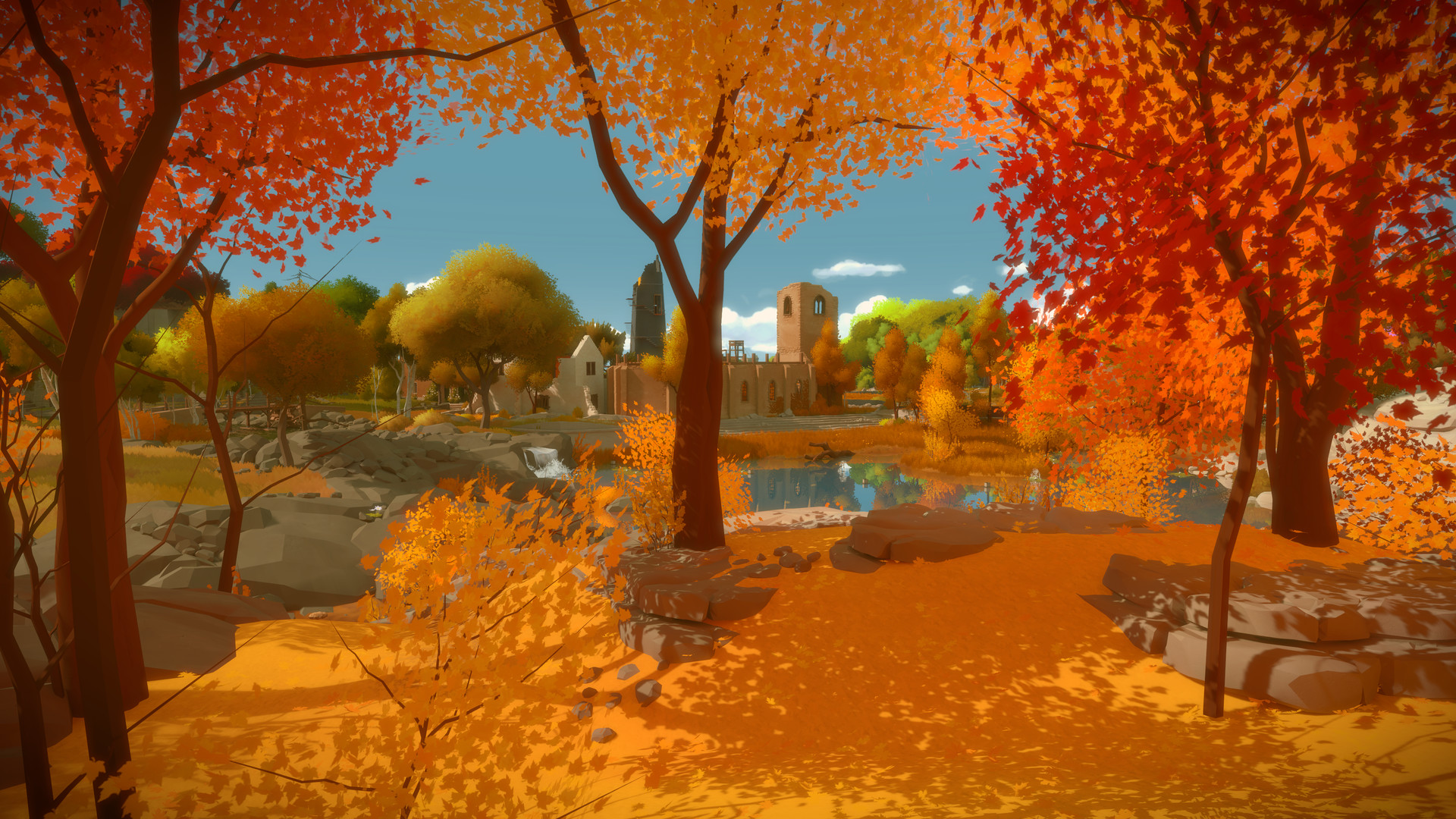
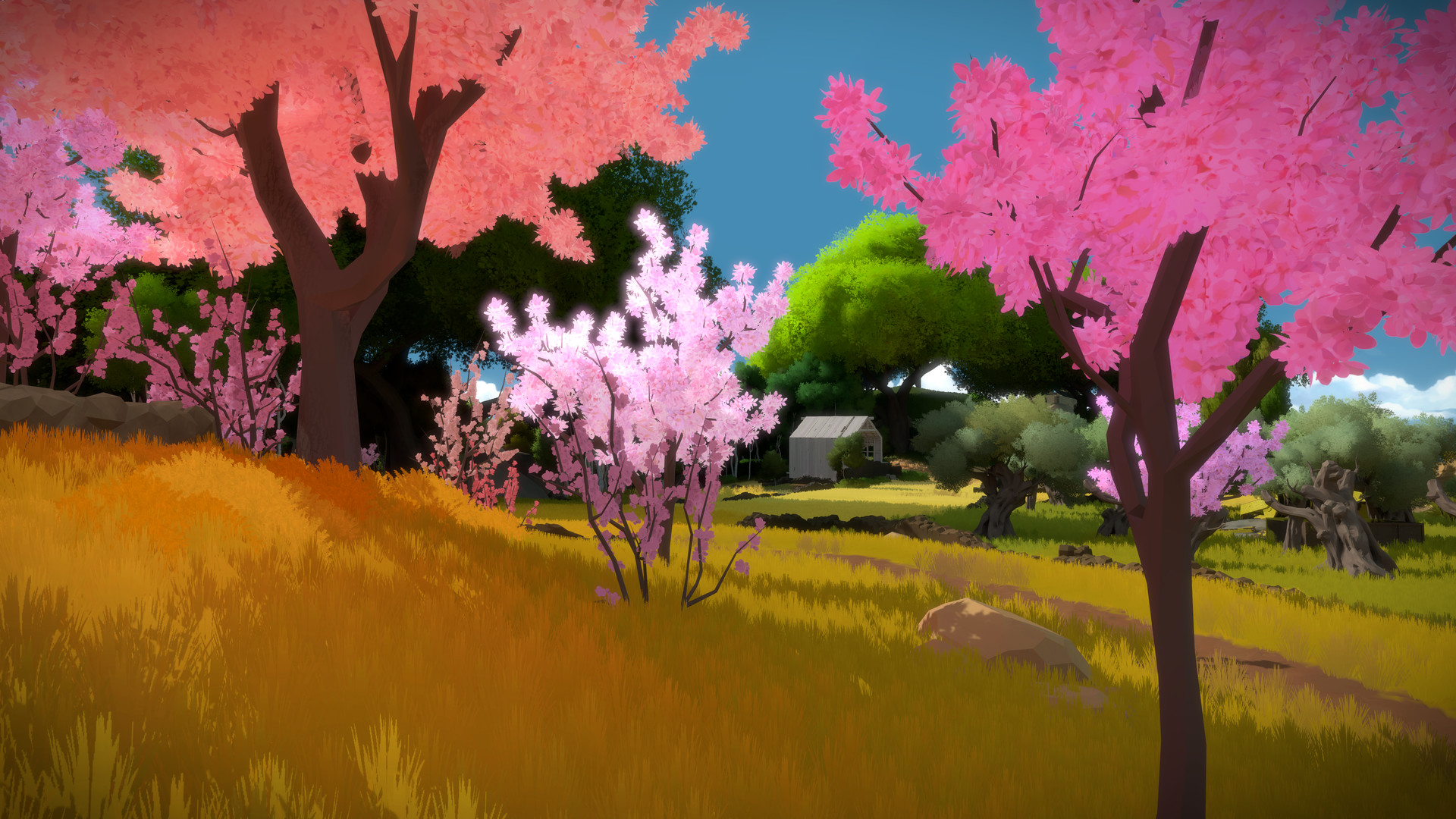
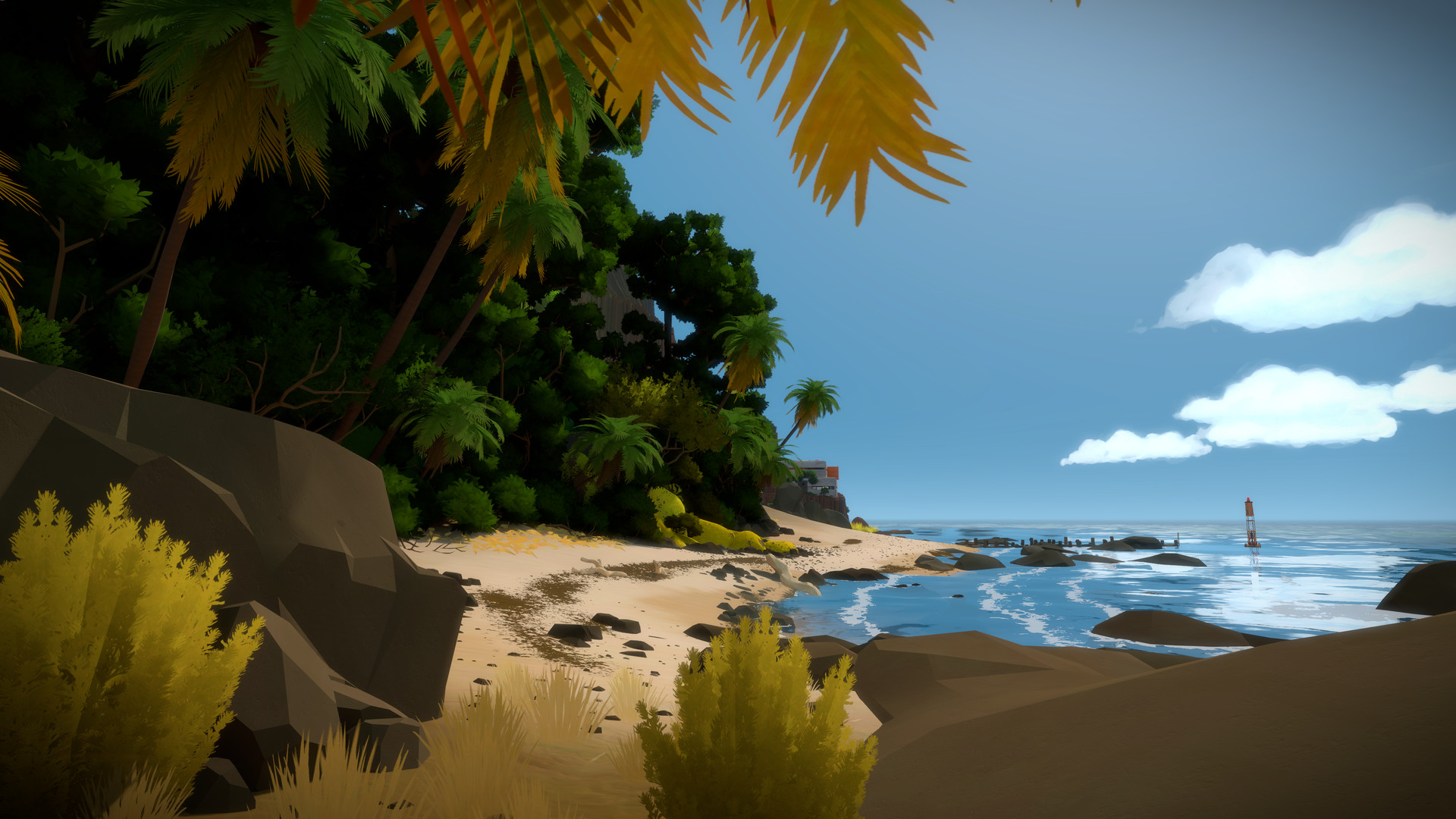
The gorgeous environment and serene island of The Witness is a mask for a complex and challenging labyrinth. This puzzle game plays with the player’s mind and perception of everything around them. In essence, The Witness is a game all about perspective and how you view the environment around you. It may be confusing and frustrating at times, but it is an essential experience, especially if you are a puzzle lover.

1

The majority of the puzzles in The Witness are these screen mazes. They start simple enough, the player navigates through labyrinths on these tablet-like screens. Quickly, new mechanics and rules are added to these mazes. Symbols represent different tasks and rules that must me adhered to, making it to the end is not enough to complete a puzzle. For example, separating different color blocks or having to collect little black dots along the way. Each area in the game seems to focus on a new mechanic and using it to its fullest potential. Many of these screen mazes will combine aspects and symbols from previous areas to add additional challenge. The complexity of these puzzles quickly ramps up and a simple 4×4 grid may take you 10 to 15 minutes to solve.

2

These mazes are the core of The Witness. The game boasts that there are over 500 of these puzzles scattered across the diverse island. You do not need to complete every one of these brain teasers to finish the game, I solved about 400 puzzles before I made it to the end. If you want more out of a game than small labyrinths, than you will probably not enjoy The Witness. There are more aspects than these puzzles, but progression is tied to the completion of these screens. This is not Portal or The Talos Principle, you rarely solve grandiose puzzles that make use of large spaces. To be fair, The Witness does make use of environmental aspects more than any games I have played. Shadows, light, sounds, perspective, and other exterior cues are key to solving many of the areas and mazes. The environment is also used in a mind-blowing manner, but I do not want to spoil this moment for future players, so I have discussed it below in a spoiler tag. View at your own discretion, because if you are planning to play The Witness, this is seriously one of the best aspects of the game that you should really experience yourself.

Highlight to see spoiler:

As you play more and more of The Witness, you may notice some strange aspects of the space around you. Hidden in the environment, there are shapes that mimic the mazes that the player has been solving on the screens. The “oh my god” moment comes when you realize that you can click on these hidden puzzles and solve them like all the mazes in the game. Immediately you begin to see shapes all around the island and try to click on everything to find these hidden shapes. Some you have to line up using different angles and perspective tricks. Others you need to figure out how to even get in a correct position. Ultimately, these are in no way tied to progression and serve no purpose within the game, but discovering this secret is one of the most important and memorable moments in the game. This is where you learn that the island has more to it than simple line puzzles, and that the game expects you to change your perspective on how you see the world around you. End of spoiler.

3

A component that needs to be mentioned is that The Witness undeniably respects the player’s intelligence. There are no tutorials, no guiding text, nothing that remotely resembles handholding. When you encounter a new symbol or type of puzzle, there are a few very easy puzzles that let the player deduce what the symbol means and how to deal with it. Furthermore, the island is an open world that lets you seemingly tackle any area in any order you want. The drawback of this is that many of these areas adopt symbols and rules from other zones. So, if you have not been to the required area, you get roadblocked. Sure, you can realize that you do not have the requisite knowledge to complete a puzzle, but I wish the game did a better job and placing areas in a more logical order. The most blatant example of this is that the town area takes concepts from every other area in the game, yet it is very likely to be one of the first areas you stumble upon to do its proximity to the starting location. This could easily lead to frustration as you try to figure out puzzles that you couldn’t possibly solve yet. This is not a case of me being flagrantly bad at the game, I finished it within a reasonable time (about 15 hours) and never really got roadblocked. All I’m saying is that it can be annoying when wandering around and you can’t seem to find a solvable puzzle.

4

The other major issue that I had with The Witness was that I could not help the feeling that the game was pretentious. Solving some secret puzzles unlocks real life speeches made by a variety of people in academia. These videos range from 5-60 minutes, and serve no purpose other than really wasting your time if you choose to view them. There are also audio logs of famous quotes scattered about the island to listen to, again I drew no meaning from these. Lastly, the ending sequence of the game seems like it was trying to portray some message, but the dialogue just seemed nonsensical. This was reminiscent of Jonathan Blow’s previous game, Braid. In both of these games the vague and pointless dialogue exudes a sense of pretentiousness. Like there is deeper meaning than what was actually conveyed, but in all actuality the story and meaning felt practically non-existent.

5

The island itself on first glance seems to contain some sort of mystery. Why am I here? What’s my goal? What are all these statues? What happened to all the people here? These questions are not really answered in any satisfying sort of way. There seems to be clues scattered about the island to make it seem like there was an overarching story, but just like the audio logs and videos there really was no satisfying conclusion. My final gripe is that everything in the game seems to move slower than it really should. The player, the doors, the platforms, they all take far longer to get to their destination than what is reasonable. When on transit in a boat I was able to get a glass of water and go to the bathroom, and when I came back I was only halfway through the ride. It feels like a joke that is meant to solely waste the player’s time.

6

For the most part, The Witness is all about its screen puzzles. Personally, I quite enjoyed all of the challenges, but I think a lot of people will be turned off by the lack of grandiose environmental puzzles. Like I mentioned previously, the environment is well integrated and a key component to these puzzles, but you rarely interact with your surroundings in a more meaningful way. The elegance of imbuing difficulty and challenge into what initially seems like a simple maze is what makes The Witness so gratifying. When you figure out a puzzle on the first try, you are emboldened and feel like a genius. When the pieces start to come together and you understand what was stumping you, a wave of satisfaction follows. It is for these reasons I give The Witness a 9/10. It’s a collection of fantastic puzzles, but it lacks of any other sort of substance.

SHENZHEN I/O (2016)

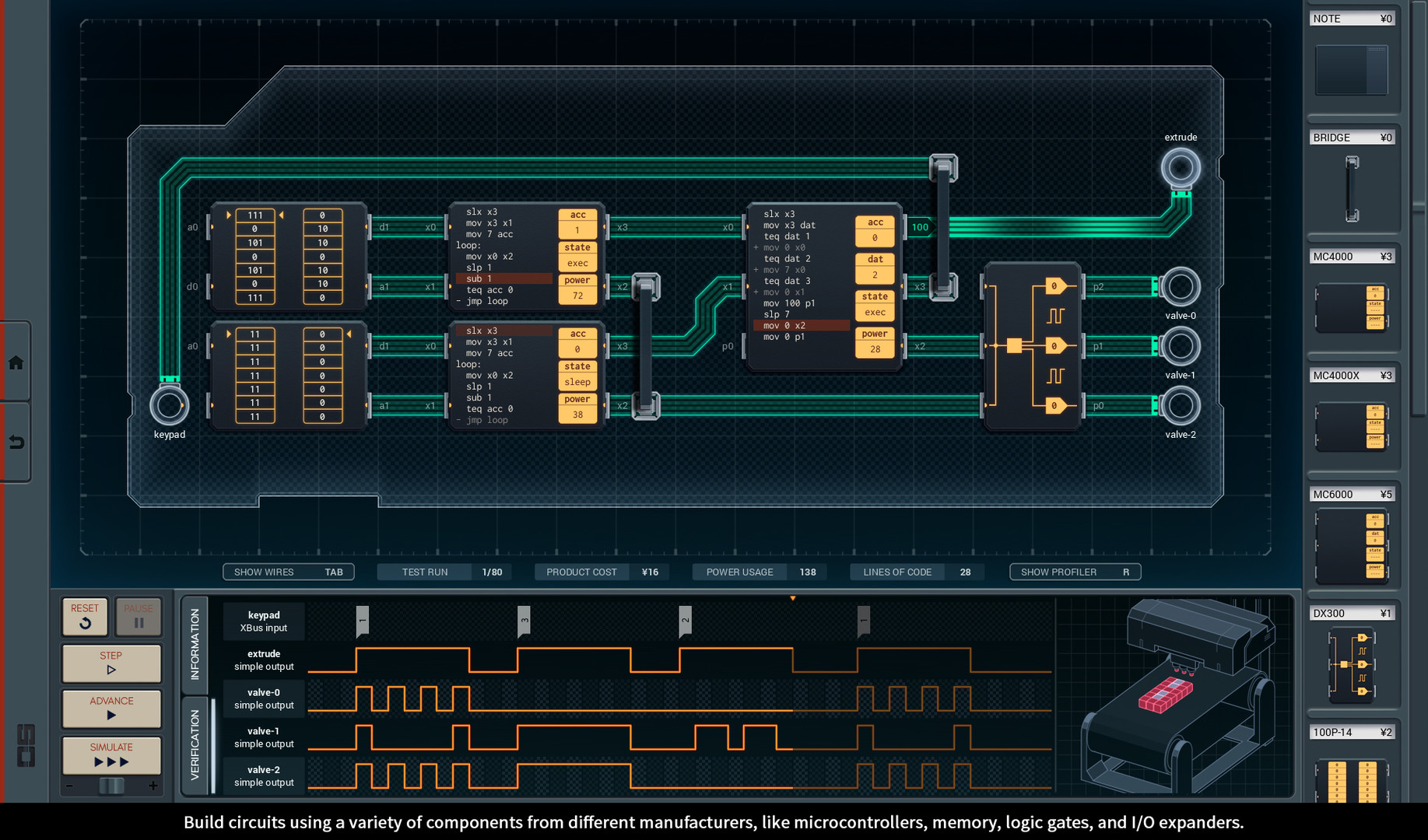
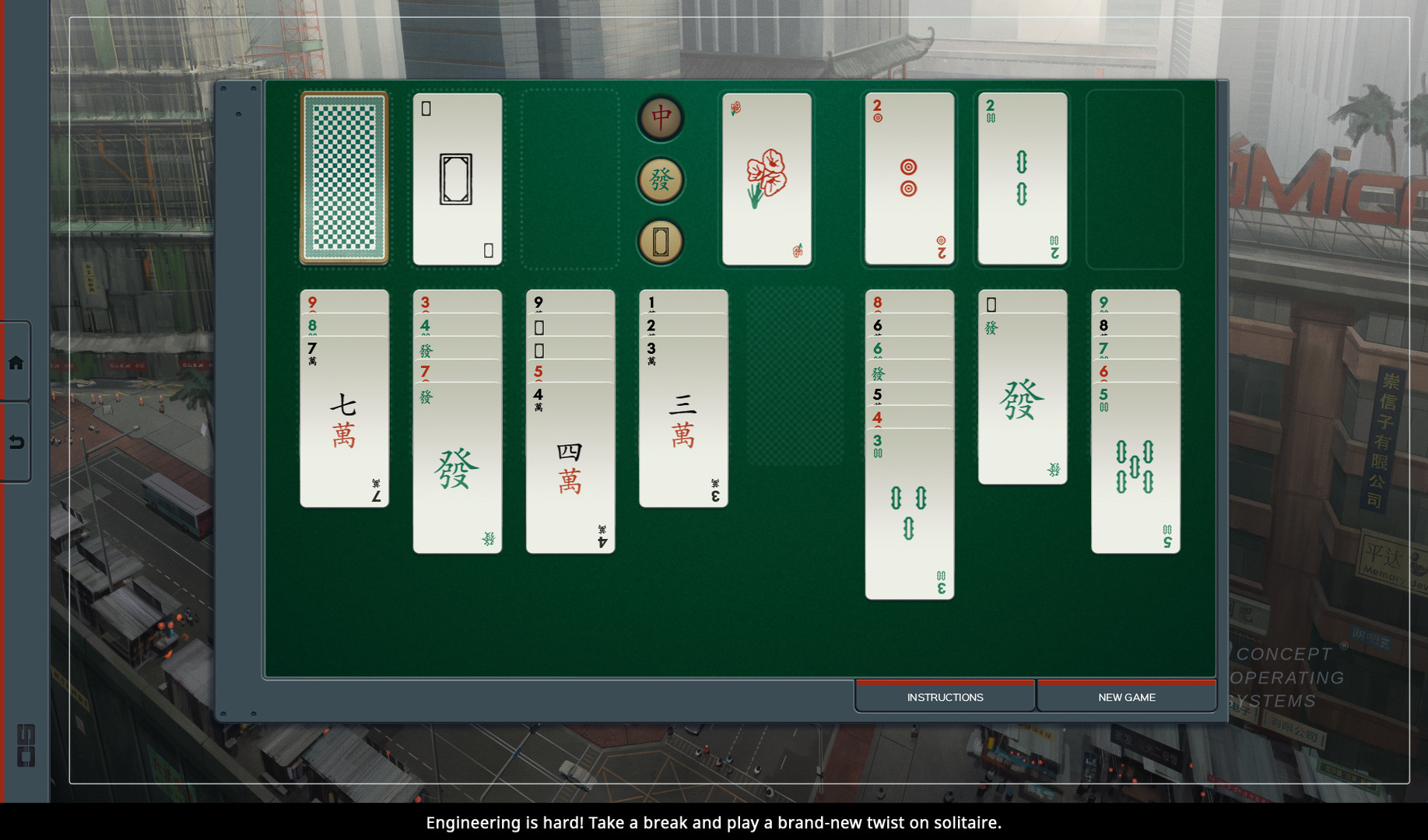
As a genre, puzzle games have a few major problems. Namely replayability, singular solutions, and the ever-frustrating feeling of “I must be missing something”. Zachtronics is a developer that creates extremely unique puzzle games that eliminate all of these pitfalls. Zachtronics does this by basing their games in reality, such as chemistry, production lines, or in the case of Shenzhen I/O, programming and electronics. I will admit, Zachtronics games are extremely niche, but if you enjoy problem solving, they will scratch that itch. As a computer science student, Shenzhen I/O drew me in as I was curious how a game could make the obtuse language of Assembly enjoyable.

1

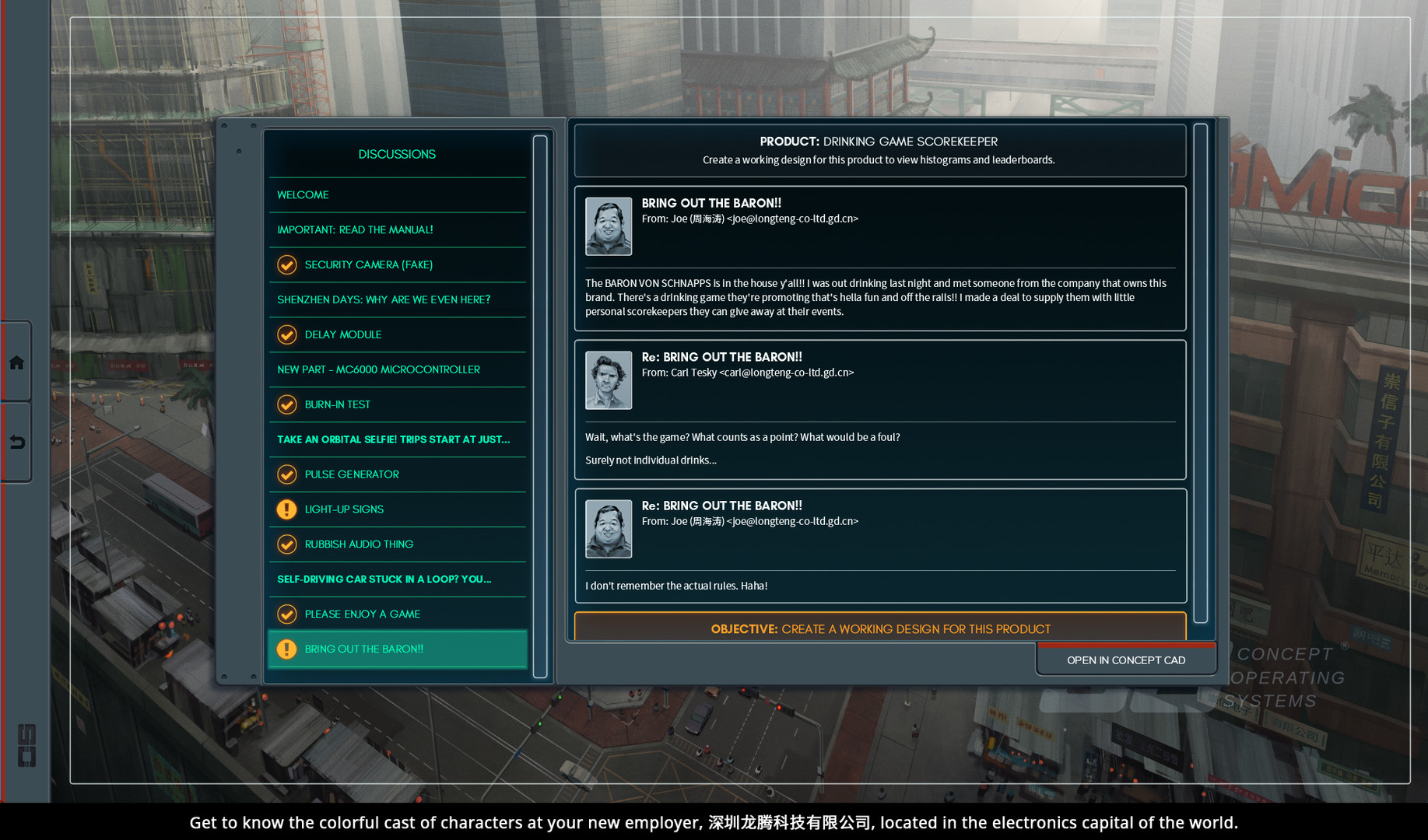
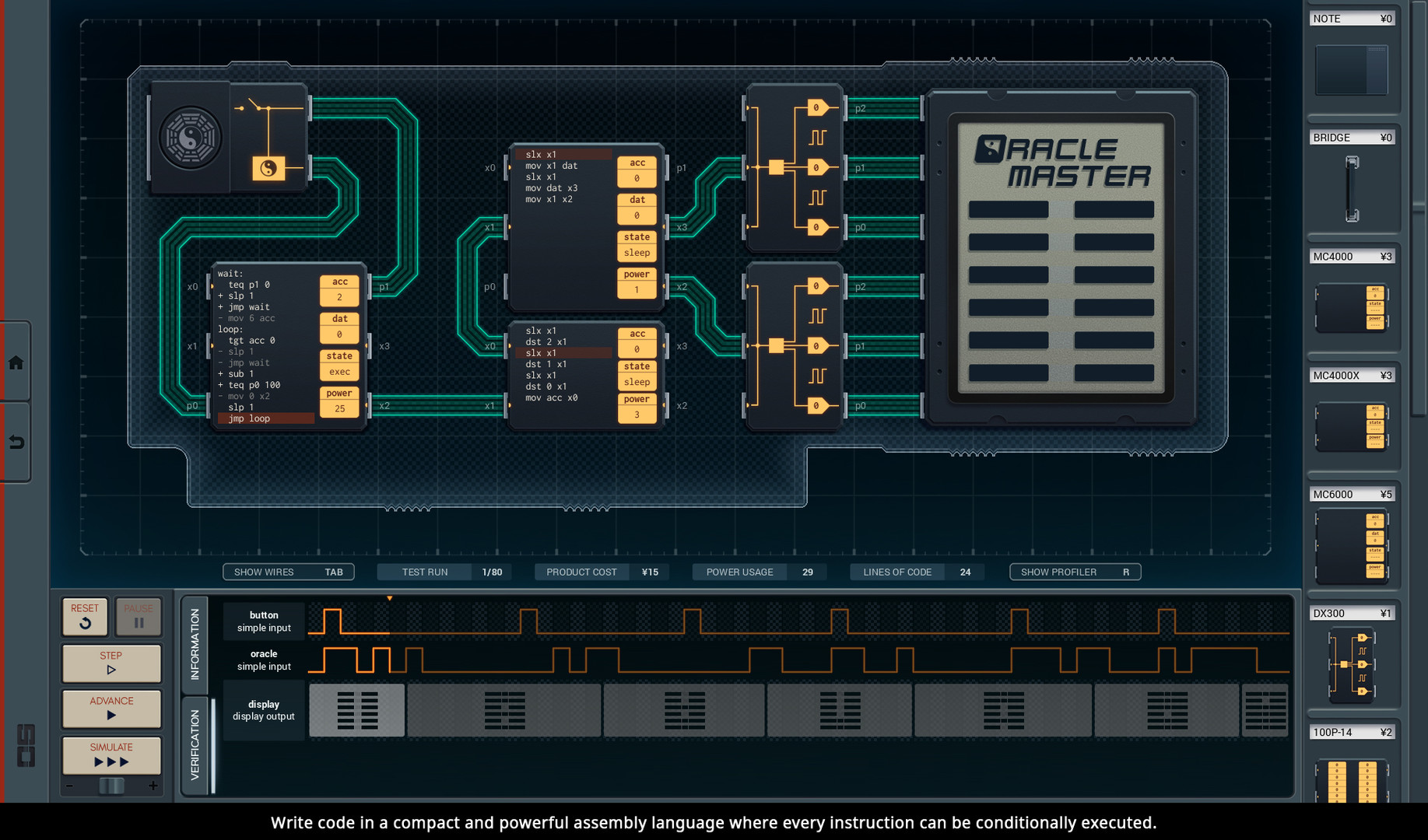
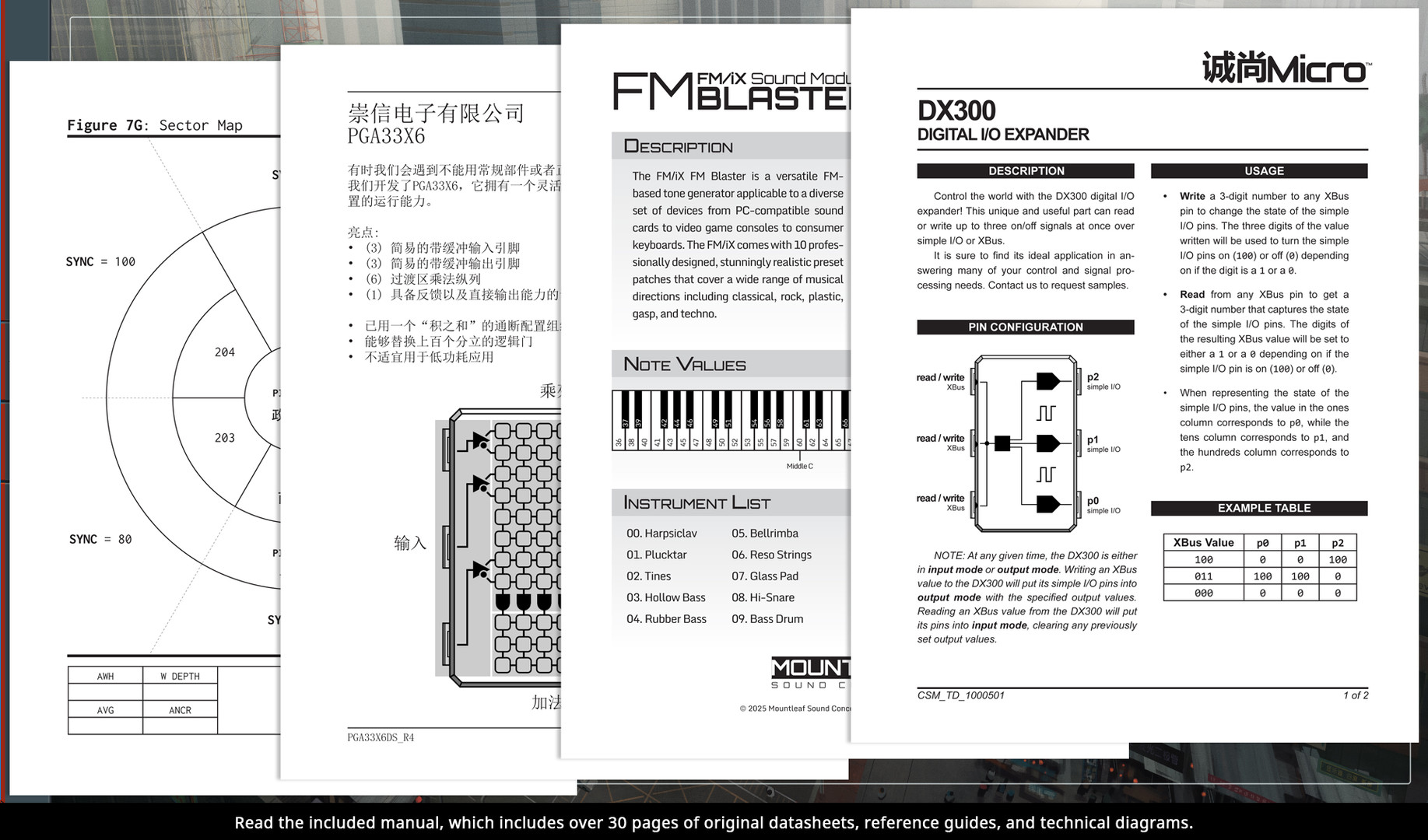
Shenzhen I/O is set in the technological hub of Shenzhen, China. The player is tasked with designing and programming electronics to control a variety of products. You can use microcontrollers, logic gates, RAM, and a few other components to achieve the task you are given. When I said that Shenzhen I/O was niche, I meant it. Instead of a standard tutorial, you are given a 45-page manual as a PDF to read through. Only a few pages are useful, the rest are jargon or in Chinese, so you have to sift through to find pertinent info. Luckily, the programming language is fairly simple and there are not too many parts to figure out how to use. The game starts fairly slow and lets the player learn the basics before moving on to complicated challenges.

3

While I believe that Shenzhen I/O was made for people with some prior knowledge of programming, it could be picked up by beginners. The language implemented has only a few basic commands that are not too hard to learn. The game also highlights any syntax errors for you. For the most part, Shenzhen I/O only focuses on the fun parts of programming such as logic and problem solving and skips the rote memorization that usually accompanies learning a new language.

Shenzhen I/O also is fairly forgiving as it is easy to diagnose issues. To test a solution to make sure it works, there is a verification tab that compares your output to the intended output. The program runs, you can follow it line-by-line to understand where and how something goes awry. I wish test runs worked this way in real life. On the flip side, much of the problem solving in Shenzhen I/O stems from the limited resources given. You can only have a maximum of 14 lines on any microcontroller, there are limited ports, limited space on the board, and some aspects operate in ways that require a workaround. You have to figure out methods to shave off a line or two to fit another action, or how to string controllers together in a way to complete a complex action. In this regard, Shenzhen I/O makes me appreciate the real-life tools that are available.

4

What I love most about Shenzhen I/O is that it avoids the most common issues with puzzle games. Every puzzle in Shenzhen I/O has a wide array of solutions because the player writes the code and places the components. If you get stuck on a problem, you can tackle it with a few different methods. This solves the issue of “getting stuck” and that nagging feeling of “I must be missing something”. Furthermore, after completing a challenge, there are leaderboards for cost, power, and lines of code used. This encourages players to replay puzzles and optimize their solutions to minimize these factors. Going back to redo a puzzle and making my solution more efficient was some of the most fun I had in the game. The fact that Shenzhen I/O utilizes programming to design puzzles is what makes the problems so interesting. It allows for dynamic problem-solving rather than searching for a singular solution.

5

Other than the extreme niche nature of Shenzhen I/O, it has one other major flaw. Zachtronics squeezes out every last drop of potential from Shenzhen I/O, and puzzles get increasingly difficult as you approach the end. As the problems get more complex, so do player solutions. You spend disproportionately more time on the endgame puzzles than the rest of the challenges. If one of your ideas ends up not working, you have to scrap hours of work. Problems become more restrictive rather than offering freedom like the earlier challenges. This issue of extreme difficulty appears towards the end of the game and in the bonus campaign primarily. The bonus campaign is the where the game got frustratingly difficult for me. Luckily, those additional levels are entirely optional, but I still found them far too challenging, complex, and restrictive to be enjoyable.

2

Furthermore, the game for the most part stops introducing new components and concepts about halfway through. With some more tools to learn and work with, these post-game puzzles could be more bearable. There are only so many things you could do with the barebones tools you are given. By the end of the game these ideas have been exhausted. These bonus puzzles are more like combinations of previous problems that you need to squeeze into extremely limited space.

While Shenzhen I/O is very obviously a niche title, I found myself to be in that niche. While the concept of a programming puzzle game may turn some people away, it is the greatest asset of the game. Programmable puzzles are what offer such creative solutions. You are not confined to a single solution. It is for these reasons I give Shenzhen I/O a 9/10. If you are at all interested by the concept of Shenzhen I/O, it is an absolute must play. Not everyone will enjoy it, but those who are in its intended audience will absolutely love it.

Captain Toad’s Treasure Tracker (2014)

One of my favorite features from Super Mario 3D World was the inclusion of Captain Toad and his mini-games. Clearly, many others also adored those mini-games as Nintendo developed a full game using the base concept from Super Mario 3D World. Captain Toad’s Treasure Tracker is a puzzle-platformer adventure game. The main objective is to progress through small stages and collect stars and gems along the way.

1

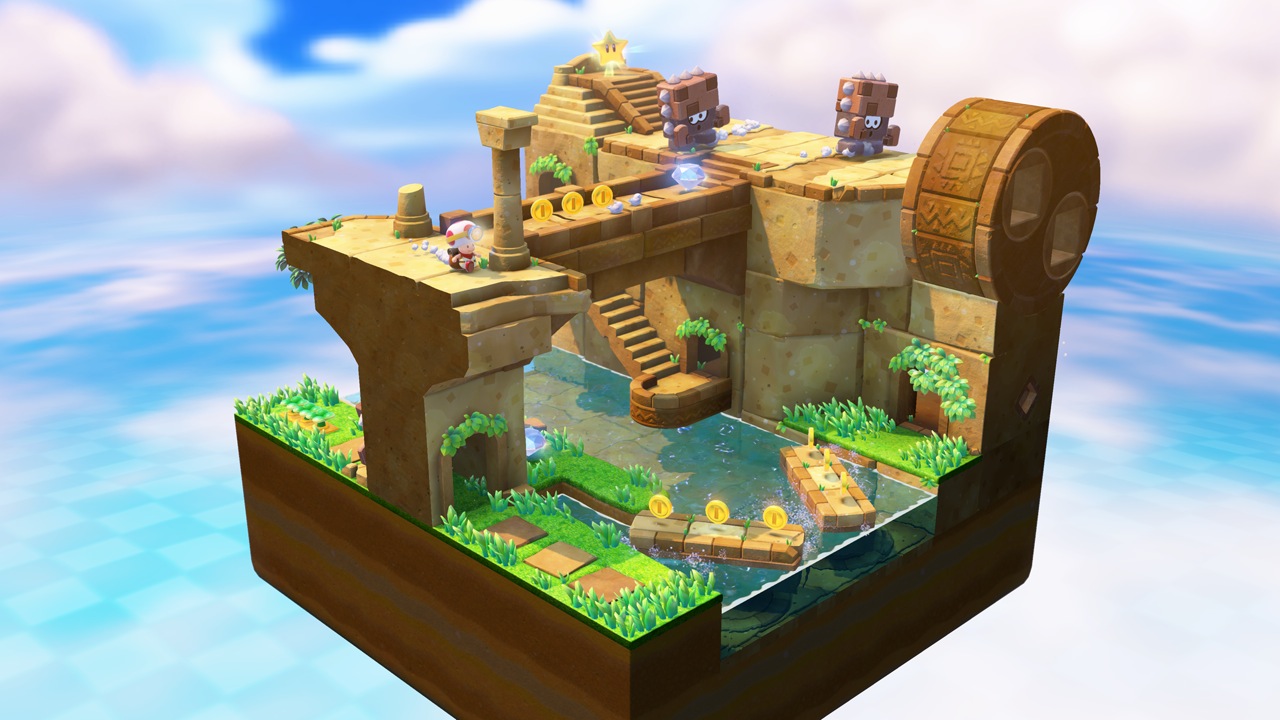
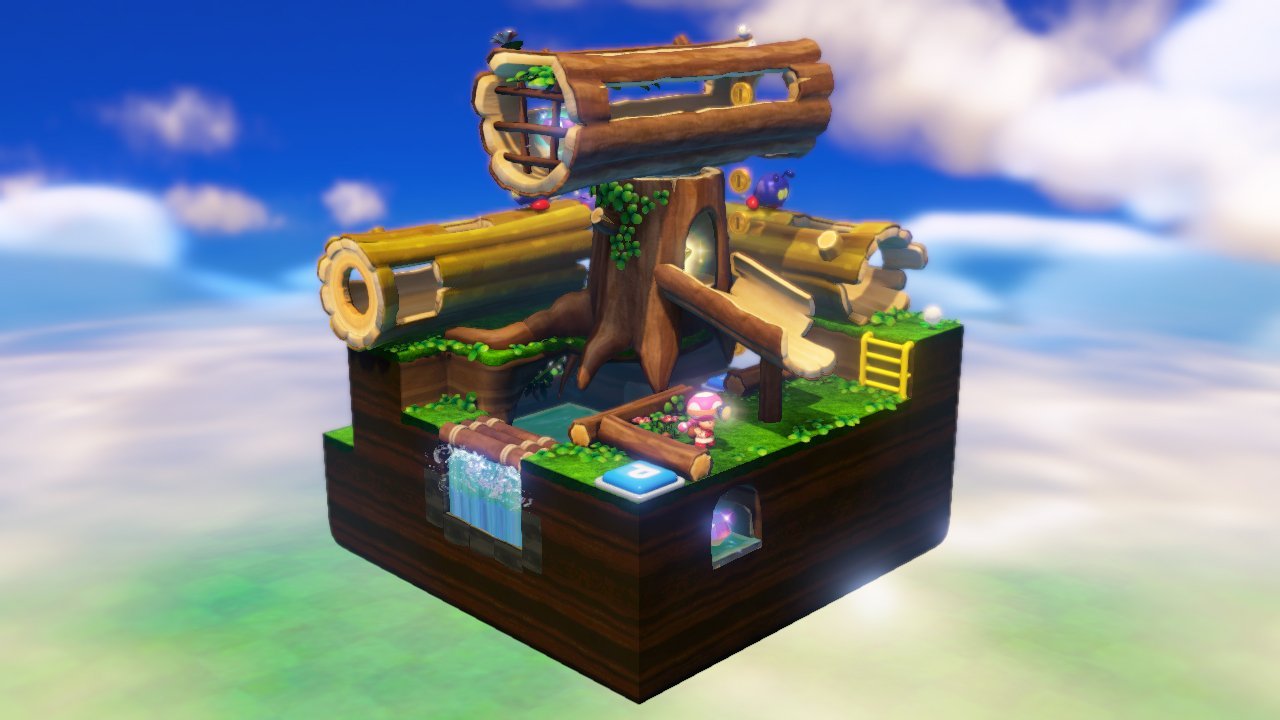
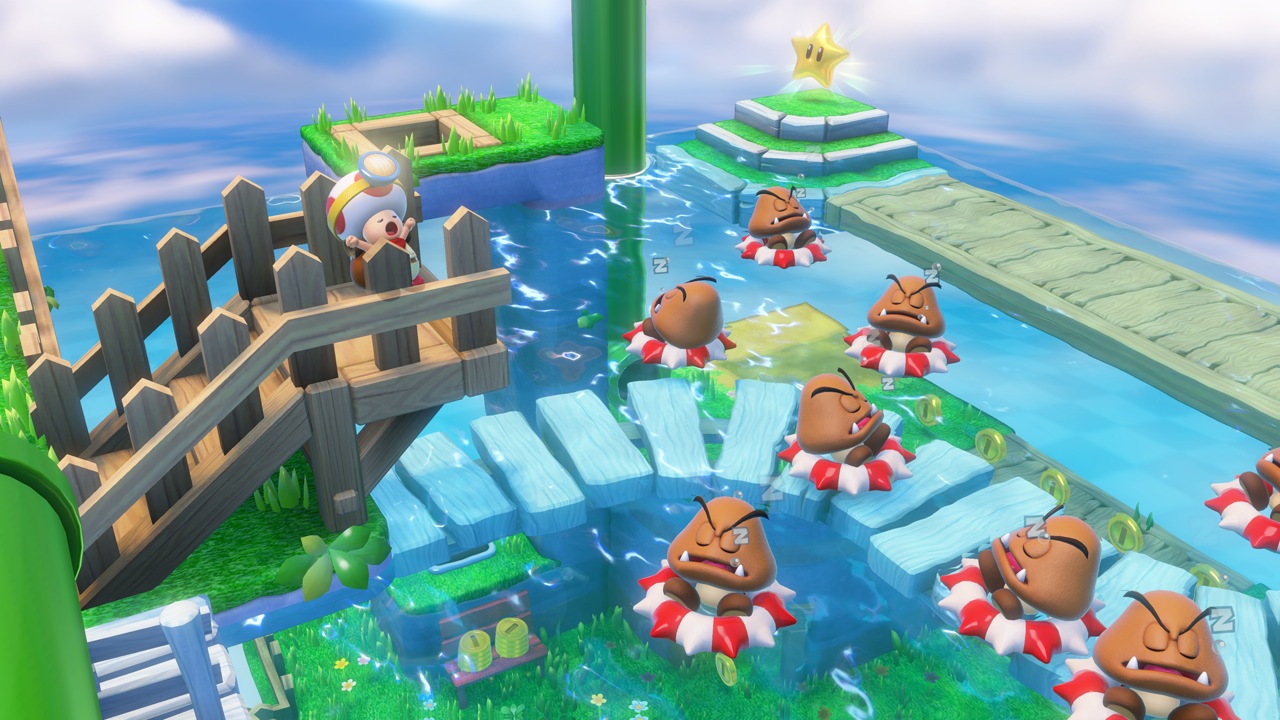
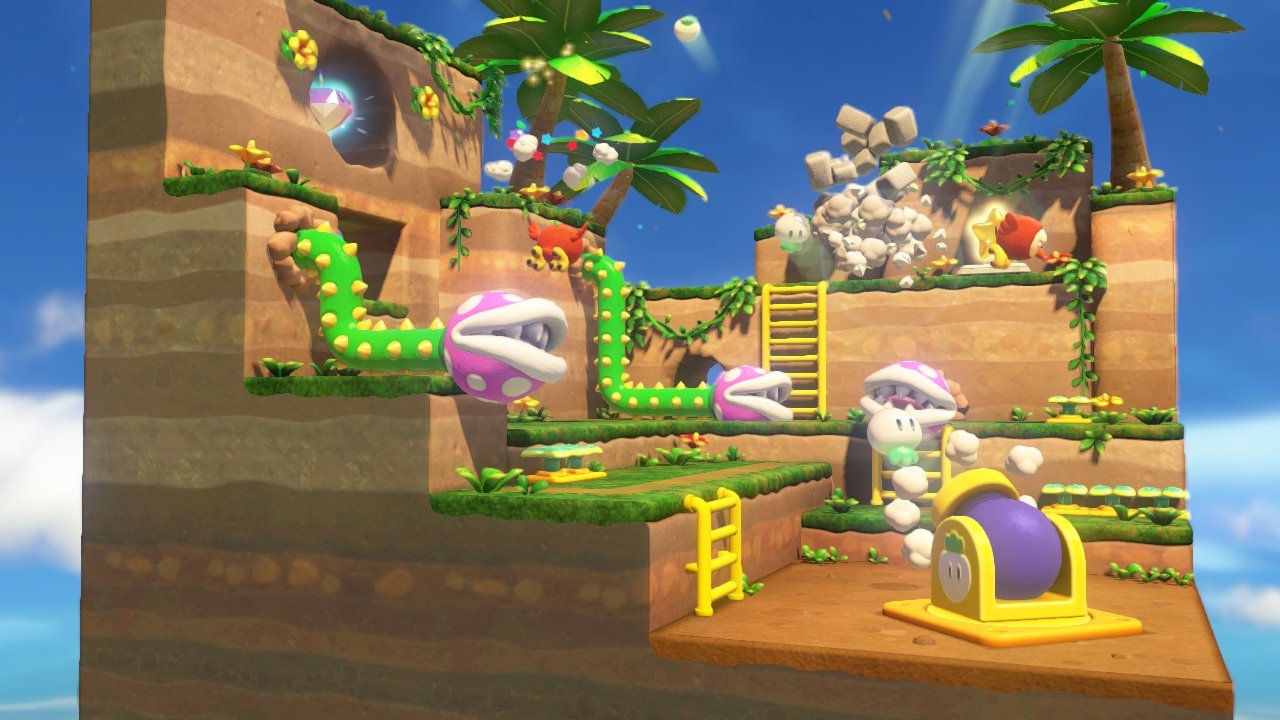
Captain Toad’s Treasure Tracker is a great game to just chill out for some relaxing fun. This is largely due to its simple level design. Levels are small arenas that the player can rotate to get a better view from all sorts of different angles. Captain Toad cannot jump or attack, so most levels consist of navigating these small maze-like courses, avoiding enemies and dangerous obstacles, and finding your way to the star, which acts as a goal in every level. Along the way, the player must also collect the 3 gems that are hidden in every level, as some stages later in the game require a certain number of these gems to unlock. These gems are often hidden in plain sight, or at least are fairly easy to guess where they might be hidden. Stages are very compact and quick to navigate through, so even if you are having trouble finding a hidden item it takes no more than a minute or two to play through the entire stage again to get another look. For the most part, the gems are out in the open and you just have to figure out how to get to them. Usually it involves a bit of puzzling or thinking of a not-so-obvious way of navigating these tiny courses. This is in stark contrast to a game like Yoshi’s Woolly World, where the collectibles were obtuse to find and required scouring every inch of a level to unearth them. In Captain Toad’s Treasure Tracker, there is no obnoxious combing of entire levels to find secrets, they are in plain sight and you just have to figure out how to get to them, which is how collectibles should be handled.

5

While I find the level design itself to be both simple and gratifying, I think the visuals of each level are also top-notch. The idea of making most levels a small cube that just floats in the sky is actually pretty cool. Every stage is kind of like a 3D diorama that you can rotate in your hands. This is a unique way of exploring all sorts of different environments, which is a key element of any adventure game, but it takes out all the long treks and expanses of nothingness between each important zone. It also allows the developers to space out any theme they want, rather than playing them in big chunks. In traditional adventure games, if you enter a snowy area for example, you know that you are going to be exploring that snow-covered area and that area alone for the next few hours, and after a while seeing the same environment over and over can just get dull. I enjoy the fact that the themes can be spread out across the game instead of having to play them all at once. You can always expect some fun places to explore in a Nintendo game, and Captain Toad’s Treasure Tracker is no exception. There are plenty of visually appealing environments and atmospheric areas to discover.

3

While I did enjoy Captain Toad’s Treasure Tracker, I feel like there was a lot of missed potential here. Nintendo does not have a puzzle game franchise, and I feel like there was perfect opportunity to make Captain Toad’s Treasure Tracker into a puzzle game series. Instead, we got a platforming-adventure-puzzle hybrid, which is fine, but the puzzle elements are fairly lacking. Most puzzles in this game are just involve hitting a switch which changes the stage and opens up a new path to the goal. There are no truly head scratching moments or things that make you really think about how to proceed. There are a couple of optional challenges that the game provides that are interesting, like limiting how many times you can hit a switch during a particular stage. These are fairly uncommon though and are entirely optional. Some levels show a good deal of potential and made me think that I was going to keep track of all the different forms the stage takes from hitting a button, and then hit the buttons in the correct order to progress forward. In reality, you just kind of progress forward and hit the buttons along the way, there is not much thinking involved. I was never really thoroughly impressed by any of the levels, and as a whole the game lacks a “wow” factor.

2

Not every game has to be an industry-changing, genre-defining game. Captain Toad’s Treasure Tracker is just fine for what it is: a short, clever, charming, and relaxing adventure. If you are looking for a cute adventure game with a few platforming and puzzle elements, then this game is perfect for you. This is not an ambitious title that will shape the industry for years to come, but it does not pretend to be. It’s just a simple little adventure game that you can meander your way through. For these reasons I give Captain Toad’s Treasure Tracker a 7/10. I enjoyed the calming pace and nature of this game, but there is definitely some untapped potential here.