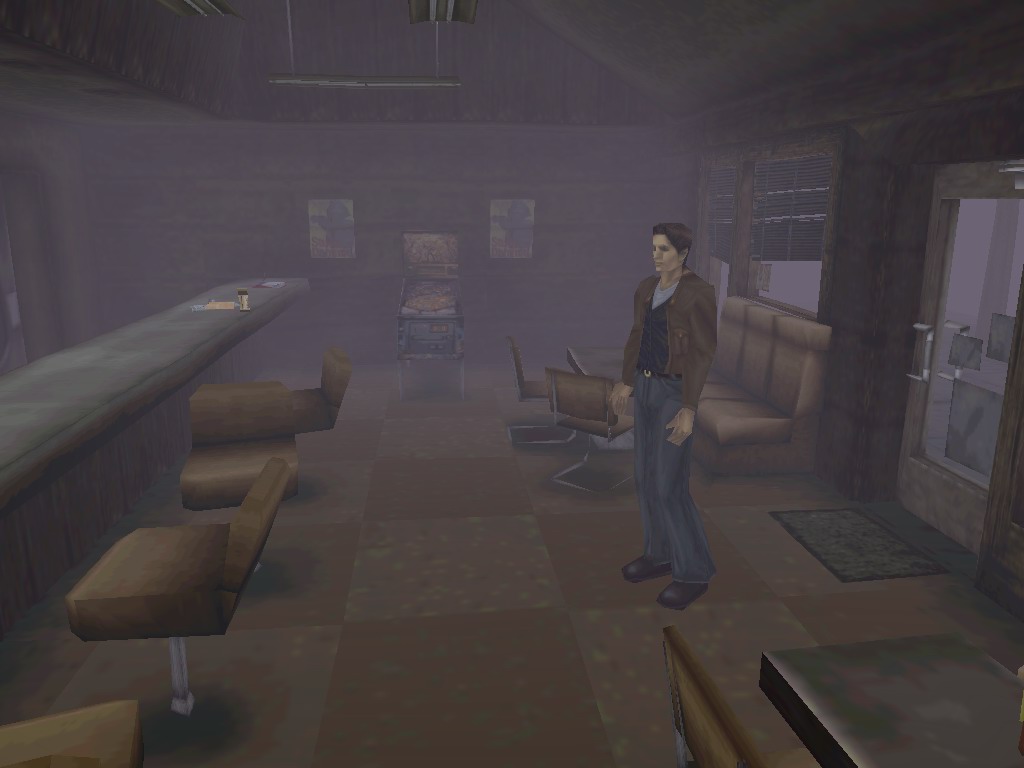
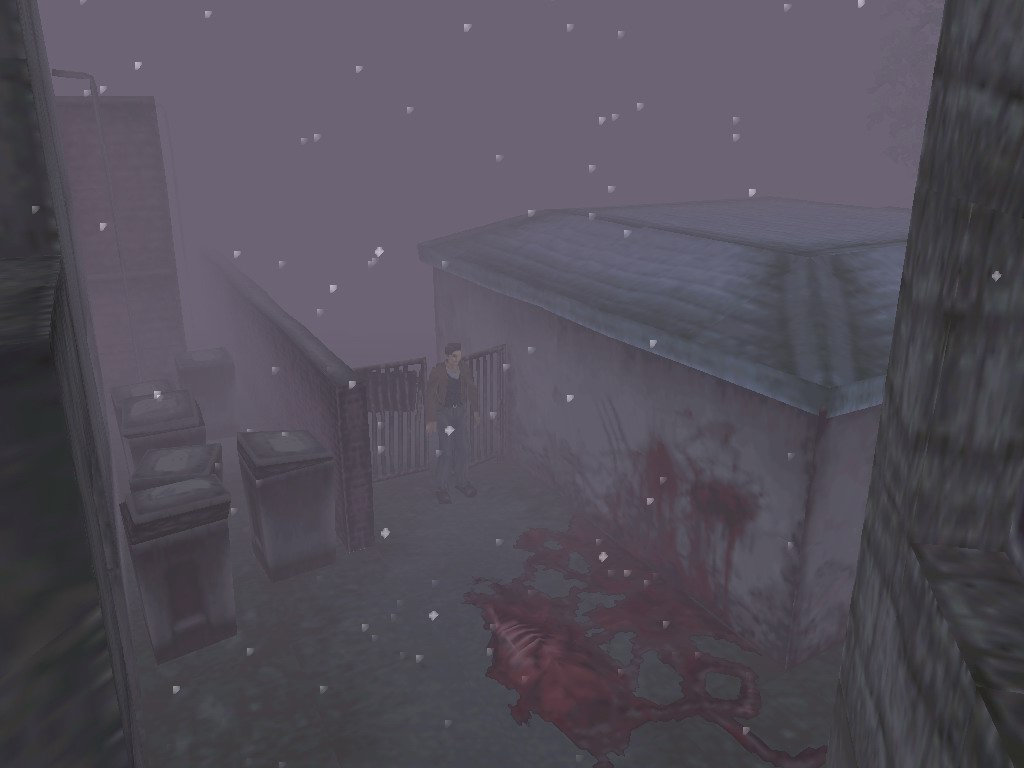
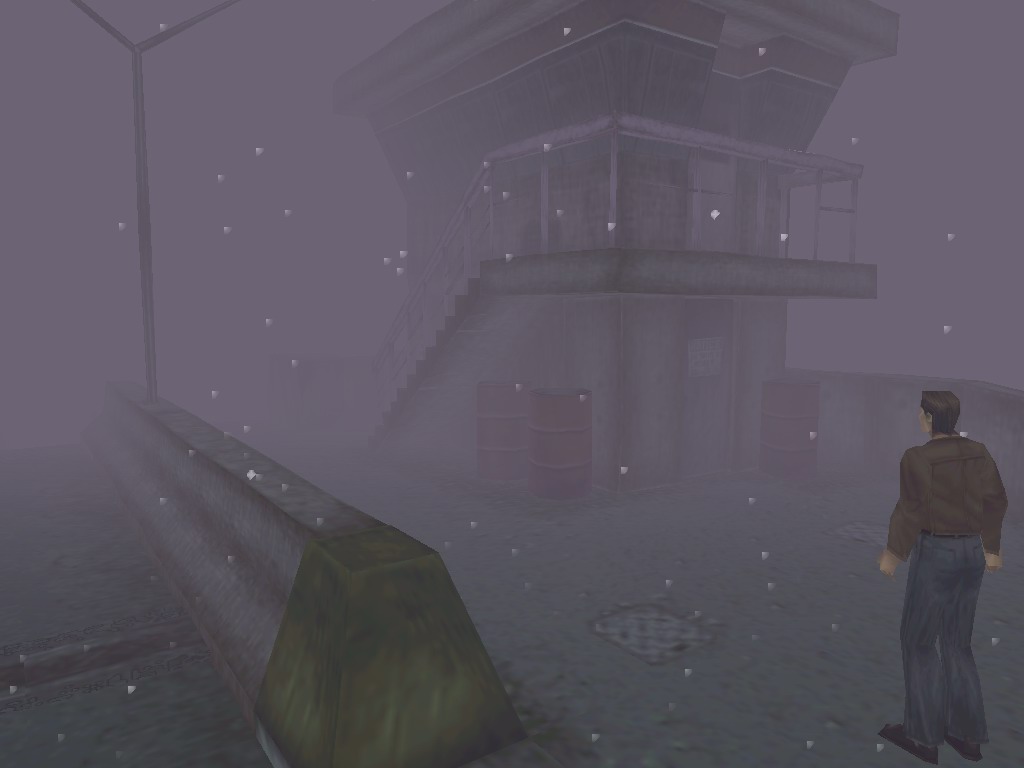
Horror and terror are not the same emotion. Horror is the shocking, revulsed feeling after witnessing a heinous event. Games like Resident Evil thrive on the sort of disgust caused by its horrifying mutants. Terror, on the other hand, the sense of dread and building anxiety when you know something awful is about to happen. It’s the deep-seated instinct meant to warn you that something is wrong and that you are in danger, even if you can’t see it yet. Terror is the focus of Silent Hill. The thick mist covering the abandoned town, the static of the radio, the disquieting music; everything about the game puts you on edge.
Silent Hill begins with a car crash on a wooded road in the fog. Harry Mason wakes up in a small-town cafe, separated from his young daughter, Cheryl. It’s immediately apparent that something strange is happening, as there are no residents in the town other than the policewoman who rescued him. Harry sets out to explore the town shrouded in fog, with ominous craters blocking the roads and bizarre monsters stalking him.
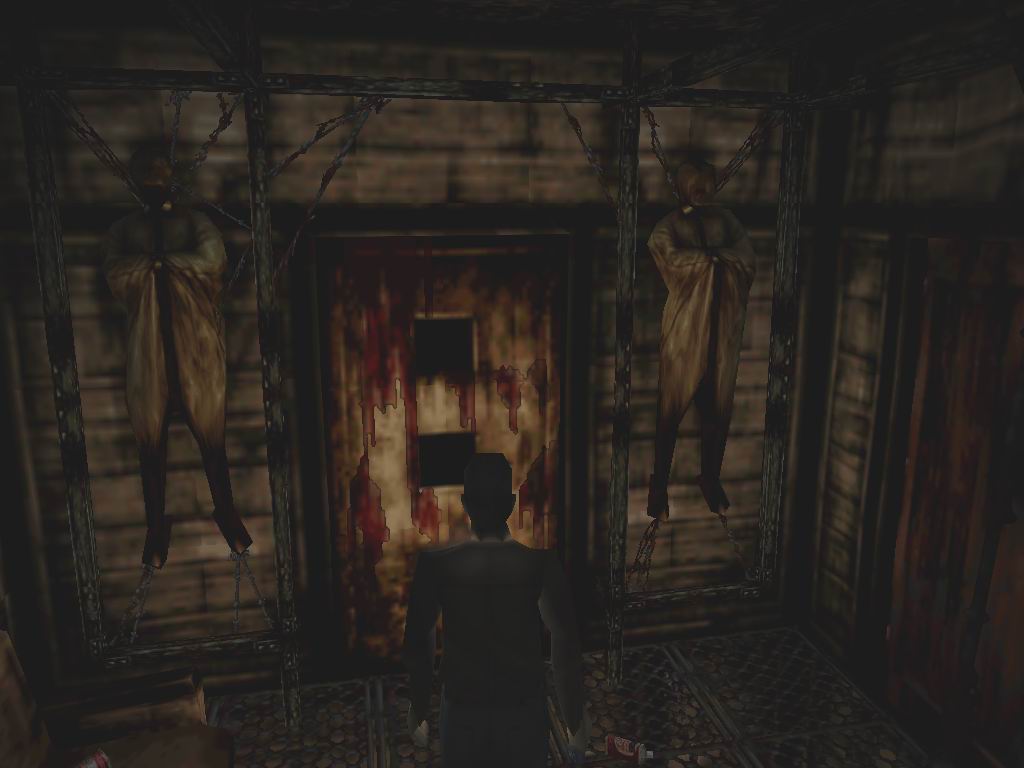
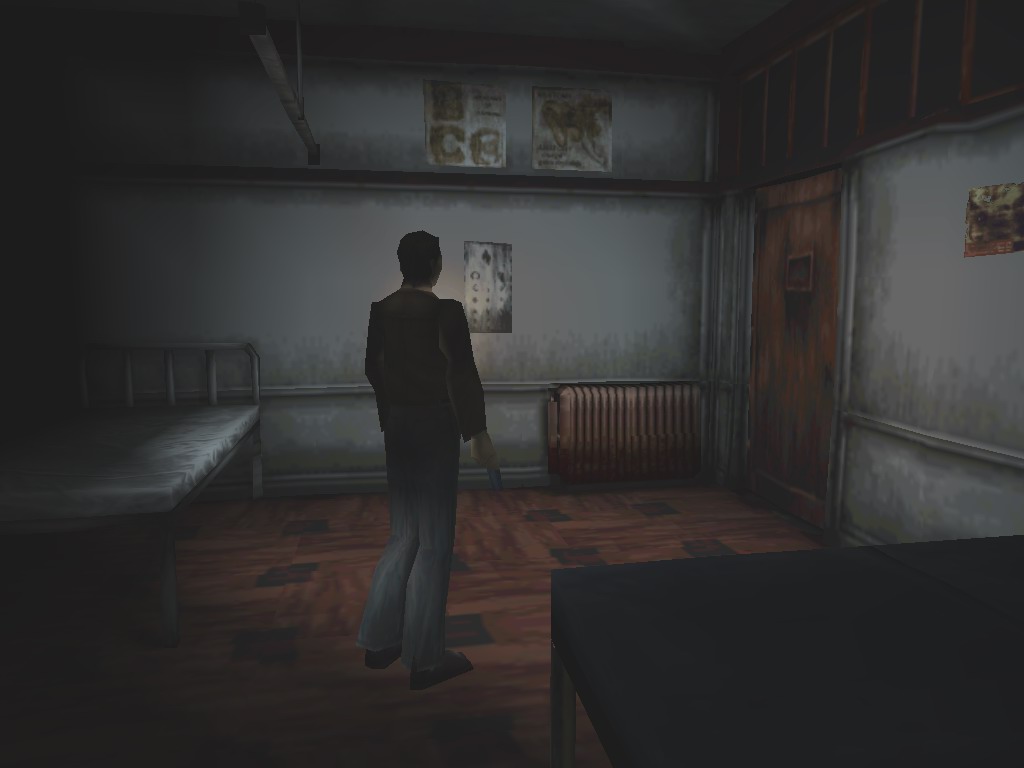
As you progress through the game, you uncover hints as to the cultish conspiracy that has engulfed the town. Demonic symbols are scrawled on the ground and riddles are scrawled in blood on the walls. The few residents that remain whisper of the occult and insinuate sins that swallowed the sleepy town. You track Cheryl to the school, the hospital, the amusement park, and through the eerie streets. The world transforms into a nightmarish reflection of itself, filled with rusty and grimy metal surfaces. The metallic tinkling footsteps and distorted, echoing music is deeply disquieting.
The story of Silent Hill is solid, especially when compared to its contemporaries such as the early Resident Evil games. The supernatural world and psychological horror are so much more compelling than straightforward zombie or monster plot. You intrinsically know that something is deeply wrong with the town, and there is some connection to Cheryl. The locations you visit seem to indicate traumatic memories, despite never having been to the town before. Every aspect of the game is disturbing and atmospherically oppressive.
At its core, Silent Hill is a survival horror game. You explore the world, collecting resources such as health packs, ammunition, weapons, and items to solve puzzles. The streets are filled with enemies such as rabid dogs, flying leathery screamers, and knife-wielding ghouls. There are far more enemies than there are bullets, meaning you will have to think carefully when you want to fight back and engage the enemy. The game encourages the use of melee weapons such as crowbars and sledgehammers to conserve ammo, but it forces you to get up close to the monsters, risking damage or being overrun with multiple enemies.
While the individual enemies are somewhat easily avoided, there’s a constant anxiety due to the scarcity of resources. Moreover, the game’s visual and audio design further cause unease. The thick fog obscures your vision; you can’t see more than a few feet in front of you. You have a radio that emits static when an enemy is nearby. You know that there are enemies all around you, but you can’t see them. You have to roam the town filled with dead-ends and maze-like corridors with the persistent knowledge that monsters are right outside your field of vision. The anxiety is further heightened by the distorted and disturbing soundtrack constantly thrumming in your ears.
Silent Hill also contains a handful of cryptic puzzles. These are woven into the themes of the game by using occult symbols, macabre visuals, and strange riddles. These are much more cerebral than the lock-and-key puzzles featured in the early Resident Evil games. You have to discern meaning from seemingly nonsensical texts. While I do enjoy these kinds of puzzles, there was one in particular that I thought was very tricky to work out with many different ways that the hint could be interpreted.
The thing about playing older games like Silent Hill is that you have to be prepared for some clunky controls. Moving around 3D spaces was still in its infancy, and control schemes were not universal. Silent Hill utilizes tank controls, making movement a bit clumsy if you aren’t used to having to rotate to move in different directions. Luckily, the camera does follow the player quite a bit, making it a bit easier to deal with the movement rather than the jarring transitions of the fixed camera angles from Resident Evil. Still, the tank controls are a relic of the past that can be tricky to deal with.
Silent Hill is the terror counterpart to the horror of Resident Evil. Instead of zombies and gore and bombastic action, there’s a thick fog, static-filled radio, and cryptic riddles scrawled in blood. It’s an incredibly unsettling game, and every decision was made to achieve that goal. It has an uncanny ability to unnerve and cause panic with its masterful atmosphere and hellish soundscape. Despite its age, Silent Hill is a piece of art. It is the video game manifestation of a nightmare.
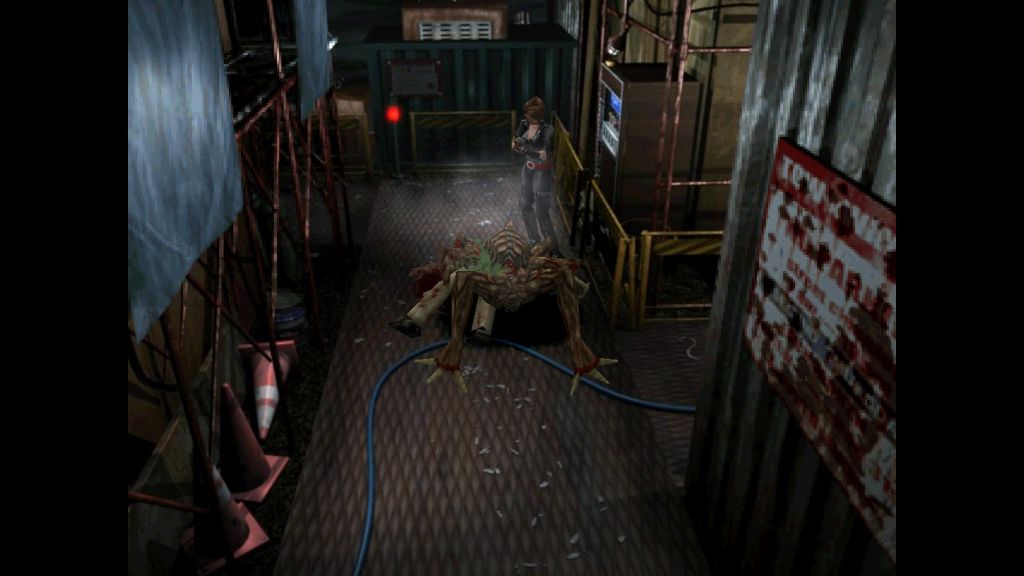
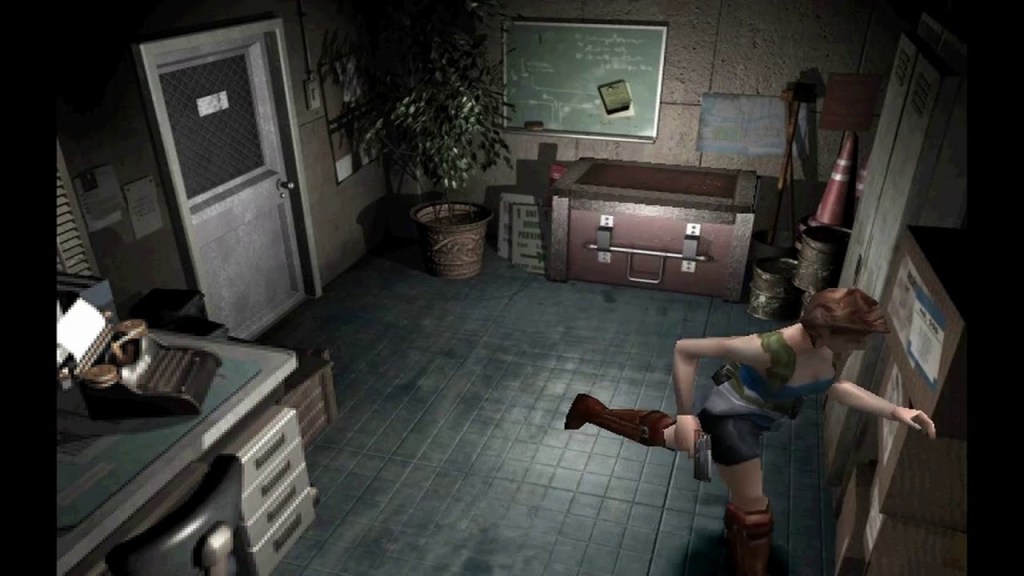
The first two Resident Evil games are known for their dense environments that function as puzzle boxes. In comparison, Resident Evil 3: Nemesis is a sprawling action game. The increase in scope leads to a bombastic finale for the original trilogy. It doesn’t just retread the same ideas from its predecessors; it escapes from the narrow hallways of the mansion and police station and sets the player loose in the chaotic ruins of Raccoon City. While I did prefer the tighter experiences of the first two games, I did appreciate how Resident Evil 3: Nemesis expanded the scope and scale of the series.
After returning to the city after escaping the mansion, Jill Valentine finds herself back in Raccoon City. But all of her rescue team colleagues have disappeared, and the city is aflame with zombies roaming the streets. A horrible mutant, Nemesis, is programmed to hunt down Jill as she is one of the remaining members of the team responsible for foiling Umbrella’s schemes.
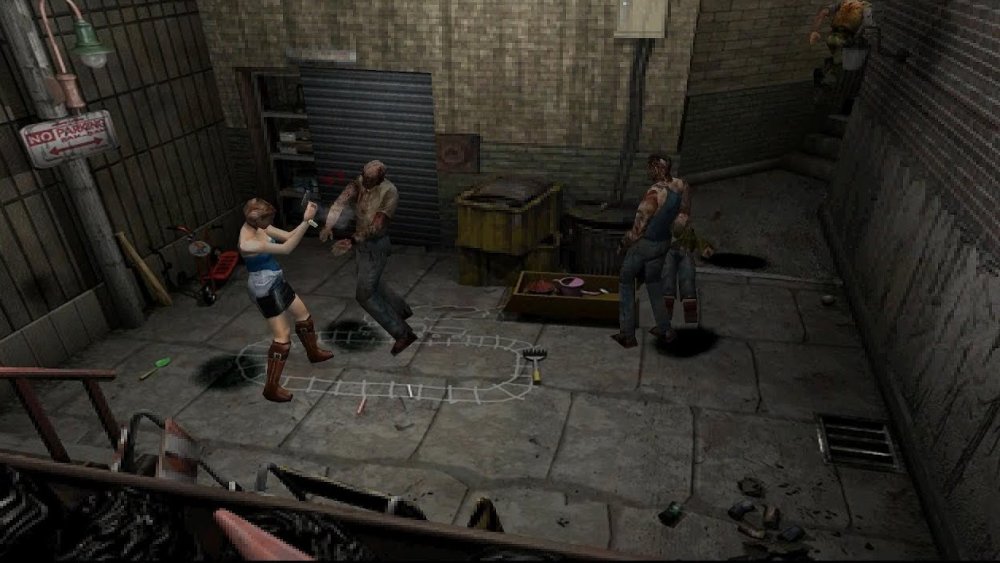
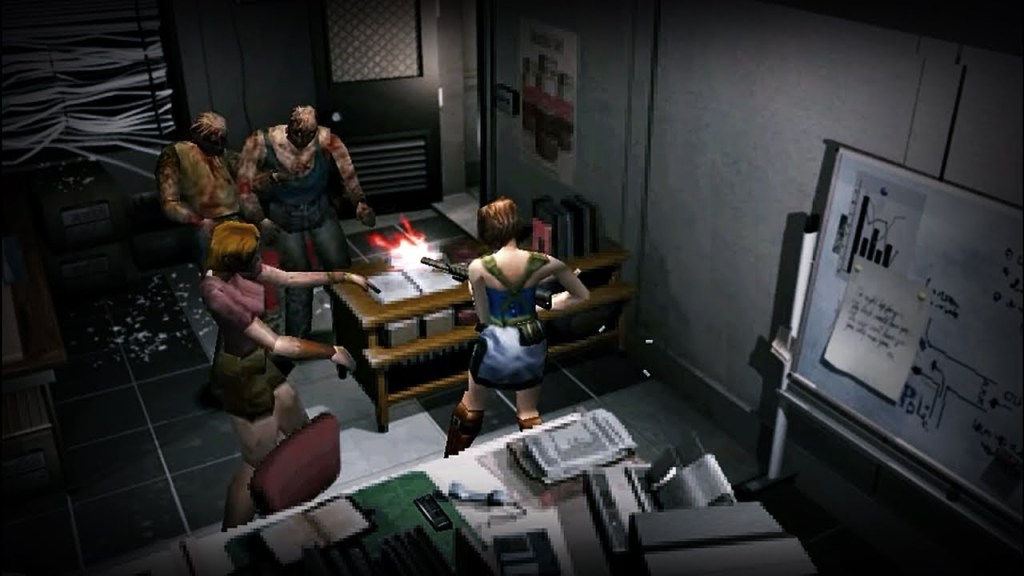
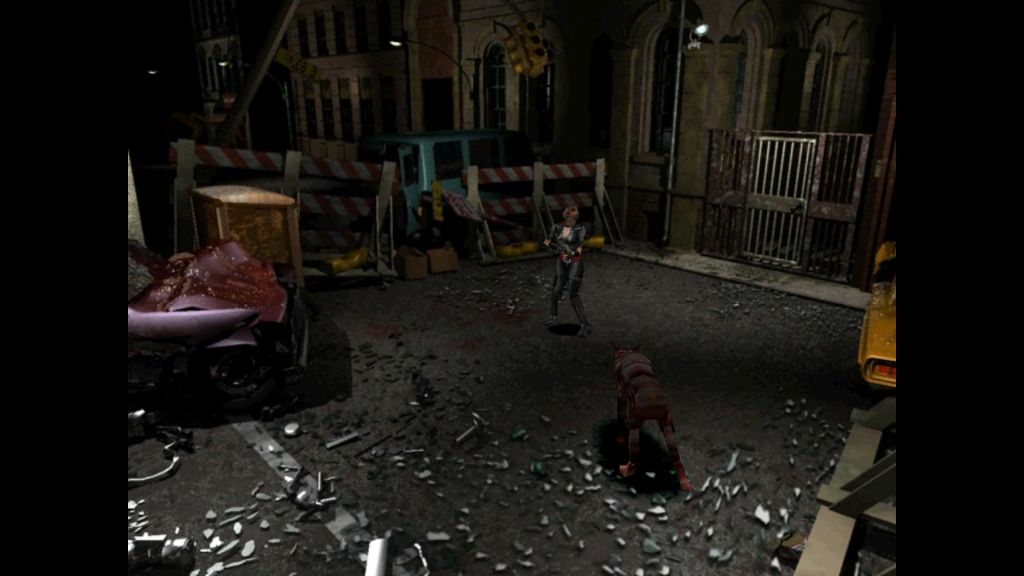
From the outset, Resident Evil 3: Nemesis is far more open than its predecessors. You will be roaming the streets, ducking in and out of numerous buildings to acquire the resources needed to proceed. I appreciated the change in environment, and the expanded scope allowed for a variety of different scenarios. Instead of spending the whole game in a single building, you’ll be heading to workshops, a cozy restaurant, an ominous clocktower, a zombie-filled hospital, and a sinister park. The larger streets allow for hordes of zombies and more action-fueled gameplay.
The main threat of Resident Evil 3: Nemesis is its namesake, the bioengineered mutant Nemesis. He roams the streets, hunting down Jill. There’re quite a few scripted chase sequences throughout the game in which the player can elect to run from Nemesis or fight him. Fighting him is risky and consumes a ton of ammunition, but rewards the player with weapon parts to upgrade your arsenal. And it is in this that the game’s key philosophy becomes clear: an emphasis on player choice.
The first two games in the series of course had some decision making around if and when to consume resources such as ammo, health packs, and save ribbons. But the primary driver of those games were its lock-and-key puzzles. Discovering objects and information to be used elsewhere in the world to unlock a previously blocked path. Of course, that still exists in Resident Evil 3: Nemesis, but to a lesser extent. Instead, this iteration of the series constantly wants the player to make choices to alter their experience.
There are the obvious choices like fighting or running from Nemesis, it presents an upfront risk and hefty cost to potentially become stronger later. There are also frequent binary choices presented in quicktime events that lead you down slightly different paths. But there are some more subtle decisions being made as well, none being as crucial as the ammo crafting system. Throughout the game gunpowder is scattered in two main types. Combining gunpowder in different quantities creates different types of ammo. Do you want to spend a ton of gunpowder to create immensely powerful freeze rounds? Or stockpile a few boxes of gunpowder type B to create extra shotgun ammo? Or do you desperately need ammo now so you spend a box of gunpowder type A for a handful of handgun bullets? The player has so many ways to tackle the game, showcasing the game’s strength of player choice.
Having so many possibilities makes Resident Evil 3: Nemesis a prime candidate for replaying, and this is further supported by the randomization aspect of the game. Items and enemies are partly randomized, making every play through a little different. While I think I prefer the multiple characters of Resident Evil 2 that change the route significantly, having randomized aspects and tons of decision making is hugely impressive for a horror game from 1999.
The increased scope of Resident Evil 3: Nemesis, came at a cost. The dense environments of the first couple of games were deemphasized in favor of increased action. Truthfully, I kind of missed the tighter environments. Trying to figure out how to escape the cramped hallways of the mansion or the police station was somehow cozy. It sounds insane for a horror game, but becoming intimately familiar with the puzzle-box worlds was a comforting experience despite the threat of zombies lurking around every corner. While exploring the chaotic ruins of Raccoon City was a welcome change-of-pace, I miss the more atmospheric and oppressive corridors of the first two games.
Paradoxically, despite mixing up the formula, this entry also feels derivative of its predecessors when it comes to horror. While the series stories can often feel like schlock-horror, the real risk of unknown enemies makes traversing the world terrifying. You never know what dangers you will come across, threatening you to lose huge chunks of progress. Careful navigation is imperative, leading to a subconscious fear of any new enemies. The problem with Resident Evil 3: Nemesis is that there aren’t any new enemies. The first game obviously was novel and every enemy stoked fear, and the sequel introduced the hulking super-enemies like Mr. X who followed you around. This time around, you’ve seen all the basic enemies before, and Nemesis himself is a retread of the concept of Mr. X. There aren’t any new threats, and if you’ve played the first two games it’s unlikely that you will be scared by the retreaded ground of the third game.
As a finale to the original trilogy, I think Resident Evil 3: Nemesis did an excellent job at escalation. The burning city and hordes of zombies make Spencer Mansion look downright calm in comparison. The introduction of ammo crafting as well as randomized enemy and item placement emphasizes the importance of decision making in this entry in the series. But despite these strengths, I missed the denser worlds and more novel experiences that the first two games provided. Resident Evil 3: Nemesis marks a clear shift towards more action and away from the escape rooms of the first games in the series. And even though I enjoy the former, I prefer the latter.
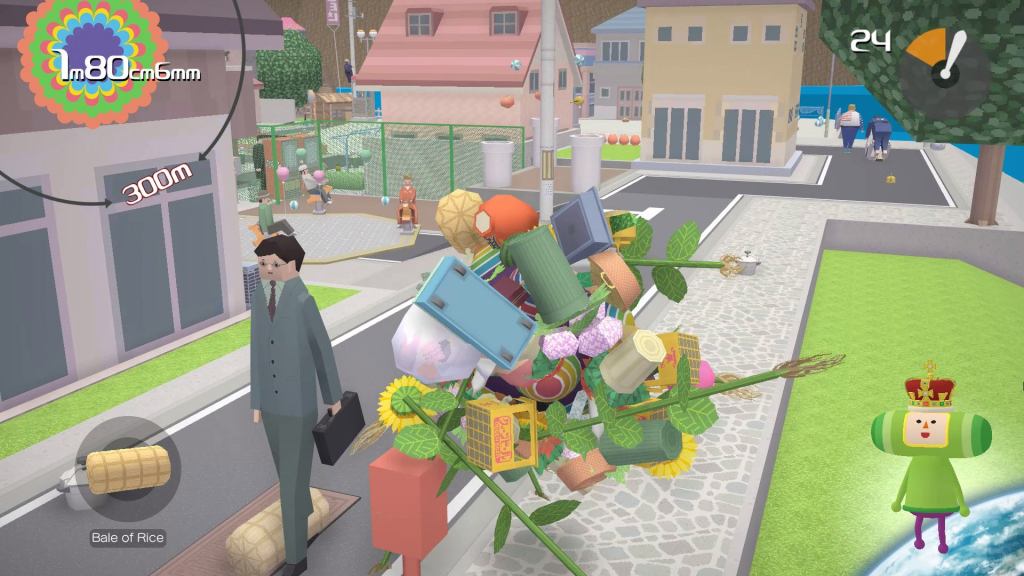
Simplicity. As games grow more complex and incorporate numerous systems that require paragraphs upon paragraphs to understand, it makes me long for the uncompromising simplicity of Katamari Damacy. But don’t mistake simplicity for being dull, Katamari Damacy is one of the most unique and iconic games in history. And it’s quickly become one of my favorites. Once you get the ball rolling, it’s hard to stop playing.
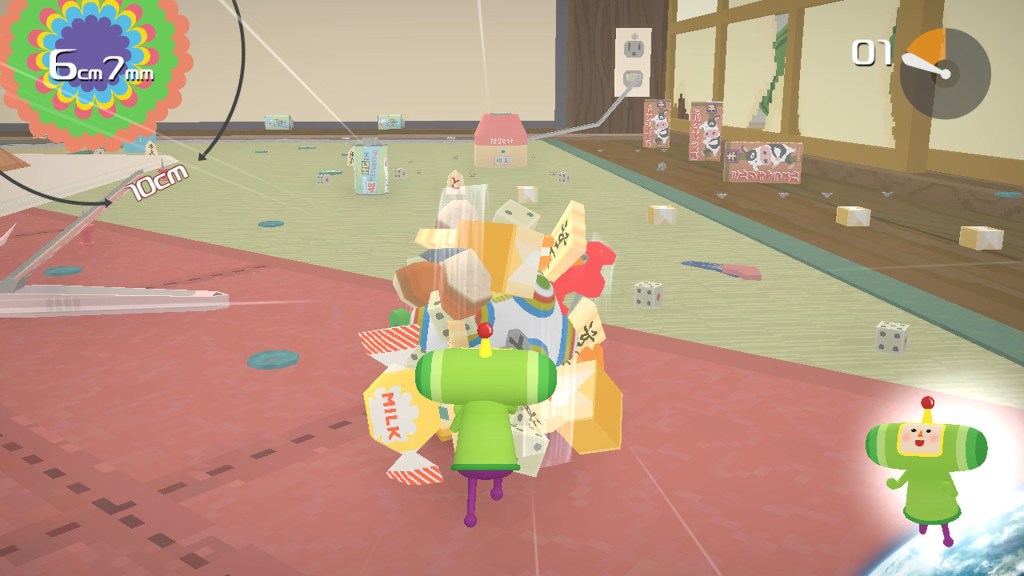
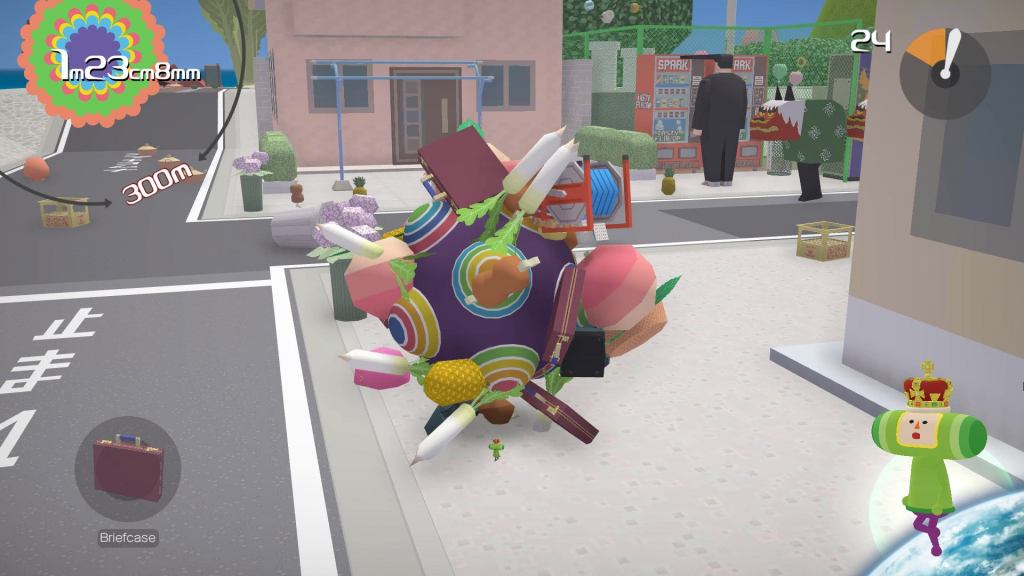
The King of All Cosmos accidentally destroyed all the stars in the sky after having a few too many drinks. He sends his son, the 5-centimeter-tall prince to Earth to roll up anything he can into a ball to create new stars. The Katamari can only pick up objects that are sufficiently smaller than it, requiring you to slowly ramp up into an all-encompassing ball of destruction.
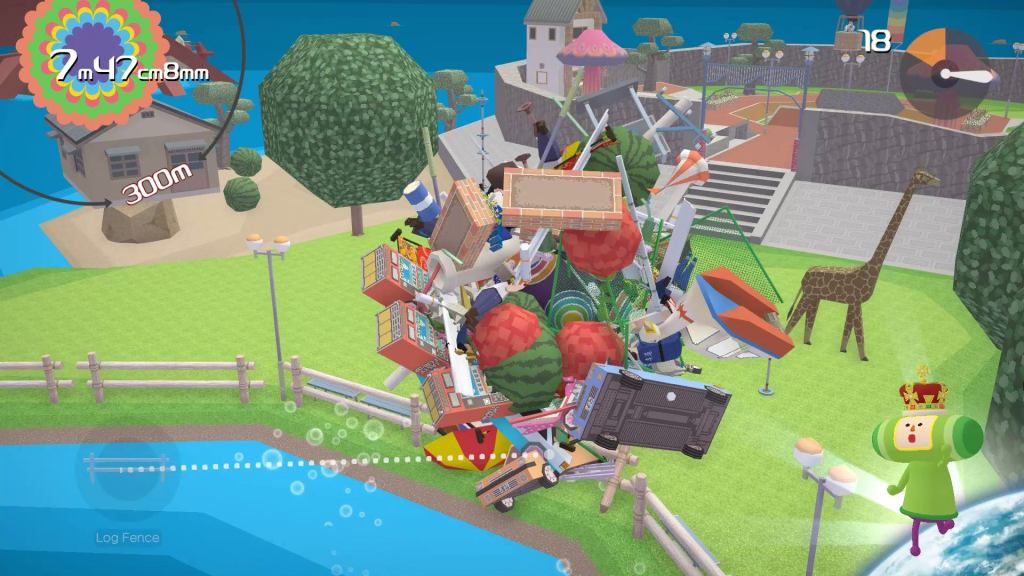
There’s something enormously satisfying about beginning every level with a tiny Katamari, only capable of picking up thumbtacks and coins, and steadily growing in size. That table that used to be an obstacle? It will eventually become part of your Katamari. That car that ran into you, flinging you across the road? Grow a bit more then get your revenge by rolling it up.
Nothing is safe from the eventuality of becoming part of the Katamari. But bumping into objects larger than the Katamari will cause you to lose mass, requiring a bit of careful planning and navigation. There’s a balancing act of trying to collect the largest items to grow the fastest in the allotted time, but being cautious not to be overly ambitious and bump into objects that are too large, wasting precious time and siphoning off previously collected items. This little bit of friction is necessary to keep the game interesting. And it makes it all the more satisfying when you come across a group of objects that are the perfect size.
Because the core concept is so simple, I think it’s a boon that the control scheme is a bit tricky to master. While some may bemoan the tank controls as being unintuitive, I think they fit the game perfectly. There would be very little challenge and no mastery to be had if the Katamari was easy to control. And moreover, it fits thematically as well. Of course a hulking ball of stuck-together objects is a bit unwieldy to push around. It should be difficult to turn, maneuver, and stop your momentum. Mastering your control of the Katamari and planning out different routes through the levels also provides an excellent opportunity for replaying levels to try to get a max-sized Katamari in the time-limit.
Despite the prospect of a giant sticky ball rolling through communities causing untold destruction sounding horrifying on paper, Katamari Damacy is a light-hearted game. It’s full of whimsy and surreal depictions of Japanese culture. You have to look no further than the game’s introductory video of dancing pandas, singing ducks, and rainbows flying everywhere to get a feel for the game’s style. It’s just a joy to roll around and explore the whimsical world. And it helps that the soundtrack is also superb, filled to the brim with catchy and joyous tunes that are hard to get out of your head.
My one small critique of Katamari Damacy is that I wish there were a handful more areas in the game. There are 19 total levels, but each level takes place in one of 3 areas. I don’t mind revisiting the same places, especially because new portions of the areas open up as the Katamari progressively expands, but I would have loved to see two or three more distinct areas to explore. I actually enjoyed revisiting the same areas a handful of times because I learned more about the areas in each subsequent visit, increasing my mastery and making the world that much more memorable. Truthfully, my request is a bit of a nitpick. Especially because the complaint boils down to “I want more Katamari Damacy”.
There’s no doubt in my mind that Katamari Damacy is one of the greatest games of all time. It’s equally parts unique and playful. It’s unlike any other game out there, and it’s a game that everybody should play. Katamari Damacy is just pure fun, plain and simple. Not every game needs to be a hodgepodge of ideas and systems. Sometimes, it’s enough to just roll a big ball around.
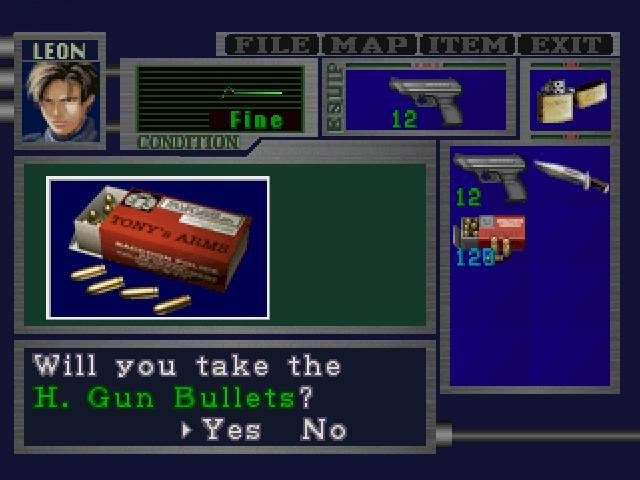
It’s rare to find a sequel that is a complete and total improvement from the original. More often than not, I find that sequels often are weaker than their predecessors. It makes sense because for an original work to be successful enough to create demand for a sequel it has to have something special about it. But sequels often just ride on the success of their predecessors. That’s not the case with Resident Evil 2. Resident Evil 2 iterated on every aspect of the original, polishing and refining the bones of the iconic survival horror title as well as adding its own unique ideas. I encourage you to read my review of the original Resident Evil to better understand my perspective on its sequel.
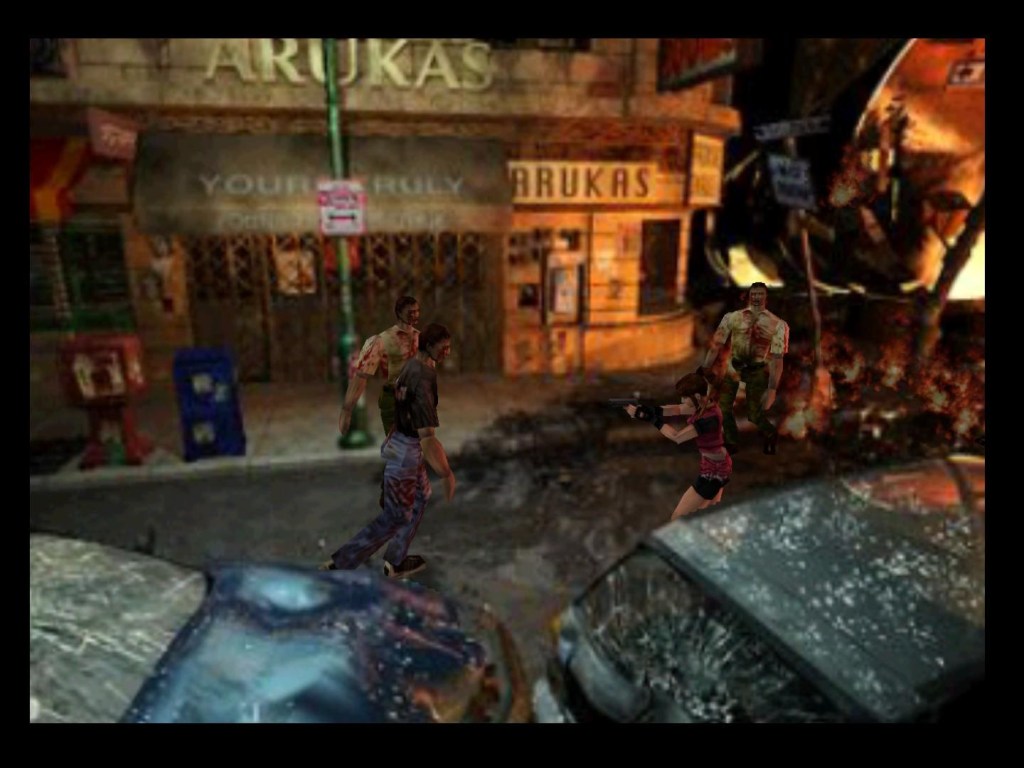
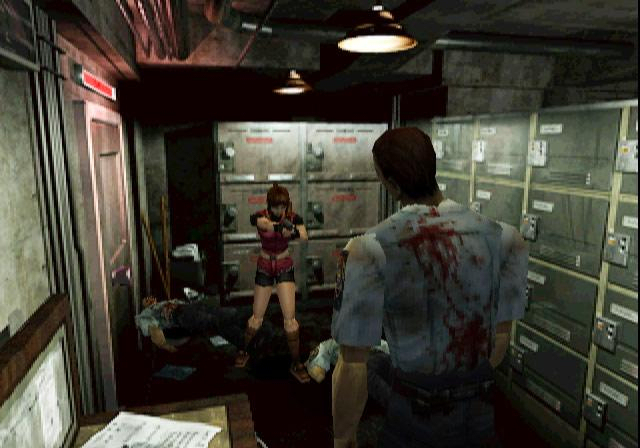
Resident Evil 2 is the first game ever directed by Hideki Kamiya, who is now renowned in the industry for his work on Devil May Cry, Bayonetta, and Ōkami. Kamiya focused on the story, scraping and reworking the first drafts of the game. The main characters, Claire and Leon, end up in the zombie-infested Raccoon City. They get trapped in the sprawling police station, which owes its grandiose architecture and eclectic decoration to the fact that it was originally an art museum. The diverging paths of Claire and Leon are excellently interwoven to encourage the player to play both paths to see how they work together and how the events of the story unfold.
The writing and presentation of the story are definitely the biggest improvements from the first game. The voice acting, while still a little stilted, is so much better than the often comedic delivery in Resident Evil. Character models also got a glow-up, giving Claire and Leon more detail and fidelity. The writing in particular went from cheesy to actually thoughtful and character-driven.
While searching for her brother Claire quickly becomes an elder sister figure to Sherry, a young girl who is one of the lone survivors of the outbreak. Leon has a brief romantic relationship with the spy Ada Wong, who’s murky motivations leave you wondering if she is even on your side until the end. Even minor characters like the police chief are memorable. When you first meet him, you wonder how he survived, and something is very obviously off about him, but he gets more disturbing as you learn more about him. I wouldn’t say Resident Evil 2 is a masterpiece of storytelling, but the thriller plotlines and thoughtful characters are well-done, especially for a game of its age.
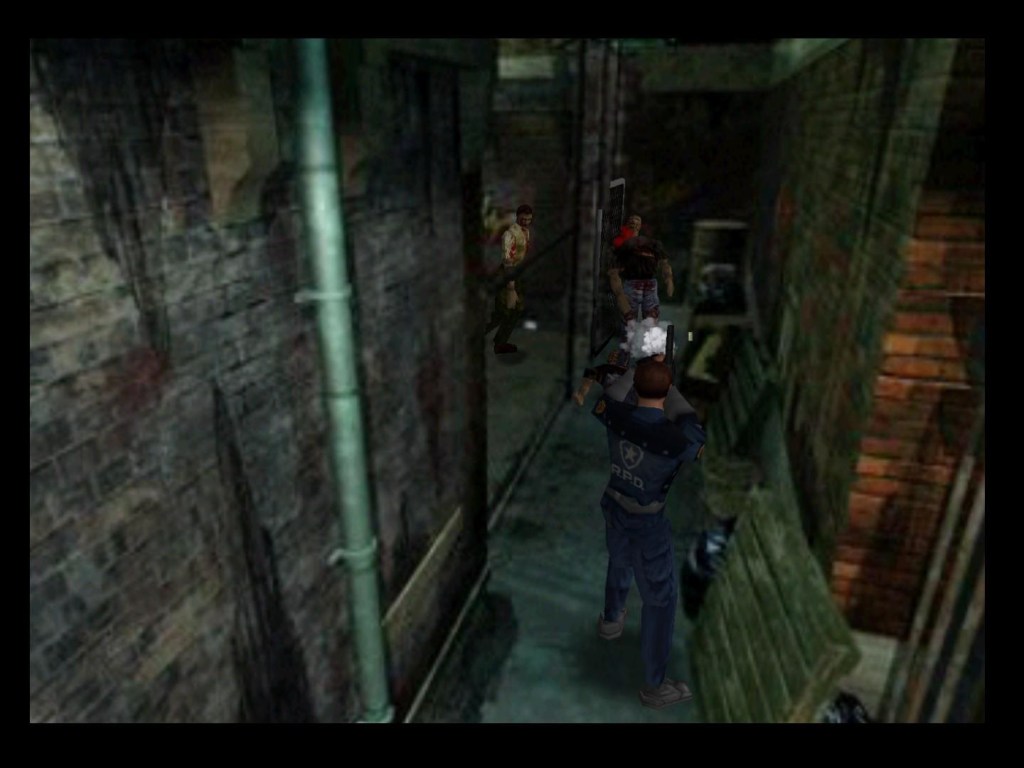
Resident Evil 2 is a survival-horror puzzle box. Like its predecessor, action takes a backseat to managing your resources and devising a strategy to escape the police station. With limited ammo, limited health-items, and limited saves, you have to think carefully about where to go next. While most enemies can be easily dispatched with the handgun, conserving ammo for the more challenging encounters is prudent. Both Claire and Leon have terrifying and monstrous entities that stalk them throughout the game, adding an additional element of tension as you never know when you’ll have to run for your life. You may think you can hold off on saving as you are only planning on going down the hall, but one of these bulky beasts could be waiting for you in a place you previously thought was safe.
The core gameplay remains largely the same from the game’s predecessor. Manage resources, solve some puzzles, navigate the zombie-filled halls of a creepy building, and occasionally shoot your way through tight spaces. While there are some new weapons, I think the most notable improvement is the diverging paths of Claire and Leon. Replaying the game is a whole new experience with new equipment, enemy placement, puzzles, and bosses. In some instances, you can even affect the world in the other character’s story. Playing both paths even unlocks the true ending and final boss fight.
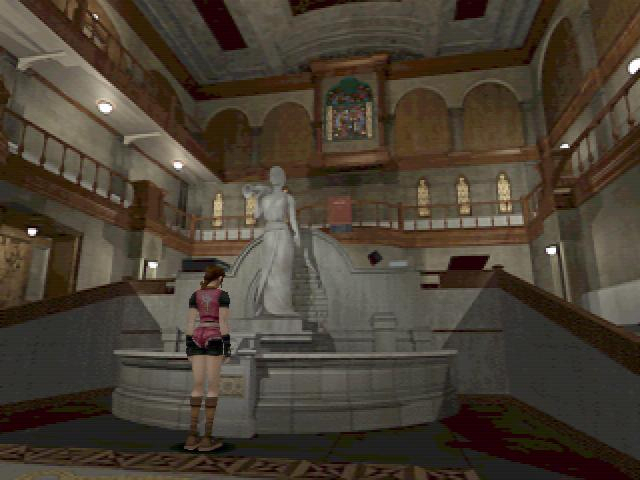
I loved the setting of Resident Evil 2. There are some brief urban sequences as you arrive in Raccoon City, running through the fires, wreckage, and hordes of zombies. There’s a sense of mayhem that is only calmed when you arrive in the police station. The police station being a repurposed art museum gives it a ton of character. From the floor layout, to the architecture, to the décor of paintings and busts, there’s a lot of charm. From there, the game descends further and further down into the grimy tunnels and secrets below the station.
My biggest problems with the game are a result of its age. Movement is still using tank-based controls, which can be supremely awkward to get used to. Especially because of the frequently-shifting camera angles. While I did get used to it after a while, more precise movement was challenging. It’s particularly frustrating when trying to run past zombies or turn during a boss fight. The dated graphics also lessens the horror and tension. The horrifying creatures just look like splotchy and blocky figures, and the fixed camera perspectives mean you rarely get surprised or snuck-up on.
Overall, Resident Evil 2 is a shining achievement in sequel development. It improved on every aspect of the original: story, characters, setting, presentation, and gameplay. The inclusion of two separate characters with their own stories and remixed gameplay was brilliant and excellently executed. While there is no doubt that the game shows its age in a couple places, once you get adjusted to the control scheme it is still a joy to play. I can’t wait to continue through the series and see how it develops from here, and I am particularly excited to revisit the recent remake of this all-time classic game.
I feel like 2024 was the first year where I at least tried to keep up with recent releases. I wanted to highlight the games from this year that were my absolute favorites. Of course, as someone with a full-time job, a family, and other hobbies, I didn’t get to play every major release of this year. There were plenty of games on my radar that I didn’t get around to such as Indiana Jones and the Great Circle, Lorelai and the Laser Eyes, and the remake of Silent Hill 2. Here are all the 2024 releases that I managed to play:
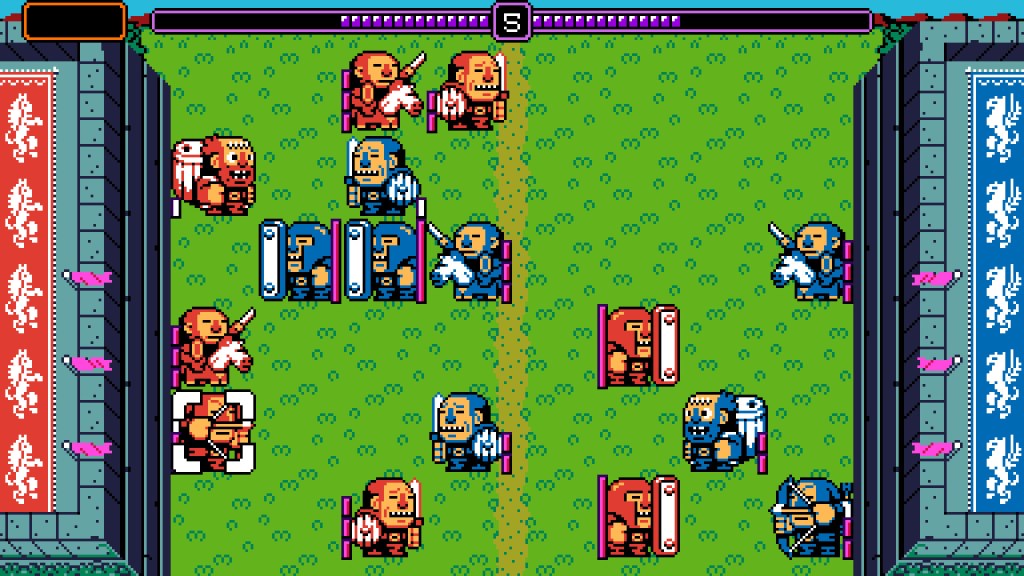
UFO 50 is a truly unique experience and we may never see anything like it ever again. It’s a collection of 50 retro games made by the fictional company UFO Soft. It’s an absolutely astonishing collection in both breadth and depth. Every classic genre is included, but no entry is a simple imitation of an actual retro game. Every game has a unique twist. There are so many gems in the collection. You could easily sink hundreds of hours into UFO 50 and still have games you’ve barely touched. The creators behind UFO 50 describe it as a blend of retro aesthetics with modern game design knowledge, and they absolutely nailed that aspiration. Read my full review here.
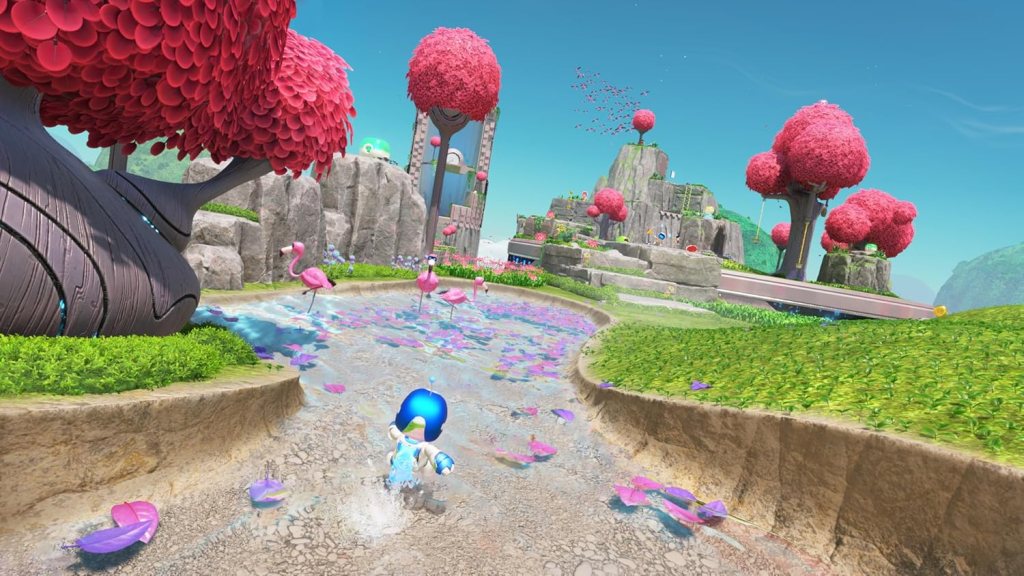
Astro Bot
Astro Bot may not be the most innovative game out there, but damn is it fun. The joy I got from exploring its wonderfully detailed levels was reminiscent of playing Super Mario Galaxy as a kid. Every level had some sort of set piece, theme, or unique power-up that had me smiling. And I loved visiting the hub world to try to identify all the robots dressed up as classic Playstation characters. Astro Bot is just wholesome fun. Read my full review here.
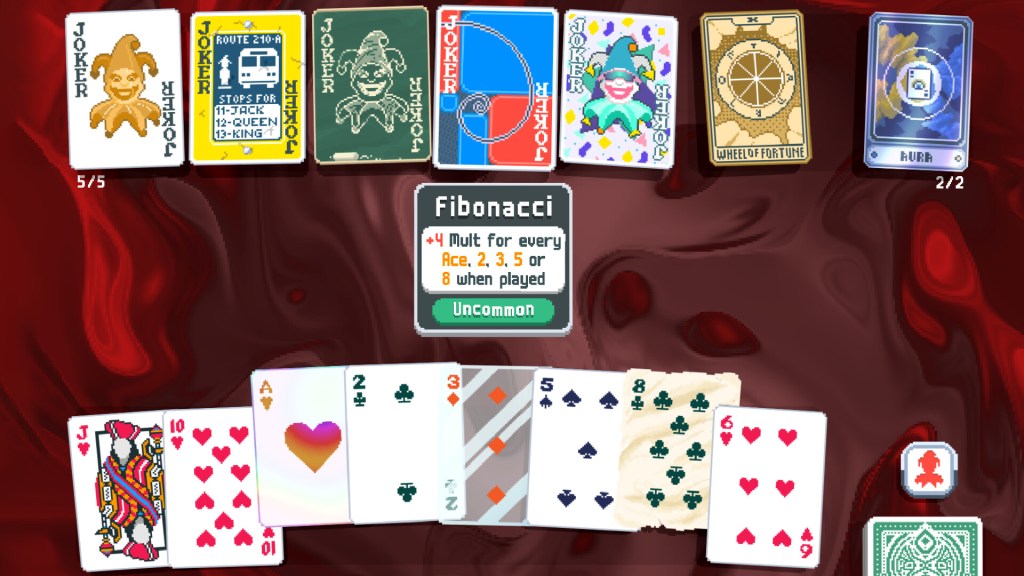
Balatro
Balatro is the most addicting game on my list. In this roguelite deck-builder you play poker hands to score points. As you progress through a run, you can modify your deck in a multitude of ways. The main way to increase your score is by acquiring jokers which vary wildly in their effects. The sheer randomness of Balatro is what makes it shine. There are so many different ways to build a successful run and every time you play, you’ll think you found a new overpowered combo. Read my full review here.
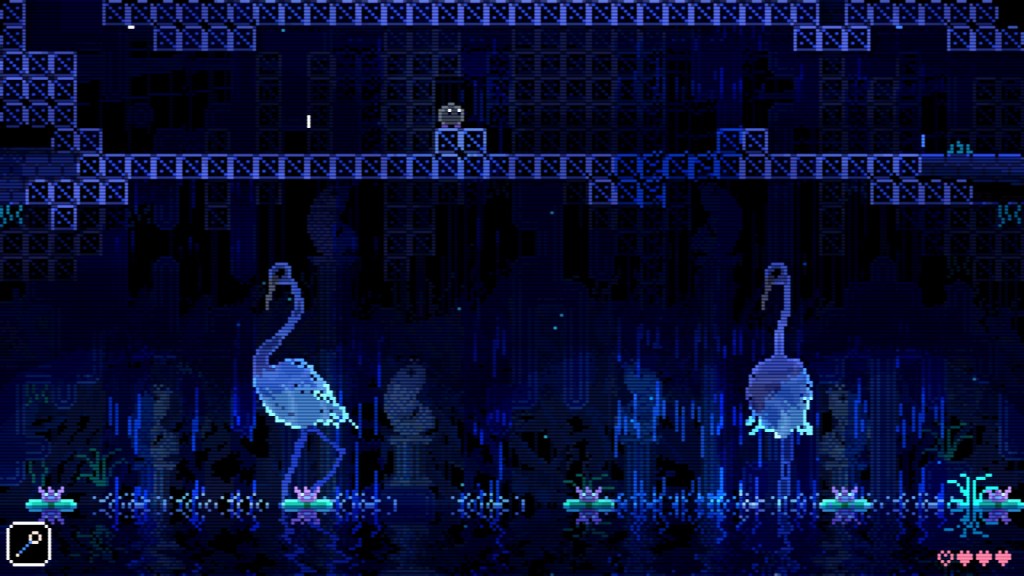
Animal Well
Animal Well is a surreal metroidvania. It’s a labyrinth full of mystery. Figuring out how to explore and interact with the world and the animals was enthralling. Without any guidance, the world is up to you to discover. Secrets upon secrets are layered atop each other, some requiring a dedicated community to unearth. It’s one of the most atmospheric games that I’ve ever played with ethereal visuals and echoey auditory effects. Read my full review here.
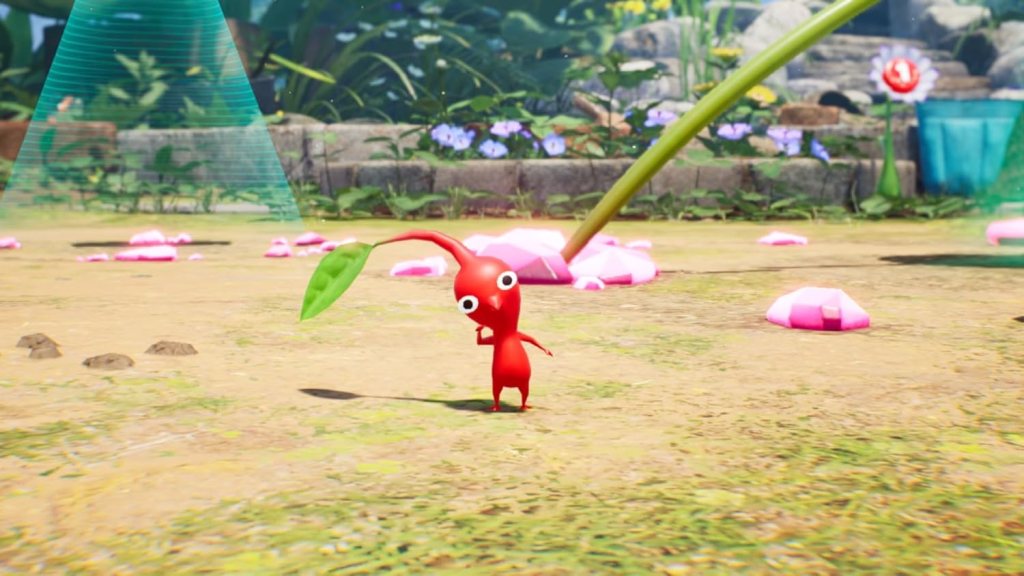
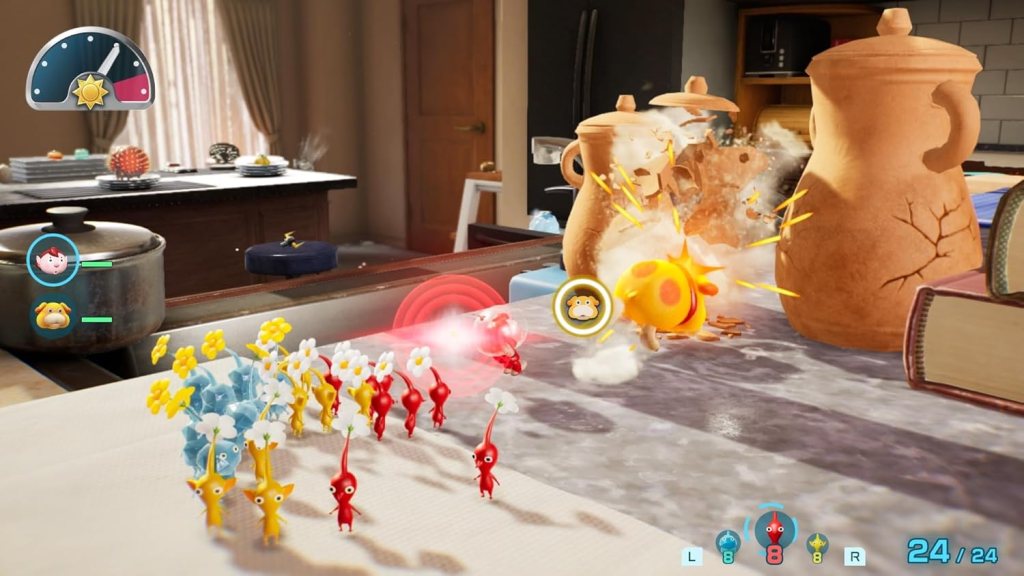
Pikmin has always been a series that has had underwhelming sales numbers. The cutesy aesthetics paired with the horrific reality that you will lead your squad of adorable little guys to their brutal demise means that the audience for these games is limited. I suspect people are discouraged by the time limit or the stress of having your pikmin get eaten, electrocuted, lit on fire, or otherwise killed. After the long hiatus following the release of Pikmin 3, it feels like Pikmin 4 is an attempt to appeal to a larger audience. In some ways, this is a fantastic thing. Pikmin 4 is the biggest, most complete game in the series. On the other hand, the concessions made in hopes of attracting new players actively harm the game.
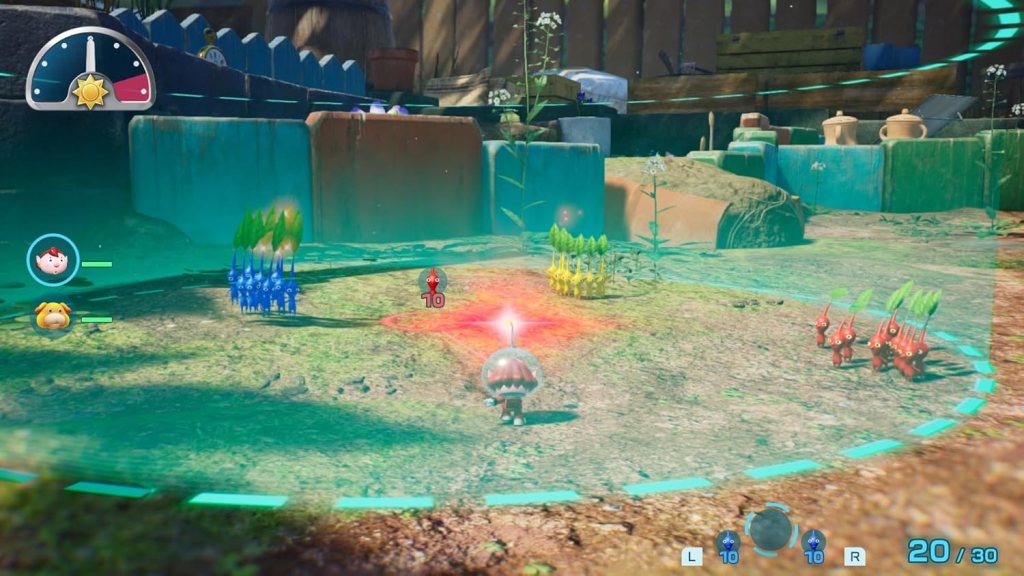
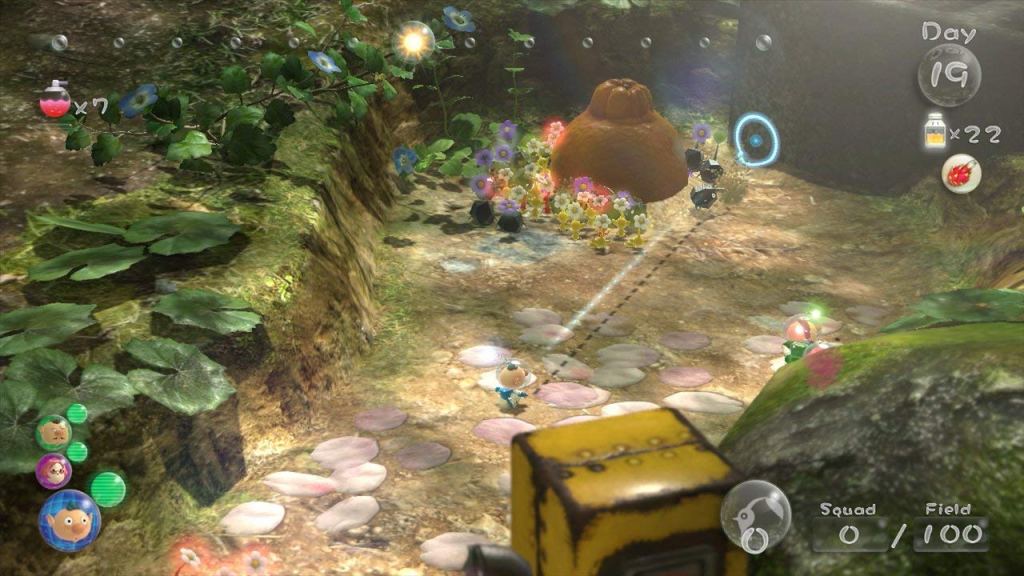
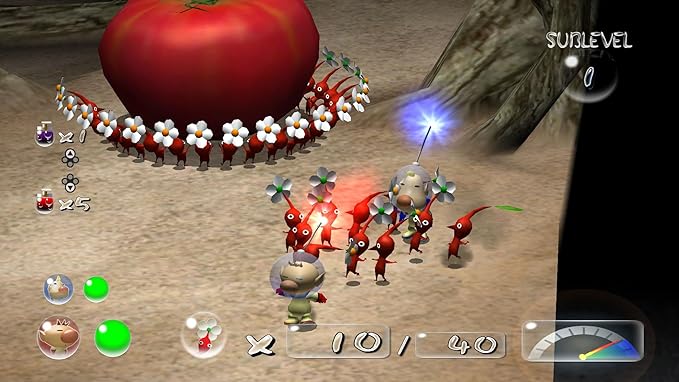
Like every other game in the series, Pikmin 4 is a real-time-strategy game where you grow hordes of cute creatures known as pikmin to complete tasks for you. They are fairly brainless, so they form a symbiotic relationship with the player. You lead them around and command them to fight enemies, retrieve treasures, and carry pellets back to base so that more pikmin can sprout. Individually, each pikmin is weak, but as an intelligent swarm they can conquer the environment and tackle massive foes.
The most impressive aspect of Pikmin 4 is its scale. This game is bigger than its three predecessors combined. And it combines all the elements from the previous games to deliver the most complete experience. Every zone is a sprawling playground to explore with dozens of treasures to find. Caves make a return from Pikmin 2, but are intentionally designed rather than relying on randomized layouts. Challenges from Pikmin 3 are now woven into the main campaign and are honestly my favorite aspect of the whole game. Every type of pikmin makes an appearance. It’s genuinely impressive how much they managed to squeeze into this game.
The larger areas don’t feel overwhelming as they are somewhat split into smaller zones. As you explore there are predetermined spots for you to move your ship and the pikmin’s onion to, making it easier to haul treasures and grow more pikmin without having to run all the way back to the original landing site. Much of the game’s content is also found in the caves. While I wasn’t a fan of caves in Pikmin 2 due to their repetitive nature and random layouts, I think Pikmin 4 executes on the idea much better. They have intentional design to challenge the player on their puzzle-solving, combat, and navigation skills. I still much prefer the open surface areas to caves, and I do think that Pikmin 4 has a handful too many caves, but the dungeon-crawling they provide is a fun detour from the open-ended exploration.
Aside from caves, there are also Dandori challenges to be discovered as you explore. Dandori is the art of strategizing and executing a plan for maximum efficiency. To me, this is one of the strongest aspects of the Pikmin series. Dandori challenges come in two forms: time trials and battles. The time trials are 5–10-minute challenges in a small arena where you have to strategize how to get all the treasure as fast as possible. I loved solving each of these challenges like it was a puzzle. Figuring out where I should start, which pikmin to pluck, which enemies to defeat, and what order to do things was quintessential Pikmin. Getting all the platinum medals on these time trials was challenging but achievable, and it was my absolute favorite aspect of Pikmin 4.
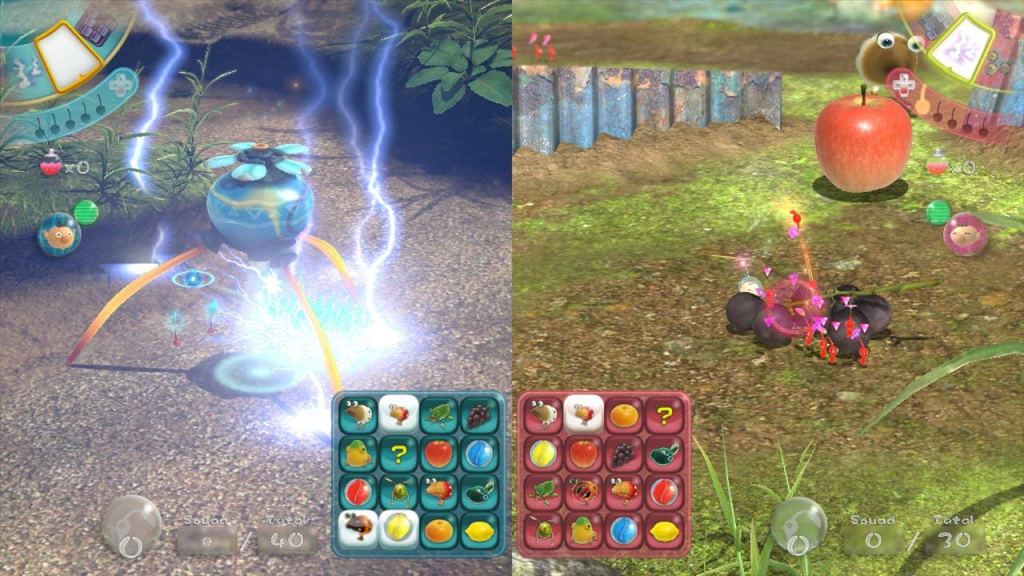
The Dandori battles on the other hand had a major flaw in their execution. These battles are similar to the time trials, but you are facing an opponent with their own army of pikmin. You both try to collect treasures to gain points, and it is a frantic experience as treasures and enemies frequently respawn. There’s also power-ups and items to sabotage your foe. I really like the idea behind these battles and there is an extra layer of depth as you have to consider which treasures are worth fighting over. But the big issue I have is that for some reason these battles have a split screen view. Half the screen is dedicated to the AI opponent’s point-of-view. It makes playing these battles feel super claustrophobic and hard to tell what’s going on. I don’t think I ever looked at the opponent’s screen to see what they were doing. At the very least, this should have been a toggleable feature so I could turn it off and focus on my own strategy.
Another major shakeup to traditional Pikmin gameplay is the inclusion of night expeditions. These are missions solely focused on defending your base from enemies. You command a new variety of pikmin, called glow pikmin, which excel at combat. These missions are fairly short and aren’t particularly difficult, but I did enjoy taking a break from normal daytime exploration to partake in some frantic defense. Ultimately, I think Pikmin 4 attempts to appease every aspect of the series’ fanbase. Between the combat focused night expeditions, optimization heavy Dandori challenges that require multitasking, dungeon crawling caves, and the laidback exploration of regular areas there is something for everyone to enjoy.
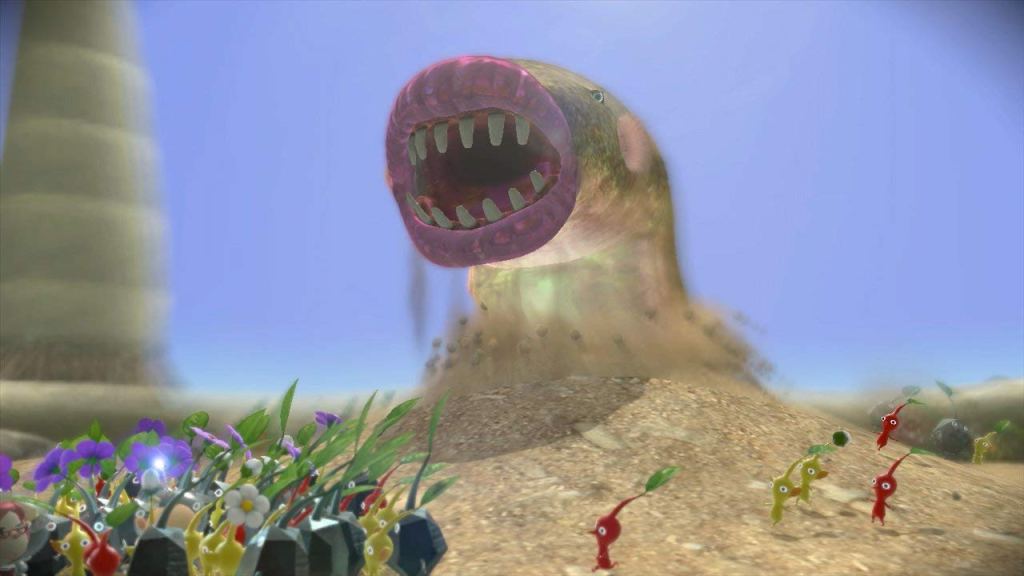
Not only does Pikmin 4 impress with the scope of its gameplay, but it also is one of the best-looking games on the Nintendo Switch. The environments, characters, and creatures all look fantastic. More importantly, I love the environments of the game. Every area is obviously inspired by micro-slices of Earth. A backyard garden becomes a massive area to explore. The shifting tide on the beach leads you to climb a sandcastle. My favorite area is the inside of a house. Figuring out how to navigate the furniture in the living room and kitchen is a great mix-up from the more naturalistic environments that Pikmin is known for. I really do love the focus on the environments created by humanity. It inspires imagination about what sort of life exists at the micro scale on our planet. Who knows, maybe there are little aliens running around collecting bottle caps and buttons when we aren’t looking.
Despite everything that Pikmin 4 does right, it also makes a ton of mistakes in an effort to appease new players. The issues are immediately apparent from the start as Pikmin 4 has one of the most painful tutorials I’ve ever played. The game takes forever to let the player start playing. And when it does, it constantly wrests control away from you to give you a tutorial on even the most straightforward of mechanics. Even after the tutorial the game throws giant text boxes on the middle of the screen during gameplay. After playing for 30 hours, I don’t need my vision obstructed by a tip telling me that there are pikmin at my base ready to be plucked.
There’s just too much talking in general. The original Pikmin was an isolated, alien experience. After every day the characters talk on and on about nothing. Despite the large cast of characters, I can’t remember anything about any of them. In Pikmin 4 you take the role of a member of the rescue corps on a mission to rescue characters stranded on Earth. The rescue corps sets up a base where everyone you rescue hangs out. I appreciate the idea of having a cozy hub to hang out in, but it’s extremely barren and all the characters just feel like they are stapled on. I wish some temporary buildings or structures would be built as you progressed. Like having shops for items, upgrades, and cosmetics rather than just having those characters stand around in the open. I would have loved it if this hub had some personality.
Gameplay wise, there’s a wealth of issues. First and foremost is the control scheme. The game forces automatic lock-on on the player, with no way of toggling it off. The result is that many combat encounters are dumbed down to a single button press. You no longer have to aim your cursor; the game takes that skill out of the equation and guarantees that your thrown pikmin will land on target. The mechanic also becomes unwieldy during late-game encounters with many enemies because the automatic lock-on is incredibly “sticky”. A frequent annoyance is trying to prioritize a high-threat enemy but the game decides to prioritize random treasure or other tasks.
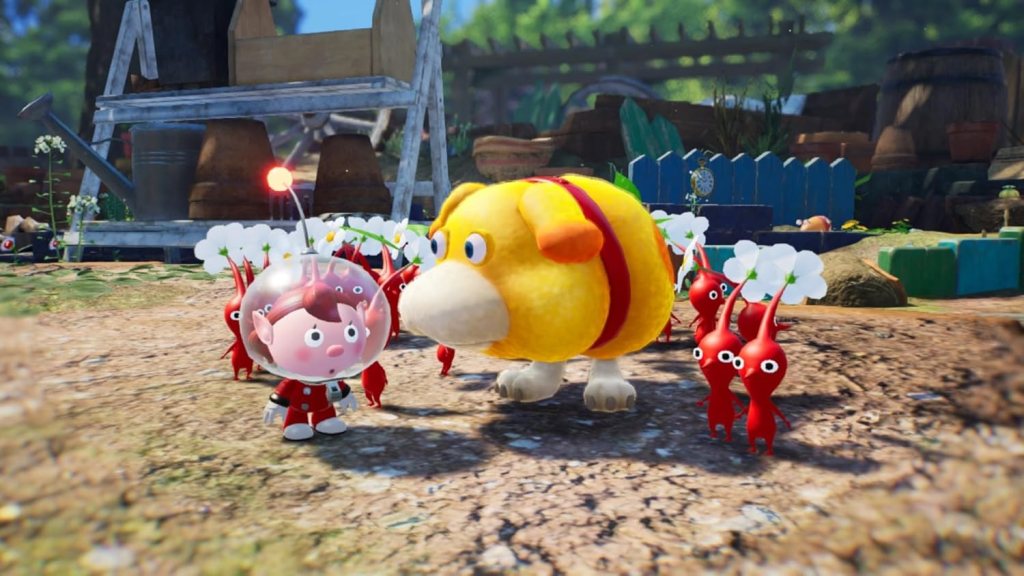
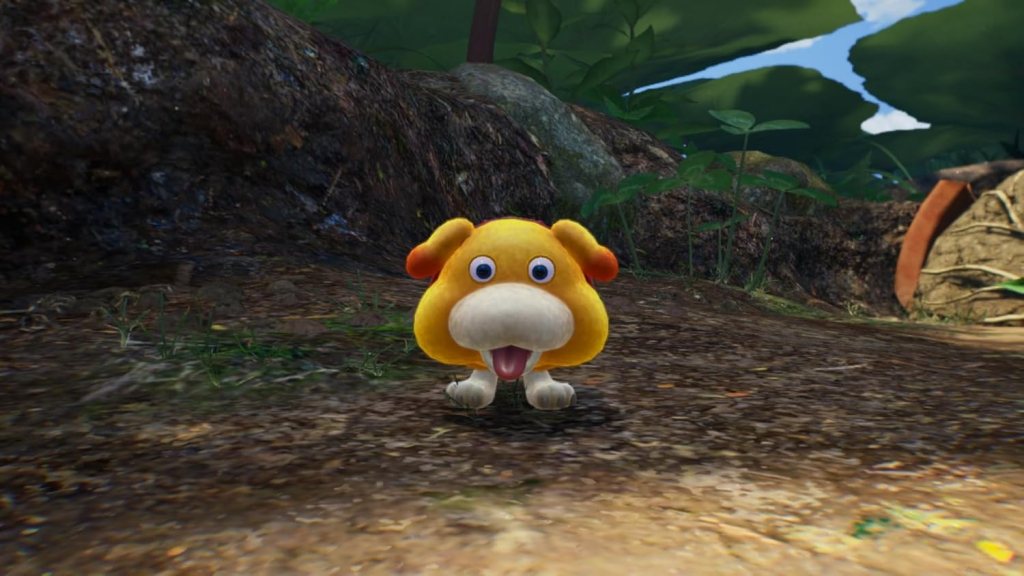
Pikmin 4 provides the player with a massive toolset. There’s a robust upgrade system that not only increases your health and elemental resistances, but also provides utility such as calling all idle pikmin to your side. There’re purchasable items such as bombs and stunning lightning to be used on tougher enemies. But the biggest addition to your arsenal is Oatchi. Oatchi is an alien dog trained to assist in rescue missions. Listen, I love dogs, and it’s hard not to love Oatchi, but Oatchi borderline breaks the game.
The problem with Oatchi is that Oatchi is too good at everything. Oachi can fight enemies and can defeat most of them single handedly. Oatchi can carry heavy objects. You can ride on Oatchi’s back with your squad of pikmin. This is particularly useful because it makes it remarkably simple to have your squad of pikmin avoid enemy attacks. In previous games, having a squad of 100 pikmin could be unwieldy to control, but now it’s a breeze with Oatchi. You can also charge at enemies which deals damage, stuns them, and flings your entire squad of pikmin on their back. The vast majority of enemies are decimated by the combo of being stunned and having 100 pikmin attacking them. It genuinely feels like the game isn’t designed for the havoc that Oatchi can wreak. It’s until the final boss of the post-game that I encountered an enemy that felt designed with Oatchi in mind.
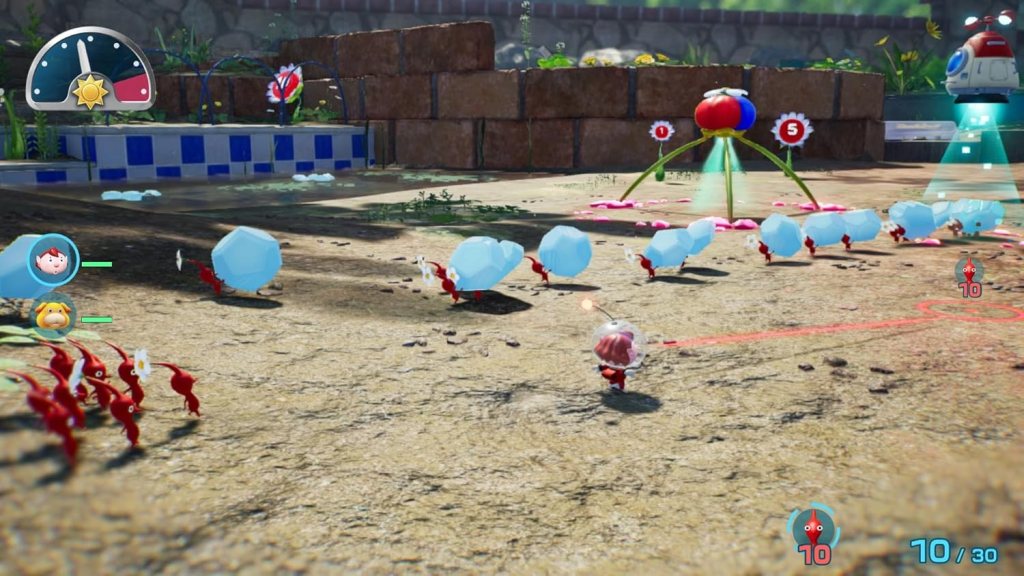
Aside from Oatchi, another major addition is the inclusion of ice pikmin. This new type of pikmin can freeze bodies of water if enough of them are occupying it. This is a great strategic addition as it creates traversable paths for your squad, but at the temporary cost of dozens of pikmin. In combat, ice pikmin are extremely overpowered as they can rapidly freeze enemies. This is balanced by having ice pikmin do less damage, but just a handful of them is enough to freeze enemies while the rest of the squad deals the damage. They are at least somewhat kept in check by the fact that your supply of ice pikmin is limited until very late in the game.
I think there was massive potential with providing the player all these overpowered options such as items, Oatchi, and ice pikmin. It could be framed that beating the game is a foregone conclusion, but maximizing your efficiency to do it quickly is the point. There’s only one Oatchi, so choosing what to have them do could be an interesting decision. Picking the optimal place to use items to save time could be fun. Ice pikmin would be more balanced by their lack of damage if you had to go quickly. But unfortunately, I don’t think Pikmin 4 does a good job at encouraging this efficiency by default.
For a game that emphasizes the concept of Dandori, there is very little need for speed outside of the Dandori challenges. There is no day limit in Pikmin 4. Every individual day has a timer, but it’s irrelevant since you can just end the day and start a new one rather than risking running out of time while doing a task. Dandori challenges and some of the post-game content are my favorite aspects of the game because they do put some pressure on the player. Having to think about the best way to use the tools available to you and what route to take is engrossing even if the combat is on the easier side.
The major flaw of Pikmin 4 is that it lacks an edge. There’s no element to provide friction that inhibits the player from just steamrolling the whole game. The wealth of new tools makes most combat encounters easy. Without a time limit there is no need to optimize and think about how to tackle exploration efficiently. There’s not even a significant number of puzzles like were present in Pikmin 3. As I played, I often felt that I was just going through the motions, that the game just kind of plays itself. I really would’ve appreciated something that made the moment-to-moment gameplay a tad more thoughtful. I’m ok with the game being relatively easy, but there still needs to be a threat to keep the player engaged.
The Pikmin series is one of evolution. You could never say that it’s stagnating or failing to implement new ideas. I love the grandiosity of Pikmin 4; it certainly feels like the ultimate Pikmin experience. But the lengths gone to attract new players makes the experience feel neutered. The automatic lock-on, the drawn-out tutorial, the lack of an overarching time limit, and the overpowered tools that the game provides all dull the edge that the series once had. It is for these reasons that I give Pikmin 4 a 7/10. Every game in the series has something to offer, and while Pikmin 4 may lack friction, it’s a solid collectathon with a ton of content.
You stumble across a dusty cardboard box in an abandoned storage unit, inside is a retro video game console along with 50 games from a company you’ve never heard of. That’s UFO 50. A collection of 50 retro games from an alternate universe, each showing the progression of the fictional developers UFO Soft. The games range from platformers, to sports games, to fighting games, to shmups (shoot-‘em-ups), to puzzle games, to strategy games, each with a unique twist or gimmick. The real developers of the UFO 50, Mossmouth, claim that these are retro games with modern design sensibilities, which I think is a perfectly apt description.
Retro games are notoriously difficult and are oftentimes clunky to play. UFO 50 does a fantastic job at maintaining a reasonable level of difficulty without making these games frustrating to play. Many of the games in the collection have slow movement, punishing mechanics, or initially uncomfortable control schemes. But it doesn’t take long for each title to click, and once you figure out how to play the smart design begins to unveil itself.
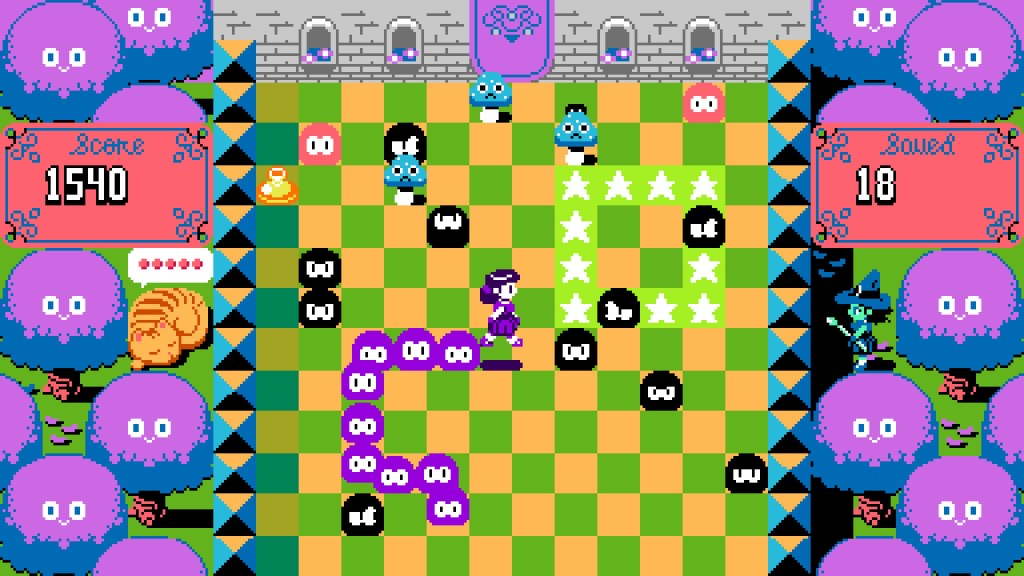
Each game in the collection has something that makes it stand out. There’re no straight up clones of actual retro games, although some of the games do feel at least inspired by classic titles. Take one of the earlier games in the collection for example, Magic Garden. It takes elements from Snake and Pacman as you lead friendly slimes to safety and use power-ups to clear out evil slimes. But Magic Garden is its own game, shepherding slimes to the scoring zone and collecting power-ups has intricacies as you are encouraged to take risks and let a ton of slimes occupy the board before chaining together multiple power-ups for an exponential score increase. There’s an edge of risk and reward if you want to maximize your points.
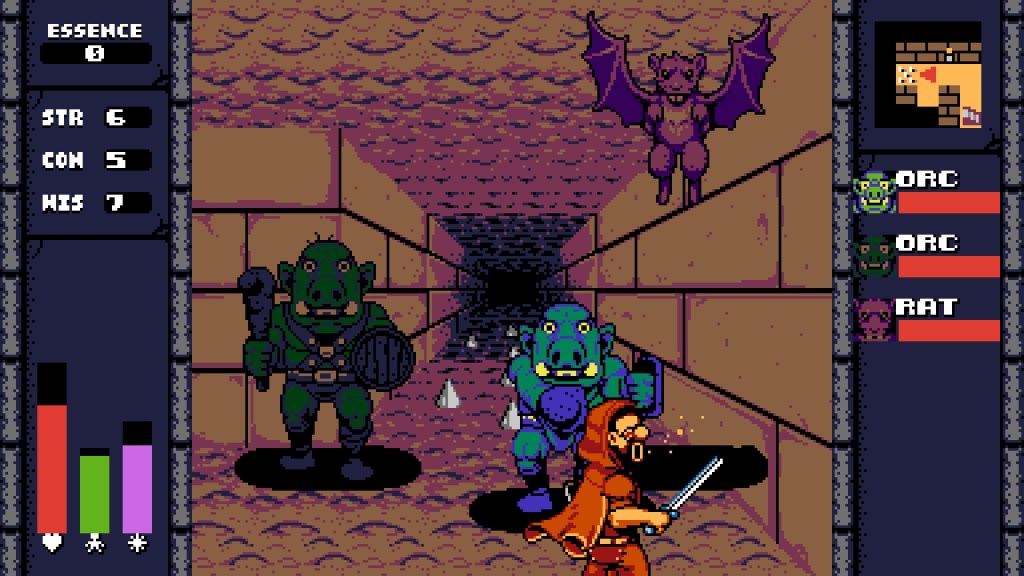
There’s an absurd level of variety available in UFO 50. I’m extremely confident that there is a game in the collection for everybody. And for $25, you really can’t go wrong. And don’t think that these are just short little arcade games either. There are fully fledged RPGs and metroidvanias that take hours to complete. Many of these titles could easily be standalones. Mini & Max for example is a genius little metroidvania in which you try to escape a supply closet by shrinking down and exploring the shelves and talking to the micro-civilizations that are invisible to the naked eye. Grimstone is a turn-based RPG that is over a dozen hours from start to finish. You could play UFO 50 for 100 hours and barely scratch the surface. If you truly want to 100% complete the collection, you are looking at 300ish hours. Personally, I have not clocked even remotely close to that number but this is a game that I am planning to play and revisit for a long, long time.
A smart decision was made to give every game some reasonable milestones to achieve. Every game has a simple challenge to earn a “gift” which goes into the little house on the console which is cute. You earn a gold trophy for beating each game. And you can earn the “cherry” by completing whatever additional challenge there is after completing the game, usually this is getting a high score or something along those lines. I think these tiers of achievements makes every game more approachable and presents attainable goals as you slowly get better at each game.
I loved the dedication to the fictional company of UFO Soft. Each game has a short blurb about its development and it’s fun to recognize the fictional names of the developers in the credits of each game. There’s a handful of sequels across the collection, and I enjoyed the references to the company’s other games as I played. It was interesting to watch UFO Soft evolve in design and technology. It was a brave decision by Mossmouth to have the first game in the collection be Barbuta, an esoteric metroidvania with no music, no color, painfully slow movement, unfair traps, and no quality-of-life features. But it was the perfect origin to the UFO Soft mythos. A game developed by a sole employee with extreme technical limitations and no game design experience. Following the evolution of UFO Soft is a journey of its own, and there’s a layer of secrets to be discovered for dedicated players.
The presentation of the collection is fantastic the whole way through. Mossmouth had to make sure every game fit its respective era and chronological place in the collection. All the games look good for being retro games and have distinctive designs and characters. But what I really want to highlight is the music. Oh my god. There are so, so many excellent tracks in this game. In the alternate universe where UFO Soft is real, I could easily see these tunes being as memorable as classics like the Super Mario Bros theme is to us.
I think that the size and breadth of the collection is the greatest strength and weakness of UFO 50. While it is exciting to boot up the game and choose from 50 games, not having to commit to any given game, I also found myself treating each one as disposable. Since the games are difficult and often have unconventional control schemes, I found it very easy to not give each game a fair chance. Dusting off a cartridge and playing for 5 minutes before exiting and trying something else was a common occurrence initially. After noticing this pattern, I forced myself to try to give every game more attention. I’m still working through the majority of the collection, but I am glad that I slowed down to really appreciate each game. The downside is that some of the games never do click, even after putting time into them. Planet Zoldath and Combatants are examples of games that I think are just not very good.
Since I think that it can be a bit intimidating to know where to start with such a massive collection, I wanted to share some of my favorite games that I’ve played so far. While part of the beauty of UFO 50 is that everyone has different favorites, I did want to highlight these five games. Hopefully these suggestions can give you some options to try if you have trouble choosing where to begin.
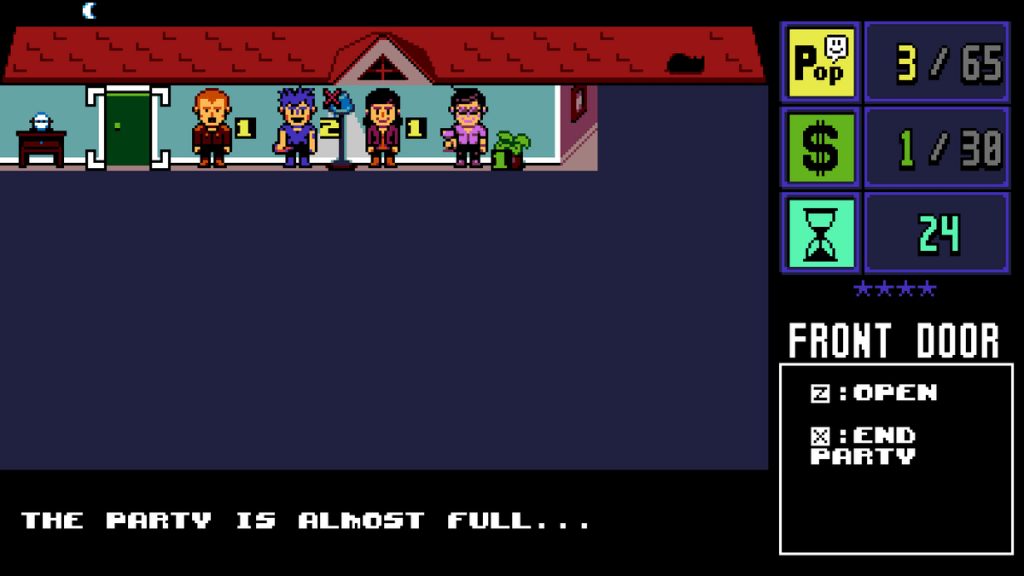
Party House is the first game in the collection that really clicked with me. It’s a deck builder where you are trying to throw the ultimate party. By spending popularity to add new guests to your rolodex you try to accumulate more popularity and cash every night. After 25 nights you have to have 4 “starred” guests attend your party to win. There’s a good amount of decision making involved, but what makes Party House interesting is its “push your luck” mechanics. Troublemaker guests typically earn more popularity and money, but more than two of them at once will cause the cops to show up. And there’s also the decision of when to stop spending popularity on normal guests and when to start acquiring the “starred” ones. There’s a lot of delicate choices to balance, and Party House is a ton of fun.
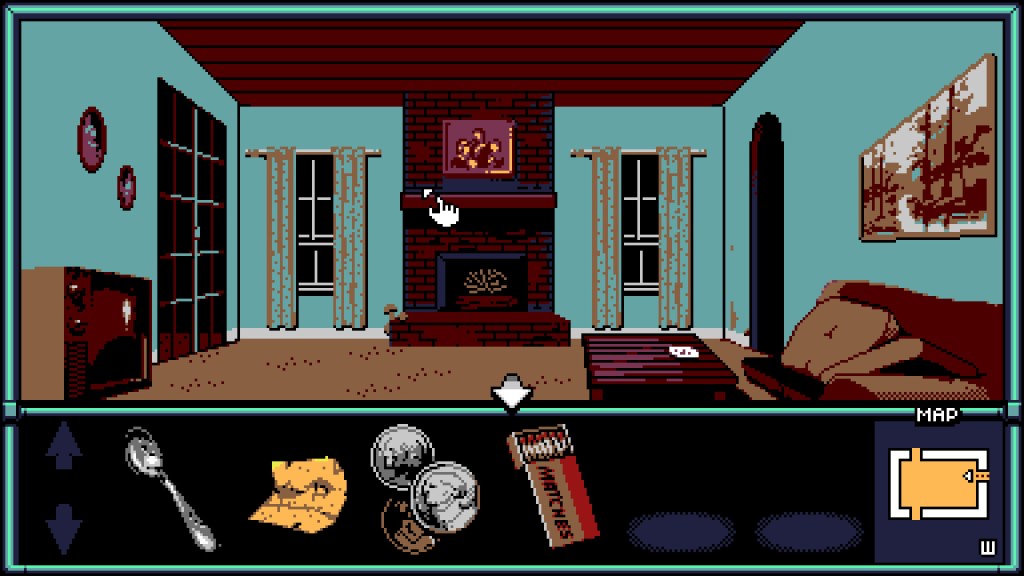
Night Manor is a point-and-click horror game that takes place in a disarrayed mansion filled with trash and fungus. You have to figure out a way to escape while avoiding the zombie-like man infected with fungus who is hunting you. If you run into him, your cursor jitters to simulate the terror your character feels, making it harder to click on doors to escape as he chases you through the manor. Old point-and-click games often have moments of ridiculous leaps in logic, but Night Manor avoids this with its puzzles. I found that everything made sense and I couldn’t put the game down until I played through the whole thing over the course of a few hours. There’s also a story to uncover through notes of what happened at the manor which was fun to discover.
Seaside Drive is a stylish shmup, but you can only move left and right as you drive your car down the road. As you dodge projectiles and enemies you have to move back and forth quite a bit to keep up your meter. You build up charge by skidding to the left, and expend charge by shooting and driving right. The higher the meter, the more damage your shoots do. I love this game because it seems crazy difficult at first, but I quickly learned how to maneuver and overcome the challenge. It’s so satisfying to clear the stages that were giving you a hard time without getting hit at all. Seaside Drive also has incredible aesthetics and one of my favorite songs in the whole collection. It’s a slick, stylish, and fun to play shmup with perfectly tuned difficulty.
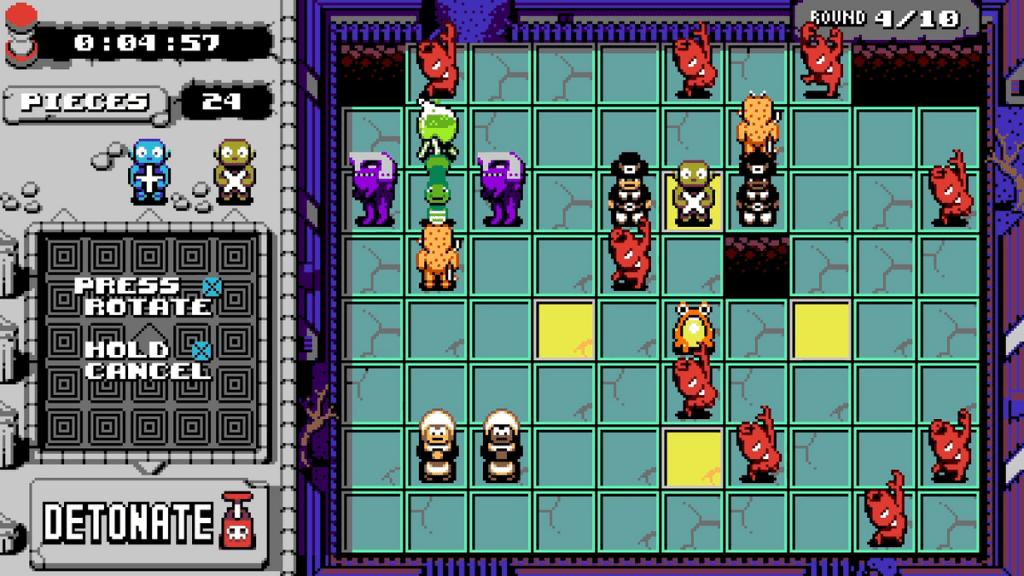
Devilition is my favorite puzzle game of the collection that I’ve played so far. A grid is filled with villagers and demons and you have to place pieces that kill the demons. The twist is that your pieces have to act like a chain reaction, each one can only be set off if hit by another. You have to keep track of what pieces you’ve placed and how to connect the chain. There’s 10 rounds and any pieces that you don’t use carry over to the next round, encouraging you to be efficient in your placement. I enjoyed watching the Rube Goldberg machine go off and clear the demons off the board as I prayed that I didn’t mess up and miss a crucial link in the chain.
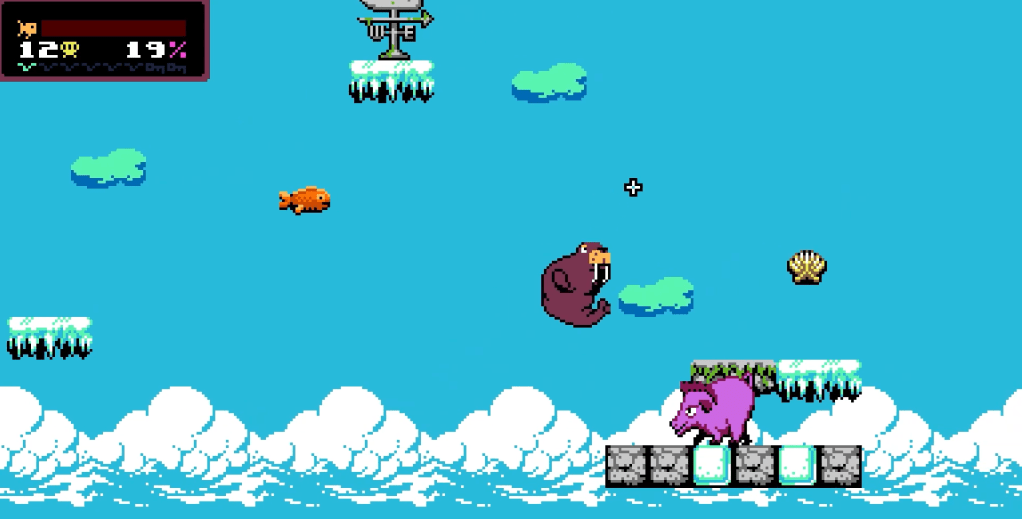
Waldorf’s Journey is a platformer that takes place entirely within the dream of a walrus. It’s reminiscent of a golf game as you charge up and launch Waldorf the walrus across gaps and try to precisely maneuver him to land on tiny patches of ice. You really have to master the momentum as you use your flight meter to propel Waldorf forward. It’s tempting to fly as far as you can on every jump, but it becomes incredibly difficult to slow down enough to safely land. There’s a few different power-ups and items to help you along as you inch towards revelation at the end of the dream. I also love the visuals, music, and minimalist story in this game as well.
I think UFO 50 is a game that I am going to be playing for the rest of my life. Or at least for a very long time. The breadth and depth of this collection is unmatched. After dozens of hours played, I’ve barely scratched the surface of what UFO 50 has to offer. The fictional history of UFO Soft ties the whole thing together beautifully. It is for these reasons that I give UFO 50 a 9.5/10. UFO 50 is a paradise for fans of retro games with its dedication to melding retro gaming experimentation with modern design considerations.
It should be no surprise that the 9-year gap between Pikmin 2 and Pikmin 3 led to massive visual and technical improvement. Not only does the game look better and feel smoother to play than its predecessors, but it further enables one of the best aspects of the Pikmin series: multitasking. What makes me excited about the Pikmin series is that the games aren’t necessarily iterative sequels. Each one of the games has its own unique structure that places emphasis on different aspects of the series. The first Pikmin was all about time management, Pikmin 2 focused more on combat and reacting to sticky situations, and Pikmin 3 hones in on multitasking. For full context, you can read my reviews ofPikmin and Pikmin 2.
The game begins not with our beloved Captain Olimar, but instead we follow the story of a crew of 3 new characters. Alph, Brittany, and Charlie have been tasked with searching the galaxy for a new source of food as their planet faces starvation. They crash land on Earth and lose critical ship parts that they need to get back home. As they track down the ship parts, they also discover the bounty of fruit that grows on Earth and set out to collect all the seeds that they can to revitalize their own planet.
The structure of Pikmin 3 is more objective based than its predecessors. You are often given an obvious goal to pursue whether it be tracking down a signal to a ship part or trying to rescue a crew member. There’s no looming 30-day limit like in the original Pikmin, but you do need a steady supply of fruit juice to stay alive. As you explore the world you collect fruit, partly to bring the seeds back home, but also to turn into juice for immediate nourishment. It’s more lenient than a set day limit, but I do appreciate that there was some form of time limit. Even if you’ll probably have way more fruit than you need, having that motivation to maximize every day is a good thing.
Having 3 crew members to control is just the beginning of how Pikmin 3 emphasizes multitasking. You can switch between them freely and have each character control their own horde of Pikmin. You often need to solve puzzles that require you to toss the crew across gaps or on higher up platforms. But the big addition is the “go here” functionality. When you open the map, you can click on a spot and command the character that you are controlling to walk there automatically with their horde of Pikmin. This enables the player to have all 3 characters be actively doing something and allows them to optimize for speed. You could be fighting enemies with Alph, have Charlie walk back to the base to pluck Pikmin, and have Brittany lead her horde to a new location all at the same time.
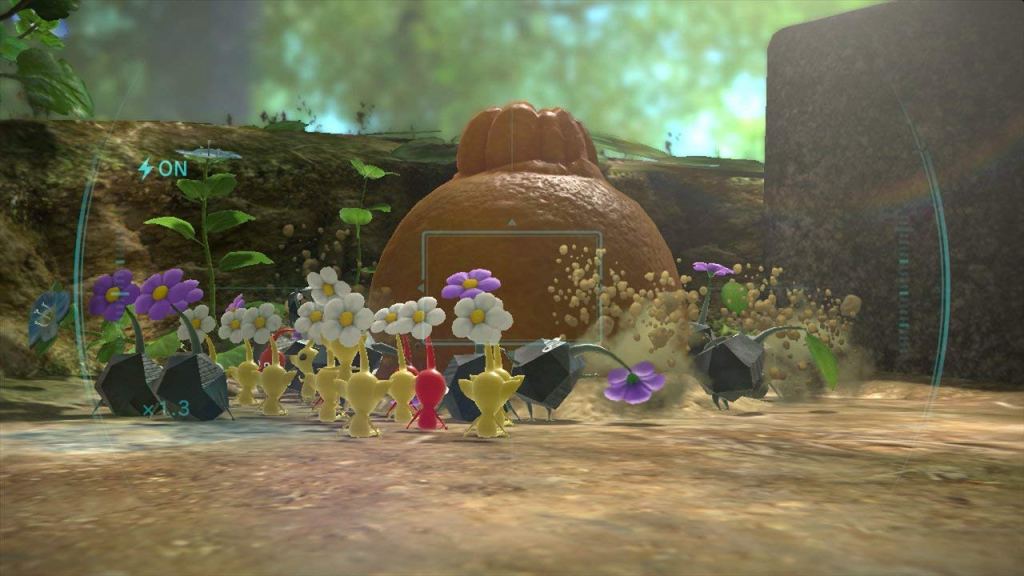
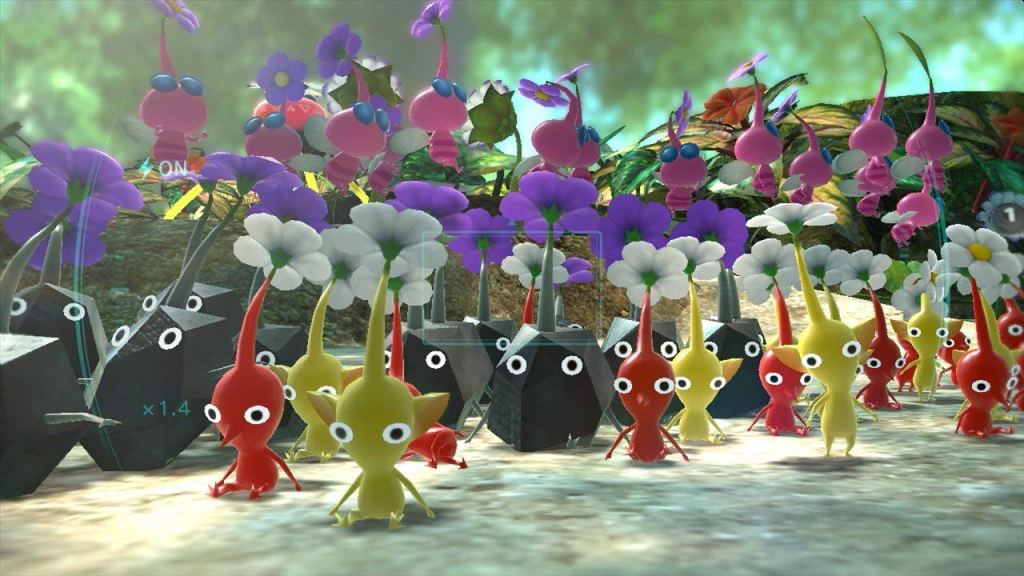
I also enjoyed the addition of both new Pikmin types. Pikmin 3 excludes the Purple and White Pikmin from Pikmin 2 and replaces them with Rock and Flying Pikmin. Not only are they adorable, but they have distinct strengths and weaknesses. Rock Pikmin can shatter crystals and do a ton of damage if thrown on an enemy, but they cannot latch onto enemies for repeated hits like other Pikmin types. Flying Pikmin can soar over terrain to carry objects and are great at dealing with airborne enemies, but they deal low damage overall. Both these new types are useful without being overwhelmingly powerful like the Purple Pikmin were.
There is also a plethora of quality-of-life improvements that make Pikmin 3 a much smoother experience than its predecessors. The Pikmin AI is much better in general and they rarely, if ever, get caught on terrain or fall off ledges. Instead of haphazardly swarming you can now use the specialized charge attack to order your Pikmin to rush at an enemy or item. But one of the bigger changes is the lock-on functionality. In previous games you constantly had to be aiming your cursor at whatever you were tossing your Pikmin at. In Pikmin 3, you can just lock onto your target and throw with confidence knowing your Pikmin would land on target.
The downside of having so many quality-of-life improvements is that it also results in the game being significantly easier than its predecessors. Without worrying about Pikmin killing themselves in frustrating fashion you can command your Pikmin with much more confidence. The charge attack makes it simple to burst down enemies quickly. The lock-on functionality makes it exceptionally easy to run circles around enemies. While I don’t think aiming should be the primary focus of a real-time strategy game, I do think it was a meaningful skill expression to keep the cursor on enemies as you kited. I’m torn on the inclusion of lock on because of this. Moreover, I feel like Pikmin 3 enemies have reduced health for whatever reason, making the game even easier. Basic enemies are just too easy to takedown and don’t pose much of a threat.
Even though regular enemies were a bit too easy, I did enjoy the dynamic boss battles that Pikmin 3 offers. They aren’t super challenging by any means, but they are fantastic spectacles with interesting arenas and mechanics. Figuring out how to exploit the boss’ weakness is an enjoyable experience, and it can be a little tense if you are running out of time during the day. Even if they are easy, I had fun with them. But if you are looking for a real challenge, you’ll have to look towards the mission mode.
The mission mode in Pikmin 3 is additional content outside of the campaign. These are timed challenges with a few variations: treasure hunt, battling enemies, and boss battles. These are specifically tailored maps that you really have to plan out routes and optimize if you want to get a platinum medal. I spent a good amount of time getting a handful of platinum medals on the treasure hunt missions. I think this was an excellent inclusion because it lets players play around with optimization, time management, and multitasking without having to replay the entire game.
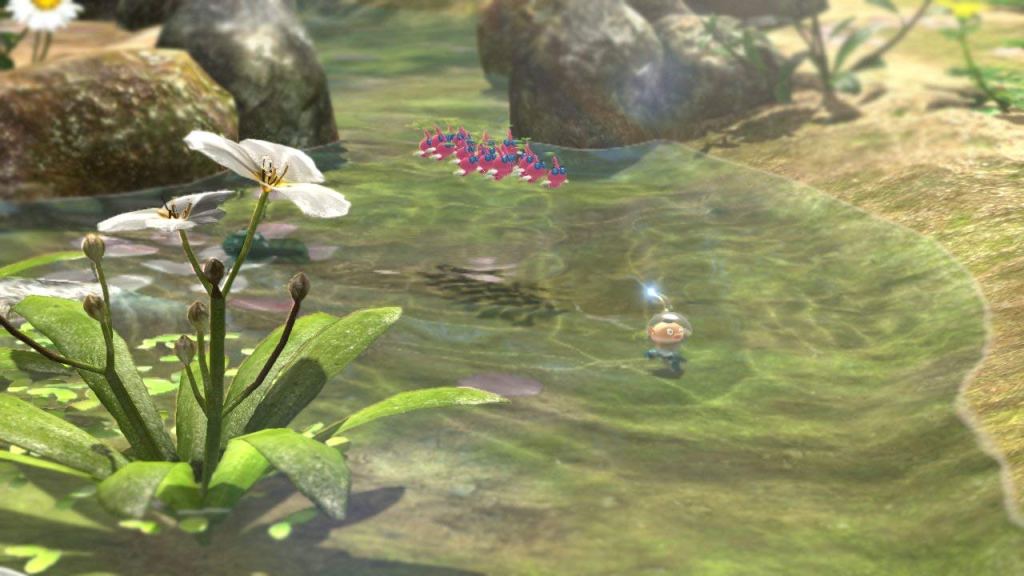
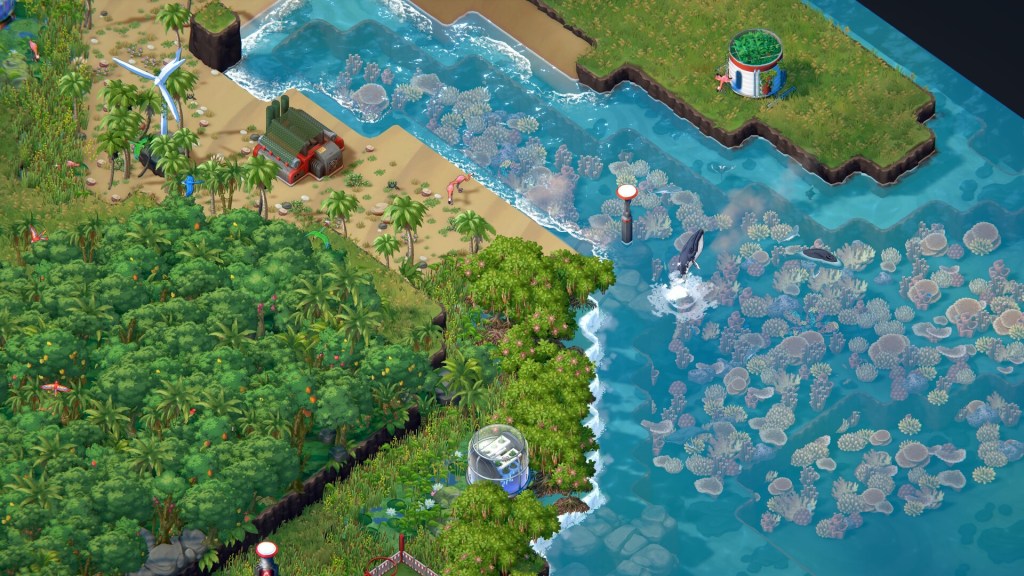
Pikmin 3 is one of the best-looking games of its generation with wonderfully detailed microbiomes. It hones in on one of my favorite aspects of the Pikmin aesthetic: miniature naturescapes. Every level is like a little terrarium to explore with towering foliage, streams with lily pads to hop across, and dark caverns filled with bioluminescent plants. The visual fidelity and environmental design are absolutely superb. And I love that there is an occasional rainy day to add some ambiance even if it doesn’t have any gameplay implications.
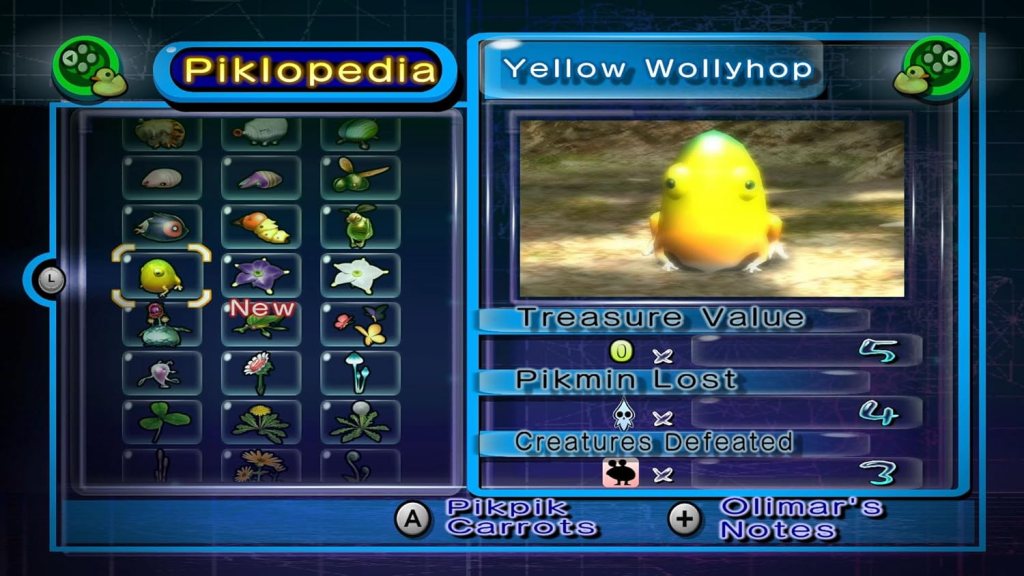
I personally played Pikmin 3 on Nintendo Switch with the remastered Pikmin 3 Deluxe edition. Aside from being graphically enhanced, it has some gameplay changes like having a bigger whistle radius, being able to call loose Pikmin back to the ship, and the charge attack only using the Pikmin type that you have currently selected. The game originally was designed for the Wii U and made use of the gamepad for the map, but I didn’t have any frustrations with having to open the map separately. There are also some new additions such as the Piklopedia and new side stories for Olimar and Louie. Overall, this is the best way to play the game.
I don’t think Pikmin 3 is my favorite in the series. It may be because of nostalgia, but the structure of the original Pikmin was just so compelling. The tense 30-day limit to find all your critical ship parts provided a real sense of urgency. I do appreciate that Pikmin 3 did reintroduce some time limit with the juice system. The focus on multitasking and the ability to order all 3 characters at the same time is superb. And of course, Pikmin 3 is technically and visually impressive. It certainly has my favorite environments, levels, and bosses of the series thus far. I will always vividly remember riding a lily pad downstream on a rainy day as dandelions tower overhead. I can’t wait to finally give Pikmin 4 a try.
City builders are a genre all about optimization. Laying out districts and infrastructure in a logical manner is necessary to grow into a bustling metropolis. Terra Nil is labeled as a reverse city builder, you aren’t tasked with building sprawling cities. Instead, you have to cleanse a planet that has been ecologically destroyed. It’s not a game about careful planning or building, but of restoring the planet to its natural state which can be messy and unorganized. I liked what Terra Nil was trying to do, but I felt like it was missing something.
The concept of Terra Nil is superb. It not only is a game about cleaning up the devastation caused by humanity, but emphasizes this idea as a genre reversal of city builders. In city builders you often are searching for ways to optimize your city, exploiting every resource and inch of space that you have to support endless growth. But in Terra Nil you don’t have to be optimal. Everything that you build is a temporary fixture meant to restore the ecosystem and will be eventually recycled.
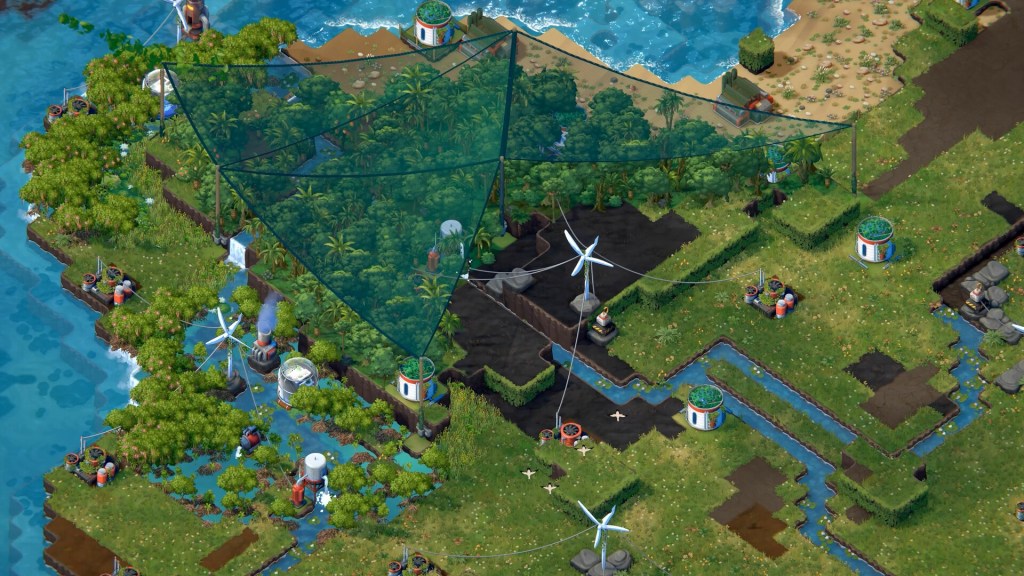
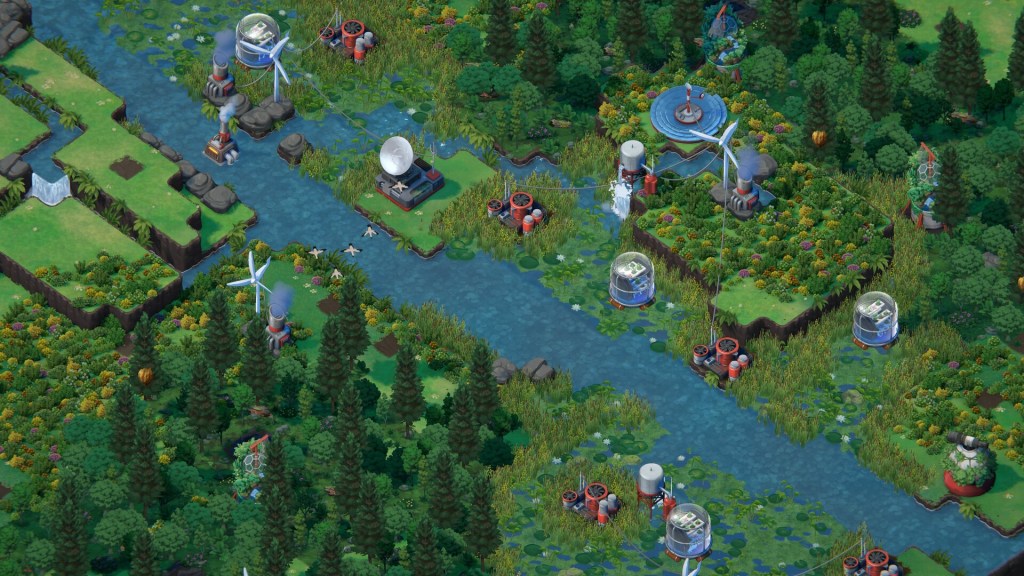
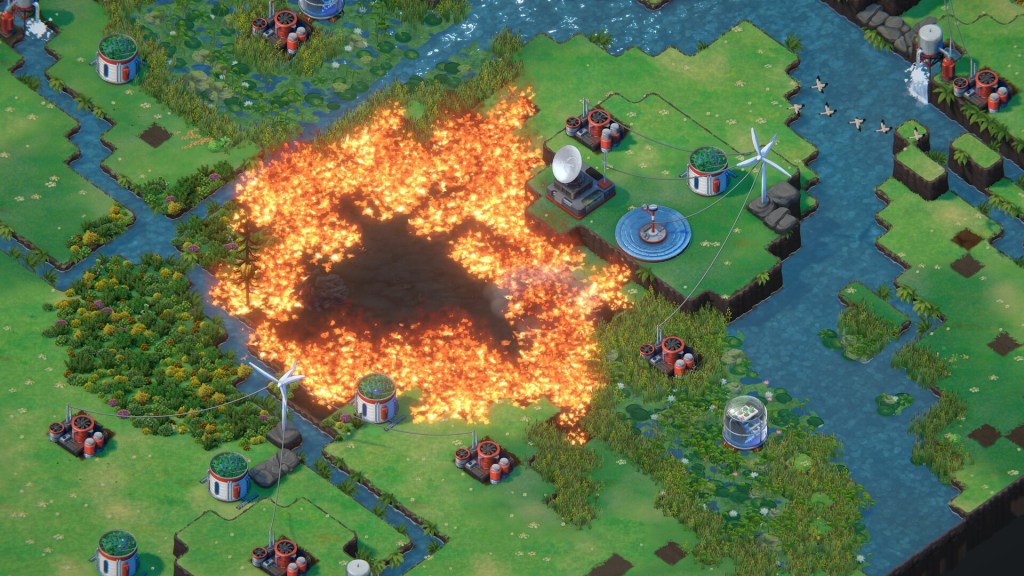
Restoring nature in Terra Nil comes in stages. When you visit an area, your initial goal is to generate some electricity through windmills and other renewable energy sources to power toxin scrubbers to rid the land of chemicals. The next stage is where things get more interesting. You begin to seed forests, rivers, wetlands, tundra, jungles, and whatever other biomes are appropriate for the part of the world that you are working in. There’s a bit of a puzzle element to this, as each biome has requirements to thrive such as needing certain levels of humidity, elevation, or access to water. Some even require you to do a controlled burn to enrich the soil before planting.
The biome planting phase is definitely where the game shines. You have a single resource: a pool of points to spend on buildings. You get additional points fairly rapidly as your biomes grow. Moreover, you get extra points for completing certain tasks like reaching certain temperatures or humidity levels through weather manipulation. I quite enjoyed these little side tasks not just because they gave points, but also because they had a visual effect on the world such as dragonflies and algae showing up in the wetlands. Rain is the first major milestone in any area as it cleanses any remaining polluted land. Watching as the desolated land slowly transforms into an ecological paradise of different biomes is immensely gratifying. It’s pretty simple but there are light puzzle and strategy elements to plan where you are putting the buildings and biomes.
Once your biomes have been created, identifying where wildlife can thrive is the next step. There’s a handful of species in each area that you are supposed to find, you have to scan small areas that match that species’ habitable requirements. I think this part of the game can be a little tedious as there is a lot of guesswork to figure out what each requirement is. It also can be a bit finicky even when you know the requirements as the radius of the scan is fairly small and it has a lot of trouble when certain species require multiple biomes or a food source. I loved watching animals be reintroduced to the ecosystem, but mechanically it was a bit unsatisfying.
Finally, after you are done planting biomes and identifying fauna it is time to pack up and leave for the next area. You absorb every building into recycling pods and setup collection systems to pick up those pods. In some areas you set up pylons and ziplines that connect to one another and collect the pods from there. In areas with more water, you send out little drone boats that will pick up the recycling pods. It’s a pretty straightforward phase of the game. While I did like cleaning up after myself and fully getting rid of all the buildings to let nature take over, the recycling phase is mechanically just a little barebones.
Being mechanically simplistic is one of the biggest hesitations that I have with Terra Nil. Most phases of the game don’t require much decision making or problem solving, just following a series of predefined steps. The biome creation phase is definitely the most engaging part of the game as you have some decisions about how and where you will attempt to create the biomes. But every other phase is just… too rigid. I don’t think that it is an inherently bad thing to have simpler games. I understand that one of the design philosophies of Terra Nil is to be Zen. But I would’ve liked to see at least some more expression and decision making afforded to the player during the cleansing, fauna, and recycling phases.
That’s not to say the game lacks difficulty. I wouldn’t say it’s a challenging game, but it is possible to run out of points and fail in the 3rd and 4th zones. But once you get over the initial hurdle then you are simply playing out the scenario without much thinking needed. I don’t think the game needs to be more challenging, as it does offer different difficulty options and running out of points is a real issue in harder areas. But depth doesn’t necessarily have to be difficult, Terra Nil does lack depth.
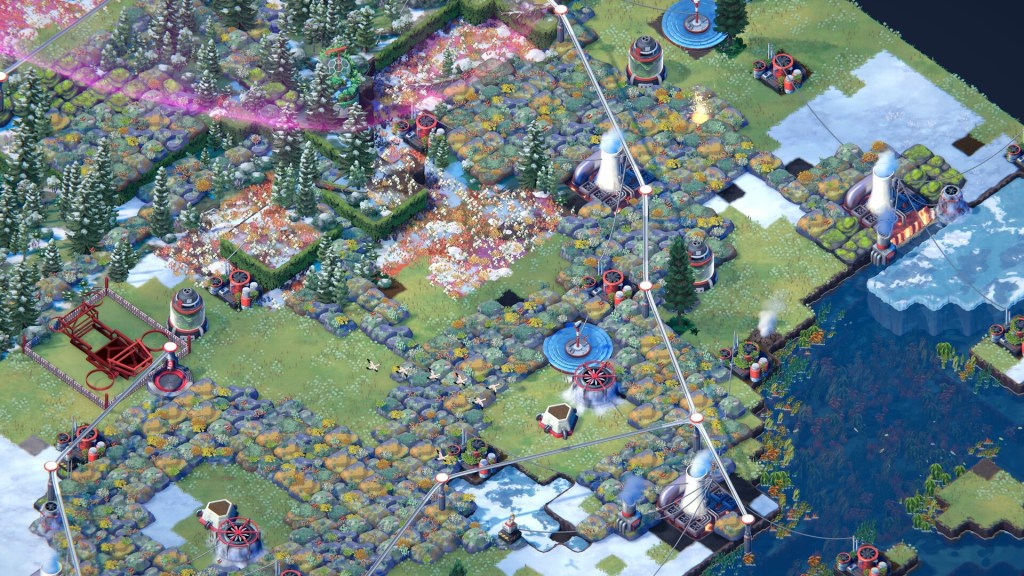
While most phases of the game lack depth and freedom, I will say I was impressed with the variety provided by the different zones. There’re 4 main areas, each with 2 scenarios to play. Aside from having their own unique biomes and fauna, you have to contend with different methods of power generation and terraforming. You will be creating new land in the tropical archipelago, restoring glaciers in the tundra, and repurposing building foundations in decaying urban centers. Terra Nil is on the shorter side, but I am glad that they didn’t repeat the same ideas over and over.
I played the game on the Nintendo Switch and while I was happy that it was available on the platform, I had some noticeable performance issues. Obviously, the Switch is not a computing powerhouse but I did not expect Terra Nil to require a powerful console. Loading screens took a long time, the game crashed once or twice, but the real complaint that I have is that graphical quality is just not great on Switch. This is not meant to be a complaint against Terra Nil, I just wish I knew beforehand that it had a major visual downgrade on the platform. Part of the appeal of the game is watching the beauty of nature as it blossoms, which didn’t look as crisp as it should have on Switch. I recommend getting this game on PC or a more powerful console for a better experience.
Terra Nil succeeds in being the Zen reverse city builder that it set out to be. City builders that demand optimization and ruthless resource utilization are fun, but I enjoyed seeing the reversal of that genre. The quick turnaround of desolate wastelands to thriving ecosystems was fantastic. I wish that most of the phases of that transformation were more mechanically engaging. It is for these reasons that I give Terra Nil a 7/10. If you approach Terra Nil as an ecological Zen Garden, you will have a great time. If you are looking for depth or intertwined gameplay systems you may be let down by its simplicity.
Pikmin 2 is the perfect example of an excellent game that torpedoes itself with an abundance of repetitive and poor-quality content. Despite making plenty of improvements over its predecessor, the majority of Pikmin 2 is spent engaging with its worst content: caves. I wanted to love this game as much as I loved the original Pikmin, and truthfully it surpasses the original game in many ways. But unfortunately 75% of the game is at best dull, and at worst frustrating.
To start with the positive, Pikmin 2 delivers more content than its predecessor. There’s more Pikmin varieties, there’s more enemies, there’s more treasures, there’s more hazards, and there’s even an additional playable character. This is all fantastic. I liked having two captains to control as it allows for more multitasking, which is a core component of the Pikmin series. One captain can oversee a group of Pikmin knocking down a wall, while the other captain can command the Pikmin to attack enemies and replenish their numbers.
The two new Pikmin varieties both are unique and integral to your success. Purple Pikmin are heavy but slow. They can carry 10x the weight of normal Pikmin, and they are incredibly effective in combat. They deal bonus damage and stun enemies upon landing from a throw. White Pikmin are faster than normal Pikmin, are immune to poison, can find treasures underground, and deal massive poison damage to an enemy that attempts to eat them. Both of these varieties are powerful, but are cleverly balanced by their rarity.
Both purple and white Pikmin do not have their own motherships, and as such you cannot use the normal chips and enemy corpses to spawn more of them. Instead, you come across colored flowers that you have to sacrifice other Pikmin into five at a time. This heavily limits how many of these special Pikmin that you will have. While the purple Pikmin in particular are incredibly powerful in combat, I felt nervous bringing large quantities around because losing just a handful of them could be catastrophic. I think this was a great way to balance these new varieties. Having powerful Pikmin at your disposal is very fun, but limiting their quantity makes them risky to use.
Another welcome addition is the inclusion of sprays. You can spend time having Pikmin collect berries that will be refined into two varieties of sprays: bitter and spicy. The spicy spray speeds up your Pikmin and increases their attack power. The bitter spray turns enemies to stone briefly. I enjoyed how these provided some additional decisions to make during combat. You could use them to make encounters much easier, but you had a limited quantity of them unless you spent a ton of time farming them. I saved them for dire situations or tricky boss fights, and I appreciated their inclusion.
When I played the original Pikmin my biggest issue with the game was the poor AI. I haven’t done any sort of extensive testing, but I definitely feel like this was improved in Pikmin 2. They seem to not get stuck on random bits of geometry as often. They don’t get distracted by grass as much. They are quicker to pluck and faster to respond to the whistle. I still had some occasional woes when trying to dismiss Pikmin into groups, but overall, I appreciated how much more responsive they were overall.
While I didn’t spend a ton of time reading the entries, I loved the Piklopedia. This journal has fun descriptions of both the enemies and the treasures that you collect. These have a lot of personality and charm. They’re funny and a great addition for people who want to delve more into the world of Pikmin.
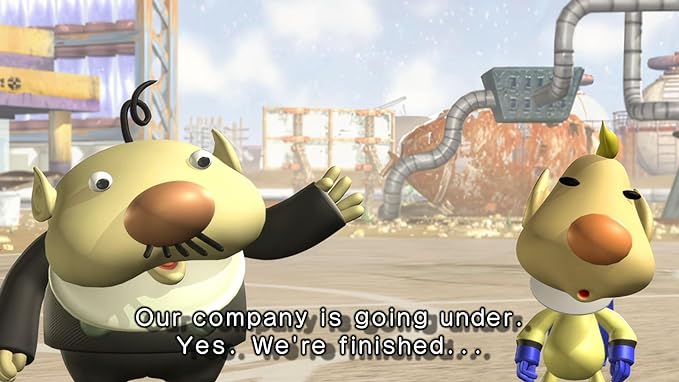
The gameplay loop of Pikmin 2 is almost identical to the original. Instead of crash landing on Earth, you voluntarily journey there to collect treasure to alleviate your company’s debt. You command your troop of Pikmin to knock down barriers, fight enemies, and collect goodies. A major difference however is that Pikmin 2 lacks a maximum number of days. In the first game, you had 30 days to collect 30 parts. With each day being roughly 15 minutes, there was a sense of urgency to get something done with every second.
The looming time limit in Pikmin was something that many players felt anxious about, but I think it was a critical element of gameplay. It encouraged the player to maximize their time and take risks. You could leave a troop of Pikmin to knock down walls or carry things back to base, but there was always the worry that they could be intercepted by hungry enemies. And even if you had a couple minutes left in the day, there was always the question of what you could do with your time. Whether it be replenishing your Pikmin supply, feeding them nectar to upgrade them, or knocking down barriers to make the next day easier, I wanted to maximize my time.
Thirty days was plenty generous unless you were wasting a ton of time, but the looming threat of failure was crucial. This isn’t present in Pikmin 2 at all, as you have an unlimited number of days to accomplish your goals. There’s no rush to do anything, you can play incredibly safe and not have to do any risky multitasking. You don’t have to squeeze every second out of the day, as you can just go to the next day with no downside as the timer approaches night. The lack of urgency was definitely unfortunate, but it was a minor issue when compared to the biggest flaw of Pikmin 2: caves.
Before I begin ranting about caves, I want to make it clear that I genuinely think that they are a good idea. They act as dungeons in which you progress floor by floor with no opportunity to replenish your Pikmin. They have a heavy emphasis on combat, each floor is packed with enemies and there is usually a boss at the end. Defeating the boss usually yields a special treasure with a unique upgrade such as immunity to electricity. I think this is all great. Entering a cave is anxiety inducing as you don’t know what lies ahead, and losing Pikmin can devastate your odds of success. This is all great, but the caves have a few issues: bland aesthetics, monotonous gameplay, and frustrating level design.
There are 14 caves in the game, and even shortly after beating the game I can only really remember 4 of them. And 2 of those I only remember because they were infuriating. A big reason why caves aren’t memorable is because they are just plain ugly and bland. Many of them are just big dirt pits with little to distinguish themselves. Moreover, the levels are semi-randomly generated, so they can’t make up for forgettable visuals with interesting level design.
Most of the caves lack anything to make them unique. Just floor after floor of basic battles with no end in sight. And many of these caves can take upwards of an hour to complete. It grows old quickly. There are a couple of good examples in Pikmin 2 of what caves could be: Submerged Castle and Glutton’s Kitchen.
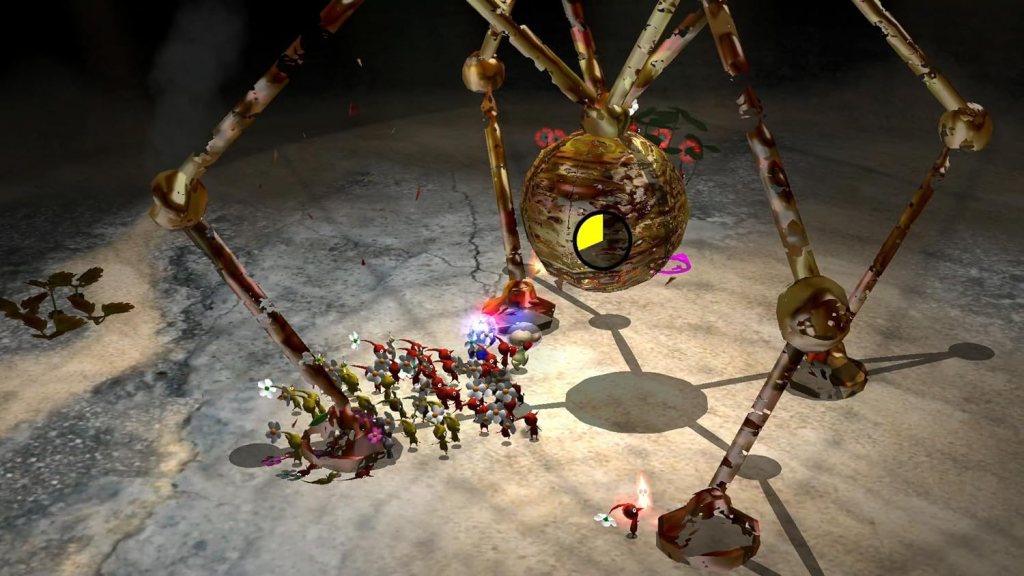
Submerged Castle is easily the best in the game. You have to work quickly to recover treasures in this water-filled cave, because a nightmarish blob appears after 5 minutes on each floor to steamroll your Pikmin. This is a unique mechanic that encourages you to move quickly, but even if you aren’t fast enough there are strategically placed pipes that allow you to hide from the monster. Glutton’s Kitchen is nearly as horrifying, but it is memorable nonetheless. It takes place in a child’s playset of building blocks and a wooden train set. Fat breadbugs try to steal your treasures and drag them back to their dens. The combination of being visually distinct and having a central mechanic is vital in making caves more interesting. It’s a shame that none of the other caves live up to the quality of these two.
I have to mention that my entire experience was left on sour note because of the final caves in the game. They were memorable for the wrong reasons. They felt completely unfair. Every floor was a cramped nightmare filled with dangerous enemies. Not to mention traps such as bombs, rocks, and enemies falling from the sky. I don’t mind a bit of elevated difficulty, but the difficulty spike here is egregious. There are so many ways that you could instantly lose half your army deep into a dungeon. The saving grace here is that you can hard reset to the beginning of the floor.
I don’t think relying on frequently resetting your system is a great mechanic, but it feels necessary here. There are so many catastrophic things that can happen, and it often feels unavoidable. Due to the randomized nature of enemy placement, some configurations are far, far harder than others. The final dungeon, Dream Den, has many floors that feel like the developers just threw every enemy they could into cramped rooms. These aren’t cleverly designed challenges, they are meat grinders that require unsatisfying tactics to succeed.
Like I previously mentioned, you can always just reset and hope for a better outcome or easier layout, but there are some ways that you can combat the tougher encounters. You can play super carefully, going through each floor with no Pikmin at first, triggering every trap. Then abuse the enemy AI to bait them out one at a time. This is time consuming and feels a little cheap as you are just bypassing every obstacle. You could also use purple Pikmin and bitter spray as they are surefire methods to simplify tougher fights, but these are very limited resources unless you spend time farming them. Truthfully, some of the floors in the later dungeons feel like absolutely no thought went into them and they weren’t even playtested.
In my perfect world, Pikmin 2 would have cut down the number of caves dramatically. Instead of 14 repetitive caves, having 5 unique and intentionally designed caves would be a massive improvement. The caves would have their own aesthetic themes and unique mechanics to make them interesting. Each floor would be designed with care and there would be thought into the layout and enemy placements. I understand that randomization can increase replayability, but in the main campaign I wanted purposefully designed dungeons. Randomized dungeons could’ve been a great challenge mode.
I was let down by the number of poor-quality caves in Pikmin 2. Even without a day limit to encourage efficiency, I still was having a great time up until I started delving into the caves. The vast majority of the game is spent in the caves, and it’s by far the worst aspect of the game. More isn’t always better, and Pikmin 2 would’ve been greatly improved by cutting the number of caves in half and spending more time carefully designing them. It really is a shame because Pikmin 2 gets so much right, it just sabotages itself with an abundance of uninteresting and occasionally aggravating content.



 stephensopinions