Metaphor: ReFantazio (2024)

I usually stay away from massive JRPGs unless I really am hooked by the premise. It’s hard for me to want to sink 80+ hours into any game as an adult with a family, job, other hobbies, and a massive backlog of other games I want to play. But Metaphor: ReFantazio caught my eye. I loved my time with Atlus’ Persona 5 so a similar game set in a more mature fantasy world sounded right up my alley. Metaphor: ReFantazio presents a fantastical world and delivers on a phenomenal turn-based combat system. Unfortunately, as a lengthy story-driven game I was quite let down by the lack of nuance in the plot and the writing in general.
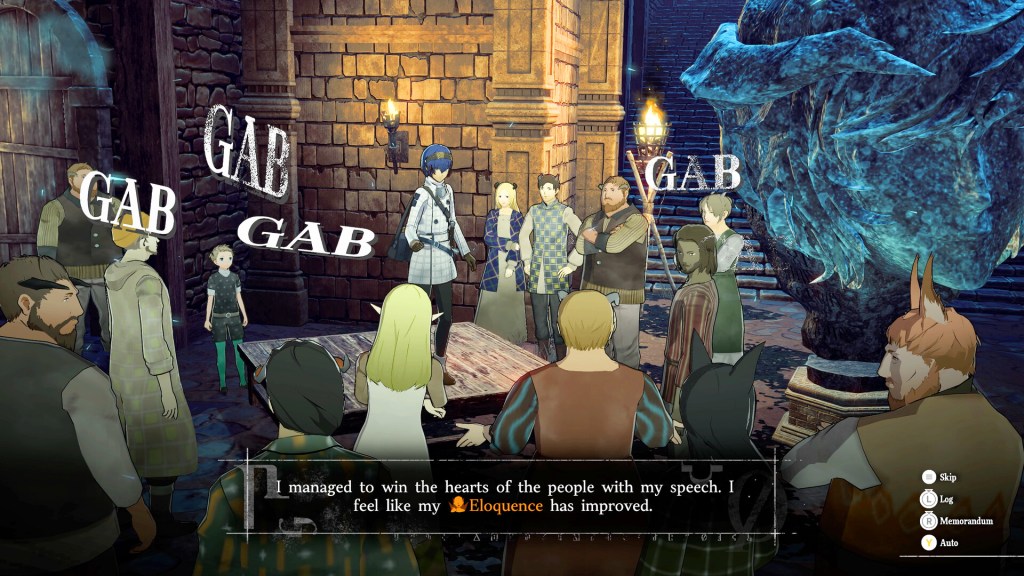
The world of Metaphor: ReFantazio is one filled with discontent. The country is thrown into chaos when the king is assassinated and his successor, the prince, has been missing for a decade. A military general, Louis, admits to killing the king and attempts to seize power for himself but is thwarted when a magical force using the voice of the late king announces that the next king will be chosen via the will of the people. Whoever has the most support after a few months will be king and wielder of the powerful royal scepter. 

Racial strife, religious fanaticism, and national security are the most prevalent drivers of this world’s electorate. Louis promises to use his military might to protect the country from monster attacks and proposes a form of social Darwinism such that only strength matters rather than race. Forden, the leader of the church, is the other most prominent candidate. He appeals to people’s religious beliefs and seems to want to uphold the status-quo. The main character joins the royal tournament and is motivated by a fantasy book presenting a utopian society. He wants to join people of all tribes together regardless of class and race and create a utopia.
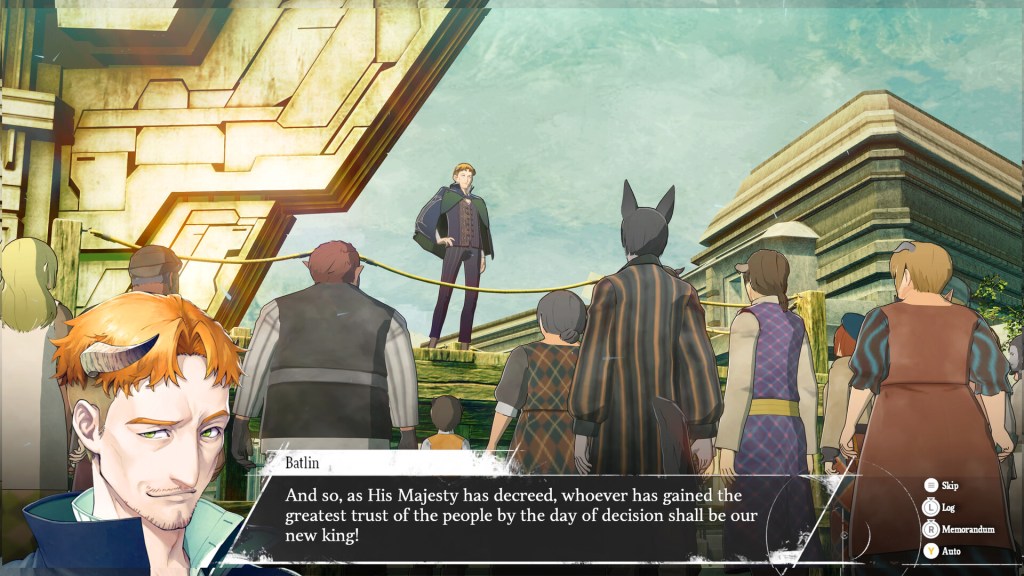
I quite enjoyed the ideas behind the political themes of Metaphor: ReFantazio. The portrayal of how people are driven to support politicians based on anxiety, fear, and anger felt especially apt as elections are taking place around the world. An objectively evil person such as Louis could become a front-runner because people are afraid for their security and want to overthrow the rotten status-quo no matter what it takes. And Forden uses his position of power in the church to manipulate people, not to mention his involvement in a shadow government that tries to rule the country from behind the scenes. But unfortunately, I think these themes never get explored past surface-level political analysis.

There’s a lack of nuance and thought-provoking questions that makes the world too black-and-white. It is obvious that Louis is a chaotic and evil villain. And Forden, despite appearing orderly, is highly manipulative and power-hungry. On the other hand, the main character is presented as perfectly righteous. It’s never in question if Louis or Forden are correct. The main character never has to answer how they will solve any of the difficult problems in the world. He repeats ad nauseam how everyone must come together. His vision of a utopia is nice, but I wish there was some actual nuance here.
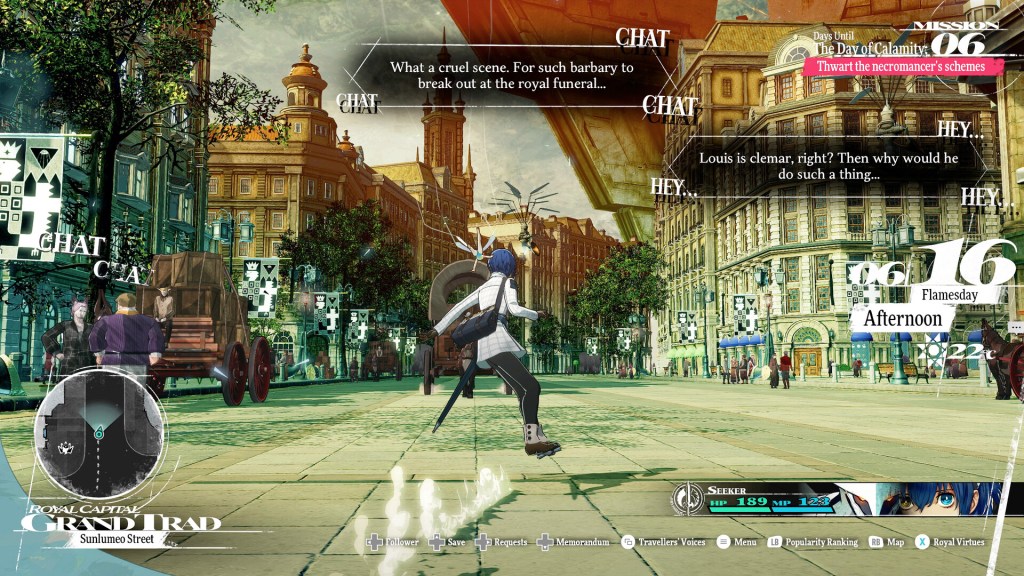
I think the story would have been improved by not having Louis and Forden be so comically evil. Obviously sacrificing the weak so the strong can thrive is bad, but if Louis presented his social Darwinism as a merit-based system that anyone can succeed in it would be more nuanced. Moreover, if Forden leaned more into maintaining the status-quo, despite its faults, to maintain order and peace then we could analyze if that goal is worthwhile. And the main character’s utopian views needed some sort of flaws such as their difficulty to achieve. There should be some actual question to what is best for the country. A chaotic revolution that destroys social norms, the status-quo being upheld no matter what, or an idealistic utopia that struggles to answer hard questions. If I’m going to spend 80 hours engaging in a story, I want that story to make me think. And the lack of nuance in Metaphor: ReFantazio led to it not being very thought-provoking.

The issue with the storytelling is made worse by the repetitive writing. I understand these kinds of games are supposed to be story heavy but there were times I was mentally begging the characters to shut up. It’s rare that anything of substance is said, and most of the time characters are just repeating information that you already know. I can’t imagine counting how many times a character said something along the lines of “we have to stop Louis” or “we need to help everybody”. It’s cheesy, repetitive, and I am utterly exhausted by the power-of-friendship trope.
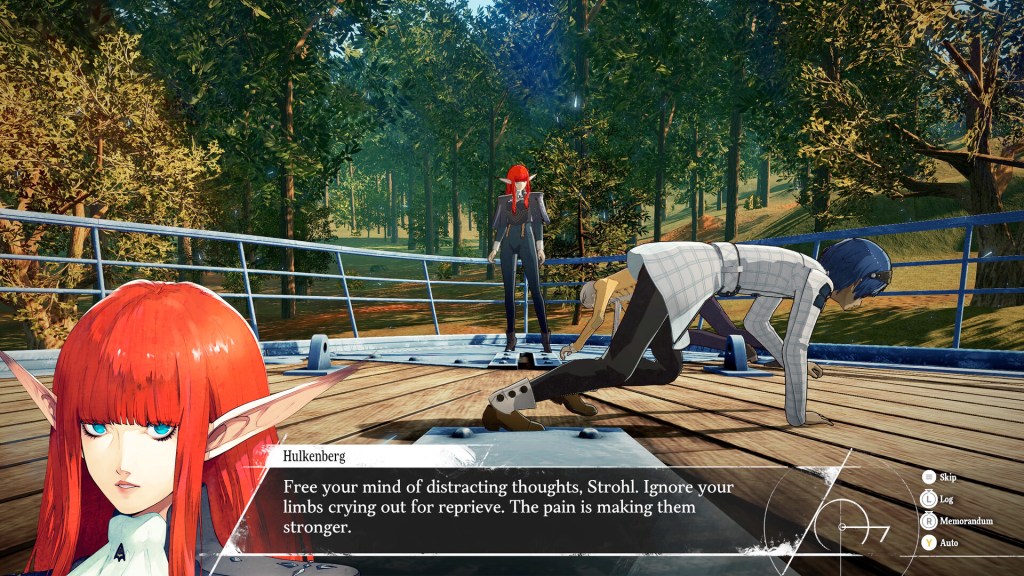
There are some exciting story sequences that showcased the potential that Metaphor: ReFantazio had. There are plenty of twists and turns that motivated me to see the game through to the end. The plot massively accelerates in the final quarter. The middle chapters of the game in comparison were slow and uninteresting. One of the earlier chapters takes place in the desert town of Martira where children have been going missing. This particular sequence was my favorite in the game as it was excellently paced and was a self-contained story with clever writing. The following couple of chapters were boring, forgettable, and lacked any sort of personality. Ultimately, the game is at its best in the beginning and at the end as it drags massively during the middle sections.

The strongest aspect of Metaphor: ReFantazio is its combat. I know turn-based combat isn’t for everyone, but I personally love a game when a game makes me think and strategize. What stands out to me about the combat in Metaphor: ReFantazio is the versatility. You have four characters on the battlefield, each with their own class and moveset. You get four actions per turn, but if you hit an enemy weakness or pass a character’s action it will only consume half an action. Moreover, there are synthesis skills that require two characters of specific classes that are highly impactful but cost two actions. Between basic attacks, single-target attacks, multi-target attacks, synthesis skills, buffs, debuffs, status effects, support skills, passing, and blocking there are so many potential ways to plan out a single turn. Which is important because battles often only last that long.

I played the game on hard difficulty and I found it to be vital to try to win most basic battles in a single turn. The combat is extremely volatile, meaning it is as easy for the enemies to kill you as it is for you to kill them. I found that letting the enemies have even a single turn could be catastrophic. Every battle became a puzzle of how to defeat all the enemies before they could retaliate, and to do so while using a minimal number of resources such as mana and items. Bosses are the exception to the single-turn combat as they have higher health but tend to telegraph their assaults. They often have multi-turn setup that can be interrupted or dealt with via debuffs and taunts. I enjoyed how every fight felt like it was on a knife’s edge, a single blunder could lead to a party wipe. But the versatility of tools that game gives you makes it so these tense encounters rarely feel unfair.

Part of what makes the combat so enjoyable is the adaptability brought by the class system. It may genuinely be my favorite class system in any game ever. There are over a dozen base classes, each with higher tiers that can be unlocked. Any character can be any class, and you are heavily encouraged to experiment with the different classes. Every character can inherit any skills they’ve unlocked from any class. If you want to inherit some elemental magic on your knight to give them some offensive options, go right ahead. If you want some healing spells on your buffing character, no problem. Every character levels up their class mastery independent from their actual level, making it easy to switch around and make use of the flexibility that the system affords.

There’s a lot of smart quality-of-life features that prevent potential frustration. When you max out a class’s level, any additional experience gained creates an item to be used freely on other classes. This prevents the issue of feeling the need to switch classes the moment you hit max level on a class so experience doesn’t go to waste. You can also switch classes and inherit skills freely, not needing to go somewhere specific. You are only constrained by a resource called Magla, which prevents you from unlocking every class and inheriting every skill but I never came close to running out of Magla. Another major quality-of-life feature is the existence of overworld combat.

When exploring a dungeon, you can strike enemies before engaging them in turn-based combat. If you are significantly higher leveled than the enemy, they will be defeated instantly without having to spend time in turn-based combat. This is a huge time-saver and I’m extremely grateful for its inclusion. If you aren’t a much higher level, hitting enemies enough will trigger an ambush, dealing a big chunk of damage and stunning them to start the battle. Conversely, if an enemy hits you then you will be ambushed instead, letting the enemies have a turn before you. Because of the volatile combat, being ambushed is extremely catastrophic and often leads to just having to reload from the last save. While I appreciate the benefits from overworld combat, I wish getting a hit a single time didn’t effectively lead to a game over. The third-person action isn’t fantastic, and it doesn’t need to be, but a lot of emphasis is placed on it which I find odd.

My other major issue is with some of the late game boss battles. Many of these bosses have ways to give themselves a ton of extra actions per turn, making them extremely dangerous without hyper specific strategies to counter them. They also are effectively immune to most status effects and can clear any debuffs and buffs easily, further pigeonholing what you can do. I found myself relying on setting up a 1-shot (or close to it) to attempt to burst the boss down before they could do any of their ridiculousness. There are also a few late-game abilities that feel almost necessary to counter the wealth of actions that these bosses can have. 

Atlus’ style of JRPG is famous for their emphasis on time-management via the calendar. Metaphor: ReFantazio follows this trend and ultimately makes some great improvements. Every major section of the game gives the player a limited number of days to complete the main dungeon before the story continues. Any time not spent doing the main dungeon can be spent doing side quests, conversing with followers to improve your relationship, improving your “royal virtue” character traits, and travelling between locations. I generally enjoy this format as it makes downtime feel valuable rather than a chore. Choosing what to focus on and optimizing your time is a form of gameplay rather than just feeling like a checkbox.
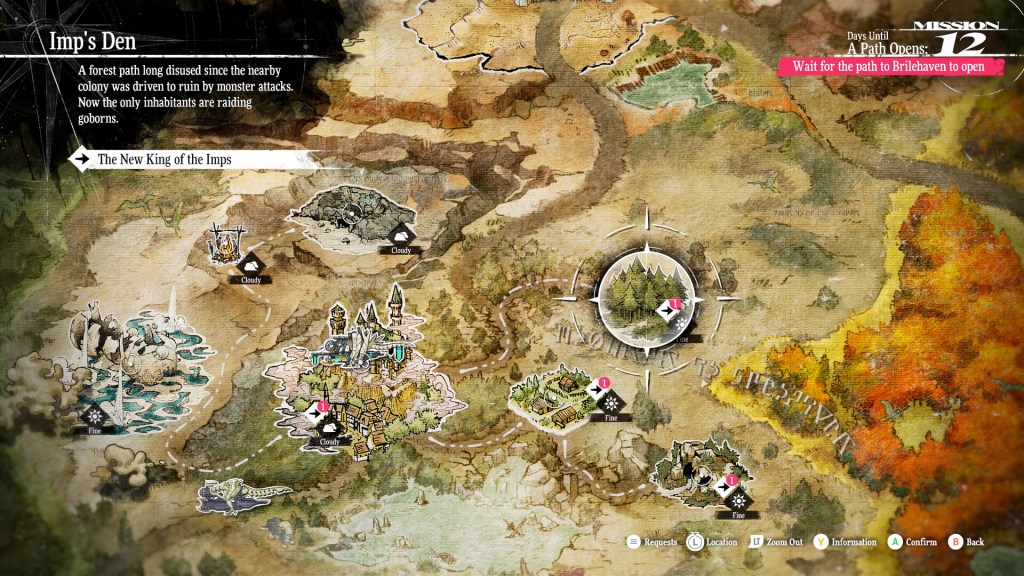
What makes Metaphor: ReFantazio stand out compared to Atlus’ previous titles is the game’s road trip structure. You and your party are a globetrotting crew in your magical legged landship, called a Gauntlet Runner. Traveling from a major hub city to towns and dungeons takes time, so you have to plan your routes and time your departure based on weather and other factors. The Gauntlet Runner also serves as a cozy hub during travels where you can cook, read, and converse with allies. I quite liked the structure opposed to staying in a more static location like Tokyo in Persona 5

Another improvement that I am happy about is that improving follower relationships no longer relies on choosing the “correct” answers during conversations. You get bonus Magla for doing so, but you don’t feel the need to look up a guide to make sure you don’t mess up and waste time by picking the wrong dialogue choices. Moreover, the game is fairly lenient with time in general, and unless you majorly mess up you should have plenty of time by the end of the game to do every side quest and max out every relationship. The major downside to the calendar system, in every Atlus game, is that there tends to be a lot of downtime. Time between dungeons and story sequences can get tiresome if you have too many days in a row of talking to followers and doing other miscellaneous stuff. I would have appreciated a brisker pace in some sections of the game.
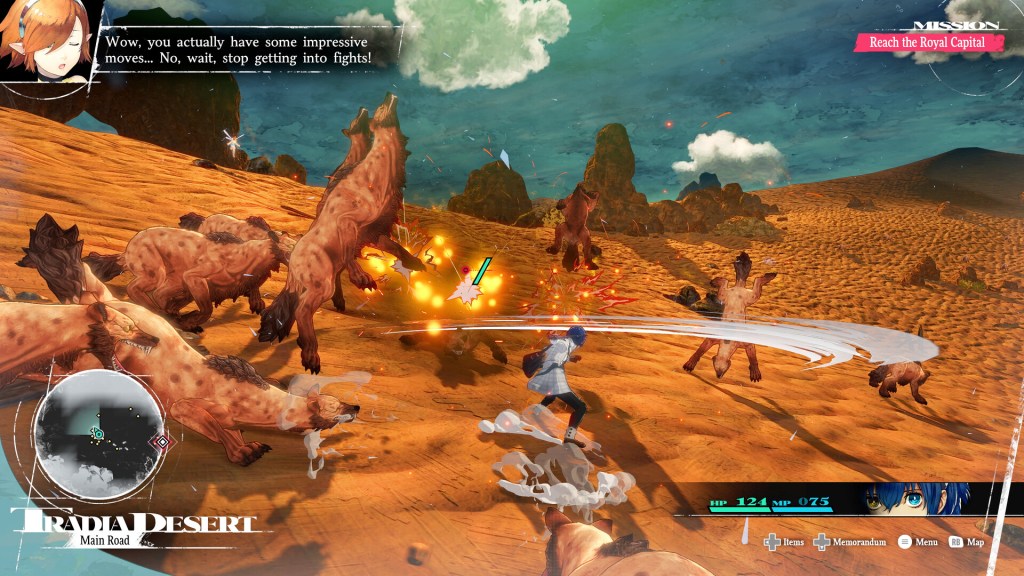
I was a little disappointed by the presentation of Metaphor: ReFantazio. The orchestral soundtrack is solid, and I particularly enjoyed the inclusion of Esperanto chanting. I do prefer the jazzier soundtrack of Persona 5, but I can’t complain about the music in Metaphor: ReFantazio. Unfortunately, I cannot say the same about the visuals. I think the character designs are wonderful, and the animated cutscenes are also incredibly well done, but the graphical quality during normal gameplay is awful. Everything just looks muddied and dull. Many dungeons take place in the same environments rather than unique and memorable locations. Which is a shame because the world is conceptually interesting. There are plenty of wondrous places that aren’t conveyed properly through the outdated visuals. 
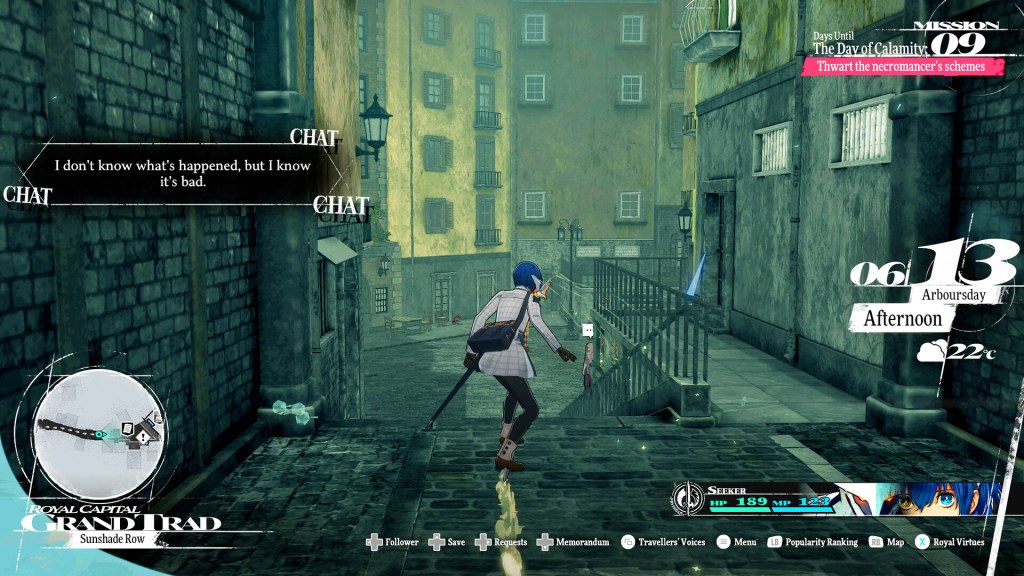
Ultimately, Metaphor: ReFantazio is a lengthy story-driven game. And while the story has some good ideas, it ultimately failed to provoke thought or inspire nuanced political analysis. Luckily, the game does deliver on strategic combat and a wonderfully adaptable class system. It is for these reasons that I give Metaphor: ReFantazio a 7/10. Metaphor: ReFantazio is a great JRPG. The problem is that I don’t think this genre is for me.
Astro Bot (2024)

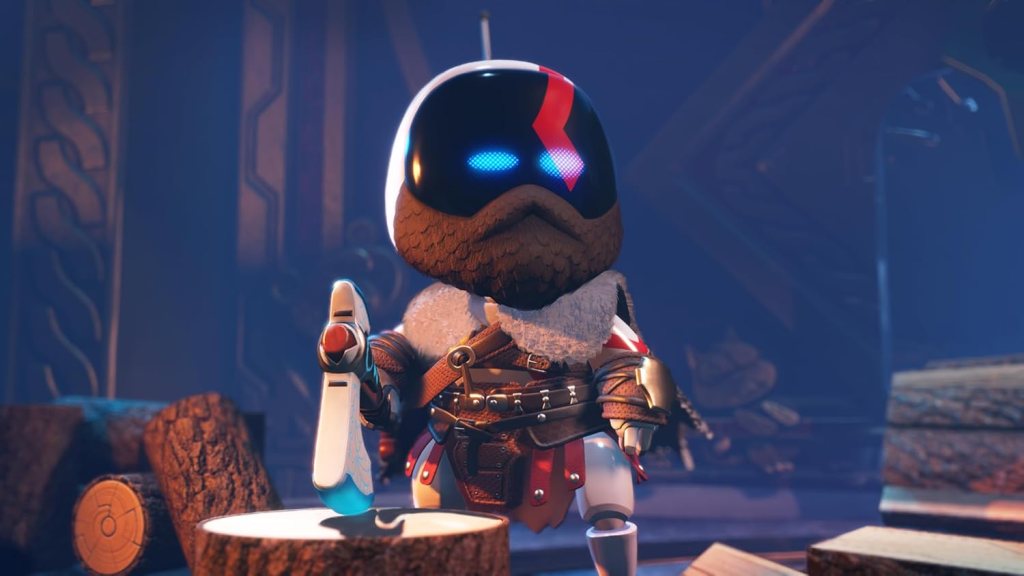
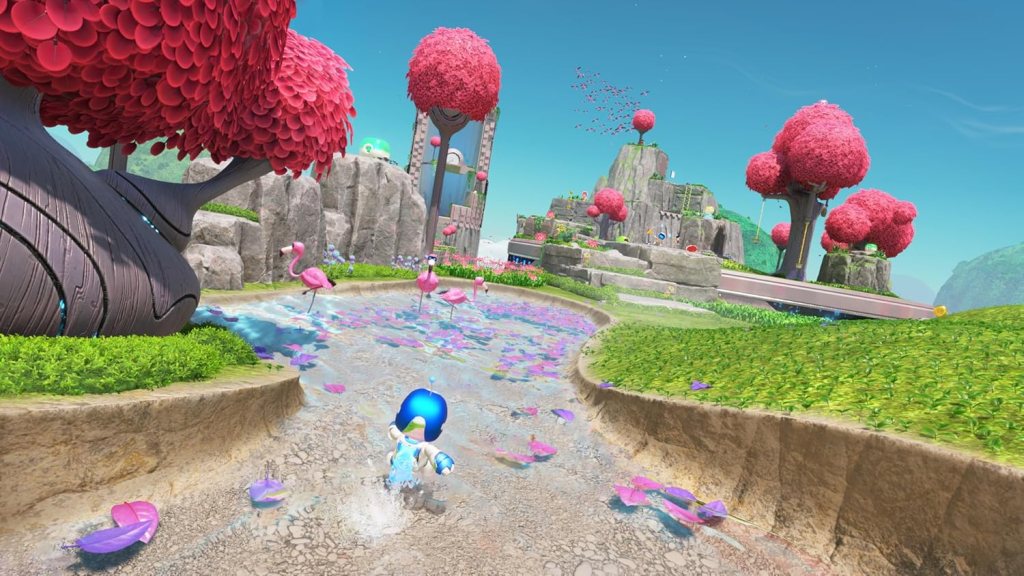
Astro Bot is a game for people who love gaming. Not only is it a technical marvel, but it lives by the ethos that games should be fun. While I personally love experimental and mature games that toy with inspiring other emotions such as rage or sadness, the unbridled joy that Astro Bot brought me reminded me of playing games as a kid. It’s reminiscent of all-time greats such as Super Mario Galaxy. It’s a modern day classic that I’m already eager to revisit in a few years’ time.

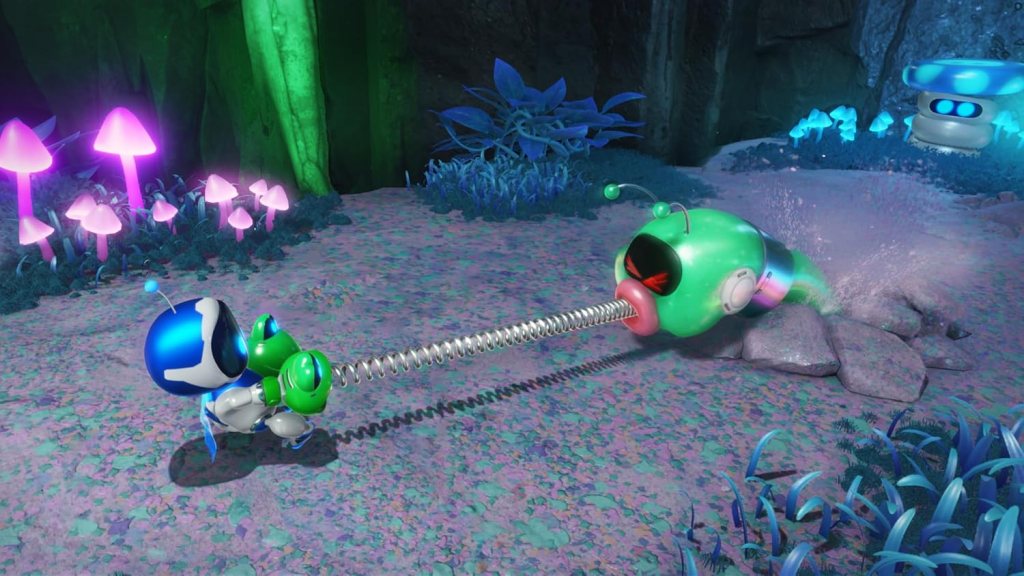
Astro Bot starts with your Playstation-shaped spaceship being destroyed by an alien and having all your robotic allies scattered across the universe. You crash land on a barren planet and have to visit different galaxies and planets to rescue the little bots and repair your spaceship. Each level plays out as a fairly linear course-clear style stage with hidden collectibles scattered about. Astro Bot clearly takes inspiration from Super Mario Galaxy with its approach to level design and reliance on interesting power-ups.

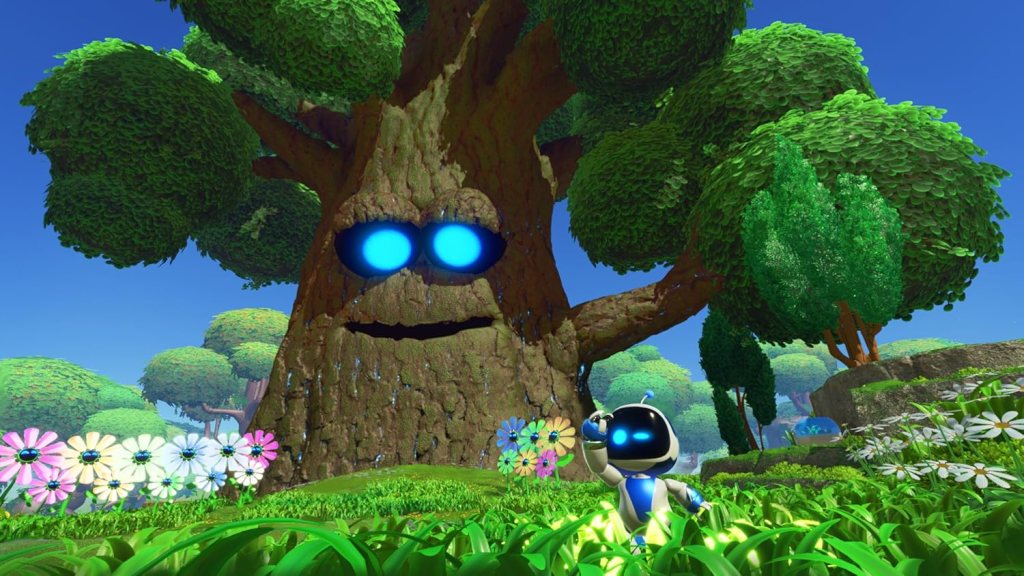
Most levels are a straightforward 3D platforming affair, but there is almost always a power-up or gimmick to keep things fresh. My favorites include the mouse backpack that lets you shrink and explore the nooks and crannies of the level, goggles that let you briefly slow time to avoid speedy obstacles, and a chicken jetpack that blasts you skyward at dizzying speeds. There’s a ridiculous amount of creativity on display in the levels. Each one is like a giant set piece with fantastic theming and spectacle. Whether it’s freeing chained-up starfish, jumping into the mouth of a giant singing tree, or hunting for treasure in sandy villages and stumbling on a Djinn in a lamp, Astro Bot is absolutely brimming with memorable ideas and I don’t want to spoil too many surprises.

Not only are the levels filled with spectacle, but there is also an unparalleled attention to detail. The developers had a penchant for showing off the physics on tiny objects. Levels are filled with things like acorns, confetti, gems, bolts, and other objects that move seamlessly as you wade through them or forcefully launch them. The game also frequently has destructible environments and set pieces that show off the sophisticated physics. The sound effects as you move about on different surfaces is sublime. Astro Bot makes fantastic use of the PS5 controller’s haptic and audio feedback to really immerse the player. The rain effect in particular is very slick. 

I love collectathons and games with a good hub world, and Astro Bot combines those aspects brilliantly. As you play levels you will be rescuing little robots who will come back to the initially barren crash site. Many of these bots are cameos from classic Playstation games, but they don’t feel like cheap references. Many of the references are fairly obscure and even I had trouble recognizing some of them. But aside from the referential costumes every character has their own comedic blurb that makes it seem like the developers of Astro Bot actually played these games and aren’t using them as cheap references. Furthermore, you can spend coins you collect to acquire accessories for the bots. For example, you can get a cardboard box for the Solid Snake bot to hide underneath. I quite enjoyed walking around the hub world and taking in the characters and scenes from Playstation’s past. It feels like a love letter to gaming.

The one fault I have with Astro Bot is perhaps not a fair one. Because comparing any game to Super Mario is putting it up against the best of the best. But Astro Bot is clearly Playstation’s version of Super Mario, so the comparison is necessary. The main character, Astro, doesn’t have nearly the same movement complexity that Mario has. Astro can run, jump, punch, spin, and briefly hover using lasers. But it doesn’t feel like there is anything to master. I remember playing Super Mario Sunshine a bunch as a kid and trying to master my control on momentum to backflip, wall jump, and hover up to ledges that seemed out of reach. Mario’s moveset is far more complex and the reliance on momentum allows for more mastery for advanced players.

While the movement is simpler, I do think the game benefits from Astro’s fragility. Getting hit once will reset you back to the latest checkpoint. The level design and simple movement lend themselves to a fairly laid-back experience, but you still have to be careful. The game is fairly easy, but it has an edge because a single mistake means death. There are some challenge levels and gauntlets that are decently difficult. Overall, I think the difficulty was tuned quite well for being a family-friendly platformer. 

While playing Astro Bot I really didn’t want the experience to end. It’s an absolute joyous adventure that celebrates gaming and the philosophy that games should be fun first and foremost. While Sony has recently focused on more mature storytelling games, I hope Astro Bot signals that there is still a space for polished platformers and collectathons. The variety of levels, attention to detail, spectacular power-ups, and love for older titles makes this a game nobody should miss out on playing. It is for these reasons that I give Astro Bot a 9.5/10. There’s no doubt in my mind that Astro Bot is a modern classic. 

Alan Wake II (2023)

Alan Wake II is insane. There’re layers upon layers of meta references buried within the spiraling madness that makes up the game. Remedy’s previous games never really clicked with me, but Alan Wake II did have my brain working overtime to decode the entangled threads of narrative that are sewn in a chaotic tapestry of nightmares. I highly value uniqueness, and the ability to push the gaming medium forward into a weird and strange direction is something that I applaud Alan Wake II for. It’s not without its flaws as there are quite a few things that I took issue with, but this is a truly bizarre game in the best way possible.

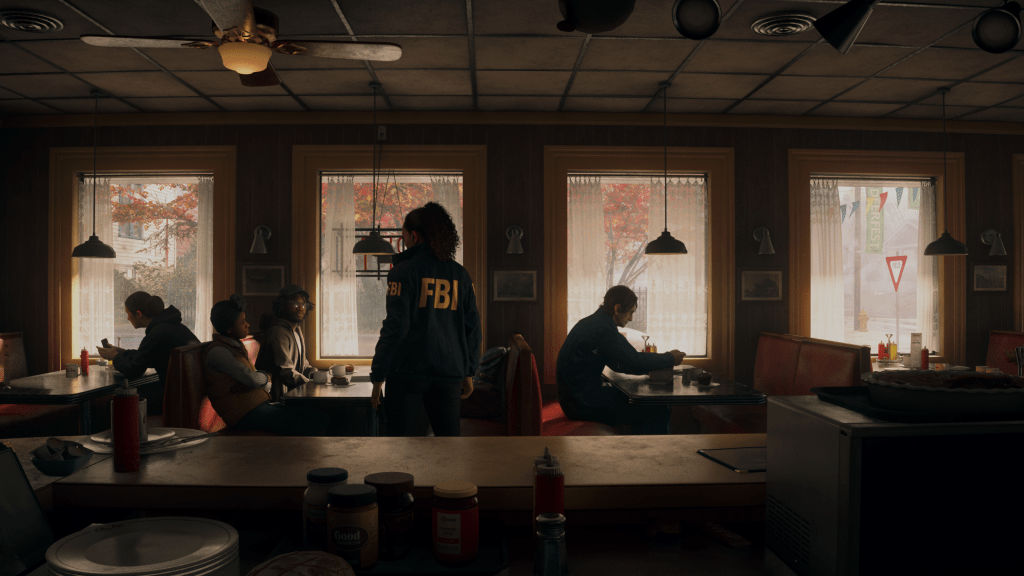
The story of Alan Wake has long been dormant. The basic premise is that the titular character, Alan Wake, is a best-selling author that gains the power to influence the world with his writing. On a trip to the remote Pacific Northwest town of Bright Falls, Alan got sucked into a horror story in which he sacrifices himself to rescue his wife from a dark presence. Alan is now trapped in a nightmarish dream reality while a doppelganger of his, called Mr. Scratch, is terrorizing the real world. In parallel with Alan’s story, a new protagonist named Saga Anderson and her partner Alex Casey arrive in Bright Falls to investigate a string of mysterious disappearances.

Saga investigates the quaint towns and the dense wilderness of the Pacific Northwest. A murder cult seems to be the cause of numerous disappearances, and she tries to deduce their goals and motives. While on the case, she learns of the dark presence and how an ever-changing horror story is coming to life. I enjoyed how the player could enter Saga’s “Mind Place” to put together the facts of the case. Her Mind Place is a cozy cabin with clues and papers strewn about. You use a big board to pin clues into place and make revelations about the plot. I do think this aspect might’ve been slightly overused, as there isn’t a ton of actual deduction or gameplay involved here. Mostly you’re just putting known pieces in place to move forward. Nevertheless, I enjoyed the noir vibes.

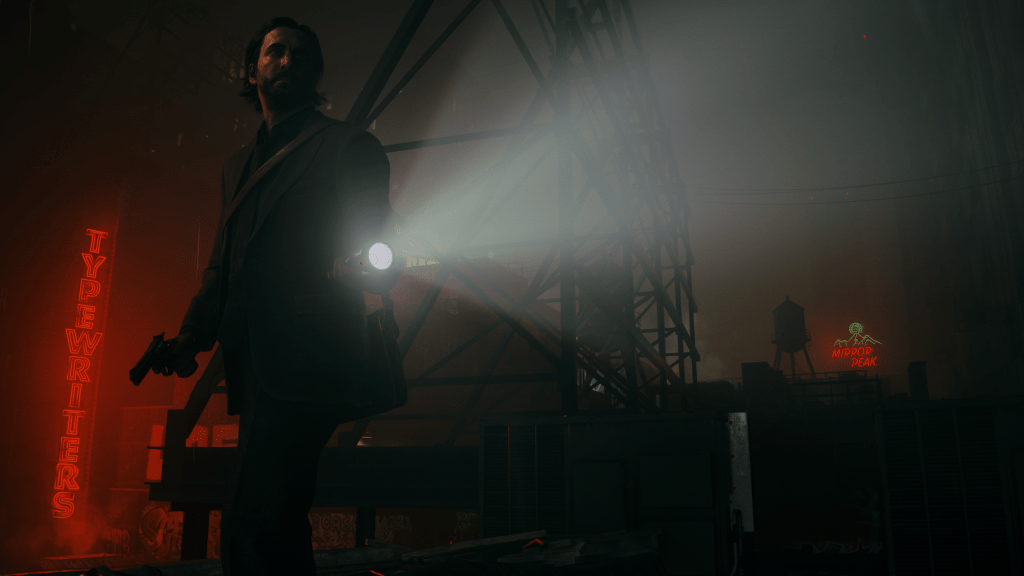
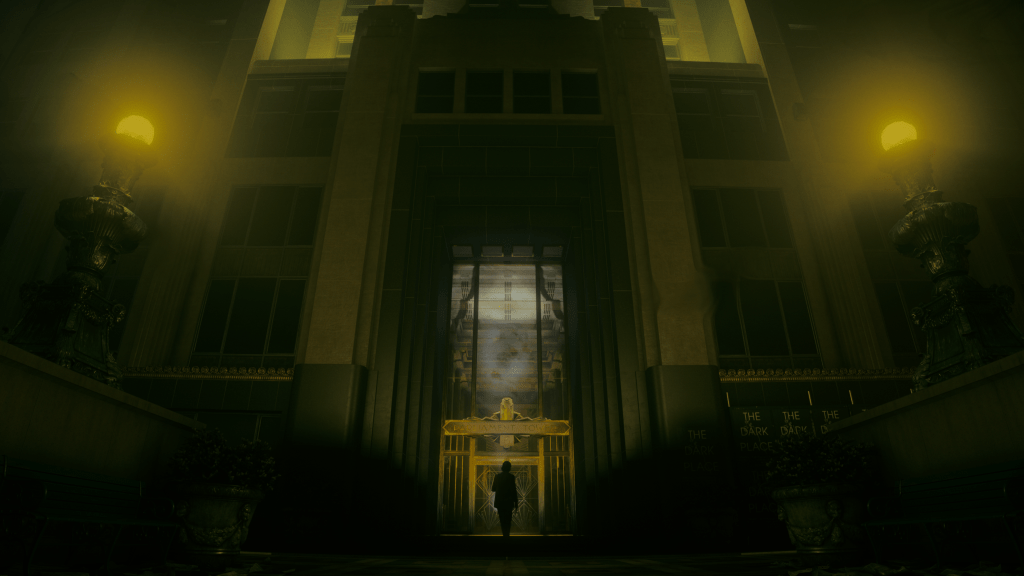
While Saga explores the real world, Alan is trapped in a labyrinthian nightmare. This is where things truly get weird. He wanders around an ever-shifting urban environment, rife with confusing dream logic. He’s caught in a surreal loop, desperate to escape. He has to use his abilities to write his way out of the loop. Alan visits numerous atmospherically dense locations such as a hotel, subway, and movie theater that were homes to ritualistic murders. As you explore these locations, you move pieces around on a storyboard to alter the plot and move forward. I absolutely adored how tense these sequences were. There’s a sense of dread of what you are going to see when you move a new horrifying plot element into place. One particularly haunting transformation was seeing how an ordinary hotel turned into a ghoulish scene where blood was scrawled across every wall and the hallways were strewn with gored bodies.

The seamless use of mixed media is part of what defines Alan Wake II. The transitions between game and live-action are incredibly well done and fuel the metanarrative aspects of the story. Remedy has a wonderful cast of actors that portray their characters expertly. It blurs the lines between what is real and what is dream logic. There’s a full 15-minute artistic short film that can be found which serves as a pivotal plot point of the imaginary murder cult in Alan’s dream reality. And that film uses the actor who also plays Alex Casey who is the main character in Alan’s detective novels, and that same actor also plays a different Alex Casey who is Saga Anderson’s partner in the real world. And that actor is the creative director of the game: Sam Lake. Who also plays other characters in Remedy’s expanded universe. There’re layers upon layers of references to unwind. Alan Wake II references itself, its predecessor, other games within its universe, and heavily leans on tropes from detective and horror media.

I find that media with heavy meta elements can often feel pretentious, but that’s not the case with Alan Wake II. The game knows that it can be ridiculous at times, and isn’t afraid to point this out. The writers clearly had fun with this game and they embraced the weirdness. Take for example the commercials that play on the TVs throughout Bright Falls. Two of the side characters write, direct, and star in their own goofy productions about their side businesses. Such as their coffee-themed amusement park with a moose as a mascot. I love that despite its metanarrative elements and complicated story, Alan Wake II doesn’t take itself too seriously.

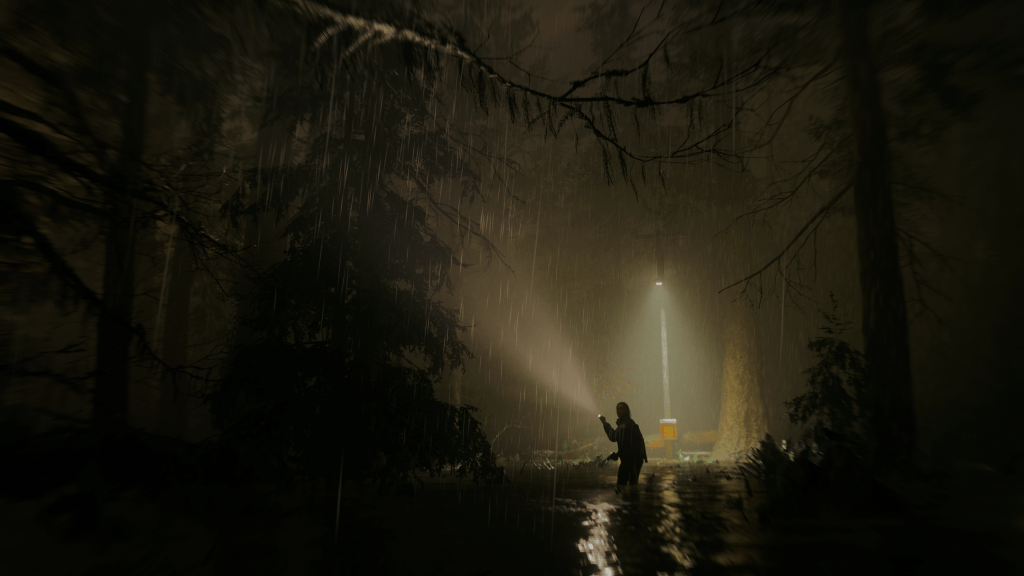
Where Alan Wake II really shines is its thick atmosphere. The sharp contrast between the two protagonist’s settings created some phenomenal variety. As Saga you have to explore dense woods, small towns, and other rural locales. Conversely, Alan is trapped in an urban nightmare. Dirty streets, highrises, and buildings such as hotels dominate his perspective. Both settings are eerie. Saga wanders through thickets as cultists and possessed wolves stalk her. Shadows whisper and lunge at Alan as he navigates through nonsensical streets and corridors. Darkness envelopes both characters, and the safety provided by a break room or an abandoned hut is spirit-lifting as these are your only beacons of safety. The game’s spectacular visuals add to the sense of immersion, as Alan Wake II is a fantastic game to look at.

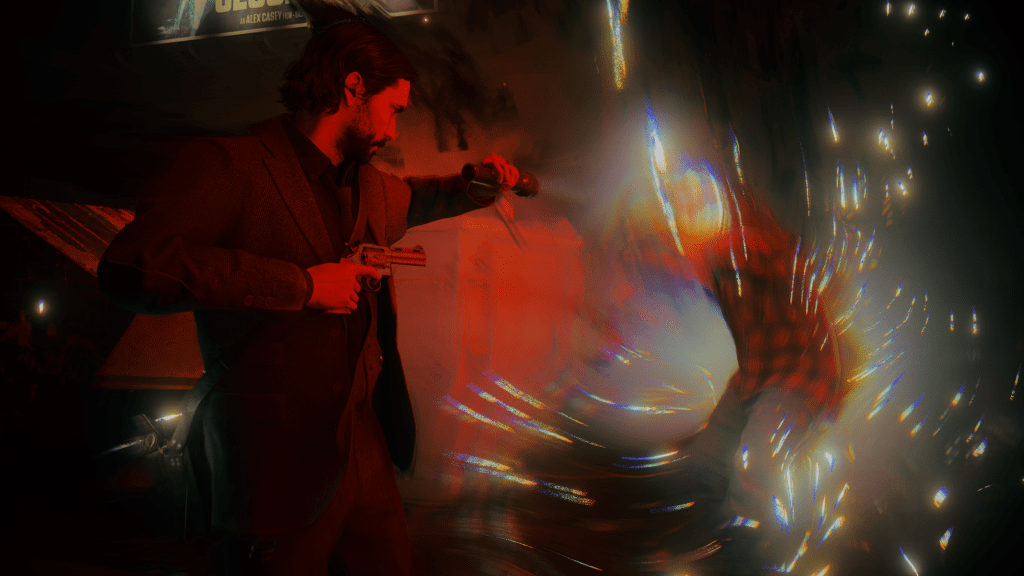
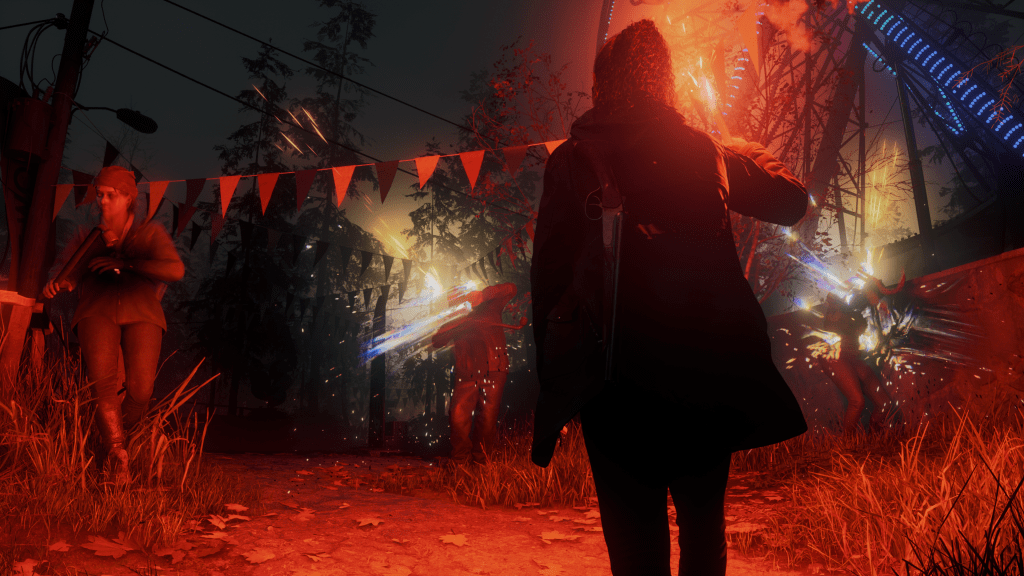
The gameplay of Alan Wake II was something that I was worried about. When I played the original Alan Wake I thought the setting and atmosphere were amazing, but the game was marred by an absolutely abysmal combat experience. Luckily, Alan Wake II keeps the premise of its predecessor but vastly improves upon it. To fight enemies, you need to focus your flashlight on them to break through their darkness shield. From there, it functions like a standard third-person-shooter. I quite liked how impactful all the weapons felt. The visual and auditory feedback was appropriately visceral, and enemies reacted strongly to being shot, especially if hit in a weak spot. I thought combat was fun overall, and the fast-moving enemies always kept me on my toes. That being said, there are a few issues that bothered me.

The first issue was the absolutely abysmal enemy variety. There’s only a handful of enemy types in the game, I found myself battling the same couple basic variations throughout the entire twenty-hour experience. Moreover, there is a ton of fluctuation in the number of enemies that the game throws at the player. There are times when you can go for what feels like hours without any combat, especially at the beginning of the game. And conversely, there were sections of the game that I couldn’t catch a breath because the game kept bombarding me with respawning cultists. Both of these extremes are negative. Too few encounters is an issue because it can get boring to just walk around with no threat of combat, and too many encounters kills the tension as it turns what should be frightening foes into a shooting gallery.

While Alan Wake II undoubtedly improved upon the gameplay of its predecessor, I still found it to be fairly clunky. Reloads are extremely time-consuming and easily interrupted, which is aggravating. However, I think the biggest cause of this is the camera. The over-the-shoulder camera is great for immersion, but I wish it zoomed out a tad during combat. When enemies get up close, the game feels unpleasantly claustrophobic and I had a difficult time adjusting the camera. I found myself saying “I can’t even see what’s going on” fairly often. There are also a ton of enemies that zip and teleport around, leaving me desperately rotating the camera to keep up. But as soon as the enemies were in my sights again, they just teleported away again. 

Aside from the camera, I found that the environmental design also was a significant source of frustration for me. While the game looks astonishing, I found myself confused and turned around quite often. I think having a mind-bending dreamscape that intentionally causes the player to get lost is great. But there were plenty of ordinary places that just felt poorly signposted. Organic and detailed environments are great, but I felt that they got in the way of navigation. I love that there was no mini-map or objective markers, but the environment did not lend itself to intuitive pathfinding. But my biggest frustration with Alan Wake II was its dynamic resource economy. 

An important aspect of any survival horror game is resource management. Having a limited number of bullets, healing items, and inventory space makes fights far more intense. Tension builds faster when you only have a handful of ammunition to dispatch enemies. Every encounter is terrifying knowing that it could deplete your resources. Alan Wake II does have limited resources, but its implementation is inelegant. It utilizes a dynamic system, doling out items based on how much the player already has in their inventory. If you’re running low on supplies, the game will give you more stuff, but if you are already rich in ammunition, you’ll get very few or no resources at all. At first glance, this seems like it makes sense as it ensures that the player never has too much or too little, but I find that this system undermines the entire point of resource management.

The point of having limited resources is the threat of running out. The helplessness of having no ammo to protect yourself. Having to explore and scavenge for resources can be anxiety-inducing. But there’s rarely any real threat of running out of resources in Alan Wake II. The game throws resources at you when you’re running low. And there’s little reason to thoroughly explore areas for more stuff because you get diminished amounts once you have a surplus. I found it frustrating that I was punished for scavenging, often opening a container to find it completely empty. Not only have I wasted my time, but I can never open that container again so I have permanently lost potential resources. Maybe it wouldn’t have been so aggravating if it wasn’t so obvious that the game is doing this.

For a game with such impeccable atmosphere, it’s a shame that immersion is so easily broken by something as simple as resource management. It’s obviously apparent that Alan Wake II is limiting your ammo once you open a container and there’s nothing in it. You can also game the system by stuffing excess ammo into your safe room box before going out to scavenge for resources. The game only cares about what’s currently in your inventory, so you can fake being low on ammo to get more. Breaking immersion is a sin in a game like this, and I often found myself pulled out of the world and into crunching numbers to determine whether or not opening a container was worth it.

Alan Wake II is a difficult game for me to judge. I can respect its artistic vision, the blending of genres, the use of mixed media, and of course how the story is open to many interpretations. But the game flounders a bit when it comes to basic elements such as combat, navigation, and resource economy. It’s tough to claim that this is a must play game when it falters at the basics. But Alan Wake II is a must play game. It’s unique. It’s innovative. And it pushes gaming forward as an artistic medium. It is for these reasons that I give Alan Wake II a 9/10. Even if its video-gamey elements are clunky, the unfaltering artistic vision of Alan Wake II makes it a can’t miss experience.

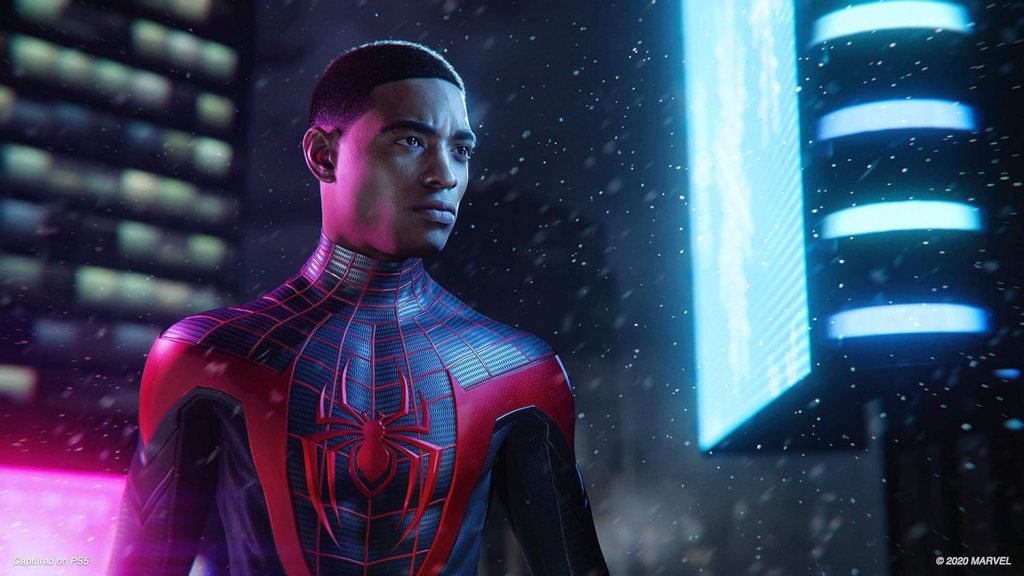
Marvel’s Spider-Man: Miles Morales (2020)

To be brief, if you enjoyed Marvel’s Spider-Man, you’ll enjoy Marvel’s Spider-Man: Miles Morales. If you are looking for more innovation, you’ll be disappointed by this title. That being said, I do think that Marvel’s Spider-Man: Miles Morales is a solid game all-around. In many ways, I found it had some improvements over its predecessor. But at the same time, all the major gameplay elements are nearly identical to Marvel’s Spider-Man. I don’t think it’s a bad thing to hone in on some minor improvements, but Marvel’s Spider-Man: Miles Morales feels derivative. Despite this, it’s still a fun game.

Peter Parker has gone on vacation and has left the responsibilities of being Spider-Man to his protege, Miles Morales. During this time, Miles discovers that a shady corporation is opening a dangerous energy reactor in his home borough of Harlem. He also runs into a mysterious gang who is hellbent on fighting said corporation. Like any classic Spider-Man tale, Miles has to balance his personal life and superhero life, which often clash and lead to some tough decisions.

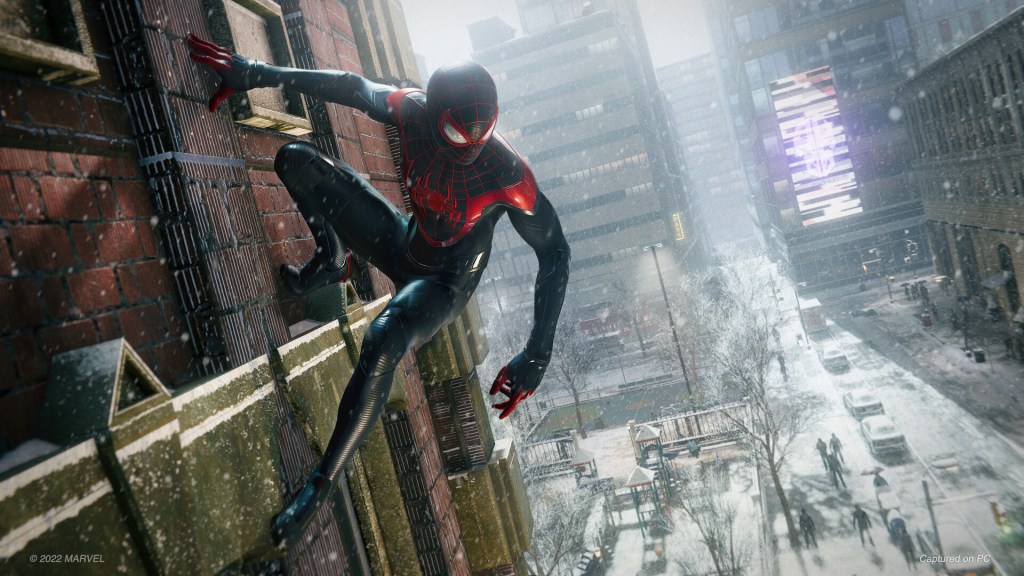
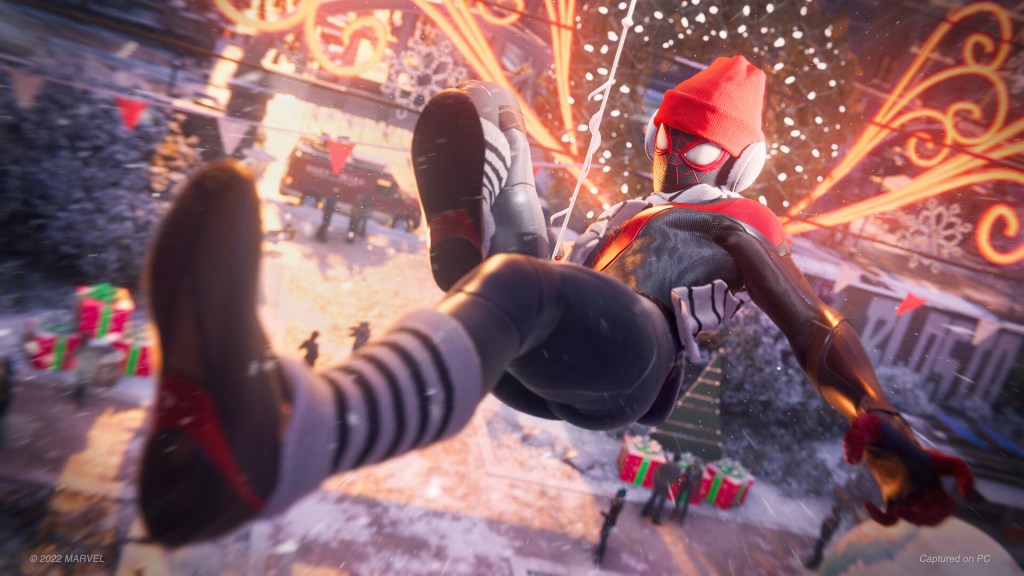
I felt like the overarching plot of Marvel’s Spider-Man: Miles Morales was solid. There’s a mostly charming cast of characters, some wholesome moments, some laughs, and some sadder moments as well. Everything you’ve come to expect out of a modern Marvel production is present. My favorite aspect of the narrative was how Miles grew more connected to Harlem specifically. I enjoyed spending time there and assisting the locals protect their home from gangs and crime. It felt more personal than just beating up baddies to save the entire city. Moreover, the Christmas setting added to the cozy vibes with snow-covered streets and lights decorating the city.

While I mostly enjoyed watching the story unfold, I felt as if the villains were pretty poor. One is a rich CEO who is willing to ignore safety concerns in the pursuit of more money. Which may be realistic, but is a tad boring. The other villain is more egregious. They make dumb decision after dumb decision and are extremely shortsighted. I can understand the “blinded by revenge” angle, but this particular character was infuriatingly obtuse.

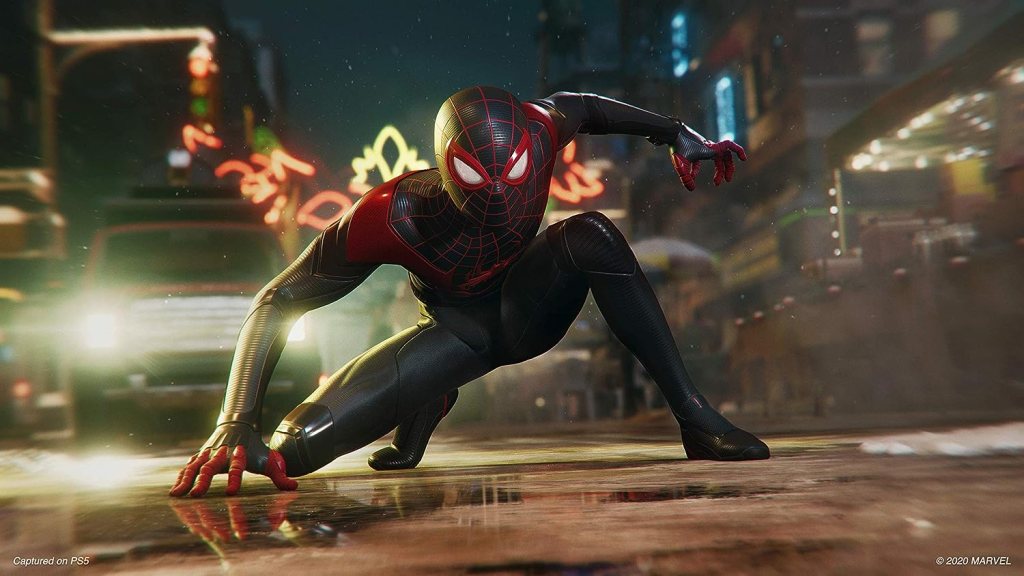
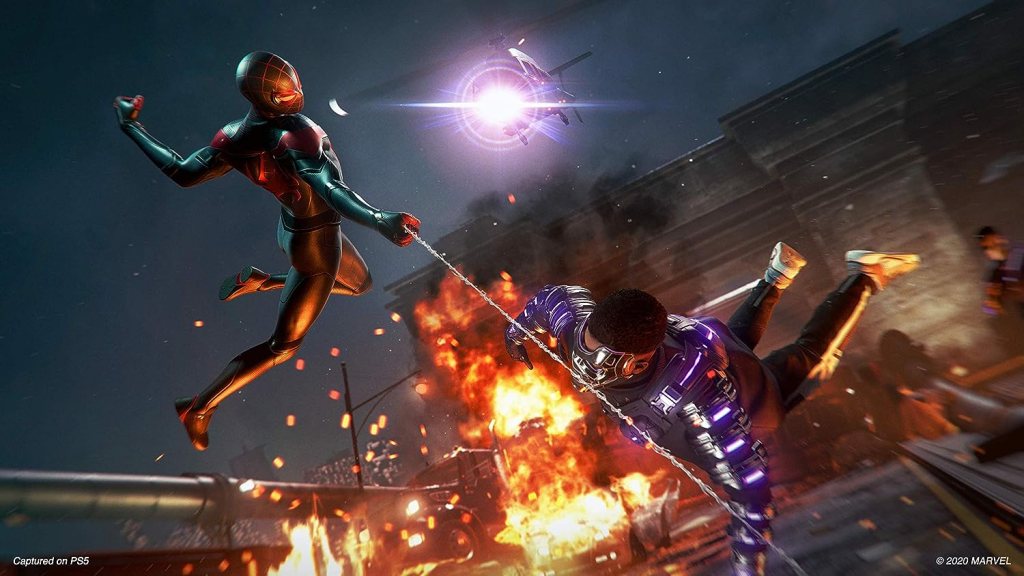
While I felt that the story was serviceable, the real draw of Marvel’s Spider-Man: Miles Morales is the gameplay. Like its predecessor, swinging around New York City and fighting crime is just plain-old fun. The web-slinging traversal is so fluid and natural, it’s probably my favorite method of getting around in any video game. I don’t know why anyone would want to use fast-travel when you can zip around the city with ease.

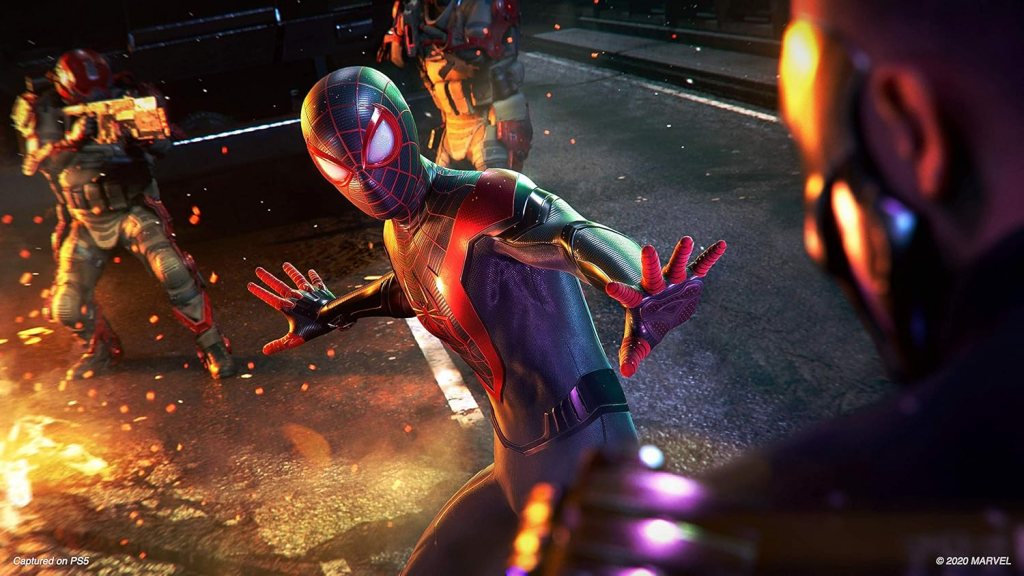
When it comes to combat, Miles has a few more tricks up his sleeve than Peter Parker. While Peter focused on using gadgets during combat, Miles has Venom powers. As you land attacks and dodge hits, you’ll build up a Venom meter which can be used to unleash some more powerful attacks. While I still think that the combat in the Marvel’s Spider-Man games is a bit rudimentary, it’s easy to get into a satisfying flow of attacks, dodges, Venom moves, and finishers. There’s some fantastic animation work at play here which automatically makes any action you take look seamlessly heroic without you having to do much at all.

While the game nailed the cinematic aspect of combat, I do wish there was a bit more mechanical freedom in execution. I don’t need this to be a full-blown character-action game, but some more options other than mashing square would be great. Sure, you can throw debris around with your web-slinging powers or use gadgets, but the best way to do damage is just basic attacking until you charge up a special move.

Along with combat, stealth makes a return as an option to tackle enemy encounters. While it can be fun to catch enemies and hang them from the rafters like an actual spider, it’s a little too easy to be truly engaging. Since you can always be above enemies you can almost never be spotted as you move around. You can be spotted when performing a takedown, but the game explicitly tells you when it is safe to takedown an enemy and will warn you that you will be spotted. The combination of these things means you will never fail stealth unless you intend to. Moreover, Miles has a camouflage ability that you can activate to become invisible. Even if you do get spotted, you can just enter camouflage and wait until it’s safe to start performing stealth takedowns again.

I don’t think having simple combat and stealth is necessarily a terrible thing. Not every game needs to have the combat depth of Bayonetta or the carefully crafted stealth sequences Metal Gear Solid. But Marvel’s Spider-Man: Miles Morales needed to supplement its enemy encounters with something else. Swinging around the city is fun, but most of the time you are just traversing from encounter to encounter. There are a few side-objectives to break up the monotony, but the majority of objectives involve disposing of enemies. I would have loved to see more chase scenes or something similar to utilize Spider-Man’s powers in other ways than combat. The traversal is so smooth and fun, I wish it was better utilized for actual gameplay challenges.

I do have to give props to Marvel’s Spider-Man: Miles Morales for cutting down on some of the extraneous aspects of its predecessor. One of my biggest complaints about Marvel’s Spider-Man was how frequently the game veered off from playing as Spider-Man. Not to mention the annoyingly common circuit board puzzles. Marvel’s Spider-Man: Miles Morales cut down on this filler content significantly. There’s still the occasional environmental puzzle, but at least you still get to play as Spider-Man while you solve it.

For the most part, Marvel’s Spider-Man: Miles Morales feels like a fine-tuned retread of its predecessor. It trims the fat and adds a few new mechanics to make Miles’ gameplay feel distinct from Peter Parker. But it’s risk averse. It doesn’t do anything to wow the player or meaningfully distinguish itself. Nevertheless, it is still a fun game that manages to feel cozy and welcoming due to its setting and endearing cast of characters. It is for these reasons that I give Marvel’s Spider-Man: Miles Morales a 7.5/10. A refined Marvel’s Spider-Man game is great, but I would love to see Spidey’s powers taken even farther.