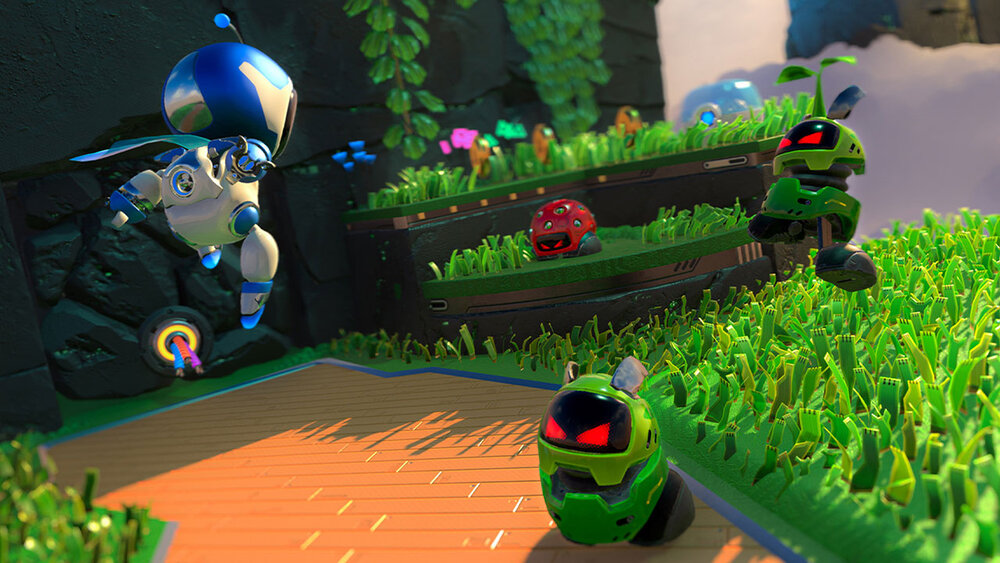
Pragmata (2026)

As I’ve gotten older and life has gotten busier, I’ve come to appreciate the importance of pacing in games. While many players may prefer hundred-hour-long RPGs, I would much rather play a compact experience that doesn’t pad out its length with sprawling open worlds or endless side quests. Pragmata is the perfect example of a game that masterfully paces out its content, and its unique spin on combat makes it one of my favorite modern third-person-shooters. 
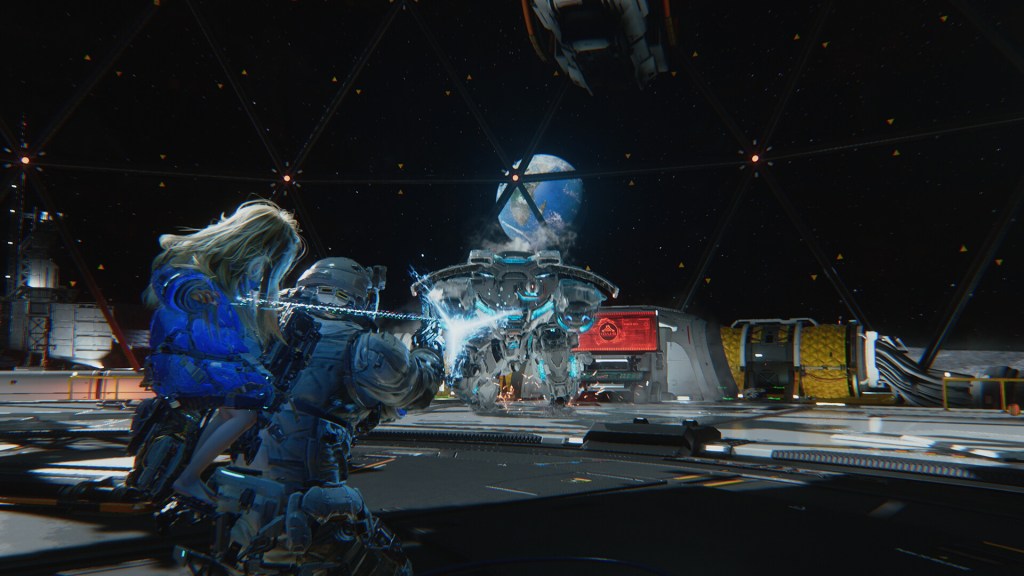
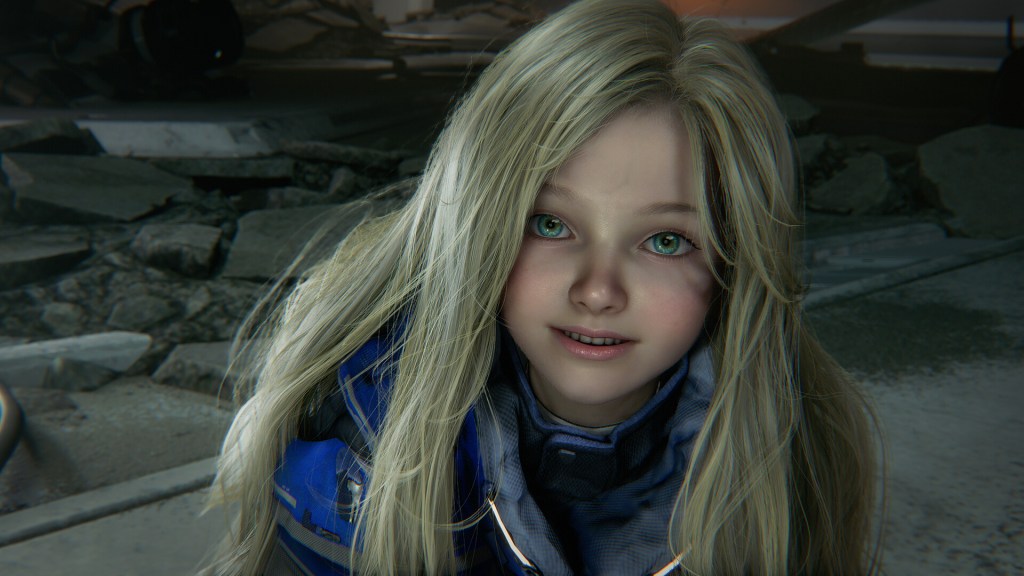
Pragmata takes place in a future where the Moon has been industrialized. A corporation, Delphi, has built a complex that harvests Lunafilament, a unique resource with unparalleled utility in 3D printing technology. Hugh and a team of engineers have been dispatched to the Moon to investigate recent radio silence from the Moon base. Upon arrival, all humans seem to have mysteriously vanished. Hugh quickly discovers that a rogue AI has taken over the base and is manufacturing robots to dispatch his team. Hugh is only saved because he encounters Diana, a specialized robot that takes the form of a little girl.   

While we don’t know why Diana exists quite yet, or why the all-seeing security system has gone rogue, Hugh and Diana form an immediate bond as they set off to investigate. I was pleasantly surprised by the lack of the increasingly common “small child teaches gruff old man to love again” trope. There’s never tension or conflict between Hugh and Diana, just a wholesome father-daughter relationship as she learns what it means to be human. The writing can feel a bit stiff at times, Diana has natural dialogue for a 7-year-old, but I found that some of Hugh’s lines were a little cheesy.
The story itself I think is fine. Most of the plot happens towards the end as the truth of Diana’s origin is revealed, most of the game is just the journey to the finale. The narrative is more about Hugh and Diana and their relationship, which was pleasant, but their instant connection meant that there wasn’t a ton of character growth to fuel the plot. I wish the story explored its worldbuilding concepts a bit deeper. I would’ve loved seeing some commentary on the implications of Lunafilament, the material that can be used to clone anything. What would happen to industry and life on Earth if this was made readily available? The game very briefly touches on how AI displaces workers, which is definitely a poignant topic in today’s world. But it could’ve been far more interesting to explore how AI and the ability to manufacture everything with ease could lead to a post-scarcity society, or if the company in charge had more nefarious goals. As it stands, the story is alright, but it won’t blow anyone away. 

The combat is the highlight of Pragmata. It puts a unique spin on its third-person-shooter gameplay: dynamic hacking. You quickly discover that bullets do negligible damage to the reinforced exteriors of the robot enemies, but Diana can hack them to briefly separate their armor, allowing you to deal real damage. When hacking an enemy, a small grid appears, and navigating to the goal node exposes the robots. It starts simple, 4×4 grids with nothing but a start and end node. But as you progress the grids grow and block off tiles, forming mazes. There are other nodes that you can equip that have additional effects such as stuns, damage multipliers, or mind-control.
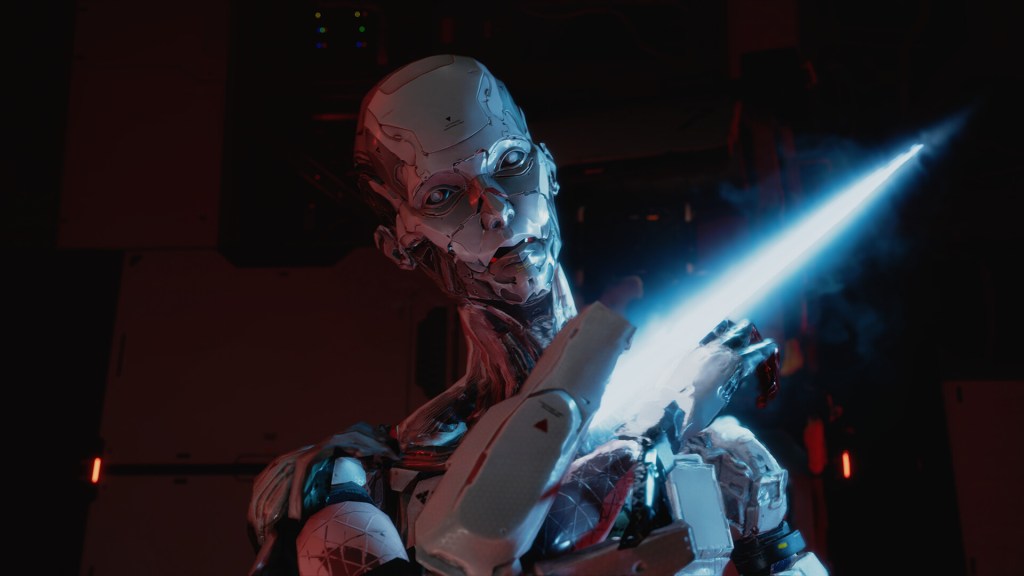
In isolation, hacking is a super simplistic mini-game. But the genius is that inserting it into the middle of combat makes the entire experience far more dynamic. Dodging attacks and hitting back is the basis of most action games, so throwing a wrench into that formula was a fantastic idea. My mental bandwidth could no longer only be concerned with dodging and shooting but now I had to contend with solving small mazes, deciding which nodes I wanted to use, and which enemies to hack. It feels a bit awkward at first, trying to teach your brain a new task, but the controls are seamless and the end result is both strategic and immensely satisfying.

Since you need to hack enemies to deal damage, the developers were smart in allowing the player to deal massive damage in the short openings that you get. There are four categories of weapons: primary, attack, tactical, and defense. Primary weapons have infinite regenerating ammo, but the others have limited capacity. Primary ammo regeneration is a bit slow and other weapons drop frequently, encouraging the player to actually use their other tools instead of holding onto them for a rainy day. The non-primary weapons all feel incredibly powerful and satisfying to use. A single shotgun blast or charged laser beam will eviscerate most enemies. That’s not to say that there isn’t a fair bit of challenge, having to juggle hacking, dodging, aiming at weak points, and ammo management makes those moments where you can just blast a robot to dust all the more satisfying.
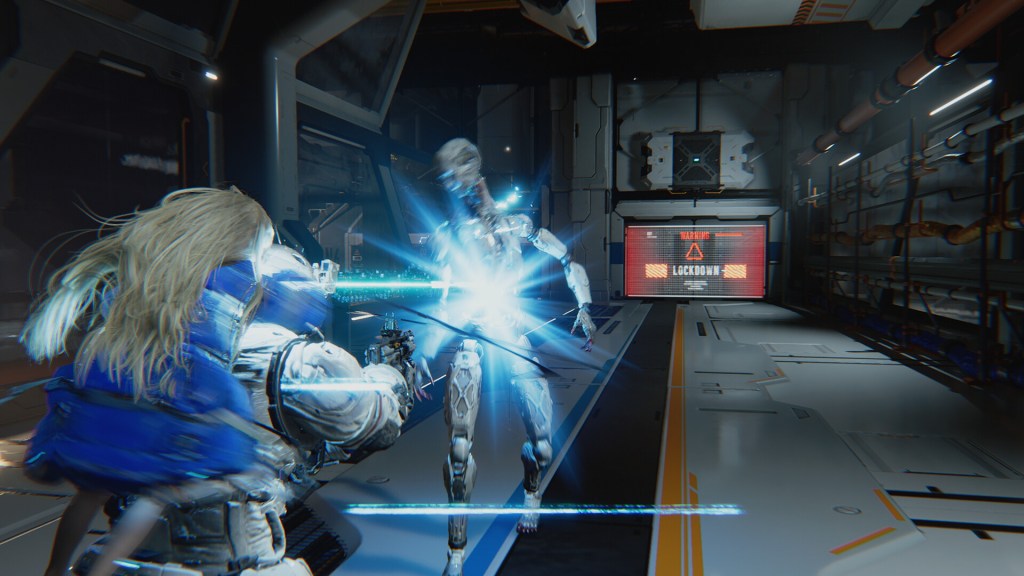
Additionally, the tactical and defense weapons are fantastic as well. Electromagnetic nets that stop enemies in their tracks, decoys to distract foes, deployable shield zones, and grenade launchers to knock robots to the ground. Pragmata doles out all these tools at a fair pace, letting the player experiment and find out what you like best. Most of the weapons and tools are balanced well and they feel powerful, truly giving the player the choice to select what they like best. There’s also a progression system in which you can upgrade your preferred weapons, making them even more potent as you face tougher and tougher enemies.

What most impressed me about Pragmata was its pacing. I often find that many modern games drag out their campaigns and fill the world with fluff under the illusion of providing more “content”. I see all too often online discussions where players treat a lengthy run time as an objectively good thing. With a full time job, house projects, and now a kid, my gaming time is limited. I love when a game respects my time and doesn’t pad itself out with an unnecessary open world, mindless side quests, or a repetitive campaign. Pragmata briskly moves from zone to zone, each introducing new weapons and enemies. There are some hidden upgrades to find but they aren’t far off the beaten path.
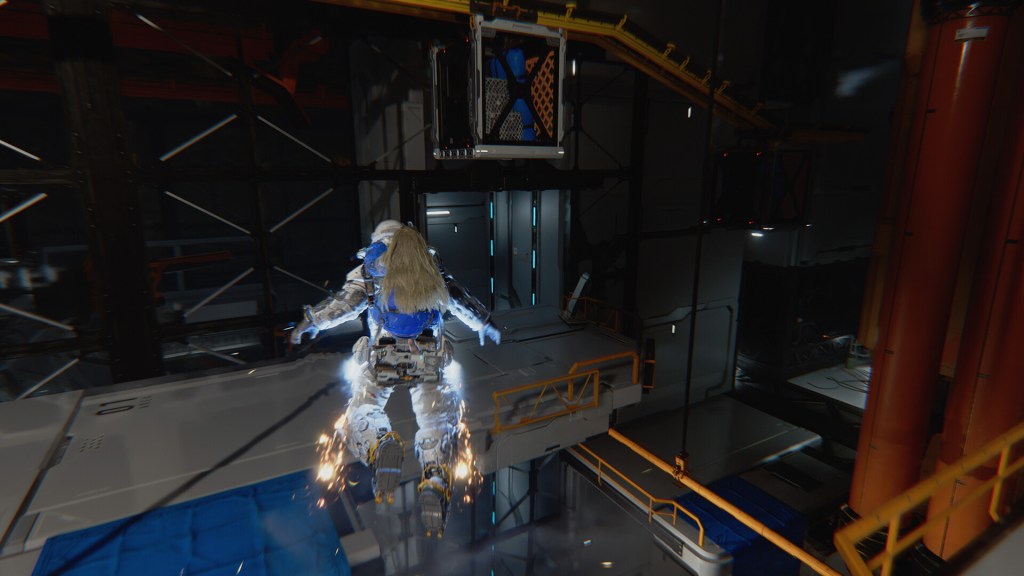
There aren’t any side quests and each area is fairly linear. There is some incentive to explore but ultimately you could get through each main area in only an hour or two. I appreciated how quickly the game was willing to move on. Introduce some new enemies, give the player a couple new weapons to test out, a new biome to gaze on, and a boss at the end to cap it off. It doesn’t linger, and this is the kind of game that could easily overstay its welcome. Hacking enemies during combat is a unique twist, but it could’ve gotten stale and tedious in a poorly paced game. For people who want more out of the game, there is a set of 30 training missions that test your skills, as well as 10 post-game challenges. I enjoyed the game enough to do all of these, but I’m glad that the developers kept the main campaign so lithe and kept some content as an optional bonus. 

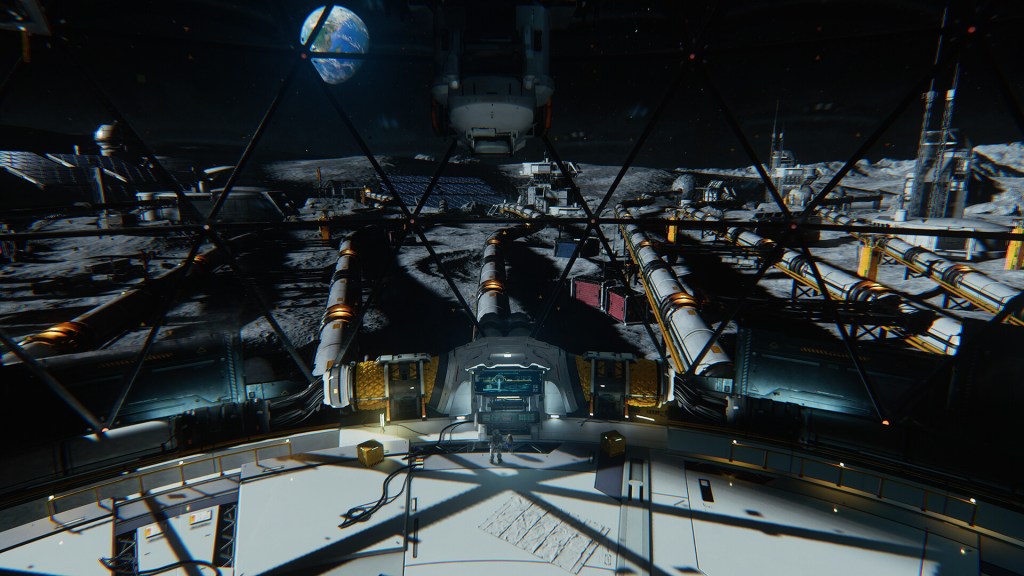
The thing that disappointed me the most about Pragmata was how it didn’t quite utilize its setting to its maximum potential. I was drawn in by the prospect of a sci-fi shooter taking place on the Moon, but it feels like so much of the game just takes place in sterile metal corridors. Each area that you progress to is its own biome, and the concepts behind the biomes are great. A neon metropolis showing off the industrial capabilities of the 3D printers, a more naturalistic area with trees showing that even organic material can be printed, and the Lunafilament mines on the surface of the Moon. There are unique ideas here, and when the game shows them off it’s great. But all too often those are just pretty exteriors while most of the actual action takes place inside of rectangular aluminum rooms. And outside of the mining operations biome, you could easily forget that the game takes place on the Moon at all. 
Overall, I had a fun time with Pragmata. I wasn’t blown away by it, but I appreciated its unique ideas and stellar pacing. I hope more developers take note of the niche of not overly long AAA games. I’m tired of 100 hour long monstrosities, unless they really are something special. The hacking during combat was a unique twist that made even simpler encounters feel intense. And even if the game’s setting and story weren’t fully realized, they were a decent hook that got me interested in the first place. It is for these reasons that I give Pragmata a 7.5/10. I can’t wait to revisit the satisfaction of hitting a hacked enemy with a fully charged laser piercer blast in the inevitable sequel.          
Kena: Bridge of Spirits (2021)

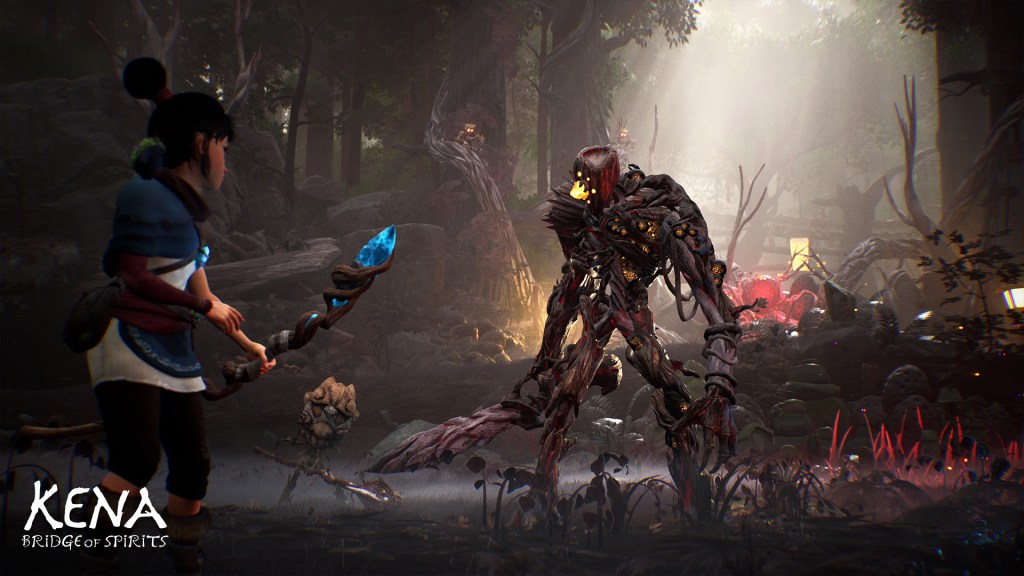
Kena: Bridge of Spirits is a game that’s better than the sum of its parts. Which is really important because none of the individual aspects of the game are standouts. There’s perfectly serviceable combat, platforming, exploration, and story, but there aren’t really any surprises or “wow” moments. It’s a game that feels reminiscent of classic, Playstation 2 era, adventure games. While being fairly derivative, Kena: Bridge of Spirits somehow feels endearing. I actually enjoyed my time with the game which can be partially attributed to the game’s smaller scope and wholesome vibes.

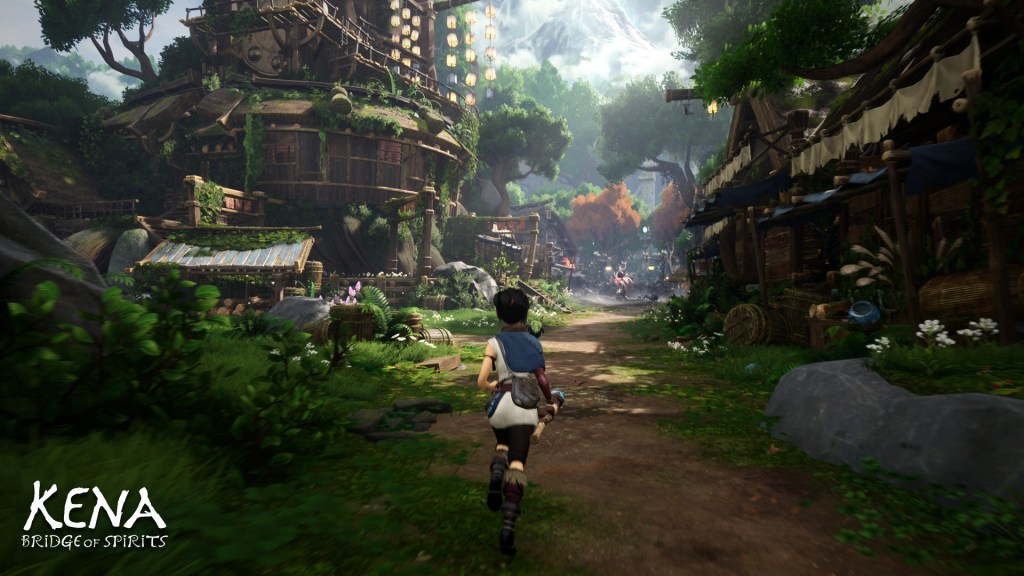
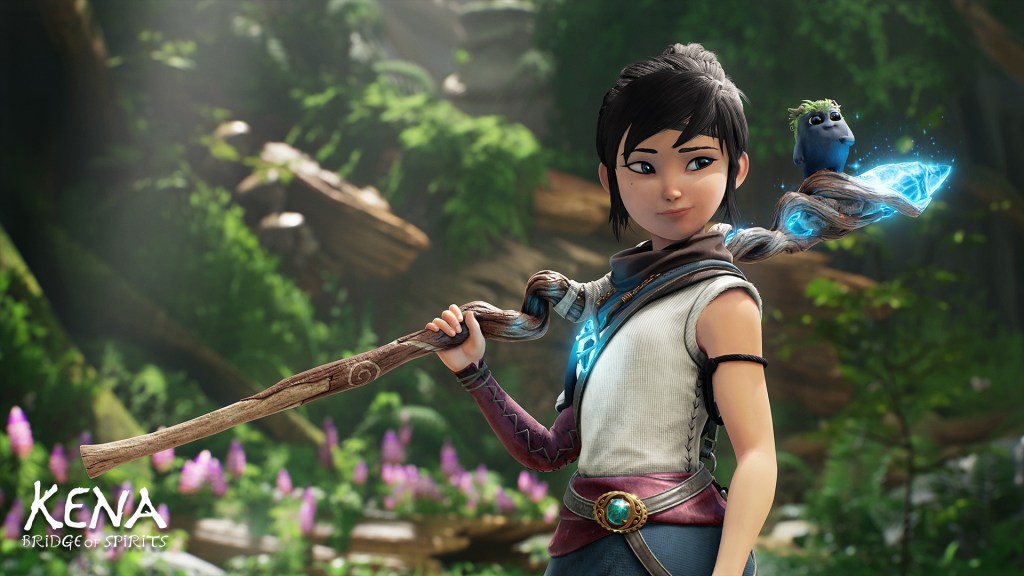
The game follows Kena, a spirit guide on a journey to learn more about her abilities to usher spirits into the afterlife. She travels to a remote village beset by famine and magical corruption. The populace has been entirely wiped out, and only spirits remain. It’s Kena’s duty to clear the corruption and guide the regretful spirits into the afterlife to help restore the natural order of life. I thought it was a touching story that dealt with loss, regret, and acceptance. There’s a sense of melancholy as you explore what was once a bustling town full of life, and moments of sadness as you learn the fates of the spirits that you’ve been assisting. But it’s also uplifting and endearing as you are ultimately helping the spirits accept and move on.

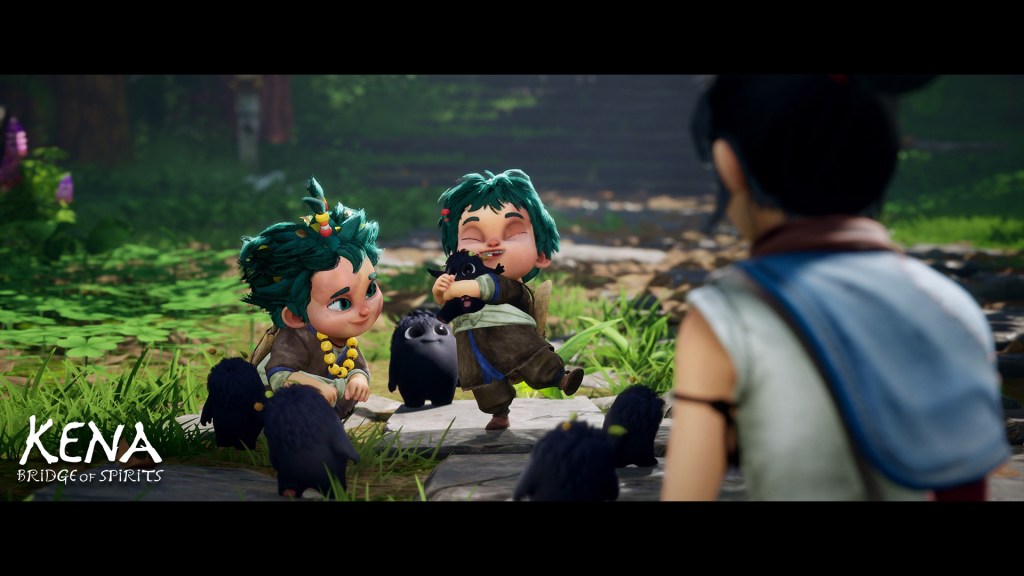
The most striking aspect of Kena: Bridge of Spirits is undoubtedly its visuals. The world is an absolute treat to look at. Towering canopies, twisted roots, rushing waterfalls, and dense underbrush are intertwined in a way that feels like a genuine forest. The world feels serene and natural thanks to its thoughtful environmental design. The lighting is also superb as streaks of light cut through the trees and illuminate the path during a thunderstorm. Graphically, the game has the Pixar movie-esque style to it that is wonderfully animated and rendered beautifully, especially in cutscenes. There’s no question that the presentation is the most impressive aspect of Kena: Bridge of Spirits.

Gameplay wise, Kena: Bridge of Spirits has a healthy mix of combat, exploration, platforming, and puzzle solving. While all these components were competent, they each had their own flaws. The only aspect that tried to do something new was how puzzles used the cute creatures called Rot. The Rot are little black puffballs that follow you around and assist you as you free them. You can command them to move blocks around and can occasionally fuse them together to create a spiritual dragon to clear away corruption. I loved seeing the little creatures but I felt that they were underutilized in puzzles. I didn’t feel like there was a meaningful difference between having the Rot move a stone block instead of just doing it as the player character like in most games. As a whole, the puzzles were extremely simple.

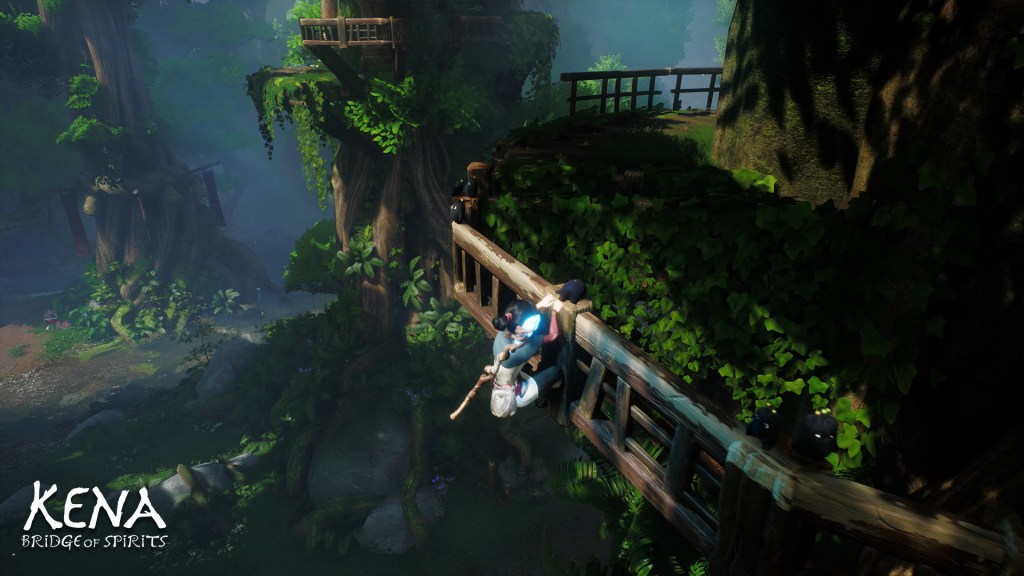
Platforming faced a similar issue of simplicity. There was some potential here as the game introduced some fun ideas such as using your bow to slingshot you to glowing flowers, rotating floating blocks so that you could use them as platforms, and introducing a dash that sends you through spiritual portals. There were moments that I felt like there could’ve been some excellent race-against-time sections as you rapidly used your tools to levitate blocks, dash through portals, and sling across gaps. Or there could’ve been more puzzle-platforming focused sections of rotating platforms in the correct order. But those moments never really came to fruition unfortunately. Moreover, double-jumping feels awkward because the second jump almost entirely halts your momentum. It makes it easy to misjudge jumps and honestly just feels bad.

I found exploration to be mostly enjoyable because of the environments. There’s a good amount of stuff to find without feeling overwhelming. But a lot of the rewards were fairly disappointing. Meditation spots are thematically nice and increase your total health which is great. Finding hidden Rot around the world also feels good and collecting a bunch gives you more energy to use in combat, great. But I honestly didn’t care for finding the dozens of different hats that you can put on your Rot. Sure, it’s a cute touch. But it is purely cosmetic and I couldn’t help but be deflated whenever I found a secret passageway only to be rewarded with a random hat. Worse still, the most common reward is money. And money’s only use in the game is to purchase hats. So, if you don’t care too much for these trinkets then a majority of the game’s rewards are going to be meaningless for you.

The one exploration reward that I thought was interesting was the Spirit Mail. Collecting these allows you to enter homes in the village that have been beset by corruption. You can clear out the evil energy, restoring that home and the surrounding area to a more serene state. I wish they did more with this. I love the idea of reviving the village, but aside from getting rid of some evil vines and bramble there isn’t any gameplay element tied into this. There are some static blue spirits standing around but they don’t move and you can’t interact with them in any way. 

Imagine this: after cleansing a building in the village, spirits are freed that act as shops to spend your money. It was such an obvious idea to me that I’m shocked it’s not in the game. It solves a multitude of issues that I had. The village would feel more alive, Spirit Mail would feel more rewarding, you’d have actual upgrades and equipment to spend your money on, and combat progression would feel better with these upgrades. I even think it’d increase the emotional impact of the game’s ending as you free these spirits that have been stranded instead of moving on to the afterlife. Maybe the developers didn’t want players to have weapon upgrades to spend money on, but I found it so odd that 3 of the major collectibles in the game (Spirit Mail, hats, and money) had no gameplay implication whatsoever. I genuinely think adding some shops as a reward for finding Spirit Mail would have been a major improvement.

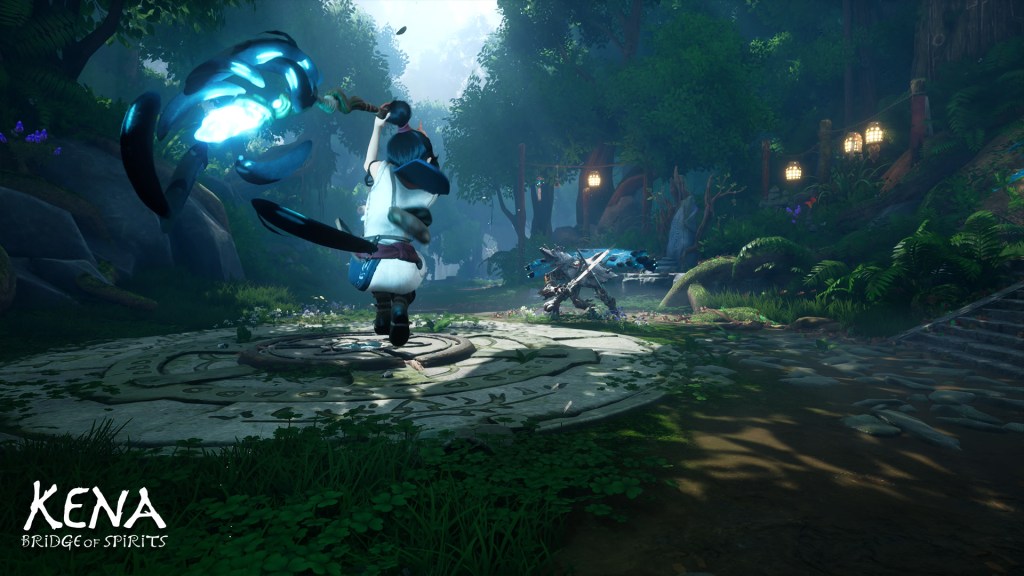
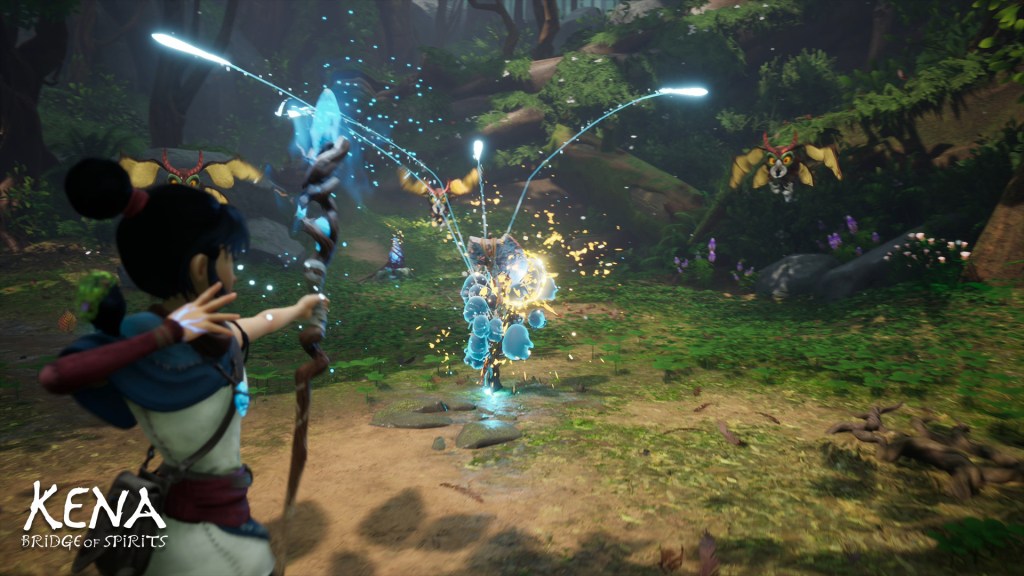
The most fleshed out aspect of Kena: Bridge of Spirits is easily its combat. Kena has the classic options of light attack, heavy attack, dodge, and shield. As you progress through the game a few more options become available such as the bow, bomb, and dash. Furthermore, you can spend experience to unlock bonus attributes such as a stronger shield, more arrows, or bombs releasing mini-bombs upon detonation. But the best way to deal massive damage is through the Rot abilities. As you hit enemies with your basic attacks you will build up a resource called confidence. One confidence can be spent to unleash a devastating melee attack, a piercing arrow, a time-slowing bomb, or it can be used to consume limited health flowers scattered around the arena. 

All of these considerations play into the flow of combat in Kena: Bridge of Spirits. I found it enjoyable to dodge, block, and parry enemies along with dealing some damage with all my tools while building up confidence to burst down enemies with Rot abilities. Enemy design is also quite varied so that you are always on your toes. You really have to make use of all your tools to dispose of the variety of threats the game throws at you. It sounds silly, but I was impressed that even with a large roster of foes there was not a single one that I thought was annoying or poorly designed. But where I think combat really shines is the boss battles.

I think the difficulty curve pertaining to the boss battles is going to be a huge negative for many players. For a game that presents itself like a Pixar movie, the bosses can be quite challenging. Don’t go into Kena: Bridge of Spirits thinking it is a game for little kids as the bosses will humble you, even on the “normal” difficulty. But it’s hard for me to begrudge these unexpected difficulty spikes because the bosses were my favorite part of the game. They follow the same flow of regular combat but are much more challenging. Additionally, most bosses have some briefly exposed weak points that you can target to temporarily incapacitate them. It’s a great way to encourage the player to stay perceptive and get rewarded with small windows to deal big damage.

Even though I did have fun with the combat, I do have a few small complaints. For one, the camera can get a bit annoying with multiple enemies. It has the tendency to soft-lock itself onto the nearest enemy which isn’t always what I want. I think the camera should’ve stayed in control of the player for the most part. My other issue is a lack of progression for melee attacks. Towards the end of the game it felt like basic light and heavy attacks did pitiful damage to bosses to the point it wasn’t worth the risk of getting close. I defaulted to using arrows and bombs until I could stun the boss and then used Rot abilities to deal the majority of damage. I think the idea of having a blacksmith or something in the village like I mentioned earlier could’ve allowed players to specialize into stronger melee attacks.

There’s something about Kena: Bridge of Spirits that feels like an adventure game from the Playstation 2. And not in a bad way. I think it may be because so many modern adventure games put more emphasis on story and massive scope. Kena: Bridge of Spirits feels more personal and endearing. It has a story, but it doesn’t talk at the player for hours on end. It has an open world, but it’s much smaller and more segmented than most modern games. And I appreciated that the game wasn’t bloated with unnecessary junk. It’s maybe a dozen hours long and quickly moves through new areas, enemies, bosses, and tools. In a landscape filled with 50-hour open world games, I’m glad to have smaller scoped adventures like Kena: Bridge of Spirits.

While Kena: Bridge of Spirits doesn’t do anything particularly groundbreaking, I still had a great time with the game. I looked forward to cozy mornings with a cup of coffee and exploring its gorgeous natural landscapes with my crew of Rot buddies. I think there are clear improvements to be made across all gameplay aspects, but as an entire package I think Kena: Bridge of Spirits is fun. It is for these reasons that I give Kena: Bridge of Spirits a 7.5/10. If you are tired of grandiose open worlds and dialogue heavy adventure games, Kena: Bridge of Spirits presents a tighter and more personal quest.   

Astro’s Playroom (2020)

One of the biggest surprises when I started up my Playstation 5 for the first time was Astro’s Playroom. Not that the game existed, but simply how much effort and soul went into making it. I expected a short tech demo, showcasing the haptic feedback of the controller. Astro’s Playroom is much more than that, and despite it being a short game, it’s one that nobody who owns a PS5 should miss. 

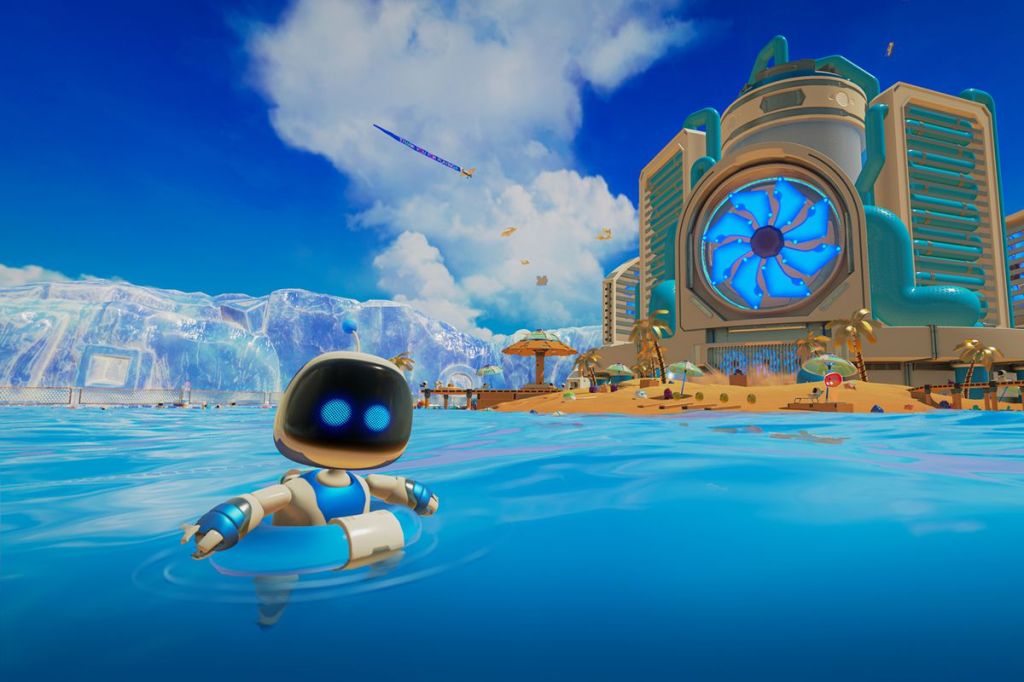
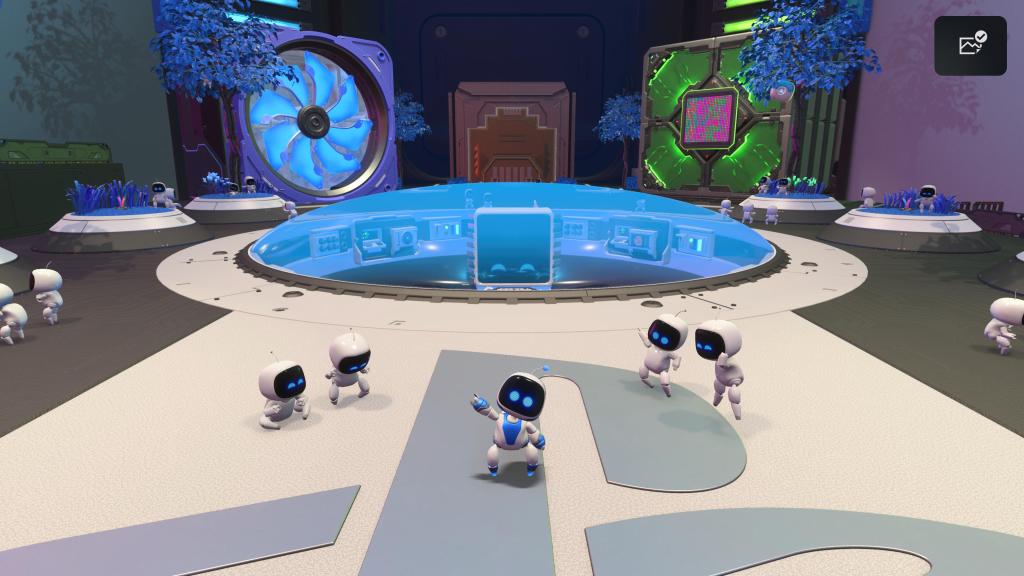
Astro’s Playroom is a celebration of everything Playstation. It’s a platformer with a few short levels, but each of these levels is packed with references and homages to Playstation’s past. There are a ton of cute little robots acting out scenes from classic and obscure games alike. There are tons of collectibles that showcase old Playstations and their respective peripherals. Finding puzzle pieces unlocks murals that celebrate Playstation throughout the years. 

The levels themselves are creative, varied, and enjoyable to traverse. There are four main areas along with a small hub world and a final boss battle. Each of the main areas has four levels, and those levels alternate between traditional platformer and more gimmicky concepts. The levels are extremely short, but I found them to be great nonetheless. They are visually engaging and packed to the brim with secrets, collectibles, and fun scenes. The gimmick-based levels utilize the motion controls of the new controller in creative methods, and they work well.

I was impressed with how well Astro’s Playroom showcased the new features of the PS5’s controller. Even after playing a few more PS5 titles, few utilize the stellar haptic feedback like Astro’s Playroom. The dynamic rumbling can really add some phenomenal textural feedback to the player. I distinctly remember a certain part of the game when I was holding on to a moving platform because the rumble had a very distinctive clicking sensation. If it had just been a standard rumbling, it would not have stuck out in my mind at all.

Astro’s Playroom is a short game. It only took me a few hours to complete it and find all the collectibles. This is not a bad thing. It’s a short but sweet experience. I’d love to see a more expansive version of Astro’s Playroom, but there would need to be an overhaul of the movement mechanics. Movement is super simple, you can walk, jump, and briefly hover. This is fine for a quick and free title that comes included with the PS5. But to compete with other major 3D platformers, Astro would need more complex movement to keep traversal interesting.

Take for example the 3D entries of Super Mario. They are simple, approachable, and easy to grasp. However, there are plenty of extra mechanics like triple jumps, side flips, long jumps, slides, and momentum. Traversing the environments in Super Mario games is like exploring a playground. As you master the movement, you can find shortcuts and more easily navigate obstacles. Astro’s Playroom feels like it’s on rails in comparison. It’s not egregious since the game is so compact and there are plenty of gimmicky interludes to mix up the movement. If there were to be a longer sequel to Astro’s Playroom, I’d love to see some more intricate movement.

Overall, I was pleasantly surprised by Astro’s Playroom. It’s an approachable, charming, and enjoyable bite-sized game. Not every game needs to be an expansive behemoth, and I love when games have a more focused approach. While it doesn’t have complex movement, Astro’s Playroom is a joy to explore. It is for these reasons I give Astro’s Playroom an 7.5/10. It’s not a game that is going to revolutionize platformers, but Astro’s Playroom is an excellent romp through imaginative environments.