Paper Mario: The Thousand-Year Door (2004)

Growing up, Paper Mario: The Thousand-Year Door was one of my favorite games to play. To this day many of its imaginative areas stick out in my mind as hallmarks of excellence. I was excited for the remaster to be released so I could revisit a staple of my childhood. Playing through the game now resolidified my confidence that Paper Mario: The Thousand-Year Door is one of the greatest RPGs of all time. The game oozes charm, character, and creativity from every crevice.
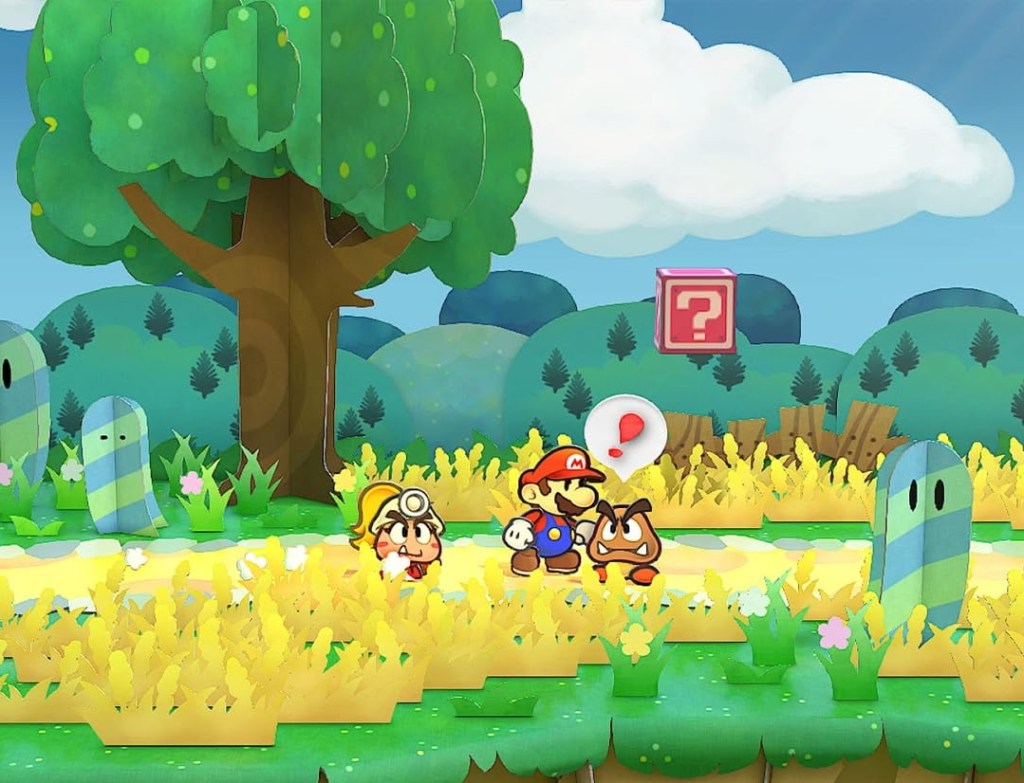
In classic Mario fashion, the game opens with Peach getting kidnapped, but not by Bowser this time. The mysterious X-Nauts have captured her as Peach found a map to the legendary treasure underneath the city of Rogueport. The treasure is behind the locked Thousand-Year Door which can only be opened by collecting the 7 Crystal Stars. The game follows Mario as he hunts down the Crystal Stars in a variety of locales. And what a fantastic set of locales they are.

From the very start of the game, it is apparent how creative Paper Mario: The Thousand-Year Door is. Rogueport is a run-down, grimy, and crime ridden city that serves as your hub. The city center has a few establishments but the gallows in the middle makes it abundantly clear what kind of city this is. The art, atmosphere, and slimy characters make Rogueport a standout location. And that’s just the beginning. As the game progresses you will encounter a handful of unique and charming areas. Glitz Pit is one of my favorite areas in any video game. This flying wrestling arena begins innocuously as you climb the ranks to claim the champion’s belt, but it slowly injects mystery and intrigue into its cramped halls. Paper Mario: The Thousand-Year Door is full of creative ideas and memorable places, each with their own episodic story to tell.

Part of what makes Paper Mario: The Thousand-Year Door so charming is its cast of characters and writing. Through your adventures you will encounter a ton of characters brimming with personality. Each of Mario’s partners has their own distinct character traits and motivations. Even side characters that don’t have a ton of relevance to the story feel genuine. The writing is just filled with charm and wit. While the game relies plenty on humor, it does have its serious moments of bravery, introspection, and self-sacrifice. And the character’s expressive animations go the extra mile to bring life to these paper cutouts. 

A common complaint that many people have with turn-based RPGs is that the combat is boring. Oftentimes it can boil down to selecting your most powerful attack and watching animations ad nauseam. While Paper Mario: The Thousand Year Door might not have incredible levels of depth it does have one key thing going for it: interactivity. Mario and his partners have a variety of attacks, each with their own button prompts to execute for better results. It may be as simple as pressing the “A” button at the right time, or holding back on the analog stick and letting it snap back at the apex of a hammer swing, but there is a fantastic tactile feeling to the otherwise simplistic combat. The timings are fairly generous but I think that is a good thing because of the necessity of landing these bonuses. You are going to have a very hard time if you don’t learn these prompts and fail to execute. I like that because even though choosing an attack may be fairly straightforward, you aren’t relegated to just watching an animation play. You have to be actively engaged to maximize your output.
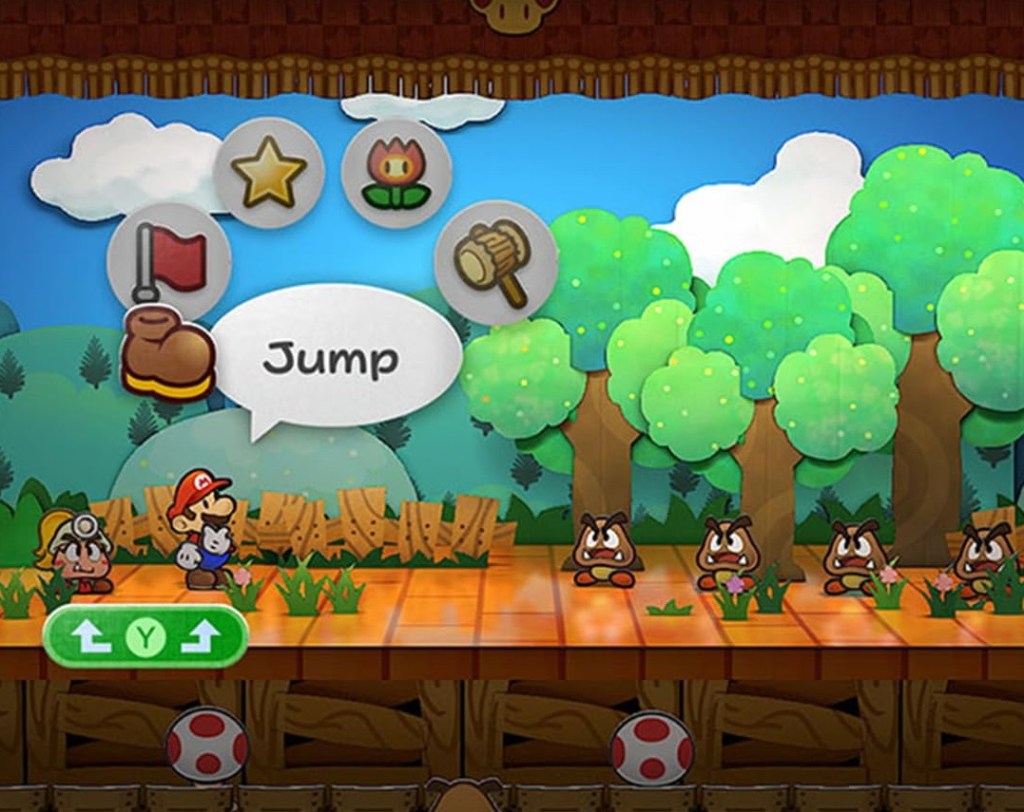
Aside from the active aspect of combat, I also love how customizable your strategy can be. A prominent component of this is the badge system. As you explore, you collect a variety of badges that can be equipped at the cost of BP (which can be earned on level-up). These BP can range from extra defense when you are low HP, to special attacks that cause status effects such as sleep, to a raw damage buff. The more generalist and powerful badges cost a ton of BP so it can be fun to experiment with different builds. Moreover, there are a handful of different partners to fight alongside to choose from. While you can swap them around as you please, I think many people are going to have one or two favorites that they default to. Between badges and partner selection, there’s a solid amount of customization to how you approach combat.

Apart from combat, another aspect that many RPGs get wrong that Paper Mario: The Thousand-Year Door gets right is pacing. Many RPGs are notoriously long games that could take months of regular play to complete. Paper Mario: The Thousand-Year Door is a relatively brisk adventure comparatively. But it doesn’t feel rushed either. A complaint that I had about Super Mario RPG was that while I appreciated how quick it moved from place to place, it often felt rushed and I had no time to truly soak in the world. Paper Mario: The Thousand-Year Door sits in the Goldilocks zone of pacing; every chapter is just right in length. There’s enough time to become familiar with every area and to tell an interesting story in every chapter, but it never overstays its welcome either. Overall pacing is something that is crucial yet incredibly hard to perfect, but Paper Mario: The Thousand-Year Door does a great job at it.
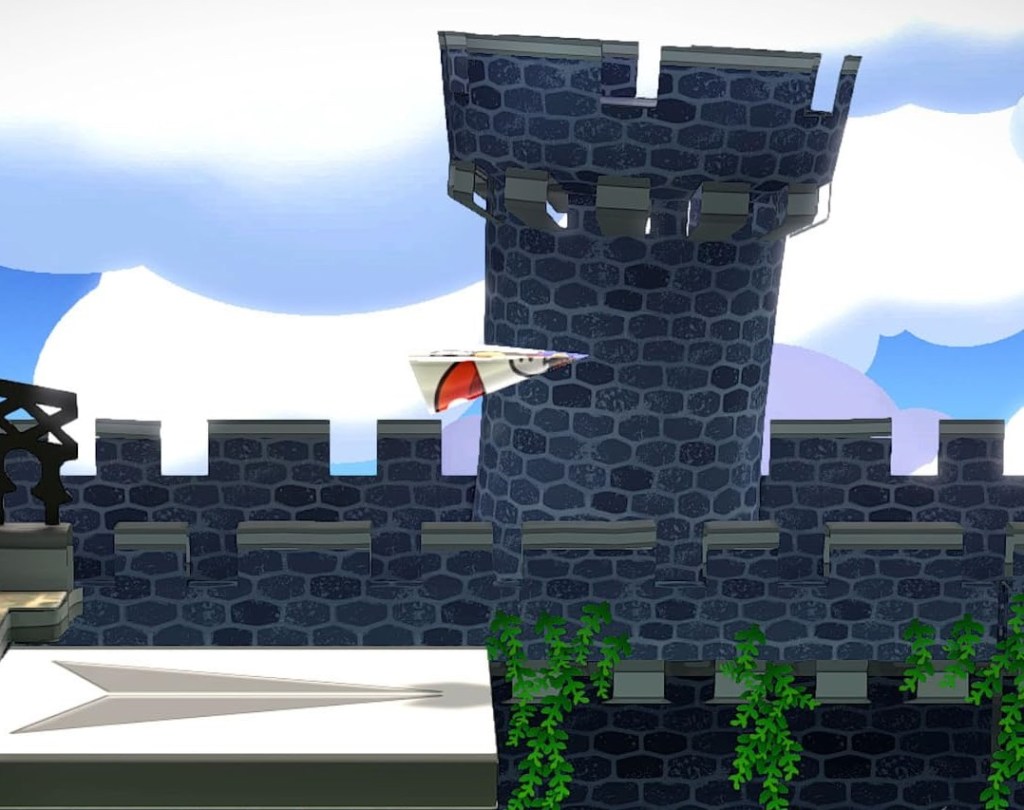
Unfortunately, a pacing problem is also my sole issue with Paper Mario: The Thousand-Year Door. While every chapter and the game itself is paced wonderfully on the whole, I do think there are some moment-to-moment drags. Structurally, many chapters play out similarly: opening with Mario venturing into a new area, learning about the area, discovering the antagonist, fighting through a bunch of bad guys to reach the boss, resolving that chapter’s conflict, and then closing out by seeing what Peach and Bowser have been up to in the meantime. The problem is that all the combat is packed right into the middle of the chapter. 

I typically want there to be a healthy mix of combat, story, and exploration throughout but all the talking bits are concentrated at the beginning and end of every chapter. Completing one chapter, the in between sections, and then starting a new chapter can often feel like ages have passed without any combat. And even if I think the combat is solid for an RPG, it can get repetitive if it’s all I’m doing in the middle of a chapter. I wanted story to break up the combat. And I wanted combat to break up the story. I think this issue is minor in the grand scheme of things, but I definitely would’ve liked to have story and combat less isolated from one another.

When I played the game this time around, I tried the remaster that was released for the Nintendo Switch. I can confidently say that this is the definitive way to play the game. The game’s presentation has been improved with improved visual fidelity and new expressive character animations. The soundtrack has been wonderfully redone but there is also the option to use the old version if that’s what you prefer. There’s some great new quality of life changes such as quick swapping partners while exploring and an increased inventory size. Some areas have a new shortcut to cut down on tedious backtracking. And there are new optional bosses for players who don’t want the adventure to end. It’s an all-around excellent remaster with some nice touches.
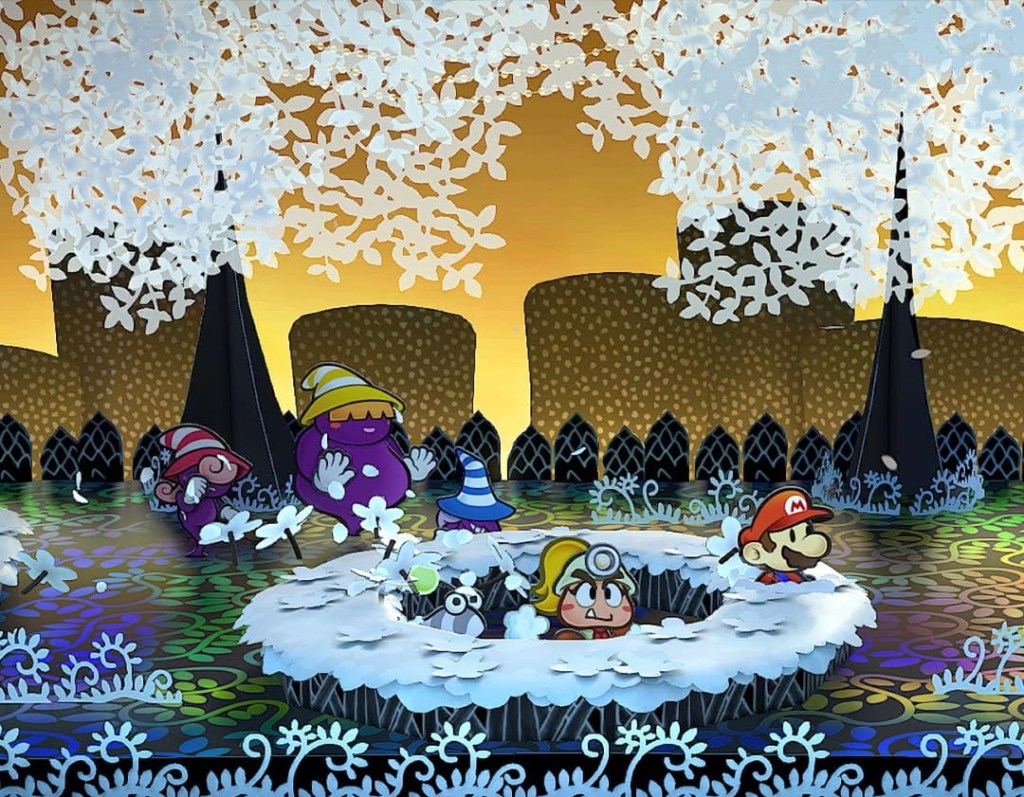
There’s a reason that Paper Mario: The Thousand-Year Door is a legendary RPG. It’s a game that looms over the rest of the genre as the benchmark for excellence. Paper Mario as a series in particular has had a hard time living up to this peak. It’s charming cast of characters, creative locales, and intriguing episodic chapters make for an unforgettable adventure. The combat allows for some customization and its active nature keeps it from being a turn-based snooze fest. If you are a fan of RPGs, Paper Mario: The Thousand-Year Door is a game that you cannot miss.
Paper Mario: The Origami King (2020)

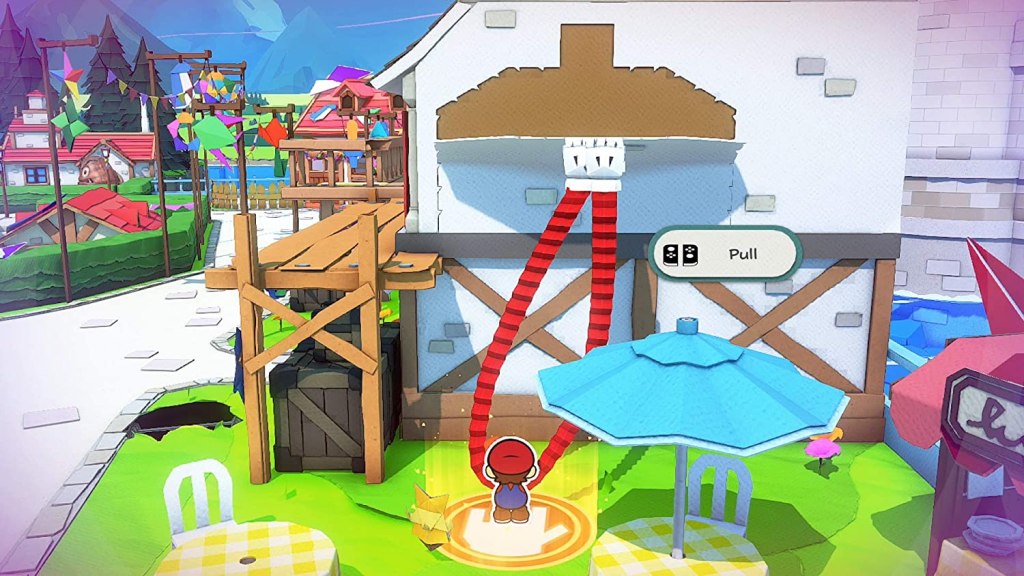
Anyone who is even vaguely familiar with the Paper Mario series knows how contentious the modern games are. The early games in the series were considered masterful RPGs, but Nintendo decided to ditch the formula for whatever reason and take Paper Mario in a different direction. With every new release, fans are clamoring for a return to glory, and the latest entry shows how being caught between two genres is hampering the series. Paper Mario: The Origami King is not a bad game by any means, but it is confusing and feels like the directors have no idea where to take the series. Despite enjoying my time with the game, I couldn’t help but think how much better the game would be with just some minor changes.

I will not hide my biases, Paper Mario: The Thousand Year Door was one of my favorite games growing up. The sense of adventure, mystery, comradery, and imagination were enthralling. You explored a diverse and interesting world, gathering a whacky cast of characters to explore with. All the while gaining experience and items to become stronger. The combat was turn-based, you’d select from a list of moves for Mario and his partner based on whatever you felt was best in a particular battle. While it wasn’t incredibly complex, there was some strategy and tactics involved, which is something that cannot be said for Paper Mario: The Origami King.

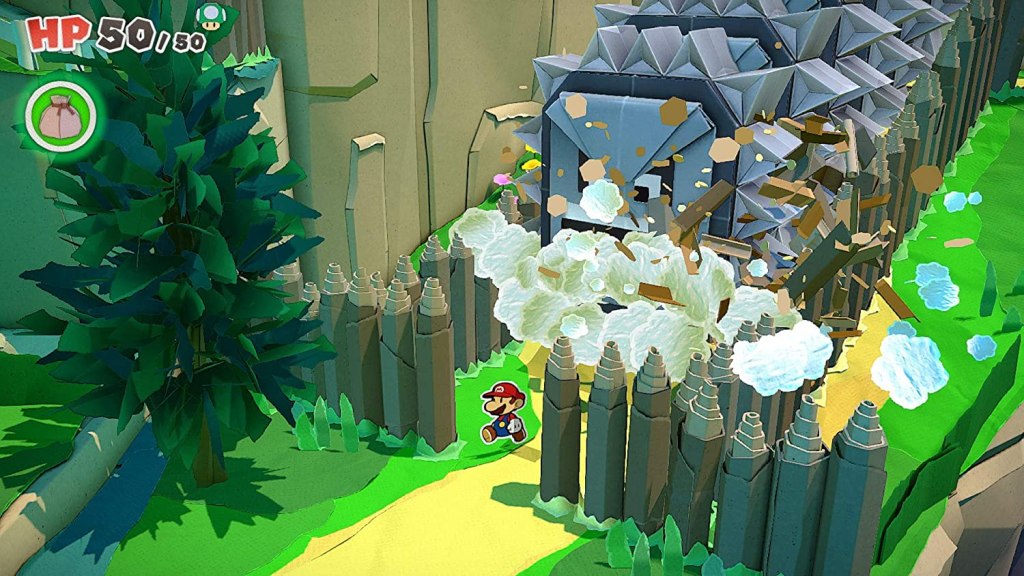
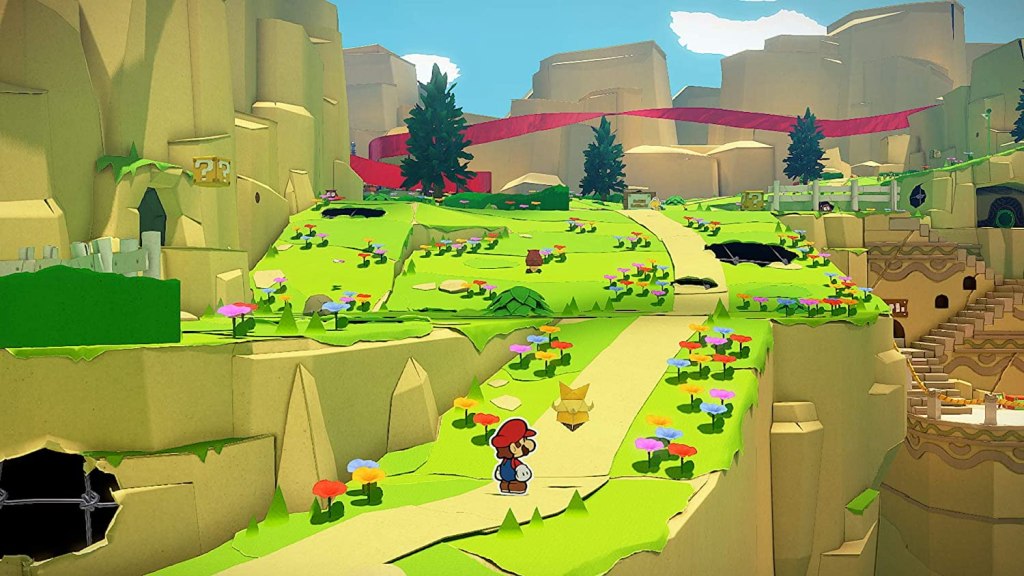
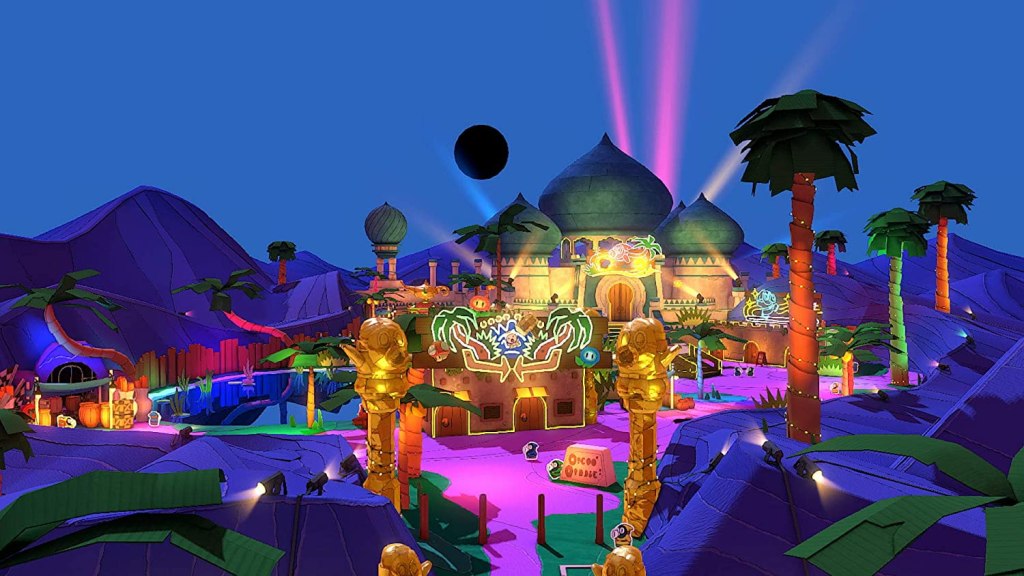
Before I get to my issues with the combat system, I must mention that Paper Mario: The Origami King does an adequate job with nearly every other aspect of the game. The world and adventure itself are actually extremely engaging. There are plenty of imaginative areas, each one with their own self-contained story that you must unravel. This is reminiscent of the original games in the series, in order to defeat the big-bad-guy you have to travel across the land and do something in each of the main areas. While the main plot itself is fairly straightforward, most of the sense of adventure can be found when exploring the more contained locales.

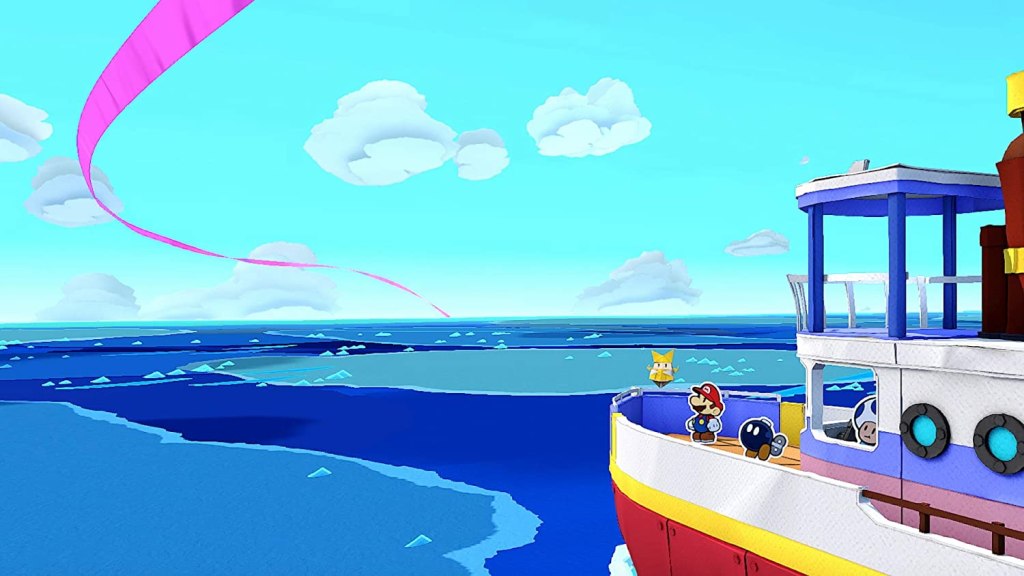
There are plenty of fun and unique areas to explore, which for me was the highlight of the game. The Japanese castle theme park, the cruise ship, the spa in the sky, the open sea dotted with islands, there are some fantastic places that would fit right in when it comes to classic Paper Mario. There are plenty of towns that are fun to explore and find the secrets of. Moreover, the writing and wit in this game is truly remarkable. When I think of Nintendo, I rarely think of games with clever writing. Most of their catalog either has minimal dialog or extremely cheesy writing. Paper Mario: The Origami King can be genuinely funny, with plenty of wit that doesn’t necessarily bash you over the head to the point of being annoying.

For lovers of collectibles, there is plenty of secrets to be found. The areas in Paper Mario: The Origami King aren’t overwhelmingly large, but they are absolutely packed with stuff to find. Between rescuing Toads, finding trophies, and uncovering secret Hearts, I always felt that there was something to be found. Solving little puzzles or spotting hidden markers is always a welcome detour when exploring the world.

Where the game inspires ire for me mostly has to do with the executive decisions stifling creativity. It is no secret that some executive has decided that spin-off Mario games are heavily limited in what they can include. There can be no new races of creatures, any new characters cannot be named, and existing races can only have a slightly modified experience. What this equates to is a lack of interesting characters. If the level of writing is any indication, the writers on this game were clearly talented. I wish they were given the chance to create a cast of fantastic characters and partners to accompany Mario on his journey.

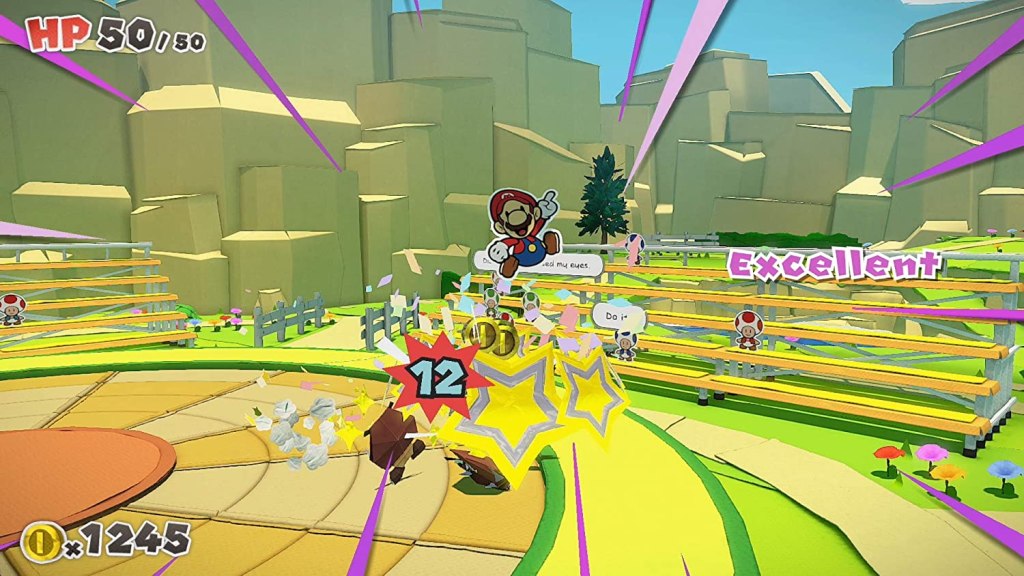
The single most frustrating part about Paper Mario: The Origami King is also a result of executive meddling: the combat. For some bizarre reason, somebody high up at Nintendo has decided that the Paper Mario series should no longer be RPGs. As a result, the modern games rely on gimmicks to fuel their combat systems instead of traditional turn-based combat. In the case of Paper Mario: The Origami King, the gimmick is what I shall refer to as “ring puzzles”. When getting into combat, enemies are spread across four concentric rings, with Mario standing in the center. You can turn the rings clockwise or counter-clockwise, and also shift portions of the ring in and out. Ultimately, the point of the system is to line up enemies so Mario can hit them all with a single attack. If you line up all the enemies in a line or a square, you get an attack bonus and can hit them all with a given attack.

I honestly don’t think that the ring puzzle system is an inherently terrible idea. It could potentially add some strategy to a battle, letting the player line up enemies in different patterns so they can choose different attacks. But ultimately the system is binary: you either get a perfect line-up or you don’t. There is no strategy or tactics whatsoever, it is simply a puzzle of lining up enemies within a given timeframe and number of moves. If you fail the puzzle, you take a bit of damage and the battle lasts a little longer. I tried to avoid combat as much as possible since there is barely any benefit to doing it, it was incredibly repetitive, and it just felt like a waste of time. And it’s not like this is a minor part of the game, the combat system is half of the game. I love puzzles but this system just does not work.

The boss battles were a little better than the standard combat in the game, as they functioned slightly differently. They were still ring puzzles, but you had to line up the rings to guide Mario to the correct spots to take certain actions. They did feel a little too lengthy, but I think that is a function of how they were designed. Each boss seems like they only have a single tactic to beat them. Usually, you have to do a couple of specific actions in a row to deal damage. I think the battles would be fairly quick but there is a lot of trial and error trying to figure out which actions you need to take to actually damage the boss.

The confusing part about Paper Mario: The Origami King for me is how hard it tries to not be like the RPGs of the olden days, but how zero effort was put into actually doing something different. The combat is still turn-based, but instead of tactically choosing moves you just attempt a ring puzzle. There are still partners in the game, but due to creativity being stifled they aren’t unique and have no name. They also only part of your party for a single area, are nearly useless in battle, and have no abilities in the overworld. There is still progression, you receive Hearts that boost your max health and damage. Instead of battles just giving you experience and leveling you up, rewarding the player for participating in battles, you just receive those special Hearts at set points in the game. There are still badges to augment your battling capabilities, but there is no actual choice or strategy in which ones to equip.

While I undoubtably miss the old Paper Mario formula, I’d be ok with something new. But Paper Mario: The Origami King isn’t something new, it’s simply the same RPG formula but with the actual good parts stripped out. Turn-based combat without strategy, partners without names or abilities, level-ups without experience, and badges without build diversity; the game still has all the systems of the old games, but without the context that makes those systems function in an engaging way. If Nintendo made Paper Mario to be an action-adventure game it’d disappointing but it’d be preferable to these half-assed RPGs that seem to just dangle the game that players actually want in their faces without quite giving it to them.

Overall, Paper Mario: The Origami King is a competent game. It has an imaginative world and plenty of diverse locations. The writing, dialog, and art are superb, but is hampered by the directives sent down by executives. Paper Mario is a series caught between two genres, and it suffers for it. The fans want RPGs, and the games are perfect for that style of gameplay, but the executives at Nintendo want it to be an action-adventure series without actually committing to it. It is for these reasons that I give Paper Mario: The Origami King a 6/10. Exploring the world of Paper Mario is fun, but even as somebody who loves puzzle games, I absolutely could not stand the ring puzzle combat system.