Mario + Rabbids Kingdom Battle (2017)

As a lover of tactical RPGs, I am upset that I let Mario + Rabbids Kingdom Battle sit on my shelf for nearly 7 years. While the game seems like a bizarre concept, it is an incredibly well-made game. It innovates on common systems such as hit rates, movement, and special abilities to make for a surprisingly deep tactical experience. While playing it safe is often the key to success in other tactics games, Mario + Rabbids Kingdom Battle encourages aggression and fast-paced play. And while I still think the concept is odd, it somehow works.
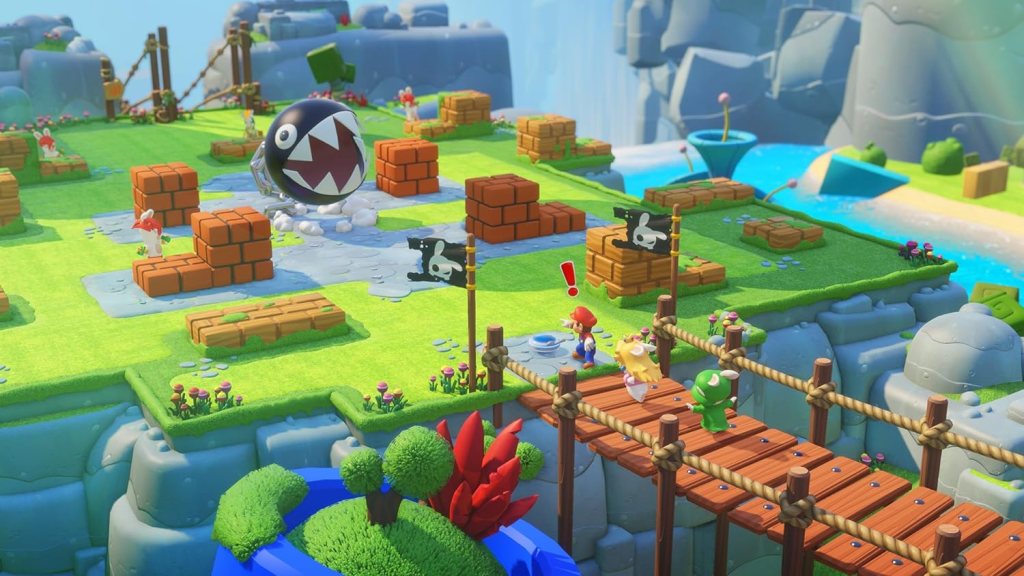
When this game was announced as a mash-up of Mario and Rabbids in which they would use guns in turn-based tactics battles, I thought there was no way it would be good. It felt like 3 diametrically opposed things being merged into some bizarro concoction. But it actually works. Mario and his pals team up with a handful of Rabbids cosplaying as Mario characters to take down the out-of-control virus that is corrupting everything.

The Mushroom Kingdom, as always, is a fun backdrop for the adventure. It’s bright, colorful, and has a set of classic areas to explore. Walking around the world only serves as a breather between battles, but I enjoyed soaking in all the wacky details. The invasion of Rabbids has left the Mushroom Kingdom and its denizens in chaos. And the Rabbids are strewn about, causing mayhem with their signature brand of physical comedy. Luckily, I think the Rabbids were toned down a bit in terms of their obnoxiousness. They are infamous for how annoying their schtick can be, so I’m glad that it was reduced to more reasonable levels.
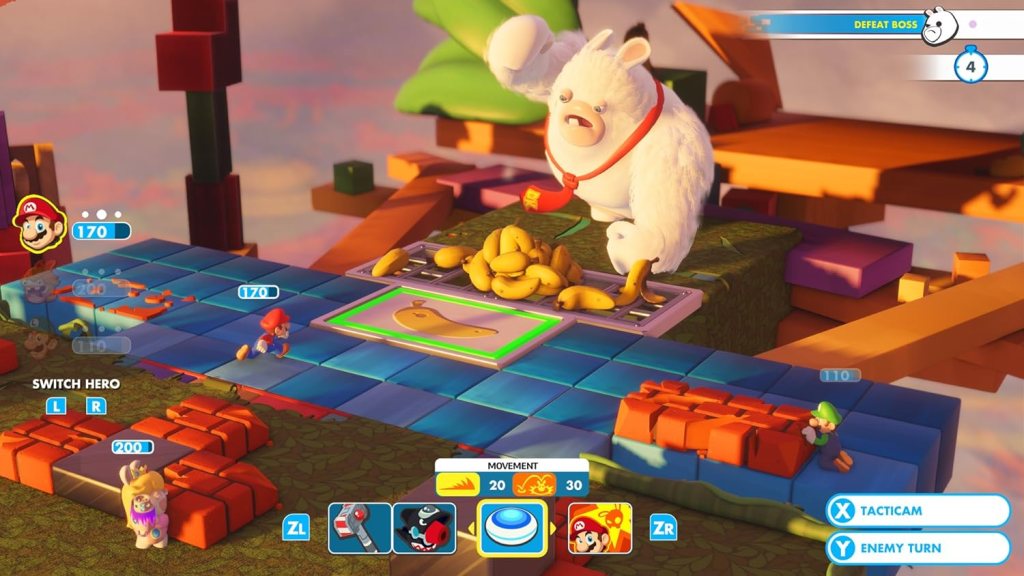
Aside from the concept, Mario + Rabbids Kingdom Battle surprised me in how many smart ideas it had. One of the biggest examples of this is the 0/50/100% hit rate system. In most other tactical RPGs, whenever an attack is initiated, there is a complex formula to calculate the odds of the attack landing. This is a core mechanic to games like XCOM in which the player tries to optimize their odds of success while staying in a safe position to minimize enemy hit rates. But the issue I’ve always had with XCOM is how outrageously bad it feels to carefully enact a strategy that relies on a 97% shot, but it fails and you are severely punished. It’s just how odds work, but that doesn’t stop it from feeling terrible.

In order to combat this feeling of getting unlucky, Fire Emblem implements its own system. It amplifies the percentages under the hood, so a high percentage like 90% is really closer to 98%, while a low percentage like 20% is more like 8%. While it is directly lying to the player about odds, I think it works wonderfully because the player shouldn’t be basing their strategies on low percentage attacks. It just makes the game feel better and doesn’t make you feel like you got unlucky as people are notoriously bad at estimating odds. Mario + Rabbids Kingdom Battle gets around this conundrum entirely by boiling down hit rates to 3 categories: 0%, 50%, and 100%. If attacking an enemy fully behind covered, you will not hit them. If they are partially behind cover, you have a 50/50 shot. And if they are in the open or you flank them, you a guaranteed to land a hit.

I think this system is genius because of how simple it is. You are encouraged to flank enemies, as you can’t reliably hit them otherwise. There’s no frustration in missing a high-percentage attack because they simply don’t exist. You almost always know beforehand whether the attack will hit, and hitting 50/50s should be seen as a bonus, not a core part of your strategy. You can’t blame luck when you miss a coin flip. There are other forms of statistics in the game, like weapons that have a range of damage they can inflict and can occasionally trigger special effects. But like with the 50/50 shots, you shouldn’t rely on special effects or max damage attacks as they are uncommon. If playing well, you always know when an attack will hit and the base amount of damage it will do, anything on top of that is a bonus. This simplified hit system is such an intelligent mitigation technique of the player feeling unlucky when playing tactical games.
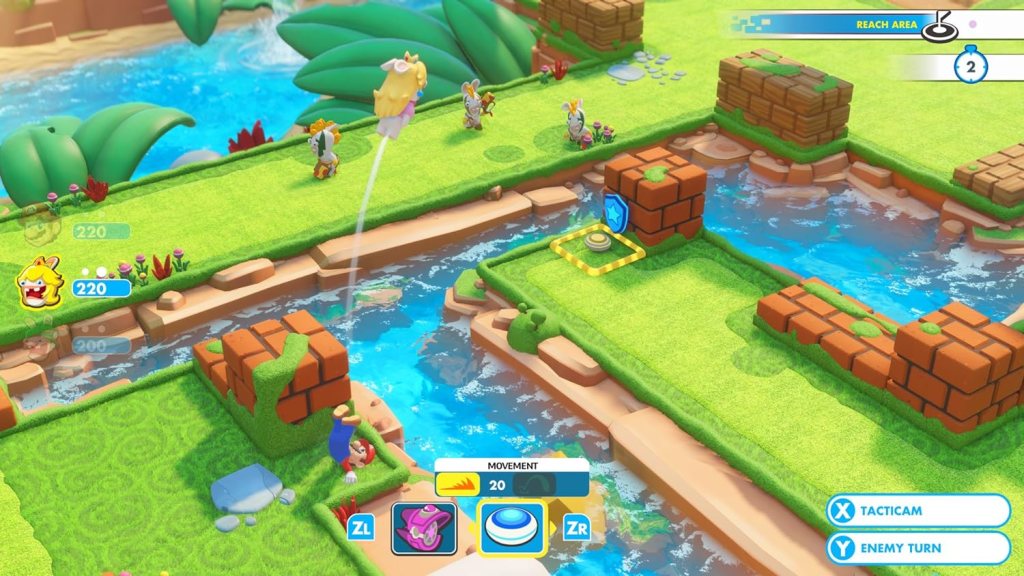
Even though the hit system is simplified, Mario + Rabbids Kingdom Battle has a surprising amount of depth. The battles are small, you only can control 3 characters in relatively compact maps against a handful of foes. But each turn brings so many possibilities that it’s staggering. Each character has two weapons, two special abilities, and some extreme mobility. On a single turn for a single character, you will be able to move, dash through an enemy or two to deal damage, jump off a teammate for extended movement, attack an enemy with your weapon of choice (which also have a reasonable chance to trigger special effects), and decide if you want to use a special ability. And you can take these actions in any order you want. The breadth of options here is immense. 

All of the possibilities available to both the player and the opposition make for some extremely dynamic battles. The extreme mobility and combat capabilities paired with destructible environments make it difficult to predict exactly how any given turn will play out. This encourages aggressive play. You should maximize your own capabilities to take out as many enemies as possible before they get the chance to retaliate. Every turn feels like a mini-puzzle as to how to get the most out of your character’s actions. Moreover, if you want to get a “perfect” score on every stage then you have to complete the battle in a set number of turns, further encouraging you to play aggressively. I love that flanking and going on the offensive is the best strategy, as many other tactical games encourage turtling and playing overly safe.

Mario + Rabbids Kingdom Battle can actually be pretty tricky at times. Enemies can easily flank and position themselves to deal massive damage. Boss fights are multi-staged affairs with unique mechanics. And there’s tons of enemy variety sporting different weapons and effects to watch out for. This makes for some fun challenges as you learn how to utilize your characters effectively. The upgrade system encourages you to specialize your characters to bring out their strengths.
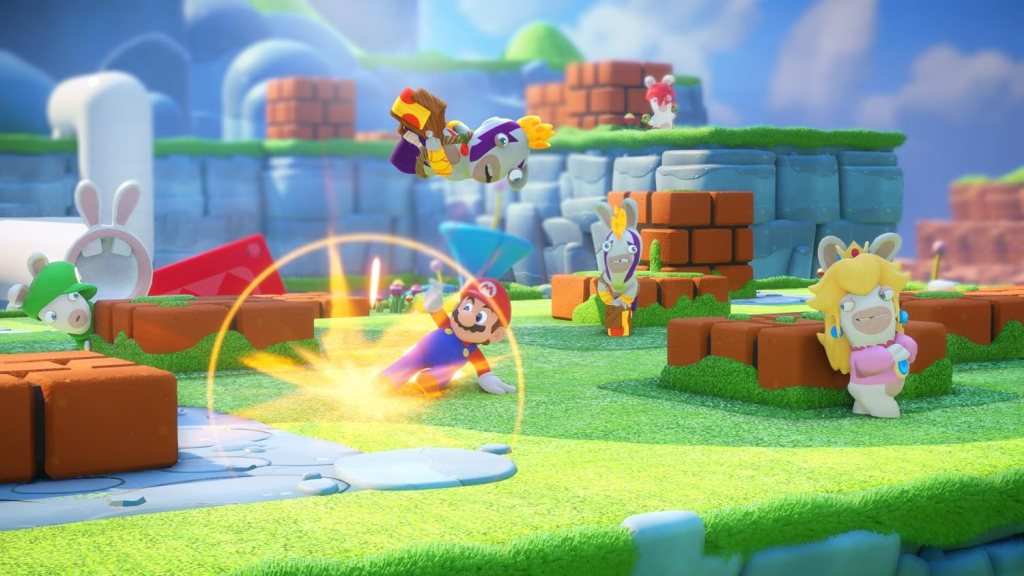
My only complaint about the gameplay is that I wish it encouraged more experimentation with party members. You can only have 3 in any given battle, and 1 of those is required to be Mario, leaving only 2 options for other members. All the characters were unique and had some interesting abilities to be utilized, but I never really strayed from my core party because I didn’t need to. My setup of Mario, Luigi, and Rabbid Luigi was more than capable of taking on any of the main campaign and all of the bonus levels. Maybe if the game didn’t have such restrictive limitations on my party, I would’ve tried different characters. Another option is if there were challenges that encouraged the use of members that you haven’t utilized that showcased each character’s niche.

Aside from gameplay, I did have a handful of minor gripes about the user interface and user experience. The camera during battle left a lot to be desired. I wish you could freely rotate it and zoom out to see the entire battlefield. It wasn’t a huge deal as most maps are tiny, but some of the missions are massive and it can be difficult to grasp which route to take to the goal. Another improvement that I would’ve liked to see is the ability to toggle enemy movement and attack ranges. You can do this for a single enemy in a special menu, but there’s no way to leave it on for when you are actually making a move. You just have to memorize their range if you are trying to keep a character out of harm’s way.

The biggest issue I had with the user experience is just how long everything takes. There’s a panning camera shot at the beginning of the battle, a celebratory animation when you win, and a ton of seemingly random cinematic animations that occur during battle. These cinematic animations can happen anytime, whether you are just sliding for a little bit of damage, attacking normally, or triggering an ability. They do look nice, but this is a fairly lengthy game with a ton of battles. You are going to be seeing the same animations over and over and over. The battles themselves are only a few turns long, but they can take a while simply because there are so many actions and superfluous animations. You can speed up enemy turns which is a great feature, but I would’ve liked options to be able to speed up all animations and disable the cinematic animations altogether.
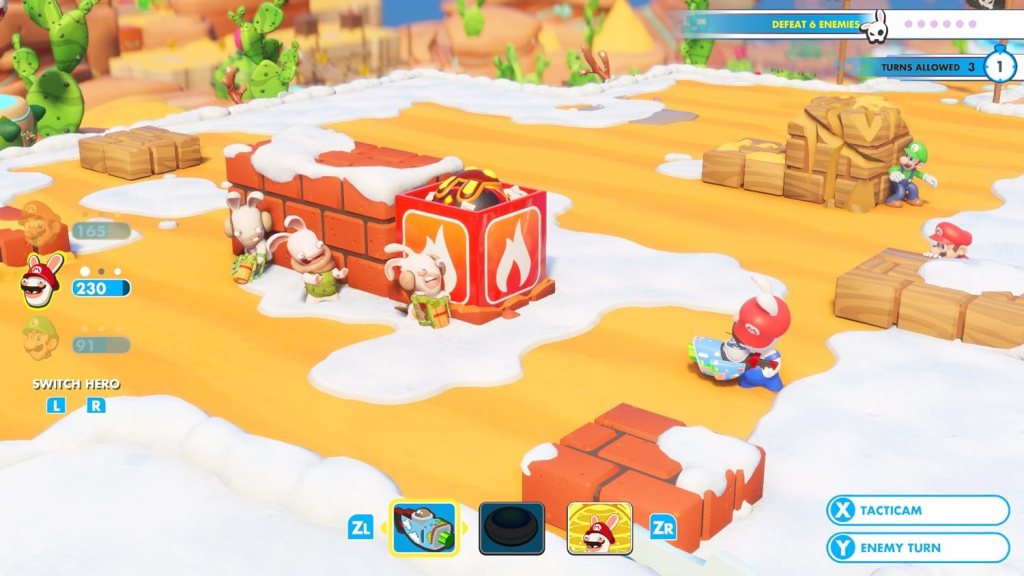
Overall, I was shocked how much I enjoyed Mario + Rabbids Kingdom Battle. I thought the game would be too simplistic to be engaging, but I was proved completely wrong. Every turn has so many dynamic possibilities that lends to aggressive play. The 0/50/100 hit percentage system was a genius method of alleviating frustration and encouraging flanking maneuvers. Despite a few little UI hiccups, Mario + Rabbids Kingdom Battle is a phenomenal strategy game. If you are like me and have Mario + Rabbids Kingdom Battle sitting on your shelf, do yourself a favor and give it a try.
Pikmin 2 (2004)

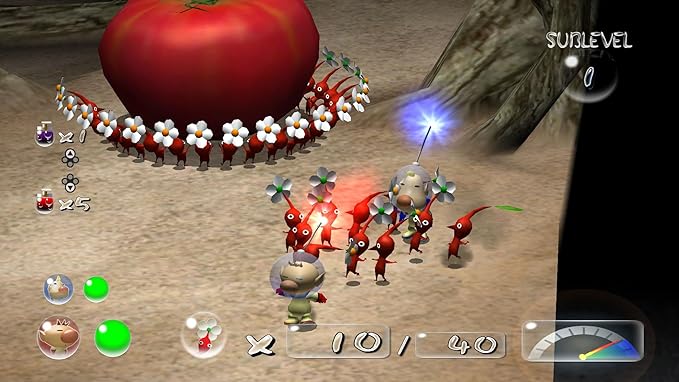
Pikmin 2 is the perfect example of an excellent game that torpedoes itself with an abundance of repetitive and poor-quality content. Despite making plenty of improvements over its predecessor, the majority of Pikmin 2 is spent engaging with its worst content: caves. I wanted to love this game as much as I loved the original Pikmin, and truthfully it surpasses the original game in many ways. But unfortunately 75% of the game is at best dull, and at worst frustrating.

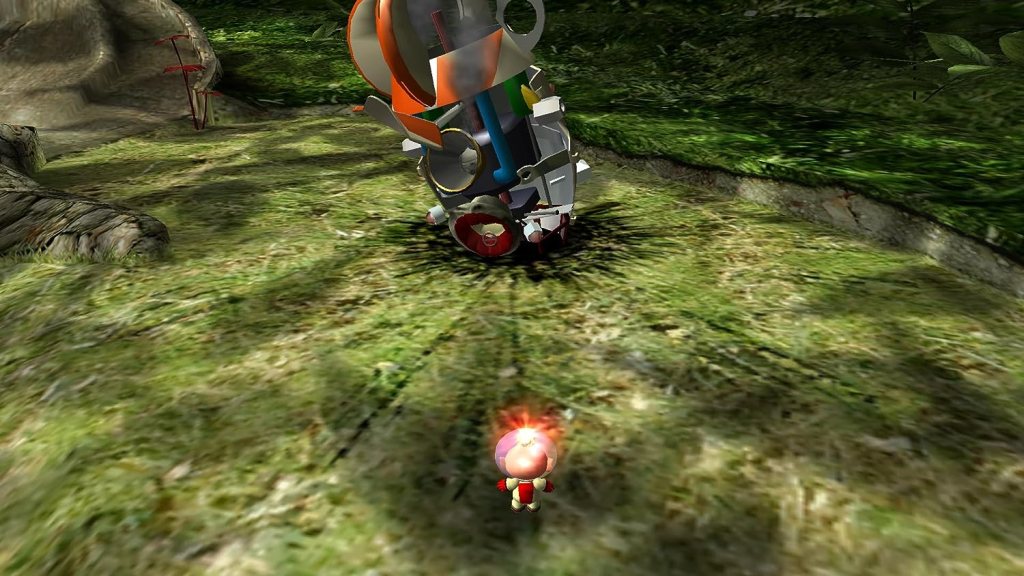
To start with the positive, Pikmin 2 delivers more content than its predecessor. There’s more Pikmin varieties, there’s more enemies, there’s more treasures, there’s more hazards, and there’s even an additional playable character. This is all fantastic. I liked having two captains to control as it allows for more multitasking, which is a core component of the Pikmin series. One captain can oversee a group of Pikmin knocking down a wall, while the other captain can command the Pikmin to attack enemies and replenish their numbers.

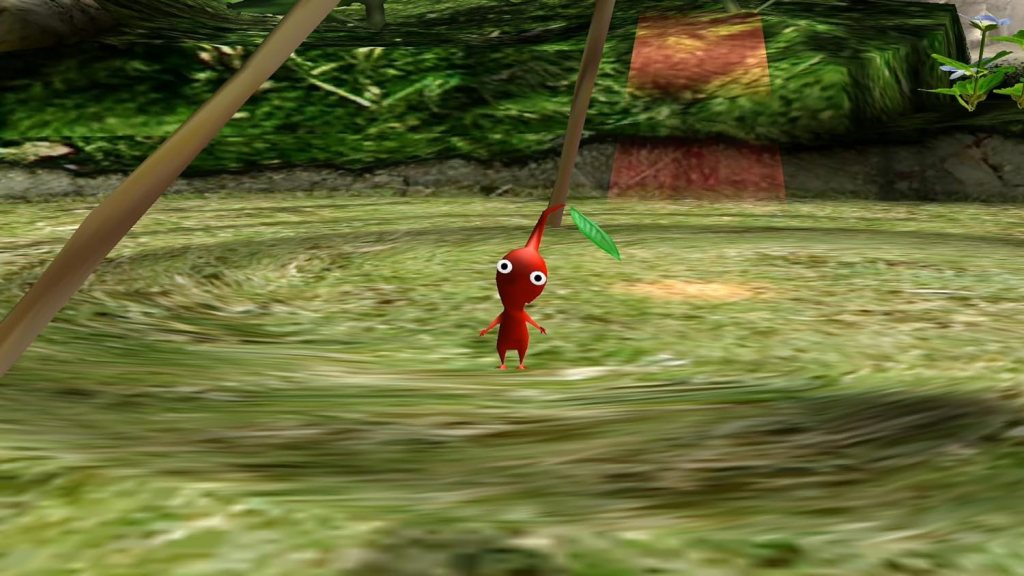
The two new Pikmin varieties both are unique and integral to your success. Purple Pikmin are heavy but slow. They can carry 10x the weight of normal Pikmin, and they are incredibly effective in combat. They deal bonus damage and stun enemies upon landing from a throw. White Pikmin are faster than normal Pikmin, are immune to poison, can find treasures underground, and deal massive poison damage to an enemy that attempts to eat them. Both of these varieties are powerful, but are cleverly balanced by their rarity.

Both purple and white Pikmin do not have their own motherships, and as such you cannot use the normal chips and enemy corpses to spawn more of them. Instead, you come across colored flowers that you have to sacrifice other Pikmin into five at a time. This heavily limits how many of these special Pikmin that you will have. While the purple Pikmin in particular are incredibly powerful in combat, I felt nervous bringing large quantities around because losing just a handful of them could be catastrophic. I think this was a great way to balance these new varieties. Having powerful Pikmin at your disposal is very fun, but limiting their quantity makes them risky to use.

Another welcome addition is the inclusion of sprays. You can spend time having Pikmin collect berries that will be refined into two varieties of sprays: bitter and spicy. The spicy spray speeds up your Pikmin and increases their attack power. The bitter spray turns enemies to stone briefly. I enjoyed how these provided some additional decisions to make during combat. You could use them to make encounters much easier, but you had a limited quantity of them unless you spent a ton of time farming them. I saved them for dire situations or tricky boss fights, and I appreciated their inclusion.

When I played the original Pikmin my biggest issue with the game was the poor AI. I haven’t done any sort of extensive testing, but I definitely feel like this was improved in Pikmin 2. They seem to not get stuck on random bits of geometry as often. They don’t get distracted by grass as much. They are quicker to pluck and faster to respond to the whistle. I still had some occasional woes when trying to dismiss Pikmin into groups, but overall, I appreciated how much more responsive they were overall.

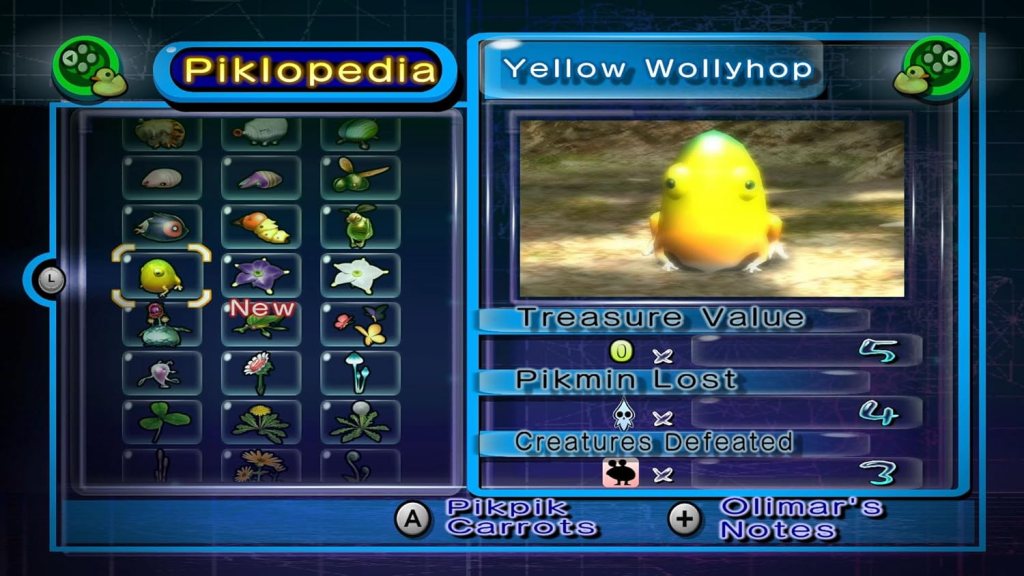
While I didn’t spend a ton of time reading the entries, I loved the Piklopedia. This journal has fun descriptions of both the enemies and the treasures that you collect. These have a lot of personality and charm. They’re funny and a great addition for people who want to delve more into the world of Pikmin.

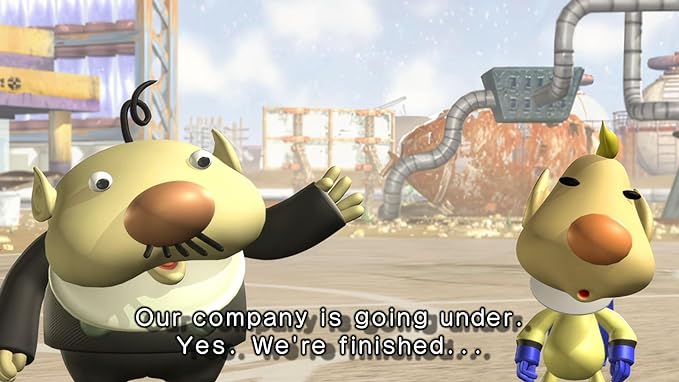
The gameplay loop of Pikmin 2 is almost identical to the original. Instead of crash landing on Earth, you voluntarily journey there to collect treasure to alleviate your company’s debt. You command your troop of Pikmin to knock down barriers, fight enemies, and collect goodies. A major difference however is that Pikmin 2 lacks a maximum number of days. In the first game, you had 30 days to collect 30 parts. With each day being roughly 15 minutes, there was a sense of urgency to get something done with every second. 

The looming time limit in Pikmin was something that many players felt anxious about, but I think it was a critical element of gameplay. It encouraged the player to maximize their time and take risks. You could leave a troop of Pikmin to knock down walls or carry things back to base, but there was always the worry that they could be intercepted by hungry enemies. And even if you had a couple minutes left in the day, there was always the question of what you could do with your time. Whether it be replenishing your Pikmin supply, feeding them nectar to upgrade them, or knocking down barriers to make the next day easier, I wanted to maximize my time. 

Thirty days was plenty generous unless you were wasting a ton of time, but the looming threat of failure was crucial. This isn’t present in Pikmin 2 at all, as you have an unlimited number of days to accomplish your goals. There’s no rush to do anything, you can play incredibly safe and not have to do any risky multitasking. You don’t have to squeeze every second out of the day, as you can just go to the next day with no downside as the timer approaches night. The lack of urgency was definitely unfortunate, but it was a minor issue when compared to the biggest flaw of Pikmin 2: caves.

Before I begin ranting about caves, I want to make it clear that I genuinely think that they are a good idea. They act as dungeons in which you progress floor by floor with no opportunity to replenish your Pikmin. They have a heavy emphasis on combat, each floor is packed with enemies and there is usually a boss at the end. Defeating the boss usually yields a special treasure with a unique upgrade such as immunity to electricity. I think this is all great. Entering a cave is anxiety inducing as you don’t know what lies ahead, and losing Pikmin can devastate your odds of success. This is all great, but the caves have a few issues: bland aesthetics, monotonous gameplay, and frustrating level design.

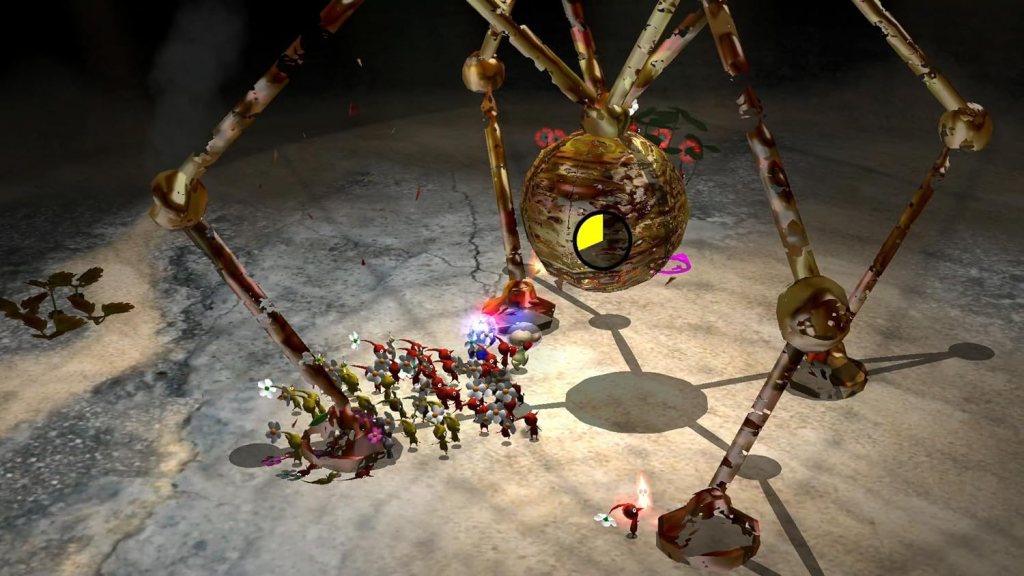
There are 14 caves in the game, and even shortly after beating the game I can only really remember 4 of them. And 2 of those I only remember because they were infuriating. A big reason why caves aren’t memorable is because they are just plain ugly and bland. Many of them are just big dirt pits with little to distinguish themselves. Moreover, the levels are semi-randomly generated, so they can’t make up for forgettable visuals with interesting level design.

 Most of the caves lack anything to make them unique. Just floor after floor of basic battles with no end in sight. And many of these caves can take upwards of an hour to complete. It grows old quickly. There are a couple of good examples in Pikmin 2 of what caves could be: Submerged Castle and Glutton’s Kitchen. 

Submerged Castle is easily the best in the game. You have to work quickly to recover treasures in this water-filled cave, because a nightmarish blob appears after 5 minutes on each floor to steamroll your Pikmin. This is a unique mechanic that encourages you to move quickly, but even if you aren’t fast enough there are strategically placed pipes that allow you to hide from the monster. Glutton’s Kitchen is nearly as horrifying, but it is memorable nonetheless. It takes place in a child’s playset of building blocks and a wooden train set. Fat breadbugs try to steal your treasures and drag them back to their dens. The combination of being visually distinct and having a central mechanic is vital in making caves more interesting. It’s a shame that none of the other caves live up to the quality of these two.

I have to mention that my entire experience was left on sour note because of the final caves in the game. They were memorable for the wrong reasons. They felt completely unfair. Every floor was a cramped nightmare filled with dangerous enemies. Not to mention traps such as bombs, rocks, and enemies falling from the sky. I don’t mind a bit of elevated difficulty, but the difficulty spike here is egregious. There are so many ways that you could instantly lose half your army deep into a dungeon. The saving grace here is that you can hard reset to the beginning of the floor.

I don’t think relying on frequently resetting your system is a great mechanic, but it feels necessary here. There are so many catastrophic things that can happen, and it often feels unavoidable. Due to the randomized nature of enemy placement, some configurations are far, far harder than others. The final dungeon, Dream Den, has many floors that feel like the developers just threw every enemy they could into cramped rooms. These aren’t cleverly designed challenges, they are meat grinders that require unsatisfying tactics to succeed.

Like I previously mentioned, you can always just reset and hope for a better outcome or easier layout, but there are some ways that you can combat the tougher encounters. You can play super carefully, going through each floor with no Pikmin at first, triggering every trap. Then abuse the enemy AI to bait them out one at a time. This is time consuming and feels a little cheap as you are just bypassing every obstacle. You could also use purple Pikmin and bitter spray as they are surefire methods to simplify tougher fights, but these are very limited resources unless you spend time farming them. Truthfully, some of the floors in the later dungeons feel like absolutely no thought went into them and they weren’t even playtested.

In my perfect world, Pikmin 2 would have cut down the number of caves dramatically. Instead of 14 repetitive caves, having 5 unique and intentionally designed caves would be a massive improvement. The caves would have their own aesthetic themes and unique mechanics to make them interesting. Each floor would be designed with care and there would be thought into the layout and enemy placements. I understand that randomization can increase replayability, but in the main campaign I wanted purposefully designed dungeons. Randomized dungeons could’ve been a great challenge mode.

I was let down by the number of poor-quality caves in Pikmin 2. Even without a day limit to encourage efficiency, I still was having a great time up until I started delving into the caves. The vast majority of the game is spent in the caves, and it’s by far the worst aspect of the game. More isn’t always better, and Pikmin 2 would’ve been greatly improved by cutting the number of caves in half and spending more time carefully designing them. It really is a shame because Pikmin 2 gets so much right, it just sabotages itself with an abundance of uninteresting and occasionally aggravating content.

Super Mario Bros. Wonder (2023)

We’ve waited nearly 30 years for the redemption of the 2D Super Mario series. I always found it odd that the last truly notable entries in the series were the Super Mario World games while the 3D Super Mario series has thrived with masterpiece after masterpiece of creative genius. But finally, there’s a return to form with Super Mario Bros. Wonder. Forgive my choice of words, but Super Mario Bros. Wonder is a wonderland of joyous ideas and imagination. 

I don’t want to harp too much on the past, but I think context is important. The last four entries in the 2D Super Mario series have been labeled as New Super Mario. These titles have been criticized for being remarkably similar to one another and lacking any sort of major innovation. While being serviceable platformers, they lacked the magic that Super Mario is known for.

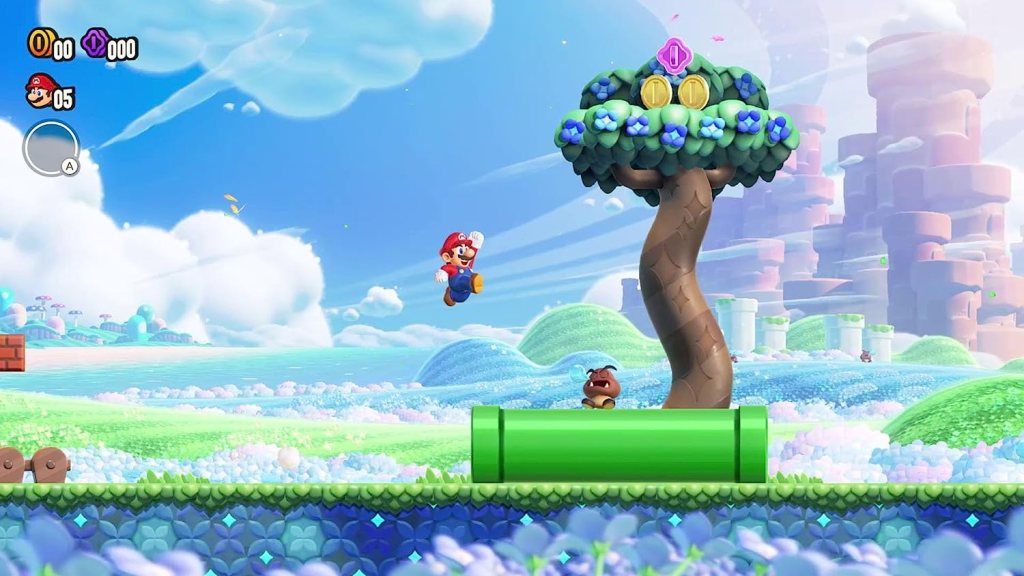
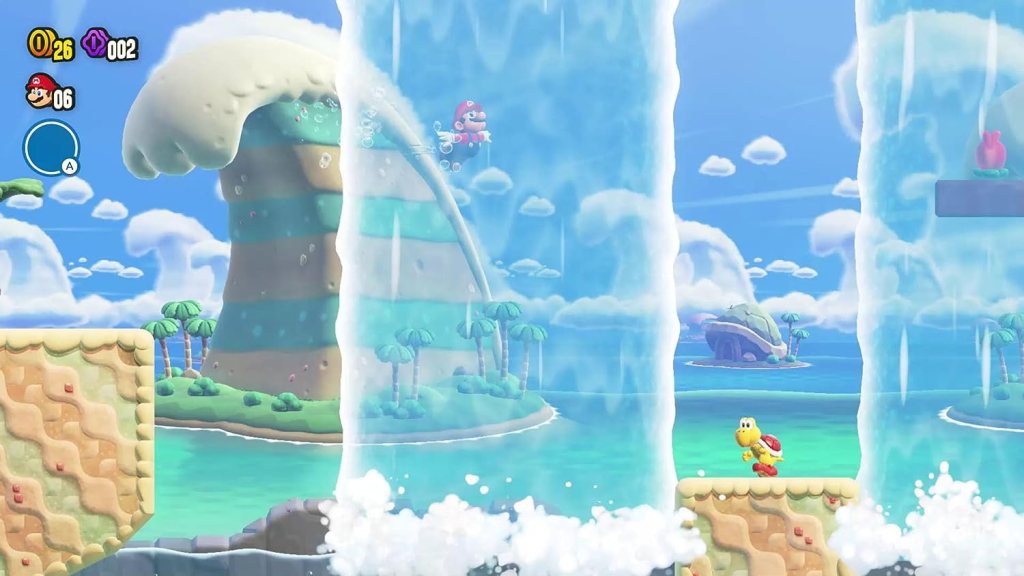
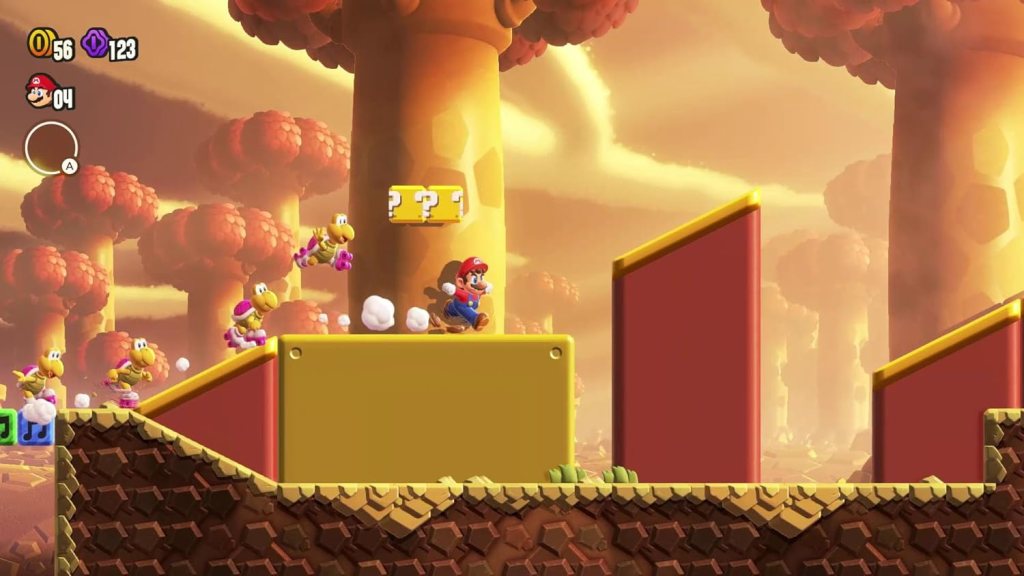
With Super Mario Bros. Wonder, the magic is back. There’s an unparalleled level of creativity on display here. Nearly every single level introduces a new idea. It doesn’t dwell on any single mechanic, but each one goes through a natural progression over the duration of a level. Whether it be a new enemy, new obstacle, or a new gimmick, Super Mario Bros. Wonder takes care to let the player safely interact with its ideas before amping them up. But as the level progresses that idea gets elevated and asks more of the player, and it culminates in a final crescendo: the Wonder Flower.  

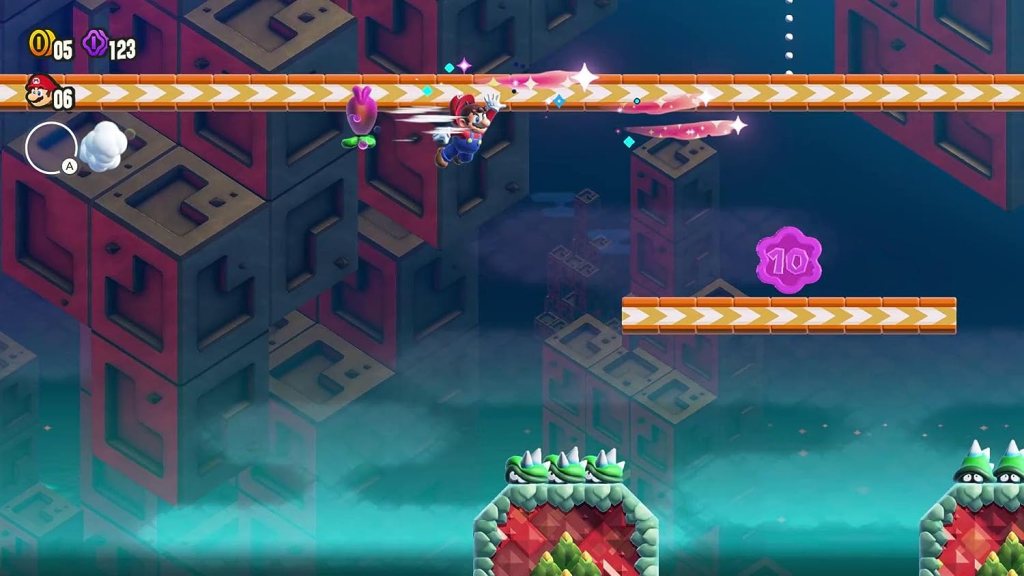
The Wonder Flower serves as the key mechanic in Super Mario Bros. Wonder. Every single standard level in the game has one, and they are wildly imaginative. Towards the end of every level, you can grab the Wonder Flower which transforms the level into something else entirely. Pipes come to life and wriggle around, Piranha Plants leave their pipes and sing, Mario turns into a fast-rolling ball of destruction, and that’s just the beginning. They are all wacky ideas that don’t fit in the classic Super Mario world that we know, but the nonsensical fun and unexpected surprise in every level is glorious. 

Super Mario Bros. Wonder is so jam-packed with creativity that it’s absurd. Just the base levels are plenty of fun on their own. Most levels introduce something entirely new to center its design around. And the Alice in Wonderland-esque nonsense that’s triggered when you grab a Wonder Flower serves as a bombastic evolution of the level with wondrous visual effects and marvelous mechanical switch-ups. I couldn’t wait to see what each level had in store for me, and I was always eagerly anticipating what the Wonder Flower would do next.

Apart from the level design, Super Mario Bros. Wonder lets the player express their own creativity with badges. You can equip a single badge to augment your abilities. Some of them provide simple passive bonuses like extra coins or a free power up, others give some additional abilities like being able to glide in the air briefly or get a small height boost when twirling. But there are also a few badges that majorly augment the way the game is played by having you bounce around like a spring, constantly run at high speed, or be invisible. I think the badges are fun options to mix up your abilities. They are never necessary outside of the occasional badge challenge level, which I appreciated. I stuck with a passive badge for most of the game as I felt the action badges would make the game too easy, but I appreciate that they exist for players who do want to have an additional ability. But I did love how badges were utilized for one-off challenges.

In between the non-stop barrage of creative levels there’s the occasional shorter bout. These can be combat focused K.O. arenas, short challenges utilizing badges, search party levels, a Wiggler race, or a celebratory break time. These are all fun little side missions to break up the longer courses. The badge challenges were my favorite as they serve as miniature training grounds to master using a specific badge. The only variant of these bite-sized levels that I didn’t enjoy were the search party levels in which the player has to probe the level for invisible secrets. I think these are meant to be played with friends, but as a solo player it leads to just a lot of jumping around for minutes at a time trying to find hidden blocks.

There’re only a few search party levels so it is not a particularly big issue. In fact, most of my complaints about Super Mario Bros. Wonder are very minor. I thought that the boss fights were a little underwhelming and could’ve made better use of Wonder Flowers. Additionally, while I enjoyed the themed overworld and searching for secret levels, I wish that more courses had secret exits like in Super Mario World. And the little flower guys that are in every level can be annoyingly positive and their plainly spoken English feels out of place in Super Mario

All of these gripes are minor. The only major thing that I would’ve loved to see in Super Mario Bros. Wonder was some more post-game content. There is a special world with some fantastic levels, but I wanted more of them. These levels were more challenging than the main campaign and often combined Wonder Flowers, badge challenges, and tricky design to make for some highly engaging levels. All things considered, if my biggest complaint about the game is that I wanted more of it, then that’s a pretty good indication of its quality.

I was blown away with how consistently imaginative Super Mario Bros. Wonder was. It’s crammed with tons of brand-new ideas and tricks, and that’s before even touching the Wonder Flower. This is the first time in decades that a 2D Super Mario game has captured the magic, sense of joy, and creativity that oozes from its 3D counterparts. I just couldn’t put down this game, it was a platforming joyride the whole way through. It is for these reasons I give Super Mario Bros. Wonder a 9.5/10. If this is the direction for future Super Mario titles, I am ecstatic and am eagerly awaiting the next release.

Pikmin (2001)

Growing up I loved Pikmin. I never beat the game until I was older, but I loved playing it nonetheless. Real-time strategy (RTS) games can be intimidating as they have steep learning curves and can brutally punish the player for mistakes. But not Pikmin. This is an approachable RTS, so much so that it’s accessible for children. Yet there were plenty of bold design decisions that shaped how Pikmin is played, and I think those risky choices ultimately are what make the game so fantastic.

 You play as Captain Olimar, a funky little spaceman who crash landed on an alien planet. He only has 30 days of life support to sustain himself and you need to recover 30 missing spaceship components. Captain Olimar discovers a creature that he dubs Pikmin and he learns how to command and lead them so he can fix his ship and return home. It’s a simple premise, but there’s a few key aspects to take note of.

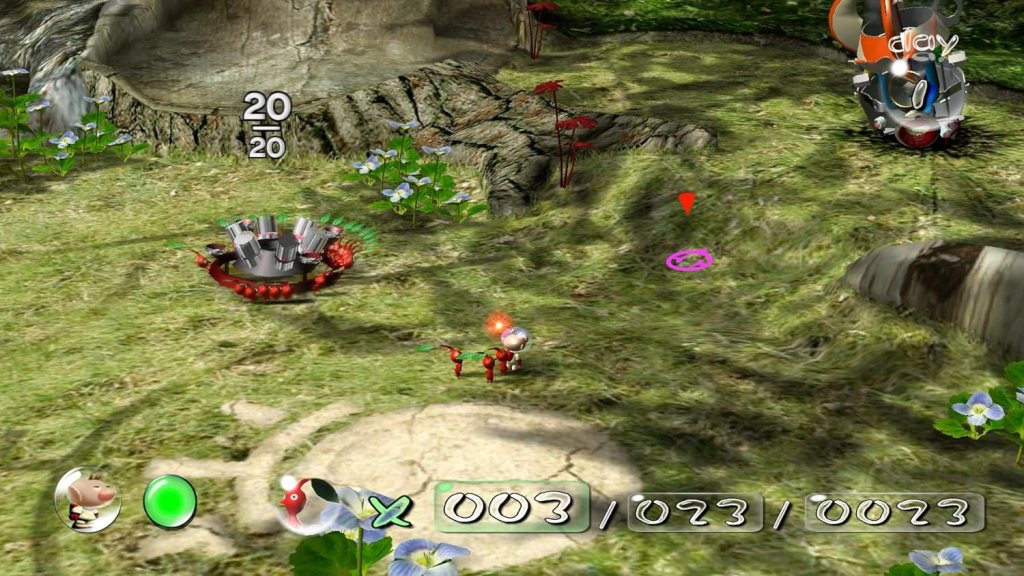
One of the first things that any player will notice about Pikmin is its setting. While Captain Olimar says he has landed on an alien planet, you’ll realize that the planet is only alien to him. The foliage and environmental design of Pikmin is obviously Earth from a microscopic perspective. Grass, stumps, and flowers tower over the player. Empty bottles and cardboard boxes are common obstacles. Most of the threatening fauna seem like evolved versions of common worms, flies, and ladybugs. I love this setting because it is immediately recognizable, but it does feel remarkably alien. Being scaled down makes the world feel monumentally different, and you have to learn how to survive.

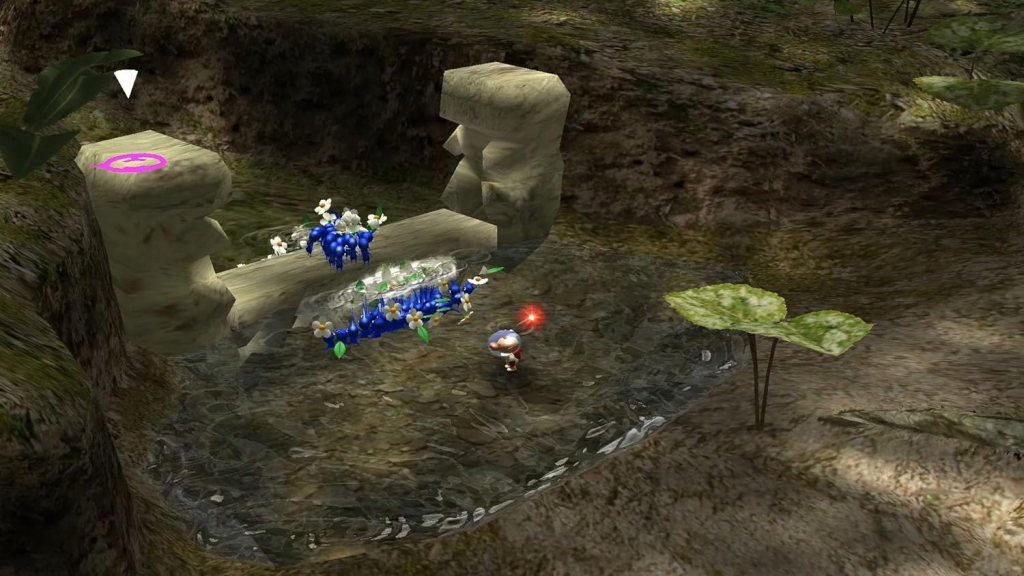
A key component to survival in this alien setting is learning how to utilize Pikmin. The game frames this excellently to compliment the context of learning how to persevere in an unfamiliar environment. There are three types of Pikmin, each with their own properties and niches to understand. The world is rife with hazards such as fire, water, and of course various enemies. I love how Captain Olimar makes observations like how the Pikmin respond to the whistle, or that the blue Pikmin have gills and may be able to swim. While it seems tempting to just bring a bunch of each type of Pikmin everywhere you go for every situation, that can be a risky proposition.

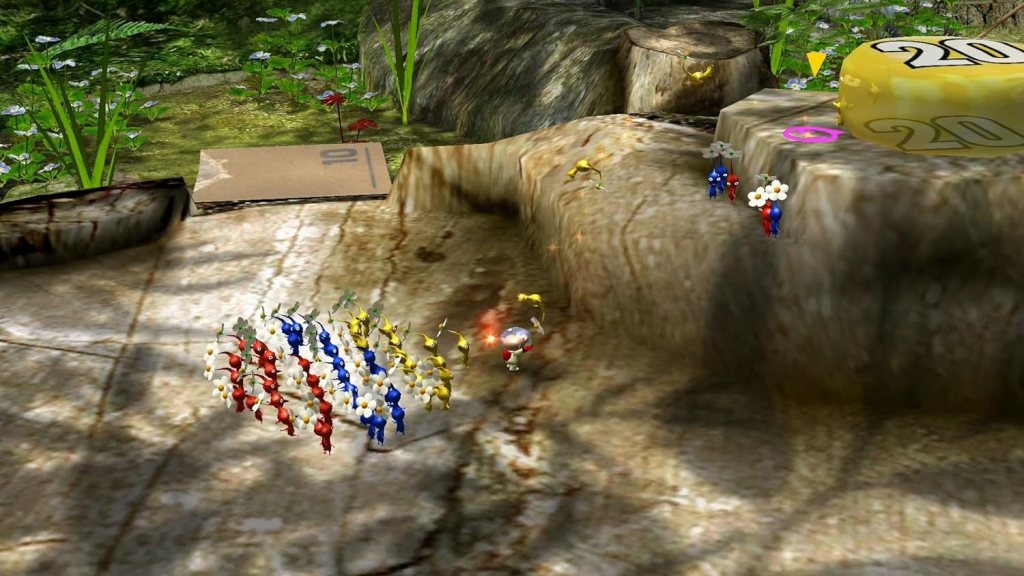
I love how many subtle decisions go into playing Pikmin. You can have 100 Pikmin in your legion at any time, but controlling a big group can be massively unwieldy. It’s easy for them to get caught going through corridors, get picked off by roaming enemies, or accidentally fall into a pit of water. There’s a sort of parental instinct that kicks in when you play Pikmin, they are cute little guys who you planted and raised, there’s no way you want to risk a single death if you can help it. I often only explored with smaller groups of Pikmin so that I could always account for each and every one of them. 

While the primary objective of the game is to recover ship parts, there’s a lot of preparatory work to achieve that goal. Walls need to be knocked down, bridges need to be built, you need to build up a force of Pikmin, you need to feed nectar to your Pikmin to empower them, and enemies need to be cleared out of the way. The game is a constant juggling act of small objectives, and it’s easy to feel accomplished with how quickly you progress.

Part of what fuels the rapid decision making of Pikmin is its most risky aspect: the time limit. It’s intimidating at first. 30 days to recover 30 parts. 1 part per day. And each day is only 13 minutes long. Truthfully, it’s a pretty generous limit. It’s often feasible to recover multiple parts every day, or at least make progress towards the next one. Nevertheless, the pressure of a time limit fuels the player to work quickly and attempt to multitask and make risky decisions. You can leave Pikmin to their own devices to take down walls or carry things back to base, but they are extremely vulnerable to predators. Moreover, any Pikmin left alone at the end of the day will be eaten. But if you want to get multiple parts in a day, you have to take that risk.

Time limits can often be off-putting by putting pressure on the player. But the time-crunch serves Pikmin well. You have to make decisions on the fly about what to do with your limited time. Whether it be planting new Pikmin, knocking down walls to serve as shortcuts, or just defeating enemies so they aren’t an issue for a few days, there’s always something to do. The time limit provides real tension and a sense of stake. But it isn’t oppressive as there’s an abundance of time to fully restore Olimar’s ship. 

If I had to complain about something about Pikmin, itis the artificial intelligence for the Pikmin themselves. I think it’s ok that they’re kind of dumb, as it contextually makes sense. They have a symbiotic relationship with Captain Olimar. They can use their overwhelming numbers to assist him, and he can use his brain to tell them what to do and help them reproduce. But at times they are just a little too dumb. Enough to be frustrating. It’s a pain to wrangle suicidal Pikmin who got distracted by grass or nectar. Or when throwing them at enemies to engage in combat I often found that the Pikmin would prioritize picking stuff up to carry home rather than attacking. I think it’s fine that they have a one-track mind, but when they actively ignore the player’s direction it can be frustrating.

Ultimately, Pikmin expertly marries its gameplay and narrative. From the somewhat-familiar alien setting, to the learning process of commanding Pikmin, to the parental responsibility that you feel for the titular creatures, to the impending doom that the time limit imparts, the game really does put the player in the shoes of Captain Olimar. And it does all this while remaining fun and accessible for all audiences. Pikmin has always been overlooked compared to other Nintendo juggernauts such as Super Mario and The Legend of Zelda, but in my opinion it’s just as classic.

Donkey Kong Country: Tropical Freeze (2014)

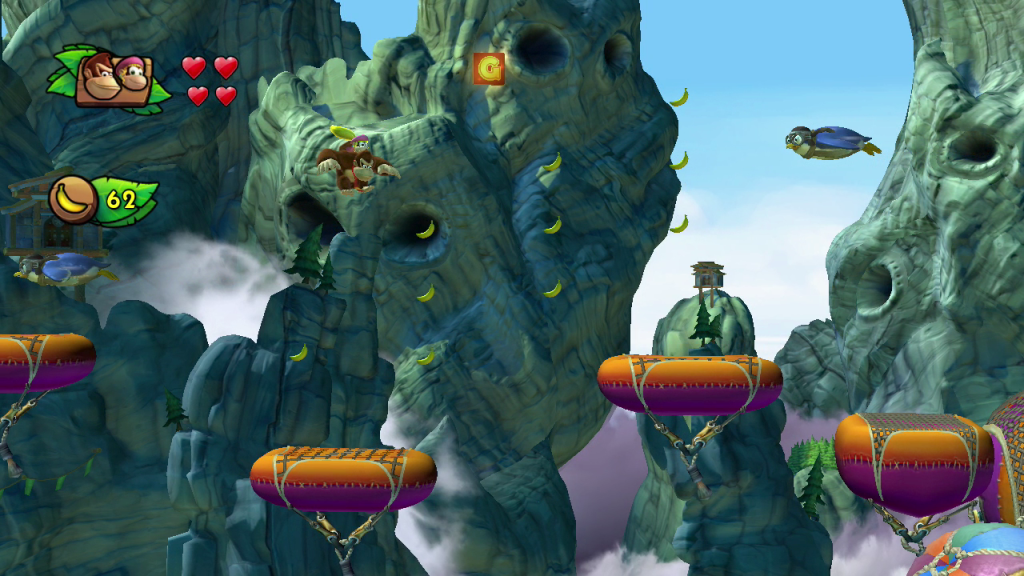
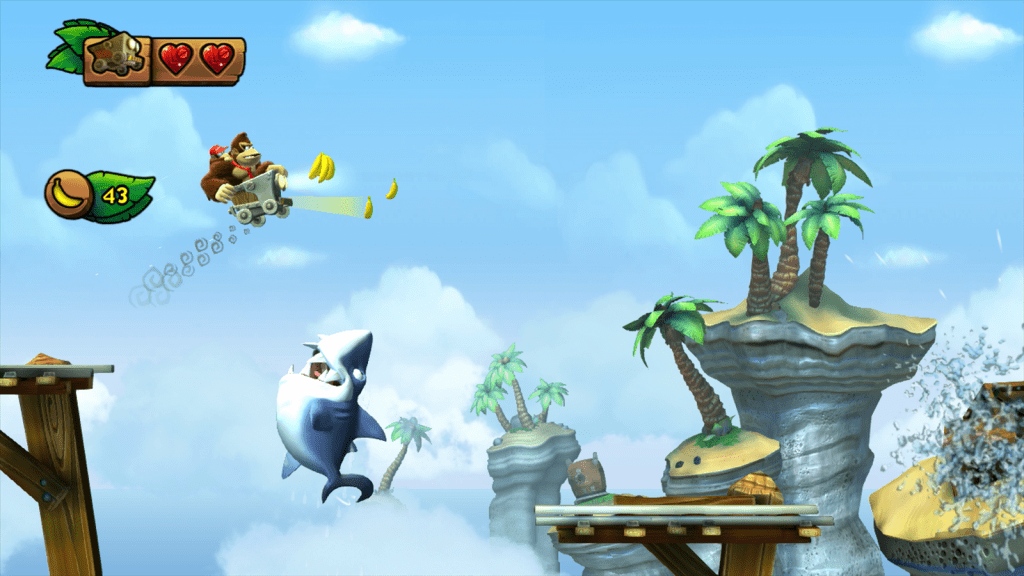
Great old school platformers can be tough to come by in modern gaming. While there are some retro gems out there like Celeste, Shovel Knight, Sonic Mania, and A Hat in Time, it feels like major studios have mostly abandoned the concept of a pure platformer. Sure, plenty of games have platforming aspects to them, but it is rarely the focal feature. When a game like Donkey Kong Country: Tropical Freeze comes along, anybody who is a fan of platformers should stop what they are doing and play it as soon as possible. It’s a fantastic game consisting of imaginative and fun visuals, superb difficulty, and tightly-crafted level design.

As far as Nintendo platformers go, Donkey Kong Country games have always been the most challenging of the bunch. That being said, I was impressed with how approachable Donkey Kong Country: Tropical Freeze was. The first zone of the game was fairly straightforward, and the difficulty of the game slowly ramped up as time progressed. There are tons of powerups that you can buy if you need an extra boost, and if you are really struggling there is a Funky Kong mode available on the Switch port that serves as an easy mode. But what’s more impressive is the numerous hidden aspects that can crank up the difficulty for experienced players looking for a challenge.

In each stage there are hidden puzzle pieces for completitionists to hunt down. While I ignored those for the most part, the more visible “K-O-N-G” letters were my main focus. The letters are easy to spot, but often require a more difficult or risky jump to collect. And if you collect all four letters in every level in a zone you unlock a secret stage. The secret stages are where the meat of the game’s challenge was for me. I found most of the regular levels to be tricky enough that I needed to play well, but not perfectly. The secret stages often required such precision and timing that I felt like I really needed to master them. And if you manage to conquer all the secret stages, you unlock a challenging hidden zone with three more devastatingly difficult levels. And if you succeed in that you unlock Hard Mode.

Of course, you can entirely ignore the puzzle pieces, letters, hidden exits, secret levels, the bonus zone, and Hard Mode entirely. But the fact that all of these things were included as extra little ways to incrementally tune up the difficulty was wonderful. Letting the player pick what is important to them is a great way to introduce some optional difficulty instead of just giving the player five different difficulty modes at the start. But the most impressive thing about Donkey Kong Country: Tropical Freeze was how the level design facilitated multiple styles of play.

A majority of the standard levels in Donkey Kong Country: Tropical Freeze are designed such that you can mostly take your time and think about what you are doing before you make the leap. While there some frantic and exciting sequences requiring you to move quickly, it’s a game that can be taken at whatever pace the player desires. But something interesting happens when you try to go as fast as possible through a level. You realize that everything lines up perfectly. As you bop from one enemy’s head to another to maintain your momentum, the platforms and enemies seem carefully placed to facilitate this level of speed. That’s because they are. While every level seems like a standard platforming stage at first glance, there is a deeper complexity behind the speed running curtain. I was extremely impressed by the level of thought and effort put into every single level in the game.

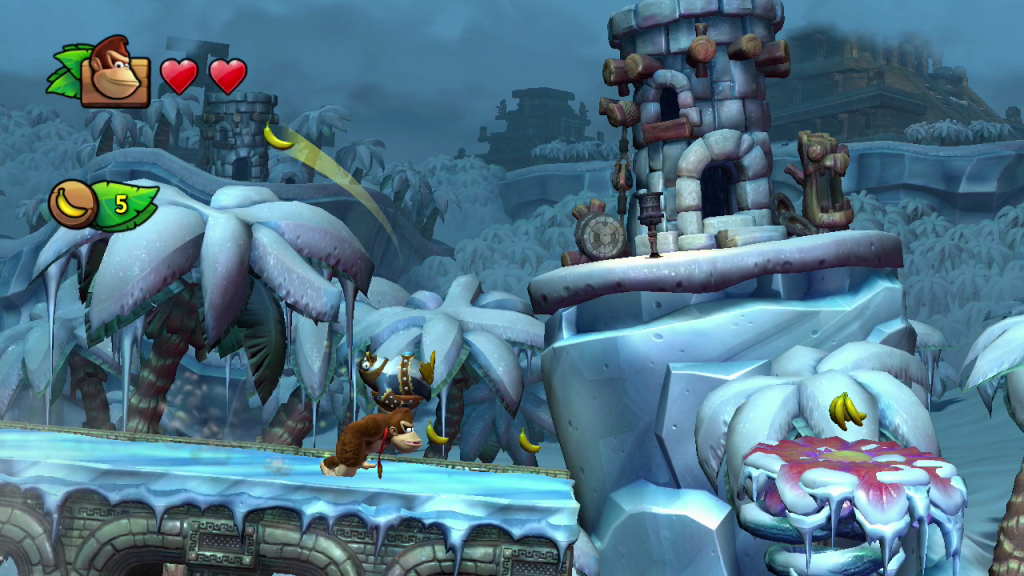
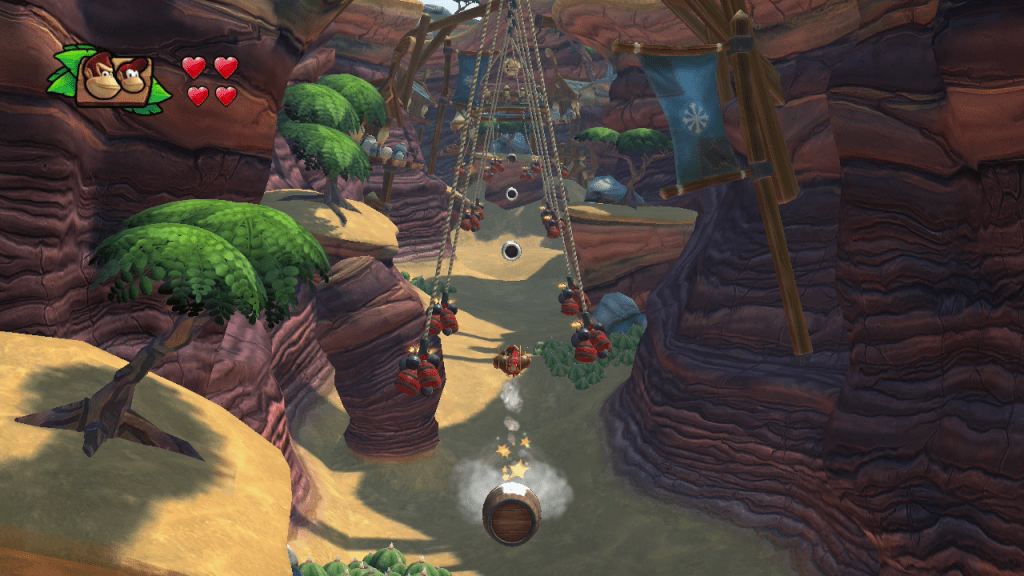
On top of the effort put into the gameplay and flow of each level, there was also a tremendous amount of care put into the visual experience. There are so many fun settings that make it feel like you are running and jumping through an animated movie. Not only is the background a spectacle, but the visuals tie into the gameplay. You can ride a rhino and dodge fireballs as a volcano erupts in the distance, or swing between decorative floats during a Lion King like celebration in the savannah, or jump between platforms as an avalanche sweeps away the platforms below you. There are tons of memorable stages that will go down as some of my favorite platforming levels of all time.

My only complaints with Donkey Kong Country: Tropical Freeze are fairly minor. It could be frustrating to get to the end of a level, notice that there is a secret exit, and realize that you have the wrong power-up to access it. This meant that you would have to restart the entire stage with a certain Kong partner and make it all the way to the end without dying or taking more than 2 hits of damage. I say this is minor because these are completely optional stages, but still, I rarely enjoy having to redo a level through no fault of my own.

Furthermore, I was not a huge fan of the boss fights at the end of each world. They were often pretty long with no checkpoints. They usually had three phases, getting progressively more challenging every three times that you hit them. But I found that the first and second phases were simple, and the final phase was fairly difficult. It could take a few attempts to learn the final phase patterns, and having to go through the entire boring lead-up every time could be a bit boring.

Overall, Donkey Kong Country: Tropical Freeze is an excellent platformer in a world deprived of the genre. It combines imagination, visual spectacle, and exciting gameplay to create a spectacular experience. The level of care put into the level design is astounding. Whether you are someone new to the genre or an experienced platformer player, you can definitely find what you are looking for in Donkey Kong Country: Tropical Freeze.

My E3 Impressions (2019)

Everyone knows that E3 is the time of year where tons of games get announced and hype begins to build. Publishers hold a conference to announce what they will be releasing in the upcoming months, often times revealing new games. E3 can be an exciting time: interesting new games get announced, dead franchises get revived, indie games get a chance to be on the big stage, and highly anticipated titles get definitive release dates. I have decided to give my impressions of E3, going through what I was intrigued by at each conference. I am not going to go through every game shown, but just the ones that I am interested in. Obviously E3 is run by the publishers, so games are often misrepresented to build excitement and boost sales. I try not to buy into the hype too much, and I am aware that many games shown are going to over-promise and under-deliver. With that being said, it’s still fun to talk about the grandiose trailers and teasers. At the very least, this time next year I can look back at my list and laugh if these titles flop.

I will split the games into 4 categories: Heavy hitters, looks good, piqued my interest, and uncharted territory. Heavy hitters are games made by well-respected studios and that look to be phenomenal, generally I will buy these games as soon as they are released. The looks good category is for games that have impressed me for whatever reason, but they are not quite as hype-garnering as the heavy hitters. Piqued my interest is for games that seem to be interesting, but there is not enough info about them to make a proper judgement yet. Lastly, uncharted territory is for games that are part of series that I have not played yet. Games in this category could easily be heavy hitters for many people, but since I have not played their respective series, I am not overwhelmingly excited for them. Any game not mentioned just did not impress me or wasn’t my kind of game. That being said, let’s get into the conferences.

EA

Heavy hitters: Star Wars Jedi: Fallen Order.

Looks good: N/A.

Piqued my interest: N/A.

Uncharted territory: N/A.

Not much can be said for EA, they showed very little and most of what was shown were just updates for already existing games. The only thing saving their conference was Star Wars Jedi: Fallen Order. People have been clamoring for a single-player, story-driven, Star Wars experience for decades. This game looks to deliver on satisfying lightsaber combat, create a unique new Star Wars story, and tap into the magnificent world building of Star Wars.

Microsoft

Heavy hitters: Cyberpunk 2077, Elden Ring, Ori and the Will of the Wisps, Borderlands 3.

Looks good: The Outer Worlds, Spiritfarer, Way to the Woods.

Piqued my interest: Twelve Minutes, Microsoft Flight Simulator.

Uncharted territory: Halo Infinite, Gears 5, Tales of Arise, Psychonauts 2.

If you ask me, Microsoft knocked it out of the park with their presentation. Rapid-fire trailers for both big games and indie games alike. The obvious elephant in the room is Cyberpunk 2077, holy moly. This game looks insane and it nails the cyberpunk aesthetic, CD Projekt Red have my full trust since I played The Witcher series. And it has Keanu Reeves in it! Elden Ring is the next game by FromSoftware, directed by Hidetaka Miyazaki and consulted on by George R.R. Martin. Miyazaki and his team have continuously blown me away with Soulsborne, and one of my favorite authors is world building for this game, sign me up. In the world of indie games, Ori and the Will of the Wisps looks to capture the feeling and bliss that made Ori and the Blind Forest so magical. While Borderlands 3 has been announced and has had a release date set for a while, it was cool to see some more info for the next installment in my favorite looter-shooter series.

I am cautiously optimistic for The Outer Worlds, it looks solid. Obsidian did a phenomenal job with the legendary RPG Fallout: New Vegas, and if this game is anywhere close to that level, I will be immensely pleased.  Spiritfarer looks gorgeous, and looks to be the perfect kind of game for developer Thunder Lotus Games. It looks to be a cozy management game with beautifully hand-drawn characters, gorgeous locales, and emotionally charged moments. While it may not be as high profile as other games, Way to the Woods looks enchanting. I am getting some serious Journey and ABZÛ vibes from this game. Exploring the world as a deer sounds like a remarkably comfy and calming experience.

As for games that piqued my interest, Twelve Minutes is at the top of that list. This Groundhog Day inspired game seems to be ripe with mystery and intrigue. While I have never played a flight simulator, Microsoft Flight Simulator captivated me. Something about being able to fly around a fully detailed Earth is just enticing. I’m not sure if this genre will appeal to me, but it piqued my interest nonetheless.

The Microsoft conference also included a ton of familiar series that I am sure many people will be excited for. Again, I have not played the respective series yet, but I would be remiss to not mention these games. Halo Infinite carries the torch for one of the most famous series of all time, and now that Halo is coming to PC, I might actually be able to play it. The Gears 5 trailer didn’t really get me hyped, but I am sure long-time fans will be thrilled. While I am not a JRPG lover, Tales of Arise looks to modernize the series and maybe I will give it a try. Lastly, Psychonauts 2 is a sequel to the renowned platformer, hopefully it will live up to the 14-year-long wait.

Bethesda

Heavy hitters: DOOM Eternal.

Looks good: Wolfenstein: Youngblood, Deathloop.

Piqued my interest: GhostWire: Tokyo.

Uncharted territory: N/A.

I am immensely disappointed that we did not get any info on Starfield, and that the majority of the conference was filled with expansions of already existing games. Luckily, DOOM Eternal looks phenomenal. The 2016 reboot of DOOM was a bombastically fun demon killing-spree, and DOOM Eternal looks to expand upon the unparalleled FPS action. Taking the battle to Earth looks to mix up the environments and color palettes of the game which is a much-appreciated change. As much as I love the brutal red hellscapes of Mars and the Underworld, I think some varied environments would be nice.

While Wolfenstein II: The New Colossus was fairly underwhelming, Wolfenstein: Youngblood looks to be a promising spin-off of the main series. With a focus on two-player coop, with any luck this game will rekindle my confidence in the series. With help from one of my favorite developers, Arkane Studios, I am hopeful that level design takes a big leap forward in this game. Speaking of Arkane Studios, I am also excited for their upcoming game, Deathloop. Not much was revealed about this game other than it has some sort of ambitious idea where the two protagonists attempt to murder each other to break the never-ending time loop. I consider Arkane Studios to be geniuses of modern level design and their previous games such as Dishonored and Prey were fantastic, so I am looking forward to Deathloop.

The game that piqued my interest the most was GhostWire: Tokyo. While I am not super familiar with the developer and no gameplay was shown, the trailer itself was magnificent. I legitimately thought it was a real-life video, but it was insanely detailed prerendered CGI. Seriously, go check it out. The game looks to be a spooky action-adventure with an air of mystery. The atmosphere and aesthetic of the game look to be top-notch, so I am looking forward to seeing some more details about this game in the future.

Devolver Digital

Heavy hitters: N/A.

Looks good: Fall Guys, Carrion.

Piqued my interest: My Friend Pedro, Devolver Bootleg.

Uncharted territory: N/A.

Devolver did not bring any heavy hitters, but a couple of neat indie games looked impressive. Fall Guys is a 100-man death run where players compete to make it to the end of an obstacle course. It looks like a ton of goofy fun. Carrion on the flip side is a “reverse horror” in which the player is a monster reminiscent of John Carpenter’s The Thing. A 2D side-scroller where you play as the monster? Sounds good to me.

While I’m sure My Friend Pedro appeals to many people, it looks almost too much like one of those old internet flash games for me to really get invested. I’m going to wait for reviews before I pick this one up, as flash games can be dumb fun for 15-30 minutes, but a full game is a stretch. Similarly, the Devolver Bootleg is a silly idea that seems like it could be a fun novelty, but I’m not sure if I see myself playing it for very long. A five-dollar collection of bootlegs of Devolver’s own games sounds neat, but I’ll wait to see if it is more than just a one-time novelty.

PC Gaming Show

Heavy hitters: Baldur’s Gate III.

Looks good: Starmancer.

Piqued my interest: Unexplored 2, Remnant: From the Ashes, Per Aspera, Valfaris, Genesis Noir.

Uncharted territory: Vampire: The Masquerade – Bloodlines 2.

Larian Studios have the monumental task of reviving the legendary Baldur’s Gate franchise. This beloved Dungeons & Dragons inspired series has been dead for 20 years, and modernizing it will not be easy. That being said, Larian did a great job with Divinity: Original Sin 2, hopefully they can bring a similar level of creativity and world building to Baldur’s Gate III.

Starmancer is a space station management game in which you design and customize your colony. Trade with other colonies and defend against space pirates to enhance your space station. This seems to be similar to RimWorld and Dwarf Fortress, but in a more contained environment. Hopefully Starmancer nails the space colony management aspect.

The PC Gaming Show included many titles that looked interesting, but I’m not quite sure if I’m going to get them yet. Unexplored 2 looks like a fun exploration roguelike. Remnant: From the Ashes is a coop shooter with some horrifying bosses and an oppressive atmosphere. Per Aspera seems to be a management game about colonizing Mars, but it’s tough to tell exactly what the player will be doing. Valfaris is a brutal 2D action-adventure infused with heavy metal. I’m not quite sure what Genesis Noir entails, but the noir and jazz stylization are interesting.

For a kind of obscure RPG, Vampire: The Masquerade – Bloodlines has built a substantial fanbase. I haven’t had a chance to play the original game yet, but I’m sure fans will be pleased with the reveal of the sequel. The trailer encapsulated the grim style that I hope a vampire RPG would demand.

Ubisoft

Heavy hitters: N/A.

Looks good: Watch Dogs Legion.

Piqued my interest: Ghost Recon Breakpoint, Gods and Monsters.

Uncharted territory: N/A.

Ubisoft games are known for being generally repetitive and derivate of each other, but Watch Dogs Legion looks to be one of the most ambitious games of all time. Set in a future surveillance state, the player can recruit characters to join their resistance group. Every single character in the game supposedly can be recruited, has special abilities, and their own backstory. The trailer seemed to insinuate that every character has unique voice lines and their own story, but I am skeptical. The city of London would need at least thousands of people to seem semi-believable, so it is an incredibly ambitious undertaking. Being able to recruit and play as anybody is incredibly unique and attractive, I just hope they can pull it off.

For less ambitious games, Ghost Recon Breakpoint looks like it could be some coop fun similar to its successor Ghost Recon Wildlands. It’s fun to feel like an expert operative tasked with infiltrating and taking down dangerous organization. Gods and Monsters is a cartoony action-adventure game set in ancient Greece. Not much was shown, but I’m always down for large-scale boss fights and ancient mythology.

Square Enix

Heavy hitters: N/A.

Looks good: N/A.

Piqued my interest: Marvel’s Avengers: A-Day, Outriders.

Uncharted territory: Final Fantasy VII Remake.

Square Enix is known for their JRPGs, which I admit are not for me. Most of the conference was saturated with JRPGs, so unfortunately, I did not get much out of this presentation. Marvel’s Avengers: A-Day was not really clear on what type of game it would even be. An on-rails story focused game? A linear beat ‘em up? Or an open world action-adventure like the recent Marvel’s Spiderman? Playing as Thor, Captain America, Black Widow, Hulk, or Ironman is certainly a great hook to sell games, but I hope we get some more substance. Outriders is another game which looks like it could be fun, but really very little details were shown. We know it’s a shooter in a dark setting, that’s about it.

I have never really played a Final Fantasy game. They just never really appealed to me. I have to say; the Final Fantasy VII Remake looks to change my mind. I’m sure dedicated fans of the series are enormously hyped for what is touted as the best game in the series getting a full-scale remake. If a JRPG seems cool to me, it must be doing something right.

Nintendo

Heavy hitters: Animal Crossing: New Horizons, Legend of Zelda: Breath of the Wild Sequel.

Looks good: Luigi’s Mansion 3, Fire Emblem: Three Houses, Legend of Zelda: Link’s Awakening.

Piqued my interest: Astral ChainDaemon X Machina.

Uncharted territory: N/A.

Despite Nintendo showing a bunch of exciting upcoming games, I have to say I was a little disappointed overall with their presentation. Most of the games shown have already been revealed. The only big true reveal with the sequel to Legend of Zelda: Breath of the Wild. It seems like the next Legend of Zelda game is a direct sequel and will reuse many characters, areas, and assets. I am extremely excited as I adored Legend of Zelda: Breath of the Wild so the beautiful style and world of that game is exactly what I wanted. Unfortunately, I think this game is a long way away, as Nintendo didn’t even give a release window. I anticipate 2021 will be when we will get our hands on this game. Animal Crossing: New Horizons is getting released next year and it looks amazing. I have never played any Animal Crossing title, but this one looks to be right up my alley. Building up your island and town from scratch is extremely appealing to me. I don’t know why, but the cozy feeling of building a town and having NPCs come and inhabit is what I am looking for.

For some games that aren’t as high profile, Luigi’s Mansion 3 seems to introduce a bunch of new mechanics to the series. I like the original goofy ghost hunt of the original Luigi’s Mansion, hopefully this game captures the same essence. While I am a huge fan of the tactical Fire Emblem series, Fire Emblem: Three Houses still seems iffy to me. Developers have been shifting away from tactics and deeper into fanservice and JRPGs tropes. Hopefully Fire Emblem: Three Houses can deliver on a quality gameplay experience. The remake of Legend of Zelda: Link’s Awakening also is looking solid. A faithful recreation of the original with some modernizations. I’m not sold on the overly cutesy art style yet, but I’m sure the game will be great.

As for some games I’m unsure about, Astral Chain looks like it has some potential. Platinum Games titles are always top-tier action thrillers, and hopefully this game can easily fit right in. Daemon X Machina is a giant robot action game, which is something that everybody wants. Both Astral Chain and Daemon X Machina seem like they could be great hidden gems, or complete jank-storms. Both seem a little too “anime-y” for my tastes, but maybe the action will be worth.

Who Won?

For me, Microsoft takes the E3 crown. They had plenty of big-name games to show alongside a slew of indie games. I wish they showed a little more gameplay, but otherwise their conference was phenomenal. Next up is Nintendo, while they didn’t have many new games to show, they gave plenty of details for games I’ve been waiting for. PC Gaming Show also had a good presentation, hopefully all of the indie games they show turn out to be memorable.

On the underwhelming side, Bethesda was fairly disappointing. Arkane Studios and DOOM was really all they had going for them. Ubisoft mostly was pushing their live service games like For Honor and Rainbow Six Siege, and since I don’t care for those games I was bored by their presentation. I’m sure plenty of people love Square Enix and their expansive JRPGs, but it’s just not a genre that I enjoy. Lastly, EA was terrible as per usual. EA’s conference hinged on the fact that they have Star Wars.

All in all, it was a decent E3. I would have liked to see more gameplay instead of cinematic trailers, but I understand why developers choose to save gameplay for later dates. E3 is about rapid-fire trailers, and the best way to catch someone’s eye in 1 to 2 minutes is through intriguing cinematics. Gameplay is better served in 15 or 30-minute demos to show off key features. Regardless, I am hyped for some of the big releases on their way. It should be a phenomenal year for video games.