Hollow Knight: Silksong (2025)

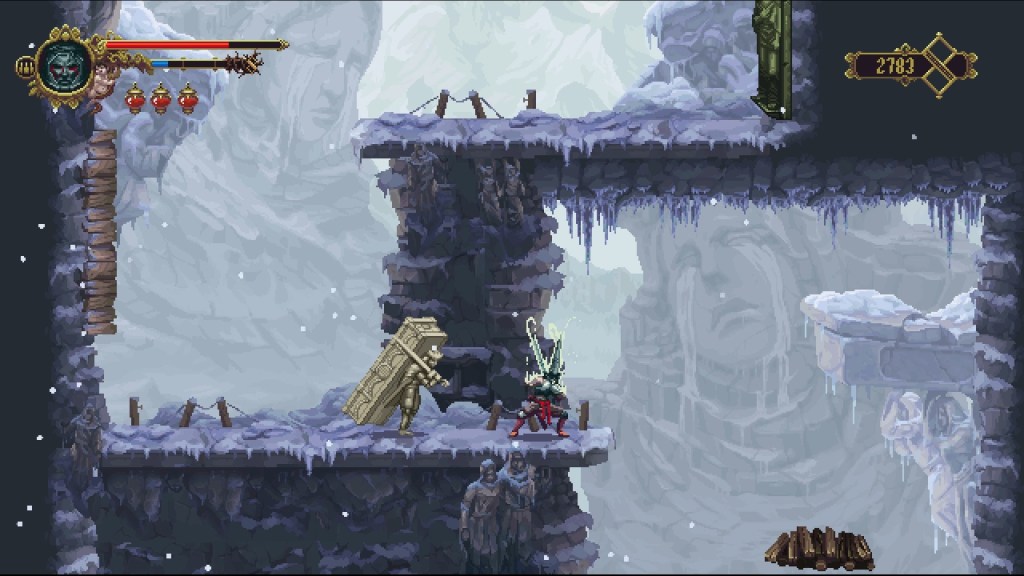
No game may have been more highly anticipated than Hollow Knight: Silksong. Team Cherry surprised the world in 2017 with the debut of Hollow Knight, and one of their Kickstarter funding goals promised a second playable character: Hornet. That promised DLC expanded in scope until it eventually became its own standalone game. It’s been over 6 years since the game was first revealed and after the long wait I wondered if the lightning-in-a-bottle of the original could be recreated. But after playing the game, I can confidently say that Silksong picks up right where Hollow Knight left off. For my thoughts on Hollow Knight, check out my review from when the original was released.
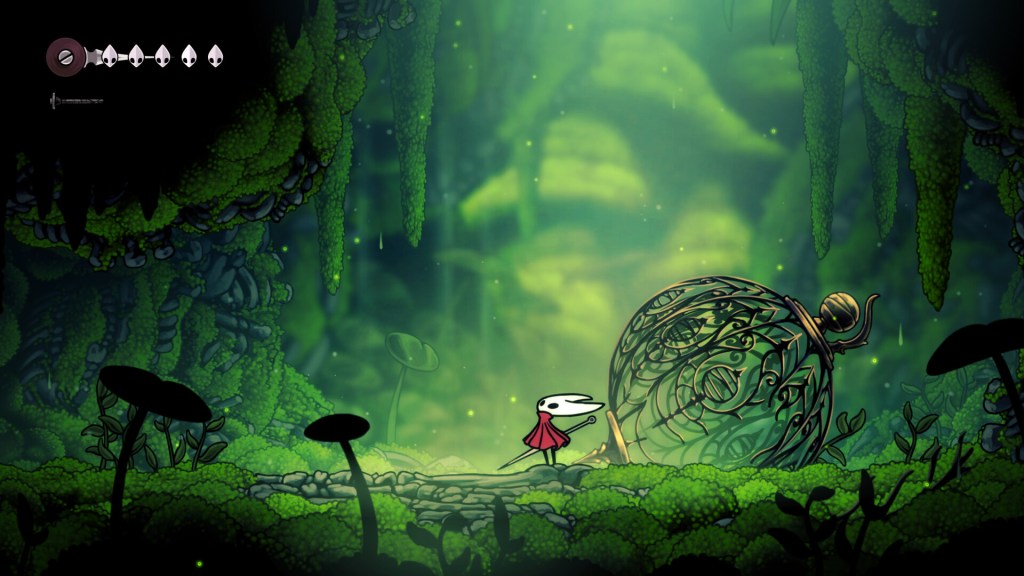
The brilliance of Silksong begins with its world. Kidnapped by religious zealots, Hornet arrives in the land known as Pharloom. It’s inhabited by numerous varieties of bugs, but the common thread connecting them is religious devoutness. It’s clear that Pharloom is a kingdom that has crumbled into dust, only whispers and tradition carry the travelers to summit the peaks where the holy Citadel stands.

As a metroidvania, Silksong frees its players to explore and discover organically. With nothing but the nebulous goal of reaching the Citadel as your guide, you set out on a blind journey. Silksong takes inspiration from the storytelling of FromSoftware’s games such as Dark Souls and Elden Ring. Taking in the dying world around you, piecing together the puzzle of what happened through vague texts and environmental storytelling. Nothing is directly told to you, but the world and its artistry wonderfully communicate what kind of place Pharloom once was.
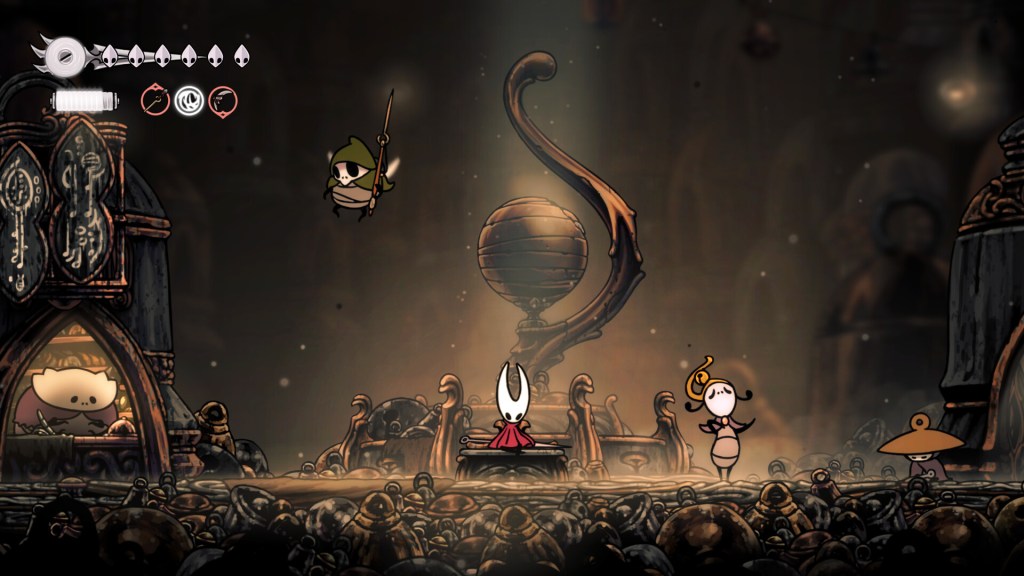
Take for instance the Underworks, a mechanical nightmare of pipes, gears, and valves beneath the Citadel. The opulence of the Citadel is powered by these dingy chambers. It is here where workers tirelessly labor to maintain the holy grounds that they never see. When they attack you for your intrusion, they only drop a pittance of rosaries, the currency of Pharloom. As you’ve progressed through the game you’ve gained increasingly more rosaries in each area from tougher foes, but the Underworks represent the poor dregs of the Citadel. There’s even a hidden room in which you can run on a treadmill to generate power, only to be rewarded with a single rosary for the effort. And it is here in the Underworks where the benches which have been the universal sign of rest and have acted as your checkpoints of safety incur a cost of 15 rosaries for a single use. Without any dialogue or text, Silksong portrays a dystopian society where a class is exploited and drained to fuel the grandiosity of an empty cathedral.

It’s these vignettes and partial truths of the past that make exploring Pharloom so compelling. The art and sound design of Silksong is also top-notch. An enormous amount of care was put into making each area distinct and filled with details. It’s from these details where the hidden stories are filled with life. The music is equally compelling, often harboring somber moods as you explore this crumbling kingdom. Yet frantic melodies make an appearance when engaging with any of the numerous bosses of Silksong.
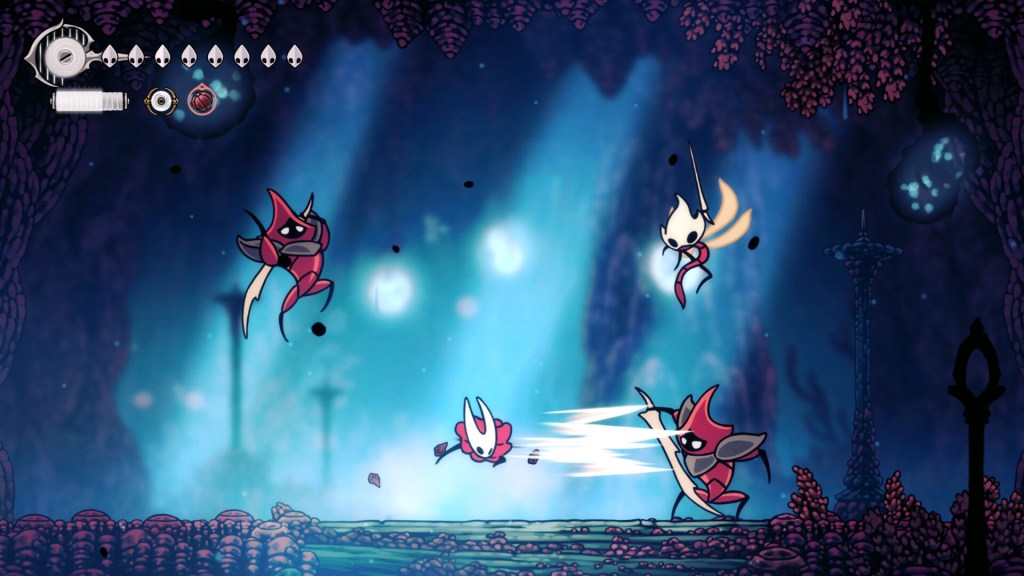
The gameplay of Silksong is that of traditional 2D metroidvania. You explore massive areas, fighting enemies, platforming across dangerous pits, and collecting hidden boons to increase your power. The major upgrades that you find act as keys that unlock new paths in the world, as well as being purposeful in combat. What I love about Silksong is its non-linearity and its reluctance to guide the player. It is up to you to figure out where to go, often you have to choose at random between forks in the road. When you enter a new area, you are blind, there is no map until you find the mapmaker. You’re forced to rely on instinct and curiosity. I find this more compelling than being given explicit directions. Each path has something to be discovered, but the further you wander from a resting place, the more risk you incur.

Pharloom is a harsh place, filled with enemies, obstacles, and traps. Resting at a bench acts as a checkpoint, restoring your health and letting you respawn there if you die. And if you die, you lose all the currency you are holding, and you only get a single chance to reclaim it. The game design makes the world incredibly dangerous, and you can take nothing for granted. Every time you hit an enemy, you generate a single pip of silk, and nine pips of silk are required to heal. Getting hit at all is costly, and extreme caution is warranted when traversing Pharloom. I personally love this feeling of playing on a knife’s edge. You can never let your guard down or brute force your way through obstacles. You have to master your movement and your arsenal.
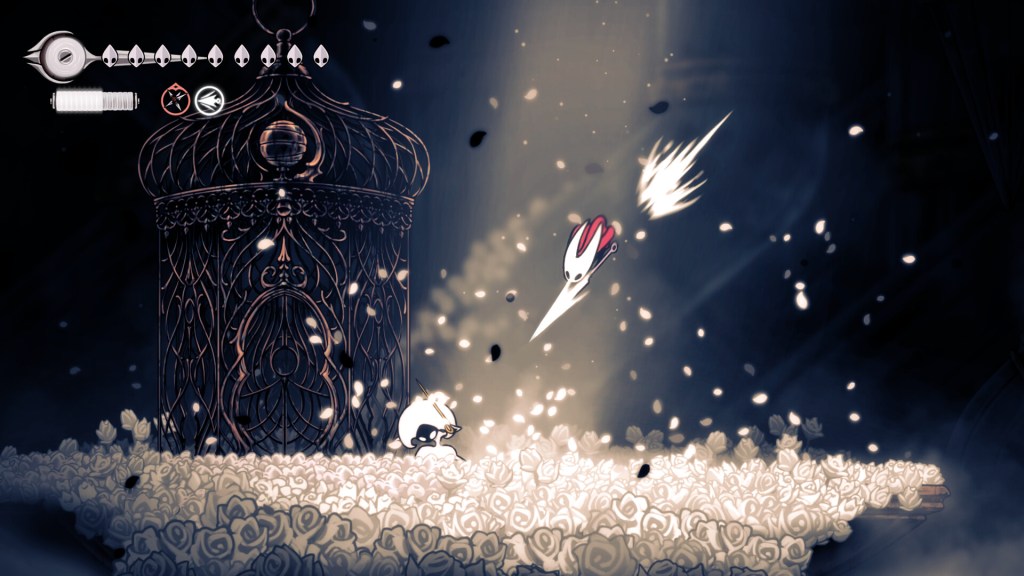
What makes Silksong stand out from its predecessor is the number of tools available to the player. Hornet is a much nimbler protagonist than Ghost from the first Hollow Knight. She acquires many different tools to dodge and evade. But this agility comes at a cost, as she is also much more fragile than Ghost. As the game progresses, many enemies and traps deal two ticks of damage rather than one. This happens fairly early on in the game. While there has been an uproar online about this steep spike in difficulty, I wasn’t offput by this at all. I thought the difficulty was well-balanced to provide an adequate level of challenge. Silksong is the sequel to Hollow Knight, and it was originally intended as DLC. It makes sense that it picks up where Hollow Knight left off. Furthermore, Hornet is swift and has so many more tools at her disposal to make encounters easier. Making use of these tools makes the game so much more approachable.

Not only do you unlock various movement options, but spells, crests, and tools also can be found to customize your moveset. Spells are powerful abilities that cost silk to use. Tools come in the form of both equipped passive bonuses and accessories that you can deploy in combat such as throwing needles or caltrops. And crests are complete game-changers as they entirely alter Hornet’s attacks and innate abilities. For example, the Beast crest modifies the basic heal to instead be a life-stealing effect when you claw at enemies. I found that tinkering with the different options and finding combinations that I liked was immensely enjoyable.
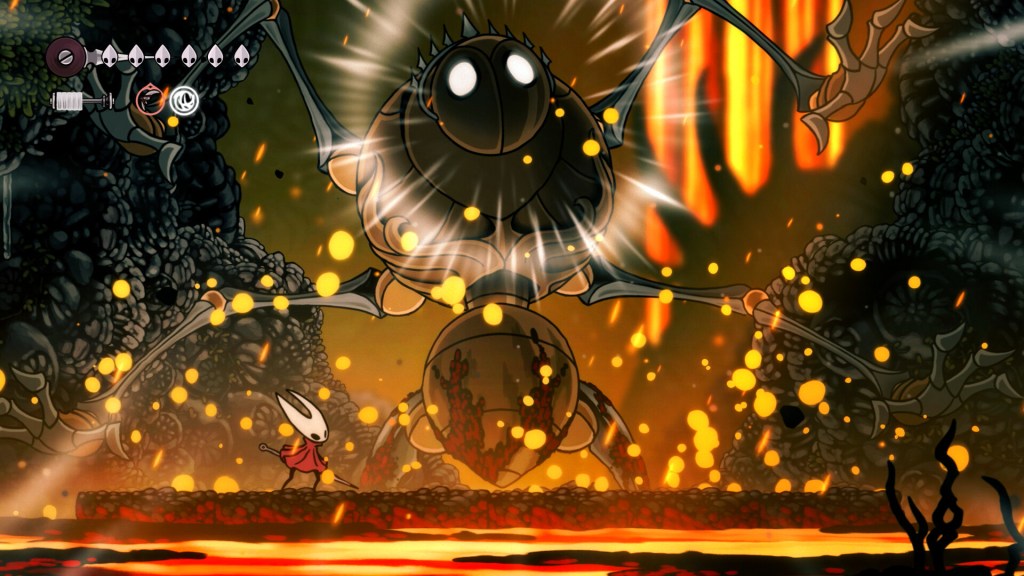
The boss fights of Silksong are the cherry on top of the already excellent gameplay. They all have distinct attack patterns and arenas that make them stand out from one another. But I was most impressed by the lack of restraint shown by Team Cherry. Most bosses only have 3 or 4 attacks, limiting the number of tells and timings that you have to memorize. I was able to easily find openings and gain confidence on the tougher foes, transforming the fights into a dance as Hornet nimbly evades blows and returns damage with her needle. The design of these fights has a knack to seem intimidating at first, but quickly become manageable once you learn the patterns.

As a metroidvania, discovery is a key aspect of the gameplay loop. Finding secrets, uncovering new areas, and remembering where to use your new abilities are part of the fun. For the most part, Silksong nails this. The lack of guidance makes these discoveries more organic and rewarding. But I do have a minor gripe with some of these well-kept secrets. I don’t mind when minor rewards such as health upgrades or tools are well-hidden, they are bonuses for having a keen eye. But I was disappointed by how many major areas were so incredibly concealed. I missed a handful of these areas initially, and only found them when I was aiming for 100% completion. One or two of these areas being secret is fine, but Silksong is a massive game and finding the fake walls leading into these secret zones is like finding a needle in a haystack.
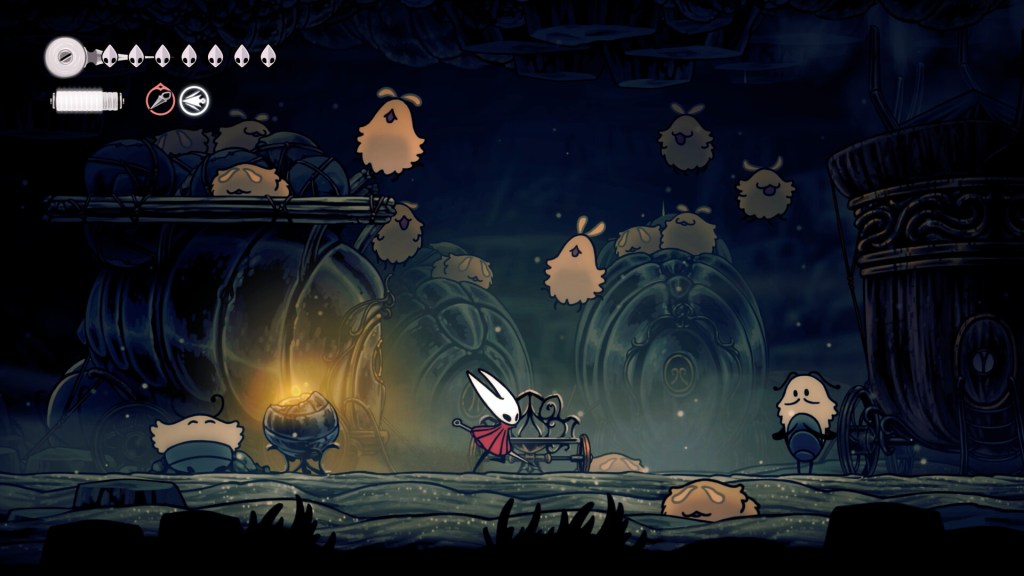
My other minor issue with Silksong is its propensity for dull fetch quests. There are dozens of quests in the game, many of them being fun journeys that result in a boss fight or extra bit of lore. But there are also many repetitive fetch quests that have you slay some number of nearby enemies. The majority of the time these enemies are the same ones you’ve been fighting for hours at this point. These kinds of quests are just dull and act as padding, which the game doesn’t need at all since it is already so huge.

After such a long wait, I was a bit nervous that Silksong wasn’t going to live up to its sky-high expectations. But I was thoroughly impressed with the immersive world and tight gameplay. It is a continuation of Hollow Knight, but it doesn’t feel totally derivative because Hornet plays so differently from Ghost. The ability for the artistry of the world to tell a wordless story is truly special. It is for these reasons that I give Hollow Knight: Silksong a 9.5/10. If you haven’t played either of the Hollow Knight games, do yourself a favor and play the best metroidvanias of the last couple decades.
Stephen’s Favorites of 2024

I feel like 2024 was the first year where I at least tried to keep up with recent releases. I wanted to highlight the games from this year that were my absolute favorites. Of course, as someone with a full-time job, a family, and other hobbies, I didn’t get to play every major release of this year. There were plenty of games on my radar that I didn’t get around to such as Indiana Jones and the Great Circle, Lorelai and the Laser Eyes, and the remake of Silent Hill 2. Here are all the 2024 releases that I managed to play:

Now let’s get into my favorites of the year.

UFO 50

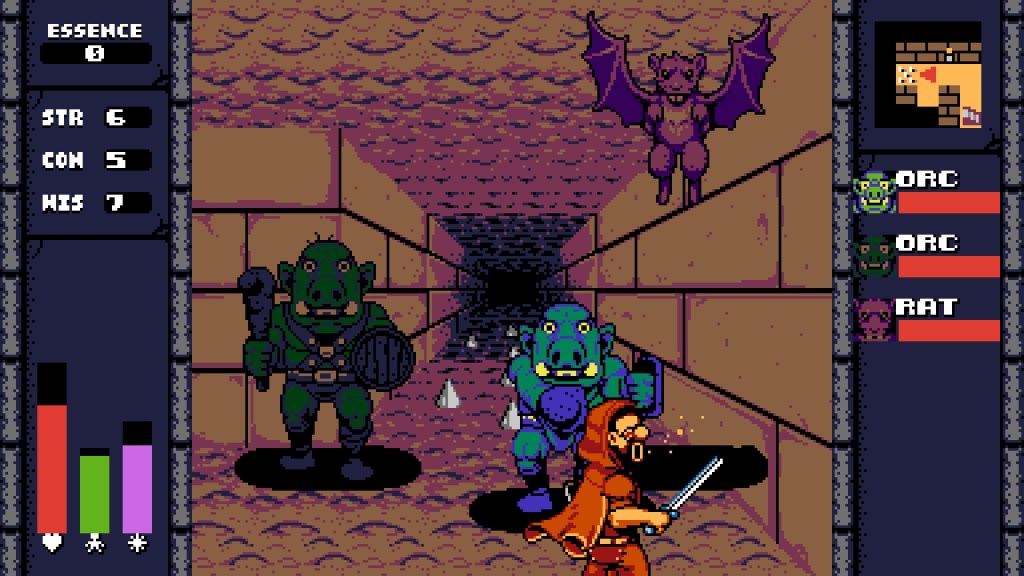
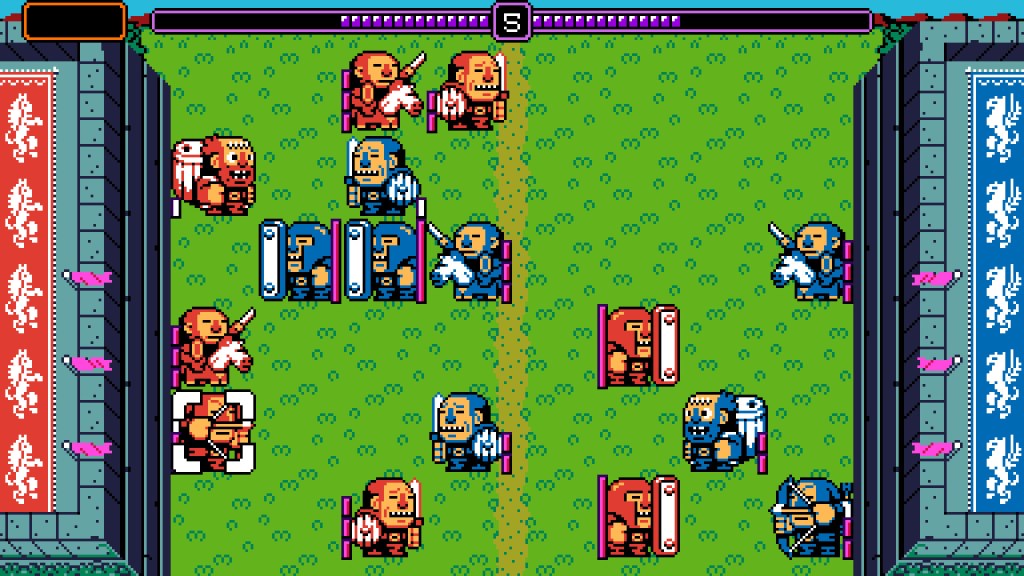
UFO 50 is a truly unique experience and we may never see anything like it ever again. It’s a collection of 50 retro games made by the fictional company UFO Soft. It’s an absolutely astonishing collection in both breadth and depth. Every classic genre is included, but no entry is a simple imitation of an actual retro game. Every game has a unique twist. There are so many gems in the collection. You could easily sink hundreds of hours into UFO 50 and still have games you’ve barely touched. The creators behind UFO 50 describe it as a blend of retro aesthetics with modern game design knowledge, and they absolutely nailed that aspiration. Read my full review here.

Astro Bot

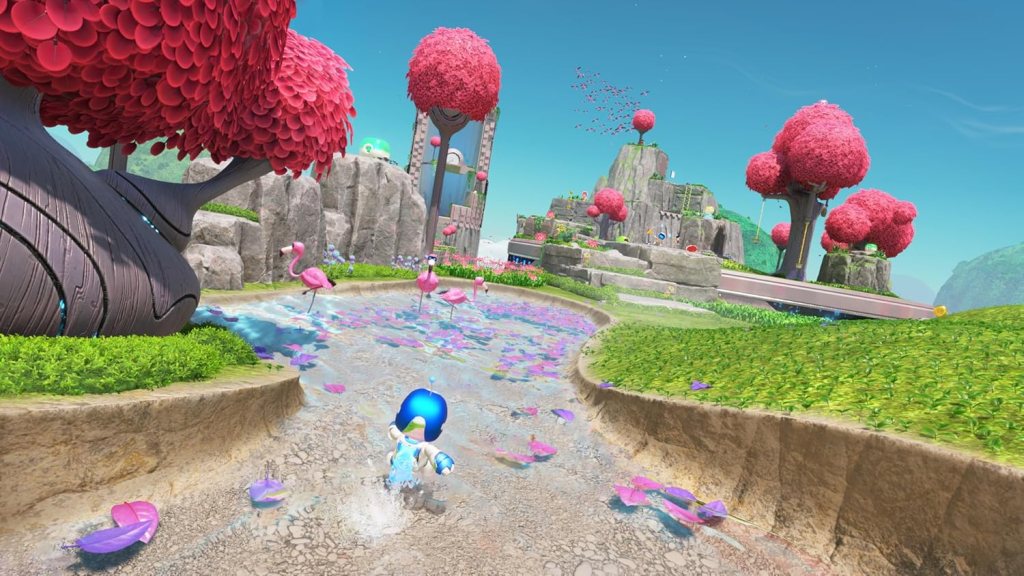
Astro Bot may not be the most innovative game out there, but damn is it fun. The joy I got from exploring its wonderfully detailed levels was reminiscent of playing Super Mario Galaxy as a kid. Every level had some sort of set piece, theme, or unique power-up that had me smiling. And I loved visiting the hub world to try to identify all the robots dressed up as classic Playstation characters. Astro Bot is just wholesome fun. Read my full review here.

Balatro

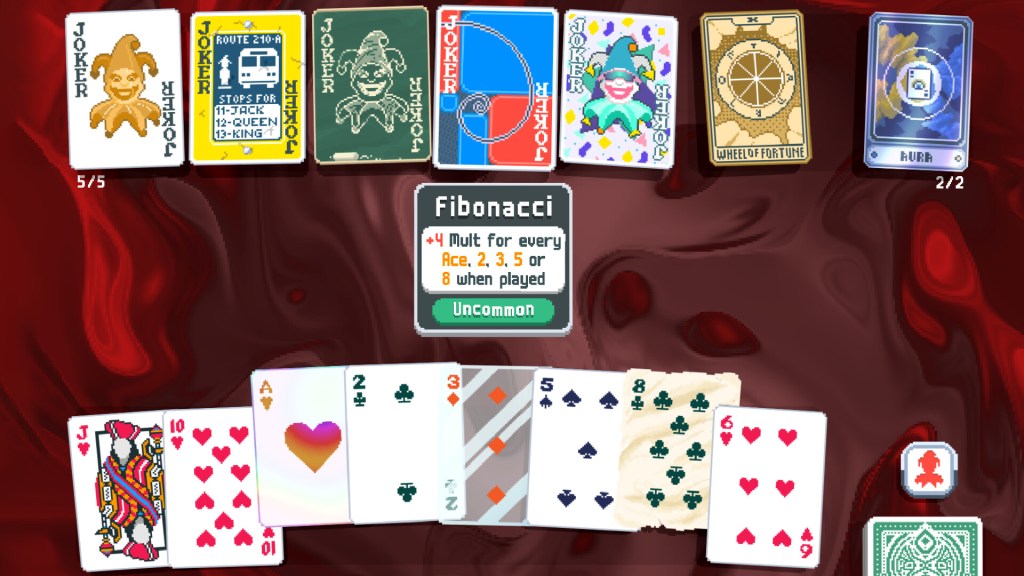
Balatro is the most addicting game on my list. In this roguelite deck-builder you play poker hands to score points. As you progress through a run, you can modify your deck in a multitude of ways. The main way to increase your score is by acquiring jokers which vary wildly in their effects. The sheer randomness of Balatro is what makes it shine. There are so many different ways to build a successful run and every time you play, you’ll think you found a new overpowered combo. Read my full review here.

Animal Well

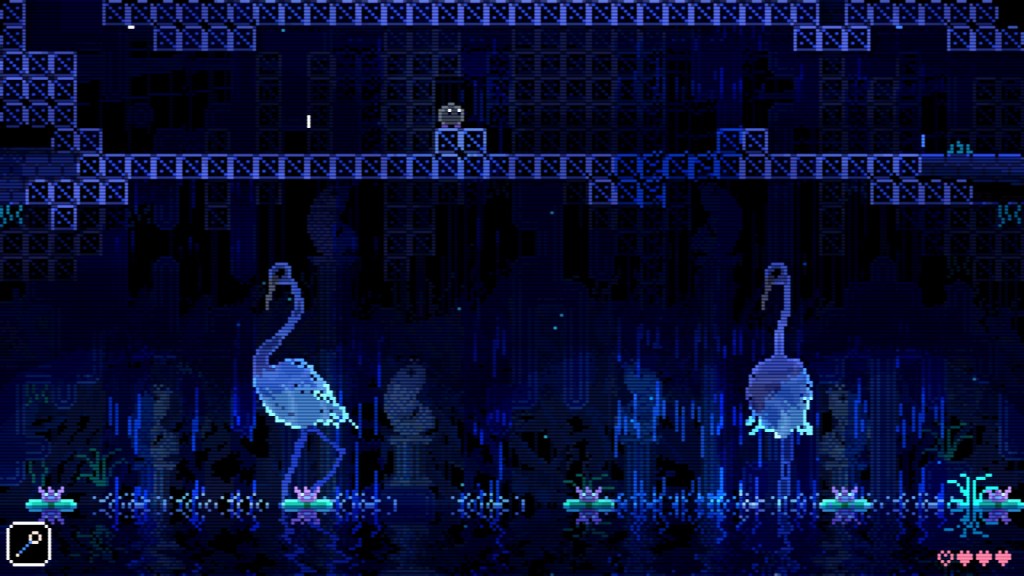
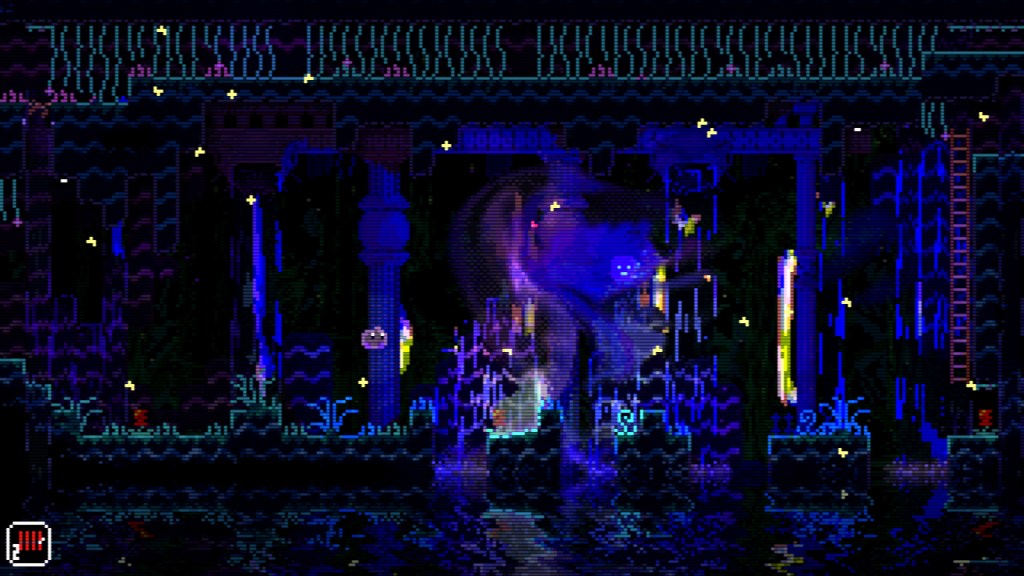
Animal Well is a surreal metroidvania. It’s a labyrinth full of mystery. Figuring out how to explore and interact with the world and the animals was enthralling. Without any guidance, the world is up to you to discover. Secrets upon secrets are layered atop each other, some requiring a dedicated community to unearth. It’s one of the most atmospheric games that I’ve ever played with ethereal visuals and echoey auditory effects. Read my full review here.

UFO 50 (2024)

You stumble across a dusty cardboard box in an abandoned storage unit, inside is a retro video game console along with 50 games from a company you’ve never heard of. That’s UFO 50. A collection of 50 retro games from an alternate universe, each showing the progression of the fictional developers UFO Soft. The games range from platformers, to sports games, to fighting games, to shmups (shoot-‘em-ups), to puzzle games, to strategy games, each with a unique twist or gimmick. The real developers of the UFO 50, Mossmouth, claim that these are retro games with modern design sensibilities, which I think is a perfectly apt description.

Retro games are notoriously difficult and are oftentimes clunky to play. UFO 50 does a fantastic job at maintaining a reasonable level of difficulty without making these games frustrating to play. Many of the games in the collection have slow movement, punishing mechanics, or initially uncomfortable control schemes. But it doesn’t take long for each title to click, and once you figure out how to play the smart design begins to unveil itself. 

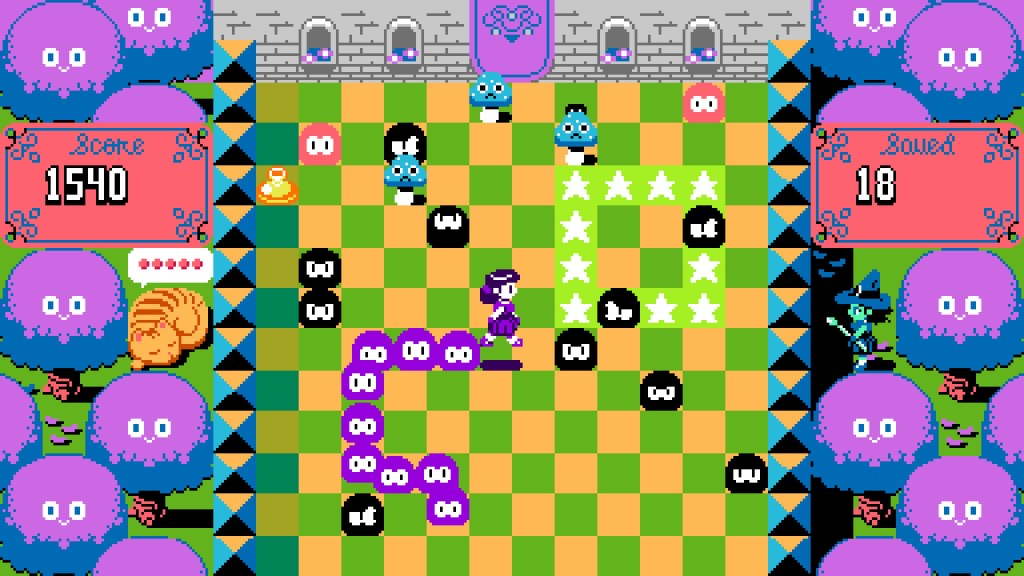
Each game in the collection has something that makes it stand out. There’re no straight up clones of actual retro games, although some of the games do feel at least inspired by classic titles. Take one of the earlier games in the collection for example, Magic Garden. It takes elements from Snake and Pacman as you lead friendly slimes to safety and use power-ups to clear out evil slimes. But Magic Garden is its own game, shepherding slimes to the scoring zone and collecting power-ups has intricacies as you are encouraged to take risks and let a ton of slimes occupy the board before chaining together multiple power-ups for an exponential score increase. There’s an edge of risk and reward if you want to maximize your points.

There’s an absurd level of variety available in UFO 50. I’m extremely confident that there is a game in the collection for everybody. And for $25, you really can’t go wrong. And don’t think that these are just short little arcade games either. There are fully fledged RPGs and metroidvanias that take hours to complete. Many of these titles could easily be standalones. Mini & Max for example is a genius little metroidvania in which you try to escape a supply closet by shrinking down and exploring the shelves and talking to the micro-civilizations that are invisible to the naked eye. Grimstone is a turn-based RPG that is over a dozen hours from start to finish. You could play UFO 50 for 100 hours and barely scratch the surface. If you truly want to 100% complete the collection, you are looking at 300ish hours. Personally, I have not clocked even remotely close to that number but this is a game that I am planning to play and revisit for a long, long time.

A smart decision was made to give every game some reasonable milestones to achieve. Every game has a simple challenge to earn a “gift” which goes into the little house on the console which is cute. You earn a gold trophy for beating each game. And you can earn the “cherry” by completing whatever additional challenge there is after completing the game, usually this is getting a high score or something along those lines. I think these tiers of achievements makes every game more approachable and presents attainable goals as you slowly get better at each game.

I loved the dedication to the fictional company of UFO Soft. Each game has a short blurb about its development and it’s fun to recognize the fictional names of the developers in the credits of each game. There’s a handful of sequels across the collection, and I enjoyed the references to the company’s other games as I played. It was interesting to watch UFO Soft evolve in design and technology. It was a brave decision by Mossmouth to have the first game in the collection be Barbuta, an esoteric metroidvania with no music, no color, painfully slow movement, unfair traps, and no quality-of-life features. But it was the perfect origin to the UFO Soft mythos. A game developed by a sole employee with extreme technical limitations and no game design experience. Following the evolution of UFO Soft is a journey of its own, and there’s a layer of secrets to be discovered for dedicated players.

The presentation of the collection is fantastic the whole way through. Mossmouth had to make sure every game fit its respective era and chronological place in the collection. All the games look good for being retro games and have distinctive designs and characters. But what I really want to highlight is the music. Oh my god. There are so, so many excellent tracks in this game. In the alternate universe where UFO Soft is real, I could easily see these tunes being as memorable as classics like the Super Mario Bros theme is to us.

I think that the size and breadth of the collection is the greatest strength and weakness of UFO 50. While it is exciting to boot up the game and choose from 50 games, not having to commit to any given game, I also found myself treating each one as disposable. Since the games are difficult and often have unconventional control schemes, I found it very easy to not give each game a fair chance. Dusting off a cartridge and playing for 5 minutes before exiting and trying something else was a common occurrence initially. After noticing this pattern, I forced myself to try to give every game more attention. I’m still working through the majority of the collection, but I am glad that I slowed down to really appreciate each game. The downside is that some of the games never do click, even after putting time into them. Planet Zoldath and Combatants are examples of games that I think are just not very good. 

Since I think that it can be a bit intimidating to know where to start with such a massive collection, I wanted to share some of my favorite games that I’ve played so far. While part of the beauty of UFO 50 is that everyone has different favorites, I did want to highlight these five games. Hopefully these suggestions can give you some options to try if you have trouble choosing where to begin.

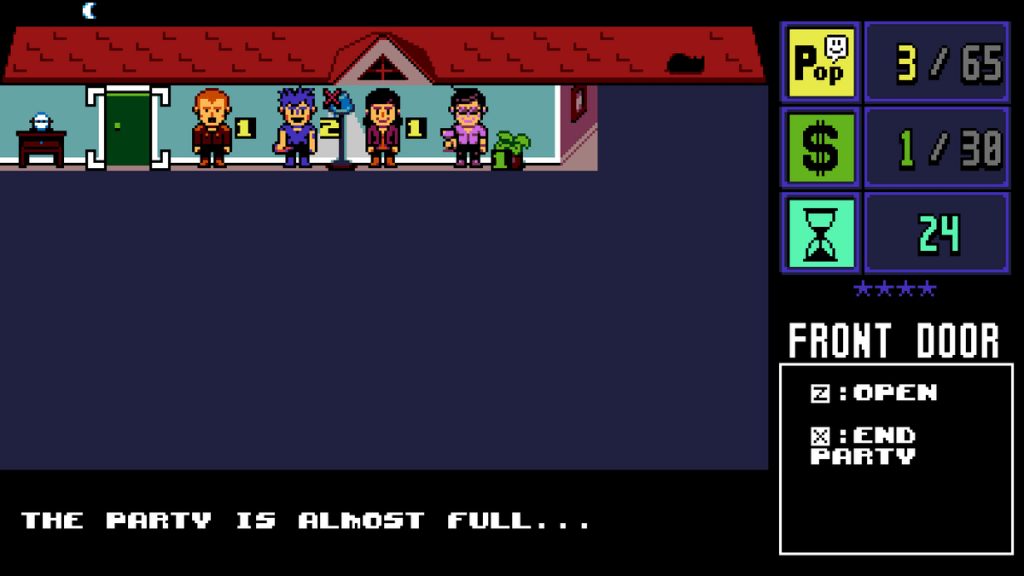
Party House is the first game in the collection that really clicked with me. It’s a deck builder where you are trying to throw the ultimate party. By spending popularity to add new guests to your rolodex you try to accumulate more popularity and cash every night. After 25 nights you have to have 4 “starred” guests attend your party to win. There’s a good amount of decision making involved, but what makes Party House interesting is its “push your luck” mechanics. Troublemaker guests typically earn more popularity and money, but more than two of them at once will cause the cops to show up. And there’s also the decision of when to stop spending popularity on normal guests and when to start acquiring the “starred” ones. There’s a lot of delicate choices to balance, and Party House is a ton of fun.

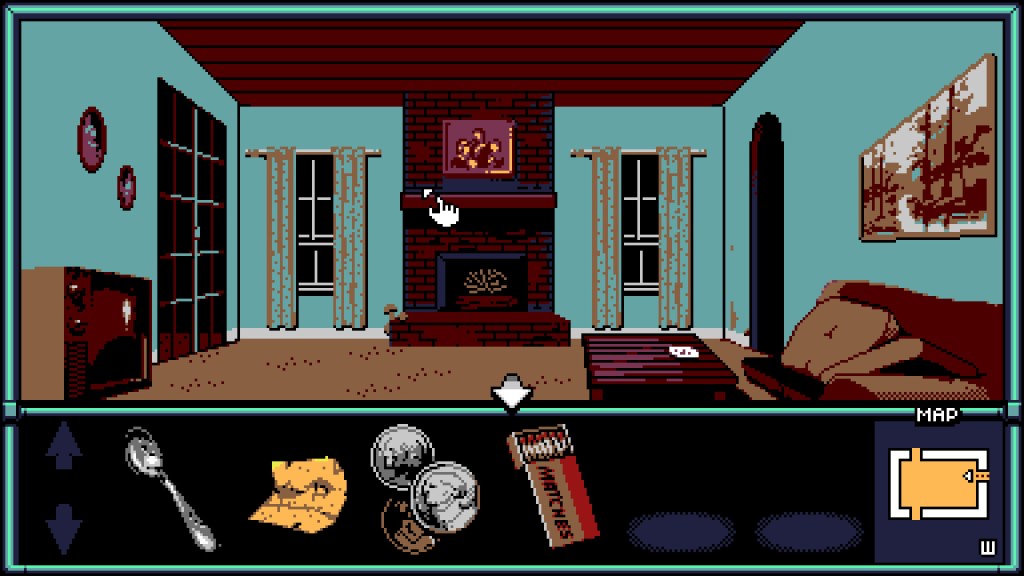
Night Manor is a point-and-click horror game that takes place in a disarrayed mansion filled with trash and fungus. You have to figure out a way to escape while avoiding the zombie-like man infected with fungus who is hunting you. If you run into him, your cursor jitters to simulate the terror your character feels, making it harder to click on doors to escape as he chases you through the manor. Old point-and-click games often have moments of ridiculous leaps in logic, but Night Manor avoids this with its puzzles. I found that everything made sense and I couldn’t put the game down until I played through the whole thing over the course of a few hours. There’s also a story to uncover through notes of what happened at the manor which was fun to discover.

Seaside Drive is a stylish shmup, but you can only move left and right as you drive your car down the road. As you dodge projectiles and enemies you have to move back and forth quite a bit to keep up your meter. You build up charge by skidding to the left, and expend charge by shooting and driving right. The higher the meter, the more damage your shoots do. I love this game because it seems crazy difficult at first, but I quickly learned how to maneuver and overcome the challenge. It’s so satisfying to clear the stages that were giving you a hard time without getting hit at all. Seaside Drive also has incredible aesthetics and one of my favorite songs in the whole collection. It’s a slick, stylish, and fun to play shmup with perfectly tuned difficulty.

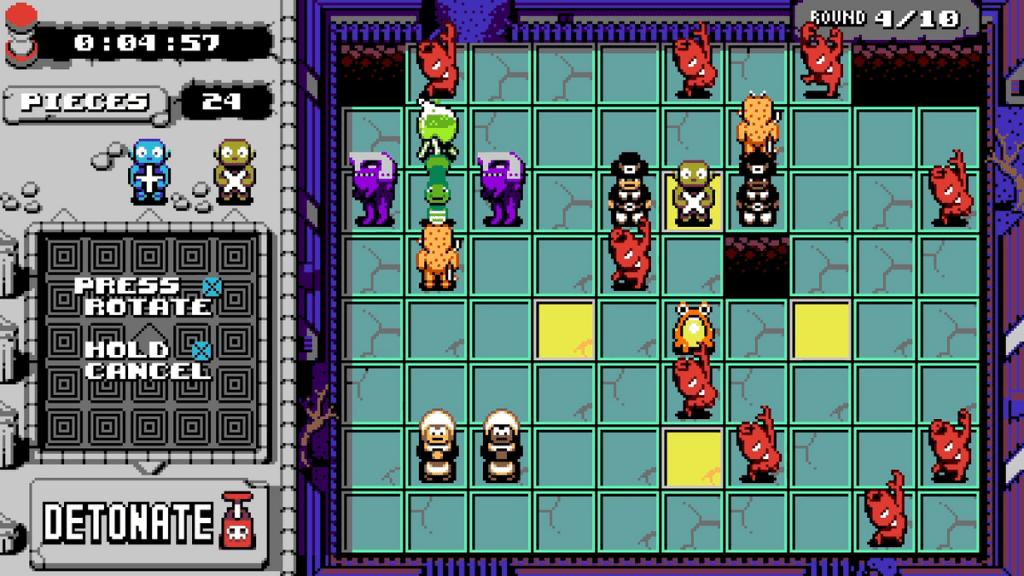
Devilition is my favorite puzzle game of the collection that I’ve played so far. A grid is filled with villagers and demons and you have to place pieces that kill the demons. The twist is that your pieces have to act like a chain reaction, each one can only be set off if hit by another. You have to keep track of what pieces you’ve placed and how to connect the chain. There’s 10 rounds and any pieces that you don’t use carry over to the next round, encouraging you to be efficient in your placement. I enjoyed watching the Rube Goldberg machine go off and clear the demons off the board as I prayed that I didn’t mess up and miss a crucial link in the chain. 

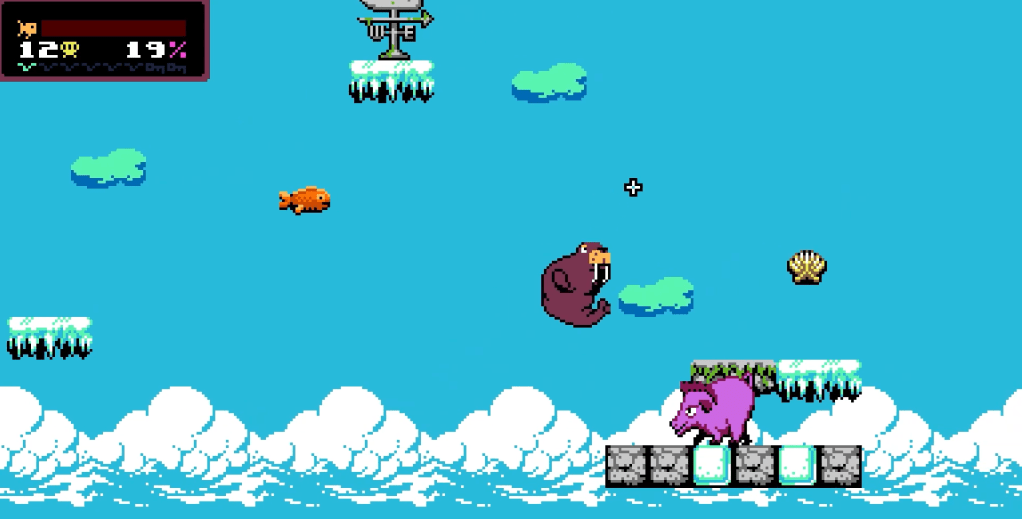
Waldorf’s Journey is a platformer that takes place entirely within the dream of a walrus. It’s reminiscent of a golf game as you charge up and launch Waldorf the walrus across gaps and try to precisely maneuver him to land on tiny patches of ice. You really have to master the momentum as you use your flight meter to propel Waldorf forward. It’s tempting to fly as far as you can on every jump, but it becomes incredibly difficult to slow down enough to safely land. There’s a few different power-ups and items to help you along as you inch towards revelation at the end of the dream. I also love the visuals, music, and minimalist story in this game as well. 

I think UFO 50 is a game that I am going to be playing for the rest of my life. Or at least for a very long time. The breadth and depth of this collection is unmatched. After dozens of hours played, I’ve barely scratched the surface of what UFO 50 has to offer. The fictional history of UFO Soft ties the whole thing together beautifully. It is for these reasons that I give UFO 50 a 9.5/10. UFO 50 is a paradise for fans of retro games with its dedication to melding retro gaming experimentation with modern design considerations.

Animal Well (2024)

Animal Well is a special game. It’s a game that begs the player to get lost in its atmosphere and labyrinthian level design. It’s a game that has no tutorials or guiding text, the player has to experiment with ideas and explore the world to figure out what to do. It’s a game that transported me into its ethereal world filled with mystery, spooky vibes, and of course, animals. It’s a game that I think everybody is capable of completing, yet it has much deeper secrets that require a dedicated community to uncover. It’s a game that I think you should play.

Metroidvanias are exceedingly common in the indie gaming landscape, but Animal Well stands apart from its peers. There is no combat and it doesn’t really focus on platforming either. Instead, Animal Well is about navigation and thinking. You have to figure out where you can go and how to get there using the tools at your disposal. After a short introductory area, you emerge into a great cavern with four pedestals and matching statues. There are four primary directions to choose from and a handful of other branching paths. It’s up to the player’s curiosity to lead them in a direction.

You may stumble across roadblocks and have to poke around in different directions to see what is accessible. But that is part of the magic of Animal Well. It is a real labyrinth that requires the player to be inquisitive about the world. I often went in a direction and had to turn around and find a different way to go, but I never felt discouraged or stuck. The cogs in my brain were always turning and thinking of where to go next and how to progress. The game’s dream-like atmosphere and gorgeously stylized visuals ensured that I wanted to stay in its world as long as possible.

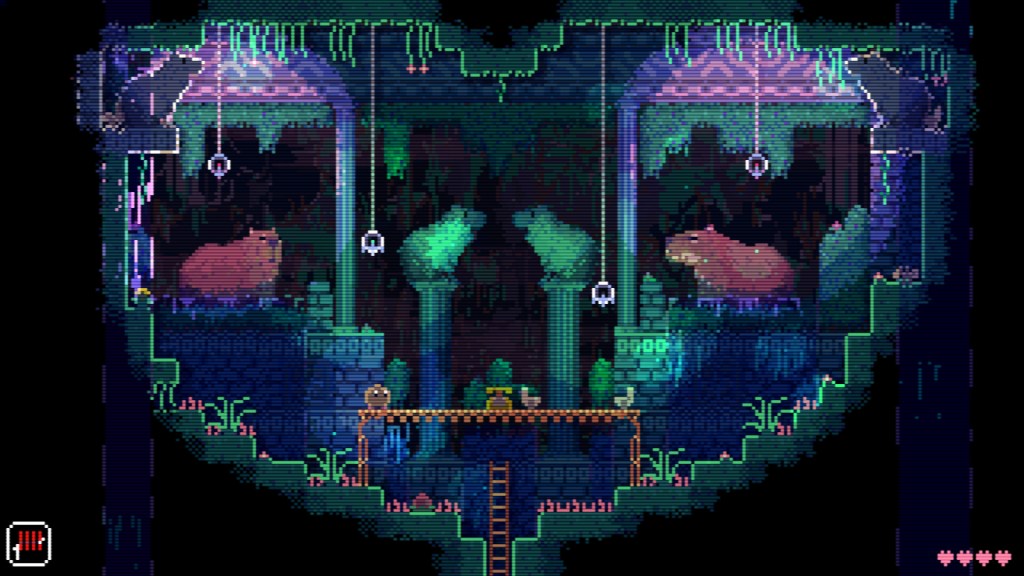
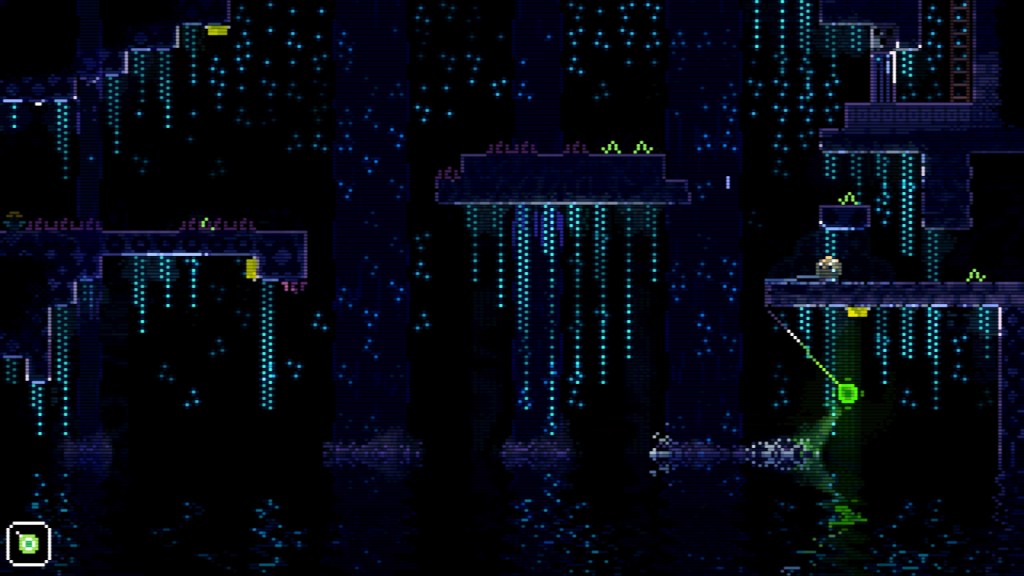
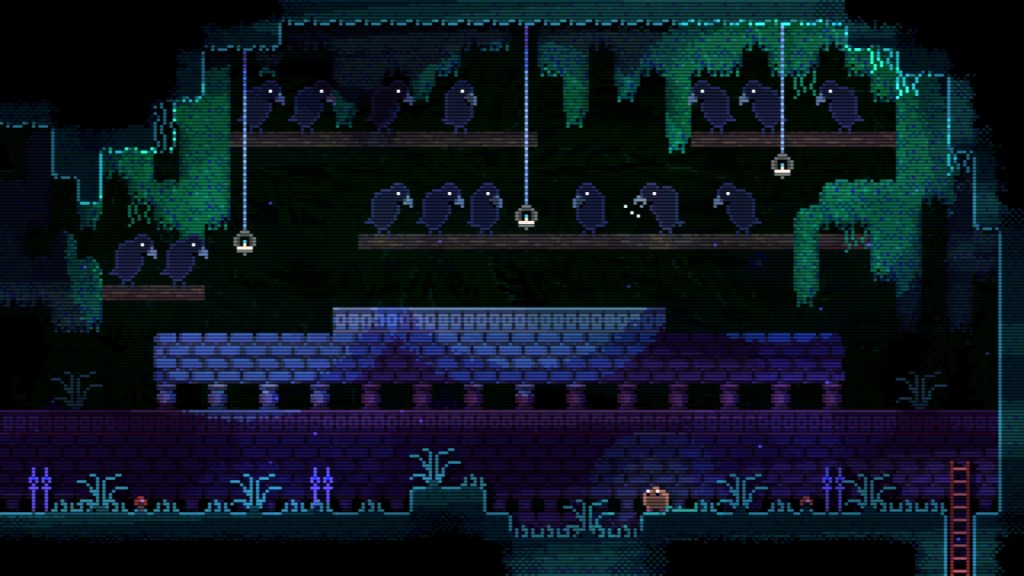
I’ve never seen a game that looks quite like Animal Well. Its cutesy pixel art paired with simulated lighting and fluid effects is truly remarkable. The world is dark, mysterious, and ominous at times. There are even moments of outright terror. But the faint light from lanterns and fireflies provides a comforting glow. Firecrackers provide flickering illumination as well as a hazy smoke effect to distort the environment. The ambient darkness and the understated soundtrack go a long way to make Animal Well immersive. This is further assisted by its cast of creatures.

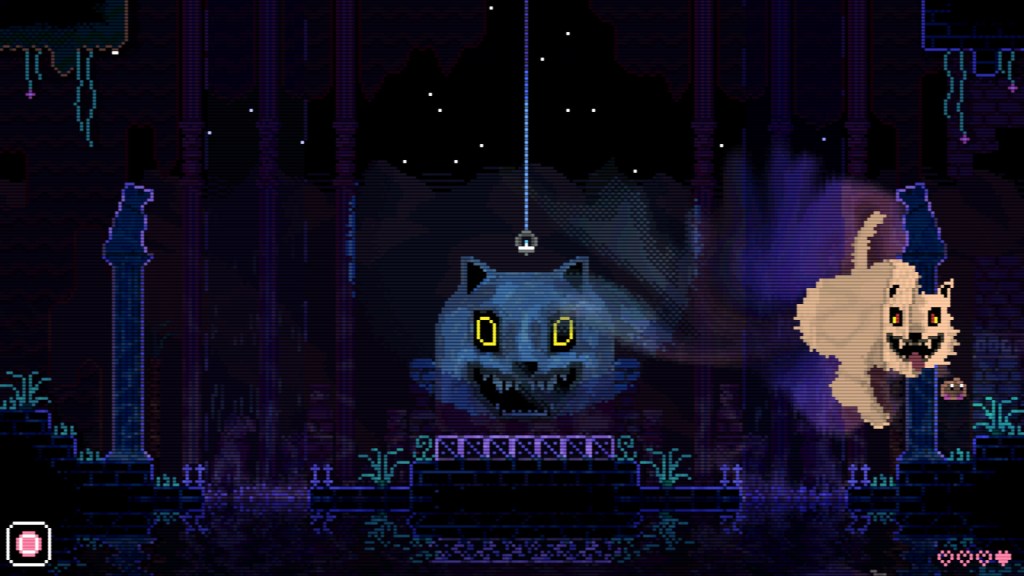
One of my favorite aspects of Animal Well is of course the animals. The world is populated by cute, charming, and sometimes ferocious creatures. From little chinchillas that you can ride atop, to dogs that chase you down, to a whale that shoots jets of water at you, the animals aren’t just set dressing. They feel like real residents of this world with their own personalities and behavior. Figuring out how to avoid or use the animals to solve puzzles is not only satisfying, but intuitive.

The commitment to crafting an ethereal world filled with animals is further reflected in the playful toolset of Animal Well. You never acquire the classic double jump or explosive item to blast open walls, instead the things that you find are more interesting. The player will most likely come across the Bubble Wand and Frisbee as their first couple of items. Figuring out how these seemingly mundane and silly tools can be useful is very enjoyable. Experimenting with how to use these gadgets to traverse the world, solve puzzles, and interact with animals is wonderful.

The only potential hiccup in the main part of the game is the existence of a handful of awkward jumps. I don’t feel like Animal Well really is a platformer. Of course there is platforming in the game, but it rarely asks the player to make a series of difficult jumps. Which makes it odd when there is a particularly awkward jump seemingly out of nowhere. This is made more frustrating because oftentimes when you miss a jump you fall to a previous screen or even get reset at a checkpoint. I think having real stakes when exploring is great, but I can see how some players may get frustrated if they miss a particularly tricky jump a few times in a row and lose their progress.

Animal Well is known for being a “layered” game. From the moment you start to the first time you see the credits roll is the main part of the game and is known as “Layer 1”. There are 3 deeper layers, each with increasing obscurity and there are secrets that still haven’t been found months after release. I strongly disagree with a common sentiment that “the real game doesn’t start until after the credits”. To me, Layer 1 is the most enjoyable due to the exponential growth of complexity and obscurity that the deeper layers require.

I was able to complete Layer 2 and made some progress in Layer 3 before I called it quits. Layer 2 is a fairly straightforward completionist egg hunt. You have to dig through the nooks and crannies of the world to find 64 hidden eggs. I think this is mostly fine, but hunting down those last few eggs can be a little painful as you have no idea where they could be. I spent hours running around the map in circles looking for those last few secrets. Layer 3 is where things quickly get insane. There are 16 bunnies hidden across the map and simply finding them requires a ton of dedication and observational skills. To actually solve the puzzles and acquire the bunnies often requires extreme out-of-the-box thinking. I don’t think that these puzzles are unfair or unsolvable, but I’d be shocked if anybody got all 16 bunnies without outside help. I didn’t even touch Layer 4 and I assume it is only for the most dedicated of puzzlers.

I admire how layers upon layers of secrets are built on top of one another. I love the feeling when you discover something that was expertly hidden right in front of your eyes. While I gave up early on in Layer 3, I appreciate that there are deeper and more obscure puzzles for players who want them. I think the downside of this is that the game will almost always end on a limp note for many players. At some point you are going to reach your limit of obscurity and throw in the towel. It doesn’t feel great to have a great experience end because you had to quit. There’s not really a way to avoid this in a “layered” game like Animal Well. It’s a necessary tradeoff to allow for the iceberg of secrets that the game hides.

Animal Well really is a game that you just have to experience. It’s hard to describe how gripping its dreamlike world is. Exploring the depths of the well and uncovering its secrets is something that I had a hard time stepping away from. Even though I wasn’t able to peel back all the layers, the first layer by itself is spectacular. It is for these reasons that I give Animal Well a 9/10. It’s an experience with unparalleled atmosphere, thoughtful puzzles, and has a mix of memorable moments that are charming and terrifying. 

Prince of Persia: The Lost Crown (2024)

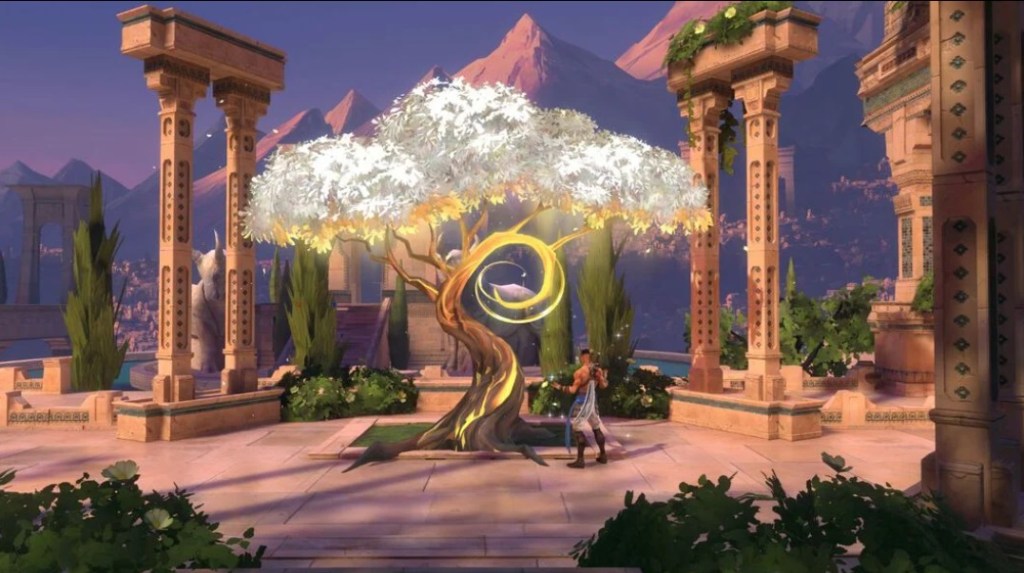
Prince of Persia: The Lost Crown is a game of two qualities. The meat of the gameplay, the combat and platforming, are superb and have an enjoyable flow to them. On the other hand, the game’s presentation, story, and exploration elements are woefully underdeveloped. It’s disappointing because Prince of Persia: The Lost Crown had a ton of potential, but I was ultimately underwhelmed by the experience as a whole. 

You play as Sargon, one of the seven Persian immortals who go on a mission to rescue the prince from the cursed Citadel. Time flows strangely in the Citadel, some people age and turn to dust in the matter of hours, while others are seemingly immortal. The god of this land, the Simurgh, has been missing for 30 years and is somehow tied to the prince’s kidnapping. It’s a decent hook, especially considering how actual Persian mythology is woven into the game. But unfortunately, the actual story is just bland once the plot starts developing further. It’s predictable. And I found it difficult to care about anything when all the characters are just entirely forgettable, which isn’t helped by the uninspiring and unenthusiastic voice acting. Not to mention the handful of plot holes and obviously cut content that left me scratching my head. I don’t think a game like this needs an excellent story, but I’d rather minimize the story elements instead of placing a half-baked tale front and center.

When the central gameplay mechanics are so excellent, you don’t need a riveting story. Look at Super Mario or The Legend of Zelda for instance. While they have a story, it is often in the background as you adventure through a variety of creative areas. The environments and gameplay mechanics are at the forefront. I wish that were the case in Prince of Persia: The Lost Crown, as it does have a solid gameplay foundation. But the game is filled with boring cutscenes, mundane dialogue, uninteresting characters, and paragraphs and paragraphs of lore. 

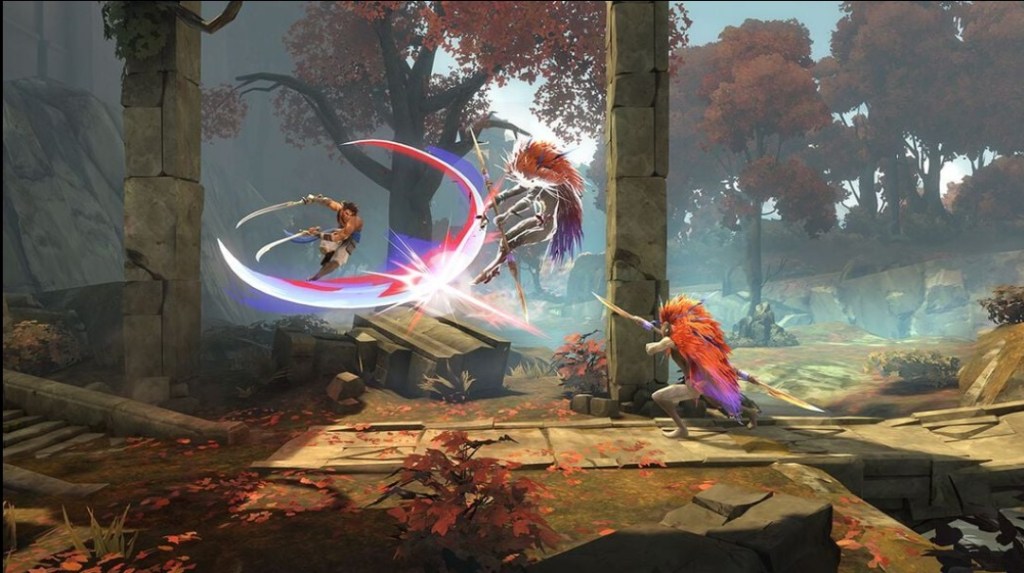
 Combat in Prince of Persia: The Lost Crown is satisfying and fast-paced. The game encourages combos and juggling to wreck enemies. There’s a handful of ways to launch enemies into the air: upward swings, low trips, and kicking out of a dash. Keeping enemies airborne and within your attack range is a fun but rewarding method of fighting. An interesting decision about the combo system is that the final attack in the basic button-mashing combo is intentionally terrible. It’s slow, has a long recovery, can’t be canceled into a parry, and knocks enemies far away making it difficult to follow up with more attacks. I think this was smart as it encourages players to come up with their own strategies and combos. I personally loved getting some basic attacks, knocking an enemy up, hitting them a few more times, then knocking them to the ground and finishing the combo with a charged ground slam. 

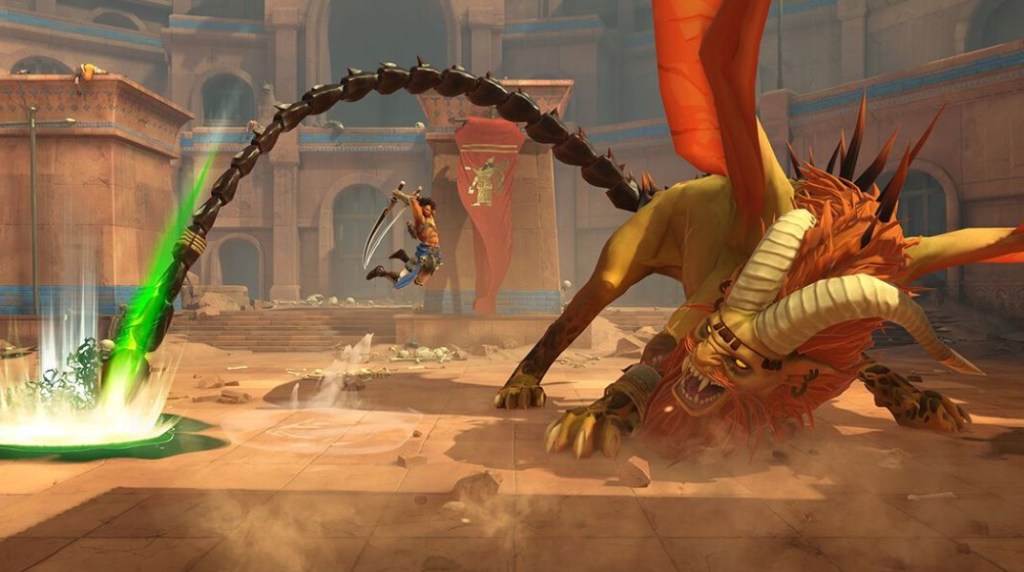
My one complaint about the combat is the boss fights. The game encourages players to parry enemies to create openings to unleash a combo. Unfortunately, most bosses don’t follow this pattern. The vast majority of their attacks are unable to be parried. Moreover, you can’t launch bosses into combos, you can usually only get a couple of basic hits off. Most fights boil down to just memorizing the boss’s patterns, learning how to dodge them, and then retaliating with a couple basic attacks. While this is usually completely normal for boss fights in games, I think it’s a little disappointing in Prince of Persia: The Lost Crown. I wish I could utilize more of the fast-paced and aggressive play that is encouraged by parries and juggling combos.

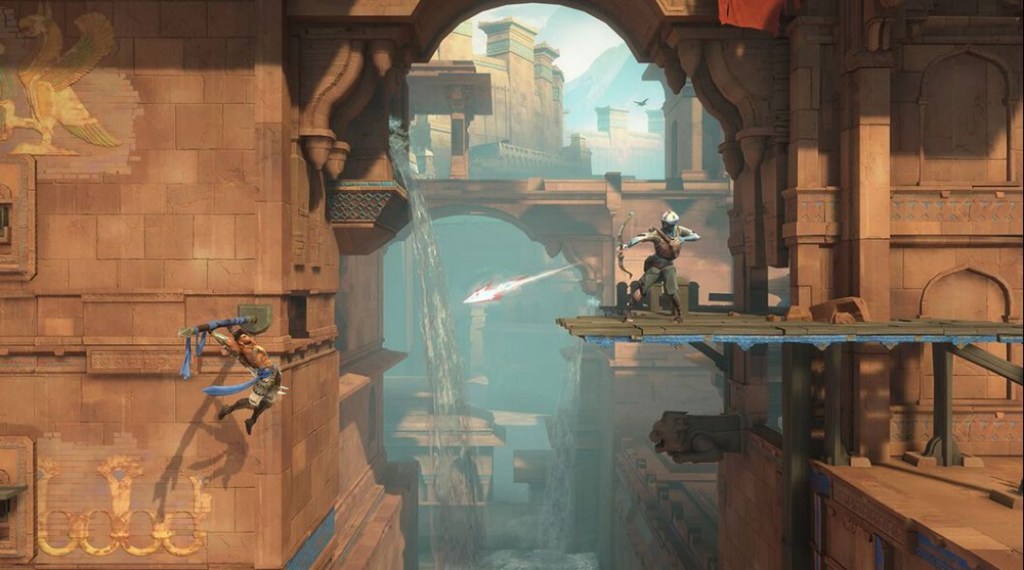
The Prince of Persia series has always been known for its platforming prowess, and Prince of Persia: The Lost Crown is no different. Stringing together wall-jumps, dashes, grapple-hooks, and time-bending shenanigans is a ton of fun. The game starts a little slow when it comes to platforming, but once you start unlocking abilities each challenge is almost like a fast-paced puzzle to determine the order you should be using these abilities in. It’s smooth, snappy, and just the right level of difficulty to feel tough but reasonable. 

While combat and platforming are fun, I was exhausted by the unfulfilling exploration. Prince of Persia: The Lost Crown is a metroidvania, exploration is a key tenet to make these games enjoyable. When backtracking becomes tedious the genre falls apart. The issue with exploration in Prince of Persia: The Lost Crown is twofold: empty space and rewards. I felt like there was so much wasted space with no enemies or platforming that made getting around the map just boring. Running is slow in relation to how big each area is, and for some reason you have to re-click dash to run through every single screen transition which is annoying. I felt no desire to hunt down collectibles and go for 100% because it was slow and uninteresting to explore areas that I’d already been through. Moreover, the rewards for exploration were underwhelming. Getting steel to upgrade my weapon or health upgrades were nice, but there were so many lore items that I just didn’t care about. When the story of the game is dull, I have no desire to read further about the lore.

The biggest flaw of Prince of Persia: The Lost Crown is that it simply lacks personality. There’s so many fantastic metroidvanias to play, each with their own aesthetic. When you look at Ori, Hollow Knight, or Blasphemous these games are oozing with charm. Prince of Persia: The Lost Crown is bland all around. Visually, the game looks generic and cartoony, the characters remind me of something out of Fortnite. The environments look fine but are just uninteresting. The Raging Sea was the exception as it was a visual spectacle of a stormy ocean frozen in time. The soundtrack is Persian inspired but unfortunately forgettable. As previously mentioned, the story and characters are generic. There’s just nothing that makes Prince of Persia: The Lost Crown feel like it stands out amongst the pantheon of metroidvania greatness. 

It’s a shame that a game that has such great gameplay misses on the rest of the execution. Even though combat and platforming were superb, the exploration, story, art style, and music were utterly forgettable. It’s like putting a nicely cooked steak atop a pile of mushy and bland oatmeal. It is for these reasons that I give Prince of Persia: The Lost Crown a 6/10. In a genre that is chock full of games brimming with personality, Prince of Persia: The Lost Crown doesn’t do much to stand out.

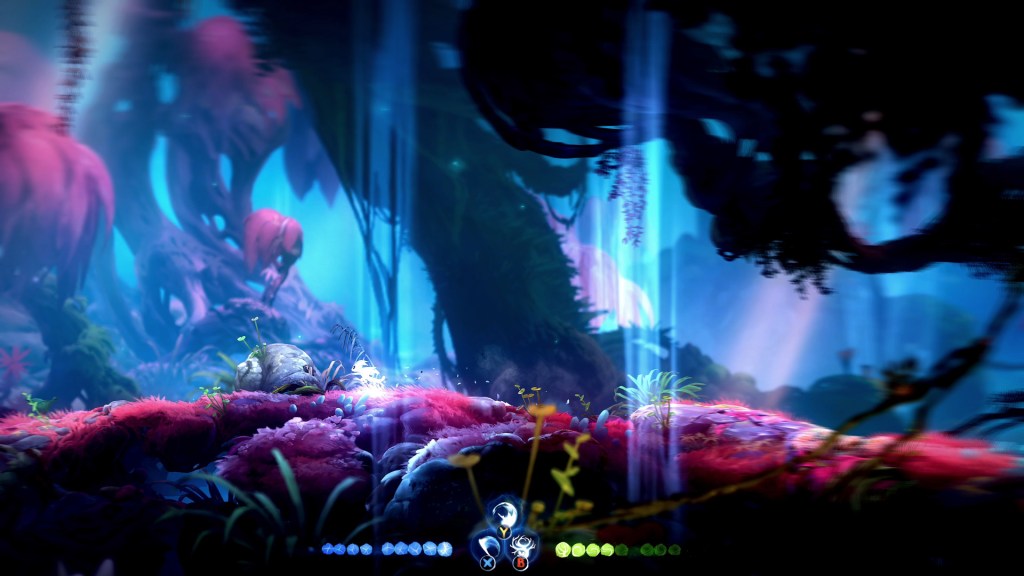
Ori and the Will of the Wisps (2020)

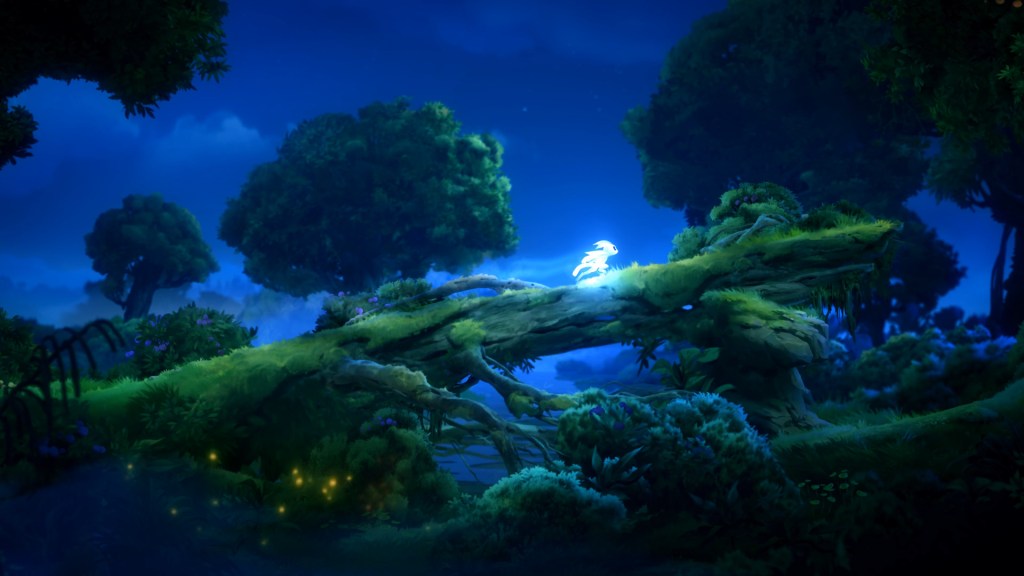
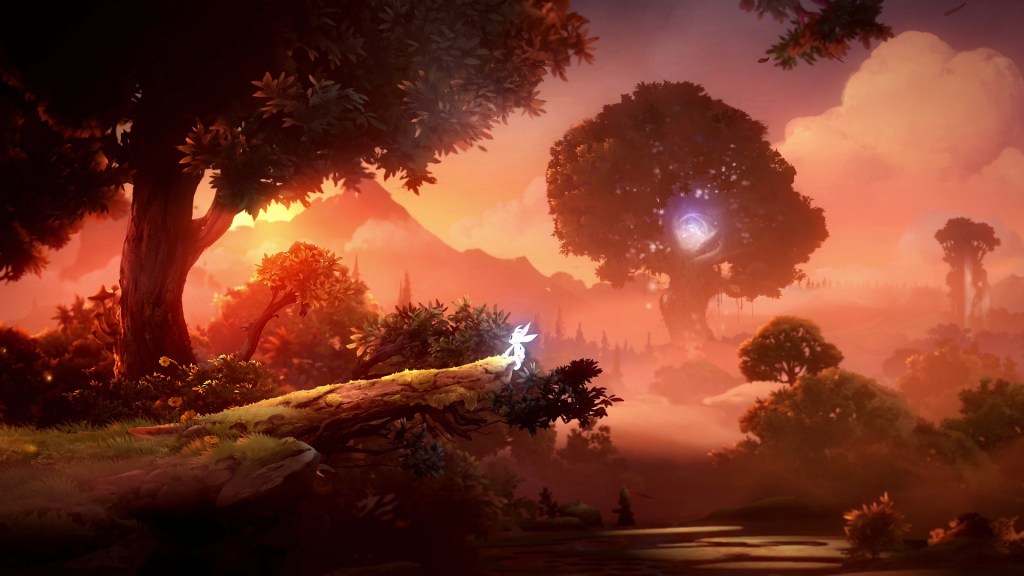
Ori and the Will of the Wisps is a rare case of a sequel that not only improves upon its predecessor, but also maintains the identity of the original. There’s no denying that Ori and the Blind Forest was an excellent game that influenced the indie industry. However, it had a few quirks like its saving system and underwhelming combat that could definitely use some improvement. Not only does Ori and the Will of the Wisps accomplish this, but it also establishes its own uniqueness that blends beautifully with what came before.

Taking place in a new land, Ori and the Will of the Wisps is remarkably similar to Ori and the Blind Forest narratively. The world that you inhabit is dying, as the light of the forest has been snuffed out. While Ori sets out to rescue their companion and restore life to the forest, a villain is intent on maintaining the darkness. Honestly, I was a little disappointed with how beat-for-beat Ori and the Will of the Wisps follows the original game in its narrative flow. Fortunately, Ori and the Will of the Wisps makes up for this with an abundance of charm.

I’m a sucker for a good hub in any game. Delfino Plaza, the Normandy, Firelink Shrine, Peach’s Castle, I love when there is a cozy space that feels like home. One that evolves and is bustling with characters. Ori and the Will of the Wisps has its own central hub of Wellspring Glades. This town serves as a safe-haven and last refuge for the creatures of the forest. As you resolve quests and spend resources, the town begins to become an active community full of life. I absolutely loved spending time in Wellspring Glades, and I was driven to restore the town and make it thrive.
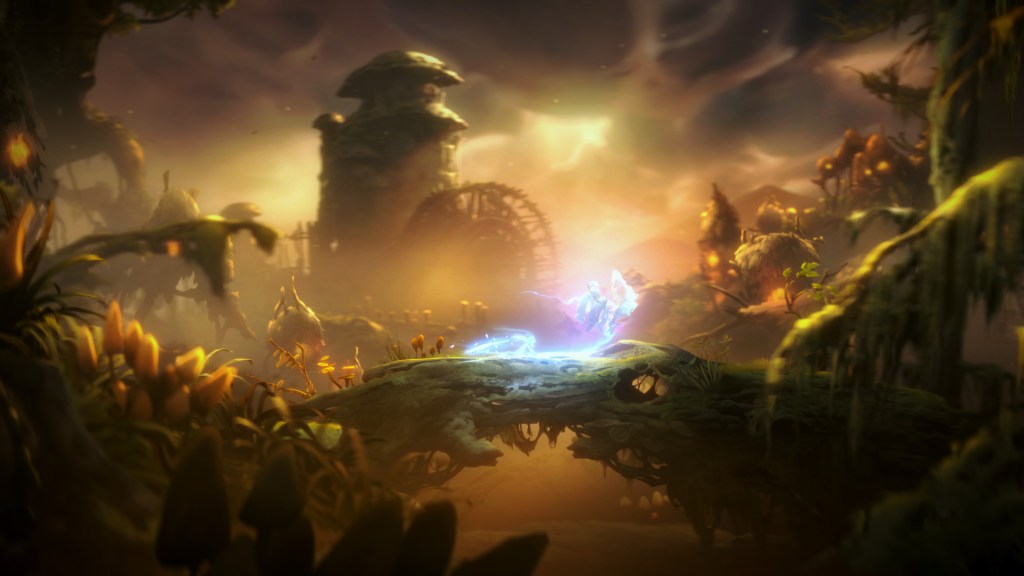
The charming appeal of Ori and the Will of the Wisps is also assisted by the stunning visuals and environment design. Somehow, the game looks even more lush than Ori and the Blind Forest. But what I found more important was how varied and unique the main areas were. I had to stop and admire the giant watermill looming in the background. Finally reaching the structure and delving inside to unblock the mechanism was an exceptional adventure. Areas like the tropically lush Luma Pools and arid Windswept Ruins are as visually interesting as they are mechanically. The integration of aesthetics and gameplay is extraordinary.

While bringing back all the classic abilities such as the iconic Bash, Ori and the Will of the Wisps also introduces a whole new arsenal of skills to master. They are cleverly designed as to be cohesive with the locale that they are unlocked in while also pairing well with existing abilities. For example, in the desert you unlock the ability to dive into pits of sand and burrow quickly through them like a missile. This leads to some exciting platforming sequences in which you juggle between using Bash and Burrow to quickly traverse obstacles and maneuver nimbly through the desert. The possibilities to be creative and combine Ori’s abilities to string together impressive agility feats is fantastic. To test your mastery of your moveset, the designers intelligently included optional time trials throughout the game, which I absolutely love.

While Ori and the Will of the Wisps retains the engaging nimble platforming that its known for, the developers greatly increased Ori’s combat arsenal as well. Instead of spamming targeted beams of light, the player has access to a few different weapons. There’s a decent variety of ranged and melee options, which is great for letting the player determine what playstyle suits them best. Personally, I quite enjoyed using big hammer to wallop foes and send them flying. Even though I originally didn’t think that Ori and the Blind Forest needed combat, it certainly is a ton of a fun to pulverize enemies and run circles around them using Ori’s innate agility.

With combat comes the occasional boss fight, which is something that was absent from the Ori and the Blind Forest. But don’t fret, the adrenaline pumping escape sequences also make a return. I really love that the designers had both of these events to serve as a climax to any given area. You never know if you’ll be thrown into an arena with a boss, or if you need to focus for a thrilling chase.  

The other direct improvement upon the original game is the removal of the decide-for-yourself checkpoint system. While I think it was an intriguing idea, the player has no idea what will be thrown at them next so they are a poor judge of when its appropriate to create a checkpoint. That’s why the inclusion of a standard checkpoint system is welcomed in Ori and the Will of the Wisps, as the designers have foresight and understand the right spacing and placing of checkpoints.

I think its necessary to mention that Ori and the Will of the Wisps takes a lot of queues from Hollow Knight. I think in some places it was unnecessary, but in all honesty, I think most of the adoptions were net positives. The removal of experience in exchange for badges, the hub town, the inclusion of quests, and the character who sells maps were all obviously inspired by the success of Hollow Knight. But the beauty here is that Ori and the Will of the Wisps and Hollow Knight, despite being metroidvanias with a few similar systems, are very different at their core.

Ori and the Will of the Wisps is vibrant and colorful, and is mostly concerned with fast-paced platforming with a hint of combat. Hollow Knight is a lot darker, and while it does have a couple of difficult platforming sections, the game is known for its boss fights. So, it doesn’t feel like Ori and the Will of the Wisps is aping Hollow Knight. Instead, all these features dramatically improve on an important aspect of the game: exploration.

Exploration is obviously vital in any metroidvania, and Ori and the Blind Forest did lack in some of its rewards and motivation to probe players into wanting to discover more. This felt completely solved in Ori and the Will of the Wisps, due to many of the systems that the designers took inspiration from Hollow Knight from. The badge system is far superior to experience, as it provides the player with more interesting rewards aside from some currency to be spent on upgrades. Experience still exists alongside badges, but it goes a long way to know that the possibility of uncovering a powerful and unique badge is present when you are exploring.
The reward that motivated me the most were the materials used to repair the hub town of Wellspring Glades. As I said, I loved the town and its cozy atmosphere. Naturally, I was excited whenever I discovered more ore or special seeds, as that could be used to improve the town. Ore lets the player build more houses and repair structures so that creatures can return. Additionally, special seeds can be planted to allow the player to use their traversal abilities to dash and swing around the town, reaching new heights and uncovering secrets. Helping restore the town serves as a functional reward as it grants experience, badges, and shortcuts. But more importantly, it’s the intrinsic reward of seeing this community grow and thrive that warms the soul.
The only major issue that I had with Ori and the Will of the Wisps was the performance. Even three years after its release, I had a few instances of stutters and momentary freezes. This mostly happened if I was zipping from screen to screen too quickly. Unfortunately, I also encountered a couple crashes. While not a pervasive issue, it still is an unwelcome occurrence that happened too many times to dismiss.

I was thoroughly impressed with how Ori and the Will of the Wisps managed to maintain its identity as an Ori game while simultaneously establishing tons of new ideas and mechanics that clashed with the first game’s design philosophy. I am ecstatic that the designers were able to ditch what didn’t work, build on what did work, and introduce brand new ideas that blend wonderfully with the existing mechanics. It is for these reasons that I give Ori and the Will of the Wisps a 9/10. Ori and the Will of the Wisps is an absolute joy, and I can’t believe that I waited as long as I did to experience it.

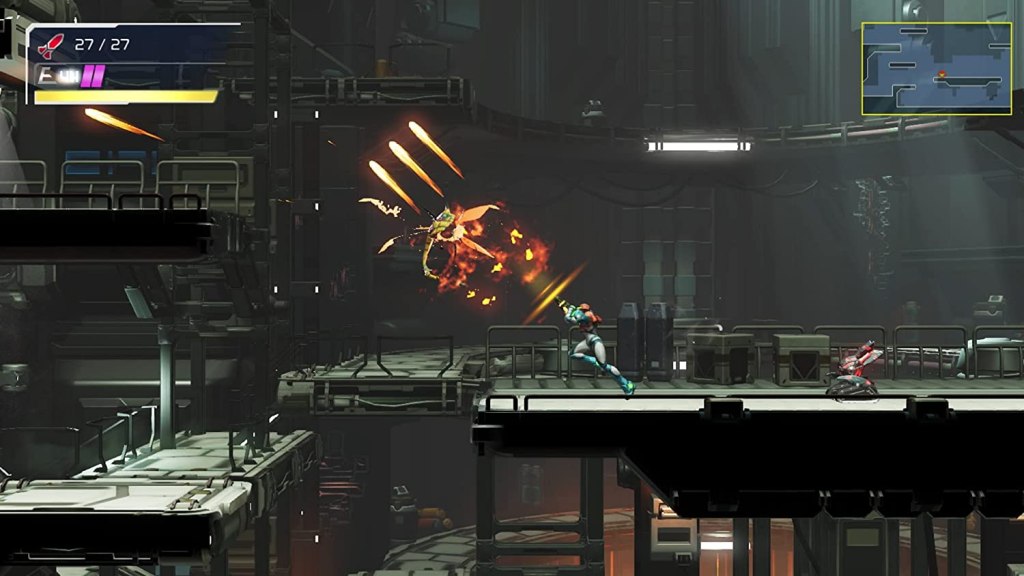
Metroid Dread (2021)

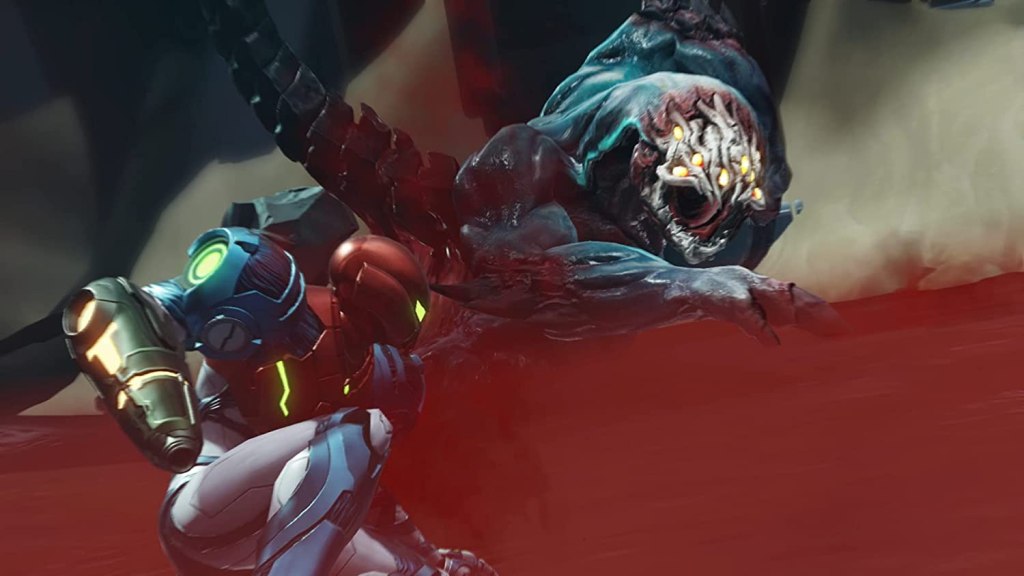
Metroid was a historic series that had been inexplicably abandoned. The last new 2D Metroid game was Metroid Fusion back in 2002. Nearly 20 years later we get Metroid Dread, a game that was firsts announced in 2005. 3rd party developer MercurySteam was handed the reigns to the series after delivering the successful remake, Metroid: Samus Returns, and man did they deliver with the first original Metroid game in a long time. Metroid Dread is a glorious modernization of the series. While it does have its flaws, Metroid Dread is exactly what was needed to reignite the series.

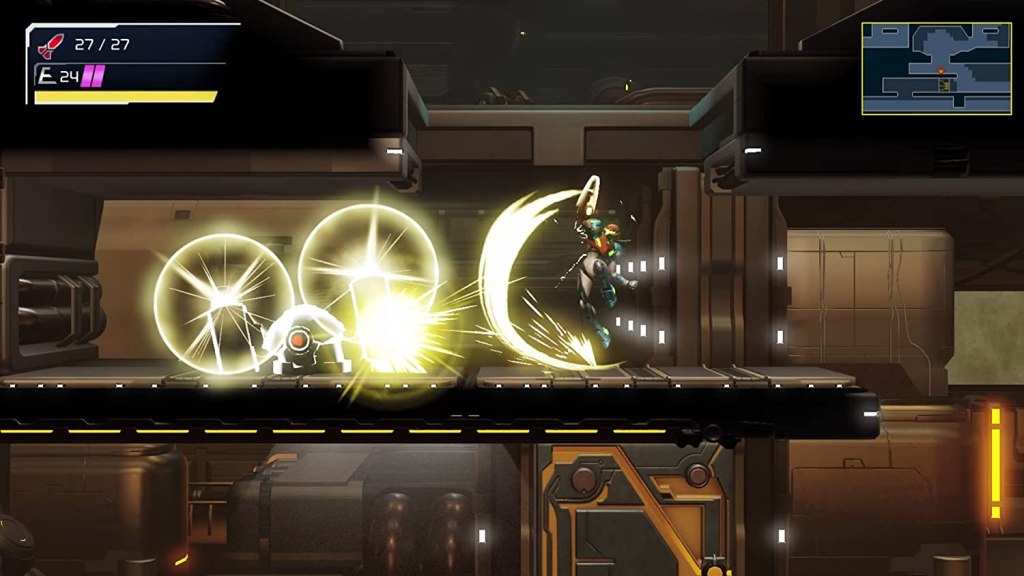
It’s clear that MercurySteam put a ton of resources into the movement and combat of Metroid Dread. Running and jumping around an alien planet never felt so smooth. Maybe it’s because all the previous Metroid games were from 20 years ago, but Metroid Dread goes a long way to make controlling Samus extremely crisp. Not only are the controls precise, but there a few extra movement options that open up your movement through the world: sliding, ledge grabbing, and countering. Some of these were added in Metroid: Samus Returns, but Metroid Dread incorporates them to the main series.

Combat in Metroid Dread is absolutely glorious. As much as I enjoy the OG Metroid games, they had a tendency of being a little clunky to pilot. A lot of the boss fights ended up being a stat check where you would just standstill and fire at the bosses, hoping that you would kill them before they would kill you. Metroid Dread repeatedly tells you that no attack is unavoidable, and it isn’t lying. Between the more precise controls, expanded movement options, and the telegraphed enemy attacks, avoiding damage is an important skill to master. And Metroid Dread is better for it.

Figuring out how to defeat bosses is one of my favorite aspects of Metroid Dread. Learning their movesets, how to dodge seemingly unavoidable attacks, and discovering openings to deal huge damage is just so satisfying. Many bosses seemed ridiculous and intimidating at first, but after experimenting I learned that many of them could be taken down fairly quickly. And it doesn’t feel like you have to rely on a trial-and-error approach either. Being slow and cautious and dealing incremental damage is a totally valid strategy as well. 

My one gripe with the combat is that while the bosses were engaging affairs, most of the basic enemies were far too easy. The main reason for this is the all-powerful counter attack that the player has access to. Most enemies in the game have attacks which flash before hitting you, indicating that it is counterable. When an attack is countered, the enemy is left vulnerable and will almost always be killed by your very next attack. And if you successfully kill a basic enemy with a counter, they drop bonus resources.

Players will quickly realize that countering is the dominant strategy for dealing with standard enemies. It’s much easier to execute than trying to evade fast moving enemies, it kills enemies faster than just shooting them outright, and it gives extra health and missiles for performing it. Honestly, it’s just too powerful. It’s also not as engaging to dip, duck, dodge, and shoot at aliens. It’s simply a reaction time mini-game where you press the button when the enemy’s attack flashes. Countering should not make enemies so vulnerable, and not let you kill them in a single attack. That way it remains a viable defensive option that lets the player get some free hits in, but doesn’t become the dominant offensive tactic as well.

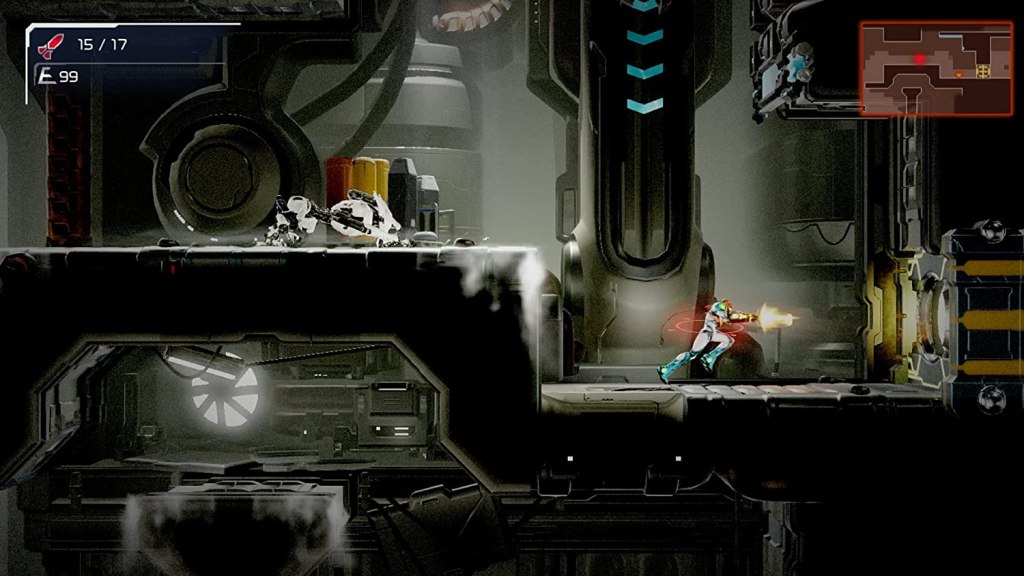
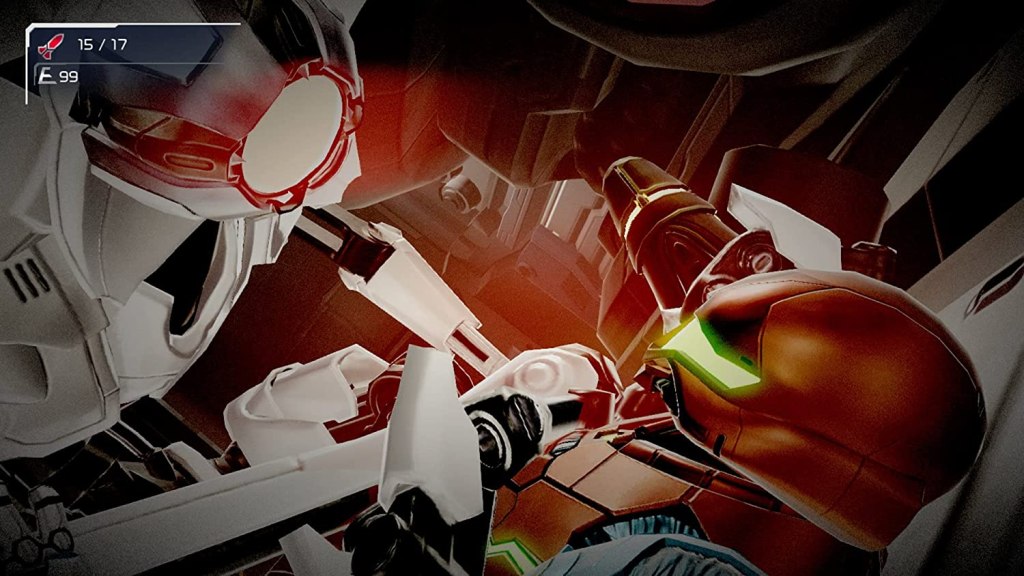
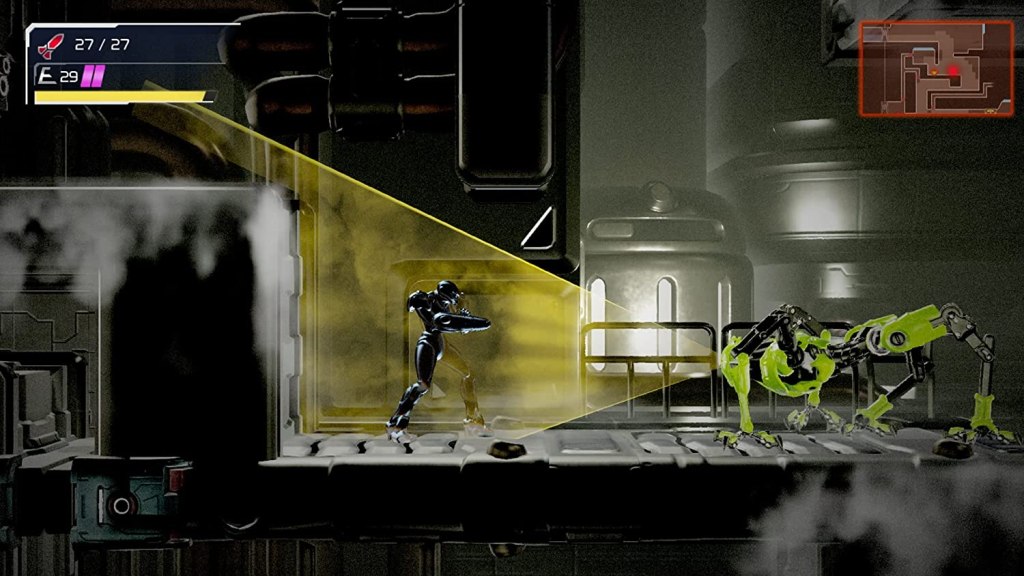
The unique feature of Metroid Dread that makes it stand out amongst its predecessors is the inclusion of the EMMI robots. In each major area there is an EMMI Zone, a cluster of rooms that are being patrolled by the dread inspiring robot. The EMMIs are invincible robots that lurk in hallways, listening and scanning for you. If one sees you, it will hunt you down. If it catches you, it will instantly kill you with only a miniscule chance to counter it. Ultimately, you are meant to avoid the EMMIs until you can kill them.

The inclusion of the EMMIs has been met with mixed reactions. Some people think they are frustrating to constantly avoid, but I personally enjoyed the switch-up from traditional gameplay. The EMMI Zones invoke a feeling of horror, you have to quickly find your way to the nearest exit or else risk being prey to the indomitable machines. These sections are pretty forgiving, if you die you aren’t brought all the way back to the previous save, but instead you respawn where you entered the EMMI Zone. I enjoyed the frantic chases as I tried to dodge around the EMMIs, and the developers were restrained in making sure these sections were never overly long or frustrating.

 There’s a reason that the Metroid series has spawned an entire genre of games focused on exploration. Metroid has become synonymous with backtracking in the gaming world. Metroid Dread is an odd case because while I do think it has some clever level design, it also has some shortcomings. In the sprawling maze of tunnels that make up most metroidvanias, it can quickly become daunting to find where to go next. Getting lost in these games is almost a given. But the developers of Metroid Dread utilized some intelligent tricks to avoid the player getting too lost.

The core loop of many metroidvanias is acquiring a new power and then finding somewhere to use that newly obtained ability to access a new area. It can often be tricky to find the critical path forward, but Metroid Dread cleverly places opportunities to use your recently acquired upgrade very close to where you acquire it. For example, when you acquire a wall climbing ability, there is sure to be a climbable wall in your vicinity. This subtly guides the player to where to go without blatantly leading them by the nose. There is also some sequence breaking that the developers deliberately created for more advanced players to find. If you do stumble upon a way to deviate from the critical path you are rewarded with unique cutscenes.

Despite there being some subtle guidance when exploring, at times there is some obvious railroading. I found that there was a surprising amount of points-of-no-return, spots at which once you pass them you won’t be able to return to your previous location until much later in the game. This essentially cuts the player off from backtracking, making sure they don’t go too far backwards and get lost in the process. I’m not a fan of this as it felt like the developers were holding my hand and telling me not to explore too much without their permission.

Games like Super Metroid and Metroid Prime are known for their atmosphere if nothing else. The feeling of being isolated on an alien planet is conveyed so well. The visuals and music work in harmony to transport the player to a hostile world. Metroid Dread is just not as successful in this department. The music is entirely forgettable, and the visual backgrounds aren’t much better. Metallic hallway after metallic hallway is not pleasant to look at, and it certainly doesn’t convey that you are on an alien planet. There are a few interesting spots that utilize the 2.5D style of graphics extremely well. I loved seeing little alien creatures scurry about in the background of caves, or watching rain pour down and waves crash on the exterior of an alien base.

An unfortunate side effect of having poor visual design is how it affects player exploration. There are eight different areas in Metroid Dread, and while each one has their own flair, they often blend together. It can be hard to remember where you saw a secret or alternative path when every single room looks exactly the same. It’s especially unfortunate because graphically the game looks solid, it’s just that the art direction is bland.

I’m glad that the Metroid series is making a strong return, and Metroid Dread inspires confidence in the series. While I do think that it is weaker in certain aspects like exploration and atmosphere, it is an undeniably fantastic entry in the historic series. The modernized movement and combat are brilliant, this is the smoothest Metroid game by a long shot. Moreover, MercurySteam didn’t play it too safe by just regurgitating an older Metroid game as the addition of EMMIs was great. It is for these reasons that I give Metroid Dread an 8/10. Metroid Dread is more action focused than its ancestors, and even if it isn’t as atmospheric as Super Metroid or Metroid Prime, it is an entry to the series that nobody should miss.

Dead Cells (2018)

I’m the first to admit that finding a rogue-lite game that suits my tastes is difficult. As someone who enjoys steady progression systems and a consistent difficulty curve, the rogue-lites and rogue-likes of the world seem antithetical to my preferences. Even Enter the Gungeon, a game which I love, almost had me quitting after a handful of hours. Unfortunately, Dead Cells never hooked me and grew stale after a dozen hours. While the combat was entertaining enough, I had felt like I had seen the whole game after a handful of successful runs.  

The core concept of the rogue-lite genre is that every time you die, you must restart the game from the first level. Rogue-lites in particular have methods of progression that unlock weapons and upgrades throughout the course of the game that will make subsequent runs easier to complete. That combined with the knowledge and skill gained after multitudes of runs allow the player to make it deeper and deeper in the game, until the eventually conquer the final boss.

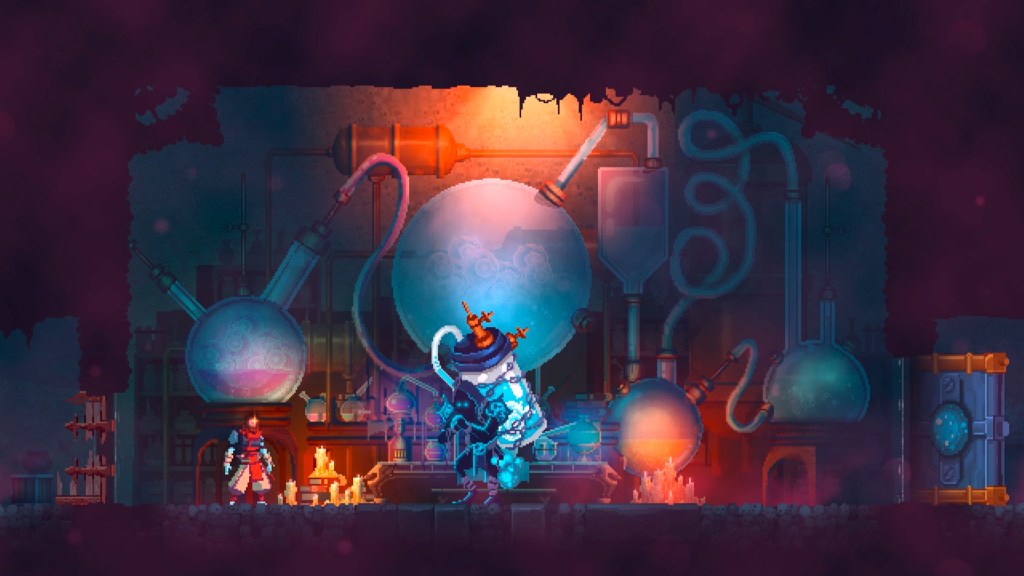
One of the primary aspects of Dead Cells that is given praise is its progression system. While playing the game, exploring hidden crevices, and killing enemies you will gain cells and blueprints. Blueprints serve as unlocks for weapons and tools that once earned can be found in subsequent runs. You must spend cells to complete the blueprints as well as unlocking generalist boosts like additional health flasks. 

The premise of Dead Cells is that you control an amorphous blob that takes control over a beheaded body that it finds. You must traverse a crumbling kingdom to defeat monsters and overthrow a corrupt ruler. There is not much explicit story and explanation given to the player. Instead, you will find hidden bits and pieces of lore scattered throughout your runs. It’s clear that there is a disease known as the malaise that is the source of the kingdom’s ruin, but learning the source of the disease and how the main characters are significant is something that the player will have to figure out after many, many hours. Truthfully, the reason you play Dead Cells is not for the story. 

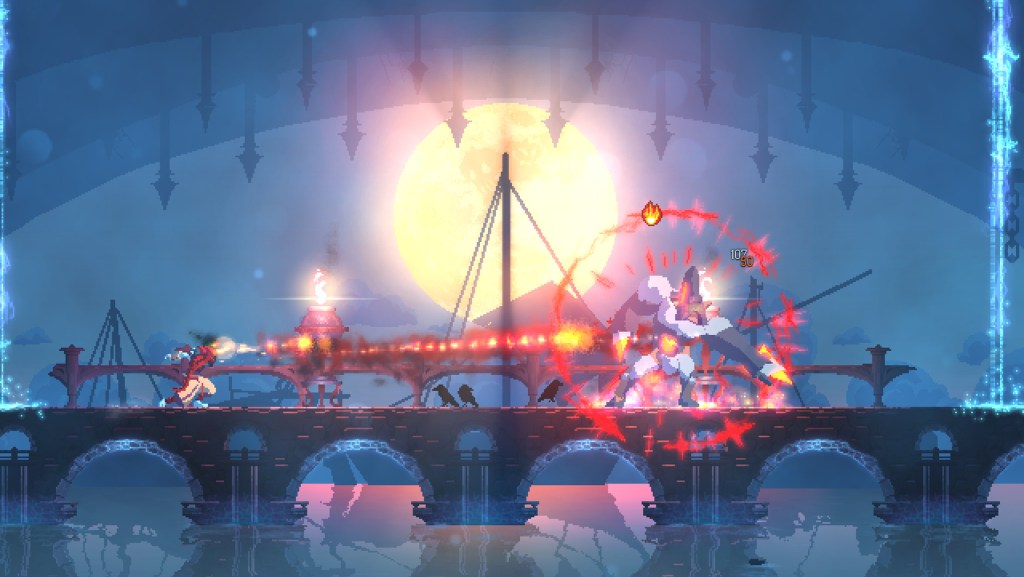
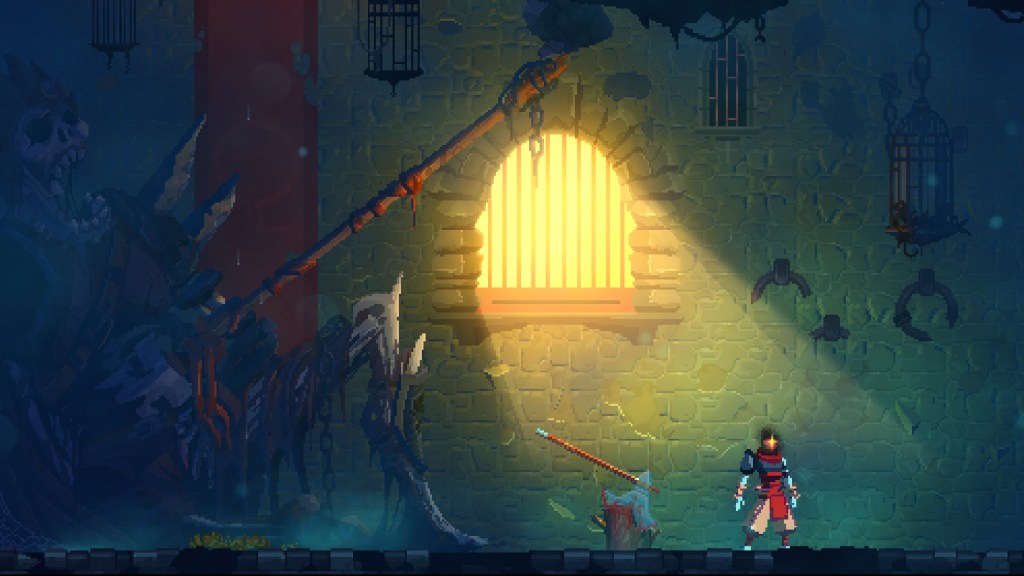
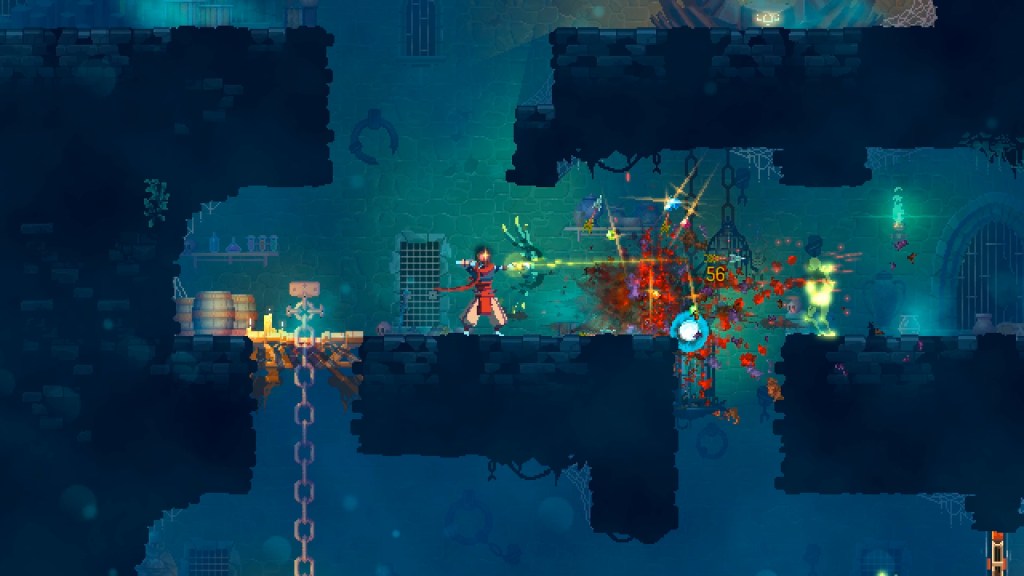
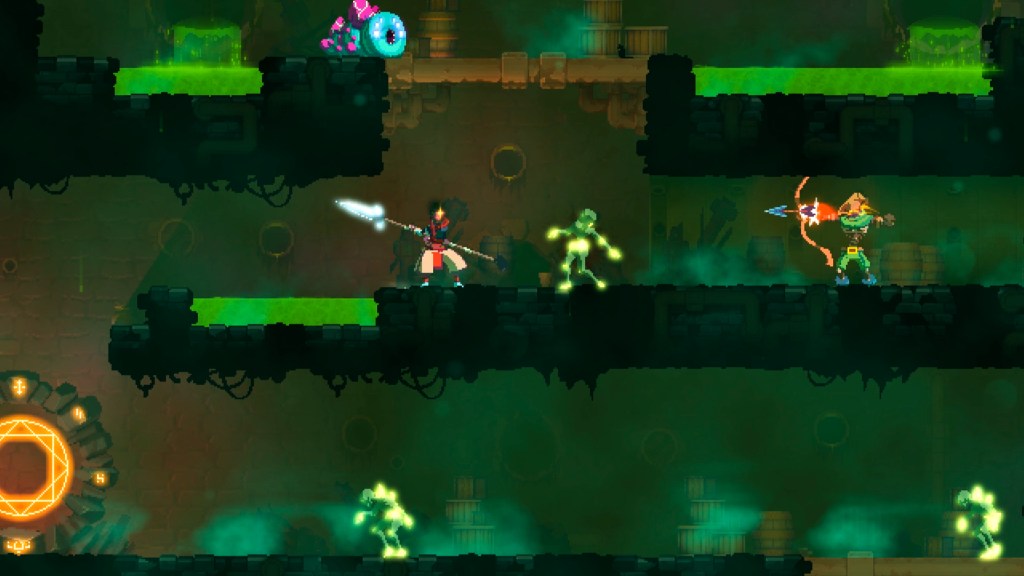
My favorite aspect of Dead Cells is undeniably its combat. As side-scrolling hack n’ slash, you can expect some fast-paced and chaotic action when playing Dead Cells. There is tons of skill expression in how you choose to approach each encounter. You can rely on pure instincts to dodge incoming attacks, or you can play it slow and rely on ranged attacks and traps, or perhaps you prefer to utilize shields to block and parry blows. Every weapon behaves differently, and each one you find will have different augments to its base ability that can further warp its playstyle. It is fun to experiment with numerous builds and see how different each run can be.

Slashing through hordes of enemies just feels right. When a game gets combat correct, it’s hard to explain. There is a visceral feeling of satisfaction. Dead Cells undeniably gets it right. There is a rhythm, an ebb and flow, to good combat. Enemies react to your hits, but given the opportunity will retaliate with massive damage. There is a ton of variation in each enemy type, leaving the player to play cautiously with each new encounter. But once you master each stage you can strike down enemies with confidence and breeze through at breakneck pace.

The meat of Dead Cells is its combat and exploration. Dead Cells labels itself as a cross between a rogue-lite and a metroidvania. I’ve discussed its strengths as a rogue-like, but as a metroidvania it’s a tough sell. The nature of being a rogue-lite is the inherit randomization of the layout of each subsequent run, which is in direct conflict with the progression loops of traditional metroidvania. Exploration is a key aspect of any metroidvania, and remembering where locked doors and out-of-reach ledges were is absolutely core to the experience of a metroidvania. The exploration of Dead Cells is more dynamic, but it does not scratch the itch that a traditional metroidvania would.

Dead Cells is composed of many differing areas, and you can change your path during each run if you so choose. You must collect and unlock a handful of relics across numerous runs to access some of the more challenging areas. While this seems like a metroidvania initially, I quickly realized that collecting relics and accessing alternative routes was entirely unnecessary. Sure, it was more content to play through, and some new enemy types dropped new blueprints, but the intrinsic reward was not justified. These areas brought me no closer to defeating the final boss. Maybe I’m missing something, but I felt like due to the increased difficulty of the zones it was actually a hindrance to attempt them during a serious run.

To increase your power in a run to give yourself a chance to defeat the final boss you unlock weapons of varying power levels as well as scrolls that increase your health and damage. As far as I could tell, taking the path of least resistance was just as effective as tackling the most challenging routes. Unlocking new blueprints to craft new weapons is fine, but I found that many of the blueprint weapons were undeniably weak. Sure, some were stronger than the early game weapons but most were not worth the price of admission. It feels like much of the progression in Dead Cells justification was “just because”, which truthfully did not drive me to continue.

The biggest offender of this mindset was how difficulty levels scaled. When you initially defeat the final boss, you are given a “boss cell”, an item which you can activate in future runs to up the difficulty. When you defeat the next higher difficulty, you unlock the next boss cell, and it continues like this until the 5th boss cell. At that point you will finally be able to challenge, the “actual” final boss of the game. 

The truth is that I felt absolutely zero desire to complete further levels of difficulty past the initial one. You are rewarded with more cells to unlock more blueprints, but as previously mentioned that felt worthless. Moreover, you do not unlock any real “additional” content until the 5th boss cell, which I’ve heard rumors will take 75+ hours to realistically complete. I felt no drive to unlock higher difficulties just for the sake of it. I like challenging games, but doing the same thing over and over with just harder enemies doesn’t appeal to me.

Overall, Dead Cells is just a confusing game to me. I enjoyed my first dozen hours with the game but I felt absolutely no desire to progress after that. Hardcore fans will tell me that the point is to complete each difficulty level, but there just doesn’t feel like there is a point. I’m willing to admit that maybe I’m just not the core audience of this type of game. All the unlockables and blueprints and difficulty levels just beg the question “but why?”. It is for these reasons that I give Dead Cells a 6/10. Despite having fun combat, I just don’t understand the cyclic and repetitive nature of Dead Cells.

Blasphemous (2019)

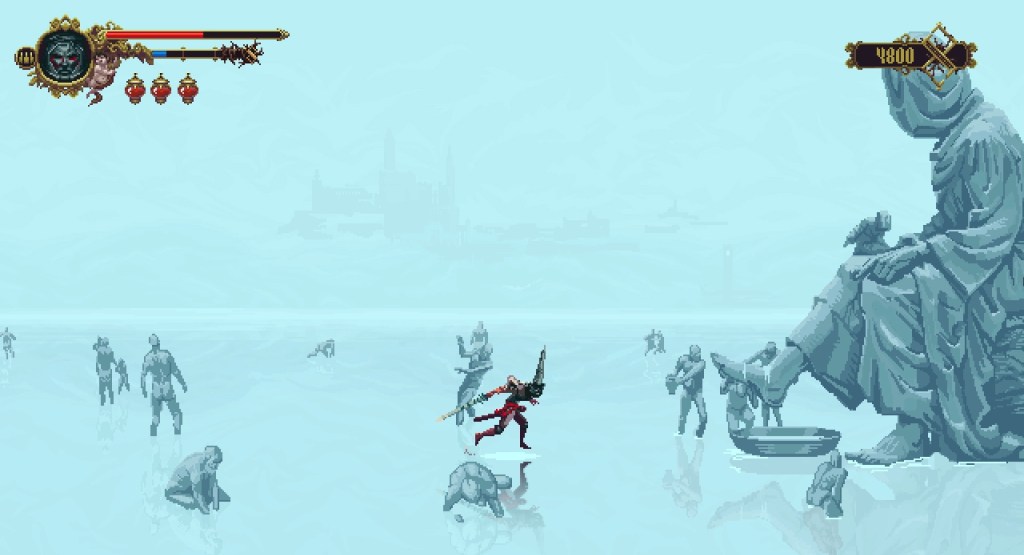
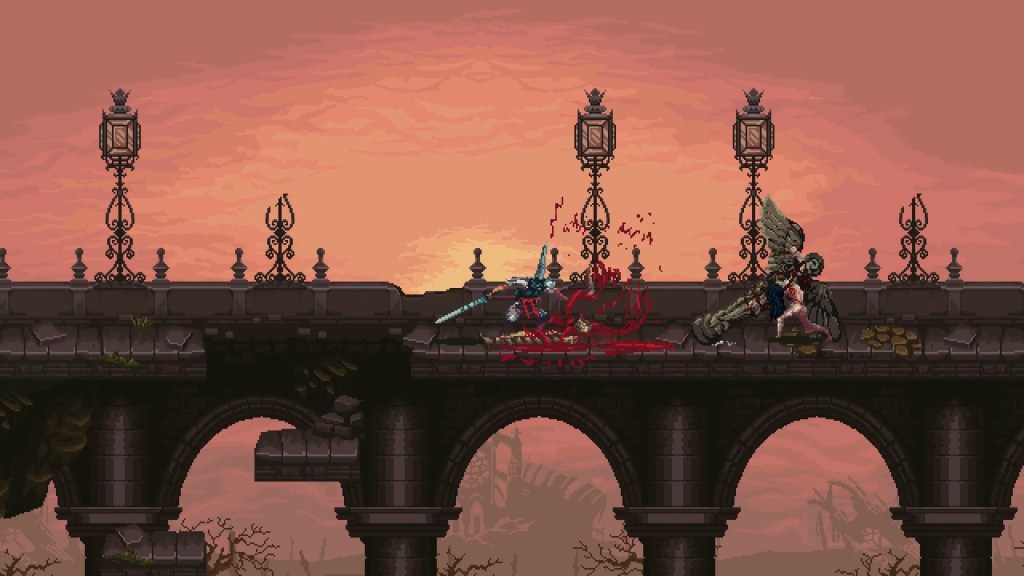
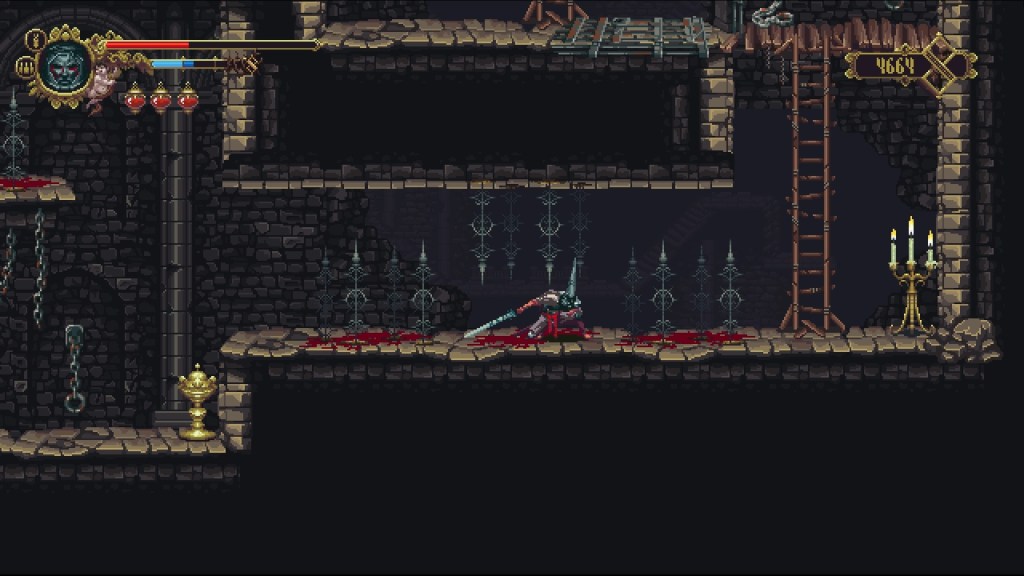
Religious imagery is perhaps the most popular theme in any form of media. Despite this, perhaps nothing has a more brutal take on the Christian mythos as Blasphemous. Rooted in Spanish Catholicism, Blasphemous constructs a world that takes the religious cornerstones of guilt and penance to extreme levels. The game is a classic metroidvania, and a well-designed one at that. While Blasphemous does not innovate on the genre, its masterful art, imagery, and atmosphere are plenty to make it stand out in a sea of similar games.

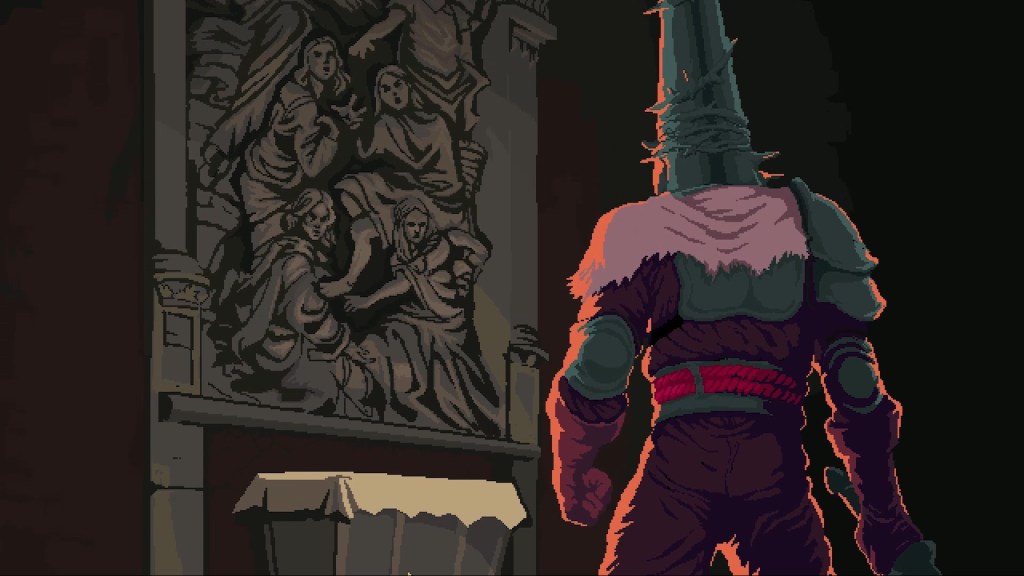
Blasphemous does not hesitate to make its gore apparent to the player. The opening moments of the game have the player awakening on a pile of corpses, all which are doppelgangers that resemble the player. You immediately encounter an unsightly beast; a warden who appears to be searching for survivors of the unseen massacre and slaughtering them. The main character, the Penitent One, slices the warden open to fill his helmet with blood and dons it before continuing on his quest.

After the player’s introduction to the game, you become aware of the parallels between this fictional world and historical events such as the operation of the Spanish Inquisition. The world of Blasphemous is centered on the ideas of guilt and penance. Everybody worships what is known as the Grievous Miracle, a magical force that arbitrarily doles punishments to the world’s inhabitants. People see these punishments as blessings, and happily endure extreme pain as a way to repent for their sins. Self-flagellation, bare-footed pilgrimages, carrying crosses, and whippings are all common forms of mortification of the flesh. Everyone carries the weight of guilt, and consequently seek penance through suffering to receive forgiveness.

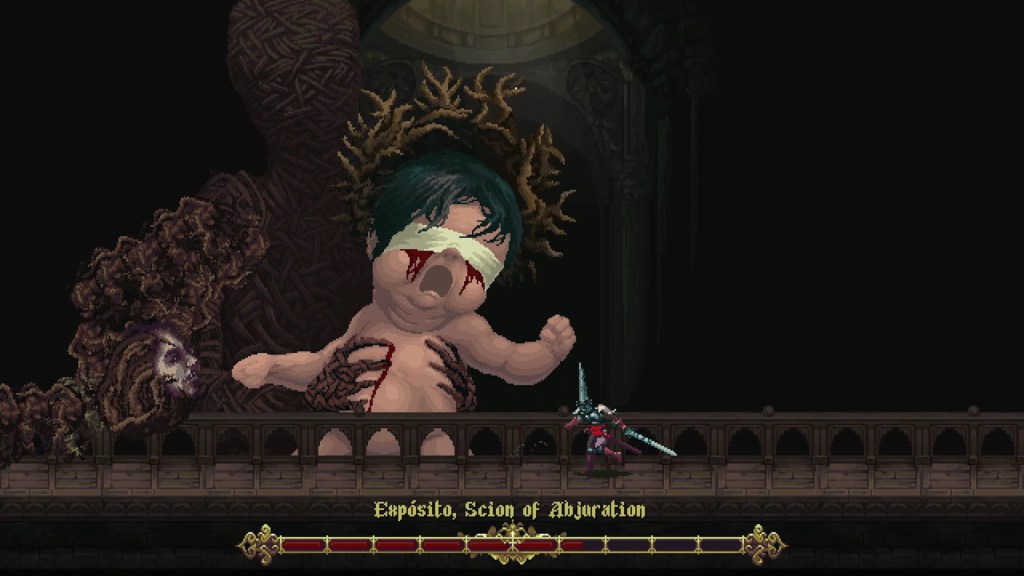
The imagery of Blasphemous is particularly striking. Every character is suffering at the hands of the Grievous Miracle, everyone is on some journey to complete their punishment. Everything in the game mirrors the grandiose nature of religious text. The areas are named things like “The Mountains of the Endless Dusk” or “Where Olive Trees Wither”. There are sprawling cathedrals and towering statues that dwarf the Penitent One. The artwork is absolutely stunning. The immaculately designed backgrounds, the gothic architecture, the detailed character models, and the violent animations superbly represent the brutal yet magnificent vision of this religious world.

A key aspect of any metroidvania is the level design and the emphasis on natural exploration. Blasphemous has a fairly unique approach to the design staple of finding new items that unlock new areas of the map. Interestingly, Blasphemous can be completed with only the abilities and items that you begin the game with. All subsequent upgrades are found off the beaten path and are entirely optional. I find this to be remarkable as most games in the genre follow the same formula of beating a boss to acquire an upgrade that lets you progress to the next area. But Blasphemous encourages the player to make discoveries on their own.

I was engrossed in exploring the world of Blasphemous. Part of the reason was because of how the game framed its upgrade system. Many metroidvanias make the mistake of having upgrades be obvious in their functionality. For example, many games include a double-jump that allows the player to reach higher up areas. This is fine, but it takes a little mystery out of exploration and some excitement when you finally do unlock the double-jump. When you see a ledge that’s too high to reach, you know that you will eventually unlock a double-jump. And when you do gain access to that ability you already know where it can be used. But Blasphemous takes a different approach, as most of its upgrades are framed as a tool that the Penitent One uses to change their perception of the world around them.

For example, a blessed cloth allows the player to hear the last thoughts of some of the deceased scattered around the world. These spectral thoughts are often hints to puzzles that the player would have no way of solving otherwise. Another upgrade reveals floating, bloody platforms to the Penitent One. These platforms can be used to reach secret ledges that couldn’t be accessed otherwise. Whenever you do finally obtain one of these exploration upgrades, it immediately makes you wonder what effect it has on the world around you. It makes me want to actually explore, rather than being prompted to by the game. This natural desire to unearth the secrets of the world is a property that is key to any metroidvania, and Blasphemous nails this.

I’d argue that the weakest aspect of Blasphemous is its combat and movement. There’s something about this game that makes its gameplay feel a little off compared to its contemporaries like Hollow Knight and Ori and The Blind Forest. The animations and hitboxes of Blasphemous can feel a little desynced at times. It’s not offensively bad but I definitely felt like it wasn’t as clean or polished as some of the masterful metroidvanias that have been released recently. The combat itself is incredibly simplistic, which can be a great direction if utilized properly. Not every game needs to have crazy combos or require split second reaction time. Blasphemous relies more on learning enemy patterns and reacting to them appropriately.

This approach shines during the numerous boss fights scattered throughout the game. The bosses have a variety of attacks and abilities that will test the player’s ability to learn and read their movements and tells. Unfortunately, the basic enemies in the game are not as entertaining as the bosses. The issue is that the vast majority of enemies only have a single attack, and once you learn how to react to that attack, the encounter becomes trivial. You always know what they are going to do, so you barely need to even pay attention anymore. Moreover, because the combat is so simplistic, you cannot make it more entertaining for yourself by coming up with new combos or trying different techniques.

While Blasphemous does have a progression system that unlocks new attacks, you can rarely string these techniques together in any meaningful way. Most enemies will succumb to a few simple swings of the sword, so you will never get to even try more complex inputs. The lack of build customization is also an issue. Many games with simplistic combat can get away with it by offering the player diversity in how they build their character. Blasphemous does offer three different categories of items to equip, but they do a poor job at truly distinguishing different playstyles.

The first category of items that can be equipped are called prayers. Prayers are essentially magic spells that use a resource called Fervour which is gained by attacking and executing enemies. You can only equip one prayer at a time, and they are fairly weak in general. They cost a hefty amount of Fervour so you cannot cast them often, they rarely do more damage than just slashing at enemies, and they take a long time to cast which leaves the player vulnerable. They are just underwhelming and I often forgot that I had a prayer equipped because their use cases are so few and far between. The only way that I see prayers being valuable is if the player makes a hyper-specialized build using rosary beads.

Rosary beads are items found throughout the world, and a few can be equipped at any time. Individually, most of them are fairly mediocre. A few are exceptionally powerful but they are difficult to uncover. The problem is that the best rosary beads are pretty generalist bonuses. Things like doing more damage and being invincible while healing are too good to pass up. Other rosary beads provide protection against certain elements, but these are only useful against particular bosses. There’s not really a great way to make an interesting build using rosary beads outside of a prayer-focused approach. You could increase prayer damage, decrease prayer cast time, increase maximum Fervour, and increase Fervour generation to give yourself a prayer casting focus rather than a sword slashing one. But I doubt most players will even contemplate going this route considering how weak prayers are in the first place.

The last customizable option is possibly the worst: Mea Culpa hearts. The Mea Culpa is the name of the sword that the Penitent One carries, and you can equip specialized hearts into the sword to give it different effects. The interesting thing is that all bonuses are tied to some drawback. For example, you can do more damage at the cost of taking more damage. The problem is that the drawbacks often outweigh the bonuses. It almost feels like a detriment to equip many of these hearts.

While the lack of build diversity does hurt the game’s combat, it also dissuades the player from spending too much time hunting for secrets. With two fairly unimportant collectibles and three unimpactful build item categories, most things that you uncover in the world of Blasphemous are disappointing. The act of exploration was entertaining, but I can see players getting dissuaded from continuing after the majority of their rewards are useless trinkets and baubles.

As a bit of a side note, I played Blasphemous after the first expansion was released, and before the second expansion was announced. I usually don’t mention this sort of thing, but Blasphemous infamously was janky immediately following its release. It’s a shame that people who bought the game early were burnt by it not being fully-baked, but if that was the case for you than I encourage you to give it another chance with the recent patches.

Overall, Blasphemous is more than just a competent metroidvania. It has an identity of its own, with strong theming and powerful imagery. The sheer brutality of its art and world alone is enough to make it an experience worth your time. Its unique take on how exploration is framed makes Blasphemous a worthwhile metroidvania among its peers. Even thought combat was overly simplistic and repetitive, the rest of the game made up for that. It is for these reasons that I give Blasphemous an 8/10. In a genre brimming with similar games, the style and atmosphere of Blasphemous set it apart.

Feudal Alloy (2019)

I’ve discussed a decent amount of indie metroidvanias since starting this website. It’s not surprising considering how many of these kinds of games are made. It stands to reason that new games in this niche must do something special to stand out, or risk being forgotten in an oversaturated market. Feudal Alloy looked promising to me, it had an interesting concept and setting, and I had hoped that it would do enough to at least be a decent metroidvania. Unfortunately, this game feels unfinished in every regard. Every aspect of the game could use polishing, and some components are missing entirely.

1

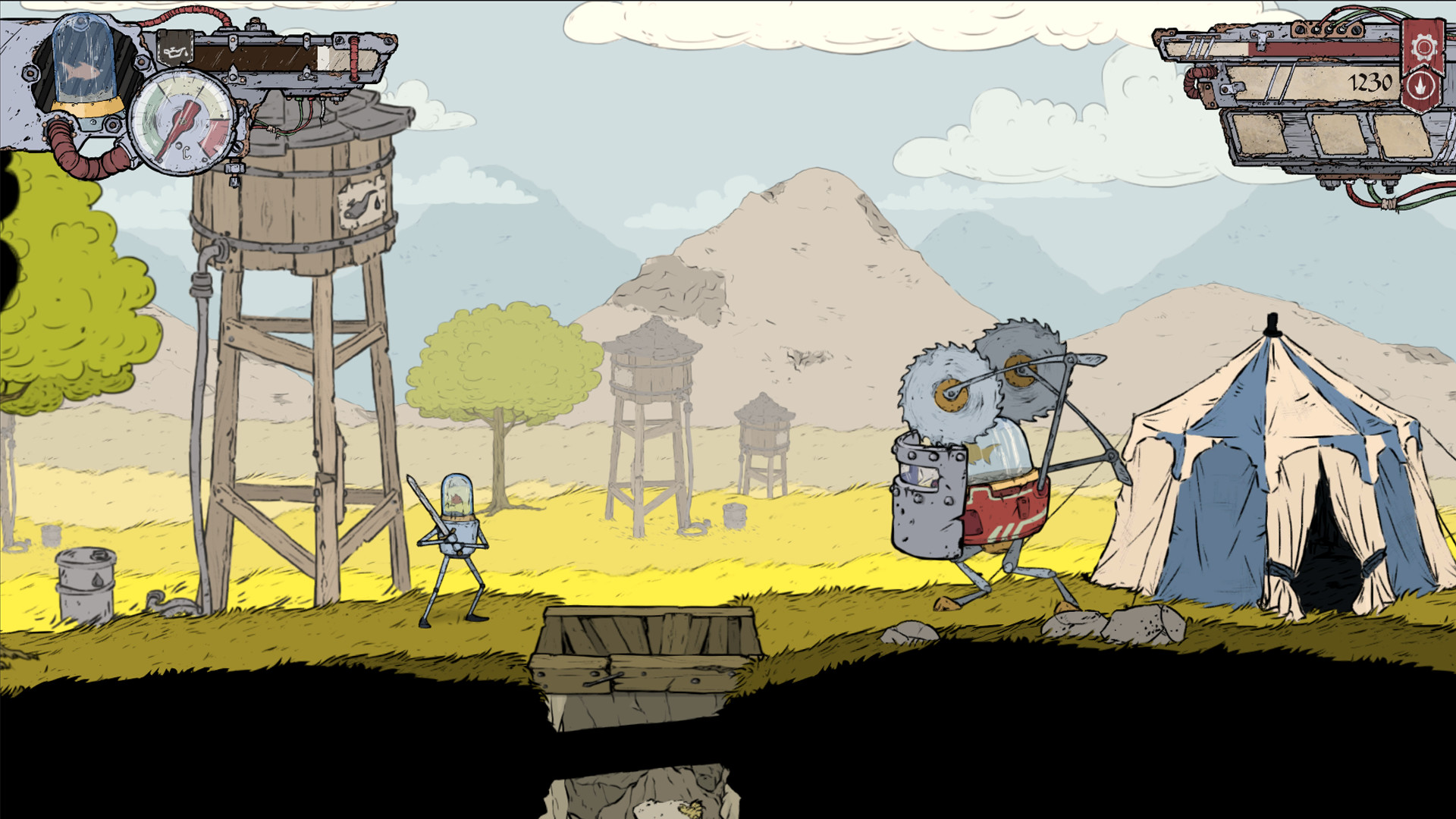
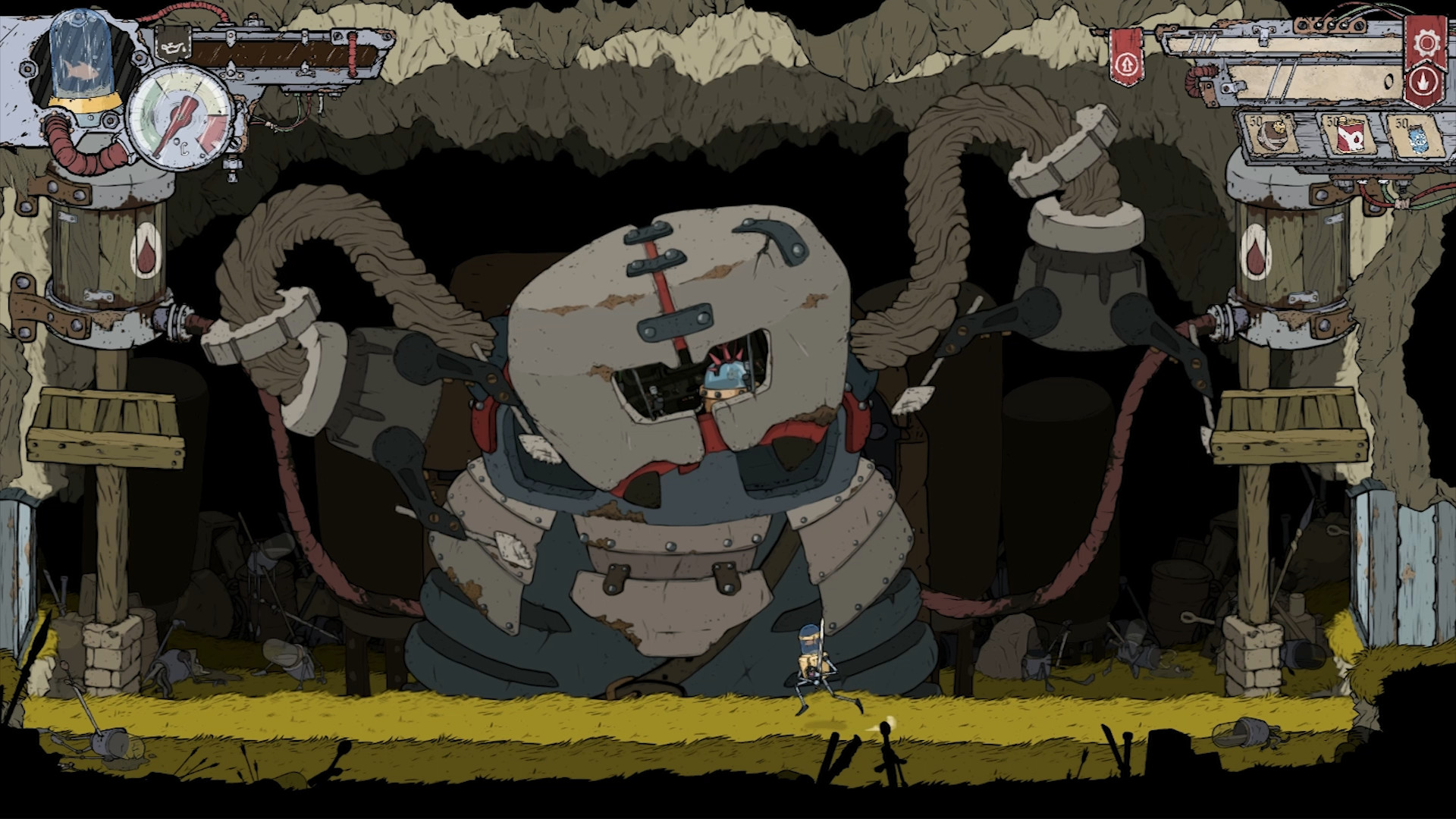
The idea behind Feudal Alloy is undoubtedly intriguing: you play as Attu, a fish-controlled robot in a medieval world. Attu was a resident of a farming town that produces oil for all of the robots, but a dastardly group of bandit robots ransacked the village and stole all of the resources. With sword in hand, Attu sets off on a quest to reclaim what was stolen. As a metroidvania you must progress through a sprawling world, collecting upgrades that allow you to progress further and further. Without a doubt, the best aspect of Feudal Alloy is its art style. The hand drawn characters and environments are appropriately detailed and are imaginative. It pains me to say that the positive aspects of Feudal Alloy end there.

6

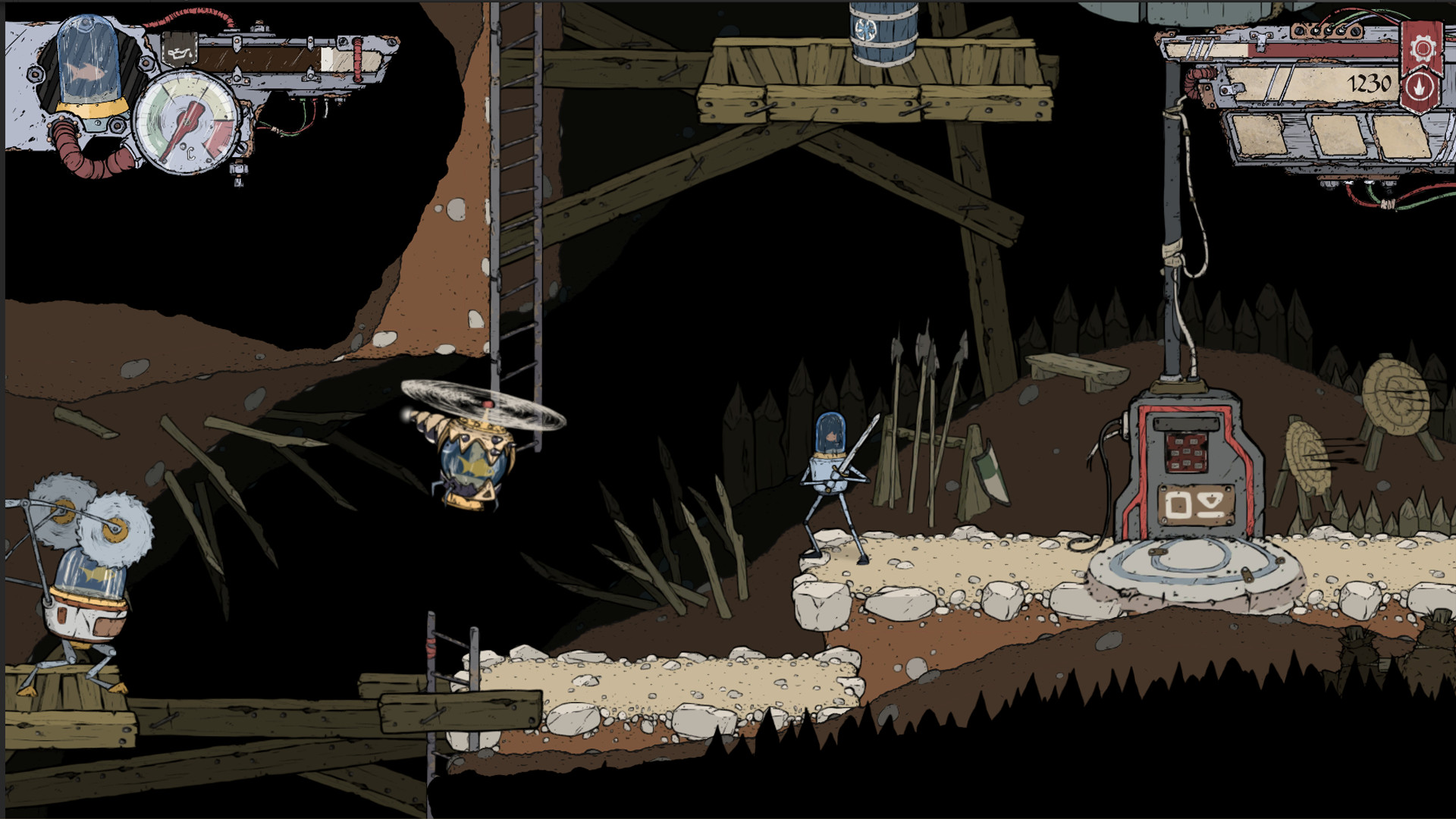
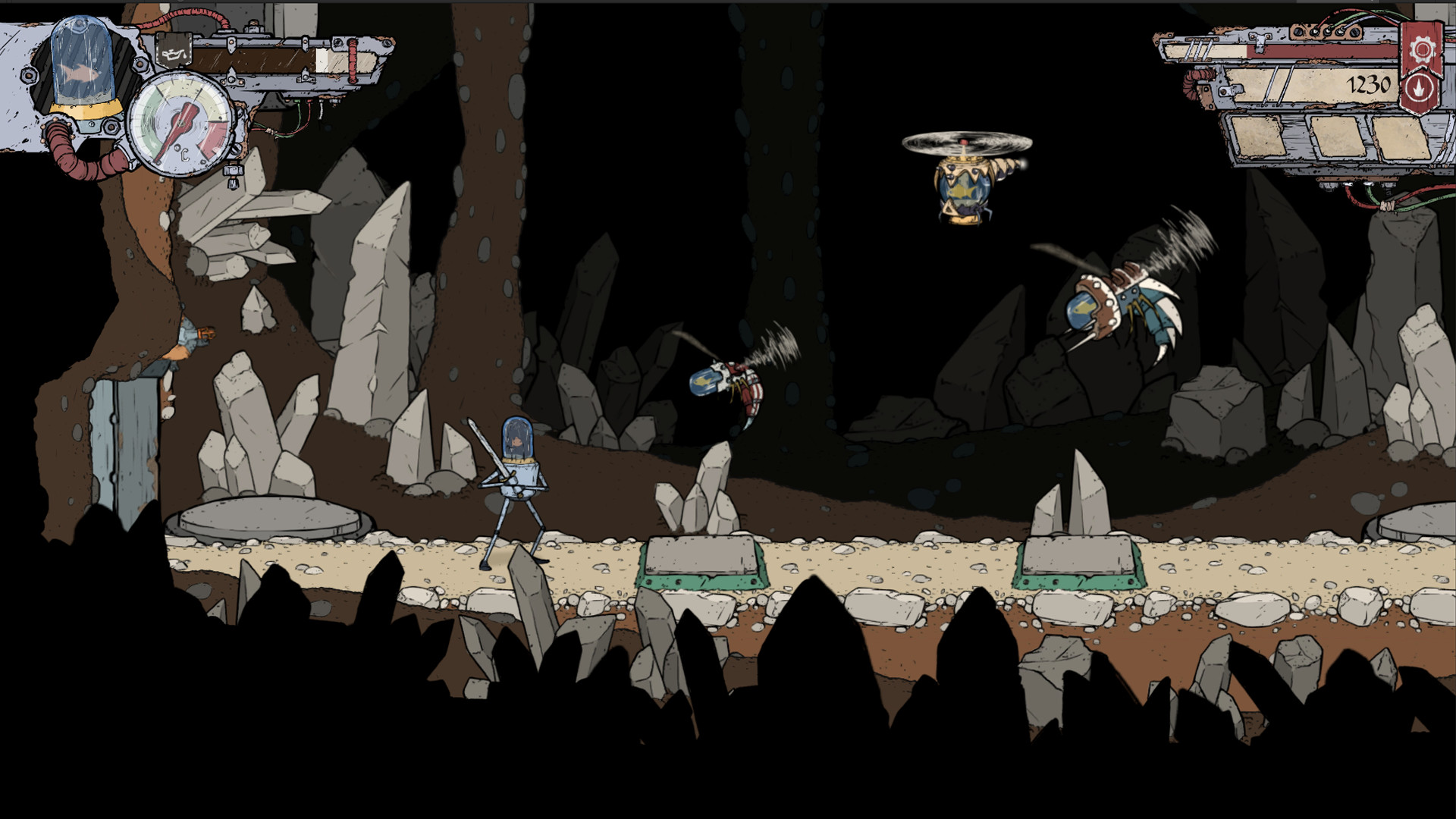
Like most metroidvanias, as you roam the tunnels and rooms of the expansive map, you will run into enemies. The combat is pretty standard, you can swing your sword to damage foes, and you must avoid damage by jumping or moving out of the way. You eventually unlock some additional techniques such as dashing, the ability to throw bombs, blocking, and unleashing electrical discharges to stun enemies. The game at least has a thematic stamina system, as you use Attu’s various abilities he will begin to overheat. If Attu reaches his heat limit, he will no longer be able to attack or dash, and will need to cool off before continuing. It functions as most stamina systems, but it was a nice touch that it thematically fit the game.

The combat is all pretty typical, there is not much here that stands out from any other game. If anything, it can fill a bit stiff and unreliable at times. The hitboxes of Attu and enemies feel a little inconsistent. While it’s not frustratingly bad, the game is definitely lacking the buttery-smoothness of one if its peers: Hollow Knight. The aerial combat in particular is pretty clunky. Jumping above enemies and slashing them from above does not bounce Attu high enough, so you end up just falling straight into the enemy and taking damage. The biggest disappointment in the combat department is its lack of bosses. There are only two bosses in the entire game. Instead, there are an abundance of challenge rooms which bombard the player with wave after wave of normal enemies. These kinds of rooms are fine once in a while, but they felt like filler for where a unique boss should have been. It definitely seems like there were supposed to be more bosses, but the developers just put these challenge rooms in their place to save time.

2

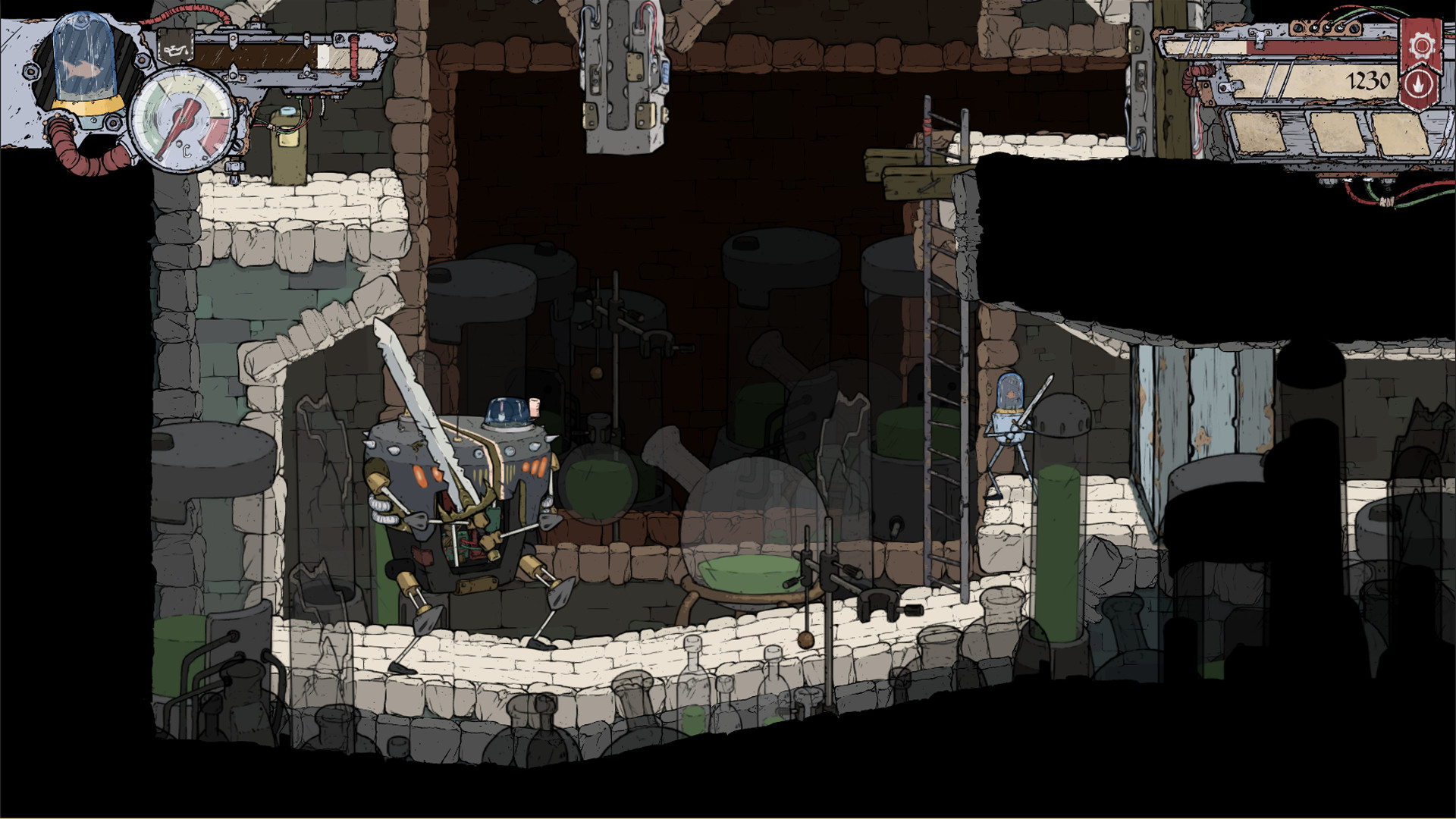
As a metroidvania, exploration is a key aspect of Feudal Alloy. The player must figure out where to go, and what new paths can be traversed when an upgrade is found. Similar to the combat, Feudal Alloy follows a pretty standard exploration formula but with some flaws. The environments are pretty similar looking, and landmarks are essentially non-existent. It can be difficult to remember any important locations and how to get there since everything just blends together visually. Moreover, some parts of the map just don’t make geometric sense. It’s hard to explain, but when looking at the map, rooms just don’t line up with where the doors physically are. For example, the map will show a door on the left side of the room, but in reality, the door is on the floor. These inconsistencies can make navigation difficult.

5

The other big problem that I had with the exploration was the lack of proper secrets. Sure, there are a ton of hidden paths and secrets to find, but not a single one of them is rewarding in the slightest. Most of them contain a stash of money, but money is virtually worthless. The only other prize you could find is a new piece of gear to equip, but that rarely felt helpful. You can buy health potions and coolant to restore stamina with the money you find, but these are extremely cheap and I never worried about running out of money. You could also buy new equipment, but the realistically there was little reason to ever do so.

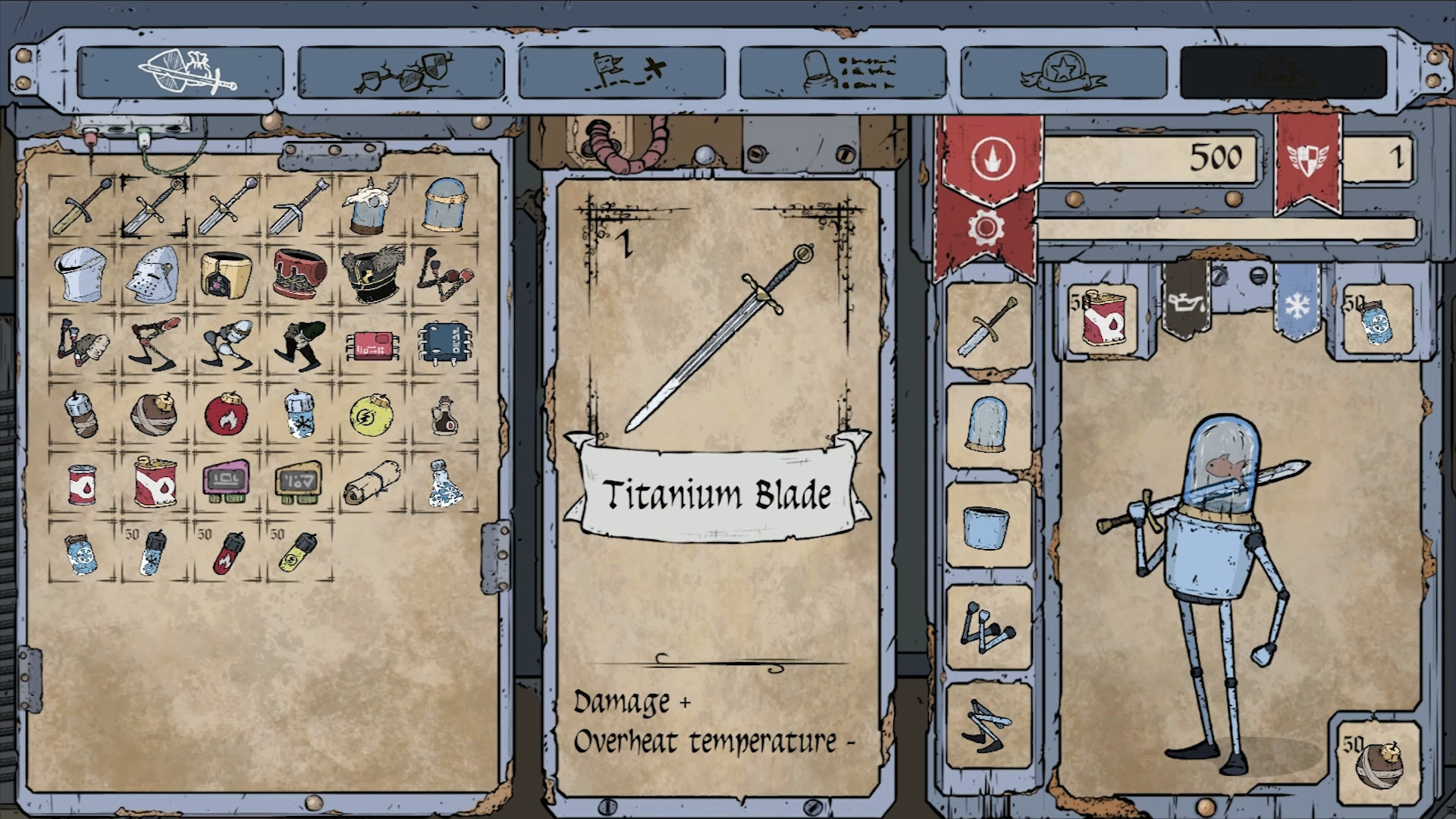
New gear in Feudal Alloy feels relatively useless. There are five stats: damage, armor, cooling speed, overheat temperature, and health. Armor and health are essentially the same as they both increase how much damage you can take. Similarly, cooling speed and overheat temperature also are functionally comparable. You can’t even tell what your stats are really doing. There’s no way to tell how much damage your dealing or taking, so it’s hard to judge how much a stat increase is doing for you. Moreover, finding or buying new gear rarely feels rewarding. All it does is slightly swap around which stats it gives you. One chest piece may give you one less damage tick, but one more health tick. I didn’t feel like there was meaningful equipment parity or choice since everything was so similar.

3

My final gripe about the game was how it underutilized its story and setting. The couple sentences that I wrote to describe the basis of the story is all that there is in the game. I’m not exaggerating when I say there is a short blurb at the beginning of the game explaining the story, and that’s the extent of the narrative in the game. There are no additional characters, lore, side quests, or even a narrative arc that progresses through the game. Bandits stole the oil and Attu is trying to get it back. That’s it. It’s really disappointing because the setting is actually fairly interesting. I want to know more about the fish-controlled robots, but there is just no worldbuilding of any sort.

4

Overall, Feudal Alloy isn’t a particularly bad game, it’s just not finished. The combat needs fine tuning and there needs to be more bosses. Exploration needs to feel more rewarding, and one way to accomplish that would be to make gear more unique. The environments need to be more distinct so that navigation is more natural. And there needs to be some sort of story, worldbuilding, and lore to utilize the unique setting of the game. It is for these reasons that I give Feudal Alloy a 4/10. This is a game that feels like it is still in the alpha stages of development, as nearly every aspect feels unfinished and unpolished.