Simplicity. As games grow more complex and incorporate numerous systems that require paragraphs upon paragraphs to understand, it makes me long for the uncompromising simplicity of Katamari Damacy. But don’t mistake simplicity for being dull, Katamari Damacy is one of the most unique and iconic games in history. And it’s quickly become one of my favorites. Once you get the ball rolling, it’s hard to stop playing.
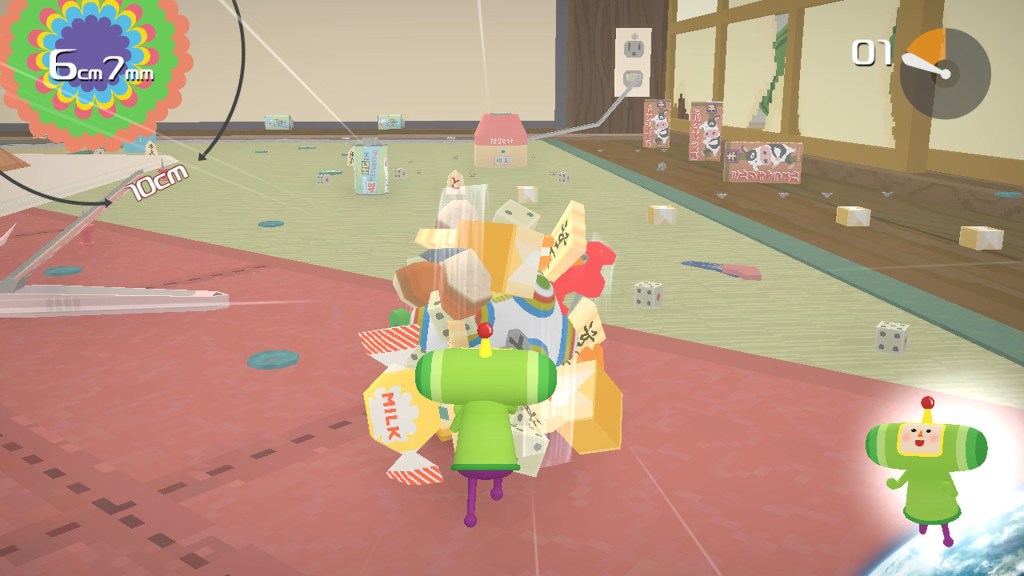
The King of All Cosmos accidentally destroyed all the stars in the sky after having a few too many drinks. He sends his son, the 5-centimeter-tall prince to Earth to roll up anything he can into a ball to create new stars. The Katamari can only pick up objects that are sufficiently smaller than it, requiring you to slowly ramp up into an all-encompassing ball of destruction.
There’s something enormously satisfying about beginning every level with a tiny Katamari, only capable of picking up thumbtacks and coins, and steadily growing in size. That table that used to be an obstacle? It will eventually become part of your Katamari. That car that ran into you, flinging you across the road? Grow a bit more then get your revenge by rolling it up.
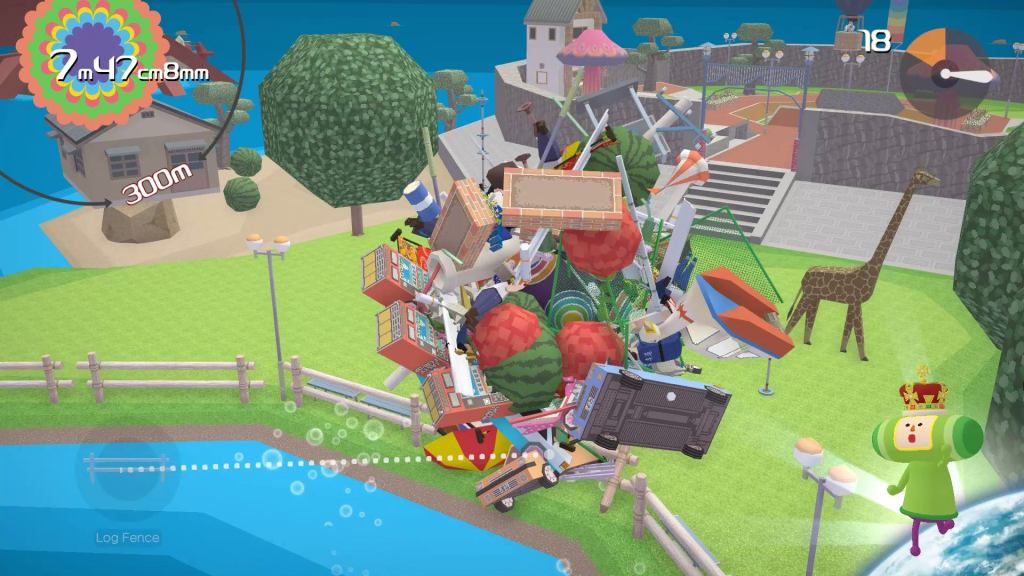
Nothing is safe from the eventuality of becoming part of the Katamari. But bumping into objects larger than the Katamari will cause you to lose mass, requiring a bit of careful planning and navigation. There’s a balancing act of trying to collect the largest items to grow the fastest in the allotted time, but being cautious not to be overly ambitious and bump into objects that are too large, wasting precious time and siphoning off previously collected items. This little bit of friction is necessary to keep the game interesting. And it makes it all the more satisfying when you come across a group of objects that are the perfect size.
Because the core concept is so simple, I think it’s a boon that the control scheme is a bit tricky to master. While some may bemoan the tank controls as being unintuitive, I think they fit the game perfectly. There would be very little challenge and no mastery to be had if the Katamari was easy to control. And moreover, it fits thematically as well. Of course a hulking ball of stuck-together objects is a bit unwieldy to push around. It should be difficult to turn, maneuver, and stop your momentum. Mastering your control of the Katamari and planning out different routes through the levels also provides an excellent opportunity for replaying levels to try to get a max-sized Katamari in the time-limit.
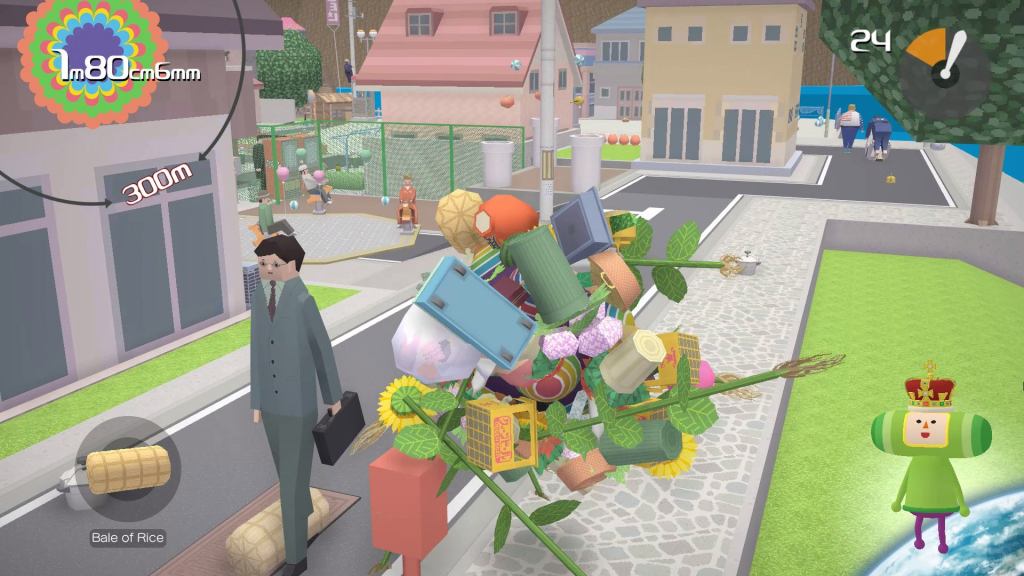
Despite the prospect of a giant sticky ball rolling through communities causing untold destruction sounding horrifying on paper, Katamari Damacy is a light-hearted game. It’s full of whimsy and surreal depictions of Japanese culture. You have to look no further than the game’s introductory video of dancing pandas, singing ducks, and rainbows flying everywhere to get a feel for the game’s style. It’s just a joy to roll around and explore the whimsical world. And it helps that the soundtrack is also superb, filled to the brim with catchy and joyous tunes that are hard to get out of your head.
My one small critique of Katamari Damacy is that I wish there were a handful more areas in the game. There are 19 total levels, but each level takes place in one of 3 areas. I don’t mind revisiting the same places, especially because new portions of the areas open up as the Katamari progressively expands, but I would have loved to see two or three more distinct areas to explore. I actually enjoyed revisiting the same areas a handful of times because I learned more about the areas in each subsequent visit, increasing my mastery and making the world that much more memorable. Truthfully, my request is a bit of a nitpick. Especially because the complaint boils down to “I want more Katamari Damacy”.
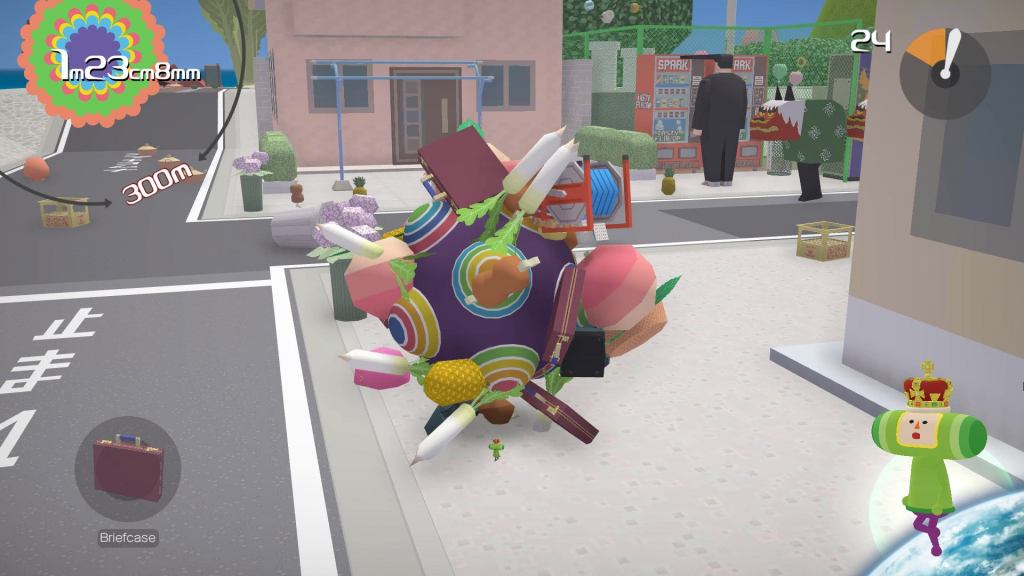
There’s no doubt in my mind that Katamari Damacy is one of the greatest games of all time. It’s equally parts unique and playful. It’s unlike any other game out there, and it’s a game that everybody should play. Katamari Damacy is just pure fun, plain and simple. Not every game needs to be a hodgepodge of ideas and systems. Sometimes, it’s enough to just roll a big ball around.
 stephensopinions