Older games are often rough around the edges, and I was concerned when I needed to download a 3rd-party mod to even run Max Payne. But the little bit of research that I had to do to get the game running was well worth it, because Max Payne is an absolute classic. It’s an old-school FPS that makes you feel like an action movie hero, while simultaneously gripping you in its noir narrative and setting. For its time, it was a technically impressive game that made clever decisions to hide its shortcomings. Despite a few hiccups with the difficulty design, Max Payne is an excellent game, even to this day.
After his wife and infant child were killed by drug addicts in a burglary a couple years ago, Max becomes an undercover DEA agent. He gets a lead on the source of the drug known as Valkyr, a mysterious substance that makes people enter a zombie-like state. Max hunts for the truth during a historic blizzard in New York City. It escalates from mob drug war to full-blown conspiracy as Max spirals in his quest for vengeance.
As the plot unfolded, layer by layer, I was also impressed by the thematic consistency. The weight of the guilt that Max carries because of the murder of his family turns him into a relentless hunter. He is haunted by hallucinatory dreams where he is the one pulling the trigger during the tragedy. As the blizzard progressively worsens, so does Max’s mental condition and grip with reality. The narrative benefits from its noir styling. Max narrates the events with melodramatic descriptions and the presentation embodies the dreamlike yet brutal characteristics of classic noir films.
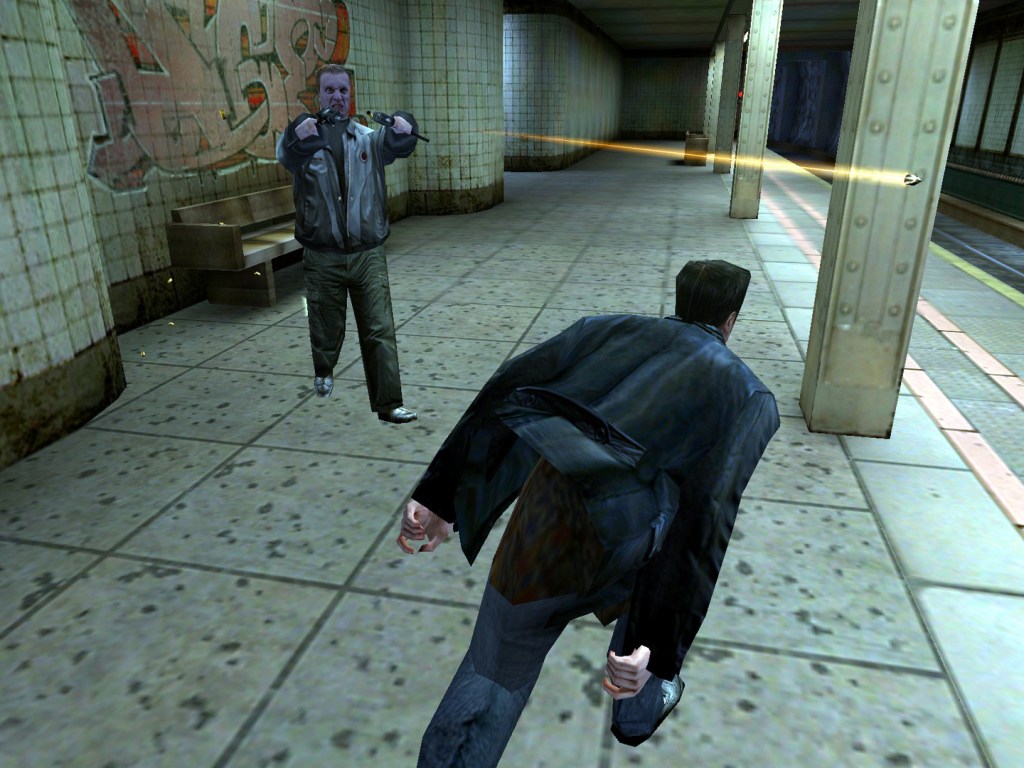
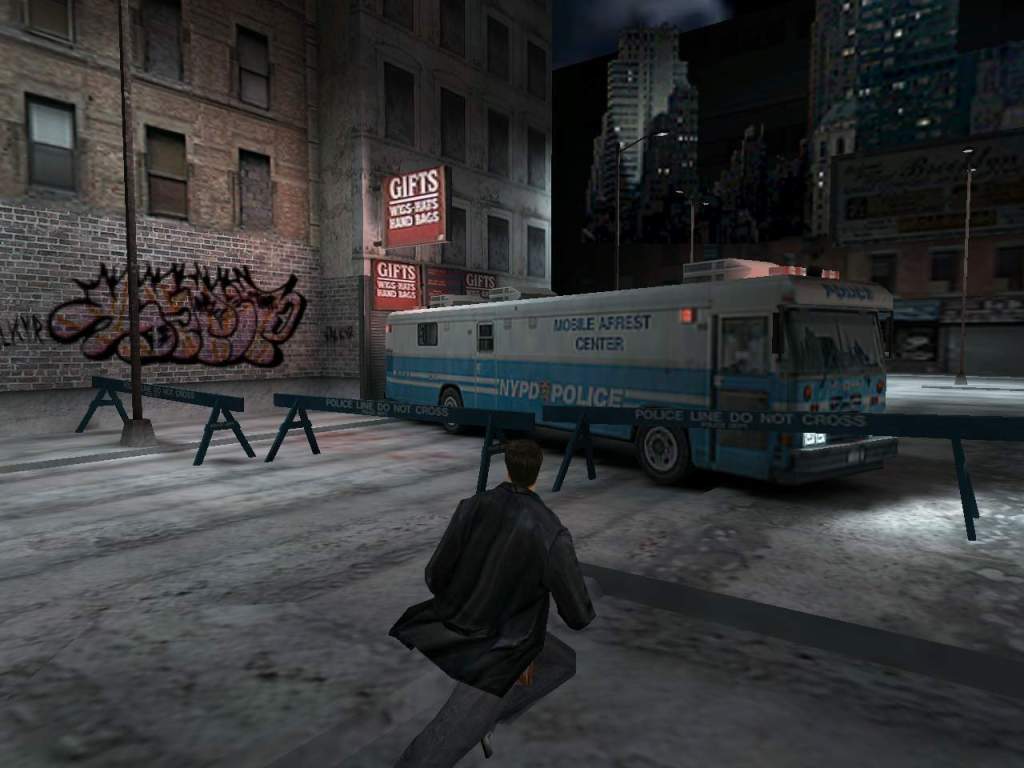
Despite its age, Max Payne visuals hold up remarkably well. 3D graphics were still in their infancy, so the developers decided to forgo cutscenes for comic panels. This was a clever choice because these stylized comics have aged so much better than cutscenes from that era. It also plays wonderfully into the noir theming and surreal elements of the plot. The setting is also quite memorable. New York City in a blizzard is one of my favorite environments to explore. The snow-covered rooftops, empty streets, icy docks, and rundown apartments are wonderfully atmospheric and filled with little details. I quite liked how many of the locations had radios or televisions that gave news updates on the “historic storm”. These little flourishes gave the world more credibility.
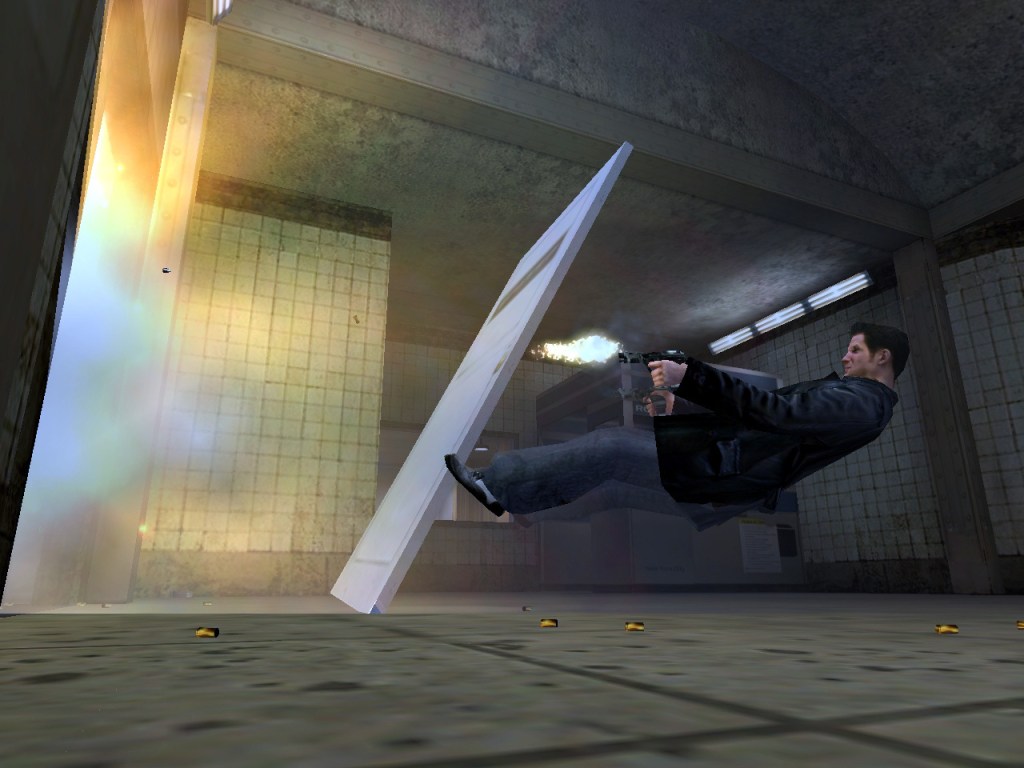
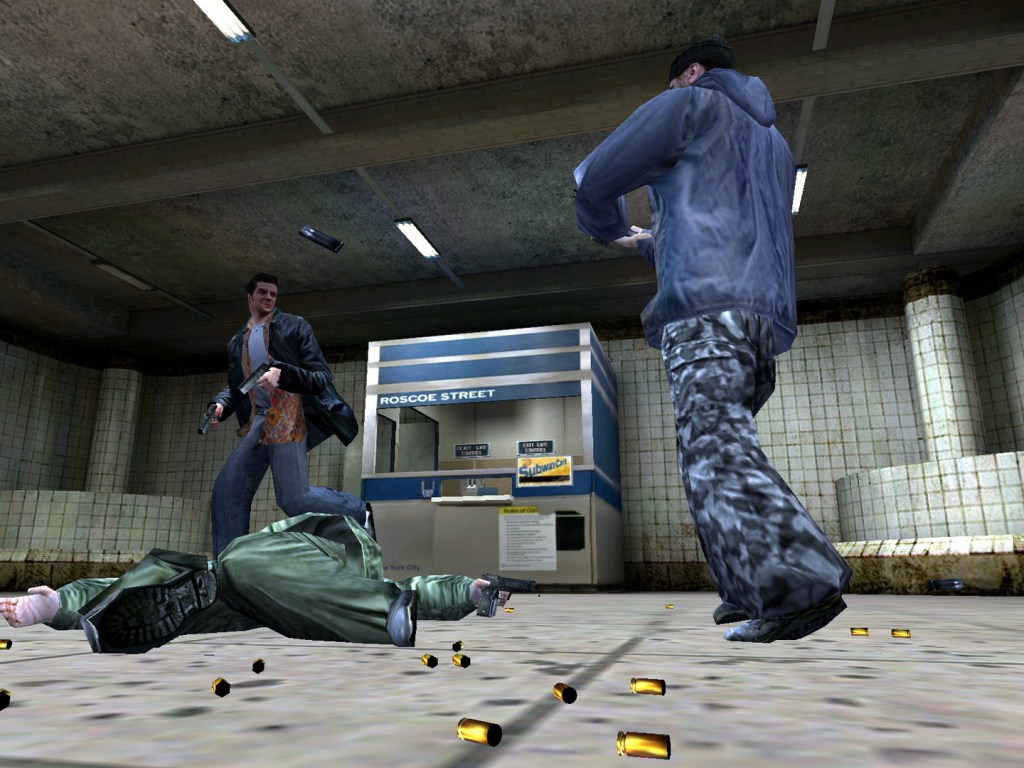
The presentation and story aren’t the only elements that are impressive despite their age, the gameplay also holds up well. It’s a classic FPS, shooting waves of goons as you move from room to room. But what makes it special is the inclusion of bullet time. At the press of a button, you can slow down time to dodge bullets and return fire. You also can quickly roll or dive in all different directions. Combining the dodge with bullet time can make for some cinematic moments as you burst through doors, diving in slow-motion and raining bullets on mobsters. It also adds a layer of fun complexity to otherwise simple gunplay. Bullets have actual velocity rather than instantly doing damage when the trigger is pulled. Staying in motion, utilizing bullet time, and leading your shoots is crucial to success. I found this fast-paced action to be very fun.
My only complaint about the gameplay is the adaptive difficulty implementation. I don’t hate the idea of tuning the difficulty based on how the player is doing, but in Max Payne it can drastically affect the experience. The game adjusts enemy damage, enemy health, player health, and other factors to extreme degrees based on how frequently the player dies. I found if I was doing too well basic enemies would suddenly become superhuman threats. The game flow is dramatically altered when multiple shotgun blasts from point blank can’t fell a single foe, but a single shot from their rifle kills you instantly. Luckily, you can save and reload as frequently as you want, so after a few deaths and reloads the enemies become manageable again. But still, it’s jarring to experience such sharp spikes in difficulty.
I was pleasantly surprised by my time with Max Payne. Every element was well done. The exciting story, the meaningful and thoughtful themes, the memorably moody setting, and the thrilling gameplay were all impressive. Despite the questionable inclusion of adaptive difficulty, I genuinely had a ton of fun with Max Payne. Which is not something I can say for many other games from its era.
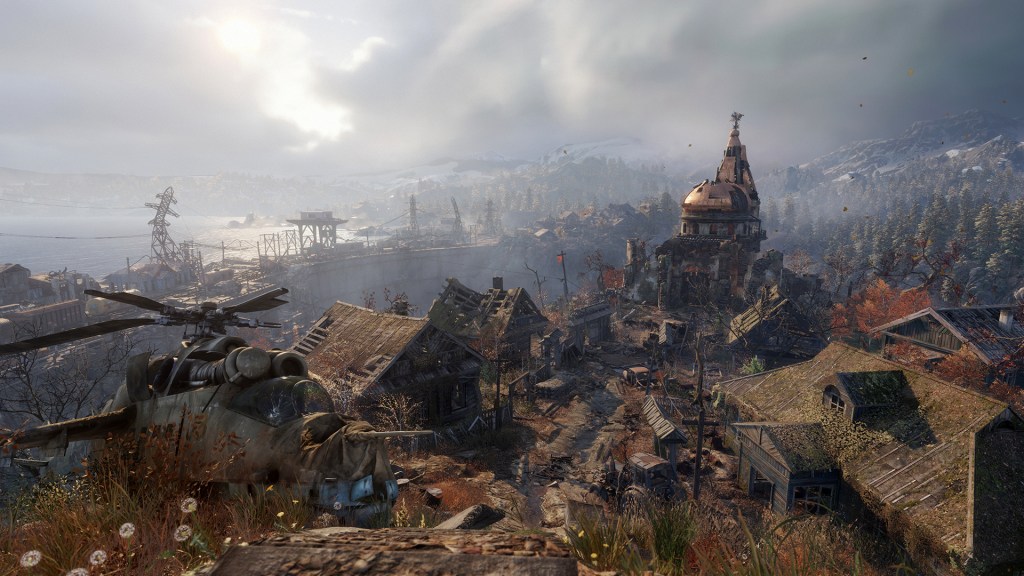
Immersion. That’s what the Metro series is about. Making the player feel like they are in the underground tunnels under a post-nuclear-war Moscow. I was concerned, but also excited, when I learned that Metro Exodus would take us to the surface and open up the world. Despite seeming overly ambitious, the developers delivered on a world just as detailed and immersive as its predecessors. But despite their success in world building and immersion, I felt that the gameplay and story could be very rough and unrefined. As a fan of immersive games, I wanted to fall in love with Metro Exodus, but I just couldn’t.
I almost immediately dropped Metro Exodus while playing through its first chapter. I stuck with it because I wanted to complete the series and I wanted to give the game a chance. I’m glad I did because the beginning of the game is not at all reflected in the rest of the game. The game starts in the tunnels of Moscow with our main character Artyom on a quest to find proof of life outside of Moscow. This chapter is filled with a ton of dialogue and slow-paced gameplay as you crawl or slowly walk along restrictive paths. Action is constantly interrupted and control is wrested away from the player to play cutscenes and hear more blathering. To make matters worse, despite the focus on narrative storytelling in this chapter, the story feels incredibly rushed. Artyom discovering the train and the radio station feels like a massive coincidence and plot contrivance and feels ridiculous. Tutorials and opening chapters are often poorly done in games, but this chapter in Metro Exodus was particularly awful.
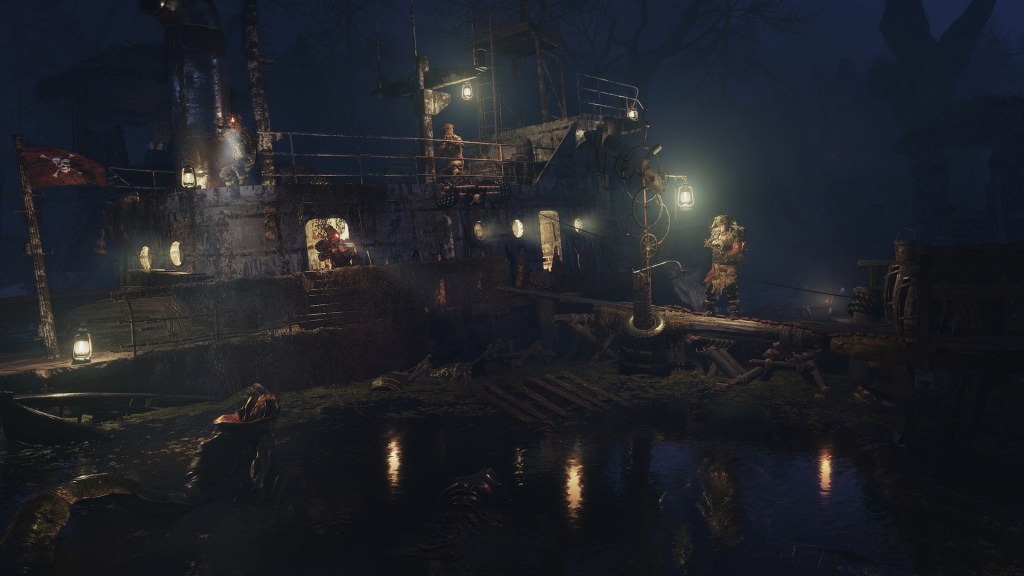
Luckily, the game’s best chapter immediately redeems the awful introduction. Artyom and crew leave Moscow by train and arrive in the tundra area known as Volga. This is an open area with freedom to explore as you please. It’s an incredibly detailed area with a ton of side stories to naturally discover. You deal with a church of extremists who believe that all technology is evil, bandits who enslave prisoners, and of course radioactive creatures. What makes Metro Exodus excel here is its immersion.
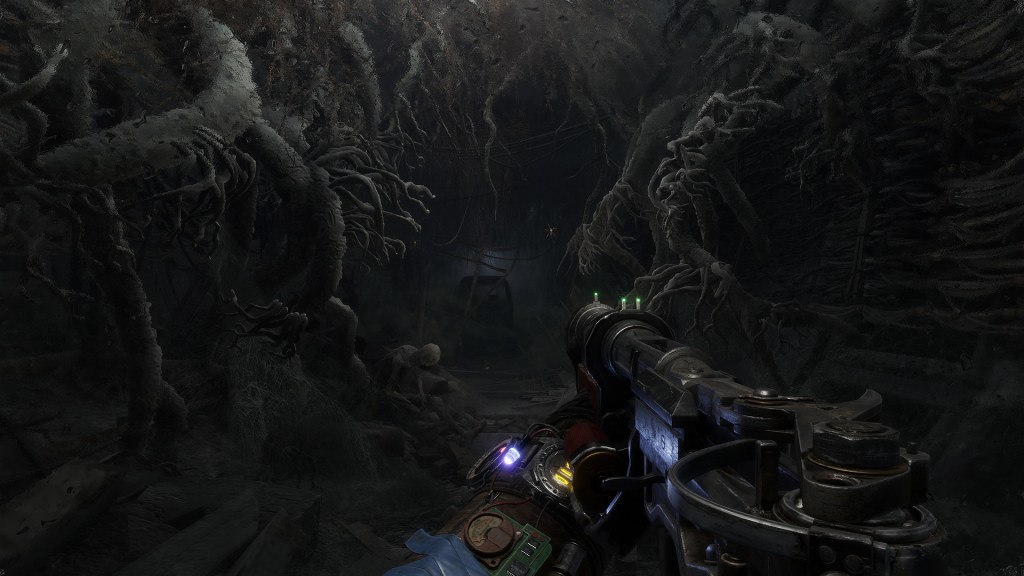
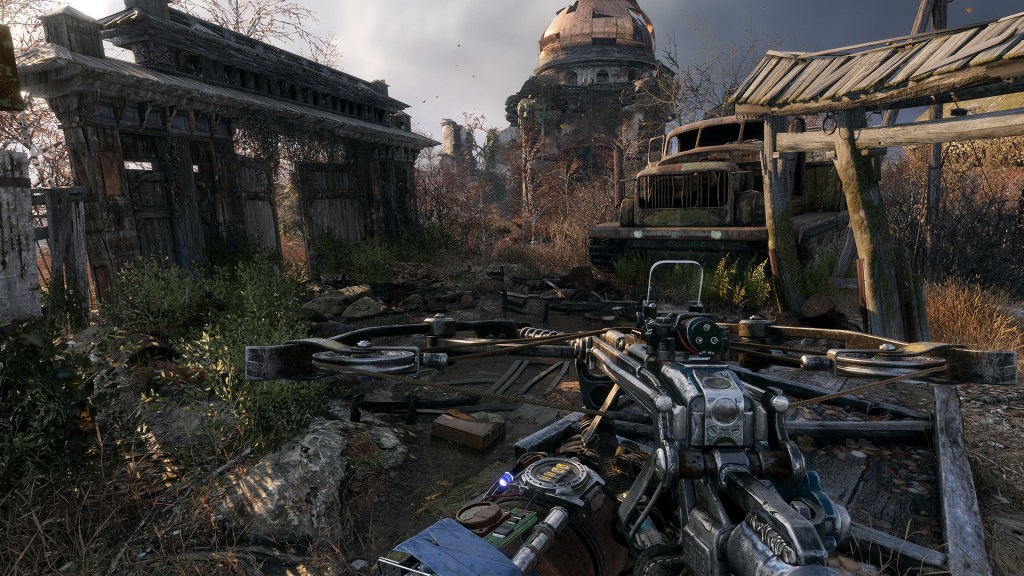
The game takes great strides to immerse the player in its world. The UI is minimalist so you are always looking at the world rather than a mini-map or objective marker. The map and your goals are printed on a clipboard that you can pull out. The compass is physically attached to Artyom’s wrist rather than being a UI component. Movement is purposefully sluggish; this isn’t a fast-paced arcade shooter and you aren’t superhuman. When entering radioactive areas, you need to wear a mask and constantly replace its filters. The mask can also get muddied or cracked and need to be cleaned and repaired. Ammunition, filters, and medical supplies are fairly scarce so you are discouraged from wasting any supplies. A single bad encounter can leave you without resources.
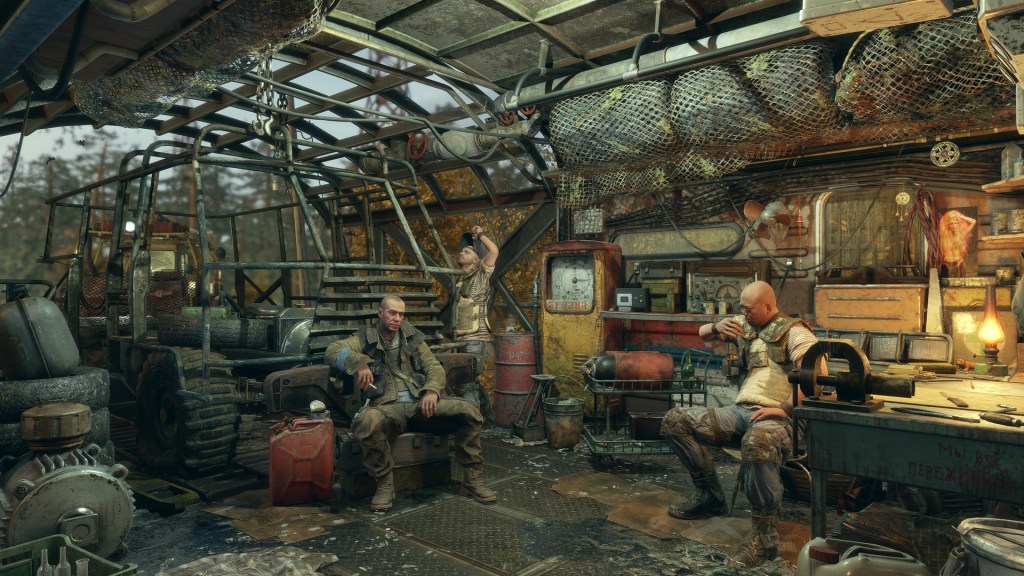
The dedication to making the game so immersive is what makes Metro Exodus enthralling. Trudging across the tundra without surplus health kits or ammunition leads to careful and thoughtful gameplay. Even basic encounters are tense as they could massively drain your resources. The relief that I felt whenever I would come across a safe house was massive. These little shacks are peppered throughout the world and they provided me with a sense of safety with their warm light and respite from the harsh world. Taking a few minutes to sit in the warmth, replenish my supplies, and listen to an audio log while in these shanties were some of my favorite moments in the game. While the areas following Volga don’t quite reach its heights, I do think they are varied and have interesting twists on the formula.
Outside of its immersive elements, I was a little let down by Metro Exodus. The gameplay and story have some significant issues that I found it difficult to look past. It’s ok that the gameplay was basic, I wasn’t looking for a fast-paced DOOM style shooter. The guns feel impactful and shoot-outs can be wonderfully tense because of the implications on your pool of resources. But it’s not ok that the gameplay is just… boring. I found that shoot-outs were few and far between because the game discourages you from killing human combatants. Humans also had poor AI that waffled between standing in the open to be killed and having superhuman accuracy that can shoot you through walls from a mile away. And non-human enemy encounters are repetitive and feel a bit janky.
The thing is that Metro Exodus, through various means, encourages the player to play stealthily. Because of the emphasis on resource management, it feels risky to get yourself into direct combat. Why waste bullets and health kits when you can just sneak around and avoid combat altogether? I don’t hate stealth in video games. It’s fine to supplement other systems and it can be very fun on its own like in series such as Metal Gear Solid and Dishonored. But stealth in Metro Exodus is barebones. It boils down to sneaking from cover to cover as enemies look the other way. There are never any new tools introduced other than the decoys you have access to from the very beginning of the game. If you want to avoid combat, be prepared to spend a long time slowly walking.
I think stealth could’ve been more interesting without even needing to introduce new features. Trying to sneak around but getting caught and having to rely on shooting your way out could be a fun gameplay loop. The more enemies you avoid, the more resources you save. But there would still be intense and chaotic gun fights if you got caught. But the moral system in Metro Exodus discourages you from getting caught at all. If you want to get the “good” ending in every area and the finale of the game then it’s incredibly risky to kill any enemies. I didn’t know which enemies are ok to kill without repercussions without looking it up online, so I just avoided killing anyone that I didn’t have to. This encourages a lot of reloading of saves whenever you get spotted. Not only is this boring, but it’s immersion breaking.
Maybe it’s entirely my fault that I would reload saves to prevent myself from having to shoot enemies. Maybe I should’ve just let the game play out and got into more shoot-outs. It probably would’ve been more fun. But the game actively punishes the player with dire story consequences if they kill anybody. At the very least, the morality system in Metro Exodus is much less obtuse than its predecessors, making it easier to get “good” outcomes in each area. But still, I felt like the game is discouraging the player to play naturally.
I quite liked the general direction of the story and how it weaves its narrative into each of the major areas. The game focuses on themes of guilt and morality and what humanity will do if nobody is watching. Some groups blame technology and things they don’t understand for the apocalypse. Some groups take advantage of others and utilize slavery to get ahead. Some groups form childish tribes and treat the world like high school cliques because they never grew up. Society has to relearn morality. It’s a fantastically thought-out world with complexity and depth to it, but the story itself fell flat for me. Metro Exodus has a serviceable story that is severely hampered by two major blunders: Artyom being a voiceless protagonist, and the voice acting in general.
I understand the desire to have Artyom be a stand-in for the player and their decisions. But having Artyom be silent for the entire game leads to many stifled interactions that feel unnatural. Characters talk at you and have pauses where Artyom would respond if he could. I frequently found myself zoning out as characters would monologue for upwards of 10 minutes. These conversations were meant to be 2-way, and would be much more interesting to listen to if Artyom could actually speak for himself. The Witcher series showed us over a decade ago that the player could make moral choices for the main character even if the main character also speaks for themself.
The bigger issue I had with the story is the quality of the voice acting. Nothing pulled me out of the moment more than comically over-the-top Russian accents. At times the characters’ accents feel like a parody. There’s also plenty of awkward pauses leading to disjointed conversations. I also have a suspicion that dialogue lines were recorded 1-by-1 and stitched together because many lines have disconnected delivery from the previous line. I also had issues with bits of dialogue playing over each other making it difficult to parse what any of the characters were saying. I really don’t know what happened here but I was regularly distracted by all these issues with voice acting and scripting. It’s a massive shame because Metro Exodus has an interesting premise. Moreover, when immersion is the game’s key aspect it is unfortunate that the quality of voice acting regularly broke my immersion.
I wanted to like Metro Exodus more than I did. I love games that can truly immerse the player in their worlds. And Metro Exodus does put in a ton of effort to fill its world with details and it’s clearly designed to engross the player through minimalist UI and dangerous environments. But the underwhelming gameplay, stiff morality system, and poorly executed story left me disappointed in Metro Exodus. I hope other studios take inspiration from the immersive aspects of Metro Exodus as the poor execution of the concept left me wanting something more.
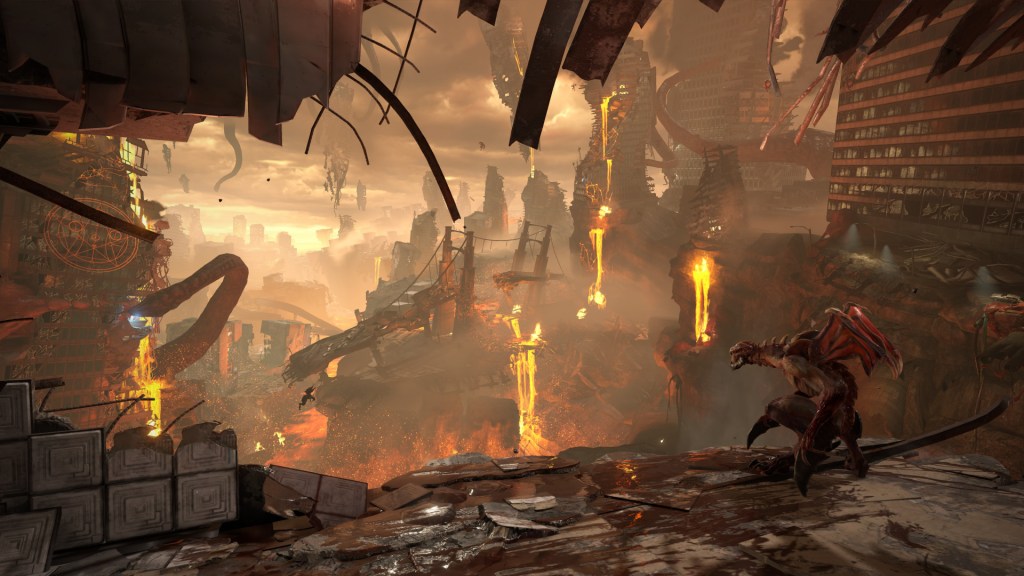
From the first moment I launched the game, it was immediately apparent that Doom Eternal is not just a retreading of Doom (2016). While I did enjoy the straightforward brutality of Doom (2016), I greatly appreciate that Doom Eternal makes the experience much more complex. Running around and shooting demons was a ton of fun, but I am glad that there was some change-ups to make the formula fresh and to keep it engaging through the whole game.
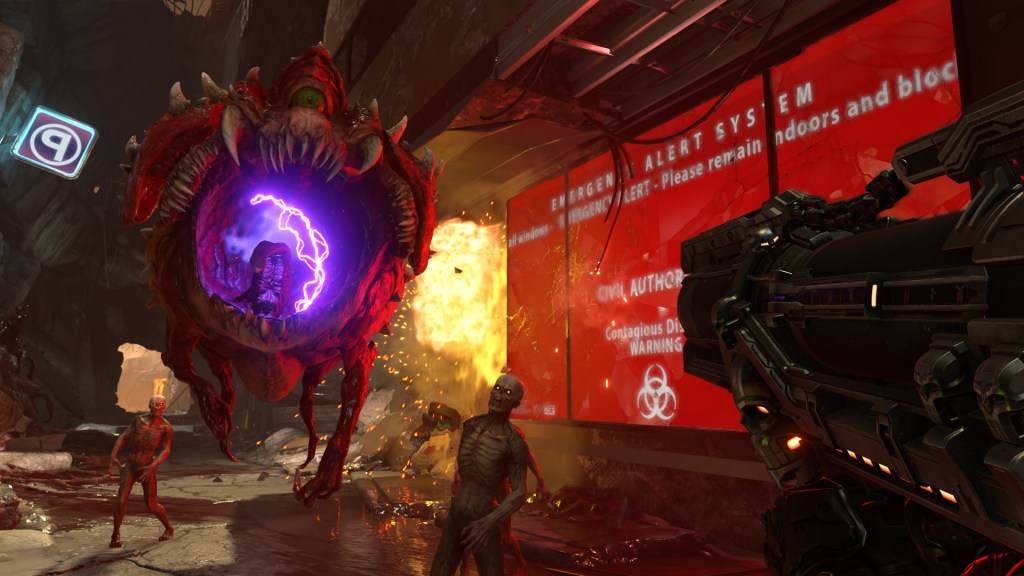
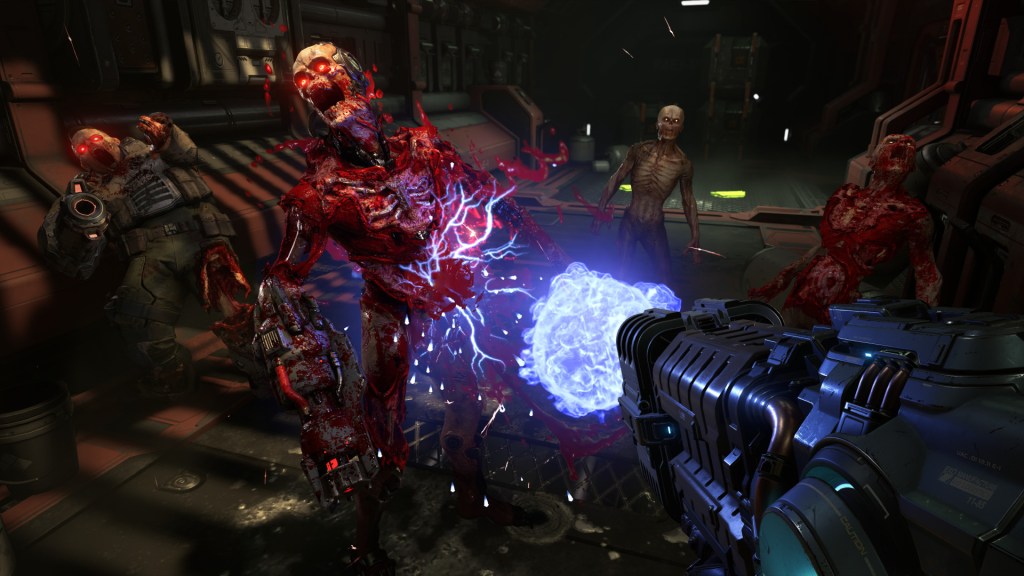
Like its predecessor, Doom Eternal is a fast-paced FPS where you blast through hordes of demons. You have to keep moving and shooting or you will be quickly overrun. There is never a dull moment in combat, as a momentary lapse in judgment will lead to your demise. Doom Eternal is challenging, even on the normal difficulty. I think it suits the game perfectly, high-octane non-stop running and gunning is what Doom should be about.
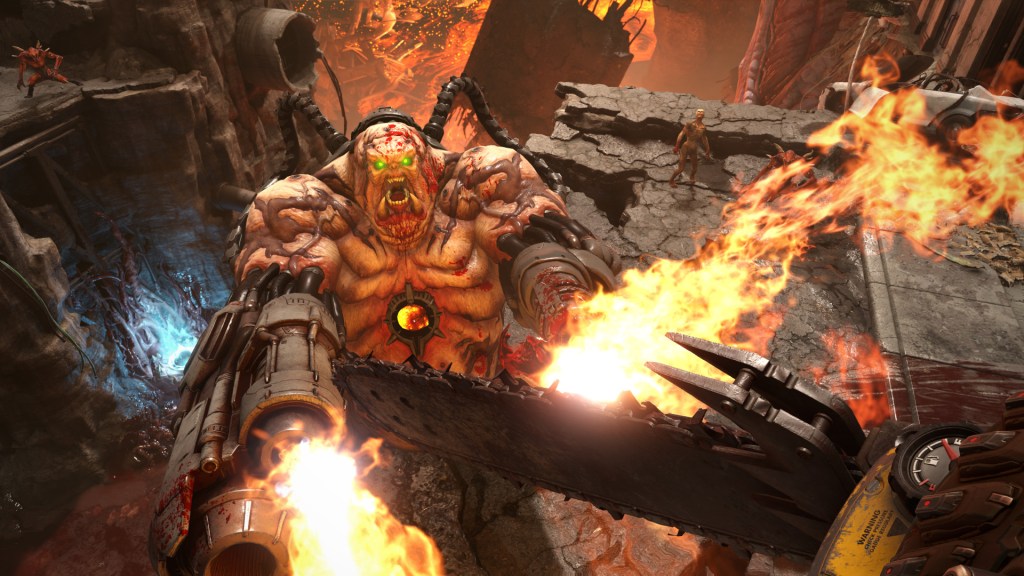
Part of what keeps Doom Eternal so fast-paced is the sheer number of tools to keep track of and utilize. Weapons have low ammo counts, so you have to constantly swap between guns, hunt for ammo pick-ups, and utilize the chainsaw which causes enemies to spew out extra ammo. Health and armor are also limited resources that can be gained through pick-ups. But you have to actively use the flamethrower if you want bonus armor and occasionally finish off enemies with a glory kill to replenish health.
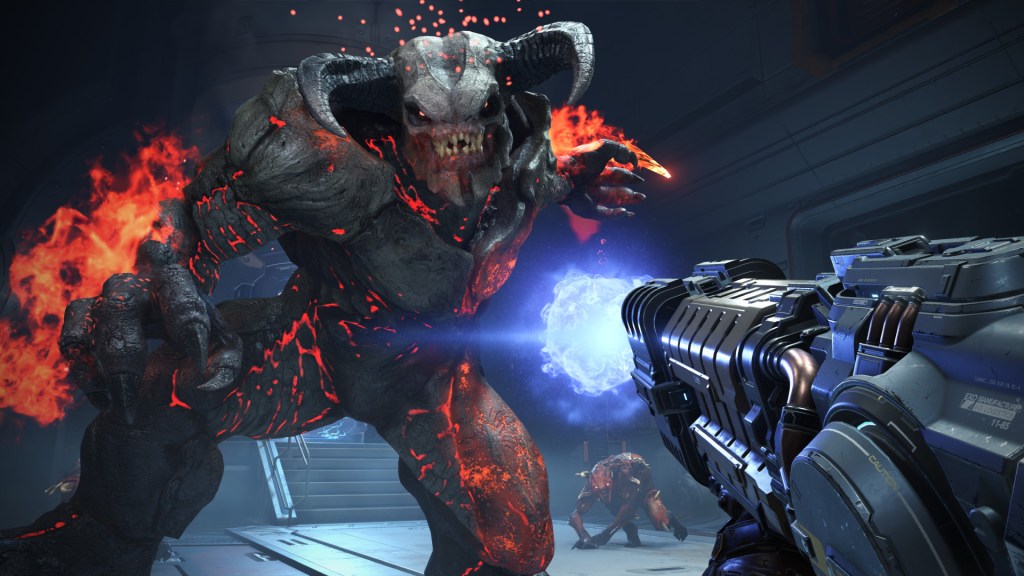
Additionally, every major enemy has a weakness. What’s interesting is that these weaknesses not only do bonus damage, but the reduce the threat level of the demon as well. For example, you can disable the turret on Arachnotons, or blast off the flamethrower from a Mancubus. I really love this aspect of the game as it encourages, but doesn’t necessitate, intelligent use of equipment and well-placed shots. You could just brute force encounters by gunning down demons with the weapon of your choice, but you will be better off constantly swapping between guns to exploit each enemy’s weakness. This makes combat encounters intense and engaging, even after playing for a dozen hours.
Intelligently making use of the tools at your disposal is the key to success in Doom Eternal. Keeping track of cooldowns on the chainsaw and flamethrower is vital to staying topped up on ammo and armor. Grenades are useful for crowd control when you’re overwhelmed. Each weapon has its use. The minigun is great for sustained damage, the plasma gun makes enemy shields explode, the assault rifle is good for long range engagements and sniping enemy weak points. My favorite was the super shotgun which dealt high burst damage and had a grapple hook for mobility.
Additionally, Doom Eternal has tons of upgrades to augment your play. Most importantly, each weapon has two attachments, and those attachments can be upgraded for additional effects. Truthfully, I was kind of overwhelmed by the sheer volume of upgrades and effects that were present in Doom Eternal. Not only do weapons have upgrades, but there are also suit upgrades, equippable runes, and shards that have unique effects. By the midgame I had gotten comfortable with all the systems in the game, but the first few hours felt like a barrage of informational pop-ups for all the various systems that the game offers.
Many of the resources used for upgrades can be acquired just through naturally playing the game, but Doom Eternal utilizes its downtime to fuel the hunt for more upgrades. The combat is so intense that it’s critical to provide a breather for the player. After clearing an arena full of demons, there are usually hidden items that can be spent on upgrades. While it’s not the focus of the game, I did appreciate that there were some elements of exploration, platforming, and light puzzling to break up the straight up insanity of the combat of Doom Eternal. Even better, if you want to just focus on the combat, you could easily completely ignore most of the game’s other elements and just progress from combat arena to combat arena to kick some ass.
One element that I was not impressed with was the story and lore. Obviously, the story should not be an important aspect of any Doom game. And that’s fine. But there’s a surprising amount of cutscenes and info dumps that spew a confusing story at the player. I felt like the game is attempting to establish some deep lore, but it felt incredibly out of place. Luckily, you can skip cutscenes and not read any of the lore documents. Regardless, Doom shouldn’t spend so much time on its narrative elements.
Overall, Doom Eternal is an absolute thrill to play. It’s an evolution of the run and gun style of play that Doom (2016) introduced. It’s faster, more difficult, and requires more foresight and strategy. It’s the perfect game to rip n’ tear. It is for these reasons I give Doom Eternal a 9/10. If you’re looking for some high-octane demon-blasting action, look no further than Doom Eternal.


 stephensopinions