The last time Donkey Kong was the star of a 3D game was 1999. The last time Donkey Kong was the star of any game was 2014. Imagine my surprise when the first blockbuster title for the Nintendo Switch 2 is revealed to be Donkey Kong Bananza. Nintendo seems to have a monopoly on great 3D platformers, so I was thrilled to see what they would do with the Donkey Kong franchise. And it does have a unique twist: completely destructible environments.
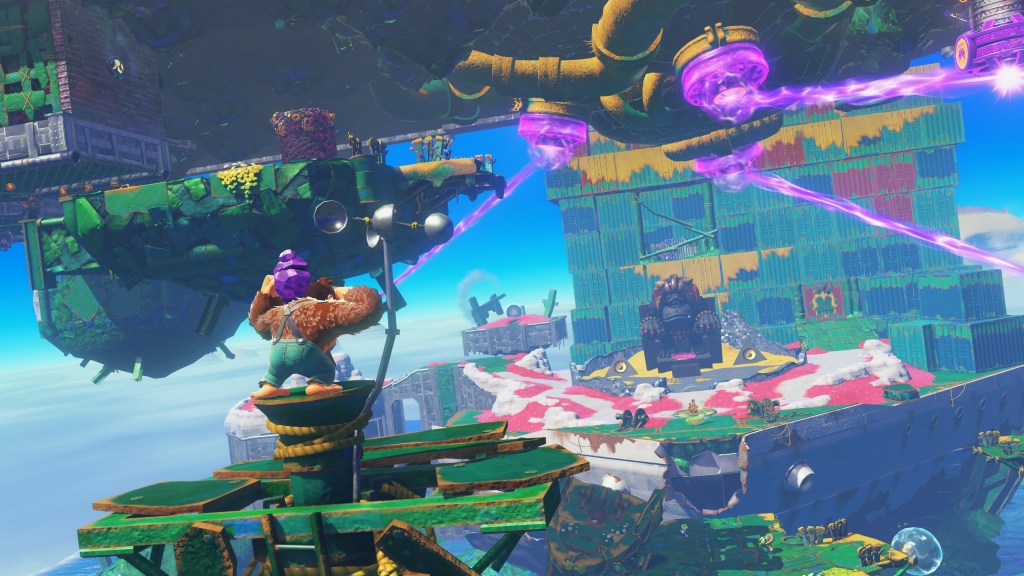
The premise is simple; an evil corporation is pilfering the world’s supply of Banandium Gems to power their machinery. Their goal is to dig to the center of the planet and find the Banandium Root, a mythical object said to grant any wish. Donkey Kong teams up with a young Pauline, uncovering their hidden powers and collecting Banadium Gems to reach the planet’s core and find the Banandium Root for themselves.
Donkey Kong Bananza is not a typical 3D platformer; it leans more heavily into being a massive collectathon. There are 777 different Banandium Gems to collect spread across over a dozen humongous stages. Most of these areas have multiple sublayers, each one being the size of a level from Super Mario Odyssey. It cannot be overstated how ginormous this game is, especially if you want to collect everything possible.
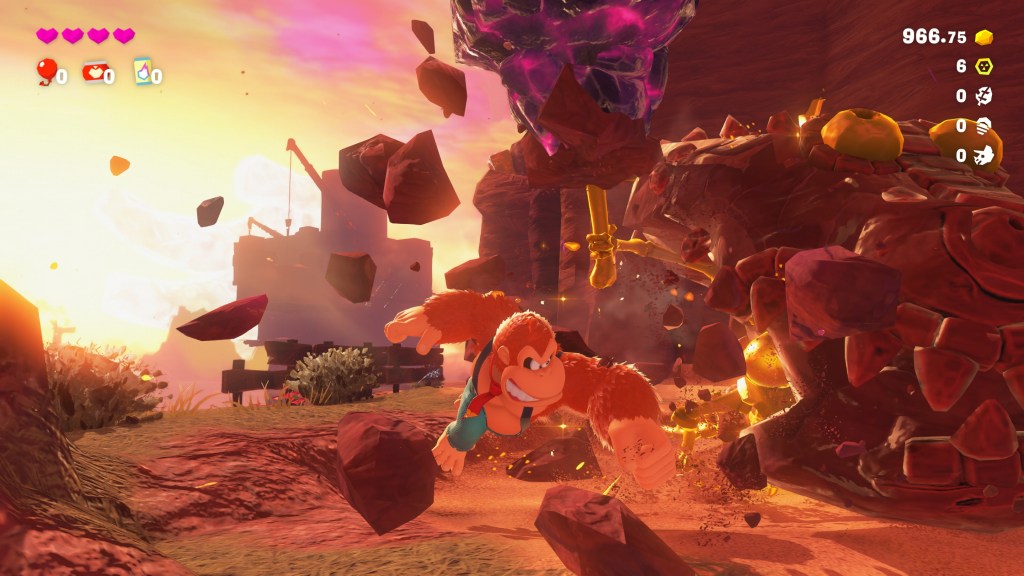
The main draw of the game is its core gameplay: exploring, smashing, and collecting. The developers absolutely nailed how moment to moment gameplay flows. The levels are packed with Banandium Gems as well as other collectibles like fossils. As you explore, you can smack the ground to collect bits of gold. This ground-smacking doubles as a sonar, revealing nearby gems and fossils. This leads you to smash through the terrain around you to uncover your prize, being showered with gold. Then you smack the ground to collect the gold, which may reveal even more nearby collectibles. It’s an immensely addicting loop that tickles the brain. The satisfaction of smashing through terrain, hearing that sweet sound of gold, and collecting a Gem is so hard to step away from.
This loop is further enhanced by just how good it feels to play as Donkey Kong. Obviously, having a completely destructible environment is a blast to smash through. Donkey Kong is a huge, lumbering ape and Donkey Kong Bananza captures that feeling. At first, it feels a bit clumsy to control as Donkey Kong isn’t very fast, agile, and cannot jump particularly far or high. But as you master the game, you learn how to make use of your full moveset. You can rip out a piece of terrain, then surf off it or jump on it in midair. You’d be surprised how much distance you can cover combining these tricks with standard somersaults and jumps.
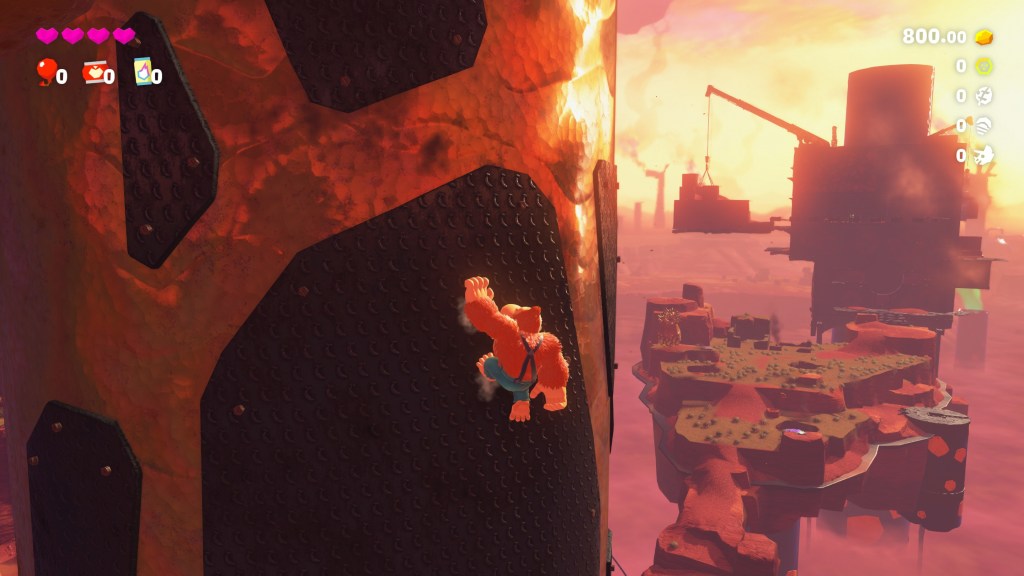
Donkey Kong Bananza is obviously inspired by Super Mario Odyssey in structure. The huge number of collectibles being one key factor, but another being the smaller challenges hidden within each level. There are tons of ruins to find which often act as straightforward platforming or combat challenges. I really enjoyed the more focused challenges. They also often highlight the game’s Bananza abilities, which are short but powerful transformations. They allow you to briefly transform into a different animal, gaining additional abilities such as gliding, sprinting, or high-jumping.
The developers were very clever with many of the challenges. While many are straightforward, some required creative thinking to reach the Banandium Gems. Making use of the destructible terrain to make funnels, walls, or other useful structures is not something that I expected from the game, but I certainly appreciated it. I was worried when the game was initially revealed that the destructible environments would get stale, but that fear was dispelled. The mix of platforming, exploration, combat arenas, and puzzle-like challenges provided a healthy amount of variety to this massive game.
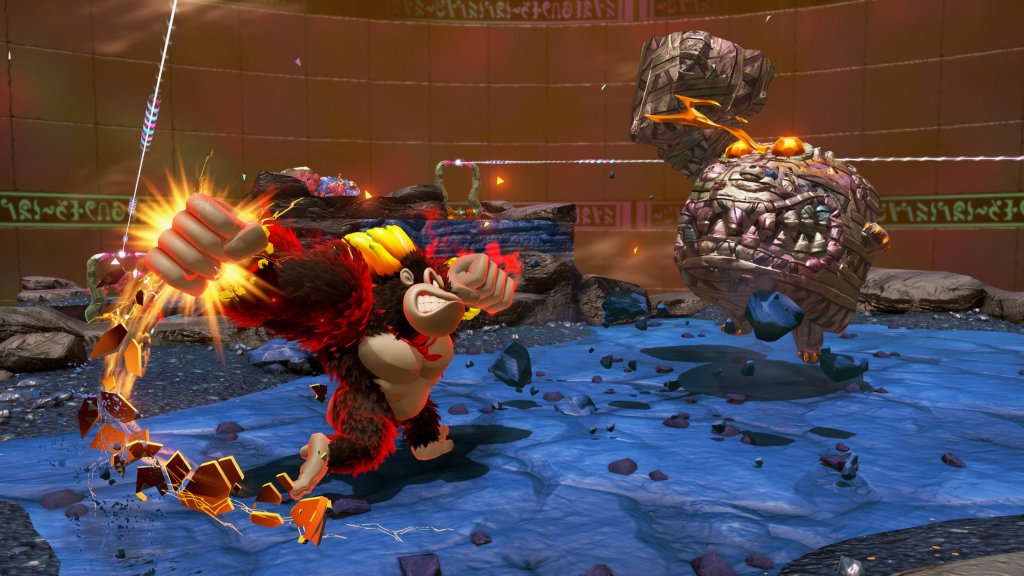
Importantly, Donkey Kong Bananza has a very key difference from Super Mario Odyssey: the skill tree. In the Super Mario Odyssey, completing tasks and collecting Moons garners nothing but personal satisfaction. In Donkey Kong Bananza, each gem contributes to earning skill points which can be spent on new abilities. Some of these abilities are straightforward such as extra health, but others are major additions such as the ability to jump off of held chunks. The skill tree is extensive, meaning each gem is important if you want to fully unlock DK’s abilities. This additional extrinsic reward makes hunting down every gem even more enticing.
The Donkey Kong series has always been top dog when it comes to presentation. Both the visuals and music of the Donkey Kong Country games are absolutely iconic. The music of Donkey Kong Bananza is a bit more understated, but it does have the occasional energetic and catchy tune. I loved how all the different areas looked in the game. Everything is bright, colorful, vibrant, and cheerful. Each area has a little hub of characters with shops and other things to discover. It gives each area a homey feel, cementing the game’s coziness. My only gripe with the game’s presentation is that the camera can often feel clunky, especially when digging through the earth. It can get be a bit disorienting to try to smash your way through certain areas, trying to figure out which direction you are even moving in.
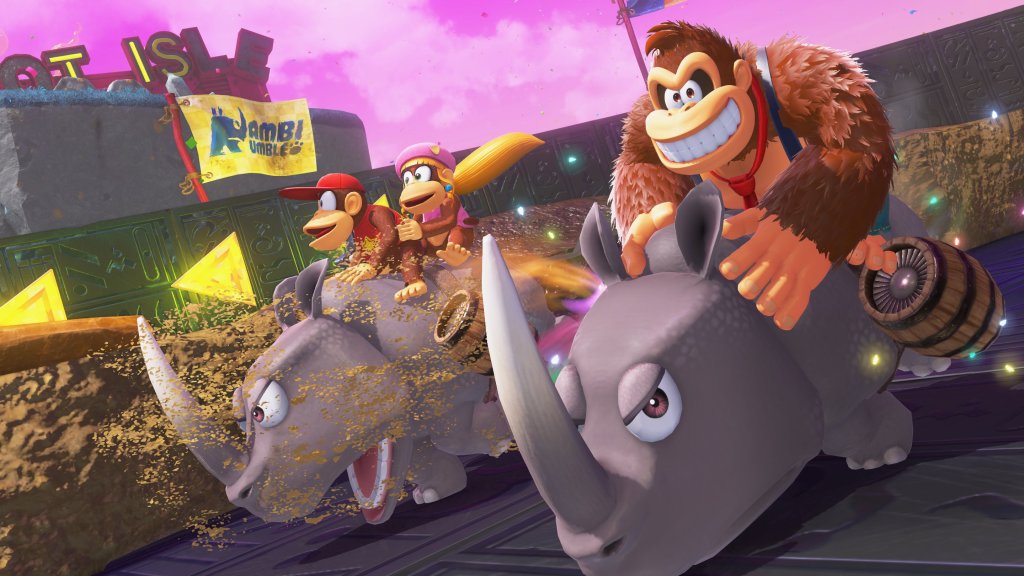
Unfortunately, I do think that Donkey Kong Bananza has a couple key issues, and these issues compound on each other. The first major problem is that the game is just too easy, especially at the start of the game. Donkey Kong has always been known for being the difficult Nintendo platformer franchise, but this iteration doesn’t show its teeth until the post-game. Many of the early areas in the game have barely any hazards, making it easy to just smash your way through entire areas. The game only introduces more dangerous obstacles about a third of the way through the game, which could be over a dozen hours of playtime. Even then, most of the challenges are pretty easy.
I’ve already mentioned how huge this game is. In some ways, having such a massive world to explore is great. In other ways, it’s a detriment. Some of the main layers are comprised of 3 or 4 sublayers, each being a massive level in their own right. I love collectathons, but at some point, spending hours upon hours in the same area gets dull. This is exacerbated by the game’s lack of difficulty; without any friction I often felt like I was just going through the motions collecting gems and fossils with little resistance. The game would have benefited from slimming down some of the larger areas and focusing on more difficult challenges.
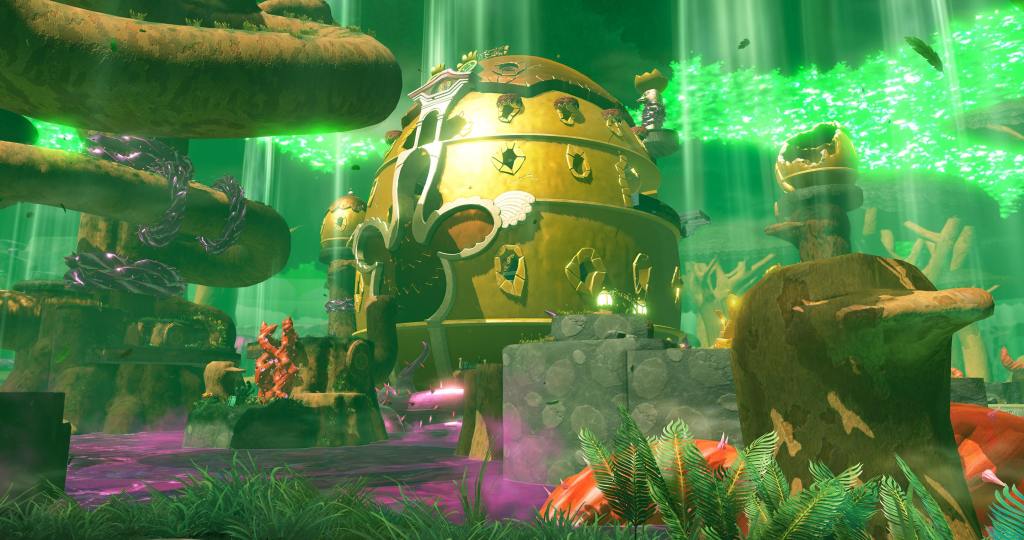
Even though I wish the game was a bit more challenging, there’s no denying how much pure fun it is. Running around imaginative environments, smashing through anything in you way as you constantly collect goodies is reminiscent of the glory days of 3D collectathons. The developers nailed the lumbering movement of a hulking ape, but managed to sneak in some tricks to make movement an enjoyable learning curve. It is for these reasons that I give Donkey Kong Bananza a 9/10. It’s a triumphant return for not only Donkey Kong, but collectathons as a genre.