The first two Resident Evil games are known for their dense environments that function as puzzle boxes. In comparison, Resident Evil 3: Nemesis is a sprawling action game. The increase in scope leads to a bombastic finale for the original trilogy. It doesn’t just retread the same ideas from its predecessors; it escapes from the narrow hallways of the mansion and police station and sets the player loose in the chaotic ruins of Raccoon City. While I did prefer the tighter experiences of the first two games, I did appreciate how Resident Evil 3: Nemesis expanded the scope and scale of the series.
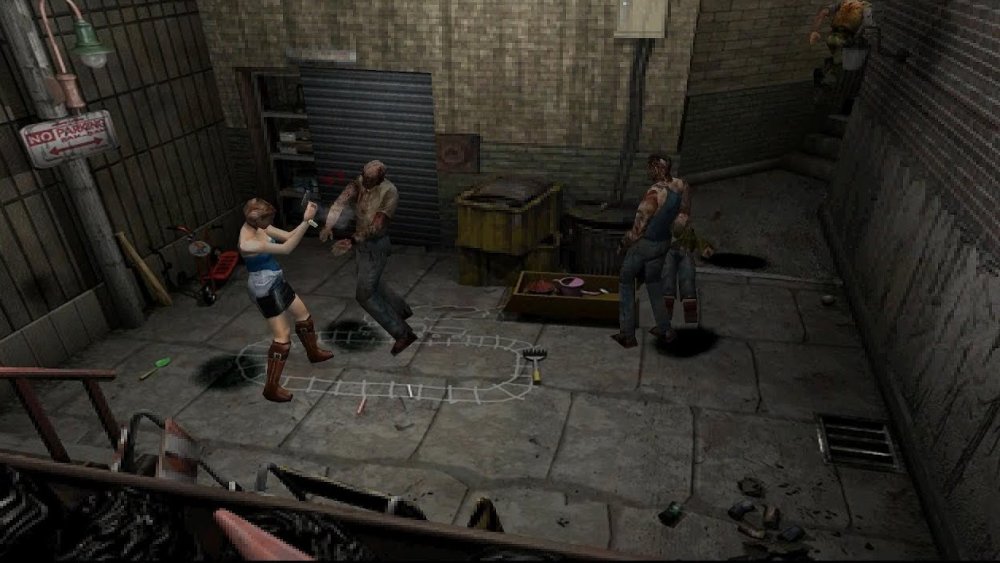
After returning to the city after escaping the mansion, Jill Valentine finds herself back in Raccoon City. But all of her rescue team colleagues have disappeared, and the city is aflame with zombies roaming the streets. A horrible mutant, Nemesis, is programmed to hunt down Jill as she is one of the remaining members of the team responsible for foiling Umbrella’s schemes.
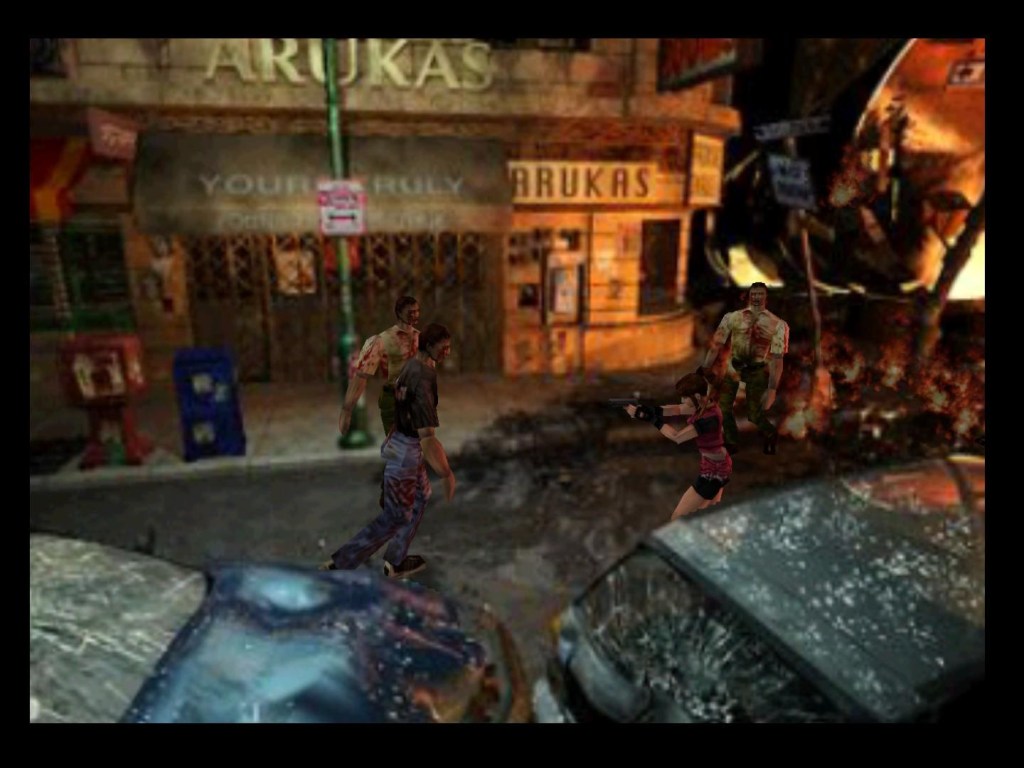
From the outset, Resident Evil 3: Nemesis is far more open than its predecessors. You will be roaming the streets, ducking in and out of numerous buildings to acquire the resources needed to proceed. I appreciated the change in environment, and the expanded scope allowed for a variety of different scenarios. Instead of spending the whole game in a single building, you’ll be heading to workshops, a cozy restaurant, an ominous clocktower, a zombie-filled hospital, and a sinister park. The larger streets allow for hordes of zombies and more action-fueled gameplay.
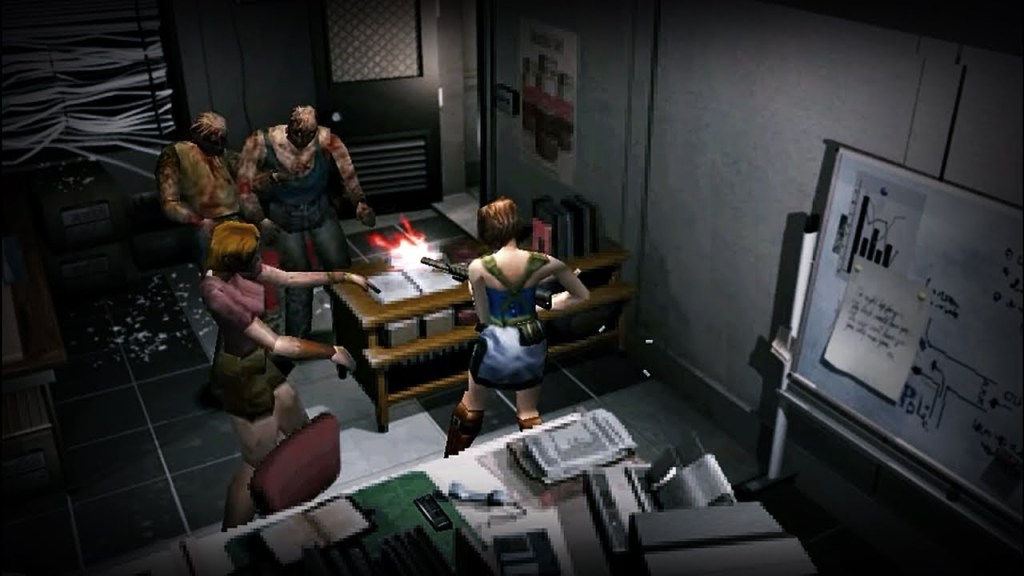
The main threat of Resident Evil 3: Nemesis is its namesake, the bioengineered mutant Nemesis. He roams the streets, hunting down Jill. There’re quite a few scripted chase sequences throughout the game in which the player can elect to run from Nemesis or fight him. Fighting him is risky and consumes a ton of ammunition, but rewards the player with weapon parts to upgrade your arsenal. And it is in this that the game’s key philosophy becomes clear: an emphasis on player choice.
The first two games in the series of course had some decision making around if and when to consume resources such as ammo, health packs, and save ribbons. But the primary driver of those games were its lock-and-key puzzles. Discovering objects and information to be used elsewhere in the world to unlock a previously blocked path. Of course, that still exists in Resident Evil 3: Nemesis, but to a lesser extent. Instead, this iteration of the series constantly wants the player to make choices to alter their experience.
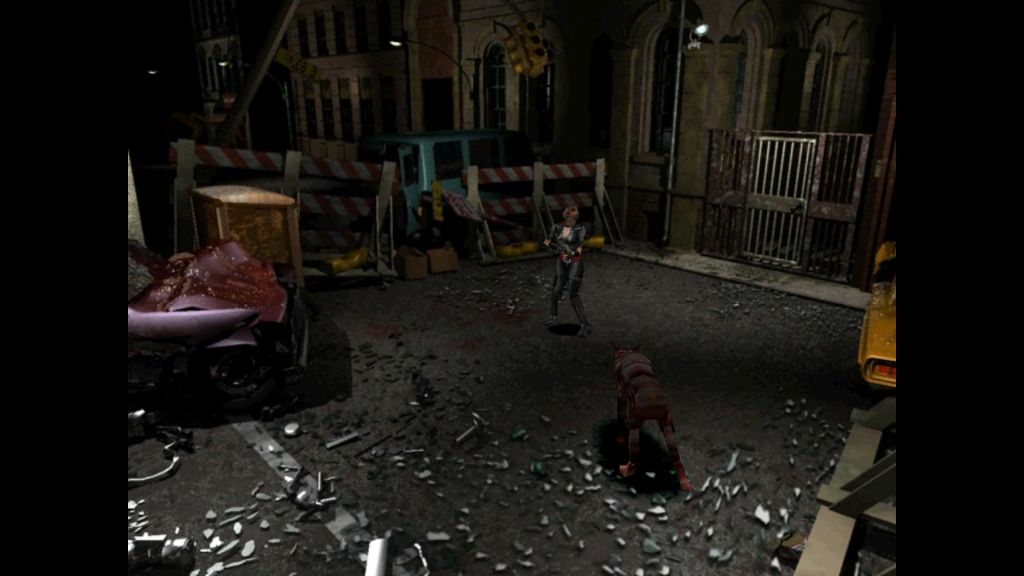
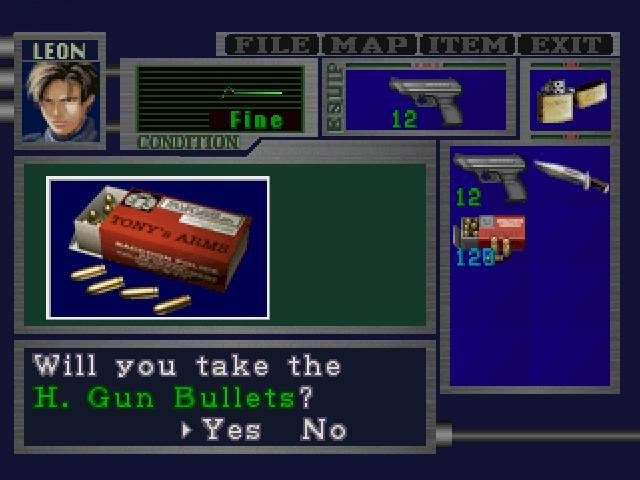
There are the obvious choices like fighting or running from Nemesis, it presents an upfront risk and hefty cost to potentially become stronger later. There are also frequent binary choices presented in quicktime events that lead you down slightly different paths. But there are some more subtle decisions being made as well, none being as crucial as the ammo crafting system. Throughout the game gunpowder is scattered in two main types. Combining gunpowder in different quantities creates different types of ammo. Do you want to spend a ton of gunpowder to create immensely powerful freeze rounds? Or stockpile a few boxes of gunpowder type B to create extra shotgun ammo? Or do you desperately need ammo now so you spend a box of gunpowder type A for a handful of handgun bullets? The player has so many ways to tackle the game, showcasing the game’s strength of player choice.
Having so many possibilities makes Resident Evil 3: Nemesis a prime candidate for replaying, and this is further supported by the randomization aspect of the game. Items and enemies are partly randomized, making every play through a little different. While I think I prefer the multiple characters of Resident Evil 2 that change the route significantly, having randomized aspects and tons of decision making is hugely impressive for a horror game from 1999.
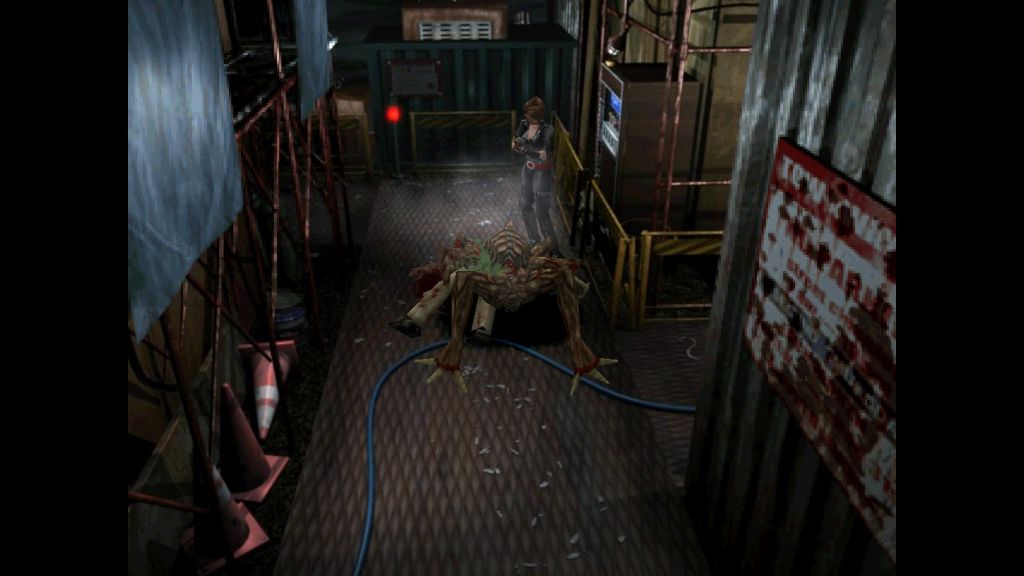
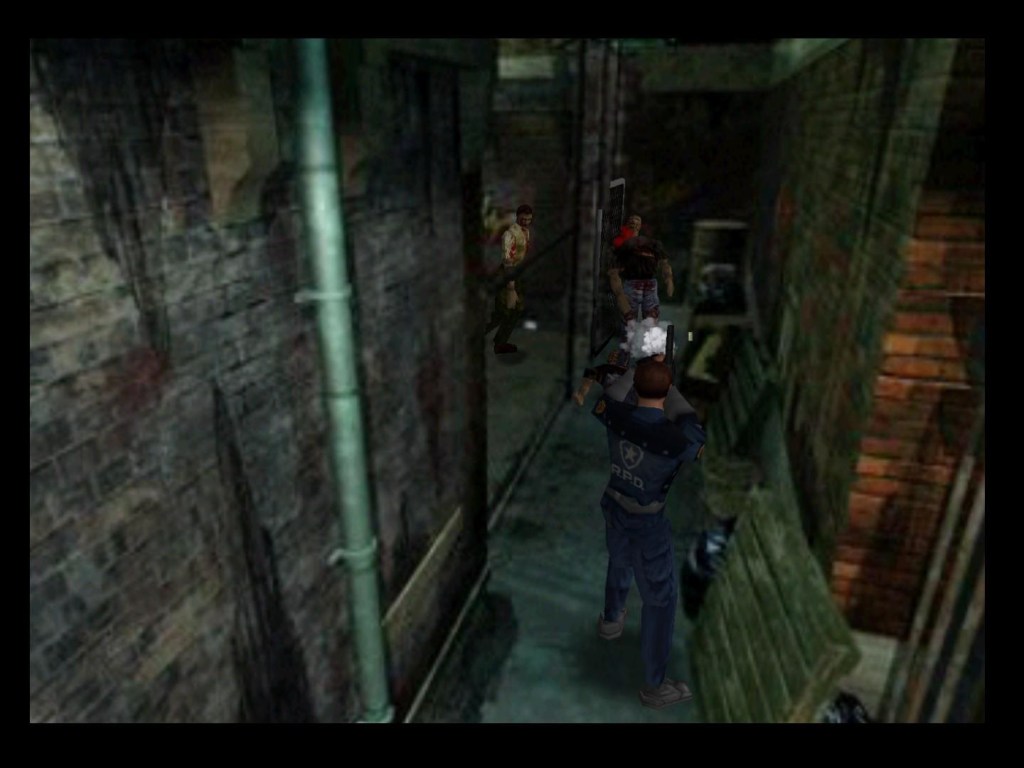
The increased scope of Resident Evil 3: Nemesis, came at a cost. The dense environments of the first couple of games were deemphasized in favor of increased action. Truthfully, I kind of missed the tighter environments. Trying to figure out how to escape the cramped hallways of the mansion or the police station was somehow cozy. It sounds insane for a horror game, but becoming intimately familiar with the puzzle-box worlds was a comforting experience despite the threat of zombies lurking around every corner. While exploring the chaotic ruins of Raccoon City was a welcome change-of-pace, I miss the more atmospheric and oppressive corridors of the first two games.
Paradoxically, despite mixing up the formula, this entry also feels derivative of its predecessors when it comes to horror. While the series stories can often feel like schlock-horror, the real risk of unknown enemies makes traversing the world terrifying. You never know what dangers you will come across, threatening you to lose huge chunks of progress. Careful navigation is imperative, leading to a subconscious fear of any new enemies. The problem with Resident Evil 3: Nemesis is that there aren’t any new enemies. The first game obviously was novel and every enemy stoked fear, and the sequel introduced the hulking super-enemies like Mr. X who followed you around. This time around, you’ve seen all the basic enemies before, and Nemesis himself is a retread of the concept of Mr. X. There aren’t any new threats, and if you’ve played the first two games it’s unlikely that you will be scared by the retreaded ground of the third game.
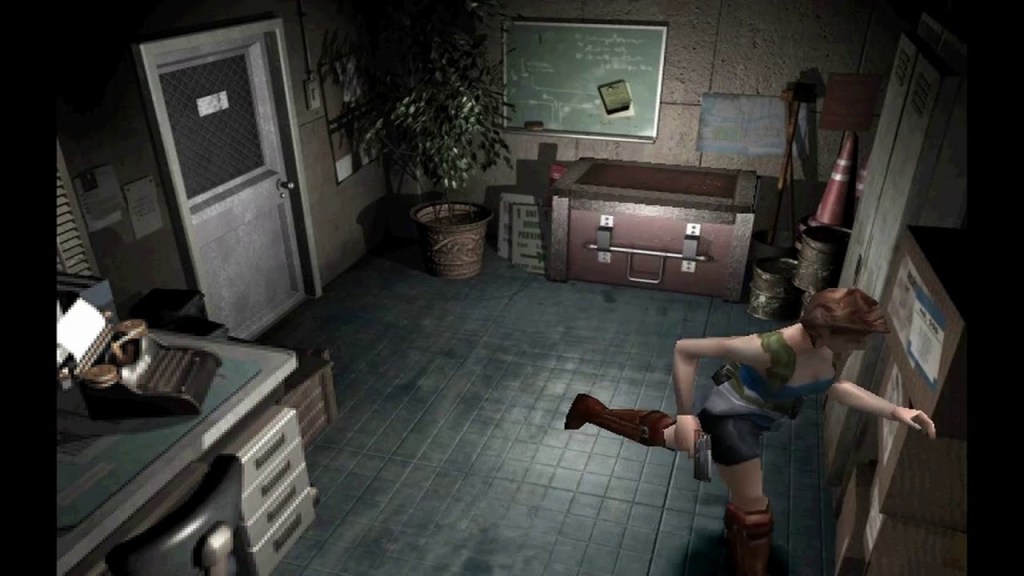
As a finale to the original trilogy, I think Resident Evil 3: Nemesis did an excellent job at escalation. The burning city and hordes of zombies make Spencer Mansion look downright calm in comparison. The introduction of ammo crafting as well as randomized enemy and item placement emphasizes the importance of decision making in this entry in the series. But despite these strengths, I missed the denser worlds and more novel experiences that the first two games provided. Resident Evil 3: Nemesis marks a clear shift towards more action and away from the escape rooms of the first games in the series. And even though I enjoy the former, I prefer the latter.
 stephensopinions