I usually stay away from massive JRPGs unless I really am hooked by the premise. It’s hard for me to want to sink 80+ hours into any game as an adult with a family, job, other hobbies, and a massive backlog of other games I want to play. But Metaphor: ReFantazio caught my eye. I loved my time with Atlus’ Persona 5 so a similar game set in a more mature fantasy world sounded right up my alley. Metaphor: ReFantazio presents a fantastical world and delivers on a phenomenal turn-based combat system. Unfortunately, as a lengthy story-driven game I was quite let down by the lack of nuance in the plot and the writing in general.
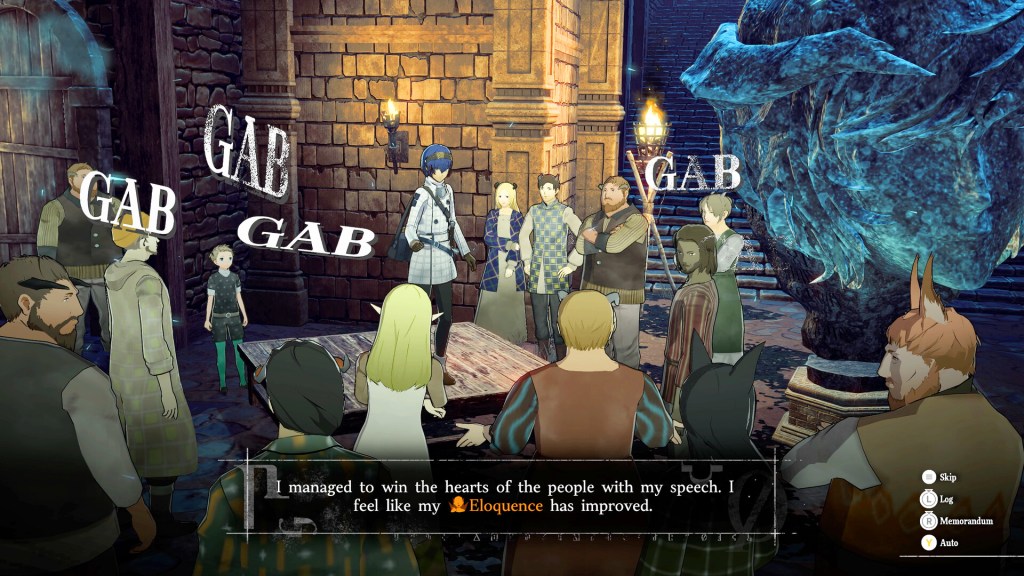
The world of Metaphor: ReFantazio is one filled with discontent. The country is thrown into chaos when the king is assassinated and his successor, the prince, has been missing for a decade. A military general, Louis, admits to killing the king and attempts to seize power for himself but is thwarted when a magical force using the voice of the late king announces that the next king will be chosen via the will of the people. Whoever has the most support after a few months will be king and wielder of the powerful royal scepter.
Racial strife, religious fanaticism, and national security are the most prevalent drivers of this world’s electorate. Louis promises to use his military might to protect the country from monster attacks and proposes a form of social Darwinism such that only strength matters rather than race. Forden, the leader of the church, is the other most prominent candidate. He appeals to people’s religious beliefs and seems to want to uphold the status-quo. The main character joins the royal tournament and is motivated by a fantasy book presenting a utopian society. He wants to join people of all tribes together regardless of class and race and create a utopia.
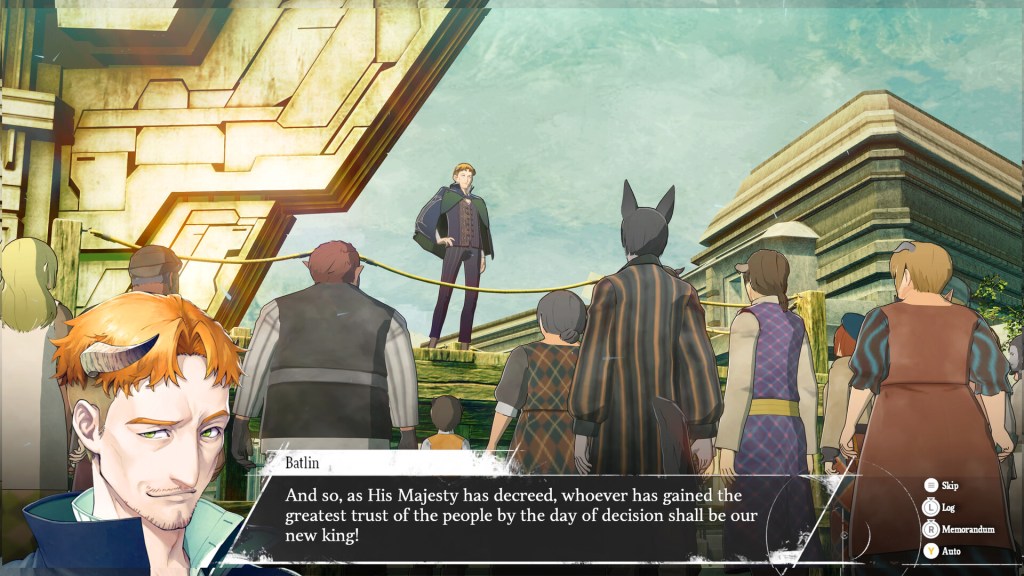
I quite enjoyed the ideas behind the political themes of Metaphor: ReFantazio. The portrayal of how people are driven to support politicians based on anxiety, fear, and anger felt especially apt as elections are taking place around the world. An objectively evil person such as Louis could become a front-runner because people are afraid for their security and want to overthrow the rotten status-quo no matter what it takes. And Forden uses his position of power in the church to manipulate people, not to mention his involvement in a shadow government that tries to rule the country from behind the scenes. But unfortunately, I think these themes never get explored past surface-level political analysis.
There’s a lack of nuance and thought-provoking questions that makes the world too black-and-white. It is obvious that Louis is a chaotic and evil villain. And Forden, despite appearing orderly, is highly manipulative and power-hungry. On the other hand, the main character is presented as perfectly righteous. It’s never in question if Louis or Forden are correct. The main character never has to answer how they will solve any of the difficult problems in the world. He repeats ad nauseam how everyone must come together. His vision of a utopia is nice, but I wish there was some actual nuance here.
I think the story would have been improved by not having Louis and Forden be so comically evil. Obviously sacrificing the weak so the strong can thrive is bad, but if Louis presented his social Darwinism as a merit-based system that anyone can succeed in it would be more nuanced. Moreover, if Forden leaned more into maintaining the status-quo, despite its faults, to maintain order and peace then we could analyze if that goal is worthwhile. And the main character’s utopian views needed some sort of flaws such as their difficulty to achieve. There should be some actual question to what is best for the country. A chaotic revolution that destroys social norms, the status-quo being upheld no matter what, or an idealistic utopia that struggles to answer hard questions. If I’m going to spend 80 hours engaging in a story, I want that story to make me think. And the lack of nuance in Metaphor: ReFantazio led to it not being very thought-provoking.
The issue with the storytelling is made worse by the repetitive writing. I understand these kinds of games are supposed to be story heavy but there were times I was mentally begging the characters to shut up. It’s rare that anything of substance is said, and most of the time characters are just repeating information that you already know. I can’t imagine counting how many times a character said something along the lines of “we have to stop Louis” or “we need to help everybody”. It’s cheesy, repetitive, and I am utterly exhausted by the power-of-friendship trope.
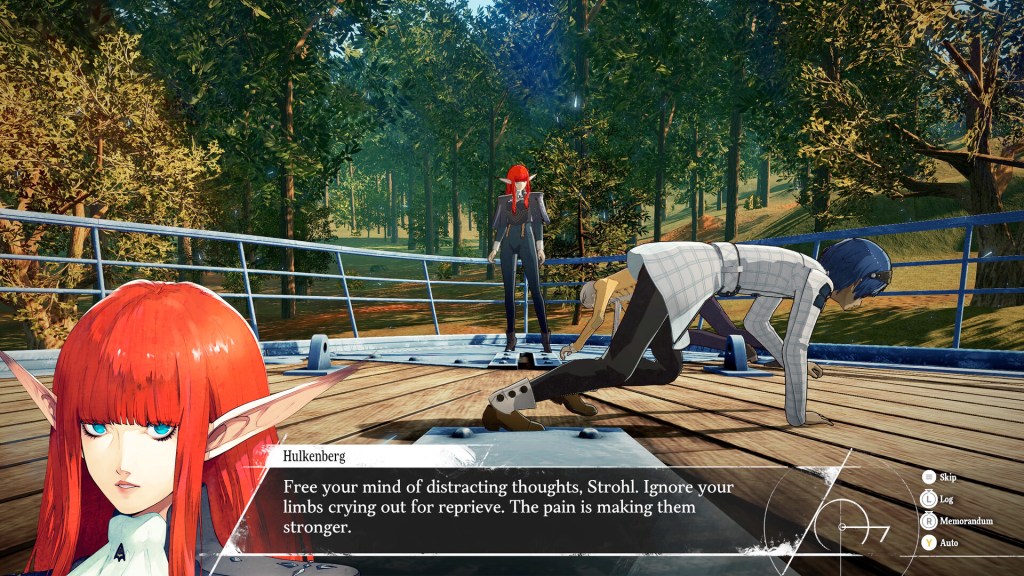
There are some exciting story sequences that showcased the potential that Metaphor: ReFantazio had. There are plenty of twists and turns that motivated me to see the game through to the end. The plot massively accelerates in the final quarter. The middle chapters of the game in comparison were slow and uninteresting. One of the earlier chapters takes place in the desert town of Martira where children have been going missing. This particular sequence was my favorite in the game as it was excellently paced and was a self-contained story with clever writing. The following couple of chapters were boring, forgettable, and lacked any sort of personality. Ultimately, the game is at its best in the beginning and at the end as it drags massively during the middle sections.
The strongest aspect of Metaphor: ReFantazio is its combat. I know turn-based combat isn’t for everyone, but I personally love a game when a game makes me think and strategize. What stands out to me about the combat in Metaphor: ReFantazio is the versatility. You have four characters on the battlefield, each with their own class and moveset. You get four actions per turn, but if you hit an enemy weakness or pass a character’s action it will only consume half an action. Moreover, there are synthesis skills that require two characters of specific classes that are highly impactful but cost two actions. Between basic attacks, single-target attacks, multi-target attacks, synthesis skills, buffs, debuffs, status effects, support skills, passing, and blocking there are so many potential ways to plan out a single turn. Which is important because battles often only last that long.

I played the game on hard difficulty and I found it to be vital to try to win most basic battles in a single turn. The combat is extremely volatile, meaning it is as easy for the enemies to kill you as it is for you to kill them. I found that letting the enemies have even a single turn could be catastrophic. Every battle became a puzzle of how to defeat all the enemies before they could retaliate, and to do so while using a minimal number of resources such as mana and items. Bosses are the exception to the single-turn combat as they have higher health but tend to telegraph their assaults. They often have multi-turn setup that can be interrupted or dealt with via debuffs and taunts. I enjoyed how every fight felt like it was on a knife’s edge, a single blunder could lead to a party wipe. But the versatility of tools that game gives you makes it so these tense encounters rarely feel unfair.
Part of what makes the combat so enjoyable is the adaptability brought by the class system. It may genuinely be my favorite class system in any game ever. There are over a dozen base classes, each with higher tiers that can be unlocked. Any character can be any class, and you are heavily encouraged to experiment with the different classes. Every character can inherit any skills they’ve unlocked from any class. If you want to inherit some elemental magic on your knight to give them some offensive options, go right ahead. If you want some healing spells on your buffing character, no problem. Every character levels up their class mastery independent from their actual level, making it easy to switch around and make use of the flexibility that the system affords.
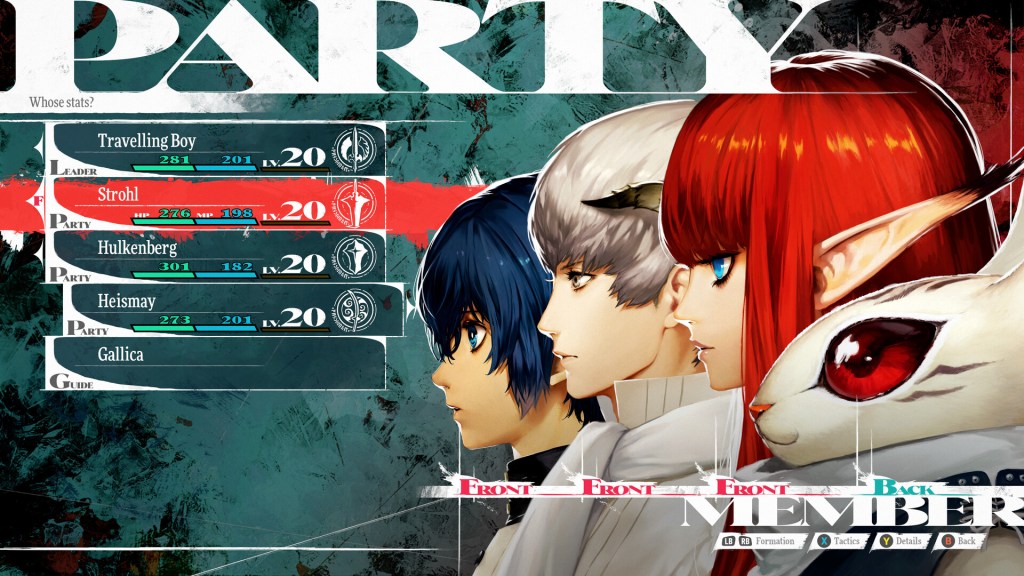
There’s a lot of smart quality-of-life features that prevent potential frustration. When you max out a class’s level, any additional experience gained creates an item to be used freely on other classes. This prevents the issue of feeling the need to switch classes the moment you hit max level on a class so experience doesn’t go to waste. You can also switch classes and inherit skills freely, not needing to go somewhere specific. You are only constrained by a resource called Magla, which prevents you from unlocking every class and inheriting every skill but I never came close to running out of Magla. Another major quality-of-life feature is the existence of overworld combat.
When exploring a dungeon, you can strike enemies before engaging them in turn-based combat. If you are significantly higher leveled than the enemy, they will be defeated instantly without having to spend time in turn-based combat. This is a huge time-saver and I’m extremely grateful for its inclusion. If you aren’t a much higher level, hitting enemies enough will trigger an ambush, dealing a big chunk of damage and stunning them to start the battle. Conversely, if an enemy hits you then you will be ambushed instead, letting the enemies have a turn before you. Because of the volatile combat, being ambushed is extremely catastrophic and often leads to just having to reload from the last save. While I appreciate the benefits from overworld combat, I wish getting a hit a single time didn’t effectively lead to a game over. The third-person action isn’t fantastic, and it doesn’t need to be, but a lot of emphasis is placed on it which I find odd.

My other major issue is with some of the late game boss battles. Many of these bosses have ways to give themselves a ton of extra actions per turn, making them extremely dangerous without hyper specific strategies to counter them. They also are effectively immune to most status effects and can clear any debuffs and buffs easily, further pigeonholing what you can do. I found myself relying on setting up a 1-shot (or close to it) to attempt to burst the boss down before they could do any of their ridiculousness. There are also a few late-game abilities that feel almost necessary to counter the wealth of actions that these bosses can have.
Atlus’ style of JRPG is famous for their emphasis on time-management via the calendar. Metaphor: ReFantazio follows this trend and ultimately makes some great improvements. Every major section of the game gives the player a limited number of days to complete the main dungeon before the story continues. Any time not spent doing the main dungeon can be spent doing side quests, conversing with followers to improve your relationship, improving your “royal virtue” character traits, and travelling between locations. I generally enjoy this format as it makes downtime feel valuable rather than a chore. Choosing what to focus on and optimizing your time is a form of gameplay rather than just feeling like a checkbox.
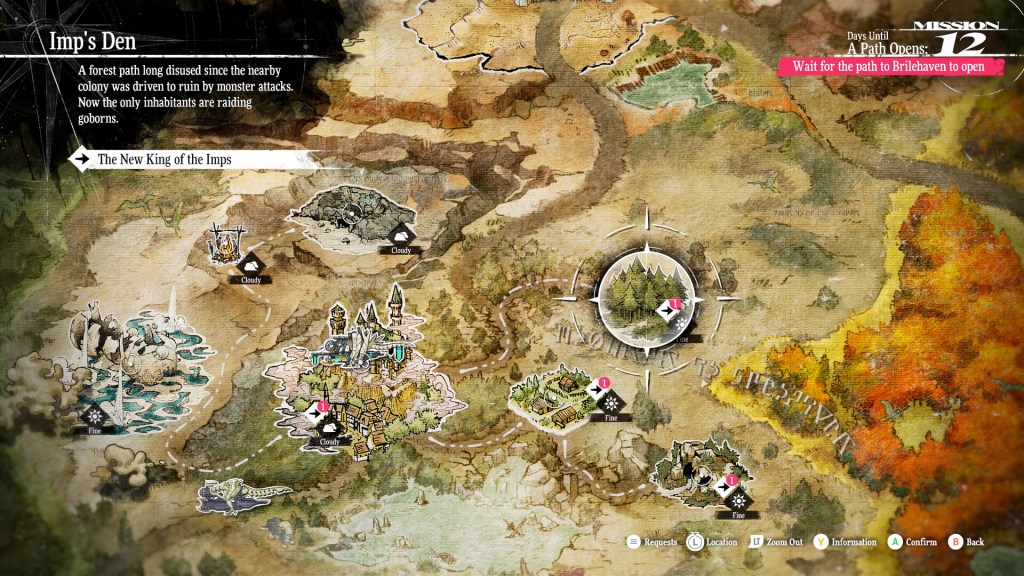
What makes Metaphor: ReFantazio stand out compared to Atlus’ previous titles is the game’s road trip structure. You and your party are a globetrotting crew in your magical legged landship, called a Gauntlet Runner. Traveling from a major hub city to towns and dungeons takes time, so you have to plan your routes and time your departure based on weather and other factors. The Gauntlet Runner also serves as a cozy hub during travels where you can cook, read, and converse with allies. I quite liked the structure opposed to staying in a more static location like Tokyo in Persona 5.
Another improvement that I am happy about is that improving follower relationships no longer relies on choosing the “correct” answers during conversations. You get bonus Magla for doing so, but you don’t feel the need to look up a guide to make sure you don’t mess up and waste time by picking the wrong dialogue choices. Moreover, the game is fairly lenient with time in general, and unless you majorly mess up you should have plenty of time by the end of the game to do every side quest and max out every relationship. The major downside to the calendar system, in every Atlus game, is that there tends to be a lot of downtime. Time between dungeons and story sequences can get tiresome if you have too many days in a row of talking to followers and doing other miscellaneous stuff. I would have appreciated a brisker pace in some sections of the game.
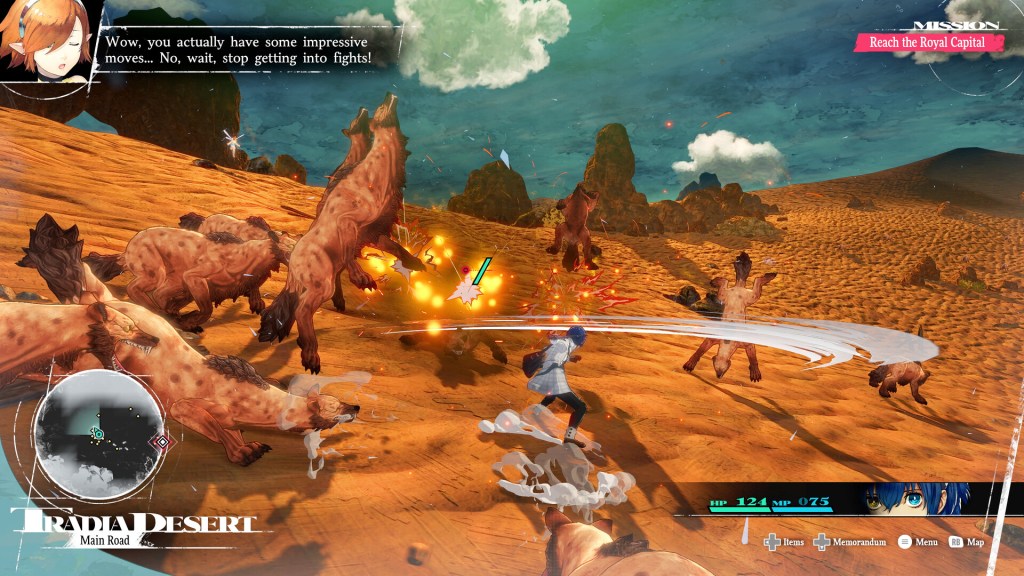
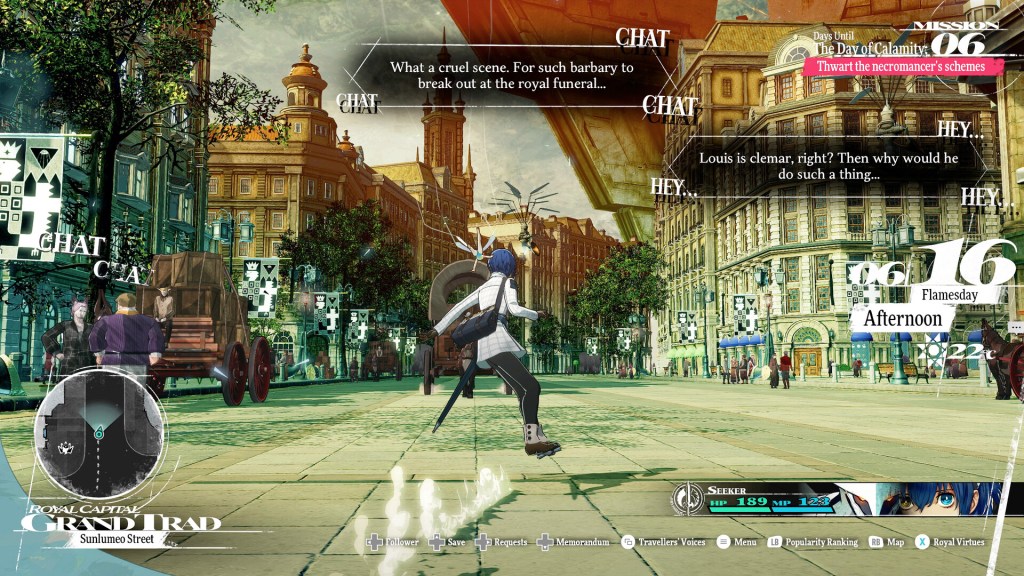
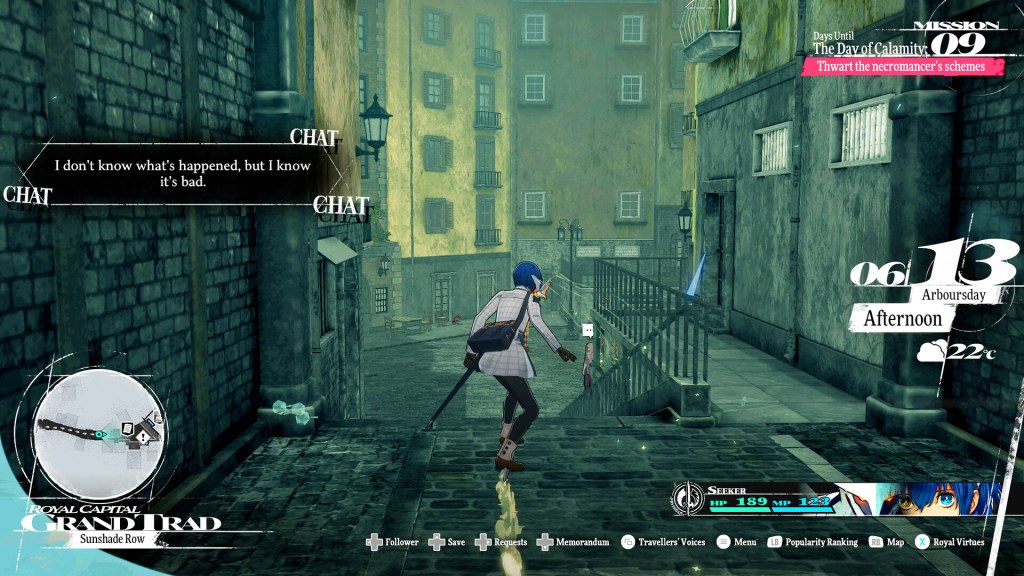
I was a little disappointed by the presentation of Metaphor: ReFantazio. The orchestral soundtrack is solid, and I particularly enjoyed the inclusion of Esperanto chanting. I do prefer the jazzier soundtrack of Persona 5, but I can’t complain about the music in Metaphor: ReFantazio. Unfortunately, I cannot say the same about the visuals. I think the character designs are wonderful, and the animated cutscenes are also incredibly well done, but the graphical quality during normal gameplay is awful. Everything just looks muddied and dull. Many dungeons take place in the same environments rather than unique and memorable locations. Which is a shame because the world is conceptually interesting. There are plenty of wondrous places that aren’t conveyed properly through the outdated visuals.
Ultimately, Metaphor: ReFantazio is a lengthy story-driven game. And while the story has some good ideas, it ultimately failed to provoke thought or inspire nuanced political analysis. Luckily, the game does deliver on strategic combat and a wonderfully adaptable class system. It is for these reasons that I give Metaphor: ReFantazio a 7/10. Metaphor: ReFantazio is a great JRPG. The problem is that I don’t think this genre is for me.



 stephensopinions