Kena: Bridge of Spirits (2021)

Kena: Bridge of Spirits is a game that’s better than the sum of its parts. Which is really important because none of the individual aspects of the game are standouts. There’s perfectly serviceable combat, platforming, exploration, and story, but there aren’t really any surprises or “wow” moments. It’s a game that feels reminiscent of classic, Playstation 2 era, adventure games. While being fairly derivative, Kena: Bridge of Spirits somehow feels endearing. I actually enjoyed my time with the game which can be partially attributed to the game’s smaller scope and wholesome vibes.
The game follows Kena, a spirit guide on a journey to learn more about her abilities to usher spirits into the afterlife. She travels to a remote village beset by famine and magical corruption. The populace has been entirely wiped out, and only spirits remain. It’s Kena’s duty to clear the corruption and guide the regretful spirits into the afterlife to help restore the natural order of life. I thought it was a touching story that dealt with loss, regret, and acceptance. There’s a sense of melancholy as you explore what was once a bustling town full of life, and moments of sadness as you learn the fates of the spirits that you’ve been assisting. But it’s also uplifting and endearing as you are ultimately helping the spirits accept and move on.

The most striking aspect of Kena: Bridge of Spirits is undoubtedly its visuals. The world is an absolute treat to look at. Towering canopies, twisted roots, rushing waterfalls, and dense underbrush are intertwined in a way that feels like a genuine forest. The world feels serene and natural thanks to its thoughtful environmental design. The lighting is also superb as streaks of light cut through the trees and illuminate the path during a thunderstorm. Graphically, the game has the Pixar movie-esque style to it that is wonderfully animated and rendered beautifully, especially in cutscenes. There’s no question that the presentation is the most impressive aspect of Kena: Bridge of Spirits.
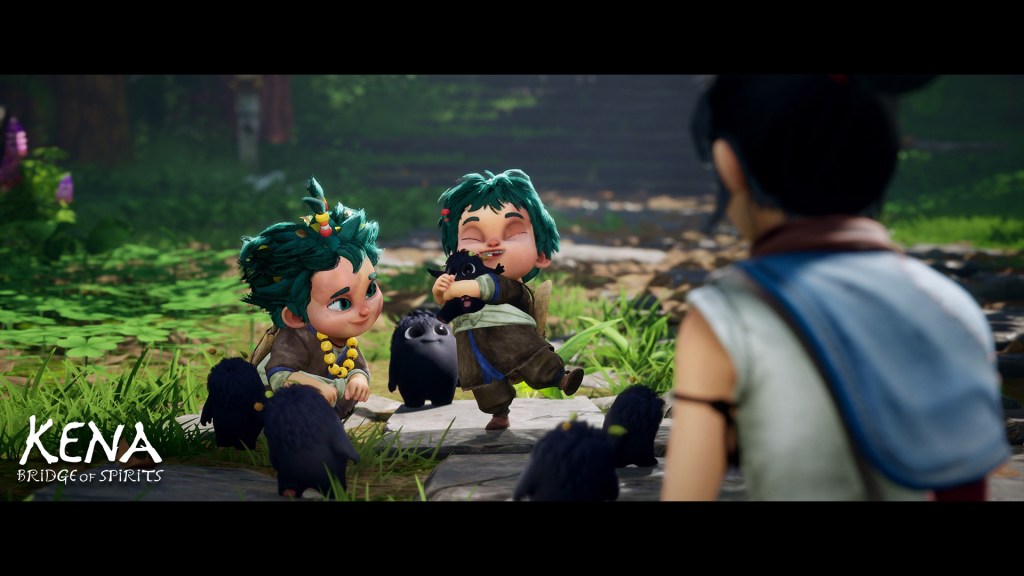
Gameplay wise, Kena: Bridge of Spirits has a healthy mix of combat, exploration, platforming, and puzzle solving. While all these components were competent, they each had their own flaws. The only aspect that tried to do something new was how puzzles used the cute creatures called Rot. The Rot are little black puffballs that follow you around and assist you as you free them. You can command them to move blocks around and can occasionally fuse them together to create a spiritual dragon to clear away corruption. I loved seeing the little creatures but I felt that they were underutilized in puzzles. I didn’t feel like there was a meaningful difference between having the Rot move a stone block instead of just doing it as the player character like in most games. As a whole, the puzzles were extremely simple.

Platforming faced a similar issue of simplicity. There was some potential here as the game introduced some fun ideas such as using your bow to slingshot you to glowing flowers, rotating floating blocks so that you could use them as platforms, and introducing a dash that sends you through spiritual portals. There were moments that I felt like there could’ve been some excellent race-against-time sections as you rapidly used your tools to levitate blocks, dash through portals, and sling across gaps. Or there could’ve been more puzzle-platforming focused sections of rotating platforms in the correct order. But those moments never really came to fruition unfortunately. Moreover, double-jumping feels awkward because the second jump almost entirely halts your momentum. It makes it easy to misjudge jumps and honestly just feels bad.
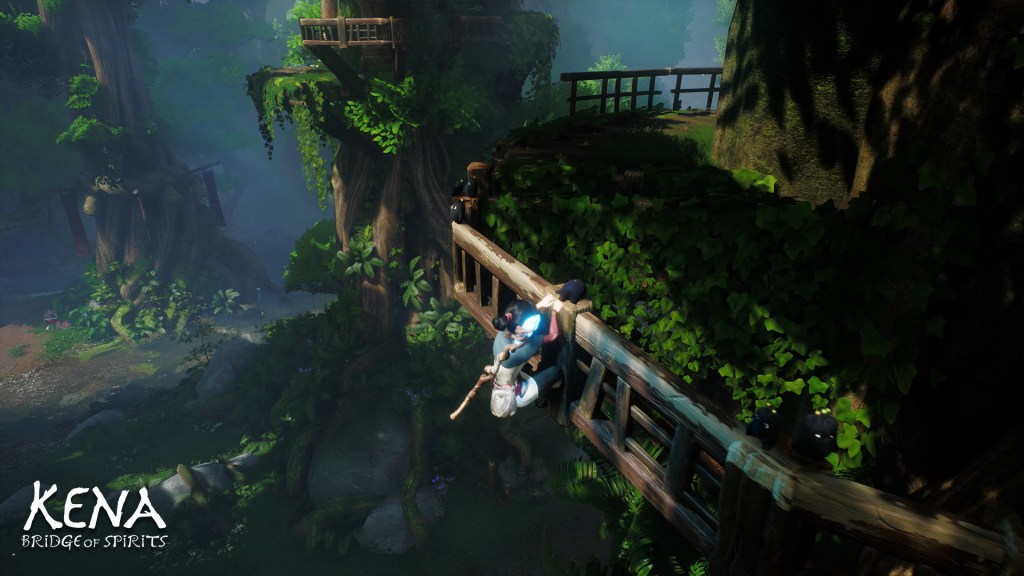
I found exploration to be mostly enjoyable because of the environments. There’s a good amount of stuff to find without feeling overwhelming. But a lot of the rewards were fairly disappointing. Meditation spots are thematically nice and increase your total health which is great. Finding hidden Rot around the world also feels good and collecting a bunch gives you more energy to use in combat, great. But I honestly didn’t care for finding the dozens of different hats that you can put on your Rot. Sure, it’s a cute touch. But it is purely cosmetic and I couldn’t help but be deflated whenever I found a secret passageway only to be rewarded with a random hat. Worse still, the most common reward is money. And money’s only use in the game is to purchase hats. So, if you don’t care too much for these trinkets then a majority of the game’s rewards are going to be meaningless for you.

The one exploration reward that I thought was interesting was the Spirit Mail. Collecting these allows you to enter homes in the village that have been beset by corruption. You can clear out the evil energy, restoring that home and the surrounding area to a more serene state. I wish they did more with this. I love the idea of reviving the village, but aside from getting rid of some evil vines and bramble there isn’t any gameplay element tied into this. There are some static blue spirits standing around but they don’t move and you can’t interact with them in any way. 
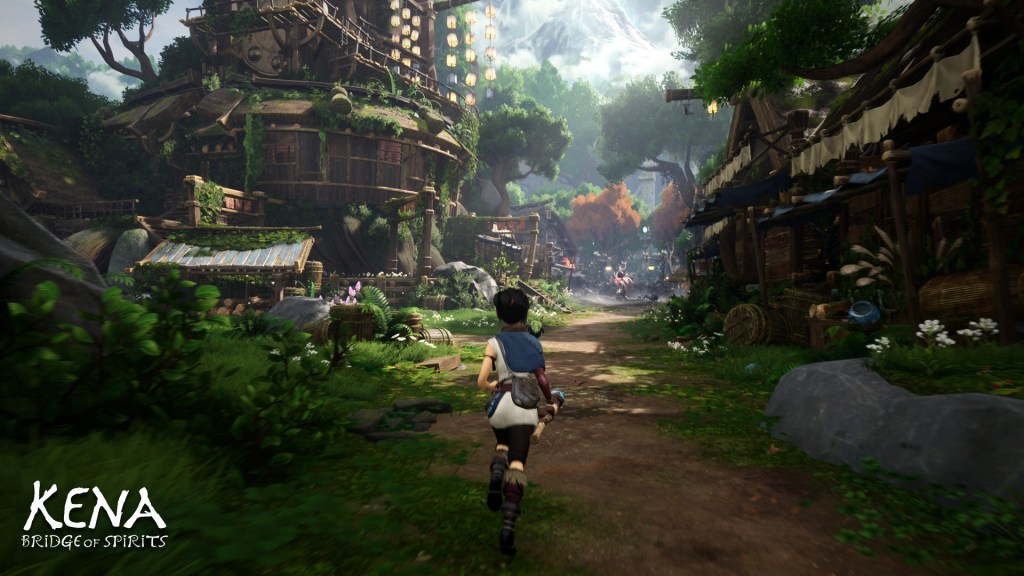
Imagine this: after cleansing a building in the village, spirits are freed that act as shops to spend your money. It was such an obvious idea to me that I’m shocked it’s not in the game. It solves a multitude of issues that I had. The village would feel more alive, Spirit Mail would feel more rewarding, you’d have actual upgrades and equipment to spend your money on, and combat progression would feel better with these upgrades. I even think it’d increase the emotional impact of the game’s ending as you free these spirits that have been stranded instead of moving on to the afterlife. Maybe the developers didn’t want players to have weapon upgrades to spend money on, but I found it so odd that 3 of the major collectibles in the game (Spirit Mail, hats, and money) had no gameplay implication whatsoever. I genuinely think adding some shops as a reward for finding Spirit Mail would have been a major improvement.

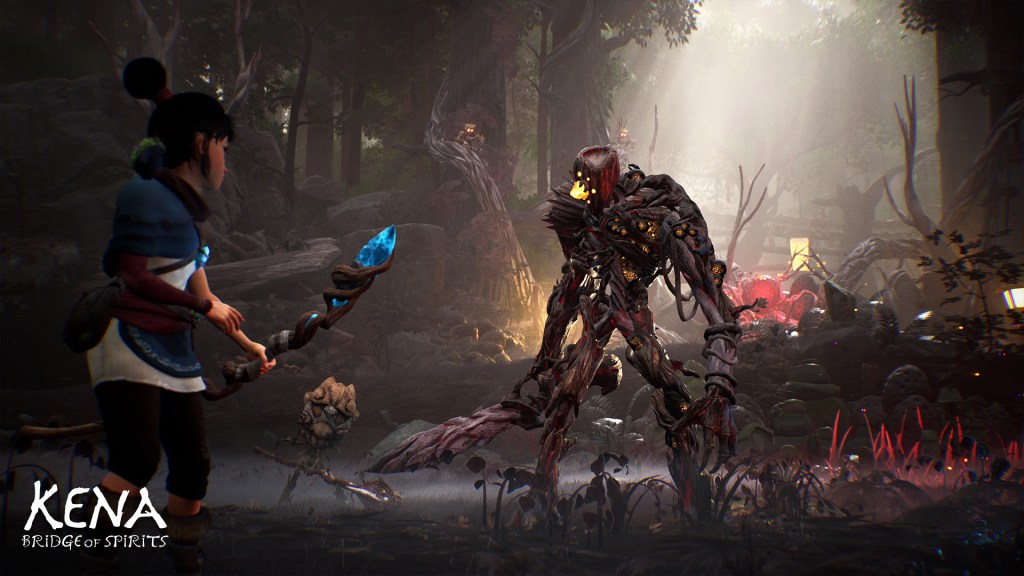
The most fleshed out aspect of Kena: Bridge of Spirits is easily its combat. Kena has the classic options of light attack, heavy attack, dodge, and shield. As you progress through the game a few more options become available such as the bow, bomb, and dash. Furthermore, you can spend experience to unlock bonus attributes such as a stronger shield, more arrows, or bombs releasing mini-bombs upon detonation. But the best way to deal massive damage is through the Rot abilities. As you hit enemies with your basic attacks you will build up a resource called confidence. One confidence can be spent to unleash a devastating melee attack, a piercing arrow, a time-slowing bomb, or it can be used to consume limited health flowers scattered around the arena. 
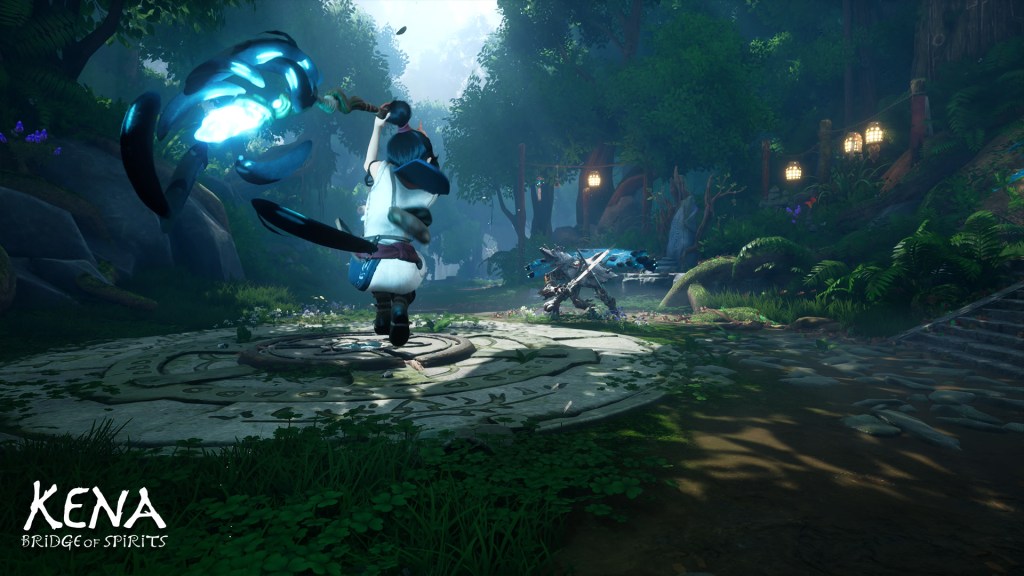
All of these considerations play into the flow of combat in Kena: Bridge of Spirits. I found it enjoyable to dodge, block, and parry enemies along with dealing some damage with all my tools while building up confidence to burst down enemies with Rot abilities. Enemy design is also quite varied so that you are always on your toes. You really have to make use of all your tools to dispose of the variety of threats the game throws at you. It sounds silly, but I was impressed that even with a large roster of foes there was not a single one that I thought was annoying or poorly designed. But where I think combat really shines is the boss battles.

I think the difficulty curve pertaining to the boss battles is going to be a huge negative for many players. For a game that presents itself like a Pixar movie, the bosses can be quite challenging. Don’t go into Kena: Bridge of Spirits thinking it is a game for little kids as the bosses will humble you, even on the “normal” difficulty. But it’s hard for me to begrudge these unexpected difficulty spikes because the bosses were my favorite part of the game. They follow the same flow of regular combat but are much more challenging. Additionally, most bosses have some briefly exposed weak points that you can target to temporarily incapacitate them. It’s a great way to encourage the player to stay perceptive and get rewarded with small windows to deal big damage.
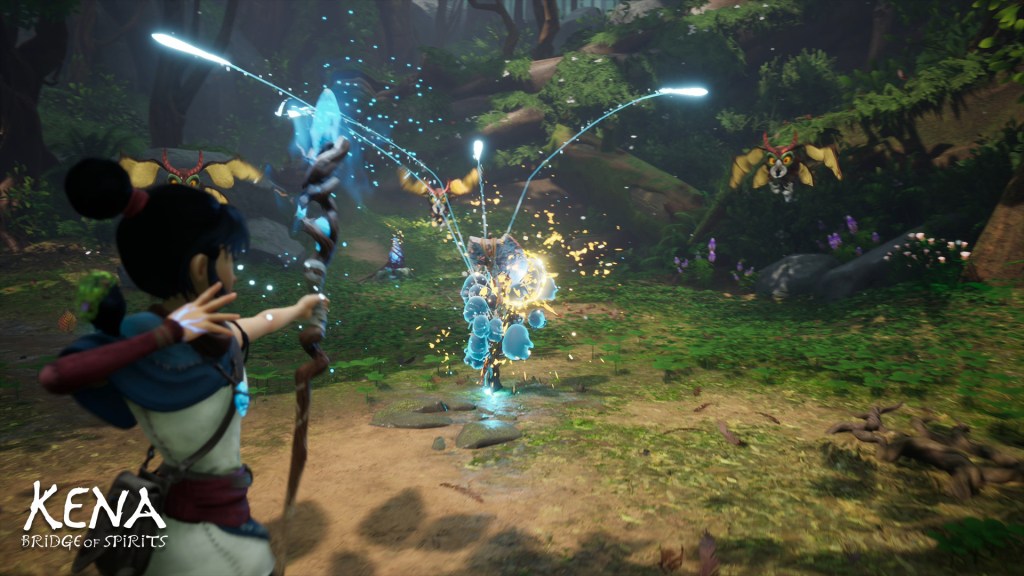
Even though I did have fun with the combat, I do have a few small complaints. For one, the camera can get a bit annoying with multiple enemies. It has the tendency to soft-lock itself onto the nearest enemy which isn’t always what I want. I think the camera should’ve stayed in control of the player for the most part. My other issue is a lack of progression for melee attacks. Towards the end of the game it felt like basic light and heavy attacks did pitiful damage to bosses to the point it wasn’t worth the risk of getting close. I defaulted to using arrows and bombs until I could stun the boss and then used Rot abilities to deal the majority of damage. I think the idea of having a blacksmith or something in the village like I mentioned earlier could’ve allowed players to specialize into stronger melee attacks.

There’s something about Kena: Bridge of Spirits that feels like an adventure game from the Playstation 2. And not in a bad way. I think it may be because so many modern adventure games put more emphasis on story and massive scope. Kena: Bridge of Spirits feels more personal and endearing. It has a story, but it doesn’t talk at the player for hours on end. It has an open world, but it’s much smaller and more segmented than most modern games. And I appreciated that the game wasn’t bloated with unnecessary junk. It’s maybe a dozen hours long and quickly moves through new areas, enemies, bosses, and tools. In a landscape filled with 50-hour open world games, I’m glad to have smaller scoped adventures like Kena: Bridge of Spirits.
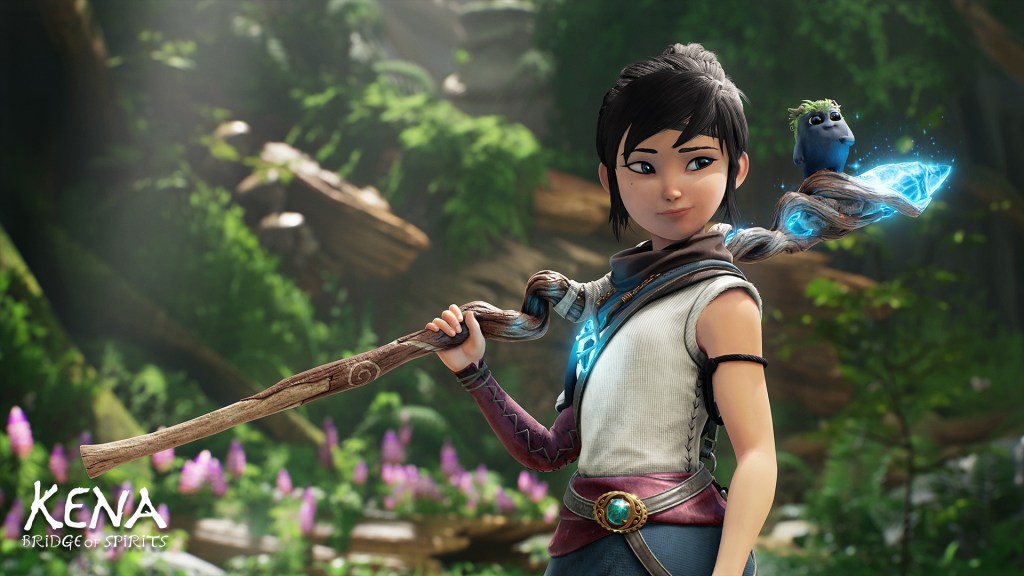
While Kena: Bridge of Spirits doesn’t do anything particularly groundbreaking, I still had a great time with the game. I looked forward to cozy mornings with a cup of coffee and exploring its gorgeous natural landscapes with my crew of Rot buddies. I think there are clear improvements to be made across all gameplay aspects, but as an entire package I think Kena: Bridge of Spirits is fun. It is for these reasons that I give Kena: Bridge of Spirits a 7.5/10. If you are tired of grandiose open worlds and dialogue heavy adventure games, Kena: Bridge of Spirits presents a tighter and more personal quest.   
Tchia (2023)

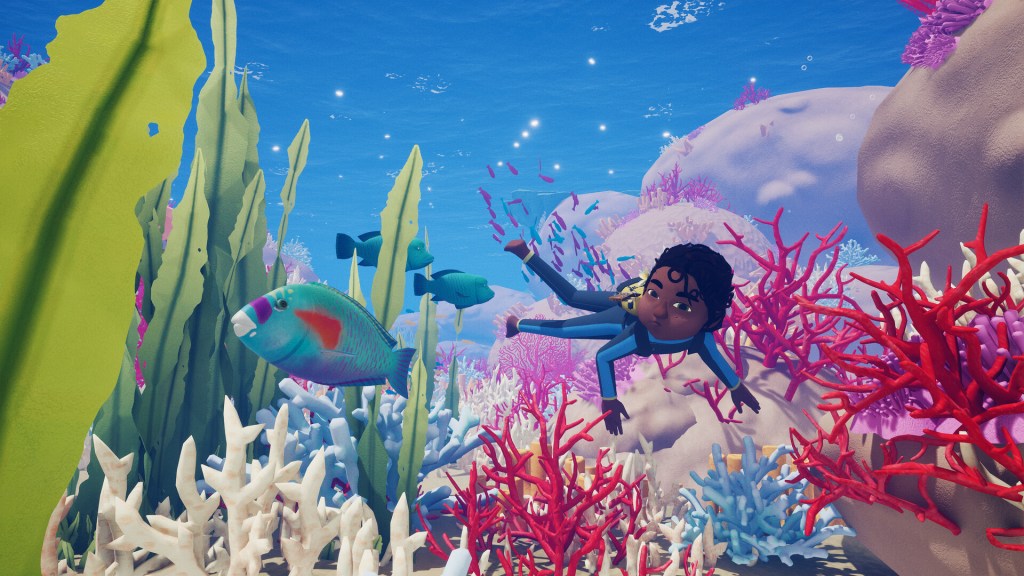
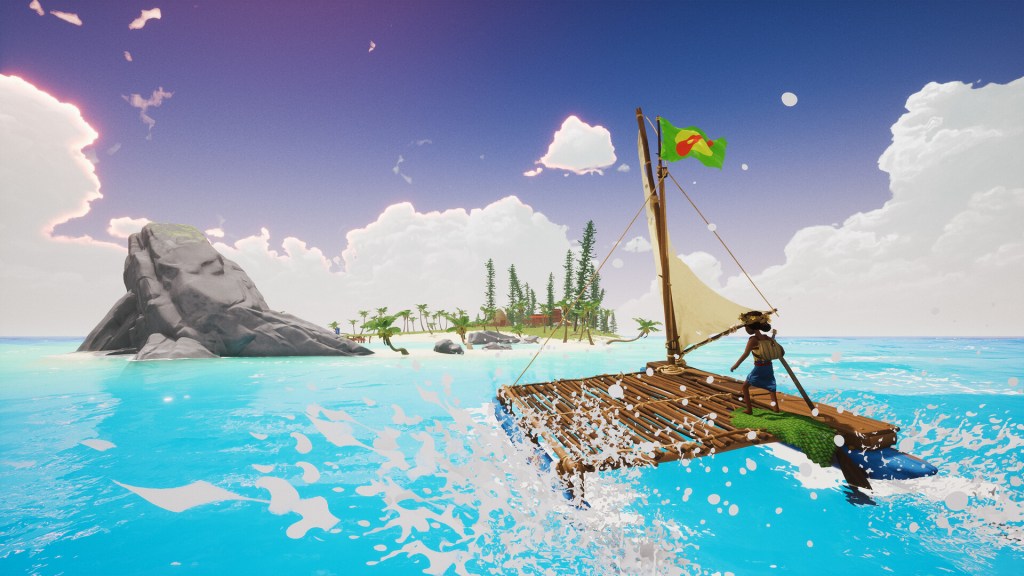
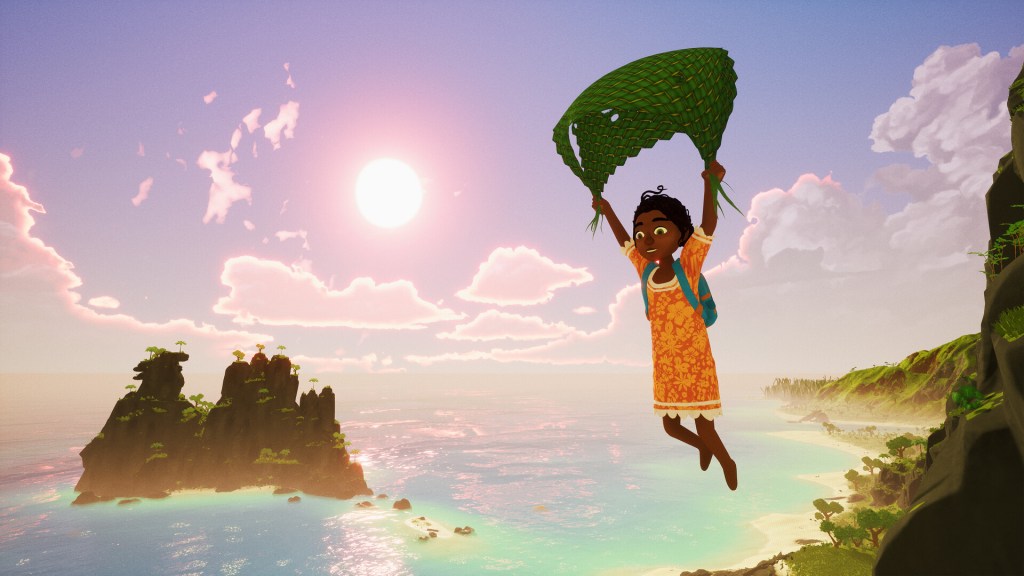
Tchia is a love letter to New Caledonia. From the outset it is obvious that the developers wanted to share the culture, music, landscapes, and peoples of this Pacific Island. Tchia is a heartfelt adventure with a variety of small gameplay elements that contribute to the greater whole. While no aspect in particular is remarkable, I had a good time just exploring the island and messing around with its various ideas.

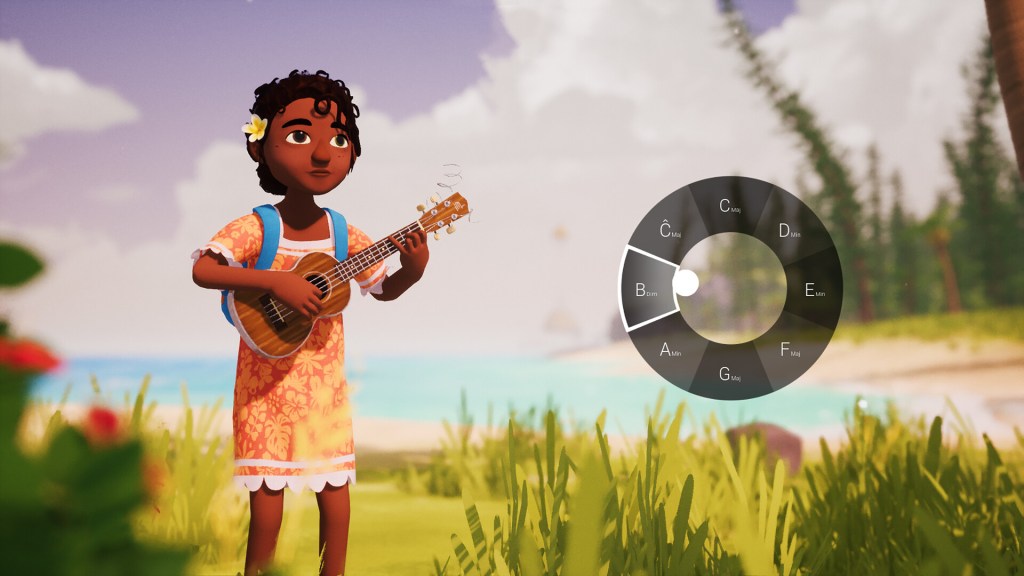
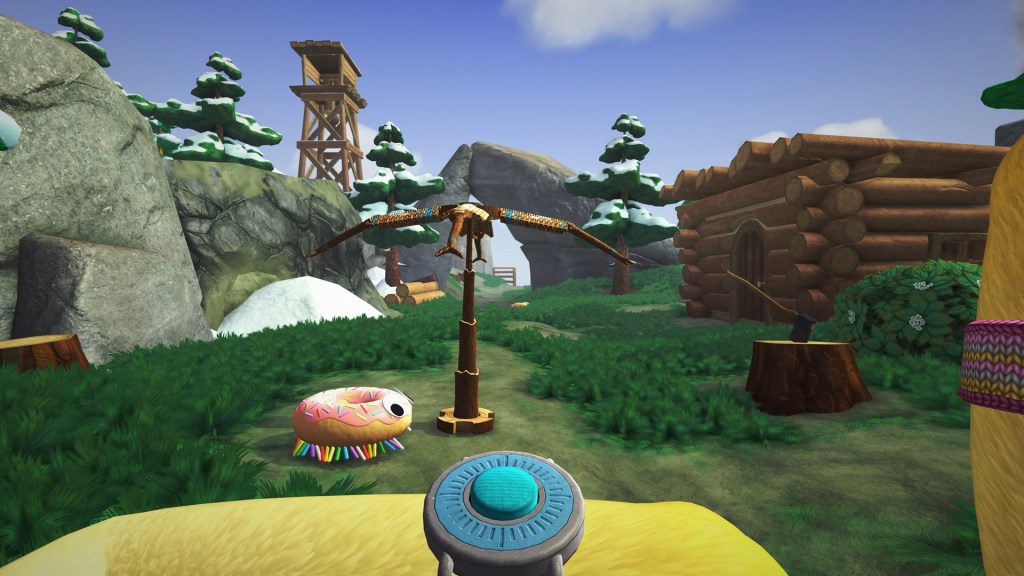
The game follows the story of a young girl who lives on a tiny island with her father. When her father is kidnapped by a local warlord, the girl realizes that she has a special power to briefly possess objects and animals. You play as the titular girl as she sets out to rescue her father. The story itself is cute as you get to visit a bunch of small towns and peoples as you make friends. Every group you meet is seemingly accompanied by a jam session on your trusty ukulele. 

Interestingly, the story takes a pretty dramatic tonal shift about halfway through as you start to learn more about the backstory and villain. While the main character and setting remain cheerful, the narrative gets pretty dark and disturbing. Honestly, I enjoyed this dramatic shift as it will forever stick out in my mind as opposed to if the game remained 100% wholesome for the entire duration.

Tchia is first and foremost an open-world exploration game. While I’ve grown a little exhausted from these types of games, I think Tchia still manages to be fun because it is a more compact experience. The map is small and the game is short. While the game crams in a ton of side activities and points of interest, I didn’t feel obligated to do them all. I stuck to the stuff that I enjoyed and things that happened to be on the path where I was going.

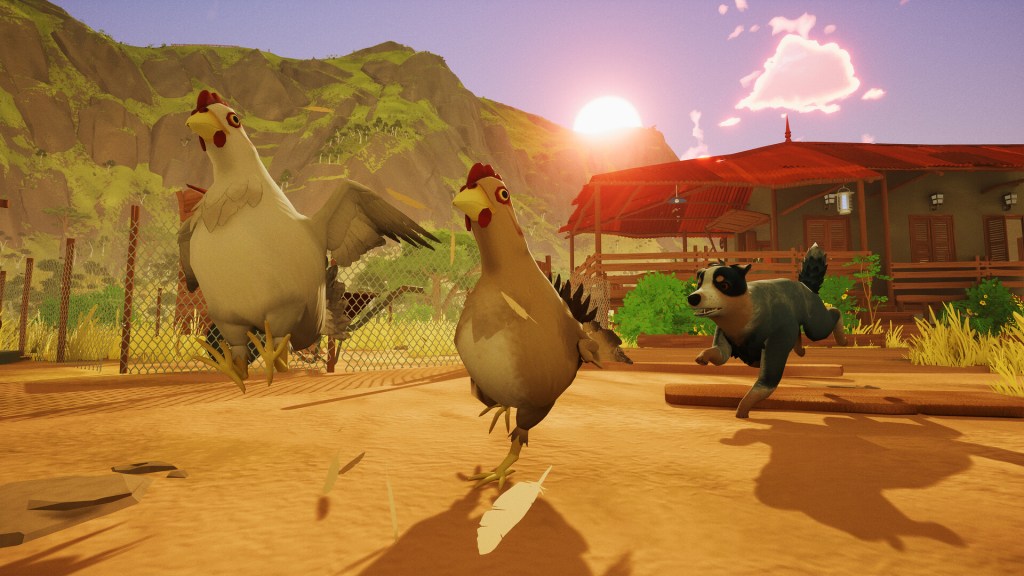
The main gameplay hook is the possession mechanic. You can briefly possess any animal that you come across as well as a handful of inanimate objects. The animals behave as you would expect, and you can fling the inanimate objects as a projectile as you release your possession. The animals are fun to mess around with as they are mainly used for traversal. The islands are small, but the main character is quite slow. Possessing a bird, a deer, or a dolphin to get around greatly expedites exploration. Some animals such as the crab or dog have special uses for puzzles to snip and dig for treasure. 

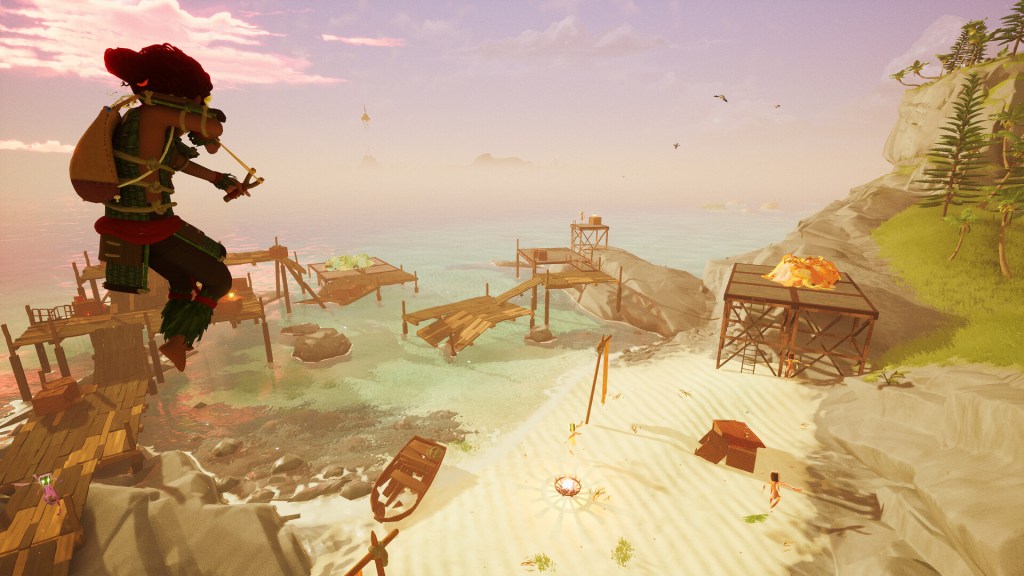
The other place where possession comes in handy is combat. There isn’t much combat in the game, but there are a handful of enemy camps spread around. The enemies are made of possessed cloth, so your main form of attack is to launch objects such as oil lanterns, explosive rocks, or flaming branches at them. The smaller enemy camps are a bit of frantic fun as you quickly swap between possessions and take out enemies on the fly. The bigger enemy camps at the end of the game are a bit tedious as you end up having to wander around for a while to find any opposition and oftentimes there isn’t any flammable material nearby to possess. I had to carry around a ton of explosive rocks in my backpack to take out for these occasions but it just wasn’t as fun as looking around and possessing objects strewn about the camps.

Aside from combat, Tchia has a handful of mini-games and challenges to play with. There’re timed races with different animals, shooting galleries with your slingshot, musical rhythm sections using the ukulele, traditional platforming, stealth, acrobatic diving challenges, claw machines, boating, and photography. There’s so much variety here that it’s hard to feel bored of any particular element. None of these gameplay segments are revolutionary or amazingly executed, but they are fun enough to fuel exploration.

Exploration is the core of Tchia. Whether you walk, boat, or possess a bird to get around there is a beautiful island to discover. Aside from possession, the main form of traversal is similar to that of The Legend of Zelda: Breath of the Wild, stamina-based climbing and gliding. Between the mountains, crispy blue waters, dense jungles, and cozy towns there is a real natural allure to the environment. As I previously mentioned, the world is absolutely packed with collectibles and challenges if you want to engage with those. One aspect of exploration that I enjoyed was that there was no constantly-updating reference point on the mini-map. You had to infer where you are based on landmarks and directional knowledge. This was nice as it lets you appreciate the environment and look for ways to discern your location rather than relying on a 2D projection.

Part of what makes Tchia so charming is its dedication to New Caledonia. While the world of Tchia is fictional, it bases itself heavily off of the people, culture, and landscapes of New Caledonia. It is a place that I barely knew existed, and now I find myself researching its history and culture to learn more. Everything in the game pays homage to the culture in a respectful way. It doesn’t feel like it’s just using the setting as a backdrop, but rather it’s really immersing the player in the way of life of New Caledonia’s people.

As far as performance goes, Tchia is serviceable. I personally didn’t run into any bugs, frame-rate drops, or slow loading times. Graphically, however, Tchia isn’t the best game to look at. I love the environments and setting of the game, but the hyper-stylized art style looks a little too generic and cartoony. The character models in particular look off to me. I am usually an advocate for stylized art styles as opposed to hyper-realistic graphics, but the art style of Tchia just feels outdated and worn-out. All that being said, I don’t think it’s a huge detractor from the game considering that the environments still look nice.

Tchia isn’t anything revolutionary, and that’s ok. If you are exhausted of open-world exploration games, Tchia isn’t for you. But if you do want a charming trek through a small-but-dense island then Tchia does have a lot to offer. There’s a ton of variety in the activities and mini-games to play with. The heartfelt homage to New Caledonia is what really makes the game standout, as it lets us have a window into a culture that most people are entirely unfamiliar with. It is for these reasons that I give Tchia a 7/10. It didn’t blow me away with new ideas or mechanics, but it was a much needed relaxing and wholesome adventure.

Pikmin 2 (2004)

Pikmin 2 is the perfect example of an excellent game that torpedoes itself with an abundance of repetitive and poor-quality content. Despite making plenty of improvements over its predecessor, the majority of Pikmin 2 is spent engaging with its worst content: caves. I wanted to love this game as much as I loved the original Pikmin, and truthfully it surpasses the original game in many ways. But unfortunately 75% of the game is at best dull, and at worst frustrating.

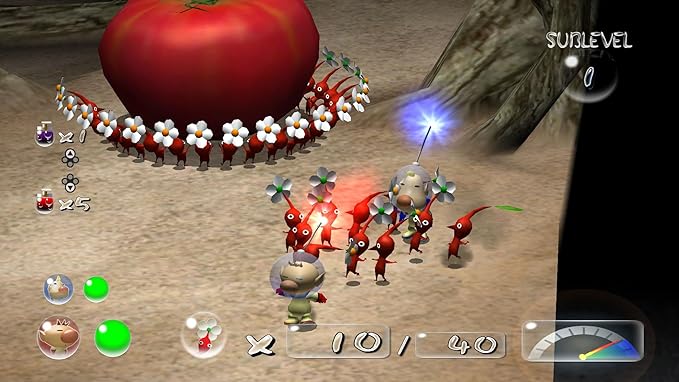
To start with the positive, Pikmin 2 delivers more content than its predecessor. There’s more Pikmin varieties, there’s more enemies, there’s more treasures, there’s more hazards, and there’s even an additional playable character. This is all fantastic. I liked having two captains to control as it allows for more multitasking, which is a core component of the Pikmin series. One captain can oversee a group of Pikmin knocking down a wall, while the other captain can command the Pikmin to attack enemies and replenish their numbers.

The two new Pikmin varieties both are unique and integral to your success. Purple Pikmin are heavy but slow. They can carry 10x the weight of normal Pikmin, and they are incredibly effective in combat. They deal bonus damage and stun enemies upon landing from a throw. White Pikmin are faster than normal Pikmin, are immune to poison, can find treasures underground, and deal massive poison damage to an enemy that attempts to eat them. Both of these varieties are powerful, but are cleverly balanced by their rarity.

Both purple and white Pikmin do not have their own motherships, and as such you cannot use the normal chips and enemy corpses to spawn more of them. Instead, you come across colored flowers that you have to sacrifice other Pikmin into five at a time. This heavily limits how many of these special Pikmin that you will have. While the purple Pikmin in particular are incredibly powerful in combat, I felt nervous bringing large quantities around because losing just a handful of them could be catastrophic. I think this was a great way to balance these new varieties. Having powerful Pikmin at your disposal is very fun, but limiting their quantity makes them risky to use.

Another welcome addition is the inclusion of sprays. You can spend time having Pikmin collect berries that will be refined into two varieties of sprays: bitter and spicy. The spicy spray speeds up your Pikmin and increases their attack power. The bitter spray turns enemies to stone briefly. I enjoyed how these provided some additional decisions to make during combat. You could use them to make encounters much easier, but you had a limited quantity of them unless you spent a ton of time farming them. I saved them for dire situations or tricky boss fights, and I appreciated their inclusion.

When I played the original Pikmin my biggest issue with the game was the poor AI. I haven’t done any sort of extensive testing, but I definitely feel like this was improved in Pikmin 2. They seem to not get stuck on random bits of geometry as often. They don’t get distracted by grass as much. They are quicker to pluck and faster to respond to the whistle. I still had some occasional woes when trying to dismiss Pikmin into groups, but overall, I appreciated how much more responsive they were overall.

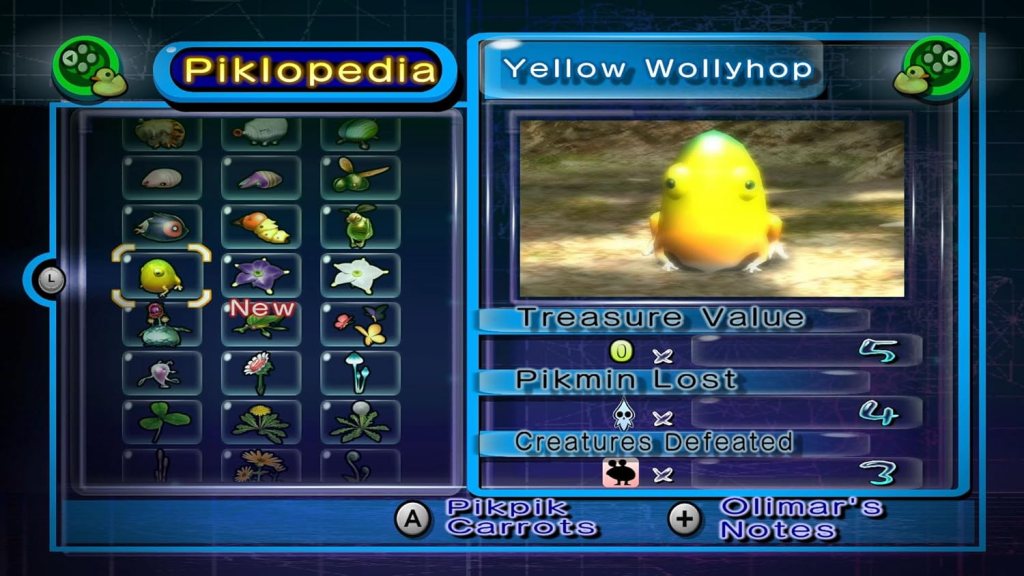
While I didn’t spend a ton of time reading the entries, I loved the Piklopedia. This journal has fun descriptions of both the enemies and the treasures that you collect. These have a lot of personality and charm. They’re funny and a great addition for people who want to delve more into the world of Pikmin.

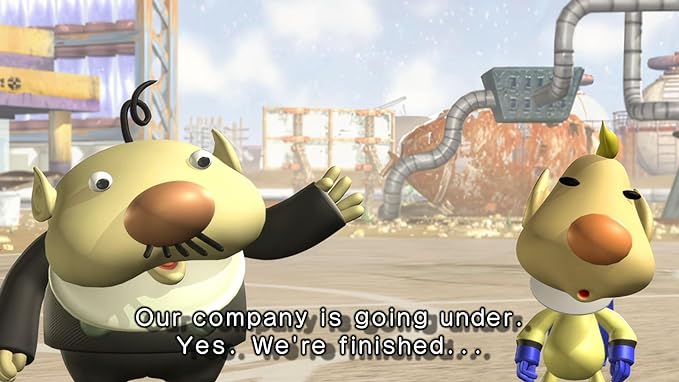
The gameplay loop of Pikmin 2 is almost identical to the original. Instead of crash landing on Earth, you voluntarily journey there to collect treasure to alleviate your company’s debt. You command your troop of Pikmin to knock down barriers, fight enemies, and collect goodies. A major difference however is that Pikmin 2 lacks a maximum number of days. In the first game, you had 30 days to collect 30 parts. With each day being roughly 15 minutes, there was a sense of urgency to get something done with every second. 

The looming time limit in Pikmin was something that many players felt anxious about, but I think it was a critical element of gameplay. It encouraged the player to maximize their time and take risks. You could leave a troop of Pikmin to knock down walls or carry things back to base, but there was always the worry that they could be intercepted by hungry enemies. And even if you had a couple minutes left in the day, there was always the question of what you could do with your time. Whether it be replenishing your Pikmin supply, feeding them nectar to upgrade them, or knocking down barriers to make the next day easier, I wanted to maximize my time. 

Thirty days was plenty generous unless you were wasting a ton of time, but the looming threat of failure was crucial. This isn’t present in Pikmin 2 at all, as you have an unlimited number of days to accomplish your goals. There’s no rush to do anything, you can play incredibly safe and not have to do any risky multitasking. You don’t have to squeeze every second out of the day, as you can just go to the next day with no downside as the timer approaches night. The lack of urgency was definitely unfortunate, but it was a minor issue when compared to the biggest flaw of Pikmin 2: caves.

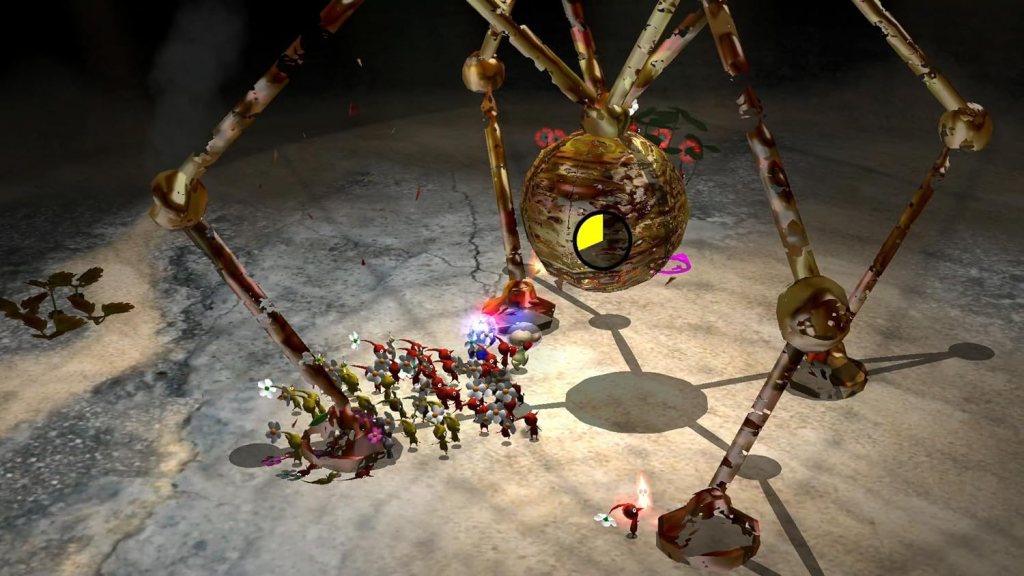
Before I begin ranting about caves, I want to make it clear that I genuinely think that they are a good idea. They act as dungeons in which you progress floor by floor with no opportunity to replenish your Pikmin. They have a heavy emphasis on combat, each floor is packed with enemies and there is usually a boss at the end. Defeating the boss usually yields a special treasure with a unique upgrade such as immunity to electricity. I think this is all great. Entering a cave is anxiety inducing as you don’t know what lies ahead, and losing Pikmin can devastate your odds of success. This is all great, but the caves have a few issues: bland aesthetics, monotonous gameplay, and frustrating level design.

There are 14 caves in the game, and even shortly after beating the game I can only really remember 4 of them. And 2 of those I only remember because they were infuriating. A big reason why caves aren’t memorable is because they are just plain ugly and bland. Many of them are just big dirt pits with little to distinguish themselves. Moreover, the levels are semi-randomly generated, so they can’t make up for forgettable visuals with interesting level design.

 Most of the caves lack anything to make them unique. Just floor after floor of basic battles with no end in sight. And many of these caves can take upwards of an hour to complete. It grows old quickly. There are a couple of good examples in Pikmin 2 of what caves could be: Submerged Castle and Glutton’s Kitchen. 

Submerged Castle is easily the best in the game. You have to work quickly to recover treasures in this water-filled cave, because a nightmarish blob appears after 5 minutes on each floor to steamroll your Pikmin. This is a unique mechanic that encourages you to move quickly, but even if you aren’t fast enough there are strategically placed pipes that allow you to hide from the monster. Glutton’s Kitchen is nearly as horrifying, but it is memorable nonetheless. It takes place in a child’s playset of building blocks and a wooden train set. Fat breadbugs try to steal your treasures and drag them back to their dens. The combination of being visually distinct and having a central mechanic is vital in making caves more interesting. It’s a shame that none of the other caves live up to the quality of these two.

I have to mention that my entire experience was left on sour note because of the final caves in the game. They were memorable for the wrong reasons. They felt completely unfair. Every floor was a cramped nightmare filled with dangerous enemies. Not to mention traps such as bombs, rocks, and enemies falling from the sky. I don’t mind a bit of elevated difficulty, but the difficulty spike here is egregious. There are so many ways that you could instantly lose half your army deep into a dungeon. The saving grace here is that you can hard reset to the beginning of the floor.

I don’t think relying on frequently resetting your system is a great mechanic, but it feels necessary here. There are so many catastrophic things that can happen, and it often feels unavoidable. Due to the randomized nature of enemy placement, some configurations are far, far harder than others. The final dungeon, Dream Den, has many floors that feel like the developers just threw every enemy they could into cramped rooms. These aren’t cleverly designed challenges, they are meat grinders that require unsatisfying tactics to succeed.

Like I previously mentioned, you can always just reset and hope for a better outcome or easier layout, but there are some ways that you can combat the tougher encounters. You can play super carefully, going through each floor with no Pikmin at first, triggering every trap. Then abuse the enemy AI to bait them out one at a time. This is time consuming and feels a little cheap as you are just bypassing every obstacle. You could also use purple Pikmin and bitter spray as they are surefire methods to simplify tougher fights, but these are very limited resources unless you spend time farming them. Truthfully, some of the floors in the later dungeons feel like absolutely no thought went into them and they weren’t even playtested.

In my perfect world, Pikmin 2 would have cut down the number of caves dramatically. Instead of 14 repetitive caves, having 5 unique and intentionally designed caves would be a massive improvement. The caves would have their own aesthetic themes and unique mechanics to make them interesting. Each floor would be designed with care and there would be thought into the layout and enemy placements. I understand that randomization can increase replayability, but in the main campaign I wanted purposefully designed dungeons. Randomized dungeons could’ve been a great challenge mode.

I was let down by the number of poor-quality caves in Pikmin 2. Even without a day limit to encourage efficiency, I still was having a great time up until I started delving into the caves. The vast majority of the game is spent in the caves, and it’s by far the worst aspect of the game. More isn’t always better, and Pikmin 2 would’ve been greatly improved by cutting the number of caves in half and spending more time carefully designing them. It really is a shame because Pikmin 2 gets so much right, it just sabotages itself with an abundance of uninteresting and occasionally aggravating content.

Demon’s Souls (2020)

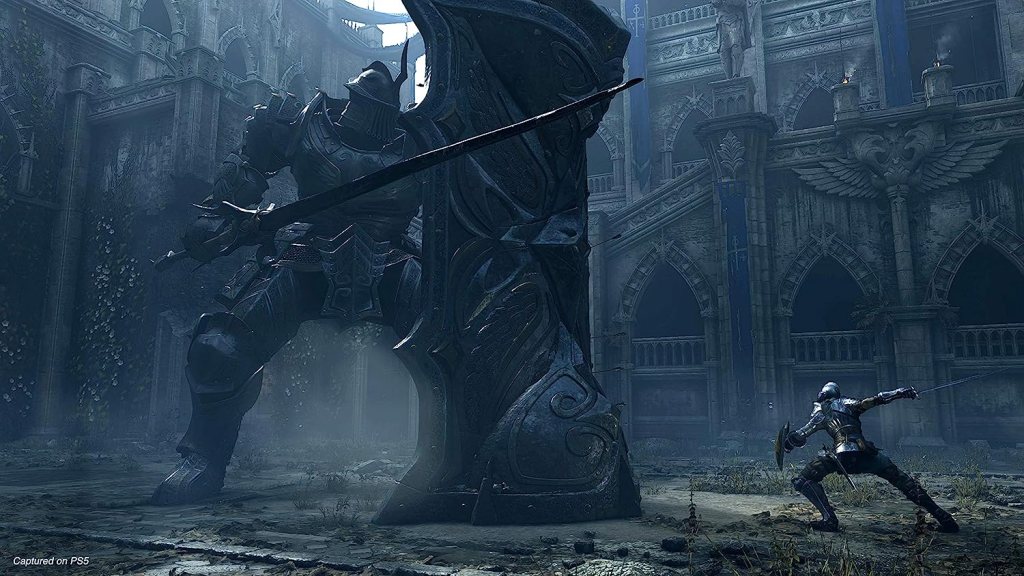
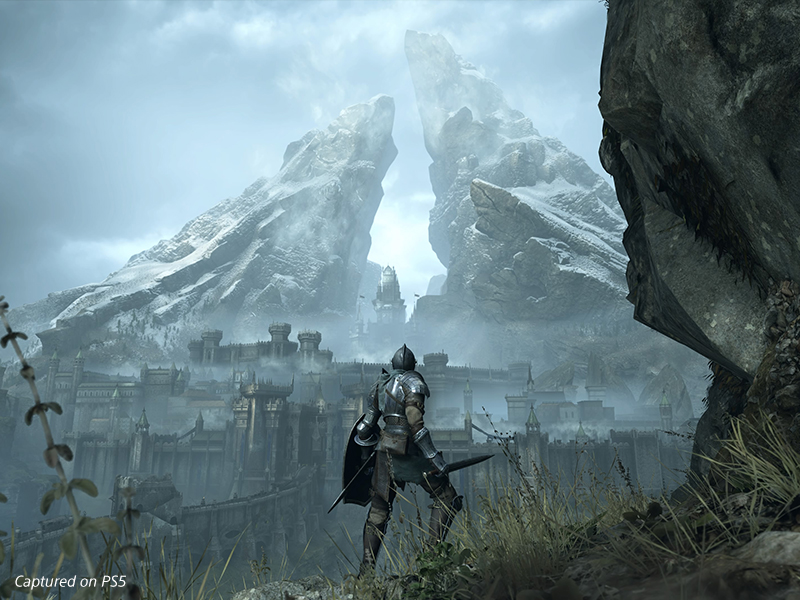
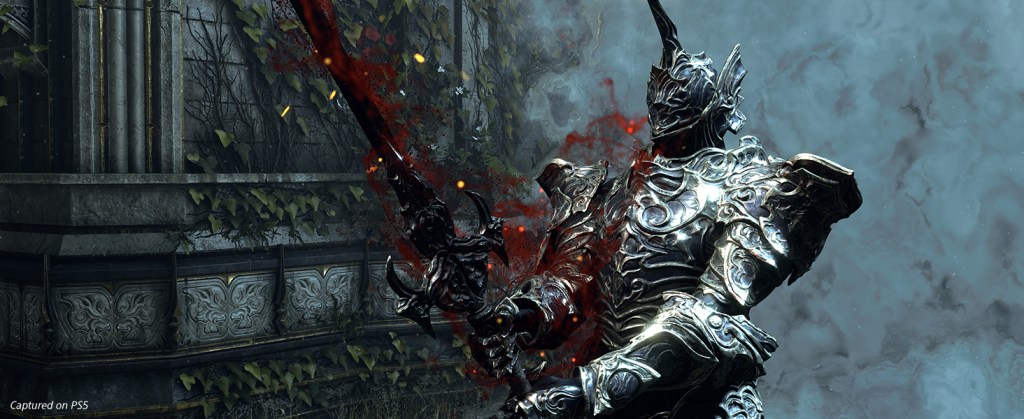
As a fan of FromSoftware’s catalog, Demon’s Souls has long been my white whale. Dark Souls is in contention for my favorite game of all time, yet I never got the opportunity to play its predecessor. Being the progenitor of one of the most successful and influential franchises of games makes Demon’s Souls an incredibly important title. Yet, the original game has only ever been released on the Playstation 3. Which is why I was so excited about the remake of Demon’s Souls, bringing it to the Playstation 5. I really did want to play the original game first before reviewing the remake to compare the differences, but unfortunately, I didn’t get the chance. From what I can tell, this is a faithful recreation of the game, including all the weird, archaic, and unforgiving ideas that were removed from subsequent Soulsborne games. And I love Demon’s Souls for that.

I think Demon’s Souls unfortunately has a bad reputation for being a bit unforgiving with its design. There’s a lot of mechanics and ideas present in Demon’s Souls that never carried over to its successors, and many claim that is for the better. But I feel like playing Demon’s Souls was refreshing. There are many aspects of Demon’s Souls that I wish would make a return in modern releases, especially after playing Dark Souls III and Elden Ring. In short, I felt as if Demon’s Souls was a far more cerebral game, opposed to later titles which rely more on fast-paced action. Demon’s Souls is unforgiving and punishing, leading the player to be cautious and think carefully about their next course of action. To compliment this, combat and bosses are generally far easier to mechanically execute, as long as you come up with a reasonable strategy. What really makes Demon’s Souls shine is how its unforgiving nature contributes to its impeccable atmosphere and worldbuilding.

The world of Demon’s Souls is surprisingly grounded. With many of FromSoftware’s games, I take in the world and its locations, but I’m not quite sure how it all fits together due to the obscured nature of the storytelling. Demon’s Souls only ever lets the player have a fragmented understanding of the world, but I found it enthralling. There are five main locations that the player can visit, and each one is supplemented by some short text passages on their entrance. These brief backgrounds, along with environmental storytelling, were enough to make sense of their respective locales. 

Take the Valley of Defilement for example. It’s a narrow valley with poisonous sludge at its base. Its inhabitants have resorted to rickety shacks on the ledges and in the crevices of the walls. Narrow planks that overhang the darkness are the streets of the shoddily built shanty towns. The creatures who live here are all but forgotten, left to suffer in this vile mire. Yet, they make due. They defend their home, using its dark crevices as an advantage to sneak up on invaders. And they do so because the saintly Maiden Astraea lies at the heart of the swamp, and she has resolved to free the valley’s souls of suffering. They worship her, and she protects them. Through almost purely environmental storytelling, Demon’s Souls paints a vivid image of its world and how Valley of Defilement came to be what it is. It’s not just a dirty swamp of vile monsters for the player to slay, it’s a fully realized location that makes sense.

Demon’s Souls is often maligned for being unforgiving, but I don’t think this is an entirely fair perspective. I think the unrelenting challenge and inconveniences are crucial to building tension. The lack of checkpoints is often seen as inconvenient and tedious, but I think that having long gaps between safety is critical in a grim game such as Demon’s Souls. Each level only has a single checkpoint at the start, and many levels open up a shortcut or two as the player progresses. But even the shortcuts never lead directly to the boss. There’s always obstacles and danger blocking your path. I think this is fantastic because it ups the anxiety and tension of exploration and combat. A single misstep means you have to repeat large chunks of the level. This also encourages the player to not only to defeat enemies, but to master besting them in combat so that you can repeatedly bypass them. The added pressure of death works wonderfully with the boss battles in Demon’s Souls.

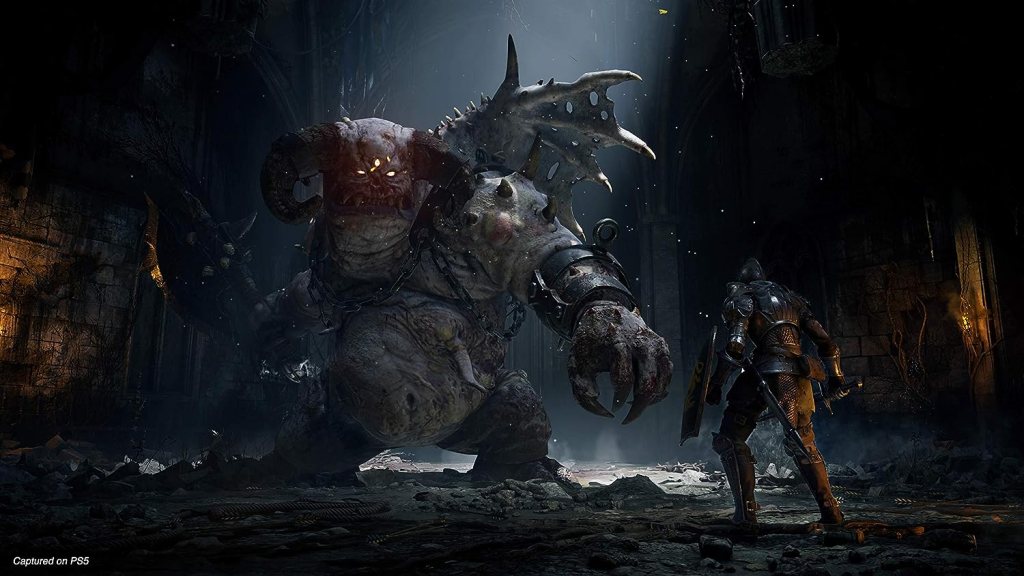
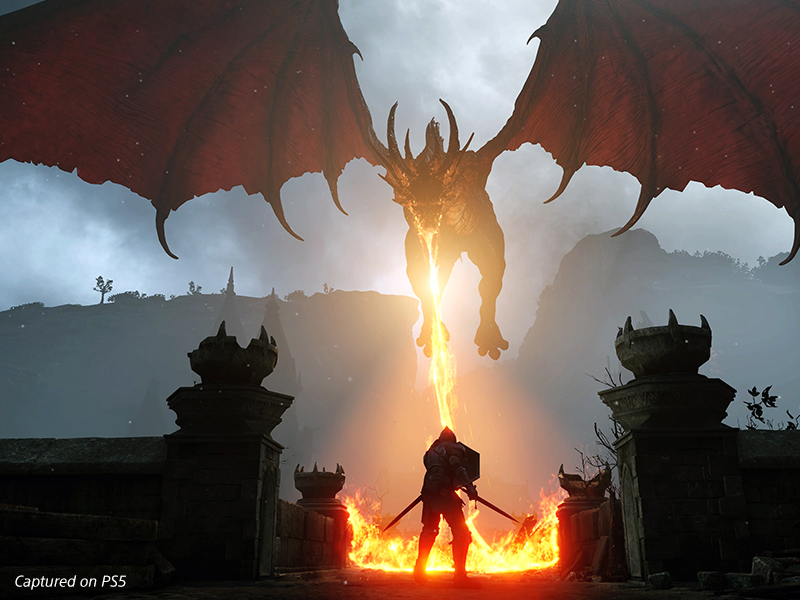
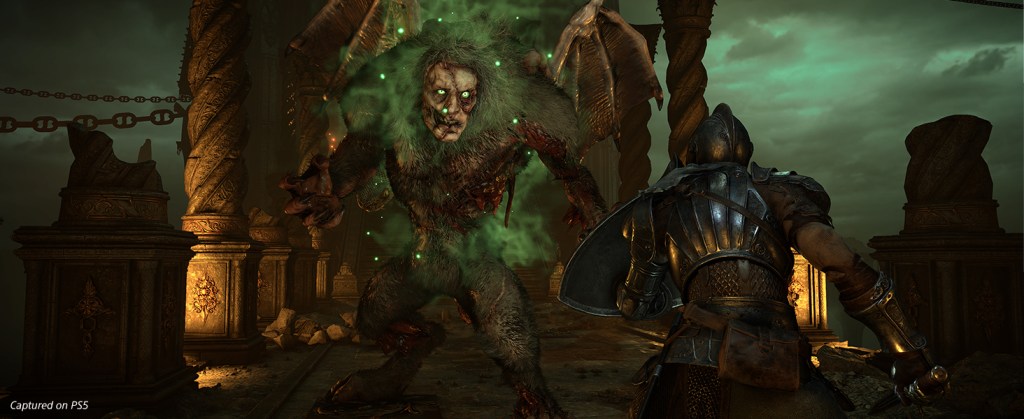
I frequently read that Demon’s Souls has the worst bosses in the series because they are easy and often gimmicky. But I disagree. The bosses are easier to execute then later games because they have fewer attack patterns and generally attack in a slower, more telegraphed manner. But many of the bosses have a trick to them that the player has to figure out. They have unique arenas, weak spots that must be focused, or potent attacks that you have to figure out how to counter. While it’s true that the bosses may be on the easier side, I think each one provides a unique experience that is distinct and memorable. Moreover, easier bosses make sense when the player has to overcome a gauntlet of challenging enemies just to give the boss another shot. It would be enormously frustrating to have to replay the whole level dozens of times because the boss is monstrously difficult.

I think over the years Soulsborne has focused on making bosses more and more difficult. While games like Elden Ring nail the spectacle of boss fights, I do think they often go too far with the bosses moveset. Demon’s Souls bosses are relatively simple in comparison, but I find them to be more memorable because they are all so different. Not just visually different, but mechanically different. While there are some straight up one-on-one duels, there is often more to contend with than just the basic combos that the boss can throw out. The bosses having a “gimmick” is what makes them interesting and memorable. 

Not every fight should follow the routine of learning how to dodge every attack the boss has, finding safe times to attack, then getting a hit or two in. Variety is what keeps the game fresh and interesting. While fast-paced duels are often the pinnacle of boss fights, they are even more impactful and memorable if they are kept as an occasional treat. Having some more “gimmicky” fights interspersed throughout the game is a breath of fresh air. And Demon’s Souls bosses are memorable because they behave so differently than many other bosses in the series.

While I do love Demon’s Souls eccentricities, there are some aspects of the game that do feel archaic. The most obvious example is the healing system. In Demon’s Souls, the player collects a variety of consumable moon grasses which restore health. These are collected through exploration, combat, or you can straight up purchase them from certain merchants. While I do think it’s a good idea to limit how much the player can heal, it’s too easy to abuse this system. I often carried dozens of moon grass items, so as long as I didn’t make an egregious mistake I could always heal up to max health with little threat. Conversely, worse players may often run out of moon grass and have to farm enemies to replenish their stock, which is obnoxious. Dark Souls immensely improved on this by only providing a few chugs of their healing flask per checkpoint. That way, players would never have too much or too little.

Demon’s Souls has a unique mechanic which changes the world depending on your actions, called tendency. I think this is actually kind of a nice idea, but its implementation is esoteric. Good actions will make your tendency “white”, while performing bad actions skews it towards “black”. Certain secrets open up depending on your tendency, enemies may get stronger but provide better rewards, and there may even be additional enemies. My issue is how poorly explained this all is. It’s very easy to unknowingly perform an action which makes you move towards black tendency, which ultimately makes the game more difficult. I suppose the learning process can be seen as fun and interesting, but mending your tendency after it plummets is unreliable.

There are a few other archaic systems in Demon’s Souls such as the upgrade system and inventory encumbrance that I don’t want to delve too deep into. But an area that I do think is important to discuss is what FromSoftware is famous for: world and level design. The levels of Demon’s Souls are actually quite condensed, which I think is a positive. It’s tempting to fully explore each area because of this. Mechanically, I also think that the levels are quite good. There’s a variety of scenarios and encounters that the player has to not only use their skills to overcome, but to use their brain as well. There’s a lot of traps and obstacles that encourage caution and thoughtful exploration. 

I do think that Demon’s Souls shows its age a bit in some of its levels. There is an abundance of narrow corridors, ledges, and groups of enemies that show the weaknesses of the game. Combat is stunted in cramped spaces like corridors and ledges because your weapon often hits the wall instead of enemies. I get the realism factor here, but enemies don’t seem to follow this rule and inherently have an advantage in these spaces. Furthermore, groups of enemies are famously difficult to deal with in Soulsborne games, and Demon’s Souls has a ton of these groups. The slower pace of combat doesn’t work well when you have to contend with many foes and it’s easy to get stunlocked into death. 

As for the world design of Demon’s Souls, I quite enjoy the areas individually but I wish they were not completely disconnected from each other. There are five major areas in the game, each with a handful of levels. But these major areas are not connected with each other, the only way you can access them is through the hub area. I think this is unfortunate in a game that otherwise is impressively immersive. Constantly sitting in load screens and fast traveling around is just not nearly as captivating as having a singular, connected world.

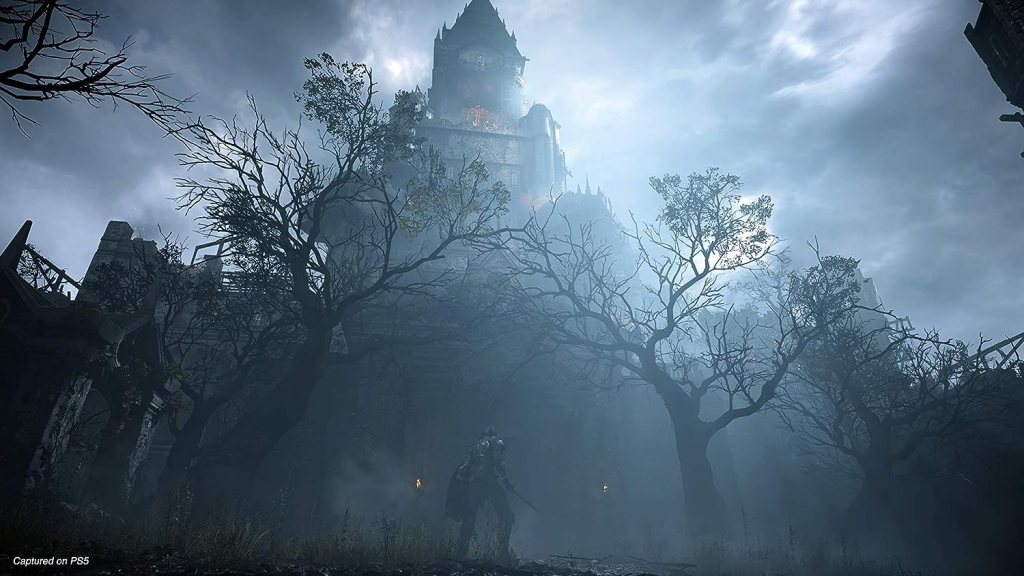
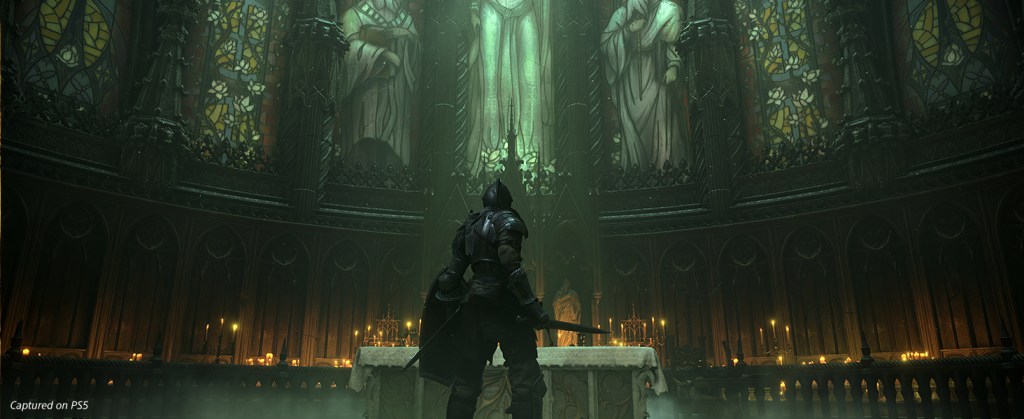
As previously mentioned, I haven’t had the opportunity to play the original game so my perspective on Demon’s Souls as a remake is limited. From my research, it seems as though the gameplay is extremely faithful. Visually, the remake is stunning. However, when compared to the original game’s environments, the remake is showier. The simple Eastern European style simple castles are more ornate. Moreover, the sun beams and impressive lighting do impose a sense of grandeur that wasn’t present in the original game. Gone is the dirty and eerie faint glow of lighting. I don’t think the visual differences are a huge deal as the atmosphere retains its somber mood. I think the bigger change is the music.

After listening to both soundtracks, I think it’s a shame that the spirit of the original was lost in the transition. Particularly in the boss fights. As previously mentioned, the boss fights in Demon’s Souls aren’t always epic one on one duels, many are somber, depressing, or disturbing. The original soundtrack captures these differences quite well. The Fool’s Idol piece is a stark example of how drastically the music was changed. Don’t get me wrong, the music is beautiful. But not like every boss fight needs to be a grand duel, not every song needs to have a dramatic choir with full orchestral backing. 

Playing Demon’s Souls put the whole series in perspective for me. It makes me long for a time where Soulsborne games emphasized memorable experiences rather than just difficult ones. Conversely, Demon’s Souls also made me realize how far the series has come. There are many archaic and esoteric aspects to Demon’s Souls, and I am glad that the remake let me experience it all faithfully. It is for these reasons I give Demon’s Souls an 8/10. I encourage everyone to give Demon’s Souls a fair shot. It was a risky title when it was originally released, and not every idea was a hit, but there’s a sense of magic and authenticity that arise from the game’s bold choices.

Bugsnax (2020)

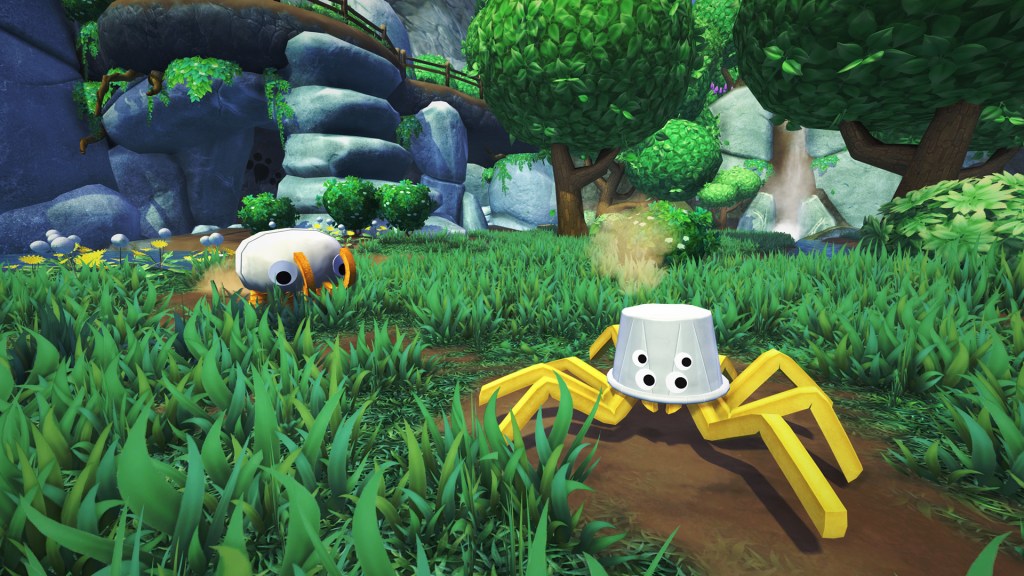
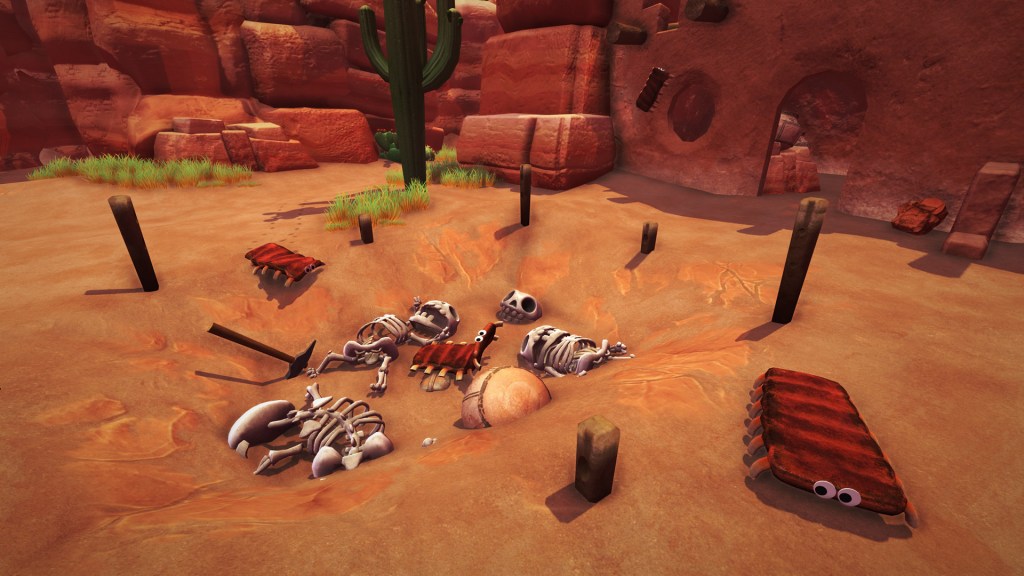
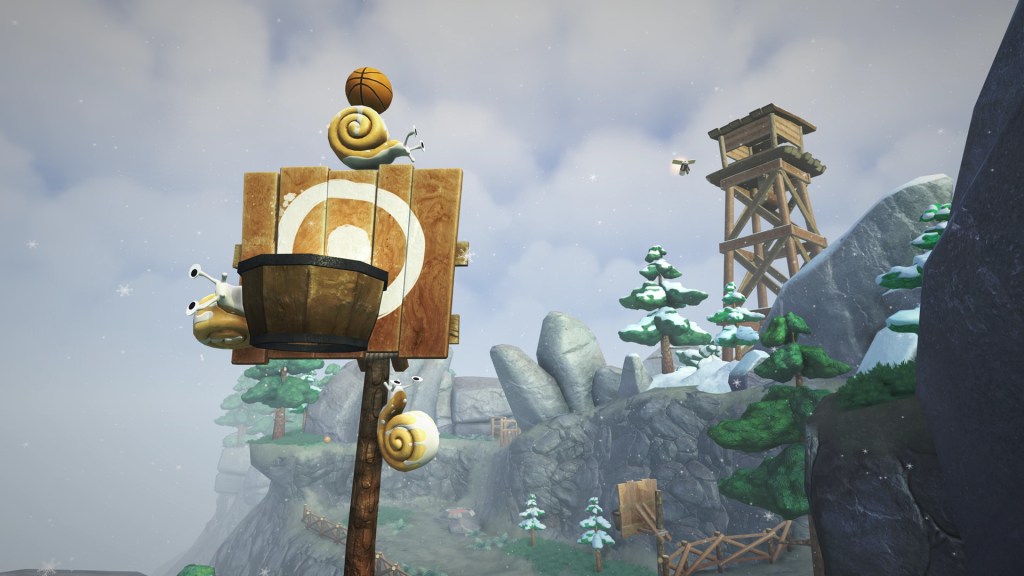
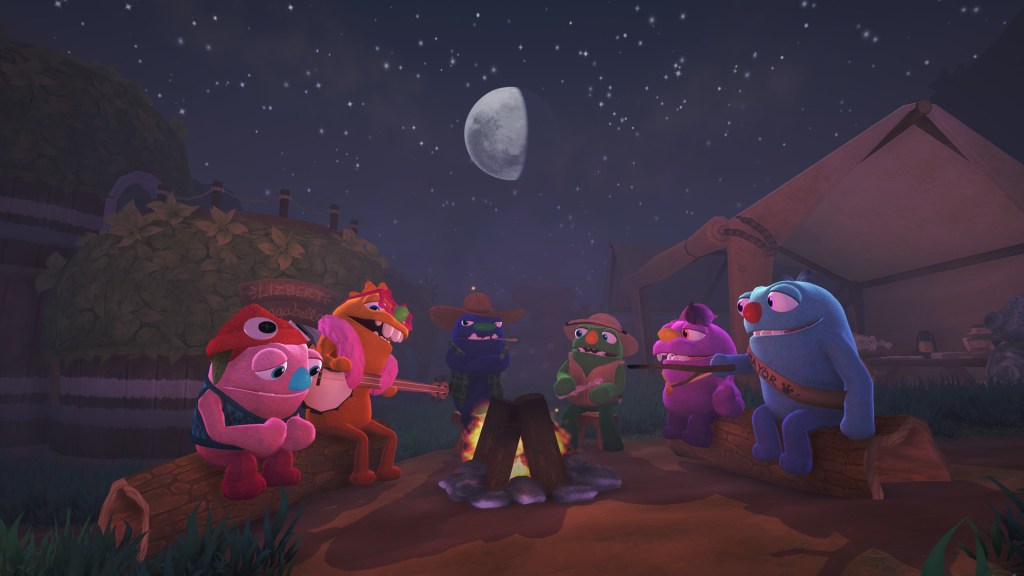
There’s something about Bugsnax that makes it feel nostalgic despite it being released in 2020. It feels like it belongs in the Gamecube/Playstation 2 era of wacky and cartoonish games. Visually, mechanically, and conceptually, Bugsnax feels like one of those weird games that I would play when I was a kid. There’s a certain sense of charm and creativity that is present throughout Bugsnax. Although I don’t consider it a flawless experience in any sense, it’s definitely a game that I enjoyed playing.

The idea behind Bugsnax is that you are a journalist investigating the disappearance of an adventurer on an unexplored island. A small group has taken up residence on this island because it is home to the titular species of creatures. These Bugsnax are animals that look like food: strawberries, hamburgers, tacos, etc. When you consume them, part of your body takes on traits of the Bugsnax. It is a frightening concept if taken out of the lens of the silly and carefree presentation of the game. When you arrive on the island, you realize that the group who had settled here has split up for some reason, and it is your job to get to the bottom of what happened.

The core gameplay of Bugsnax is catching Bugsnax. As you progress through the game, you unlock tools, traps, and gadgets to wrangle the little critters. It starts out simple enough, such as setting net traps next to bushes while waiting for timid Bugsnax to poke their heads out. As the game progresses, you need to use tools in conjunction with one another as well as the environment and even other Bugsnax. At its core, Bugsnax is an adventure-puzzle game. Trying to figure out how to catch the different creatures was extremely enjoyable. It’s different, it’s unique, and it’s fun to figure out how to capture the trickier Bugsnax and add them to your collection.

While I do appreciate the unique concept and gameplay, I do wish it increased in complexity and depth as the game progressed. While some Bugsnax are trickier than others to capture, it feels like there is a lot of repetition to pad out the game’s cast of creatures. There are a lot of similar Bugsnax that are functionally identical to one another, they are just found in different parts of the map. This can get particularly tedious when trying to tackle many of the game’s sidequests, as they often are as simple as going to catch common Bugsnax around the island. Catching a dozen different variations of the Strabby is not really an engaging puzzle.

As the game progresses, there are some slightly more complex Bugsnax to catch. Some fly, some are frozen and can’t be touched, and others are on fire and will burn your traps. These are interesting the first couple times you encounter them, but once you realize how to handle these hurdles you can use the same strategy for all other similar Bugsnax. There are a few bosses which are unique and I enjoyed figuring out how to handle them, but they are few and far between. Bugsnax would have benefited from having fewer filler and repeat creatures, and more unique Bugsnax that require the user to engage in some problem solving.

Aside from the creature capturing, the appeal of Bugsnax is in the charming cast of characters. There is a central town where residents that you assist will return to. It’s quite cozy to hang out in town and visit with the seemingly silly characters. I was surprised as I kept playing by the depth of the cast.

For what seems like a childish game and concept, Bugsnax has some mature themes and character growth. The townspeople have complex motivations and interpersonal relations. The isolation and pressure of living in a false paradise led to arguments, tension, and distrust. As you progress each character’s story, they are led to resolve their conflicts in mature manners. I was impressed by how real and multi-faceted every character’s personality was.

The weakest aspect of Bugsnax is easily its presentation. Specifically, the visuals. The voice acting was solid, and I loved how the creatures would shout their own names like Pokémon. But visually, the game looks like it belongs in a different era. I like the choice of being cartoonish, but the execution is dated. Honestly, this isn’t a big deal, but it is funny considering that Bugsnax was a launch title for the graphically powerful PS5.

I wasn’t expecting to enjoy Bugsnax as much as I did. I had fun working out how to capture all the creatures. The variety of gadgets and tools makes for some fun puzzles, but I do wish that there were more unique Bugsnax rather than the multitude of different colored species. For a game that seems childish, there are some mature themes and lessons to be learned from the characters. It is for these reasons that I give Bugsnax a 6.5/10. I don’t think it will blow anyone’s mind, but Bugsnax is a fun little adventure nonetheless.

Captain Toad’s Treasure Tracker (2014)

One of my favorite features from Super Mario 3D World was the inclusion of Captain Toad and his mini-games. Clearly, many others also adored those mini-games as Nintendo developed a full game using the base concept from Super Mario 3D World. Captain Toad’s Treasure Tracker is a puzzle-platformer adventure game. The main objective is to progress through small stages and collect stars and gems along the way.

1

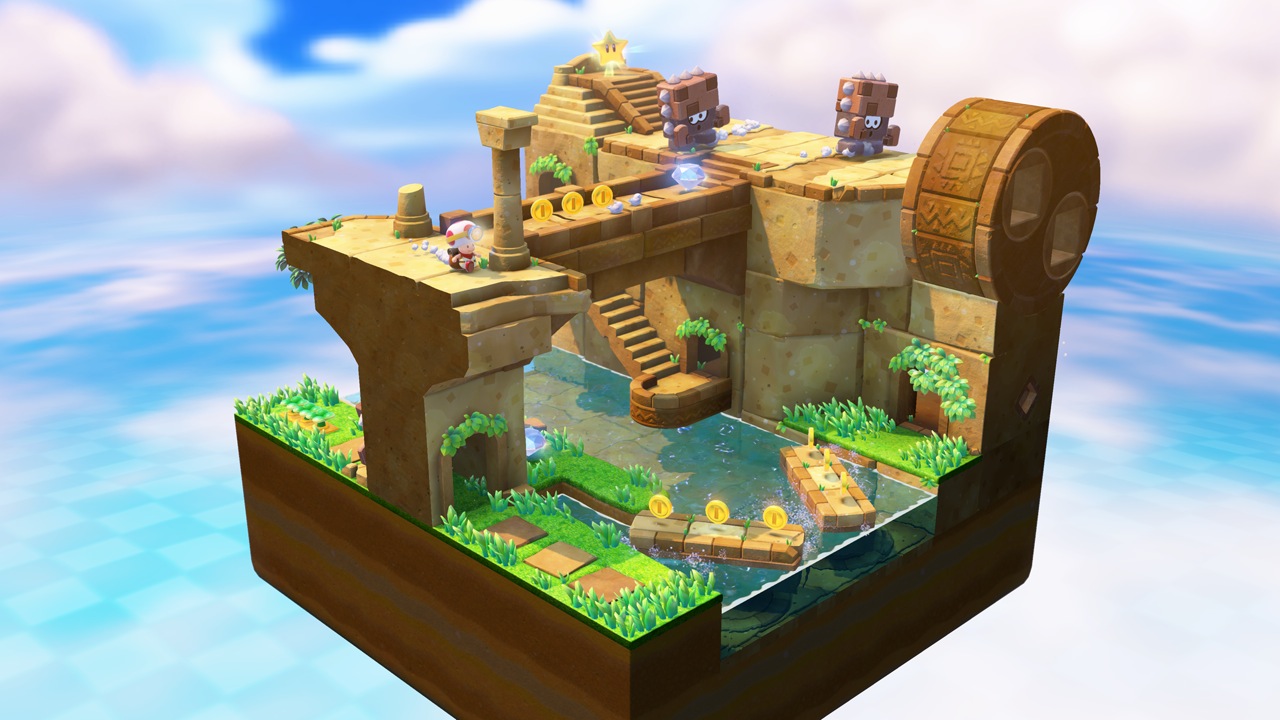
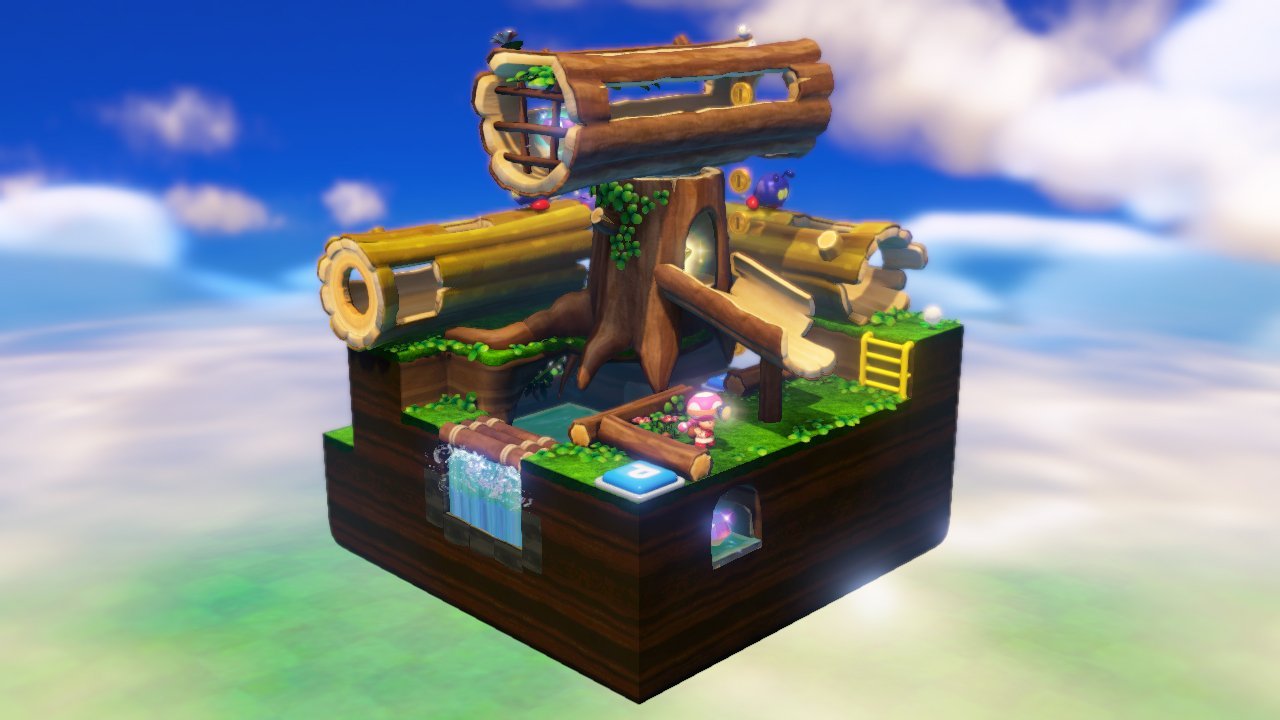
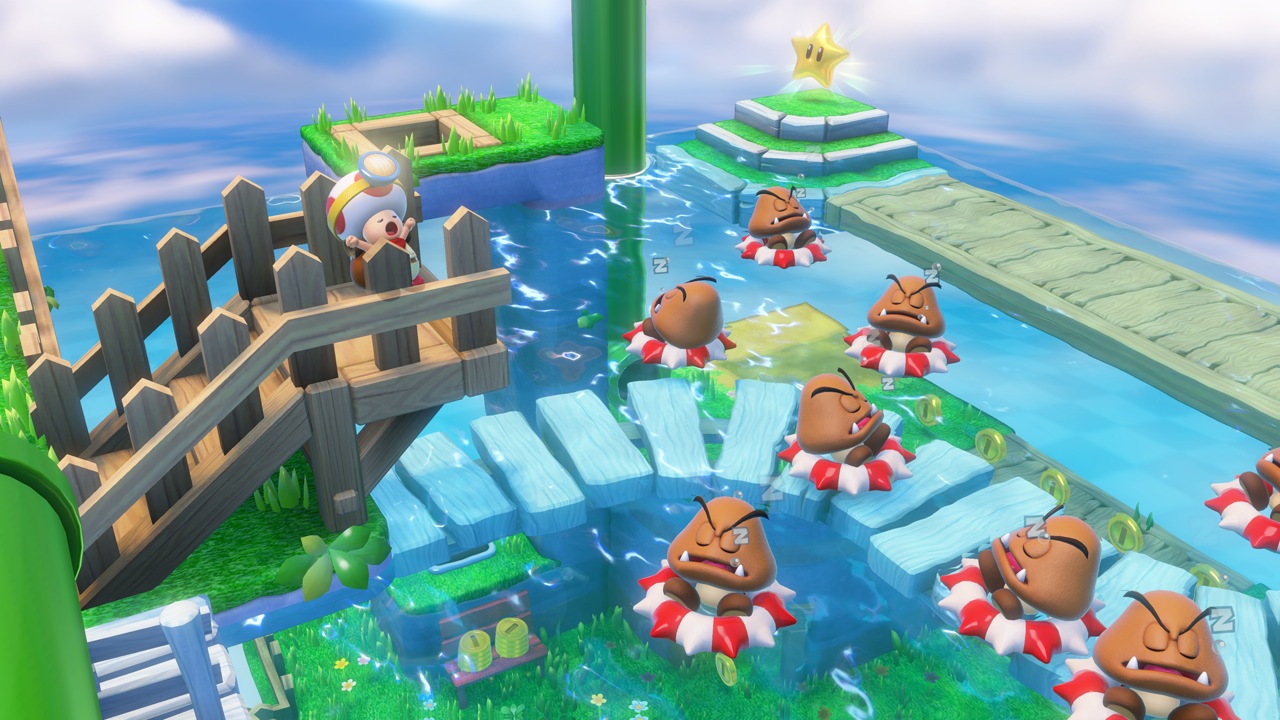
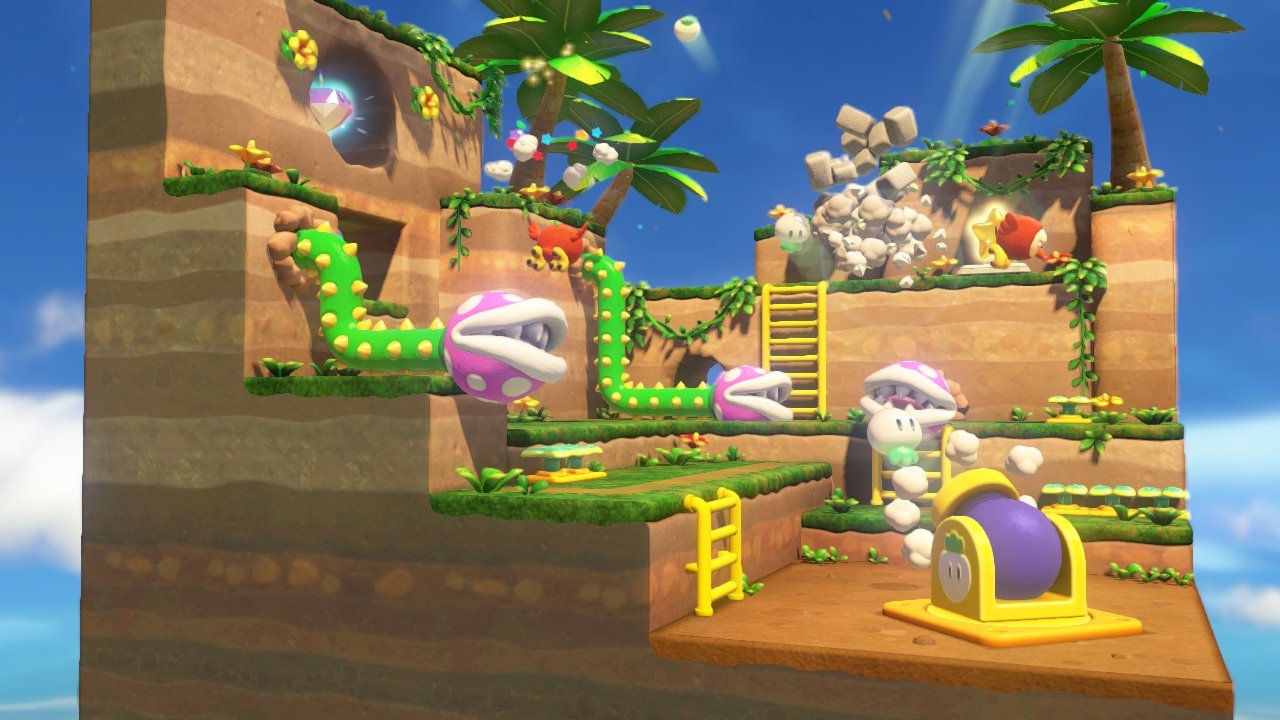
Captain Toad’s Treasure Tracker is a great game to just chill out for some relaxing fun. This is largely due to its simple level design. Levels are small arenas that the player can rotate to get a better view from all sorts of different angles. Captain Toad cannot jump or attack, so most levels consist of navigating these small maze-like courses, avoiding enemies and dangerous obstacles, and finding your way to the star, which acts as a goal in every level. Along the way, the player must also collect the 3 gems that are hidden in every level, as some stages later in the game require a certain number of these gems to unlock. These gems are often hidden in plain sight, or at least are fairly easy to guess where they might be hidden. Stages are very compact and quick to navigate through, so even if you are having trouble finding a hidden item it takes no more than a minute or two to play through the entire stage again to get another look. For the most part, the gems are out in the open and you just have to figure out how to get to them. Usually it involves a bit of puzzling or thinking of a not-so-obvious way of navigating these tiny courses. This is in stark contrast to a game like Yoshi’s Woolly World, where the collectibles were obtuse to find and required scouring every inch of a level to unearth them. In Captain Toad’s Treasure Tracker, there is no obnoxious combing of entire levels to find secrets, they are in plain sight and you just have to figure out how to get to them, which is how collectibles should be handled.

5

While I find the level design itself to be both simple and gratifying, I think the visuals of each level are also top-notch. The idea of making most levels a small cube that just floats in the sky is actually pretty cool. Every stage is kind of like a 3D diorama that you can rotate in your hands. This is a unique way of exploring all sorts of different environments, which is a key element of any adventure game, but it takes out all the long treks and expanses of nothingness between each important zone. It also allows the developers to space out any theme they want, rather than playing them in big chunks. In traditional adventure games, if you enter a snowy area for example, you know that you are going to be exploring that snow-covered area and that area alone for the next few hours, and after a while seeing the same environment over and over can just get dull. I enjoy the fact that the themes can be spread out across the game instead of having to play them all at once. You can always expect some fun places to explore in a Nintendo game, and Captain Toad’s Treasure Tracker is no exception. There are plenty of visually appealing environments and atmospheric areas to discover.

3

While I did enjoy Captain Toad’s Treasure Tracker, I feel like there was a lot of missed potential here. Nintendo does not have a puzzle game franchise, and I feel like there was perfect opportunity to make Captain Toad’s Treasure Tracker into a puzzle game series. Instead, we got a platforming-adventure-puzzle hybrid, which is fine, but the puzzle elements are fairly lacking. Most puzzles in this game are just involve hitting a switch which changes the stage and opens up a new path to the goal. There are no truly head scratching moments or things that make you really think about how to proceed. There are a couple of optional challenges that the game provides that are interesting, like limiting how many times you can hit a switch during a particular stage. These are fairly uncommon though and are entirely optional. Some levels show a good deal of potential and made me think that I was going to keep track of all the different forms the stage takes from hitting a button, and then hit the buttons in the correct order to progress forward. In reality, you just kind of progress forward and hit the buttons along the way, there is not much thinking involved. I was never really thoroughly impressed by any of the levels, and as a whole the game lacks a “wow” factor.

2

Not every game has to be an industry-changing, genre-defining game. Captain Toad’s Treasure Tracker is just fine for what it is: a short, clever, charming, and relaxing adventure. If you are looking for a cute adventure game with a few platforming and puzzle elements, then this game is perfect for you. This is not an ambitious title that will shape the industry for years to come, but it does not pretend to be. It’s just a simple little adventure game that you can meander your way through. For these reasons I give Captain Toad’s Treasure Tracker a 7/10. I enjoyed the calming pace and nature of this game, but there is definitely some untapped potential here.