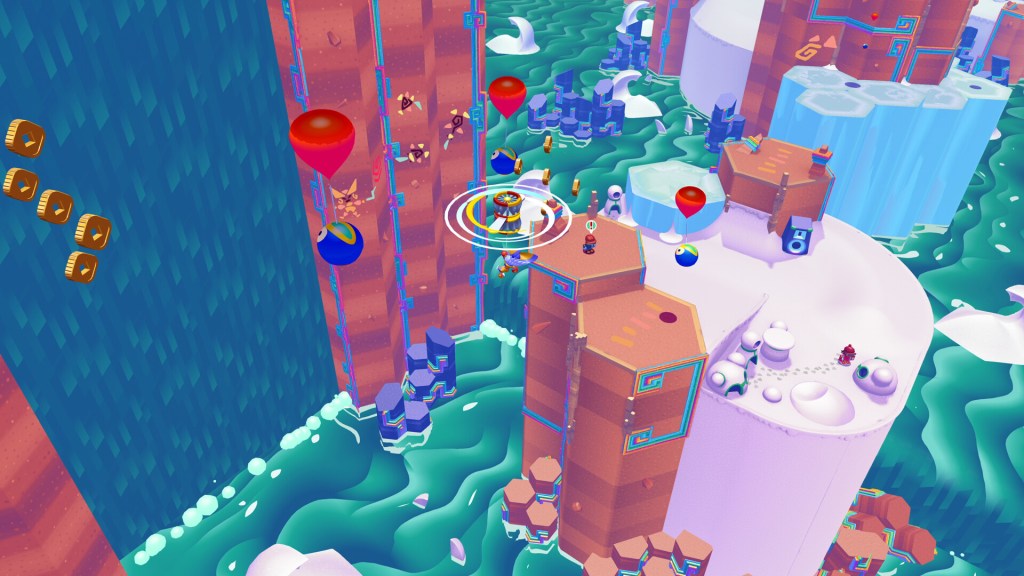
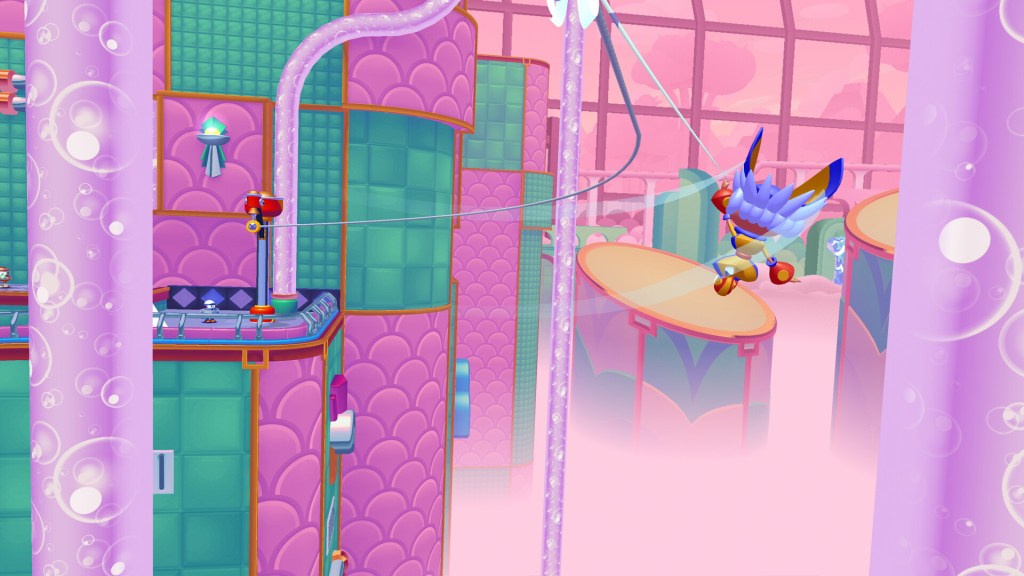
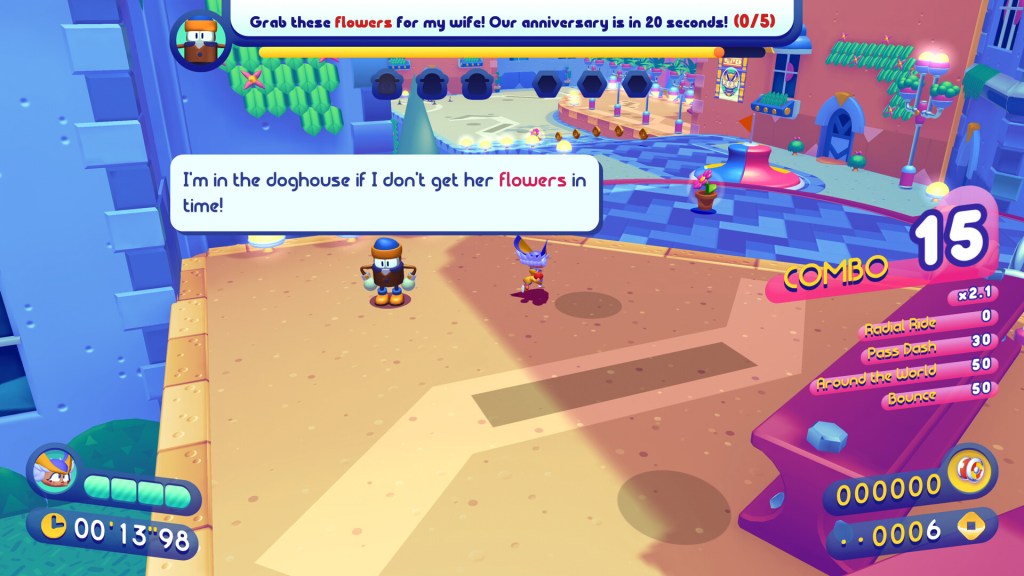
Terra Nil (2023)

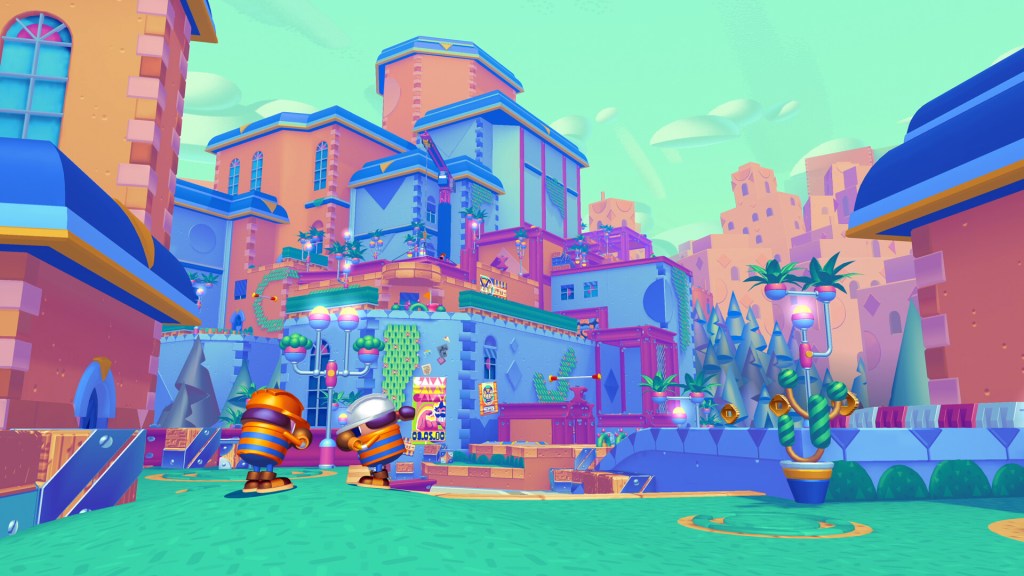
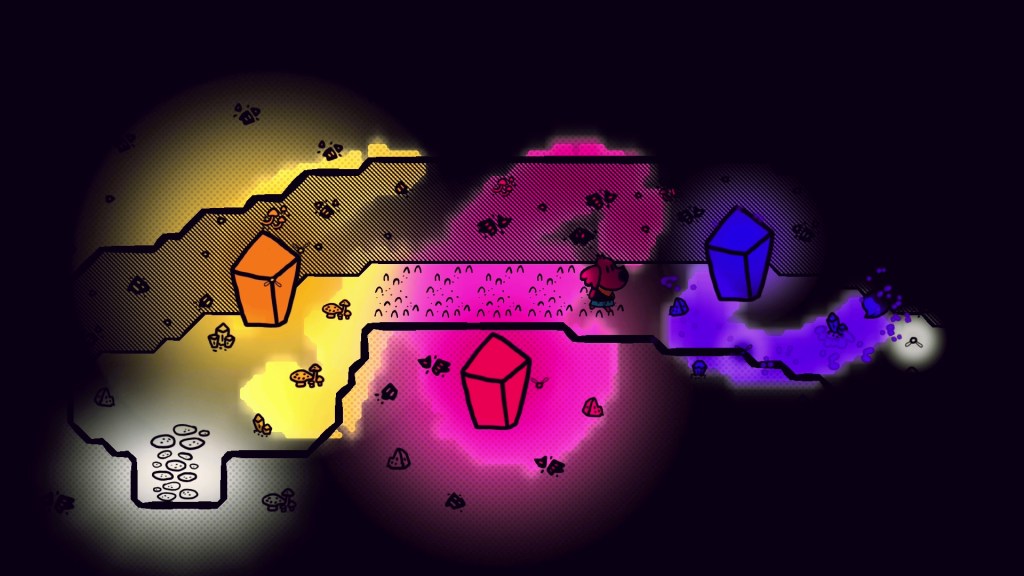
City builders are a genre all about optimization. Laying out districts and infrastructure in a logical manner is necessary to grow into a bustling metropolis. Terra Nil is labeled as a reverse city builder, you aren’t tasked with building sprawling cities. Instead, you have to cleanse a planet that has been ecologically destroyed. It’s not a game about careful planning or building, but of restoring the planet to its natural state which can be messy and unorganized. I liked what Terra Nil was trying to do, but I felt like it was missing something. 
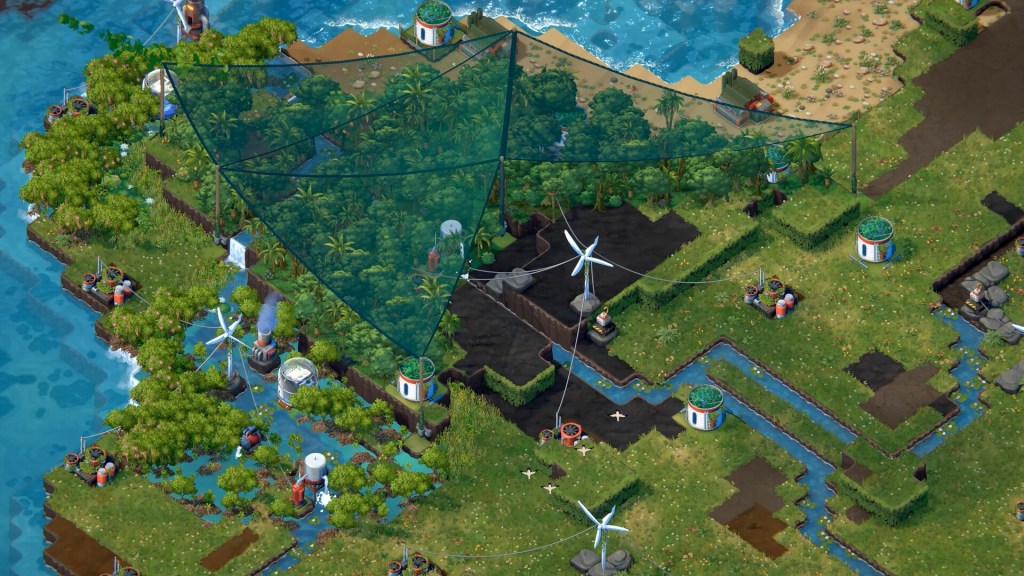
The concept of Terra Nil is superb. It not only is a game about cleaning up the devastation caused by humanity, but emphasizes this idea as a genre reversal of city builders. In city builders you often are searching for ways to optimize your city, exploiting every resource and inch of space that you have to support endless growth. But in Terra Nil you don’t have to be optimal. Everything that you build is a temporary fixture meant to restore the ecosystem and will be eventually recycled.

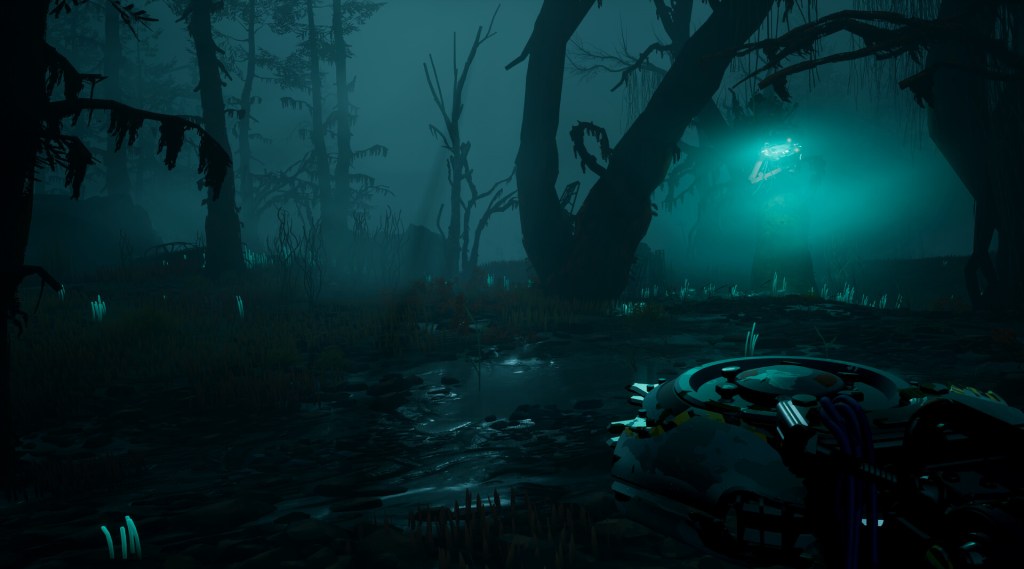
Restoring nature in Terra Nil comes in stages. When you visit an area, your initial goal is to generate some electricity through windmills and other renewable energy sources to power toxin scrubbers to rid the land of chemicals. The next stage is where things get more interesting. You begin to seed forests, rivers, wetlands, tundra, jungles, and whatever other biomes are appropriate for the part of the world that you are working in. There’s a bit of a puzzle element to this, as each biome has requirements to thrive such as needing certain levels of humidity, elevation, or access to water. Some even require you to do a controlled burn to enrich the soil before planting.
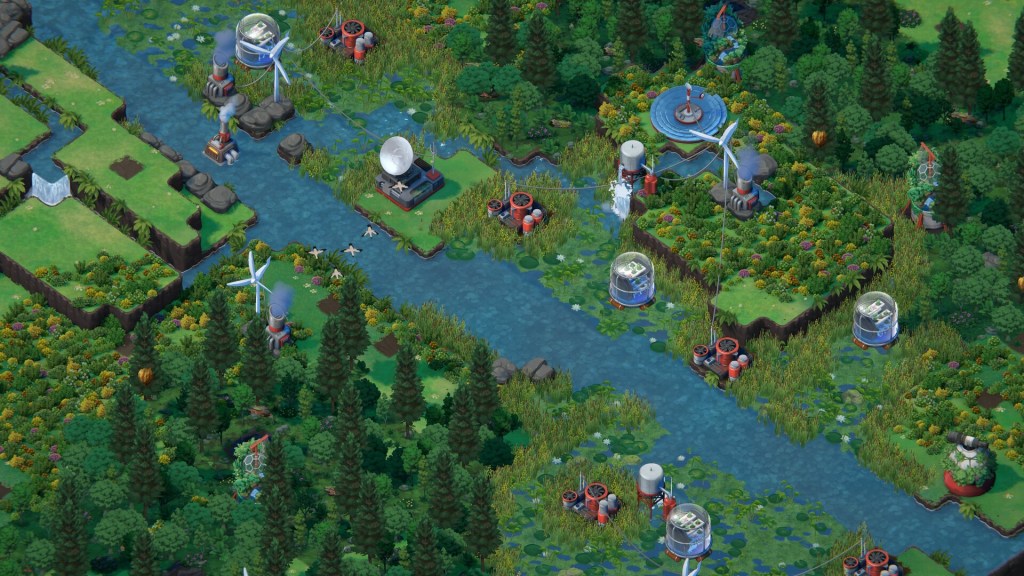
The biome planting phase is definitely where the game shines. You have a single resource: a pool of points to spend on buildings. You get additional points fairly rapidly as your biomes grow. Moreover, you get extra points for completing certain tasks like reaching certain temperatures or humidity levels through weather manipulation. I quite enjoyed these little side tasks not just because they gave points, but also because they had a visual effect on the world such as dragonflies and algae showing up in the wetlands. Rain is the first major milestone in any area as it cleanses any remaining polluted land. Watching as the desolated land slowly transforms into an ecological paradise of different biomes is immensely gratifying. It’s pretty simple but there are light puzzle and strategy elements to plan where you are putting the buildings and biomes.

Once your biomes have been created, identifying where wildlife can thrive is the next step. There’s a handful of species in each area that you are supposed to find, you have to scan small areas that match that species’ habitable requirements. I think this part of the game can be a little tedious as there is a lot of guesswork to figure out what each requirement is. It also can be a bit finicky even when you know the requirements as the radius of the scan is fairly small and it has a lot of trouble when certain species require multiple biomes or a food source. I loved watching animals be reintroduced to the ecosystem, but mechanically it was a bit unsatisfying. 
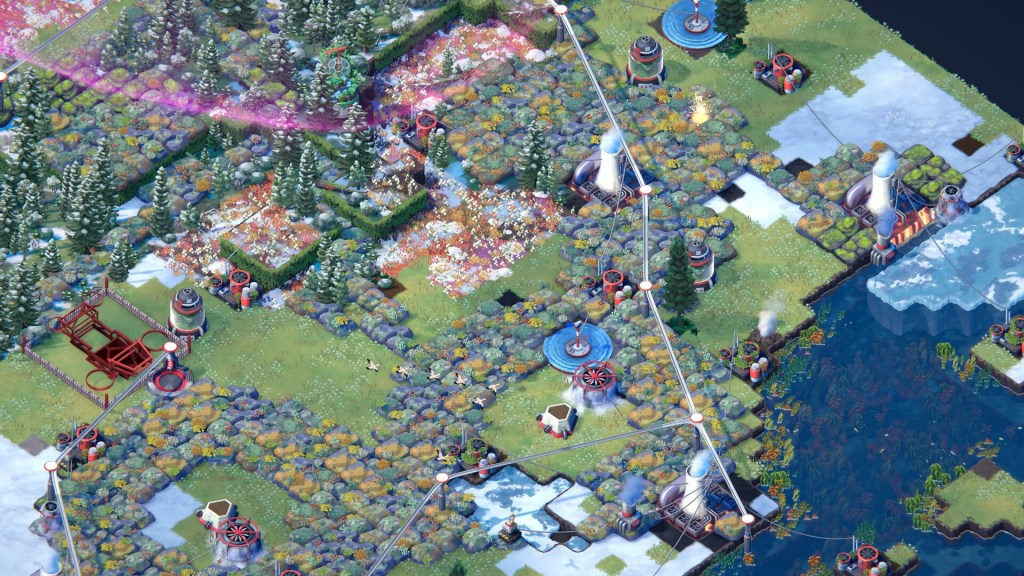
Finally, after you are done planting biomes and identifying fauna it is time to pack up and leave for the next area. You absorb every building into recycling pods and setup collection systems to pick up those pods. In some areas you set up pylons and ziplines that connect to one another and collect the pods from there. In areas with more water, you send out little drone boats that will pick up the recycling pods. It’s a pretty straightforward phase of the game. While I did like cleaning up after myself and fully getting rid of all the buildings to let nature take over, the recycling phase is mechanically just a little barebones.

Being mechanically simplistic is one of the biggest hesitations that I have with Terra Nil. Most phases of the game don’t require much decision making or problem solving, just following a series of predefined steps. The biome creation phase is definitely the most engaging part of the game as you have some decisions about how and where you will attempt to create the biomes. But every other phase is just… too rigid. I don’t think that it is an inherently bad thing to have simpler games. I understand that one of the design philosophies of Terra Nil is to be Zen. But I would’ve liked to see at least some more expression and decision making afforded to the player during the cleansing, fauna, and recycling phases.  

That’s not to say the game lacks difficulty. I wouldn’t say it’s a challenging game, but it is possible to run out of points and fail in the 3rd and 4th zones. But once you get over the initial hurdle then you are simply playing out the scenario without much thinking needed. I don’t think the game needs to be more challenging, as it does offer different difficulty options and running out of points is a real issue in harder areas. But depth doesn’t necessarily have to be difficult, Terra Nil does lack depth.

While most phases of the game lack depth and freedom, I will say I was impressed with the variety provided by the different zones. There’re 4 main areas, each with 2 scenarios to play. Aside from having their own unique biomes and fauna, you have to contend with different methods of power generation and terraforming. You will be creating new land in the tropical archipelago, restoring glaciers in the tundra, and repurposing building foundations in decaying urban centers. Terra Nil is on the shorter side, but I am glad that they didn’t repeat the same ideas over and over.
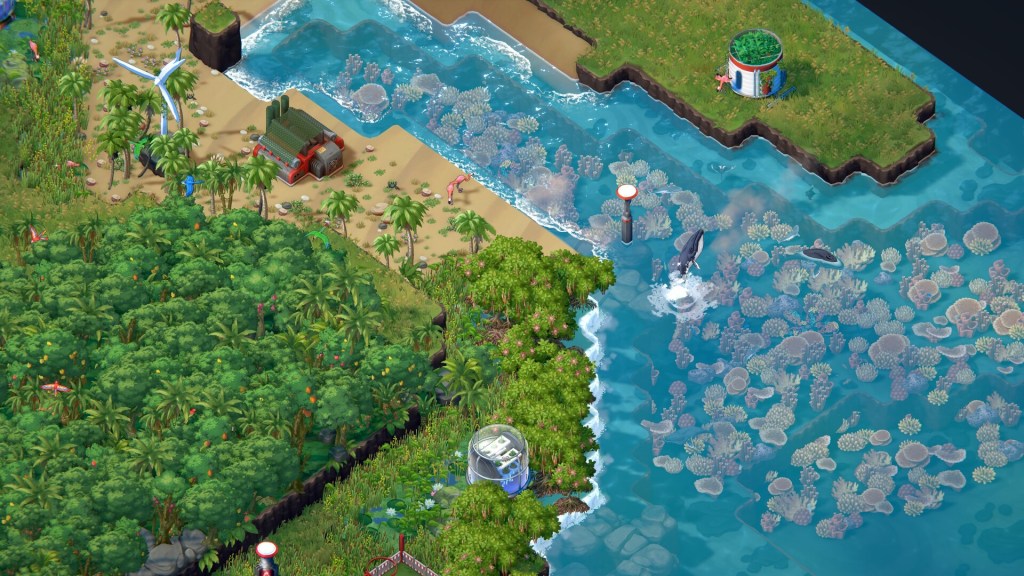
I played the game on the Nintendo Switch and while I was happy that it was available on the platform, I had some noticeable performance issues. Obviously, the Switch is not a computing powerhouse but I did not expect Terra Nil to require a powerful console. Loading screens took a long time, the game crashed once or twice, but the real complaint that I have is that graphical quality is just not great on Switch. This is not meant to be a complaint against Terra Nil, I just wish I knew beforehand that it had a major visual downgrade on the platform. Part of the appeal of the game is watching the beauty of nature as it blossoms, which didn’t look as crisp as it should have on Switch. I recommend getting this game on PC or a more powerful console for a better experience. 
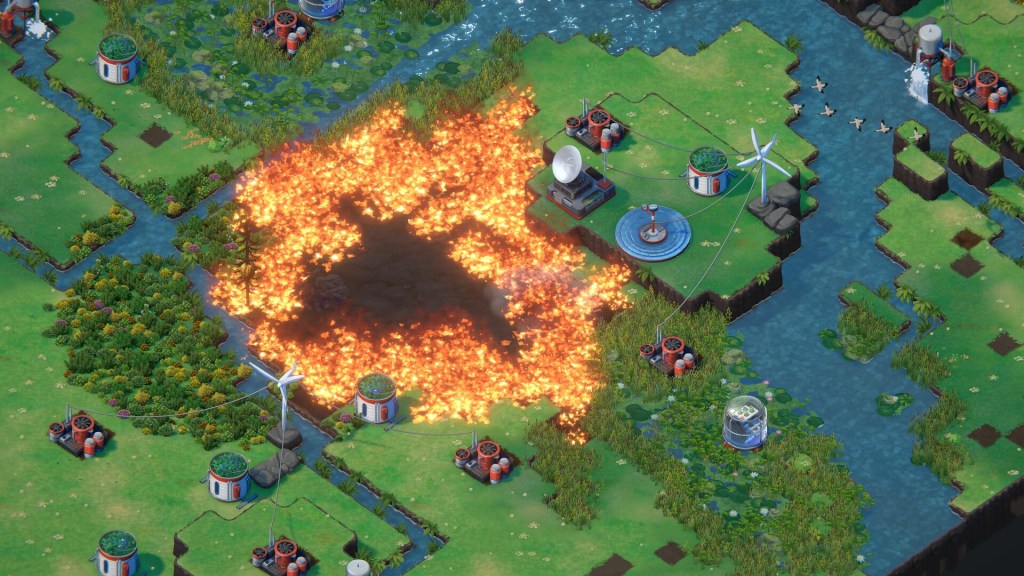
Terra Nil succeeds in being the Zen reverse city builder that it set out to be. City builders that demand optimization and ruthless resource utilization are fun, but I enjoyed seeing the reversal of that genre. The quick turnaround of desolate wastelands to thriving ecosystems was fantastic. I wish that most of the phases of that transformation were more mechanically engaging. It is for these reasons that I give Terra Nil a 7/10. If you approach Terra Nil as an ecological Zen Garden, you will have a great time. If you are looking for depth or intertwined gameplay systems you may be let down by its simplicity.

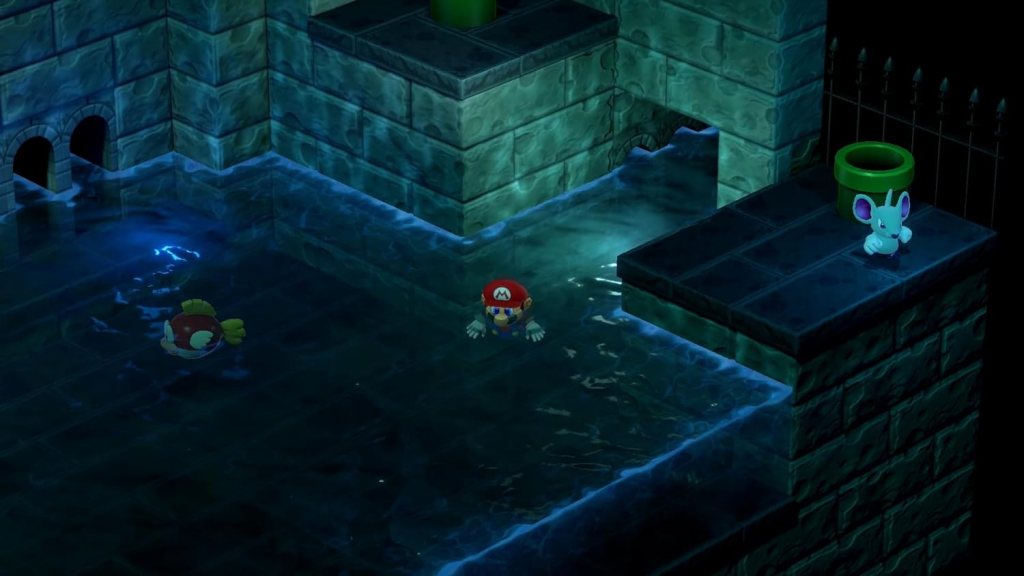
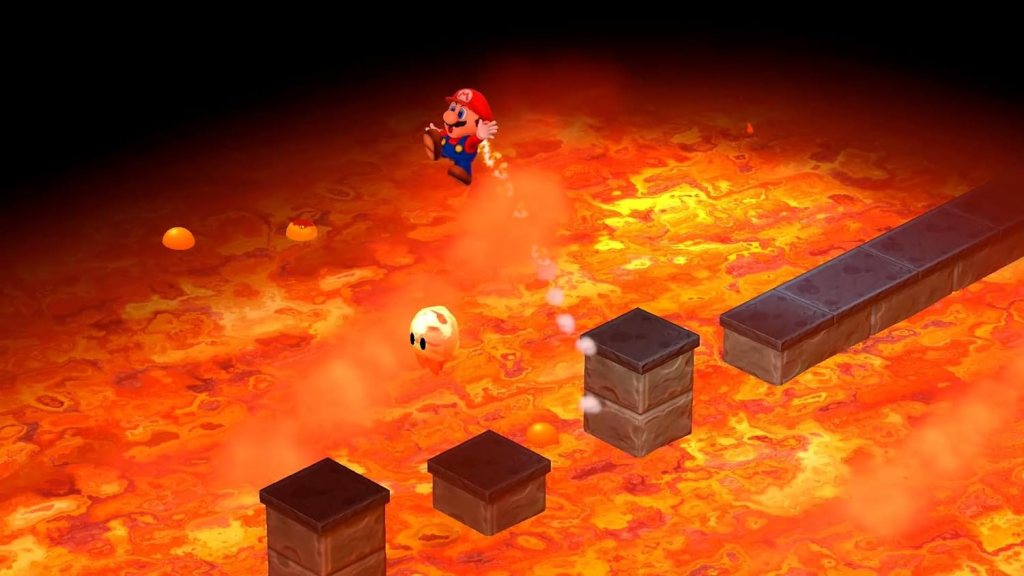
Super Mario RPG (2023)

Turn-based RPGs are often some of the longest video games that exist. They can easily exceed dozens of hours, if not hundreds. I’m often put off from many of these games as I feel they are bloated with repetitive content and grinding. But Super Mario RPG is the rare case of an RPG that went in the opposite direction. It’s an intentionally short and sweet experience. You move so quickly through the zones and dungeons that there’s no chance to be overcome by tedium. It’s a game that relies on novelty rather than a grandiose story and scope.

Super Mario RPG is a wacky game. There’s plenty of goofy characters, ridiculous situations, and slapstick comedy. While many RPGs focus on slowly building up an ever-escalating story, Super Mario RPG moves at a breakneck pace through silly scenarios and never gets tiresome. A giant sword has fallen from the sky and destroyed Bowser’s castle and the army of sentient weapons is threatening to steal all the Star Pieces to prevent any wishes from coming true. It’s not a super engaging story, but it is helped by the characters.

There’s a ton of unique characters introduced in Super Mario RPG, the main ones being Geno and Mallow. Geno is a stalwart spirt from space that inhabits a wooden doll, while Geno is a young emotional cloud who was adopted by the Frog Sage. Bowser also gains his signature braggadocious personality as he assists Mario and company on their journey. While the story itself won’t keep you on the edge of your seat, the characters and their goofy interactions makes the adventure far more charming. After playing this game, I hope that Nintendo allows future RPGs set in the Mario world to create new characters, as that bizarre decision something that has been holding back the Paper Mario series for years.

The biggest strength of Super Mario RPG is just how snappy everything is. From the story, to the progression, to the battles. The battles in particular are a blessing. First and foremost, there are no random encounters. You can just walk past enemies that you don’t want to deal with. Despite being turn-based, the battles themselves are remarkably fast-paced. Animations and text boxes are snappy, health pools aren’t overinflated, and there isn’t too much fanfare that slows things down. I often get in and out of the easier encounters in 30 seconds to a minute.

Thankfully, this is not a game that you have to grind for experience to complete. I found that I naturally gained plenty of levels and equipment from just playing normally to beat the game. The game is definitely on the easier side, the only major hurdles are the bosses. I enjoyed the simplicity of basic bosses but I also appreciated when I had to use a little more strategy during the elongated boss fights. The combat is fairly basic, but I appreciated the simplicity of straightforward attacks and abilities.

One aspect that I enjoyed about combat in Super Mario RPG is that it is interactive despite being turn-based. By timing button-presses during tight windows of opportunity during animations you can increase your own damage or block damage from enemy attacks. I liked learning all the timings for the different weapons, abilities, and enemies. The game has a system that hints towards the correct timings if you miss it too many times, but the hint goes away once you start succeeding again.

Progressing through the game is absurdly fast. The game is maybe 12-15 hours long, but it’s crazy how many areas they crammed into the game. I never got exhausted in any zone as they just went by so fast. Every area has its own little story and characters like a typical RPG, but it doesn’t drag anything out. I think this is mostly to the games benefit, but some of the areas and towns I would have liked to spend a bit more time in. It’s hard to really get invested in any of the side characters, stories, or areas when you only spend 30 minutes to an hour there. Still, I’d rather be left wanting more than feel exhausted at the end of a game.

My only major complaint about Super Mario RPG is the janky mini-games and platforming. Many of the game’s side activities are mini-games such as Yoshi racing, minecart riding, or drifting down a river in a barrel. I think all these are all wonderfully fun ideas, but I never quite got a hang of them. They often feel like they go on for far too long and have underwhelming rewards. Anything platforming related in particular just felt awkward do the camera angles. 

I never played the original Super Mario RPG: Legend of the Seven Stars that this game was based on. However, from what I can tell Super Mario RPG is a fairly faithful remake. It added a lot of quality-of-life features like more frequent saves and being able to quick-swap party members. Additionally, the player has access to powerful special attacks after filling up a gauge as a reward for successfully timing attacks and blocks. I will say that while all these features are nice, they do make an already pretty easy game even easier. Personally, I didn’t mind the easier experience but perhaps more hardcore RPG fans might be let down by the lack of challenge.

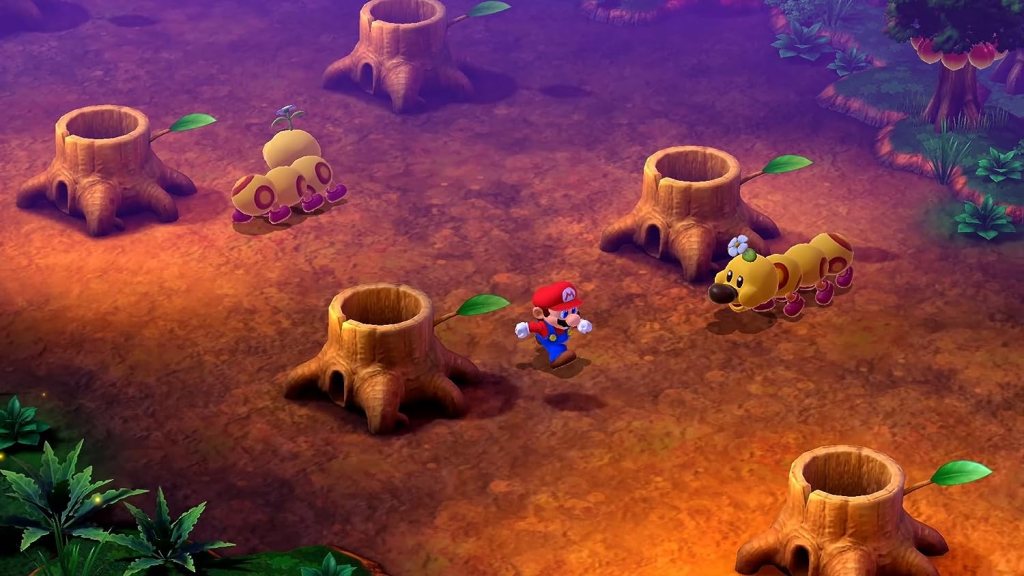
Aside from the quality-of-life updates, the most important change that the remake made was to the visuals. Super Mario RPG does a phenomenal job of modernizing the original art style while keeping its toy-like feel. The games vibrant visuals and bright color palette make it feel like a wonderland. There’s also a handful of cutscenes in the same style that look great.

Overall, I was pleasantly surprised by Super Mario RPG. It was a rollercoaster of goofy characters and classic environments. It’s not an RPG that you should reach for if you want a crazy story with twists and turns, but its smaller scope lets it speed through content at a breakneck pace. It goes to show that not every RPG needs to be a hundred hours long and that people can appreciate a more concise adventure. It is for these reasons that I give Super Mario RPG an 8/10. It’s not a grand adventure, but it is a fun one.

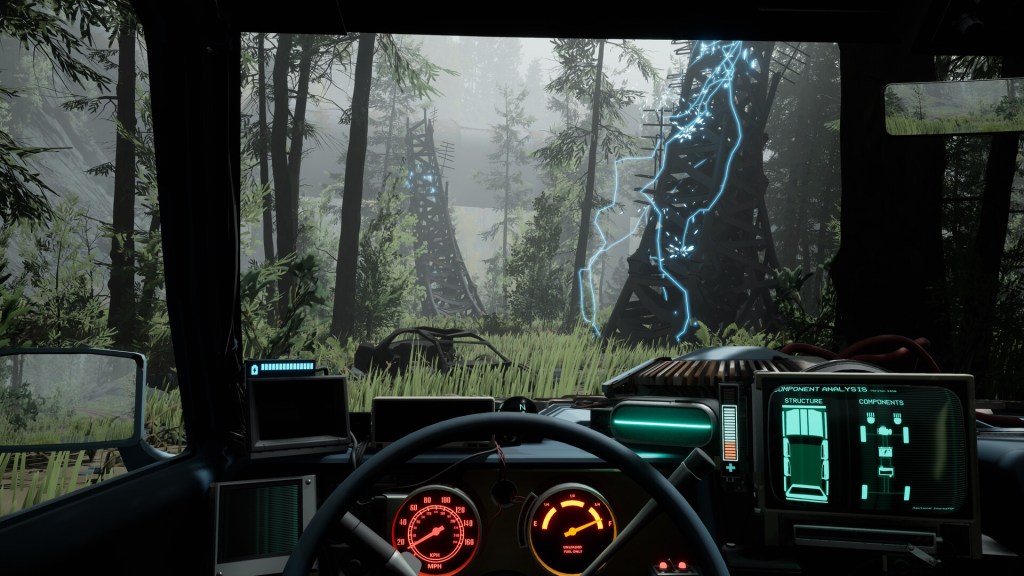
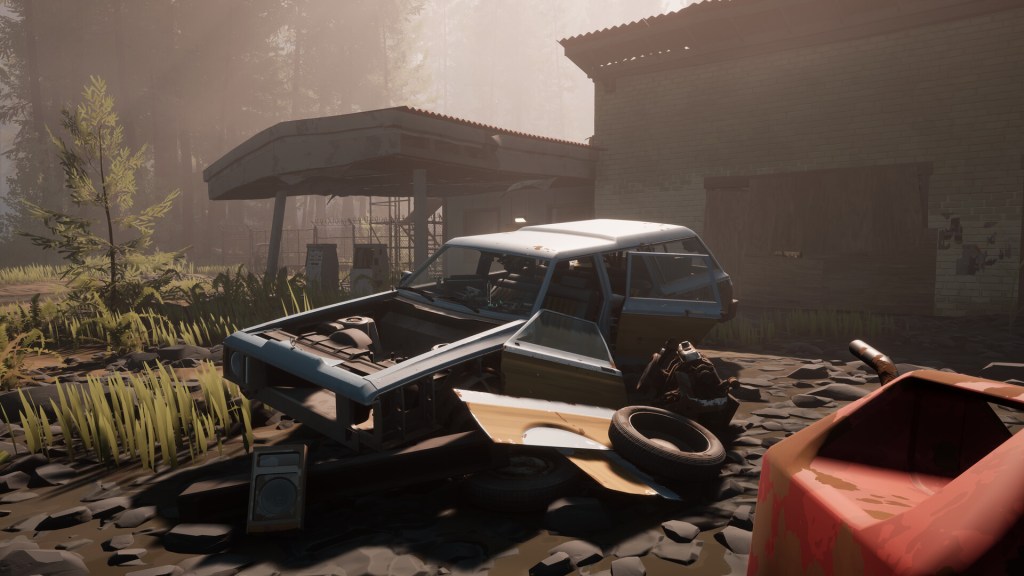
Pacific Drive (2024)

Pacific Drive is not what I expected it to be. And unfortunately, after playing the game, I can’t help but feel like the game I expected would have been better than the game Pacific Drive actually was. It’s certainly not a bad game. Pacific Drive does many things very well, and I hope other games take inspiration from its successes. But even aside from not being what I expected, there are some other major issues that I have with the game.

What I expected was an ominous road trip across the Pacific coast. I thought I’d be looking for bastions of safety to spend the night away from some sort of eerie threat as I made my way across the country. And that is the general idea of Pacific Drive. But instead of being a straightforward road trip with a start and destination, the game takes on a looping format. You plan a route from the safety of the garage, collect resources while avoiding sci-fi dangers, and then drive into a wormhole to return back to the garage where you can upgrade your car and tools. While the vibes here are immaculate and exactly what I expected, I found the roguelite looping structure to have a few aspects that I wasn’t a fan of. 

While Pacific Drive didn’t turn out to be exactly what I wanted, I can’t deny that the game does a ton of things right. First and foremost, I love a good safehouse and Pacific Drive has one of the best in gaming. After a stress-inducing journey I loved rolling into the shop to do some repairs on my car. There’s an ever-present checklist of tasks to accomplish: filling up the gas tank, charging the battery, healing up, restocking survival tools, organizing loot, swapping out beat-up car components, and spending resources to upgrade. It may be a little repetitive after a while but I feel like the calm and safe environment itself is the reward for a successful trip into the wild.

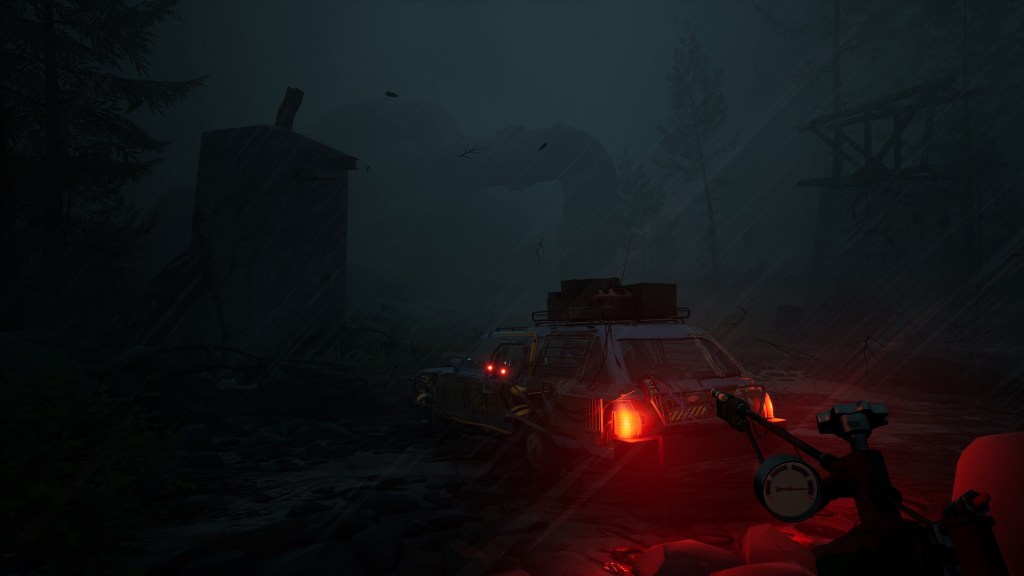
The car itself is an extension of the player’s character. It starts out as a piece of junk that can barely make it down the road without falling apart. But as you play you will unlock upgrades to the panels, doors, engine, bumpers, trunk storage, as well as being able to slap on some special additions. Going from a car that’s panels that are duct-taped together to a radiation-shielded vehicle with wind turbines on the side, extra batteries in the back, and a radar on roof is a satisfying progression. Driving in this game is wonderfully terrible. This isn’t a racing game, and you have to take care of your surroundings as it is easy to lose traction and slip down a hill and crash into trees and rocks. All the time you spend with your car, upgrading it, learning its ins-and-outs, mastering the driving, detailing it, and repairing it makes the car an excellent tool that you really feel attached to.

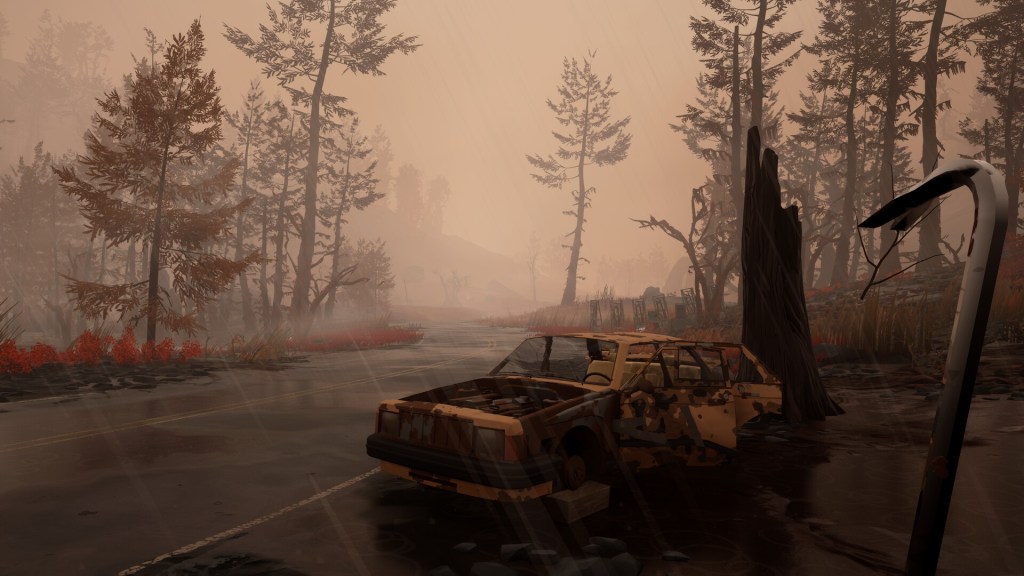
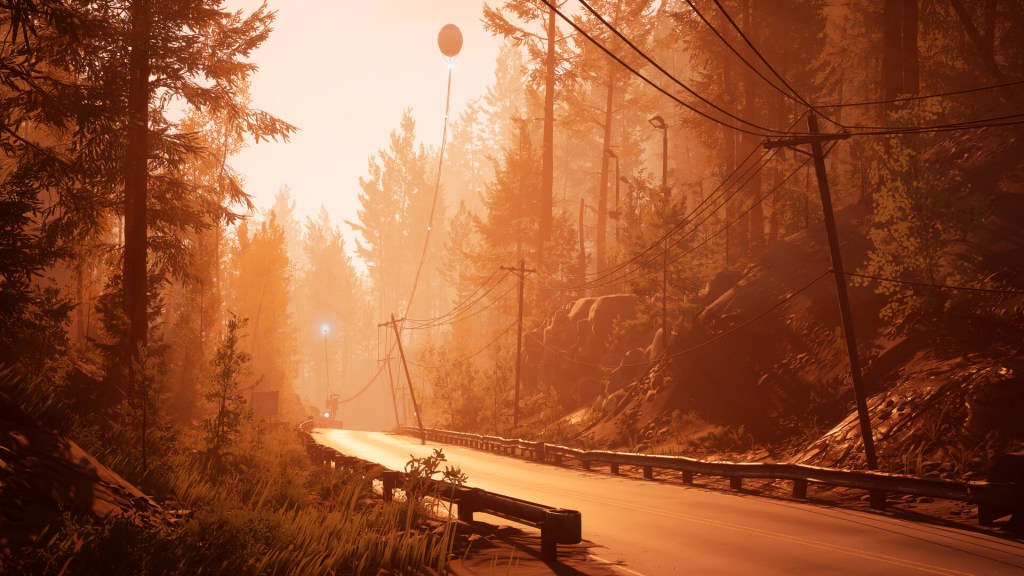
What Pacific Drive really excels at is the vibe and atmosphere. It’s a wonderfully isolated experience. You don’t meet any other humans outside of limited radio interaction. You simply drive around the lonely landscapes of the Pacific Northwest and avoid dangerous anomalies. The anomalies themselves aren’t really sentient beings or scary monsters, just unnaturally occurring science-fiction phenomenon. It’s a tense but oddly relaxing experience. It distills the feeling of a solo road trip as you listen to the radio, navigate back roads, and try to make it to your next safe stop without running off the road and getting some dings on your car. 

I appreciate that Pacific Drive was committed to environmental threats rather than enemies. You aren’t running from monsters, just avoiding puddles of radiation, explosive mannequins, and electrical towers. The hilly and densely forested landscape can make it a tricky problem to go off-roading to avoid these obstacles, but I enjoyed the environmental threats. Moreover, I think Pacific Drive does a great job at maintaining tension throughout the experience. The game never loses its teeth, even as you upgrade your car’s defenses. You always have to play cautiously and keep a watchful eye on your fuel, battery, and other resources to make sure you can make it back home.

I found that Pacific Drive had distinct issues in its beginning, middle, and end. The start of the game is arguably when the game is at its best. You are dropped into a terrifying world and have to figure out how to survive. Your car is a rinky-dink piece of junk that constantly needs its parts swapped and it struggles to go up a mild hill. You have to navigate through a variety of hazards and sci-fi phenomena to gather materials. Upgrades come fast and the learning process is fun, but I do think the game has some problems when teaching the player about its systems.

The game introduces you to 3 characters over radio who spend much of the early portions of the game technobabbling in your ear. Much of it is nonsense, some of it is story related, and a little of it tries to teach you how to play. But it’s hard to spend your brain’s bandwidth listening and discerning what is important while also anxiously navigating the world’s environment. The game is very punishing early on, and certain resources are exceedingly scarce. I was annoyed when the game encouraged me to fully repair all the car’s crappy components with the fairly expensive repair putty item. I also had no idea about the game’s “storm” system which encloses the map in extremely dangerous radiation if you take too long in any given area. It’s a good way to give some urgency to the player, but I don’t remember it being taught to me, maybe I missed it in the waterfall of technobabble. Regardless, I was enormously frustrated when my first encounter with the storm was an anomalous “fast storm” which closed faster than usual and caused me to die. 

Once you’ve gotten comfortable in the world of Pacific Drive, you’ve entered the middle of the game. Despite how frustrating the beginning can be, the constant tension and process of learning and upgrading can be rewarding. The middle of the game is unfortunately far more repetitive. The game devolves into a monotonous cycle of collecting materials, returning to base, repairing and upgrading, and then doing it again. I get that this is the standard survival gameplay loop, but I feel that it’s particularly unrewarding in Pacific Drive. My favorite survival game is Subnautica, which has a mixture of upgrades, exploration, and story to keep the game interesting as you repeatedly dive for resources. Pacific Drive doesn’t really excel at any of those aspects.

After getting the basics at your garage and in your car, the upgrade system in Pacific Drive is a little underwhelming. I never felt particularly thrilled when I could finally upgrade my panels to gain some radiation resistance, or my doors to be insulated from a little electrical damage. These never felt like big momentous bonuses that would allow me to do things I didn’t do before. Just that it would give me a little protection when I made a mistake. I would have loved if upgrades fed more into exploration, but unfortunately the game’s roguelite format squanders a lot of opportunity there.

It would be phenomenal if there were areas that were in permanent thunderstorms that required components insulated from electrical damage. Or areas that were heavily radiated that needed lead shielding. And if those areas had huge rewards and lore drops it would be a great incentive to want to visit these areas. The game does have a single example of this, an area that is permanently shrouded in darkness that also rapidly saps electricity. I enjoyed planning for this area as it presented a unique challenge and made me think about what upgrades and tools I needed to bring. So much of the game is randomized and it results in many runs feeling same-y, I wish there were more zones that had unique layouts, anomalies, and conditions to plan for.
The late game of Pacific Drive is fairly short, which is probably a good thing because by the time I got there I was feeling burnt out on the gameplay loop. The final area is pretty tiny and there’s only one or two story missions there. I didn’t get a single late game upgrade because they weren’t necessary and by the time you get to the final zone, the game is basically over. Again, I’m actually kind of glad that this is the case because it’s a major pain to traverse all the way to the deep zone and I was already ready to be done with the game. My real issue with the late game is that the story has no climactic payoff. I wasn’t super invested in the story in the first place, but there are a few excellent and emotional moments building up to the finale. Things start to make more sense; you understand the characters more and get attached to them. But the actual ending just kind of… happens. It doesn’t really resolve most of the game’s major plot points and it ultimately just feels disappointing. 

If I had my way, Pacific Drive wouldn’t be a roguelite at all. I still would like to play a version of this game where you don’t warp back to the same garage but instead drive across the Pacific Northwest on a long journey and try to find sanctuary in gas stations, rest stops, and cabins along the way. Regardless, I had other issues with Pacific Drive other than its genre. Some better teaching in the early game, better rewards and exploration in the mid game, and a better conclusion would have done a lot to make Pacific Drive more enjoyable for me. I will say that Pacific Drive does so much right. The atmosphere, the garage, the environmental hazards, the car’s handling, and the lonely vibes are aspects that I hope other games can learn from. It is for these reasons that I give Pacific Drive a 7/10. It’s not the game I expected, but I appreciated its unique approach to the survival game genre.

Pepper Grinder (2024)

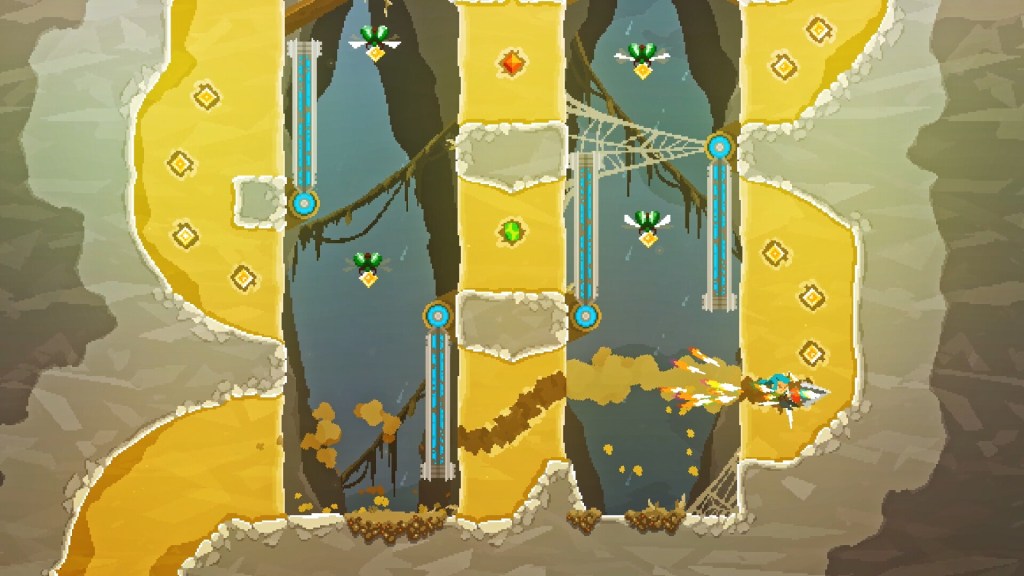
Pepper Grinder is a wonderfully retro game. Its detailed pixel art, gorgeous environmental backdrops, charming cast of characters, and focus on fun gameplay concepts made me feel like I was playing a classic SNES platformer.  Pepper Grinder may be short, and it may not do anything revolutionary, but it is remarkably polished and is purely distilled fun. There’s no fat on this game, every level has its own ideas and mechanics that put a twist on the drilling and digging platforming.

 The key mechanic in Pepper Grinder is the drill. You tunnel through sand, earth, and snow, avoiding obstacles along the way. As you pop out of the ground you can boost yourself and launch yourself from platform to platform. It’s a remarkably smooth mechanic that the entire foundation of the game is built upon. Digging through the ground is intuitive to control, fast-paced, and allows for some creative level design. And Pepper Grinder delivers that in spades.

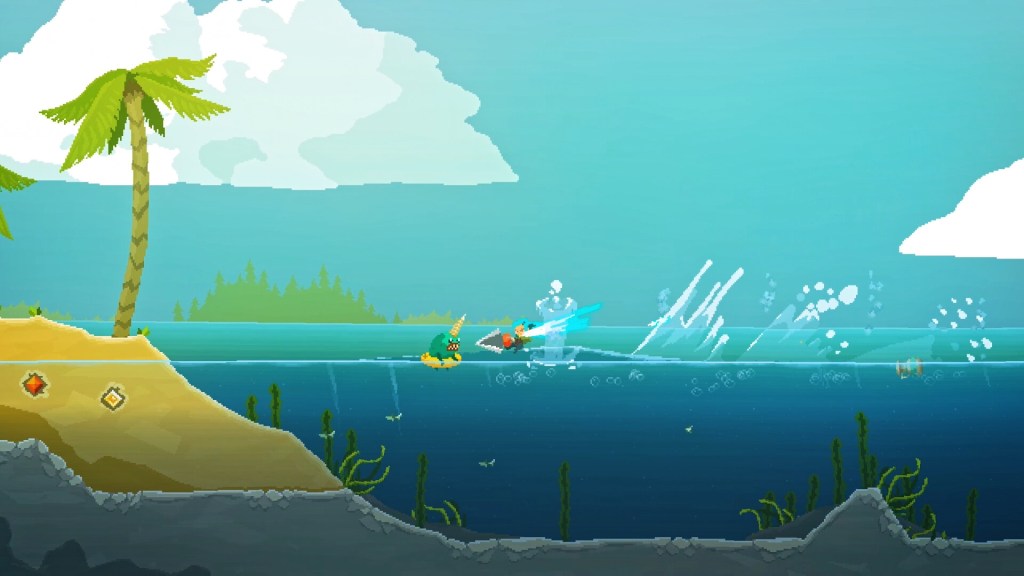
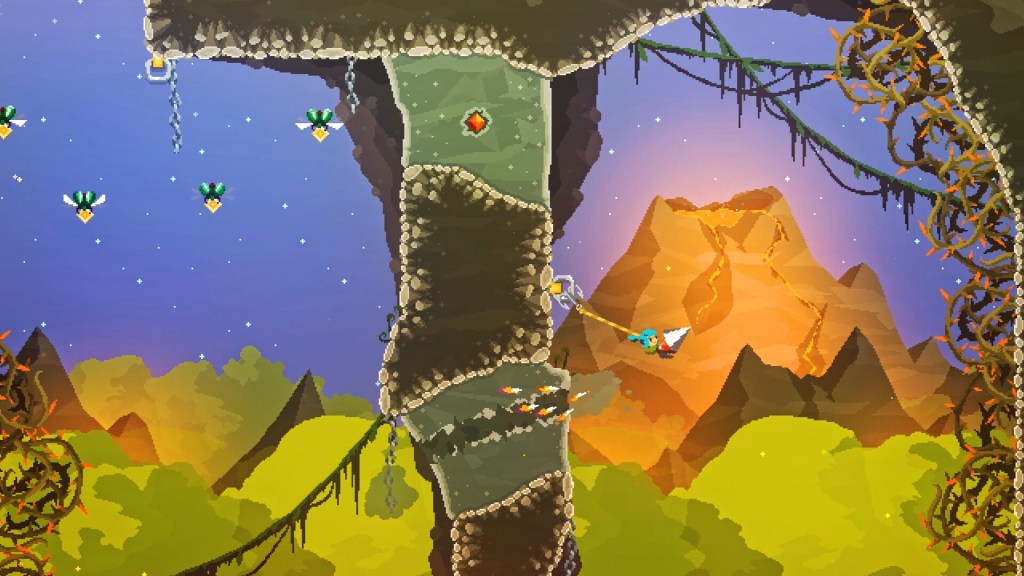
While it may be a short game, Pepper Grinder makes up for that with the sheer variety in its levels. Every level is distinct in some way. There are grapple points to swing between patches of earth, falling chunks of snow to flow through, cannons that blast you across the sky, gatling guns to mow down enemies, and a variety of locations to explore. One minute you’ll be gunning down goons in a volcano and the next you will be diving in shark-infested waters and splitting boats in half.

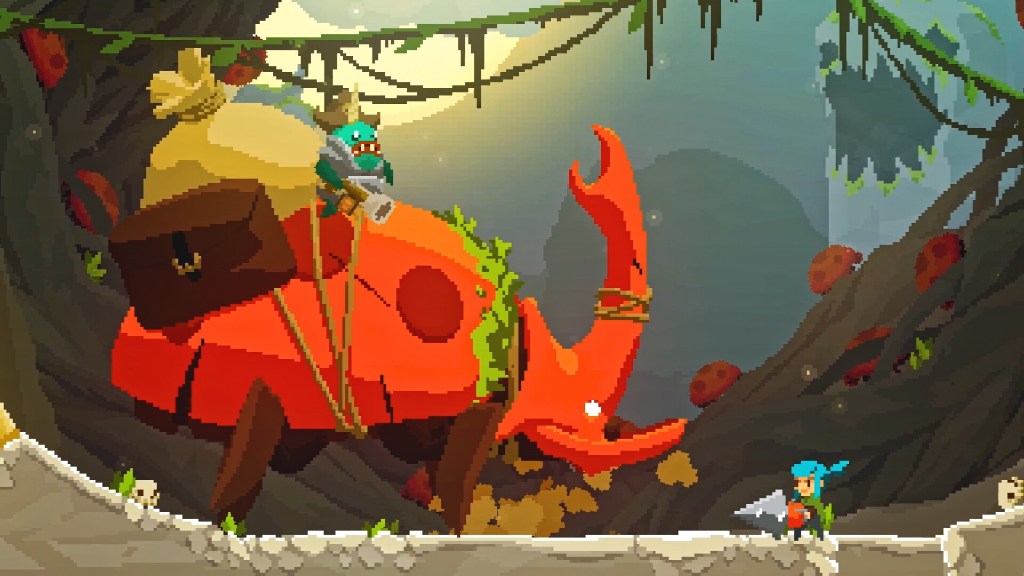
What makes Pepper Grinder feel like a retro game is its charm. There’s no dialogue or much of a narrative at all. The main character, Pepper, washes up on shore and has her treasure stolen. The rest of the adventure is just using her newfound drill to hunt down her missing treasure. But what makes the game so endearing is the visual story that is told. Traveling through the lands and encountering a handful of friendly faces like a farmer mole and a friendly giant is reminiscent of SNES era games such as Super Mario World and Super Mario World 2: Yoshi’s Island. And this retro influence is also obviously present in the art style of Pepper Grinder.

The game is full of lovingly crafted pixel art and animations. The levels, environments, and characters all come to life in its high-fidelity pixel art style. Even with the bright colors and fast-paced platforming, I felt that visual clarity was extremely good. I never lost track of where I was or where I was supposed to be going. The presentation is further bolstered by a great soundtrack of mixed genres: jazz, rock, drum and bass, and even drum and bass. 

There’s no arguing that Pepper Grinder is a short game. There’s only two dozen or so levels and each can be completed in 5-10 minutes. But I don’t think being short is necessarily negative. The developer obviously did not want to pad that game out with repetitive levels or filler content, which can be seen from how every level has its own gimmick or trick. Additionally, there are 5 hidden coins in every level to be found if you are interested in collectible hunting. And I found quite a bit of fun in the time trial mode, trying to get the gold medal on every level. It never felt overly challenging, but I loved finding shortcuts or optimizations to spare a few seconds.

The only major flaw with Pepper Grinder is the boss fights. There are only four of them, but none of them are particularly fun. They are neat concepts, but are unfortunately in cramped arenas that feel awkward to maneuver in. The last boss in particular is a huge difficulty spike, I could see tons of players giving up before seeing the credits because of how frustrating that fight can be. And to make matters worse, if you are doing the time trial mode you will have to deal with 30-second unskippable cutscenes on every single attempt of every boss. Truly maddening.

Pepper Grinder definitely isn’t a revolutionary game. It doesn’t dwell on any of its ideas or mechanics. If you are looking for a platformer that slowly evolves as the player gets better, Pepper Grinder may not be for you. It’s a game that delivers on a fun and fluid base movement system while throwing a bunch of different ideas at the player. Sure, many of those ideas could be explored further and expanded upon, but I appreciate the brevity of the game. And if you are looking to master the game’s mechanics, time trial mode can provide a decent but reasonable challenge.

I love when a game focuses on just being fun. And that’s what Pepper Grinder is. It may be on the shorter side, but that’s only because there is not any fat on this game whatsoever. Every level is its own idea. And the basic drilling movement is just pure fun. Although it doesn’t do anything revolutionary it manages to feel nostalgic and reminiscent of classic Nintendo platformers. It is for these reasons that I give Pepper Grinder a 7.5/10. Definitely give this game a shot if you want a quick burst of platforming fun.

Penny’s Big Breakaway (2024)

Penny’s Big Breakaway is a game that gets better and better as you play it. As a lover of 3D platformers, I was excited for Evening Star’s debut game. These guys gave us Sonic Mania, the best Sonic game in decades. Once I started playing it though, I thought Penny’s Big Breakaway was just alright. I had trouble with the innovative control scheme and never quite found a satisfying flow to the platforming. But as I progressed through the game, I slowly got more and more familiar with the movement. And that’s where the game shines. Once it clicks, Penny’s Big Breakaway is immensely fun as you dash, swing, and zip through levels. Maintaining momentum and combos is not easy, but the satisfaction of going fast makes it a reward worth earning.

Penny’s Big Breakaway takes place in a brightly colorful world of performers and penguins. Penny is a performer who has to go on lam because her sentient yo-yo ripped off the king’s pants during a performance. The story itself isn’t all that exciting or worth talking about, but that’s ok because it definitely isn’t front and center. What makes Penny’s Big Breakaway interesting is the platforming.

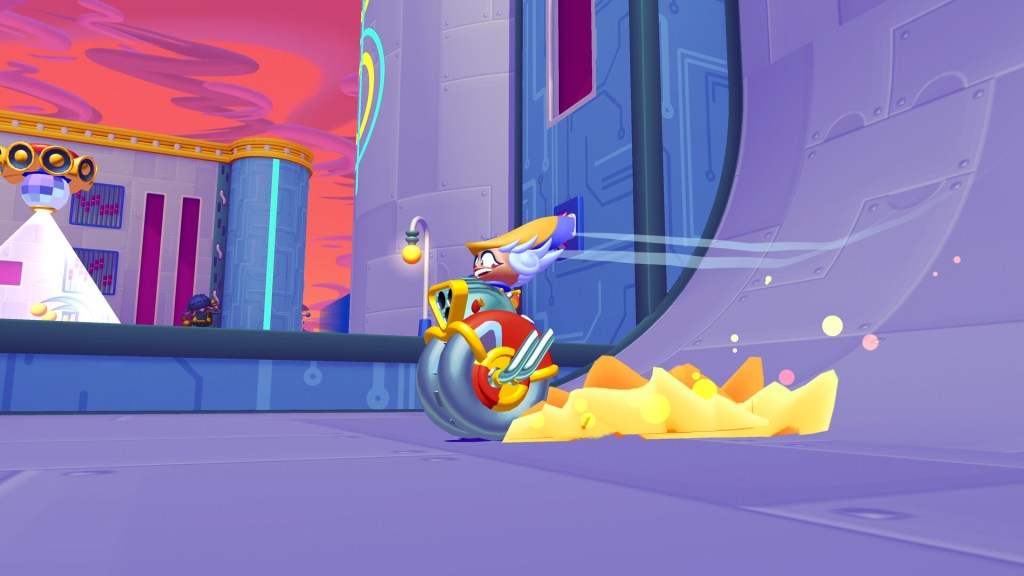
Penny herself is a rather slow and clunky character, but that’s made up for the array of abilities that her yoyo provides. In the air you can sling the yo-yo in any direction using the control stick, and from there you can either dash to the yo-yo or swing from it. These both have their own uses to build speed, height, and distance. Moreover, you also have a small double jump. On the ground you can roll on the yo-yo or spin it around you. The roll is key to maintaining momentum while the spin attack is mostly used for maintaining combos.

With all these possibilities it can be tricky to get a grasp on how to string these moves together. Especially because Penny’s Big Breakaway has a unique control scheme that can take some getting used to. Like I mentioned, Penny is slow and rather boring to just walk around and jump like a normal platformer. The key to having fun is utilizing slopes and stringing her moves together to create a fast-flowing performance. For instance, dashing into a roll on a hill is an easy way to build up a ton of momentum. You can then swing out of the roll to fling yourself across big gaps. An additional consideration is that timing these movements is critical. If you attempt to roll from too high up you won’t keep most of your momentum. And of course, you will fling off tangent to your swing arc whenever you release a swing.

There’s lots of nuances in the movement in Penny’s Big Breakaway. Aside from all the basic moves that I listed above you have to contend with enemies, poles to swing on, power ups, bouncy pads, dramatic slopes, and other complications. Learning how to go fast is what makes Penny’s Big Breakaway fun. And it’s also why I think the game has a steep learning curve. I didn’t really start having a lot of fun until about halfway through because I wasn’t good at chaining together my movements and timing things so I could reach top speeds.

Aside from going fast, another omnipresent objective is to maintain a combo. By masterfully manipulating your entire moveset you will rack up a combo that steadily increases your point total. At first, I thought this is what the focus of Penny’s Big Breakaway was as it is in your face. And don’t get me wrong, maintaining a combo can be fun, as long as you are doing it with speed. If you are new at the game, floundering around to make sure you never drop the combo can be more discouraging than it is fun. And there’s plenty of places where you can just combo back and forth for minutes at a time to rack up a big score. Honestly, I suggest just ignoring the combo system altogether until you start mastering the movement. 

I wish Penny’s Big Breakaway would have emphasized the need for speed a little more. It’s the most entertaining aspect of the game, but the game does very little to encourage going fast. Your score at the end of the level is independent of the time it took to complete it. If you want a high score, you could just combo back and forth as I previously mentioned. Getting a point multiplier based on your speed of completing the level might have encouraged speed. There is a time trial mode, but there are no developer-set baselines. I think this was a big misstep. After completing the game, I was looking to replay some of the levels to get a fast time, but without a benchmark to measure myself against I had no idea if I was doing well or not. Playing against your own times can be fun once you master the game, but I would have liked a point of reference to try to beat.

One of the biggest appeals of Penny’s Big Breakaway is its speedrun-friendly level design. Levels are cleverly laid out with some diverging paths that encourage experimentation. Moreover, there aren’t invisible walls or other tricks to keep the player from finding huge shortcuts. If you do master the movement, you can skip huge chunks of the levels if you find the right gaps and walls to scale. Even if you aren’t a speedrunner, the levels are well-designed that flow nicely and still encourage smaller shortcuts. Sadly, the boss fights are fairly underwhelming compared to the standard levels. My other major gripe with the levels is the optional objectives.

I usually enjoy finding hidden secrets or doing challenges in platformers. But Penny’s Big Breakaway is all about going fast. Having to slow down and look around for potential secrets is annoying. Each level has 3 hidden items and 3 short quests. The quests also are frustrating because they start as soon as you walk in the vicinity of the NPC, and are often timed challenges. Meaning you quickly have to read what your goal is and look around to find where you are supposed to go all while the clock is ticking. If you fail, you have to reset from the checkpoint. I realize the side objectives aren’t necessary to beat the game, but are required if you want to unlock the bonus levels. And the bonus levels are some of my favorites in the game.

Unfortunately, we can’t talk about Penny’s Big Breakaway without mentioning its performance issues. I had many instances of clipping into terrain and walls. During a boss fight I just fell through the floor and died. Certain sloped surfaces also have Penny sliding on them very strangely. These collision bugs aren’t the end of the world, but they are common enough that they can’t be ignored. Luckily, the developers seem to be aware of these bugs and are actively working on patching the collision issues.

As for presentation, I found Penny’s Big Breakaway to be almost too colorful. I understand that the game is trying to harken back to the days of Sega consoles and the dominance of Sonic. But I found the art style of Penny’s Big Breakaway to be garish. Fortunately, the soundtrack is stellar. It’s a nice mix of jazz, funk, and electronic beats that do fondly call back to retro games.

Penny’s Big Breakaway is the epitome of “high skill floor, high skill ceiling”. It’s a game that, if you put the time into mastering it, is an immensely fun fast-paced platformer. Conversely, it can be tricky to find the fun in Penny’s Big Breakaway if you aren’t proficient at building speed. The movement can be slow, clunky, and unintuitive until you learn the timings and sequences needed to gain momentum. It is for these reasons that I give Penny’s Big Breakaway an 8/10. It’s a game that experienced platformers and speedrunners will love to master, but newer players may find it slow and frustrating.

Prince of Persia: The Lost Crown (2024)

Prince of Persia: The Lost Crown is a game of two qualities. The meat of the gameplay, the combat and platforming, are superb and have an enjoyable flow to them. On the other hand, the game’s presentation, story, and exploration elements are woefully underdeveloped. It’s disappointing because Prince of Persia: The Lost Crown had a ton of potential, but I was ultimately underwhelmed by the experience as a whole. 

You play as Sargon, one of the seven Persian immortals who go on a mission to rescue the prince from the cursed Citadel. Time flows strangely in the Citadel, some people age and turn to dust in the matter of hours, while others are seemingly immortal. The god of this land, the Simurgh, has been missing for 30 years and is somehow tied to the prince’s kidnapping. It’s a decent hook, especially considering how actual Persian mythology is woven into the game. But unfortunately, the actual story is just bland once the plot starts developing further. It’s predictable. And I found it difficult to care about anything when all the characters are just entirely forgettable, which isn’t helped by the uninspiring and unenthusiastic voice acting. Not to mention the handful of plot holes and obviously cut content that left me scratching my head. I don’t think a game like this needs an excellent story, but I’d rather minimize the story elements instead of placing a half-baked tale front and center.

When the central gameplay mechanics are so excellent, you don’t need a riveting story. Look at Super Mario or The Legend of Zelda for instance. While they have a story, it is often in the background as you adventure through a variety of creative areas. The environments and gameplay mechanics are at the forefront. I wish that were the case in Prince of Persia: The Lost Crown, as it does have a solid gameplay foundation. But the game is filled with boring cutscenes, mundane dialogue, uninteresting characters, and paragraphs and paragraphs of lore. 

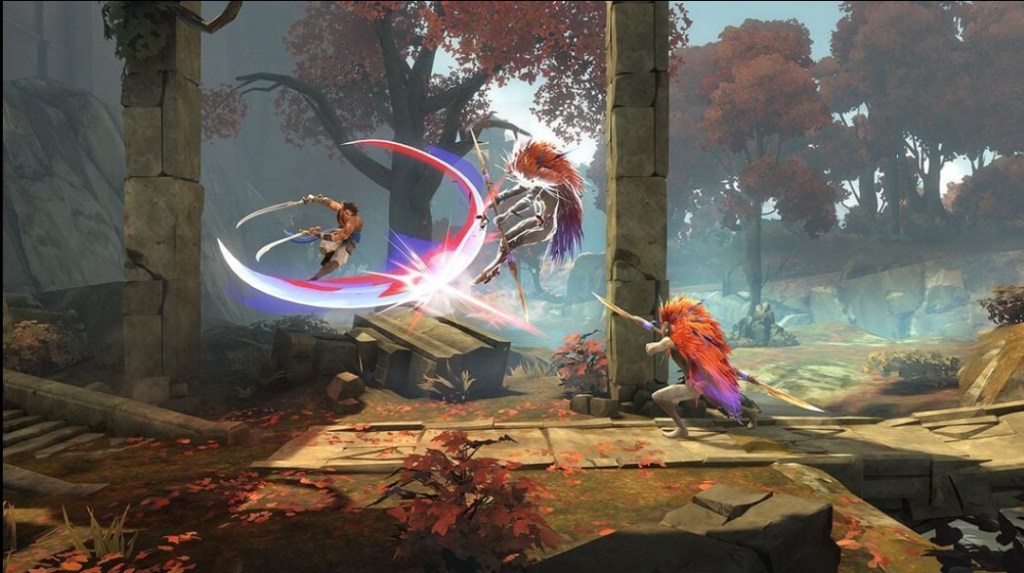
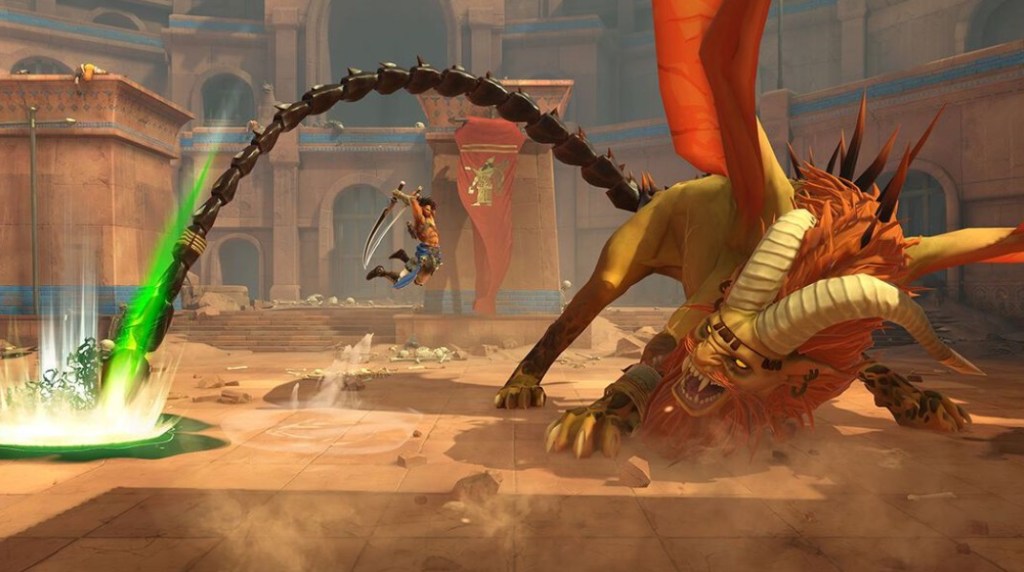
 Combat in Prince of Persia: The Lost Crown is satisfying and fast-paced. The game encourages combos and juggling to wreck enemies. There’s a handful of ways to launch enemies into the air: upward swings, low trips, and kicking out of a dash. Keeping enemies airborne and within your attack range is a fun but rewarding method of fighting. An interesting decision about the combo system is that the final attack in the basic button-mashing combo is intentionally terrible. It’s slow, has a long recovery, can’t be canceled into a parry, and knocks enemies far away making it difficult to follow up with more attacks. I think this was smart as it encourages players to come up with their own strategies and combos. I personally loved getting some basic attacks, knocking an enemy up, hitting them a few more times, then knocking them to the ground and finishing the combo with a charged ground slam. 

My one complaint about the combat is the boss fights. The game encourages players to parry enemies to create openings to unleash a combo. Unfortunately, most bosses don’t follow this pattern. The vast majority of their attacks are unable to be parried. Moreover, you can’t launch bosses into combos, you can usually only get a couple of basic hits off. Most fights boil down to just memorizing the boss’s patterns, learning how to dodge them, and then retaliating with a couple basic attacks. While this is usually completely normal for boss fights in games, I think it’s a little disappointing in Prince of Persia: The Lost Crown. I wish I could utilize more of the fast-paced and aggressive play that is encouraged by parries and juggling combos.

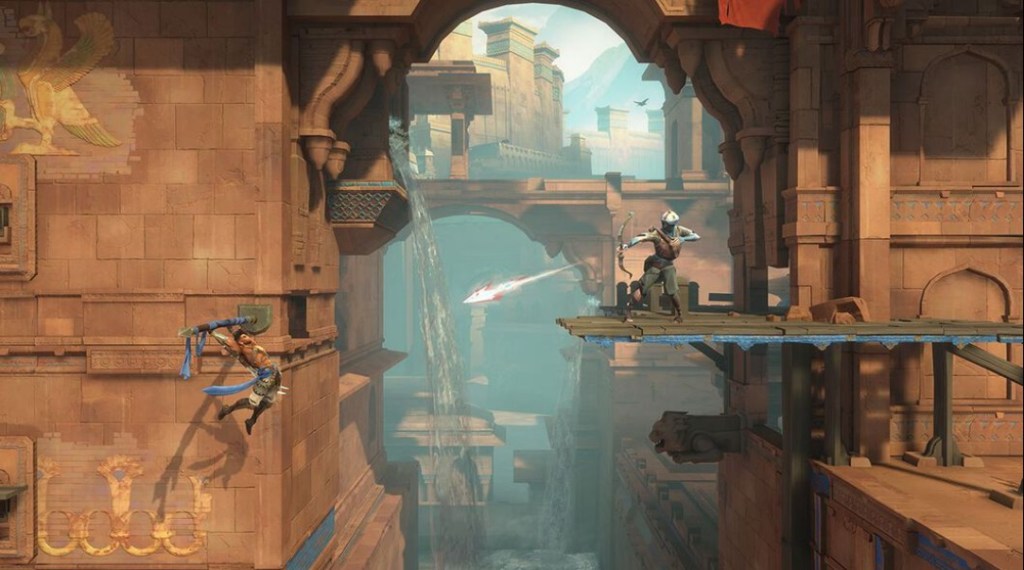
The Prince of Persia series has always been known for its platforming prowess, and Prince of Persia: The Lost Crown is no different. Stringing together wall-jumps, dashes, grapple-hooks, and time-bending shenanigans is a ton of fun. The game starts a little slow when it comes to platforming, but once you start unlocking abilities each challenge is almost like a fast-paced puzzle to determine the order you should be using these abilities in. It’s smooth, snappy, and just the right level of difficulty to feel tough but reasonable. 

While combat and platforming are fun, I was exhausted by the unfulfilling exploration. Prince of Persia: The Lost Crown is a metroidvania, exploration is a key tenet to make these games enjoyable. When backtracking becomes tedious the genre falls apart. The issue with exploration in Prince of Persia: The Lost Crown is twofold: empty space and rewards. I felt like there was so much wasted space with no enemies or platforming that made getting around the map just boring. Running is slow in relation to how big each area is, and for some reason you have to re-click dash to run through every single screen transition which is annoying. I felt no desire to hunt down collectibles and go for 100% because it was slow and uninteresting to explore areas that I’d already been through. Moreover, the rewards for exploration were underwhelming. Getting steel to upgrade my weapon or health upgrades were nice, but there were so many lore items that I just didn’t care about. When the story of the game is dull, I have no desire to read further about the lore.

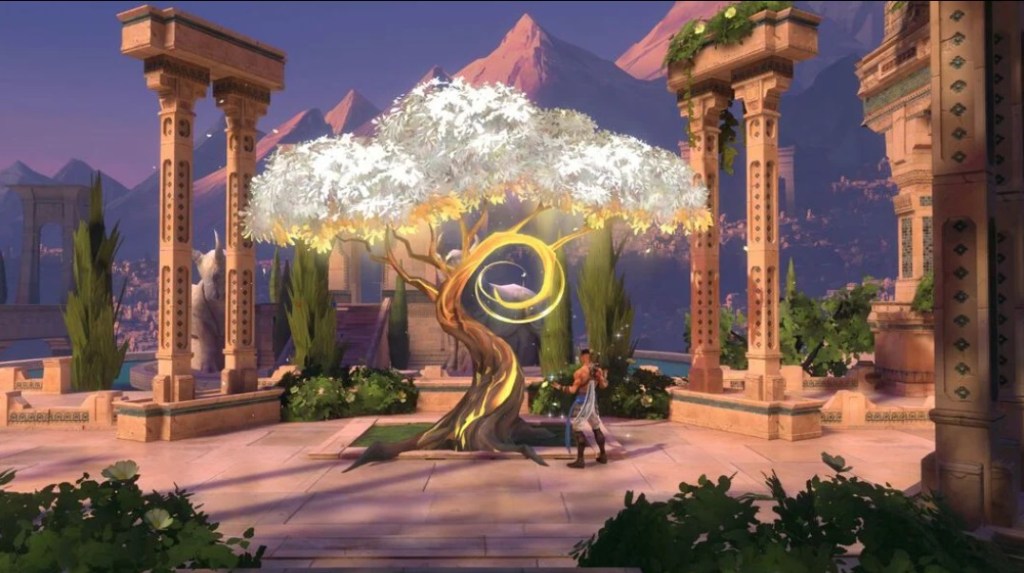
The biggest flaw of Prince of Persia: The Lost Crown is that it simply lacks personality. There’s so many fantastic metroidvanias to play, each with their own aesthetic. When you look at Ori, Hollow Knight, or Blasphemous these games are oozing with charm. Prince of Persia: The Lost Crown is bland all around. Visually, the game looks generic and cartoony, the characters remind me of something out of Fortnite. The environments look fine but are just uninteresting. The Raging Sea was the exception as it was a visual spectacle of a stormy ocean frozen in time. The soundtrack is Persian inspired but unfortunately forgettable. As previously mentioned, the story and characters are generic. There’s just nothing that makes Prince of Persia: The Lost Crown feel like it stands out amongst the pantheon of metroidvania greatness. 

It’s a shame that a game that has such great gameplay misses on the rest of the execution. Even though combat and platforming were superb, the exploration, story, art style, and music were utterly forgettable. It’s like putting a nicely cooked steak atop a pile of mushy and bland oatmeal. It is for these reasons that I give Prince of Persia: The Lost Crown a 6/10. In a genre that is chock full of games brimming with personality, Prince of Persia: The Lost Crown doesn’t do much to stand out.

Yakuza 0 (2015)

I’ve put off playing the Yakuza series for years because of its reputation of having a ton of side content. Most people see this as an inherent positive, but as I’ve gotten older, I have less time to game. I appreciate shorter, tighter experiences that trim the fat and only leave the good parts. When I see a game averages 50+ hours to complete, it feels daunting. Most of these behemoth open world games are padded out with repetitive quests and meaningless filler. But this is not the case in Yakuza 0. Indeed, Yakuza 0 is a lengthy game with a ton of side quests and minigames, but these distractions perfectly supplement the serious crime drama that is the main story.

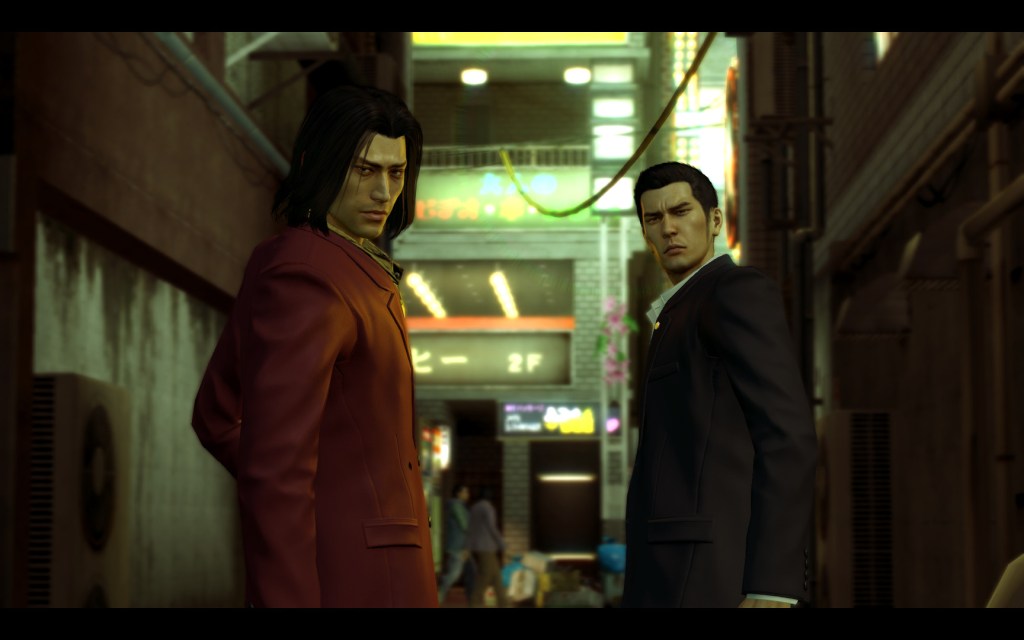
Yakuza 0 is a game about the seedy underworld of Japan’s entertainment districts. You follow two protagonists who have both been expelled from their crime families for different reasons. Kazuma Kiryu is seeking to clear his name after being framed for murder and uncovers a proxy war between factions vying over a small piece of real estate worth billions of Yen. Goro Majima will do whatever it takes to be accepted back into his organization after disobeying a superior, even if it means humiliating himself as a pawn for his keepers. 

What I appreciated most about the story was how it took time to establish its characters and make me care about them. Usually, I’m not a fan of long cutscenes or expositions, but nobody will be able to forget Majima’s 20-minute-long introduction. The characters have their own ideals, goals, friendships, and limits to what they are willing to do. The protagonists are lowly grunts who are relentlessly bullied by their higher ups, but withstand the brutality to do what they believe is right. The slow burn of character building and drama is what makes the story so compelling. And while it may be a little over the top at times, the organizations and drama feels entirely believable. Long cutscenes where family Lieutenants chat in an office and subtly make ploys to outplay each other for a 10ft-by-10ft piece of unoccupied real estate feels like something that is scarily plausible. 

A good slow burn needs a satisfying payoff to make the players feel like the time they invested was worth it, and Yakuza 0 makes sure to have a ton of payoffs. The story is split into chapters, and every couple of chapters there is a massive story moment paired with amazing action sequences and set pieces. Sure, some of these action sequences can be a little silly and over-the-top, but they are fun and the game earned the right to get a tad carried away. However, I was a little disappointed with how frequently the game pulled its punches. There are definitely severe, often fatal consequences for characters, but there are also a ton of fake-out deaths and miraculously healing bullet wounds. A character unexpectedly surviving is fine, but not when it happens 5 times through the course of the game.

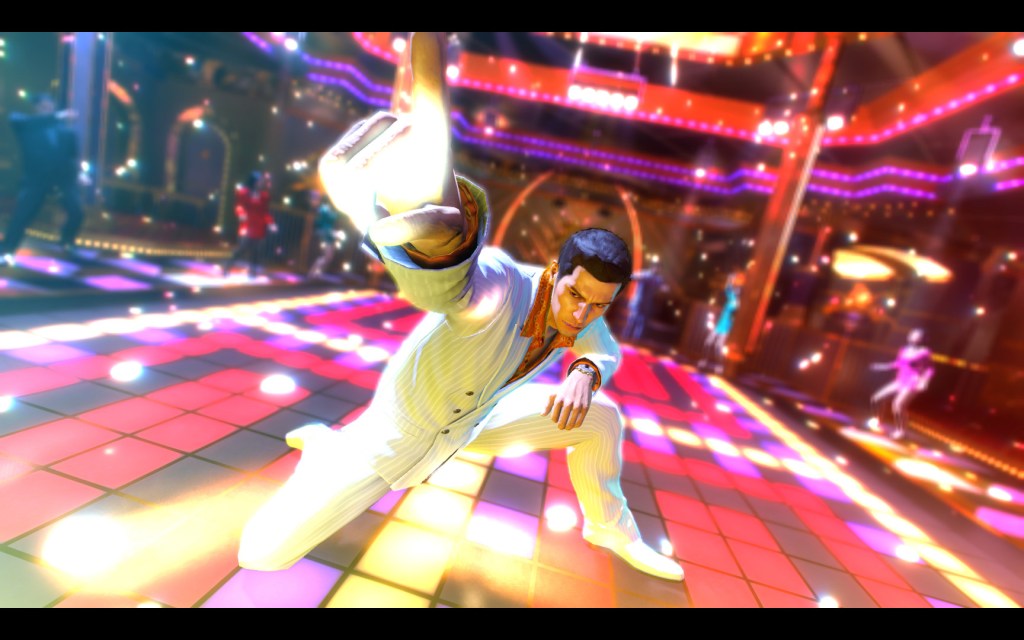
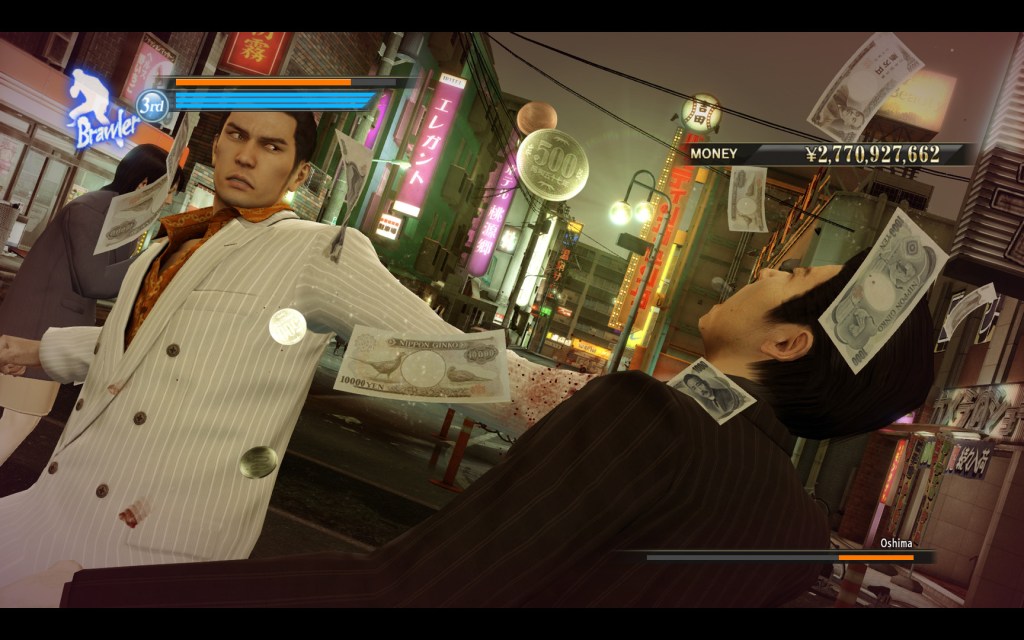
What really makes the Yakuza series unique is its ability to supplement its dark and violent crime drama story with ridiculously goofy side content. One moment you’ll be fighting through a building full of grunts for your life, have a man chop off his finger in front of you, and walk dejected through the bustling streets of Tokyo and the next moment you’ll be singing karaoke and having a dance battle with Michael Jackson. There are a ton of minigames and side quests to get distracted by, and there’s a few reasons why I love the side content in this game. The main reason is that it’s almost always hilarious. Like teaching a professional dominatrix how to humiliate her customer, or bowling a turkey and finding out your prize is a live chicken that you keep and turn into a manager at your real estate firm. All of the side quests are so silly and ultimately wholesome that it balances out the brutality of the main story. 

The other reasons why I like the side content in Yakuza 0 all have to do with how unintrusive the side content is. First and foremost, while Yakuza 0 is an open world game, the map is incredibly dense. You can run a loop around the entire thing in maybe 5 minutes. This makes it so you don’t have to go out of your way to hunt down quests, you just naturally stumble upon them. Side quests are also typically very short. You can complete most of them in 10-15 minutes. They are good for a quick distraction and laugh, and you don’t have to commit hours to see one through to the end. Lastly, they typically don’t have many material rewards. You may get a small trinket or piece of gear, but most of the time the reward is inconsequential. I like this approach for Yakuza 0 as you never feel obligated to engage with side content, you only should do it if you feel like it.

All that being said, the biggest side quests in the game are the antithesis to all these observations. Each character runs a business, and engaging in those quest lines is the best way to make money in the game. Furthermore, doing these quests unlocks additional abilities in combat and a secret fighting style if you complete them entirely. This makes it feel necessary to spend time on these quests. The worst offender is the real estate business that Kiryu runs. It’s a huge time sink that consists of investing money in properties, waiting 15 minutes to collect payouts, and then immediately reinvesting that money to buy more properties. It’s a massive investment of time to complete this. Majima fares a little better here because he runs a cabaret club which at least consists of a short mini-game of running the club. It’s more engaging and less time-consuming, but both of these quest lines were fairly boring, extremely long, and felt necessary if you wanted cash or to unlock new combat abilities.

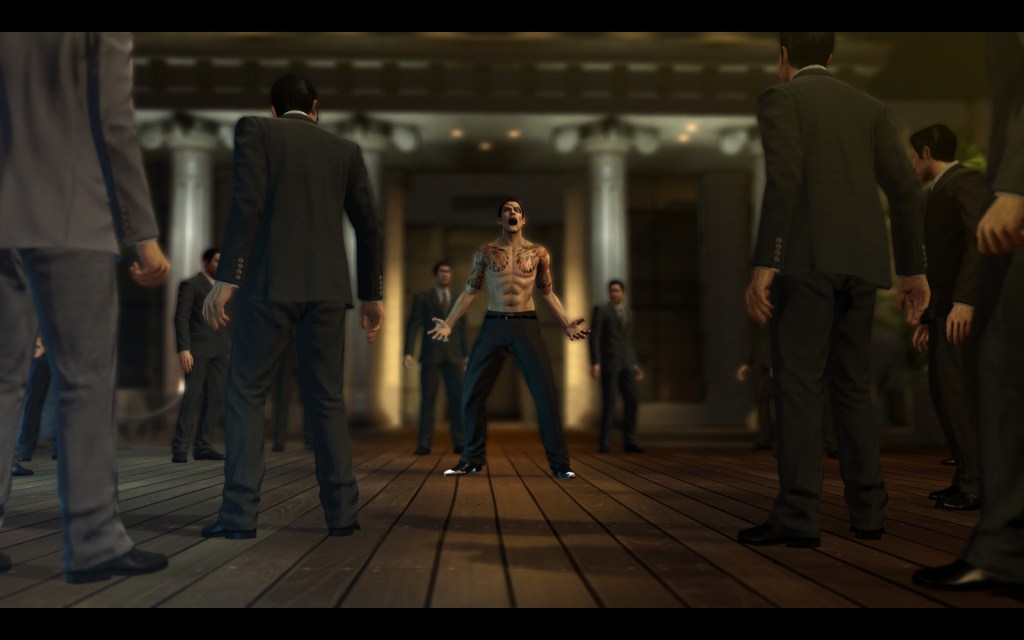
Combat in Yakuza 0 is solid, but it’s not the main appeal of the game. It’s a fairly simplistic beat em’ up action game with a handful of style variations. You have light attacks, heavy attacks, and guard breakers. Combos consist of 1-4 light attacks followed by a heavy attack. Each style has its own niche that can be fun to figure out and mess around with. The most enjoyable aspect of the combat is the context. Your opponents are often the scummiest men in the Yakuza who taunt, torture, and disrespect you. It was immensely satisfying to unleash some powerful combos on them. Moreover, attacks feel weighty as they stun enemies and knock them to the floor. You also build up a heat gauge which can be utilized on heat-attacks that do a ton of damage. I wouldn’t say the combat is amazing or revolutionary, but it is definitely fun.

Aside from combat, the other main bit of gameplay in Yakuza 0 is mini-games. Most mini-games aren’t even related to the main quest or numerous side quests, they just exist for the player to discover. While I didn’t spend a ton of time playing Mahjong or Shogi, I did become an expert at the various karaoke and dance songs. There’s also bowling, batting cages, various gambling games, toy car racing, a few arcade games, and of course fishing. They’re all simple enough to get the hang of quickly and serve as a nice distraction from the intensity of the main story.

Open world games often grow repetitive and outlast their welcome, but I didn’t feel that way about Yakuza 0. The map was so dense with mini-games, side quests, and main content that it never felt bloated with unused space. The rollercoaster of the deadly serious story about organized crime and the outrageously goofy side content is something that is entirely unique to Yakuza, and I loved it. I’m upset that I’ve waited so long to jump into this series, and Yakuza 0 has me wanting to play the rest of the games as soon as possible.

Mario + Rabbids Kingdom Battle (2017)

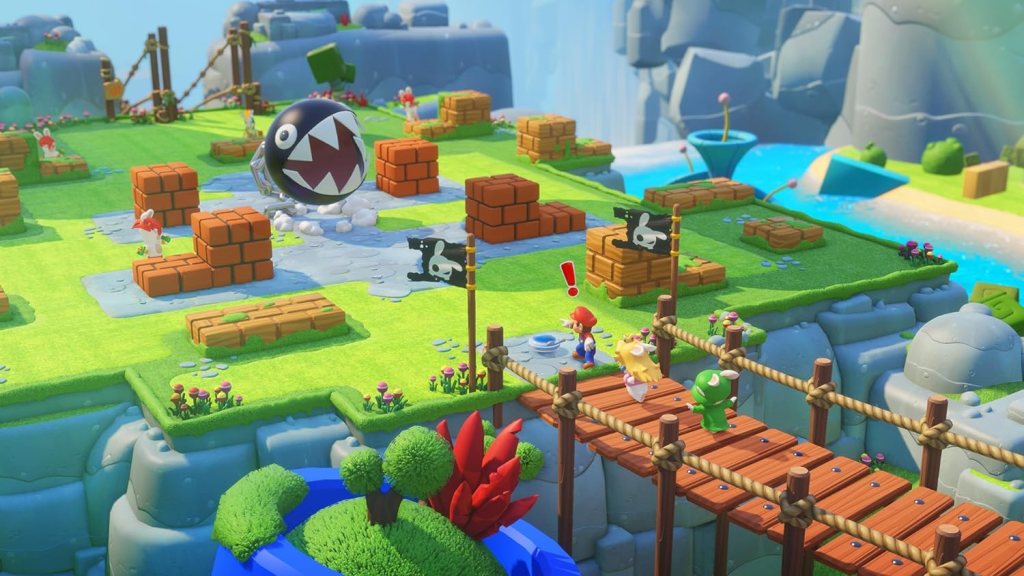
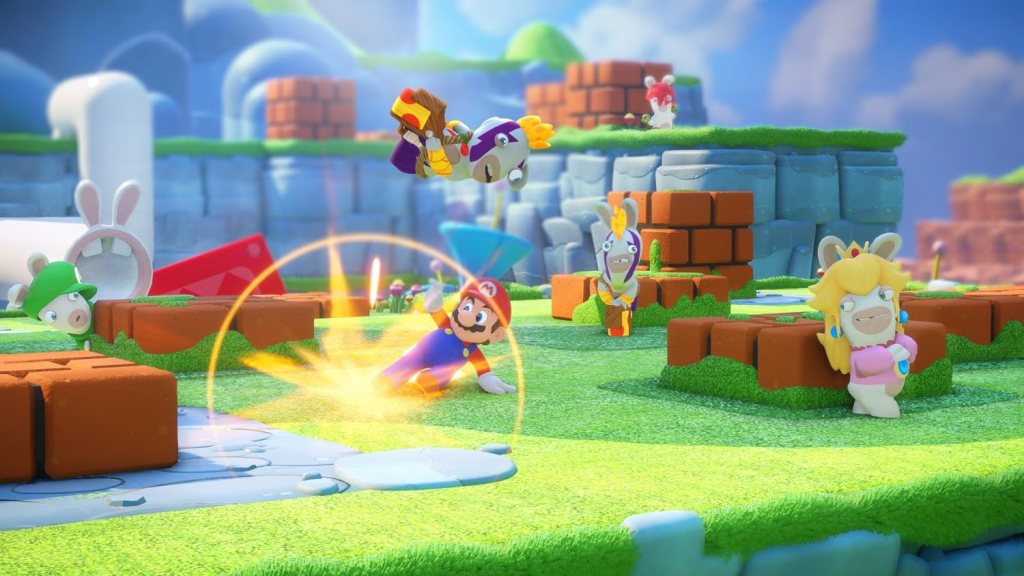
As a lover of tactical RPGs, I am upset that I let Mario + Rabbids Kingdom Battle sit on my shelf for nearly 7 years. While the game seems like a bizarre concept, it is an incredibly well-made game. It innovates on common systems such as hit rates, movement, and special abilities to make for a surprisingly deep tactical experience. While playing it safe is often the key to success in other tactics games, Mario + Rabbids Kingdom Battle encourages aggression and fast-paced play. And while I still think the concept is odd, it somehow works.

When this game was announced as a mash-up of Mario and Rabbids in which they would use guns in turn-based tactics battles, I thought there was no way it would be good. It felt like 3 diametrically opposed things being merged into some bizarro concoction. But it actually works. Mario and his pals team up with a handful of Rabbids cosplaying as Mario characters to take down the out-of-control virus that is corrupting everything.

The Mushroom Kingdom, as always, is a fun backdrop for the adventure. It’s bright, colorful, and has a set of classic areas to explore. Walking around the world only serves as a breather between battles, but I enjoyed soaking in all the wacky details. The invasion of Rabbids has left the Mushroom Kingdom and its denizens in chaos. And the Rabbids are strewn about, causing mayhem with their signature brand of physical comedy. Luckily, I think the Rabbids were toned down a bit in terms of their obnoxiousness. They are infamous for how annoying their schtick can be, so I’m glad that it was reduced to more reasonable levels.

Aside from the concept, Mario + Rabbids Kingdom Battle surprised me in how many smart ideas it had. One of the biggest examples of this is the 0/50/100% hit rate system. In most other tactical RPGs, whenever an attack is initiated, there is a complex formula to calculate the odds of the attack landing. This is a core mechanic to games like XCOM in which the player tries to optimize their odds of success while staying in a safe position to minimize enemy hit rates. But the issue I’ve always had with XCOM is how outrageously bad it feels to carefully enact a strategy that relies on a 97% shot, but it fails and you are severely punished. It’s just how odds work, but that doesn’t stop it from feeling terrible.

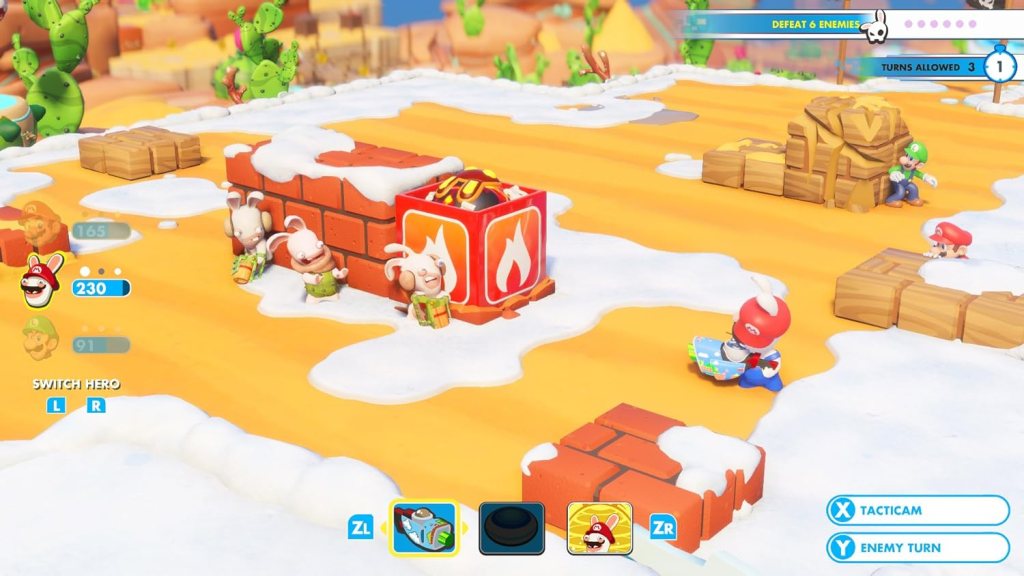
In order to combat this feeling of getting unlucky, Fire Emblem implements its own system. It amplifies the percentages under the hood, so a high percentage like 90% is really closer to 98%, while a low percentage like 20% is more like 8%. While it is directly lying to the player about odds, I think it works wonderfully because the player shouldn’t be basing their strategies on low percentage attacks. It just makes the game feel better and doesn’t make you feel like you got unlucky as people are notoriously bad at estimating odds. Mario + Rabbids Kingdom Battle gets around this conundrum entirely by boiling down hit rates to 3 categories: 0%, 50%, and 100%. If attacking an enemy fully behind covered, you will not hit them. If they are partially behind cover, you have a 50/50 shot. And if they are in the open or you flank them, you a guaranteed to land a hit.

I think this system is genius because of how simple it is. You are encouraged to flank enemies, as you can’t reliably hit them otherwise. There’s no frustration in missing a high-percentage attack because they simply don’t exist. You almost always know beforehand whether the attack will hit, and hitting 50/50s should be seen as a bonus, not a core part of your strategy. You can’t blame luck when you miss a coin flip. There are other forms of statistics in the game, like weapons that have a range of damage they can inflict and can occasionally trigger special effects. But like with the 50/50 shots, you shouldn’t rely on special effects or max damage attacks as they are uncommon. If playing well, you always know when an attack will hit and the base amount of damage it will do, anything on top of that is a bonus. This simplified hit system is such an intelligent mitigation technique of the player feeling unlucky when playing tactical games.

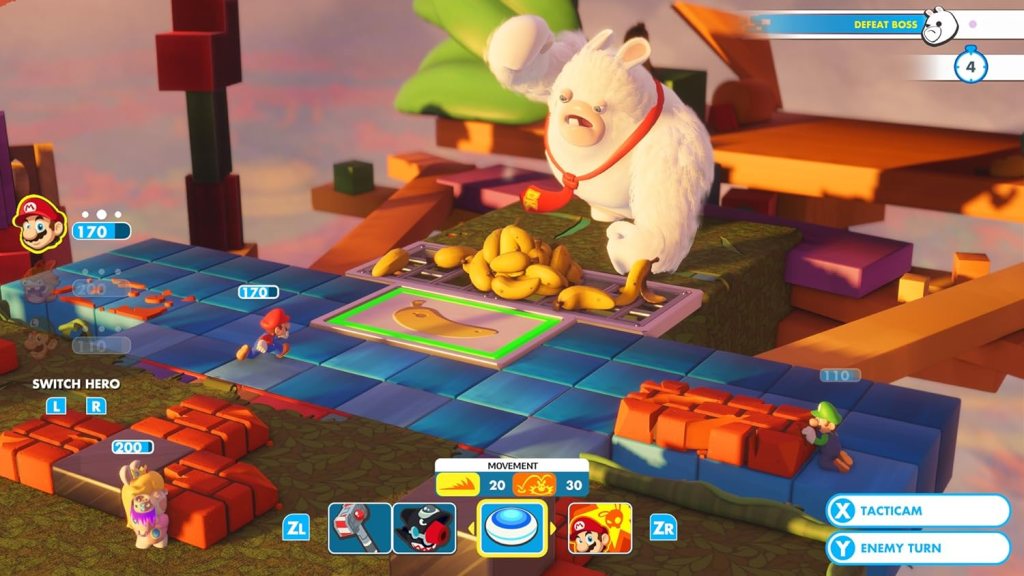
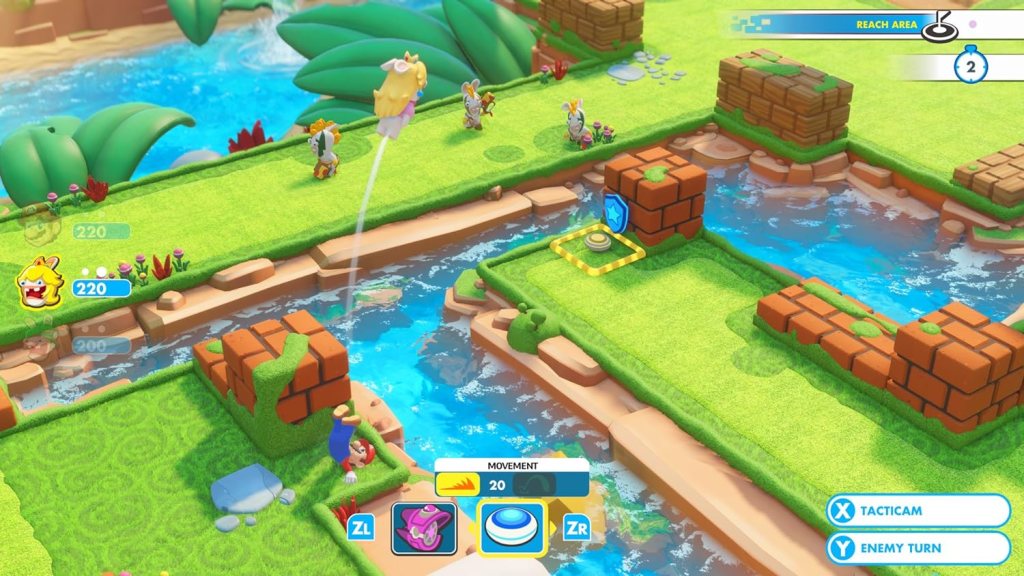
Even though the hit system is simplified, Mario + Rabbids Kingdom Battle has a surprising amount of depth. The battles are small, you only can control 3 characters in relatively compact maps against a handful of foes. But each turn brings so many possibilities that it’s staggering. Each character has two weapons, two special abilities, and some extreme mobility. On a single turn for a single character, you will be able to move, dash through an enemy or two to deal damage, jump off a teammate for extended movement, attack an enemy with your weapon of choice (which also have a reasonable chance to trigger special effects), and decide if you want to use a special ability. And you can take these actions in any order you want. The breadth of options here is immense. 

All of the possibilities available to both the player and the opposition make for some extremely dynamic battles. The extreme mobility and combat capabilities paired with destructible environments make it difficult to predict exactly how any given turn will play out. This encourages aggressive play. You should maximize your own capabilities to take out as many enemies as possible before they get the chance to retaliate. Every turn feels like a mini-puzzle as to how to get the most out of your character’s actions. Moreover, if you want to get a “perfect” score on every stage then you have to complete the battle in a set number of turns, further encouraging you to play aggressively. I love that flanking and going on the offensive is the best strategy, as many other tactical games encourage turtling and playing overly safe.

Mario + Rabbids Kingdom Battle can actually be pretty tricky at times. Enemies can easily flank and position themselves to deal massive damage. Boss fights are multi-staged affairs with unique mechanics. And there’s tons of enemy variety sporting different weapons and effects to watch out for. This makes for some fun challenges as you learn how to utilize your characters effectively. The upgrade system encourages you to specialize your characters to bring out their strengths.

My only complaint about the gameplay is that I wish it encouraged more experimentation with party members. You can only have 3 in any given battle, and 1 of those is required to be Mario, leaving only 2 options for other members. All the characters were unique and had some interesting abilities to be utilized, but I never really strayed from my core party because I didn’t need to. My setup of Mario, Luigi, and Rabbid Luigi was more than capable of taking on any of the main campaign and all of the bonus levels. Maybe if the game didn’t have such restrictive limitations on my party, I would’ve tried different characters. Another option is if there were challenges that encouraged the use of members that you haven’t utilized that showcased each character’s niche.

Aside from gameplay, I did have a handful of minor gripes about the user interface and user experience. The camera during battle left a lot to be desired. I wish you could freely rotate it and zoom out to see the entire battlefield. It wasn’t a huge deal as most maps are tiny, but some of the missions are massive and it can be difficult to grasp which route to take to the goal. Another improvement that I would’ve liked to see is the ability to toggle enemy movement and attack ranges. You can do this for a single enemy in a special menu, but there’s no way to leave it on for when you are actually making a move. You just have to memorize their range if you are trying to keep a character out of harm’s way.

The biggest issue I had with the user experience is just how long everything takes. There’s a panning camera shot at the beginning of the battle, a celebratory animation when you win, and a ton of seemingly random cinematic animations that occur during battle. These cinematic animations can happen anytime, whether you are just sliding for a little bit of damage, attacking normally, or triggering an ability. They do look nice, but this is a fairly lengthy game with a ton of battles. You are going to be seeing the same animations over and over and over. The battles themselves are only a few turns long, but they can take a while simply because there are so many actions and superfluous animations. You can speed up enemy turns which is a great feature, but I would’ve liked options to be able to speed up all animations and disable the cinematic animations altogether.

Overall, I was shocked how much I enjoyed Mario + Rabbids Kingdom Battle. I thought the game would be too simplistic to be engaging, but I was proved completely wrong. Every turn has so many dynamic possibilities that lends to aggressive play. The 0/50/100 hit percentage system was a genius method of alleviating frustration and encouraging flanking maneuvers. Despite a few little UI hiccups, Mario + Rabbids Kingdom Battle is a phenomenal strategy game. If you are like me and have Mario + Rabbids Kingdom Battle sitting on your shelf, do yourself a favor and give it a try.

Chicory: A Colorful Tale (2021)

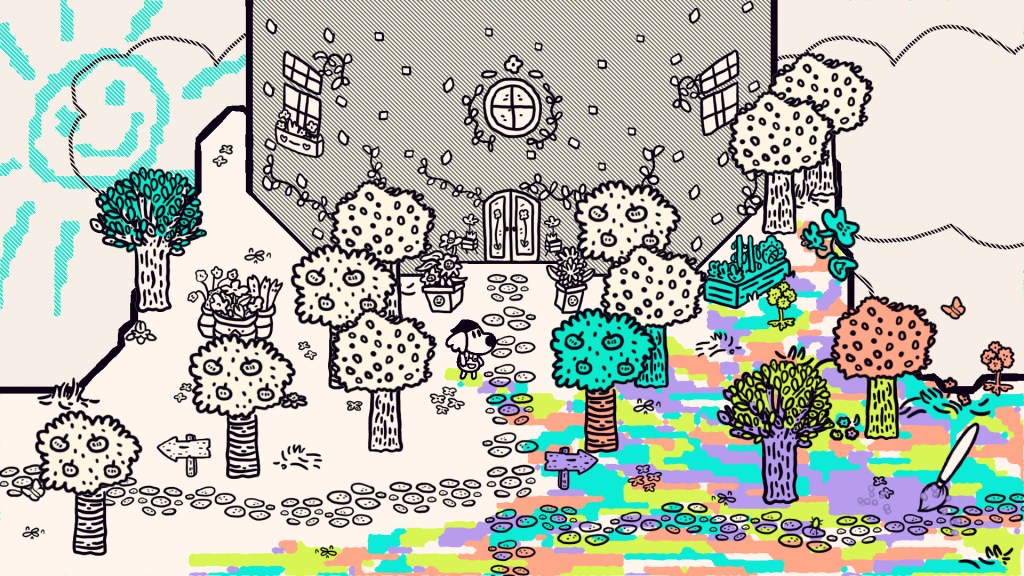
I was shocked by how much I enjoyed Chicory: A Colorful Tale. I expected to like the game, but I often find “relaxing” games to grow boring rather quickly. I find that I need a level of tension and challenge to keep things interesting. Yet Chicory: A Colorful Tale is an enthralling adventure game with almost no action. The gameplay is an addicting mix of coloring book and adventuring which is supplemented by a deeply emotional story and a phenomenal soundtrack. 

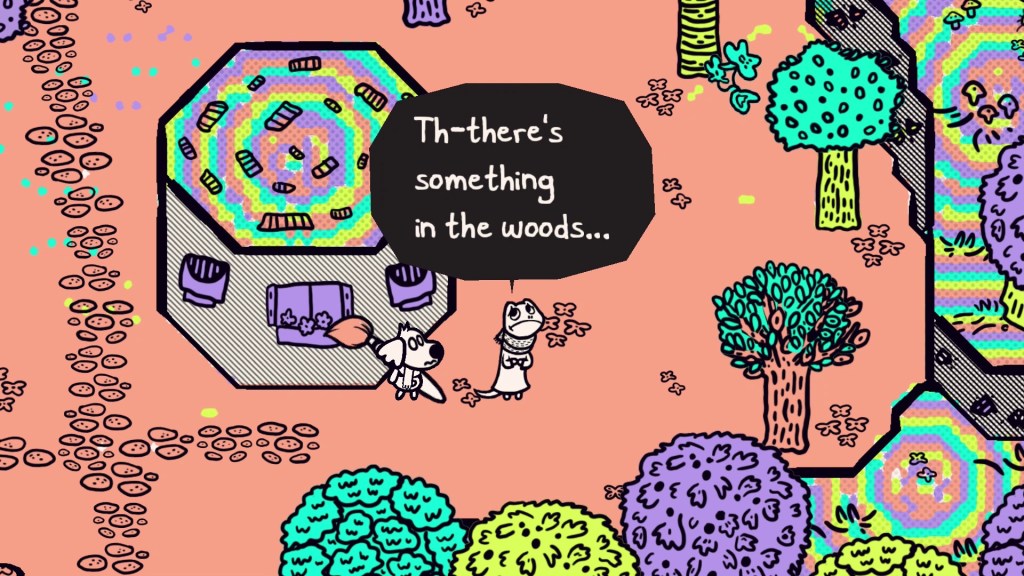
Chicory: A Colorful Tale is set in a cutesy world of talking animals where everything has food-themed names. This world places great importance on art and creativity, as a magical paintbrush has been passed down through generations. This paintbrush is what gives the world its color, and each new wielder puts their own artistic spin on the world. Suddenly, all of the world’s color disappears along with the current wielder. The player takes the brush and sets to paint everything back in. You travel through towns and varied environments, painting as you go and conversing with all the quirky characters.

What begins as a charming adventure with cute characters and storybook art quickly establishes itself as a much more mature tale. I always appreciate when a game tackles mental health topics in an intelligent manner. Chicory: A Colorful Tale is a game about self-doubt, imposter syndrome, depression, and isolation. The drive to create can lead to perfectionism and overly-harsh self-criticism that spirals into deep insecurity. The characters in the game battle these inner demons, but there’s no magic fix. The story is deeply emotional and its core themes will resonate with many players.

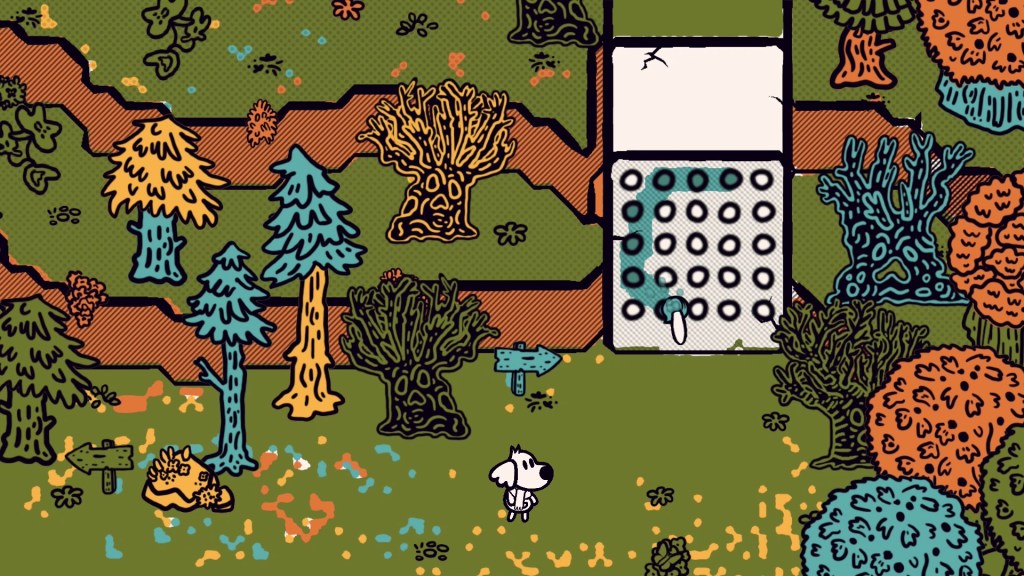
The main hook that sets Chicory: A Colorful Tale apart from other top-down adventure games is the painting mechanic. Along with controlling the main character, you also control the paintbrush that they wield. You use it to fill in color on landscapes, buildings, people, or whatever you want. You can acquire alternative brush styles that let you use it like a paint bucket or to plaster patterns as you go. There’s something so satisfying about filling in each area and leaving a paint trail wherever you go. Revisited areas have a distinct visual indicator of what you did there based on where you left trails of color.

Chicory: A Colorful Tale is absolutely full of things to do. Aside from the main story there’s a good number of side quests and collectibles to find. You can find clothes to show-off your own personal sense of style, or find lost kittens that can be given back to their parents in exchange for furniture sets, or collect litter that can be turned in for other goodies. The side quests are fun little distractions to engage further with the world and its characters. And the best part about all of this is that it never feels necessary. There’s no stats or upgrades, everything is purely aesthetic. You can choose to collect everything and complete the side quests, but there’s no obligation to, and I think that was a great choice for a game like this.

Painting the world is inherently relaxing. There’s no wrong way to do it, and you can mess around however you like. There’re no enemies to contend with and most of the game’s environmental puzzles are fairly simple. As you progress your paint becomes a tool. You can use it to make certain plants grow or create paths where you couldn’t go before. The game commits further to being a chill painting adventure as there are a ton of phone booths to use that can give you hints of where to go and what to do at any given point in the game. It’s clear that the creators of Chicory: A Colorful Tale did not want players to get stuck or frustrated, and this is evident by the lack of combat.

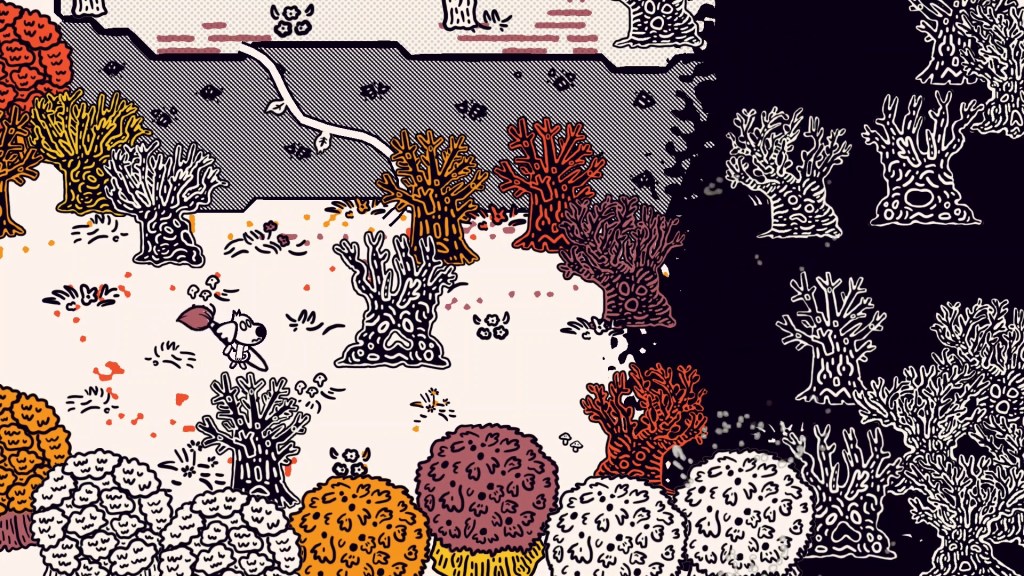
As previously mentioned, there are no enemies in the game to contend with. But there are a handful of boss fights that heighten the tension of the game exponentially. At the end of each chapter, you’ll enter a pitch-black room inhabited by an unholy monstrosity. The juxtaposition between these sections and the rest of the game is fantastic. The sheer panic as you run around and dodge projectiles plays so well into the game’s structure and themes. But even if the fights feel intense, they are very forgiving. You can’t really die, only lose a tiny bit of progress on the current phase. And there are options that you can enable to become invincible if these fights are too difficult. I think this was a good choice as these difficulty spikes might be off putting to players who were looking for a more chill game. I loved the adrenaline rush of these fights, and a huge component of that is the music.

Most of the game has a nice mix of relaxing instrumental music. Tracks are calming compositions of flutes, pianos, and violins. But as you enter the boss chamber, the soundtrack morphs into an electronic chaos as synths and fast-paced drums dominate the tracks. The music throughout Chicory: A Colorful Tale is stellar and varied, I’ve already added some of the songs to my playlists. Lena Raine has done a wonderful job capturing the motifs of the game and applying them through music. I believe that she is one of modern gaming’s best composers, and I hope she becomes as prolific as the all-time greats. I may start playing games based on the inclusion of her music alone.

Chicory: A Colorful Tale is a perfect blend of elements to create a one-of-a-kind cozy experience. It’s a giant coloring book filled with adventure and charming characters. The story is cute and heartwarming, but its mental health themes are very real and will be relatable for much of the game’s audience. While the game’s slower pace and lack of action may not appeal to some, I had a great time restoring color to the world. It is for these reasons that I give Chicory: A Colorful Tale a 9/10. Look no further if you have been wanting a cozy adventure, Chicory: A Colorful Tale is the perfect game to relax with.

Pikmin 2 (2004)

Pikmin 2 is the perfect example of an excellent game that torpedoes itself with an abundance of repetitive and poor-quality content. Despite making plenty of improvements over its predecessor, the majority of Pikmin 2 is spent engaging with its worst content: caves. I wanted to love this game as much as I loved the original Pikmin, and truthfully it surpasses the original game in many ways. But unfortunately 75% of the game is at best dull, and at worst frustrating.

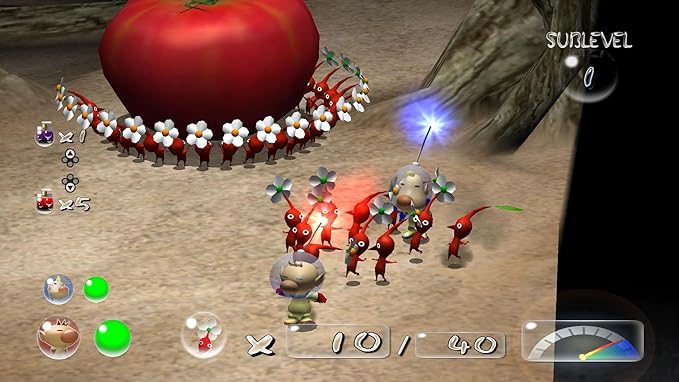
To start with the positive, Pikmin 2 delivers more content than its predecessor. There’s more Pikmin varieties, there’s more enemies, there’s more treasures, there’s more hazards, and there’s even an additional playable character. This is all fantastic. I liked having two captains to control as it allows for more multitasking, which is a core component of the Pikmin series. One captain can oversee a group of Pikmin knocking down a wall, while the other captain can command the Pikmin to attack enemies and replenish their numbers.

The two new Pikmin varieties both are unique and integral to your success. Purple Pikmin are heavy but slow. They can carry 10x the weight of normal Pikmin, and they are incredibly effective in combat. They deal bonus damage and stun enemies upon landing from a throw. White Pikmin are faster than normal Pikmin, are immune to poison, can find treasures underground, and deal massive poison damage to an enemy that attempts to eat them. Both of these varieties are powerful, but are cleverly balanced by their rarity.

Both purple and white Pikmin do not have their own motherships, and as such you cannot use the normal chips and enemy corpses to spawn more of them. Instead, you come across colored flowers that you have to sacrifice other Pikmin into five at a time. This heavily limits how many of these special Pikmin that you will have. While the purple Pikmin in particular are incredibly powerful in combat, I felt nervous bringing large quantities around because losing just a handful of them could be catastrophic. I think this was a great way to balance these new varieties. Having powerful Pikmin at your disposal is very fun, but limiting their quantity makes them risky to use.

Another welcome addition is the inclusion of sprays. You can spend time having Pikmin collect berries that will be refined into two varieties of sprays: bitter and spicy. The spicy spray speeds up your Pikmin and increases their attack power. The bitter spray turns enemies to stone briefly. I enjoyed how these provided some additional decisions to make during combat. You could use them to make encounters much easier, but you had a limited quantity of them unless you spent a ton of time farming them. I saved them for dire situations or tricky boss fights, and I appreciated their inclusion.

When I played the original Pikmin my biggest issue with the game was the poor AI. I haven’t done any sort of extensive testing, but I definitely feel like this was improved in Pikmin 2. They seem to not get stuck on random bits of geometry as often. They don’t get distracted by grass as much. They are quicker to pluck and faster to respond to the whistle. I still had some occasional woes when trying to dismiss Pikmin into groups, but overall, I appreciated how much more responsive they were overall.

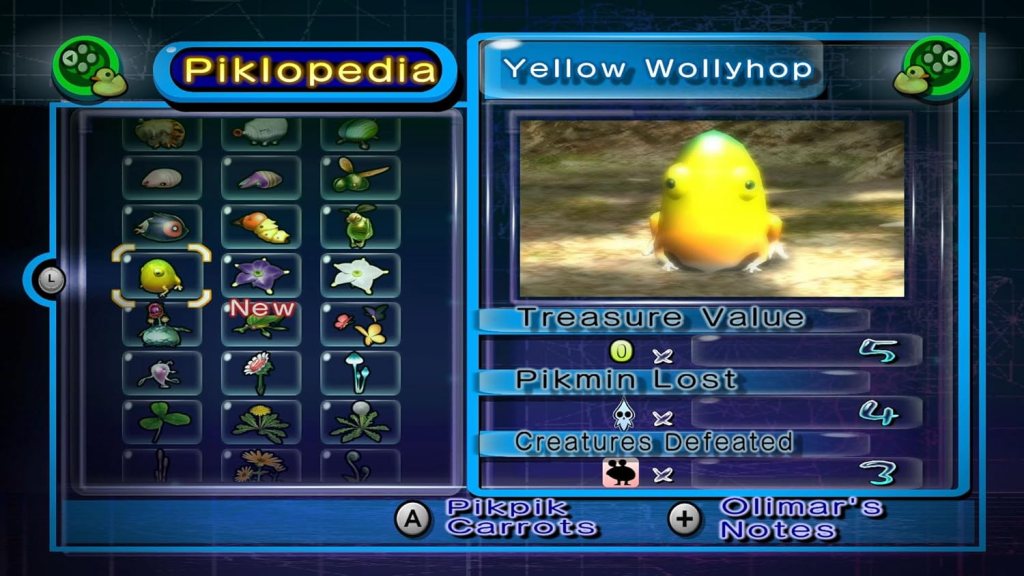
While I didn’t spend a ton of time reading the entries, I loved the Piklopedia. This journal has fun descriptions of both the enemies and the treasures that you collect. These have a lot of personality and charm. They’re funny and a great addition for people who want to delve more into the world of Pikmin.

The gameplay loop of Pikmin 2 is almost identical to the original. Instead of crash landing on Earth, you voluntarily journey there to collect treasure to alleviate your company’s debt. You command your troop of Pikmin to knock down barriers, fight enemies, and collect goodies. A major difference however is that Pikmin 2 lacks a maximum number of days. In the first game, you had 30 days to collect 30 parts. With each day being roughly 15 minutes, there was a sense of urgency to get something done with every second. 

The looming time limit in Pikmin was something that many players felt anxious about, but I think it was a critical element of gameplay. It encouraged the player to maximize their time and take risks. You could leave a troop of Pikmin to knock down walls or carry things back to base, but there was always the worry that they could be intercepted by hungry enemies. And even if you had a couple minutes left in the day, there was always the question of what you could do with your time. Whether it be replenishing your Pikmin supply, feeding them nectar to upgrade them, or knocking down barriers to make the next day easier, I wanted to maximize my time. 

Thirty days was plenty generous unless you were wasting a ton of time, but the looming threat of failure was crucial. This isn’t present in Pikmin 2 at all, as you have an unlimited number of days to accomplish your goals. There’s no rush to do anything, you can play incredibly safe and not have to do any risky multitasking. You don’t have to squeeze every second out of the day, as you can just go to the next day with no downside as the timer approaches night. The lack of urgency was definitely unfortunate, but it was a minor issue when compared to the biggest flaw of Pikmin 2: caves.

Before I begin ranting about caves, I want to make it clear that I genuinely think that they are a good idea. They act as dungeons in which you progress floor by floor with no opportunity to replenish your Pikmin. They have a heavy emphasis on combat, each floor is packed with enemies and there is usually a boss at the end. Defeating the boss usually yields a special treasure with a unique upgrade such as immunity to electricity. I think this is all great. Entering a cave is anxiety inducing as you don’t know what lies ahead, and losing Pikmin can devastate your odds of success. This is all great, but the caves have a few issues: bland aesthetics, monotonous gameplay, and frustrating level design.
There are 14 caves in the game, and even shortly after beating the game I can only really remember 4 of them. And 2 of those I only remember because they were infuriating. A big reason why caves aren’t memorable is because they are just plain ugly and bland. Many of them are just big dirt pits with little to distinguish themselves. Moreover, the levels are semi-randomly generated, so they can’t make up for forgettable visuals with interesting level design.

 Most of the caves lack anything to make them unique. Just floor after floor of basic battles with no end in sight. And many of these caves can take upwards of an hour to complete. It grows old quickly. There are a couple of good examples in Pikmin 2 of what caves could be: Submerged Castle and Glutton’s Kitchen. 
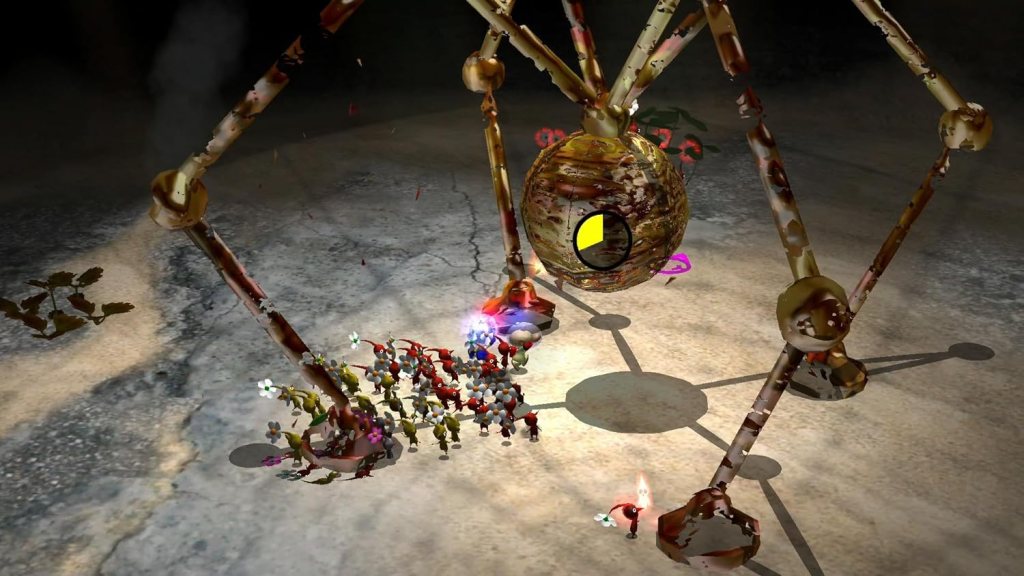
Submerged Castle is easily the best in the game. You have to work quickly to recover treasures in this water-filled cave, because a nightmarish blob appears after 5 minutes on each floor to steamroll your Pikmin. This is a unique mechanic that encourages you to move quickly, but even if you aren’t fast enough there are strategically placed pipes that allow you to hide from the monster. Glutton’s Kitchen is nearly as horrifying, but it is memorable nonetheless. It takes place in a child’s playset of building blocks and a wooden train set. Fat breadbugs try to steal your treasures and drag them back to their dens. The combination of being visually distinct and having a central mechanic is vital in making caves more interesting. It’s a shame that none of the other caves live up to the quality of these two.

I have to mention that my entire experience was left on sour note because of the final caves in the game. They were memorable for the wrong reasons. They felt completely unfair. Every floor was a cramped nightmare filled with dangerous enemies. Not to mention traps such as bombs, rocks, and enemies falling from the sky. I don’t mind a bit of elevated difficulty, but the difficulty spike here is egregious. There are so many ways that you could instantly lose half your army deep into a dungeon. The saving grace here is that you can hard reset to the beginning of the floor.

I don’t think relying on frequently resetting your system is a great mechanic, but it feels necessary here. There are so many catastrophic things that can happen, and it often feels unavoidable. Due to the randomized nature of enemy placement, some configurations are far, far harder than others. The final dungeon, Dream Den, has many floors that feel like the developers just threw every enemy they could into cramped rooms. These aren’t cleverly designed challenges, they are meat grinders that require unsatisfying tactics to succeed.

Like I previously mentioned, you can always just reset and hope for a better outcome or easier layout, but there are some ways that you can combat the tougher encounters. You can play super carefully, going through each floor with no Pikmin at first, triggering every trap. Then abuse the enemy AI to bait them out one at a time. This is time consuming and feels a little cheap as you are just bypassing every obstacle. You could also use purple Pikmin and bitter spray as they are surefire methods to simplify tougher fights, but these are very limited resources unless you spend time farming them. Truthfully, some of the floors in the later dungeons feel like absolutely no thought went into them and they weren’t even playtested.

In my perfect world, Pikmin 2 would have cut down the number of caves dramatically. Instead of 14 repetitive caves, having 5 unique and intentionally designed caves would be a massive improvement. The caves would have their own aesthetic themes and unique mechanics to make them interesting. Each floor would be designed with care and there would be thought into the layout and enemy placements. I understand that randomization can increase replayability, but in the main campaign I wanted purposefully designed dungeons. Randomized dungeons could’ve been a great challenge mode.

I was let down by the number of poor-quality caves in Pikmin 2. Even without a day limit to encourage efficiency, I still was having a great time up until I started delving into the caves. The vast majority of the game is spent in the caves, and it’s by far the worst aspect of the game. More isn’t always better, and Pikmin 2 would’ve been greatly improved by cutting the number of caves in half and spending more time carefully designing them. It really is a shame because Pikmin 2 gets so much right, it just sabotages itself with an abundance of uninteresting and occasionally aggravating content.