Mario + Rabbids Kingdom Battle (2017)

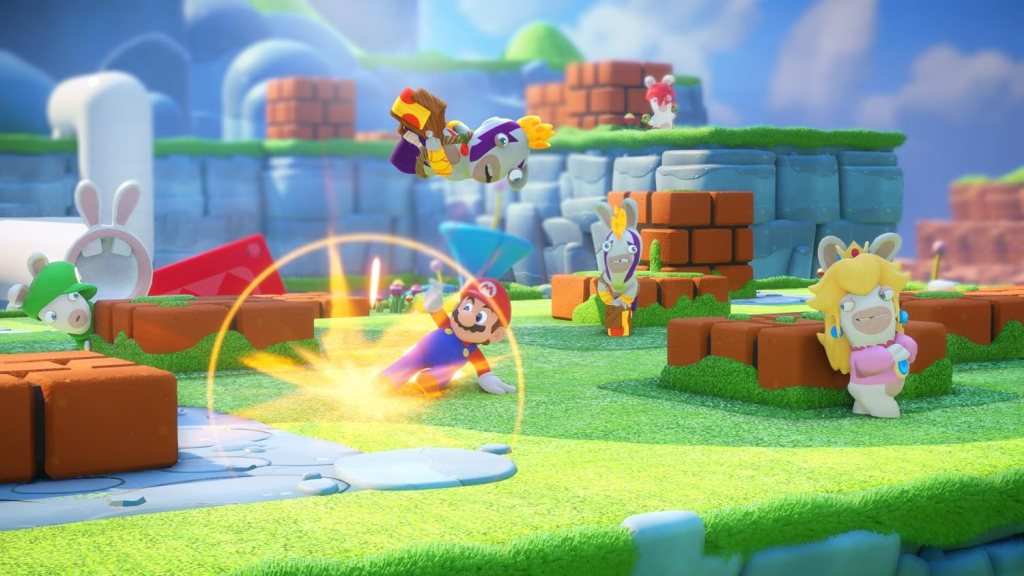
As a lover of tactical RPGs, I am upset that I let Mario + Rabbids Kingdom Battle sit on my shelf for nearly 7 years. While the game seems like a bizarre concept, it is an incredibly well-made game. It innovates on common systems such as hit rates, movement, and special abilities to make for a surprisingly deep tactical experience. While playing it safe is often the key to success in other tactics games, Mario + Rabbids Kingdom Battle encourages aggression and fast-paced play. And while I still think the concept is odd, it somehow works.

When this game was announced as a mash-up of Mario and Rabbids in which they would use guns in turn-based tactics battles, I thought there was no way it would be good. It felt like 3 diametrically opposed things being merged into some bizarro concoction. But it actually works. Mario and his pals team up with a handful of Rabbids cosplaying as Mario characters to take down the out-of-control virus that is corrupting everything.

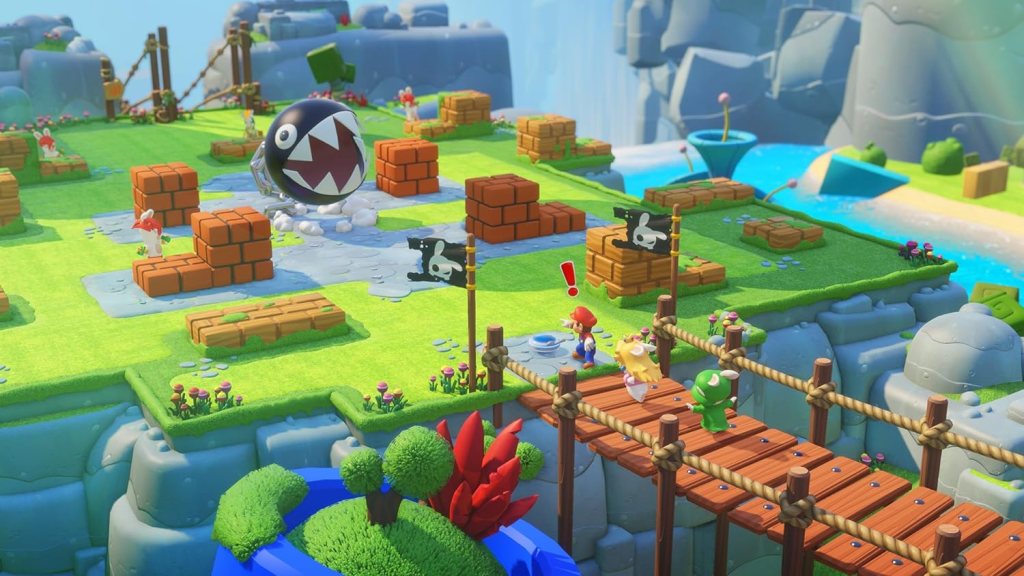
The Mushroom Kingdom, as always, is a fun backdrop for the adventure. It’s bright, colorful, and has a set of classic areas to explore. Walking around the world only serves as a breather between battles, but I enjoyed soaking in all the wacky details. The invasion of Rabbids has left the Mushroom Kingdom and its denizens in chaos. And the Rabbids are strewn about, causing mayhem with their signature brand of physical comedy. Luckily, I think the Rabbids were toned down a bit in terms of their obnoxiousness. They are infamous for how annoying their schtick can be, so I’m glad that it was reduced to more reasonable levels.

Aside from the concept, Mario + Rabbids Kingdom Battle surprised me in how many smart ideas it had. One of the biggest examples of this is the 0/50/100% hit rate system. In most other tactical RPGs, whenever an attack is initiated, there is a complex formula to calculate the odds of the attack landing. This is a core mechanic to games like XCOM in which the player tries to optimize their odds of success while staying in a safe position to minimize enemy hit rates. But the issue I’ve always had with XCOM is how outrageously bad it feels to carefully enact a strategy that relies on a 97% shot, but it fails and you are severely punished. It’s just how odds work, but that doesn’t stop it from feeling terrible.

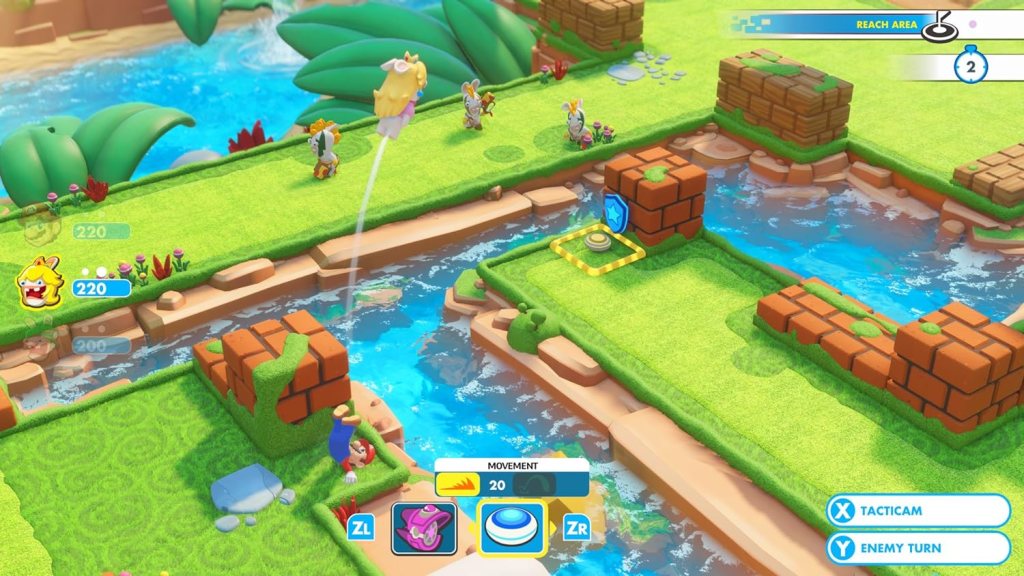
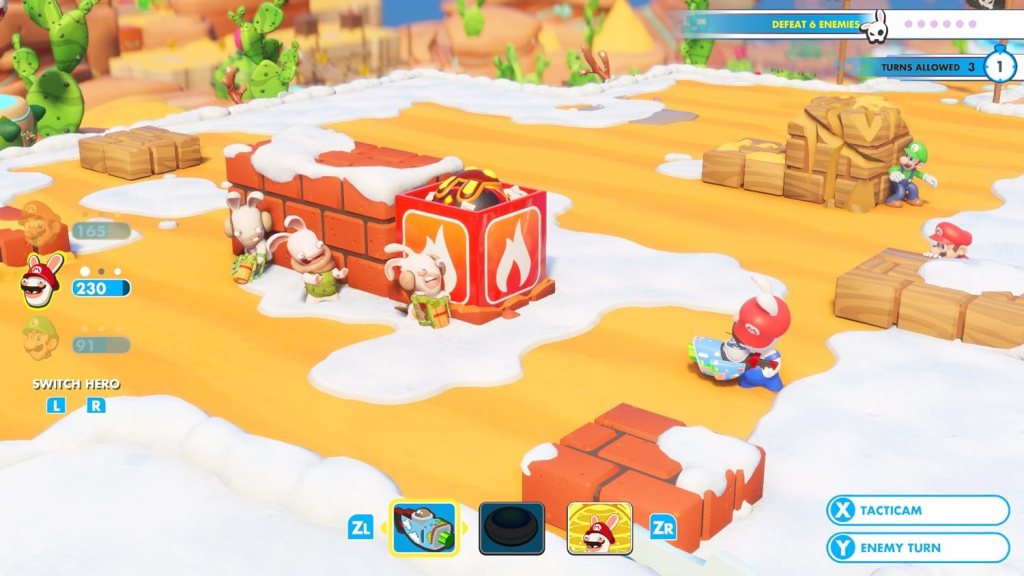
In order to combat this feeling of getting unlucky, Fire Emblem implements its own system. It amplifies the percentages under the hood, so a high percentage like 90% is really closer to 98%, while a low percentage like 20% is more like 8%. While it is directly lying to the player about odds, I think it works wonderfully because the player shouldn’t be basing their strategies on low percentage attacks. It just makes the game feel better and doesn’t make you feel like you got unlucky as people are notoriously bad at estimating odds. Mario + Rabbids Kingdom Battle gets around this conundrum entirely by boiling down hit rates to 3 categories: 0%, 50%, and 100%. If attacking an enemy fully behind covered, you will not hit them. If they are partially behind cover, you have a 50/50 shot. And if they are in the open or you flank them, you a guaranteed to land a hit.

I think this system is genius because of how simple it is. You are encouraged to flank enemies, as you can’t reliably hit them otherwise. There’s no frustration in missing a high-percentage attack because they simply don’t exist. You almost always know beforehand whether the attack will hit, and hitting 50/50s should be seen as a bonus, not a core part of your strategy. You can’t blame luck when you miss a coin flip. There are other forms of statistics in the game, like weapons that have a range of damage they can inflict and can occasionally trigger special effects. But like with the 50/50 shots, you shouldn’t rely on special effects or max damage attacks as they are uncommon. If playing well, you always know when an attack will hit and the base amount of damage it will do, anything on top of that is a bonus. This simplified hit system is such an intelligent mitigation technique of the player feeling unlucky when playing tactical games.

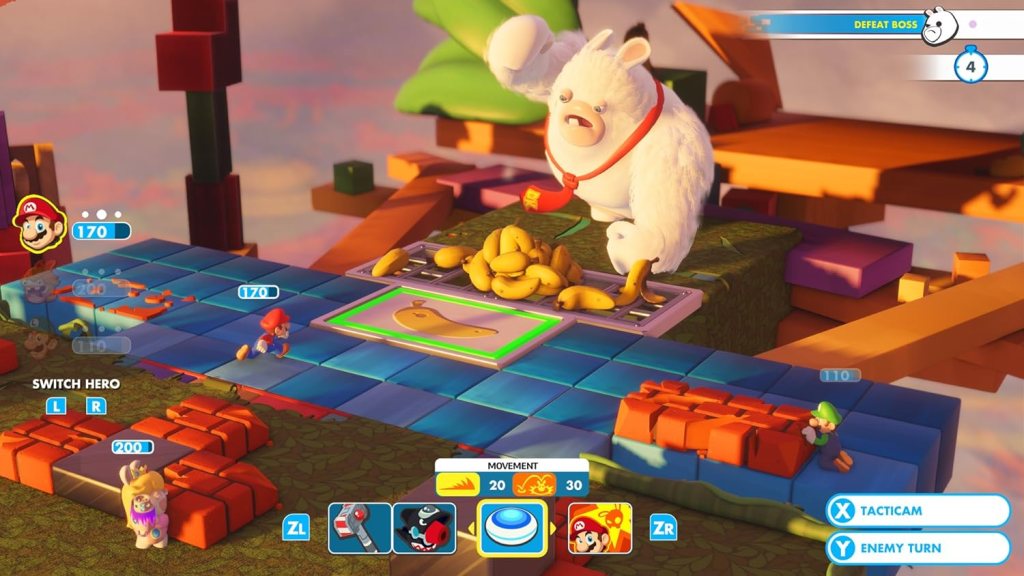
Even though the hit system is simplified, Mario + Rabbids Kingdom Battle has a surprising amount of depth. The battles are small, you only can control 3 characters in relatively compact maps against a handful of foes. But each turn brings so many possibilities that it’s staggering. Each character has two weapons, two special abilities, and some extreme mobility. On a single turn for a single character, you will be able to move, dash through an enemy or two to deal damage, jump off a teammate for extended movement, attack an enemy with your weapon of choice (which also have a reasonable chance to trigger special effects), and decide if you want to use a special ability. And you can take these actions in any order you want. The breadth of options here is immense. 

All of the possibilities available to both the player and the opposition make for some extremely dynamic battles. The extreme mobility and combat capabilities paired with destructible environments make it difficult to predict exactly how any given turn will play out. This encourages aggressive play. You should maximize your own capabilities to take out as many enemies as possible before they get the chance to retaliate. Every turn feels like a mini-puzzle as to how to get the most out of your character’s actions. Moreover, if you want to get a “perfect” score on every stage then you have to complete the battle in a set number of turns, further encouraging you to play aggressively. I love that flanking and going on the offensive is the best strategy, as many other tactical games encourage turtling and playing overly safe.

Mario + Rabbids Kingdom Battle can actually be pretty tricky at times. Enemies can easily flank and position themselves to deal massive damage. Boss fights are multi-staged affairs with unique mechanics. And there’s tons of enemy variety sporting different weapons and effects to watch out for. This makes for some fun challenges as you learn how to utilize your characters effectively. The upgrade system encourages you to specialize your characters to bring out their strengths.

My only complaint about the gameplay is that I wish it encouraged more experimentation with party members. You can only have 3 in any given battle, and 1 of those is required to be Mario, leaving only 2 options for other members. All the characters were unique and had some interesting abilities to be utilized, but I never really strayed from my core party because I didn’t need to. My setup of Mario, Luigi, and Rabbid Luigi was more than capable of taking on any of the main campaign and all of the bonus levels. Maybe if the game didn’t have such restrictive limitations on my party, I would’ve tried different characters. Another option is if there were challenges that encouraged the use of members that you haven’t utilized that showcased each character’s niche.

Aside from gameplay, I did have a handful of minor gripes about the user interface and user experience. The camera during battle left a lot to be desired. I wish you could freely rotate it and zoom out to see the entire battlefield. It wasn’t a huge deal as most maps are tiny, but some of the missions are massive and it can be difficult to grasp which route to take to the goal. Another improvement that I would’ve liked to see is the ability to toggle enemy movement and attack ranges. You can do this for a single enemy in a special menu, but there’s no way to leave it on for when you are actually making a move. You just have to memorize their range if you are trying to keep a character out of harm’s way.

The biggest issue I had with the user experience is just how long everything takes. There’s a panning camera shot at the beginning of the battle, a celebratory animation when you win, and a ton of seemingly random cinematic animations that occur during battle. These cinematic animations can happen anytime, whether you are just sliding for a little bit of damage, attacking normally, or triggering an ability. They do look nice, but this is a fairly lengthy game with a ton of battles. You are going to be seeing the same animations over and over and over. The battles themselves are only a few turns long, but they can take a while simply because there are so many actions and superfluous animations. You can speed up enemy turns which is a great feature, but I would’ve liked options to be able to speed up all animations and disable the cinematic animations altogether.

Overall, I was shocked how much I enjoyed Mario + Rabbids Kingdom Battle. I thought the game would be too simplistic to be engaging, but I was proved completely wrong. Every turn has so many dynamic possibilities that lends to aggressive play. The 0/50/100 hit percentage system was a genius method of alleviating frustration and encouraging flanking maneuvers. Despite a few little UI hiccups, Mario + Rabbids Kingdom Battle is a phenomenal strategy game. If you are like me and have Mario + Rabbids Kingdom Battle sitting on your shelf, do yourself a favor and give it a try.

Chicory: A Colorful Tale (2021)

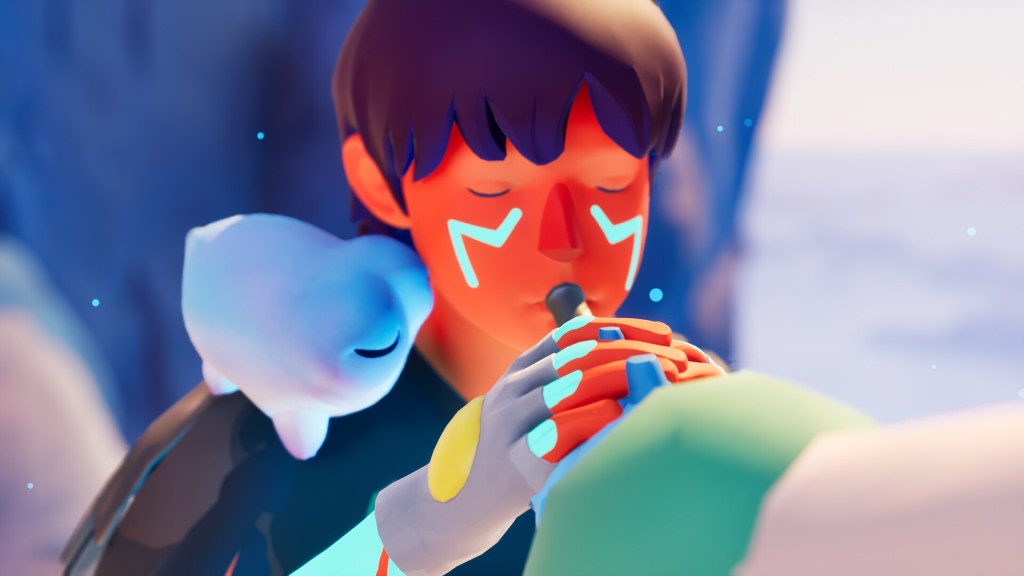
I was shocked by how much I enjoyed Chicory: A Colorful Tale. I expected to like the game, but I often find “relaxing” games to grow boring rather quickly. I find that I need a level of tension and challenge to keep things interesting. Yet Chicory: A Colorful Tale is an enthralling adventure game with almost no action. The gameplay is an addicting mix of coloring book and adventuring which is supplemented by a deeply emotional story and a phenomenal soundtrack. 

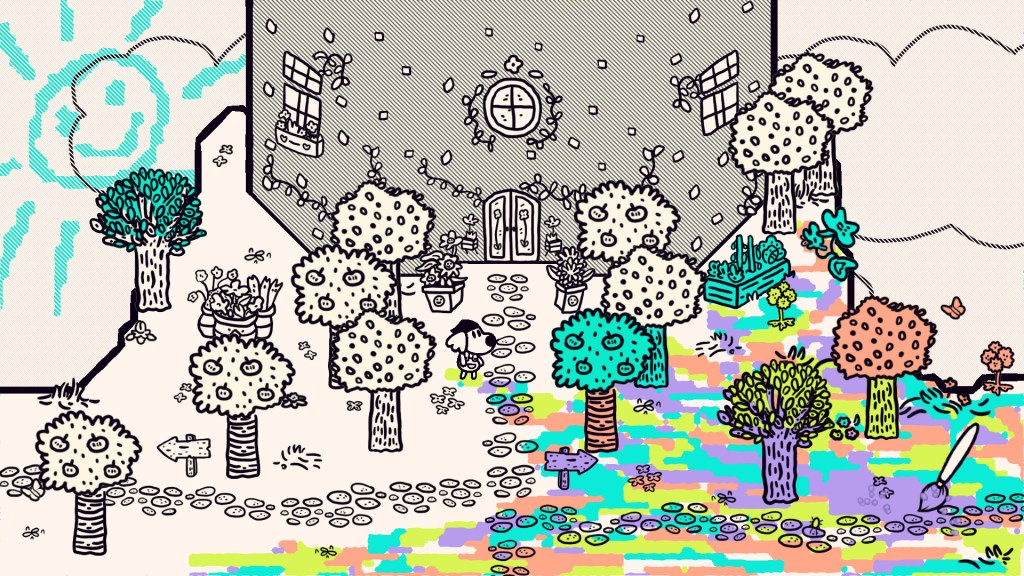
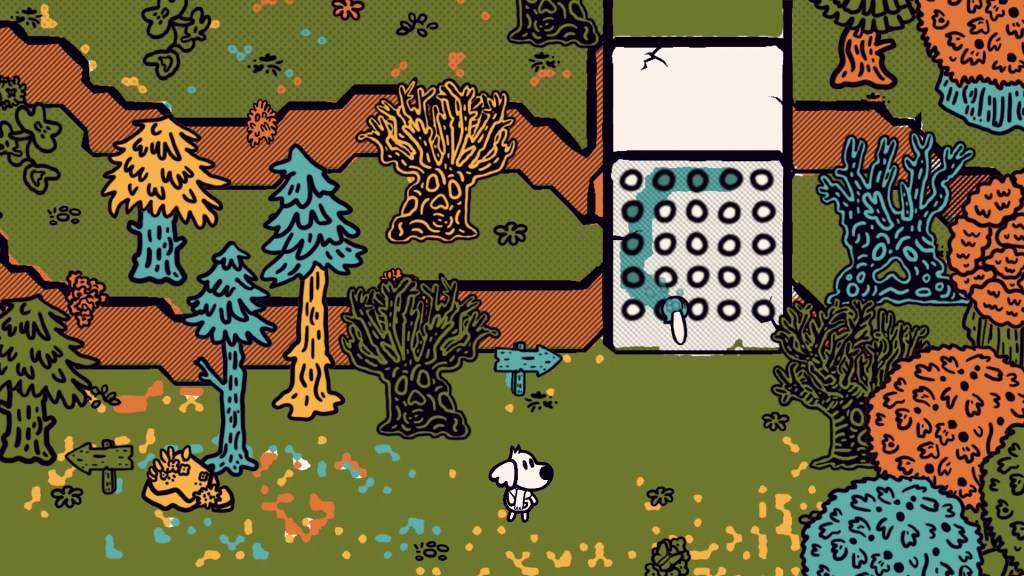
Chicory: A Colorful Tale is set in a cutesy world of talking animals where everything has food-themed names. This world places great importance on art and creativity, as a magical paintbrush has been passed down through generations. This paintbrush is what gives the world its color, and each new wielder puts their own artistic spin on the world. Suddenly, all of the world’s color disappears along with the current wielder. The player takes the brush and sets to paint everything back in. You travel through towns and varied environments, painting as you go and conversing with all the quirky characters.

What begins as a charming adventure with cute characters and storybook art quickly establishes itself as a much more mature tale. I always appreciate when a game tackles mental health topics in an intelligent manner. Chicory: A Colorful Tale is a game about self-doubt, imposter syndrome, depression, and isolation. The drive to create can lead to perfectionism and overly-harsh self-criticism that spirals into deep insecurity. The characters in the game battle these inner demons, but there’s no magic fix. The story is deeply emotional and its core themes will resonate with many players.

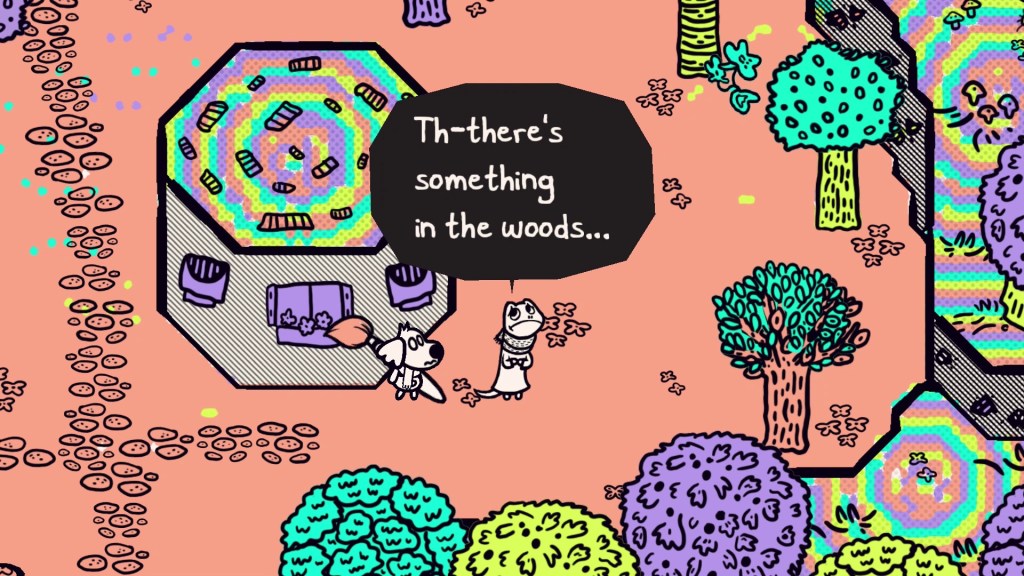
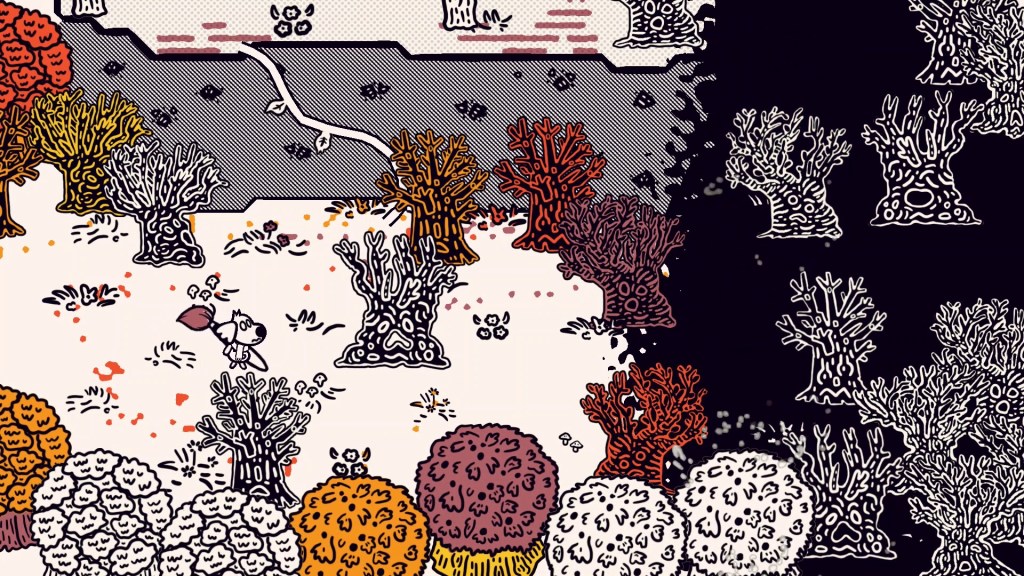
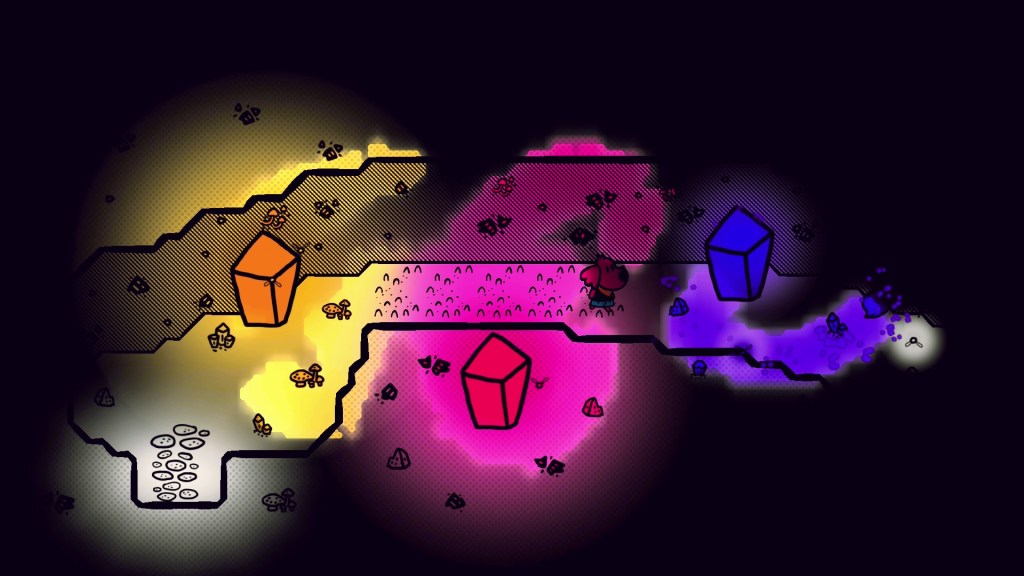
The main hook that sets Chicory: A Colorful Tale apart from other top-down adventure games is the painting mechanic. Along with controlling the main character, you also control the paintbrush that they wield. You use it to fill in color on landscapes, buildings, people, or whatever you want. You can acquire alternative brush styles that let you use it like a paint bucket or to plaster patterns as you go. There’s something so satisfying about filling in each area and leaving a paint trail wherever you go. Revisited areas have a distinct visual indicator of what you did there based on where you left trails of color.

Chicory: A Colorful Tale is absolutely full of things to do. Aside from the main story there’s a good number of side quests and collectibles to find. You can find clothes to show-off your own personal sense of style, or find lost kittens that can be given back to their parents in exchange for furniture sets, or collect litter that can be turned in for other goodies. The side quests are fun little distractions to engage further with the world and its characters. And the best part about all of this is that it never feels necessary. There’s no stats or upgrades, everything is purely aesthetic. You can choose to collect everything and complete the side quests, but there’s no obligation to, and I think that was a great choice for a game like this.

Painting the world is inherently relaxing. There’s no wrong way to do it, and you can mess around however you like. There’re no enemies to contend with and most of the game’s environmental puzzles are fairly simple. As you progress your paint becomes a tool. You can use it to make certain plants grow or create paths where you couldn’t go before. The game commits further to being a chill painting adventure as there are a ton of phone booths to use that can give you hints of where to go and what to do at any given point in the game. It’s clear that the creators of Chicory: A Colorful Tale did not want players to get stuck or frustrated, and this is evident by the lack of combat.

As previously mentioned, there are no enemies in the game to contend with. But there are a handful of boss fights that heighten the tension of the game exponentially. At the end of each chapter, you’ll enter a pitch-black room inhabited by an unholy monstrosity. The juxtaposition between these sections and the rest of the game is fantastic. The sheer panic as you run around and dodge projectiles plays so well into the game’s structure and themes. But even if the fights feel intense, they are very forgiving. You can’t really die, only lose a tiny bit of progress on the current phase. And there are options that you can enable to become invincible if these fights are too difficult. I think this was a good choice as these difficulty spikes might be off putting to players who were looking for a more chill game. I loved the adrenaline rush of these fights, and a huge component of that is the music.

Most of the game has a nice mix of relaxing instrumental music. Tracks are calming compositions of flutes, pianos, and violins. But as you enter the boss chamber, the soundtrack morphs into an electronic chaos as synths and fast-paced drums dominate the tracks. The music throughout Chicory: A Colorful Tale is stellar and varied, I’ve already added some of the songs to my playlists. Lena Raine has done a wonderful job capturing the motifs of the game and applying them through music. I believe that she is one of modern gaming’s best composers, and I hope she becomes as prolific as the all-time greats. I may start playing games based on the inclusion of her music alone.

Chicory: A Colorful Tale is a perfect blend of elements to create a one-of-a-kind cozy experience. It’s a giant coloring book filled with adventure and charming characters. The story is cute and heartwarming, but its mental health themes are very real and will be relatable for much of the game’s audience. While the game’s slower pace and lack of action may not appeal to some, I had a great time restoring color to the world. It is for these reasons that I give Chicory: A Colorful Tale a 9/10. Look no further if you have been wanting a cozy adventure, Chicory: A Colorful Tale is the perfect game to relax with.

Pikmin 2 (2004)

Pikmin 2 is the perfect example of an excellent game that torpedoes itself with an abundance of repetitive and poor-quality content. Despite making plenty of improvements over its predecessor, the majority of Pikmin 2 is spent engaging with its worst content: caves. I wanted to love this game as much as I loved the original Pikmin, and truthfully it surpasses the original game in many ways. But unfortunately 75% of the game is at best dull, and at worst frustrating.

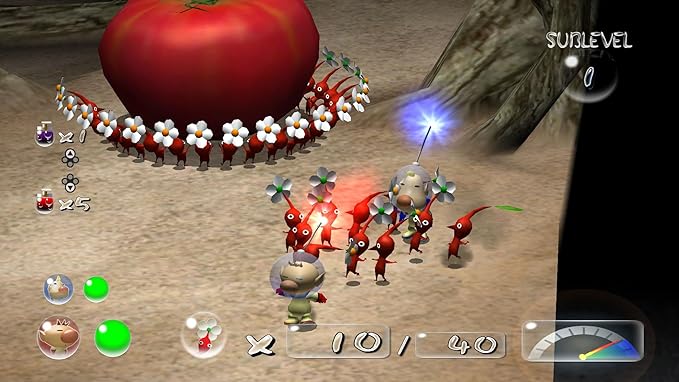
To start with the positive, Pikmin 2 delivers more content than its predecessor. There’s more Pikmin varieties, there’s more enemies, there’s more treasures, there’s more hazards, and there’s even an additional playable character. This is all fantastic. I liked having two captains to control as it allows for more multitasking, which is a core component of the Pikmin series. One captain can oversee a group of Pikmin knocking down a wall, while the other captain can command the Pikmin to attack enemies and replenish their numbers.

The two new Pikmin varieties both are unique and integral to your success. Purple Pikmin are heavy but slow. They can carry 10x the weight of normal Pikmin, and they are incredibly effective in combat. They deal bonus damage and stun enemies upon landing from a throw. White Pikmin are faster than normal Pikmin, are immune to poison, can find treasures underground, and deal massive poison damage to an enemy that attempts to eat them. Both of these varieties are powerful, but are cleverly balanced by their rarity.

Both purple and white Pikmin do not have their own motherships, and as such you cannot use the normal chips and enemy corpses to spawn more of them. Instead, you come across colored flowers that you have to sacrifice other Pikmin into five at a time. This heavily limits how many of these special Pikmin that you will have. While the purple Pikmin in particular are incredibly powerful in combat, I felt nervous bringing large quantities around because losing just a handful of them could be catastrophic. I think this was a great way to balance these new varieties. Having powerful Pikmin at your disposal is very fun, but limiting their quantity makes them risky to use.

Another welcome addition is the inclusion of sprays. You can spend time having Pikmin collect berries that will be refined into two varieties of sprays: bitter and spicy. The spicy spray speeds up your Pikmin and increases their attack power. The bitter spray turns enemies to stone briefly. I enjoyed how these provided some additional decisions to make during combat. You could use them to make encounters much easier, but you had a limited quantity of them unless you spent a ton of time farming them. I saved them for dire situations or tricky boss fights, and I appreciated their inclusion.

When I played the original Pikmin my biggest issue with the game was the poor AI. I haven’t done any sort of extensive testing, but I definitely feel like this was improved in Pikmin 2. They seem to not get stuck on random bits of geometry as often. They don’t get distracted by grass as much. They are quicker to pluck and faster to respond to the whistle. I still had some occasional woes when trying to dismiss Pikmin into groups, but overall, I appreciated how much more responsive they were overall.

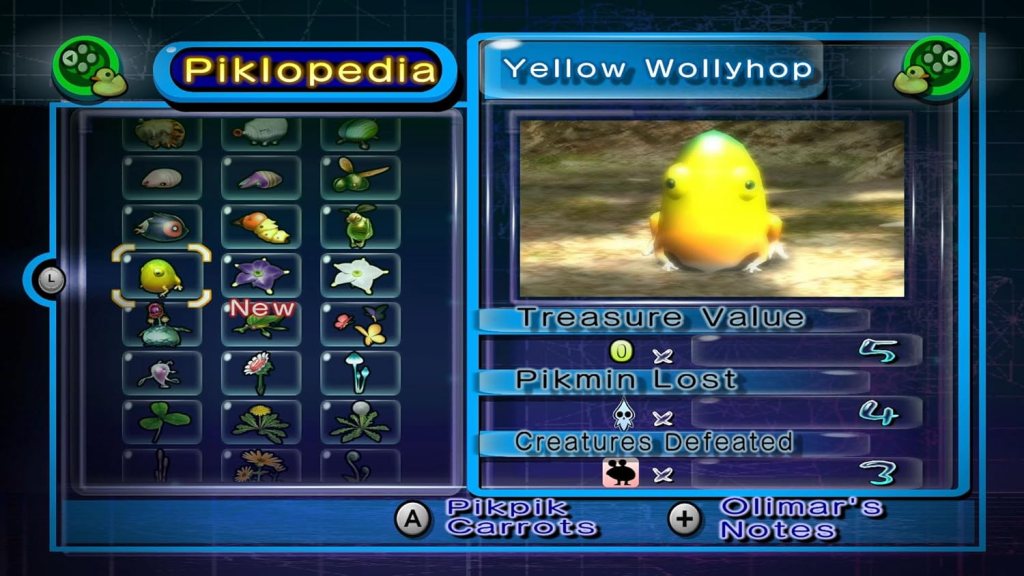
While I didn’t spend a ton of time reading the entries, I loved the Piklopedia. This journal has fun descriptions of both the enemies and the treasures that you collect. These have a lot of personality and charm. They’re funny and a great addition for people who want to delve more into the world of Pikmin.

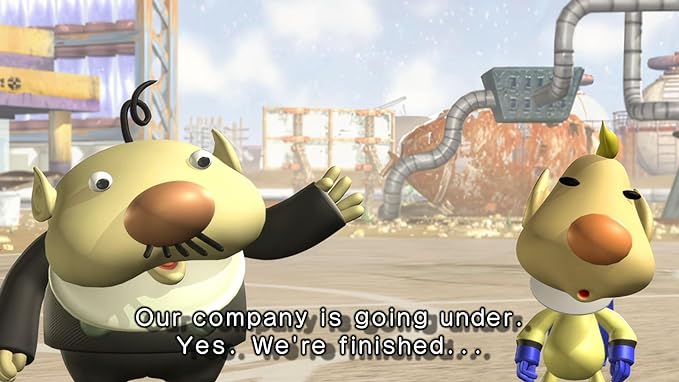
The gameplay loop of Pikmin 2 is almost identical to the original. Instead of crash landing on Earth, you voluntarily journey there to collect treasure to alleviate your company’s debt. You command your troop of Pikmin to knock down barriers, fight enemies, and collect goodies. A major difference however is that Pikmin 2 lacks a maximum number of days. In the first game, you had 30 days to collect 30 parts. With each day being roughly 15 minutes, there was a sense of urgency to get something done with every second. 

The looming time limit in Pikmin was something that many players felt anxious about, but I think it was a critical element of gameplay. It encouraged the player to maximize their time and take risks. You could leave a troop of Pikmin to knock down walls or carry things back to base, but there was always the worry that they could be intercepted by hungry enemies. And even if you had a couple minutes left in the day, there was always the question of what you could do with your time. Whether it be replenishing your Pikmin supply, feeding them nectar to upgrade them, or knocking down barriers to make the next day easier, I wanted to maximize my time. 

Thirty days was plenty generous unless you were wasting a ton of time, but the looming threat of failure was crucial. This isn’t present in Pikmin 2 at all, as you have an unlimited number of days to accomplish your goals. There’s no rush to do anything, you can play incredibly safe and not have to do any risky multitasking. You don’t have to squeeze every second out of the day, as you can just go to the next day with no downside as the timer approaches night. The lack of urgency was definitely unfortunate, but it was a minor issue when compared to the biggest flaw of Pikmin 2: caves.

Before I begin ranting about caves, I want to make it clear that I genuinely think that they are a good idea. They act as dungeons in which you progress floor by floor with no opportunity to replenish your Pikmin. They have a heavy emphasis on combat, each floor is packed with enemies and there is usually a boss at the end. Defeating the boss usually yields a special treasure with a unique upgrade such as immunity to electricity. I think this is all great. Entering a cave is anxiety inducing as you don’t know what lies ahead, and losing Pikmin can devastate your odds of success. This is all great, but the caves have a few issues: bland aesthetics, monotonous gameplay, and frustrating level design.

There are 14 caves in the game, and even shortly after beating the game I can only really remember 4 of them. And 2 of those I only remember because they were infuriating. A big reason why caves aren’t memorable is because they are just plain ugly and bland. Many of them are just big dirt pits with little to distinguish themselves. Moreover, the levels are semi-randomly generated, so they can’t make up for forgettable visuals with interesting level design.

 Most of the caves lack anything to make them unique. Just floor after floor of basic battles with no end in sight. And many of these caves can take upwards of an hour to complete. It grows old quickly. There are a couple of good examples in Pikmin 2 of what caves could be: Submerged Castle and Glutton’s Kitchen. 

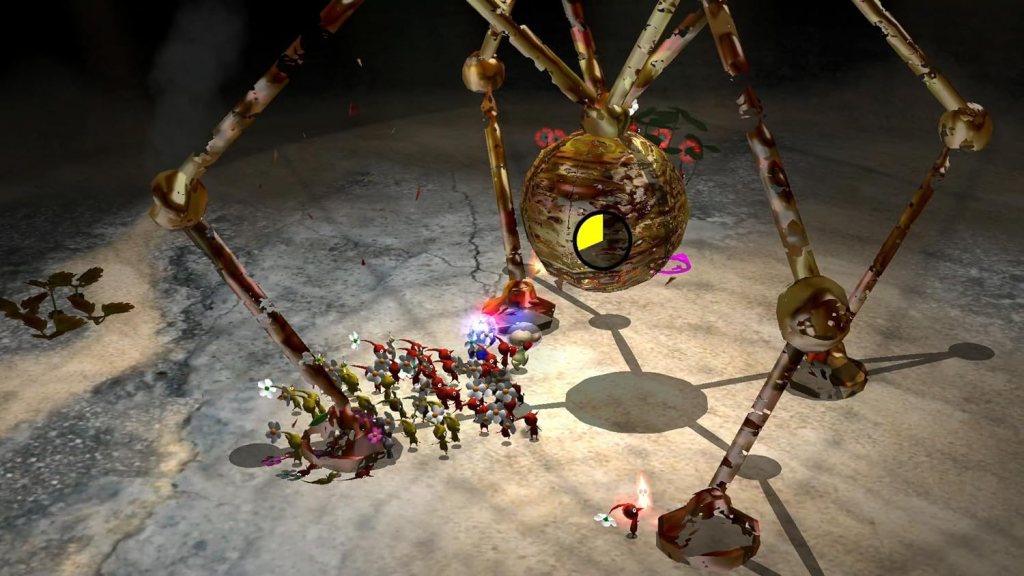
Submerged Castle is easily the best in the game. You have to work quickly to recover treasures in this water-filled cave, because a nightmarish blob appears after 5 minutes on each floor to steamroll your Pikmin. This is a unique mechanic that encourages you to move quickly, but even if you aren’t fast enough there are strategically placed pipes that allow you to hide from the monster. Glutton’s Kitchen is nearly as horrifying, but it is memorable nonetheless. It takes place in a child’s playset of building blocks and a wooden train set. Fat breadbugs try to steal your treasures and drag them back to their dens. The combination of being visually distinct and having a central mechanic is vital in making caves more interesting. It’s a shame that none of the other caves live up to the quality of these two.

I have to mention that my entire experience was left on sour note because of the final caves in the game. They were memorable for the wrong reasons. They felt completely unfair. Every floor was a cramped nightmare filled with dangerous enemies. Not to mention traps such as bombs, rocks, and enemies falling from the sky. I don’t mind a bit of elevated difficulty, but the difficulty spike here is egregious. There are so many ways that you could instantly lose half your army deep into a dungeon. The saving grace here is that you can hard reset to the beginning of the floor.

I don’t think relying on frequently resetting your system is a great mechanic, but it feels necessary here. There are so many catastrophic things that can happen, and it often feels unavoidable. Due to the randomized nature of enemy placement, some configurations are far, far harder than others. The final dungeon, Dream Den, has many floors that feel like the developers just threw every enemy they could into cramped rooms. These aren’t cleverly designed challenges, they are meat grinders that require unsatisfying tactics to succeed.

Like I previously mentioned, you can always just reset and hope for a better outcome or easier layout, but there are some ways that you can combat the tougher encounters. You can play super carefully, going through each floor with no Pikmin at first, triggering every trap. Then abuse the enemy AI to bait them out one at a time. This is time consuming and feels a little cheap as you are just bypassing every obstacle. You could also use purple Pikmin and bitter spray as they are surefire methods to simplify tougher fights, but these are very limited resources unless you spend time farming them. Truthfully, some of the floors in the later dungeons feel like absolutely no thought went into them and they weren’t even playtested.

In my perfect world, Pikmin 2 would have cut down the number of caves dramatically. Instead of 14 repetitive caves, having 5 unique and intentionally designed caves would be a massive improvement. The caves would have their own aesthetic themes and unique mechanics to make them interesting. Each floor would be designed with care and there would be thought into the layout and enemy placements. I understand that randomization can increase replayability, but in the main campaign I wanted purposefully designed dungeons. Randomized dungeons could’ve been a great challenge mode.

I was let down by the number of poor-quality caves in Pikmin 2. Even without a day limit to encourage efficiency, I still was having a great time up until I started delving into the caves. The vast majority of the game is spent in the caves, and it’s by far the worst aspect of the game. More isn’t always better, and Pikmin 2 would’ve been greatly improved by cutting the number of caves in half and spending more time carefully designing them. It really is a shame because Pikmin 2 gets so much right, it just sabotages itself with an abundance of uninteresting and occasionally aggravating content.

The Talos Principle (2014)

Many games try and fail to meaningfully incorporate philosophical concepts. The Talos Principle is a puzzle game that is genuinely impressive in how it asks classical philosophy questions in a context in which they make sense. Philosophy always runs the risk of sounding pretentious, but The Talos Principle balances it masterfully. Puzzle games in general rarely have a story worth talking about, so I was pleasantly surprised with the unique approach that The Talos Principle took. It’s not the hardest puzzle game around, but I enjoyed how puzzles slowly ramped up in complexity while remaining approachable.

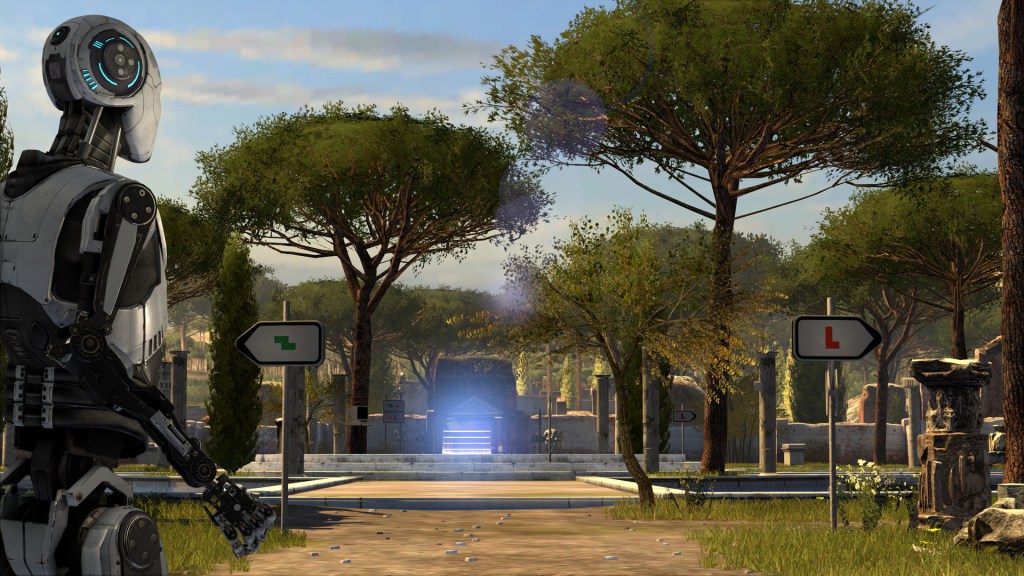
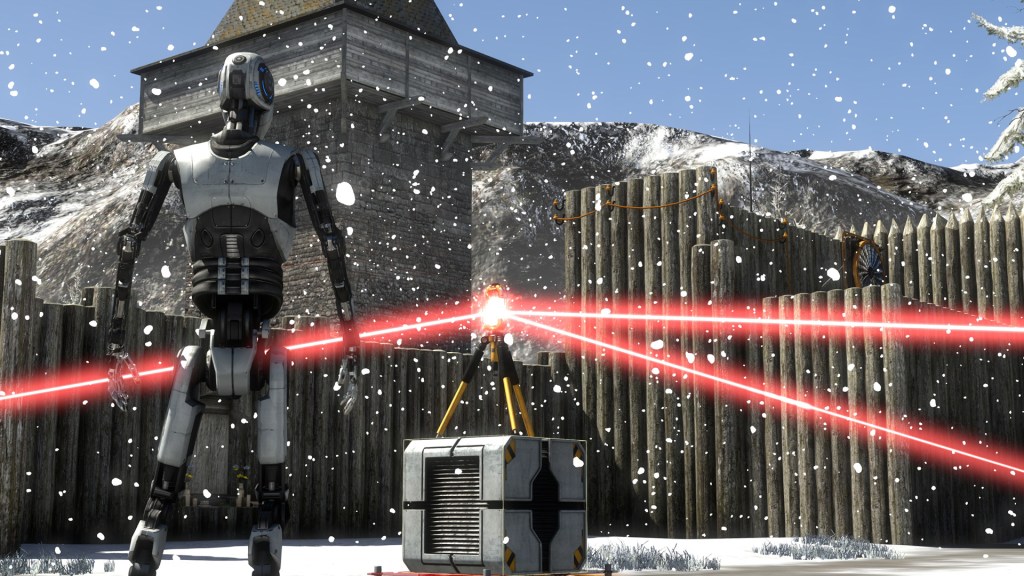
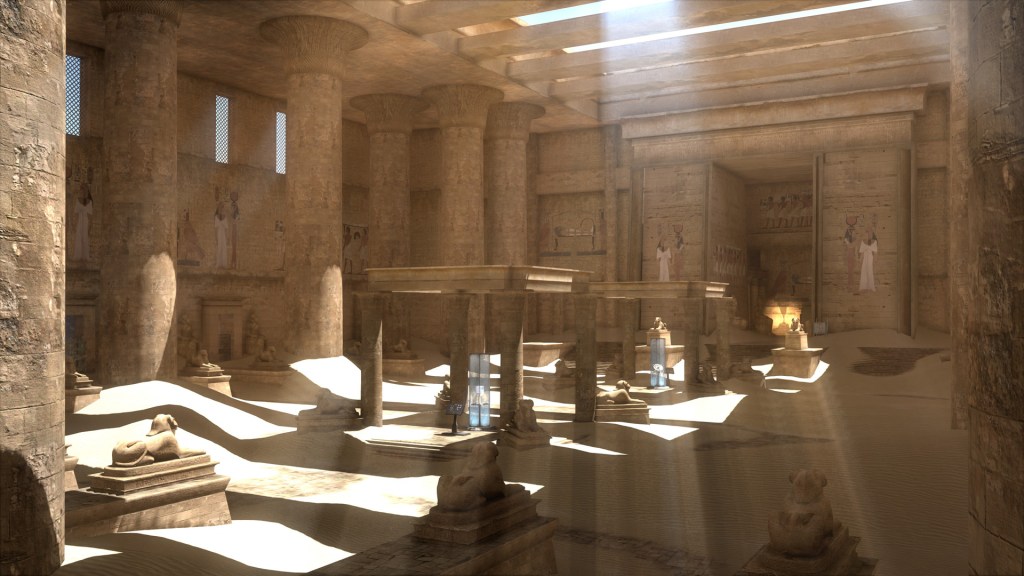
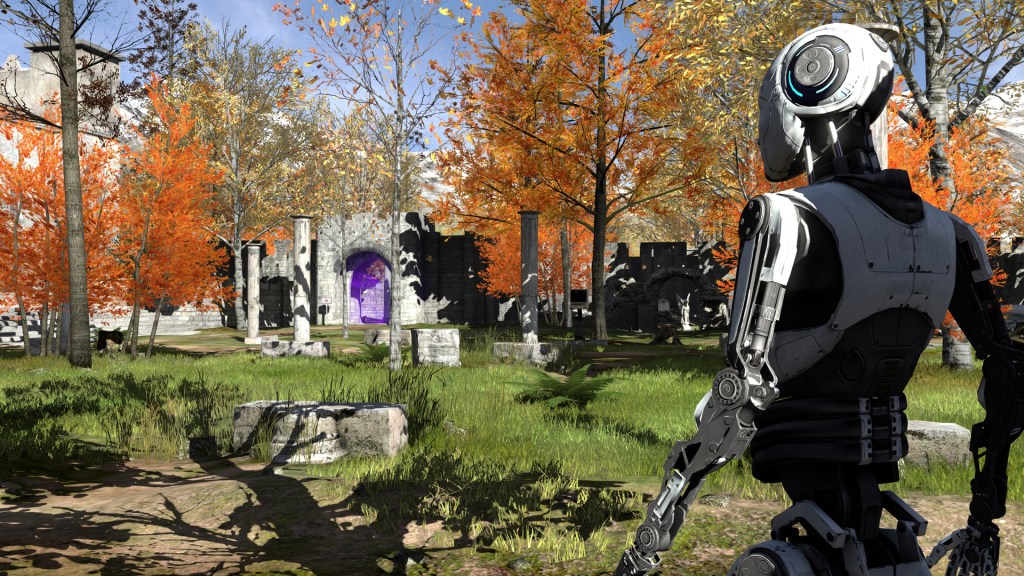
The Talos Principle begins when you come to life in what seems like Greek ruins. An omnipresent voice warmly regards you as his child, as he is Elohim. He is God. You have to solve his puzzles and stay on the path to achieve eternal life. But he warns you against ascending the tower that looms over the temples of this land. Aside from the occasional praises from Elohim, the only other signs of life are in the computer terminals as well as messages scrawled on the wall from those who came before you.

The computer terminals have a variety of texts. Some are excerpts from classic philosophy documents, some are random blog posts, and some are emails sent to and from a scientific institute. It quickly becomes clear that something catastrophic has happened to humanity, and you are in some sort of simulation that had been created by the aforementioned science team. An AI converses with you from the terminal, asking you questions about sentience, consciousness, humanity, free will, and other introspective musings.

I don’t think The Talos Principle tackles any new philosophical concepts, but it’s how the game presents these ideas which makes it intriguing. When you are confronted with the implication that you are a program in a simulation, it makes you think hard about what constitutes a human. You argue with the AI assistant at the computer terminals, debating the purpose of all of this and if you are truly human or not. Can a program ever achieve free will, or does it merely do as it’s told? Philosophy often borders on being pretentious, but The Talos Principle never felt like it was trying to show off how smart it was. It merely places you in the appropriate context to be confronted with these classic questions.

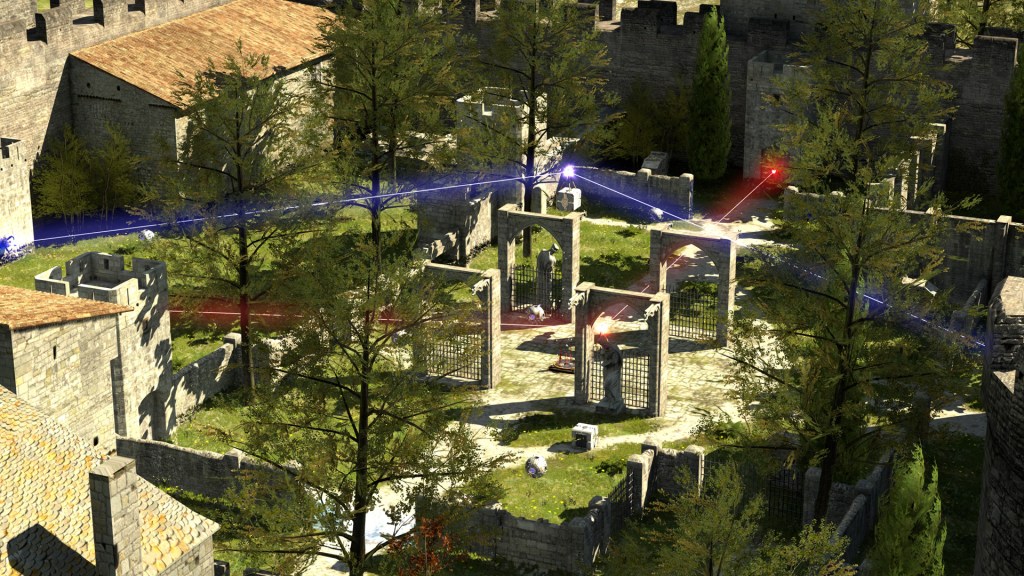
Aside from its philosophical elements, The Talos Principle is first and foremost a puzzle game. Each puzzle is almost like a maze filled with tools and obstacles. There are force fields, turrets, and moving minefields that prevent you from reaching your goal. You are given an arsenal of tools such as jammers, cubes, and laser reflectors to assist you open up pathways. The puzzle design frequently relies heavily on spatial reasoning and order of operations. As you get further and further into the game, the number of tools and obstacles grows such that you have to perform dozens of steps to complete a single puzzle.

A technique that I noticed while playing was that no matter how elaborate a puzzle got, the first step was always obvious. The game rarely gives you more than one object to interact with right away, so you know what to do first. This is clever because it makes the puzzles far less intimidating when you are making progress. Even if all you did was connect two dots, that’s still a step towards the solution. I never truly felt like I was stuck and I never got frustrated because The Talos Principle makes sure its puzzles are segmented into smaller, easier puzzles. And putting the pieces all together at the end is immensely satisfying.

Another interesting aspect of the game’s puzzle design is how deceptive it often is. You learn tricks and gain habits as you play, only for the game to turn those against you. You may see a force field that seems like you need to use a laser to open it, but there’s no feasible way to get a laser in that spot. Or you may think that you need two laser reflectors to get around a couple corners, but really there’s a specific angle that you need to place the reflector at. As I previously mentioned, none of the puzzles felt overwhelmingly difficult, but they do make you feel smart when you catch on to their tricks.

While I did enjoy the standard puzzles in The Talos Principle, there were two other types of puzzles that I loathed. The first type being sigil puzzles. As you solve a regular puzzle, you are rewarded with a sigil, which is a block shaped sort of like a Tetris piece. When you collect enough sigils, you can use them to open doors. You have to fit the pieces together into a perfect rectangle. It’s simple enough, and most of the time isn’t too difficult. But towards the end of the game there are some sigil puzzles leading to secret areas that require you to fit a dozen or so pieces together. I never found a reliable way to solve these puzzles, and mostly relied on just guessing or using intuition. Sure, you learn which pieces fit nicely together as you play, but it’s annoyingly time consuming to just slap pieces together and pray that it works out.

The second variety of groan-inducing puzzles are the secret stars. There are 30 secret stars hidden throughout the game, and collecting enough of them grants you access to bonus areas. Truthfully, I quite enjoy the puzzle portion of collecting most of these. They usually require some outside-the-box thinking, like stacking boxes to go outside the boundaries of a puzzle or using a laser from one puzzle to open a gate in another one. The issue with the secret stars is finding them. They are often hidden in completely obscure locations with little to no hints of their whereabouts. I want to solve puzzles, not run around in circles looking for a corner that might have a secret in it.

Fortunately, both the secret stars and sigil puzzles are only minor aspects of the game. Sigil puzzles are usually fairly simple and the stars can be ignored altogether. The bulk of The Talos Principle is in its standard puzzles and in its philosophical ponderings, both of which are excellent. It’s rare to come across a game that doesn’t make philosophy feel forced and pretentious, but The Talos Principle excels at asking questions in an organic manner. The puzzles never wowed me with grand revelations, but I found them to be addictive in their simplicity. As a lover of puzzle games, I can’t believe that I put off playing The Talos Principle for so long. If you enjoy puzzle games, you owe it to yourself to play The Talos Principle.

Jusant (2023)

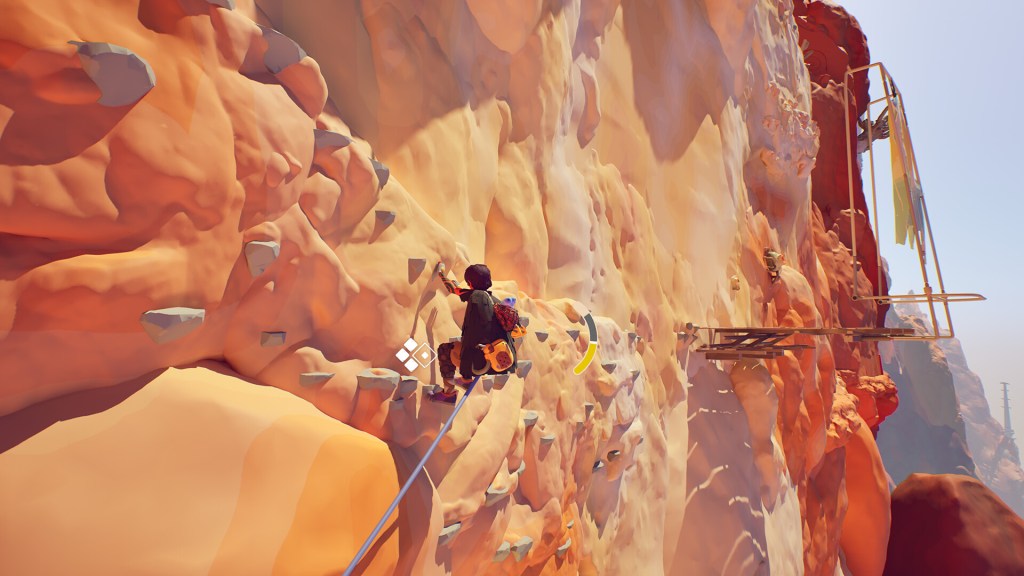
I love when a game expands on a commonly seen mechanic that we take for granted. The prime example of this is how Death Standing turned both traversal and inventory management into its core gameplay hook. Running up cliffs and carrying hundreds of pounds of equipment is something that gamers have grown accustomed to, and Death Stranding made it so walking down a slight hill was a treacherous activity. Jusant does something similar, but for climbing. The entirety of the game is about the ascent up an impossibly high tower of rock. There’s no combat, no puzzles, fairly little exploration, and a story that is only told through the environment and the occasional note. Despite this, the meditative beauty of Jusant was enough to keep me going until the end.

Climbing has become a multi-purpose mechanic in a multitude of modern games. From basic traversal, to providing down time, to showing off the environment, to hiding loading screens, climbing has many uses and as such is absurdly common. Unfortunately, climbing is usually boring due to the simplicity of its implementation. Jusant makes strides to make climbing more interactive and thoughtful. You control both of the protagonist’s arms, grabbing onto handholds with each hand individually. This leads to a satisfying rhythm of alternating between the left and right triggers to ascend the terrain. 

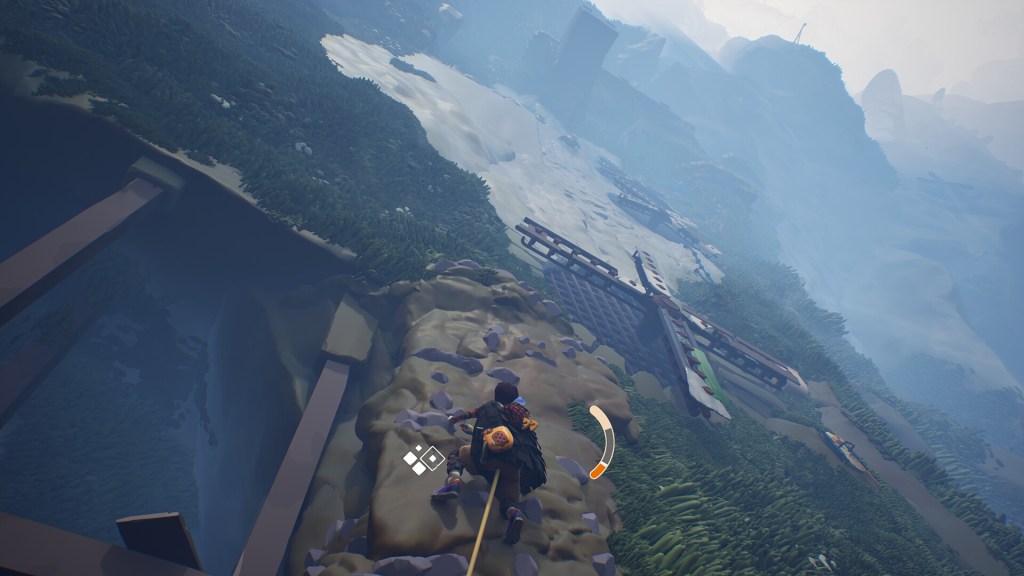
This simple change makes climbing far more engaging and immersive, but it’s not the only trick that Jusant has up its sleeve. You have access to a series of pitons and rope that always act as a safety system. You can never fall to your death; you only tumble a few dozen feet to where you last hooked into the wall. Pitons double as a self-managed checkpoint system and a way to place an anchor for some rope swinging. While Jusant isn’t terribly difficult, it is still nerve-wracking to swing and jump over a seemingly endless chasm. 

Despite its efforts to make climbing fun, the biggest fault of Jusant is that it doesn’t do enough. There’s just not much thinking involved. You follow a straightforward path of handholds and ledges, just alternating between hands. The stamina system is barely worth mentioning as I never was in danger of running out of stamina. If you are running low, you just press a button and rest for a second to regain a large portion of the meter. I would have loved for the climbs to have a variety of routes to survey and choose from. Having to assess your options and think about how to reach your goal could’ve gone a long way to make the climbs more interesting. You could make more use of your tools, and there would be an actual threat of running out of stamina if you planned a poor route.

Even though I wish Jusant did more to make climbing more engaging, I still adored the surroundings of my ascent. The rocky tower is barren at its base, surrounded by miles and miles of desert. As you scale the tower you will find yourself in abandoned communities that have been carved into the sides of the mountain. Tiny collections of stone huts tell the story of tight knit communities that were deserted due to some ecological disaster. As you climb higher, you gain more hints about what happened to these people.

While Jusant has no dialogue, I found it told a poignant tale regardless. There’s a sense of mystery as to why the unnamed protagonist is determined to reach the summit with his frog-like companion. You find notes scattered throughout the journey which give a glimpse into the life of the people who inhabited the tower. Many players probably will skip these notes altogether, but I enjoyed piecing together how civilization crumbled. Seeing how the environment evolves as you scale gives you clues as to how this society functioned and then collapsed as the water dried up. Even without dialogue, the final scenes of Jusant manage to be emotionally impactful. 

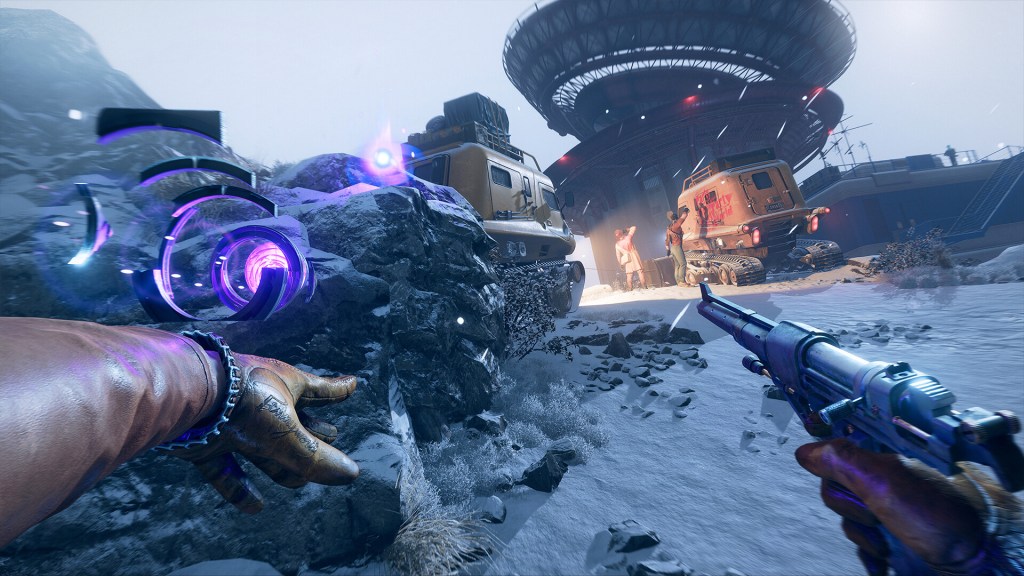
After the grueling nightmare of Alan Wake II, I needed a nice relaxing breather. And Jusant is perfect for that. The simple additions to traditional climbing mechanics make a normally boring concept more engaging. But I would have loved to see some more puzzle elements incorporated to encourage the player to carefully plan their routes. Nevertheless, I enjoyed the relaxing ascent and discovering more about this barren world. It is for these reasons that I give Jusant a 7/10. Transforming climbing into the main hook of a game and having it be fun is a tall order, and one that Jusant delivers on that.

Deathloop (2021)

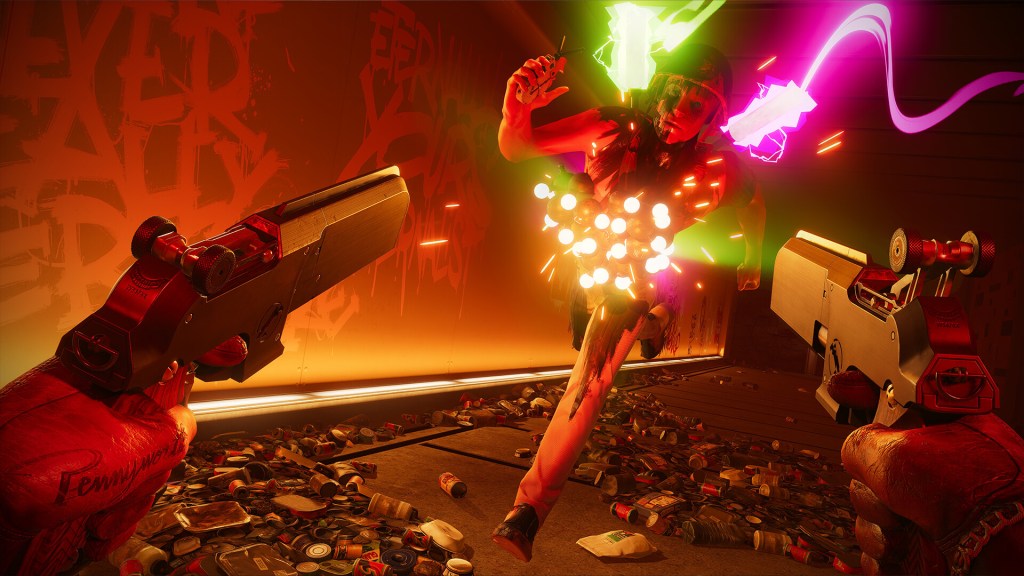
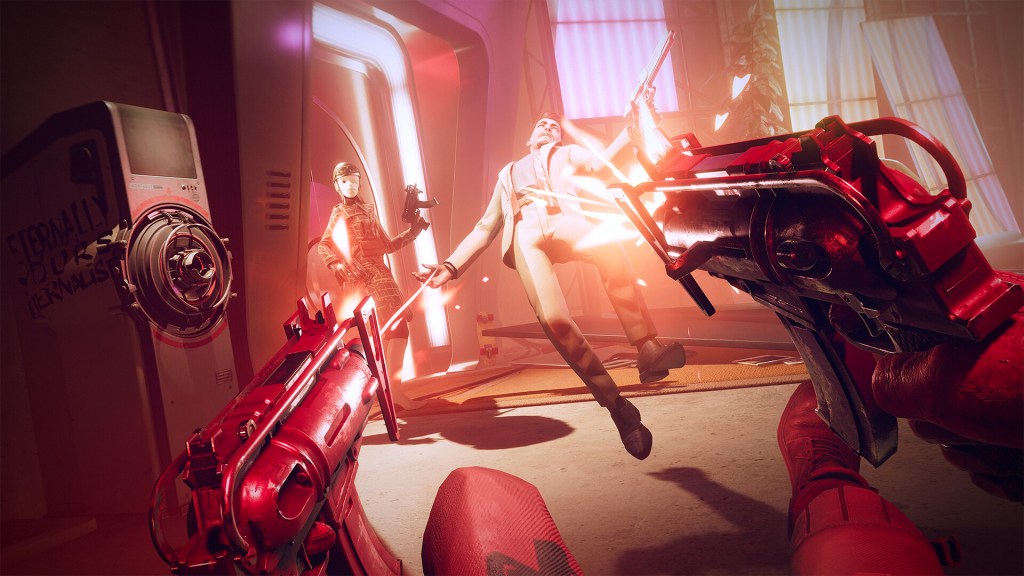
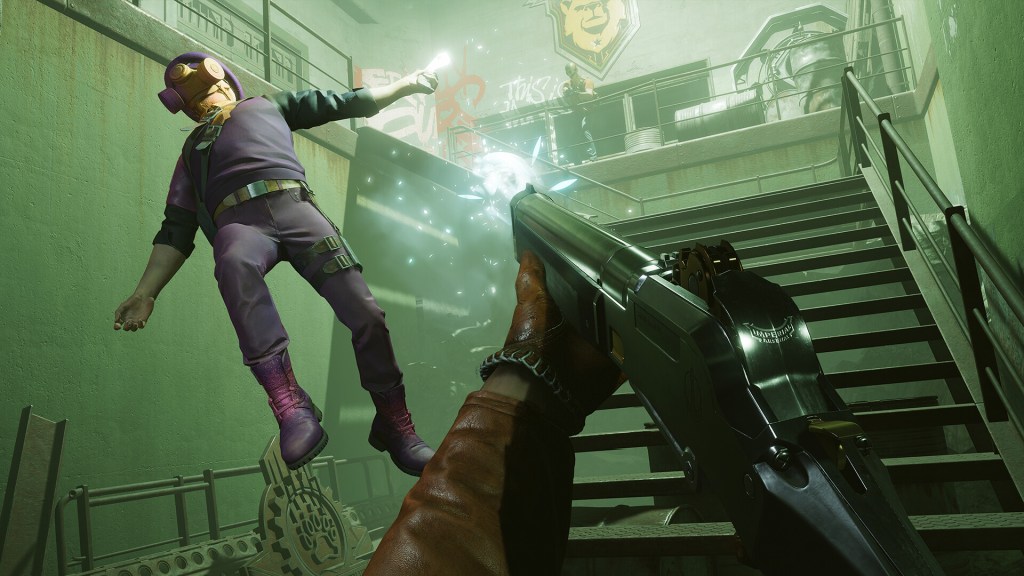
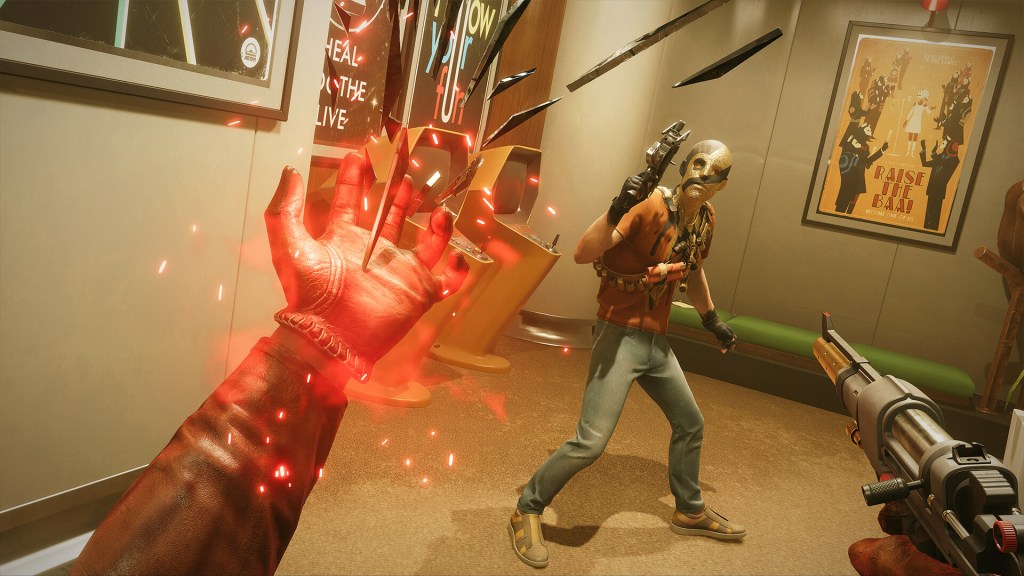
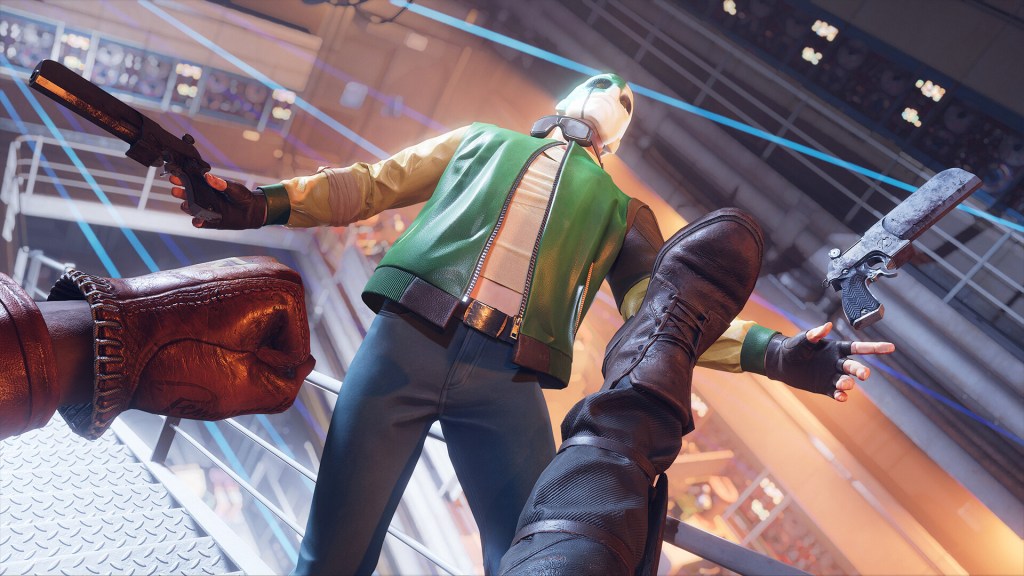
I don’t think I’ve ever been as disappointed in a game as I was with Deathloop. Its lack of commitment to its core ideas and its distrust in its players made me question what the developers were thinking. To be clear, I don’t think Deathloop is an unplayable mess. The basic stealth and action can be a little fun when you just want to turn off your brain and assassinate some targets. But Deathloop could have been so much more. As a massive fan of Arkane’s previous work, such as Dishonored and Prey, I was shocked how restrictive and uninspiring the game is.

The hook of Deathloop is that you are trapped in a 24-hour loop on a lawless island controlled by egotistical maniacs. You have to assassinate the 8 architects of the loop in a single day to escape the loop. You have to learn their habits, their schedules, their secrets, and utilize your knowledge to dispose of all the targets in a single loop. When I heard about this game, I imagined a fully explorable world, maybe separated into zones, in which time flowed continuously. Figuring out how to quickly maneuver between areas and learning when and where your targets were vulnerable would require experimentation and mastery. Instead, Deathloop is split up into 4 discrete time periods across 4 zones. 

I understand that the choice to have fully separated time periods was probably one made for simplicity. It’s a lot easier to design levels around the static timeframes of morning, noon, afternoon, and evening, then having to have time continuously flow as the levels evolve throughout the day. It’s just far less interesting and immersive than it could be. That being said, the implementation of having just 4 discrete times could still work, but Deathloop is overly restrictive in its design.

Learning the ins-and-outs of each level at each time of day is still a promising concept. At first, each target appears in a single area at a single time, making it impossible to kill more than four in a single loop. You have to explore and delve for information that can be used to influence your targets to appear in the same place at the same time. Given the nature of Arkane’s experience with immersive sims, a genre known for freedom of choice and simulated systems, it’s shocking that Deathloop only has two ways to dispose of each target. There’s the initial time and location for each target, and the correct time and location that you can trick them into going to so you can kill multiple targets simultaneously. There is not a wealth of options or methods to employ, just a single correct strategy. It’s massively disappointing to stifle the player’s creativity, and it’s made even worse with how blatantly Deathloop holds the player’s hand through the whole process.

The first couple hours of the game are a form of tutorial hell. You are completely on rails, given no freedom and are constantly bombarded with text pop-ups and overly wordy tutorials for even the most basic of systems. This is just a taste of what Deathloop has in store. The game relies on text documents and audio logs to reveal information, which is fine, but it also beats you over the head to make sure you didn’t miss anything. Anytime something important is revealed a text pop-up summarizes it, the main character comments on it, a cutscene plays after the mission explaining in detail what to do next, the quest log drills it into your head, and of course the game provides objective markers pinpointing your next goal. The developers did not trust players to make deductions on their own, which is infuriating.

Deathloop had the potential to be a solid knowledge-based game. You progress through the same loop over and over, gaining knowledge to access new areas and influence the future. I would love this. But it doesn’t let the player learn things, experiment, and make deductions organically. Even when it is obvious what to do, Deathloop leads you by the nose and says “GO HERE NOW”. It’s obnoxious. 

The structure of Deathloop is a major missed opportunity, and the gameplay doesn’t make up for it. The game encourages you to play stealthily if you want, but to feel free to go in guns blazing. One common gripe about Dishonored was that it heavily disincentivized combat as any form of lethality would give you the “bad” ending. The unfortunate consequence of punishing lethality was that half of the game’s mechanics wouldn’t be utilized by many players, and tons of players (myself included) would reload saves anytime they were spotted. I appreciate that combat was encouraged, but it has gone too far in the other direction as stealth feels unnecessary. 

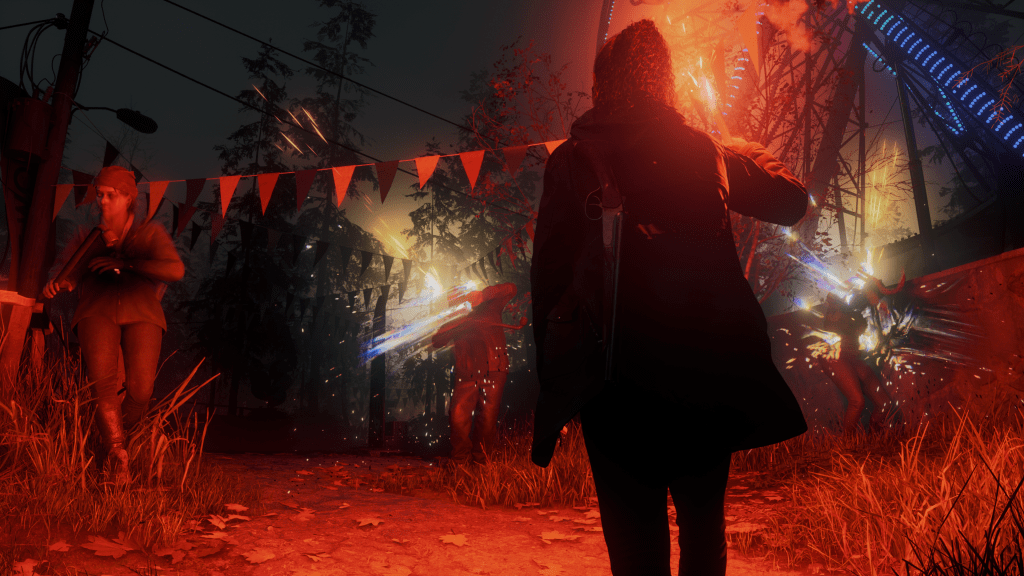
There’s virtually no reason to play stealthily. Positioning yourself in a corridor or on top of a building and going guns blazing is quicker, safer, and more entertaining. There’s no shortage of ammunition or health packs, so resource scarcity isn’t a reason to avoid combat. Even if you do die, you have 3 lives per zone so it never feels risky to engage in combat. Enemies don’t have particularly good AI, so they often just funnel into you as you pick them off. The audio and visual feedback from weapons isn’t great, but it can be dumb-fun to just annihilate enemies with overpowered weapons and powers. It gets old quickly though as there is only a single enemy type and 4 maps, at some point you’ve done the same exact fight dozens of times and just want to get through it quickly. The only time that gameplay felt appropriately tense was during the PVP invasions.

One of the more interesting aspects of Deathloop is how on select levels another player can load into your game as Julianna, your nemesis. They proceed to hunt you down and attempt to stop you from accomplishing your objective. This can be fun, as the key to success is to get the jump on the other player. Straight up shootouts aren’t common as there are so many avenues to sneak up on the other player. The person who is playing the campaign has the advantage because they have 3 lives, but Julianna has her own advantage in that the enemy goons are on her side. This actually made me play stealthily, as getting spotted by enemies would reveal me to the real threat: Julianna. 

While I mostly enjoyed the invasions, there are a few points of contention. Sometimes I just want to progress towards my goal, especially towards the end of the game. These fights could be drawn out and take a while before you felt safe to go for an objective. I had multiple instances where I loaded into a level, Julianna invades, I sneak around the map, accomplish multiple objectives, get into multiple battles with normal enemies, turn off her antenna so I can escape, and leave the level without ever seeing the other player. The maps are huge with lots of nooks and crannies, and I feel like players just sit in a corner and hope their opponent walks past them unknowingly for an easy kill. I wish there was some sort of neutral objective that both players would desperately want to obtain so that they would have some reason to come out of hiding. My last issue with these invasions is less concrete: was the game simplified as a result of the inclusion of Julianna?

I’ve made it clear that the structure of the game felt like a simplified version of a better idea. But everything in the game follows that pattern. There’s only one enemy variety, stealth isn’t super complex, the powers aren’t super interesting, and the objectives are very straightforward. Moreover, while the levels do have some branching paths and alternative routes, they are never near as complex or interesting as the levels from Dishonored 2. I can’t help but wonder if Arkane held back on a lot of more interesting ideas as they would have conflicted with PVP invasions. Which would be a shame if that were the case.

Another aspect of Deathloop that feels off is its progression system. As you progress through loops, you collect weapons, trinkets, and slabs that you can infuse. Infusion lets you keep gear permanently, and anything that isn’t infused disappears when the loop resets. I think this is ok, but I personally got some powerful weapons very early on and didn’t feel the need to care after that point. The slabs are the most interesting aspect as they are unique powers that can be upgraded with additional effects. All other loot is tiered, so a rare shotgun is more powerful than a basic one. Tiered loot doesn’t work in Deathloop because it forces the player to spend a ton of time in menus sorting through crap and deciding what to infuse and what to scrap.

For a high-profile game that came out a couple years ago, I was shocked how many game-breaking issues I encountered. The game crashed on me a couple times, and there were also times that I got stuck in a menu and it wouldn’t close. And once the “X” button on my PS5 slowly stopped doing anything, forcing me to restart the game. This is all unacceptable on its own, but it’s particularly bad because it happened in the middle of exploring which then required me to replay the entire level. This altered my habits because I felt discouraged from exploring or spending a long time in levels as the threat of a crash was always looming.

The story of the game is fairly nonsensical. The main character, Colt, wakes up not remembering anything. He learns from floating text and other versions of himself that he should break the loop. It’s a neat idea that a colony of criminals and psychos have isolated themselves from the world by looping through the same day over and over. But why do only Colt and Julianna remember anything from the previous day? It’s a glaring plot contrivance. And it’s never properly explained why Colt came here in the first place, or why he betrays the other “visionaries” to break the loop. Maybe I missed something, but not much of anything is explained. 

So, you may be thinking if there is anything about Deathloop that I did enjoy. For one, the art direction is definitely stylish. As previously mentioned, I do think that the game can be some mindless fun. It’s fun to go on a rampage and tear through enemies with the best weapons and slabs. It’s fun to methodically pick off enemies with headshots from my silenced gun. It’s fun to kick unsuspecting enemies off the side of cliffs. It’s fun to blast through the maps once you get familiar with them, and more so once you master them. And it’s fun when you eliminate Julianna after a particularly well-fought battle. But these aspects just get old rather quickly, and I was frustrated with how much potential was left on the table.

Deathloop isn’t a smart game. It wastes the fantastic idea of a looping assassination mystery by oversimplifying at every step. This could have been an innovative structural achievement, but instead it’s just a generic stealth-action game. It doesn’t give the players the freedom to indulge in some creative problem solving, and it doesn’t even trust its players to figure out the most basic of mysteries on their own. The middling gameplay doesn’t do much to save the game from its letdowns. It is for these reasons that I give Deathloop a 5/10. A single word summary of my time with Deathloop: disappointing. 

Alan Wake II (2023)

Alan Wake II is insane. There’re layers upon layers of meta references buried within the spiraling madness that makes up the game. Remedy’s previous games never really clicked with me, but Alan Wake II did have my brain working overtime to decode the entangled threads of narrative that are sewn in a chaotic tapestry of nightmares. I highly value uniqueness, and the ability to push the gaming medium forward into a weird and strange direction is something that I applaud Alan Wake II for. It’s not without its flaws as there are quite a few things that I took issue with, but this is a truly bizarre game in the best way possible.
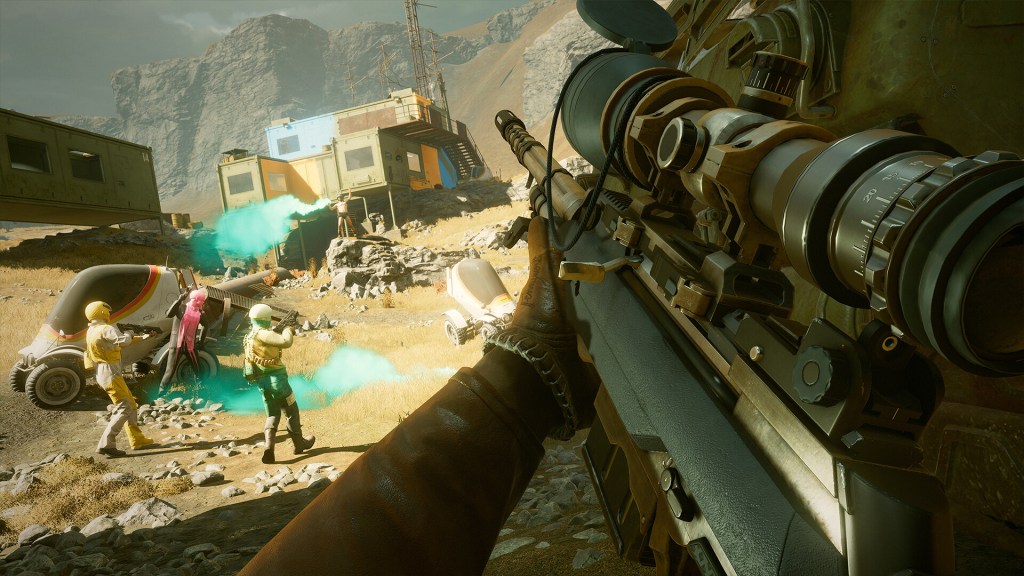
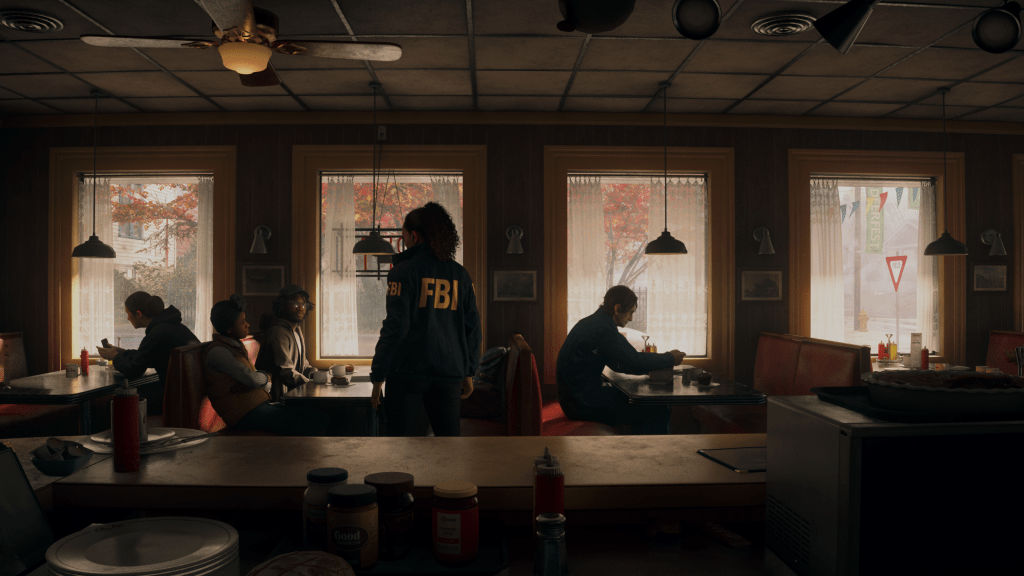
The story of Alan Wake has long been dormant. The basic premise is that the titular character, Alan Wake, is a best-selling author that gains the power to influence the world with his writing. On a trip to the remote Pacific Northwest town of Bright Falls, Alan got sucked into a horror story in which he sacrifices himself to rescue his wife from a dark presence. Alan is now trapped in a nightmarish dream reality while a doppelganger of his, called Mr. Scratch, is terrorizing the real world. In parallel with Alan’s story, a new protagonist named Saga Anderson and her partner Alex Casey arrive in Bright Falls to investigate a string of mysterious disappearances.

Saga investigates the quaint towns and the dense wilderness of the Pacific Northwest. A murder cult seems to be the cause of numerous disappearances, and she tries to deduce their goals and motives. While on the case, she learns of the dark presence and how an ever-changing horror story is coming to life. I enjoyed how the player could enter Saga’s “Mind Place” to put together the facts of the case. Her Mind Place is a cozy cabin with clues and papers strewn about. You use a big board to pin clues into place and make revelations about the plot. I do think this aspect might’ve been slightly overused, as there isn’t a ton of actual deduction or gameplay involved here. Mostly you’re just putting known pieces in place to move forward. Nevertheless, I enjoyed the noir vibes.

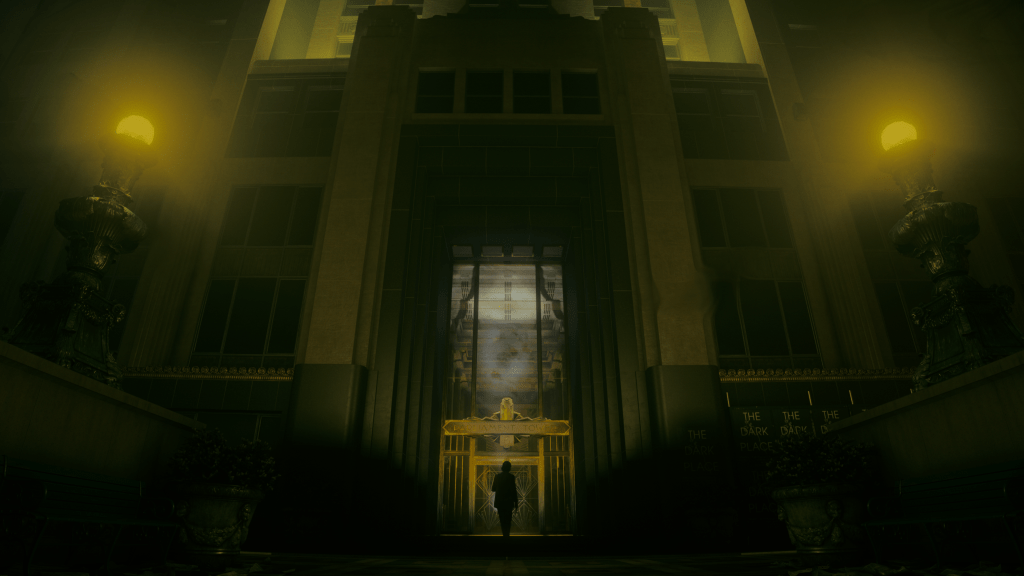
While Saga explores the real world, Alan is trapped in a labyrinthian nightmare. This is where things truly get weird. He wanders around an ever-shifting urban environment, rife with confusing dream logic. He’s caught in a surreal loop, desperate to escape. He has to use his abilities to write his way out of the loop. Alan visits numerous atmospherically dense locations such as a hotel, subway, and movie theater that were homes to ritualistic murders. As you explore these locations, you move pieces around on a storyboard to alter the plot and move forward. I absolutely adored how tense these sequences were. There’s a sense of dread of what you are going to see when you move a new horrifying plot element into place. One particularly haunting transformation was seeing how an ordinary hotel turned into a ghoulish scene where blood was scrawled across every wall and the hallways were strewn with gored bodies.

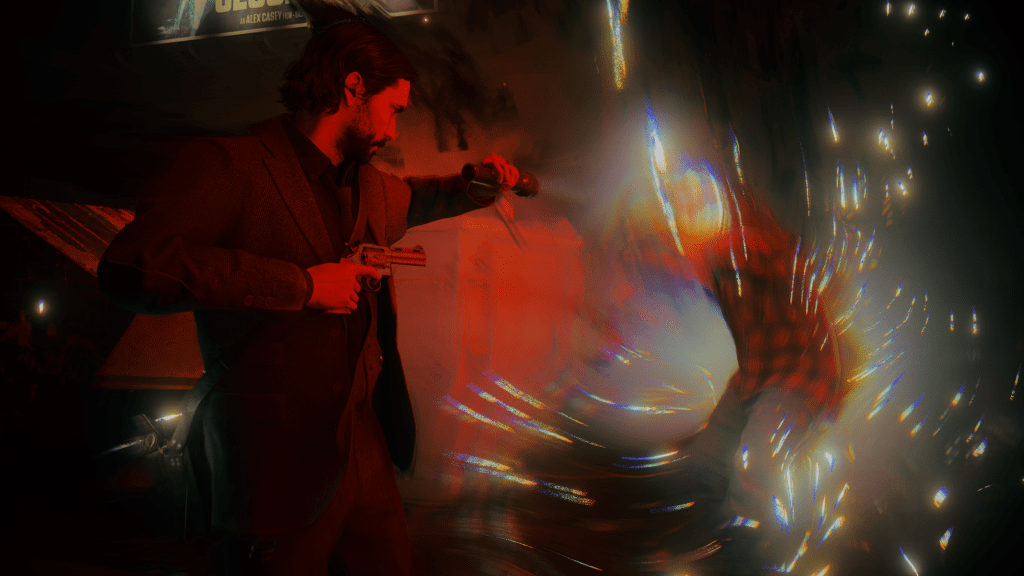
The seamless use of mixed media is part of what defines Alan Wake II. The transitions between game and live-action are incredibly well done and fuel the metanarrative aspects of the story. Remedy has a wonderful cast of actors that portray their characters expertly. It blurs the lines between what is real and what is dream logic. There’s a full 15-minute artistic short film that can be found which serves as a pivotal plot point of the imaginary murder cult in Alan’s dream reality. And that film uses the actor who also plays Alex Casey who is the main character in Alan’s detective novels, and that same actor also plays a different Alex Casey who is Saga Anderson’s partner in the real world. And that actor is the creative director of the game: Sam Lake. Who also plays other characters in Remedy’s expanded universe. There’re layers upon layers of references to unwind. Alan Wake II references itself, its predecessor, other games within its universe, and heavily leans on tropes from detective and horror media.

I find that media with heavy meta elements can often feel pretentious, but that’s not the case with Alan Wake II. The game knows that it can be ridiculous at times, and isn’t afraid to point this out. The writers clearly had fun with this game and they embraced the weirdness. Take for example the commercials that play on the TVs throughout Bright Falls. Two of the side characters write, direct, and star in their own goofy productions about their side businesses. Such as their coffee-themed amusement park with a moose as a mascot. I love that despite its metanarrative elements and complicated story, Alan Wake II doesn’t take itself too seriously.

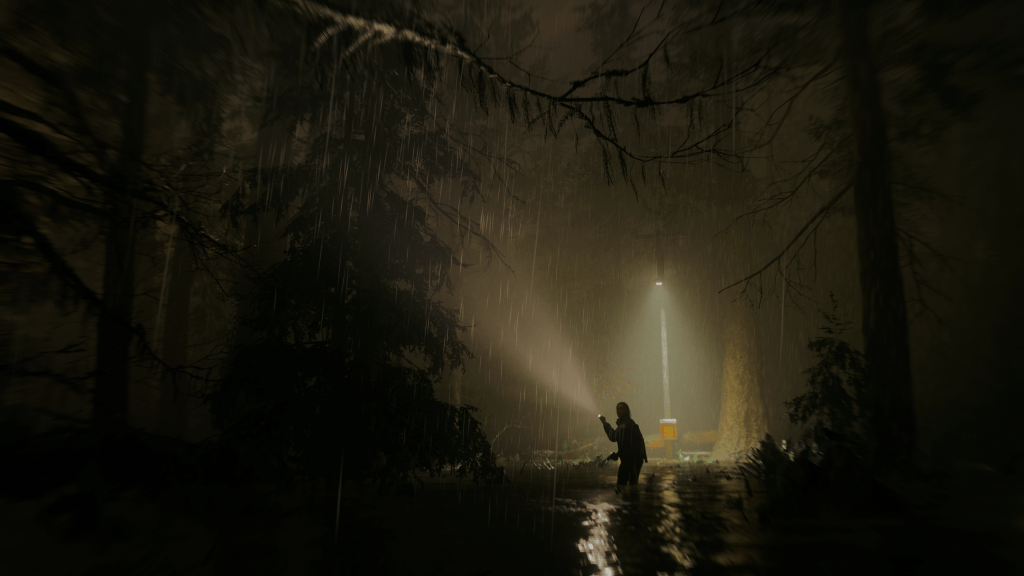
Where Alan Wake II really shines is its thick atmosphere. The sharp contrast between the two protagonist’s settings created some phenomenal variety. As Saga you have to explore dense woods, small towns, and other rural locales. Conversely, Alan is trapped in an urban nightmare. Dirty streets, highrises, and buildings such as hotels dominate his perspective. Both settings are eerie. Saga wanders through thickets as cultists and possessed wolves stalk her. Shadows whisper and lunge at Alan as he navigates through nonsensical streets and corridors. Darkness envelopes both characters, and the safety provided by a break room or an abandoned hut is spirit-lifting as these are your only beacons of safety. The game’s spectacular visuals add to the sense of immersion, as Alan Wake II is a fantastic game to look at.

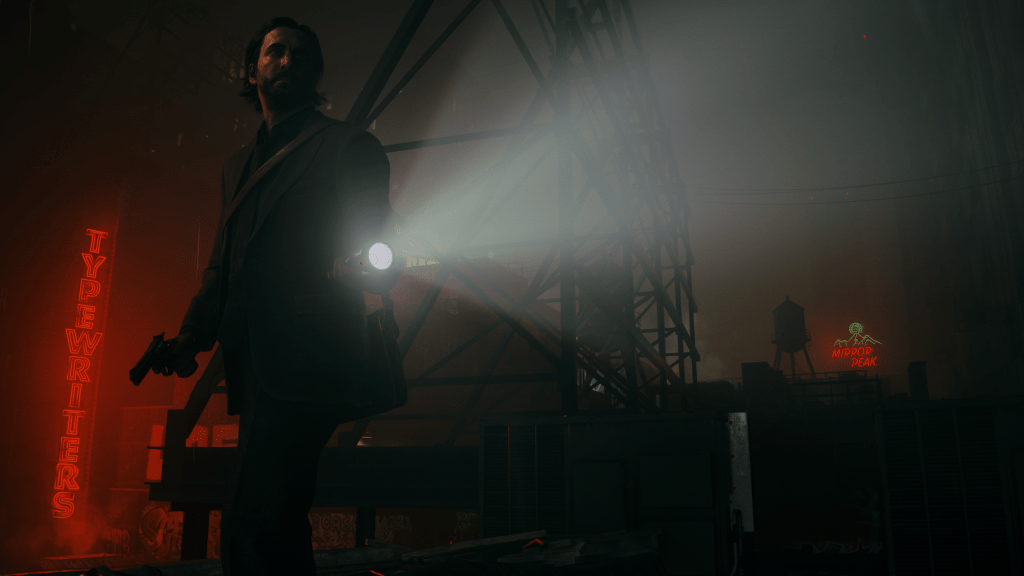
The gameplay of Alan Wake II was something that I was worried about. When I played the original Alan Wake I thought the setting and atmosphere were amazing, but the game was marred by an absolutely abysmal combat experience. Luckily, Alan Wake II keeps the premise of its predecessor but vastly improves upon it. To fight enemies, you need to focus your flashlight on them to break through their darkness shield. From there, it functions like a standard third-person-shooter. I quite liked how impactful all the weapons felt. The visual and auditory feedback was appropriately visceral, and enemies reacted strongly to being shot, especially if hit in a weak spot. I thought combat was fun overall, and the fast-moving enemies always kept me on my toes. That being said, there are a few issues that bothered me.

The first issue was the absolutely abysmal enemy variety. There’s only a handful of enemy types in the game, I found myself battling the same couple basic variations throughout the entire twenty-hour experience. Moreover, there is a ton of fluctuation in the number of enemies that the game throws at the player. There are times when you can go for what feels like hours without any combat, especially at the beginning of the game. And conversely, there were sections of the game that I couldn’t catch a breath because the game kept bombarding me with respawning cultists. Both of these extremes are negative. Too few encounters is an issue because it can get boring to just walk around with no threat of combat, and too many encounters kills the tension as it turns what should be frightening foes into a shooting gallery.

While Alan Wake II undoubtedly improved upon the gameplay of its predecessor, I still found it to be fairly clunky. Reloads are extremely time-consuming and easily interrupted, which is aggravating. However, I think the biggest cause of this is the camera. The over-the-shoulder camera is great for immersion, but I wish it zoomed out a tad during combat. When enemies get up close, the game feels unpleasantly claustrophobic and I had a difficult time adjusting the camera. I found myself saying “I can’t even see what’s going on” fairly often. There are also a ton of enemies that zip and teleport around, leaving me desperately rotating the camera to keep up. But as soon as the enemies were in my sights again, they just teleported away again. 

Aside from the camera, I found that the environmental design also was a significant source of frustration for me. While the game looks astonishing, I found myself confused and turned around quite often. I think having a mind-bending dreamscape that intentionally causes the player to get lost is great. But there were plenty of ordinary places that just felt poorly signposted. Organic and detailed environments are great, but I felt that they got in the way of navigation. I love that there was no mini-map or objective markers, but the environment did not lend itself to intuitive pathfinding. But my biggest frustration with Alan Wake II was its dynamic resource economy. 

An important aspect of any survival horror game is resource management. Having a limited number of bullets, healing items, and inventory space makes fights far more intense. Tension builds faster when you only have a handful of ammunition to dispatch enemies. Every encounter is terrifying knowing that it could deplete your resources. Alan Wake II does have limited resources, but its implementation is inelegant. It utilizes a dynamic system, doling out items based on how much the player already has in their inventory. If you’re running low on supplies, the game will give you more stuff, but if you are already rich in ammunition, you’ll get very few or no resources at all. At first glance, this seems like it makes sense as it ensures that the player never has too much or too little, but I find that this system undermines the entire point of resource management.

The point of having limited resources is the threat of running out. The helplessness of having no ammo to protect yourself. Having to explore and scavenge for resources can be anxiety-inducing. But there’s rarely any real threat of running out of resources in Alan Wake II. The game throws resources at you when you’re running low. And there’s little reason to thoroughly explore areas for more stuff because you get diminished amounts once you have a surplus. I found it frustrating that I was punished for scavenging, often opening a container to find it completely empty. Not only have I wasted my time, but I can never open that container again so I have permanently lost potential resources. Maybe it wouldn’t have been so aggravating if it wasn’t so obvious that the game is doing this.

For a game with such impeccable atmosphere, it’s a shame that immersion is so easily broken by something as simple as resource management. It’s obviously apparent that Alan Wake II is limiting your ammo once you open a container and there’s nothing in it. You can also game the system by stuffing excess ammo into your safe room box before going out to scavenge for resources. The game only cares about what’s currently in your inventory, so you can fake being low on ammo to get more. Breaking immersion is a sin in a game like this, and I often found myself pulled out of the world and into crunching numbers to determine whether or not opening a container was worth it.

Alan Wake II is a difficult game for me to judge. I can respect its artistic vision, the blending of genres, the use of mixed media, and of course how the story is open to many interpretations. But the game flounders a bit when it comes to basic elements such as combat, navigation, and resource economy. It’s tough to claim that this is a must play game when it falters at the basics. But Alan Wake II is a must play game. It’s unique. It’s innovative. And it pushes gaming forward as an artistic medium. It is for these reasons that I give Alan Wake II a 9/10. Even if its video-gamey elements are clunky, the unfaltering artistic vision of Alan Wake II makes it a can’t miss experience.

Cocoon (2023)

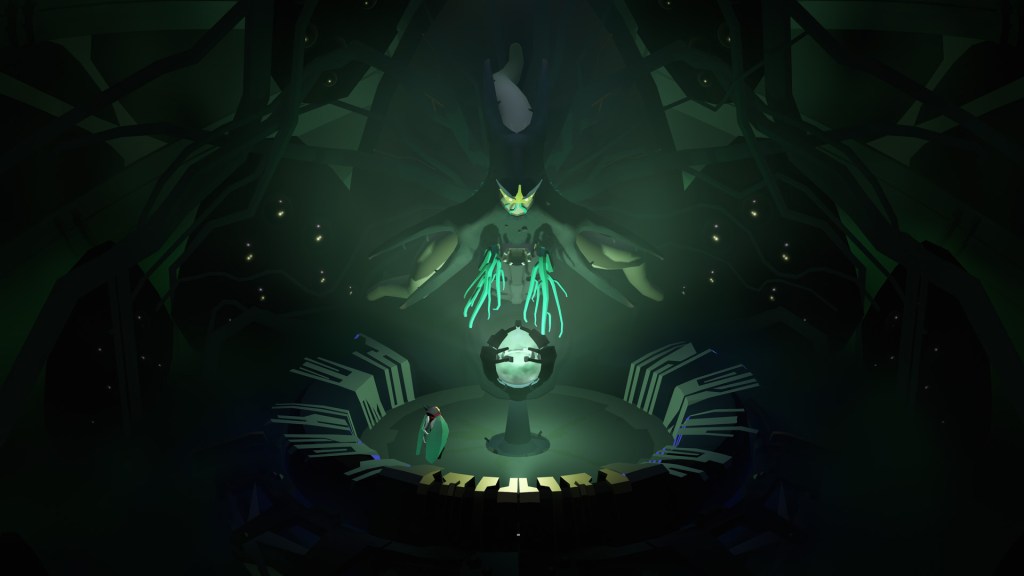
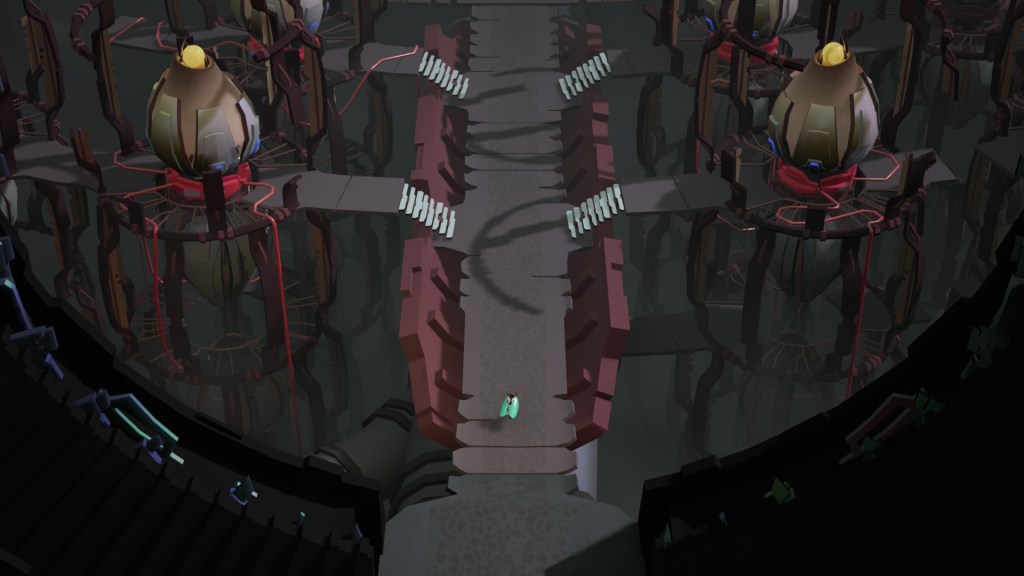
Cocoon is unlike any other puzzle game that I’ve played. It revolves around the brilliant idea of portable worlds that you can jump in and out of. Worlds reside within other worlds, and you can carry them around as if they were just trinkets. It’s a Russian doll of realities that you traverse through. But it manages to reign in the difficulty and makes its puzzles approachable. There’s a sense of Zen as you solve mind-bending puzzles and take in the magnificently alien world of Cocoon.

The main idea of Cocoon is that the player can dive in and out of these world-like orbs. You carry them around, using them to power machinery and progress forward. You solve a puzzle in one orb which lets you do something in a different orb which lets you exit the orb that contains them both. Each orb additionally has some power to use in puzzles as you carry it. Puzzles often have you jump in and out of worlds, carrying the orbs around and utilizing their properties to bypass obstacles. The world within a world within a world within a world nature of the orbs can be rearranged and reformed to fit your needs. It may sound confusing but Cocoon is intelligently designed to minimize frustration and confusion. 

An interesting technique of puzzle design that Cocoon utilized was explicitly cutting off the player from backtracking once they encountered a new puzzle, so long as they had the required materials to progress. This minimizes the common confusion of spending a while staring at a puzzle and thinking you are missing something to proceed. Stopping you from going backwards is the game’s method of telling the player that the puzzle is solvable. It greatly reduces the frustration of backtracking or spending time messing with previous elements that have no bearing on the current puzzle.

I found that the puzzles of Cocoon were never too challenging. This is in part because the game stops you from getting too far off track, but it’s mostly because the puzzle design is fairly simple. Despite the mind-bending world-hopping mechanic of Cocoon, the game rarely requires an intricate series of steps to progress. Often, a puzzle will introduce a new idea that highlights the game’s underlying mechanics. It begs the player to tinker around and experiment with how nesting worlds like a Russian doll could be used to solve its puzzles. There’s a lot of potential for some truly difficult puzzles, but Cocoon holds back on purpose.

If you love games that fully explore their main mechanics, Cocoon may not be what you are looking for. Instead, Cocoon focuses on letting the player progress and discover its world and mysteries without being hindered too much. There is still a sense of accomplishment and Cocoon does make you feel intelligent due to the innate complexity of its core mechanic. I love immensely difficult puzzle games like Baba is You and Stephen’s Sausage Roll. They squeeze every drop of creativity out of their central mechanics, asking the player to use everything they’ve learned in an intricate series of steps. Cocoon isn’t that. And that’s ok. Personally, I would’ve loved to see a few trickier puzzles along the way, but Cocoon has other things going for it.

I loved the art and environmental design of Cocoon. You traverse a handful of different alien worlds, each being beautiful in its own right. There are alien contraptions and creatures that litter these worlds. I loved progressing through these worlds and marveling at their environments. Everything feels appropriately alien. The sound design uses echoing chirps and metallic groans that sound otherworldly. There is no written story in Cocoon, but there is some environmental storytelling to discover as you adventure through the orbs. I found the ending to be quite satisfying and it puts the entire journey into a new context.

Cocoon may not be the longest or the hardest puzzle game, but it is one of the more memorable puzzle games that I have played. The truly alien setting paired with its world-hopping mechanics is immensely enjoyable. Its lower difficulty and stakes make for a fairly relaxing experience. That being said, I would have loved to see its mechanics potentially explored further in some challenging post-game content. It is for these reasons that I give Cocoon a 9/10. Cocoon is a phenomenal experience, even if it lacks some truly difficult puzzles.

Marvel’s Spider-Man: Miles Morales (2020)

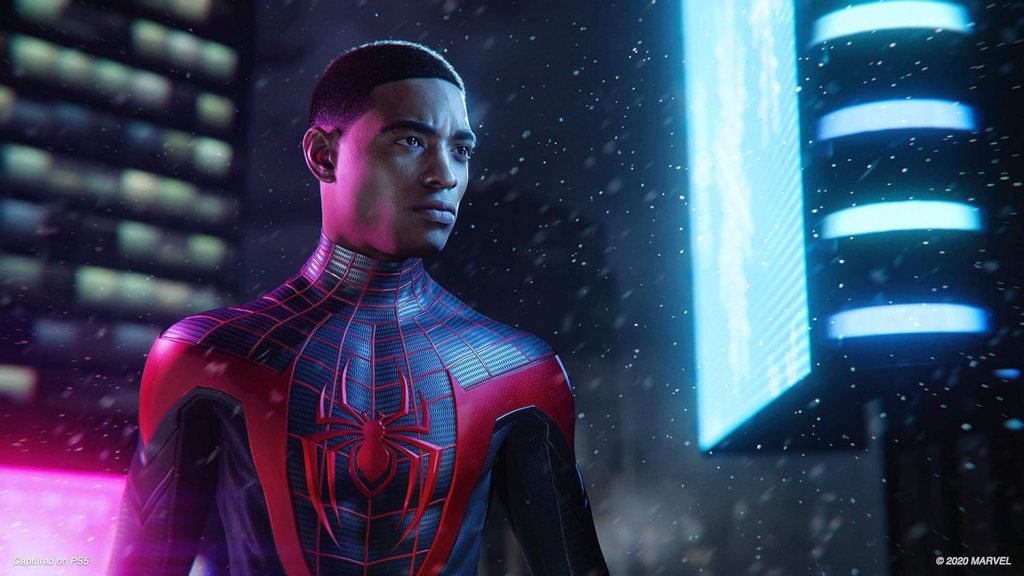
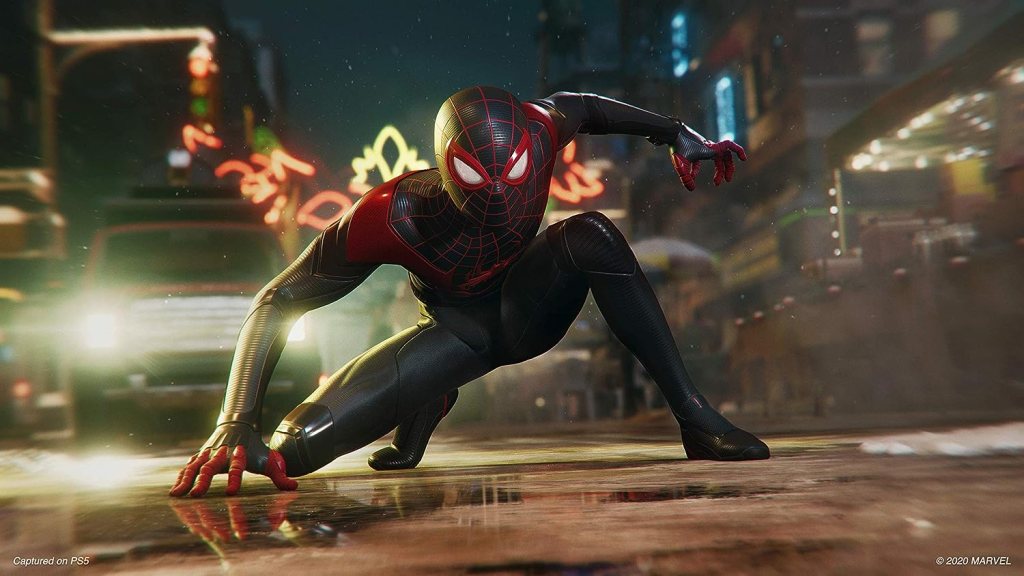
To be brief, if you enjoyed Marvel’s Spider-Man, you’ll enjoy Marvel’s Spider-Man: Miles Morales. If you are looking for more innovation, you’ll be disappointed by this title. That being said, I do think that Marvel’s Spider-Man: Miles Morales is a solid game all-around. In many ways, I found it had some improvements over its predecessor. But at the same time, all the major gameplay elements are nearly identical to Marvel’s Spider-Man. I don’t think it’s a bad thing to hone in on some minor improvements, but Marvel’s Spider-Man: Miles Morales feels derivative. Despite this, it’s still a fun game.

Peter Parker has gone on vacation and has left the responsibilities of being Spider-Man to his protege, Miles Morales. During this time, Miles discovers that a shady corporation is opening a dangerous energy reactor in his home borough of Harlem. He also runs into a mysterious gang who is hellbent on fighting said corporation. Like any classic Spider-Man tale, Miles has to balance his personal life and superhero life, which often clash and lead to some tough decisions.

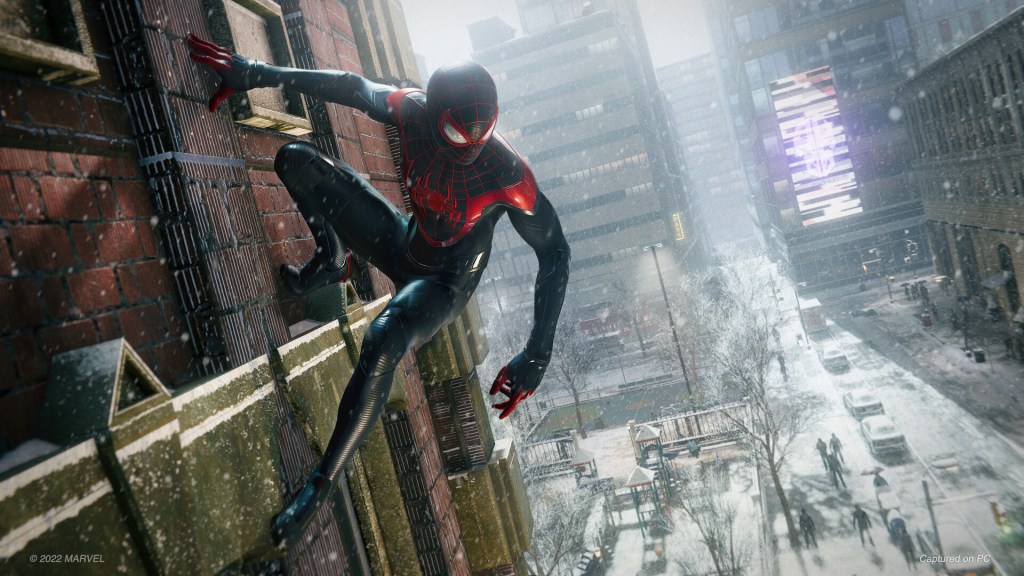
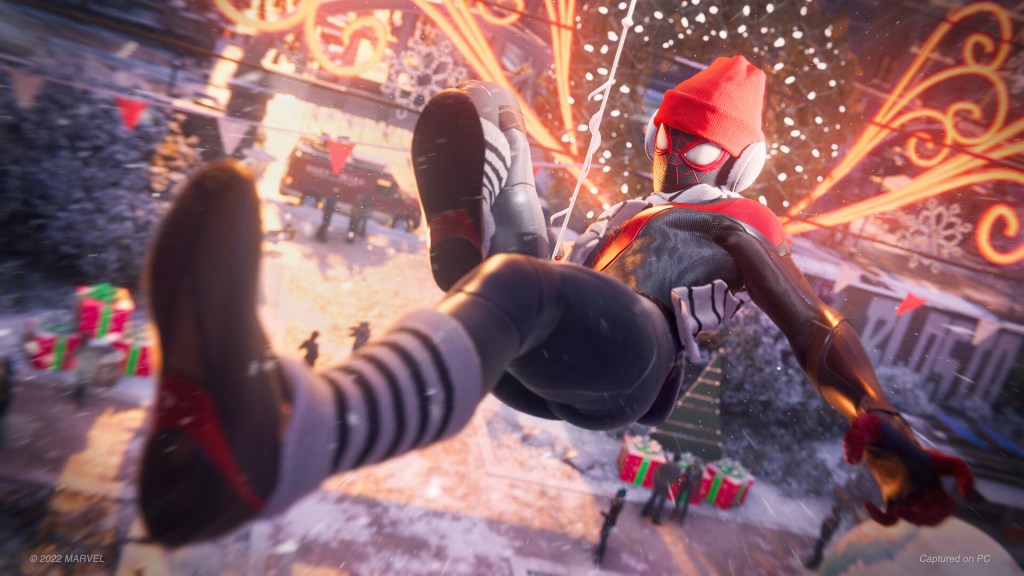
I felt like the overarching plot of Marvel’s Spider-Man: Miles Morales was solid. There’s a mostly charming cast of characters, some wholesome moments, some laughs, and some sadder moments as well. Everything you’ve come to expect out of a modern Marvel production is present. My favorite aspect of the narrative was how Miles grew more connected to Harlem specifically. I enjoyed spending time there and assisting the locals protect their home from gangs and crime. It felt more personal than just beating up baddies to save the entire city. Moreover, the Christmas setting added to the cozy vibes with snow-covered streets and lights decorating the city.

While I mostly enjoyed watching the story unfold, I felt as if the villains were pretty poor. One is a rich CEO who is willing to ignore safety concerns in the pursuit of more money. Which may be realistic, but is a tad boring. The other villain is more egregious. They make dumb decision after dumb decision and are extremely shortsighted. I can understand the “blinded by revenge” angle, but this particular character was infuriatingly obtuse.

While I felt that the story was serviceable, the real draw of Marvel’s Spider-Man: Miles Morales is the gameplay. Like its predecessor, swinging around New York City and fighting crime is just plain-old fun. The web-slinging traversal is so fluid and natural, it’s probably my favorite method of getting around in any video game. I don’t know why anyone would want to use fast-travel when you can zip around the city with ease.

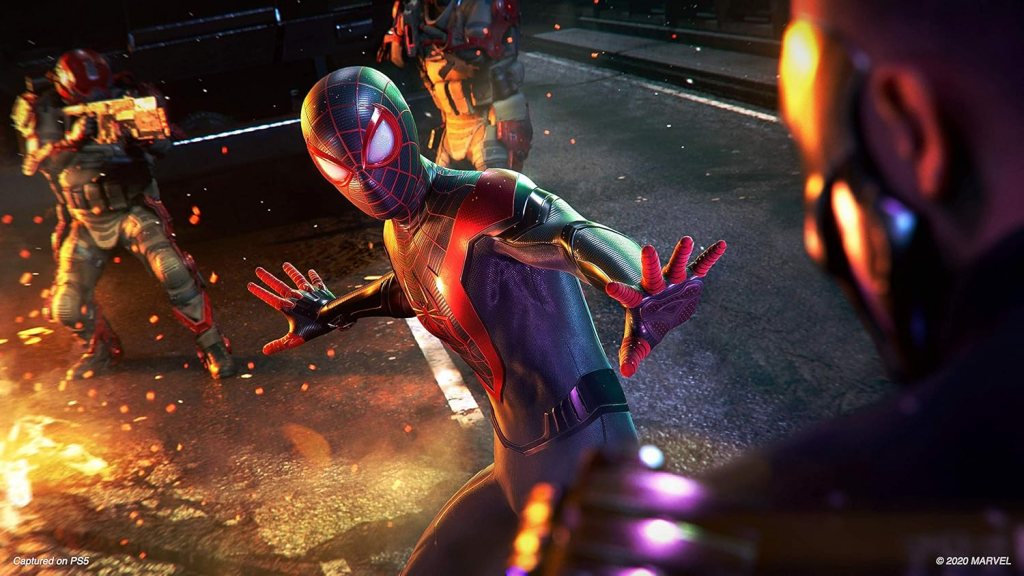
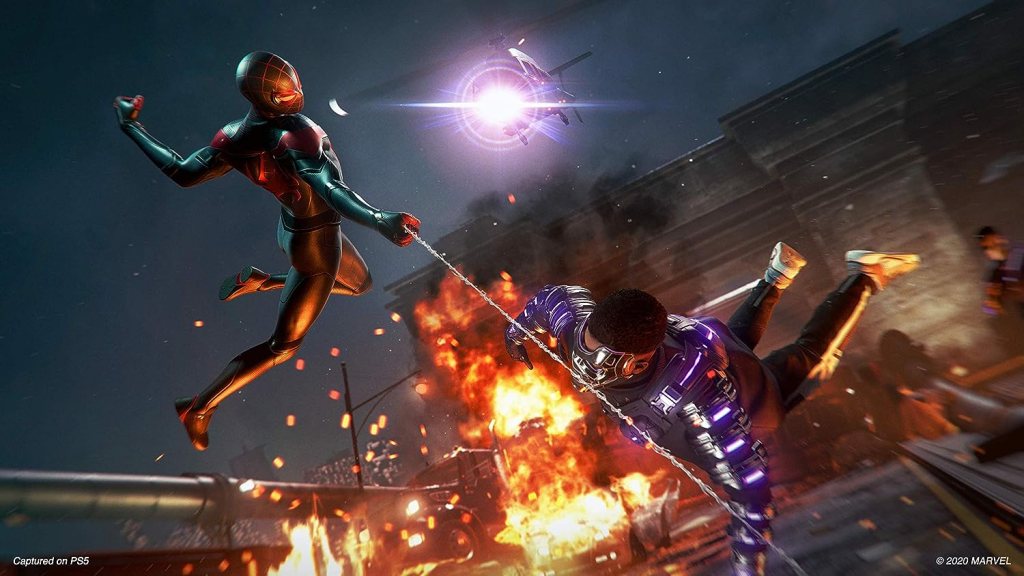
When it comes to combat, Miles has a few more tricks up his sleeve than Peter Parker. While Peter focused on using gadgets during combat, Miles has Venom powers. As you land attacks and dodge hits, you’ll build up a Venom meter which can be used to unleash some more powerful attacks. While I still think that the combat in the Marvel’s Spider-Man games is a bit rudimentary, it’s easy to get into a satisfying flow of attacks, dodges, Venom moves, and finishers. There’s some fantastic animation work at play here which automatically makes any action you take look seamlessly heroic without you having to do much at all.

While the game nailed the cinematic aspect of combat, I do wish there was a bit more mechanical freedom in execution. I don’t need this to be a full-blown character-action game, but some more options other than mashing square would be great. Sure, you can throw debris around with your web-slinging powers or use gadgets, but the best way to do damage is just basic attacking until you charge up a special move.

Along with combat, stealth makes a return as an option to tackle enemy encounters. While it can be fun to catch enemies and hang them from the rafters like an actual spider, it’s a little too easy to be truly engaging. Since you can always be above enemies you can almost never be spotted as you move around. You can be spotted when performing a takedown, but the game explicitly tells you when it is safe to takedown an enemy and will warn you that you will be spotted. The combination of these things means you will never fail stealth unless you intend to. Moreover, Miles has a camouflage ability that you can activate to become invisible. Even if you do get spotted, you can just enter camouflage and wait until it’s safe to start performing stealth takedowns again.
I don’t think having simple combat and stealth is necessarily a terrible thing. Not every game needs to have the combat depth of Bayonetta or the carefully crafted stealth sequences Metal Gear Solid. But Marvel’s Spider-Man: Miles Morales needed to supplement its enemy encounters with something else. Swinging around the city is fun, but most of the time you are just traversing from encounter to encounter. There are a few side-objectives to break up the monotony, but the majority of objectives involve disposing of enemies. I would have loved to see more chase scenes or something similar to utilize Spider-Man’s powers in other ways than combat. The traversal is so smooth and fun, I wish it was better utilized for actual gameplay challenges.

I do have to give props to Marvel’s Spider-Man: Miles Morales for cutting down on some of the extraneous aspects of its predecessor. One of my biggest complaints about Marvel’s Spider-Man was how frequently the game veered off from playing as Spider-Man. Not to mention the annoyingly common circuit board puzzles. Marvel’s Spider-Man: Miles Morales cut down on this filler content significantly. There’s still the occasional environmental puzzle, but at least you still get to play as Spider-Man while you solve it.

For the most part, Marvel’s Spider-Man: Miles Morales feels like a fine-tuned retread of its predecessor. It trims the fat and adds a few new mechanics to make Miles’ gameplay feel distinct from Peter Parker. But it’s risk averse. It doesn’t do anything to wow the player or meaningfully distinguish itself. Nevertheless, it is still a fun game that manages to feel cozy and welcoming due to its setting and endearing cast of characters. It is for these reasons that I give Marvel’s Spider-Man: Miles Morales a 7.5/10. A refined Marvel’s Spider-Man game is great, but I would love to see Spidey’s powers taken even farther.

Super Mario Bros. Wonder (2023)

We’ve waited nearly 30 years for the redemption of the 2D Super Mario series. I always found it odd that the last truly notable entries in the series were the Super Mario World games while the 3D Super Mario series has thrived with masterpiece after masterpiece of creative genius. But finally, there’s a return to form with Super Mario Bros. Wonder. Forgive my choice of words, but Super Mario Bros. Wonder is a wonderland of joyous ideas and imagination. 

I don’t want to harp too much on the past, but I think context is important. The last four entries in the 2D Super Mario series have been labeled as New Super Mario. These titles have been criticized for being remarkably similar to one another and lacking any sort of major innovation. While being serviceable platformers, they lacked the magic that Super Mario is known for.

With Super Mario Bros. Wonder, the magic is back. There’s an unparalleled level of creativity on display here. Nearly every single level introduces a new idea. It doesn’t dwell on any single mechanic, but each one goes through a natural progression over the duration of a level. Whether it be a new enemy, new obstacle, or a new gimmick, Super Mario Bros. Wonder takes care to let the player safely interact with its ideas before amping them up. But as the level progresses that idea gets elevated and asks more of the player, and it culminates in a final crescendo: the Wonder Flower.  

The Wonder Flower serves as the key mechanic in Super Mario Bros. Wonder. Every single standard level in the game has one, and they are wildly imaginative. Towards the end of every level, you can grab the Wonder Flower which transforms the level into something else entirely. Pipes come to life and wriggle around, Piranha Plants leave their pipes and sing, Mario turns into a fast-rolling ball of destruction, and that’s just the beginning. They are all wacky ideas that don’t fit in the classic Super Mario world that we know, but the nonsensical fun and unexpected surprise in every level is glorious. 

Super Mario Bros. Wonder is so jam-packed with creativity that it’s absurd. Just the base levels are plenty of fun on their own. Most levels introduce something entirely new to center its design around. And the Alice in Wonderland-esque nonsense that’s triggered when you grab a Wonder Flower serves as a bombastic evolution of the level with wondrous visual effects and marvelous mechanical switch-ups. I couldn’t wait to see what each level had in store for me, and I was always eagerly anticipating what the Wonder Flower would do next.

Apart from the level design, Super Mario Bros. Wonder lets the player express their own creativity with badges. You can equip a single badge to augment your abilities. Some of them provide simple passive bonuses like extra coins or a free power up, others give some additional abilities like being able to glide in the air briefly or get a small height boost when twirling. But there are also a few badges that majorly augment the way the game is played by having you bounce around like a spring, constantly run at high speed, or be invisible. I think the badges are fun options to mix up your abilities. They are never necessary outside of the occasional badge challenge level, which I appreciated. I stuck with a passive badge for most of the game as I felt the action badges would make the game too easy, but I appreciate that they exist for players who do want to have an additional ability. But I did love how badges were utilized for one-off challenges.
In between the non-stop barrage of creative levels there’s the occasional shorter bout. These can be combat focused K.O. arenas, short challenges utilizing badges, search party levels, a Wiggler race, or a celebratory break time. These are all fun little side missions to break up the longer courses. The badge challenges were my favorite as they serve as miniature training grounds to master using a specific badge. The only variant of these bite-sized levels that I didn’t enjoy were the search party levels in which the player has to probe the level for invisible secrets. I think these are meant to be played with friends, but as a solo player it leads to just a lot of jumping around for minutes at a time trying to find hidden blocks.
There’re only a few search party levels so it is not a particularly big issue. In fact, most of my complaints about Super Mario Bros. Wonder are very minor. I thought that the boss fights were a little underwhelming and could’ve made better use of Wonder Flowers. Additionally, while I enjoyed the themed overworld and searching for secret levels, I wish that more courses had secret exits like in Super Mario World. And the little flower guys that are in every level can be annoyingly positive and their plainly spoken English feels out of place in Super Mario

All of these gripes are minor. The only major thing that I would’ve loved to see in Super Mario Bros. Wonder was some more post-game content. There is a special world with some fantastic levels, but I wanted more of them. These levels were more challenging than the main campaign and often combined Wonder Flowers, badge challenges, and tricky design to make for some highly engaging levels. All things considered, if my biggest complaint about the game is that I wanted more of it, then that’s a pretty good indication of its quality.

I was blown away with how consistently imaginative Super Mario Bros. Wonder was. It’s crammed with tons of brand-new ideas and tricks, and that’s before even touching the Wonder Flower. This is the first time in decades that a 2D Super Mario game has captured the magic, sense of joy, and creativity that oozes from its 3D counterparts. I just couldn’t put down this game, it was a platforming joyride the whole way through. It is for these reasons I give Super Mario Bros. Wonder a 9.5/10. If this is the direction for future Super Mario titles, I am ecstatic and am eagerly awaiting the next release.