Death Stranding has always been a bit of an odd duck in the gaming community. While many such as myself love the game for its bizarre world and unique gameplay, many players mock the “strand-type” game for sidelining action to focus on traversal. I fell in love with the isolated hikes interspersed with tense action, and the theme of connection was so masterfully woven into every aspect of the game. I spent dozens of hours making optional deliveries and building roads for other players to use. For my full thoughts on the original Death Stranding, read my review. When Death Stranding 2: On the Beach was announced, I was thrilled. I couldn’t wait to dive back into the world.

Death Stranding 2 picks up with Sam and Lou surviving in hiding near the border of Mexico. After being tracked down by an old colleague, Sam gets roped into another grand mission to connect Mexico to the Chiral Network. During this expedition, a mysterious “plate-gate” opens up, acting as a portal between North America and Australia. Sam traverses the plate-gate and sets out to connect Australia to the network as well.
Where the original game focused on connection, Death Stranding 2 asks whether it was worth connecting all. Connecting The United States together via the Chiral Network has destabilized other portions of the world, causing rivers of tar to swallow large swathes of the planet. Ghostly BTs have become more common, and terroristic organizations have been emboldened to threaten the last pockets of humanity. This theme of questioning connection extends into personal relationships. Sam was always a loner before the events of Death Stranding, but opened his heart as he connected the continent. Now, Sam has to grapple with the repercussions of connections: grief, loss, and betrayal.
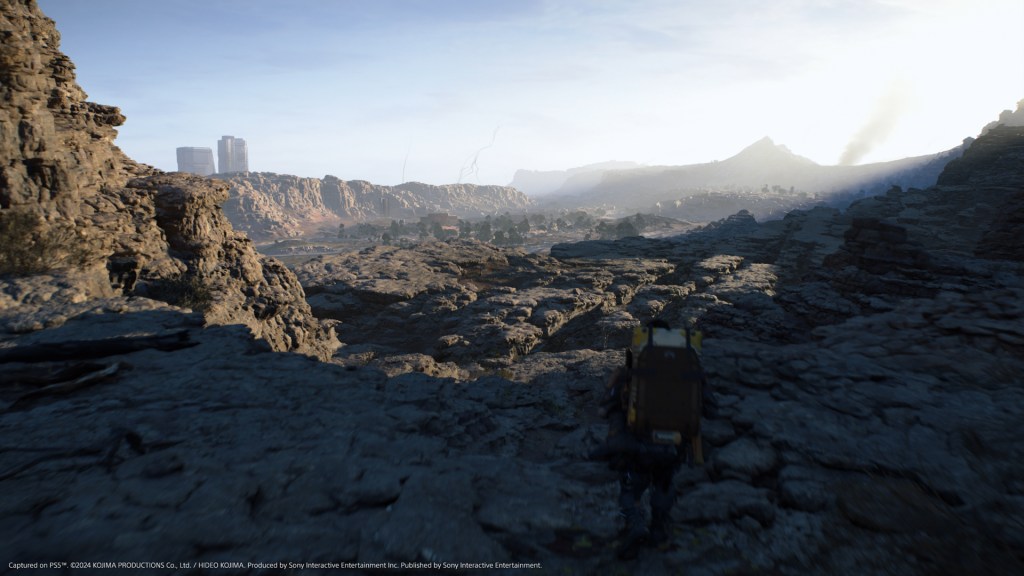
I really love the idea behind the story and themes of Death Stranding 2. It’s a sophisticated tale of interpersonal conflict and real adult feelings disguised within a wacky sci-fi setting. But I felt the execution was often lacking. Death Stranding 2 is a massive game, having the player traverse dozens of settlements, and it feels like the story often meanders without much purpose. The game falls into a formulaic pattern where you make a deliveries to non-important side characters, and important cutscenes are reserved for when you board your mobile base of operations: the DHV Magellan. But those moments of real narrative progression are excellent, filled with emotional turmoil and heartbreaking reveals.
Part of the reason why the cutscenes are so compelling is due to the state-of-the-art technology used for motion capture and visual spectacle. Kojima Productions is at the top of the industry when it comes to graphical fidelity and animation, only competing with other heavy hitters like Naughty Dog. The amount of emotion that can be read through facial expressions and minute movements is so critical to the game. And having accomplished actors such as Norman Reedus, Léa Seydoux, and Elle Fanning playing these characters further brings them to life.
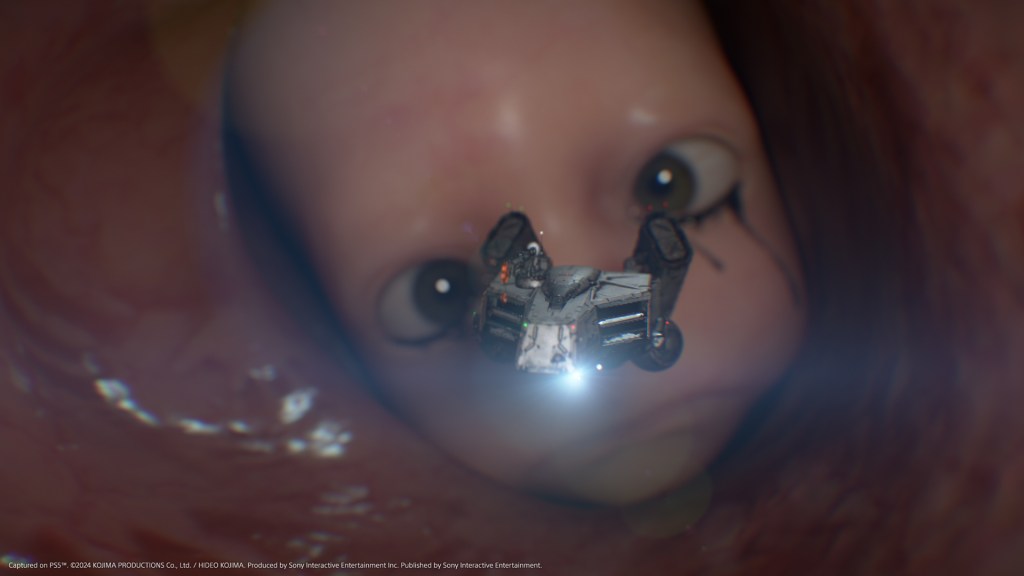
By now, everybody knows that Hideo Kojima has a penchant for the bizarre. The stories that he writes often have many moving parts and nonsensical elements. There’s a level of campiness that can often feel out of place in a serious story. But I’ve come to love the goofiness that comes with Kojima’s games. They don’t take themselves too seriously. One of the key deliveries in the mid game is to bring special yeast to a Pizza Chef and then deliver his pizzas to nearby survivors to get them to trust you. And the chef is a master of martial arts who teaches you to use pizza dough to incapacitate terrorists.
When it comes to gameplay, Death Stranding 2 deemphasized the hiking traversal that its predecessor was known for. Making deliveries is still the core gameplay loop, but the sequel introduces vehicles very early on and features far more combat. I think for players that were skeptical about how little traditional gameplay was in the original game, these changes are probably a good thing. But personally, I was disappointed in how easy it was to always use a vehicle to reach your destination. Even when completing story missions, meaning there would be no roads or additional structures, there was never a place where I felt like I had to get on foot and navigate difficult terrain.
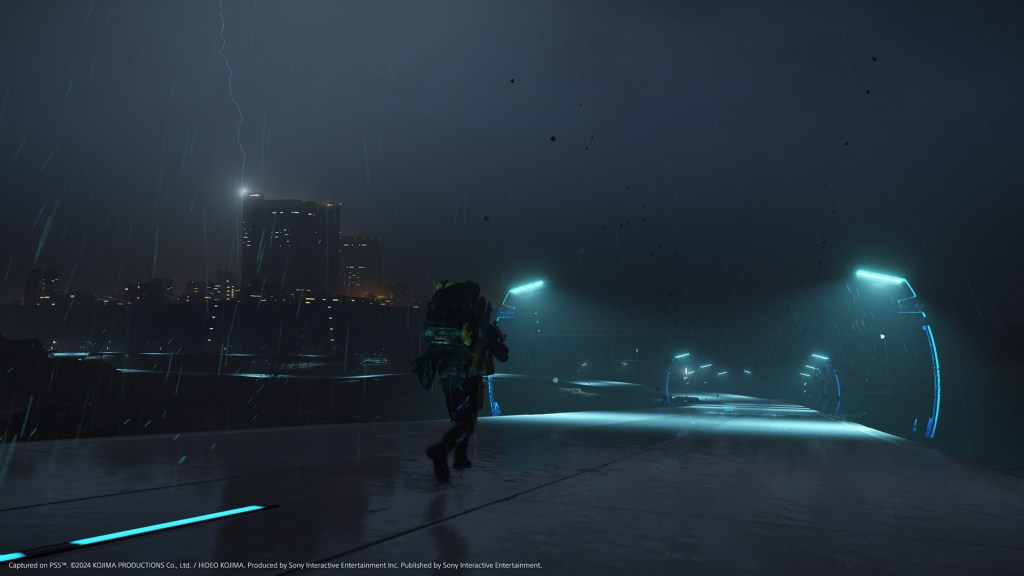
The reason I think this is a negative is because I really loved the unique aspect of being a human mule. Every package or piece of equipment you carried contributed to your weight and person. Carrying too much would slow you down, but more critically it shifts your center of balance, making it easier to fall over and damage the goods. You had to carefully consider which route you would take, streams and rivers were massive obstacles, and you always needed to bring ladders and climbing anchors to deal with sheer cliffs. This slow-paced, contemplative gameplay was utterly unique. Managing your inventory, planning a route, and then carefully trudging across the beautiful landscapes made the game almost meditative.
On paper, Death Stranding 2 still has all of the above aspects. It even adds new environmental obstacles such as floods, sandstorms, earthquakes, and landslides to increase the danger. I was really looking forward to these new threats, as my biggest issue with the original game was that it became too easy as the game progressed. But these weather effects are rarely more than an inconvenience. And the world of Death Stranding 2 feels like it was conveniently designed for vehicles. There’s almost always a path for a truck, even in places that should be craggy or steep, there’s always a convenient path to drive on. Using trucks trivializes so much of the challenge of the game. Inventory management becomes a breeze as trucks can carry massive loads, you don’t have to worry about falling over and damaging cargo, and you can zip past many of the game’s threats.
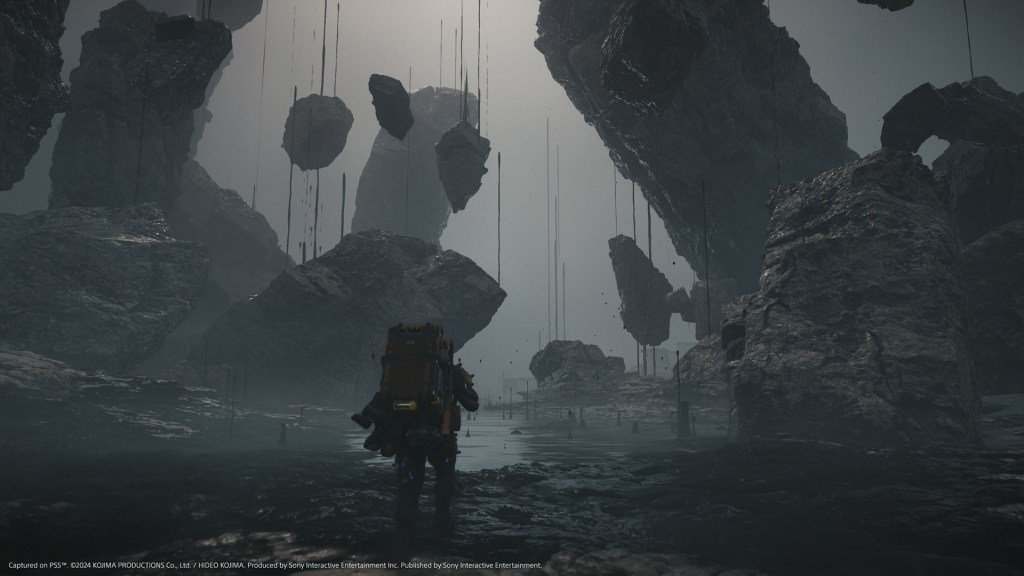
An argument could be made to just not use vehicles, but there’s no reason not to. Vehicles are fairly cheap to fabricate, make every aspect of deliveries easier, and have no downsides whatsoever. The world is massive, making traveling on foot more tedious than challenging. Players are always going to go with the path of least resistance, and vehicles are just too good to ignore. The traversal aspects of Death Stranding 2 are even easier than the original game, which is the opposite direction that I wanted the scales to tip. I wish that there were more sections in which using a truck was completely infeasible. For instance, when traveling to a new location for the first time there should be more obstacles making vehicle use impossible, but afterwards you could build roads to make backtracking with a vehicle possible.
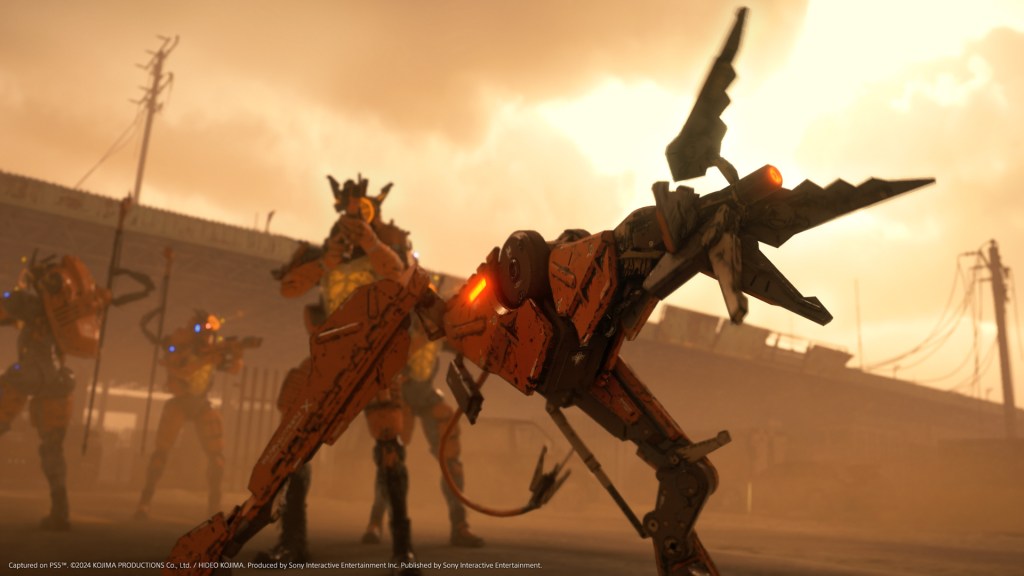
Instead of traversal, Death Stranding 2 places more emphasis on combat. There are far more camps of enemies as well as boss fights scattered throughout the game. This is by far the most improved aspect of the sequel, as combat was fairly rare in the original game. Having more combat scenarios sprinkled in with the classic traversal missions is fantastic. It increases the tension, knowing that at any moment you could be battling terrorists, robots, or ghostly BTs.
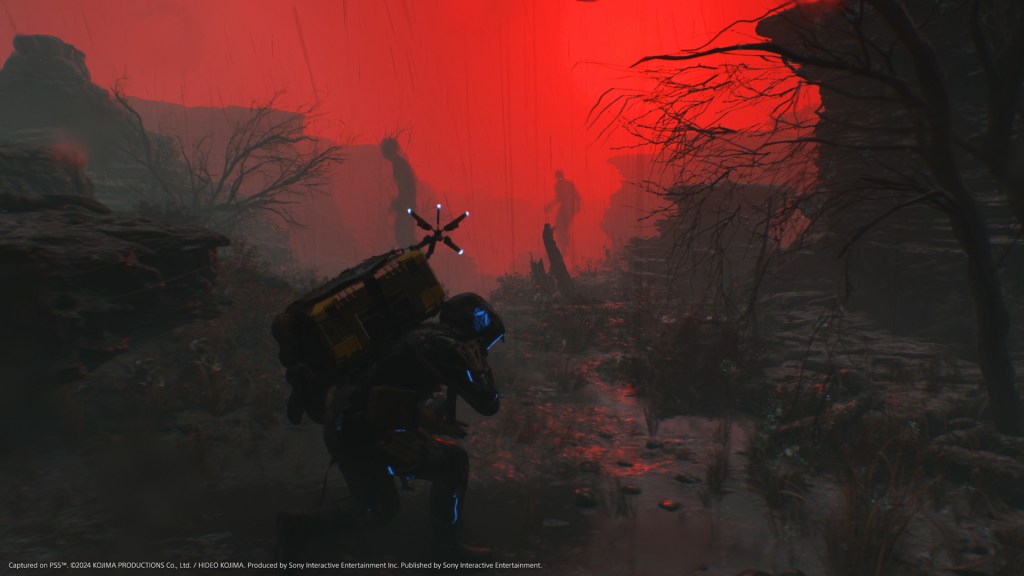
Kojima clearly took inspiration from one of his previous games, Metal Gear Solid 5: The Phantom Pain when designing the combat of Death Stranding 2. Stealth is encouraged to protect your cargo, but you’re welcome to take whatever approach you want. The game quickly introduces a multitude of different tools for the player to utilize. From assault rifles and shotguns to holograms and catchable monsters, there’s many ways to approach combat. I appreciate the variety, playing around with all the different options is great.
Combat in Death Stranding 2 packs quite a punch because of the game’s focus on real consequences. You aren’t a superhero sprinting and jumping with no regard for anything. You’re a regular guy who trips over boulders, gets weighed down in the mud, and feels the full impact of any damage. This is especially clear in the game’s handful of boss fights. Battling giant autonomous robots while trying to find your footing in a tar pit is a frantic experience. And watching Sam double over with exhaustion, covered in black muck and blood after dispatching a monster is relieving.
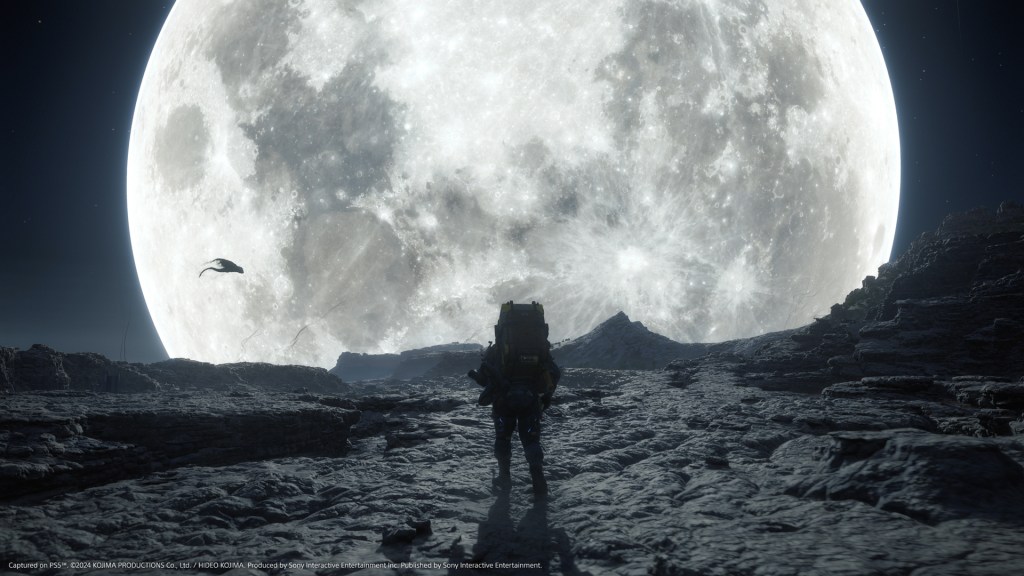
Visually, Death Stranding 2 is stunning. Part of what makes traversal-driven gameplay so appealing is just being able to take in the environments. The constant change in elevations gives you ample opportunity to stop and take in the sights of towering mountains, low-lying flood plains, and wind-whipped deserts. Kojima also has a penchant for excellent set pieces and explosive action sequences. One of my favorites being scrambling through the underbrush during a forest fire to rescue a wild kangaroo as hellfire rains from above. The soundtrack is equally great; there’s a fantastic collection of tunes to jam out to while making deliveries. From old timey easy-listening songs to indie folk to modern Japanese pop songs, I loved the variety as I drove across Australia.
Part of the magic of both Death Stranding games is how they drive the player to slow down and enjoy the process. With so many fantastic games being released yearly, it’s tempting to blast through them as fast as possible to have time to play everything. But while playing these games I didn’t want to do that. I wanted to take my time, build up the world full of structures and roads, complete some of the five-hundred optional deliveries. There’s a sense of satisfaction watching the harsh environment be transformed into a network of safe paths and bases. And reaping the rewards of those building efforts by driving your truck miles across the world to deliver some packages is so addictive.
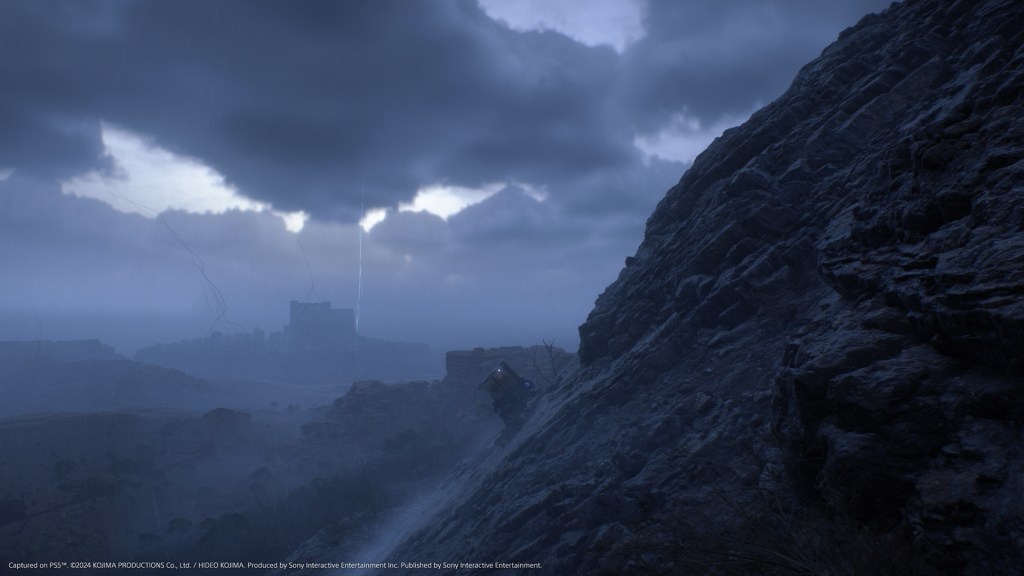
Bigger isn’t always better. I think Death Stranding 2 would have benefited from being scaled down a tad bit. I think the story and the gameplay suffer from having to accommodate for such a massive world. The story meanders for long stretches of time between major outposts. And the large map forces the use of vehicles to minimize tedium. By the time I reached the final third of the game, I was starting to get a bit worn out and just wanted to see the game through to its conclusion. I think cutting back on some of the more unnecessary missions and refining the remaining ones to be more interesting would have gone a long way.
It’s hard to explain what makes the Death Stranding games so enjoyable to play. To an outsider, it may sound like I’m describing the life of a post-apocalyptic Amazon delivery driver. But these games are so much more than that. They’re about connection, meditation, beauty, and grief, with a healthy sprinkling of Kojima’s weirdness to keep you on your toes. Death Stranding 2 doesn’t quite deliver everything I wanted out of the sequel. But it does have its own strengths that I’m sure many will prefer over the original. It is for these reasons I give Death Stranding 2: On the Beach an 8/10. It may not be for everyone, but I spent countless hours roaming the gorgeous and bizarre world that Kojima and his team crafted.

 stephensopinions