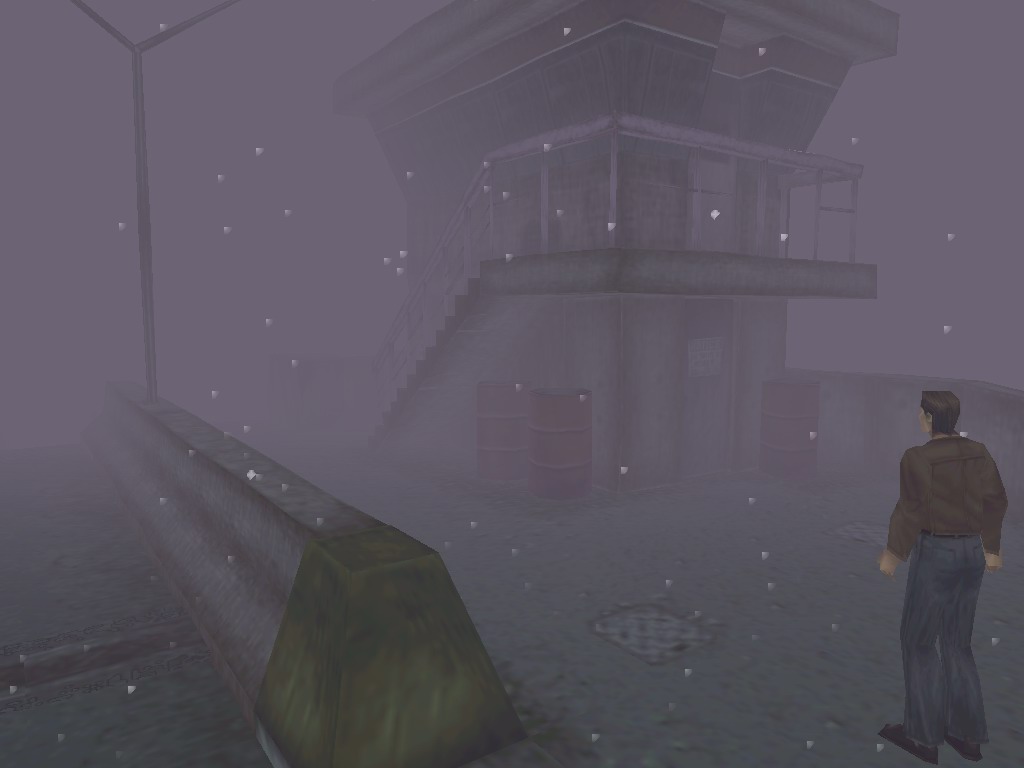
Horror and terror are not the same emotion. Horror is the shocking, revulsed feeling after witnessing a heinous event. Games like Resident Evil thrive on the sort of disgust caused by its horrifying mutants. Terror, on the other hand, the sense of dread and building anxiety when you know something awful is about to happen. It’s the deep-seated instinct meant to warn you that something is wrong and that you are in danger, even if you can’t see it yet. Terror is the focus of Silent Hill. The thick mist covering the abandoned town, the static of the radio, the disquieting music; everything about the game puts you on edge.
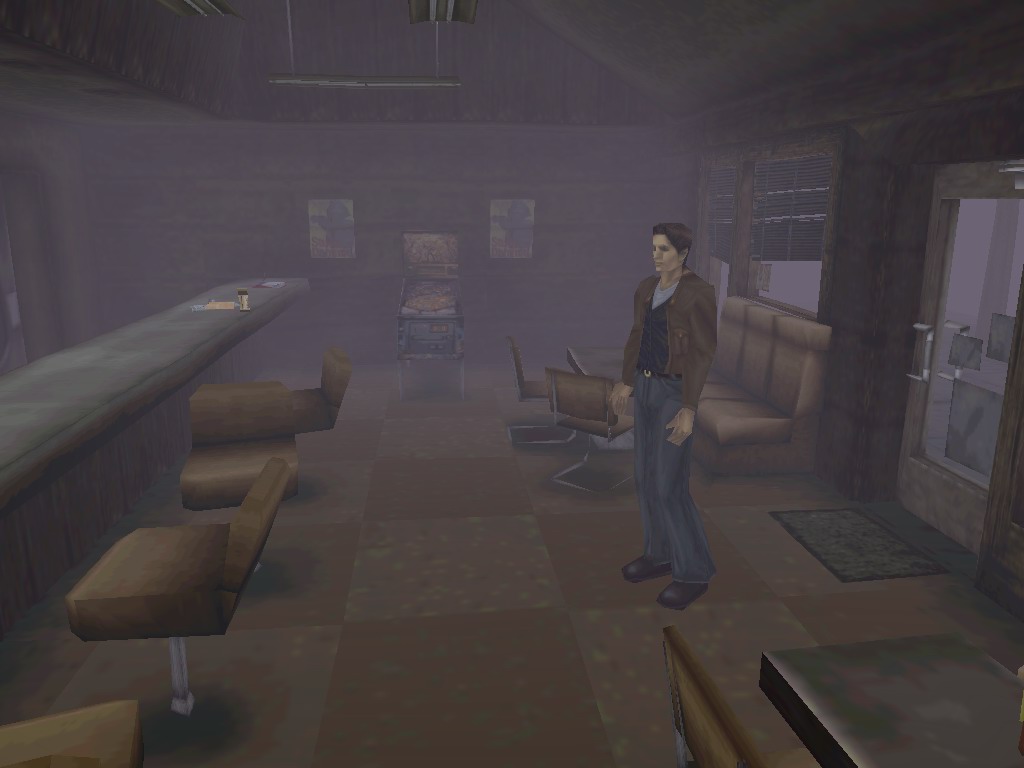
Silent Hill begins with a car crash on a wooded road in the fog. Harry Mason wakes up in a small-town cafe, separated from his young daughter, Cheryl. It’s immediately apparent that something strange is happening, as there are no residents in the town other than the policewoman who rescued him. Harry sets out to explore the town shrouded in fog, with ominous craters blocking the roads and bizarre monsters stalking him.
As you progress through the game, you uncover hints as to the cultish conspiracy that has engulfed the town. Demonic symbols are scrawled on the ground and riddles are scrawled in blood on the walls. The few residents that remain whisper of the occult and insinuate sins that swallowed the sleepy town. You track Cheryl to the school, the hospital, the amusement park, and through the eerie streets. The world transforms into a nightmarish reflection of itself, filled with rusty and grimy metal surfaces. The metallic tinkling footsteps and distorted, echoing music is deeply disquieting.
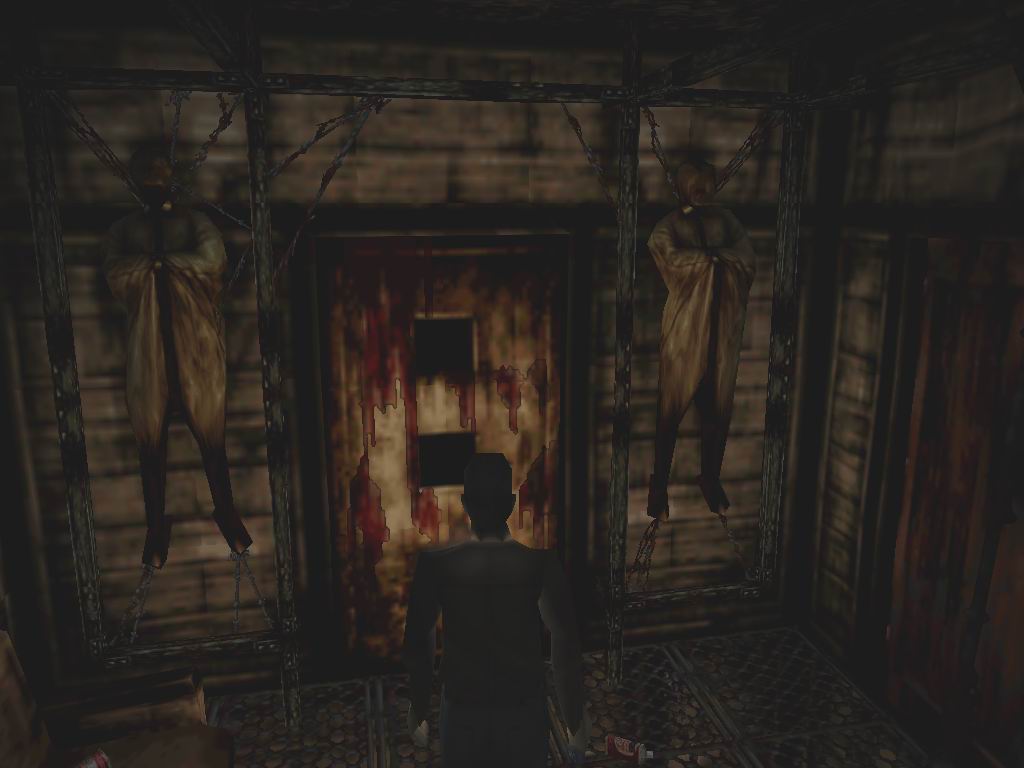
The story of Silent Hill is solid, especially when compared to its contemporaries such as the early Resident Evil games. The supernatural world and psychological horror are so much more compelling than straightforward zombie or monster plot. You intrinsically know that something is deeply wrong with the town, and there is some connection to Cheryl. The locations you visit seem to indicate traumatic memories, despite never having been to the town before. Every aspect of the game is disturbing and atmospherically oppressive.
At its core, Silent Hill is a survival horror game. You explore the world, collecting resources such as health packs, ammunition, weapons, and items to solve puzzles. The streets are filled with enemies such as rabid dogs, flying leathery screamers, and knife-wielding ghouls. There are far more enemies than there are bullets, meaning you will have to think carefully when you want to fight back and engage the enemy. The game encourages the use of melee weapons such as crowbars and sledgehammers to conserve ammo, but it forces you to get up close to the monsters, risking damage or being overrun with multiple enemies.
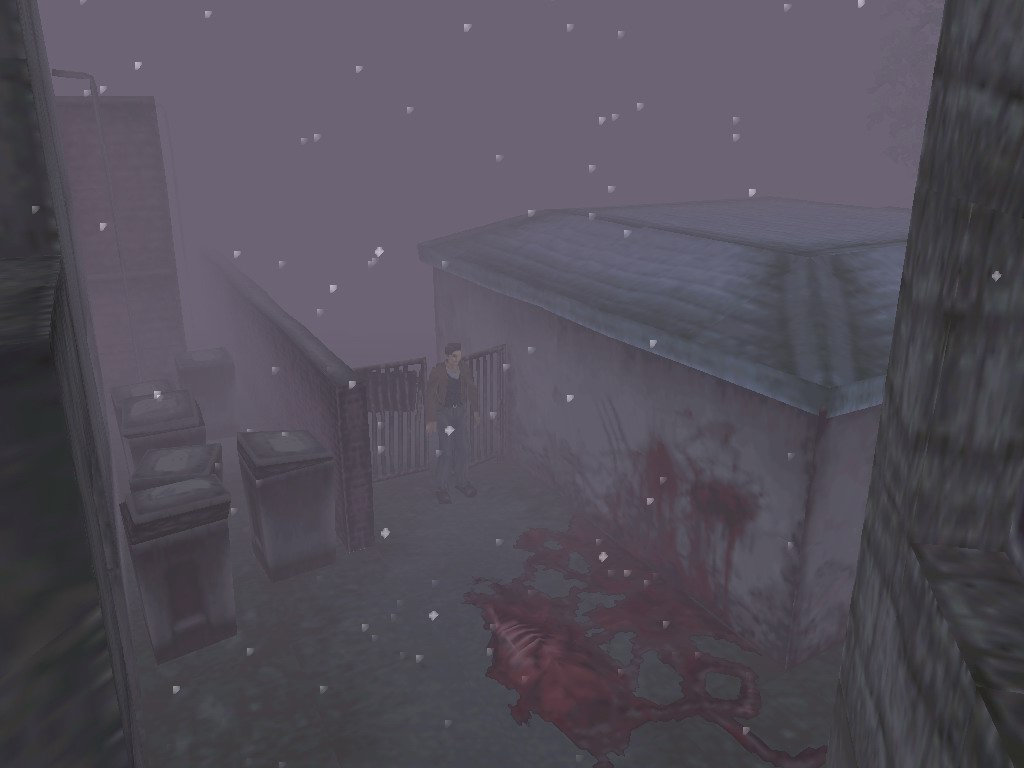
While the individual enemies are somewhat easily avoided, there’s a constant anxiety due to the scarcity of resources. Moreover, the game’s visual and audio design further cause unease. The thick fog obscures your vision; you can’t see more than a few feet in front of you. You have a radio that emits static when an enemy is nearby. You know that there are enemies all around you, but you can’t see them. You have to roam the town filled with dead-ends and maze-like corridors with the persistent knowledge that monsters are right outside your field of vision. The anxiety is further heightened by the distorted and disturbing soundtrack constantly thrumming in your ears.
Silent Hill also contains a handful of cryptic puzzles. These are woven into the themes of the game by using occult symbols, macabre visuals, and strange riddles. These are much more cerebral than the lock-and-key puzzles featured in the early Resident Evil games. You have to discern meaning from seemingly nonsensical texts. While I do enjoy these kinds of puzzles, there was one in particular that I thought was very tricky to work out with many different ways that the hint could be interpreted.
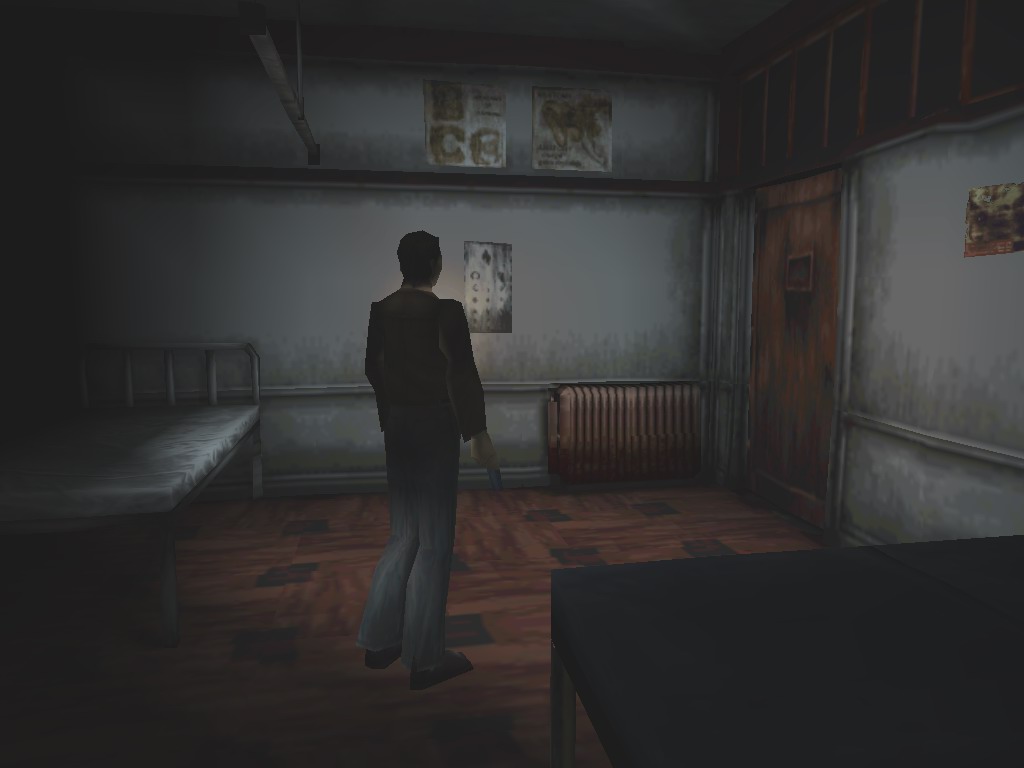
The thing about playing older games like Silent Hill is that you have to be prepared for some clunky controls. Moving around 3D spaces was still in its infancy, and control schemes were not universal. Silent Hill utilizes tank controls, making movement a bit clumsy if you aren’t used to having to rotate to move in different directions. Luckily, the camera does follow the player quite a bit, making it a bit easier to deal with the movement rather than the jarring transitions of the fixed camera angles from Resident Evil. Still, the tank controls are a relic of the past that can be tricky to deal with.
Silent Hill is the terror counterpart to the horror of Resident Evil. Instead of zombies and gore and bombastic action, there’s a thick fog, static-filled radio, and cryptic riddles scrawled in blood. It’s an incredibly unsettling game, and every decision was made to achieve that goal. It has an uncanny ability to unnerve and cause panic with its masterful atmosphere and hellish soundscape. Despite its age, Silent Hill is a piece of art. It is the video game manifestation of a nightmare.
 stephensopinions