Bayonetta 3 is one of the most frustrating games I have ever played. It’s got such enjoyable core gameplay with a ton of skill expression, but the game constantly interrupts the player with a barrage of annoying gimmicks that get in the way. Mini-games aren’t new to Bayonetta, and having a few to provide some levity and a break from the high-octane combat is understandable. But Bayonetta 3 takes the concept way too far, to the point where it feels like the traditional combat is a minority of time spent in game. I suggest reading my thoughts on Bayonetta and Bayonetta 2 to get full context for the rest of this review.

The combat of Bayonetta 3 follows the same formula as its predecessors. Weaving together punches and kicks, using your guns to maintain combos, and slowing down time through well-timed dodges. This iteration abandons the Umbran Climax mechanic from Bayonetta 2, which I think was smart because it was far too powerful. Instead, Bayonetta 3 introduces Demon Slave, a mechanic which lets the player summon a demon to control and fight with.
Demon Slave is a much-welcomed addition as it adds a ton of potential for skill expression and mastery. While summoning a demon you cannot control Bayonetta, which means it’s ill advised to always be summoning as you would be a sitting duck for enemies. Instead, you’re encouraged to weave in summons for a couple of attacks in the middle of your combo, letting you extend your combos and deal massive damage without putting yourself at risk. There’re eight main demons to unlock through the course of the game, each having their own abilities to experiment with. Charm enemies with Madam Butterfly, lay tracks for the Wartrain to run over foes, or you or make it rain blood with the frog demon Baal.
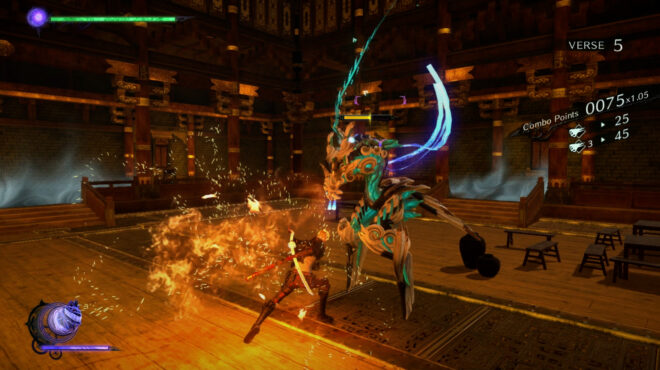
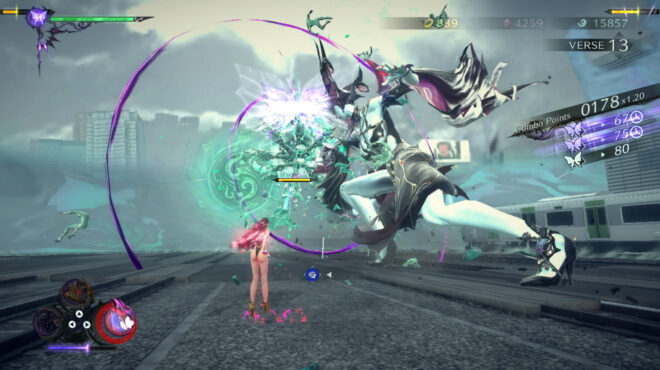
Like its predecessors, Bayonetta 3 has a variety of weapons to unlock and play with. The combination of weapons and demons allows the player to really express themselves to the fullest. Combining different weapons and demons gives a ludicrous amount of potential for mastery. Action games like the Bayonetta series are about more than simply defeating your enemies, but looking cool while doing it. The Demon Slave mechanic provides a ton of spectacle as a godzilla-like demon breathes unholy fire while Bayonetta dances to control it like a puppet. It looks cool and it is a ton of fun to decimate enemies with your demonic pets.
The cost of such grandiose spectacle is visual clarity. Both the player’s demonic summons and the enemies in this game are massive, often occupying the entire screen. Combine that with fast-paced action and colorful effects for an assault on the eyes. I often had an extremely difficult time parsing what was happening on the screen. The camera really struggled and often got stuck inside the bodies of the behemoth demons and enemies. It’s unfortunate because outside of these hiccups, the combat is amazing.
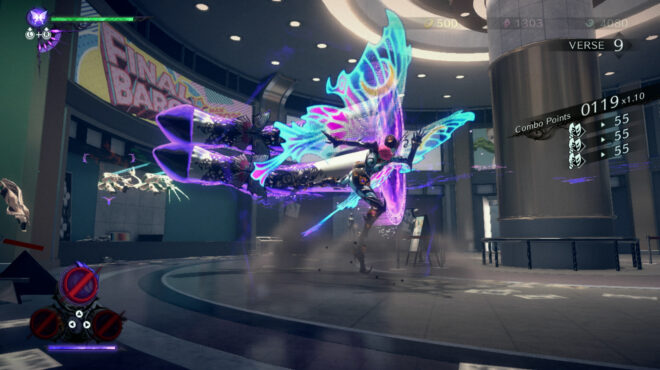
While I did love the core combat of Bayonetta 3, I was shocked by how infrequently the game lets the player partake in it. There’s an abundance of cutscenes, gimmicky sections, and alternate character chapters that disrupt the game’s flow. The Demon Slave mechanic isn’t limited to combat, the game has numerous sections that highlight the other capabilities of the summonable monstrosities. I wouldn’t mind having a few traversal challenges, puzzles, or mini-games tied to Demon Slave, but there’s just way too many interruptions. Sometimes I just want to fight bad guys, not slowly pick up statues and place them on a scale with my bird-demon. Or play the world’s slowest game of rock-paper-scissors as Godzilla. These sections just aren’t very fun. Having a wall of text thrown at you to learn a whole new control scheme for a brief mini-game is clunky and ruins the pace of the game.
Aside from the gimmick sections, Bayonetta 3 is also plagued by the non-Bayonetta chapters. A new character, Viola, is a major player in the story and gameplay. Compared to Bayonetta’s wide array of weapons and demons, Viola only has a single weapon and single demon. She is way less interesting to play than our titular hero, and her control scheme takes a lot of getting used to because it is wildly different from Bayonetta’s. There’s also a handful of chapters featuring Jeanne which serve as a side-scrolling espionage mission. The Jeanne chapters aren’t terrible, but on top of all the other interruptions I found myself wishing that I could just play as Bayonetta some more.
To be honest I don’t particularly care about the story of the Bayonetta series that much. The characters are definitely memorable and quirky, but the plots have always been a convoluted mess. Bayonetta 3 is no exception to this. While I’m not shocked that I found the story of Bayonetta 3 to be dumb, I was surprised by how much time was spent on it. There’s 4 hours of cutscenes in a 14-hour game. For a story-driven game that’s an acceptable ratio, but this is Bayonetta. I want action, I want spectacle, I don’t want to watch hours of cutscenes of a nonsensical story.
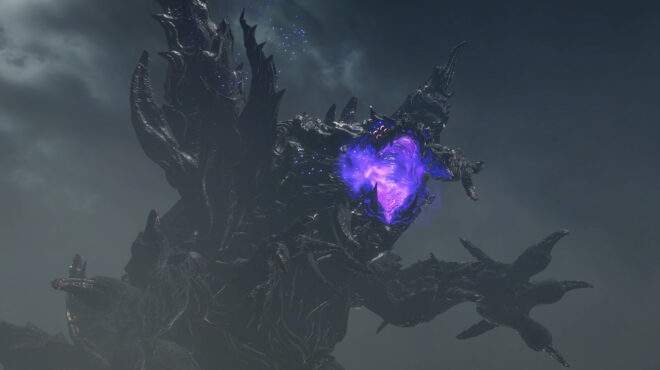
The premise of the plot is that the multiverse is under threat by some force known as Singularity. We travel to alternate universes to see alternate versions of Bayonetta and collect special gems to be used to travel to Singularity’s universe and defeat him. You repeat the universe-hopping schtick a bunch of times without much plot advancement until the very end, at which point things go from boring to ridiculous. Again, I wasn’t expecting a narrative masterpiece. But between the gimmicks, Viola chapters, and Jeanne chapters I had no patience left for long, drawn out cutscenes with little substance.
It really is a shame that Bayonetta 3 is crammed with so much superfluous content. It’s the perfect example of “less is more”. It possibly has the best combat in the series, and therefore some of the best combat in all of gaming. But the game is dragged down by a bombardment of underbaked gimmicks, boring alternate characters, and never-ending cutscenes. It is for these reasons that I give Bayonetta 3 a 5.5/10. It is by far my least favorite entry in the series, but if you can look past all of the junk, there is a treasure trove of amazing combat to be uncovered.
 stephensopinions