UFO 50 (2024)

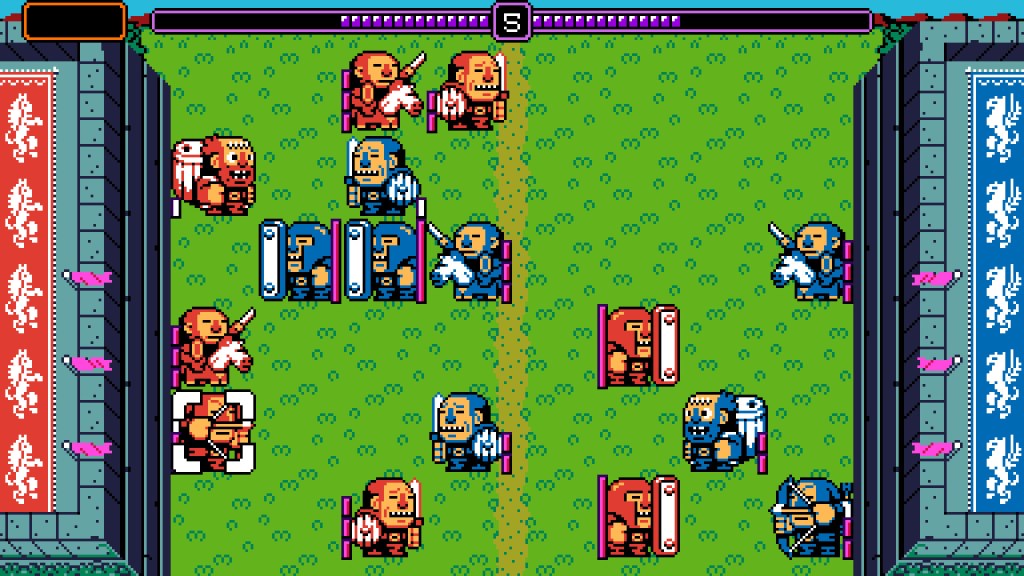
You stumble across a dusty cardboard box in an abandoned storage unit, inside is a retro video game console along with 50 games from a company you’ve never heard of. That’s UFO 50. A collection of 50 retro games from an alternate universe, each showing the progression of the fictional developers UFO Soft. The games range from platformers, to sports games, to fighting games, to shmups (shoot-‘em-ups), to puzzle games, to strategy games, each with a unique twist or gimmick. The real developers of the UFO 50, Mossmouth, claim that these are retro games with modern design sensibilities, which I think is a perfectly apt description.

Retro games are notoriously difficult and are oftentimes clunky to play. UFO 50 does a fantastic job at maintaining a reasonable level of difficulty without making these games frustrating to play. Many of the games in the collection have slow movement, punishing mechanics, or initially uncomfortable control schemes. But it doesn’t take long for each title to click, and once you figure out how to play the smart design begins to unveil itself. 

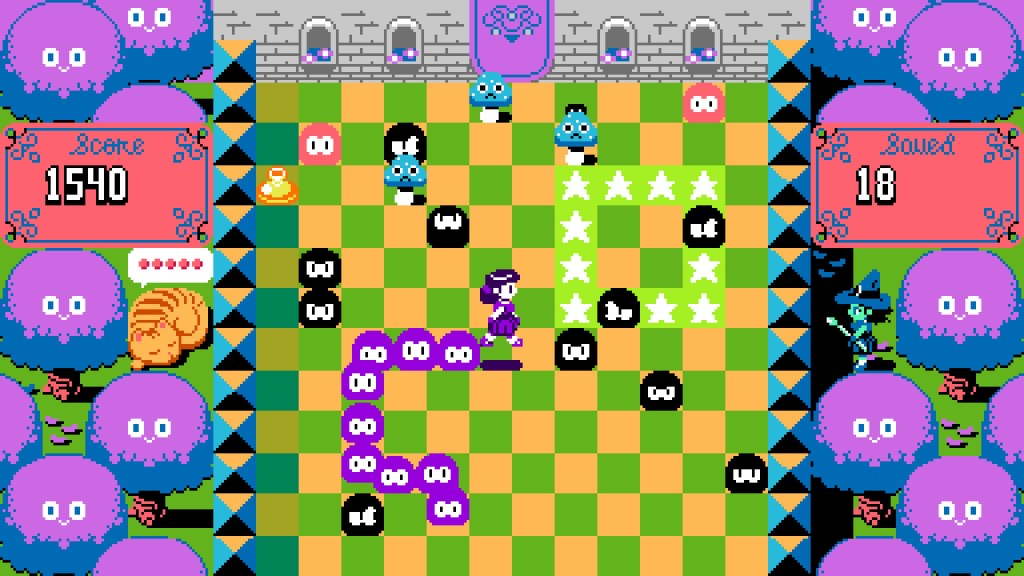
Each game in the collection has something that makes it stand out. There’re no straight up clones of actual retro games, although some of the games do feel at least inspired by classic titles. Take one of the earlier games in the collection for example, Magic Garden. It takes elements from Snake and Pacman as you lead friendly slimes to safety and use power-ups to clear out evil slimes. But Magic Garden is its own game, shepherding slimes to the scoring zone and collecting power-ups has intricacies as you are encouraged to take risks and let a ton of slimes occupy the board before chaining together multiple power-ups for an exponential score increase. There’s an edge of risk and reward if you want to maximize your points.
There’s an absurd level of variety available in UFO 50. I’m extremely confident that there is a game in the collection for everybody. And for $25, you really can’t go wrong. And don’t think that these are just short little arcade games either. There are fully fledged RPGs and metroidvanias that take hours to complete. Many of these titles could easily be standalones. Mini & Max for example is a genius little metroidvania in which you try to escape a supply closet by shrinking down and exploring the shelves and talking to the micro-civilizations that are invisible to the naked eye. Grimstone is a turn-based RPG that is over a dozen hours from start to finish. You could play UFO 50 for 100 hours and barely scratch the surface. If you truly want to 100% complete the collection, you are looking at 300ish hours. Personally, I have not clocked even remotely close to that number but this is a game that I am planning to play and revisit for a long, long time.

A smart decision was made to give every game some reasonable milestones to achieve. Every game has a simple challenge to earn a “gift” which goes into the little house on the console which is cute. You earn a gold trophy for beating each game. And you can earn the “cherry” by completing whatever additional challenge there is after completing the game, usually this is getting a high score or something along those lines. I think these tiers of achievements makes every game more approachable and presents attainable goals as you slowly get better at each game.
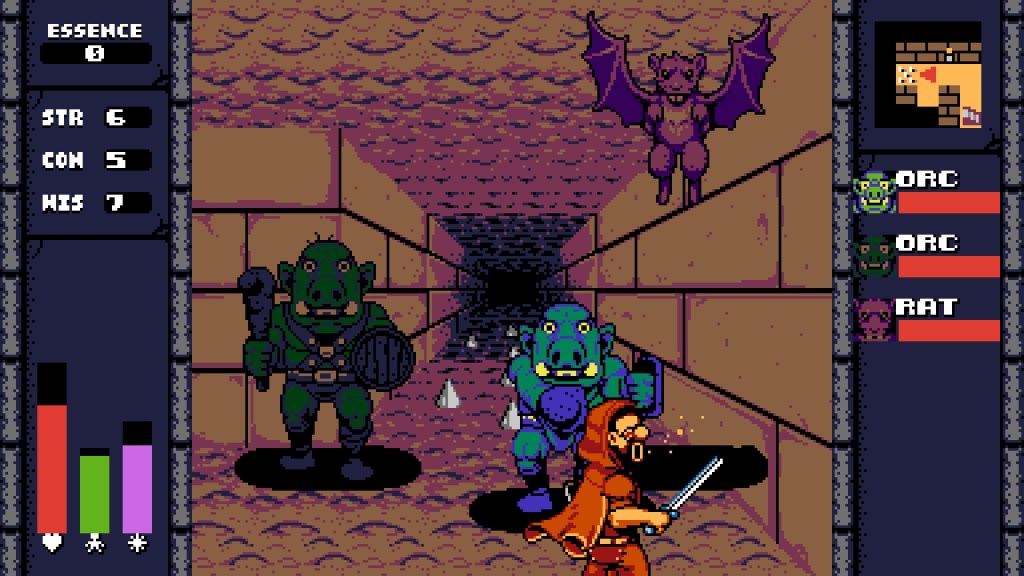
I loved the dedication to the fictional company of UFO Soft. Each game has a short blurb about its development and it’s fun to recognize the fictional names of the developers in the credits of each game. There’s a handful of sequels across the collection, and I enjoyed the references to the company’s other games as I played. It was interesting to watch UFO Soft evolve in design and technology. It was a brave decision by Mossmouth to have the first game in the collection be Barbuta, an esoteric metroidvania with no music, no color, painfully slow movement, unfair traps, and no quality-of-life features. But it was the perfect origin to the UFO Soft mythos. A game developed by a sole employee with extreme technical limitations and no game design experience. Following the evolution of UFO Soft is a journey of its own, and there’s a layer of secrets to be discovered for dedicated players.

The presentation of the collection is fantastic the whole way through. Mossmouth had to make sure every game fit its respective era and chronological place in the collection. All the games look good for being retro games and have distinctive designs and characters. But what I really want to highlight is the music. Oh my god. There are so, so many excellent tracks in this game. In the alternate universe where UFO Soft is real, I could easily see these tunes being as memorable as classics like the Super Mario Bros theme is to us.
I think that the size and breadth of the collection is the greatest strength and weakness of UFO 50. While it is exciting to boot up the game and choose from 50 games, not having to commit to any given game, I also found myself treating each one as disposable. Since the games are difficult and often have unconventional control schemes, I found it very easy to not give each game a fair chance. Dusting off a cartridge and playing for 5 minutes before exiting and trying something else was a common occurrence initially. After noticing this pattern, I forced myself to try to give every game more attention. I’m still working through the majority of the collection, but I am glad that I slowed down to really appreciate each game. The downside is that some of the games never do click, even after putting time into them. Planet Zoldath and Combatants are examples of games that I think are just not very good. 

Since I think that it can be a bit intimidating to know where to start with such a massive collection, I wanted to share some of my favorite games that I’ve played so far. While part of the beauty of UFO 50 is that everyone has different favorites, I did want to highlight these five games. Hopefully these suggestions can give you some options to try if you have trouble choosing where to begin.

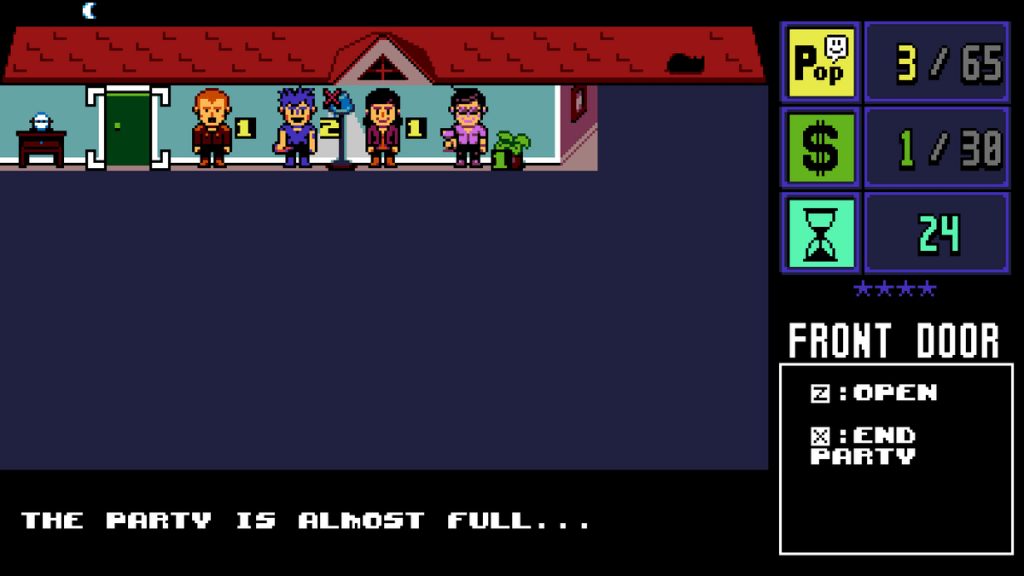
Party House is the first game in the collection that really clicked with me. It’s a deck builder where you are trying to throw the ultimate party. By spending popularity to add new guests to your rolodex you try to accumulate more popularity and cash every night. After 25 nights you have to have 4 “starred” guests attend your party to win. There’s a good amount of decision making involved, but what makes Party House interesting is its “push your luck” mechanics. Troublemaker guests typically earn more popularity and money, but more than two of them at once will cause the cops to show up. And there’s also the decision of when to stop spending popularity on normal guests and when to start acquiring the “starred” ones. There’s a lot of delicate choices to balance, and Party House is a ton of fun.
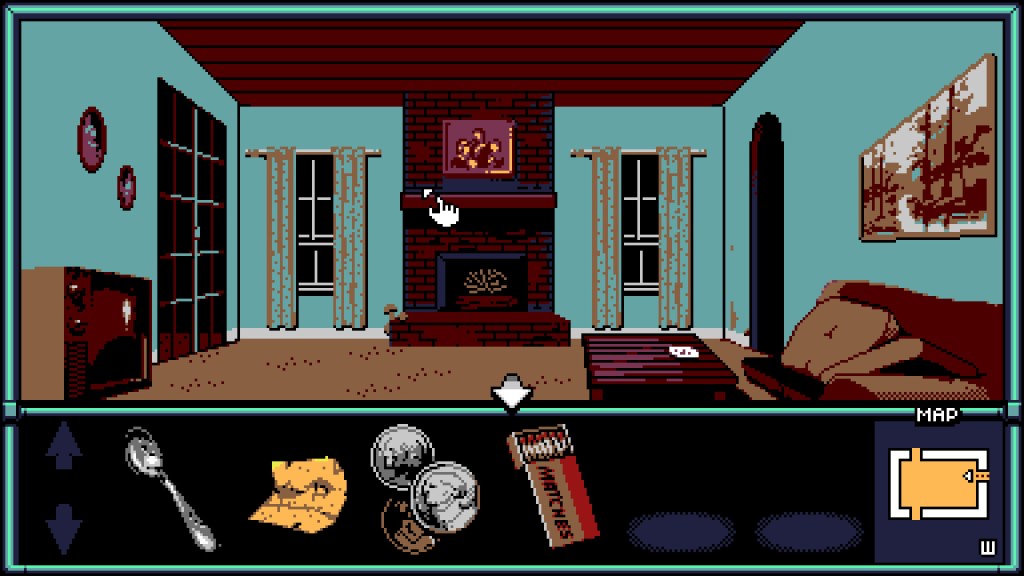
Night Manor is a point-and-click horror game that takes place in a disarrayed mansion filled with trash and fungus. You have to figure out a way to escape while avoiding the zombie-like man infected with fungus who is hunting you. If you run into him, your cursor jitters to simulate the terror your character feels, making it harder to click on doors to escape as he chases you through the manor. Old point-and-click games often have moments of ridiculous leaps in logic, but Night Manor avoids this with its puzzles. I found that everything made sense and I couldn’t put the game down until I played through the whole thing over the course of a few hours. There’s also a story to uncover through notes of what happened at the manor which was fun to discover.
Seaside Drive is a stylish shmup, but you can only move left and right as you drive your car down the road. As you dodge projectiles and enemies you have to move back and forth quite a bit to keep up your meter. You build up charge by skidding to the left, and expend charge by shooting and driving right. The higher the meter, the more damage your shoots do. I love this game because it seems crazy difficult at first, but I quickly learned how to maneuver and overcome the challenge. It’s so satisfying to clear the stages that were giving you a hard time without getting hit at all. Seaside Drive also has incredible aesthetics and one of my favorite songs in the whole collection. It’s a slick, stylish, and fun to play shmup with perfectly tuned difficulty.

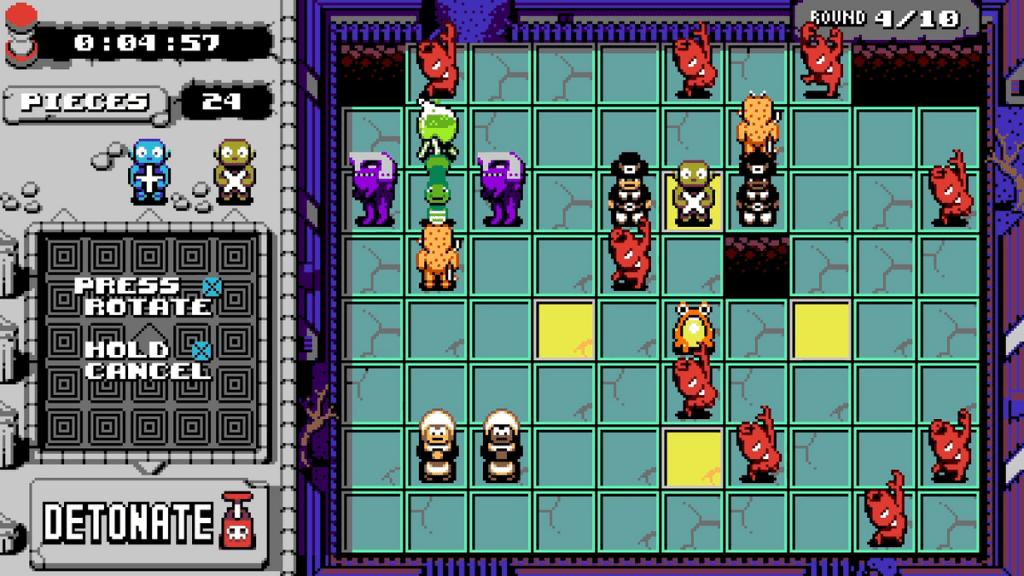
Devilition is my favorite puzzle game of the collection that I’ve played so far. A grid is filled with villagers and demons and you have to place pieces that kill the demons. The twist is that your pieces have to act like a chain reaction, each one can only be set off if hit by another. You have to keep track of what pieces you’ve placed and how to connect the chain. There’s 10 rounds and any pieces that you don’t use carry over to the next round, encouraging you to be efficient in your placement. I enjoyed watching the Rube Goldberg machine go off and clear the demons off the board as I prayed that I didn’t mess up and miss a crucial link in the chain. 
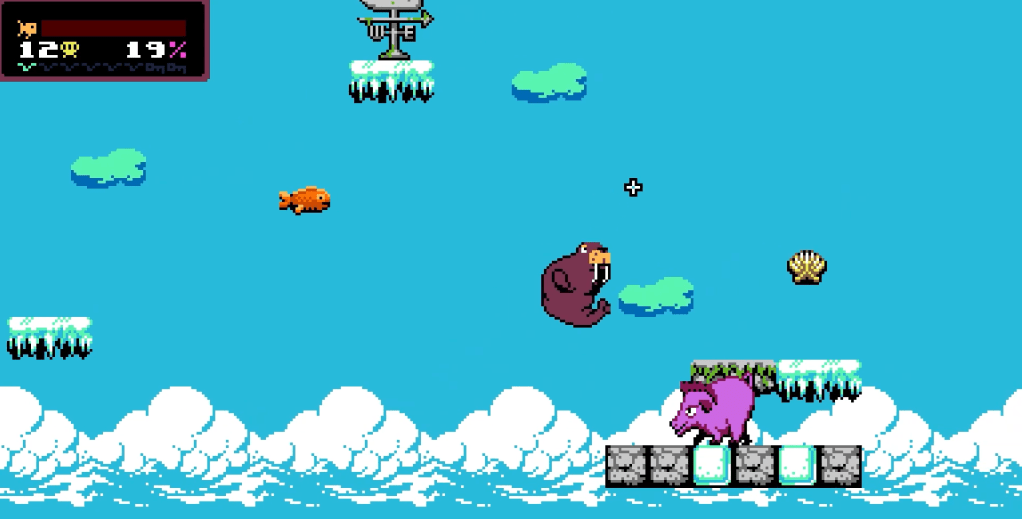
Waldorf’s Journey is a platformer that takes place entirely within the dream of a walrus. It’s reminiscent of a golf game as you charge up and launch Waldorf the walrus across gaps and try to precisely maneuver him to land on tiny patches of ice. You really have to master the momentum as you use your flight meter to propel Waldorf forward. It’s tempting to fly as far as you can on every jump, but it becomes incredibly difficult to slow down enough to safely land. There’s a few different power-ups and items to help you along as you inch towards revelation at the end of the dream. I also love the visuals, music, and minimalist story in this game as well. 
I think UFO 50 is a game that I am going to be playing for the rest of my life. Or at least for a very long time. The breadth and depth of this collection is unmatched. After dozens of hours played, I’ve barely scratched the surface of what UFO 50 has to offer. The fictional history of UFO Soft ties the whole thing together beautifully. It is for these reasons that I give UFO 50 a 9.5/10. UFO 50 is a paradise for fans of retro games with its dedication to melding retro gaming experimentation with modern design considerations.
Balatro (2024)

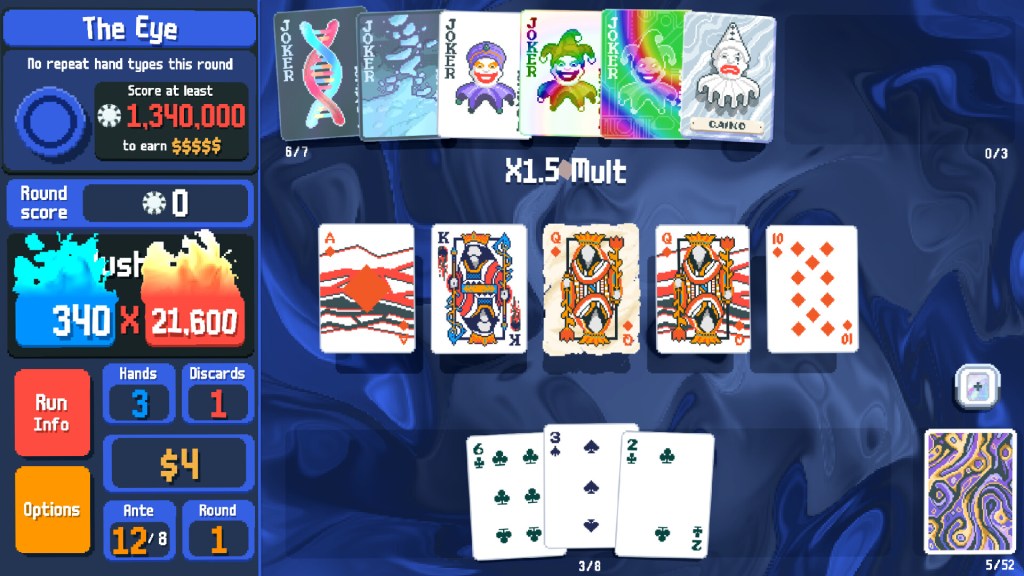
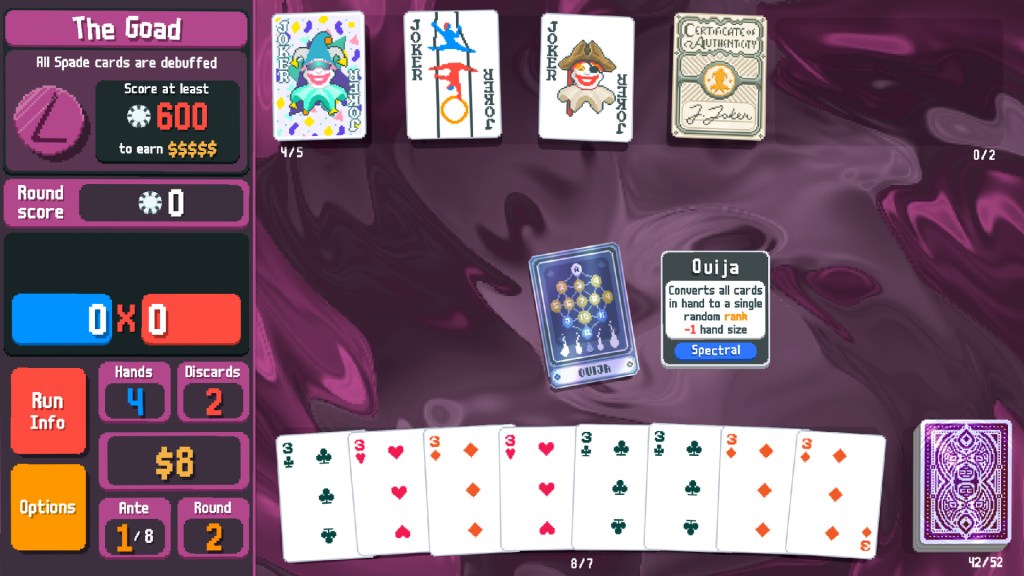
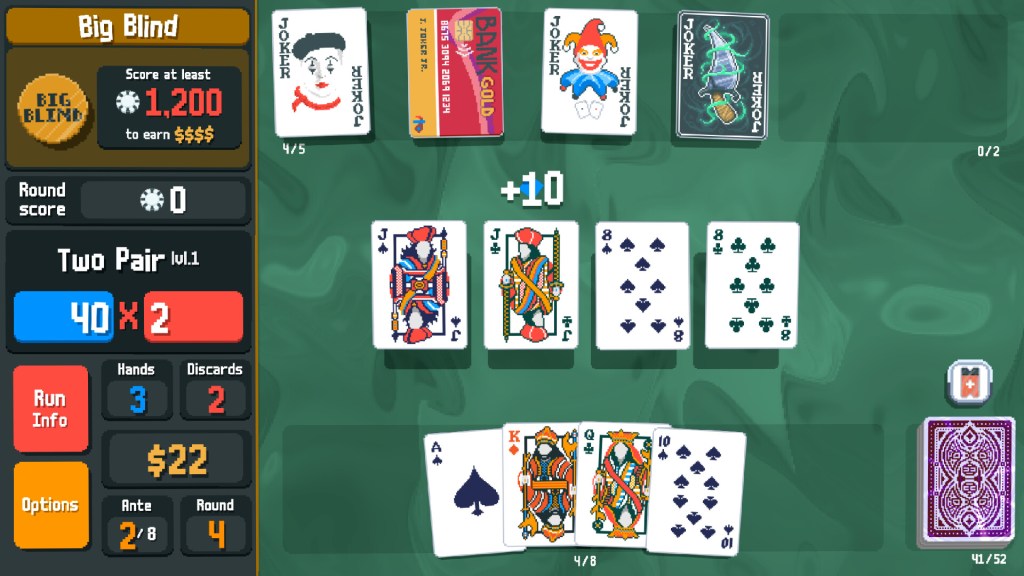
Balatro is the video game equivalent of crack. Every aspect of this game makes it hard to put down. It’s easy to spin it up for “one quick round” and look at the clock to realize that hours have passed. Balatro is a roguelite deck-builder that is about playing poker hands to score points, as well as using a variety of modifiers to multiply those points. There’s a wonderful level of random chance that influences every run that influences the player to experiment with all sorts of different builds. Even after spending dozens of hours playing poker hands, I still feel the draw of Balatro to see what kind of strategy I can cook up.

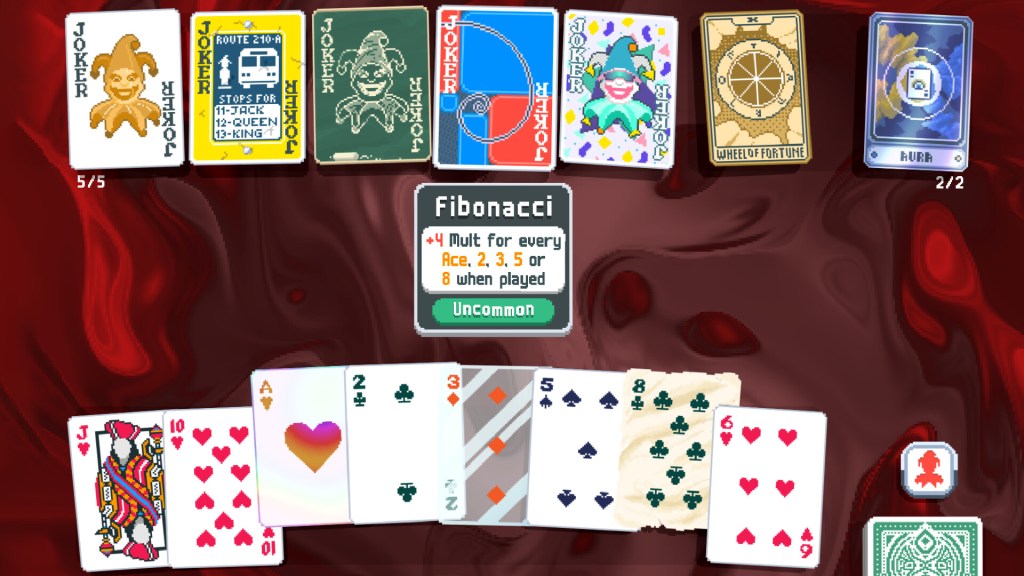
The structure of the game is that you play poker hands to try to accumulate points and surpass a threshold to complete a round. Typically, you get 4 hands to play per round and 3 discards to try to put together higher scoring hands. After each round, you visit the shop to spend money earned on modifying cards to increase your points. The cornerstone of these modifications are the joker cards. You can hold 5 joker cards that vary wildly in the bonuses that they provide. From simple bonuses like multiplying your hand’s score or giving you extra discards, to more specific bonuses like increasing the base chips and multiplication of Aces or Fibonacci numbers. 

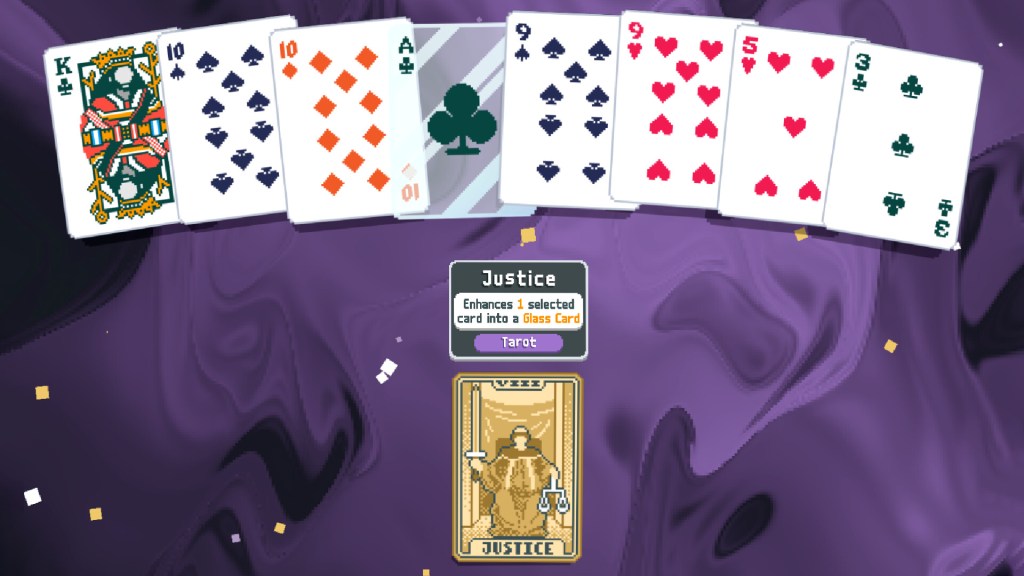
There are so many jokers to stumble on and it is incredibly engaging to try to find the synergies between them. My highest scoring run consisted of a multiplicative joker that increased its multiplier every time a card was added to the deck along with another joker that added a card at the start of every round. This was further enhanced by two of my other jokers that copied the effects of other jokers, leading to a rapidly climbing multiplier. Aside from jokers, there are also planet cards that permanently increase the base point value of certain poker hands. There’re tarot cards that provide a variety of effects from buffing individual cards to giving you more money.

All these options provide a fantastic system for decision making. Every time you visit the shop after a round you have to weigh what bonuses you want and whether or not you want to gamble on booster packs and hope there is something good inside. You want to have a healthy amount of money to earn interest and allow for big purchases later. There’re so many factors at play that you have to consider. Sometimes you have to make short-term purchases just to get you through the next few rounds while hoping you stumble upon better options. The randomness isn’t frustrating, it’s what makes the game so compelling. Every time you get a run going, it feels powerful. Being forced to experiment with whatever the game throws at you leads to incredible moments.

Each run is structured into 8 “antes”, each ante having 3 rounds of increasing point requirements, the last of which being a “boss” with special effects. After completing the 8th ante, there’s an option to continue with your deck in endless mode. Initially, I found myself always going into endless mode to see how far I could take my deck. I discovered that the score requirements quickly begin to scale exponentially, leading to most of my runs sputtering out around ante 11 or 12, no matter how good they were. At first, I was frustrated by this, but I soon realized it is a blessing that the endless mode scales exponentially. At some point, your build is essentially complete so you are just going through the motions every round. Most of the fun decision making happens much earlier in the run, so dragging out the endless mode wouldn’t be enjoyable. And having a concrete goal of completing the 8th ante means you can take short-term risks and attempt non-optimal builds as you don’t need to scale exponentially to win.

The one problem that I have with the gameplay of Balatro is that the early rounds are fairly boring and repetitive. You need to save up money before you can buy anything, so you are often stuck playing high-value hands like flushes and straights to clear the first few rounds. You are at the mercy of the shop to have some decent jokers to get you through ante 2. You don’t have the money to reroll or gamble on booster packs unless you are truly desperate. It’s hard to alleviate this issue without the developer placing a finger on the scale and tipping the odds in the player’s favor early on. My suggestion would be to have the cost of rerolls scale by ante. That way players can actually afford to reroll the shop a few times early on to fish for usable jokers while simultaneously increasing the difficulty in later antes.

The issue with the early game is only made worse as you turn up the difficulty. There are eight difficulties and over a dozen decks to choose from. I mostly enjoy how the difficulties were designed as they rarely equate to “score more points”. Many of the difficulties add modifications to jokers that make them unsellable, or cost money every turn, or expire after 5 rounds. This adds an additional layer of decision making on which jokers you want to purchase. The problem is that on the highest difficulties you really need everything to go right early on to have a successful run. I don’t think it’s the end of the world because it is still a ton of fun to try to scrape by with suboptimal choices, but I do wish there was something to make the first couple antes more engaging.

Part of what makes Balatro so addicting is its presentation. The game looks great, even on mobile platforms. I love looking at the distinctive design of all the jokers. But the animations and sound effects are really what makes Balatro tick. Watching the game emphasize every card and joker as the score climbs up is addicting. Your deck becomes a Rube Goldberg machine of multiplying bonuses that is fun just to watch unfold. The game cleverly doesn’t tell the player the final point value of the hand they are about to play, leaving the player to watch and wait with bated breath as the score rapidly grows. I particularly love that when a single hand surpasses the total point value necessary for a given round, the score display lights on fire. It’s a really satisfying touch.

It’s hard to explain why Balatro is so addicting, but beware how difficult it is to break free from the grasp of Balatro. The pure variety and allure of creating an overpowered deck fires all the right synapses in my brain. The dopamine of watching the score skyrocket is addicting. There’s so many different decks, difficulties, and challenges that force you to play with all the different options available. It is for these reasons that I give Balatro a 9/10. I would say it’s the perfect game to play a quick run when you have time to spare, but it’s so fun that I’d have a hard time putting it down after a single run. 

Max Payne (2001)

Older games are often rough around the edges, and I was concerned when I needed to download a 3rd-party mod to even run Max Payne. But the little bit of research that I had to do to get the game running was well worth it, because Max Payne is an absolute classic. It’s an old-school FPS that makes you feel like an action movie hero, while simultaneously gripping you in its noir narrative and setting. For its time, it was a technically impressive game that made clever decisions to hide its shortcomings. Despite a few hiccups with the difficulty design, Max Payne is an excellent game, even to this day.

After his wife and infant child were killed by drug addicts in a burglary a couple years ago, Max becomes an undercover DEA agent. He gets a lead on the source of the drug known as Valkyr, a mysterious substance that makes people enter a zombie-like state. Max hunts for the truth during a historic blizzard in New York City. It escalates from mob drug war to full-blown conspiracy as Max spirals in his quest for vengeance.  

As the plot unfolded, layer by layer, I was also impressed by the thematic consistency. The weight of the guilt that Max carries because of the murder of his family turns him into a relentless hunter. He is haunted by hallucinatory dreams where he is the one pulling the trigger during the tragedy. As the blizzard progressively worsens, so does Max’s mental condition and grip with reality. The narrative benefits from its noir styling. Max narrates the events with melodramatic descriptions and the presentation embodies the dreamlike yet brutal characteristics of classic noir films. 

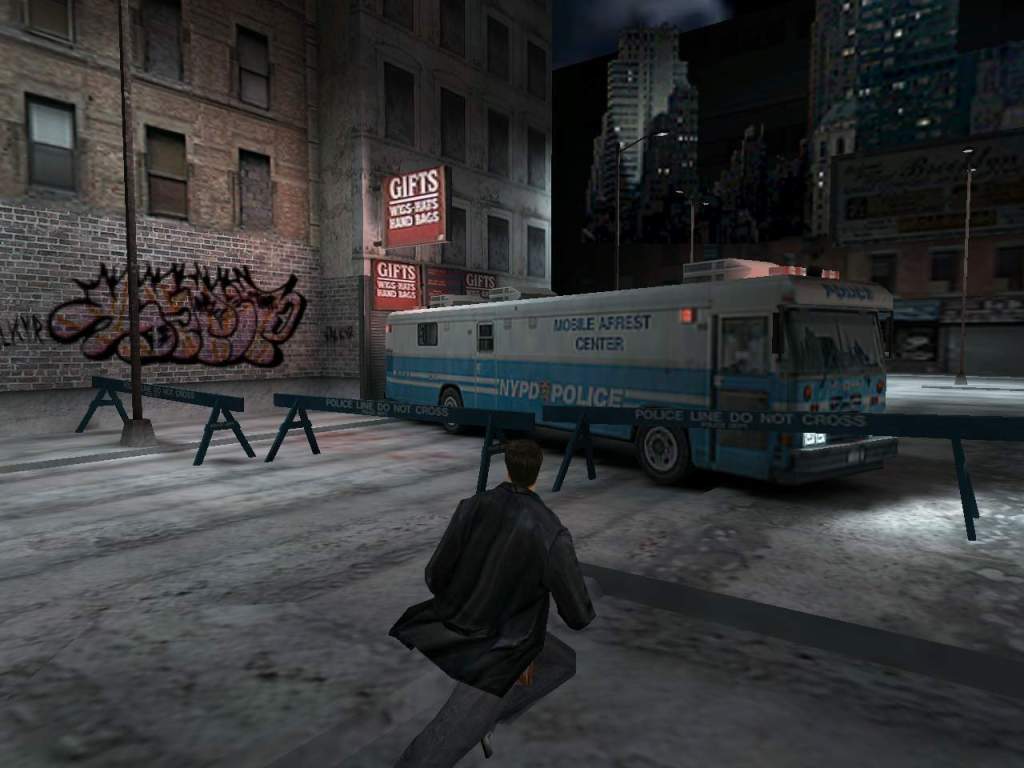
Despite its age, Max Payne visuals hold up remarkably well. 3D graphics were still in their infancy, so the developers decided to forgo cutscenes for comic panels. This was a clever choice because these stylized comics have aged so much better than cutscenes from that era. It also plays wonderfully into the noir theming and surreal elements of the plot. The setting is also quite memorable. New York City in a blizzard is one of my favorite environments to explore. The snow-covered rooftops, empty streets, icy docks, and rundown apartments are wonderfully atmospheric and filled with little details. I quite liked how many of the locations had radios or televisions that gave news updates on the “historic storm”. These little flourishes gave the world more credibility.

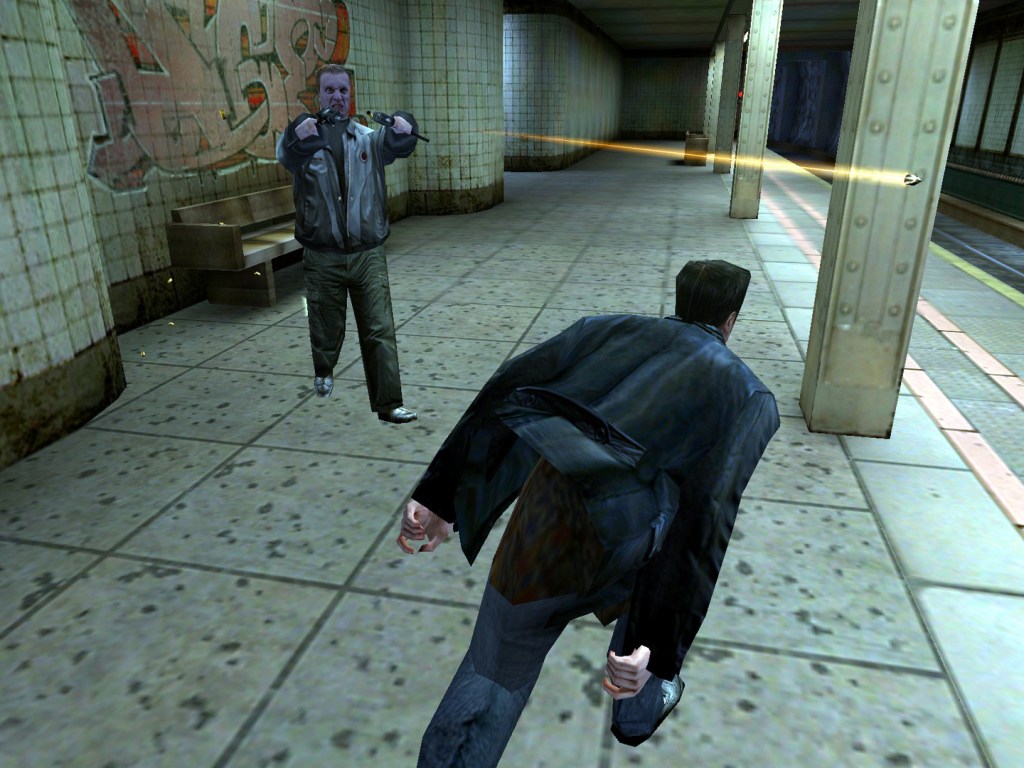
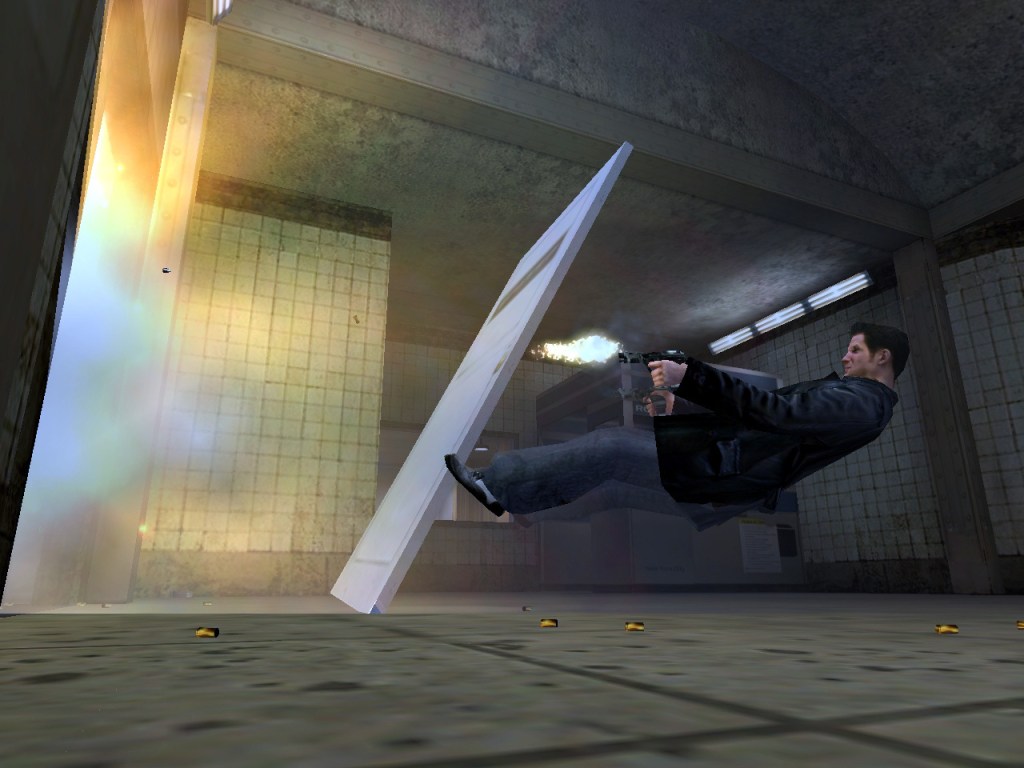
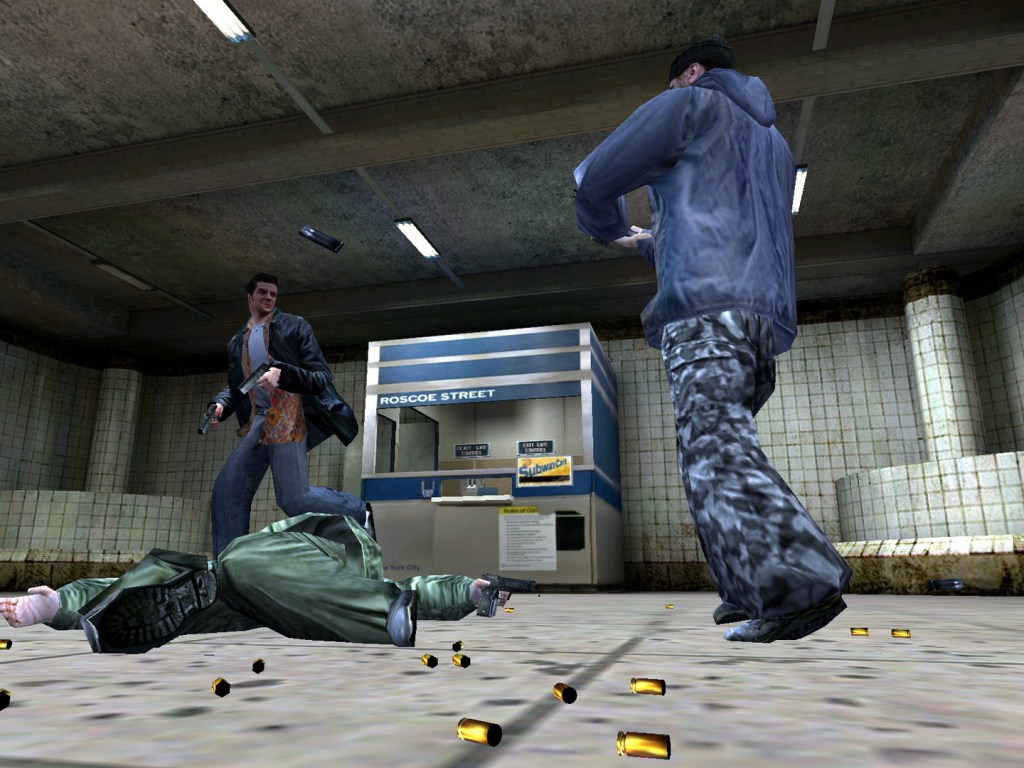
The presentation and story aren’t the only elements that are impressive despite their age, the gameplay also holds up well. It’s a classic FPS, shooting waves of goons as you move from room to room. But what makes it special is the inclusion of bullet time. At the press of a button, you can slow down time to dodge bullets and return fire. You also can quickly roll or dive in all different directions. Combining the dodge with bullet time can make for some cinematic moments as you burst through doors, diving in slow-motion and raining bullets on mobsters. It also adds a layer of fun complexity to otherwise simple gunplay. Bullets have actual velocity rather than instantly doing damage when the trigger is pulled. Staying in motion, utilizing bullet time, and leading your shoots is crucial to success. I found this fast-paced action to be very fun.

My only complaint about the gameplay is the adaptive difficulty implementation. I don’t hate the idea of tuning the difficulty based on how the player is doing, but in Max Payne it can drastically affect the experience. The game adjusts enemy damage, enemy health, player health, and other factors to extreme degrees based on how frequently the player dies. I found if I was doing too well basic enemies would suddenly become superhuman threats. The game flow is dramatically altered when multiple shotgun blasts from point blank can’t fell a single foe, but a single shot from their rifle kills you instantly. Luckily, you can save and reload as frequently as you want, so after a few deaths and reloads the enemies become manageable again. But still, it’s jarring to experience such sharp spikes in difficulty.

I was pleasantly surprised by my time with Max Payne. Every element was well done. The exciting story, the meaningful and thoughtful themes, the memorably moody setting, and the thrilling gameplay were all impressive. Despite the questionable inclusion of adaptive difficulty, I genuinely had a ton of fun with Max Payne. Which is not something I can say for many other games from its era.

Metaphor: ReFantazio (2024)

I usually stay away from massive JRPGs unless I really am hooked by the premise. It’s hard for me to want to sink 80+ hours into any game as an adult with a family, job, other hobbies, and a massive backlog of other games I want to play. But Metaphor: ReFantazio caught my eye. I loved my time with Atlus’ Persona 5 so a similar game set in a more mature fantasy world sounded right up my alley. Metaphor: ReFantazio presents a fantastical world and delivers on a phenomenal turn-based combat system. Unfortunately, as a lengthy story-driven game I was quite let down by the lack of nuance in the plot and the writing in general.

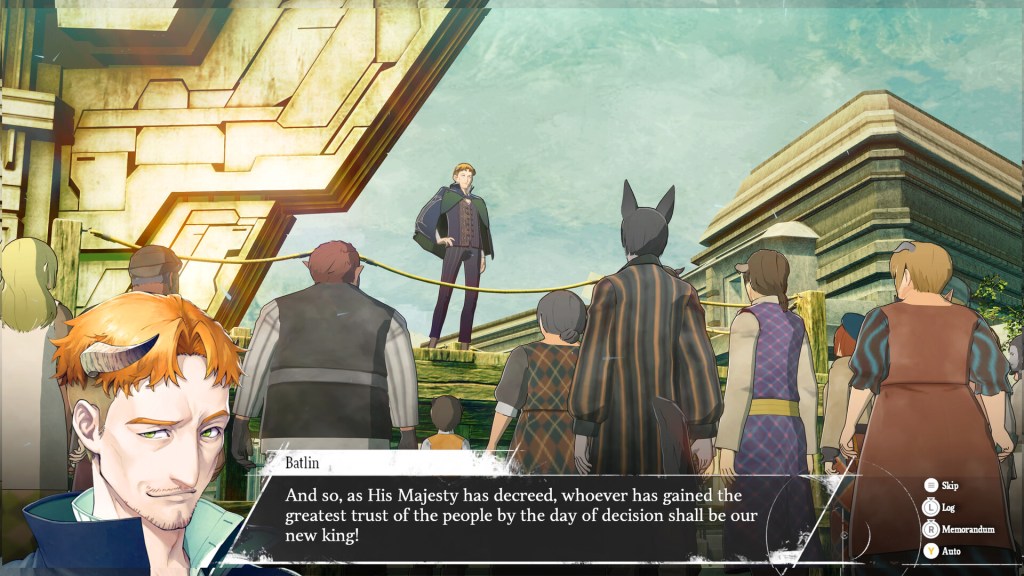
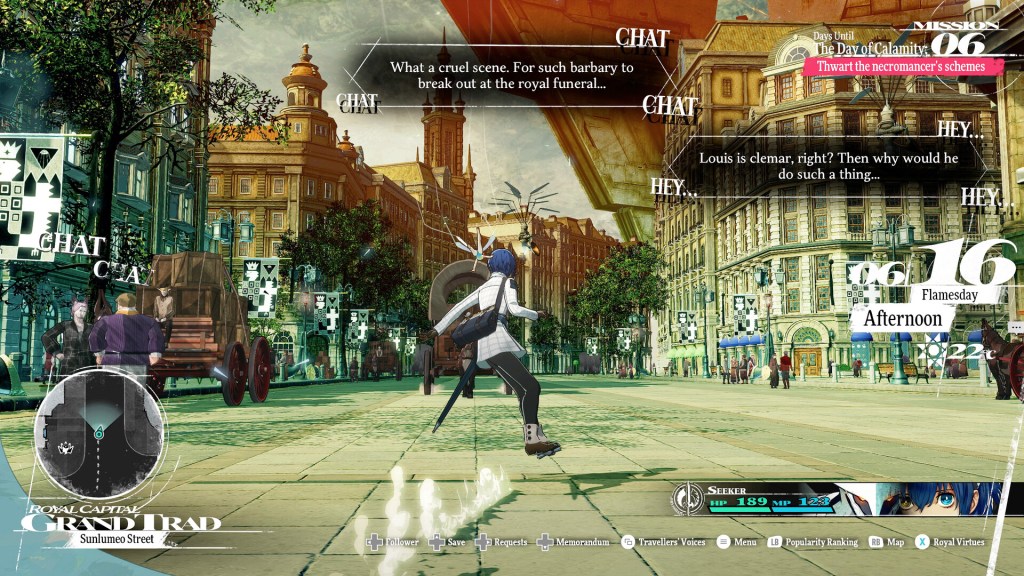
The world of Metaphor: ReFantazio is one filled with discontent. The country is thrown into chaos when the king is assassinated and his successor, the prince, has been missing for a decade. A military general, Louis, admits to killing the king and attempts to seize power for himself but is thwarted when a magical force using the voice of the late king announces that the next king will be chosen via the will of the people. Whoever has the most support after a few months will be king and wielder of the powerful royal scepter. 

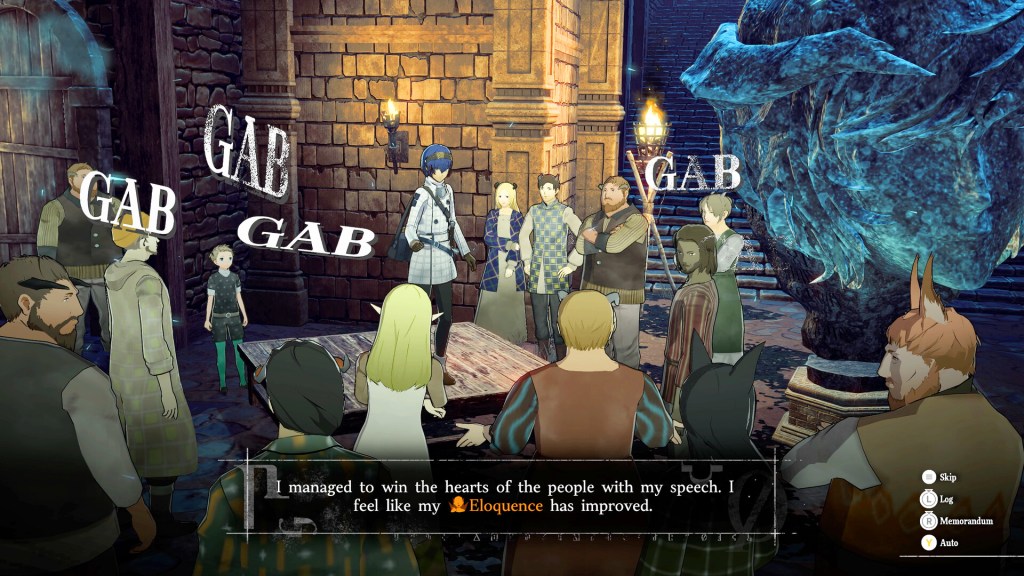
Racial strife, religious fanaticism, and national security are the most prevalent drivers of this world’s electorate. Louis promises to use his military might to protect the country from monster attacks and proposes a form of social Darwinism such that only strength matters rather than race. Forden, the leader of the church, is the other most prominent candidate. He appeals to people’s religious beliefs and seems to want to uphold the status-quo. The main character joins the royal tournament and is motivated by a fantasy book presenting a utopian society. He wants to join people of all tribes together regardless of class and race and create a utopia.

I quite enjoyed the ideas behind the political themes of Metaphor: ReFantazio. The portrayal of how people are driven to support politicians based on anxiety, fear, and anger felt especially apt as elections are taking place around the world. An objectively evil person such as Louis could become a front-runner because people are afraid for their security and want to overthrow the rotten status-quo no matter what it takes. And Forden uses his position of power in the church to manipulate people, not to mention his involvement in a shadow government that tries to rule the country from behind the scenes. But unfortunately, I think these themes never get explored past surface-level political analysis.

There’s a lack of nuance and thought-provoking questions that makes the world too black-and-white. It is obvious that Louis is a chaotic and evil villain. And Forden, despite appearing orderly, is highly manipulative and power-hungry. On the other hand, the main character is presented as perfectly righteous. It’s never in question if Louis or Forden are correct. The main character never has to answer how they will solve any of the difficult problems in the world. He repeats ad nauseam how everyone must come together. His vision of a utopia is nice, but I wish there was some actual nuance here.

I think the story would have been improved by not having Louis and Forden be so comically evil. Obviously sacrificing the weak so the strong can thrive is bad, but if Louis presented his social Darwinism as a merit-based system that anyone can succeed in it would be more nuanced. Moreover, if Forden leaned more into maintaining the status-quo, despite its faults, to maintain order and peace then we could analyze if that goal is worthwhile. And the main character’s utopian views needed some sort of flaws such as their difficulty to achieve. There should be some actual question to what is best for the country. A chaotic revolution that destroys social norms, the status-quo being upheld no matter what, or an idealistic utopia that struggles to answer hard questions. If I’m going to spend 80 hours engaging in a story, I want that story to make me think. And the lack of nuance in Metaphor: ReFantazio led to it not being very thought-provoking.

The issue with the storytelling is made worse by the repetitive writing. I understand these kinds of games are supposed to be story heavy but there were times I was mentally begging the characters to shut up. It’s rare that anything of substance is said, and most of the time characters are just repeating information that you already know. I can’t imagine counting how many times a character said something along the lines of “we have to stop Louis” or “we need to help everybody”. It’s cheesy, repetitive, and I am utterly exhausted by the power-of-friendship trope.

There are some exciting story sequences that showcased the potential that Metaphor: ReFantazio had. There are plenty of twists and turns that motivated me to see the game through to the end. The plot massively accelerates in the final quarter. The middle chapters of the game in comparison were slow and uninteresting. One of the earlier chapters takes place in the desert town of Martira where children have been going missing. This particular sequence was my favorite in the game as it was excellently paced and was a self-contained story with clever writing. The following couple of chapters were boring, forgettable, and lacked any sort of personality. Ultimately, the game is at its best in the beginning and at the end as it drags massively during the middle sections.

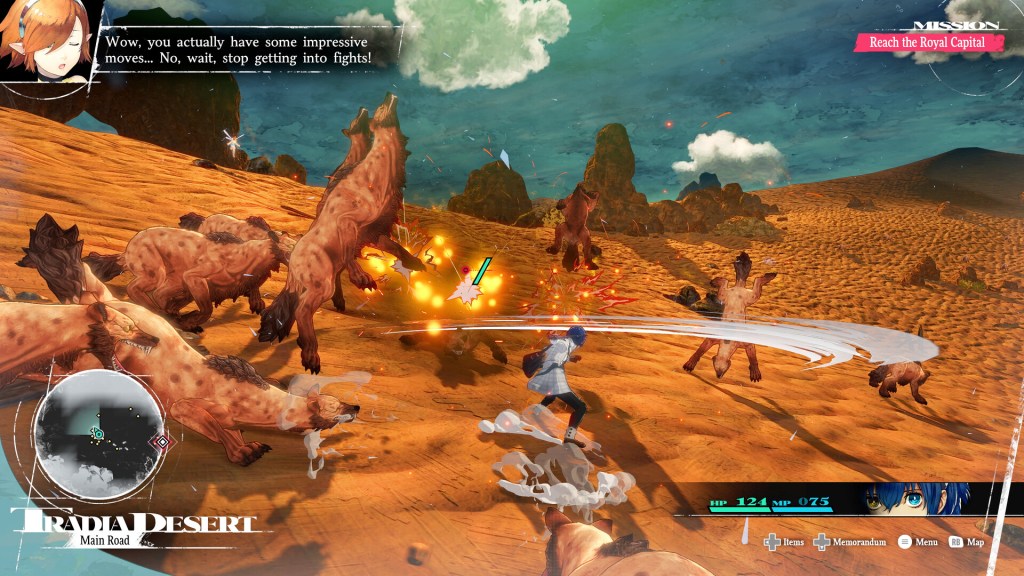
The strongest aspect of Metaphor: ReFantazio is its combat. I know turn-based combat isn’t for everyone, but I personally love a game when a game makes me think and strategize. What stands out to me about the combat in Metaphor: ReFantazio is the versatility. You have four characters on the battlefield, each with their own class and moveset. You get four actions per turn, but if you hit an enemy weakness or pass a character’s action it will only consume half an action. Moreover, there are synthesis skills that require two characters of specific classes that are highly impactful but cost two actions. Between basic attacks, single-target attacks, multi-target attacks, synthesis skills, buffs, debuffs, status effects, support skills, passing, and blocking there are so many potential ways to plan out a single turn. Which is important because battles often only last that long.

I played the game on hard difficulty and I found it to be vital to try to win most basic battles in a single turn. The combat is extremely volatile, meaning it is as easy for the enemies to kill you as it is for you to kill them. I found that letting the enemies have even a single turn could be catastrophic. Every battle became a puzzle of how to defeat all the enemies before they could retaliate, and to do so while using a minimal number of resources such as mana and items. Bosses are the exception to the single-turn combat as they have higher health but tend to telegraph their assaults. They often have multi-turn setup that can be interrupted or dealt with via debuffs and taunts. I enjoyed how every fight felt like it was on a knife’s edge, a single blunder could lead to a party wipe. But the versatility of tools that game gives you makes it so these tense encounters rarely feel unfair.

Part of what makes the combat so enjoyable is the adaptability brought by the class system. It may genuinely be my favorite class system in any game ever. There are over a dozen base classes, each with higher tiers that can be unlocked. Any character can be any class, and you are heavily encouraged to experiment with the different classes. Every character can inherit any skills they’ve unlocked from any class. If you want to inherit some elemental magic on your knight to give them some offensive options, go right ahead. If you want some healing spells on your buffing character, no problem. Every character levels up their class mastery independent from their actual level, making it easy to switch around and make use of the flexibility that the system affords.

There’s a lot of smart quality-of-life features that prevent potential frustration. When you max out a class’s level, any additional experience gained creates an item to be used freely on other classes. This prevents the issue of feeling the need to switch classes the moment you hit max level on a class so experience doesn’t go to waste. You can also switch classes and inherit skills freely, not needing to go somewhere specific. You are only constrained by a resource called Magla, which prevents you from unlocking every class and inheriting every skill but I never came close to running out of Magla. Another major quality-of-life feature is the existence of overworld combat.

When exploring a dungeon, you can strike enemies before engaging them in turn-based combat. If you are significantly higher leveled than the enemy, they will be defeated instantly without having to spend time in turn-based combat. This is a huge time-saver and I’m extremely grateful for its inclusion. If you aren’t a much higher level, hitting enemies enough will trigger an ambush, dealing a big chunk of damage and stunning them to start the battle. Conversely, if an enemy hits you then you will be ambushed instead, letting the enemies have a turn before you. Because of the volatile combat, being ambushed is extremely catastrophic and often leads to just having to reload from the last save. While I appreciate the benefits from overworld combat, I wish getting a hit a single time didn’t effectively lead to a game over. The third-person action isn’t fantastic, and it doesn’t need to be, but a lot of emphasis is placed on it which I find odd.

My other major issue is with some of the late game boss battles. Many of these bosses have ways to give themselves a ton of extra actions per turn, making them extremely dangerous without hyper specific strategies to counter them. They also are effectively immune to most status effects and can clear any debuffs and buffs easily, further pigeonholing what you can do. I found myself relying on setting up a 1-shot (or close to it) to attempt to burst the boss down before they could do any of their ridiculousness. There are also a few late-game abilities that feel almost necessary to counter the wealth of actions that these bosses can have. 

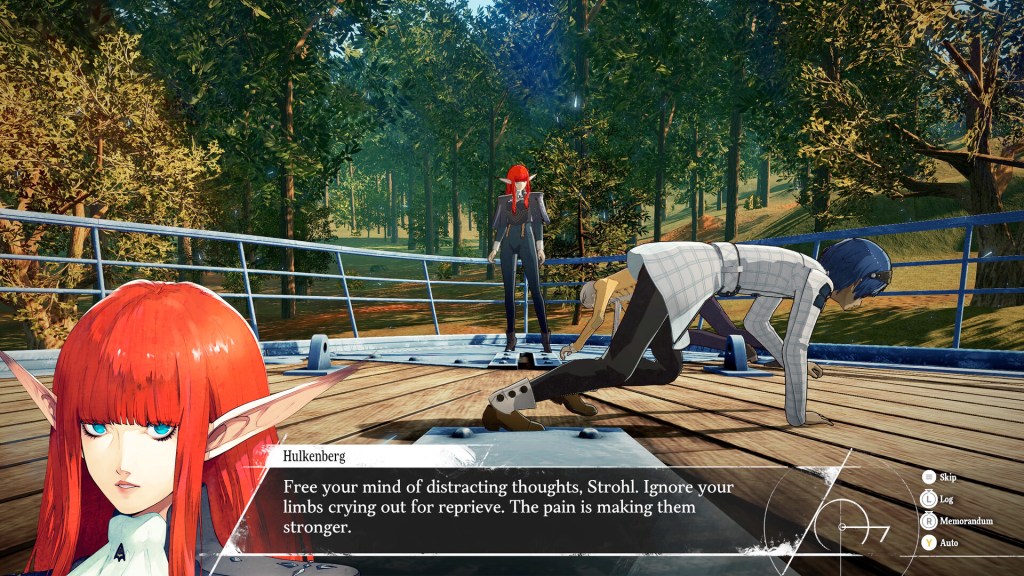
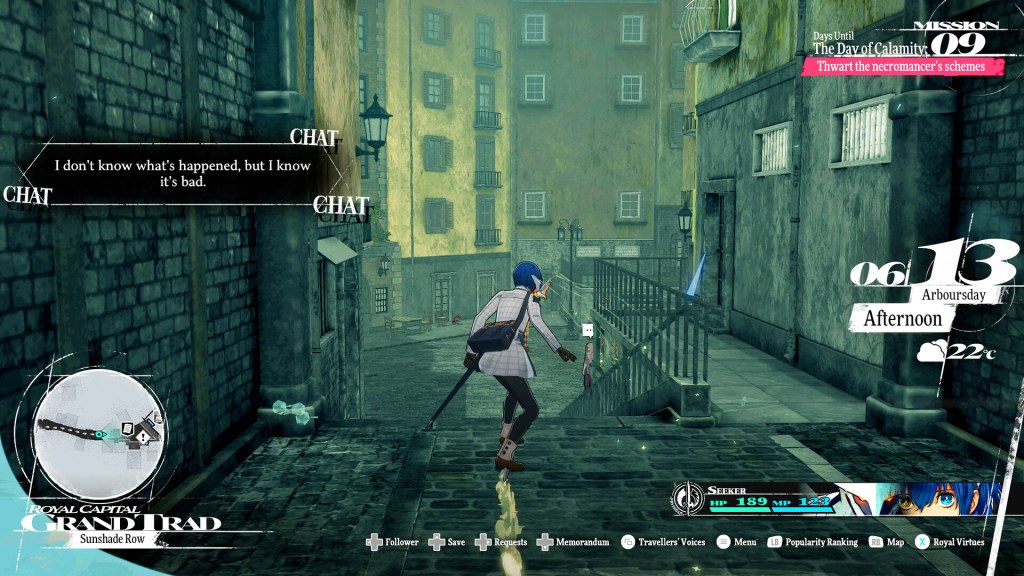
Atlus’ style of JRPG is famous for their emphasis on time-management via the calendar. Metaphor: ReFantazio follows this trend and ultimately makes some great improvements. Every major section of the game gives the player a limited number of days to complete the main dungeon before the story continues. Any time not spent doing the main dungeon can be spent doing side quests, conversing with followers to improve your relationship, improving your “royal virtue” character traits, and travelling between locations. I generally enjoy this format as it makes downtime feel valuable rather than a chore. Choosing what to focus on and optimizing your time is a form of gameplay rather than just feeling like a checkbox.

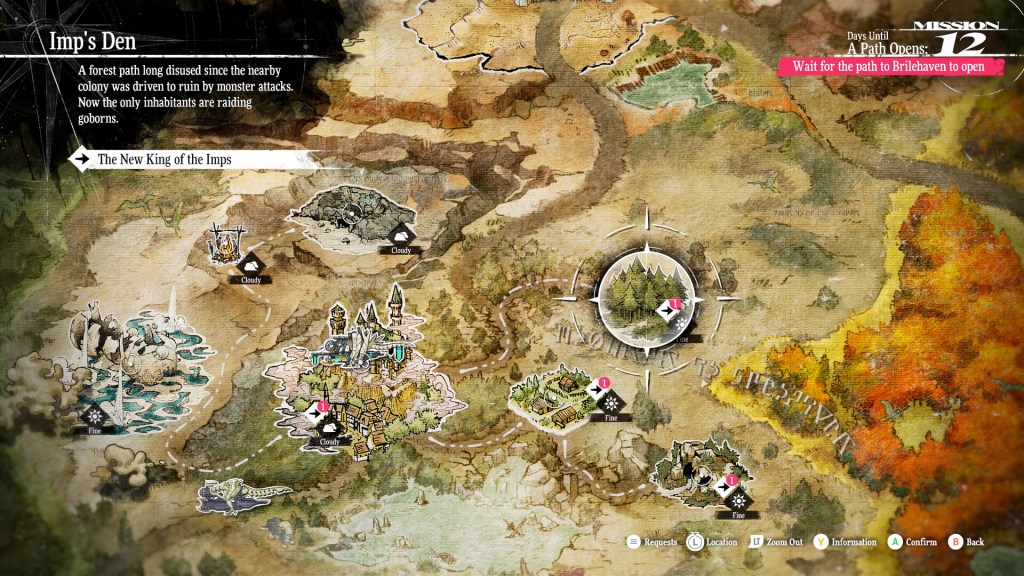
What makes Metaphor: ReFantazio stand out compared to Atlus’ previous titles is the game’s road trip structure. You and your party are a globetrotting crew in your magical legged landship, called a Gauntlet Runner. Traveling from a major hub city to towns and dungeons takes time, so you have to plan your routes and time your departure based on weather and other factors. The Gauntlet Runner also serves as a cozy hub during travels where you can cook, read, and converse with allies. I quite liked the structure opposed to staying in a more static location like Tokyo in Persona 5

Another improvement that I am happy about is that improving follower relationships no longer relies on choosing the “correct” answers during conversations. You get bonus Magla for doing so, but you don’t feel the need to look up a guide to make sure you don’t mess up and waste time by picking the wrong dialogue choices. Moreover, the game is fairly lenient with time in general, and unless you majorly mess up you should have plenty of time by the end of the game to do every side quest and max out every relationship. The major downside to the calendar system, in every Atlus game, is that there tends to be a lot of downtime. Time between dungeons and story sequences can get tiresome if you have too many days in a row of talking to followers and doing other miscellaneous stuff. I would have appreciated a brisker pace in some sections of the game.

I was a little disappointed by the presentation of Metaphor: ReFantazio. The orchestral soundtrack is solid, and I particularly enjoyed the inclusion of Esperanto chanting. I do prefer the jazzier soundtrack of Persona 5, but I can’t complain about the music in Metaphor: ReFantazio. Unfortunately, I cannot say the same about the visuals. I think the character designs are wonderful, and the animated cutscenes are also incredibly well done, but the graphical quality during normal gameplay is awful. Everything just looks muddied and dull. Many dungeons take place in the same environments rather than unique and memorable locations. Which is a shame because the world is conceptually interesting. There are plenty of wondrous places that aren’t conveyed properly through the outdated visuals. 

Ultimately, Metaphor: ReFantazio is a lengthy story-driven game. And while the story has some good ideas, it ultimately failed to provoke thought or inspire nuanced political analysis. Luckily, the game does deliver on strategic combat and a wonderfully adaptable class system. It is for these reasons that I give Metaphor: ReFantazio a 7/10. Metaphor: ReFantazio is a great JRPG. The problem is that I don’t think this genre is for me.

Astro Bot (2024)

Astro Bot is a game for people who love gaming. Not only is it a technical marvel, but it lives by the ethos that games should be fun. While I personally love experimental and mature games that toy with inspiring other emotions such as rage or sadness, the unbridled joy that Astro Bot brought me reminded me of playing games as a kid. It’s reminiscent of all-time greats such as Super Mario Galaxy. It’s a modern day classic that I’m already eager to revisit in a few years’ time.

Astro Bot starts with your Playstation-shaped spaceship being destroyed by an alien and having all your robotic allies scattered across the universe. You crash land on a barren planet and have to visit different galaxies and planets to rescue the little bots and repair your spaceship. Each level plays out as a fairly linear course-clear style stage with hidden collectibles scattered about. Astro Bot clearly takes inspiration from Super Mario Galaxy with its approach to level design and reliance on interesting power-ups.

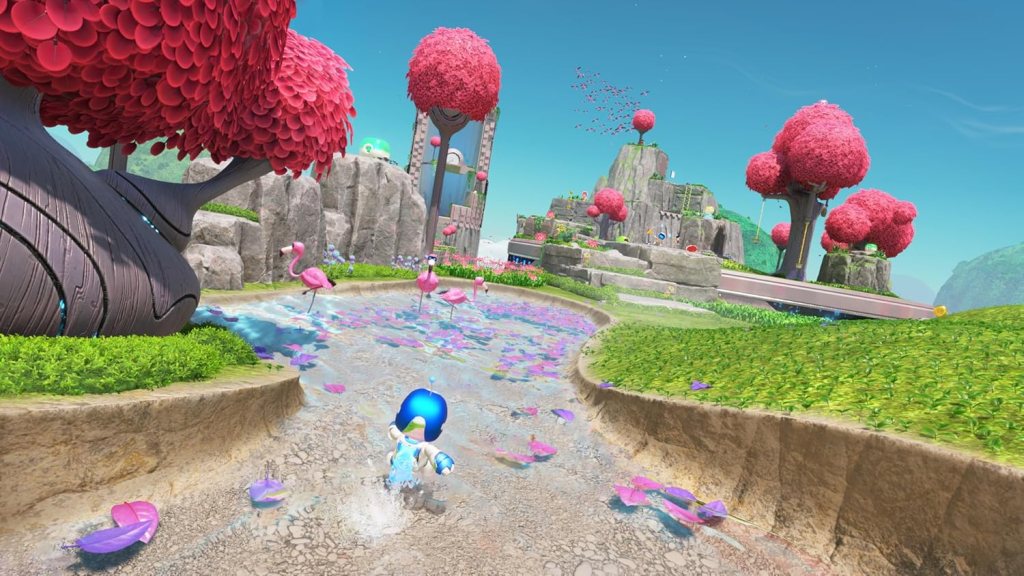
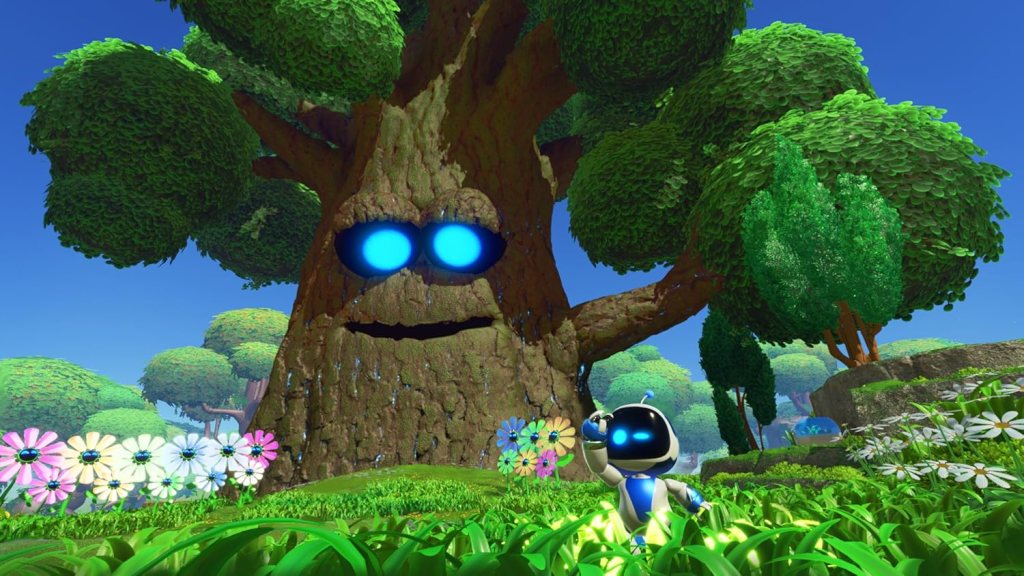
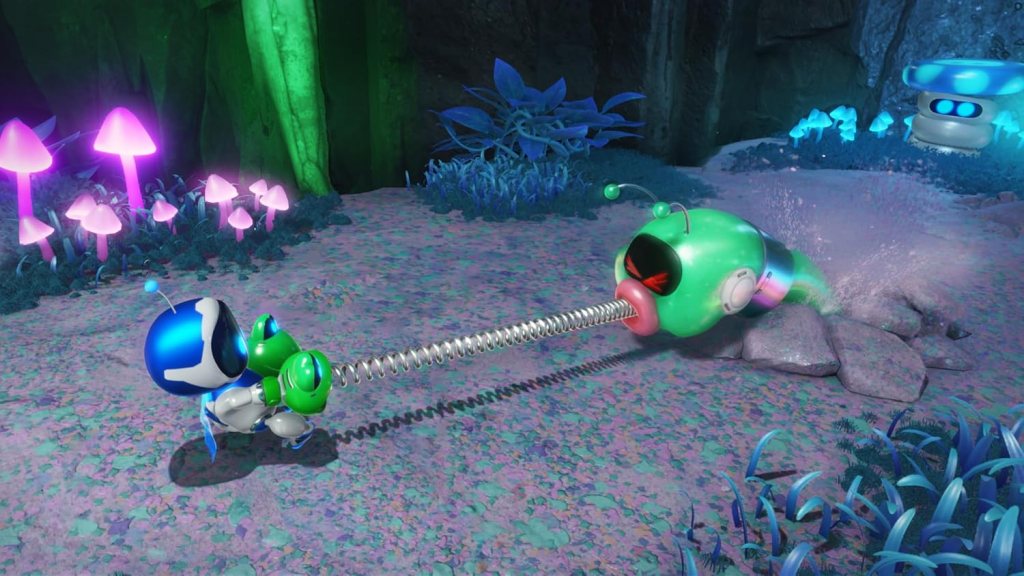
Most levels are a straightforward 3D platforming affair, but there is almost always a power-up or gimmick to keep things fresh. My favorites include the mouse backpack that lets you shrink and explore the nooks and crannies of the level, goggles that let you briefly slow time to avoid speedy obstacles, and a chicken jetpack that blasts you skyward at dizzying speeds. There’s a ridiculous amount of creativity on display in the levels. Each one is like a giant set piece with fantastic theming and spectacle. Whether it’s freeing chained-up starfish, jumping into the mouth of a giant singing tree, or hunting for treasure in sandy villages and stumbling on a Djinn in a lamp, Astro Bot is absolutely brimming with memorable ideas and I don’t want to spoil too many surprises.

Not only are the levels filled with spectacle, but there is also an unparalleled attention to detail. The developers had a penchant for showing off the physics on tiny objects. Levels are filled with things like acorns, confetti, gems, bolts, and other objects that move seamlessly as you wade through them or forcefully launch them. The game also frequently has destructible environments and set pieces that show off the sophisticated physics. The sound effects as you move about on different surfaces is sublime. Astro Bot makes fantastic use of the PS5 controller’s haptic and audio feedback to really immerse the player. The rain effect in particular is very slick. 

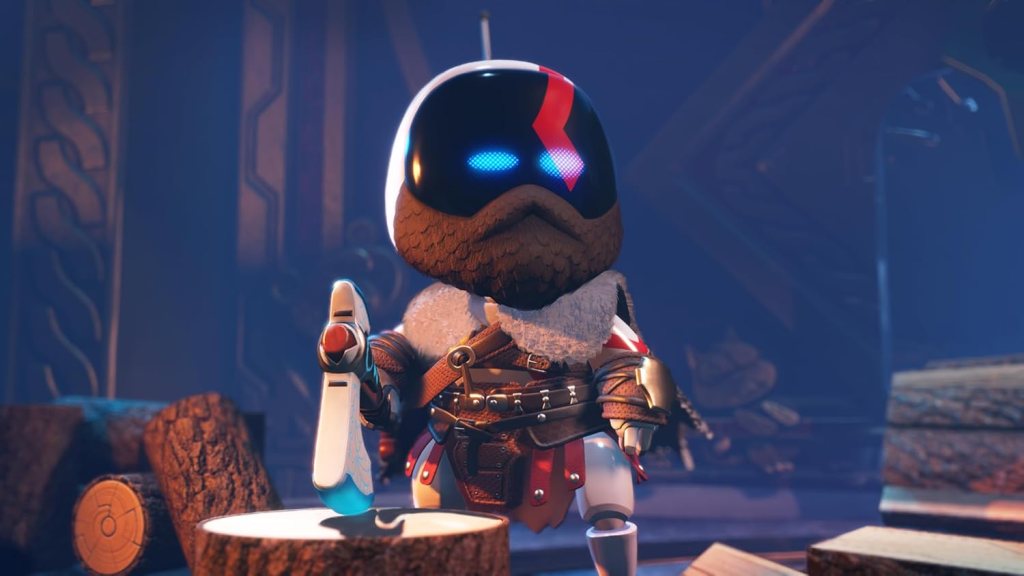
I love collectathons and games with a good hub world, and Astro Bot combines those aspects brilliantly. As you play levels you will be rescuing little robots who will come back to the initially barren crash site. Many of these bots are cameos from classic Playstation games, but they don’t feel like cheap references. Many of the references are fairly obscure and even I had trouble recognizing some of them. But aside from the referential costumes every character has their own comedic blurb that makes it seem like the developers of Astro Bot actually played these games and aren’t using them as cheap references. Furthermore, you can spend coins you collect to acquire accessories for the bots. For example, you can get a cardboard box for the Solid Snake bot to hide underneath. I quite enjoyed walking around the hub world and taking in the characters and scenes from Playstation’s past. It feels like a love letter to gaming.

The one fault I have with Astro Bot is perhaps not a fair one. Because comparing any game to Super Mario is putting it up against the best of the best. But Astro Bot is clearly Playstation’s version of Super Mario, so the comparison is necessary. The main character, Astro, doesn’t have nearly the same movement complexity that Mario has. Astro can run, jump, punch, spin, and briefly hover using lasers. But it doesn’t feel like there is anything to master. I remember playing Super Mario Sunshine a bunch as a kid and trying to master my control on momentum to backflip, wall jump, and hover up to ledges that seemed out of reach. Mario’s moveset is far more complex and the reliance on momentum allows for more mastery for advanced players.

While the movement is simpler, I do think the game benefits from Astro’s fragility. Getting hit once will reset you back to the latest checkpoint. The level design and simple movement lend themselves to a fairly laid-back experience, but you still have to be careful. The game is fairly easy, but it has an edge because a single mistake means death. There are some challenge levels and gauntlets that are decently difficult. Overall, I think the difficulty was tuned quite well for being a family-friendly platformer. 

While playing Astro Bot I really didn’t want the experience to end. It’s an absolute joyous adventure that celebrates gaming and the philosophy that games should be fun first and foremost. While Sony has recently focused on more mature storytelling games, I hope Astro Bot signals that there is still a space for polished platformers and collectathons. The variety of levels, attention to detail, spectacular power-ups, and love for older titles makes this a game nobody should miss out on playing. It is for these reasons that I give Astro Bot a 9.5/10. There’s no doubt in my mind that Astro Bot is a modern classic.