Immersion. That’s what the Metro series is about. Making the player feel like they are in the underground tunnels under a post-nuclear-war Moscow. I was concerned, but also excited, when I learned that Metro Exodus would take us to the surface and open up the world. Despite seeming overly ambitious, the developers delivered on a world just as detailed and immersive as its predecessors. But despite their success in world building and immersion, I felt that the gameplay and story could be very rough and unrefined. As a fan of immersive games, I wanted to fall in love with Metro Exodus, but I just couldn’t.

I almost immediately dropped Metro Exodus while playing through its first chapter. I stuck with it because I wanted to complete the series and I wanted to give the game a chance. I’m glad I did because the beginning of the game is not at all reflected in the rest of the game. The game starts in the tunnels of Moscow with our main character Artyom on a quest to find proof of life outside of Moscow. This chapter is filled with a ton of dialogue and slow-paced gameplay as you crawl or slowly walk along restrictive paths. Action is constantly interrupted and control is wrested away from the player to play cutscenes and hear more blathering. To make matters worse, despite the focus on narrative storytelling in this chapter, the story feels incredibly rushed. Artyom discovering the train and the radio station feels like a massive coincidence and plot contrivance and feels ridiculous. Tutorials and opening chapters are often poorly done in games, but this chapter in Metro Exodus was particularly awful.
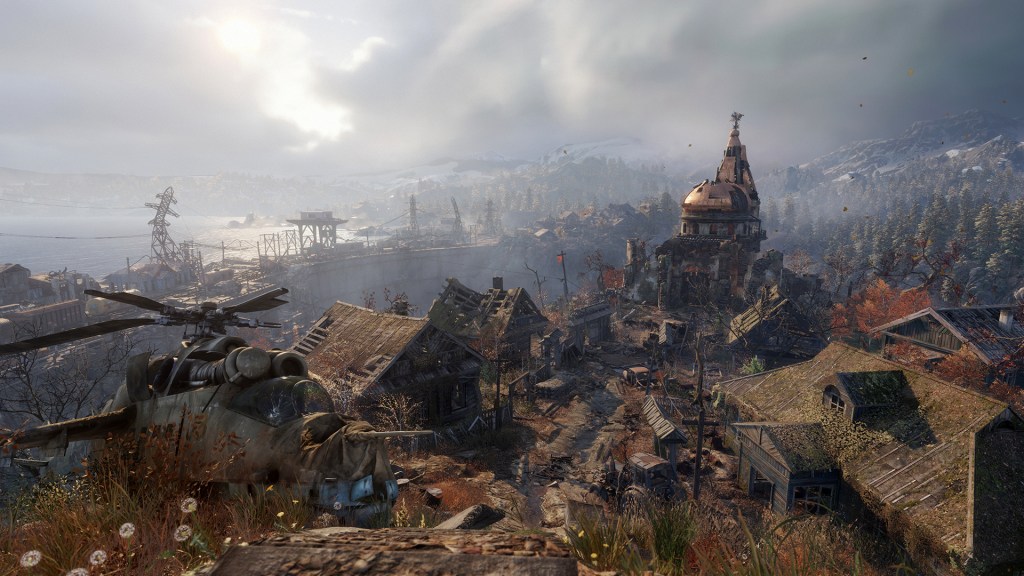
Luckily, the game’s best chapter immediately redeems the awful introduction. Artyom and crew leave Moscow by train and arrive in the tundra area known as Volga. This is an open area with freedom to explore as you please. It’s an incredibly detailed area with a ton of side stories to naturally discover. You deal with a church of extremists who believe that all technology is evil, bandits who enslave prisoners, and of course radioactive creatures. What makes Metro Exodus excel here is its immersion.
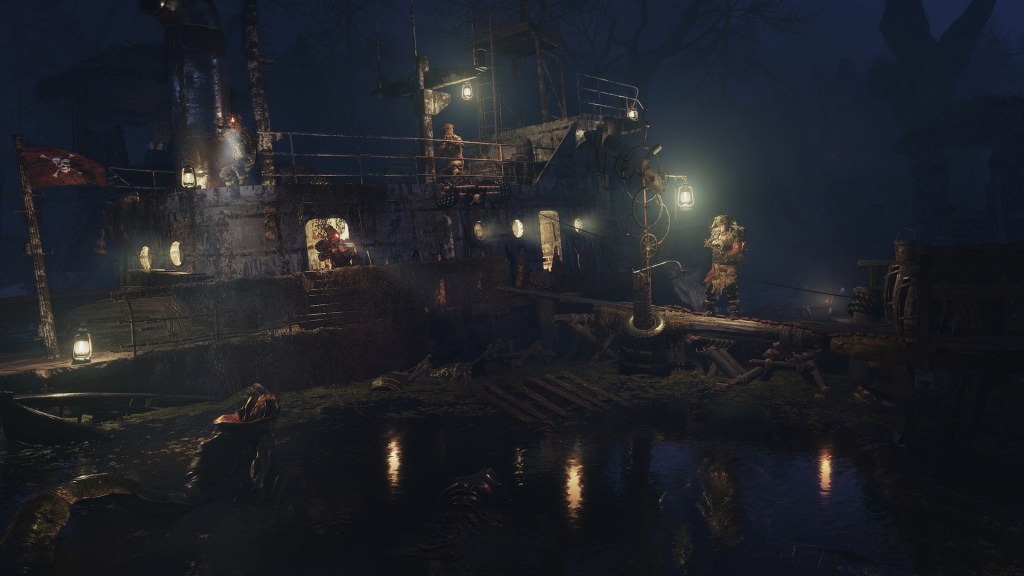
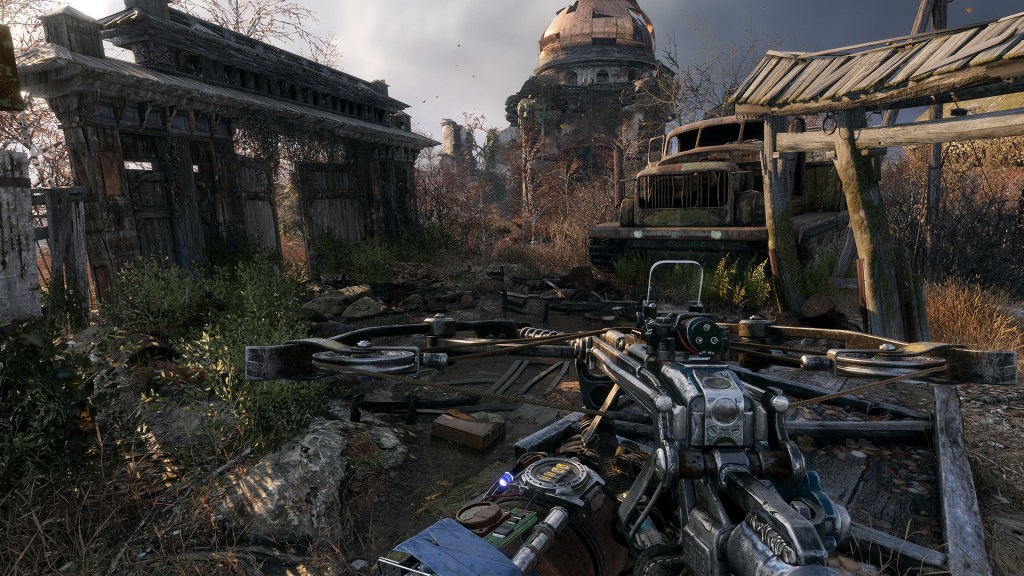
The game takes great strides to immerse the player in its world. The UI is minimalist so you are always looking at the world rather than a mini-map or objective marker. The map and your goals are printed on a clipboard that you can pull out. The compass is physically attached to Artyom’s wrist rather than being a UI component. Movement is purposefully sluggish; this isn’t a fast-paced arcade shooter and you aren’t superhuman. When entering radioactive areas, you need to wear a mask and constantly replace its filters. The mask can also get muddied or cracked and need to be cleaned and repaired. Ammunition, filters, and medical supplies are fairly scarce so you are discouraged from wasting any supplies. A single bad encounter can leave you without resources.
The dedication to making the game so immersive is what makes Metro Exodus enthralling. Trudging across the tundra without surplus health kits or ammunition leads to careful and thoughtful gameplay. Even basic encounters are tense as they could massively drain your resources. The relief that I felt whenever I would come across a safe house was massive. These little shacks are peppered throughout the world and they provided me with a sense of safety with their warm light and respite from the harsh world. Taking a few minutes to sit in the warmth, replenish my supplies, and listen to an audio log while in these shanties were some of my favorite moments in the game. While the areas following Volga don’t quite reach its heights, I do think they are varied and have interesting twists on the formula.
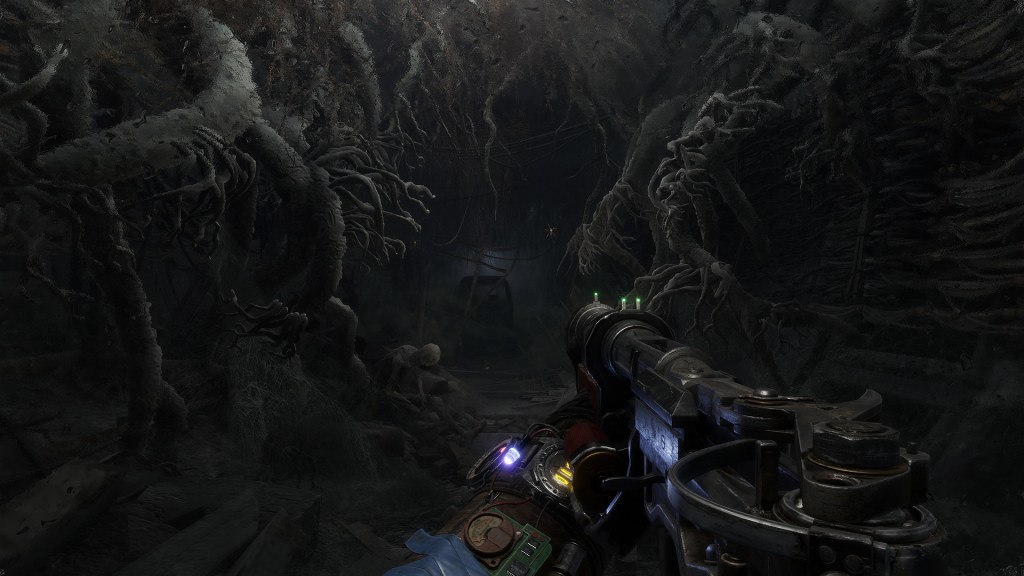
Outside of its immersive elements, I was a little let down by Metro Exodus. The gameplay and story have some significant issues that I found it difficult to look past. It’s ok that the gameplay was basic, I wasn’t looking for a fast-paced DOOM style shooter. The guns feel impactful and shoot-outs can be wonderfully tense because of the implications on your pool of resources. But it’s not ok that the gameplay is just… boring. I found that shoot-outs were few and far between because the game discourages you from killing human combatants. Humans also had poor AI that waffled between standing in the open to be killed and having superhuman accuracy that can shoot you through walls from a mile away. And non-human enemy encounters are repetitive and feel a bit janky.
The thing is that Metro Exodus, through various means, encourages the player to play stealthily. Because of the emphasis on resource management, it feels risky to get yourself into direct combat. Why waste bullets and health kits when you can just sneak around and avoid combat altogether? I don’t hate stealth in video games. It’s fine to supplement other systems and it can be very fun on its own like in series such as Metal Gear Solid and Dishonored. But stealth in Metro Exodus is barebones. It boils down to sneaking from cover to cover as enemies look the other way. There are never any new tools introduced other than the decoys you have access to from the very beginning of the game. If you want to avoid combat, be prepared to spend a long time slowly walking.
I think stealth could’ve been more interesting without even needing to introduce new features. Trying to sneak around but getting caught and having to rely on shooting your way out could be a fun gameplay loop. The more enemies you avoid, the more resources you save. But there would still be intense and chaotic gun fights if you got caught. But the moral system in Metro Exodus discourages you from getting caught at all. If you want to get the “good” ending in every area and the finale of the game then it’s incredibly risky to kill any enemies. I didn’t know which enemies are ok to kill without repercussions without looking it up online, so I just avoided killing anyone that I didn’t have to. This encourages a lot of reloading of saves whenever you get spotted. Not only is this boring, but it’s immersion breaking.
Maybe it’s entirely my fault that I would reload saves to prevent myself from having to shoot enemies. Maybe I should’ve just let the game play out and got into more shoot-outs. It probably would’ve been more fun. But the game actively punishes the player with dire story consequences if they kill anybody. At the very least, the morality system in Metro Exodus is much less obtuse than its predecessors, making it easier to get “good” outcomes in each area. But still, I felt like the game is discouraging the player to play naturally.

I quite liked the general direction of the story and how it weaves its narrative into each of the major areas. The game focuses on themes of guilt and morality and what humanity will do if nobody is watching. Some groups blame technology and things they don’t understand for the apocalypse. Some groups take advantage of others and utilize slavery to get ahead. Some groups form childish tribes and treat the world like high school cliques because they never grew up. Society has to relearn morality. It’s a fantastically thought-out world with complexity and depth to it, but the story itself fell flat for me. Metro Exodus has a serviceable story that is severely hampered by two major blunders: Artyom being a voiceless protagonist, and the voice acting in general.
I understand the desire to have Artyom be a stand-in for the player and their decisions. But having Artyom be silent for the entire game leads to many stifled interactions that feel unnatural. Characters talk at you and have pauses where Artyom would respond if he could. I frequently found myself zoning out as characters would monologue for upwards of 10 minutes. These conversations were meant to be 2-way, and would be much more interesting to listen to if Artyom could actually speak for himself. The Witcher series showed us over a decade ago that the player could make moral choices for the main character even if the main character also speaks for themself.
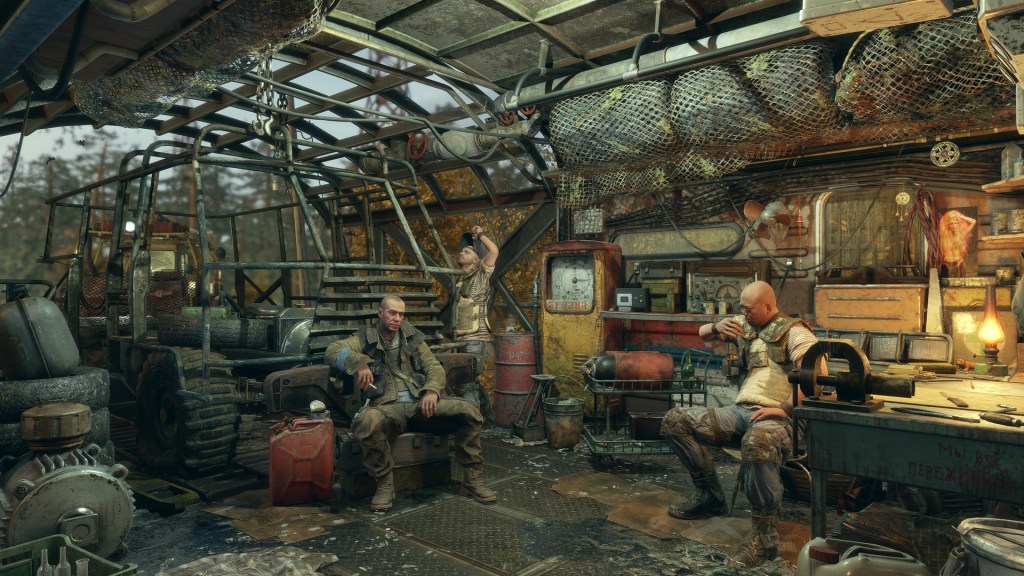
The bigger issue I had with the story is the quality of the voice acting. Nothing pulled me out of the moment more than comically over-the-top Russian accents. At times the characters’ accents feel like a parody. There’s also plenty of awkward pauses leading to disjointed conversations. I also have a suspicion that dialogue lines were recorded 1-by-1 and stitched together because many lines have disconnected delivery from the previous line. I also had issues with bits of dialogue playing over each other making it difficult to parse what any of the characters were saying. I really don’t know what happened here but I was regularly distracted by all these issues with voice acting and scripting. It’s a massive shame because Metro Exodus has an interesting premise. Moreover, when immersion is the game’s key aspect it is unfortunate that the quality of voice acting regularly broke my immersion.
I wanted to like Metro Exodus more than I did. I love games that can truly immerse the player in their worlds. And Metro Exodus does put in a ton of effort to fill its world with details and it’s clearly designed to engross the player through minimalist UI and dangerous environments. But the underwhelming gameplay, stiff morality system, and poorly executed story left me disappointed in Metro Exodus. I hope other studios take inspiration from the immersive aspects of Metro Exodus as the poor execution of the concept left me wanting something more.
 stephensopinions