It should be no surprise that the 9-year gap between Pikmin 2 and Pikmin 3 led to massive visual and technical improvement. Not only does the game look better and feel smoother to play than its predecessors, but it further enables one of the best aspects of the Pikmin series: multitasking. What makes me excited about the Pikmin series is that the games aren’t necessarily iterative sequels. Each one of the games has its own unique structure that places emphasis on different aspects of the series. The first Pikmin was all about time management, Pikmin 2 focused more on combat and reacting to sticky situations, and Pikmin 3 hones in on multitasking. For full context, you can read my reviews of Pikmin and Pikmin 2.
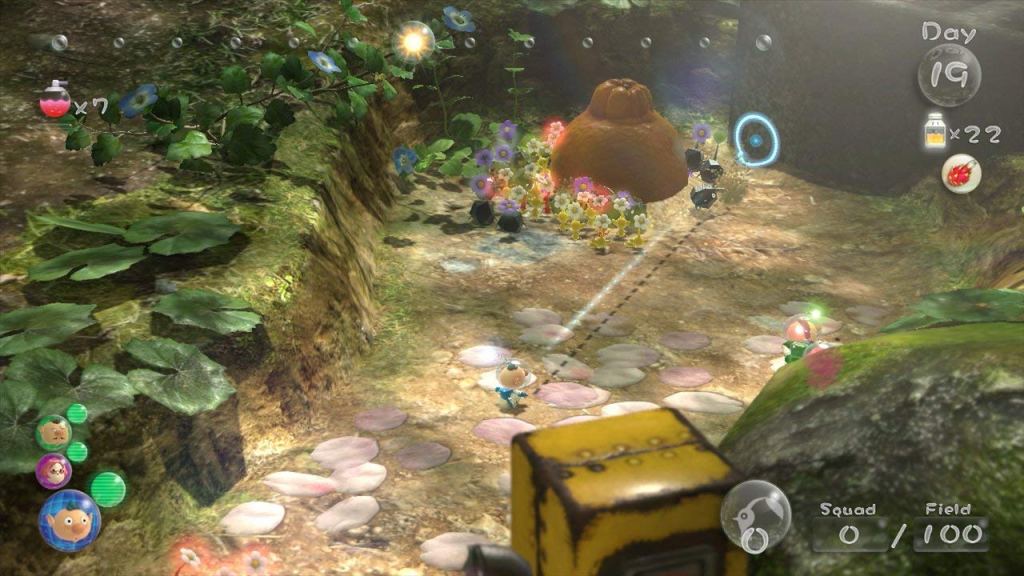
The game begins not with our beloved Captain Olimar, but instead we follow the story of a crew of 3 new characters. Alph, Brittany, and Charlie have been tasked with searching the galaxy for a new source of food as their planet faces starvation. They crash land on Earth and lose critical ship parts that they need to get back home. As they track down the ship parts, they also discover the bounty of fruit that grows on Earth and set out to collect all the seeds that they can to revitalize their own planet.
The structure of Pikmin 3 is more objective based than its predecessors. You are often given an obvious goal to pursue whether it be tracking down a signal to a ship part or trying to rescue a crew member. There’s no looming 30-day limit like in the original Pikmin, but you do need a steady supply of fruit juice to stay alive. As you explore the world you collect fruit, partly to bring the seeds back home, but also to turn into juice for immediate nourishment. It’s more lenient than a set day limit, but I do appreciate that there was some form of time limit. Even if you’ll probably have way more fruit than you need, having that motivation to maximize every day is a good thing.
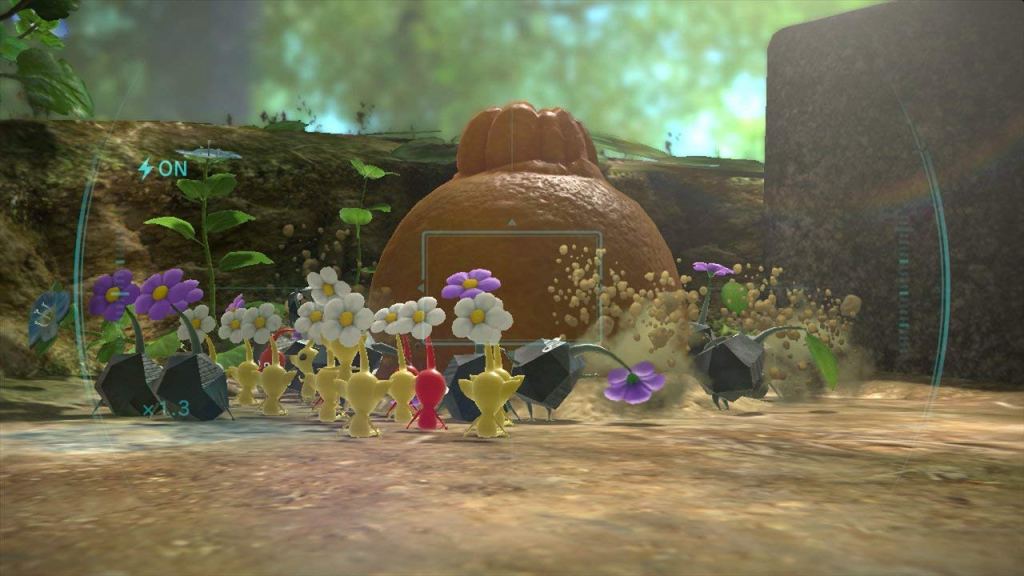
Having 3 crew members to control is just the beginning of how Pikmin 3 emphasizes multitasking. You can switch between them freely and have each character control their own horde of Pikmin. You often need to solve puzzles that require you to toss the crew across gaps or on higher up platforms. But the big addition is the “go here” functionality. When you open the map, you can click on a spot and command the character that you are controlling to walk there automatically with their horde of Pikmin. This enables the player to have all 3 characters be actively doing something and allows them to optimize for speed. You could be fighting enemies with Alph, have Charlie walk back to the base to pluck Pikmin, and have Brittany lead her horde to a new location all at the same time.
I also enjoyed the addition of both new Pikmin types. Pikmin 3 excludes the Purple and White Pikmin from Pikmin 2 and replaces them with Rock and Flying Pikmin. Not only are they adorable, but they have distinct strengths and weaknesses. Rock Pikmin can shatter crystals and do a ton of damage if thrown on an enemy, but they cannot latch onto enemies for repeated hits like other Pikmin types. Flying Pikmin can soar over terrain to carry objects and are great at dealing with airborne enemies, but they deal low damage overall. Both these new types are useful without being overwhelmingly powerful like the Purple Pikmin were.
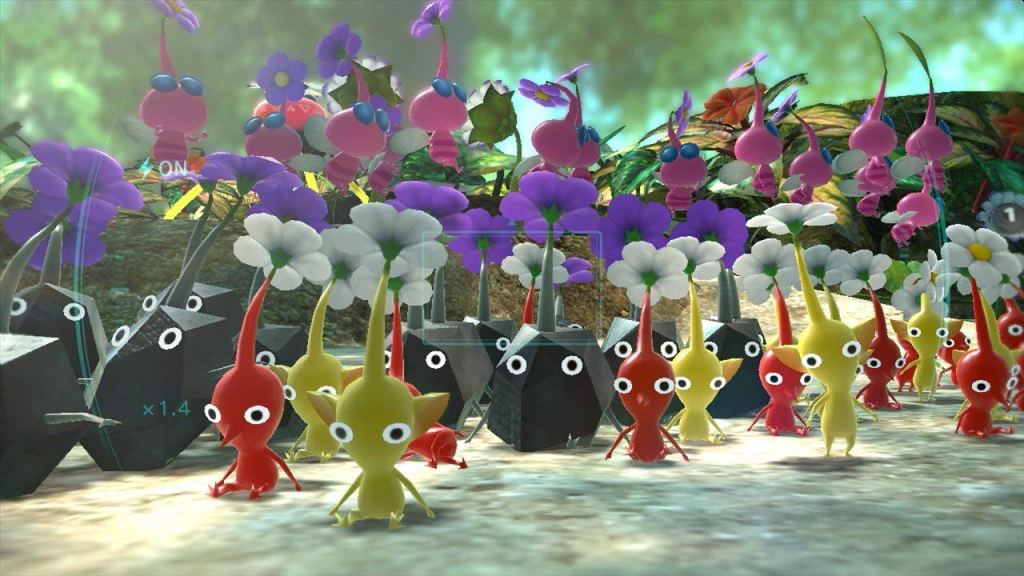
There is also a plethora of quality-of-life improvements that make Pikmin 3 a much smoother experience than its predecessors. The Pikmin AI is much better in general and they rarely, if ever, get caught on terrain or fall off ledges. Instead of haphazardly swarming you can now use the specialized charge attack to order your Pikmin to rush at an enemy or item. But one of the bigger changes is the lock-on functionality. In previous games you constantly had to be aiming your cursor at whatever you were tossing your Pikmin at. In Pikmin 3, you can just lock onto your target and throw with confidence knowing your Pikmin would land on target.
The downside of having so many quality-of-life improvements is that it also results in the game being significantly easier than its predecessors. Without worrying about Pikmin killing themselves in frustrating fashion you can command your Pikmin with much more confidence. The charge attack makes it simple to burst down enemies quickly. The lock-on functionality makes it exceptionally easy to run circles around enemies. While I don’t think aiming should be the primary focus of a real-time strategy game, I do think it was a meaningful skill expression to keep the cursor on enemies as you kited. I’m torn on the inclusion of lock on because of this. Moreover, I feel like Pikmin 3 enemies have reduced health for whatever reason, making the game even easier. Basic enemies are just too easy to takedown and don’t pose much of a threat.
Even though regular enemies were a bit too easy, I did enjoy the dynamic boss battles that Pikmin 3 offers. They aren’t super challenging by any means, but they are fantastic spectacles with interesting arenas and mechanics. Figuring out how to exploit the boss’ weakness is an enjoyable experience, and it can be a little tense if you are running out of time during the day. Even if they are easy, I had fun with them. But if you are looking for a real challenge, you’ll have to look towards the mission mode.
The mission mode in Pikmin 3 is additional content outside of the campaign. These are timed challenges with a few variations: treasure hunt, battling enemies, and boss battles. These are specifically tailored maps that you really have to plan out routes and optimize if you want to get a platinum medal. I spent a good amount of time getting a handful of platinum medals on the treasure hunt missions. I think this was an excellent inclusion because it lets players play around with optimization, time management, and multitasking without having to replay the entire game.
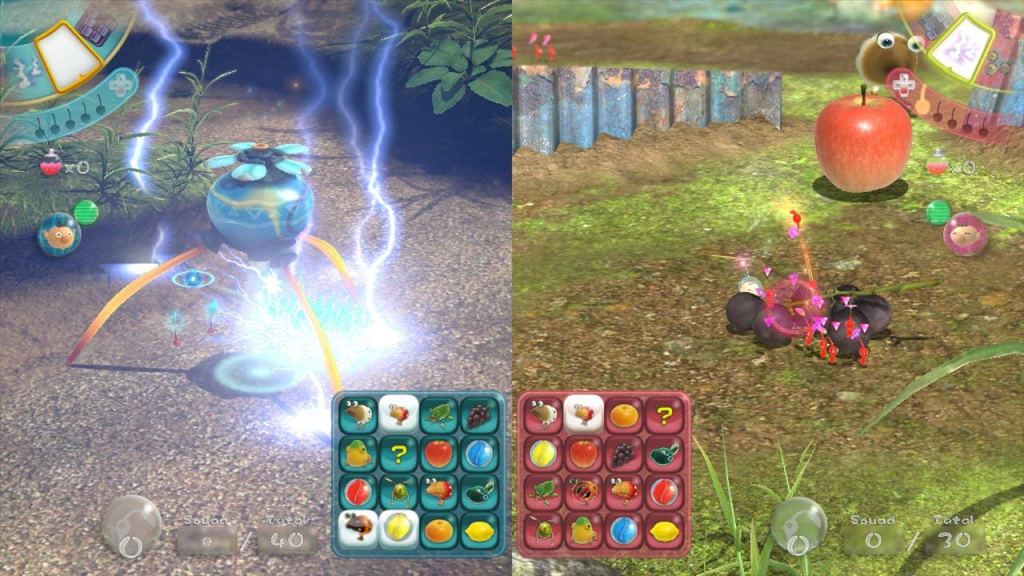
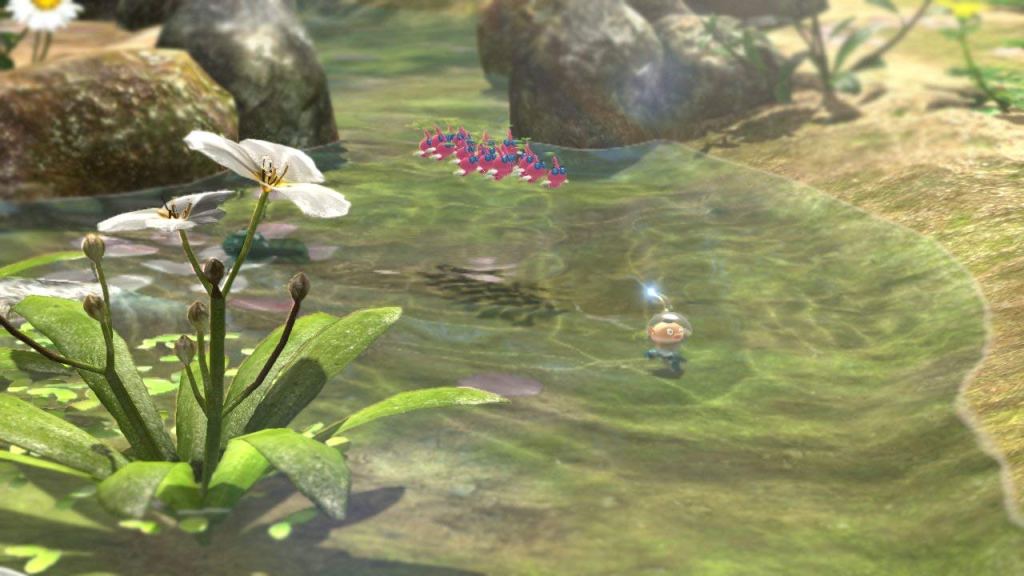
Pikmin 3 is one of the best-looking games of its generation with wonderfully detailed microbiomes. It hones in on one of my favorite aspects of the Pikmin aesthetic: miniature naturescapes. Every level is like a little terrarium to explore with towering foliage, streams with lily pads to hop across, and dark caverns filled with bioluminescent plants. The visual fidelity and environmental design are absolutely superb. And I love that there is an occasional rainy day to add some ambiance even if it doesn’t have any gameplay implications.
I personally played Pikmin 3 on Nintendo Switch with the remastered Pikmin 3 Deluxe edition. Aside from being graphically enhanced, it has some gameplay changes like having a bigger whistle radius, being able to call loose Pikmin back to the ship, and the charge attack only using the Pikmin type that you have currently selected. The game originally was designed for the Wii U and made use of the gamepad for the map, but I didn’t have any frustrations with having to open the map separately. There are also some new additions such as the Piklopedia and new side stories for Olimar and Louie. Overall, this is the best way to play the game.
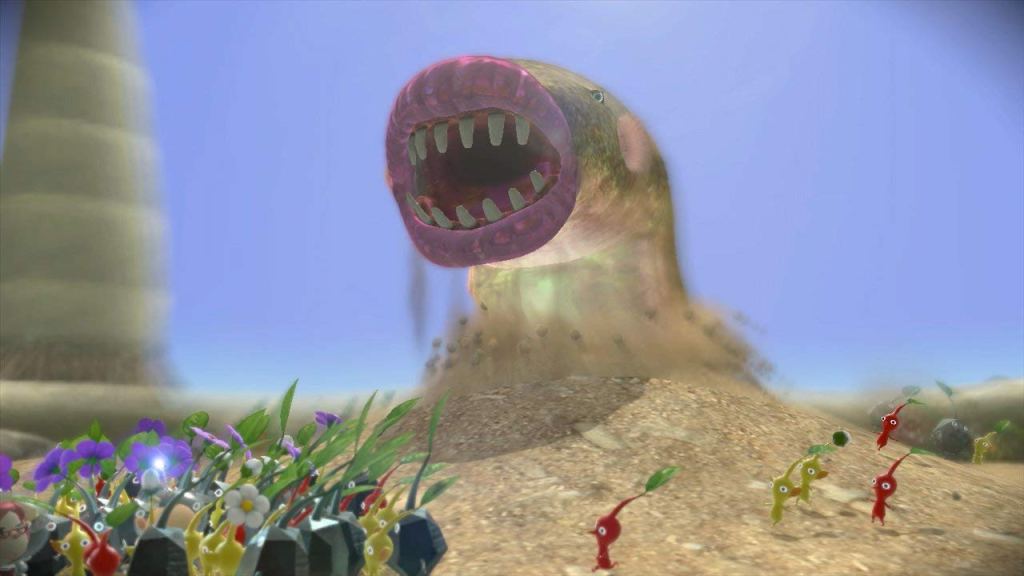
I don’t think Pikmin 3 is my favorite in the series. It may be because of nostalgia, but the structure of the original Pikmin was just so compelling. The tense 30-day limit to find all your critical ship parts provided a real sense of urgency. I do appreciate that Pikmin 3 did reintroduce some time limit with the juice system. The focus on multitasking and the ability to order all 3 characters at the same time is superb. And of course, Pikmin 3 is technically and visually impressive. It certainly has my favorite environments, levels, and bosses of the series thus far. I will always vividly remember riding a lily pad downstream on a rainy day as dandelions tower overhead. I can’t wait to finally give Pikmin 4 a try.
 stephensopinions