Pikmin 3 (2013)

It should be no surprise that the 9-year gap between Pikmin 2 and Pikmin 3 led to massive visual and technical improvement. Not only does the game look better and feel smoother to play than its predecessors, but it further enables one of the best aspects of the Pikmin series: multitasking. What makes me excited about the Pikmin series is that the games aren’t necessarily iterative sequels. Each one of the games has its own unique structure that places emphasis on different aspects of the series. The first Pikmin was all about time management, Pikmin 2 focused more on combat and reacting to sticky situations, and Pikmin 3 hones in on multitasking. For full context, you can read my reviews of Pikmin and Pikmin 2.
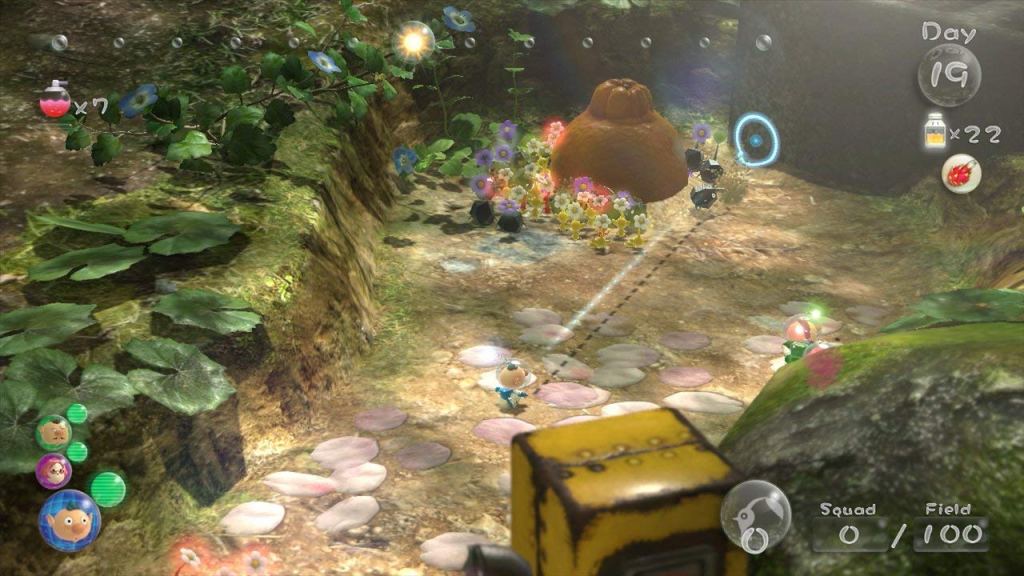
The game begins not with our beloved Captain Olimar, but instead we follow the story of a crew of 3 new characters. Alph, Brittany, and Charlie have been tasked with searching the galaxy for a new source of food as their planet faces starvation. They crash land on Earth and lose critical ship parts that they need to get back home. As they track down the ship parts, they also discover the bounty of fruit that grows on Earth and set out to collect all the seeds that they can to revitalize their own planet.

The structure of Pikmin 3 is more objective based than its predecessors. You are often given an obvious goal to pursue whether it be tracking down a signal to a ship part or trying to rescue a crew member. There’s no looming 30-day limit like in the original Pikmin, but you do need a steady supply of fruit juice to stay alive. As you explore the world you collect fruit, partly to bring the seeds back home, but also to turn into juice for immediate nourishment. It’s more lenient than a set day limit, but I do appreciate that there was some form of time limit. Even if you’ll probably have way more fruit than you need, having that motivation to maximize every day is a good thing.
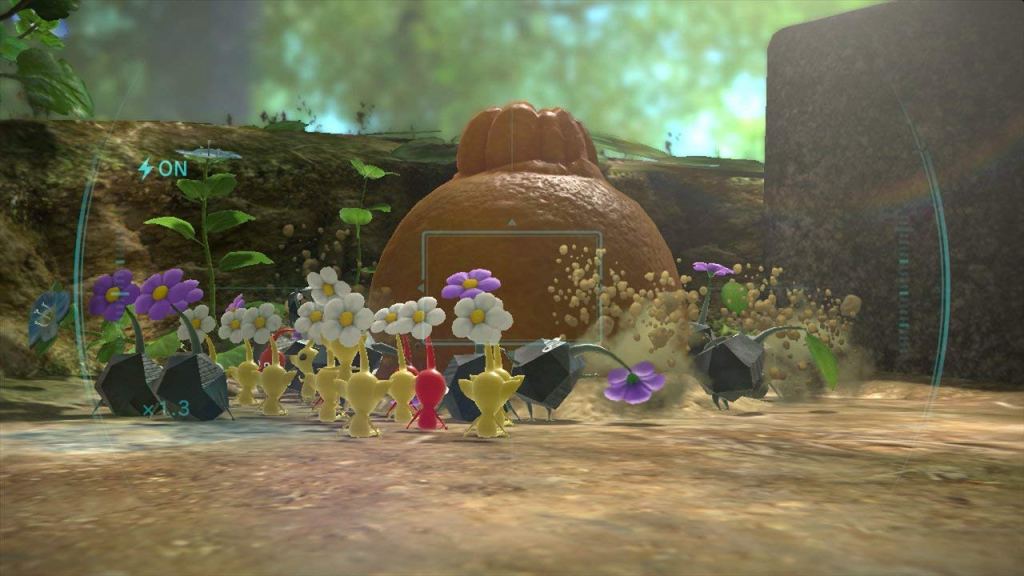
Having 3 crew members to control is just the beginning of how Pikmin 3 emphasizes multitasking. You can switch between them freely and have each character control their own horde of Pikmin. You often need to solve puzzles that require you to toss the crew across gaps or on higher up platforms. But the big addition is the “go here” functionality. When you open the map, you can click on a spot and command the character that you are controlling to walk there automatically with their horde of Pikmin. This enables the player to have all 3 characters be actively doing something and allows them to optimize for speed. You could be fighting enemies with Alph, have Charlie walk back to the base to pluck Pikmin, and have Brittany lead her horde to a new location all at the same time.

I also enjoyed the addition of both new Pikmin types. Pikmin 3 excludes the Purple and White Pikmin from Pikmin 2 and replaces them with Rock and Flying Pikmin. Not only are they adorable, but they have distinct strengths and weaknesses. Rock Pikmin can shatter crystals and do a ton of damage if thrown on an enemy, but they cannot latch onto enemies for repeated hits like other Pikmin types. Flying Pikmin can soar over terrain to carry objects and are great at dealing with airborne enemies, but they deal low damage overall. Both these new types are useful without being overwhelmingly powerful like the Purple Pikmin were.
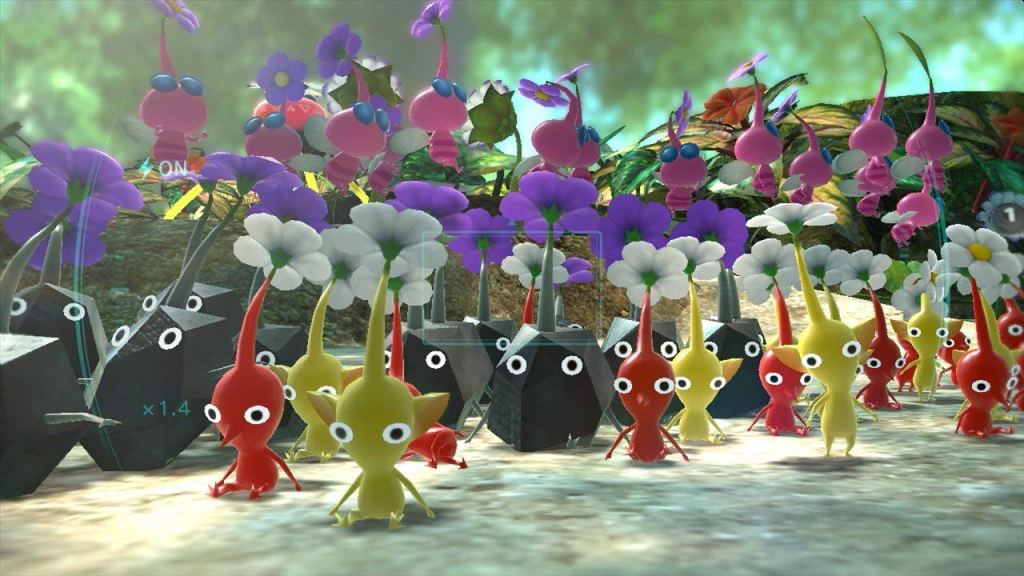
There is also a plethora of quality-of-life improvements that make Pikmin 3 a much smoother experience than its predecessors. The Pikmin AI is much better in general and they rarely, if ever, get caught on terrain or fall off ledges. Instead of haphazardly swarming you can now use the specialized charge attack to order your Pikmin to rush at an enemy or item. But one of the bigger changes is the lock-on functionality. In previous games you constantly had to be aiming your cursor at whatever you were tossing your Pikmin at. In Pikmin 3, you can just lock onto your target and throw with confidence knowing your Pikmin would land on target.

The downside of having so many quality-of-life improvements is that it also results in the game being significantly easier than its predecessors. Without worrying about Pikmin killing themselves in frustrating fashion you can command your Pikmin with much more confidence. The charge attack makes it simple to burst down enemies quickly. The lock-on functionality makes it exceptionally easy to run circles around enemies. While I don’t think aiming should be the primary focus of a real-time strategy game, I do think it was a meaningful skill expression to keep the cursor on enemies as you kited. I’m torn on the inclusion of lock on because of this. Moreover, I feel like Pikmin 3 enemies have reduced health for whatever reason, making the game even easier. Basic enemies are just too easy to takedown and don’t pose much of a threat.
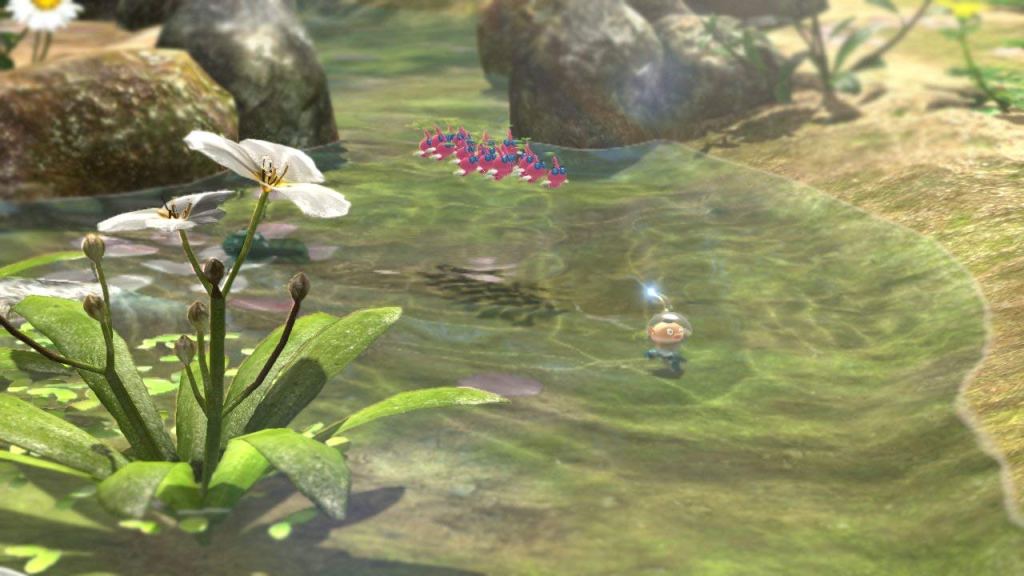
Even though regular enemies were a bit too easy, I did enjoy the dynamic boss battles that Pikmin 3 offers. They aren’t super challenging by any means, but they are fantastic spectacles with interesting arenas and mechanics. Figuring out how to exploit the boss’ weakness is an enjoyable experience, and it can be a little tense if you are running out of time during the day. Even if they are easy, I had fun with them. But if you are looking for a real challenge, you’ll have to look towards the mission mode.

The mission mode in Pikmin 3 is additional content outside of the campaign. These are timed challenges with a few variations: treasure hunt, battling enemies, and boss battles. These are specifically tailored maps that you really have to plan out routes and optimize if you want to get a platinum medal. I spent a good amount of time getting a handful of platinum medals on the treasure hunt missions. I think this was an excellent inclusion because it lets players play around with optimization, time management, and multitasking without having to replay the entire game.
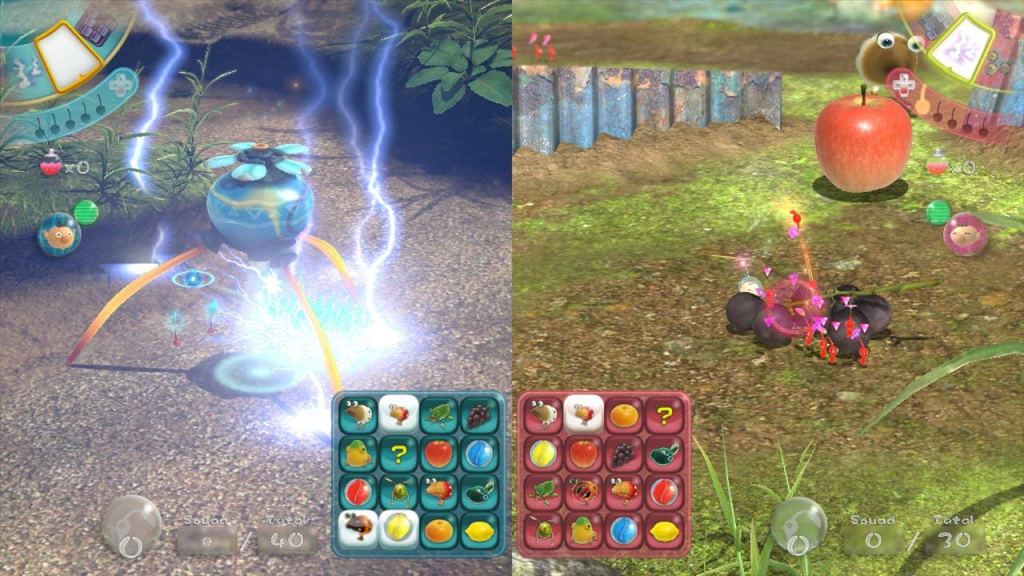
Pikmin 3 is one of the best-looking games of its generation with wonderfully detailed microbiomes. It hones in on one of my favorite aspects of the Pikmin aesthetic: miniature naturescapes. Every level is like a little terrarium to explore with towering foliage, streams with lily pads to hop across, and dark caverns filled with bioluminescent plants. The visual fidelity and environmental design are absolutely superb. And I love that there is an occasional rainy day to add some ambiance even if it doesn’t have any gameplay implications.

I personally played Pikmin 3 on Nintendo Switch with the remastered Pikmin 3 Deluxe edition.  Aside from being graphically enhanced, it has some gameplay changes like having a bigger whistle radius, being able to call loose Pikmin back to the ship, and the charge attack only using the Pikmin type that you have currently selected. The game originally was designed for the Wii U and made use of the gamepad for the map, but I didn’t have any frustrations with having to open the map separately. There are also some new additions such as the Piklopedia and new side stories for Olimar and Louie. Overall, this is the best way to play the game.
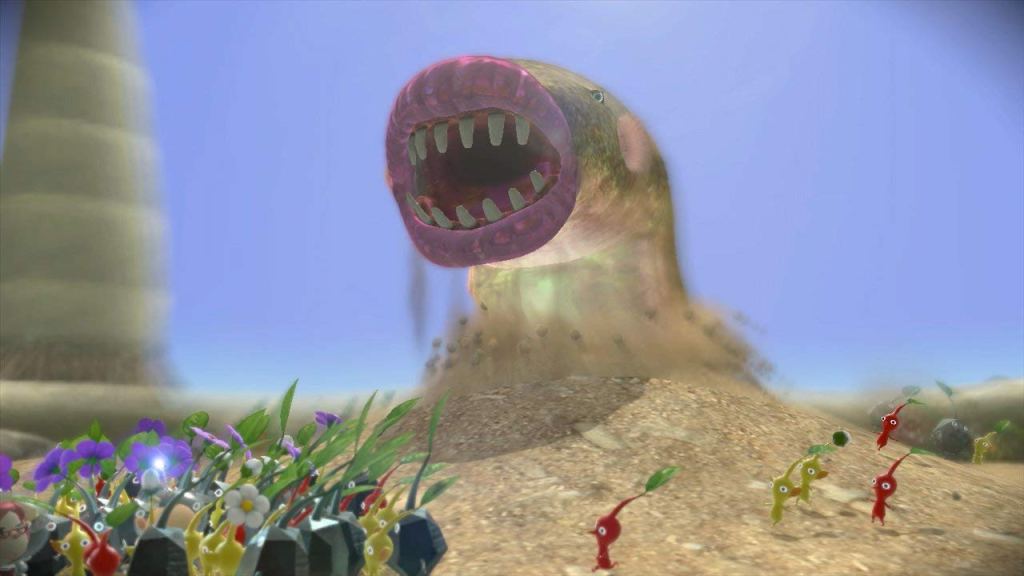
I don’t think Pikmin 3 is my favorite in the series. It may be because of nostalgia, but the structure of the original Pikmin was just so compelling. The tense 30-day limit to find all your critical ship parts provided a real sense of urgency. I do appreciate that Pikmin 3 did reintroduce some time limit with the juice system. The focus on multitasking and the ability to order all 3 characters at the same time is superb. And of course, Pikmin 3 is technically and visually impressive. It certainly has my favorite environments, levels, and bosses of the series thus far. I will always vividly remember riding a lily pad downstream on a rainy day as dandelions tower overhead. I can’t wait to finally give Pikmin 4 a try.
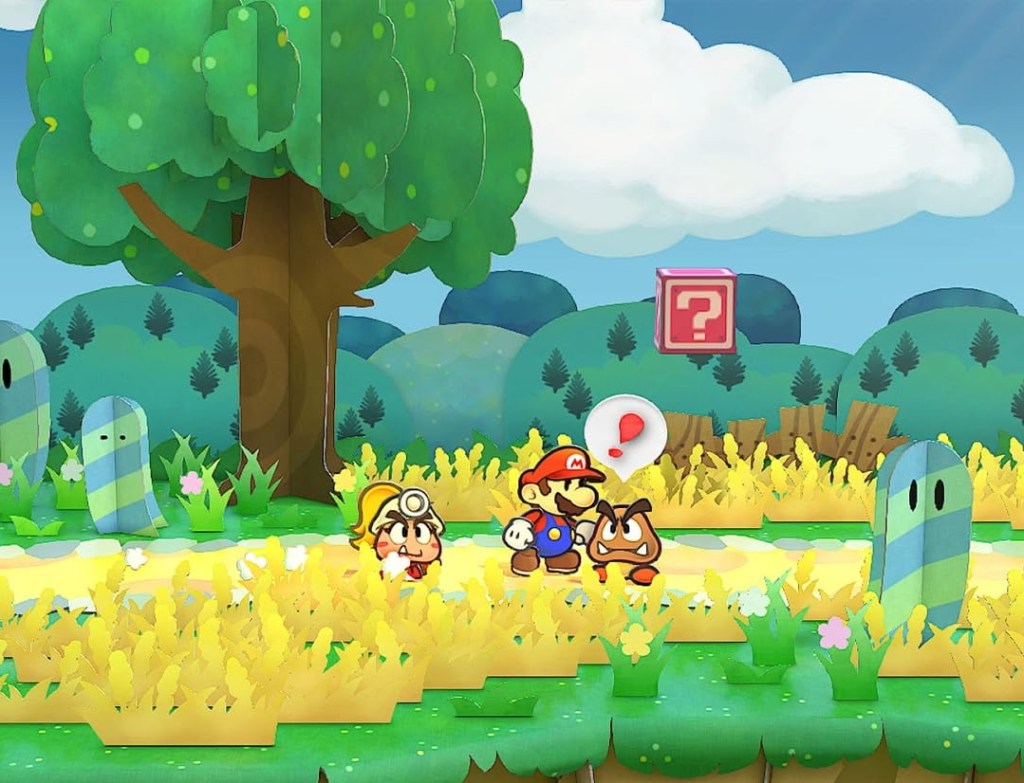
Paper Mario: The Thousand-Year Door (2004)

Growing up, Paper Mario: The Thousand-Year Door was one of my favorite games to play. To this day many of its imaginative areas stick out in my mind as hallmarks of excellence. I was excited for the remaster to be released so I could revisit a staple of my childhood. Playing through the game now resolidified my confidence that Paper Mario: The Thousand-Year Door is one of the greatest RPGs of all time. The game oozes charm, character, and creativity from every crevice.

In classic Mario fashion, the game opens with Peach getting kidnapped, but not by Bowser this time. The mysterious X-Nauts have captured her as Peach found a map to the legendary treasure underneath the city of Rogueport. The treasure is behind the locked Thousand-Year Door which can only be opened by collecting the 7 Crystal Stars. The game follows Mario as he hunts down the Crystal Stars in a variety of locales. And what a fantastic set of locales they are.

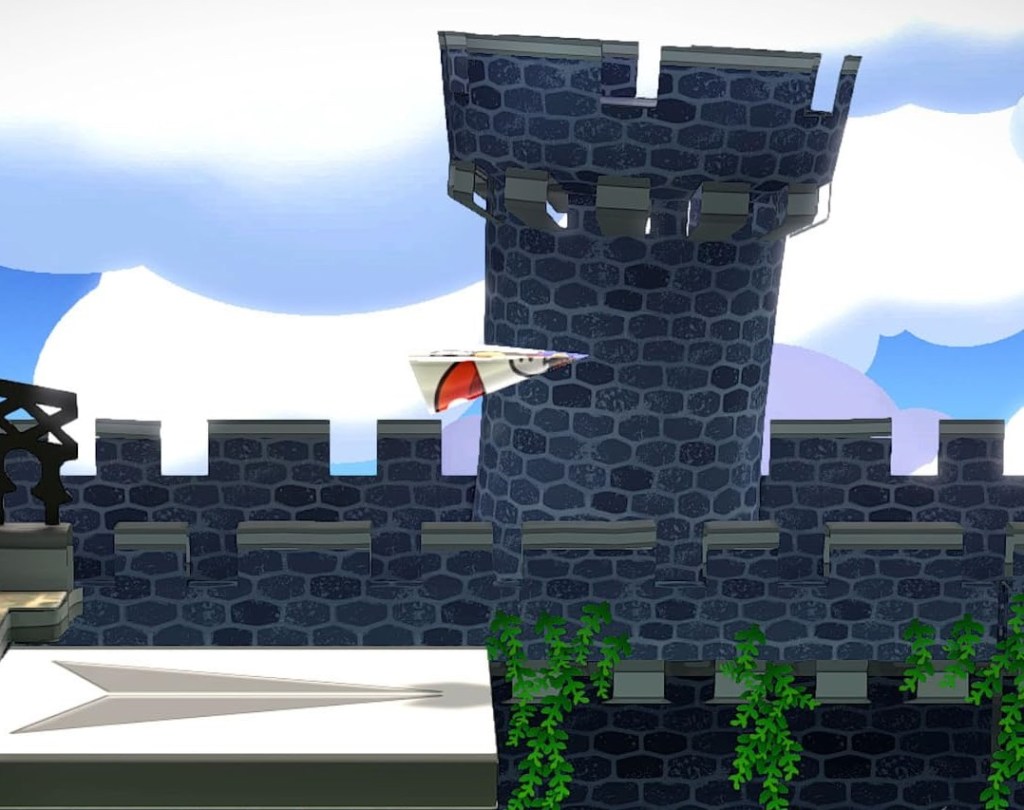
From the very start of the game, it is apparent how creative Paper Mario: The Thousand-Year Door is. Rogueport is a run-down, grimy, and crime ridden city that serves as your hub. The city center has a few establishments but the gallows in the middle makes it abundantly clear what kind of city this is. The art, atmosphere, and slimy characters make Rogueport a standout location. And that’s just the beginning. As the game progresses you will encounter a handful of unique and charming areas. Glitz Pit is one of my favorite areas in any video game. This flying wrestling arena begins innocuously as you climb the ranks to claim the champion’s belt, but it slowly injects mystery and intrigue into its cramped halls. Paper Mario: The Thousand-Year Door is full of creative ideas and memorable places, each with their own episodic story to tell.

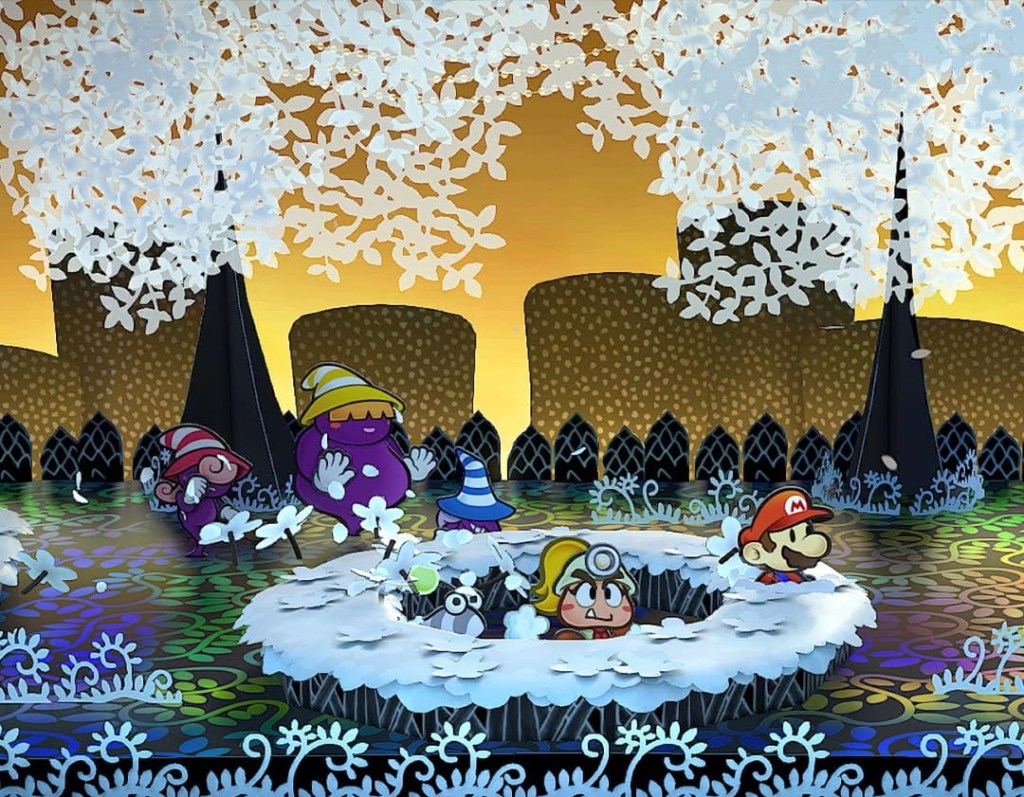
Part of what makes Paper Mario: The Thousand-Year Door so charming is its cast of characters and writing. Through your adventures you will encounter a ton of characters brimming with personality. Each of Mario’s partners has their own distinct character traits and motivations. Even side characters that don’t have a ton of relevance to the story feel genuine. The writing is just filled with charm and wit. While the game relies plenty on humor, it does have its serious moments of bravery, introspection, and self-sacrifice. And the character’s expressive animations go the extra mile to bring life to these paper cutouts. 

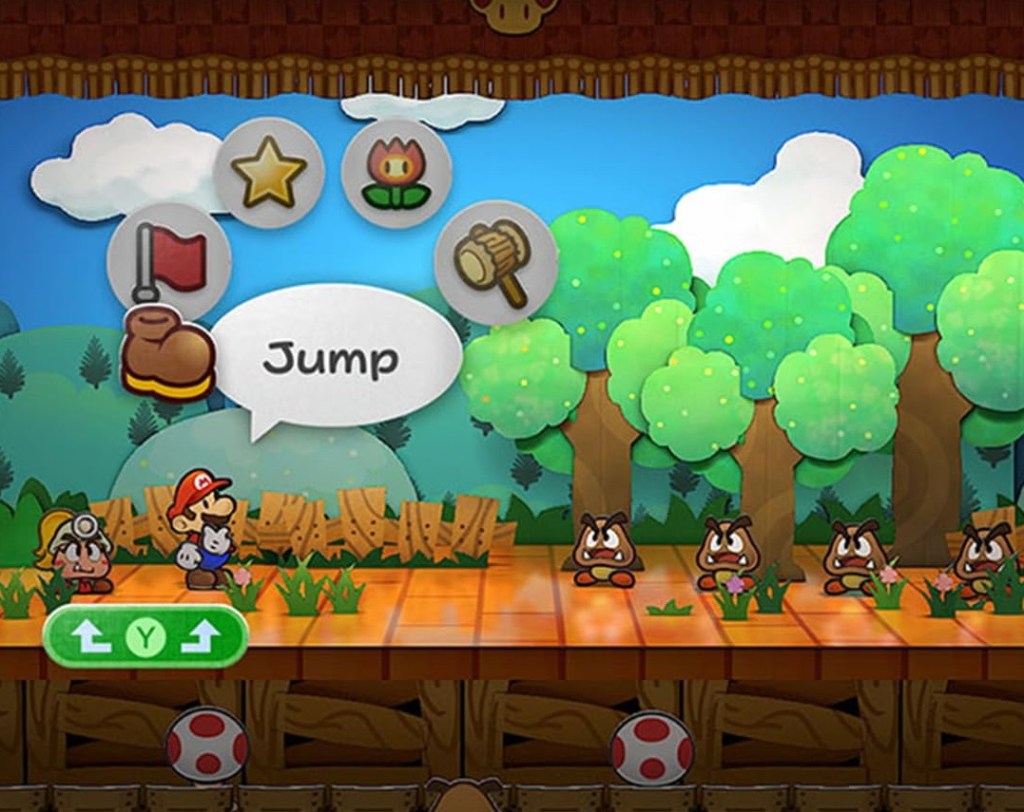
A common complaint that many people have with turn-based RPGs is that the combat is boring. Oftentimes it can boil down to selecting your most powerful attack and watching animations ad nauseam. While Paper Mario: The Thousand Year Door might not have incredible levels of depth it does have one key thing going for it: interactivity. Mario and his partners have a variety of attacks, each with their own button prompts to execute for better results. It may be as simple as pressing the “A” button at the right time, or holding back on the analog stick and letting it snap back at the apex of a hammer swing, but there is a fantastic tactile feeling to the otherwise simplistic combat. The timings are fairly generous but I think that is a good thing because of the necessity of landing these bonuses. You are going to have a very hard time if you don’t learn these prompts and fail to execute. I like that because even though choosing an attack may be fairly straightforward, you aren’t relegated to just watching an animation play. You have to be actively engaged to maximize your output.

Aside from the active aspect of combat, I also love how customizable your strategy can be. A prominent component of this is the badge system. As you explore, you collect a variety of badges that can be equipped at the cost of BP (which can be earned on level-up). These BP can range from extra defense when you are low HP, to special attacks that cause status effects such as sleep, to a raw damage buff. The more generalist and powerful badges cost a ton of BP so it can be fun to experiment with different builds. Moreover, there are a handful of different partners to fight alongside to choose from. While you can swap them around as you please, I think many people are going to have one or two favorites that they default to. Between badges and partner selection, there’s a solid amount of customization to how you approach combat.

Apart from combat, another aspect that many RPGs get wrong that Paper Mario: The Thousand-Year Door gets right is pacing. Many RPGs are notoriously long games that could take months of regular play to complete. Paper Mario: The Thousand-Year Door is a relatively brisk adventure comparatively. But it doesn’t feel rushed either. A complaint that I had about Super Mario RPG was that while I appreciated how quick it moved from place to place, it often felt rushed and I had no time to truly soak in the world. Paper Mario: The Thousand-Year Door sits in the Goldilocks zone of pacing; every chapter is just right in length. There’s enough time to become familiar with every area and to tell an interesting story in every chapter, but it never overstays its welcome either. Overall pacing is something that is crucial yet incredibly hard to perfect, but Paper Mario: The Thousand-Year Door does a great job at it.

Unfortunately, a pacing problem is also my sole issue with Paper Mario: The Thousand-Year Door. While every chapter and the game itself is paced wonderfully on the whole, I do think there are some moment-to-moment drags. Structurally, many chapters play out similarly: opening with Mario venturing into a new area, learning about the area, discovering the antagonist, fighting through a bunch of bad guys to reach the boss, resolving that chapter’s conflict, and then closing out by seeing what Peach and Bowser have been up to in the meantime. The problem is that all the combat is packed right into the middle of the chapter. 

I typically want there to be a healthy mix of combat, story, and exploration throughout but all the talking bits are concentrated at the beginning and end of every chapter. Completing one chapter, the in between sections, and then starting a new chapter can often feel like ages have passed without any combat. And even if I think the combat is solid for an RPG, it can get repetitive if it’s all I’m doing in the middle of a chapter. I wanted story to break up the combat. And I wanted combat to break up the story. I think this issue is minor in the grand scheme of things, but I definitely would’ve liked to have story and combat less isolated from one another.

When I played the game this time around, I tried the remaster that was released for the Nintendo Switch. I can confidently say that this is the definitive way to play the game. The game’s presentation has been improved with improved visual fidelity and new expressive character animations. The soundtrack has been wonderfully redone but there is also the option to use the old version if that’s what you prefer. There’s some great new quality of life changes such as quick swapping partners while exploring and an increased inventory size. Some areas have a new shortcut to cut down on tedious backtracking. And there are new optional bosses for players who don’t want the adventure to end. It’s an all-around excellent remaster with some nice touches.

There’s a reason that Paper Mario: The Thousand-Year Door is a legendary RPG. It’s a game that looms over the rest of the genre as the benchmark for excellence. Paper Mario as a series in particular has had a hard time living up to this peak. It’s charming cast of characters, creative locales, and intriguing episodic chapters make for an unforgettable adventure. The combat allows for some customization and its active nature keeps it from being a turn-based snooze fest. If you are a fan of RPGs, Paper Mario: The Thousand-Year Door is a game that you cannot miss.

Yakuza Kiwami (2016)

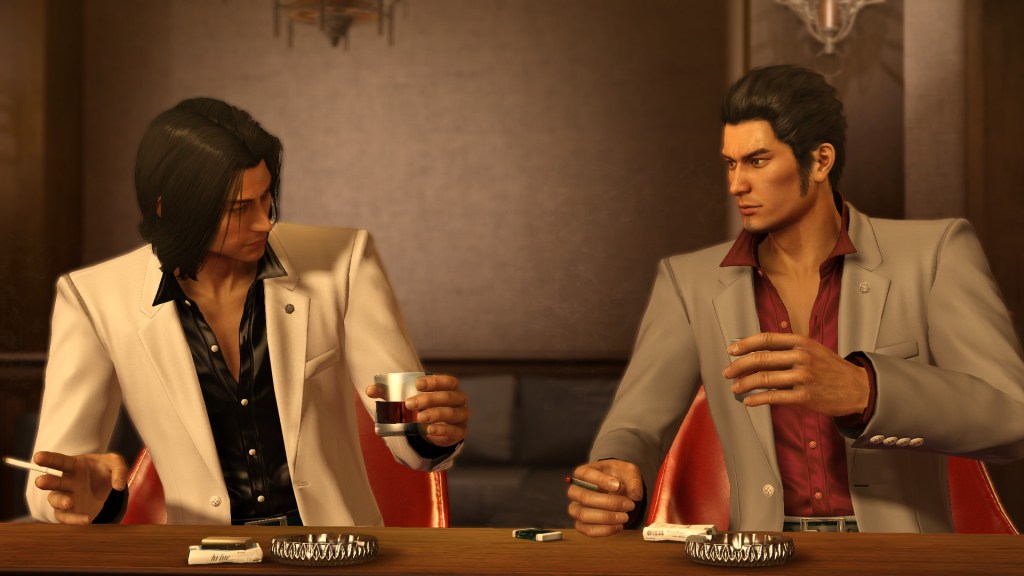
Yakuza Kiwami is a remake of the original Yakuza game from 2005. Being a remake of a PS2-era beat ‘em up definitely limits how much the developers can do to improve an antiquated experience while simultaneously remaining faithful to the original design. After playing Yakuza 0, I was excited to see how the developers could leverage the new engine and combat to modernize the original Yakuza experience (read my Yakuza 0 review for further context). Unfortunately, I feel like there were a few key missteps in combat and side-quest design that were completely unrelated to being a remake. Still, Yakuza Kiwami is a fun romp through the nightlife district of Tokyo for fans of the series.

The game’s prologue starts with everyone’s favorite protagonist Kiryu taking the blame for the murder of the Dojima family patriarch. Not only does Kiryu land himself in jail for 10 years, but he is on the hit list of all Yakuza in the area for killing a high-ranking member of their crime organization. The game starts in earnest when Kiryu is released from jail and a civil war breaks out among the Yakuza families.

The story of Yakuza Kiwami isn’t quite as gripping as Yakuza 0, but much of that is just due to the era of the original’s release. There’s a lot of random sequences and wild goose chases that break up the pace of the story. That being said, Yakuza Kiwami is helped by virtue of now having a prequel to develop many of its characters. Knowing more about Kiryu, Nishiki, Majima, Shimano, and the rest of the cast goes a long way to make me more emotionally invested in the story. Still, I definitely wasn’t sitting on my edge of seat for the climax like I was during the finale of Yakuza 0.

The main appeal of the Yakuza games is the incredibly dense open world. I loved revisiting Kamurocho and seeing how the world I’d become so familiar with had changed with this installment. For the most part, the city is largely the same as it was 20 years prior aside from a few new Cabaret clubs and of course the Millenium Tower where the empty lot used to be. The game has plenty of callbacks and humorous moments referencing the side-stories of Yakuza 0.

Unfortunately, I felt that the tie-ins to Yakuza 0 were my favorite side-stories in Yakuza Kiwami. What I love about side-stories in Yakuza is how silly they are in comparison to the serious nature of the main story. Yakuza Kiwami lacks any truly memorable goofy moments. Most of the side-stories are some variations of somebody trying to scam Kiryu. Some of the schemes are a little crude and it’s fun to watch Kiryu’s reactions, but it never reaches the heights of zaniness that Yakuza 0 had.

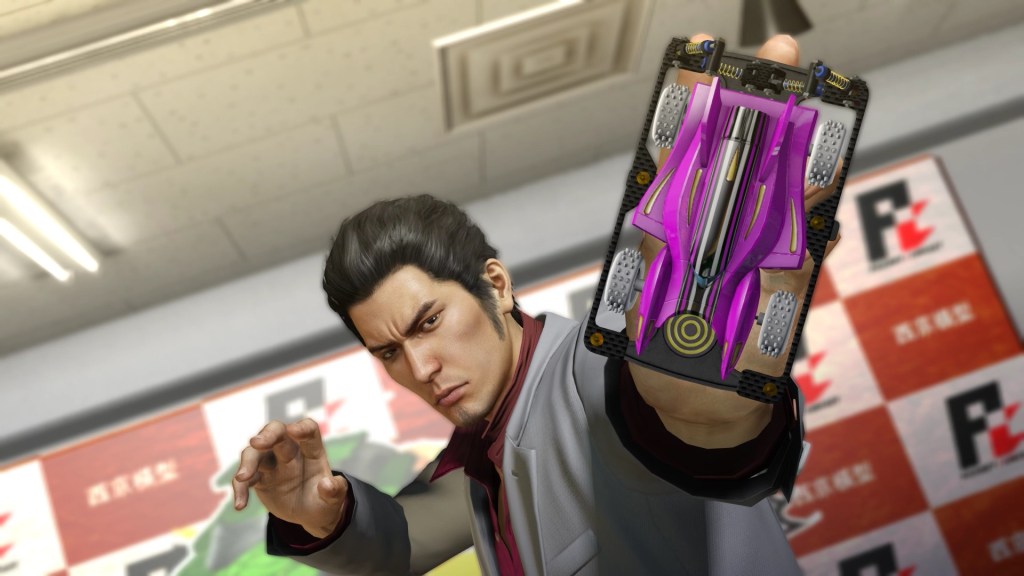
Even though the side-stories were a bit of a letdown, I still think that the open world is a strength of Yakuza Kiwami. There is so much to do and get distracted by in such a tightly crafted city. Of course, there are a variety of mini-games to go along with the side stories. I spent more time than I should have racing toy cars, fighting in the coliseum, and playing inappropriate Pokemon against elementary schoolers. I’m not partial to the plethora of gambling mini-games but there are a ton of them for fans of them. I really did have fun running around the city and seeing what I could do, but I think my favorite twist is the Majima Everywhere system.

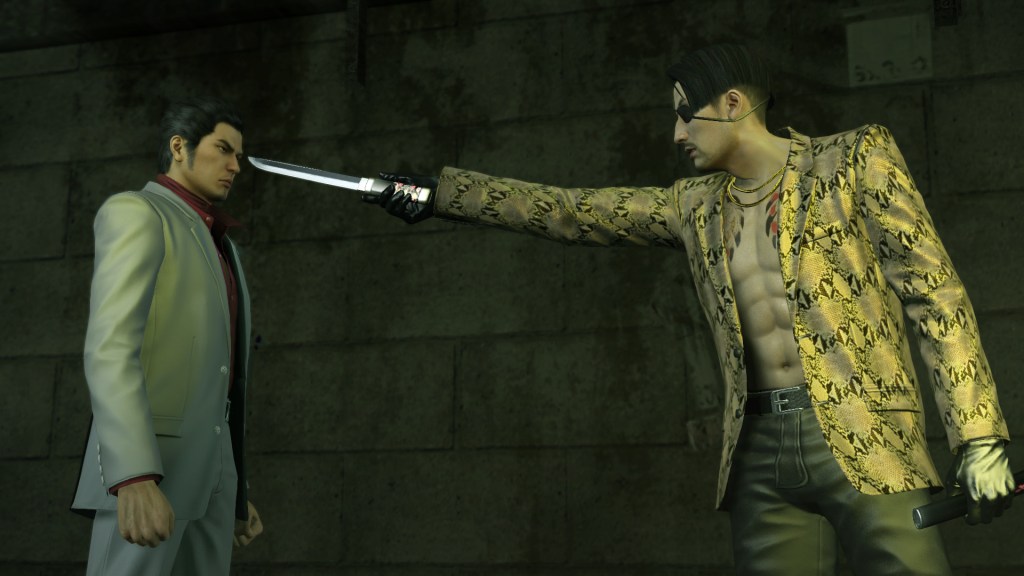
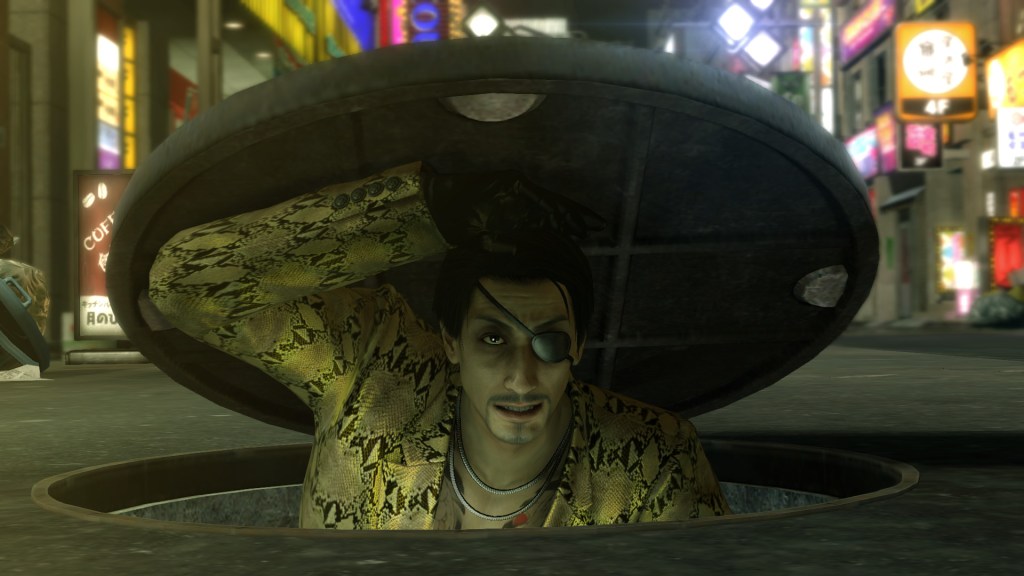
After the events of Yakuza 0, Majima has pretty much lost his mind. He roams around the city, searching for Kiryu. Majima craves a good fight and relishes in helping Kiryu gain his skills back after spending a decade in jail. Every time you encounter Majima, you are locked into a boss fight with him. As you repeatedly defeat him, you will unlock new abilities in the Dragon of Dojima fighting style. My favorite aspect of this system is not the boss fights, but how Majima will show up as you play mini-games or as a taxi driver or as a bartender. Seeing Majima put on costumes and surprise Kiryu across the city is the lighthearted goofiness that I felt Yakuza Kiwami was sorely lacking.

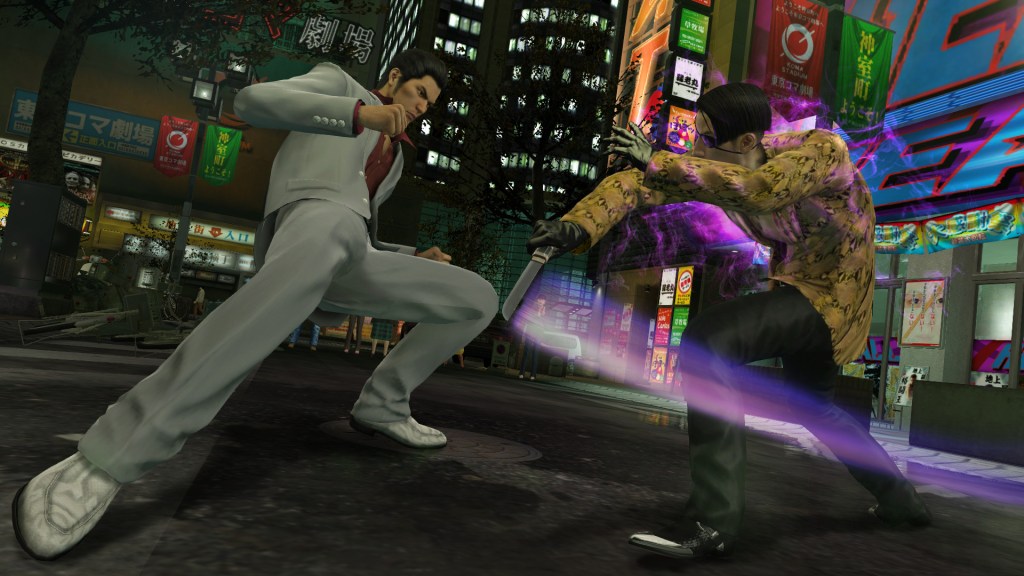
Even though I enjoyed the encounters with Majima, I got a little tired of fighting him by the end of the game. And this is in large part due to the combat of Yakuza Kiwami. When you compare the combat in Yakuza 0 to the combat in Yakuza Kiwami, they may seem indistinguishable from each other, but there are some crucial differences that I think absolutely ruin many of the encounters in the game. Like Yakuza 0, the game is an action brawler where you beat the hell out of goons with 4 different styles that you can switch between. What made the combat of Yakuza 0 fun to me was contextual. Playing as Kiryu, the disgraced badass with unimpeachable morals and fighting against the scummy Yakuza who wronged you was greatly satisfying. While it often was easy and simplistic, I had fun. Yakuza Kiwami makes encounters more challenging, but in a frustrating fashion.

The first major difference in Yakuza Kiwami is its enemy design. Baddies in this game are far more likely to block and dodge out of your attacks. Even during the middle of your combos they can turn around and start blocking. I never really found a good way of dealing with this other than just to continue wailing on them to get the occasional hit in. Using grabs and throws seems like it should be the natural counter to blocking, but most enemies just dodge out of grabs and many of them will actually deal damage to you if you grab them. 

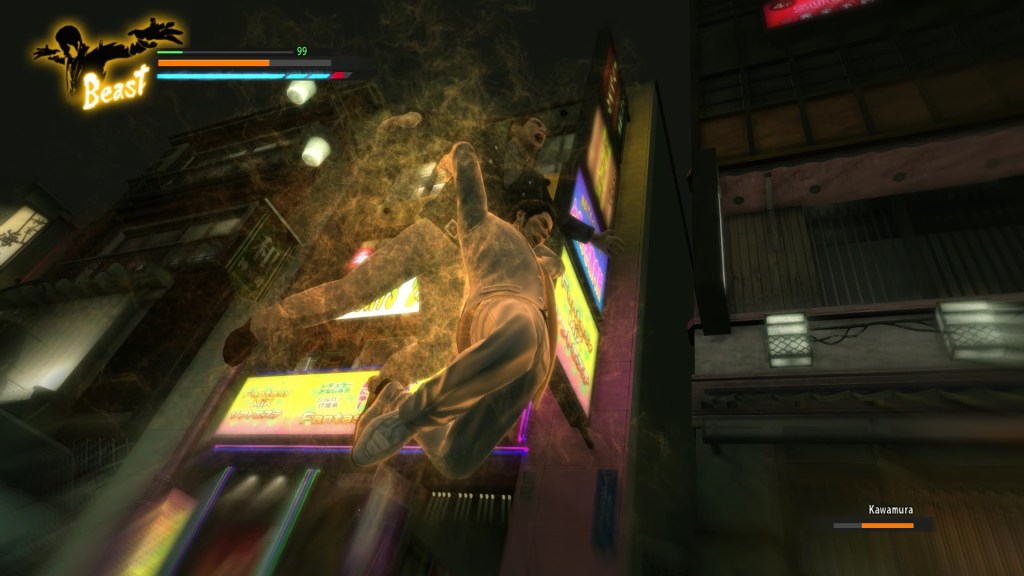
Bosses in particular are very slippery and hard to hit. They also have uninterruptible combos that will ignore hitstun if you attempt to attack them during that time. Trading blows with enemies seems to make sense in the world of Yakuza, but for some inexplicable reason Kiryu was made to be much more fragile. Taking any hit will cause a brief hitstun and interrupt whatever you are doing. Getting knocked to the ground is a common occurrence. Fighting groups of enemies is a nightmare because it’s so likely that you will get interrupted every time you try to attack. I was sorely disappointed that even in Beast style, the fighting stance specifically designed to deal with groups, Kiryu has no additional resistance to hitstun and a light breeze will prevent him from attacking.

Another annoyance is the addition of the Kiwami mechanic. When bosses get low on health, they begin glowing a colored aura and rapidly heal. To interrupt this, you have to swap to the style that matches the color and use a special heat move on them. Swapping to the correct style takes time. And if you don’t have enough heat you have to use an item or hit them a bunch which takes time. And during this time, they continue healing. I feel like this mechanic was supposed to be a cinematic way of dealing big damage to the bosses, but most of the time I was lucky to break even after they had healed for a few seconds. They can do this multiple times per fight, and using the same heat move in the same battle deals reduced damage. Which is a massive oversight considering that you only have the one heat move to interrupt Kiwami healing. This mechanic is utterly pace breaking and annoying to deal with.

All of these issues make the combat in Yakuza Kiwami painfully slow and tedious. The combination of enemies constantly blocking and dodging, Kiryu having trouble getting off significant hits, and bosses healing massive amounts multiple times throughout a single fight just makes combat take forever. On normal difficulty the game still isn’t “difficult”, you can carry a dozen healing items with you and can take a hefty beating before going down. It’s just tedious to slowly whittle away at enemy health and popping a healing item whenever you get low. I don’t need the combat to be deep or challenging, I just want it to feel good to smack around bad guys as the indomitable Kiryu.

 I was shocked how many steps backwards Yakuza Kiwami took from Yakuza 0. I can look past the dated story since the game is a remake, but the bland side stories and tedious combat surprised me. It’s still a fun enough game, exploring the city and getting distracted by the plethora of mini-games is essential to the series. If you played Yakuza 0 and want more, then Yakuza Kiwami is the next logical step. But definitely don’t start with Yakuza Kiwami even though it is a remake of the first game in the series. And if Yakuza 0 didn’t click with you, then Yakuza Kiwami definitely won’t. Unfortunately, it is a worse game in every way. I’m still looking forward to the rest of the series, and I hope that this was just a low point.