Elden Ring is one of the most awe-inspiring adventures ever made. Its grandiose scope paired with wonderfully varied environments, naturally occurring vistas, and absurd array of characters and enemies is something that may never be surpassed. In many ways, Elden Ring is the natural evolution of FromSoftware’s Dark Souls franchise. It streamlines many of the more controversial aspects while doubling down on action and spectacle. And while I do love Elden Ring, I think something was lost in that evolution. Moreover, Elden Ring is often a victim of its scope. The game is gargantuan and undeniably runs out of steam towards the end.
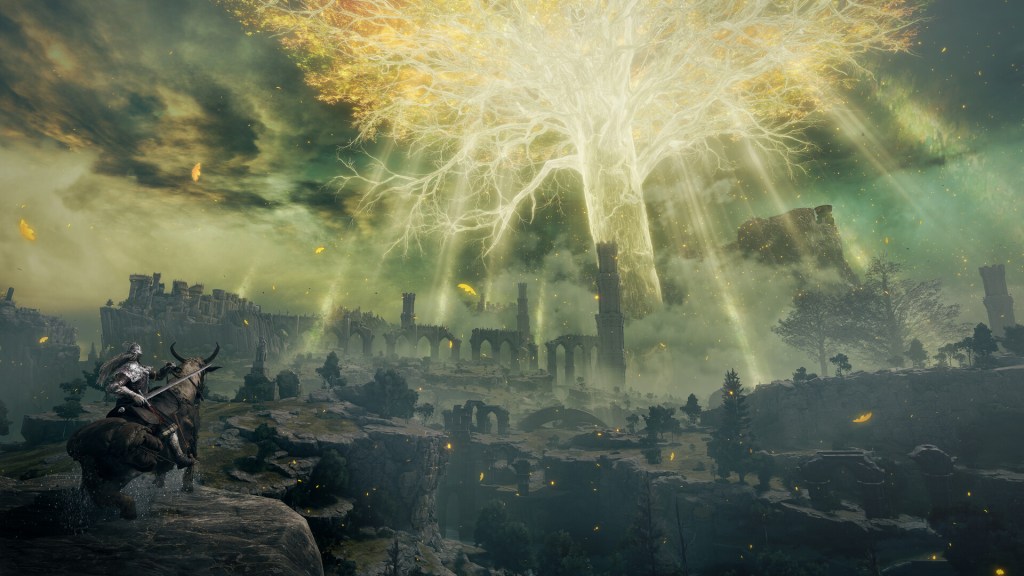
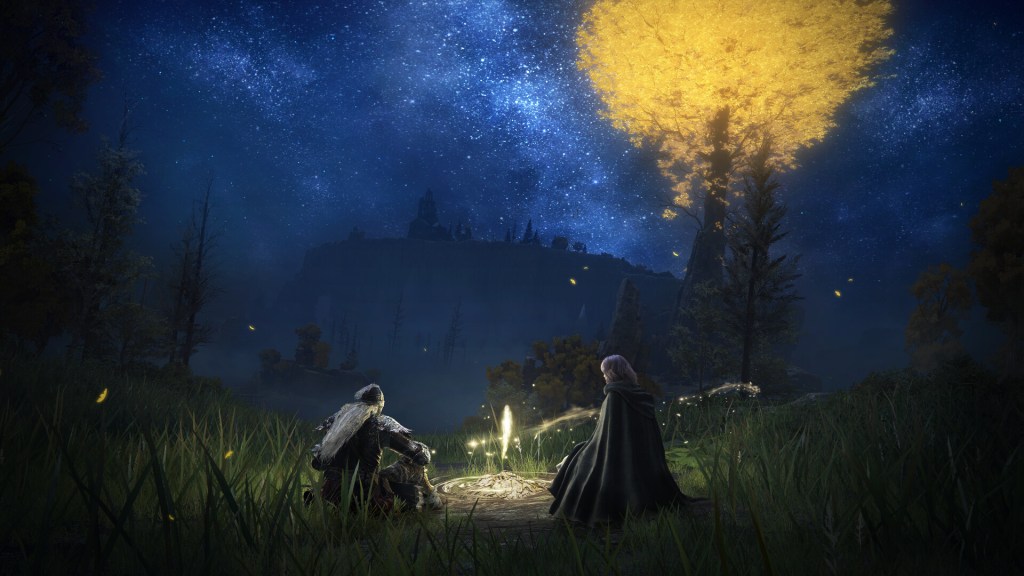
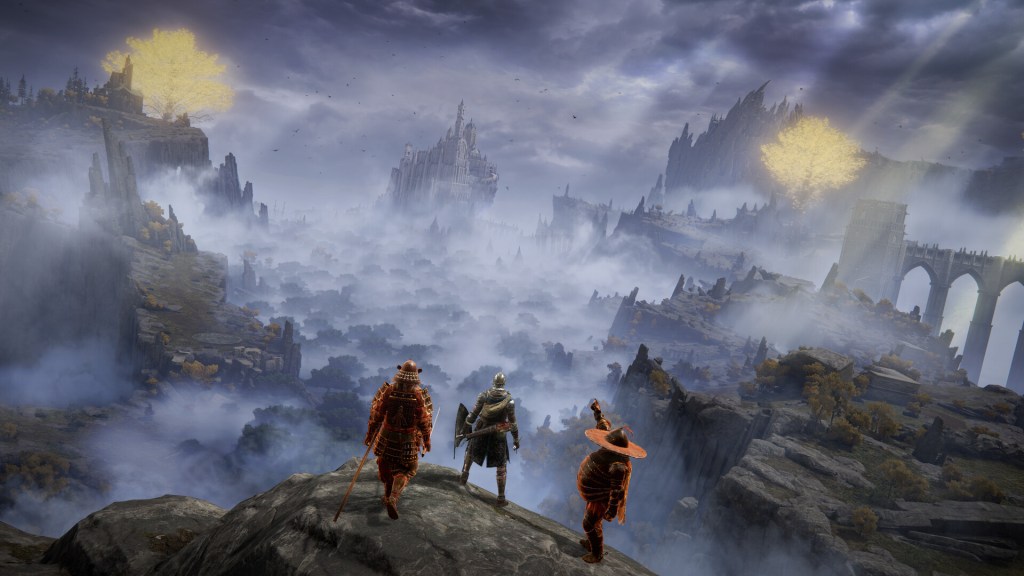
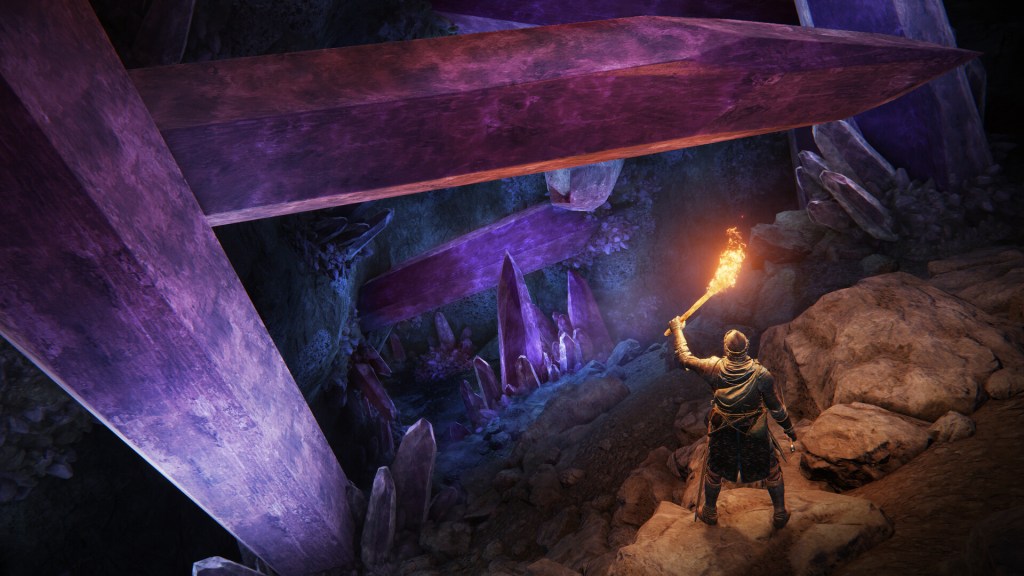
What Elden Ring does best is the jaw-dropping moments of environmental reveals. The game has so many different classic fantasy areas such as magnificent castles, rolling plains, snow-capped mountains, desolate and rocky badlands, and dense forests. But it also has plenty of its own imaginative areas such as the rotting and malaised hellscape of Caelid. The sheer wonder I felt when I discovered the luminous skies in Siofra River is a high point that mirrored the first time I stepped foot in Anor Londo a decade ago when I first played Dark Souls.
It’s all the more impressive that Elden Ring manages to be full of these grandiose landscapes and creative environments when considering the scope of the game. The game is truly massive. In the first area of the game there’s a good chance you’ll be teleported to the other side of the map which serves as a shocking revelation that the big area that you’ve spent hours exploring is nothing but a miniscule slice of the world. Aside from the main dungeons and attractions in each area, there are plenty of enemy encampments, roaming bosses, side dungeons, and other secrets to uncover. While some may argue that the big world can feel a bit empty at times, I’d propose that blank space is vital. It makes the world feel genuine and real. The settlements and points of interest are spread out so you can spend a few minutes riding your horse and appreciating the landscapes.
To go along with its massive world, Elden Ring also boasts the most build variety of any of its predecessors. There’s a plethora of weapons, shields, spells, talismans, ashes of war, spirit ashes, and other items to find that can dramatically change the way you play. Aside from dealing high damage, heavy weapons deal a good amount of hitstun and also build up stagger which can allow you to land a critical strike every so often. Light weapons hit fast and let you hit the boss in the middle of their combos. Magic is better than ever for anyone who wants to play as a sorcerer. Status effects such as bleed and frost are also viable as they deal big chunks of a boss’s health bar. There’re tons of ways to modify your build to match your playstyle, which I think is fantastic.

Unfortunately, with so many options come quite a few issues as well. The sheer quantity of builds has three main flaws: exploration rewards, the upgrade system, and balance. In such a big world, you want to be rewarded for exploring every nook and cranny. Battling through a dungeon is a reward in and of itself, but most players want some sort of relevant trinket or item to help them along their journey. The problem in the case of Elden Ring is that the vast, vast majority of things that you find will be completely irrelevant to your build. If you want to play as a knight with a sword, pretty much every spell, weapon, and most talismans you find do absolutely nothing for you. To make matters worse, the game often rewards you with random material and cookbooks used in its crafting system, which most players don’t truly engage with. Sure, you get rewarded in the form of experience points just for defeating enemies. But the “fun” stuff such as new weapons and gear will be unusable for most players.
This problem is made much worse by the restrictive upgrading system. If players actually had the freedom to experiment with all of the new weapons and tools that they find then these would be sufficient rewards. But the reality is that because of how stingy the game is with upgrade materials (smithing stones), you won’t have enough material to test all the weapons you want to use. Moreover, it’s impossible to compare the effectiveness of a new weapon to your current one, as there is no way you will have enough material to fully upgrade the new weapon to the same tier as your current one. Most players are just going to stick with one or two weapons that they like and not experiment too much as it is cost prohibitive to do so.
There are plenty of open world games out there to play. The gorgeous and somber world is without a doubt one of its main appeals. But what truly makes the game stand out among its peers is its combat. Most big open world games have fairly rudimentary combat systems. While Elden Ring doesn’t quite have the complexity of Devil May Cry or Bayonetta, it still boasts challenging encounters that are begging to be mastered. FromSoftware has progressively made its Souls-style games more and more action-y, and Elden Ring is the natural progression of that trend. For better, and for worse.
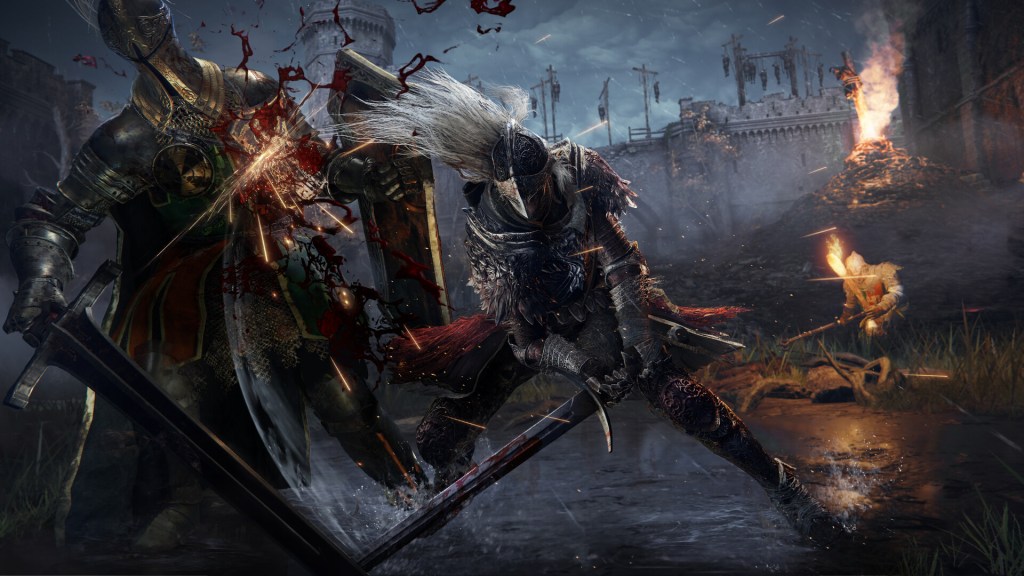
Aside from the sheer variety that new weapons and magic affords, Elden Ring also boasts other tools to be used in combat. One major one is Ashes of War. All weapons have a default skill that can be used at the cost of some mana. These skills range from simple buffs, to whirling combos, to front-flipping slams with your sword. As you adventure and find Ashes of War which can be used to override your weapon’s skill with a new one. And if you are using a shield, you can perform a guard counter after blocking an attack for big damage. Having these skills at your disposal does open up combat a bit more from the standard light and heavy attacks that we’ve become familiar with.
Weapon skills and guard counters also highlight an important new mechanic: stance breaking. Like in Sekiro: Shadows Die Twice, you deal stance damage to enemies and bosses as you hit them. Light attacks do little stance damage, heavy attacks do big stance damage, and guard counters/skills can deal massive stance damage. If you deal enough stance damage in a short window of time the enemy will become stance broken allowing you to land a critical strike on their weak point. Not only does this do big damage, but it also gives you a moment of breathing room where you can heal, regenerate stamina, cast buffs, or attack a couple extra times for free.
I quite like the addition of this mechanic as it encourages players to remain aggressive and keep up dealing stance damage whenever possible. My one issue with this is that unlike in Sekiro: Shadows Die Twice, the stance bar is invisible. I have no idea whether or not I’m close to a stance break which influences my decision making. If a boss was close to being stance broken, I may up my aggression, or the opposite case may be true if they regenerated all of their stance. I really don’t understand why this was kept hidden from the player when they had no problem displaying the stance bar in Sekiro: Shadows Die Twice.
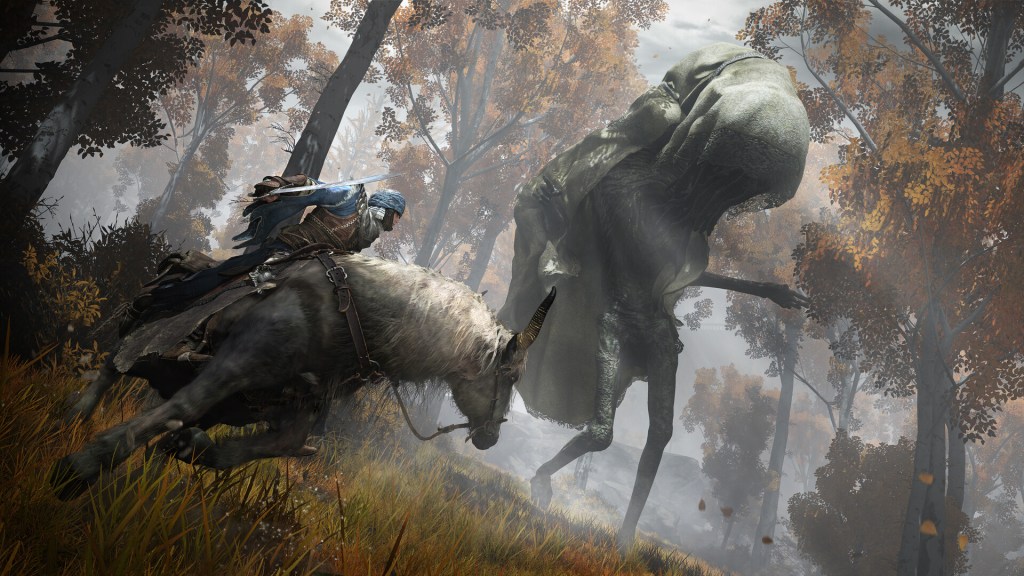
A major addition to the game is the jump button. While it may seem like it is mostly useful in short platforming sections, it turns out that jumping is absurdly powerful in combat. It may cost a chunk of stamina, but the jumping attack does a ton of damage both to health and stance. It also feels more reliable to execute than a normal heavy attack in many cases. Another huge benefit is that many attacks in the game are jumpable. I often found that I avoided attacks when going for a jumping attack of my own. While I do appreciate the inclusion of the jumping, I do think it has a few flaws.
First and foremost, the jump attack feels too powerful. This is especially true for builds with slow and heavy weapons as they rely on dealing stance damage. Moreover, the jump attack’s reliability makes it easier to execute than a charged heavy attack. It looks and feels a little silly to be jumping around constantly. My other issue with jumping is that it feels unreliable as a defensive option. While plenty of attacks are jumpable, the visual cues for these attacks feel inconsistent. Low sweeping attacks and ground slams may be obviously jumpable, but there are also many attacks that do not look like you can jump over them even though you can. Conversely, there are a handful of attacks that you cannot jump over even though you can’t such as ground eruptions. This led to frustration, trial and error, and ultimately, I stopped relying on jumps to dodge unless I knew for sure that something was jumpable.
Combat in Elden Ring is faster than most of its predecessors. While the series has been known for high-commitment actions with careful stamina management, Elden Ring gives the player much more stamina and quicker animations. You still have to be careful to not spam actions too much and run out of stamina, but generally it’s a far less present threat than in a game like Dark Souls. Of course, the reduction of these limitations on the player also means that the developers can afford to crank up the speed and relentlessness of the enemies as well.
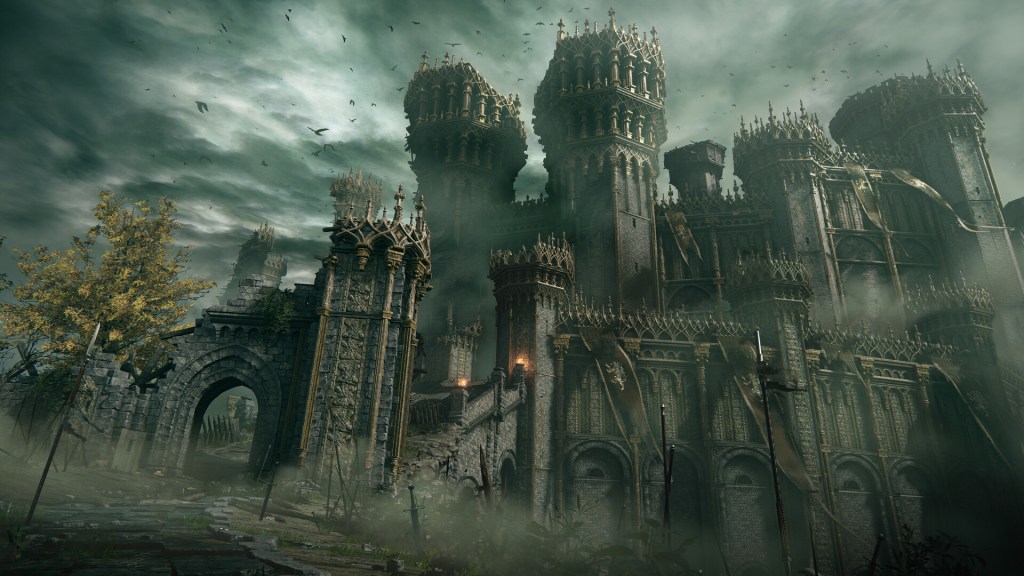
All of these changes have undoubtedly increased the combat depth of Elden Ring. While it’s no Bayonetta, Elden Ring blows its open-world peers out of the water. In most open-world RPGs you just kind of have to accept that the combat is going to be underwhelming, but fighting enemies in Elden Ring is genuinely engaging. Even basic enemies can be threatening if you get swarmed. And stronger foes pose a real challenge. There’s a ton of creative visual design and a variety of enemies that will keep the player on their toes. But I have two major issues with the combat in Elden Ring: Spirit Ashes and boss fights.
The most impactful and controversial addition to Elden Ring is Spirit Ashes. These let you summon helpful allies to fight alongside you at the cost of some mana or health. I don’t hate the idea here. These summons help you deal with groups of enemies and provide some breathing room against bigger foes such as bosses. Summoning can make the game feel more dynamic as fights feel like real skirmishes. They also can be fun if you are roleplaying, summoning a horde of skeletons, knights, or wolves can make sense depending on your character.
My primary issue with Spirit Ashes is the enemy AI seems incapable of dealing with multiple foes. Most bosses can be trivialized by simply having a summoned buddy that draws the boss’s attention away from you. Encounters can be made stupidly easy because you get plenty of extra time to heal, regenerate stamina, cast spells, and get free hits in while the boss is attacking your summon. This is made worse by the fact that many Spirit Ashes are egregiously overpowered and are often capable of defeating bosses on their own without any intervention from the player.
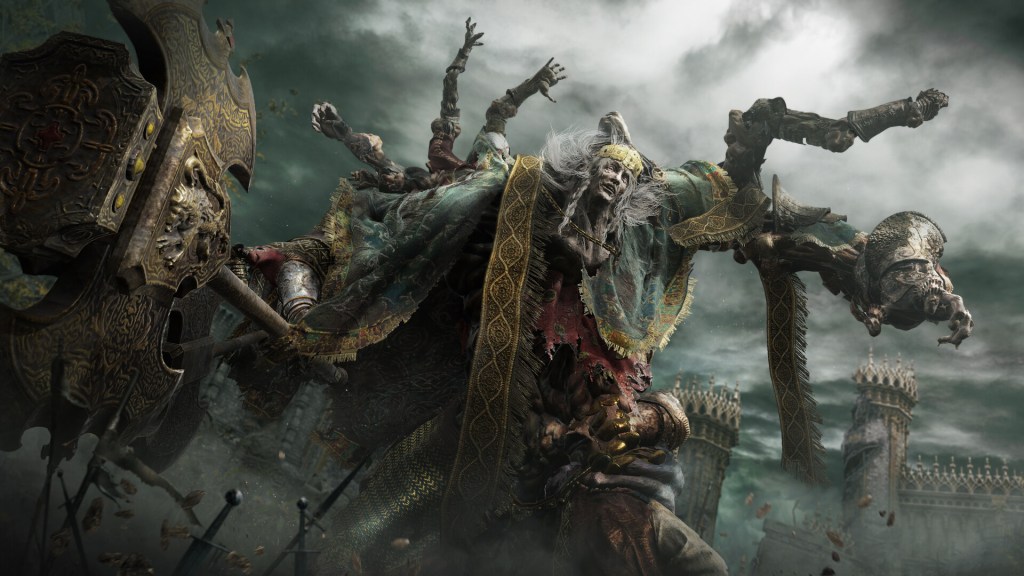
You can make the argument that the player isn’t required to use Spirit Ashes if they don’t want to. But there’s a few problems with this. First and foremost, Spirit Ashes and their upgrade materials are a common reward for completing dungeons. They are undoubtedly a core component of the game, and it feels bad to just ignore them altogether. Moreover, FromSoftware is famous for never including an easy mode in their games. They have always been adamant that having a singularly designed and fine-tuned experience is how they want to make their games.
Part of the reasoning for lacking difficulty options is so that players can all discuss their experiences with the game on an equal level. Everyone can enter the discussion from the same place and understanding. That’s not the case with Elden Ring. Build diversity and Spirit Ashes dramatically change how you engage with the game. I found it immensely disheartening when I looked online after playing the game to see how other players fared against certain bosses and an exceedingly common response was “it’s easy if you use Spirit Ashes”. The game’s discourse has been entirely warped around them and if you used them or not which is frustrating when there is so much to talk about.
I think my biggest problem with Spirit Ashes is that there isn’t a middle ground. You either use them or you don’t. When using them many of the game’s encounters become trivially easy. When not using them, Elden Ring is the hardest FromSoftware title with relentlessly aggressive enemies. I don’t know what the intended experience is here. Neither option feels good. Bosses movesets feel like they are tuned for fighting multiple foes but their AI just can’t handle it. Bosses often cross the boundary into being more frustrating than fun.
FromSoftware has long been in an accelerating arms race with its player base. Their reputation for making difficult games combined with players’ skill naturally increasing means that every game has to be harder than the last. But there’s a problem there: difficulty can’t perpetually escalate. At some point, encounters become too challenging and take too long to learn, and I think that Elden Ring has surpassed that threshold in many places. Obviously, you can use Spirit Ashes to turn that tables and demolish these encounters but I find that unsatisfying as explained previously.
The bosses in Elden Ring feel like the designers are throwing the kitchen sink at the player. It feels like every boss is insanely aggressive, has multiple area of effect (AoE) attacks, high mobility, delayed attacks, long combos, branching combos, gap closers, ranged options to interrupt healing, multiple phases, and high damage. The extent of the new boss’s movesets makes them far more complex than the simpler bosses from days past. You have to memorize a bunch of different combos, attack timings, dodge directions, and punish windows. When it works, it’s great. Fights can be an adrenaline-filled dance where you play on a knife’s edge. When it doesn’t work, it feels genuinely awful. Bosses can feel like they don’t give you any opportunity for retaliation as they relentlessly spam dozens of attacks.
It’s common to treat FromSoftware’s bosses as puzzles. Players learn the ins and outs of every attack and how to respond to them. Experimenting with a variety of timings and positionings is necessary to maximize success. The end result is a mechanical mastery in which they have a reaction for every action that the boss takes. My issue with this approach in Elden Ring is that the bosses are so complex that it takes an absurd amount of time to master them. What would require a handful of attempts in previous games now can stretch into the dozens or hundreds. Personally, I don’t want to spend hours upon hours on a single boss, especially when there are so many of them in the game.
The way I fought most of the bosses in Elden Ring was not by mastering them, but by taking risks and accepting that I would be getting hit. On one hand, taking on the fights by using instinct can make for an adrenaline pumping experience. Scraping by with a sliver of health as you land the killing blow is exhilarating. But on the other hand, beating a fight without truly understanding it can be ungratifying. You never feel like you mastered the encounter. To make matters worse, bosses can feel unfair if you never fully master how to interact with them. The bosses in Elden Ring have a tendency to feel relentlessly aggressive with little breathing room to land attacks of your own. While many of these bosses have opportunities in the middle of their combos to retaliate, only players that truly master the fights can take advantage of those openings.
Many players will take advantage of the plethora of tools that Elden Ring introduces. The wide variety of weapons, ashes of war, spells, and summons that the game provides are all there to be used. There’s nothing wrong with this and I want to make it clear that gatekeeping players because they used an “easy” or “overpowered” build is obnoxious. Having said that, it is important to acknowledge that using certain tools does dramatically decrease the games difficulty, sometimes to the point of absurdity. Spirit Ashes are one example of this, but there are a handful of weapons and spells that can similarly trivialize even the game’s hardest bosses. I think there is plenty of validity to theorizing your own builds and coming up with a powerful strategy, but I don’t think that’s what a vast majority of players do. And for good reason.
For a game that focuses so heavily on exploration and progression, Elden Ring can be actively hostile towards players wanting to experiment with new equipment. A huge chunk (maybe even the majority) of the game’s weapons, spells, and ashes of war are garbage and not worth using. This wouldn’t be so bad except for the fact that the upgrade system is keeping players from testing out weapons on equal footing. You’ll never have enough materials to test and upgrade everything, so you just have to guess which weapons are good or look up a guide. It’s no surprise to me that if you watch a random stream or clip of a player playing the game that they are almost always using similar loadouts. It’s difficult to blindly commit to a weapon in a game with hundreds of choices, so players just look up the best options. I applaud players that use creativity and knowledge to craft specialized builds and strategies to take down difficult bosses, but I don’t want to just Google the best builds just so I can stand a chance against an endgame boss.
In some ways, these more complex bosses are good. There’s a reason people mention bosses like Nameless King, Orphan of Kos, and Sword Saint Isshin as their favorite bosses from previous titles. They are extreme tests of your skill and push the player to mastery. But when every boss is on that level of complexity the game gets exhausting. I crave more variety and originality. I’m certain that FromSoftware is aware of its player base’s reactions to certain fights. They know that players universally love the three bosses that I just mentioned, so they have been steadily making every boss fight into something resembling them. An intense one-on-one battle with high difficulty, multiple phases, punishing attacks, crazy spectacle, a wide-open arena, and a crescendoing orchestra. It may sound like it’s obvious to give the player more of what they want, but I think there’s more value in having contrast between the boss battles.
Players often bemoan “gimmick” bosses or any encounter that cause them to step out of their comfort zone, but I think it’s important to think of the game as a whole rather than a collection of individual bosses. When every encounter is similar, they blend together and become forgettable. But when every encounter is unique, they stand out in their own ways and enhance each other. Ice cream is great, but if you eat ice cream for every meal a hundred days in a row, you’ll get sick of it.
There’s no doubt that FromSoftware has mastered the spectacle of boss fights. But the emotional impact of the bosses is dampened by their repetitive nature. A boss with multiple phases used to be a genuine surprise. Now it’s an expectation. Musical scores used to be somber as you defeated the husks of dying gods as they’ve clung to fragments of life for thousands of years. Now every song is a bombastic orchestra. Plenty of bosses used to have unique arenas that you had to think about how to use to your advantage. Now every boss is in a wide-open room so that nothing gets in between you and the “duel”. There used to be plenty of anti-climactic boss fights that highlighted the nature of the dying world. Now every boss is an all-out action-packed climax.
I’m sad that the days of not knowing what was coming are gone. The unique experiences provided by Demon’s Souls and Dark Souls boss fights have been disregarded for a purer sense of action. Now when I step up to a boss fog door, I know almost exactly the type of fight I am in for. Sure, I don’t know the exact moveset or attack patterns that the boss employs, but I know that the developers are about to throw the kitchen sink at me while I roll a bunch until I memorize the attack patterns. There are whispers of FromSoftware’s old design here with bosses like Rennala, Starscourge Radahn, and Mimic Tear providing unique and memorable experiences. I just wish there was more of it rather than dozens upon dozens of spectacle fights that ultimately blend into one another.
This problem is made worse by the scope of Elden Ring. While boasting a massive map and setting moments of jaw-dropping reveal are a strength of Elden Ring, it also hampers so many aspects of the game. Many of the game’s bosses are frequently repeated. Side dungeons and caves become boring detours as you progress through the game. Enemy variety and balance plummets as you approach the final third of the game.
Elden Ring is a game that peaks early on, the first area of the game is the best holistic experience. You are thrust into a beautiful yet dangerous world without many resources. Exploration is genuinely difficult as you haven’t acquired any great equipment or gained a significant number of levels yet. Furthermore, you only have a handful of healing flasks to utilize per checkpoint. As a result, every enemy poses a threat to your success and you have to play carefully. Even a basic foot soldier can disrupt your travels. But you are encouraged to explore and engage with all the content because that is how you find new equipment and gain experience. Moreover, at this point in the game everything is fresh and new and surprising. Not to mention the fact that the beginning area’s capstone dungeon is one of the best that FromSoftware has ever made with intricate yet realistic level design.
As the game progresses every new area is less surprising. It’s easy to fall into a routine of riding from point of interest to point of interest to collect whatever rewards they have in store. Basic enemies lose their potency as healing flasks become plentiful. The game is still a fun time, it can even be downright cozy as you explore the somber world that FromSoftware has created. But there’s no questioning that the experience can be quite repetitive after dozens of hours. Legacy dungeons and other bits of unique content are great, but the act of exploring simple enemy encampments, ruins, and caves loses its luster quickly. Not to mention how the endgame is poorly balanced with bosses that can devastate the player with a single hit or two.
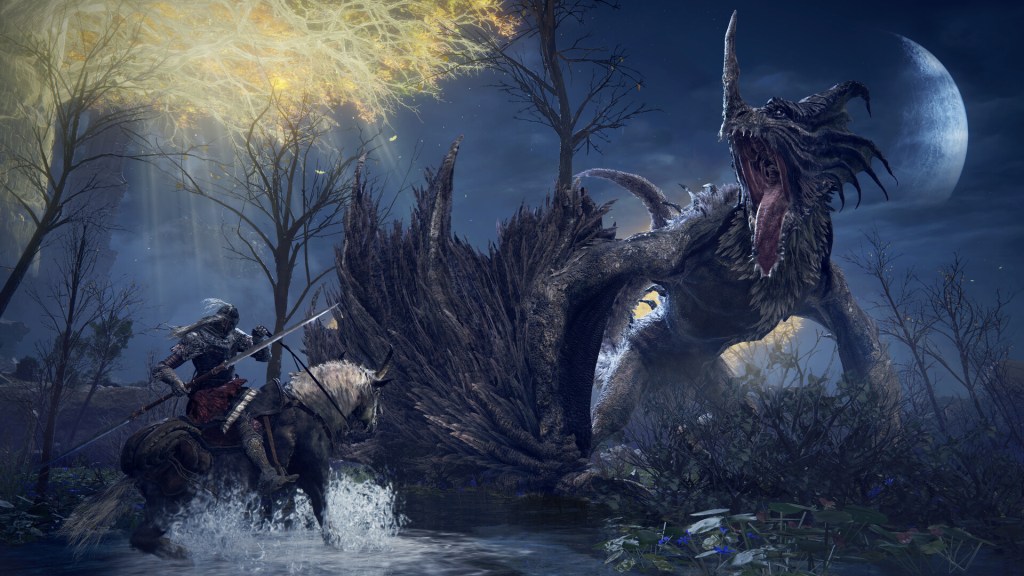
I do love Elden Ring. I wouldn’t have played this massive game twice if I didn’t. Exploring its world for the first time is a magical experience. The evolution of combat mechanics is a welcome change. Build variety and new tools allow even more players to experience the game and play however they want. The sheer scope never ceased to surprise me as I wandered into a new area. The grandiose spectacle of the game is something that may never be matched. But it did make concessions to achieve all of this. Balance went out the window to accommodate new builds and combat. Exploration can become rote after many, many hours. Scope and spectacle are great, but mechanically the game doesn’t surprise the player with interesting bosses or arenas. It is for these reasons that I give Elden Ring a 9/10. While I enjoyed my time with Elden Ring, I am feeling worn out on the standard Souls formula and am hoping that FromSoftware has something completely new in the works.
 stephensopinions
Pingback: Stephen’s Favorites of 2024 | stephensopinions