Pacific Drive is not what I expected it to be. And unfortunately, after playing the game, I can’t help but feel like the game I expected would have been better than the game Pacific Drive actually was. It’s certainly not a bad game. Pacific Drive does many things very well, and I hope other games take inspiration from its successes. But even aside from not being what I expected, there are some other major issues that I have with the game.
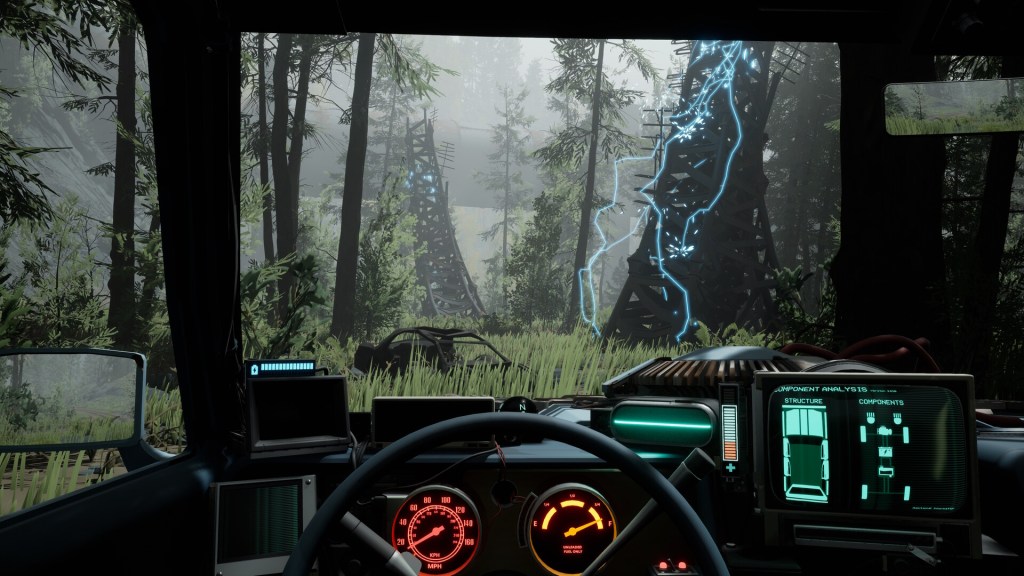
What I expected was an ominous road trip across the Pacific coast. I thought I’d be looking for bastions of safety to spend the night away from some sort of eerie threat as I made my way across the country. And that is the general idea of Pacific Drive. But instead of being a straightforward road trip with a start and destination, the game takes on a looping format. You plan a route from the safety of the garage, collect resources while avoiding sci-fi dangers, and then drive into a wormhole to return back to the garage where you can upgrade your car and tools. While the vibes here are immaculate and exactly what I expected, I found the roguelite looping structure to have a few aspects that I wasn’t a fan of.
While Pacific Drive didn’t turn out to be exactly what I wanted, I can’t deny that the game does a ton of things right. First and foremost, I love a good safehouse and Pacific Drive has one of the best in gaming. After a stress-inducing journey I loved rolling into the shop to do some repairs on my car. There’s an ever-present checklist of tasks to accomplish: filling up the gas tank, charging the battery, healing up, restocking survival tools, organizing loot, swapping out beat-up car components, and spending resources to upgrade. It may be a little repetitive after a while but I feel like the calm and safe environment itself is the reward for a successful trip into the wild.
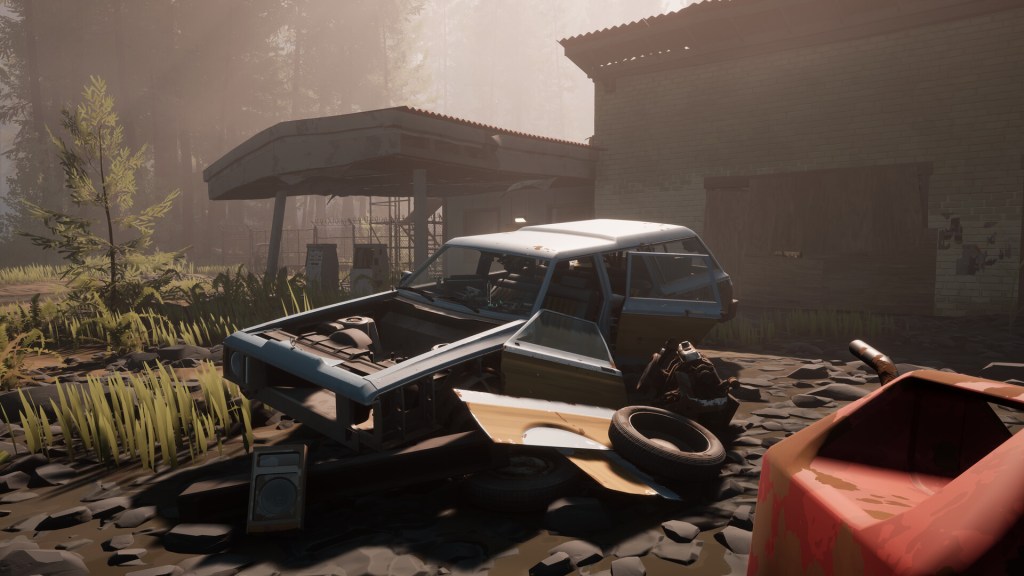
The car itself is an extension of the player’s character. It starts out as a piece of junk that can barely make it down the road without falling apart. But as you play you will unlock upgrades to the panels, doors, engine, bumpers, trunk storage, as well as being able to slap on some special additions. Going from a car that’s panels that are duct-taped together to a radiation-shielded vehicle with wind turbines on the side, extra batteries in the back, and a radar on roof is a satisfying progression. Driving in this game is wonderfully terrible. This isn’t a racing game, and you have to take care of your surroundings as it is easy to lose traction and slip down a hill and crash into trees and rocks. All the time you spend with your car, upgrading it, learning its ins-and-outs, mastering the driving, detailing it, and repairing it makes the car an excellent tool that you really feel attached to.
What Pacific Drive really excels at is the vibe and atmosphere. It’s a wonderfully isolated experience. You don’t meet any other humans outside of limited radio interaction. You simply drive around the lonely landscapes of the Pacific Northwest and avoid dangerous anomalies. The anomalies themselves aren’t really sentient beings or scary monsters, just unnaturally occurring science-fiction phenomenon. It’s a tense but oddly relaxing experience. It distills the feeling of a solo road trip as you listen to the radio, navigate back roads, and try to make it to your next safe stop without running off the road and getting some dings on your car.
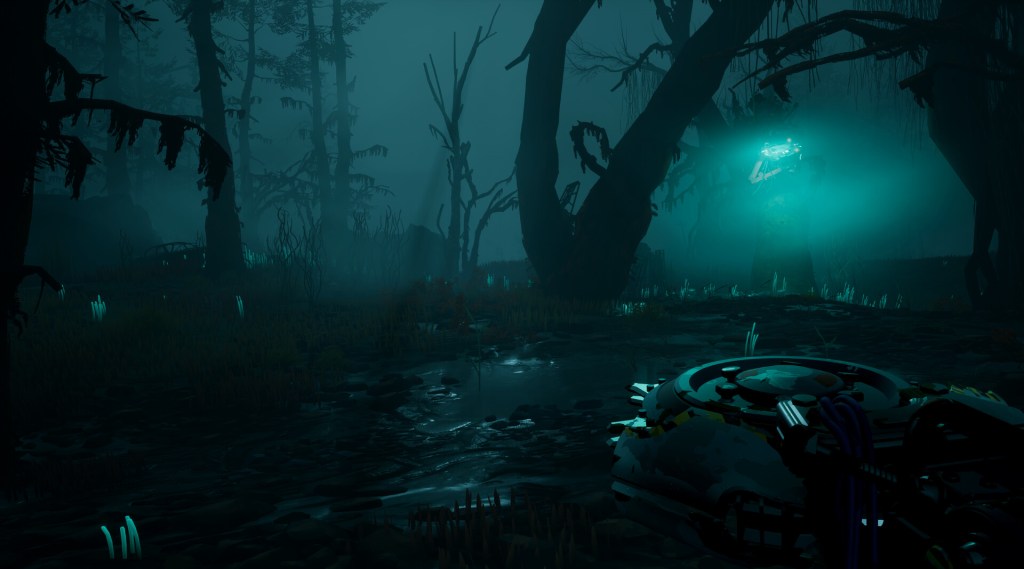
I appreciate that Pacific Drive was committed to environmental threats rather than enemies. You aren’t running from monsters, just avoiding puddles of radiation, explosive mannequins, and electrical towers. The hilly and densely forested landscape can make it a tricky problem to go off-roading to avoid these obstacles, but I enjoyed the environmental threats. Moreover, I think Pacific Drive does a great job at maintaining tension throughout the experience. The game never loses its teeth, even as you upgrade your car’s defenses. You always have to play cautiously and keep a watchful eye on your fuel, battery, and other resources to make sure you can make it back home.
I found that Pacific Drive had distinct issues in its beginning, middle, and end. The start of the game is arguably when the game is at its best. You are dropped into a terrifying world and have to figure out how to survive. Your car is a rinky-dink piece of junk that constantly needs its parts swapped and it struggles to go up a mild hill. You have to navigate through a variety of hazards and sci-fi phenomena to gather materials. Upgrades come fast and the learning process is fun, but I do think the game has some problems when teaching the player about its systems.
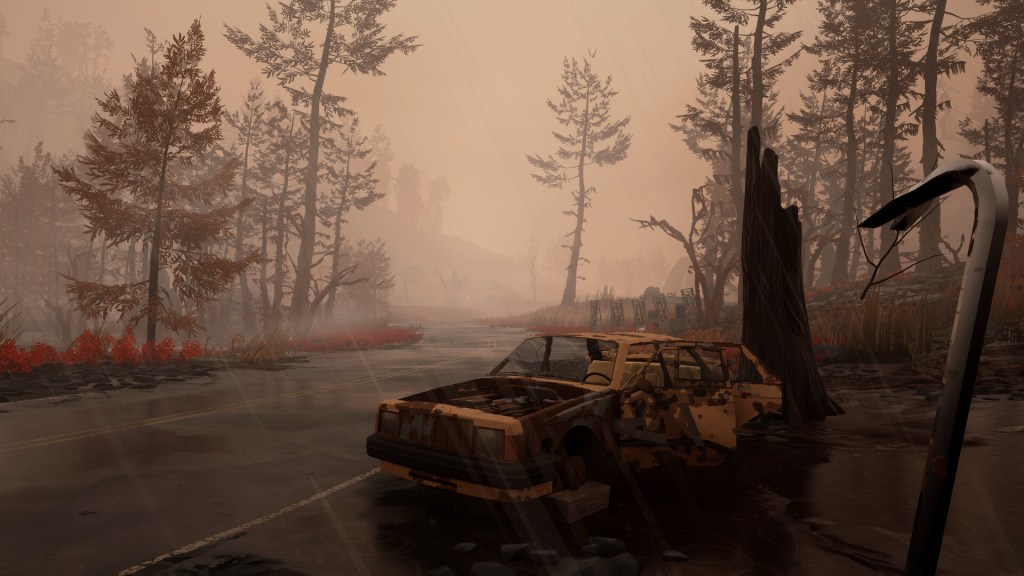
The game introduces you to 3 characters over radio who spend much of the early portions of the game technobabbling in your ear. Much of it is nonsense, some of it is story related, and a little of it tries to teach you how to play. But it’s hard to spend your brain’s bandwidth listening and discerning what is important while also anxiously navigating the world’s environment. The game is very punishing early on, and certain resources are exceedingly scarce. I was annoyed when the game encouraged me to fully repair all the car’s crappy components with the fairly expensive repair putty item. I also had no idea about the game’s “storm” system which encloses the map in extremely dangerous radiation if you take too long in any given area. It’s a good way to give some urgency to the player, but I don’t remember it being taught to me, maybe I missed it in the waterfall of technobabble. Regardless, I was enormously frustrated when my first encounter with the storm was an anomalous “fast storm” which closed faster than usual and caused me to die.
Once you’ve gotten comfortable in the world of Pacific Drive, you’ve entered the middle of the game. Despite how frustrating the beginning can be, the constant tension and process of learning and upgrading can be rewarding. The middle of the game is unfortunately far more repetitive. The game devolves into a monotonous cycle of collecting materials, returning to base, repairing and upgrading, and then doing it again. I get that this is the standard survival gameplay loop, but I feel that it’s particularly unrewarding in Pacific Drive. My favorite survival game is Subnautica, which has a mixture of upgrades, exploration, and story to keep the game interesting as you repeatedly dive for resources. Pacific Drive doesn’t really excel at any of those aspects.

After getting the basics at your garage and in your car, the upgrade system in Pacific Drive is a little underwhelming. I never felt particularly thrilled when I could finally upgrade my panels to gain some radiation resistance, or my doors to be insulated from a little electrical damage. These never felt like big momentous bonuses that would allow me to do things I didn’t do before. Just that it would give me a little protection when I made a mistake. I would have loved if upgrades fed more into exploration, but unfortunately the game’s roguelite format squanders a lot of opportunity there.
It would be phenomenal if there were areas that were in permanent thunderstorms that required components insulated from electrical damage. Or areas that were heavily radiated that needed lead shielding. And if those areas had huge rewards and lore drops it would be a great incentive to want to visit these areas. The game does have a single example of this, an area that is permanently shrouded in darkness that also rapidly saps electricity. I enjoyed planning for this area as it presented a unique challenge and made me think about what upgrades and tools I needed to bring. So much of the game is randomized and it results in many runs feeling same-y, I wish there were more zones that had unique layouts, anomalies, and conditions to plan for.
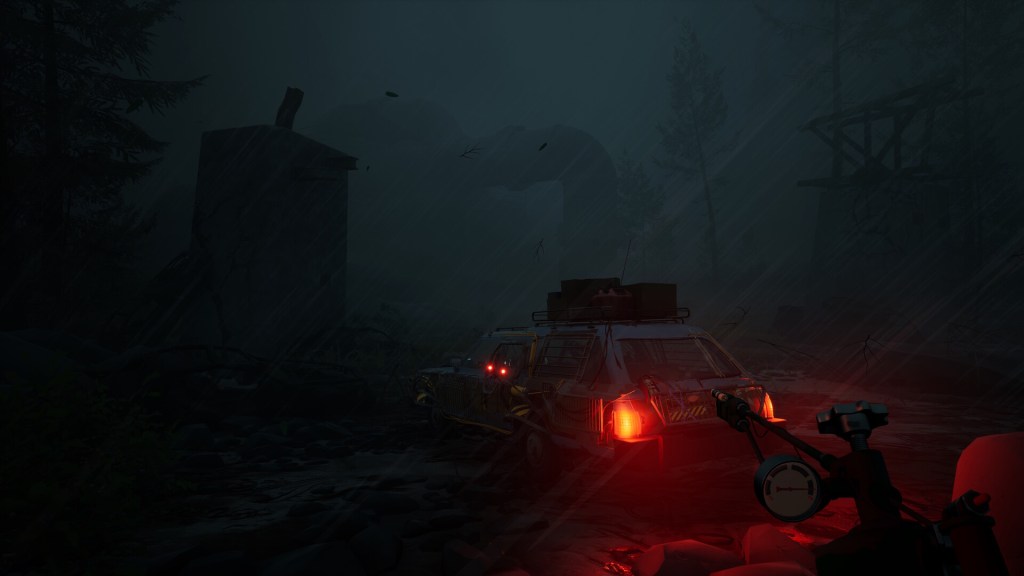
The late game of Pacific Drive is fairly short, which is probably a good thing because by the time I got there I was feeling burnt out on the gameplay loop. The final area is pretty tiny and there’s only one or two story missions there. I didn’t get a single late game upgrade because they weren’t necessary and by the time you get to the final zone, the game is basically over. Again, I’m actually kind of glad that this is the case because it’s a major pain to traverse all the way to the deep zone and I was already ready to be done with the game. My real issue with the late game is that the story has no climactic payoff. I wasn’t super invested in the story in the first place, but there are a few excellent and emotional moments building up to the finale. Things start to make more sense; you understand the characters more and get attached to them. But the actual ending just kind of… happens. It doesn’t really resolve most of the game’s major plot points and it ultimately just feels disappointing.
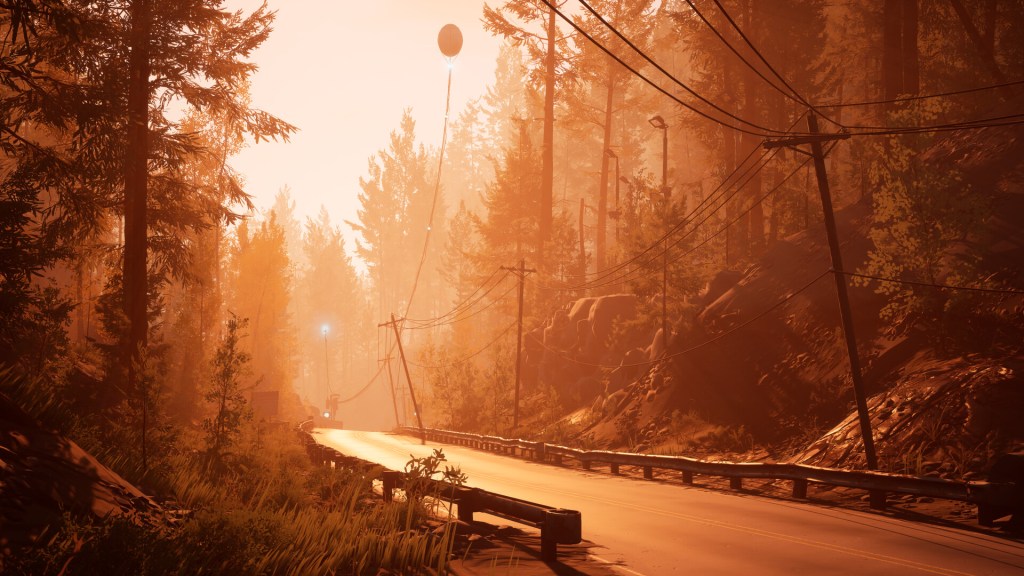
If I had my way, Pacific Drive wouldn’t be a roguelite at all. I still would like to play a version of this game where you don’t warp back to the same garage but instead drive across the Pacific Northwest on a long journey and try to find sanctuary in gas stations, rest stops, and cabins along the way. Regardless, I had other issues with Pacific Drive other than its genre. Some better teaching in the early game, better rewards and exploration in the mid game, and a better conclusion would have done a lot to make Pacific Drive more enjoyable for me. I will say that Pacific Drive does so much right. The atmosphere, the garage, the environmental hazards, the car’s handling, and the lonely vibes are aspects that I hope other games can learn from. It is for these reasons that I give Pacific Drive a 7/10. It’s not the game I expected, but I appreciated its unique approach to the survival game genre.
 stephensopinions
Pingback: Stephen’s Favorites of 2024 | stephensopinions