Cocoon is unlike any other puzzle game that I’ve played. It revolves around the brilliant idea of portable worlds that you can jump in and out of. Worlds reside within other worlds, and you can carry them around as if they were just trinkets. It’s a Russian doll of realities that you traverse through. But it manages to reign in the difficulty and makes its puzzles approachable. There’s a sense of Zen as you solve mind-bending puzzles and take in the magnificently alien world of Cocoon.
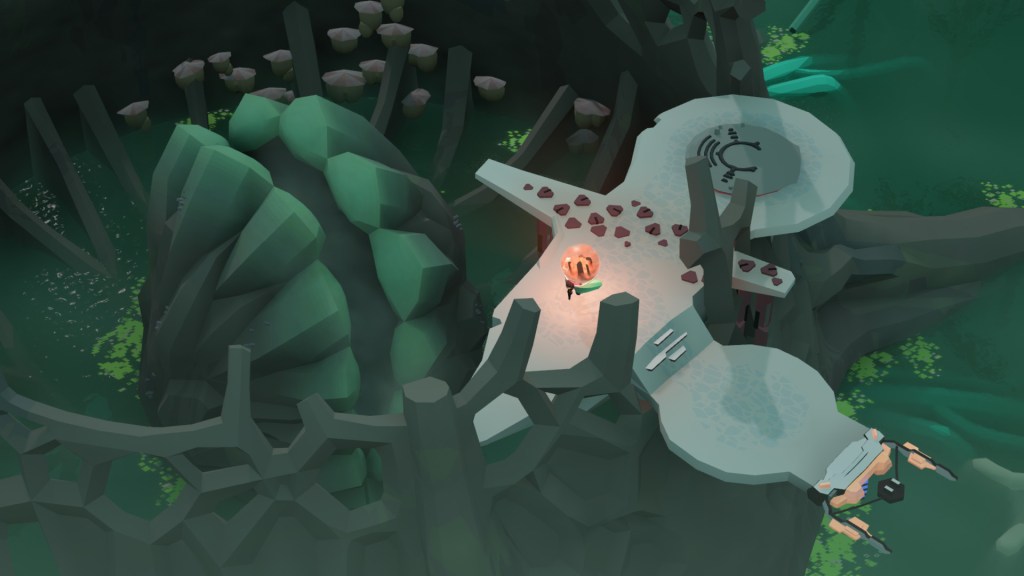
The main idea of Cocoon is that the player can dive in and out of these world-like orbs. You carry them around, using them to power machinery and progress forward. You solve a puzzle in one orb which lets you do something in a different orb which lets you exit the orb that contains them both. Each orb additionally has some power to use in puzzles as you carry it. Puzzles often have you jump in and out of worlds, carrying the orbs around and utilizing their properties to bypass obstacles. The world within a world within a world within a world nature of the orbs can be rearranged and reformed to fit your needs. It may sound confusing but Cocoon is intelligently designed to minimize frustration and confusion.
An interesting technique of puzzle design that Cocoon utilized was explicitly cutting off the player from backtracking once they encountered a new puzzle, so long as they had the required materials to progress. This minimizes the common confusion of spending a while staring at a puzzle and thinking you are missing something to proceed. Stopping you from going backwards is the game’s method of telling the player that the puzzle is solvable. It greatly reduces the frustration of backtracking or spending time messing with previous elements that have no bearing on the current puzzle.
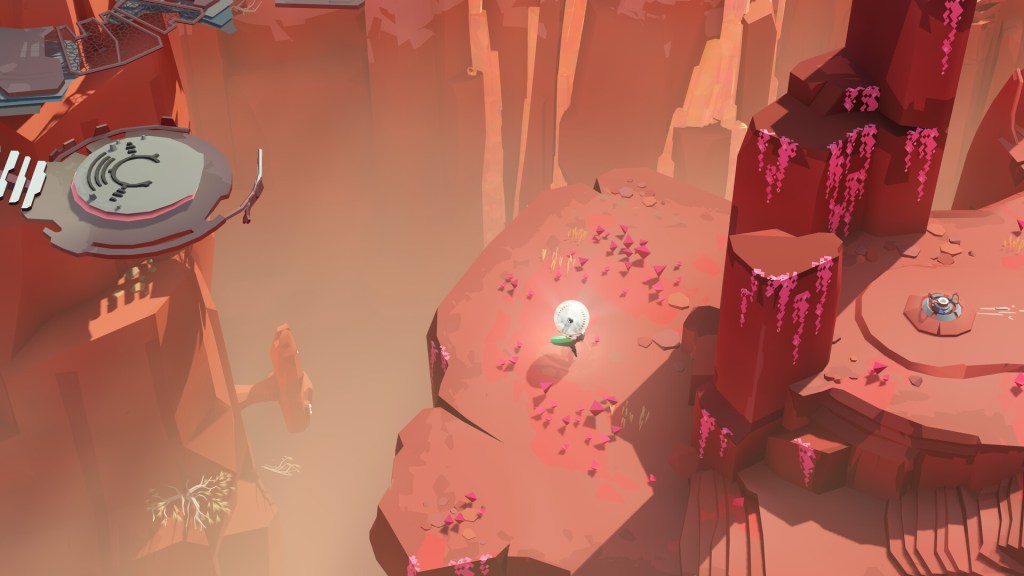
I found that the puzzles of Cocoon were never too challenging. This is in part because the game stops you from getting too far off track, but it’s mostly because the puzzle design is fairly simple. Despite the mind-bending world-hopping mechanic of Cocoon, the game rarely requires an intricate series of steps to progress. Often, a puzzle will introduce a new idea that highlights the game’s underlying mechanics. It begs the player to tinker around and experiment with how nesting worlds like a Russian doll could be used to solve its puzzles. There’s a lot of potential for some truly difficult puzzles, but Cocoon holds back on purpose.
If you love games that fully explore their main mechanics, Cocoon may not be what you are looking for. Instead, Cocoon focuses on letting the player progress and discover its world and mysteries without being hindered too much. There is still a sense of accomplishment and Cocoon does make you feel intelligent due to the innate complexity of its core mechanic. I love immensely difficult puzzle games like Baba is You and Stephen’s Sausage Roll. They squeeze every drop of creativity out of their central mechanics, asking the player to use everything they’ve learned in an intricate series of steps. Cocoon isn’t that. And that’s ok. Personally, I would’ve loved to see a few trickier puzzles along the way, but Cocoon has other things going for it.
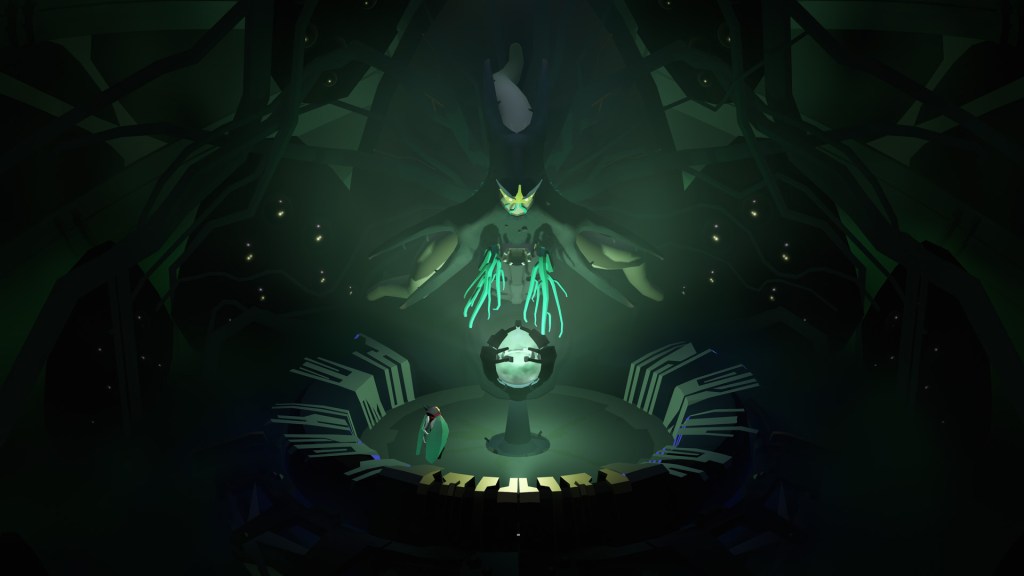
I loved the art and environmental design of Cocoon. You traverse a handful of different alien worlds, each being beautiful in its own right. There are alien contraptions and creatures that litter these worlds. I loved progressing through these worlds and marveling at their environments. Everything feels appropriately alien. The sound design uses echoing chirps and metallic groans that sound otherworldly. There is no written story in Cocoon, but there is some environmental storytelling to discover as you adventure through the orbs. I found the ending to be quite satisfying and it puts the entire journey into a new context.
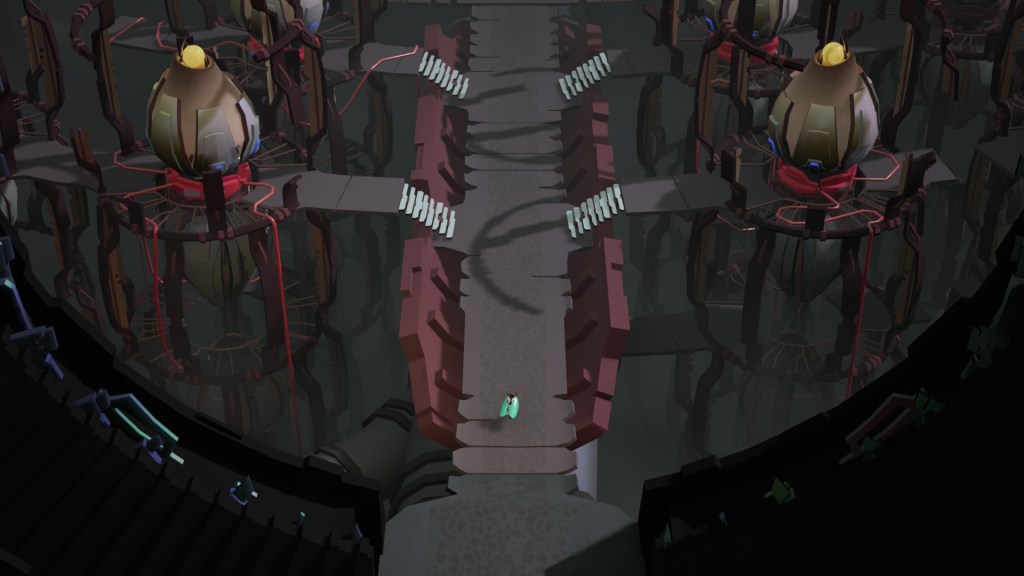
Cocoon may not be the longest or the hardest puzzle game, but it is one of the more memorable puzzle games that I have played. The truly alien setting paired with its world-hopping mechanics is immensely enjoyable. Its lower difficulty and stakes make for a fairly relaxing experience. That being said, I would have loved to see its mechanics potentially explored further in some challenging post-game content. It is for these reasons that I give Cocoon a 9/10. Cocoon is a phenomenal experience, even if it lacks some truly difficult puzzles.
 stephensopinions