We’ve waited nearly 30 years for the redemption of the 2D Super Mario series. I always found it odd that the last truly notable entries in the series were the Super Mario World games while the 3D Super Mario series has thrived with masterpiece after masterpiece of creative genius. But finally, there’s a return to form with Super Mario Bros. Wonder. Forgive my choice of words, but Super Mario Bros. Wonder is a wonderland of joyous ideas and imagination.
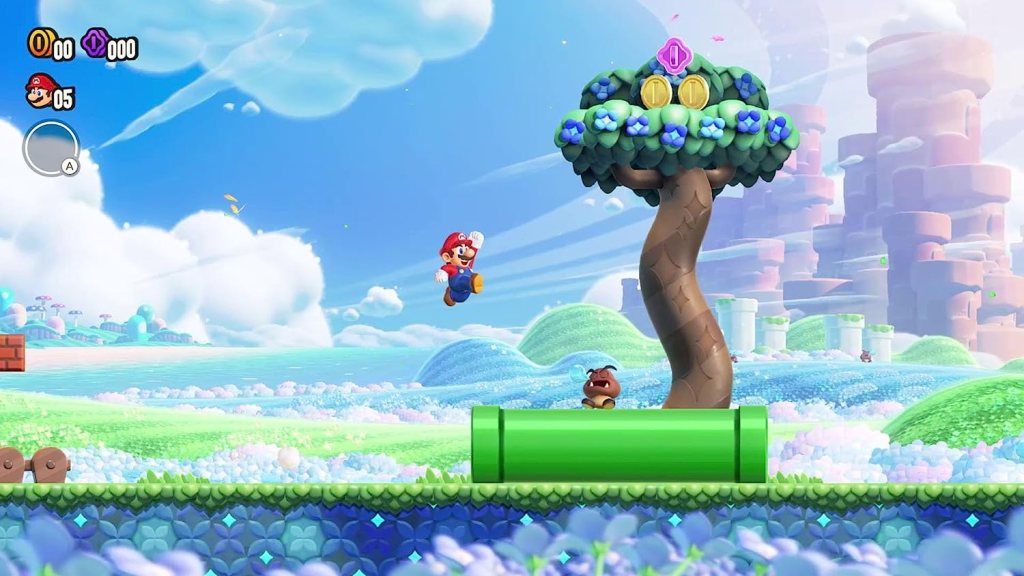
I don’t want to harp too much on the past, but I think context is important. The last four entries in the 2D Super Mario series have been labeled as New Super Mario. These titles have been criticized for being remarkably similar to one another and lacking any sort of major innovation. While being serviceable platformers, they lacked the magic that Super Mario is known for.
With Super Mario Bros. Wonder, the magic is back. There’s an unparalleled level of creativity on display here. Nearly every single level introduces a new idea. It doesn’t dwell on any single mechanic, but each one goes through a natural progression over the duration of a level. Whether it be a new enemy, new obstacle, or a new gimmick, Super Mario Bros. Wonder takes care to let the player safely interact with its ideas before amping them up. But as the level progresses that idea gets elevated and asks more of the player, and it culminates in a final crescendo: the Wonder Flower.

The Wonder Flower serves as the key mechanic in Super Mario Bros. Wonder. Every single standard level in the game has one, and they are wildly imaginative. Towards the end of every level, you can grab the Wonder Flower which transforms the level into something else entirely. Pipes come to life and wriggle around, Piranha Plants leave their pipes and sing, Mario turns into a fast-rolling ball of destruction, and that’s just the beginning. They are all wacky ideas that don’t fit in the classic Super Mario world that we know, but the nonsensical fun and unexpected surprise in every level is glorious.
Super Mario Bros. Wonder is so jam-packed with creativity that it’s absurd. Just the base levels are plenty of fun on their own. Most levels introduce something entirely new to center its design around. And the Alice in Wonderland-esque nonsense that’s triggered when you grab a Wonder Flower serves as a bombastic evolution of the level with wondrous visual effects and marvelous mechanical switch-ups. I couldn’t wait to see what each level had in store for me, and I was always eagerly anticipating what the Wonder Flower would do next.
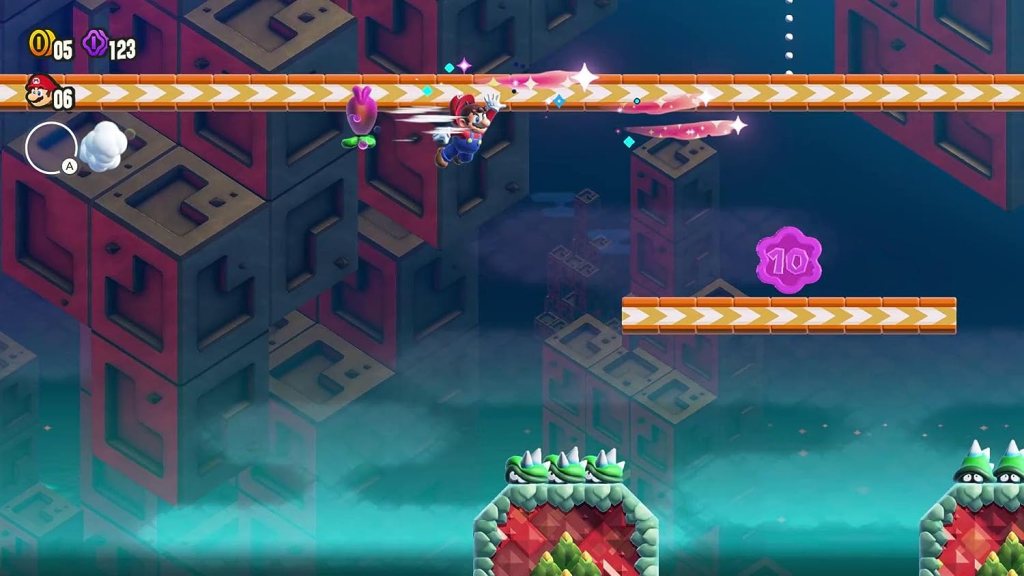
Apart from the level design, Super Mario Bros. Wonder lets the player express their own creativity with badges. You can equip a single badge to augment your abilities. Some of them provide simple passive bonuses like extra coins or a free power up, others give some additional abilities like being able to glide in the air briefly or get a small height boost when twirling. But there are also a few badges that majorly augment the way the game is played by having you bounce around like a spring, constantly run at high speed, or be invisible. I think the badges are fun options to mix up your abilities. They are never necessary outside of the occasional badge challenge level, which I appreciated. I stuck with a passive badge for most of the game as I felt the action badges would make the game too easy, but I appreciate that they exist for players who do want to have an additional ability. But I did love how badges were utilized for one-off challenges.
In between the non-stop barrage of creative levels there’s the occasional shorter bout. These can be combat focused K.O. arenas, short challenges utilizing badges, search party levels, a Wiggler race, or a celebratory break time. These are all fun little side missions to break up the longer courses. The badge challenges were my favorite as they serve as miniature training grounds to master using a specific badge. The only variant of these bite-sized levels that I didn’t enjoy were the search party levels in which the player has to probe the level for invisible secrets. I think these are meant to be played with friends, but as a solo player it leads to just a lot of jumping around for minutes at a time trying to find hidden blocks.
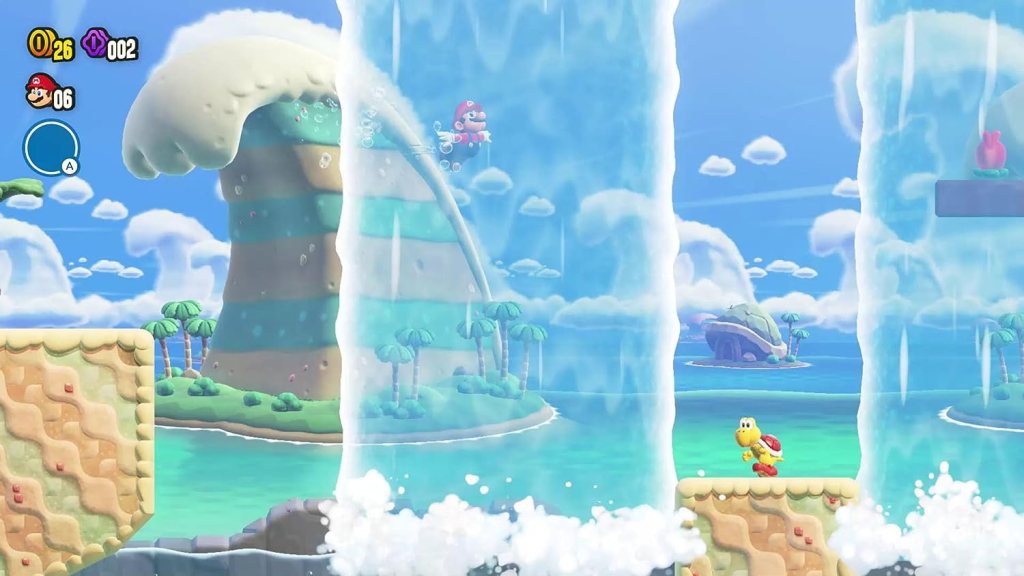
There’re only a few search party levels so it is not a particularly big issue. In fact, most of my complaints about Super Mario Bros. Wonder are very minor. I thought that the boss fights were a little underwhelming and could’ve made better use of Wonder Flowers. Additionally, while I enjoyed the themed overworld and searching for secret levels, I wish that more courses had secret exits like in Super Mario World. And the little flower guys that are in every level can be annoyingly positive and their plainly spoken English feels out of place in Super Mario.
All of these gripes are minor. The only major thing that I would’ve loved to see in Super Mario Bros. Wonder was some more post-game content. There is a special world with some fantastic levels, but I wanted more of them. These levels were more challenging than the main campaign and often combined Wonder Flowers, badge challenges, and tricky design to make for some highly engaging levels. All things considered, if my biggest complaint about the game is that I wanted more of it, then that’s a pretty good indication of its quality.
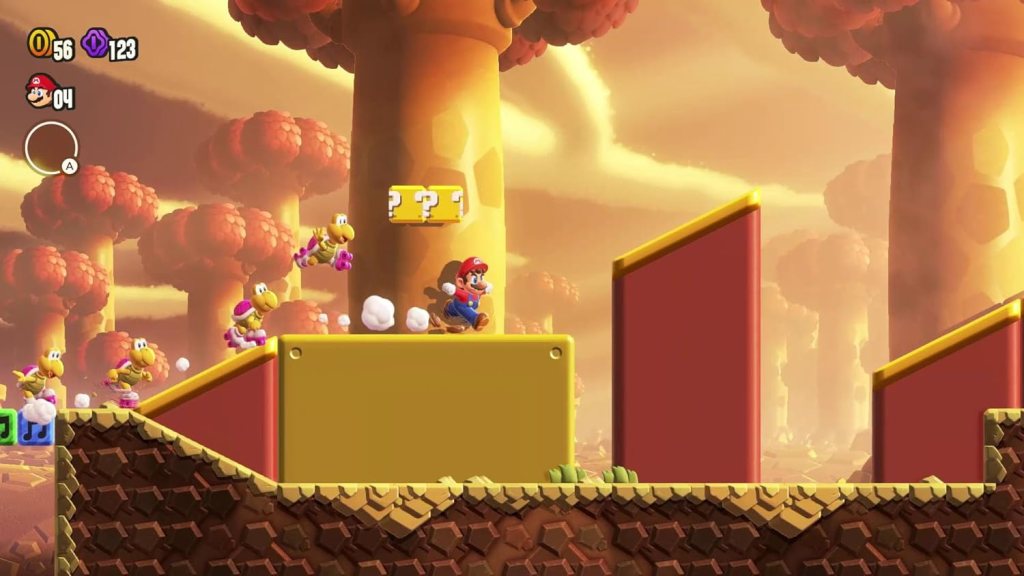
I was blown away with how consistently imaginative Super Mario Bros. Wonder was. It’s crammed with tons of brand-new ideas and tricks, and that’s before even touching the Wonder Flower. This is the first time in decades that a 2D Super Mario game has captured the magic, sense of joy, and creativity that oozes from its 3D counterparts. I just couldn’t put down this game, it was a platforming joyride the whole way through. It is for these reasons I give Super Mario Bros. Wonder a 9.5/10. If this is the direction for future Super Mario titles, I am ecstatic and am eagerly awaiting the next release.
 stephensopinions