As a fan of FromSoftware’s catalog, Demon’s Souls has long been my white whale. Dark Souls is in contention for my favorite game of all time, yet I never got the opportunity to play its predecessor. Being the progenitor of one of the most successful and influential franchises of games makes Demon’s Souls an incredibly important title. Yet, the original game has only ever been released on the Playstation 3. Which is why I was so excited about the remake of Demon’s Souls, bringing it to the Playstation 5. I really did want to play the original game first before reviewing the remake to compare the differences, but unfortunately, I didn’t get the chance. From what I can tell, this is a faithful recreation of the game, including all the weird, archaic, and unforgiving ideas that were removed from subsequent Soulsborne games. And I love Demon’s Souls for that.
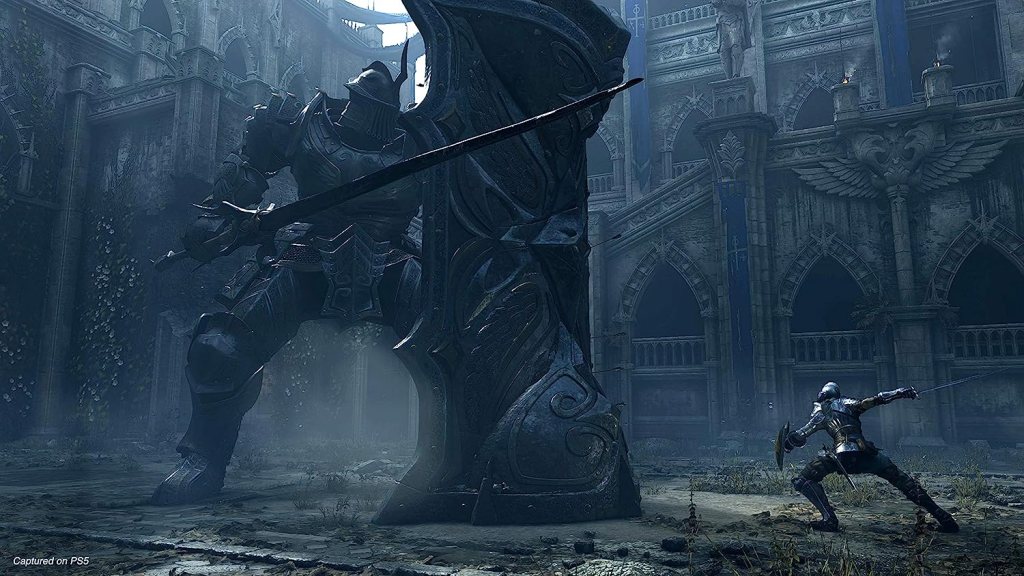
I think Demon’s Souls unfortunately has a bad reputation for being a bit unforgiving with its design. There’s a lot of mechanics and ideas present in Demon’s Souls that never carried over to its successors, and many claim that is for the better. But I feel like playing Demon’s Souls was refreshing. There are many aspects of Demon’s Souls that I wish would make a return in modern releases, especially after playing Dark Souls III and Elden Ring. In short, I felt as if Demon’s Souls was a far more cerebral game, opposed to later titles which rely more on fast-paced action. Demon’s Souls is unforgiving and punishing, leading the player to be cautious and think carefully about their next course of action. To compliment this, combat and bosses are generally far easier to mechanically execute, as long as you come up with a reasonable strategy. What really makes Demon’s Souls shine is how its unforgiving nature contributes to its impeccable atmosphere and worldbuilding.
The world of Demon’s Souls is surprisingly grounded. With many of FromSoftware’s games, I take in the world and its locations, but I’m not quite sure how it all fits together due to the obscured nature of the storytelling. Demon’s Souls only ever lets the player have a fragmented understanding of the world, but I found it enthralling. There are five main locations that the player can visit, and each one is supplemented by some short text passages on their entrance. These brief backgrounds, along with environmental storytelling, were enough to make sense of their respective locales.
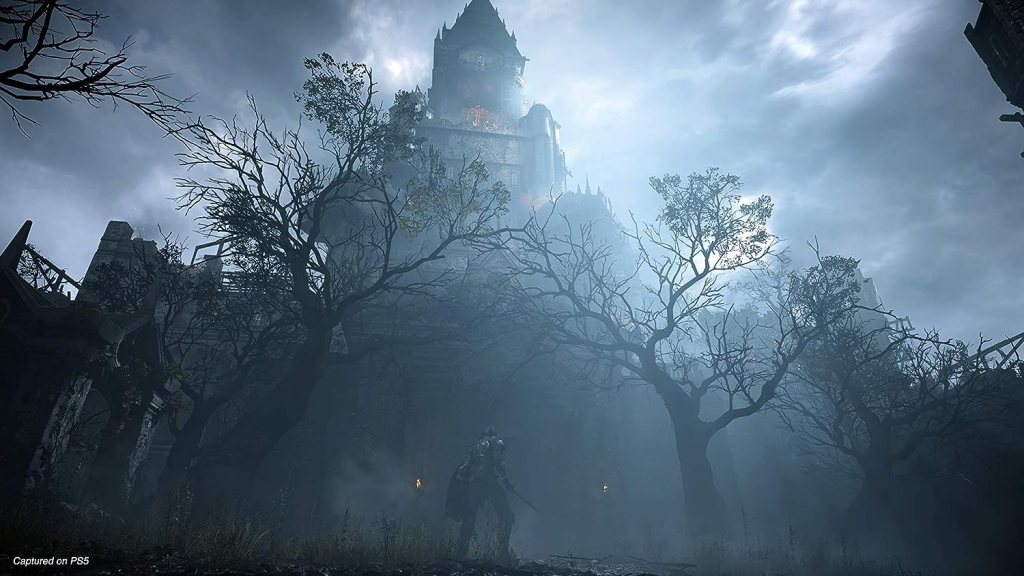
Take the Valley of Defilement for example. It’s a narrow valley with poisonous sludge at its base. Its inhabitants have resorted to rickety shacks on the ledges and in the crevices of the walls. Narrow planks that overhang the darkness are the streets of the shoddily built shanty towns. The creatures who live here are all but forgotten, left to suffer in this vile mire. Yet, they make due. They defend their home, using its dark crevices as an advantage to sneak up on invaders. And they do so because the saintly Maiden Astraea lies at the heart of the swamp, and she has resolved to free the valley’s souls of suffering. They worship her, and she protects them. Through almost purely environmental storytelling, Demon’s Souls paints a vivid image of its world and how Valley of Defilement came to be what it is. It’s not just a dirty swamp of vile monsters for the player to slay, it’s a fully realized location that makes sense.
Demon’s Souls is often maligned for being unforgiving, but I don’t think this is an entirely fair perspective. I think the unrelenting challenge and inconveniences are crucial to building tension. The lack of checkpoints is often seen as inconvenient and tedious, but I think that having long gaps between safety is critical in a grim game such as Demon’s Souls. Each level only has a single checkpoint at the start, and many levels open up a shortcut or two as the player progresses. But even the shortcuts never lead directly to the boss. There’s always obstacles and danger blocking your path. I think this is fantastic because it ups the anxiety and tension of exploration and combat. A single misstep means you have to repeat large chunks of the level. This also encourages the player to not only to defeat enemies, but to master besting them in combat so that you can repeatedly bypass them. The added pressure of death works wonderfully with the boss battles in Demon’s Souls.
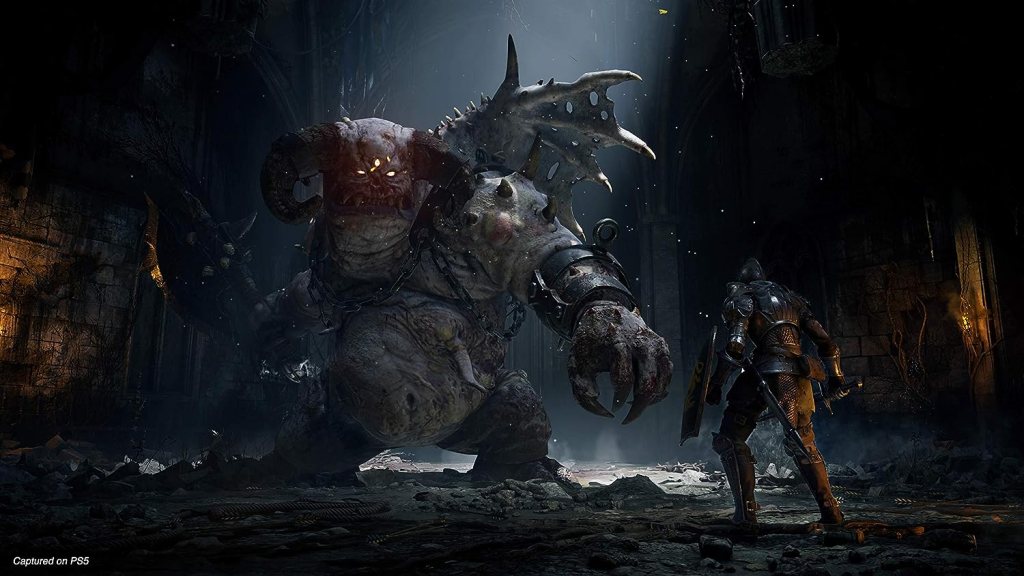
I frequently read that Demon’s Souls has the worst bosses in the series because they are easy and often gimmicky. But I disagree. The bosses are easier to execute then later games because they have fewer attack patterns and generally attack in a slower, more telegraphed manner. But many of the bosses have a trick to them that the player has to figure out. They have unique arenas, weak spots that must be focused, or potent attacks that you have to figure out how to counter. While it’s true that the bosses may be on the easier side, I think each one provides a unique experience that is distinct and memorable. Moreover, easier bosses make sense when the player has to overcome a gauntlet of challenging enemies just to give the boss another shot. It would be enormously frustrating to have to replay the whole level dozens of times because the boss is monstrously difficult.
I think over the years Soulsborne has focused on making bosses more and more difficult. While games like Elden Ring nail the spectacle of boss fights, I do think they often go too far with the bosses moveset. Demon’s Souls bosses are relatively simple in comparison, but I find them to be more memorable because they are all so different. Not just visually different, but mechanically different. While there are some straight up one-on-one duels, there is often more to contend with than just the basic combos that the boss can throw out. The bosses having a “gimmick” is what makes them interesting and memorable.
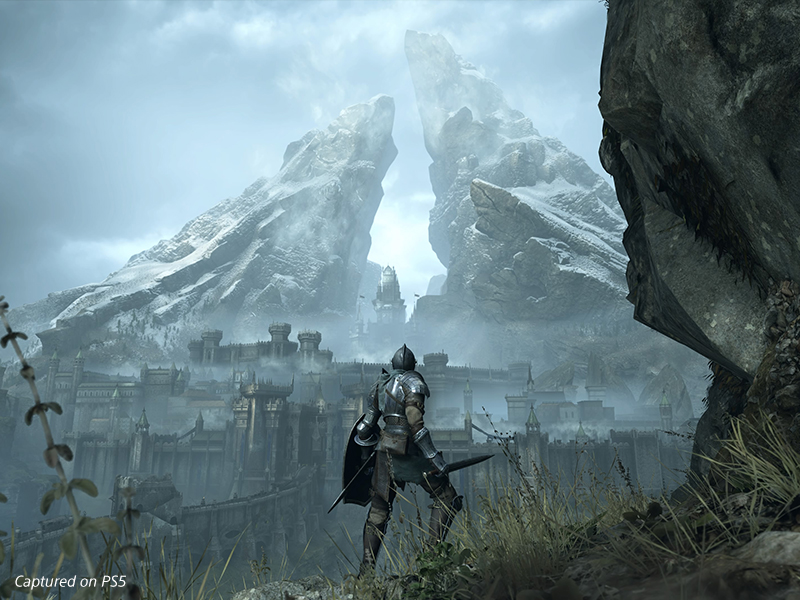
Not every fight should follow the routine of learning how to dodge every attack the boss has, finding safe times to attack, then getting a hit or two in. Variety is what keeps the game fresh and interesting. While fast-paced duels are often the pinnacle of boss fights, they are even more impactful and memorable if they are kept as an occasional treat. Having some more “gimmicky” fights interspersed throughout the game is a breath of fresh air. And Demon’s Souls bosses are memorable because they behave so differently than many other bosses in the series.
While I do love Demon’s Souls eccentricities, there are some aspects of the game that do feel archaic. The most obvious example is the healing system. In Demon’s Souls, the player collects a variety of consumable moon grasses which restore health. These are collected through exploration, combat, or you can straight up purchase them from certain merchants. While I do think it’s a good idea to limit how much the player can heal, it’s too easy to abuse this system. I often carried dozens of moon grass items, so as long as I didn’t make an egregious mistake I could always heal up to max health with little threat. Conversely, worse players may often run out of moon grass and have to farm enemies to replenish their stock, which is obnoxious. Dark Souls immensely improved on this by only providing a few chugs of their healing flask per checkpoint. That way, players would never have too much or too little.
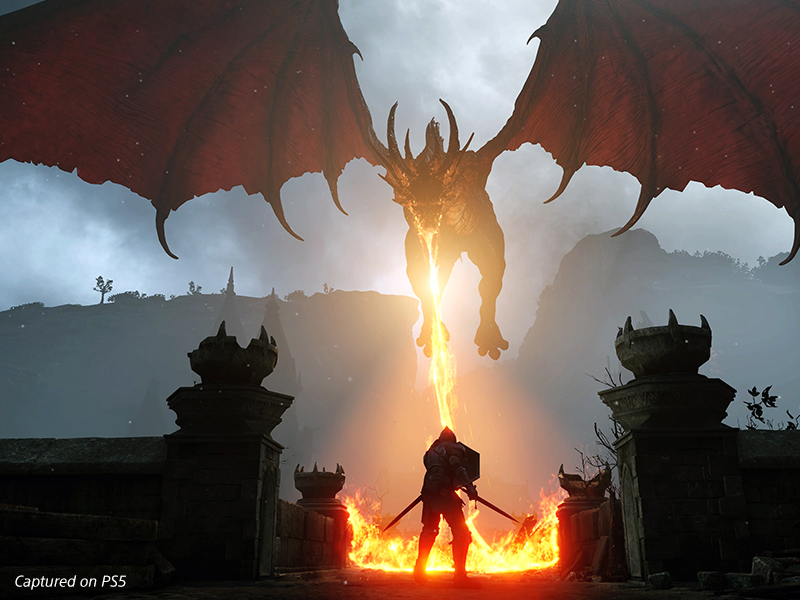
Demon’s Souls has a unique mechanic which changes the world depending on your actions, called tendency. I think this is actually kind of a nice idea, but its implementation is esoteric. Good actions will make your tendency “white”, while performing bad actions skews it towards “black”. Certain secrets open up depending on your tendency, enemies may get stronger but provide better rewards, and there may even be additional enemies. My issue is how poorly explained this all is. It’s very easy to unknowingly perform an action which makes you move towards black tendency, which ultimately makes the game more difficult. I suppose the learning process can be seen as fun and interesting, but mending your tendency after it plummets is unreliable.
There are a few other archaic systems in Demon’s Souls such as the upgrade system and inventory encumbrance that I don’t want to delve too deep into. But an area that I do think is important to discuss is what FromSoftware is famous for: world and level design. The levels of Demon’s Souls are actually quite condensed, which I think is a positive. It’s tempting to fully explore each area because of this. Mechanically, I also think that the levels are quite good. There’s a variety of scenarios and encounters that the player has to not only use their skills to overcome, but to use their brain as well. There’s a lot of traps and obstacles that encourage caution and thoughtful exploration.
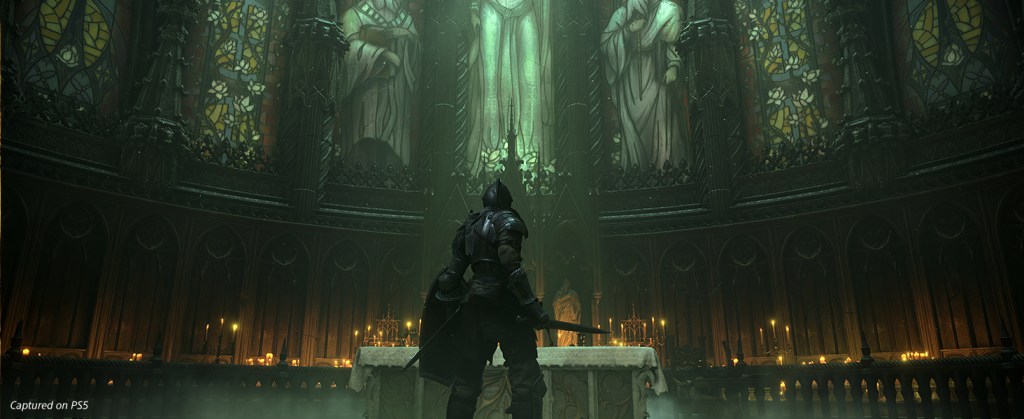
I do think that Demon’s Souls shows its age a bit in some of its levels. There is an abundance of narrow corridors, ledges, and groups of enemies that show the weaknesses of the game. Combat is stunted in cramped spaces like corridors and ledges because your weapon often hits the wall instead of enemies. I get the realism factor here, but enemies don’t seem to follow this rule and inherently have an advantage in these spaces. Furthermore, groups of enemies are famously difficult to deal with in Soulsborne games, and Demon’s Souls has a ton of these groups. The slower pace of combat doesn’t work well when you have to contend with many foes and it’s easy to get stunlocked into death.
As for the world design of Demon’s Souls, I quite enjoy the areas individually but I wish they were not completely disconnected from each other. There are five major areas in the game, each with a handful of levels. But these major areas are not connected with each other, the only way you can access them is through the hub area. I think this is unfortunate in a game that otherwise is impressively immersive. Constantly sitting in load screens and fast traveling around is just not nearly as captivating as having a singular, connected world.
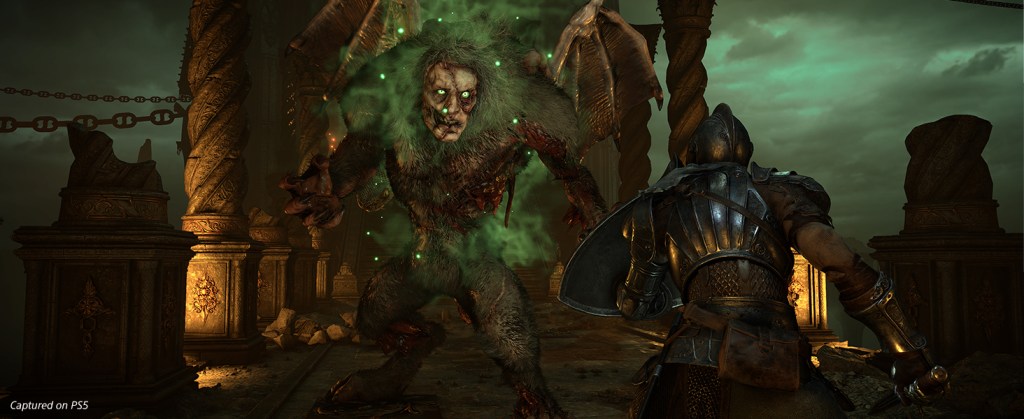
As previously mentioned, I haven’t had the opportunity to play the original game so my perspective on Demon’s Souls as a remake is limited. From my research, it seems as though the gameplay is extremely faithful. Visually, the remake is stunning. However, when compared to the original game’s environments, the remake is showier. The simple Eastern European style simple castles are more ornate. Moreover, the sun beams and impressive lighting do impose a sense of grandeur that wasn’t present in the original game. Gone is the dirty and eerie faint glow of lighting. I don’t think the visual differences are a huge deal as the atmosphere retains its somber mood. I think the bigger change is the music.
After listening to both soundtracks, I think it’s a shame that the spirit of the original was lost in the transition. Particularly in the boss fights. As previously mentioned, the boss fights in Demon’s Souls aren’t always epic one on one duels, many are somber, depressing, or disturbing. The original soundtrack captures these differences quite well. The Fool’s Idol piece is a stark example of how drastically the music was changed. Don’t get me wrong, the music is beautiful. But not like every boss fight needs to be a grand duel, not every song needs to have a dramatic choir with full orchestral backing.
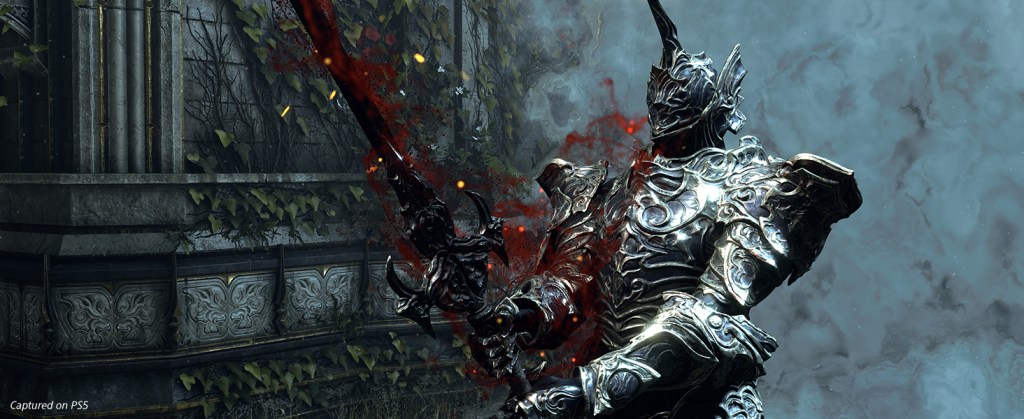
Playing Demon’s Souls put the whole series in perspective for me. It makes me long for a time where Soulsborne games emphasized memorable experiences rather than just difficult ones. Conversely, Demon’s Souls also made me realize how far the series has come. There are many archaic and esoteric aspects to Demon’s Souls, and I am glad that the remake let me experience it all faithfully. It is for these reasons I give Demon’s Souls an 8/10. I encourage everyone to give Demon’s Souls a fair shot. It was a risky title when it was originally released, and not every idea was a hit, but there’s a sense of magic and authenticity that arise from the game’s bold choices.
 stephensopinions