Ori and the Will of the Wisps is a rare case of a sequel that not only improves upon its predecessor, but also maintains the identity of the original. There’s no denying that Ori and the Blind Forest was an excellent game that influenced the indie industry. However, it had a few quirks like its saving system and underwhelming combat that could definitely use some improvement. Not only does Ori and the Will of the Wisps accomplish this, but it also establishes its own uniqueness that blends beautifully with what came before.
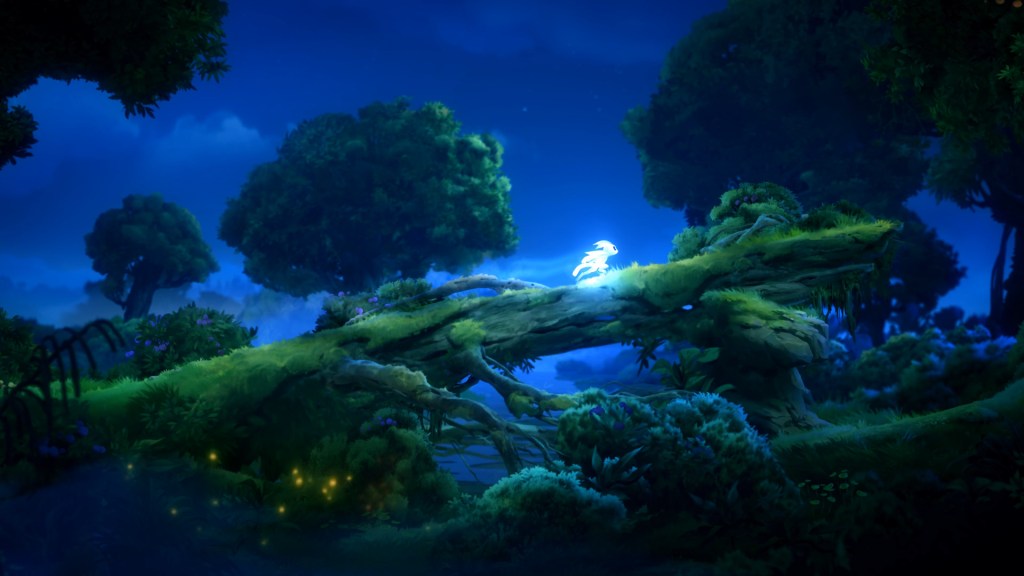
Taking place in a new land, Ori and the Will of the Wisps is remarkably similar to Ori and the Blind Forest narratively. The world that you inhabit is dying, as the light of the forest has been snuffed out. While Ori sets out to rescue their companion and restore life to the forest, a villain is intent on maintaining the darkness. Honestly, I was a little disappointed with how beat-for-beat Ori and the Will of the Wisps follows the original game in its narrative flow. Fortunately, Ori and the Will of the Wisps makes up for this with an abundance of charm.
I’m a sucker for a good hub in any game. Delfino Plaza, the Normandy, Firelink Shrine, Peach’s Castle, I love when there is a cozy space that feels like home. One that evolves and is bustling with characters. Ori and the Will of the Wisps has its own central hub of Wellspring Glades. This town serves as a safe-haven and last refuge for the creatures of the forest. As you resolve quests and spend resources, the town begins to become an active community full of life. I absolutely loved spending time in Wellspring Glades, and I was driven to restore the town and make it thrive.
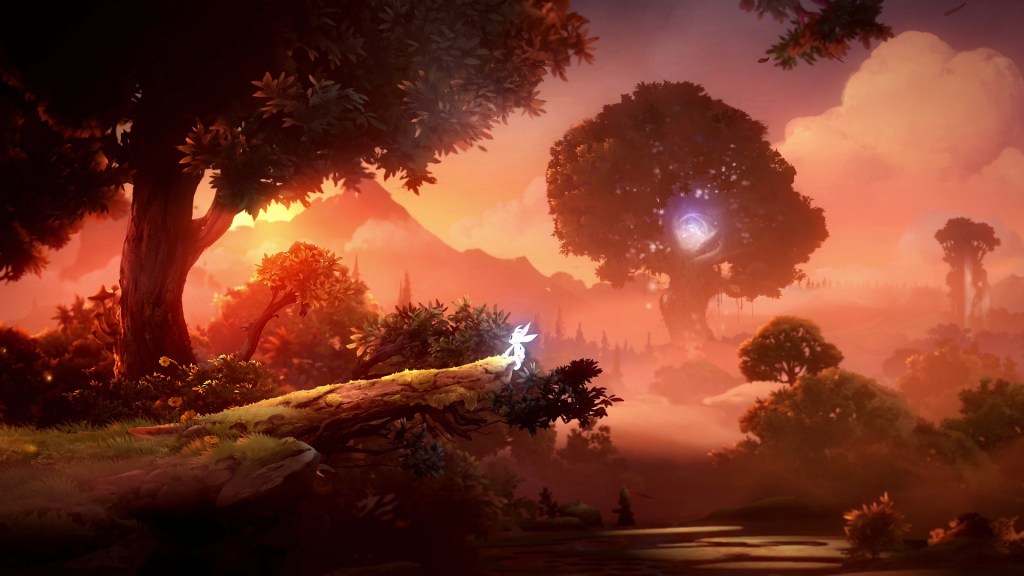
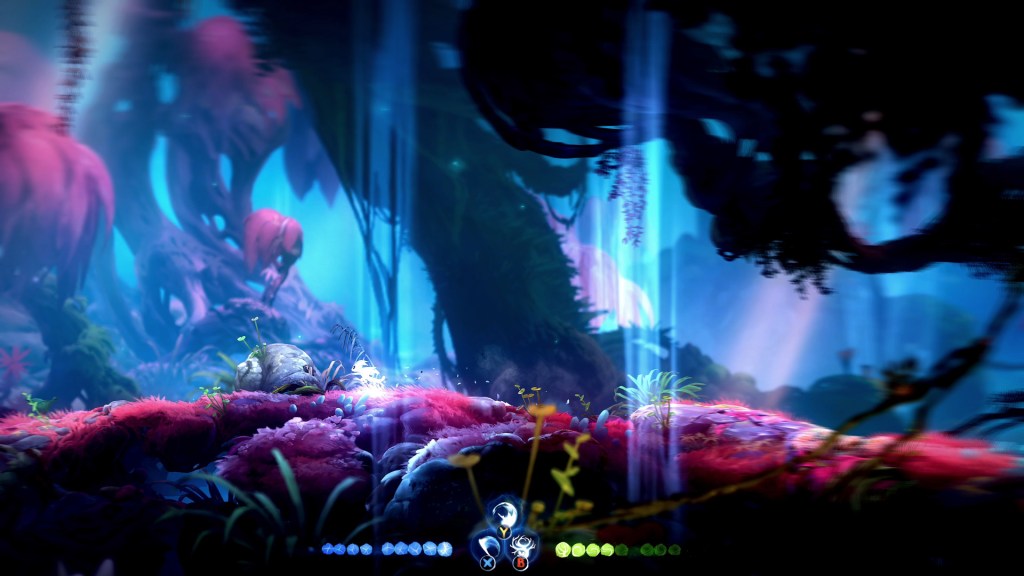
The charming appeal of Ori and the Will of the Wisps is also assisted by the stunning visuals and environment design. Somehow, the game looks even more lush than Ori and the Blind Forest. But what I found more important was how varied and unique the main areas were. I had to stop and admire the giant watermill looming in the background. Finally reaching the structure and delving inside to unblock the mechanism was an exceptional adventure. Areas like the tropically lush Luma Pools and arid Windswept Ruins are as visually interesting as they are mechanically. The integration of aesthetics and gameplay is extraordinary.
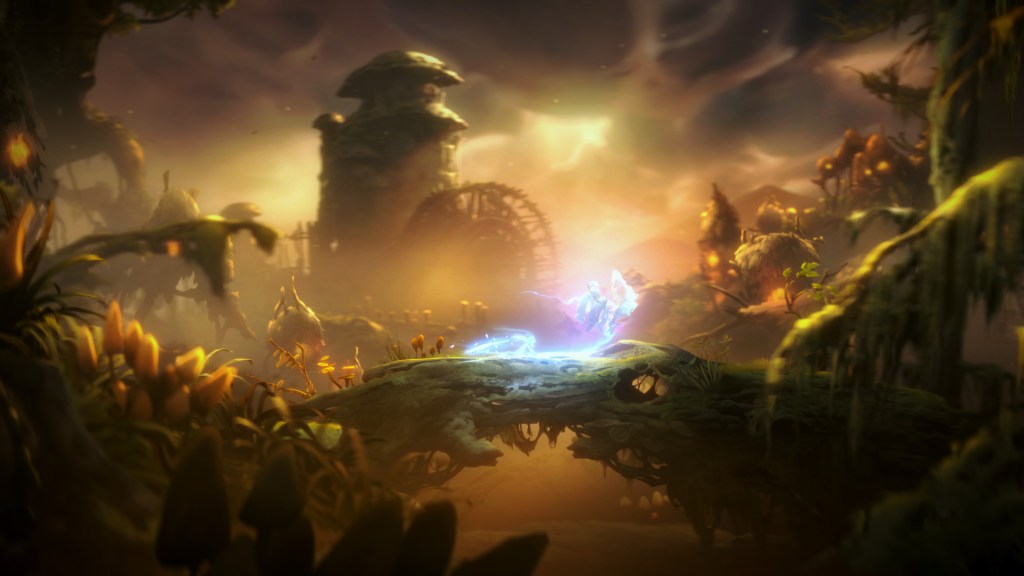
While bringing back all the classic abilities such as the iconic Bash, Ori and the Will of the Wisps also introduces a whole new arsenal of skills to master. They are cleverly designed as to be cohesive with the locale that they are unlocked in while also pairing well with existing abilities. For example, in the desert you unlock the ability to dive into pits of sand and burrow quickly through them like a missile. This leads to some exciting platforming sequences in which you juggle between using Bash and Burrow to quickly traverse obstacles and maneuver nimbly through the desert. The possibilities to be creative and combine Ori’s abilities to string together impressive agility feats is fantastic. To test your mastery of your moveset, the designers intelligently included optional time trials throughout the game, which I absolutely love.
While Ori and the Will of the Wisps retains the engaging nimble platforming that its known for, the developers greatly increased Ori’s combat arsenal as well. Instead of spamming targeted beams of light, the player has access to a few different weapons. There’s a decent variety of ranged and melee options, which is great for letting the player determine what playstyle suits them best. Personally, I quite enjoyed using big hammer to wallop foes and send them flying. Even though I originally didn’t think that Ori and the Blind Forest needed combat, it certainly is a ton of a fun to pulverize enemies and run circles around them using Ori’s innate agility.

With combat comes the occasional boss fight, which is something that was absent from the Ori and the Blind Forest. But don’t fret, the adrenaline pumping escape sequences also make a return. I really love that the designers had both of these events to serve as a climax to any given area. You never know if you’ll be thrown into an arena with a boss, or if you need to focus for a thrilling chase.
The other direct improvement upon the original game is the removal of the decide-for-yourself checkpoint system. While I think it was an intriguing idea, the player has no idea what will be thrown at them next so they are a poor judge of when its appropriate to create a checkpoint. That’s why the inclusion of a standard checkpoint system is welcomed in Ori and the Will of the Wisps, as the designers have foresight and understand the right spacing and placing of checkpoints.
I think its necessary to mention that Ori and the Will of the Wisps takes a lot of queues from Hollow Knight. I think in some places it was unnecessary, but in all honesty, I think most of the adoptions were net positives. The removal of experience in exchange for badges, the hub town, the inclusion of quests, and the character who sells maps were all obviously inspired by the success of Hollow Knight. But the beauty here is that Ori and the Will of the Wisps and Hollow Knight, despite being metroidvanias with a few similar systems, are very different at their core.
Ori and the Will of the Wisps is vibrant and colorful, and is mostly concerned with fast-paced platforming with a hint of combat. Hollow Knight is a lot darker, and while it does have a couple of difficult platforming sections, the game is known for its boss fights. So, it doesn’t feel like Ori and the Will of the Wisps is aping Hollow Knight. Instead, all these features dramatically improve on an important aspect of the game: exploration.

Exploration is obviously vital in any metroidvania, and Ori and the Blind Forest did lack in some of its rewards and motivation to probe players into wanting to discover more. This felt completely solved in Ori and the Will of the Wisps, due to many of the systems that the designers took inspiration from Hollow Knight from. The badge system is far superior to experience, as it provides the player with more interesting rewards aside from some currency to be spent on upgrades. Experience still exists alongside badges, but it goes a long way to know that the possibility of uncovering a powerful and unique badge is present when you are exploring.
The reward that motivated me the most were the materials used to repair the hub town of Wellspring Glades. As I said, I loved the town and its cozy atmosphere. Naturally, I was excited whenever I discovered more ore or special seeds, as that could be used to improve the town. Ore lets the player build more houses and repair structures so that creatures can return. Additionally, special seeds can be planted to allow the player to use their traversal abilities to dash and swing around the town, reaching new heights and uncovering secrets. Helping restore the town serves as a functional reward as it grants experience, badges, and shortcuts. But more importantly, it’s the intrinsic reward of seeing this community grow and thrive that warms the soul.
The only major issue that I had with Ori and the Will of the Wisps was the performance. Even three years after its release, I had a few instances of stutters and momentary freezes. This mostly happened if I was zipping from screen to screen too quickly. Unfortunately, I also encountered a couple crashes. While not a pervasive issue, it still is an unwelcome occurrence that happened too many times to dismiss.

I was thoroughly impressed with how Ori and the Will of the Wisps managed to maintain its identity as an Ori game while simultaneously establishing tons of new ideas and mechanics that clashed with the first game’s design philosophy. I am ecstatic that the designers were able to ditch what didn’t work, build on what did work, and introduce brand new ideas that blend wonderfully with the existing mechanics. It is for these reasons that I give Ori and the Will of the Wisps a 9/10. Ori and the Will of the Wisps is an absolute joy, and I can’t believe that I waited as long as I did to experience it.
 stephensopinions