Ori and the Blind Forest (2015)

It’s no shock to anybody that metroidvanias are an incredibly popular genre in the indie world. But a title that stands above all as a paragon of quality is Ori and the Blind Forest. Every aspect of the game is cohesive. You are the lone forest spirit Ori, and you must revive the dying wilderness which was once a vibrant habitat for all manners of creatures.
Ori and the Blind Forest is not a game with a heavy emphasis on storytelling. Aside from a couple short sequences at the start and end of the game, there is not much focus on the narrative aspects of the game. While the story does pull on the heartstrings, I think it was a great decision not to lean heavily on dialog or cutscenes. You are the last spirit of the forest, and you have to traverse a hostile environment to recover the light which sustains the forest.

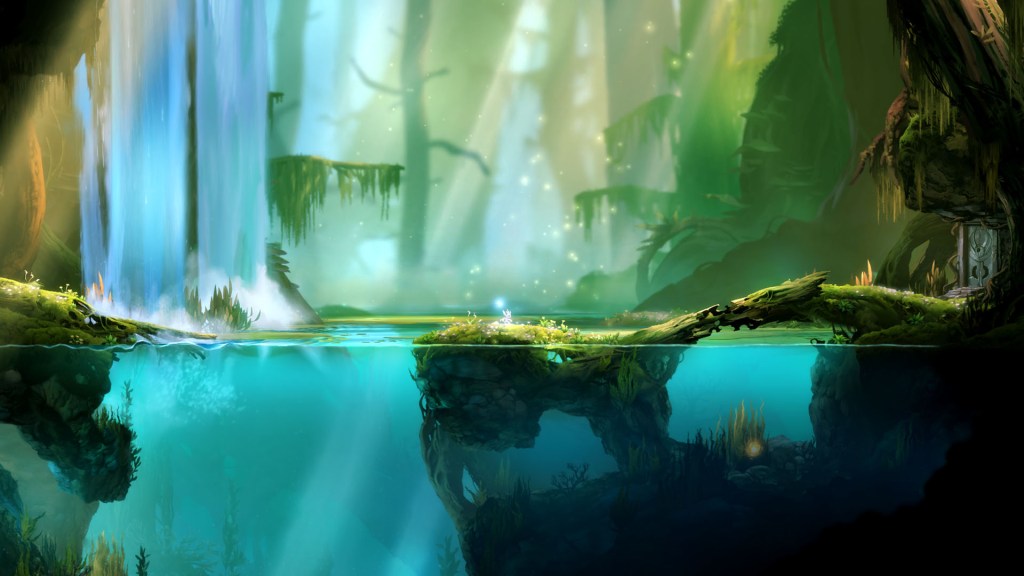
The forest is visually stunning. While many other side-scrollers opt for pixel art or other stylized techniques, Ori and the Blind Forest has gorgeously rendered environments. There is a great use of light and shadows that elicits the feeling of being in an ancient forest. There are so many beautiful effects and backgrounds that make Ori and the Blind Forest truly stand out among its contemporaries. Unfortunately, all the detailed visuals and glowing particle effects do come at a cost: visual clarity. I often times found it difficult to quickly parse the environment and decide what was a hazard, an enemy, a projectile, an experience orb, a blob of health, some energy, or any other possibility. I don’t think is a particularly brutal problem, but I often found myself mildly frustrated when what I thought was a safe spot actually damaged me.
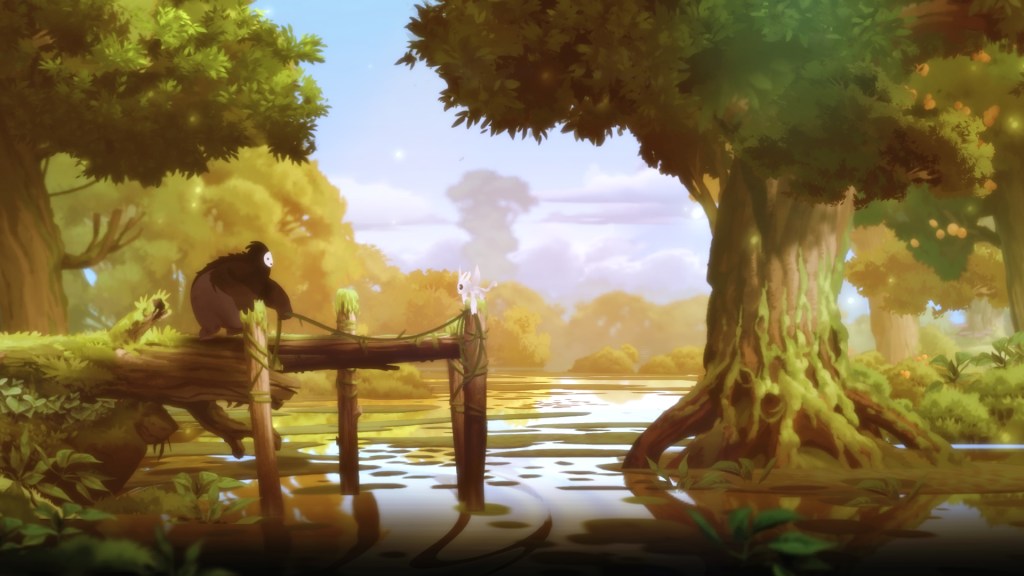
Ori and the Blind Forest is unique among its Metroidvania contemporaries. It deemphasizes combat in favor of platforming. Combat is meant to be a last resort, and you’re much better off avoiding and slipping past enemies rather than engaging with them. Attacking is incredibly straightforward, clicking a button will unleash a flurry of low-damage light projectiles that do a little damage to enemies. There is also a charged blast attack that consumes some energy, but it often felt like a waste of a resource that could be better used elsewhere.

One of the key uses of energy is creating save points. A very unique facet of Ori and the Blind Forest is that the player is responsible for deciding where their checkpoints will exist. At any point in the game, you can spend an energy point to create a save point where you will respawn if you die. I think this is an incredibly unique idea, and it has interesting risk and reward potential. If you have a high amount of health, it may be unwise to spend a ton of energy to make frequent save points as you can afford to make some mistakes without dying. Conversely, if you are low on health, you may want to save after every little obstacle. But there is a danger in doing so.
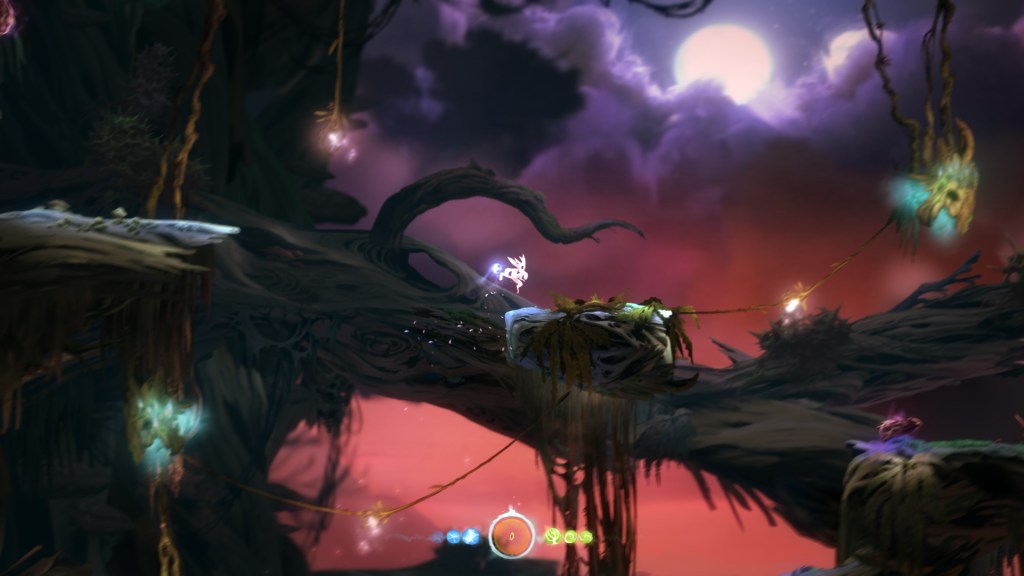
It can be counterintuitive, but saving when you are low on health can be dangerous. I often found myself in situations where a gauntlet of challenges was on the horizon, but I had saved with a low amount of health. A single misstep could cause death. This can be frustrating because you are stuck in a difficult situation with no room for error in a game where taking damage is exceedingly common. While I appreciate the idea for a unique save system, by the end of the game I realized that I prefer the traditional checkpoints that most games have.

The main reason why I believe that a standard checkpoint system is superior to the system in Ori and the Blind Forest is that the game designers have foresight. They know when a difficult section is approaching. They know how long the gauntlet is. They know where there will be opportunities to recover health. The player knows none of this. This is problematic as it leads to guessing games of when you should expend your resources to save. If you know that a difficult section is upcoming, you may not be inclined to save with low health. If you know there’s five or six back-to-back platforming challenges, you may not want to spend your last energy point to save after the first one. Let the game designers use their knowledge to properly place and space out checkpoints for a more consistent experience.
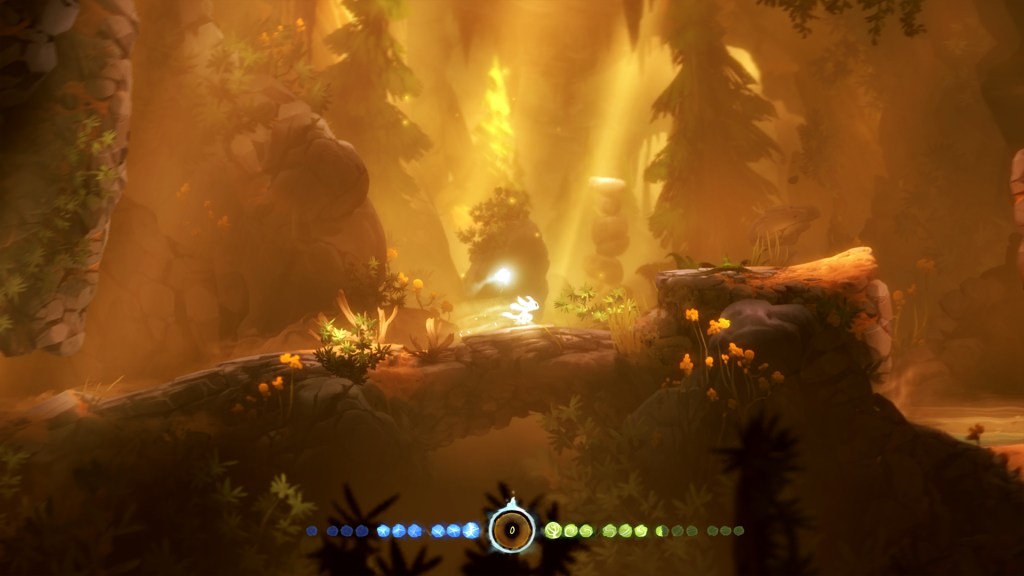
Where Ori and the Blind Forest shines the most is in its platforming. Ori is remarkably nimble, which is cohesive with the character’s design. Interestingly, the player has very little vertical jump height, but this is made up with Ori’s long horizontal leaps and subsequent powers that are unlocked. Springing from wall to wall, climbing trees, gliding around on a leaf, and using enemies to redirect your momentum is a fantastic way to evoke the feeling of being a nimble forest nymph.

What makes the platforming in Ori and the Blind Forest really special stems from a single ability: Bash. This skill is gained relatively early on in the campaign, and it makes the gameplay far more dynamic. Bash allows the player to launch themselves off of enemies and projectiles, knocking them in the opposite direction. You can swiftly rocket through corridors using a mixture of regular platforming and Bash to dodge and use enemies to your advantage. Its this single ability that makes up for the lack of combat, as Bash begs the player to just dash through enemies and launch them into hazards rather than engage with them. It makes sense then why the developers opted to omit traditional boss fights in favor of epic escape sequences. These are adrenaline pumping sections that demand speed and mastery of your abilities, and I love the decision to include them.
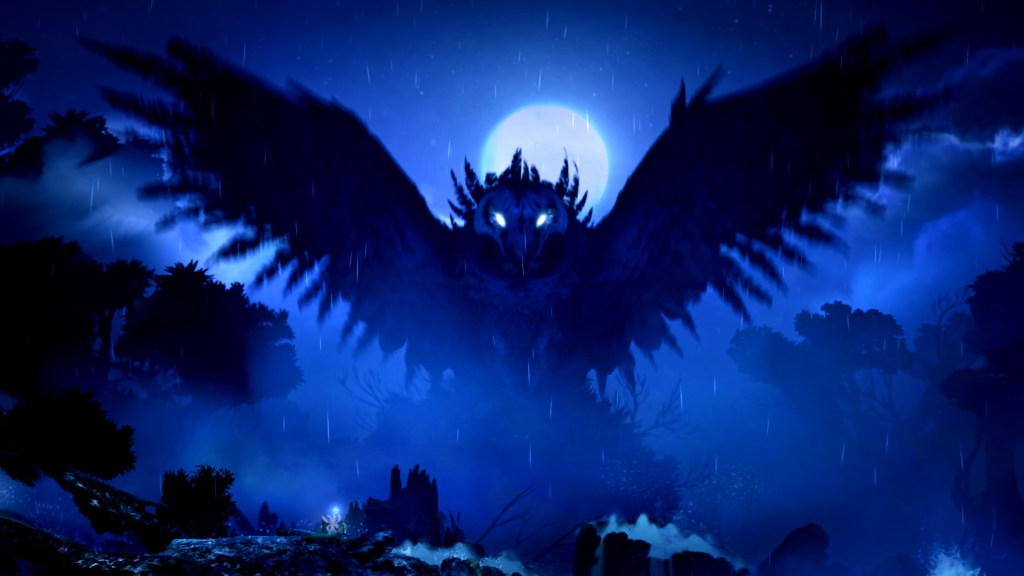
As for its metroidvania aspects, I found Ori and the Blind Forest to be passable. There was a rapid pace of unlocking new traversal abilities to reveal new paths. While there wasn’t a ton of necessary backtracking or revisiting prior areas, there were plenty of secrets to be uncovered. Unfortunately, most of the secrets were somewhat uninteresting as they were mostly additional experience or health/mana upgrades. Even though there was a lack of backtracking ala Metroid, Ori and the Blind Forest scratched the exploration itch as it certainly was not linear. There were many branching paths and routes to traverse, making for some satisfying exploration.
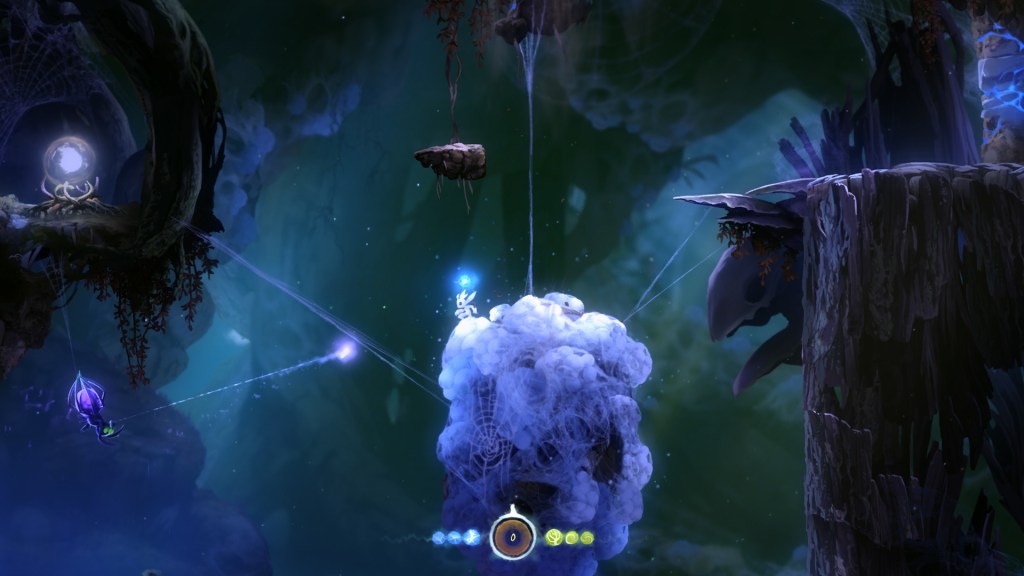
It had been a long while since I originally played Ori and the Blind Forest, and I am so glad that I revisited it. There are so many unique ideas here such as the emphasis on platforming, the focus on horizontal movement, the save system, and the use of escape sequences in lieu of bosses. Despite its faults and missteps, Ori and the Blind Forest is a phenomenal metroidvania. There is good reason why even modern indie games are compared to Ori and the Blind Forest, even if few meet the high bar that it set.
Final Fantasy (1987)

There is a reason why I try not to judge older games by modern standards. For what was revolutionary 30-years ago is now commonplace and often taken for granted. The original Final Fantasy is the textbook example of this. Anyone playing it today would surely find it antiquated in many ways, but Final Fantasy was the epitome of grand adventure and role-playing when it originally was released. That being said, I don’t think it’s a particularly worthwhile adventure anymore, unless you are curious about the series’ history or if you simply want to indulge on nostalgic quest.

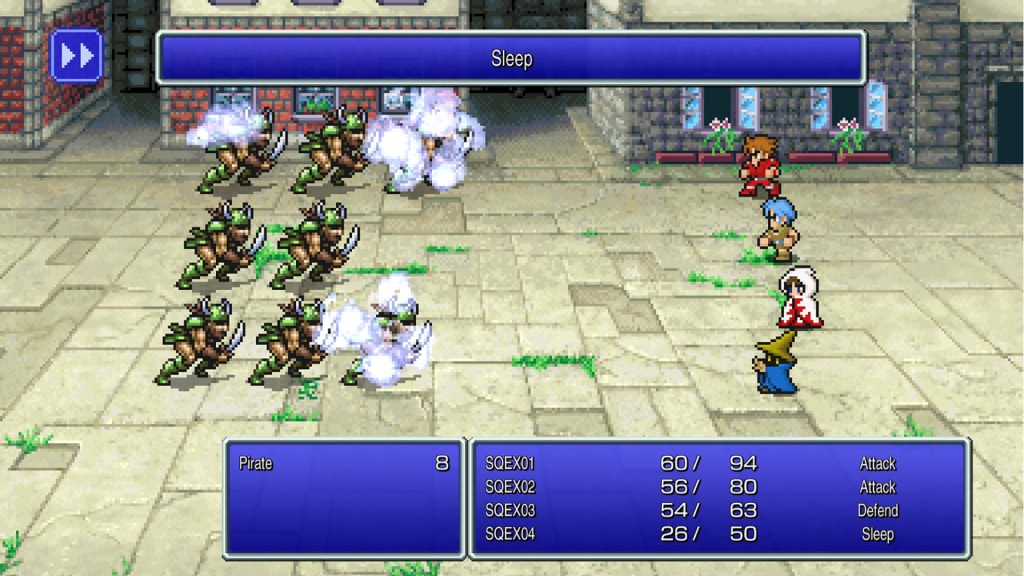
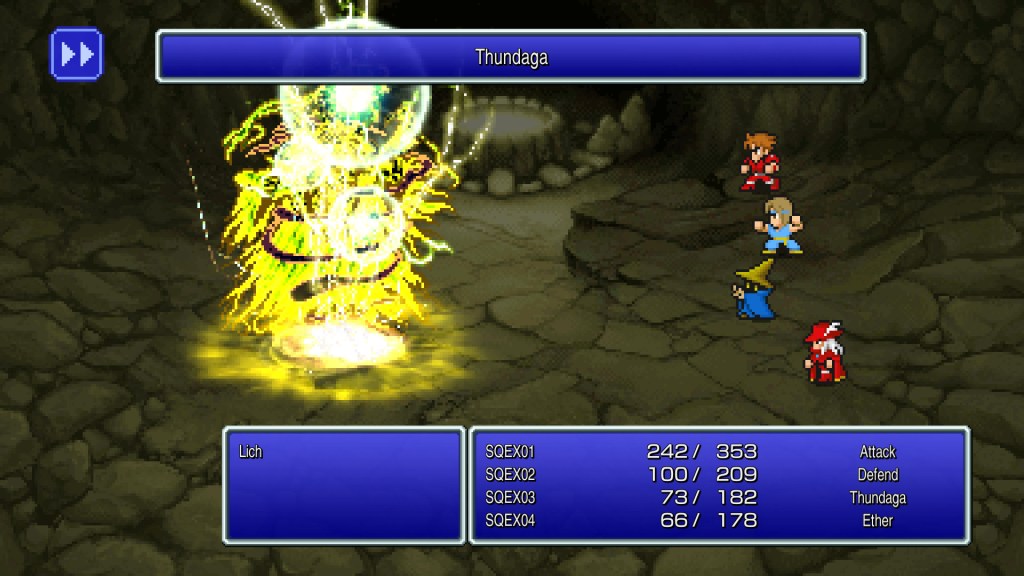
The first indication of how dated Final Fantasy is comes from the combat. I personally enjoy the occasional turn-based game, but Final Fantasy has an incredibly simplistic approach to battles. You control a party of 4 characters, and at the beginning of the game you choose which class you want each character to be. The physical attacking characters like warrior, thief, and monk are relegated to using nothing other than a basic attack in combat. The magic using characters are more interesting, but they having stifling limitations.

Spells are assigned levels, and as you progress you unlock more powerful spells. But magic users have a limited number of spell casts at each level before they need to refresh their charges by resting. I found myself holding onto the more powerful spells for bosses or particularly dangerous encounters, which meant that basic battles often were quite boring. Since combat is remarkably simple, the standard encounter is not often threatening. But over the course of navigating a dungeon you have to be worried about attrition. Each battle may only chip away at your characters health, spell casts, and items, but over the course of dozens of battles it adds up quickly.

Since this natural whittling of resources is the major concern of dungeons, I found myself conserving as many spell casts as possible for the boss or emergencies. Using nothing other than basic attacks unless necessary. But this is incredibly boring as there is little strategy or satisfaction is simply mashing the attack button with all four characters. Resource management should be an important aspect of games, but Final Fantasy could’ve afforded to be less restrictive with magic users. Moreover, I wish that non-magic classes had skills that could be used to make battles more interesting.

One aspect that I was surprised by was the story of Final Fantasy. JRPGs are infamous for their often confusing and over-the-top narratives. But Final Fantasy was fairly grounded while also providing a fun series of episodic quests. It’s not a generic adventure. From battling pirates, to curing an elven prince of his curse, to assisting dwarves to blow-up an isthmus, to diving under the ocean into the temple of mermaids, to climbing a desert tower and boarding an airship, Final Fantasy progressively ups the ante with its story.

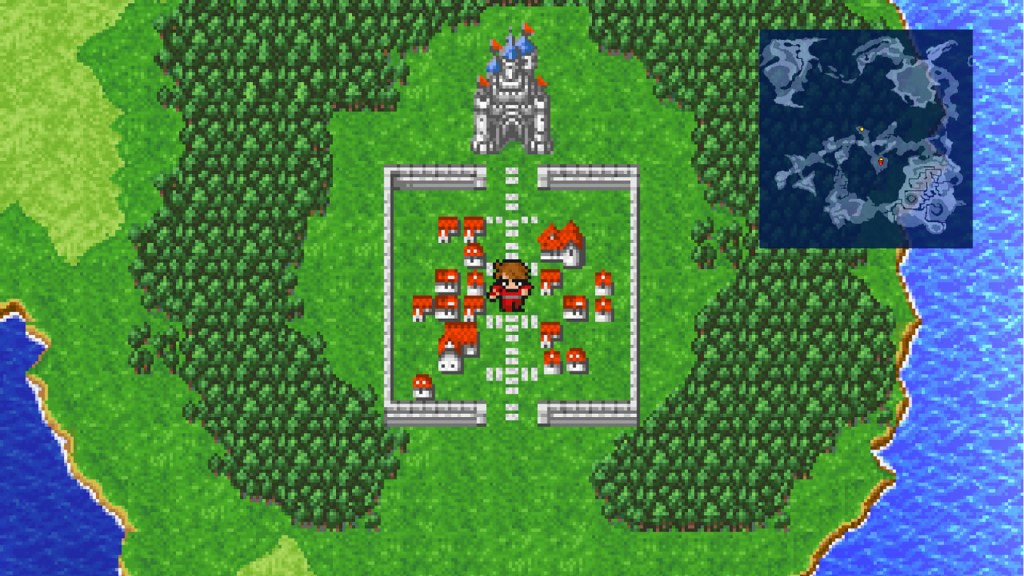
The series if renowned for its scope and presentation, and that trend obviously began at its inception. For 1987, the world map is massive. As you unlock more modes of transportation to travel to new regions it truly feels like a grand adventure. The sprites and artwork are iconic. Not to mention the music. Everybody knows the Final Fantasy victory theme. There are so many great tracks that got stuck in my head that I was humming along to as I was playing.

One downside of having such a massive world is how easy it is to get completely lost on your journey. Unfortunately, Final Fantasy relies on a ton of trial and error in its quest design. Most of the time, there is a singular character you have to converse with to progress the game. This leads to a ton of aimless wandering as you go from town to town, talking to every character. Occasionally there are hints of where you should be searching, but there’s too many times when that isn’t the case and you are left to purposelessly roam. This wouldn’t be too much of an issue in and of itself, but it gets absurdly frustrating when paired with the game’s other major issue: random encounters.

I honestly don’t hate random encounters. As long as they are omnipresent and there is a method to deal with them. I grew up playing Pokémon, in which random encounters would only occur in specified areas. You could also easily escape from most wild battles in a couple of seconds. Moreover, you can buy repels to prevent them altogether. None of this is the case in Final Fantasy. Random encounters are unavoidable and occur anywhere and everywhere that isn’t a town. They are frequent and disruptive. You can flee from them, but it’s often just as time-consuming as combat since enemies may go first. Leading to you just watching a party of baddies attack while you are waiting to escape. Not to mention that you are going to need to participate in a ton of encounters to acquire enough money and experience to be prepared for later parts of the game.

It’s the combination of archaic quest design and random encounters that makes Final Fantasy unbearable at times. Without random encounters, aimlessly wandering to search for an objective wouldn’t constantly be grinded to a halt. Without the annoying search for what to do next, random encounters would be far less purposeless and feel more manageable. This is where the age of Final Fantasy is felt the most, and it’s this obnoxious combination that hampered my enjoyment of the game.

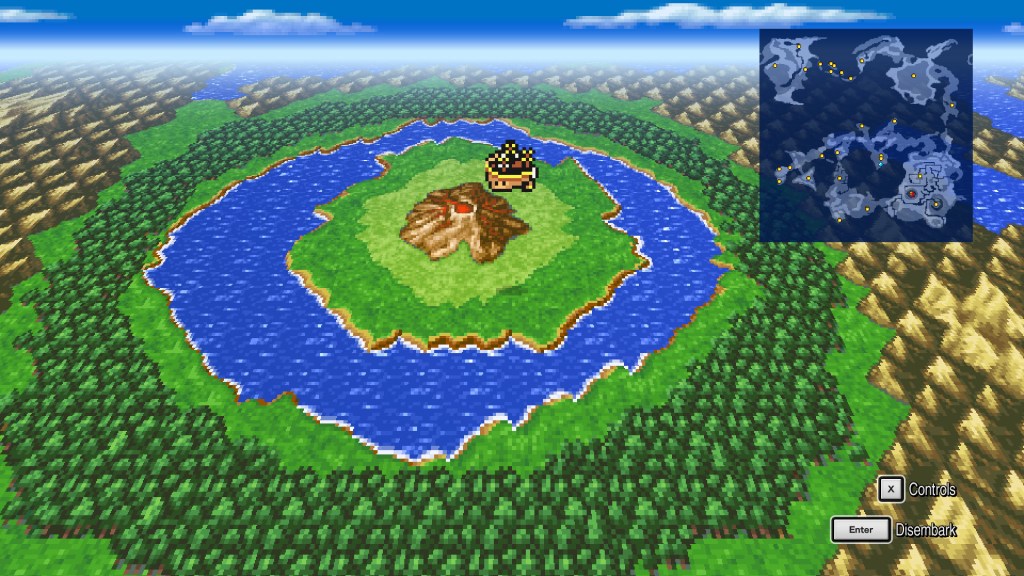
It’s worth mentioning that I played Final Fantasy in a more modern format: the Pixel Remasters. These are faithful remasters of the classic Final Fantasy games, but with some great quality-of-life updates. Saving is easier, the overworld and dungeons have maps, and your characters will redirect attacks that were destined to hit empty spaces. I’m sure the game would have been even more tedious without these features, the maps especially. A feature that I did not use but I’m sure is handy for veterans of the series is the ability to turn off random encounters and boost experience gain. I wanted to play the game as it was originally intended, but these options would be fantastic for a quicker playthrough if the game. Lastly, I would be remiss if I did not mention the new orchestral version of the soundtrack. It’s phenomenal.

Overall, I don’t think the original Final Fantasy is worth the time unless you really are curious about it. I would love to see a full-fledged remake, as I do believe it has some fun scenarios for adventuring. The Pixel Remaster version allows for some methods to cut down on the tedium, but the game as it was intended is often a slog. It was fun to see the roots of the series, but it definitely wasn’t the most enjoyable experience.  

Doom Eternal (2020)

From the first moment I launched the game, it was immediately apparent that Doom Eternal is not just a retreading of Doom (2016). While I did enjoy the straightforward brutality of Doom (2016), I greatly appreciate that Doom Eternal makes the experience much more complex. Running around and shooting demons was a ton of fun, but I am glad that there was some change-ups to make the formula fresh and to keep it engaging through the whole game.

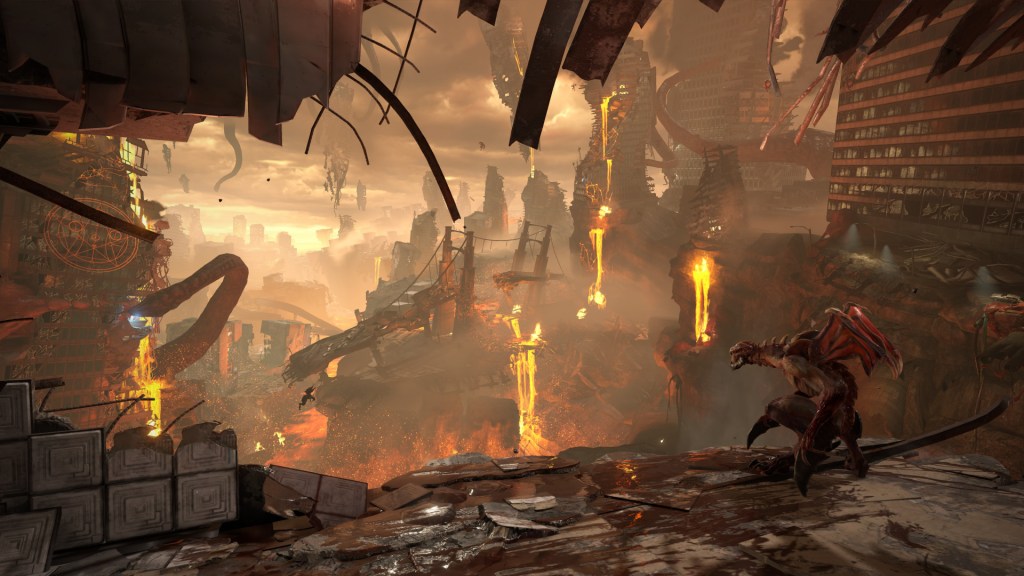
Like its predecessor, Doom Eternal is a fast-paced FPS where you blast through hordes of demons. You have to keep moving and shooting or you will be quickly overrun. There is never a dull moment in combat, as a momentary lapse in judgment will lead to your demise. Doom Eternal is challenging, even on the normal difficulty. I think it suits the game perfectly, high-octane non-stop running and gunning is what Doom should be about.

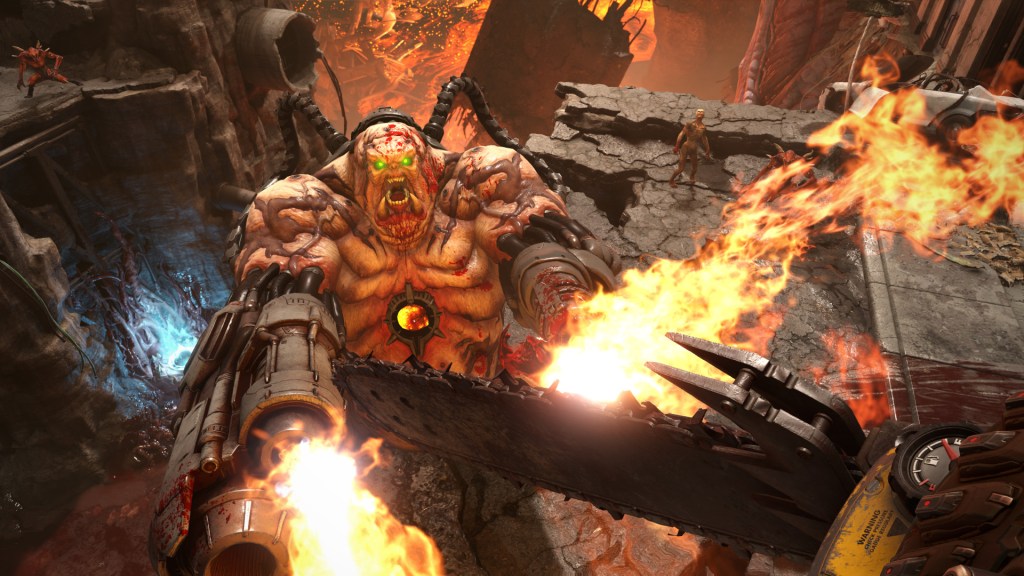
Part of what keeps Doom Eternal so fast-paced is the sheer number of tools to keep track of and utilize. Weapons have low ammo counts, so you have to constantly swap between guns, hunt for ammo pick-ups, and utilize the chainsaw which causes enemies to spew out extra ammo. Health and armor are also limited resources that can be gained through pick-ups. But you have to actively use the flamethrower if you want bonus armor and occasionally finish off enemies with a glory kill to replenish health.

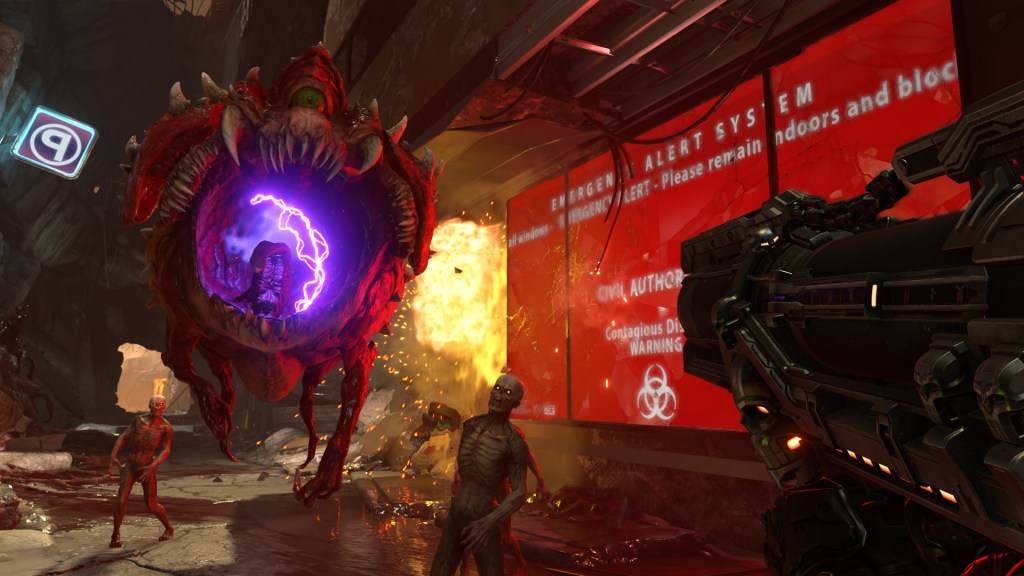
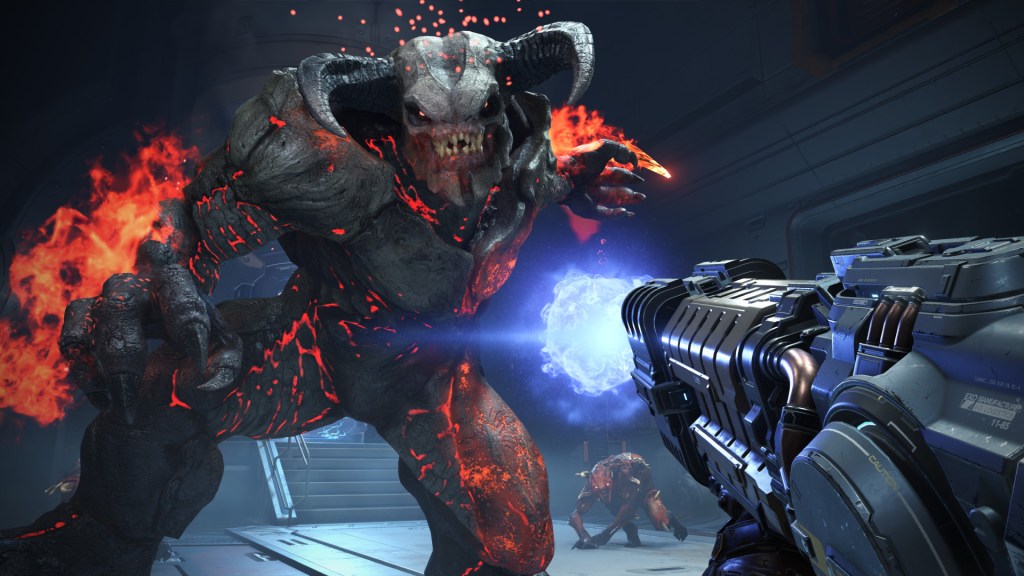
Additionally, every major enemy has a weakness. What’s interesting is that these weaknesses not only do bonus damage, but the reduce the threat level of the demon as well. For example, you can disable the turret on Arachnotons, or blast off the flamethrower from a Mancubus. I really love this aspect of the game as it encourages, but doesn’t necessitate, intelligent use of equipment and well-placed shots. You could just brute force encounters by gunning down demons with the weapon of your choice, but you will be better off constantly swapping between guns to exploit each enemy’s weakness. This makes combat encounters intense and engaging, even after playing for a dozen hours.

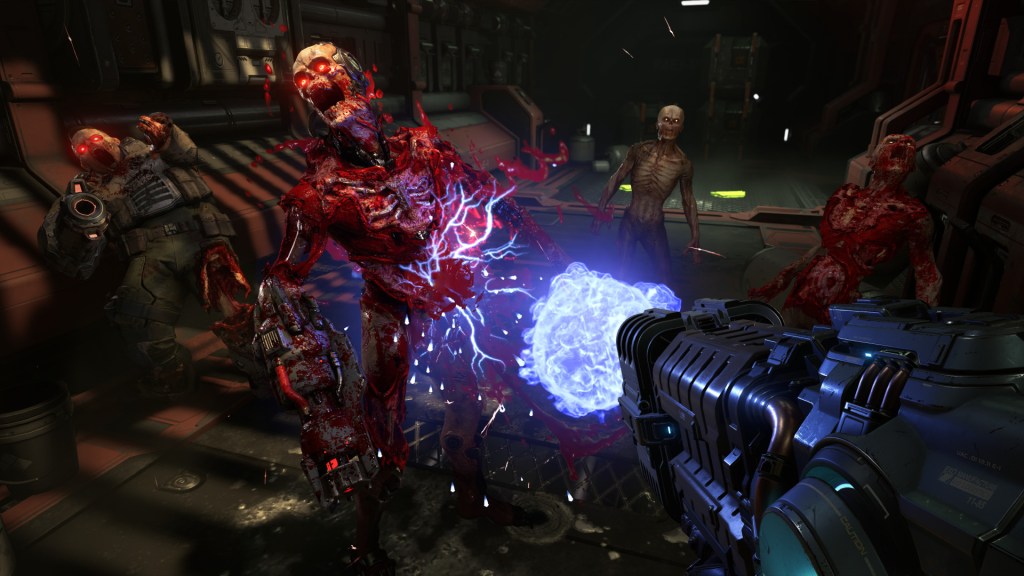
Intelligently making use of the tools at your disposal is the key to success in Doom Eternal. Keeping track of cooldowns on the chainsaw and flamethrower is vital to staying topped up on ammo and armor. Grenades are useful for crowd control when you’re overwhelmed. Each weapon has its use. The minigun is great for sustained damage, the plasma gun makes enemy shields explode, the assault rifle is good for long range engagements and sniping enemy weak points. My favorite was the super shotgun which dealt high burst damage and had a grapple hook for mobility.

Additionally, Doom Eternal has tons of upgrades to augment your play. Most importantly, each weapon has two attachments, and those attachments can be upgraded for additional effects. Truthfully, I was kind of overwhelmed by the sheer volume of upgrades and effects that were present in Doom Eternal. Not only do weapons have upgrades, but there are also suit upgrades, equippable runes, and shards that have unique effects. By the midgame I had gotten comfortable with all the systems in the game, but the first few hours felt like a barrage of informational pop-ups for all the various systems that the game offers.

Many of the resources used for upgrades can be acquired just through naturally playing the game, but Doom Eternal utilizes its downtime to fuel the hunt for more upgrades. The combat is so intense that it’s critical to provide a breather for the player. After clearing an arena full of demons, there are usually hidden items that can be spent on upgrades. While it’s not the focus of the game, I did appreciate that there were some elements of exploration, platforming, and light puzzling to break up the straight up insanity of the combat of Doom Eternal. Even better, if you want to just focus on the combat, you could easily completely ignore most of the game’s other elements and just progress from combat arena to combat arena to kick some ass.

One element that I was not impressed with was the story and lore. Obviously, the story should not be an important aspect of any Doom game. And that’s fine. But there’s a surprising amount of cutscenes and info dumps that spew a confusing story at the player. I felt like the game is attempting to establish some deep lore, but it felt incredibly out of place. Luckily, you can skip cutscenes and not read any of the lore documents. Regardless, Doom shouldn’t spend so much time on its narrative elements.

Overall, Doom Eternal is an absolute thrill to play. It’s an evolution of the run and gun style of play that Doom (2016) introduced. It’s faster, more difficult, and requires more foresight and strategy. It’s the perfect game to rip n’ tear. It is for these reasons I give Doom Eternal a 9/10. If you’re looking for some high-octane demon-blasting action, look no further than Doom Eternal.