The genre of survival horror has become synonymous with Resident Evil. It is one of the most storied and recognizable franchises in video games. But I had never played or engaged with any of its numerous titles in any way. With the recent resurgence and renaissance of Resident Evil, I figured I had a unique opportunity to experience not only the series, but survival horror as a whole. I could take a journey through the life and evolution of the genre. Starting with its genesis in 1996.
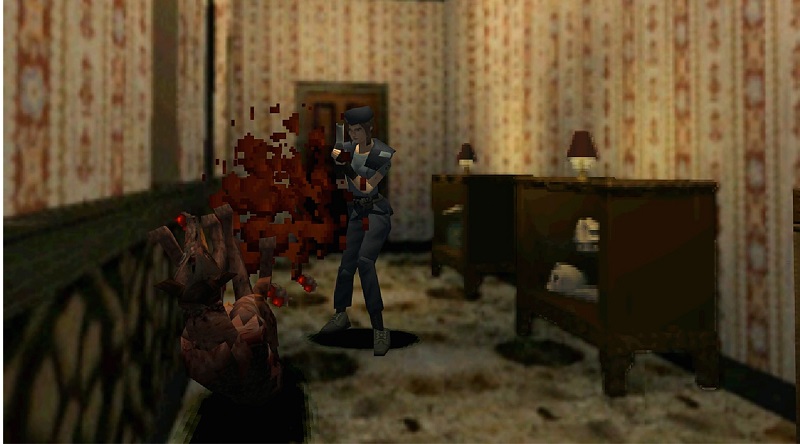
I was surprised how engaging I found Resident Evil to be, despite its age. The mansion is a terrific environment to explore. Every room is full of secrets that you have to probe for. It’s a labyrinth that you must delve deeper and deeper into if you want to escape. It’s a giant escape room filled with zombies and other horrific creatures. Resident Evil mastered the feeling of tension. Simply walking down hallways or dealing with a single enemy is a stressful affair.
The inventory system plays a large role in the tension. Even playing on Easy Mode, the player only has 8 inventory slots. You have to juggle numerous items such as your weapons, ammo, medicine, herbs, and key items used in puzzles. You can’t drop items, so you should almost always have a free slot or two open in case you find valuable items. The reason this system provides so much tension is that you have such limited resources at your disposal.
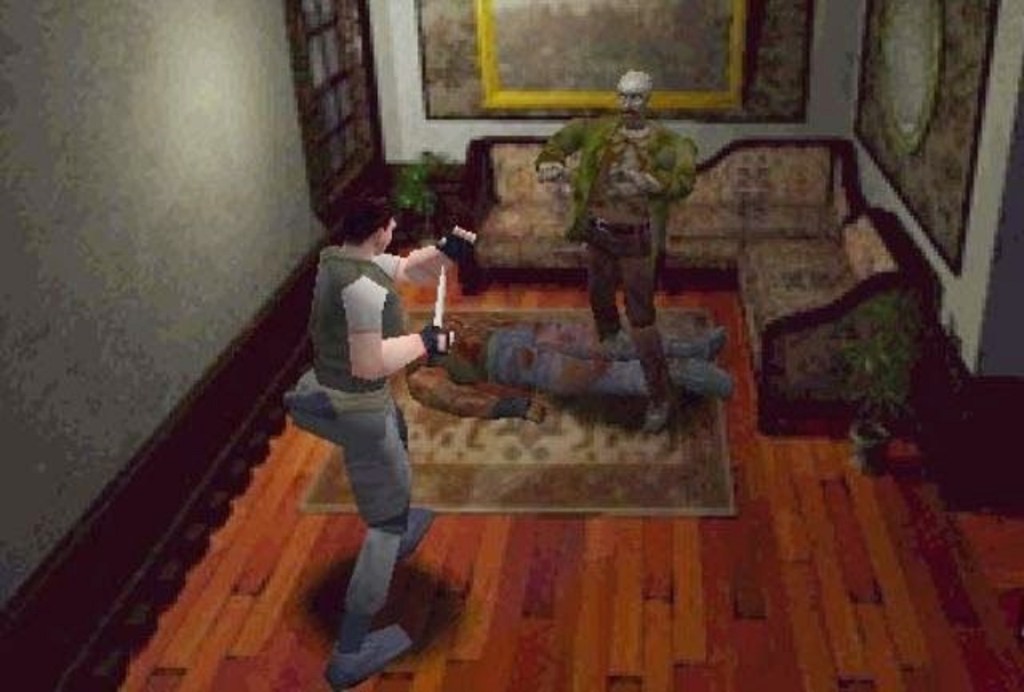
Ammo and healing items are relatively sparse. Zombies are threatening as they can deal massive damage if they latch onto you. Every time you encounter an enemy you are given a choice: fight or attempt to dodge. Fighting is a surefire way of making it through without taking damage, but ammo is precious and you could find yourself in situations where you run out of ammo permanently. Dodging enemies is risky, as you could get caught and sustain immense damage. The limited inventory also means you can’t carry everything with you at once, so you have to make strategic choices have how many healing items and weapons you want to bring.
You can only save in designated safe rooms, and depending on which version you are playing, it also requires a limited item to save. Having limited saves means you are less likely to save at every opportunity. Which then means that dying will set you farther back as you are saving less often. This contributes to the feeling of tension and danger as you explore the mansion. It’s a constant balancing act of risk and reward. Will you play on a knife’s edge to preserve resources, but risk dying and facing a massive setback? Or will you engage in combat to guarantee your safety but risk running out of ammunition for later scenarios?
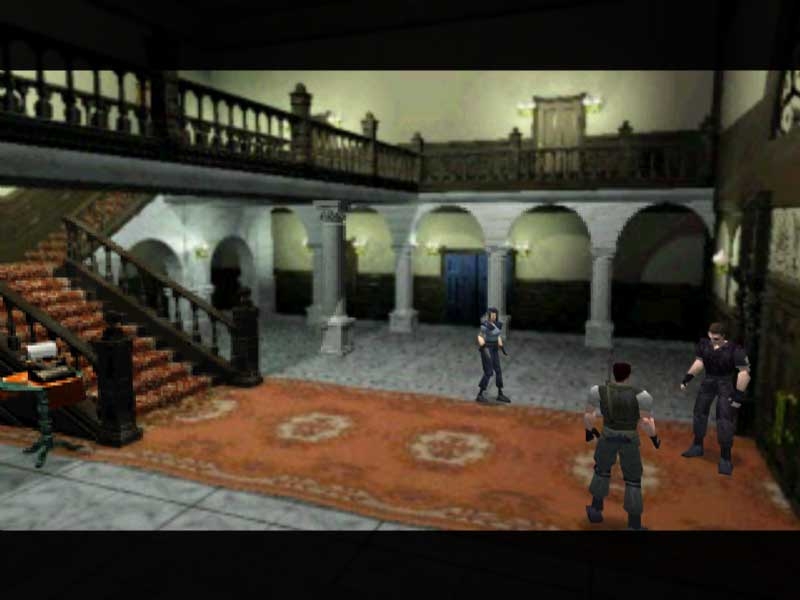
Part of the reason why avoiding zombies is so inherently risky is the control scheme. Resident Evil utilizes tank controls, a system that is antiquated by modern standards. In this scheme, the player controls the character relative to the character’s position rather than the camera. This definitely takes some getting used to, and I still didn’t feel 100% comfortable using this system even after completing the game. But tank controls are necessary when you consider that Resident Evil uses a fixed camera system.
The player does not control the camera. Instead, every room has a few preset camera angles that get swapped between depending where you are standing. Tank controls are almost a necessity when using fixed camera angles, because holding forward will still move your character forward regardless of the camera angle. It would be awkward and jarring to have a movement system based on the relative position of the camera when the camera is swapping angles constantly. The benefit of using fixed camera angles is that it allowed for more detailed backgrounds as they can just be static images rather than rendered environments. Additionally, Resident Evil utilizes its camera angles to hide enemies around corners, leading to additional tension and caution.
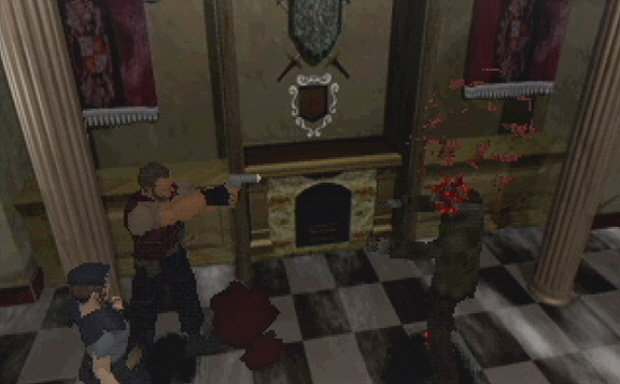
Despite it being the first survival horror game, I did not find Resident Evil to be that frightening. And honestly, I’m pretty easily scared when it comes to video games. There were times playing Subnautica or even Outer Wilds that I was petrified of progressing forward. The primary reason that I did not find Resident Evil to be scary lies in the difference between horror and terror. Resident Evil relies primarily on horror. Horror being the shock and revulsion of seeing zombies, giant spiders, snakes, and other creatures.
Terror is a stronger emotion that horror. The initial shock of seeing something horrifying wears off. But the deep-rooted anxiety and unknowing of terror never lessens. It’s hardwired into humans as a survival trait. Resident Evil does have its terrifying moments, like when you enter new areas or have to turn a blind-corner knowing that a zombie is waiting for you. But more than terrifying, I would describe Resident Evil as tense. Navigating the cramped labyrinth of the mansion is stressful. Trying to figure out how to escape while backtracking through narrow hallways is tense because a single enemy can be devastating.
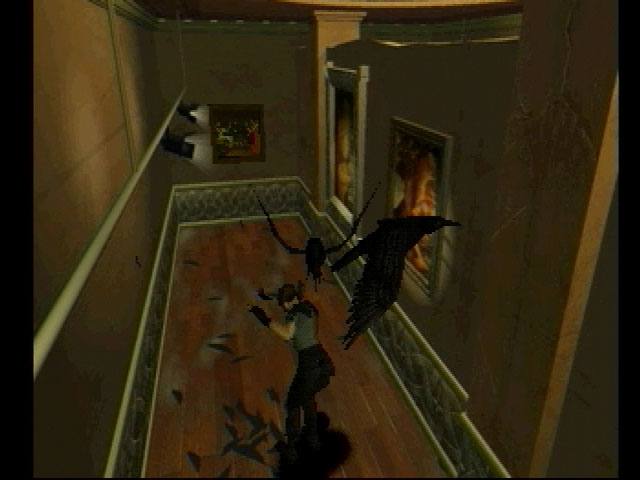
While horror isn’t something that always resonates with me, it’s only fair to mention that Resident Evil is ancient. I wasn’t particularly revulsed by most of the enemies, and I believe a lot of that has to do with the dated presentation. Zombies or giant spiders aren’t particularly scary when you can count how many polygons they are comprised of. The game looks great for its era, but I found it difficult to be truly immersed and horrified by its dated visuals.
Another aspect of Resident Evil that feels like it’s a product of its time is the writing and voice acting. It can be hard to take the cutscenes and story seriously when it feels like a low-budget horror movie where the actors were hired off the street. More often than not, the story sequences are comedic. The voice acting is so bad that it feels like an intentional parody. The overarching plot is decent mechanism to provide context of the mansion and its secrets, but I never felt drawn to keep playing for the story.
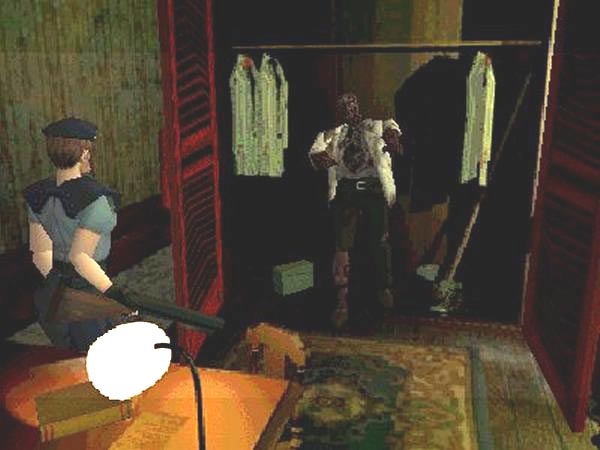
Despite its age, I greatly enjoyed playing Resident Evil. While many of its systems today feel dated, they all work in harmony to provide a cohesive experience. In a world of action games, it’s refreshing to play a game where even the most basic of enemy is a real threat. While I did not find Resident Evil to be very frightening, it certainly was tense. I’m excited to play the rest of the series and see how it progresses over time.
 stephensopinions